
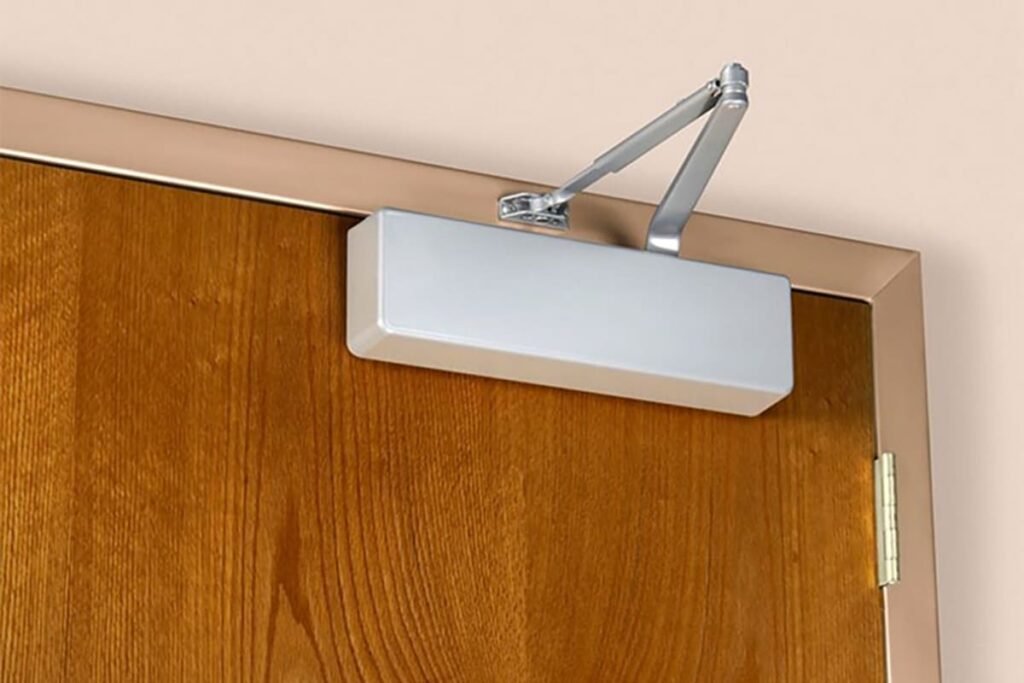
Overhead Door Stops and Holders: Types, Applications, and Selection
Overhead door stops and holders are often specified too late in a door hardware schedule, and that can create problems with impact damage, unsafe floor obstructions, or doors that do not stay open when users expect them to. I separate the stopping function from the holding function first, then I match the product structure to the door, frame, traffic, and project requirement.
Overhead door stops and holders are top-mounted door control devices used to limit door opening movement and, in some models, keep the door open.1 An overhead door stop mainly prevents over-opening and impact damage, while an overhead door holder adds a mechanical or magnetic hold-open function.2 Buyers should select them by door weight, opening angle, traffic level, installation space, and compatibility with hinges and closers.
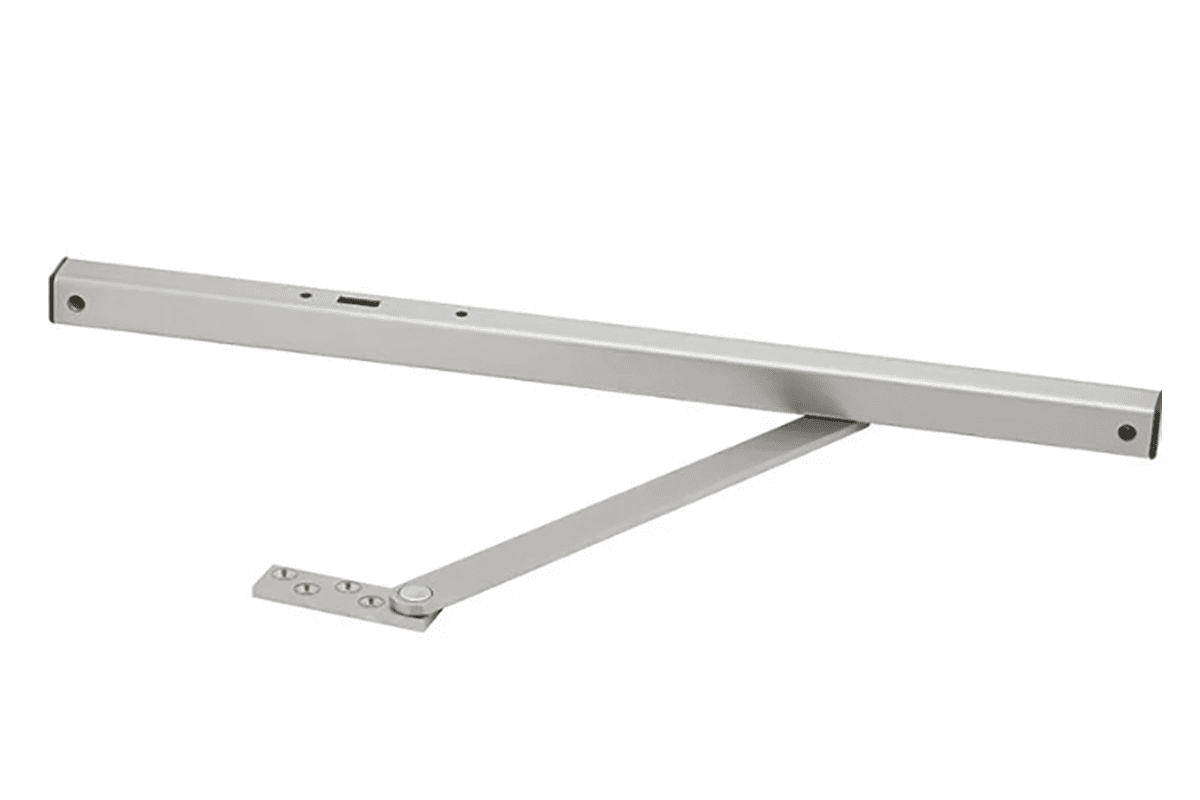
In my experience as a door hardware manufacturer, the wrong choice usually happens when buyers treat every overhead device as the same product. The details matter. A stop, a holder, and a stop-holder combination solve different problems, and each one affects installation, performance, and long-term maintenance.
What Are Overhead Door Stops and Holders Used For?
A door that swings too far can damage walls, frames, hinges, closers, glass panels, or nearby furniture.3 That problem becomes worse in busy buildings where users push doors with force. I usually start the conversation by asking one simple question: do you need only stopping, or do you also need holding?
Overhead door stops and holders are used to control the maximum opening angle of a swing door from the top of the door and frame. A stop limits travel and reduces impact damage. A holder also keeps the door open when needed, usually through a mechanical catch or magnetic holding structure.
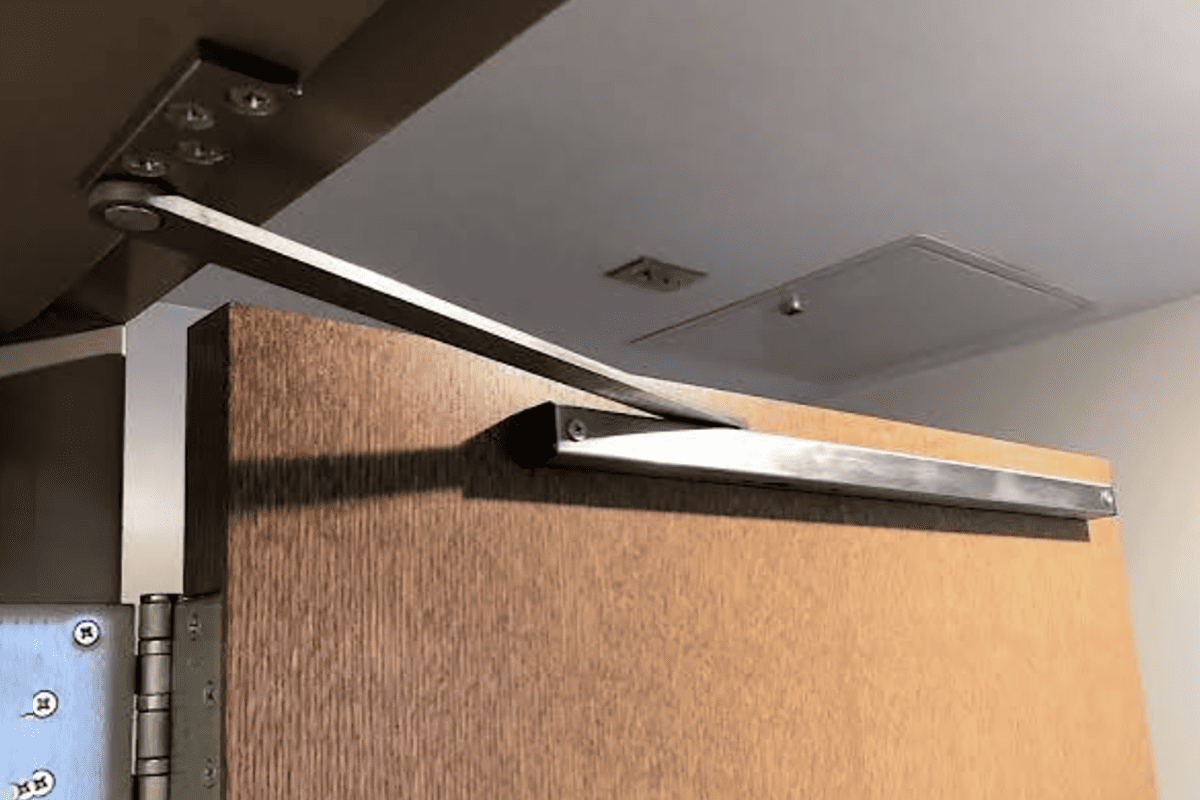
Stopping and holding are not the same job
I see many buyers use the terms “stop” and “holder” interchangeably, but I do not recommend that approach in procurement. The two functions are different.
- Stopping means the device limits the door’s maximum opening angle.
- Holding means the device keeps the door in an open position.
- Stopping with holding means the device does both, if the model is designed for that purpose.
An overhead door stop is normally selected when the buyer wants to prevent the door leaf from hitting a wall, cabinet, glass partition, or adjacent door. The main purpose is controlled limitation. It should not be assumed to hold the door open unless the technical drawing or product description confirms a hold-open function.
An overhead door holder is selected when the door needs to remain open for ventilation, delivery, access, or operational convenience. The holding action can be mechanical or magnetic, depending on the product design and project needs.
Why overhead mounting matters
The overhead position is important because it removes the need for a raised floor-mounted stop. This matters in commercial buildings, schools, hospitals, hotels, offices, and retail environments where floor obstructions can cause practical problems.
Common reasons to use overhead mounting include:
Cleaner floor area
Cleaning teams can move equipment without working around floor stops.Reduced trip concern
The device does not create a small raised object in the walking path.4Better appearance
The hardware is less visible than many floor-mounted options.Better fit for high-traffic areas
People can move through the doorway without stepping around a stop.Protection for walls and frames
The door movement is controlled before heavy impact occurs.
Practical application examples
| Application area | Common problem | Typical overhead solution |
|---|---|---|
| Office corridors | Door hits wall or adjacent door | Overhead stop |
| Service areas | Door needs to stay open during movement of goods | Overhead holder |
| Public entrances | Floor stop may obstruct traffic | Overhead stop or stop-holder |
| Hotel guest rooms | Wall protection and clean floor design are needed | Concealed or surface overhead stop |
| Back-of-house doors | Frequent opening causes impact stress | Heavy-duty overhead stop |
When I review a hardware schedule, I do not choose overhead door stops and holders only by appearance. I look at the door size, expected use, door closer position, hinge type, and frame structure. These details decide whether the product can be installed cleanly and perform reliably.
How Do Overhead Door Stops and Holders Differ?
The confusion between these products can lead to wrong purchasing decisions. If a buyer orders a stop when the site needs a hold-open function, users may later wedge the door open with unsafe objects.5 I prefer to define the function clearly before discussing finish, arm style, or packaging.
Overhead door stops and holders differ by their core function. An overhead door stop limits door travel and protects surrounding surfaces. An overhead door holder both limits movement and keeps the door open through a mechanical or magnetic holding method. A stop should not be treated as a holder unless its product structure confirms that function.
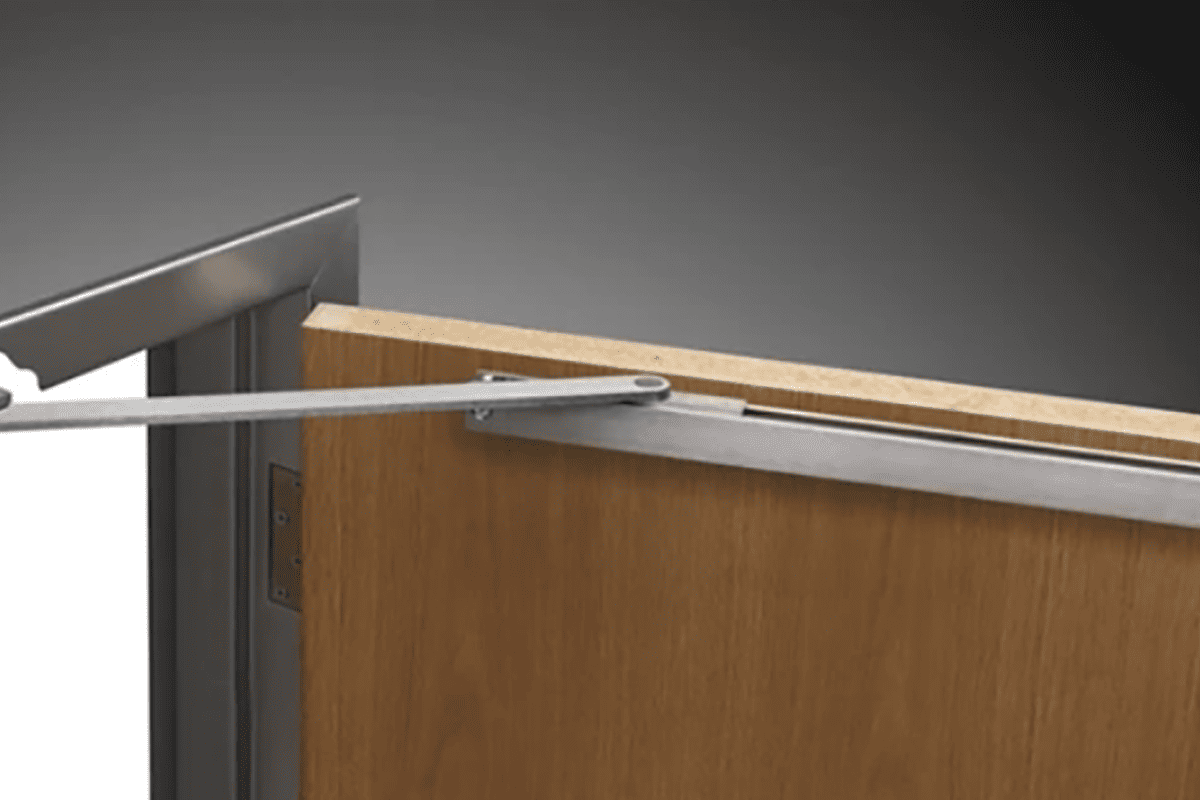
The main structural difference
An overhead door stop usually includes an arm, track or bracket, pivoting parts, and a stop mechanism. The design focuses on controlled movement and a defined maximum opening position. The device absorbs or redirects force when the door reaches the selected limit.
An overhead door holder includes a stopping function plus a holding mechanism. This mechanism may be:
- Mechanical, using a catch, friction, roller, or locking structure.
- Magnetic, using magnetic force to keep the door open.
- Selectable or adjustable, depending on the model design.
- Integrated with a stop arm, if the product is designed as a stop-holder.
The important point is simple: a stronger-looking arm does not automatically mean the product can hold a door open.
Stop, holder, and stop-holder comparison
| Product type | Main function | Hold-open ability | Best use case |
|---|---|---|---|
| Overhead door stop | Limits opening angle | Usually no | Preventing wall, frame, or hinge damage |
| Overhead door holder | Holds door open and controls movement | Yes | Service doors, access routes, temporary open use |
| Overhead stop-holder | Combines stop and hold functions | Yes, if specified | Projects needing both protection and open-position control |
| Floor stop | Stops door at floor level | Sometimes, if magnetic or hook type | Lower-cost or simple installations |
| Wall stop | Protects wall contact point | No | Light-duty wall protection only |
Where buyers make mistakes
I often see three mistakes in B2B sourcing discussions.
First, buyers focus only on the finish.
A satin stainless finish or painted cover may match the project, but it does not tell me whether the internal structure fits the door weight and traffic.
Second, buyers assume all overhead devices are heavy-duty.
Some overhead devices are designed for lighter commercial or residential applications. Others are made for more frequent public use. The supplier should provide product drawings, material details, and recommended application limits.
Third, buyers ignore door closer compatibility.
A door closer already controls closing speed and latching.6 An overhead stop or holder controls opening travel or open position. These devices must not fight each other during the door cycle.
Product structure questions I ask before quoting
When a customer asks me for overhead door stops and holders, I normally request details such as:
- Door material: timber, metal, aluminum, glass-framed, or fire-rated assembly
- Door thickness and height
- Approximate door weight, if available
- Single door or double door
- Required opening angle, such as 90°, 105°, or 120°
- Frame type and header space
- Door closer model and mounting position
- Hinge type and swing direction
- Need for hold-open or only stop control
- Finish and packaging requirements
These questions are not meant to slow down the order. They reduce rework. They also help the buyer avoid ordering a product that looks correct in a catalog but fails during installation.
I treat overhead hardware as part of a complete door control system, not as an isolated accessory.
That mindset is useful for door manufacturers, hardware brands, and distributors because it connects product selection to real door behavior.
Which Types of Overhead Door Stops and Holders Are Available?
A simple type list is not enough because the same device can perform well in one environment and poorly in another. I prefer to classify types by function, mounting style, duty level, and holding method. This makes selection more practical for procurement teams.
The main types of overhead door stops and holders include surface-mounted overhead stops, concealed overhead stops, mechanical overhead holders, magnetic overhead holders, and combined stop-holder models. The right type depends on the door’s opening angle, traffic frequency, visual requirements, installation space, and whether a hold-open function is required.
Surface-mounted overhead door stops
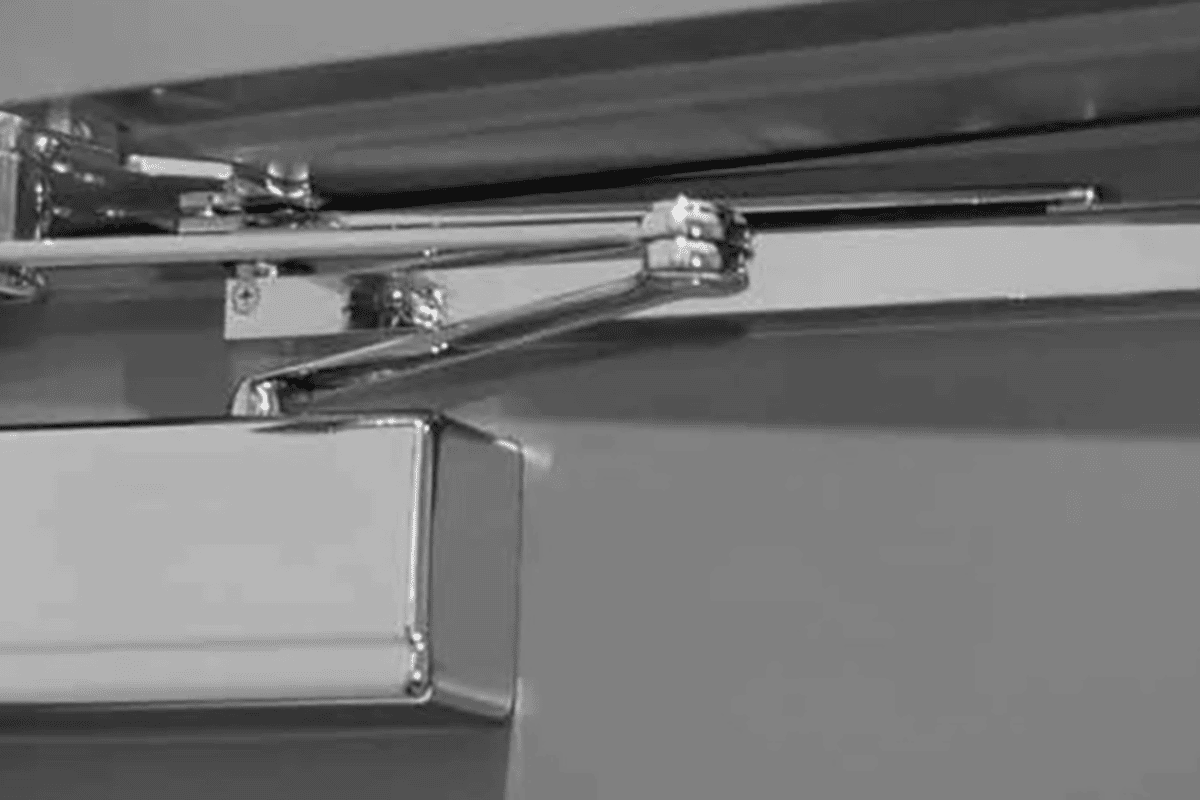
Surface-mounted stops are installed visibly on the top rail of the door and the frame header. They are common because they are easier to inspect, install, replace, and specify.
Best fit:
- Commercial doors with practical appearance requirements
- Retrofit projects
- Doors with limited preparation time
- Applications where maintenance access matters
Buyer consideration:
I check whether the arm movement has enough clearance and whether the mounting screws can be fixed into strong material. A weak fixing point can reduce performance, even if the stop body itself is well made.
Concealed overhead door stops
Concealed models are installed into the top of the door and frame, so the hardware is less visible when the door is closed. These are often used where appearance matters more.
Best fit:
- Hotels
- Premium office interiors
- Doors with clean design requirements
- Projects where exposed hardware should be minimized
Buyer consideration:
Concealed models need more accurate preparation. The door manufacturer must allow enough space inside the top rail, and the installer must follow the product drawing carefully. I always recommend checking the drawing before door machining begins.
Mechanical overhead door holders
Mechanical holders keep the door open using a physical holding structure. The mechanism may engage at a selected angle or use a catch system.
Best fit:
- Service corridors
- Stock rooms
- Maintenance areas
- Doors that need temporary hold-open without electrical connection
Buyer consideration:
The release force and user behavior matter. If users pull too aggressively or the door is exposed to strong air pressure, the holder structure must be suitable for that environment. I avoid making universal performance promises without model-specific data.
Magnetic overhead door holders
Magnetic holders use magnetic force to keep the door open. Some magnetic holding products are part of broader access, safety, or release systems, depending on design.7
Best fit:
- Doors that need smooth holding action
- Commercial spaces where users frequently keep doors open
- Applications where a magnetic release method is specified
Buyer consideration:
The buyer should verify whether the magnetic holder is purely mechanical-magnetic or part of an electrical release system. If fire safety, alarm integration, or code compliance is involved, I recommend professional review and verified product documentation.
Combined stop-holder models
Combined models limit the door opening angle and hold the door open. These products are useful when the buyer needs both functions in one device.
Best fit:
- Busy doors needing both protection and temporary open position
- Delivery or service access points
- Doors where floor-mounted hardware should be avoided
- Hardware schedules requiring fewer separate accessories
Buyer consideration:
The product description must clearly state the hold-open function. If the catalog only says “door stop,” I do not assume it can hold.
Type selection table
| Type | Visibility | Installation complexity | Hold-open function | Typical procurement note |
|---|---|---|---|---|
| Surface overhead stop | Visible | Lower | No, unless specified | Good for practical commercial use |
| Concealed overhead stop | Hidden | Higher | No, unless specified | Good for design-sensitive doors |
| Mechanical holder | Visible or semi-concealed | Medium | Yes | Check release action and door weight |
| Magnetic holder | Varies | Medium to high | Yes | Verify magnetic system and compliance needs |
| Stop-holder | Varies | Medium | Yes | Confirm both functions in drawings |
As a manufacturer, I find that the best selection starts with the required task, not the catalog category. If the task is impact prevention, a stop may be enough. If the task is keeping the door open for movement of people or goods, a holder or stop-holder is the better direction.
How Should Buyers Select Overhead Door Stops and Holders?
A product that works well on a light office door may not suit a heavy entrance door. A holder that feels convenient in a warehouse may be inappropriate where fire-door behavior must be controlled. I recommend using a structured checklist before requesting samples or placing an OEM order.
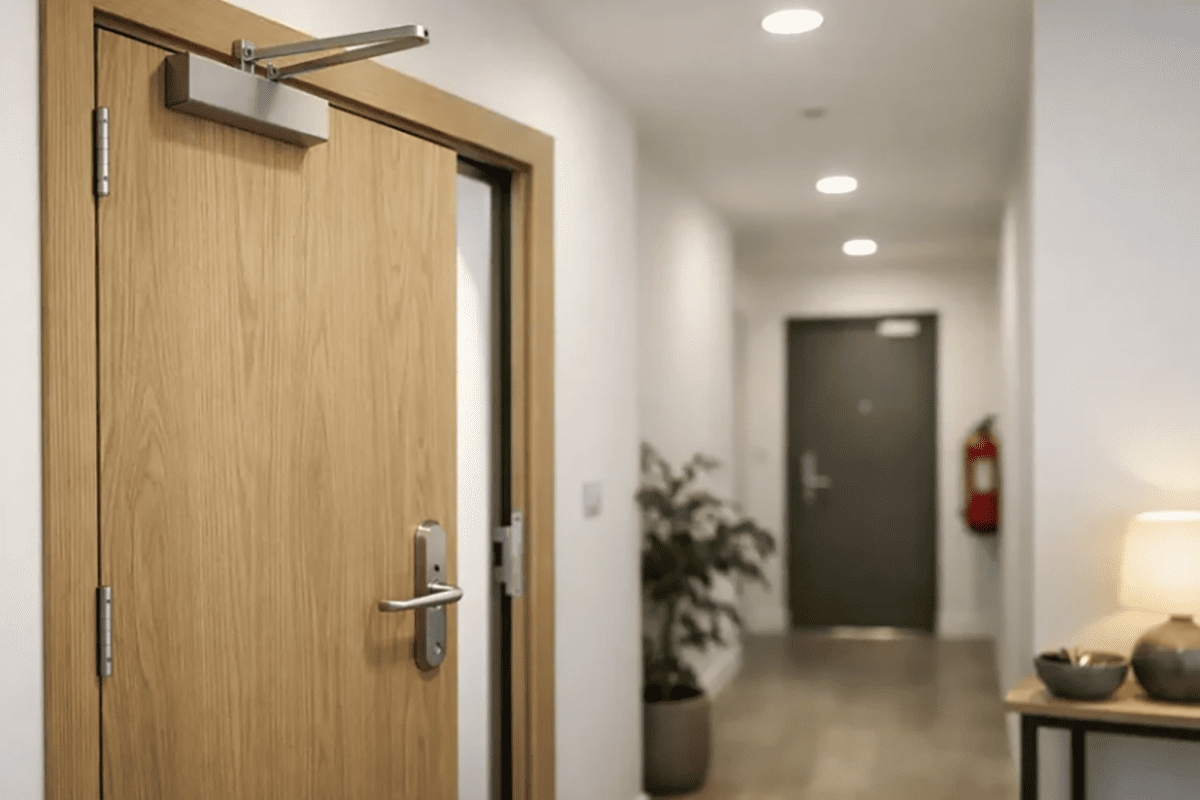
Buyers should select overhead door stops and holders by confirming six conditions: door weight, opening angle, traffic frequency, need for hold-open, available installation space, and compatibility with hinges, closers, and frame construction. They should also verify drawings, materials, finishes, test reports, and certifications with the supplier before procurement.
1. Door weight and door size
Door weight affects stress on the arm, pivot, fixing screws, and frame connection. Larger doors also create more leverage when opened quickly.
I usually ask buyers to provide:
- Door height and width
- Door thickness
- Core material
- Approximate door weight
- Whether the door has glass, metal cladding, or special panels
If exact weight is not available, the door manufacturer should estimate it from construction details. I avoid guessing because door mass strongly affects hardware performance.
2. Required opening angle
The opening angle decides where the stop engages and whether the door will provide enough passage width.
Common planning questions include:
- Should the door stop at 90°?
- Does the corridor require 105° or more?
- Is there a wall, railing, cabinet, or another door behind it?
- Will the arm contact other hardware during movement?
A small change in angle can affect usability. For example, a door stopped at 90° may be acceptable for normal pedestrian use, but it may restrict carts, beds, or large goods in service areas.
3. Traffic frequency
Traffic frequency affects wear.8 A low-use office door and a public corridor door are not the same application.
I usually classify use conditions like this:
| Traffic level | Example | Selection focus |
|---|---|---|
| Low | Private office | Basic angle control and finish match |
| Medium | Hotel room, meeting room | Smooth movement and reliable fixing |
| High | School, hospital, public corridor | Strong structure, durable fixing, easy maintenance |
| Service-heavy | Delivery route, back-of-house | Holding function, impact resistance, practical finish |
For high-traffic doors, I pay close attention to the strength of the connection points and the repeatability of the movement. The product must suit the real cycle of use, not only the catalog image.
4. Need for hold-open
This is the most important functional question.
If users only need to prevent the door from hitting something, I specify a stop. If users need the door to remain open, I specify a holder or stop-holder. I do not recommend relying on wedges, hooks, or improvised objects. These can damage the door, create obstacles, or interfere with expected door operation.
However, hold-open functions require caution. Some doors, especially fire-rated doors or controlled access doors, may have restrictions.9 I recommend that buyers confirm requirements with qualified professionals and verify relevant certificates or test reports for the exact product and door assembly.
5. Installation space above the door
Overhead products need space at the top of the door and frame. This seems obvious, but it is easy to miss during design.
The buyer should check:
- Header depth
- Top rail height
- Door closer location
- Frame profile
- Reveal dimensions
- Ceiling or soffit interference
- Concealed preparation space, if needed
If the door closer is already mounted at the top, the overhead stop or holder must be coordinated with it. Otherwise, the two devices may overlap or restrict each other.
6. Compatibility with hinges, closers, and frames
Overhead door stops and holders work inside a complete hardware set. They should not be selected separately from hinges, locks, closers, and door construction.
As a factory, I often review products together with:
- Butt hinges or concealed hinges
- Euro mortise locks
- Door closers
- Stainless steel lever handles
- Frame accessories
- Door seals and thresholds
This matters because each component affects door movement. A heavy door on unsuitable hinges can sag. A poorly adjusted closer can slam the door into the stop. A weak frame can reduce fixing strength. A good overhead device cannot compensate for every problem in the door set.
Procurement documents I recommend verifying
Before bulk purchasing, I suggest checking:
- Technical drawings with dimensions and installation positions
- Material specifications for body, arm, track, fasteners, and cover
- Finish samples for color and corrosion expectations
- Function description confirming stop-only or hold-open design
- Test reports, if supplied by the manufacturer
- CE or fire-rated certificates, where relevant to the product and market
- Packaging plan for wholesale or brand distribution
- Inspection method before shipment
At SDH Hardware, my team works with full-process quality control from raw material screening to finished product inspection. Still, I always tell buyers to verify documents for the exact model they intend to purchase, especially when a project has regulatory or fire-rated requirements.
What Quality Checks Matter Before Bulk Ordering Overhead Door Stops and Holders?
A sample can look acceptable on a desk but perform poorly after installation if the arm movement, fixing strength, or finish quality is inconsistent. I recommend checking structure and function before price negotiation goes too far. It saves time for both the buyer and the factory.
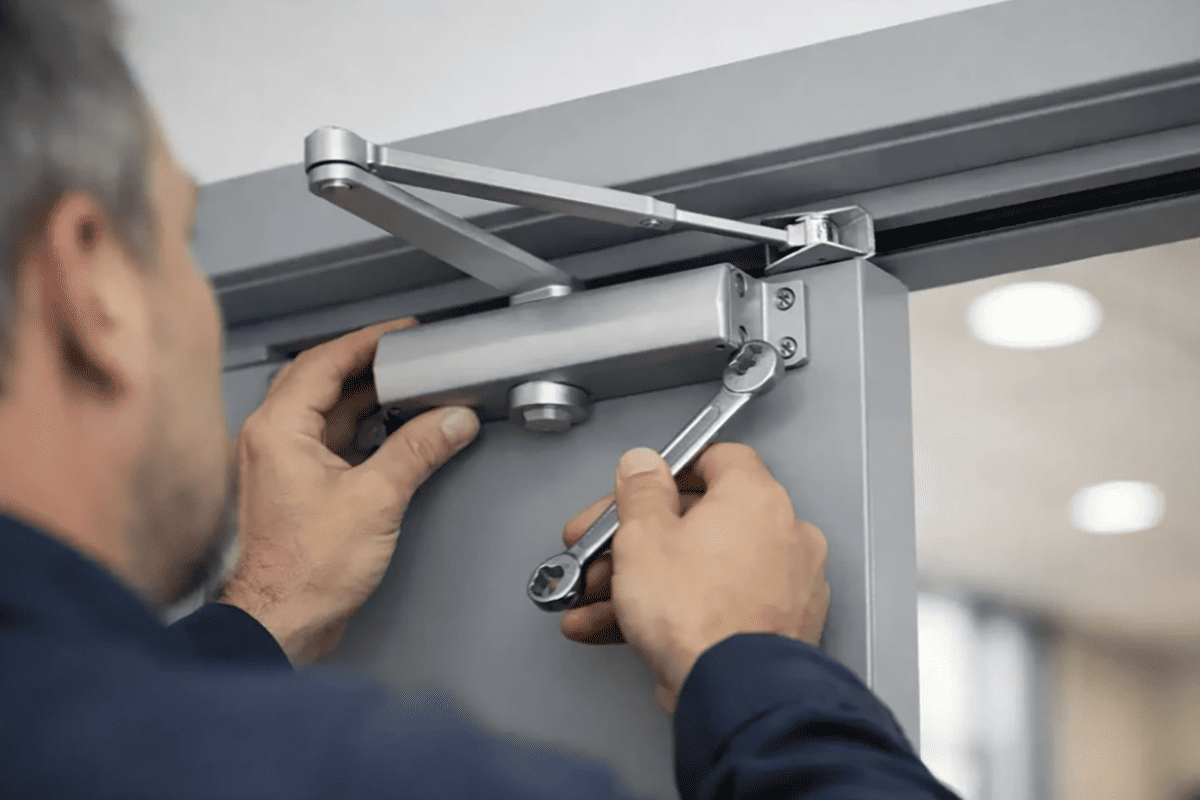
Before bulk ordering overhead door stops and holders, buyers should inspect material quality, arm movement, stop position, holding action, fasteners, finish consistency, packaging, and compatibility with the door system. They should also request drawings, samples, and inspection records, then verify any certificates needed for the target market.
Factory-level checks
In manufacturing, I focus on repeatability. A good sample is not enough if bulk production varies too much. For overhead devices, I pay attention to several practical inspection points.
Key quality control points include:
- Smooth arm rotation
- Stable stop engagement
- Correct hold-open action, if included
- Accurate hole positions
- Consistent machining dimensions
- Surface finish without obvious defects
- Proper fastener matching
- Strong packaging to prevent scratches
- Clear installation instructions
- Correct logo, stamping, or laser marking if ordered
Material and finish review
Architectural hardware buyers often care about finish because the product is visible after installation. But finish is not only decorative. It also affects corrosion resistance, brand perception, and long-term appearance.10
Common finish considerations include:
| Finish factor | What I check | Why it matters |
|---|---|---|
| Color consistency | Compare samples and batch parts | Keeps project appearance uniform |
| Surface defects | Check scratches, dents, pitting | Reduces rejection risk |
| Coating adhesion | Review process and test method | Helps avoid peeling or flaking |
| Corrosion expectation | Match finish to market environment | Important for humid or coastal regions |
| Logo quality | Check stamping or laser clarity | Supports brand distribution |
I avoid promising corrosion performance without confirmed test data. If a buyer needs salt spray results or a defined coating standard, the request should be stated before production.
Functional inspection
For holders, the hold-open function should be tested directly. The product should engage and release as intended. If the holding force is too weak, the door may drift. If it is too strong, users may pull hard and stress the fixings.
For stops, the key issue is controlled limitation. The device should stop the door at the designed angle without rough movement or loose components. If the installation screws loosen easily, the problem may come from the product, the door material, or the installation method. That is why I recommend testing with a realistic door sample where possible.
Sample approval before mass production
For OEM and ODM orders, I prefer a clear approval process:
- Buyer confirms product drawing.
- Factory prepares sample.
- Buyer checks function, finish, and packaging.
- Any changes are recorded in writing.
- Factory prepares pre-production sample if needed.
- Mass production follows the approved version.
- Final inspection is completed before shipment.
This process helps hardware brands and wholesalers reduce disputes. It also helps the manufacturer control production details across a large order.
Why supplier selection matters
A reliable supplier should not only quote a low price. The supplier should help buyers confirm whether the product matches the door application.
Conclusion
Overhead door stops and holders should be selected by function first. A stop limits the opening angle and helps prevent impact damage. A holder adds a reliable hold-open function when the door must remain open. I recommend checking door weight, opening angle, traffic frequency, installation space, closer compatibility, and verified documentation before bulk ordering. If you need factory-direct support for architectural door hardware, SDH Hardware can help review your specification, prepare samples, and support OEM or ODM sourcing for your market.
"A156.8 - 2026 Door Controls - Overhead Stops & Holders", https://buildershardware.com/ANSI-BHMA-Standards/Hardware-Highlights/A1568-2021-Door-Controls-Overhead-Stops-Holders. ANSI/BHMA A156.8 (Door Controls—Overhead Stops and Holders) defines overhead stops and holders as door control devices that limit the opening of swing doors and, for certain models, provide a hold-open function, and sets performance requirements for such products. Evidence role: definition; source type: institution. Supports: The standardized definition and scope of overhead stops and holders as top-mounted devices that limit opening and may include hold-open functionality.. Scope note: Access to the full text of the standard typically requires purchase; the scope statement confirms functions but does not describe specific product models. ↩
"Door Hold Open Devices - Facilities and Operations", https://fo.umich.edu/fosg/door-hold-open-devices/. ANSI/BHMA A156.8 describes overhead holders as devices that both limit opening and provide hold-open capability, while separate standards such as EN 1155 define electrically powered (magnetic) hold-open devices used to hold doors open subject to release requirements. Evidence role: definition; source type: institution. Supports: That holders are designed to keep doors open (including via magnetic mechanisms), whereas stops primarily limit opening travel.. Scope note: EN 1155 addresses electrically powered (magnetic) hold-open devices specifically and does not cover purely mechanical hold-open mechanisms. ↩
"Doorstop", https://en.wikipedia.org/wiki/Doorstop. Encyclopedic overviews of door stops note that they are intended to prevent a door from opening too widely and damaging walls or surrounding objects by limiting the door’s travel. Evidence role: general_support; source type: encyclopedia. Supports: That door stops are used to prevent doors from opening too far and striking adjacent surfaces.. Scope note: General-purpose encyclopedias provide broad descriptions rather than project-specific engineering analysis. ↩
"1910.22 - General requirements.", http://www.osha.gov/laws-regs/regulations/standardnumber/1910/1910.22. Occupational safety regulations for walking–working surfaces require that walking areas be kept free of hazards, including protruding or obstructing objects, to reduce trip risks. Evidence role: general_support; source type: government. Supports: That walking-working surfaces should be free of hazards, including protruding objects or obstructions that can contribute to tripping.. Scope note: The regulation speaks broadly to hazards and does not specifically address floor stops; it supports the general safety principle rather than a product-specific prohibition. ↩
"Fire Doors and NFPA 80 FAQs", https://www.nfpa.org/news-blogs-and-articles/blogs/2025/04/11/fire-doors-faqs. Fire door standards prohibit obstructing or wedging fire doors in the open position and require compliant hold-open arrangements that release automatically under fire or alarm conditions. Evidence role: expert_consensus; source type: institution. Supports: That fire doors are not permitted to be held open by wedges or similar improvised objects, and hold-open arrangements must meet code.. Scope note: Code adoption and specific clause numbering can vary by jurisdiction and edition; the principle applies specifically to fire-rated door assemblies. ↩
"Door closer", https://en.wikipedia.org/wiki/Door_closer. General references describe door closers as devices that automatically close doors and control the closing speed and final latching action. Evidence role: definition; source type: encyclopedia. Supports: That door closers are mechanical devices that control door closing speed and final latching.. Scope note: Encyclopedia entries provide high-level descriptions rather than product-specific performance data. ↩
"NFPA 101 Section 7.2.1.8. Self closing devices", https://www.fit.edu/media/site-specific/wwwfitedu/environmental-health-and-safety-ehs/documents/NFPA-101-Section-7.2.1.8-Self-closing-devices.pdf. Life safety codes require that doors held open by devices be arranged to automatically release upon actuation of the fire alarm or detection system, reflecting their integration within safety/release systems. Evidence role: general_support; source type: institution. Supports: That doors held open by devices must be arranged to release automatically upon fire alarm or equivalent signal.. Scope note: Exact wording and applicability depend on the code edition and local adoption; the requirement typically applies to life safety egress and fire door assemblies. ↩
"A156.8 - 2026 Door Controls - Overhead Stops & Holders", https://buildershardware.com/ANSI-BHMA-Standards/Hardware-Highlights/A1568-2021-Door-Controls-Overhead-Stops-Holders. BHMA performance standards assign grades based on durability testing, including cycle testing and other performance criteria, with higher grades intended for heavier or more frequent use. Evidence role: expert_consensus; source type: institution. Supports: That door hardware performance is graded and tested for durability (e.g., by cycle counts) to suit different traffic levels.. Scope note: Specific cycle counts and tests vary by product category and standard; selection must reference the correct BHMA/ANSI standard for the device type. ↩
"Fire Doors and NFPA 80 FAQs", https://www.nfpa.org/news-blogs-and-articles/blogs/2025/04/11/fire-doors-faqs. Fire door standards limit the use of hold-open devices on fire-rated assemblies to arrangements that permit automatic closing upon detection or alarm, and they prohibit wedges or other obstructions that prevent proper operation. Evidence role: expert_consensus; source type: institution. Supports: That hold-open arrangements for fire-rated doors are restricted and must meet specific criteria, including automatic release/closing.. Scope note: Requirements can vary by jurisdiction and code edition and apply specifically to fire-rated and certain controlled access doors. ↩
"Salt spray test", https://en.wikipedia.org/wiki/Salt_spray_test. Standards for architectural hardware finishes, such as ANSI/BHMA A156.18, include performance requirements related to corrosion resistance and appearance retention, often verified through standardized corrosion tests. Evidence role: general_support; source type: institution. Supports: That architectural hardware finishes are subject to performance criteria including corrosion resistance (e.g., via standardized tests).. Scope note: Corrosion tests (e.g., salt spray) are comparative and do not predict service life in specific environments. ↩
