
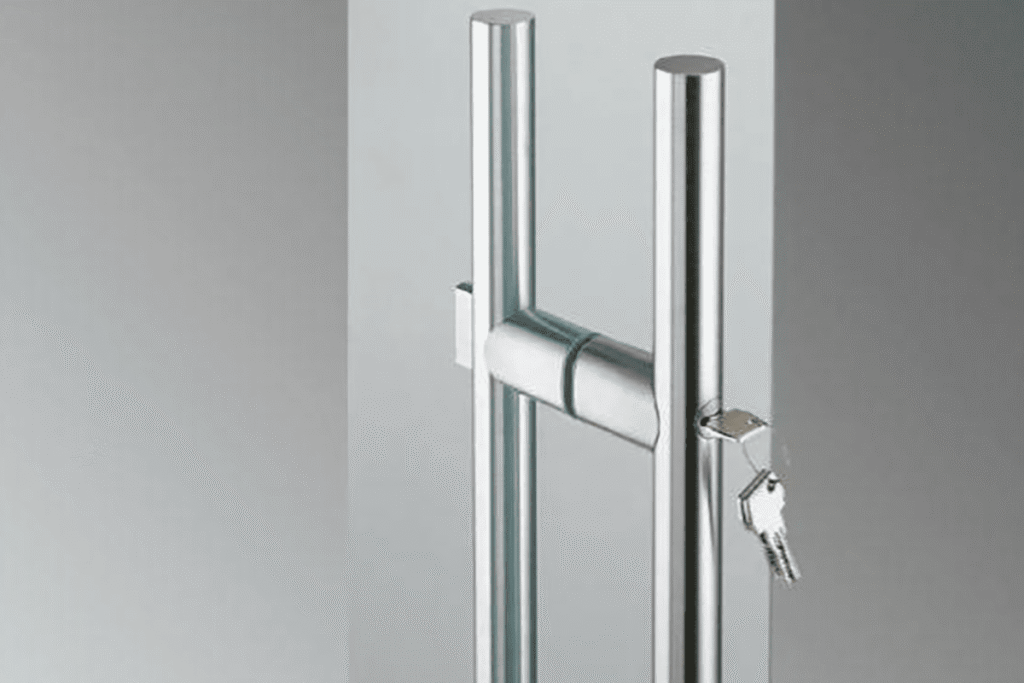
Handle on glass doors
A handle on glass doors can look simple, but the wrong choice can create installation problems, weak fixing points, poor user experience, and costly replacement work. For door factories, hardware brands, and wholesalers, the safest path is to evaluate design, material, mounting, testing, and supplier capability before placing a bulk order.
A handle on glass doors should be selected by matching the glass thickness, door size, traffic level, mounting method, finish durability, and project standard. Buyers should also verify drawings, samples, CE or fire-rated documents where relevant, and finished-product inspection reports before confirming mass production.

Glass doors are common in offices, hotels, shops, villas, and public buildings. However, they place special demands on hardware because the handle often connects directly to a fragile surface. I always advise buyers to treat this product as both a design item and a mechanical component.
What should buyers check before choosing a handle on glass doors?
A handle on glass doors can fail when buyers focus only on appearance. That mistake creates risk in procurement because the handle may not match the glass, the fixing hole, or the daily traffic level. A clear checklist helps buyers avoid mismatched products and supplier disputes.
The main checks are glass thickness, door weight, handle size, fixing center distance, material grade, surface finish, installation method, and test evidence. Buyers should request drawings, samples, packaging details, and inspection standards before confirming bulk production.

Start with the door, not the handle
I have seen buyers choose a beautiful handle first and then discover that the door needs a different hole position. That sequence creates delays. A better process starts with the glass door specification.
Before selecting a glass door pull handle or lever handle, I suggest buyers confirm:
- Glass thickness: common options include 8 mm, 10 mm, 12 mm1, and sometimes thicker tempered glass.
- Door type: swing door, sliding door, frameless glass door, framed glass door, or shower-style partition.
- Door size and weight: larger glass panels need stronger fixing and more comfortable grip size.
- Traffic level: office entrances and retail doors need higher durability than residential interior doors.
- Project environment: coastal, humid, high-touch, or public-use environments require better corrosion resistance2.
- Local compliance requirements3: buyers should verify applicable building, accessibility, and fire-related rules with qualified professionals.
Basic procurement checklist
| Evaluation item | Why it matters | Buyer action |
|---|---|---|
| Glass thickness | Determines screw length and fixing kit | Confirm exact mm before quotation |
| Hole center distance | Controls installation compatibility | Request technical drawing |
| Material | Affects strength and corrosion resistance | Ask for material grade |
| Finish | Affects appearance and durability | Request finish sample |
| Packaging | Prevents scratches during shipping | Confirm individual protection |
| Testing | Supports quality claims | Request test records or sample testing |
| Certification | May be required by project | Verify documents independently |
Match the handle to real use
A hotel lobby door is not the same as a small office partition. A bulk wholesaler may sell to many project types, so one model may need broad compatibility. A door factory may need a precise drawing because it drills glass before assembly. A hardware brand may care more about surface consistency, logo placement, and retail packaging.
For professional buyers, I recommend separating requirements into three groups:
Must-have specifications
- Glass thickness range
- Hole distance
- Material grade
- Finish code
- Packing method
Project-dependent specifications
- Fire-rated door compatibility
- Accessibility requirements
- Salt spray performance
- Load or cycle test expectations
Brand and commercial requirements
- Laser logo or stamping
- Custom color box
- Barcode and label
- Spare fixing kits
- Installation instruction sheet
At SDH Hardware, our internal process usually begins with product drawings and sample confirmation before bulk production. I describe this as a practical workflow, not as a substitute for project engineering. For application-specific decisions, buyers should still involve qualified door system professionals, especially when the glass door is part of a fire-rated, high-traffic, or public building system.
Which materials work best for a handle on glass doors?
A handle on glass doors needs a material that is strong, stable, and suitable for the project environment. Poor material selection can lead to rust, loose fittings, finish fading, or customer complaints after installation. Material grade matters as much as the handle shape.
The most common quality materials for glass door handles are stainless steel, brass, and aluminum alloy. Stainless steel is widely used for commercial projects because it offers good strength, clean appearance, and corrosion resistance4. Brass is often chosen for premium finishes, while aluminum can suit lighter-duty applications.
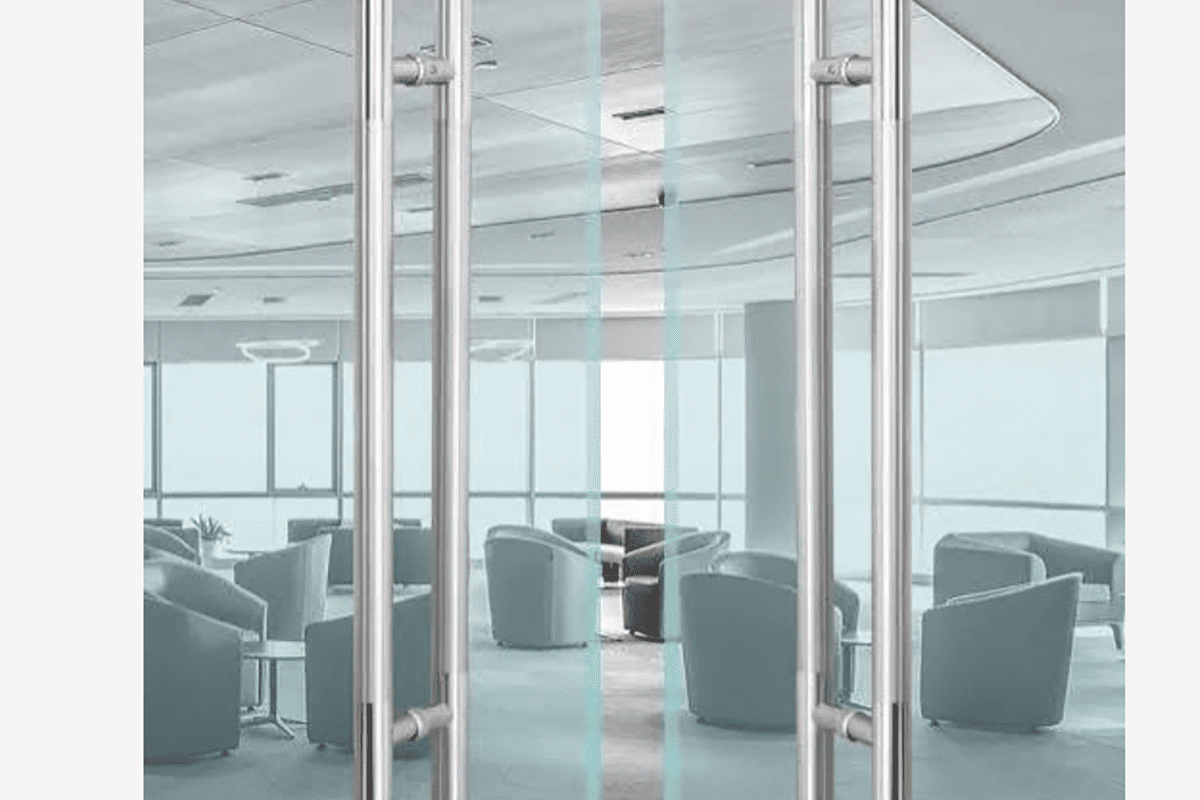
Stainless steel: the practical commercial choice
Stainless steel is a common choice for office buildings, retail shops, hotels, and public entrances. It gives a clean architectural look, and it works well with glass, aluminum frames, and modern interiors.
For procurement, buyers usually compare SS201, SS304, and SS3165:
| Material | Typical use | Main advantage | Buyer caution |
|---|---|---|---|
| SS201 | Cost-sensitive interior projects | Lower cost | Lower corrosion resistance |
| SS304 | General commercial hardware | Balanced strength and corrosion resistance | Verify grade with supplier |
| SS316 | Coastal or harsh environments | Better corrosion resistance | Higher cost |
I usually recommend that buyers avoid choosing stainless steel only by price. The grade, wall thickness, welding quality, polishing process, and fixing accessories all affect performance. A thick tube with poor welding can still create problems. A beautiful finish with weak screws can still fail.
Brass: premium look and surface flexibility
Brass works well when the project needs a more decorative appearance. It can support finishes such as polished brass, antique brass, satin brass, and PVD-style decorative effects depending on the supplier’s process. Hardware brands may choose brass when they want a premium product line.
However, brass handles may cost more than basic stainless steel handles. Buyers should also check finish protection, surface consistency, and packaging because brass finishes can show scratches easily.
Aluminum alloy: light and cost-effective
Aluminum alloy can be useful for lighter-duty glass door applications or where weight reduction matters6. It can also support anodized or powder-coated finishes. However, I would not treat aluminum as a universal substitute for stainless steel in heavy commercial traffic.
Do not ignore the fixing parts
The visible handle body gets most of the attention, but the fixing kit often decides whether the installation feels solid. A complete set may include:
- Through bolts
- Allen screws
- Plastic or rubber gaskets
- Metal washers
- Decorative cover caps
- Back-to-back connector parts
- Installation tools or instructions
A strong handle body with weak fixing hardware is still a weak product.
Surface finish evaluation
For B2B orders, finish consistency is important because buyers often order hundreds or thousands of sets. A small color variation may be acceptable in one sample, but it becomes visible in a full project.
Common finish options include:
- Satin stainless steel
- Mirror polished stainless steel
- Matte black
- PVD gold
- Satin brass
- Antique bronze
- Custom powder coating
When I review a glass door handle sample, I look at the weld area, corner polishing, edge smoothness, color uniformity, and fingerprint visibility. I also check whether the supplier can keep the same finish across handles, hinges, locks, cylinders, and door accessories. This matters for one-stop sourcing because a project often needs a complete hardware family, not only one handle.
How do mounting methods affect a handle on glass doors?
A handle on glass doors must be mounted in a way that protects the glass and keeps the handle stable during daily use. If the mounting method is wrong, the door can rattle, fittings can loosen, or stress can concentrate around drilled holes7.
The main mounting methods are back-to-back through-bolt fixing, single-sided fixing, adhesive fixing, and frame-mounted fixing. For most commercial glass doors, through-bolt back-to-back handles are preferred8 because they provide stable mechanical connection through pre-drilled glass holes.

Back-to-back through-bolt fixing
Back-to-back fixing is common for frameless glass doors. Two handles sit on opposite sides of the glass and connect through drilled holes. This design distributes force better than many surface-only fixing methods.
Buyers should confirm:
- Hole diameter
- Center-to-center hole distance
- Glass thickness range
- Gasket material
- Bolt length
- Cover cap design
- Installation tolerance
This method usually offers good stability, but it requires accurate glass drilling. Door factories need drawings before glass processing. If the hole position is wrong, the handle may not install correctly.
Single-sided fixing
Single-sided handles are used when the handle is needed on only one side of the door. This can work for some interior partitions or special door systems. However, the fixing design must still prevent loosening.
Single-sided hardware may use anchors, special fasteners, or fixing plates. Buyers should ask how the supplier prevents rotation and pull-out under use.
Adhesive fixing
Adhesive fixing may look convenient because it can reduce drilling. However, I treat it with caution for commercial doors. Adhesive strength depends on surface preparation, adhesive quality, humidity, temperature, and user behavior9. It may suit decorative or low-load cases, but it is not my first choice for high-traffic commercial glass doors.
Buyers should request application instructions and test data if adhesive fixing is proposed. They should also check whether local rules allow this method for the specific project.
Frame-mounted fixing
Some glass doors use aluminum, steel, or wood frames. In that case, the handle may mount to the frame or lock stile rather than directly through the glass. This can reduce stress on the glass and allow integration with locks or latch systems.
Mounting comparison table
| Mounting method | Best suited for | Strength level | Main risk |
|---|---|---|---|
| Back-to-back through bolt | Frameless commercial glass doors | High | Requires accurate drilling |
| Single-sided fixing | Interior or special-use doors | Medium | May loosen if poorly designed |
| Adhesive fixing | Light-duty decorative applications | Low to medium | Depends on adhesive and surface prep |
| Frame-mounted fixing | Framed glass doors | Medium to high | Must match frame system |
Glass protection details
Glass does not behave like wood or metal. It does not forgive point stress. That is why small parts matter. A well-designed handle on glass doors should include proper gaskets or bushings between metal and glass10.
Important protection details include:
Rubber or nylon washers
- These reduce direct metal-to-glass contact.
- They help distribute pressure.
Correct tightening torque
- Over-tightening can create stress11.
- Under-tightening can cause movement.
Smooth metal edges
- Sharp edges can damage the glass or installer’s hand.
Accurate drilling
- Poorly drilled holes increase installation risk.
For larger projects, I suggest buyers request a sample installation before full rollout. This small step can reveal whether the handle feels stable, whether the cover cap sits flat, and whether the fixing kit matches the actual glass thickness. It is a simple way to reduce claims after shipment.
How should B2B buyers evaluate a supplier for glass door handles?
A supplier may offer a competitive price, but buyers still need evidence that the factory can deliver stable quality, correct packaging, and repeatable production. A weak supplier can turn a simple handle order into delayed shipments, inconsistent finishes, and after-sales disputes.
B2B buyers should evaluate a glass door handle supplier by checking factory capability, production control, material sourcing, testing equipment, certification documents, customization support, packaging quality, and export experience. Samples and inspection reports should be reviewed before mass production.
Factory capability and production control
For architectural hardware, I prefer to evaluate suppliers beyond the catalog. A catalog shows product range, but it does not prove manufacturing discipline. Buyers should ask how the factory controls raw materials, machining, polishing, finishing, assembly, and final inspection.
At SDH Hardware, our business context includes independent factory operations, more than 10 years of specialized production experience, and a team of 150 professional employees. We focus on R&D, precision manufacturing, and global sales of architectural door hardware. I mention this because B2B buyers often need to know whether a supplier can support long-term orders, not just one shipment.
Product range and one-stop sourcing
A handle is rarely purchased alone in a project. Buyers may also need:
- Euro mortise locks
- Stainless steel lever handles
- Butt hinges
- Concealed door hinges
- Euro brass cylinders
- Door accessories
- Fixing kits and matching accessories
A broad product portfolio helps buyers align finish, packaging, drawings, and delivery schedules across a full hardware set. SDH Hardware’s product portfolio covers more than 3,000 architectural hardware articles, which supports door manufacturers, hardware brand enterprises, and bulk wholesalers that prefer one-stop sourcing.
Certification and document verification
Certifications can support procurement decisions, but buyers should verify them carefully. A supplier may state that products comply with EU standard specifications or are available with CE certification and fire-rated certification. However, the buyer should request the actual documents and confirm:
| Document | What buyers should check |
|---|---|
| CE certificate | Product scope, issuing body, validity, model coverage |
| Fire-rated certificate | Door system relevance, test standard, time rating, product match |
| Test report | Sample model, test method, date, results |
| Material report | Grade, batch, supplier traceability |
| Inspection report | Dimensions, finish, packaging, quantity |
I always recommend professional evaluation for application-specific decisions. Fire-rated performance, accessibility compliance, and public-building safety are not areas where buyers should rely only on sales wording. The final door system must be reviewed according to the project and local regulations.
Customization support
For ODM and OEM buyers, customization can decide whether a supplier is useful. Common customization requests include:
- Custom handle length
- Custom tube diameter
- Custom center distance
- Custom surface treatment
- Customer logo by stamping or laser marking
- Custom packaging design
- Product drawings after order confirmation
- Accessory configuration for regional standards
A good supplier should explain what can be customized, what needs tooling, what minimum order quantity applies, and how long sample development takes.
Quality control before shipment
A practical inspection plan for glass door handles may include:
Dimensional inspection
- Length
- Hole distance
- Tube diameter
- Thread depth
Surface inspection
- Scratches
- Color difference
- Welding marks
- Polishing defects
Assembly inspection
- Screw fit
- Cap alignment
- Gasket completeness
- Pair matching
Packaging inspection
- Inner bag
- Foam protection
- Carton strength
- Shipping marks
Function check
- Grip comfort
- Fixing stability
- No sharp edges
- No loose parts
At SDH Hardware, we describe our quality process as raw material screening, standardized production supervision, and finished product inspection. We also use specialized testing machines across function research, frame detection, and final product testing. Buyers should still define their own acceptance criteria in purchase contracts, especially for large orders or brand programs.
What specifications should be included in a purchase order for a handle on glass doors?
A handle on glass doors order can become unclear if the purchase order only lists the model name and quantity. That creates risk because factories, buyers, and installers may assume different glass thicknesses, finishes, accessories, or packaging standards.
A purchase order should include model number, material grade, finish, handle size, hole center distance, glass thickness range, mounting accessories, packaging method, logo requirements, inspection standard, certification documents, and delivery terms. Clear specifications reduce disputes and improve production accuracy.
Why written details matter
In B2B hardware procurement, small assumptions become large problems. I have seen buyers approve a sample with one finish and then request matching hinges later, only to discover the surface tone is slightly different. I have also seen projects delayed because the glass was drilled before the final handle drawing was confirmed.
A strong purchase order works like a shared technical agreement. It should make the product clear enough that the factory, inspection team, freight forwarder, and buyer all understand the same requirements.
Recommended purchase order fields
| PO field | Example detail |
|---|---|
| Product name | Back-to-back stainless steel glass door pull handle |
| Model number | Supplier model or buyer code |
| Material | SS304, brass, aluminum alloy, or agreed grade |
| Finish | Satin stainless steel, matte black, PVD gold, etc. |
| Size | Overall length, grip diameter, projection |
| Hole distance | Center-to-center measurement |
| Glass thickness | 8–12 mm or specific range |
| Fixing kit | Bolts, gaskets, caps, tools, spare screws |
| Logo | Laser logo, stamping, or no logo |
| Packaging | Inner bag, foam, color box, master carton |
| Documents | Drawing, inspection report, certificate copy |
| Inspection | AQL level or agreed inspection method |
| Delivery term | FOB, CIF, EXW, or agreed Incoterms |
| Lead time | Sample time and mass production time |
Include drawings whenever possible
A drawing reduces confusion better than a written description alone. The drawing should show:
- Overall length
- Grip length
- Tube or bar diameter
- Projection from glass
- Hole center distance
- Hole diameter
- Fastener structure
- Applicable glass thickness
For ODM or OEM projects, drawings are even more important. If the buyer needs a handle to match an existing product line, the supplier should confirm whether the design requires a new mold, adjusted tooling, or only standard production changes.
Set acceptance standards
Buyers should define what counts as acceptable and unacceptable before production starts. For example:
- Minor surface marks may be allowed only in non-visible areas.
- Color difference should be checked against an approved sample.
- All fixing kits must be complete.
- Cartons must pass reasonable export packaging expectations.
- The handle must match the approved drawing.
This is not about mistrusting the supplier. It is about preventing misunderstanding. Good factories prefer clear standards because clear standards reduce rework, claims, and negotiation after shipment.
Ask for a golden sample
A golden sample is an approved reference sample that both buyer and supplier use during production and inspection. It is useful for finish, size, packaging, and assembly confirmation. For repeat orders, it helps maintain consistency across batches.
For hardware brands and wholesalers, I suggest keeping one approved sample in the buyer’s office and one at the factory. This simple practice supports long-term product consistency, especially when the same handle is sold under a private label.
Frequently Asked Questions
What is the best material for a handle on glass doors?
Stainless steel, especially SS304, is a practical choice for many commercial glass doors because it balances strength, appearance, and corrosion resistance. SS316 may be better for coastal or harsh environments. Brass can suit premium decorative projects, while aluminum may suit lighter-duty applications.
Can any handle be installed on a glass door?
No. A glass door handle must match the glass thickness, hole diameter, center distance, and mounting method. Glass also needs proper gaskets or bushings to reduce stress. Buyers should confirm technical drawings before drilling glass or approving bulk production.
Should I choose back-to-back or single-sided glass door handles?
Back-to-back through-bolt handles are common for commercial frameless glass doors because they provide stable fixing through the glass. Single-sided handles can work in selected applications, but buyers should check the anti-rotation design, fixing strength, and intended traffic level.
Are CE and fire-rated certificates necessary for glass door handles?
They may be necessary depending on the project, market, and door system. Buyers should request actual certificates and verify product scope, validity, and model coverage. Fire-rated performance should be reviewed by qualified professionals because it often depends on the complete door assembly12.
What information should I send to a supplier for quotation?
You should send drawings or photos, glass thickness, handle size, material, finish, quantity, logo requirements, packaging needs, certification expectations, and destination market. Clear information helps the supplier quote accurately and reduces changes after sampling.
Conclusion
A handle on glass doors should be evaluated as a functional architectural hardware component, not only as a decorative accessory. Buyers should confirm glass thickness, mounting method, material grade, finish, fixing kit, drawings, testing, packaging, and supplier capability before placing bulk orders. At SDH Hardware, I support B2B buyers with factory-direct door hardware supply, OEM/ODM customization, product drawings, and finished-product inspection. If you are sourcing glass door handles for a project or product line, contact us with your specifications for a practical quotation and sample plan.
"Comprehensive Guide to Glass Thickness for Windows", https://www.artglasssupplies.com/blog/comprehensive-guide-to-glass-thickness-for-windows-standards-applications-and-innovations/?srsltid=AYCX9vIZeJf-2jgcFoUQHIsb7p4cHyJFeObRxUK9vJmY_df0U6gIPBUz. Technical standards and glazing references for thermally toughened architectural safety glass list commercially specified thicknesses that include 8, 10, and 12 mm, supporting these values as common specification examples rather than universal requirements. Evidence role: general_support; source type: institution. Supports: Common architectural safety-glass products are manufactured and specified in thicknesses that include 8, 10, and 12 mm.. Scope note: The source should support typical available thicknesses, not prove that every glass door project uses these dimensions. ↩
"Atmospheric Corrosion of Different Steel Types in Urban and ...", https://pmc.ncbi.nlm.nih.gov/articles/PMC11679332/. Corrosion research identifies moisture and chloride-bearing environments, such as marine or coastal exposure, as factors that increase corrosion risk in metals, supporting the article’s advice to specify higher corrosion resistance in such applications. Evidence role: mechanism; source type: research. Supports: Humidity, chloride exposure, and aggressive service environments increase corrosion risk and justify selecting more corrosion-resistant materials or finishes.. ↩
"ADA Standards for Accessible Design Title III Regulation ...", https://www.ada.gov/law-and-regs/design-standards/1991-design-standards/. Official accessibility and building-safety regulations establish requirements for door operation, hardware location, and fire-door performance, supporting the need for project-specific compliance review by qualified professionals. Evidence role: expert_consensus; source type: government. Supports: Door hardware can be subject to accessibility, building-code, and fire-safety requirements that vary by jurisdiction and application.. ↩
"Stainless steel", https://en.wikipedia.org/wiki/Stainless_steel. Reference works on stainless steel describe its corrosion resistance, mechanical strength, and architectural use, supporting the article’s general characterization of stainless steel as a practical commercial hardware material. Evidence role: general_support; source type: encyclopedia. Supports: Stainless steel is known for corrosion resistance and mechanical properties that make it suitable for architectural and commercial hardware applications.. Scope note: Such sources support the material rationale generally; they do not evaluate any specific handle model or supplier. ↩
"SAE 304 stainless steel", https://en.wikipedia.org/wiki/SAE_304_stainless_steel. Materials references comparing stainless steel grades explain that alloy composition affects corrosion resistance and that molybdenum-bearing 316 stainless steel generally performs better in chloride exposure than 304, while 201 is typically a lower-nickel alternative with reduced corrosion resistance. Evidence role: general_support; source type: education. Supports: Different stainless steel grades vary in composition and corrosion resistance; 316 is generally more resistant in chloride environments than 304, while 201 is commonly considered less corrosion resistant than 300-series grades.. Scope note: The source should support grade-level tendencies, not guarantee performance without considering fabrication quality, finish, and environment. ↩
"Aluminium", https://en.wikipedia.org/wiki/Aluminium. Engineering references describe aluminum alloys as low-density materials used when weight reduction is important, supporting their use in lighter-duty hardware applications while leaving load suitability dependent on the specific alloy, section design, and service conditions. Evidence role: general_support; source type: education. Supports: Aluminum alloys have relatively low density and are used where weight reduction is important, while their suitability depends on load and alloy/temper selection.. Scope note: This is contextual support for material selection, not proof that aluminum is adequate for heavy-traffic glass doors. ↩
"Stress Concentration Around a Small", https://ntrs.nasa.gov/api/citations/19860005880/downloads/19860005880.pdf. Fracture-mechanics research on glass plates with holes or cutouts shows that geometric discontinuities can concentrate stress and reduce strength, supporting the article’s warning about incorrect mounting around drilled holes. Evidence role: mechanism; source type: paper. Supports: Holes and cutouts in glass can act as stress concentrators and affect fracture strength, especially when drilling quality or loading is poor.. ↩
"How To Install A Commercial Storefront Glass Door Handle",
. Architectural glazing and hardware guidance describes through-glass mechanical fittings as a recognized attachment method for frameless glass doors, supporting the article’s preference for through-bolt back-to-back handles in commercial contexts, although such guidance does not prove that this method is superior in every installation. Evidence role: general_support; source type: institution. Supports: Mechanical through-glass fittings are a recognized method for attaching hardware to frameless glass panels, provided holes, gaskets, and tolerances are properly specified.. Scope note: The source should contextualize recognized practice; actual suitability still depends on glass type, hole design, loads, and local standards. ↩"Towards Reliable Adhesive Bonding - PMC - NIH", https://pmc.ncbi.nlm.nih.gov/articles/PMC12195023/. Studies of adhesive bonding show that joint strength and durability are influenced by surface preparation, adhesive formulation, temperature, and humidity, supporting the article’s caution that adhesive-fixed glass-door handles require application controls and test evidence. Evidence role: mechanism; source type: paper. Supports: Adhesive joint performance is affected by surface preparation, environmental exposure, adhesive formulation, temperature, and humidity.. ↩
"Glass-to-metal seal", https://en.wikipedia.org/wiki/Glass-to-metal_seal. Glazing installation guidance for metal fittings on glass describes the use of gaskets, sleeves, or bushings to separate metal from glass and reduce localized bearing stress, supporting the article’s recommendation for protective interface components. Evidence role: mechanism; source type: institution. Supports: Interposing resilient gaskets, sleeves, or bushings between metal fittings and glass is a recognized method to reduce direct contact and local stress.. Scope note: The source should support the protective principle; exact gasket material and dimensions must still be specified for the actual fitting and glass assembly. ↩
"Adhesive Filling, Bolt Reinforcement, and Elliptical Perforation ...", https://pmc.ncbi.nlm.nih.gov/articles/PMC12472009/. Engineering guidance on bolted glass fittings and fastener preload explains that tightening torque controls clamping force and local stress, supporting the article’s warning that over-tightening may damage glass while insufficient tightening can permit movement. Evidence role: mechanism; source type: research. Supports: Fastener preload and torque affect clamping stress and joint movement; excessive preload can increase local stress in brittle materials such as glass.. Scope note: The source should support the mechanical principle; it will not provide a universal torque value for all handle designs. ↩
"Fire Doors and NFPA 80 FAQs", https://www.nfpa.org/news-blogs-and-articles/blogs/2025/04/11/fire-doors-faqs. Fire-door standards and inspection guidance treat fire performance as a property of the tested door assembly and its listed components, supporting the article’s statement that qualified review is needed for fire-rated glass-door hardware applications. Evidence role: expert_consensus; source type: institution. Supports: Fire-door ratings are based on tested assemblies and compatible components, including doors, frames, glazing, seals, and hardware.. ↩
