
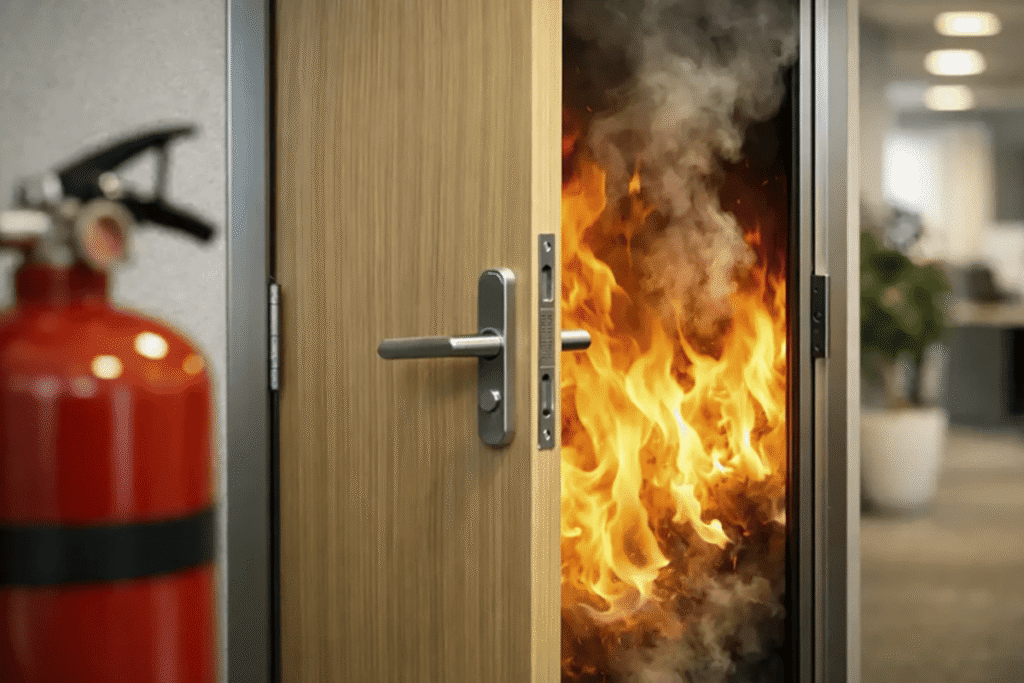
Should Fire Doors be Tested from Both Sides?
Fire doors can fail in different ways when fire attacks from different directions, and that creates real risk for door manufacturers, hardware buyers, and project suppliers. If a buyer assumes one fire test covers every installation, the complete assembly may be misapplied. The safer approach is to check the standard, report scope, and hardware configuration before approval.
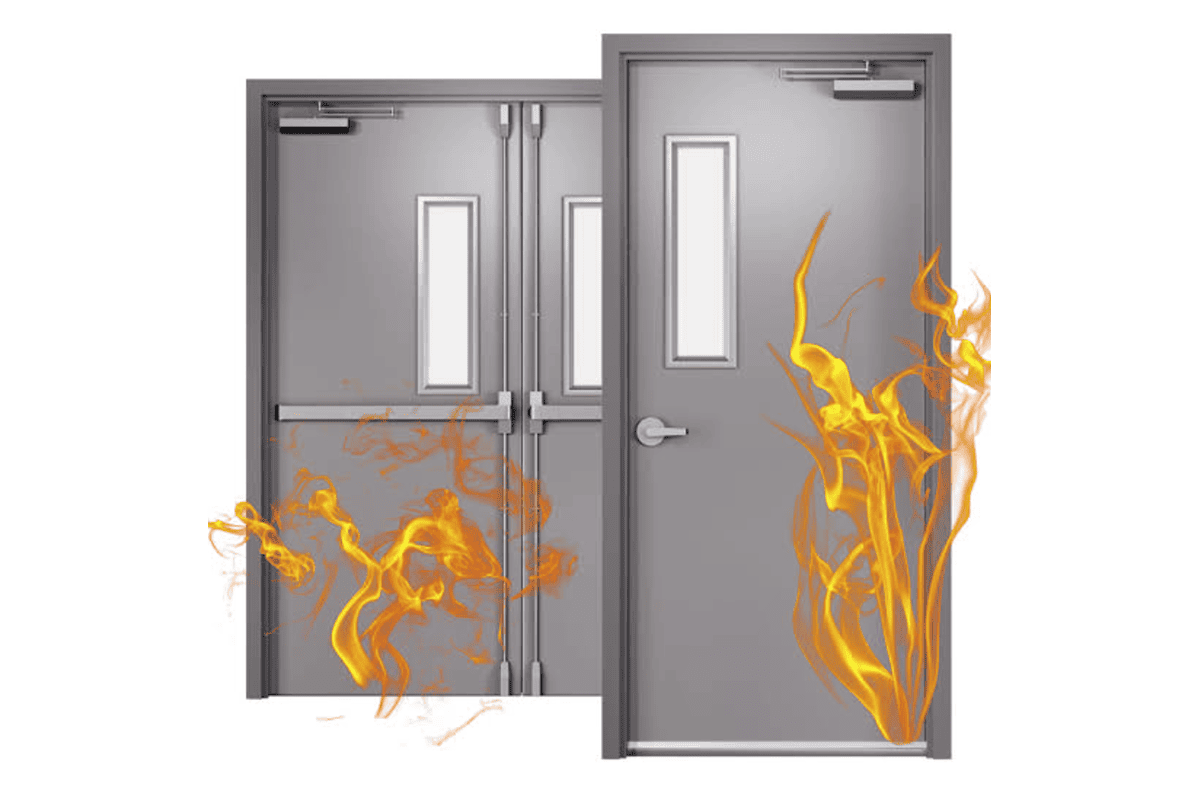
Fire doors should be tested or evaluated from both sides when the applicable standard, certification scope, or project specification requires it. Fire exposure from the room side and corridor side can create different heat paths, deformation patterns, and stress on hinges, locks, closers, seals, and frames.1 A one-side test should only be accepted for the opposite side if the test report clearly allows it.
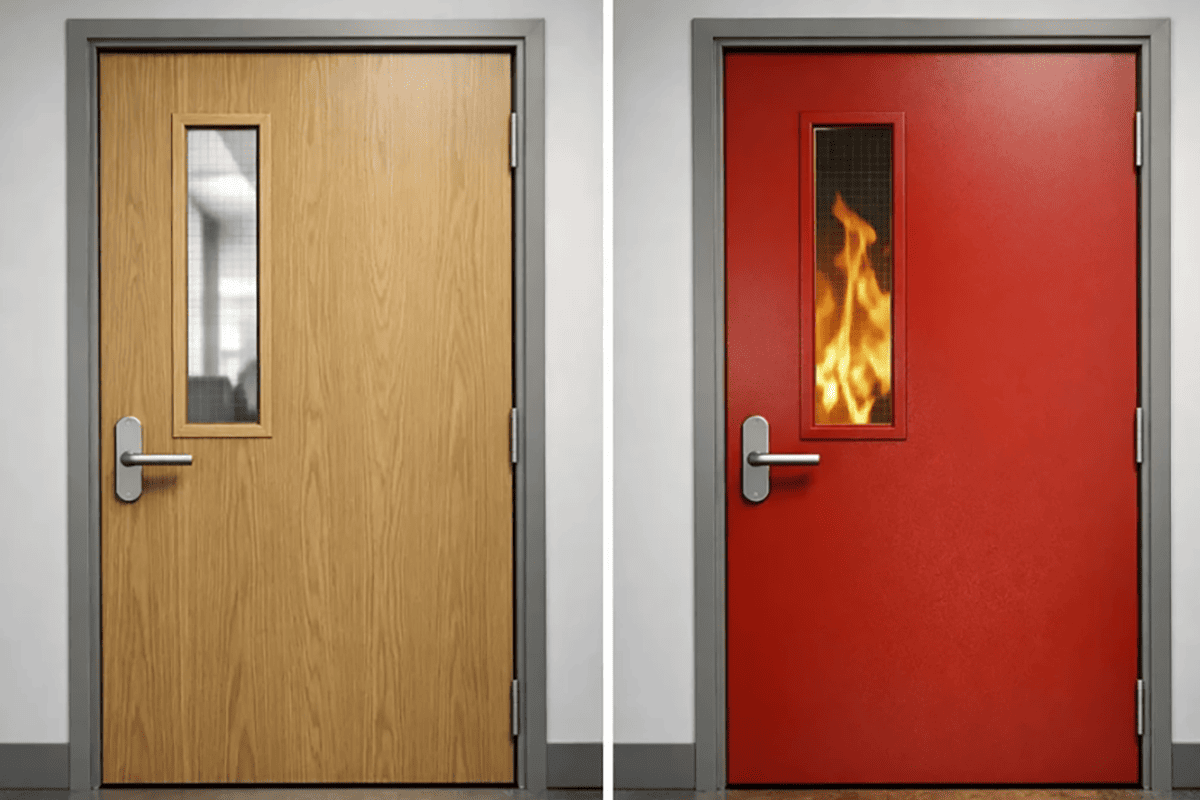
In my work with fire-rated door hardware buyers, I often see the same question appear during certificate review: “Is this test direction valid for my project?” The answer is rarely a simple yes or no. It depends on the tested assembly, the hardware set, and the rules behind the certificate.
Why should fire doors be tested from both sides?
Fire doors are often treated as flat panels, but that view misses the real problem. Fire does not only heat the face of the leaf. It also changes pressure, attacks gaps, stresses the frame, and loads the hardware in ways that can differ by direction.
Fire doors should be tested from both sides when required because internal and external fire exposure may produce different failure modes. One side may cause more leaf bowing, latch stress, hinge distortion, seal expansion, or closer arm movement than the other. Directional testing helps confirm whether the complete door assembly can maintain integrity under realistic conditions.
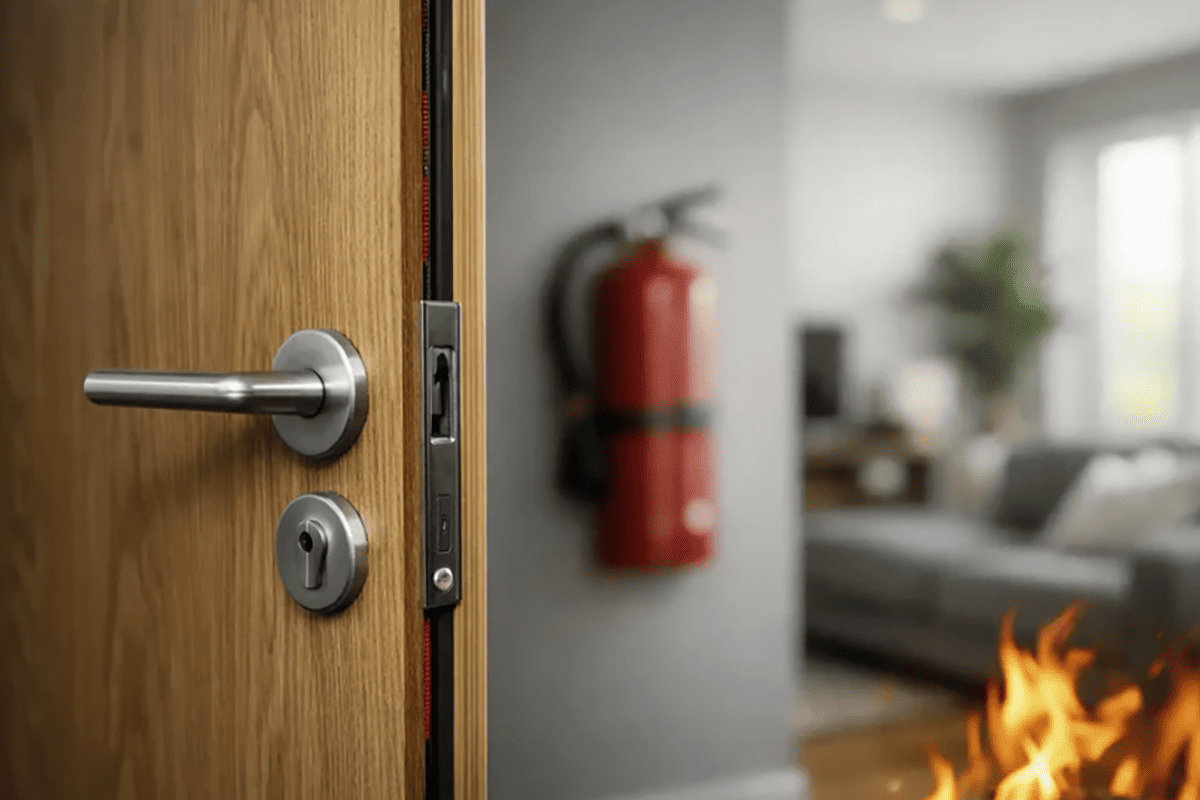
Fire direction changes the stress pattern
A fire door assembly is not symmetrical in every detail. Even when the door leaf looks similar on both faces, the hardware, lock case, closer position, hinge fixing points, frame profile, glazing, seals, and intumescent materials may not respond the same way from each side.
For example, a corridor-side fire can heat the closer body directly if it is surface-mounted on that side. A room-side fire may put more thermal load on the lock face, latch area, or hinge knuckles, depending on the opening direction and hardware layout. I have seen buyers focus only on the door core material, then later discover that the certified assembly used a different closer position or a different lock type.
That difference matters because fire performance is about the complete tested configuration2.
A fire door is a complete system
A fire-rated opening usually includes several linked parts3:
| Assembly part | Why it matters during fire exposure |
|---|---|
| Door leaf | Resists heat transfer, flame passage, and structural deformation |
| Frame | Holds the leaf in position and limits gap growth |
| Hinges | Carry the door weight under heat and prevent collapse |
| Lock or latch | Keeps the leaf engaged with the frame |
| Door closer | Helps maintain the closed position before and during fire conditions |
| Seals | Expand or compress to restrict smoke, flame, and hot gases |
| Glazing or vision panel | Adds another tested weak point if included |
If one element fails early, the entire fire performance can be affected.4 A high-quality door leaf cannot compensate for a hinge that deforms beyond the tested condition. A strong lock case cannot help if the frame fixings pull away. This is why I always advise B2B buyers to read test reports as assembly documents, not just as product brochures.
Both-side evaluation reduces procurement risk
For factories and wholesalers, the practical risk is not academic. A wrong assumption can lead to:
- Rejected project submittals
- Failed third-party review
- Delayed shipment approval
- Rework on hardware schedules
- Disputes between door factory, hardware supplier, and contractor
- Market compliance problems in Europe, the Middle East, or Southeast Asia
Testing from both sides, where required, gives procurement teams stronger evidence. It helps confirm that the door set can resist fire exposure from the room side or escape-route side, depending on how the project defines the risk.
I do not treat “fire-rated” as a single universal label. I treat it as a tested scope that must match the real door assembly.
That small mindset change helps buyers avoid many problems.
When can one-side testing for fire doors be accepted?
Many buyers want to know whether one test can cover both directions. The concern is understandable because full fire testing is expensive, time-consuming, and configuration-specific. However, assuming equivalence without checking the report can create compliance risk.
One-side testing for fire doors may be accepted only when the applicable standard, certification rules, or test report scope clearly permits it.5 Buyers should not automatically apply a one-side result to the opposite side. The report should identify the tested face, allowed field of application, construction details, and hardware configuration.
The test report controls the answer
In practical procurement, the first document I ask to see is the fire test report6, followed by the certificate and any extended application report if available. A certificate may summarize performance, but the test report usually gives more detail about:
- Which side faced the furnace
- Door opening direction
- Leaf construction and thickness
- Frame material and profile
- Hardware items installed
- Seal type and position
- Door size and allowed size range
- Integrity and insulation results
- Any limitations or allowed variations
If the report says only one side was tested, the buyer should look for language that explains whether the result can apply to the other side. If the report is silent, I would not assume coverage. A qualified fire consultant, certification body, or local authority may need to interpret the result for the project.
Standards and markets differ
Requirements can vary across test standards and regions.7 For example, European, British, Middle Eastern, and other market systems may define fire resistance classification, field of application, and hardware acceptance differently. Some projects follow national building codes. Others follow owner specifications, civil defense requirements, or insurance-driven standards.
That is why I avoid global claims such as “one side is always enough” or “both sides are always mandatory.” The correct answer depends on the applicable standard and approval pathway.
What buyers should ask before accepting one-side evidence
A procurement team can reduce mistakes by asking clear questions:
- Was the exposed face clearly identified?
- Does the report allow use from the opposite direction?
- Was the door inward-opening or outward-opening?
- Was the same hardware set used in the tested sample?
- Are hinges, locks, closers, and seals listed by brand, model, size, and fixing method?
- Does the certificate cover the actual door type, such as timber, steel, composite, or metal-clad?
- Does the project require insulation, integrity only, smoke control, or additional impact performance?
I once had a buyer ask whether a tested lock could be used on a larger double-leaf door because the lock itself had fire-rated documentation. My answer was cautious. The hardware document was useful, but it did not automatically prove the larger door assembly. The door size, meeting stile, bolts, coordinator, closer, and frame all had to be checked against the tested or approved scope.
One-side acceptance should be documented
If one-side testing is accepted, the buyer should keep written evidence. This may include:
| Evidence type | What it should confirm |
|---|---|
| Fire test report | Tested face, result, sample construction |
| Certificate | Classification and validity scope |
| Extended application report | Allowed variations from the tested sample |
| Hardware schedule | Matching models, sizes, materials, finishes, and fixings |
| Authority approval | Project-specific acceptance if needed |
Good documentation protects the buyer and supplier. It also makes later inspection easier.
How does hardware affect fire doors during directional fire exposure?
Hardware is often small compared with the door leaf, so buyers sometimes underestimate its role. That can be dangerous. During fire exposure, hardware becomes a load path, a fixing point, a gap controller, and sometimes a weak point.
Hardware affects fire doors because hinges, locks, cylinders, closers, bolts, seals, and accessories help the door remain closed, aligned, and engaged with the frame.8 Under directional heat, these parts can expand, soften, distort, or lose fixing strength. The tested hardware configuration should match the intended project as closely as possible.
Hinges carry the structural load
Hinges do more than swing the door. In a fire, they must keep the leaf attached to the frame while the door heats unevenly and tries to bow. If hinges deform, screws pull out, or the hinge blade loses support, the leaf can sag and create gaps.
For B2B buyers, I usually recommend checking:
- Hinge material, such as stainless steel or steel
- Hinge size and thickness
- Bearing design
- Screw type and fixing pattern
- Door weight rating
- Fire test evidence with a similar door construction
- Compatibility with intumescent pads if required
A hinge that performs well on a standard internal door is not automatically suitable for a fire-rated assembly. The actual tested arrangement matters.
Locks and latches help maintain engagement
A mortise lock, latch, or panic function can help keep the door closed during fire conditions. However, the lock area also cuts into the leaf. This makes it important to consider the lock case size, faceplate material, strike plate fixing, and any intumescent protection around the lock body.
In my factory conversations, I often tell buyers that a lock should be evaluated not only by finish, cycle life, or keyway type. It should also be checked against the fire door test evidence. A larger lock case may remove more door core material. A different strike design may change latch engagement. A different cylinder or accessory may affect the tested preparation.
Closers help before the fire becomes severe
Door closers may not “fight the fire” directly, but they matter because a fire-rated door must usually be closed to perform9. If the closer does not reliably close the door in daily use, the fire rating may become irrelevant during an emergency.
Buyers should consider:
- Door width and weight
- Closing force size
- Backcheck or delayed action requirements
- Mounting position
- Fire-rated evidence for the closer
- Compatibility with hold-open devices, if allowed by the project system
A closer mounted on the fire-exposed side may also face different heat than one mounted on the protected side. The test report should be reviewed for the exact configuration.
Seals and gaps are direction-sensitive
Intumescent seals expand when heated. Smoke seals may behave differently under temperature and pressure. If fire comes from one side, the location and expansion direction of seals can affect the way gaps are blocked.
Important gap areas include:
- Hinge edge
- Lock edge
- Head of frame
- Threshold
- Meeting stile on double doors
- Around glazing or louver openings
This is why door hardware buyers should not review each item in isolation. The fire door set must be treated as a coordinated package.
Hardware certificate does not prove the whole door
This point is important: a hardware certificate alone does not prove that the complete fire door is compliant10. It only supports the suitability of that hardware under defined conditions. The final assembly still depends on the door leaf, frame, seals, installation, and applicable approval rules.
As a manufacturer, I can provide CE-related documents, fire-rated documentation, product drawings, and inspection support for our hardware. However, the buyer still needs to verify the complete door assembly through the correct project approval process.
What should buyers check in fire doors test reports and certificates?
A fire certificate can look impressive, but buyers need to know what it actually covers. The risk is that a document may be valid, yet still not apply to the project’s door size, hardware schedule, opening direction, or fire exposure side.
Buyers should check fire doors test reports and certificates for tested side, classification, door construction, size limits, frame type, hardware models, seal layout, and allowed variations. The document should confirm whether the intended configuration is covered. If the project differs from the tested sample, qualified evaluation or additional approval may be needed.

Start with the tested assembly description
The tested sample description is the backbone of the report. It tells the buyer what was actually put into the furnace. I suggest reading this section slowly and comparing it against the project schedule.
Key items include:
| Report item | Buyer question |
|---|---|
| Door type | Is it timber, steel, composite, or another construction? |
| Door size | Is the project door within the allowed range? |
| Leaf thickness | Does the project match the tested thickness? |
| Frame type | Is the frame material and profile equivalent? |
| Exposed side | Was the correct face tested? |
| Hardware list | Are the hinges, locks, closers, bolts, and accessories the same or approved alternatives? |
| Seals | Are the same intumescent and smoke seals used? |
| Rating period | Does the result meet 30, 60, 90, 120 minutes, or another required rating? |
A mismatch does not always mean rejection, but it does mean the buyer must check the field of application.
Review classification carefully
Fire resistance is often expressed through classifications such as integrity, insulation, or smoke control11, depending on the standard. A project may require one or more performance categories.
For example:
- Integrity usually relates to preventing flame and hot gas passage.
- Insulation usually relates to limiting temperature rise on the unexposed side.
- Smoke control may require separate evidence.
- Self-closing performance may involve closer and latch behavior.
- Fire rating duration may be 30, 60, 90, or 120 minutes, depending on the project.
The classification should match the specification. A 30-minute result does not satisfy a 60-minute requirement. An integrity-only classification may not satisfy an insulation requirement. A single-leaf result may not cover a double-leaf assembly unless the report scope allows it.
Check hardware substitutions
This is where many procurement errors happen. A buyer may submit one hinge model but purchase another because it is cheaper, faster, or available in a different finish. That substitution may be acceptable in some cases, but it must be supported.
When checking substitutions, buyers should ask:
- Is the alternate hardware listed in the report?
- Is it covered by an extended application document?
- Does it have equivalent or better material and fixing performance?
- Does the size or preparation change the door leaf?
- Does the finish affect corrosion resistance or fire performance evidence?
- Does the local authority accept the substitution?
For SDH Hardware, our role is to help buyers align product drawings, specifications, finishes, and inspection records with the required hardware package. We manufacture items such as Euro mortise locks, stainless steel lever handles, butt hinges, concealed door hinges, Euro brass cylinders, and door accessories. But even with strong manufacturing control, the final door approval must be checked against the correct assembly evidence.
Ask for traceability
Good B2B procurement needs traceability. Buyers should request documents that connect the ordered product to the approved specification.
Useful traceability documents may include:
- Product technical datasheet
- Material specification
- Fire-rated certificate or supporting report where applicable
- CE-related documentation where applicable
- Product drawings after order confirmation
- Inspection report after production
- Packaging and labeling confirmation
- Batch or order reference
Traceability does not replace certification, but it helps buyers prove that the delivered hardware matches the approved order.
Does the Hose Stream Test matter for fire doors?
Some buyers hear about the Hose Stream Test and assume it is always required. Others ignore it completely. Both reactions can be wrong. The relevance of this test depends on the standard, market, and project approval route.
The Hose Stream Test matters for fire doors where the applicable standard requires it because it checks whether a heated door assembly can withstand sudden water pressure, impact, and thermal shock.12 It adds evidence about structural stability after fire exposure, but it should not be treated as universal across every certification system.

What the Hose Stream Test is trying to reveal
After a door assembly has been heated in a fire resistance test, a hose stream may be applied under standards that require it. The purpose is not only to see whether the leaf surface looks intact. It is to evaluate whether the assembly can resist sudden cooling, pressure, and impact after thermal stress.
This can reveal weaknesses such as:
- Door leaf cracking or delamination
- Frame distortion
- Hinge failure
- Lock disengagement
- Seal loss
- Glazing failure
- Fastener pull-out
- Excessive deformation or collapse
The test can be especially relevant in systems where post-fire structural stability is part of the approval philosophy.
Why direction still matters
The Hose Stream Test is applied after fire exposure, so the original exposed side still matters. If a lock side was heated directly, the latch area may be weakened differently than if the opposite face was exposed. If hinges were on the hotter side, their fixings may have expanded or lost strength differently.
This is why I connect hose stream performance back to the same practical question: What exact assembly was tested, from which side, and with which hardware?
Do not assume it applies everywhere
It is important to use careful language here. The Hose Stream Test is not universally required in every fire door certification system. Some standards include it. Some approval paths do not. Some projects may ask for it because of local regulation or owner specification.
Buyers should check:
| Question | Why it matters |
|---|---|
| Does the project standard require a hose stream? | Avoids over- or under-specifying evidence |
| Was the test performed on the same assembly type? | Confirms relevance |
| Which side was exposed before hose application? | Connects result to fire direction |
| Did the hardware remain attached and engaged? | Shows structural reliability |
| Was the result part of the certificate scope? | Supports approval documentation |
What this means for hardware buyers
For hardware, post-fire stress can be severe. A hinge may survive heating but fail under impact. A latch may remain engaged during heating but release after deformation. A closer arm may not be the main fire barrier, but its fixing points can still reveal assembly weakness.
I recommend that B2B buyers treat hose stream evidence as an added layer where applicable. It should be reviewed together with the main fire resistance report, not as a separate marketing claim.
How should buyers select hardware for fire doors tested from both sides?
Even when a project clearly requires both-side evaluation, the buyer still needs to select hardware that fits the approved assembly. The wrong hinge, lock, closer, or cylinder can create a gap between the certificate and the delivered product.
Buyers should select hardware for fire doors by matching the tested or approved configuration as closely as possible. They should verify material, size, fixing method, fire-rated evidence, CE documentation where relevant, and compatibility with the door leaf, frame, seals, and project standard. Application-specific decisions should be confirmed by qualified professionals.

Build the hardware schedule around evidence
A good hardware schedule should not be created only from price lists. It should connect each item to a performance requirement.
For a fire-rated door set, I like to see a schedule that includes:
- Door reference number
- Fire rating requirement
- Opening direction
- Door size and weight
- Leaf and frame material
- Hinge model, size, quantity, and finish
- Mortise lock or latch model
- Cylinder type and length
- Lever handle or pull handle specification
- Door closer model and mounting method
- Seals, plates, bolts, coordinators, and accessories
- Relevant certificates or test references
This makes the buyer’s review faster and reduces confusion between the door factory, hardware brand, contractor, and inspection team.
Evaluate manufacturing quality, not only certification
Certification documents are important, but manufacturing consistency also matters. A tested product must be produced with controlled materials, dimensions, and processes. If the delivered hardware differs from the approved sample, performance assumptions become weaker.
For supplier evaluation, buyers can check:
| Evaluation area | Practical check |
|---|---|
| Factory capability | Does the supplier have in-house production and stable process control? |
| Material control | Are raw materials screened and traceable? |
| Dimensional control | Are lock cases, hinges, and cylinders consistent with drawings? |
| Testing equipment | Can the supplier perform function, durability, and fitting checks? |
| Inspection process | Is finished product inspection documented? |
| Customization control | Are ODM/OEM changes reviewed against fire-rated requirements? |
At SDH Hardware, we operate as a factory-direct architectural door hardware manufacturer in China, with more than 10 years of production experience and a portfolio of more than 3,000 hardware articles. I mention this not as a substitute for project approval, but to explain why I pay close attention to production repeatability, drawings, and inspection records.
Conclusion
Fire doors should be evaluated from both sides when the applicable standard, certificate scope, or project requirement calls for it. The key issue is not only the door leaf. The complete assembly must keep its integrity through hinges, locks, closers, seals, frame, and fixings under directional fire exposure. Buyers should never assume that one tested face covers every condition unless the report confirms it. If you need factory-direct fire-rated door hardware with drawings, customization, and inspection support, I can help you review the hardware package before your next B2B order.
"118.pdf", http://steeldoor.org/res/118.pdf. Fire-resistance testing literature describes door-set performance as dependent on the exposed face and on deformation, gap formation, and hardware interaction under furnace exposure. Evidence role: mechanism; source type: research. Supports: The source should explain that fire-resistance performance of door assemblies depends on the exposed face, construction details, deformation, gaps, and hardware behavior.. Scope note: This would provide general technical support rather than proving that every door design has materially different results from each side. ↩
"Fire Doors and NFPA 80 FAQs", https://www.nfpa.org/news-blogs-and-articles/blogs/2025/04/11/fire-doors-faqs. Authoritative fire-door guidance treats the fire rating as a property of the tested or listed door assembly, including the leaf, frame, hardware, seals, and other installed components. Evidence role: expert_consensus; source type: institution. Supports: The source should support that fire-door ratings are assigned to tested or listed assemblies, including leaves, frames, hardware, glazing, and seals.. Scope note: The source may describe listing or testing principles broadly and may not address the specific hardware examples in the article. ↩
"NFPA 80 Fire Door Requirements: Code Guide", https://www.cdfdistributors.com/blog/post/nfpa-80-fire-door-requirements?srsltid=AYCX9vJqphJBTWdVwQziDAgGDBOWIcEsCJGrxySBkdpLcoQQbTeNl9o-. Fire-door codes and guidance define a fire door assembly as a coordinated opening system that includes the door, frame, hardware, glazing where present, and related components. Evidence role: definition; source type: institution. Supports: The source should define a fire door assembly or fire-rated opening as comprising the door, frame, hardware, glazing, and related components.. ↩
"Fire Doors and NFPA 80 FAQs", https://www.nfpa.org/news-blogs-and-articles/blogs/2025/04/11/fire-doors-faqs. Fire-door assembly guidance explains that the rating depends on the coordinated performance of the door, frame, hardware, and seals; failure or alteration of one component can compromise the assembly. Evidence role: mechanism; source type: institution. Supports: The source should support that fire-door performance depends on all components functioning together and that defects or unapproved components can affect the assembly rating.. Scope note: This supports the assembly-level principle but may not quantify how much each individual component changes fire resistance. ↩
"Fire Resistance Tests for Doors and Shutters | PDF | Window", https://www.scribd.com/document/788641876/BS-EN-1634-1. Fire-resistance test standards and associated field-of-application rules limit the use of test results to the tested construction and to variations expressly allowed by the standard, classification, or assessment report. Evidence role: general_support; source type: institution. Supports: The source should show that the validity of a fire-door test result depends on the standard's field of application and the tested configuration.. Scope note: Specific acceptance of opposite-side exposure varies by standard and certification scheme, so the source should be read in the context of the project jurisdiction. ↩
"The Doors", https://en.wikipedia.org/wiki/The_Doors. Fire-resistance test standards require test reports to document the specimen construction, installation, exposure conditions, observations, performance results, and any limits on application of the tested configuration. Evidence role: general_support; source type: institution. Supports: The source should describe the required contents of fire-resistance test reports, including specimen description, exposure conditions, results, and limitations.. Scope note: The exact report contents differ among standards, but the source supports the general need to consult the detailed test report rather than only a summary certificate. ↩
"Comparison of International Fire Safety Standards with U.S. ...", https://railroads.dot.gov/elibrary/comparison-international-fire-safety-standards-us-requirements. Comparative references on fire-resistance testing show that door assemblies may be evaluated under different regional standards and classification systems, such as European EN methods and North American UL or NFPA frameworks. Evidence role: historical_context; source type: encyclopedia. Supports: The source should identify that different countries and regions rely on different fire-resistance standards and classification systems.. Scope note: An encyclopedia or overview source provides contextual support and should not be treated as a substitute for the binding standard in a specific project. ↩
"Fire Doors and NFPA 80 FAQs", https://www.nfpa.org/news-blogs-and-articles/blogs/2025/04/11/fire-doors-faqs. Fire-door inspection guidance identifies hinges, latches, closers, and related hardware as essential components for maintaining the door in its closed, aligned, and latched position during fire conditions. Evidence role: mechanism; source type: institution. Supports: The source should explain the role of hinges, latches, closers, and related hardware in maintaining a fire door assembly's closed and latched condition.. Scope note: The source supports the functional role of hardware generally and may not address every accessory listed in the article. ↩
"Fire Doors and NFPA 80 FAQs", https://www.nfpa.org/news-blogs-and-articles/blogs/2025/04/11/fire-doors-faqs. Government fire-safety guidance states that fire doors must be kept closed or fitted with appropriate self-closing arrangements so that they can restrict the spread of fire and smoke. Evidence role: general_support; source type: government. Supports: The source should support that fire doors are intended to be kept closed or self-closing so they can restrict the spread of fire and smoke.. Scope note: Specific requirements for hold-open devices and self-closing mechanisms depend on local building and fire codes. ↩
"NSPIRE Standard - Door - Fire", https://www.hud.gov/sites/dfiles/PIH/documents/NSPIRE-Standard-Door-Fire-Labeled_20230811.pdf. Fire-door listing and inspection guidance distinguishes component approvals from assembly compliance, indicating that individual hardware documentation must be considered within the tested or listed door assembly. Evidence role: expert_consensus; source type: institution. Supports: The source should state or imply that compliance is determined at the door assembly level and that components must be approved for use in the specific assembly.. Scope note: The source may not use the exact phrase 'hardware certificate alone,' but it should support the distinction between component evidence and assembly approval. ↩
"Understanding E, EW, and EI Fire Door Classifications", https://ebdsteeldoors.com/news/understanding-e-ew-and-ei-fire-door-classifications/. Fire-resistance classification standards define performance criteria such as integrity and insulation, and separate smoke-control classifications may be used for door assemblies where smoke leakage performance is required. Evidence role: definition; source type: institution. Supports: The source should define fire-resistance classification terms such as integrity, insulation, and smoke-control categories for doors or building elements.. Scope note: Terminology and symbols differ among regional standards, so the cited classification should be tied to the applicable market. ↩
"The Importance of Hose Stream Test in Fire-Rated Glass Testing", https://www.fireglass.com/resources/fire-rated-basics/fire-rated-glass-testing/required-hose-stream-test/. Certain North American fire-door test standards include a hose-stream exposure after furnace testing to assess the heated assembly's resistance to water impact, pressure, and thermal shock. Evidence role: definition; source type: institution. Supports: The source should describe the hose stream test as an optional or required part of certain fire-door test standards involving water application after fire exposure.. Scope note: The source supports the test's role in standards that include it and does not imply that hose-stream testing is required in all certification systems. ↩
