

Do euro cylinders all follow the same profile cutout?
Euro cylinders look simple, but one small assumption can create a costly door assembly problem. Buyers often see the familiar Euro profile opening and expect every cylinder to fit. The issue starts when the cylinder type, cam, tail, lock body, and door thickness do not match.1 I use compatibility checks to avoid that risk.
Euro cylinders generally follow the same recognizable Euro profile cutout, often described as a keyhole or gourd-like shape. However, the cutout alone does not guarantee interchangeability. Buyers must also confirm cylinder type, total length, fixing screw position, cam or tail structure, lock body design, and door thickness before ordering or preparing doors.
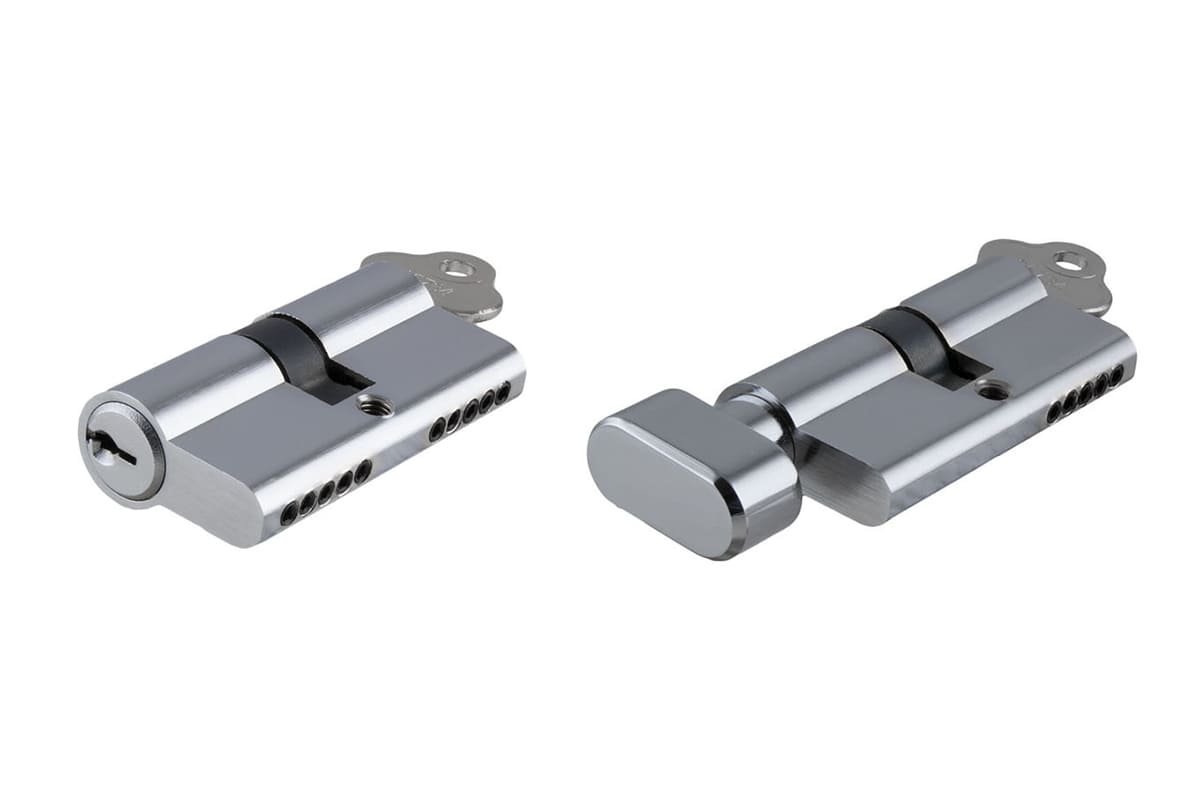
In my experience reviewing cylinder drawings, mortise lock samples, and prepared door cutouts, the profile shape is usually only the first checkpoint. The real decision is whether the cylinder, lock body, and door system work together as one mechanical assembly.
Do euro cylinders use a standardized Euro profile cutout?
A Euro profile cutout can create a false sense of safety. I often see buyers compare only the front shape and ignore the internal fit. That shortcut can work for a sample check, but it becomes risky when a full project or container order depends on it.
Euro cylinders usually use the common Euro profile opening associated with European-style mortise locks.2 The shape is broadly recognizable and widely adopted under the EN 1303 product framework3. Still, the same cutout shape does not mean every cylinder will function correctly in every lock body or door.
What the Euro profile cutout usually means
The Euro profile cutout is the familiar keyhole-shaped opening used in many architectural door systems. Some buyers call it a “gourd profile” because the lower rounded section and upper narrow section create a bottle-like outline. This opening allows the cylinder body to pass through the lock case and sit in the correct position for the cam or tail to operate the locking mechanism.
In practical sourcing, this profile is common across:
- Euro mortise locks
- Double or full Euro cylinders
- Half Euro cylinders
- Thumbturn Euro cylinders
- Classroom, privacy, and project lock configurations
- Fire-rated and non-fire-rated door hardware systems
At SDH Hardware, I normally treat the Euro profile cutout as the starting point, not the final approval. A buyer may send me a door drawing with the correct opening, but I still need the lock body drawing and cylinder specification before I can say the assembly is suitable.
Why the cutout became widely adopted
European-style cylinders are popular because they let door manufacturers separate the lock body, cylinder, and handle set.4 This modular approach helps manufacturers build product lines for different markets.
For example:
| Item | What it affects | Why buyers should check it |
|---|---|---|
| Euro profile cutout | Physical cylinder opening | Confirms the cylinder body can enter the lock case |
| Cylinder length | Door thickness and escutcheon fit | Prevents overhang or recessed installation |
| Cam position | Lock operation | Ensures the cam engages the lock mechanism |
| Fixing screw position | Cylinder retention | Keeps the cylinder secured in the lock body |
| Cylinder type | Door function | Matches single-side, double-side, or thumbturn use |
The standard shape is not a universal approval
I avoid saying that all Euro profile openings are “the same” in an absolute way. Different lock manufacturers may design tolerances, faceplate positions, fixing details, and internal mechanisms differently.5 Buyers should also remember that EN 1303 relates to cylinder requirements, but actual project compatibility still depends on the complete door hardware system.
I usually explain it this way: the Euro profile cutout tells me the cylinder family, but the drawing tells me whether it will work.
For door factories and importers, this distinction matters before CNC door preparation. Once hundreds or thousands of doors are cut, a small mismatch can become expensive. That is why I recommend confirming the cylinder, lock body, and door drawing together before mass production.
Why can euro cylinders fit the cutout but still fail in assembly?
A cylinder can slide into the opening and still fail during operation. This problem is frustrating because the first visual check seems successful. The real failure appears later, when the key cannot turn smoothly, the cam misses the lock mechanism, or the fixing screw does not align.
Euro cylinders can fit the profile cutout but fail because the total length, cam position, fixing screw location, tail structure, lock body design, and door thickness are not matched. Physical insertion is only one test. Functional assembly requires the cylinder to operate the lock mechanism correctly and sit securely in the door.
The most common compatibility mistakes
When I review product drawings or samples, I usually look for problems in a practical order. I do not start with the certificate or catalogue photo. I start with the assembly.
The most common mistakes include:
Correct profile, wrong length
The cylinder enters the cutout, but it extends too far beyond the escutcheon or sits too deep inside the door.Correct length, wrong cam or tail
The body fits, but the cam does not engage the mortise lock correctly.Correct cylinder, wrong lock body
The cylinder is suitable for one lock series, but the buyer uses another lock case.Correct sample, inconsistent batch specification
The approved sample works, but the purchase order does not clearly control dimensions, finish, accessories, or cam type.Correct hardware, wrong door preparation
The cylinder and lock body match, but the factory prepared the door according to an outdated drawing.
Length is more than a catalogue number
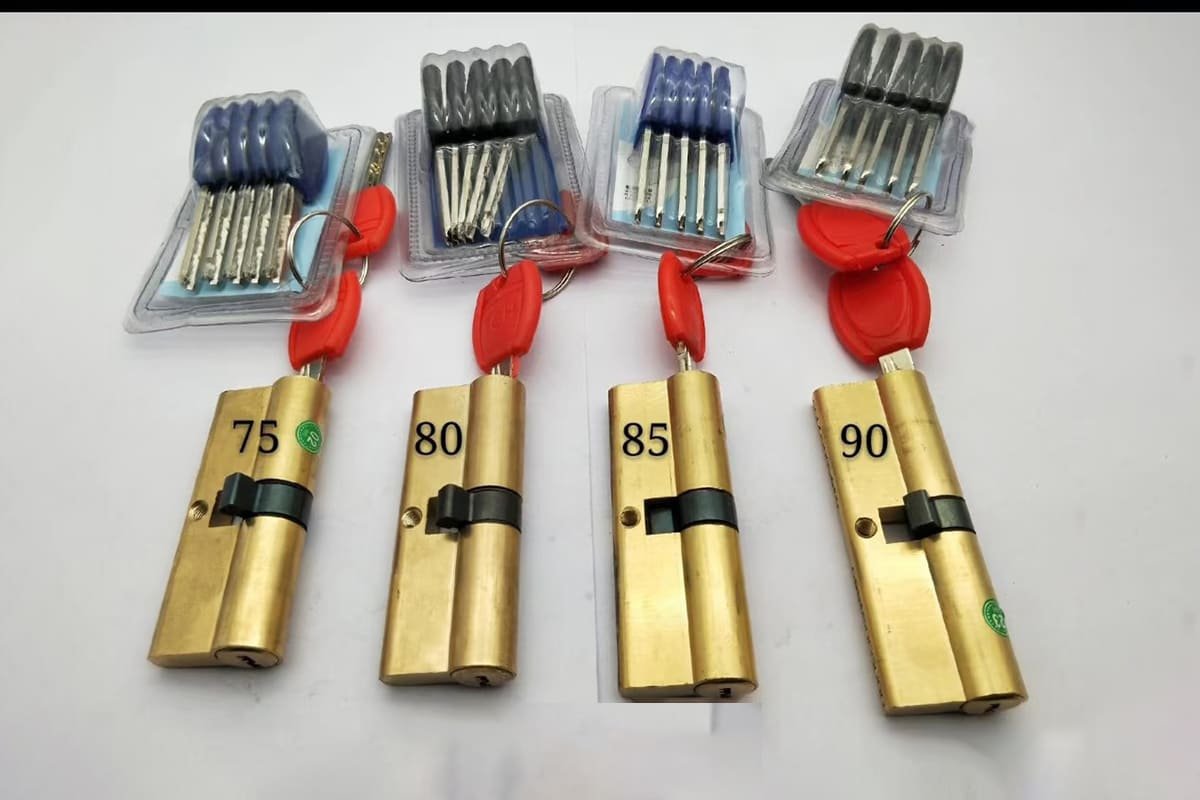
Euro cylinder length is usually expressed in two sides, such as 30/30 mm, 35/35 mm, 40/40 mm, or asymmetric sizes like 30/40 mm.6 This matters because the fixing screw hole is usually near the center area, and the two sides must match the door thickness, lock position, and trim thickness.
A simple check looks like this:
| Door condition | Cylinder risk | Practical check |
|---|---|---|
| Thick door with standard cylinder | Cylinder may sit recessed | Confirm total length and side lengths |
| Thin door with long cylinder | Cylinder may protrude too much | Check escutcheon and security requirements |
| Asymmetric lock position | Wrong side may be too short | Confirm inside/outside orientation |
| Decorative trim or rosette | Extra thickness changes fit | Include trim thickness in calculation |
I have seen buyers choose a cylinder only from the door thickness. That is not enough. The hardware trim can add several millimeters on each side. The lock position inside the door can also be slightly off-center. A professional check should include the full stack-up, not just the wooden or metal door leaf thickness.
The cam or tail decides actual operation
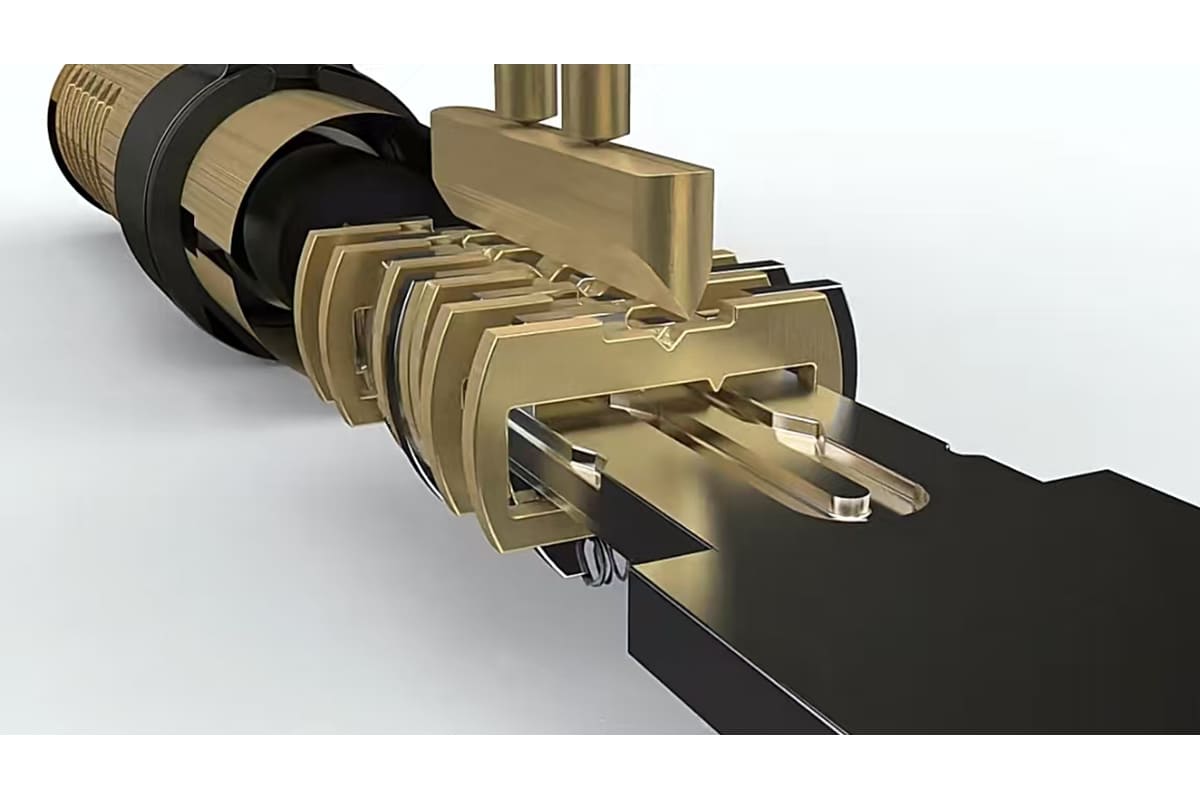
The cam is the rotating part that transfers key movement into the lock body.7 If the cam shape, rotation angle, rest position, or projection does not match the lock mechanism, the cylinder may not unlock the door even when it fits perfectly into the profile.
For some special applications, the rear structure is not a standard cam. A half cylinder may use a tailpiece or other driving structure depending on the lock design. This is especially important for:
- Panic exit hardware
- Electric locks
- Access control doors
- Roller shutter locks
- Cabinet or utility applications
- Special project mortise locks
Fixing screw position is a small detail with a big effect
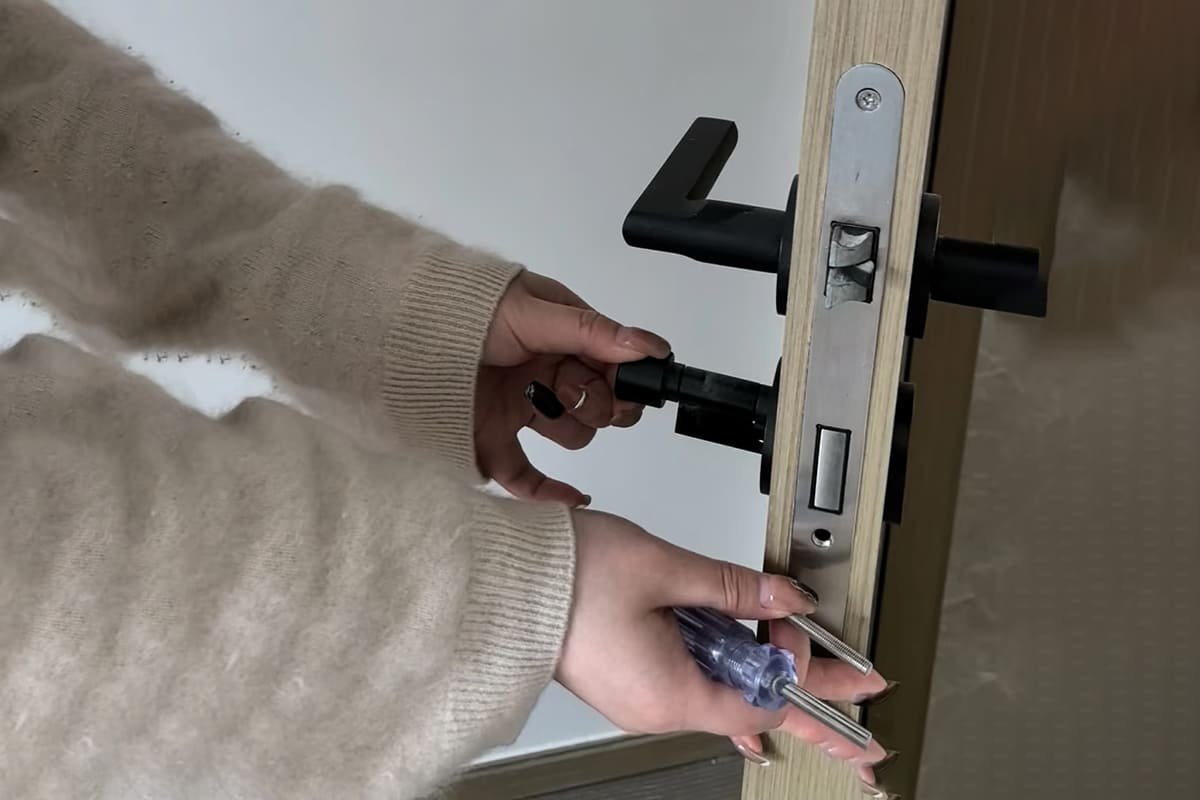
Most Euro-style mortise lock assemblies secure the cylinder with a screw through the lock faceplate into the cylinder fixing hole.8 If that hole does not line up, the cylinder cannot be properly retained. Some buyers try to “adjust” the installation on site, but I do not recommend that approach for professional projects.
For B2B procurement, I suggest buyers ask suppliers for:
- 2D technical drawings
- Cylinder length chart
- Cam or tail specification
- Lock body drawing
- Door preparation drawing
- Sample assembly confirmation
- Inspection report after production
This process reduces misunderstandings between purchasing teams, door factories, and hardware suppliers.
Can half euro cylinders replace full or double euro cylinders?
Half cylinders and full cylinders look related, so it is easy to assume they can replace each other. That assumption can cause serious selection errors. The working side, rear structure, and total length are different, and the lock body may require one exact type.
Half Euro cylinders should not be treated as direct replacements for full or double Euro cylinders. A half cylinder usually operates from one side only and may have a different rear cam or tail arrangement. Buyers must select the cylinder according to the lock body, door function, and access requirement.
Half cylinder versus full cylinder
A full or double Euro cylinder usually allows key operation from both sides, or key operation on one side with a thumbturn on the other.9 A half Euro cylinder normally works from one side and is used where the opposite side does not need key access.
Here is a simplified comparison:
| Cylinder type | Typical operation | Common use | Key buying risk |
|---|---|---|---|
| Half Euro cylinder | One-side operation | Utility doors, cabinets, shutters, special locks | Wrong rear structure or insufficient engagement |
| Double Euro cylinder | Key operation both sides | Entrance doors, project doors | Wrong length or key function |
| Euro thumbturn cylinder | Key outside, turn knob inside | Apartments, offices, emergency egress routes | Wrong inside/outside orientation |
| Classroom/function cylinder | Function-specific operation | Schools, public buildings | Wrong lock function pairing |
This table is not a universal approval guide. It is a procurement reference. Each buyer should verify the lock body and local code requirements, especially for fire doors, escape routes, and regulated building applications10.
Why half cylinders are different
A half cylinder is not simply a double cylinder cut in half.11 It must work with the lock mechanism from one side. The rear structure may be shorter, shaped differently, or designed to drive a specific lock component. In some lock bodies, a half cylinder will not operate the mechanism that a double cylinder operates.
I always ask these questions before suggesting a half cylinder:
- Which side needs key operation?
- Does the opposite side need no access, a thumbturn, or a fixed function?
- What lock body will the cylinder operate?
- What is the total required cylinder length?
- What is the rear cam or tail requirement?
- What door thickness and trim thickness are involved?
These questions are simple, but they prevent many sourcing mistakes.
When a half cylinder may be appropriate
A half cylinder can be the correct choice when the door or device only requires operation from one side. For example, some service doors, storage areas, switch rooms, and utility systems use one-side key control. In those cases, a half cylinder can reduce unnecessary hardware and support the intended function.
However, the buyer still needs to check:
Cylinder projection
The cylinder should not protrude too far or sit too deep.Fixing method
The fixing screw must secure the cylinder in the lock body.Drive structure
The cam or tail must match the mechanism.Security expectation
The cylinder grade, key system, and protection features should match project needs.Compliance documents
CE, fire-rated, or other documents should be verified for the actual product and application.
At SDH Hardware, we produce and supply Euro cylinders and mortise locks for B2B buyers, but I still avoid giving a blanket “yes” when a buyer asks whether a half cylinder can replace a full cylinder. I prefer to check the drawing or sample. That is safer for the buyer and better for long-term cooperation.
Door function should guide the cylinder type
The best cylinder is not always the most common size. The best cylinder is the one that matches the door function. A hotel door, apartment entrance, emergency exit, classroom door, warehouse door, and utility room can all have different needs.
For example:
- A main entrance door may need a double cylinder or thumbturn cylinder.
- A fire-rated project door may need verified fire-rated hardware documents.
- A service door may use a half cylinder if one-side access is enough.
- An access control door may need a special cam, tail, or lock interface.
- A brand product line may need consistent dimensions for multiple markets.
This is why I recommend that buyers define the door function first, then select the cylinder type. The profile cutout is only one part of that decision.
How should buyers verify euro cylinders before batch ordering?
Batch ordering increases the cost of every small mistake. One incorrect dimension can affect lock bodies, doors, packaging, and installation schedules. I prefer to slow down at the drawing stage because it is much cheaper than correcting thousands of prepared doors later.
Buyers should verify Euro cylinders by confirming the cylinder type, side lengths, total length, fixing screw position, cam or tail design, lock body drawing, door thickness, trim thickness, and prepared cutout. For project orders, buyers should approve drawings or samples before mass production and keep the approved version linked to the purchase order.
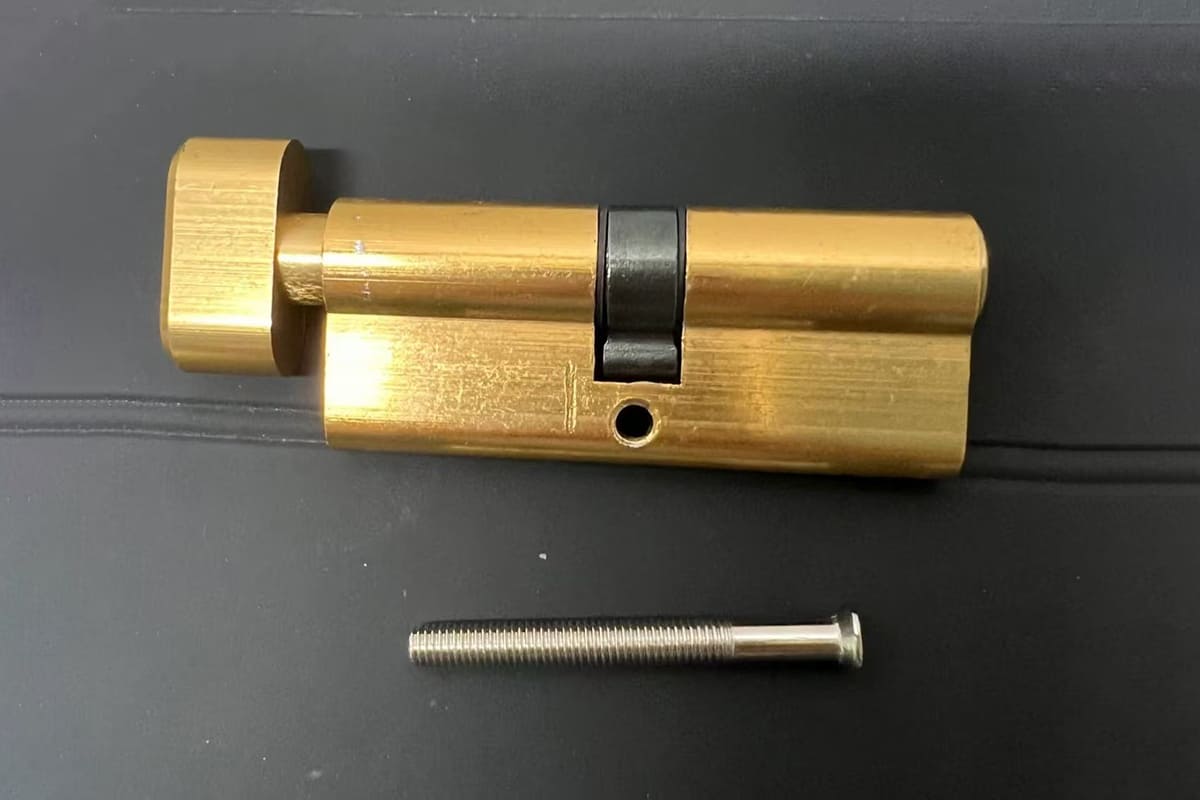
A practical buyer checklist
I recommend a simple but disciplined checklist. It helps purchasing teams avoid relying only on catalogue descriptions like “standard Euro cylinder.”
Before ordering, buyers should confirm:
Cylinder type
- Half cylinder
- Double cylinder
- Key and thumbturn cylinder
- Special function cylinder
Cylinder dimensions
- A-side length
- B-side length
- Total length
- Center/fixing relationship
- Projection after trim installation
Operating structure
- Cam shape
- Cam position
- Tailpiece style
- Rotation angle if relevant
- Working side and orientation
Lock body
- Mortise lock model
- Backset
- Lock case dimensions
- Cylinder fixing hole position
- Faceplate position
Door and trim
- Door thickness
- Door material
- Escutcheon or rosette thickness
- Prepared cutout drawing
- Fire-rated or project-specific requirements
Sample approval should include assembly, not only appearance
I have seen attractive samples fail because the buyer checked only the finish, logo, and packaging. For architectural hardware, appearance matters, but assembly matters more. A proper sample check should include installing the cylinder into the actual lock body or a verified matching lock body.
A useful sample approval process includes:
Drawing comparison
The buyer compares supplier drawings with the door and lock body drawings.Physical assembly test
The cylinder is installed into the lock body and prepared cutout.Function test
The key turns smoothly, the cam engages correctly, and the latch or deadbolt operates as intended.Fit check with trim
The escutcheon, handle, rosette, or plate is installed to confirm final projection.Production control reference
The approved sample and drawing become the standard for mass production inspection.
For customized orders, I also suggest marking the approved drawing number in the purchase order. This prevents confusion when buyers reorder months later or when several cylinder sizes are used in the same project.
Supplier selection matters for mixed hardware systems
A door hardware project often includes more than the cylinder. Buyers may source mortise locks, lever handles, hinges, cylinders, accessories, and packaging from different suppliers. That can reduce unit cost, but it increases coordination risk.
For mixed-supplier sourcing, I suggest that buyers ask one responsible party to check the assembly. This party can be the door factory, the hardware brand’s technical team, or a manufacturing supplier with experience in cylinders and lock bodies.
At SDH Hardware, our product range includes Euro mortise locks, stainless steel lever handles, butt hinges, concealed door hinges, Euro brass cylinders, and door accessories. Because we work with full door hardware sets, I often check whether the cylinder and lock body are suitable together before confirming production. This does not replace a project engineer’s application review, but it helps reduce common procurement errors.
What documents should buyers request?
For professional orders, buyers should collect documents before deposit or mass production. These documents help align the buyer, supplier, installer, and quality team.
| Document | Purpose | When to request it |
|---|---|---|
| Cylinder drawing | Confirms dimensions and structure | Before sample approval |
| Lock body drawing | Confirms fixing and cam engagement | Before door preparation |
| Door cutout drawing | Confirms machining requirements | Before batch door production |
| Finish specification | Controls appearance and corrosion expectations | Before purchase order |
| Test or certification documents | Supports compliance review | Before project submission |
| Inspection report | Confirms production checks | After production, before shipment |
Buyers should verify CE, fire-rated, or other certification documents against the exact product, configuration, and project requirement.12 I do not recommend treating a certificate image as automatic approval for every application. For regulated applications, a qualified professional should review the complete door hardware set and local requirements.
Frequently Asked Questions
Are all Euro profile cylinder cutouts exactly the same?
No. The general Euro profile shape is widely recognized, but small differences in lock bodies, machining tolerance, fixing screw position, and door preparation can affect fit. I recommend checking the cylinder drawing, lock body drawing, and door cutout before ordering.
Can I replace any Euro cylinder with another Euro cylinder of the same length?
Not always. The same length helps, but it is not enough. The cam, fixing screw position, cylinder type, key function, and lock body compatibility also matter. I would verify the drawing or test a sample before replacement.
Is a half Euro cylinder the same as one side of a double cylinder?
No. A half Euro cylinder is designed for one-side operation and may use a different rear structure, cam, or tail arrangement. It should be selected according to the lock body and door function, not treated as a direct substitute.
What should I check before preparing doors in bulk?
I would confirm the cylinder type, A/B lengths, fixing screw location, cam or tail, lock body model, door thickness, trim thickness, and cutout drawing. A physical assembly test is also useful before CNC machining or batch door preparation.
Do CE or fire-rated documents prove that a Euro cylinder will fit my lock?
No. Certification documents may support compliance review, but they do not automatically prove mechanical compatibility with your lock body or door. Buyers should verify the exact product configuration and request qualified review for fire-rated or regulated applications.
Conclusion
Euro cylinders usually share the familiar Euro profile cutout, but the cutout is only the first compatibility checkpoint. I always remind buyers that profile fit does not guarantee functional fit. The cylinder type, length, fixing screw position, cam or tail structure, lock body, door thickness, and trim all matter. Before ordering, confirm drawings or samples for the cylinder, lock body, door thickness, and prepared cutout. If you need factory-direct support, SDH Hardware can help review your Euro cylinder and mortise lock requirements before production.
"What Is a Euro Cylinder Lock? Sizes, Security & Smart Guide", https://www.welock.com/blogs/news/euro-cylinder-lock-guide?srsltid=AYCX9vI605a1QJeExvAvWp3E4pgJCGeIHIKLWH6Y0aucqRvj8EiZVzkZ. Technical guidance on Euro profile cylinder assemblies describes compatibility as a function of the cylinder dimensions, cam or tailpiece, fixing arrangement, lock case geometry, and door installation conditions, rather than the external profile alone. Evidence role: general_support; source type: institution. Supports: A neutral technical source should support that euro cylinder compatibility depends on more than the profile opening, including cylinder dimensions, cam or tail operation, fixing, lock case, and door thickness.. Scope note: This would support the general compatibility principle, not prove that any specific SDH Hardware product or project will fit. ↩
"Pin tumbler lock", https://en.wikipedia.org/wiki/Pin_tumbler_lock. Reference descriptions of Euro profile cylinders identify them as a common cylinder format used with compatible lock cases, including mortise-style door locks. Evidence role: definition; source type: encyclopedia. Supports: A neutral reference should define Euro profile cylinders and their common use in mortise lock applications.. Scope note: An encyclopedia source would define the format and common use, but it may not specify dimensional compatibility for a particular lock body. ↩
"EN 1303:2026 - Cylinders and Master-Key-Systems for ...", https://standards.iteh.ai/catalog/standards/cen/bff2e636-92e6-474b-a6e0-fa3f5c0ce3ec/en-1303-2026?srsltid=AYCX9vI5R-mUxX4iZAv4mmbMJrQEECSXrDKPZBdujpOihpdVGDZJ6wgn. EN 1303 specifies requirements and classification criteria for cylinders used in locks, providing a European standards framework for cylinder performance rather than a universal guarantee of interchangeability. Evidence role: definition; source type: institution. Supports: A standards body or standards summary should show that EN 1303 covers cylinders for locks and related classification or performance requirements.. Scope note: The standard supports the regulatory or product-framework context, but it does not by itself confirm fit with every lock case or door preparation. ↩
"Euro Profile Cylinder Multipoint Lock Handleset Trim", https://www.allaboutdoors.com/Products/door-parts/hinged-residential-door-parts/Entrance-Handlesets/Multipoint-Lock-Handleset-Trim/Multipoint-Euro-Cylinder-Handleset-Trim/Rockwell-Euro-Cylinder-Multipoint-Lock-Handleset-Trim?srsltid=AYCX9vInmlMahCbwH8XYCxqOpa5wNpKQ3uD8hPrOzke5JlMr9SnHR067. Technical descriptions of cylinder-operated mortise locks explain that the cylinder, lock case, and exterior trim or handle components are distinct parts that must be selected and assembled as a compatible system. Evidence role: mechanism; source type: education. Supports: A neutral technical or educational source should explain that cylinder locks can be configured as separate interacting components, including cylinder, lock case, and trim or handles.. Scope note: This supports the modular design concept, but not the article's broader statement about popularity across all markets. ↩
"CE Mortise Lock Cylinder Compatibility: Buyer Guide - Toptek", https://toptekaccess.com/ce-mortise-lock-cylinder-compatibility/. Architectural hardware guidance treats lock case dimensions, faceplate geometry, fixing positions, and operating clearances as design-specific parameters that must be matched during installation. Evidence role: general_support; source type: institution. Supports: A technical source should support that lock case geometry, fixing points, and tolerances differ between designs and can affect cylinder fit.. Scope note: The source would provide contextual support for variability, not a catalog comparison of every manufacturer. ↩
"Euro Cylinder Sizes Explained: 30/30, 35/45, 40/40 and More", https://www.welock.com/blogs/news/euro-cylinder-sizes-explained?srsltid=AYCX9vKpR9jlnIqrNWmvASQz_eyfMo3zmKbQU4IuK9eLXv48coYwk2AN. Technical measurement guides for Euro profile cylinders describe cylinder size by the two distances from the fixing screw centerline to each end, producing notations such as 30/30 mm or 30/40 mm. Evidence role: definition; source type: education. Supports: A neutral educational or technical source should explain the two-sided length notation used for Euro cylinders.. Scope note: This supports the measurement convention; exact available sizes still depend on the manufacturer and product range. ↩
"Cam (mechanism)", https://en.wikipedia.org/wiki/Cam_(mechanism). Descriptions of cylinder lock mechanisms identify the cam as the rotating driver that transmits plug movement to the lock case so that the latch or bolt mechanism can be operated. Evidence role: mechanism; source type: education. Supports: A technical source should explain the function of the cam in transmitting cylinder rotation to the lock mechanism.. Scope note: The explanation supports the general mechanism, while cam geometry and rotation requirements remain product-specific. ↩
"Cylinder fixing screw for 60mm / 70mm backset, 3 inch - SS", https://www.allaboutdoors.com/Cylinder-fixing-screw-for-60mm-70mm-backset-3-inch-SS?srsltid=AYCX9vKZY6tuViTcEWo2yqdkCidZAVYL0HiI3h9kzpuBL10jlWJTF1ar. Installation guidance for Euro profile cylinders describes retention by a long fixing screw inserted through the lock faceplate into the cylinder's fixing hole. Evidence role: mechanism; source type: education. Supports: A technical installation source should support that Euro cylinders are commonly secured by a retaining screw from the lock faceplate into the cylinder body.. Scope note: This supports the common installation method, but exceptions may exist for special lock designs. ↩
"Euro Cylinder Locks Explained", https://www.masterkeysystems.co.uk/knowledge-hub/euro-cylinder-locks-explained/. Reference descriptions of Euro cylinder types distinguish double cylinders, which provide operation from both sides, from key-and-thumbturn variants that use a key on one side and a turn knob on the other. Evidence role: definition; source type: encyclopedia. Supports: A neutral reference should define double Euro cylinders and thumbturn cylinders as common configurations for two-sided operation.. Scope note: The source would define typical categories, not determine which configuration is permitted for a particular door or jurisdiction. ↩
"Means of Egress (EXIT) Hardware Requirements", https://www.brightonny.gov/DocumentCenter/View/4580/Means-of-Egress-EXIT-Hardware-Requirements. Building and fire-safety regulations treat fire doors and means-of-egress doors as regulated assemblies whose hardware must be selected and installed to preserve fire protection and safe escape functions. Evidence role: expert_consensus; source type: government. Supports: A building-code or fire-safety authority should support that door hardware on fire doors and escape routes is subject to regulatory requirements.. Scope note: Regulatory requirements vary by jurisdiction, so the citation would support the need for code review rather than a universal hardware rule. ↩
"Euro Cylinder Locks Explained", https://www.masterkeysystems.co.uk/knowledge-hub/euro-cylinder-locks-explained/. Technical references on Euro cylinder types describe half cylinders as one-sided operating cylinders, distinct from double cylinders and selected according to the lock mechanism they drive. Evidence role: definition; source type: education. Supports: A technical source should support that half Euro cylinders are designed for one-sided operation and may have different rear driving arrangements from double cylinders.. Scope note: This supports the product-category distinction, while the exact cam or tail arrangement depends on the specific lock design. ↩
"Declaration of Performance and conformity - CE Marking", https://single-market-economy.ec.europa.eu/sectors/construction/construction-products-regulation-cpr/ce-marking-and-declaration-performance-and-conformity_en. Conformity and fire-test documentation is generally tied to the product, declared characteristics, intended use, and tested or assessed configuration, so project approval requires checking the certificate scope against the actual assembly. Evidence role: general_support; source type: government. Supports: A government or standards source should support that conformity or fire-test documentation applies to defined products, configurations, and intended uses.. Scope note: This supports the compliance-review principle, but specific acceptance depends on the applicable jurisdiction, test standard, and authority having jurisdiction. ↩
