
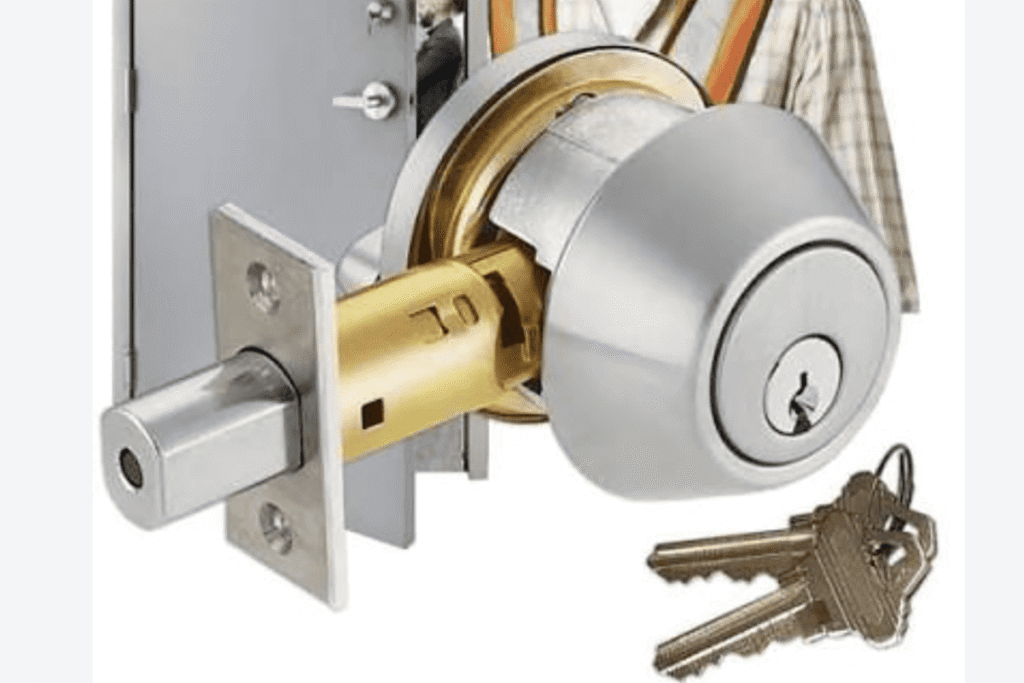
The Ultimate Guide to Door Latch Types
Door latch types can look simple on a drawing, but the wrong latch can create noisy operation, weak closing force, poor fire-door compatibility, and costly returns. Buyers often discover these problems after installation. This guide helps you compare latch options clearly, evaluate supplier quality, and choose hardware that fits your project requirements.
Door latch types include tubular latches, mortise latches, deadlatches, roller latches, magnetic latches, rim latches, and panic or fire-rated latch systems.1 The right choice depends on door material, traffic level, lock function, fire-rating needs, regional standards, handle compatibility, and the quality control capability of the supplier.
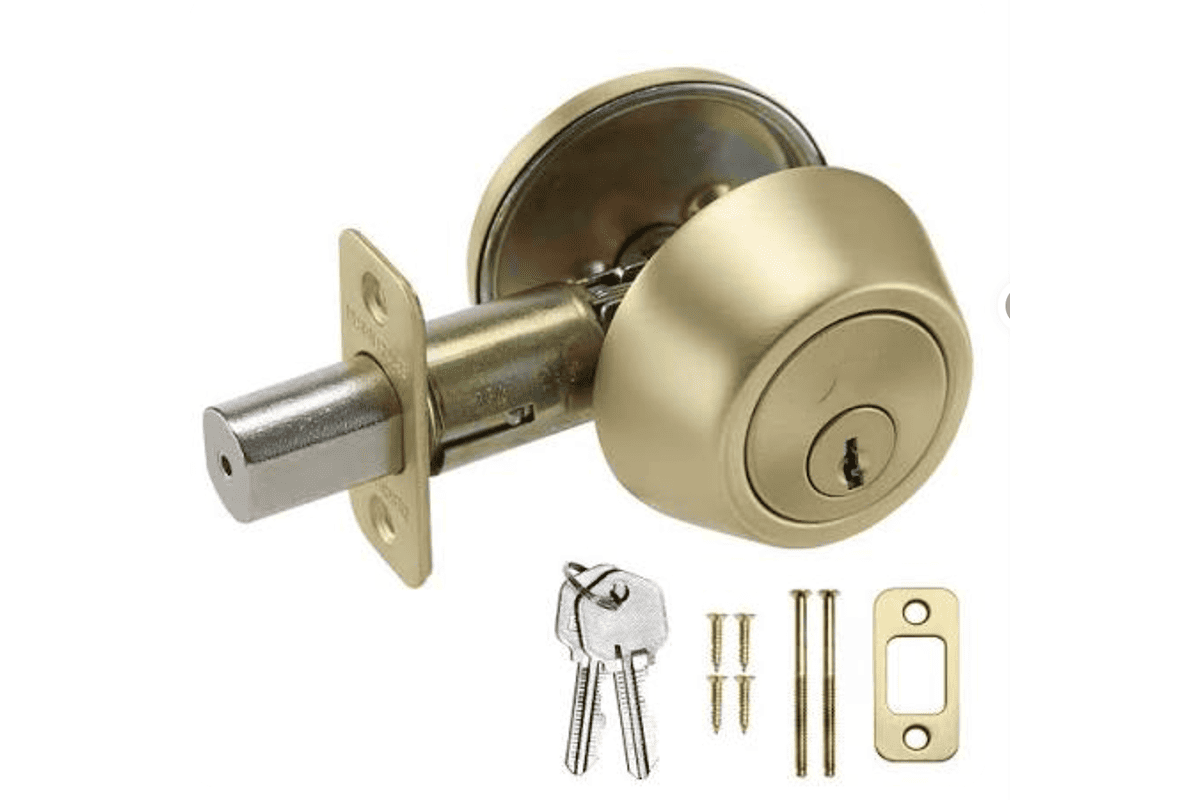
A latch is small, but it controls the daily feel of a door. It affects closing sound, handle return, security, and service life.2 I will walk through the main latch categories, then show how I evaluate them for procurement, quality control, and supplier selection.
What Are the Main Door Latch Types?
Choosing between door latch types can feel confusing because many products look similar in catalogs. The problem becomes worse when drawings use different names across regions. If buyers do not define the latch function early, factories may quote parts that meet the price target but not the project need.
The main door latch types are tubular latches, mortise latches, deadlatches, roller latches, magnetic latches, rim latches, and panic or fire-rated latch systems. Each type uses a different closing mechanism and suits different door designs, traffic levels, lock functions, and installation standards.
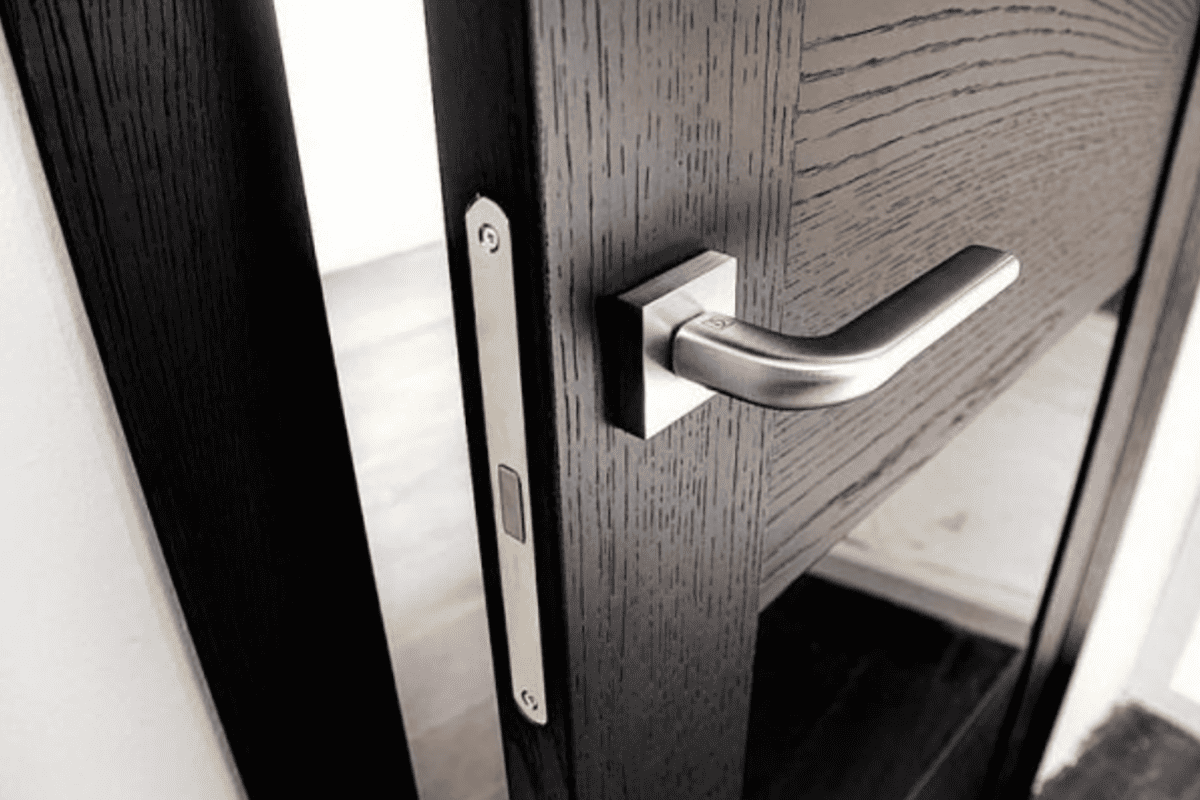
Quick Comparison of Common Latch Types
| Latch Type | Common Use | Main Advantage | Buyer Watch Point |
|---|---|---|---|
| Tubular latch | Interior residential doors | Simple and economical | Limited strength for heavy use |
| Mortise latch | Commercial and architectural doors | Strong body and stable function | Requires accurate door preparation |
| Deadlatch | Entrance and access doors | Better anti-shim function | Must match strike and door gap |
| Roller latch | Push-pull doors, hotels, public rooms | Quiet and smooth closing | Not a security latch by itself |
| Magnetic latch | Modern interior doors | Clean look and low noise | Magnet strength and alignment matter |
| Rim latch | Surface-mounted doors | Easy retrofit | Exposed installation style |
| Panic/fire-rated latch | Exit doors and fire doors | Life-safety function | Certification documents must be verified |
Tubular Latches
A tubular latch has a cylindrical body. It usually works with lever handles or knob sets. I often see buyers use tubular latches for light-duty interior doors, apartment rooms, and residential passage doors3.
Tubular latches are popular because they are:
- Easy to install
- Cost-effective
- Widely available
- Suitable for standard timber doors
- Simple to replace
However, they are not always the best choice for high-traffic commercial projects. The internal mechanism is usually smaller than a mortise lock body.4 That means buyers should check spring strength, latchbolt material, and cycle testing results if the door will be used many times per day.
Mortise Latches
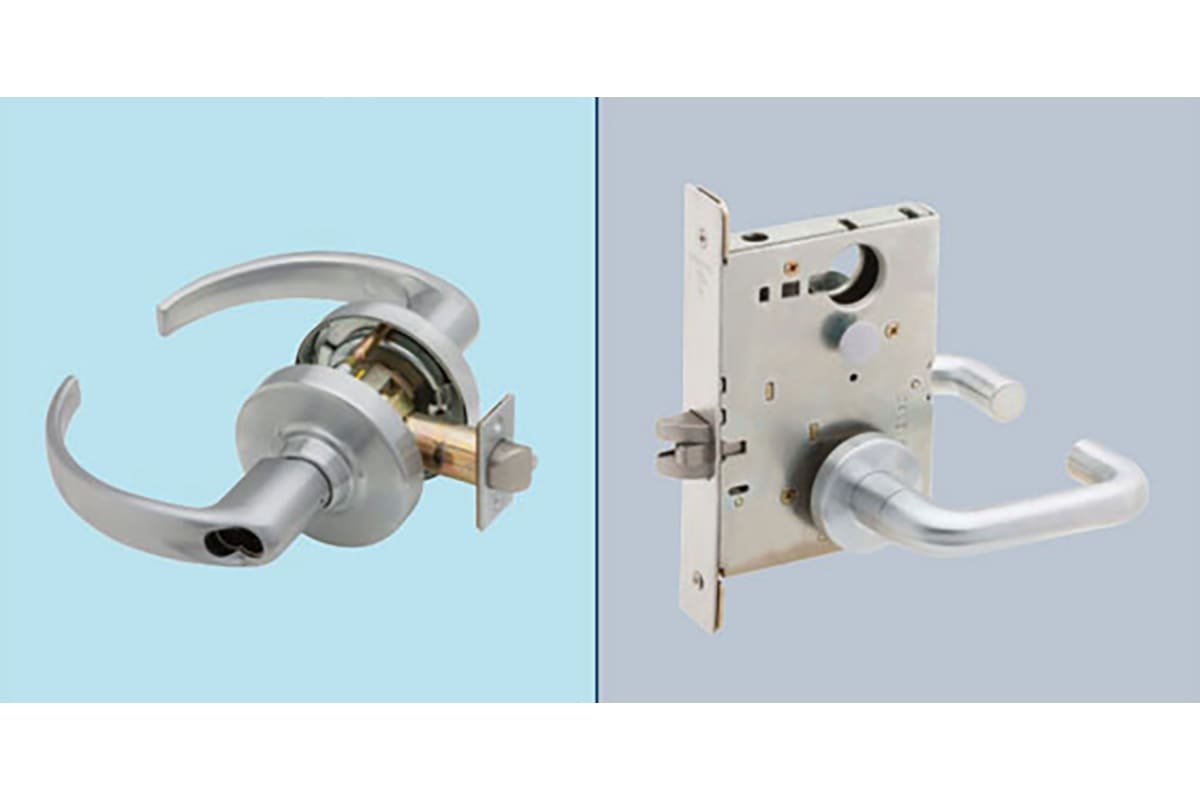
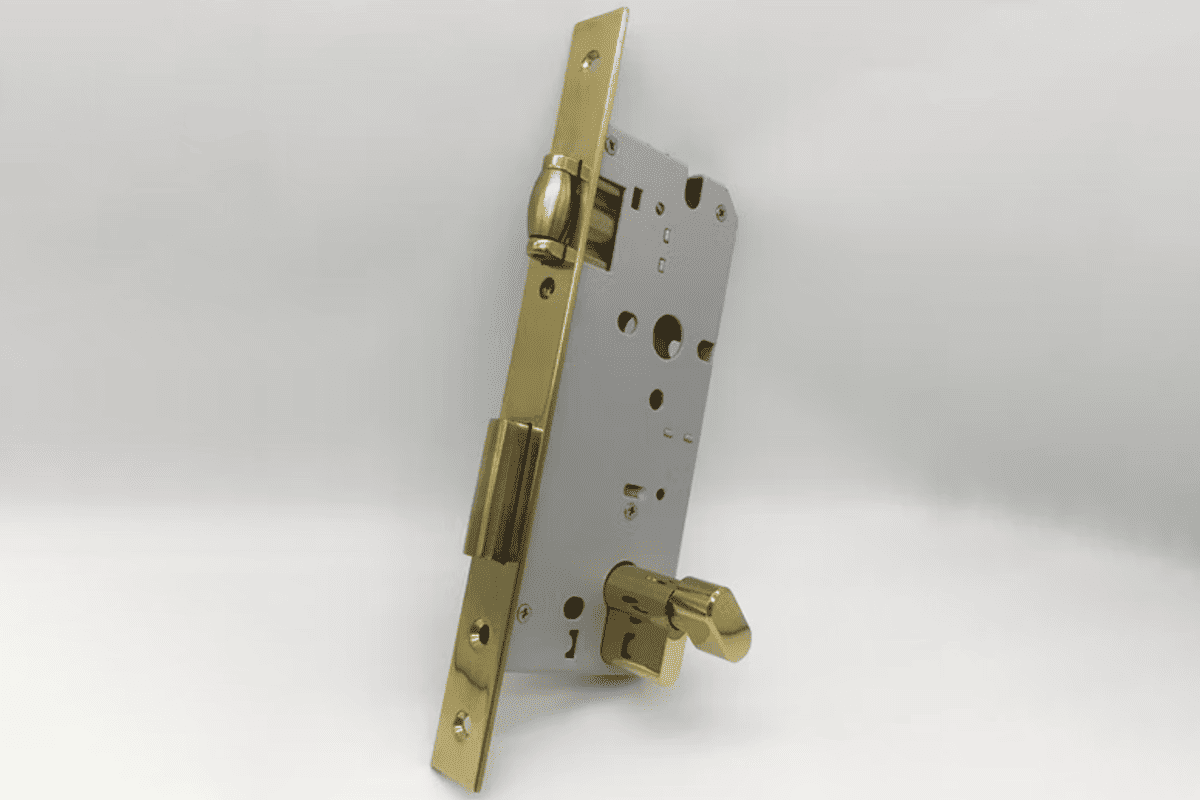
A mortise latch is installed inside a pocket cut into the door edge. It is often part of a mortise lock case. In the architectural hardware market, this is one of the most important categories.
At SDH Hardware, we manufacture Euro mortise locks for B2B customers. In my experience, buyers from Europe, the Middle East, and Southeast Asia often focus on:
- Lock case size
- Backset
- Center distance
- Forend dimensions
- Latchbolt direction
- Cylinder profile
- Handle follower size
- Strike plate design
Mortise latches usually provide better durability and a more solid door feel.5 They are common in hotels, offices, schools, apartments, and public buildings.
Deadlatches
A deadlatch includes a latchbolt and an auxiliary deadlocking feature. When the door is closed correctly, the auxiliary bolt helps prevent the latchbolt from being pushed back with a thin tool6.
This feature is useful for entrance doors and commercial applications. However, the deadlatch must be installed with the correct strike position. If the door gap is too large or the auxiliary bolt falls into the strike opening, the anti-shim function may fail.7
Roller Latches
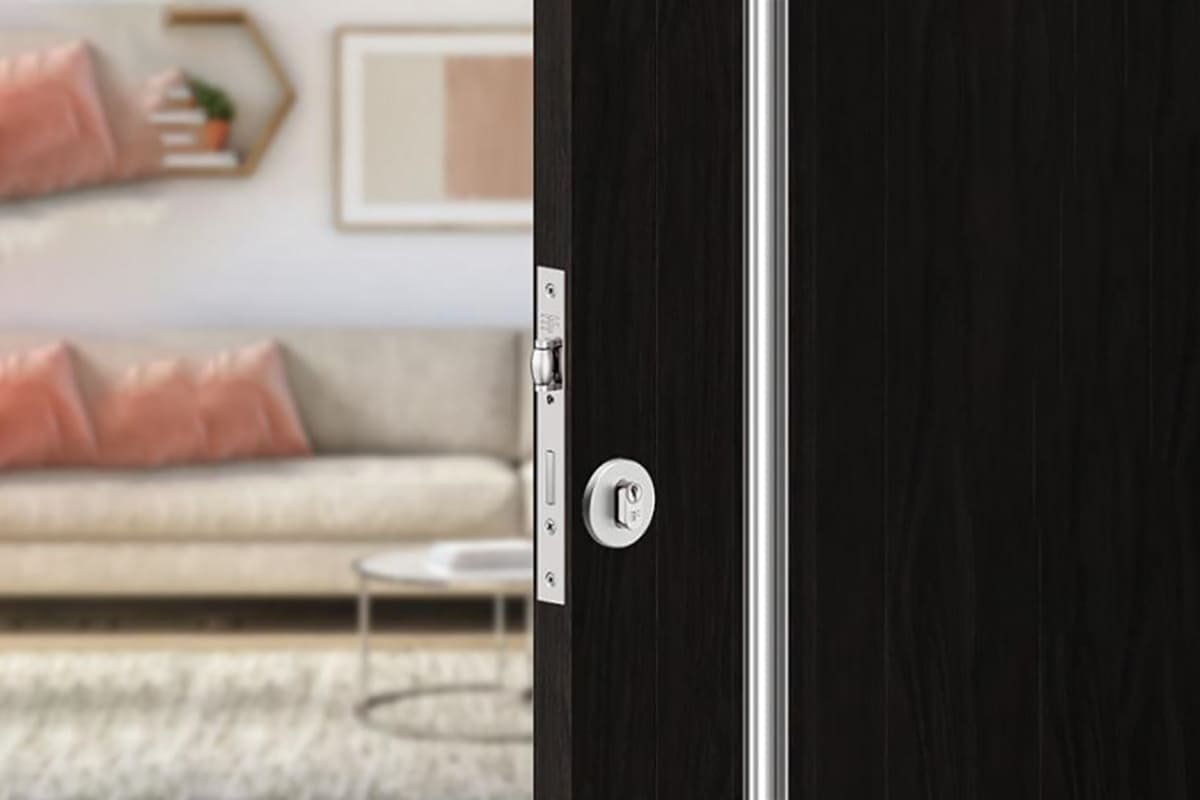
A roller latch uses a spring-loaded roller instead of a beveled latchbolt. It allows the door to close with a push or pull action. It is common in hotel doors, corridor doors, and interior doors where quiet operation is important.
A roller latch is not normally used as the main security element.8 Buyers should pair it with a suitable locking system if access control or privacy is required.
Magnetic Latches
A magnetic latch uses magnetic force to hold the door closed. Some designs keep the latchbolt hidden until the door closes.9 This creates a cleaner appearance and reduces mechanical noise.
Magnetic latches are attractive for modern interiors. Still, buyers should test door alignment, frame tolerance, and magnet durability before using them in large projects.
How Do Door Latch Types Affect Security and Daily Performance?
Door latch types influence more than closing action. They affect how a door resists forced entry, how often the handle sags, how loudly the door closes, and how long the hardware lasts. If procurement teams treat all latches as interchangeable, the final project can suffer from warranty claims.
Different door latch types affect performance through latchbolt design, case strength, spring quality, strike engagement, material hardness, and installation tolerance. A commercial mortise latch or certified fire-rated latch system usually performs better under heavy use than a basic tubular latch.
Performance Factors Buyers Should Check
When I review a latch sample, I do not only look at the finish. I also check the movement. A good latch feels controlled. It returns smoothly. It does not scrape, wobble, or jam.
Important performance factors include:
Latchbolt engagement
- The latchbolt should enter the strike plate deeply enough.
- Shallow engagement can cause rattling or accidental opening.
Spring return strength
- The handle should return to the horizontal position.
- Weak springs can create handle sag after repeated use.
Case rigidity
- A thin lock case may deform during installation or heavy operation.
- Stronger case construction supports long-term alignment.
Door gap tolerance
- Latches depend on the relationship between the door leaf and frame.
- Poor tolerance can defeat even a well-made latch.
Strike plate design
- The strike plate must match the latchbolt shape.
- A bad strike can increase noise and reduce closing reliability.
Security Is a System, Not One Part
A latch alone does not determine security. I always remind customers that a secure opening depends on the door leaf, frame, hinges, cylinder, lock body, strike reinforcement, and installation quality.
For example, a high-quality Euro mortise lock may still perform poorly if:
- The strike plate is fixed with short screws
- The timber frame is weak
- The door gap is too wide
- The latch direction is installed incorrectly
- The selected cylinder has poor anti-pick resistance
This is why buyers should avoid choosing latch hardware only by catalog image or unit price.
Durability and Cycle Testing
For B2B procurement, cycle performance is a key issue. Many commercial doors open thousands of times per month.10 A latch used in a hotel corridor or office building faces a very different workload from a latch used in a private bedroom.
Buyers should ask suppliers about:
- Internal cycle test process
- Sample testing conditions
- Spring material
- Latchbolt material
- Lubrication method
- Salt spray test for visible parts
- Fire-rated test documents, where applicable
At SDH Hardware, our business context includes full-process quality control from raw material screening to finished product inspection. I still recommend that buyers verify test reports and certificates for their own project requirements, especially for fire doors or regulated public buildings.
Common Performance Problems
| Problem | Possible Cause | Procurement Check |
|---|---|---|
| Door rattles after closing | Poor latchbolt engagement or loose strike | Confirm strike dimensions and door gap |
| Handle does not return | Weak spring or mismatched handle | Test handle and latch together |
| Latch jams | Poor machining or misalignment | Check samples and installation tolerance |
| Loud closing sound | Hard strike contact or weak damping | Compare latch design and strike plate |
| Short service life | Low-grade materials or poor QC | Review supplier testing and inspection process |
In my experience, the best results come when the buyer tests the latch with the exact handle, hinge, door thickness, and frame profile that will be used in the project. Paper specifications are useful, but a working sample set reveals many hidden issues.
Which Door Latch Types Are Best for Commercial Projects?
Commercial projects create higher risk because doors face frequent use, public access, and stricter safety expectations. A latch that works well in a private home may not survive a hotel, office, school, or hospital project. Buyers need a more disciplined selection method.
The best door latch types for commercial projects are usually mortise latches, deadlatches, roller latches for non-security push-pull doors, and certified panic or fire-rated latch systems. The final choice should follow door function, traffic level, local code requirements, and verified supplier documentation.
Match the Latch to the Door Function
Commercial doors are not all the same. A project may include entrance doors, hotel room doors, bathroom doors, fire doors, service doors, and meeting room doors. Each opening may require a different latch solution.
Here is a practical way to match them:
| Door Location | Typical Latch Option | Key Requirement |
|---|---|---|
| Hotel guest room | Mortise latch or mortise lock | Smooth feel, privacy, durability |
| Office entrance | Deadlatch or mortise lock | Security and access control compatibility |
| Meeting room | Mortise latch or tubular latch | Quiet operation and good handle return |
| Corridor fire door | Fire-rated latch system | Verified fire-rated documentation |
| Public exit door | Panic latch or exit device | Life-safety compliance |
| Utility room | Mortise lock or deadlatch | Controlled access and strength |
| Decorative interior door | Magnetic latch or roller latch | Clean look and low noise |
Why Mortise Latches Are Often Preferred
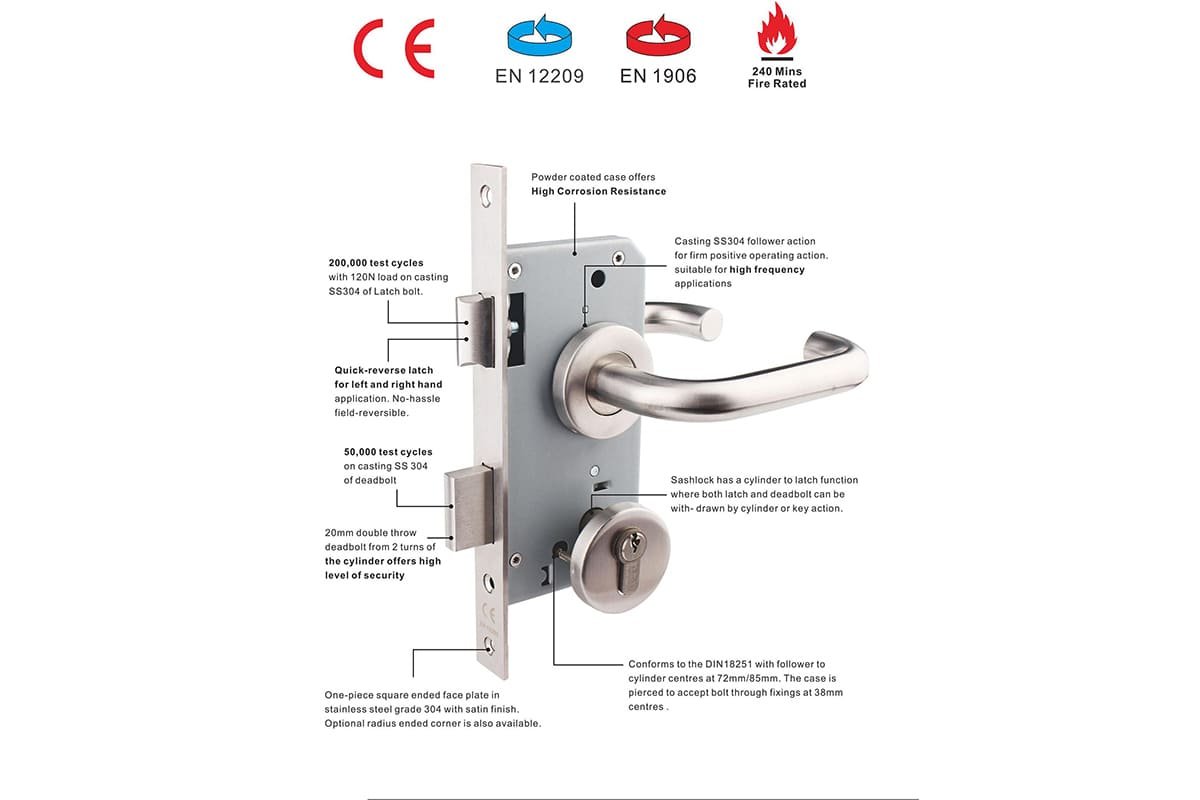
Mortise latches are common in commercial architectural hardware because they offer a strong balance of durability, function, and compatibility. A Euro mortise lock body can support different functions, including passage, privacy, cylinder locking, bathroom function, or deadbolt combinations.
For buyers, this creates sourcing efficiency. A project can use one lock series with different functions across multiple openings. That can reduce confusion during installation and after-sales service.
Important mortise lock specifications include:
- Backset: The distance from door edge to spindle or cylinder center
- Center distance: The distance between handle spindle and cylinder hole
- Forend size: The visible front plate on the door edge
- Follower size: The square hole for the handle spindle, often 8 mm in many markets
- Latchbolt material: Zinc alloy, brass, or stainless steel, depending on design
- Reversibility: The ability to suit left-hand or right-hand doors
- Strike plate: Standard, box strike, or custom strike
Fire-Rated and Panic Latch Systems
Fire doors and emergency exit doors require extra care. Buyers should not assume that a normal latch can be used on a fire-rated opening. Fire-rated hardware must be evaluated as part of a tested door assembly.11
For these applications, buyers should:
- Request CE documents where relevant
- Verify fire-rated certificates
- Confirm the exact tested configuration
- Check if the lock, latch, hinge, door closer, and door leaf are compatible
- Consult qualified fire-door professionals or local code experts
SDH Hardware states that core products comply with EU standard specifications and are available with authoritative CE certification and fire-rated certification. In procurement practice, buyers should still verify the certificates, model numbers, test scope, and expiration or validity details before placing project orders.
A certificate is not just a marketing document. It is a project risk-control document.
Heavy-Traffic Applications
High-use doors need stronger latch construction. In these applications, I pay close attention to the latch spring, lock case thickness, spindle follower, and strike alignment. I also prefer to review sample test results before confirming a bulk order.
Examples of heavy-traffic applications include:
- Shopping centers
- Schools
- Apartment corridors
- Office towers
- Hospitals
- Hotels
- Public service buildings
For these projects, buyers should avoid choosing the cheapest latch unless the opening is truly low risk. A small unit-price saving can disappear quickly if the product causes installation delays or replacement costs.
How Should Buyers Compare Door Latch Types Before Ordering?
Comparing door latch types only by price is risky. Low-cost samples may look acceptable, but small changes in spring quality, case thickness, and machining tolerance can affect thousands of doors. A clear evaluation checklist protects both the buyer and the supplier.
Buyers should compare door latch types by application, dimensions, material, cycle performance, finish quality, fire-rating status, handle compatibility, packaging, customization options, and supplier quality control process. Sample testing should happen before bulk production, especially for OEM and ODM orders.
Procurement Checklist for Latch Selection
I like to start with a written specification sheet. It reduces back-and-forth and prevents assumptions.
A strong latch inquiry should include:
- Door type: timber, steel, aluminum, or fire-rated door
- Door thickness
- Door handing
- Required latch type
- Lock function
- Backset and center distance
- Forend size and shape
- Strike plate requirement
- Finish requirement
- Required certification
- Quantity and delivery schedule
- Packaging and branding needs
- Target market or regional standard
Sample Evaluation Criteria
Before placing a large order, buyers should inspect samples in a practical way. A latch should not only look correct. It should function correctly.
Sample checks can include:
| Check Item | What to Look For | Why It Matters |
|---|---|---|
| Latch movement | Smooth extension and retraction | Shows machining and spring quality |
| Handle return | No sagging after operation | Protects user experience |
| Strike fit | Clean engagement without scraping | Reduces noise and callbacks |
| Finish surface | No scratches, bubbles, or color mismatch | Supports brand quality |
| Dimensional accuracy | Matches drawing tolerances | Prevents installation delays |
| Reversibility | Easy and secure latch direction change | Helps installers on site |
| Packaging | Protects parts in transit | Reduces claims and replacement cost |
Material and Finish Considerations
Latch bodies and visible plates can use different materials. The best choice depends on budget, corrosion exposure, and market expectations.
Common material and finish points include:
- Stainless steel forend: Good corrosion resistance and clean appearance
- Zinc alloy components: Cost-effective for certain internal or decorative parts
- Brass components: Smooth operation and premium perception in some markets
- Powder coating: Useful for custom colors
- PVD finish: Attractive for premium decorative hardware
- Electroplating: Common for many commercial finishes
For coastal markets or humid regions, corrosion resistance deserves extra attention. Buyers should ask about salt spray testing when hardware will be used near the sea or in high-humidity environments.
OEM and ODM Considerations
Many B2B buyers need more than a standard latch. They may need a private-label product, a custom forend, special packaging, or a modified accessory set.
SDH Hardware supports ODM and OEM orders, including customer logos, custom color packaging, adjusted specifications, surface treatments, and product drawings after order confirmation. From a buyer’s perspective, these services are helpful only when the supplier also controls quality and communication.
For OEM and ODM latch projects, buyers should confirm:
- Drawing approval process
- Sample approval timeline
- Tooling or mold responsibility
- Minimum order quantity
- Logo method, such as stamping or laser marking
- Inspection standard before shipment
- Spare parts and after-sales support
Supplier Quality Control
A good supplier should explain how the product is controlled from raw material to final inspection. In my own factory-side experience, the most reliable results come from consistent process control, not last-minute inspection alone.
Buyers should ask:
- Does the supplier have independent production lines?
- Does the factory inspect raw materials?
- Are dimensions checked during production?
- Are finished latches function-tested?
- Are testing machines available in-house?
- Can the supplier provide inspection reports?
- Can the supplier support third-party inspection?
SDH Hardware’s stated production process includes raw material screening, standardized production supervision, and finished product inspection. Buyers should use that as a starting point for due diligence, then verify details based on the order value and project risk.
What Specifications Matter Most Across Door Latch Types?
Door latch types have different mechanisms, but buyers still compare many of the same specifications. If these details are unclear, the wrong latch may be produced even when the product name is correct. A small drawing error can cause a full shipment to become unusable.
The most important specifications across door latch types are backset, center distance, door thickness, forend size, latchbolt direction, strike plate design, follower size, material, finish, certification requirement, and packaging method. These details should be confirmed in drawings before mass production.
Core Dimensions Buyers Should Confirm
Door hardware drawings should be precise. I recommend that buyers avoid relying only on photos or old catalog references. Measurements should be shown clearly in millimeters or inches, depending on the market.
Important dimensions include:
- Backset: Common values may include 45 mm, 50 mm, 55 mm, 60 mm, or other project-specific dimensions.
- Center distance: Euro lock cases often use standard center distances, but buyers should confirm the exact requirement.
- Forend length and width: The front plate must match the door edge preparation.
- Case depth and height: These dimensions affect mortise cutting.
- Spindle follower size: Many lever handles use an 8 mm spindle, but this can vary.
- Cylinder cutout: Euro profile cylinder preparation must align with the lock case.
- Strike plate size: The frame preparation must match the latch position.
Door Thickness and Door Material
A latch must work with the door thickness and material. Timber, steel, aluminum, and composite doors all create different installation conditions.
For example:
| Door Material | Latch Selection Concern |
|---|---|
| Timber door | Mortise pocket accuracy and screw holding strength |
| Steel door | Case size, reinforcement, and cutout precision |
| Aluminum door | Narrow profile compatibility |
| Fire-rated door | Tested assembly and certified hardware |
| Glass-framed system | Special lock case and patch hardware compatibility |
Door thickness affects spindle length, screw length, cylinder size, and accessory selection. Buyers should provide the complete door specification before confirming hardware.
Conclusion
Door latch types affect security, durability, closing feel, installation accuracy, and project risk. Buyers should compare latch options by application, specifications, certification needs, and supplier quality control, not by price alone. Mortise latches, deadlatches, roller latches, magnetic latches, tubular latches, and fire-rated latch systems each have a proper place. If you need factory-direct architectural door hardware, SDH Hardware can support OEM, ODM, one-stop sourcing, custom packaging, and project-based product evaluation. Contact us to discuss your door hardware schedule and latch requirements.
"Latch", https://en.wikipedia.org/wiki/Latch. A general reference on door furniture and lock hardware describes multiple latch and lock mechanisms, including mortise and rim-mounted arrangements, supporting the article’s use of these as distinct hardware categories. Evidence role: definition; source type: encyclopedia. Supports: A neutral source should define or describe common latch and lock/latch hardware categories such as mortise, rim, deadlatch, roller, magnetic, and panic/exit hardware.. Scope note: Such a source may not list every latch type in the article as one unified taxonomy. ↩
"A156.13 - 2022 Mortise Locks", https://buildershardware.com/ANSI-BHMA-Standards/Hardware-Highlights/A15613-2022-Mortise-Locks. ANSI/BHMA performance standards for builders hardware evaluate lock and latch products through operational, durability, and security-related criteria, providing contextual support for treating the latch as a component that affects door function and service life. Evidence role: general_support; source type: institution. Supports: A standards or industry body source should show that door locks and latches are evaluated for operational performance, durability, security-related function, and cycle life.. Scope note: Standards may not directly address perceived closing sound or user comfort in the same terms used in the article. ↩
"What We Do: Extension | NIFA", https://www.nifa.usda.gov/about-nifa/what-we-do/extension. Educational and technical descriptions of residential door hardware commonly identify tubular latch or tubular lockset designs with interior passage and residential applications, supporting the article’s characterization of their typical use. Evidence role: general_support; source type: education. Supports: A source should indicate that tubular latches or tubular locksets are commonly used on residential or interior passage doors rather than high-security commercial openings.. Scope note: Application guidance varies by product grade and local practice, so this does not prove that all tubular latches are unsuitable for heavier use. ↩
"Mortise lock", https://en.wikipedia.org/wiki/Mortise_lock. Technical descriptions of lock construction distinguish tubular or bored latch mechanisms from mortise lock cases, which are housed in a larger pocket cut into the door edge, supporting the article’s comparison of mechanism size and construction. Evidence role: mechanism; source type: institution. Supports: A technical source should explain the construction difference between a bored or tubular latchset and a mortise lock case installed into a larger pocket in the door edge.. Scope note: The source may describe typical construction rather than provide a universal size comparison for every product model. ↩
"A Comprehensive Guide to Choosing Commercial Door ...", https://qualitydoor.com/blogs/guide/commercial-door-locks?srsltid=AYCX9vJfSwyOLbPotTa1IZDqW5KMjyb1p8TupXN6LyzfzcdIHOsOvW4u. Institutional guidance and ANSI/BHMA standards treat mortise locksets as commercial-grade builders hardware subject to durability and operational testing, providing contextual support for the article’s statement that mortise latches are often selected for robust applications. Evidence role: expert_consensus; source type: institution. Supports: A source should support that mortise locks/latches are commonly specified for heavier-duty commercial or architectural applications and are tested under durability standards.. Scope note: The source would support typical specification practice and testing context, not prove that every mortise latch outperforms every tubular latch. ↩
"Explain the function of a mini latch bolt - r/Locksmith", https://www.reddit.com/r/Locksmith/comments/rl3u59/hey_im_not_a_locksmith_but_i_have_a_simple/. References on deadlatch mechanisms explain that an auxiliary deadlocking element can prevent the latchbolt from being retracted by end pressure when the door is properly closed, supporting the article’s description of the anti-shim function. Evidence role: mechanism; source type: encyclopedia. Supports: A source should explain that a deadlatch or deadlocking latch uses an auxiliary bolt or plunger to block retraction of the latchbolt when the door is closed.. Scope note: The mechanism depends on correct strike alignment and installation, so the source supports the principle rather than field performance in every installation. ↩
"Latch Bolt, Deadlatch, or Deadbolt? What Each Part Does", https://www.goodlocksmith.com/blog/latch-vs-deadbolt-door-lock-parts-nc. Technical installation guidance for deadlatching hardware notes that the auxiliary deadlocking element must be correctly positioned relative to the strike for the latchbolt to remain secured, supporting the article’s warning about door gap and strike placement. Evidence role: mechanism; source type: institution. Supports: A source should state that deadlatch function requires correct engagement of the latch and auxiliary bolt with the strike and door frame.. Scope note: Installation documents are often product-specific, so the evidence may support the general mechanism without covering all deadlatch designs. ↩
"9100ARL Adjustable Roller Latch", https://accuratelockandhardware.com/product/9000arl-9100arl-roller-latch-locks/. Architectural hardware references describe roller latches as spring-loaded devices that hold a door closed by roller engagement, supporting the article’s distinction between a roller latch and a primary security lock. Evidence role: definition; source type: institution. Supports: A source should define roller latches as spring-loaded holding devices used to retain doors closed, rather than as locking or high-security devices.. Scope note: Some doors may pair roller latches with separate locks, so the source supports the device’s usual role rather than a prohibition on security use. ↩
"Concealed Magnetic Door Catch, Regular Duty", https://www.hardwaresource.com/products/concealed-magnetic-door-catch-regular-duty?variant=46918196986129. Technical descriptions of magnetic latch hardware identify designs in which the bolt remains concealed until magnetic engagement with the strike at closing, supporting the article’s explanation of the mechanism. Evidence role: mechanism; source type: institution. Supports: A source should describe magnetic latch designs in which magnetic force releases or draws out a concealed bolt when the door reaches the strike.. Scope note: This support applies to concealed-bolt magnetic latch designs and not to every magnetic catch or magnetic lock product. ↩
"ANSI Grade 1 vs. Grade 2 Door Hardware", https://www.pdqlocks.com/blog/a-guide-to-ansi-grade-1-vs.-grade-2-door-hardware. ANSI/BHMA lock and latch standards specify high cycle-test requirements for graded builders hardware, providing contextual support for the article’s claim that commercial doors may experience frequent operation and require cycle-performance evaluation. Evidence role: statistic; source type: institution. Supports: A source should show that commercial locksets and latches are evaluated through high cycle-count tests, indicating that frequent operation is expected in commercial settings.. Scope note: Cycle-test requirements demonstrate expected durability demands but do not directly measure the monthly use of a specific building’s doors. ↩
"Hardware", https://en.wikipedia.org/wiki/Hardware. NFPA and listing-agency guidance treats fire doors as rated assemblies whose doors, frames, hinges, latches, closers, and related hardware must be compatible with the tested and listed configuration, supporting the article’s caution against substituting ordinary latch hardware on fire-rated openings. Evidence role: expert_consensus; source type: institution. Supports: A source should support that fire doors are rated as assemblies and that hardware components must be listed, labeled, or otherwise compatible with the tested assembly.. Scope note: Specific requirements vary by jurisdiction, door rating, and listed assembly documentation. ↩
