
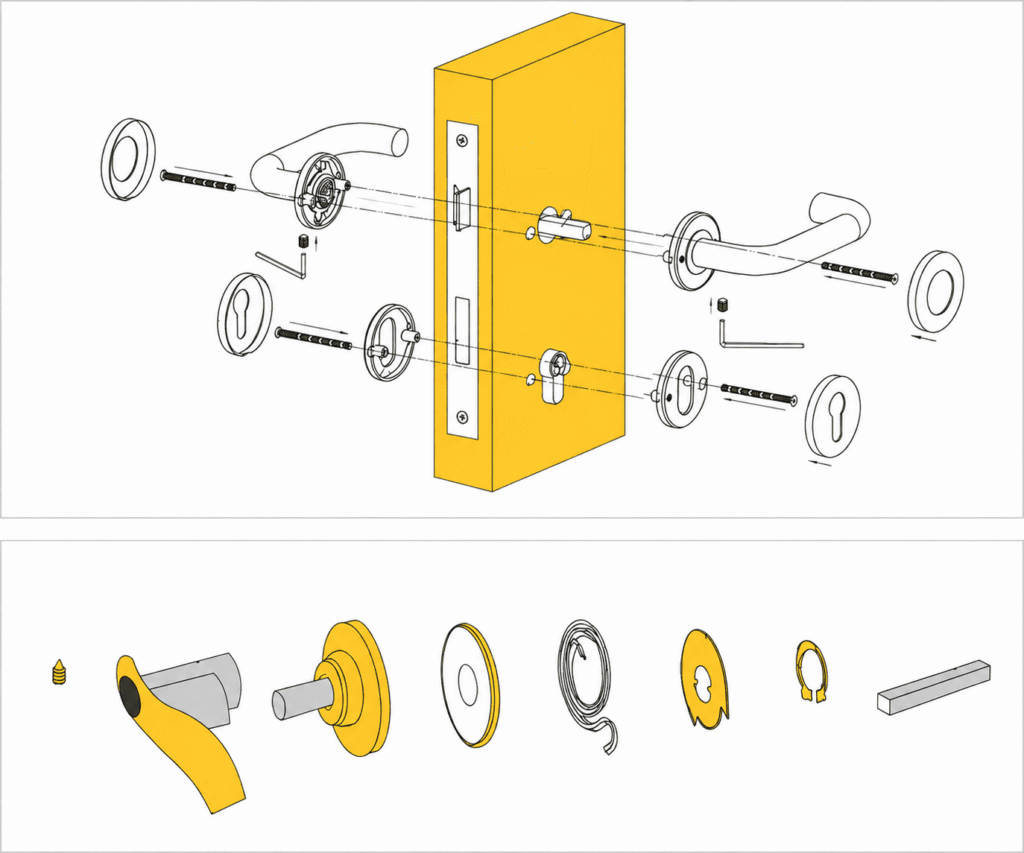
Spindle length selection: timber door vs aluminium door lever handle sets
Spindle length selection becomes risky when buyers treat it as a simple door-thickness match. A batch of lever handle sets can look correct on paper but still feel stiff, bind, or fail to drive the latch. I usually recommend checking the door type, profile structure, lock body, handle base, and working clearance before confirming bulk orders.
Spindle length selection for timber doors and aluminium doors should not be based on nominal door thickness alone. Timber doors often need a spindle close to actual door thickness, while narrow aluminium-frame doors may require a shorter spindle because the hollow profile, lock position, handle base, and clearance conditions are different.
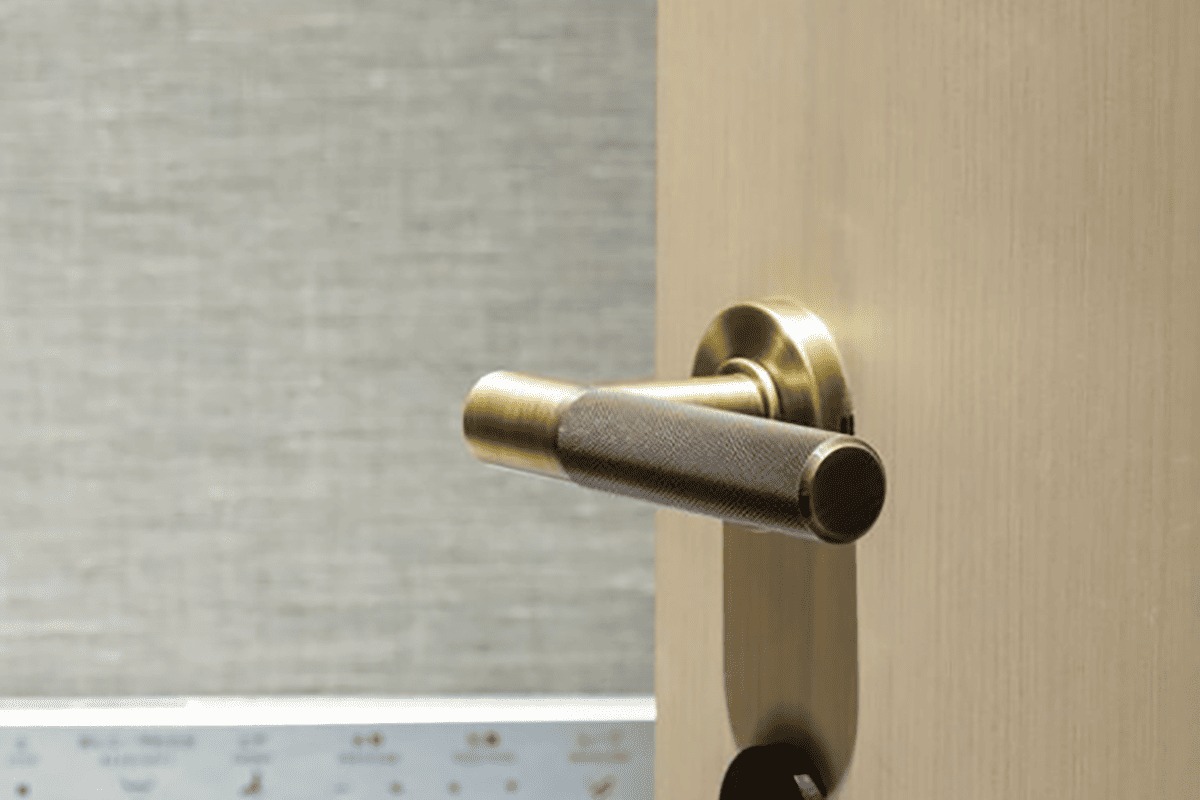
The difference is not just technical detail. It affects procurement risk, product returns, customer complaints, and brand reputation. From my experience supporting door factories, hardware brands, and wholesalers, the best result comes when spindle confirmation happens before order release, not after products arrive.
Why does spindle length selection differ between timber doors and aluminium doors?
Spindle length selection differs because timber doors and aluminium doors are not built the same way. A timber door is usually a solid or semi-solid slab with a routed lock pocket.1 An aluminium-frame door often uses a narrow, hollow profile system.2 The same nominal thickness can create different working conditions.
Spindle length selection must consider the door material, internal structure, lock case position, handle base thickness, rose or backplate design, and clearance for lever movement. Timber doors often accept a spindle close to door thickness. Aluminium-frame doors may need a shorter or more carefully controlled spindle to avoid functional problems.

The door thickness number can be misleading
I often see buyers start with one question: “What spindle length matches a 40 mm door?” That question sounds logical, but it is incomplete. A 40 mm timber door and a 40 mm aluminium-frame door may not use the handle set in the same mechanical environment.
A timber door usually gives the lock body a stable pocket inside the door slab. The spindle passes through the handle base, the door, and the follower in the lock case. In many standard timber door applications, the required spindle length is close to the real door thickness plus the allowance required by the handle set design.
An aluminium-frame door can be very different. The “door thickness” may describe the outside dimension of a hollow extrusion, not a solid area where the spindle works continuously. The lock may sit inside a narrow profile. The handle fixing position may be closer to one side. The rose or escutcheon may need a specific clearance from the frame edge.
The same nominal size can create different spindle behavior
The table below shows why buyers should avoid a universal spindle chart.
| Evaluation point | Timber door lever handle set | Aluminium door lever handle set |
|---|---|---|
| Door structure | Solid, semi-solid, or composite slab | Hollow aluminium profile or narrow frame |
| Lock installation | Routed lock pocket inside door body | Lock case installed inside profile system |
| Spindle path | Usually passes through a more uniform door body | May pass through cavities, profiles, and tight spaces |
| Typical selection risk | Spindle too short or incorrect allowance | Spindle too long, binding, or poor clearance |
| Main question | Does the spindle engage the lock follower correctly? | Does the spindle fit the profile, lock, base, and movement clearance? |
The selection decision should be configuration-based
I prefer to treat spindle length selection as part of a complete lever handle set configuration. That approach is safer than looking at one dimension only.
A procurement team should confirm:
- Actual door thickness, not only catalog thickness.
- Door type, such as timber slab, solid core, hollow core, aluminium narrow frame, or aluminium profile door.
- Lock body model, including follower size and position.
- Handle base design, such as rose, backplate, or narrow plate.
- Spindle cross-section, commonly 8 mm in many Euro-style handle applications3, but this must match the lock.
- Working clearance, especially for return movement and spring action.
- Fixing method, including through bolts, screws, and escutcheon assembly.
The practical question is not “What spindle length matches this door thickness?”
The better question is “What door type, profile structure, lock body, handle base, and working clearance does this handle set need?”
For B2B orders, this difference matters because a small mismatch can become a batch issue. If a wholesaler sells hundreds of sets into one project, a stiff lever or latch-driving failure becomes expensive to correct. That is why I encourage buyers to share drawings, lock specifications, and sample door details before production confirmation.
How should spindle length selection work for timber door lever handle sets?
Spindle length selection for timber doors is usually more direct, but it still needs confirmation. A timber door often provides a stable body for the mortise lock. However, the handle base, rose thickness, lock follower position, and door construction can still change the required spindle allowance.
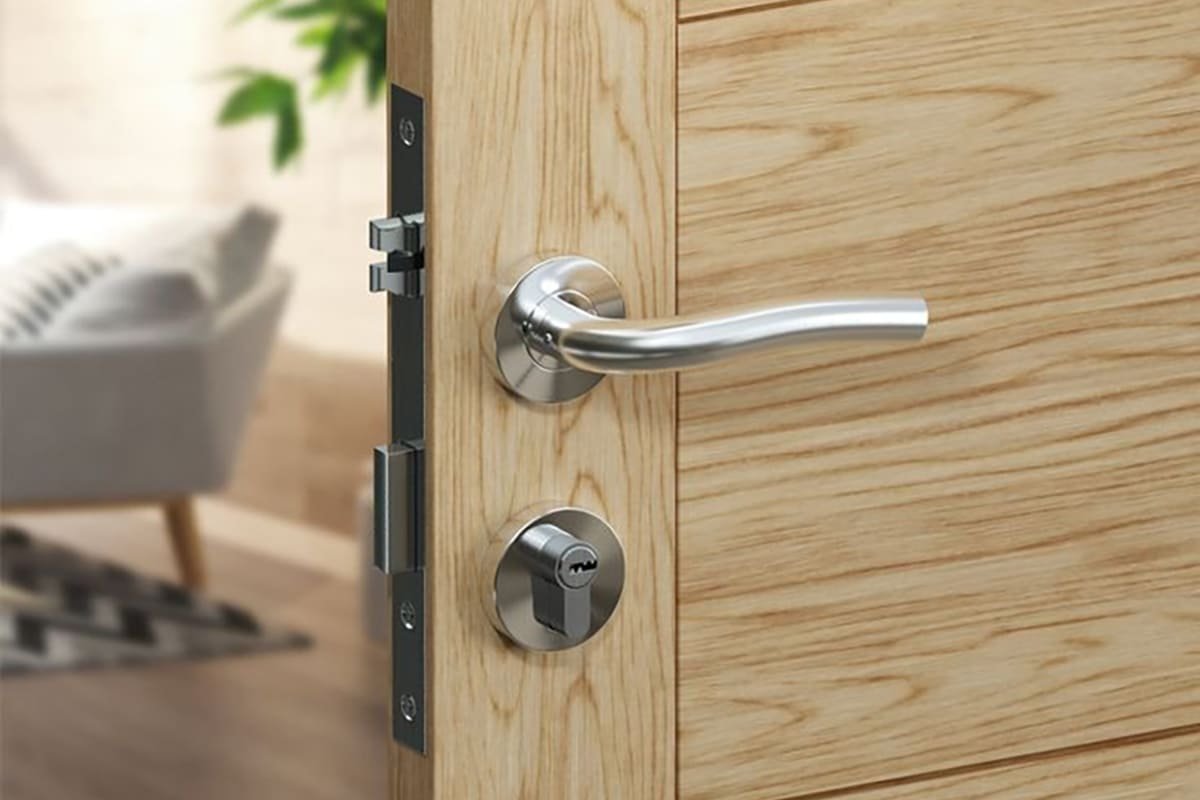
For timber doors, spindle length selection often starts near the actual door thickness because the lock body sits inside a relatively solid routed pocket. Buyers should then add or adjust allowance based on the lever handle base, rose or backplate thickness, fixing style, and correct engagement inside the lock follower.
Timber doors give more predictable support
A timber door normally behaves like a stable slab. The lock case sits in a routed pocket. The latch and deadbolt align through the door edge. The spindle crosses the door and engages the follower in the lock body. This arrangement makes the spindle path more predictable than many narrow aluminium profile systems.
That does not mean every timber door uses the same spindle. It means the starting logic is clearer.
For example, a solid timber door with a Euro mortise lock often allows a supplier to evaluate:
- Actual measured door thickness
- Lock body follower position
- Handle base height
- Rose or backplate thickness
- Required spindle engagement depth
- Any grub screw or split-spindle arrangement
In our factory-supply discussions, timber door configurations are often easier to confirm when the buyer provides a door thickness range, lock model, and handle drawing. I do not like to rely only on “standard timber door” wording because regional standards can differ.
Solid doors and hollow-core doors still need separate checks
A solid timber door and a hollow-core timber door may both be sold as timber doors, but their internal support can differ. A hollow-core door may use reinforcement blocks around the lock area.4 If the lock area is not reinforced properly, the handle set may feel unstable even if the spindle length is technically correct.
Buyers should confirm these points before bulk orders:
- Is the door solid core, semi-solid, or hollow core?
- Does the lock pocket area have enough reinforcement?
- Does the handle rose sit flat on the door face?
- Does the spindle reach the lock follower without excessive play?
- Does the lever return smoothly after operation?
Timber door spindle length is close, not automatic
The phrase “close to door thickness” should not be understood as “equal to door thickness.” The spindle must pass through the handle base and engage the lock follower correctly. It must not bottom out or push against internal parts in a way that creates friction.
A simple procurement checklist can help.
| Timber door check | Why it matters |
|---|---|
| Actual door thickness | Catalog thickness may vary by production tolerance5 |
| Lock case model | Different followers and hubs may need different engagement |
| Handle base design | Thick roses or plates may require different allowance |
| Fixing system | Through bolts and spindle may interact with lock holes |
| Finish and coating | Thick plating or powder coating can slightly affect fit6 |
| Sample confirmation | A pre-production sample can reduce batch risk |
Common timber door risk points
The most common timber door risks are not dramatic, but they can affect user experience.
- The spindle is slightly short. The lever may not drive the latch reliably.
- The spindle is too long. The handle may bind or feel stiff after tightening.
- The lock pocket is misaligned. The spindle may enter the follower at a poor angle.
- The handle base is over-tightened. The lever may lose smooth return movement.
- The door surface is uneven. The rose may not sit flush.
I usually recommend that buyers confirm the complete set together: lever handle, spindle, fixing screws, lock body, cylinder, and accessories. This approach fits factory-direct supply well because it allows the supplier to match components before shipment.
Why does spindle length selection become more sensitive for aluminium-frame doors?
Spindle length selection becomes more sensitive for aluminium-frame doors because these doors often use hollow, narrow profiles rather than solid slabs. The lever handle set must work within limited internal space. A spindle that seems correct by thickness may become too long once the profile, lock case, and handle base are considered.
For aluminium-frame doors, spindle length selection should account for the hollow profile structure, narrow stile width, lock body position, fixing method, and handle movement clearance. A shorter spindle may be required even when the nominal door thickness matches a timber door, because the working space is not the same.
Aluminium doors are often profile systems
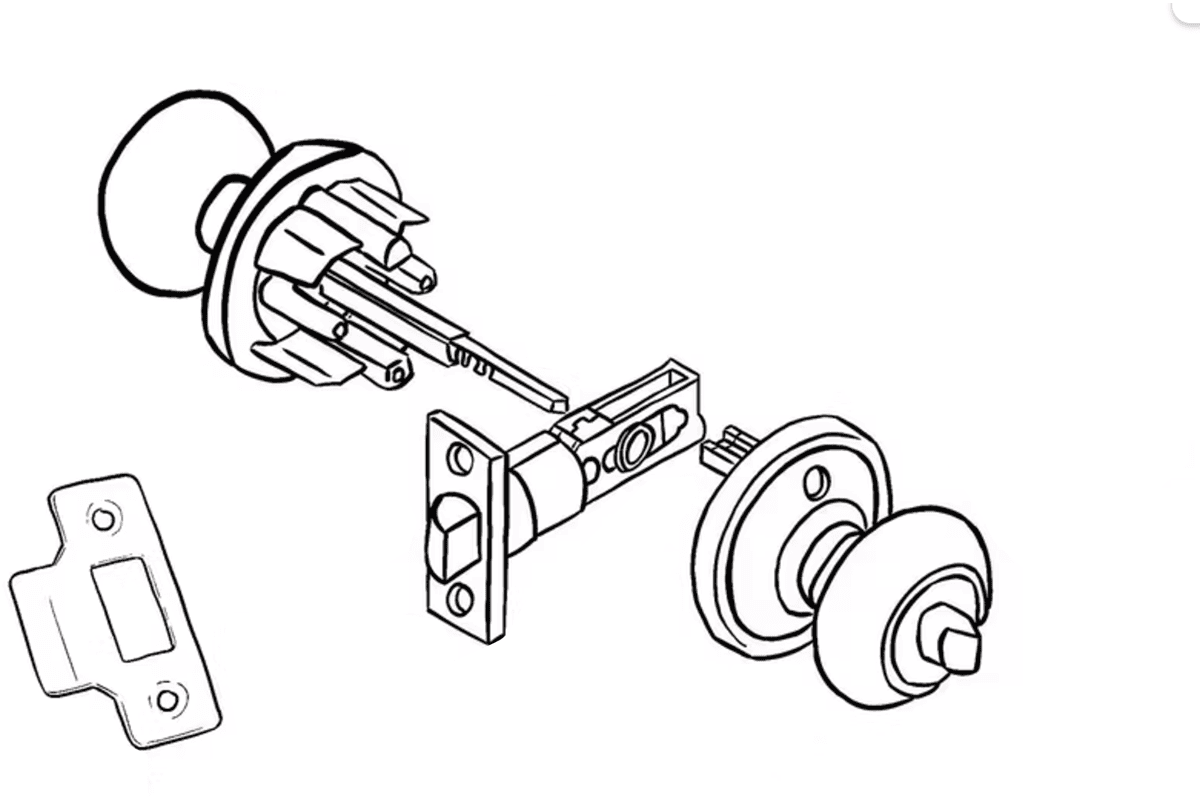
An aluminium door is not always a flat slab. Many aluminium-frame doors use extruded profiles with chambers, ribs, reinforcement zones, and narrow lock channels.7 The apparent door thickness may include air space or profile geometry that does not support the spindle in the same way as timber.
This is the key reason why I discourage buyers from using a timber door spindle rule for aluminium doors.
In a narrow aluminium frame, the lock body may sit inside a limited channel. The spindle may need to reach the lock follower without protruding too much beyond the handle base. If the spindle is overlong, tightening the handle can create pressure.8 That pressure can make the lever bind, return slowly, or feel stiff.
The main problem is function, not appearance
A spindle mismatch may not be obvious when the product is still in packaging. It may also not be obvious when the handle is loosely assembled. The problem can appear after the handle is tightened and operated.
The two practical warnings are simple:
- A spindle that is too long may cause handle binding, stiff movement, or poor lever return.
- A spindle that is too short may fail to operate the latch properly or may slip under repeated use.9
These risks matter for wholesalers and hardware brands because end users usually report them as product defects. However, the root cause may be configuration mismatch rather than poor manufacturing.
Narrow plates and roses need careful coordination
Aluminium-frame doors often use narrow stile handle sets or special backplates. The plate width, fixing positions, escutcheon shape, and lock body must all match the frame system. The spindle length sits inside this whole configuration.
A buyer should not evaluate the spindle alone. The buyer should compare the complete working stack.
| Aluminium door factor | Practical question |
|---|---|
| Profile depth | How much usable internal space exists around the lock? |
| Stile width | Can the handle base and fixing screws fit without conflict? |
| Lock case type | Does the follower align with the handle spindle center? |
| Handle base thickness | Does the base add length requirement or reduce clearance? |
| Spindle projection | Does the spindle protrude too far after tightening? |
| Lever movement | Does the handle return freely without binding? |
What I ask buyers to provide
When a customer asks me to configure lever handle sets for aluminium doors, I prefer to see more than door thickness. The best information includes:
- Aluminium profile drawing
- Door section drawing
- Lock body drawing or model number
- Handle drawing or sample
- Door thickness and stile width
- Required finish and packaging
- Expected order quantity and market standard
I understand that buyers may not always have full drawings at the first inquiry stage. In that case, I suggest starting with the most important details: lock model, door profile type, and target door thickness range. Then the supplier can advise what still needs confirmation before mass production.
Aluminium-frame doors benefit from pre-order sample checking
For aluminium doors, I strongly prefer sample confirmation before a large order. This does not need to be complicated. A buyer can test the assembled handle set with the intended lock and door profile, then confirm whether the lever action feels smooth and whether the latch operates reliably.
This is a procurement control step, not a claim of universal field performance. Project-specific conditions can vary. If the application has fire-rated, emergency exit, accessibility, or regulatory requirements, qualified professionals should review the complete door hardware schedule10.
What problems can poor spindle length selection cause in bulk orders?
Spindle length selection can create serious batch problems when it is not confirmed before production. The product may look acceptable, but the handle may not work smoothly after installation. For B2B buyers, this can lead to claims, rework, delayed delivery, and damaged confidence in the hardware brand.
Poor spindle length selection can cause lever binding, stiff handle movement, weak latch operation, spindle slippage, poor return action, and customer complaints. The most common risk is not cosmetic mismatch. The real risk is functional failure after the handle set is tightened and used on the intended door system.
The failure can appear after tightening
A lever handle set can appear fine during loose assembly. The spindle enters the follower. The lever moves. The rose covers the hole. Everything looks normal.
Then the installer tightens the fixing screws. The handle starts to feel stiff. The lever does not return cleanly. The latch may retract only partially. This situation often happens because the spindle, handle base, lock follower, and door structure do not have enough working clearance.
This is why I tell buyers to evaluate function after final tightening, not only during a loose fit.
Overlong spindles create pressure
An overlong spindle can push against internal parts or create compression between the two handle sides. This issue can be more noticeable in narrow aluminium-frame doors because the internal space is limited.
Possible results include:
- Lever binding
- Stiff downward movement
- Slow lever return
- Excess friction inside the follower
- Noise during operation
- Premature wear risk
- Customer complaints about “heavy” handles
The buyer may think the spring cassette is weak or the handle machining is poor. However, the real issue may be an overlong spindle or incorrect assembly stack.
Overly short spindles reduce engagement
A spindle that is too short creates a different problem. It may not engage the lock follower deeply enough. The handle may move, but the latch may not retract fully. In some cases, the handle works during initial testing but becomes unreliable after repeated use.
Possible results include:
- Latch does not retract completely
- Handle turns without driving the latch correctly
- Spindle slips under load
- Door users must press harder
- The customer reports intermittent failure
- The brand receives return requests
This problem is especially damaging for wholesalers because the defect may be discovered by many customers after distribution.
Procurement teams should control the risk early
A simple control process can reduce the risk of batch misconfiguration.
| Stage | Control action | Why it helps |
|---|---|---|
| Inquiry | Share door type and lock model | The supplier can avoid wrong assumptions |
| Quotation | Confirm handle set configuration | The price reflects the correct parts |
| Sampling | Test with intended door and lock | The buyer checks real working fit |
| Order confirmation | Freeze spindle and accessory specs | Production follows one approved setup |
| Inspection | Check assembly and operation | The buyer reduces shipment risk |
| After-sales review | Record complaints by configuration | Future orders become more accurate |
Documentation should be specific
I like clear order documents. They reduce confusion between sales, production, QC, and the buyer’s purchasing team.
A good order confirmation should include:
- Lever handle model
- Finish code
- Door type
- Door thickness range
- Lock body model
- Spindle size and length
- Screw set and fixing method
- Rose or backplate type
- Packaging requirements
- Logo or branding details
- Inspection requirements
For SDH Hardware, this type of detail is normal in OEM and ODM supply discussions. We often help customers align lever handles, Euro mortise locks, cylinders, hinges, and door accessories as a complete door hardware set. I always see better results when the buyer treats the handle set as a system rather than a loose collection of parts.
How can buyers confirm spindle length selection before placing a large order?
Spindle length selection should be confirmed through drawings, component matching, and sample review before large-scale purchasing. A buyer does not need to solve every technical detail alone. However, the buyer should provide enough information for the supplier to recommend a suitable configuration.
Buyers can confirm spindle length selection by sharing door structure details, lock body specifications, handle drawings, and target market requirements. The safest method is to approve a complete sample set before bulk production11, then keep the approved spindle length, fixing accessories, and handle base configuration consistent in the purchase order.
Start with the door and lock, not only the handle
Many buyers begin by choosing the handle design. That is natural because the handle is visible. However, the spindle works between the handle and the lock. So the lock and door structure must be part of the decision from the beginning.
I suggest this order of confirmation:
- Door type
- Door thickness range
- Door structure or profile drawing
- Lock body model
- Lever handle design
- Rose or backplate design
- Spindle size and length
- Fixing screws and accessories
- Sample approval
- Bulk production
This order helps prevent a common problem: the buyer approves the handle appearance first, then discovers that the spindle or fixing system does not suit the intended door.
Use a configuration sheet
A configuration sheet gives the purchasing team, supplier, and QC staff one shared reference. It also helps hardware brands maintain consistency across repeat orders.
A simple version can look like this:
| Item | Required information |
|---|---|
| Project or customer | Brand, wholesaler, or door factory name |
| Door type | Timber door, aluminium-frame door, narrow stile door |
| Door thickness | Actual range, not only nominal value |
| Profile drawing | Required for aluminium-frame doors |
| Lock model | Mortise lock, narrow lock, or specific model |
| Handle model | Lever design, rose, backplate, or narrow plate |
| Spindle | Cross-section and approved length |
| Accessories | Screws, through bolts, escutcheons, Allen key |
| Finish | Satin stainless steel, PVD, black, or custom finish |
| Certification documents | CE or fire-rated documents where applicable and verified |
| Approval status | Sample approved, pending, or revised |
Certification documents should be checked based on the actual product and project requirement.12 I recommend that buyers verify CE certificates, fire-rated documentation, and any local compliance requirements with qualified professionals when the application demands it.
Ask the supplier practical questions
A good supplier should be able to discuss configuration, not only unit price. When buyers come to SDH Hardware for lever handle sets, I find the best conversations include practical questions like these:
Conclusion
Spindle length selection is a small detail with a large effect on lever handle performance. Timber doors often allow a more direct match to actual door thickness, while aluminium-frame doors require closer attention to hollow profiles, narrow lock spaces, handle bases, and working clearance. I recommend confirming the full configuration before bulk orders, not after delivery. If you need support for timber door or aluminium door lever handle sets, SDH Hardware can help review drawings, match components, and prepare factory-direct OEM or ODM supply solutions.
"SECTION 087111 - DOOR HARDWARE (SCHEDULED BY ...", https://fpm.usc.edu/wp-content/uploads/2021/11/087102-USC-HSC-door-hardware-Guide-Specification_1.pdf. A neutral building-construction reference describes solid-core and hollow-core door leaves and explains that mortise locks are fitted into a mortise or pocket cut into the door edge, supporting the article's description of the usual timber-door installation context. Evidence role: general_support; source type: education. Supports: A source should explain common timber door constructions and that mortise locks are installed in a recess or pocket cut into the door edge.. Scope note: This would support common construction practice rather than prove that every timber door uses this structure. ↩
"081113 - HOLLOW METAL DOORS AND FRAMES PART 1", https://web.uri.edu/wp-content/uploads/sites/150/100643PLANSD-1.pdf. Architectural and materials references on aluminium fenestration describe door and frame members as extruded profiles, commonly formed as hollow or multi-chamber sections, which supports the article's distinction between aluminium profile doors and solid timber slabs. Evidence role: general_support; source type: education. Supports: A source should describe aluminium doors or frames as systems made from extruded, often hollow, profiles.. Scope note: The support is contextual because aluminium door designs vary by manufacturer and application. ↩
"Door Lock Replacement Parts with 8mm Square Spindle ...", https://www.amazon.com/Aesytava-Replacement-Spindle-45%C2%B0Rotation-Mounting/dp/B0GHPBBFMZ. European door-furniture standards and technical references commonly specify square spindles and followers, including 8 mm configurations for lever operation, supporting the article's statement that 8 mm is common in many Euro-style applications. Evidence role: definition; source type: institution. Supports: A source should identify 8 mm square spindles or followers as common in European lever handle or mortise lock systems.. Scope note: This does not mean all European or export-market locks use 8 mm; project specifications and lock models still control the required spindle size. ↩
"DIVISION 08 00 00 OPENINGS", https://www.tntech.edu/capital-projects/files/02_designers_manual/appendix_3_documents/08_00_00_Openings_2026-7.pdf. Door-construction references note that hollow-core doors may contain localized solid blocking, often called a lock block, at the lockset area to provide support for hardware installation. Evidence role: mechanism; source type: education. Supports: A source should explain that hollow-core doors can include localized solid blocking or lock blocks to receive lock hardware.. Scope note: The presence, size, and location of reinforcement depend on the particular door leaf design. ↩
"SDI 117-26", https://steeldoor.org/SDI-117/. Door-leaf dimensional standards and manufacturing references recognize allowable tolerances in door dimensions, including thickness, supporting the article's distinction between nominal catalog thickness and actual measured thickness. Evidence role: general_support; source type: institution. Supports: A source should show that door leaves are subject to dimensional tolerances, including thickness variation.. Scope note: The tolerance values differ by standard, material, and market, so the cited source would not replace project-specific measurement. ↩
"Certificate - National Institute of Standards and Technology", https://tsapps.nist.gov/srmext/certificates/archives/1364b.pdf. Coating-technology references describe powder coating and electroplated finishes as adding measurable film thickness to a part, supporting the article's point that finishes can influence fit where clearances are small. Evidence role: mechanism; source type: research. Supports: A source should document that coatings add measurable material thickness and can affect dimensional tolerances.. Scope note: The source would not establish that coating thickness is significant in every handle set; the effect depends on tolerance stack-up and component design. ↩
"Analysis tools for the design of aluminium extrusion dies", https://citeseerx.ist.psu.edu/viewdoc/download?doi=10.1.1.475.5621&rep=rep1&type=pdf. References on aluminium extrusion and fenestration profile design describe hollow and multi-chamber extruded sections with ribs or webs, providing contextual support for the article's statement that aluminium-frame doors can have constrained internal geometry. Evidence role: mechanism; source type: education. Supports: A source should describe extruded aluminium door or fenestration profiles as having hollow chambers, ribs, or internal geometry that affects component placement.. Scope note: The source would support the structural principle, not the exact geometry of any specific door profile. ↩
"Door knob keep falling off spindle despite tightening that ...", https://www.reddit.com/r/fixit/comments/12f7vfg/door_knob_keep_falling_off_spindle_despite/. Technical fitting guidance for lever handle assemblies identifies incorrect spindle length or excessive projection as a potential cause of binding or impaired handle movement after the furniture is tightened. Evidence role: mechanism; source type: institution. Supports: A source should explain that incorrect spindle length or excessive projection can cause binding or pressure in lever handle assemblies.. Scope note: Such guidance would support the mechanism generally; actual failures require inspection of the installed handle, lock, and door. ↩
"Door latch doesn't retract fully with new door knobs and ...", https://www.reddit.com/r/DIYUK/comments/18ktjjy/door_latch_doesnt_retract_fully_with_new_door/. Door-lock installation references describe the spindle as the element that engages the lock follower to retract the latch, supporting the conclusion that insufficient engagement can impair latch operation or allow slippage. Evidence role: mechanism; source type: institution. Supports: A source should support that the spindle must sufficiently engage the lock follower to transfer lever motion to the latch.. Scope note: The source would support the mechanical relationship but may not quantify the minimum engagement for every lock model. ↩
"Chapter 4: Entrances, Doors, and Gates", https://www.access-board.gov/ada/guides/chapter-4-entrances-doors-and-gates/. Government building-code and accessibility guidance treats door hardware as part of regulated egress, fire-safety, and accessibility performance, supporting the article's caution that qualified review is appropriate for such applications. Evidence role: expert_consensus; source type: government. Supports: A source should establish that regulated door hardware must comply with fire, egress, accessibility, or building-code requirements and may require competent review.. Scope note: The exact review requirement depends on jurisdiction, building type, and the applicable code edition. ↩
"Pre-shipment inspection", https://en.wikipedia.org/wiki/Pre-shipment_inspection. Quality-management references describe verification, validation, and approval of product requirements before production as controls for reducing nonconforming output, providing contextual support for pre-production sample approval in bulk orders. Evidence role: general_support; source type: institution. Supports: A source should support sample approval or verification before production as a quality-control practice.. Scope note: This supports the quality-control rationale generally rather than proving that sample approval is always the safest method in every purchasing scenario. ↩
"Declaration of Performance and conformity - CE Marking", https://single-market-economy.ec.europa.eu/sectors/construction/construction-products-regulation-cpr/ce-marking-and-declaration-performance-and-conformity_en. Official construction-product compliance guidance explains that CE marking and declarations of performance are tied to specified products, characteristics, and intended uses, supporting the article's statement that certification documents should be checked against the actual product and project requirement. Evidence role: general_support; source type: government. Supports: A source should state that CE marking, declarations, or certification documents relate to specific products, intended uses, and applicable requirements.. Scope note: This does not verify any particular certificate; it only supports the need for product- and project-specific document review. ↩
