
Fire rated mortise lock vs standard mortise lock: key differences
A fire rated mortise lock can look very similar to a standard mortise lock, which makes selection risky for door factories and OEM buyers. If I judge only by size, finish, or stainless steel appearance, I may miss the real issue: whether the lock is tested for a fire door system. The safe solution is to compare materials, structure, and certification scope together.
A fire rated mortise lock is designed and tested for use in fire-rated door assemblies1, while a standard mortise lock is usually intended for ordinary non-fire-rated interior doors. The main differences include heat-resistant materials, internal structure, latch and bolt design, certification documents, and compatibility with the tested fire door configuration.

In my daily work with door hardware buyers, I often see one misunderstanding: buyers ask whether the lock body is stainless steel, but they do not ask whether the lock has a valid fire test report. That small missing question can create a serious project risk.
What is a fire rated mortise lock?
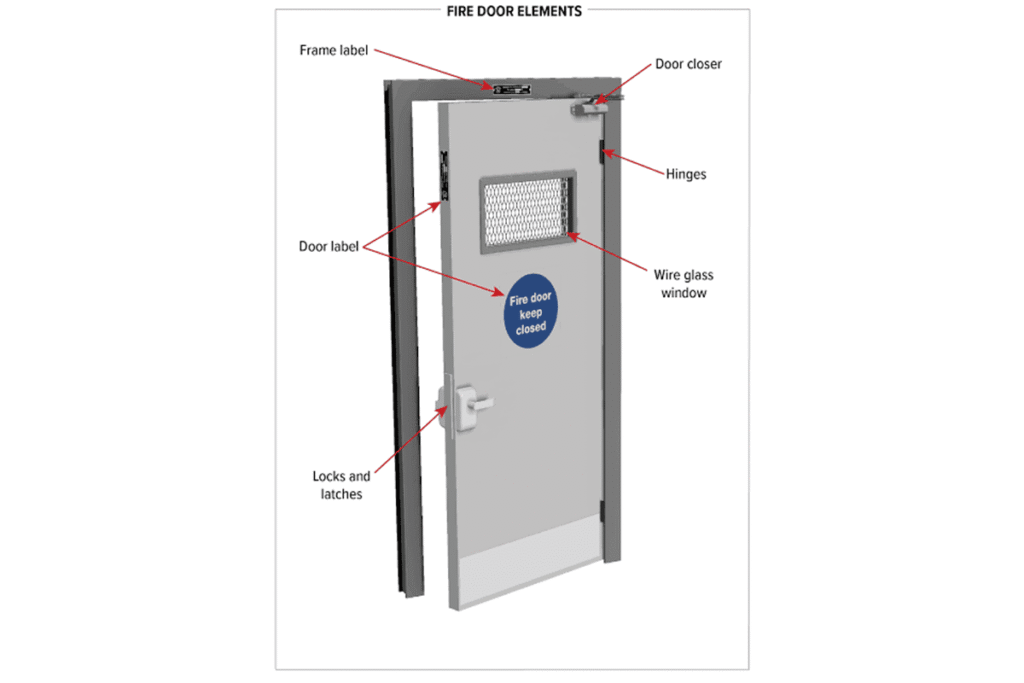
A fire rated mortise lock solves a specific project problem: the door must help maintain the integrity of a fire-rated opening. If the wrong lock is used, the door assembly may not match the tested configuration2. So I always treat the lock as part of the whole fire door system, not as an isolated metal product.
A fire rated mortise lock is a mortise lock designed, constructed, and tested for use in a fire-rated door assembly. It normally uses heat-resistant metal components, controlled latch performance, and documented fire test evidence3. Buyers should verify the test report, certificate scope, door type, and compatible hardware before project use.
A fire door lock is part of a tested system
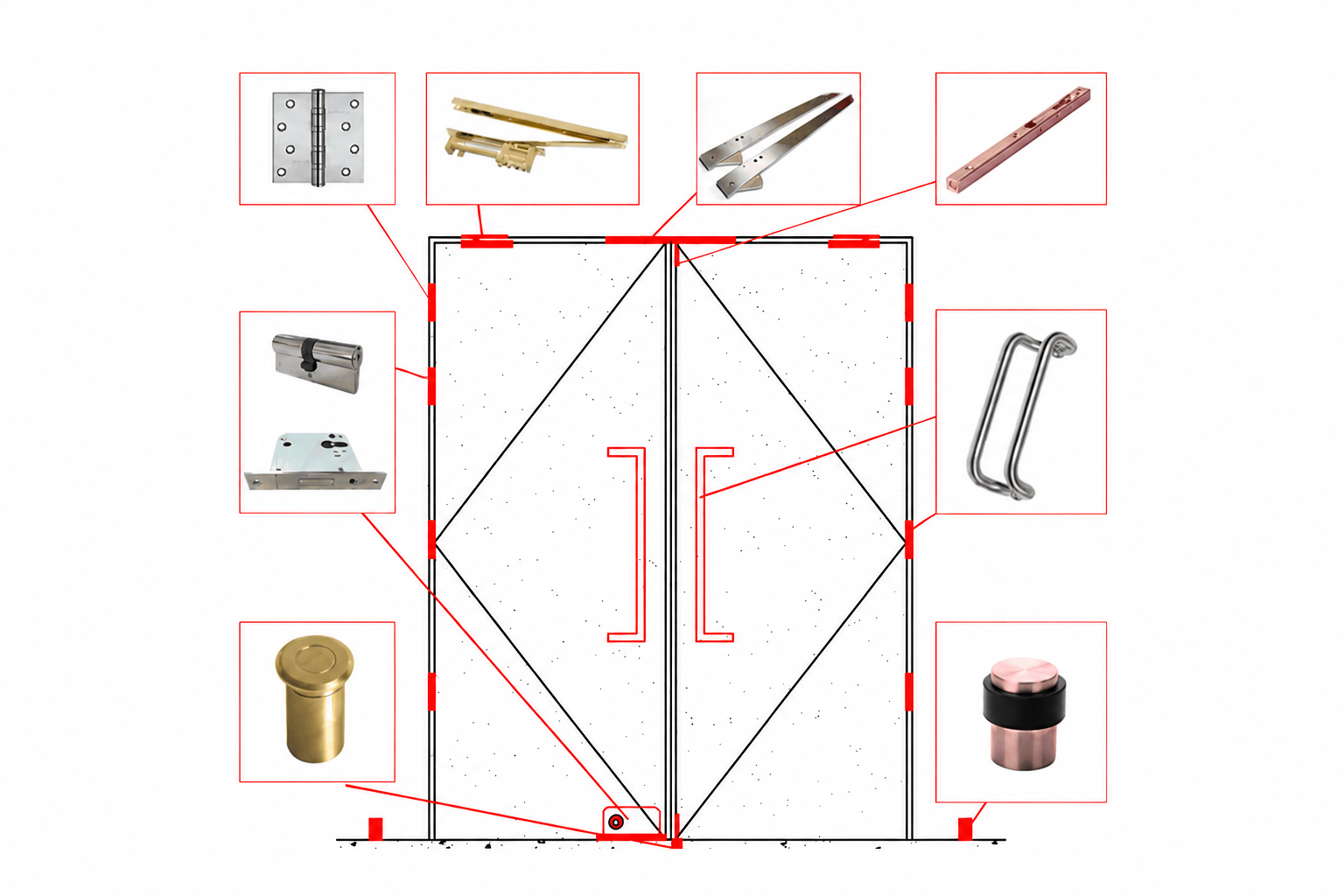
A fire rated mortise lock is not just a stronger version of a normal lock. It is one component in a fire-rated door assembly, which may include:
- Door leaf
- Door frame
- Hinges
- Door closer
- Seals
- Lock body
- Cylinder
- Lever handle or panic hardware
- Strike plate
- Screws and fixing accessories
In procurement, I see many buyers focus on the lock case thickness or the latch bolt material. Those details matter. However, a fire-rated door opening depends on the performance of the full assembly during a fire test4. The lock must be suitable for the door type and rating being claimed.
For example, a lock that appears robust may still be outside the tested scope if the original test was performed with another door material, another latch configuration, or another set of fixing accessories. This is why I never recommend selecting a fire door lock only by product photo or drawing.
Typical construction features
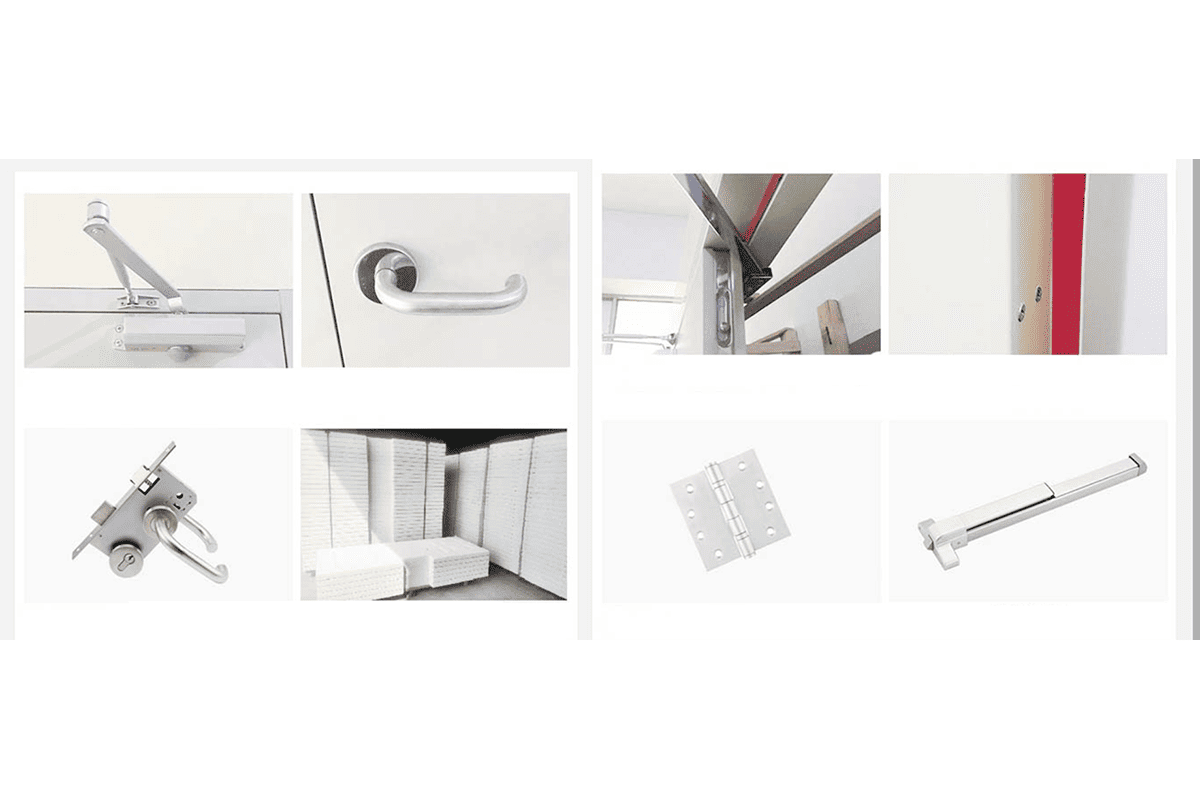
A qualified fire-rated lock body usually pays attention to heat resistance and mechanical reliability. Depending on the project and test scope, the lock may include:
- Stainless steel or iron lock case
- Steel latch bolt or deadbolt
- Heat-resistant internal moving parts
- Stable spring structure
- Compatible strike plate
- Fixing screws suitable for the tested door set
At SDH Hardware, I often explain to OEM customers that visible stainless steel is only one layer of the decision. The internal parts matter too. If the outside case is stainless steel but the latch bolt or follower is made from unsuitable die-cast alloy, the lock may not be appropriate for a fire-rated project unless its tested documentation clearly covers that construction.
The key question is not, “Is this lock strong?”
The better question is, “Is this lock approved within the required fire-rated door configuration?”
Fire rating must be verified, not assumed
A buyer should ask for documents before using any lock in a fire-rated project. These may include:
- Fire test report
- Fire-rated certificate
- Product model covered by the report
- Door type and rating covered
- Hardware set used during testing
- Validity or renewal status, if applicable
I am careful here because I am a manufacturer, not a testing laboratory. I can provide available product documents and explain construction details, but the final project decision should be checked against the relevant test report, local code, and professional fire door requirements.
How does a fire rated mortise lock differ from a standard mortise lock?
A fire rated mortise lock and a standard mortise lock may share similar dimensions, backsets, and faceplate designs. That similarity creates confusion. If I compare only appearance or price, I may choose the wrong item. The real comparison should include materials, internal components, tested performance, and intended door application.
A fire rated mortise lock differs from a standard mortise lock because it is selected for tested fire door performance, not just daily locking function. Standard mortise locks are usually suitable for ordinary interior doors, while fire-rated models require heat-resistant components and supporting fire-rated documentation for the intended door assembly.
Material differences matter, but they are not the whole answer
Material is usually the first thing buyers ask about. That makes sense because fire exposure creates high temperatures, and some common decorative or indoor lock materials may not perform well under heat.
Here is a simplified comparison:
| Component area | Fire-rated mortise lock tendency | Standard mortise lock tendency | Buyer evaluation point |
|---|---|---|---|
| Lock case | Stainless steel or iron | Steel, zinc alloy, or mixed materials | Check thickness and material grade |
| Latch bolt | Steel, stainless steel, or iron-based material | Zinc alloy, brass, or steel | Confirm heat resistance and report scope |
| Deadbolt | Steel or stainless steel | Brass, zinc alloy, or steel | Match project security and fire requirement |
| Internal parts | More heat-resistant metal parts | May include zinc die-cast parts | Ask about follower, hub, spring, and cam |
| Faceplate | Stainless steel or steel | Stainless steel, plated steel, brass, or alloy | Confirm finish and fire test coverage |
| Certification | Fire test report or certificate needed | Usually not required for ordinary indoor use | Verify document relevance |
I do not describe standard mortise locks as poor products. Many standard locks are perfectly suitable for hotels, apartments, offices, and interior wooden doors. They may offer smooth operation, good finishing, and competitive pricing. The problem begins when a buyer uses a normal indoor lock on a door that needs a tested fire rating.
Zinc alloy and brass can be acceptable in the right application
Standard mortise locks often use zinc alloy die-cast internal parts, zinc alloy latch bolts, or brass latch bolts. These materials can be suitable for ordinary interior doors because they offer:
- Easy manufacturing
- Clean surface finishing
- Good machining properties
- Cost efficiency
- Smooth operation for regular use
However, fire door applications require another level of evaluation. Zinc alloy and brass generally have lower heat resistance than stainless steel or iron-based components.5 Under high heat, some materials may soften, deform, or lose mechanical stability earlier than steel-based parts6.
That does not mean every non-steel component automatically fails. It means the buyer must rely on test evidence, not assumptions. If a tested fire door lock includes specific components and the report covers that configuration, then the document becomes the reference point. If there is no report, the buyer should not assume suitability.
The intended door application changes the decision
I usually divide buyer questions into two categories:
Ordinary door project
- Interior wooden doors
- Apartment doors without fire rating
- Office partition doors
- Standard commercial rooms
- Non-fire-rated bathroom or bedroom doors
Fire-rated door project
- Fire-rated timber doors
- Fire-rated steel doors
- Hotel corridor fire doors
- Apartment entrance doors with fire rating
- Commercial escape route doors
- Doors governed by local fire codes
The lock choice should follow the door project. A standard mortise lock may be the correct choice for a non-fire-rated indoor door. It may provide better price flexibility and more design options. A fire rated mortise lock is the right category when the door assembly must meet fire performance requirements.
Dimensions alone do not prove interchangeability
Many OEM buyers send me drawings with backset, center distance, faceplate size, and lock case size. These details are important for manufacturing compatibility. However, dimensions do not prove fire suitability.
For example, two locks may both have:
- 55 mm backset
- 72 mm center distance
- 235 mm faceplate
- 20 mm faceplate width
- Stainless steel forend
- Similar latch direction
One may be covered by a fire test report. The other may be a standard indoor model with zinc alloy internal parts. They may fit the same door cutout, but they do not carry the same project risk. This is why I ask buyers to share both the drawing and the project requirement before I recommend a model.
Why is certification critical for a fire rated mortise lock?
A fire rated mortise lock creates risk when buyers treat “metal” as the same as “approved.” If a door factory installs a lock without the right fire documentation, the project may face rejection during inspection7. So I always encourage buyers to verify the certificate and fire test report before confirming mass production.
Certification is critical because fire-rated use depends on tested evidence, not material claims alone. A stainless steel mortise lock is not automatically approved for fire doors. Buyers should check whether the exact lock model, door type, fire rating, and hardware configuration are covered by a valid fire test report or certificate.
CE certification and fire-rated certification are not the same
One common buyer misunderstanding is the difference between CE documentation and fire-rated documentation. CE marking can relate to product conformity under applicable European requirements8, depending on the product type and standard. Fire-rated certification, however, relates to fire performance in a tested door assembly.9
I always suggest that buyers separate these questions:
| Buyer question | Document to check | Why it matters |
|---|---|---|
| Does the lock meet a declared European product standard? | CE-related document, Declaration of Performance, or test evidence | Supports regulatory and product conformity review |
| Can the lock be used on this fire-rated door? | Fire test report or fire-rated certificate | Supports fire door assembly suitability |
| Is this exact model covered? | Model list or report appendix | Prevents substitution risk |
| Is the door type covered? | Test scope and classification | Timber and steel doors may differ |
| Is the rating covered? | Fire rating duration and classification | 30, 60, 90, or 120 minutes10 may differ by market |
At SDH Hardware, I can provide available CE and fire-related documents for relevant products, but I do not tell buyers to treat one document as a replacement for the other. A professional project evaluator or local authority may need to confirm final acceptance.
The test scope is often more important than the label
A certificate can be useful only when the buyer understands its scope. I often see buyers ask, “Do you have a fire certificate?” That is a good start, but it is not enough.
A better request would be:
- “Is this exact lock model listed in the fire report?”
- “Was it tested on a timber door or steel door?”
- “What fire rating duration is covered?”
- “Which latch and strike plate were used?”
- “Does the report allow alternative faceplate sizes?”
- “Are the screws and fixing positions specified?”
- “Is the lock tested with our required lever handle or cylinder type?”
The details matter because a fire door is a system. A report may not automatically cover every possible variation.11 If a buyer changes the strike plate, latch material, lock body size, or door thickness, the project team should verify whether the change remains acceptable.
Material claims should support documentation, not replace it
I sometimes receive inquiries like this:
“Your lock body is stainless steel, so can I use it for fire doors?”
My answer is careful: stainless steel can be a good material choice for heat resistance, but stainless steel alone does not approve the lock for fire door use. The buyer still needs a matching test report or certification scope.
This is the most important procurement point in this article. A fire-rated project should not depend on sales wording such as:
- “Heavy duty”
- “All metal”
- “Stainless steel”
- “Fire-resistant material”
- “High temperature resistant”
- “Suitable for strong doors”
These phrases may describe product quality, but they do not replace tested evidence. A buyer should always ask for the formal report and check whether the report matches the project.
Supplier transparency reduces project risk
A responsible supplier should be able to discuss both the product and the limits of the documentation. I prefer to tell buyers clearly when a product is designed for standard doors and when another model should be considered for fire-rated use. This avoids problems later during inspection, assembly, or customer approval.
For OEM and door factory buyers, I recommend asking suppliers to provide:
- Product drawing
- Material breakdown
- Lock function description
- Certificate or report copy, when available
- Covered model list
- Installation compatibility notes
- Packaging and labeling details
- Inspection report after production
This approach helps procurement teams compare suppliers fairly. It also protects the buyer from selecting a product that looks correct but lacks the required project evidence.
How should OEM buyers choose between a fire rated mortise lock and a standard mortise lock?
OEM buyers face pressure from cost, delivery time, and customer specifications. If they choose a more expensive lock without need, the project loses competitiveness. If they choose a standard lock for a fire-rated opening, the project may fail approval. So I recommend making the decision from the door requirement first.
OEM buyers should choose a fire rated mortise lock when the door project requires a tested fire-rated assembly. They should choose a standard mortise lock for ordinary non-fire-rated interior doors. The correct decision depends on project specification, door material, fire rating, hardware compatibility, certification scope, and supplier manufacturing consistency.
Start with the project specification
Before I recommend a lock, I usually ask the buyer five simple questions:
- Is the door fire-rated or non-fire-rated?
- What is the door material: timber, steel, aluminum, or composite?
- What rating is required: 30, 60, 90, or 120 minutes?
- Which market or standard applies: Europe, Middle East, Southeast Asia, or local code?
- Does the customer require a specific certificate, brand reference, or report format?
These questions help avoid the wrong comparison. The issue is not whether a fire-rated model is “better” than a standard model. The issue is whether the product is suitable for the intended door system.
Compare locks by requirement, not only by price
Price comparison is normal in B2B purchasing. I work with wholesalers, door factories, and hardware brands, so I understand cost pressure. However, a low-cost standard lock can become expensive if it is rejected by a project inspector.
Here is a practical selection table:
| Project situation | Recommended lock category | Main buyer action |
|---|---|---|
| Interior office door with no fire rating | Standard mortise lock | Check size, finish, cycle quality, and price |
| Hotel room entrance with fire rating | Fire rated mortise lock | Verify fire report and full hardware set |
| Apartment interior bedroom door | Standard mortise lock | Select function, design, and durability |
| Fire-rated steel door for corridor | Fire rated mortise lock | Confirm door type and test scope |
| OEM brand catalog for mixed markets | Both categories | Separate standard and fire-rated product lines |
| Replacement project with unclear requirement | Confirm project first | Do not assume based on old lock appearance |
This table is simple, but it prevents many mistakes. I often tell buyers to classify their project first, then compare models within the right category.
Check manufacturing quality after document review
Documentation is essential, but manufacturing consistency also matters. A lock that is approved in documentation should still be produced with controlled materials, stable dimensions, and proper inspection.
At SDH Hardware, I focus on factory-direct production and full-process quality control. In practical procurement terms, buyers should evaluate:
Raw material control
The supplier should specify key materials for the lock case, latch, bolt, follower, springs, and faceplate.Dimensional stability
Mortise locks must fit the door preparation accurately. Small deviations can affect latch engagement and door operation.Function testing
The latch, deadbolt, key operation, lever return, and spring action should be checked before shipment.Surface treatment quality
Finishes such as stainless steel, satin nickel, black, or PVD should match the project and market expectation.Batch inspection
OEM buyers should request inspection service after production, especially for large orders.Model traceability
The supplied model should match the drawing and document reference.
Manufacturing quality does not replace fire testing. Still, it supports consistent supply after the correct model has been selected.
Think in hardware sets, not single products
A fire-rated opening rarely depends on one product. Buyers should evaluate the lock together with the rest of the hardware set.
For example, a fire-rated door may require:
- Fire-rated hinges
- Certified door closer
- Suitable lock body
- Compatible lever handle
- Fire-rated cylinder, where required
- Correct strike plate
- Intumescent protection, where specified12
- Approved fixing screws
- Proper door and frame construction
If one component changes, the door factory may need to re-check the fire report or project approval. This is why I recommend one-stop hardware planning for door manufacturers. When the lock, hinges, handles, cylinders, and accessories are reviewed together, the risk of mismatch is lower.
Use a supplier who can support both categories
Many OEM buyers need both standard and fire-rated options. A wholesaler may sell standard mortise locks for ordinary interior doors and fire-rated mortise locks for project doors. A door factory may need standard models for residential interiors and documented fire-rated models for hotel corridors.
A supplier with a broad product range can help separate the categories clearly. At SDH Hardware, our portfolio covers Euro mortise locks, stainless steel lever handles, butt hinges, concealed hinges, Euro brass cylinders, and door accessories. For project buyers, I prefer to review the requirement first and then recommend products according to certification needs, production feasibility, and target market.
Frequently Asked Questions
Is a stainless steel mortise lock automatically fire rated?
No. A stainless steel mortise lock is not automatically fire rated. Stainless steel can improve heat resistance, but buyers still need to verify the fire test report or certificate scope. The exact model, door type, rating, and hardware configuration should be covered before use in a fire-rated door project.
Can I use a standard mortise lock on a fire door?
You should not use a standard mortise lock on a fire door unless the project authority or fire test documentation confirms that the exact lock is acceptable. Standard mortise locks are usually intended for non-fire-rated interior doors. Fire-rated applications require tested evidence and compatible hardware.
What documents should I request before buying fire-rated locks?
You should request the product drawing, material information, fire test report or certificate, covered model list, door type, fire rating, and hardware configuration details. You should also confirm whether CE-related documents are required separately, because CE certification is not the same as fire-rated certification.
Are fire rated mortise locks always more expensive?
Fire rated mortise locks are often more expensive because they may use more heat-resistant components, stricter production control, and testing documentation. However, price should be compared within the correct product category. A cheaper standard lock may not be suitable for a fire-rated project.
What is the biggest mistake OEM buyers make?
The biggest mistake is assuming that “metal,” “stainless steel,” or “heavy duty” means the lock is approved for fire doors. Buyers should always confirm the tested configuration and document scope. A fire-rated project requires evidence, not only material descriptions or visual similarity.
Conclusion
A fire rated mortise lock is different from a standard mortise lock because it is selected for a tested fire door system, not only for locking function. Material is important, but documentation is critical. I recommend checking the lock structure, internal components, fire test report, door type, rating, and compatible hardware set before placing an OEM or project order. If you need help comparing standard and fire-rated mortise lock options, I can review your project requirements and suggest suitable SDH Hardware models for further verification.
"Fire Door Hardware vs. Builders Hardware", https://idighardware.com/2016/07/fire-door-hardware-vs-builders-hardware/. A fire-rated opening is generally evaluated as an assembly that includes the door, frame, and listed hardware, so a lockset’s suitability depends on its role within that assembly rather than on its standalone appearance. Evidence role: definition; source type: institution. Supports: A source should define fire door assemblies and explain that hardware such as locks and latches is part of the listed or tested assembly.. Scope note: This would support the general assembly principle but would not certify any specific mortise lock model. ↩
"Fire Door Inspection & Checklist", https://steeldoor.org/fire-door-assembly-inspections-101/. Fire door standards and listing practices treat hardware as part of the approved door assembly, and unverified substitutions can place an installation outside the configuration for which performance was established. Evidence role: general_support; source type: institution. Supports: A source should support that fire door assemblies rely on approved or listed components and that changes to hardware may affect conformity with the tested assembly.. Scope note: The source would support the compliance logic in general, not prove that every lock substitution causes failure. ↩
"EN 12209: Building Hardware - Mechanically operated ...", https://www.intertek.com/building/standards/en-12209/. Recognized door-hardware standards classify locks and latches for fire and smoke door use by documented performance criteria, including durability and suitability for fire-resisting assemblies. Evidence role: expert_consensus; source type: institution. Supports: A source should show that locks and latches used on fire or smoke doors are subject to performance classifications, durability requirements, and documented testing or certification.. Scope note: The standard would contextualize expected requirements but would not validate the construction of an individual manufacturer’s lock. ↩
"UL 10C: Standard for Positive Pressure Fire Tests of Door ...", https://www.intertek.com/building/standards/ul-10c/. Standard fire tests for doors assess the performance of the door assembly or doorset under controlled fire exposure, making the interaction of the door leaf, frame, and hardware relevant to the rating. Evidence role: mechanism; source type: institution. Supports: A source should support that fire resistance tests evaluate doorsets or door assemblies under standardized fire exposure conditions.. Scope note: This supports the testing mechanism generally and does not identify which hardware combinations are acceptable for a particular project. ↩
"mechanical properties of metals and alloys", https://nvlpubs.nist.gov/nistpubs/Legacy/circ/nbscircular447.pdf. Published materials-property data show that zinc alloys and many brasses have substantially lower melting or softening ranges than stainless steels and iron-based alloys, which helps explain why material choice matters in fire-door hardware. Evidence role: mechanism; source type: research. Supports: A source should compare the relevant thermal properties of zinc alloys, brass, stainless steels, and iron-based alloys.. Scope note: Thermal-property data alone do not prove fire-door suitability, because the complete tested hardware configuration remains decisive. ↩
"Brass", https://en.wikipedia.org/wiki/Brass. Research on elevated-temperature metal properties shows that alloys differ markedly in retained strength and deformation resistance, so lower-temperature alloys may lose functional stability before steel-based components under fire exposure. Evidence role: mechanism; source type: paper. Supports: A source should support that metals and alloys differ in retained strength and deformation behavior at elevated temperatures.. Scope note: This supports the materials mechanism, not the pass-or-fail result of a particular mortise lock in a fire test. ↩
"INSPECTION CHECKLIST FOR SWINGING DOOR WITH ...", https://statefire.llr.sc.gov/osfm/forms/enforcement/Fire%20Door%20Inspection%20Checklist%20and%20Form.pdf. Fire-door inspection guidance commonly requires verification that the assembly and its hardware remain properly labeled, listed, and installed, making undocumented hardware a potential basis for noncompliance. Evidence role: general_support; source type: institution. Supports: A source should show that fire door inspections include verification of proper components, labels, listings, or approved hardware conditions.. Scope note: Actual rejection depends on the local authority having jurisdiction and the project’s adopted code. ↩
"Compliance FAQs: CE Marking", https://www.nist.gov/standardsgov/compliance-faqs-ce-marking. Official European guidance describes CE marking as a manufacturer’s indication that a product conforms to applicable EU requirements, not as a universal approval for every possible building application. Evidence role: definition; source type: government. Supports: A source should explain that CE marking is a declaration that a product conforms to applicable EU legislation and can be sold in the European Economic Area where relevant.. Scope note: This supports the meaning of CE marking generally; whether a specific lock must carry CE marking depends on the applicable harmonized standard and product use. ↩
"EN 13501-2:2023 - Fire Classification for Construction ...", https://standards.iteh.ai/catalog/standards/cen/6f992261-dd87-44fd-90a0-d52dc526bf0b/en-13501-2-2023?srsltid=AYCX9vJY-alvsq_lk_i9pPjjq-SorJbv3S7MigAICTdTjs8zMUghBuPz. Fire-resistance classifications for doors are based on standardized testing of doorsets or assemblies, so fire-rated certification addresses demonstrated fire performance rather than general product conformity alone. Evidence role: definition; source type: institution. Supports: A source should support that fire-door certification or classification is based on tested fire-resistance performance of a doorset or door assembly.. Scope note: The source would establish the certification concept but not confirm the rating of any specific product. ↩
"All You Need to Know for Fire Rated Door Assemblies", https://safti.com/articles/fire-rated-doors-standards-testing-and-glazing-requirements/. Fire-door standards and classification systems express resistance in time-based ratings, although the exact rating intervals and terminology differ among European, North American, and local code systems. Evidence role: definition; source type: institution. Supports: A source should show that fire-resistance ratings or classifications for doors are expressed in time-based categories.. Scope note: This supports time-based rating practice generally; the specific required rating must be determined from the applicable project code. ↩
"prEN 15269-11 - Fire Resistance Extended Application for ...", https://standards.iteh.ai/catalog/standards/cen/61b23ee5-2429-47a8-9604-bc2c34e50712/pren-15269-11?srsltid=AYCX9vJszoiyb3-UqFxf-dbtgnBDqDr9wpTD79geHKa-M5XOMaIKFftL. Fire-door test and extended-application frameworks limit the variations that may be inferred from a tested configuration, so changes to hardware or installation details must be checked against the report scope or applicable listing. Evidence role: expert_consensus; source type: institution. Supports: A source should support that changes from a tested fire-door configuration are controlled by the report scope, listings, or extended-application rules.. Scope note: The source would support the principle of controlled variations, while the permissibility of a specific change requires the actual report or listing. ↩
"A Simple Guide To Intumescent Seals And Hardware", https://www.merlinarc.com/intumescent-products-guide/. Technical guidance on fire-resisting doors describes intumescent materials as heat-activated components used to seal gaps or protect vulnerable areas, including hardware-related locations when required by the tested doorset design. Evidence role: mechanism; source type: research. Supports: A source should explain that intumescent materials expand under heat to help seal gaps or protect penetrations in fire-resisting doorsets.. Scope note: The need for intumescent protection is configuration-specific and should be confirmed from the relevant fire test report or listing. ↩
