
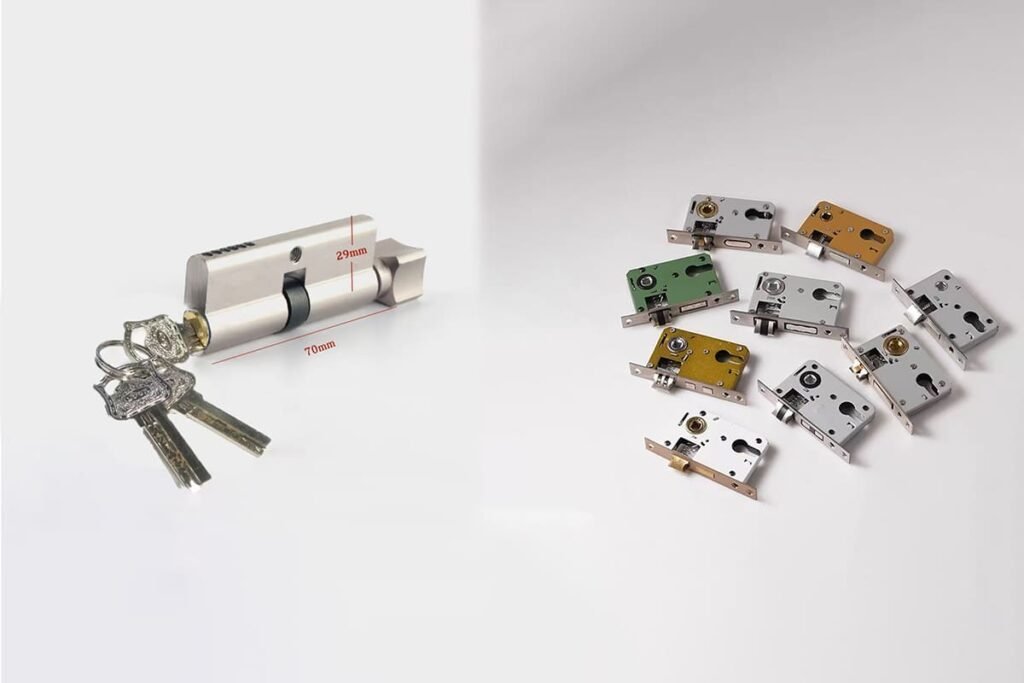
What Is the Difference Between 5-Pin and 6-Pin Lock Cylinders?
5-pin and 6-pin lock cylinders often look similar from the outside, but the wrong choice can create problems in security, project approval, and customer satisfaction. If a buyer treats pin count as a simple price difference, they may miss the real risk. The better solution is to match the cylinder structure, quality level, and application.
The main difference between 5-pin and 6-pin lock cylinders is the number of pin stacks inside the cylinder.1 A 6-pin cylinder has one extra pin stack, which usually increases key combination complexity and reduces key interchangeability2. However, real security also depends on material, machining precision, key accuracy, anti-pick design, and quality control3.

From my factory-side experience, buyers rarely ask only, “How many pins?” They usually want to know whether the cylinder fits an entrance door, a bedroom door, a project tender, or a regional market requirement. That is where the real selection work starts.
How Do 5-Pin and 6-Pin Lock Cylinders Work?
A lock cylinder can feel simple to the end user, but small internal differences affect key control and security potential. If buyers only compare the outside length or finish, they may miss what happens inside the plug. The pin structure explains why 5-pin and 6-pin lock cylinders are not the same.
A 5-pin cylinder uses five pin stacks, while a 6-pin cylinder uses six pin stacks. Each stack must align correctly with the key cuts before the plug can rotate. The extra stack in a 6-pin cylinder increases the number of possible key combinations when the cylinder is designed and manufactured correctly.
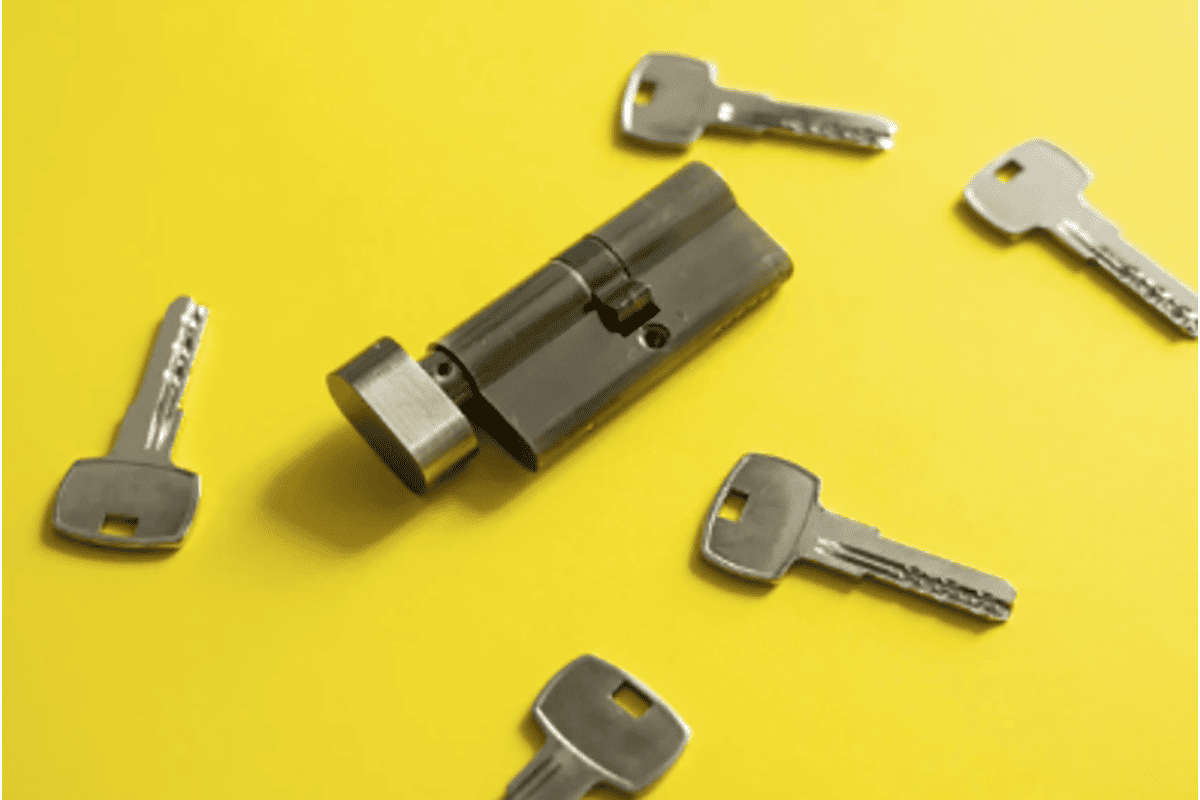
The basic pin tumbler principle
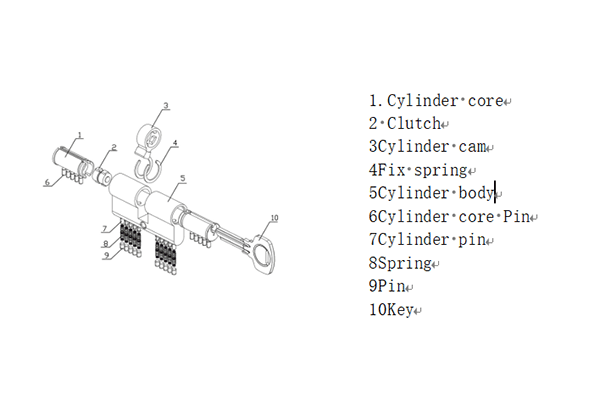
Most Euro profile brass cylinders and many architectural lock cylinders use a pin tumbler mechanism4. Inside the cylinder, each pin stack usually includes:
- Key pin: The lower pin that touches the key blade.
- Driver pin: The upper pin pushed by a spring.
- Spring: The part that pushes the pins downward.
- Plug: The rotating core that turns when the correct key is inserted.
- Shear line: The line where the plug can rotate if all pins align.
When the correct key enters the keyway, the key cuts lift each key pin to a specific height. If every pin stack meets the shear line correctly, the plug can rotate and unlock the door.5
In a 5-pin lock cylinder, five pin stacks need to align. In a 6-pin lock cylinder, six pin stacks need to align. That one extra stack may sound small, but it can increase the number of key variations. It can also reduce the chance that one key unintentionally opens another cylinder, which buyers often call mutual opening risk or key interchangeability risk.
Why the extra pin matters
The extra pin matters because it adds another required position in the key bitting. In simple terms, the key must be correct in six places instead of five. This can help in several ways:
More key combinations
More pin positions can create more possible bitting combinations, depending on the depth system and key profile.Lower key interchangeability
A higher number of effective combinations can reduce the chance that two keys operate different cylinders by accident.Better foundation for security design
A 6-pin layout can support stronger key control and anti-pick features when the rest of the design is also good.
However, I never describe a cylinder as secure based only on pin count. I have seen samples where a 6-pin design looked good on paper, but the machining tolerance was loose. I have also seen 5-pin cylinders that performed consistently for basic interior doors because the material and assembly quality were stable.
Simple comparison table
| Item | 5-Pin Lock Cylinder | 6-Pin Lock Cylinder |
|---|---|---|
| Number of pin stacks | 5 | 6 |
| Key combination potential | Lower | Higher |
| Typical use | Interior doors, privacy doors, light-duty use | Entrance doors, exterior doors, higher-security project doors |
| Cost tendency | Usually more economical | Usually higher cost |
| Security potential | Basic to moderate | Moderate to higher |
| Main buyer concern | Cost efficiency and acceptable function | Security level, access control, and reduced key interchangeability |
For B2B procurement, this table is only a starting point. A buyer should still check the cylinder body material, plug precision, key blank quality, cam design, surface finish, packaging, and inspection report. Pin count is one part of the decision, not the whole decision.
Are 5-Pin and 6-Pin Lock Cylinders Different in Security?
Security is where many buyers ask the wrong question. They ask whether 6 pins are always better than 5 pins. That question can lead to oversimplified purchasing. The more useful question is whether 5-pin and 6-pin lock cylinders are suitable for the door type, risk level, and market standard.
6-pin cylinders generally offer stronger security potential than 5-pin cylinders because the extra pin increases key combination complexity and can reduce mutual opening risk. However, a poorly made 6-pin cylinder may perform worse than a well-made 5-pin cylinder. Material, tolerance, key accuracy, and inspection control remain critical.
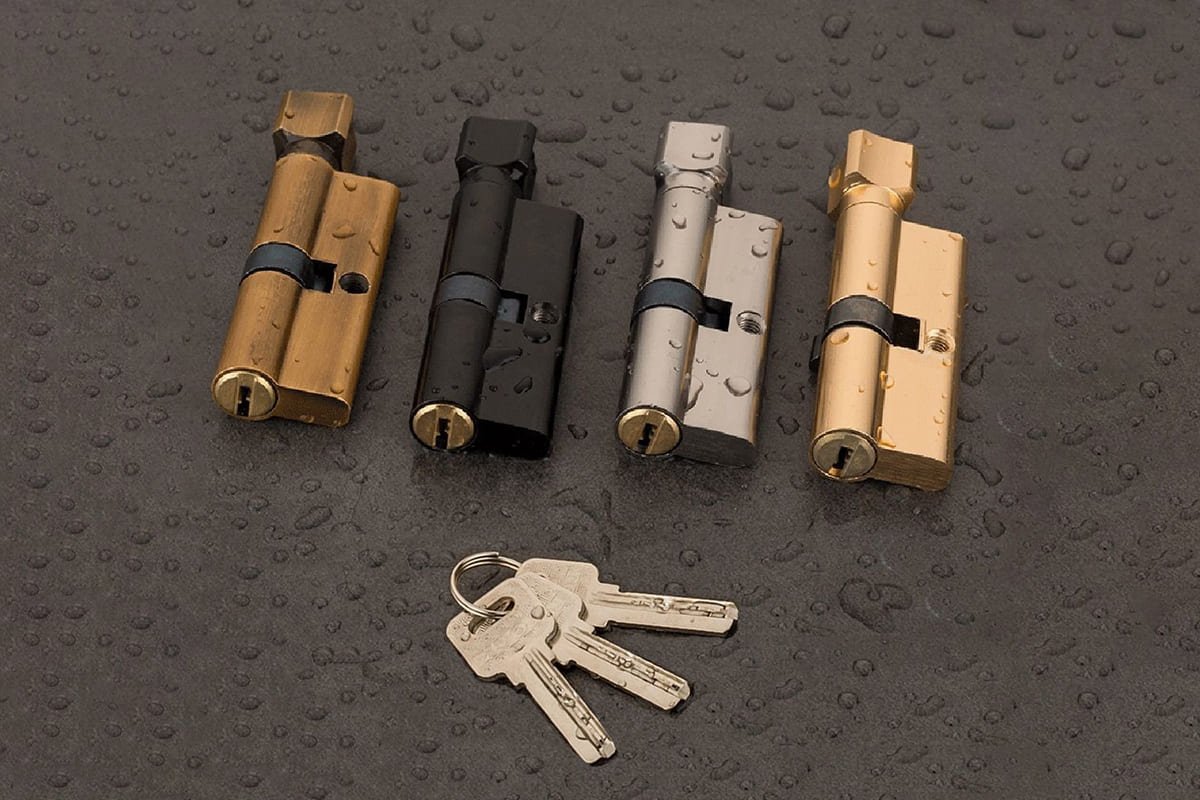
Pin count supports security, but it does not guarantee it
A 6-pin structure gives the manufacturer more room to build security into the cylinder. It can increase combination complexity. It can also make casual key interchange less likely. For entrance doors and higher-risk applications, this matters.
But security in real use depends on more than the number of pin stacks. From a production and QC point of view, I usually check the following points before I trust the final cylinder:
- Body material: Brass quality, zinc alloy parts, or stainless components affect durability.
- Machining precision: Poor hole alignment can affect smooth operation and security consistency.
- Key cutting accuracy: A good cylinder needs accurate key bitting and stable key duplication control.
- Pin and spring quality: Weak springs or rough pins may reduce reliability.
- Anti-pick design: Spool pins, mushroom pins, or other anti-pick elements can improve resistance.6
- Cam and clutch structure: The cam must match lock case requirements and door function.
- Torque and durability testing: Smooth operation after cycling matters for project use.
- Final inspection: Every batch needs functional checks, key matching checks, and visual inspection.
In our production environment, I pay close attention to the feel of the key. A key should enter smoothly, turn without rough friction, and return consistently. That practical feeling often reveals problems that a buyer may not notice in a catalog photo.
What “security potential” means
I prefer the phrase security potential because it is more accurate. A 6-pin cylinder can support better security, but only when the whole product is controlled well.
For example, two cylinders may both be described as 6-pin. One may have:
- Accurate drilling
- Clean plug finishing
- Stable pin height control
- Good key blank hardness
- Tested anti-pick pin arrangement
- Verified production inspection
The other may have:
- Loose tolerance
- Rough pin chamber edges
- Inconsistent key cuts
- Weak springs
- No meaningful final test
Both are 6-pin cylinders, but they are not equal products. That is why buyers should not accept a supplier’s claim without checking drawings, samples, test documents, and batch inspection records.
About EN1303 and European requirements
For European markets, many buyers ask about EN1303, the European standard related to cylinder performance classification. Buyers should be careful here. Some EN1303-related cylinder specifications commonly use or require 6-pin configurations for higher-security applications, but the exact grade and wording must be verified.
I recommend that buyers:
- Ask for the supplier’s current certificate or test report.
- Check whether the document covers the exact cylinder model.
- Confirm the grade, test scope, and issuing laboratory.
- Verify whether the project tender requires a specific EN1303 classification.
- Avoid assuming that “6-pin” automatically means EN1303 compliance7.
At SDH Hardware, we treat CE and fire-rated documentation as documents that buyers should review carefully for the actual product and project requirement. For application-specific compliance, I always recommend professional verification by the buyer, project consultant, or testing authority.
When Should Buyers Choose 5-Pin and 6-Pin Lock Cylinders?
Choosing the wrong cylinder wastes money or creates security gaps. A buyer who uses a low-security cylinder on an entrance door may create risk. A buyer who uses a high-spec cylinder everywhere may overpay. The practical answer is to match 5-pin and 6-pin lock cylinders to door function.
Buyers should usually choose 5-pin cylinders for lower-security interior applications and 6-pin cylinders for entrance, exterior, or higher-security project doors.8 The final choice should consider door location, access risk, market standard, lock case compatibility, certification needs, and target price level.
Typical applications for 5-pin cylinders
A 5-pin cylinder can be a sensible choice when the door does not require high anti-theft performance. It is often suitable for:
- Bedroom doors
- Interior office doors
- Storage rooms with low-value contents
- Basic privacy applications
- Budget-sensitive residential projects
- Markets where 5-pin cylinders are common for interior use
For these uses, buyers usually care about smooth function, acceptable durability, cost control, and stable supply. A 5-pin cylinder can meet those goals if the manufacturer controls the key system and assembly process well.
I have worked with buyers who needed large quantities of interior door hardware. In those cases, the buyer did not need the highest security level for every door. They needed consistent key operation, matching finishes, and reliable packaging for distribution. A well-made 5-pin cylinder made more sense than overspecifying every item.
Typical applications for 6-pin cylinders
A 6-pin cylinder is more appropriate when the door requires stronger security potential and better key control. Common applications include:
- Apartment entrance doors
- Villa and house entrance doors
- Exterior commercial doors
- Project doors in hotels, offices, and public buildings
- Doors that require better anti-pick design
- Markets where 6-pin cylinders are expected as standard
- Tender projects with higher cylinder specifications
For these applications, the buyer should evaluate more than pin count. A 6-pin cylinder should also have suitable material, accurate key production, controlled tolerances, and relevant test documentation where required.
Application-based selection table
| Door Type | Recommended Direction | Reason |
|---|---|---|
| Bedroom door | 5-pin may be enough | Basic privacy matters more than high security |
| Interior office door | 5-pin or 6-pin | Depends on access control requirement |
| Apartment entrance door | 6-pin preferred | Better security potential and key complexity |
| Exterior commercial door | 6-pin preferred | Higher access risk and stronger project expectations |
| Hotel project door | Usually project-specific | Must match tender, lock system, and standards |
| Warehouse or utility door | Depends on contents | Risk level should guide the cylinder grade |
Cost versus risk
The price difference between 5-pin and 6-pin cylinders is usually not only about one extra pin. A 6-pin cylinder may require more precise key cutting, additional components, better QC, and sometimes a higher-grade design.9 That can increase cost.
However, buyers should compare the cost increase against the door risk. For an entrance door, the cylinder is a small part of the total door set cost, but it strongly affects user confidence. For a basic interior door, a high-spec cylinder may not add enough value to justify the extra cost.
A practical procurement rule is simple:
Use 5-pin cylinders where privacy and cost efficiency are the main goals. Use 6-pin cylinders where security, access control, and market acceptance are more important.
This rule does not replace project evaluation. It gives buyers a clear starting point for specification discussions with the supplier.
How Should B2B Buyers Evaluate 5-Pin and 6-Pin Lock Cylinders From a Supplier?
A supplier can describe a cylinder as 5-pin or 6-pin in one sentence, but that does not prove quality. Buyers need a structured evaluation process. Without it, they may receive samples that look acceptable and bulk goods that perform differently. This is especially important for 5-pin and 6-pin lock cylinders in project supply.
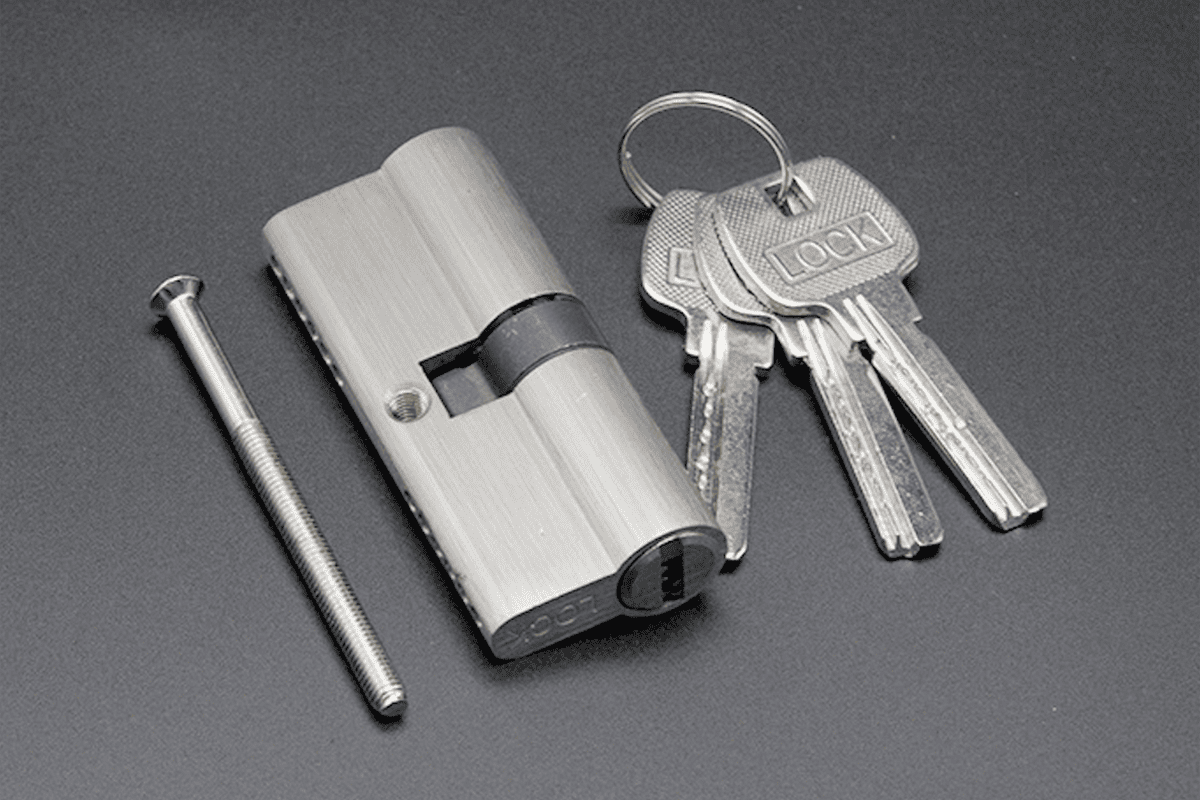
B2B buyers should evaluate lock cylinders by checking samples, drawings, material details, key accuracy, finish quality, functional testing, certification documents, and batch inspection records.10 The best supplier selection process compares both product design and factory quality control, not only pin count or unit price.
What I check first during sample review
When I review cylinder samples, I start with simple physical checks before looking at paperwork. These checks often reveal whether the supplier understands precision manufacturing.
I usually check:
Key insertion feel
The key should enter smoothly without scraping or sticking.Turning consistency
The plug should rotate with stable resistance. It should not feel loose or rough.Key withdrawal position
The key should withdraw only in the correct position unless the design states otherwise.Cam operation
The cam should move cleanly and match the intended mortise lock case.Cylinder finish
The surface should be clean, uniform, and suitable for the target market.Logo and packaging accuracy
For OEM and ODM buyers, stamping, laser logos, and packaging must match confirmed artwork.Key quantity and labeling
Key sets should be complete, organized, and easy to manage for bulk projects.
These checks sound basic, but they are important. In factory production, small mistakes can multiply quickly across thousands of pieces.
Product documents buyers should request
For door manufacturers, hardware brands, importers, and wholesalers, documentation helps reduce procurement risk. I suggest requesting:
- Product drawing with cylinder length and cam dimensions
- Material specification for body, plug, pins, springs, and keys
- Finish specification and color sample
- Key profile information where applicable
- Master keying or keyed-alike plan if needed
- Functional test report or internal inspection record
- CE, fire-rated, or EN1303-related documents if required by the project
- Packaging specification and carton details
- Pre-shipment inspection checklist
Buyers should not treat certificates as decorative files. They should verify whether the certificate applies to the specific model, configuration, and application. This is especially important for project tenders in Europe, the Middle East, and Southeast Asia.
Quality control points in production
A reliable cylinder supplier should have control over the complete production process. At SDH Hardware, our work covers R&D, precision manufacturing, and final inspection for architectural door hardware. For lock cylinders, the QC process should include several stages:
| QC Stage | What Should Be Checked | Why It Matters |
|---|---|---|
| Raw material inspection | Brass, pins, springs, keys | Prevents weak or unstable components |
| Machining inspection | Hole position, plug tolerance, body accuracy | Supports smooth operation and security consistency |
| Assembly inspection | Pin height, spring placement, cam fitting | Prevents functional defects |
| Key matching check | Each key with its assigned cylinder | Reduces key mismatch and mutual opening risk |
| Surface inspection | Finish, scratches, plating quality | Protects brand image and market acceptance |
| Final function test | Lock/unlock operation, key withdrawal, cam rotation | Confirms usability before shipment |
| Packaging inspection | Labels, quantity, customer logo, carton strength | Reduces delivery and distribution problems |
Supplier questions that reveal real capability
Before placing a bulk order, buyers should ask direct questions. Good suppliers can answer clearly.
Useful questions include:
- Can you provide 5-pin and 6-pin cylinder samples for comparison?
- What materials are used for the body, plug, pins, and keys?
- What tolerance controls are used during machining?
- Do you support OEM logo, custom key head, and custom packaging?
- Can you provide keyed-alike, keyed-different, or master key systems?
- What inspection steps are done before shipment?
- Which certificates or test reports apply to this exact model?
- Can the cylinder match our mortise lock case and door thickness?
- What is the normal lead time for customized finishes or packaging?
A serious supplier should welcome these questions. If the supplier only repeats “6-pin is better” without explaining material, tolerance, and inspection, the buyer should be careful.
Frequently Asked Questions
Is a 6-pin lock cylinder always better than a 5-pin lock cylinder?
No. A 6-pin cylinder generally offers better security potential because it has one extra pin stack and more key combination complexity. However, it is not always better in every application. A well-made 5-pin cylinder can be suitable for interior doors, while a poorly made 6-pin cylinder may still perform badly.11
Can I use a 5-pin cylinder for an entrance door?
You can, but I usually do not recommend it for higher-security entrance doors. A 5-pin cylinder may provide basic function, but a 6-pin cylinder is often more suitable for entrance, exterior, or project doors where security and key control are more important.
Does EN1303 require all cylinders to be 6-pin?
You should verify the exact EN1303 grade and wording before making that claim. Many higher-security European cylinder specifications commonly use or require 6-pin configurations, but compliance depends on the tested model, classification, certificate scope, and project requirement.
What matters besides pin count in a lock cylinder?
Material, machining precision, pin quality, key accuracy, anti-pick design, cam compatibility, finish quality, and production inspection all matter. Pin count affects security potential, but the complete design and manufacturing control decide real performance.
Should wholesalers stock both 5-pin and 6-pin cylinders?
Yes, many wholesalers benefit from stocking both. 5-pin cylinders can serve cost-sensitive interior door demand, while 6-pin cylinders can serve entrance door, exterior door, and higher-security project demand. The right mix depends on the market and customer base.
Conclusion
The difference between 5-pin and 6-pin lock cylinders is simple in structure but important in procurement. A 5-pin cylinder uses five pin stacks and often fits lower-security interior doors. A 6-pin cylinder uses six pin stacks and usually offers stronger security potential when design and quality are comparable. Still, buyers should evaluate material, precision, anti-pick design, certification documents, and factory QC before deciding. If you need factory-direct cylinder selection for door projects or branded hardware supply, contact SDH Hardware for samples, specifications, and OEM/ODM support.
"Pin tumbler lock", https://en.wikipedia.org/wiki/Pin_tumbler_lock. A technical reference on pin-tumbler locks supports that cylinder variants are commonly distinguished by the number of pin stacks in the plug; this establishes the structural basis for comparing five- and six-pin cylinders. Evidence role: definition; source type: encyclopedia. Supports: A source should define pin-tumbler cylinders in terms of pin stacks and explain that cylinders may be configured with different numbers of pins.. Scope note: The source may explain the mechanism generally rather than survey every commercial 5-pin and 6-pin model. ↩
"Pin tumbler lock", https://en.wikipedia.org/wiki/Pin_tumbler_lock. Educational material on lock bitting supports that theoretical key differs increase as pin positions and permissible cut depths increase, which provides a mechanism by which a six-pin design can reduce accidental interchangeability. Evidence role: mechanism; source type: education. Supports: A source should explain how the number of pin positions and available cut depths determine the number of theoretical bitting combinations.. Scope note: This support is mathematical and contextual; actual interchangeability also depends on tolerances, keyway restrictions, master-keying, and manufacturing quality. ↩
"EN 1303:2026 - Cylinders and Master-Key-Systems for Locks Standard", https://standards.iteh.ai/catalog/standards/cen/bff2e636-92e6-474b-a6e0-fa3f5c0ce3ec/en-1303-2026?srsltid=AYCX9vK0Q636_ImAIVHU3joUTm9tXoJHDZbXZ7nBp3Wv2wT_LSGzvvU9. Lock-cylinder performance standards support that security and reliability are assessed through multiple criteria, including durability, key-related security, and attack resistance, rather than pin count alone. Evidence role: expert_consensus; source type: institution. Supports: A standards source should show that cylinder performance is evaluated across dimensions such as durability, key-related security, attack resistance, and construction characteristics.. Scope note: Standards describe evaluation categories and do not prove the performance of any specific cylinder model without test results. ↩
"Pin tumbler lock", https://en.wikipedia.org/wiki/Pin_tumbler_lock. A neutral reference on pin-tumbler locks supports that this mechanism uses spring-loaded pin stacks and is a common design for cylinder locks. Evidence role: definition; source type: encyclopedia. Supports: A source should define the pin-tumbler mechanism and identify it as a common lock-cylinder design.. Scope note: The source may support general common use of the mechanism without quantifying its prevalence specifically among Euro profile brass cylinders. ↩
"Pin tumbler lock", https://en.wikipedia.org/wiki/Pin_tumbler_lock. A technical description of pin-tumbler locks supports that the plug can rotate when the correct key positions the pin breaks at the shear line. Evidence role: mechanism; source type: encyclopedia. Supports: A source should explain that the correct key lifts pins so the gap between key pins and driver pins aligns with the shear line, permitting plug rotation.. ↩
"A guide to security pins : r/lockpicking", https://www.reddit.com/r/lockpicking/comments/ym1fk2/a_guide_to_security_pins/. Technical literature on pin-tumbler manipulation supports that shaped security pins, including spool or mushroom forms, can complicate picking by altering tactile feedback and creating false set conditions. Evidence role: mechanism; source type: research. Supports: A source should explain how security-pin shapes create false feedback or false sets that can make picking more difficult.. Scope note: The support is mechanism-based; actual resistance depends on the full cylinder design, tolerances, attacker skill, and test method. ↩
"EN 1303:2026 - Cylinders and Master-Key-Systems for Locks Standard", https://standards.iteh.ai/catalog/standards/cen/bff2e636-92e6-474b-a6e0-fa3f5c0ce3ec/en-1303-2026?srsltid=AYCX9vKR50x_13Ybvd-rtuZA3duju9lP-suqS8atUkWuxQcyRaSG_iPh. EN 1303 descriptions support that compliance is tied to specified tests and classification criteria for cylinders, so a six-pin construction alone is not evidence of conformity. Evidence role: general_support; source type: institution. Supports: A standards source should show that EN1303 compliance is based on tested classifications and requirements, not simply the number of pins.. Scope note: This supports the compliance logic generally; only an applicable certificate or test report can establish conformity for a specific model. ↩
"Security and Privacy Controls for Federal Information Systems and ...", https://nvlpubs.nist.gov/nistpubs/specialpublications/nist.sp.800-53r4.pdf. Public security guidance supports specifying stronger locking hardware for perimeter or higher-risk doors than for low-risk interior doors, providing context for application-based cylinder selection. Evidence role: expert_consensus; source type: government. Supports: A public security or standards source should support matching lock security level to door function, exposure, and risk.. Scope note: The source may discuss security grades or certified locks rather than prescribing five-pin versus six-pin cylinders specifically. ↩
"Pin tumbler lock", https://en.wikipedia.org/wiki/Pin_tumbler_lock. Technical instruction on pin-tumbler cylinders supports that each added pin position requires corresponding components and accurate bitting, which provides a basis for higher manufacturing and inspection sensitivity. Evidence role: mechanism; source type: education. Supports: A technical source should explain that additional pin positions add components and that correct operation depends on accurate key cuts and pin tolerances.. Scope note: This supports production complexity but does not independently verify market price differences for any supplier or region. ↩
"ISO 9001 Purchasing Controls: Supplier Evaluation & Incoming ...", https://iso9001expert.com/blog/iso-9001-purchasing-controls-supplier-evaluation-incoming-inspection/. Quality-management standards support evaluating suppliers and product conformity through documented specifications, inspection evidence, and records, providing a general basis for the proposed B2B cylinder review checklist. Evidence role: general_support; source type: institution. Supports: A quality-management source should support supplier evaluation through documented requirements, inspection records, conformity evidence, and control of externally provided products.. Scope note: The support is general to manufacturing quality management and may not be lock-cylinder-specific. ↩
"Lock Cylinder Durability Standards: Life Cycle Analysis and Destructive ...", https://www.tradeaiders.com/lock-cylinder-durability-standards-life-cycle-analysis-and-destructive-security-testing.html. Institutional lock-cylinder standards support that finished cylinders are evaluated by tested durability, security, and operational criteria, providing context for why a higher pin count alone does not determine performance. Evidence role: general_support; source type: institution. Supports: A source should show that lock cylinders are graded or evaluated by tested performance characteristics rather than by pin count alone.. Scope note: This is contextual support; it does not directly test a particular well-made five-pin cylinder against a poorly made six-pin cylinder. ↩
