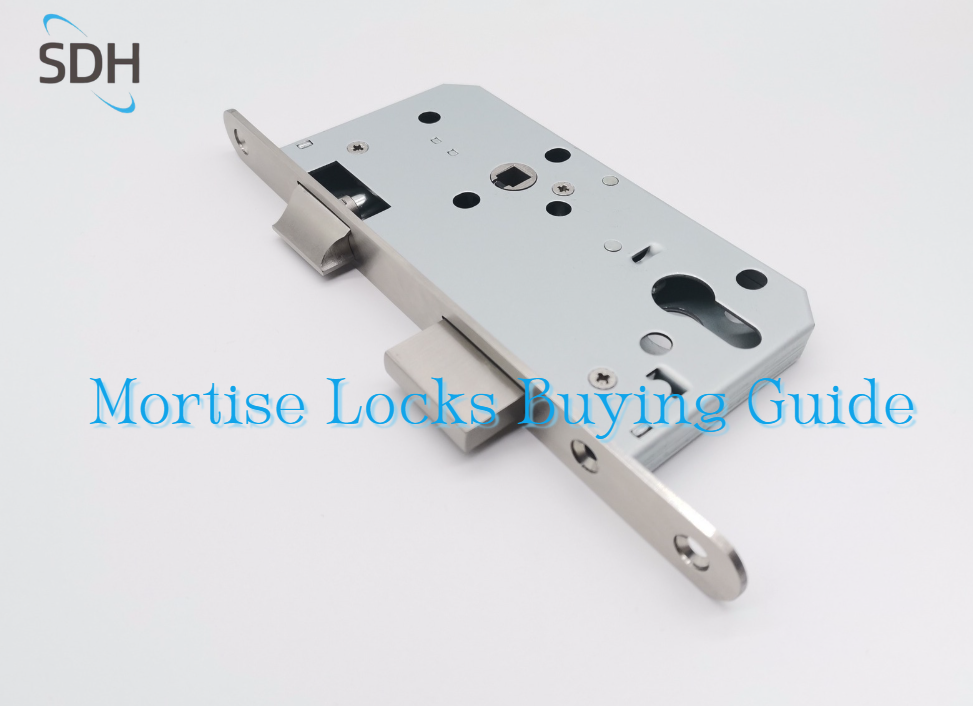
Euro mortise locks are widely used in residential, commercial, and project-based interior doors across Europe, the Middle East, and many international markets. At first glance, they may seem like standardized products—but in reality, selecting the wrong mortise lock can lead to installation issues, functional problems, or even project delays.
Whether you are a door manufacturer, distributor, architect, or project buyer, understanding the key factors behind Euro mortise locks is essential. In this article, we will walk you through everything you need to know before purchasing Euro mortise locks, helping you avoid common mistakes and make informed decisions.
What Is a Euro Mortise Lock?
A Euro mortise lock is a lock body installed inside a mortised slot in the edge of a door, commonly used with lever handles and Euro profile cylinders. Unlike cylindrical or tubular locks, mortise locks offer better structural stability, smoother operation, and a more refined appearance.
They are commonly applied in:
- Interior wooden doors
- Steel or aluminum profile doors
- Residential and commercial buildings
- Hospitality and large-scale projects
Euro mortise locks are valued for their versatility, compatibility with different handle designs, and suitability for both standard and customized door solutions.
Key Dimensions You Must Check Before Buying
One of the most common causes of installation failure is incorrect lock dimensions. Before purchasing, always confirm the following parameters.
1 Backset
The backset is the distance from the edge of the door to the center of the keyhole or spindle.
Common backsets include:
- 45 mm
- 50 mm
- 55 mm
- 60 mm
- 70mm…
- customized
The backset must match the door stile width and handle design. For example, a 55 mm backset is widely used in modern interior doors and slim-profile applications.
Choosing the wrong backset may result in misaligned handles or insufficient door strength.
2 Center Distance
Center distance refers to the distance between the handle spindle center and the cylinder or keyhole center.
Typical center distances are:
- 72 mm (very common for interior doors)
- 85 mm
- 92mm
The center distance must be fully compatible with the selected handles and escutcheons. Even a small mismatch will prevent proper installation.
3 Forend Size and Shape
The forend is the visible front plate of the lock body. Important details include:
- Length and width
- Square or rounded corners
- Fixing method (visible or concealed screws)
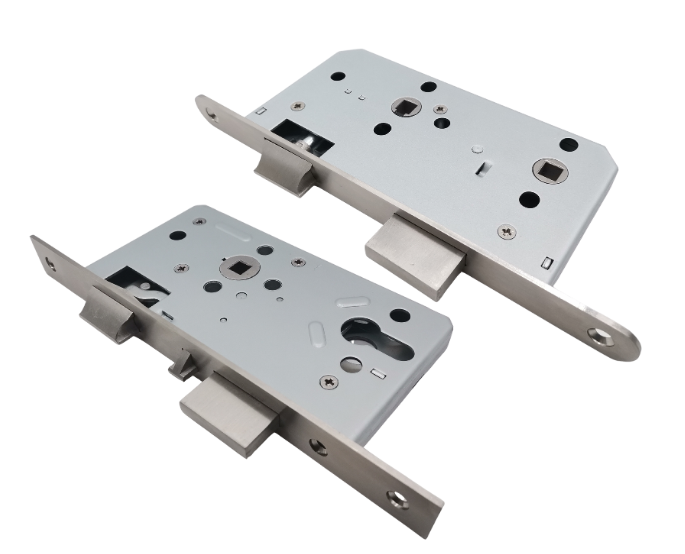
Some projects require a specific forend size to match existing door preparations, making this a critical checkpoint.
Durability
In a mortise lock, the bolt is the most frequently used and critical component, and therefore the main focus of durability and life-cycle testing.
SDH mortise locks are tested as follows:
- Latch Bolt: SUS304 stainless steel casting, reversible design, tested for 200,000 operating cycles
- Deadbolt: SUS304 stainless steel, tested for 50,000 operating cycles
Lock Functions and Applications
Euro mortise locks are available in various functional types depending on door usage:
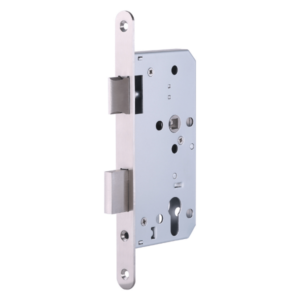
Sash Locks – Interior/exterior / fire-rated use. Handle or cylinder operation.
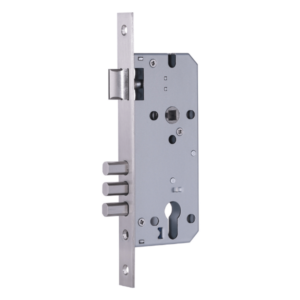
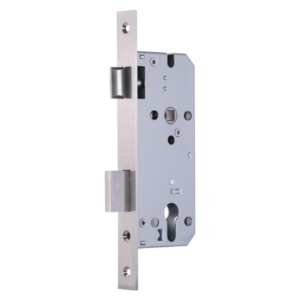
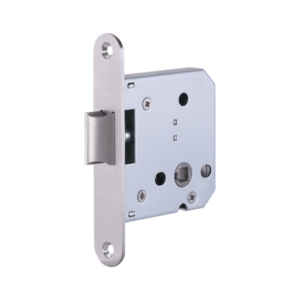
Passage locks – for doors without locking requirements; Latch is released by pressing the handle
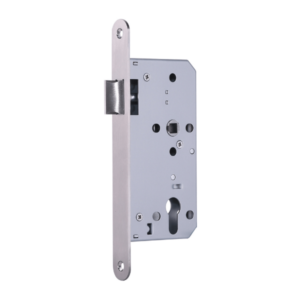
Deadbolt locks – lock for storerooms; Key / Key function, deadbolt only.

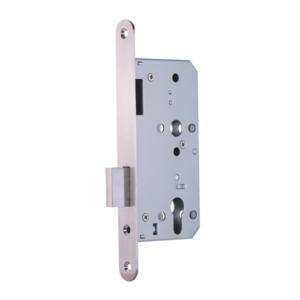
Bathroom lock – Handle-operated latch, thumb turn with emergency release indicator.


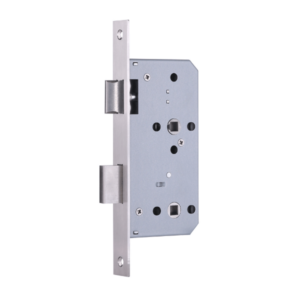
Night latch lock – Auto-locking; inside handle operation, outside key operation.
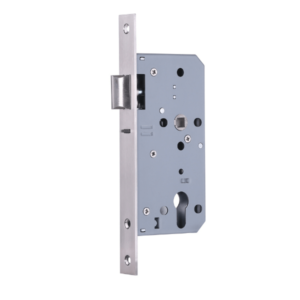
Anti-panic lock – for escape doors; Single-action escape via internal lever; latch and deadbolt retracted simultaneously.
Classroom lock – When locked from outside by key, the latch can still be retracted from inside. Inside lever allows immediate exit.
Roller lock – For single or double-swing doors in high-traffic public areas. Push-to-open when unlocked, providing wind, heat and sound insulation.
Hook lock – Designed for sliding doors. Hook bolt engages the frame by inside lever or outside key operation, preventing the door from opening or sliding.
Magnetic lock – with magnetic latch; silent operation
Narrow lock – for doors with narrow frame, like aluminium doors
X-ray lock – For hospital X-ray rooms; dual half handles and half cylinders enable independent operation from each side.

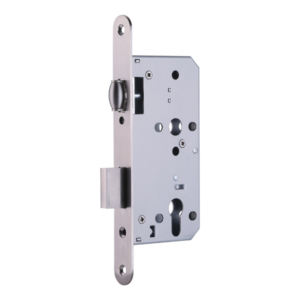

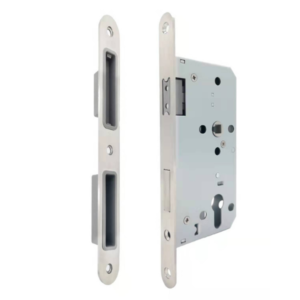
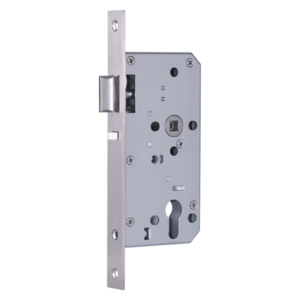

Contact info@sdhhardware.com to get the Buying Guide
Fire Rating and Applicable Standards
For commercial and project-based applications, fire performance may be a critical requirement.
Before purchasing, clarify:
- Whether the door is fire-rated
- Required fire resistance duration
- Applicable standards such as EN 1634-1 and EN 12209:2003
SDH’S locks are approved by Warringtonfire and Classification Code: 3 X 8 1 0 G 3 B C 2 0 according to standard EN12209:2003
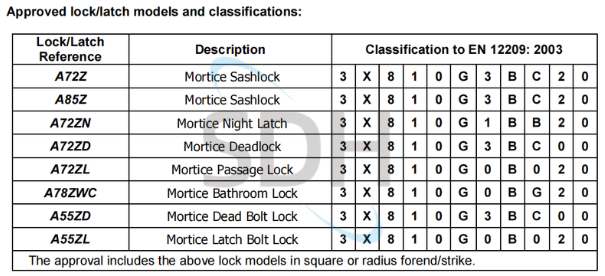
SDH mortise locks have been tested by Warringtonfire and achieve up to 240 minutes of fire resistance according to standard EN 1634-1 and EN 12209:2003.
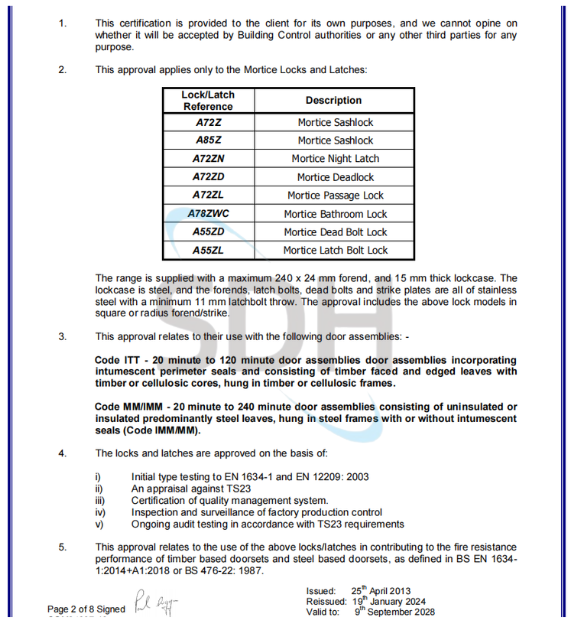
Fire-rated doors require compatible lock bodies tested under the same conditions. Using non-compliant hardware may invalidate the entire fire door certification.
Forend Design and Aesthetic Considerations
In modern interior design, aesthetics play an increasingly important role in hardware selection.
Popular forend options include:
- Standard one-piece forend
- Applied forend design with concealed screws
- Shape: Round or Square
An applied forend design offers a cleaner and more minimal appearance by hiding fixing screws, making it ideal for:
- High-end residential interiors
- Hospitality projects
- Contemporary architectural doors
Surface finishes may include:
- Stainless steel
- Black
- PVD finishes
- Customized colors to match door hardware themes
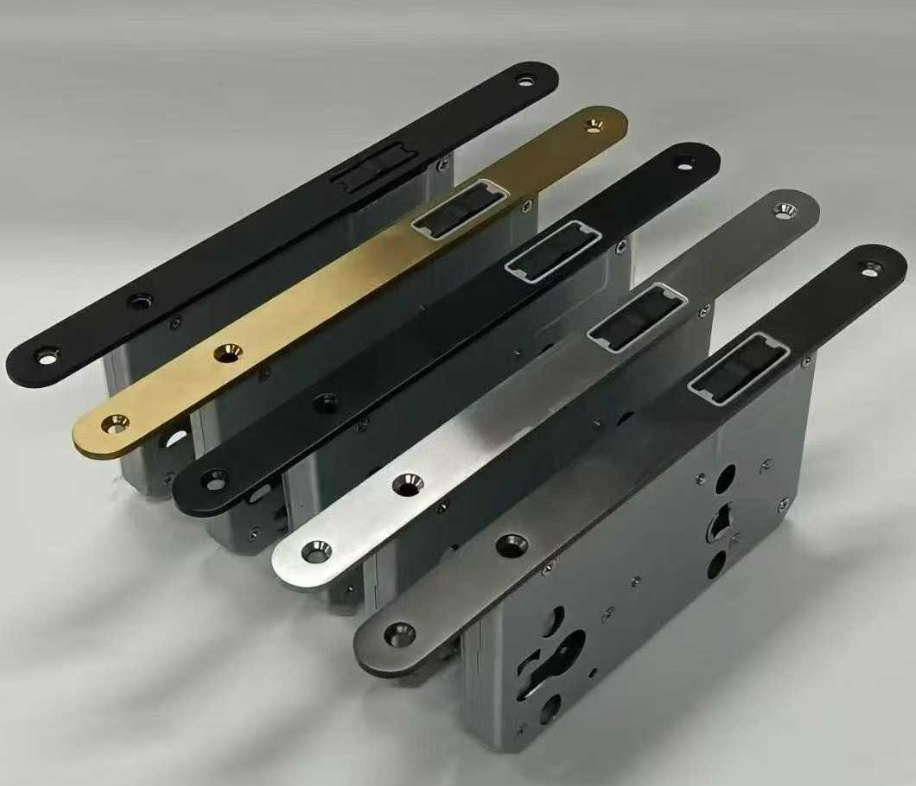
Consistency between the lock, handles, and hinges is essential for a refined final appearance.
Compatibility with Handles and Cylinders
A Euro mortise lock must work seamlessly with:
- Lever handles(for EN standard, the bolt through fixing centres are 38mm)
- Spindles
- cylinders(Euro profile cylinder, BB key cylinder or bathroom cylinder)
Key points to confirm:
- Square spindle size (commonly 8 mm)
- Cylinder fixing position
- Door thickness compatibility
Many installation issues occur because the lock body was selected independently of the handle or cylinder system. Always evaluate the complete hardware set as a system rather than individual components.
Common Mistakes to Avoid
Before finalizing your order, avoid these frequent pitfalls:
- Focusing only on price and ignoring specifications
- Assuming all Euro mortise locks are interchangeable
- Overlooking door thickness and opening direction
- Selecting locks without confirming handle compatibility
These mistakes can lead to rework, returns, or project delays—costing far more than the lock itself. Contact SDH to avoid the mistakes.
Final Checklist Before Buying Euro Mortise Locks
Before placing your order, make sure you can answer the following:
- What lock function does the door need?
- What backset and center distance are required?
- Is a specific forend design or finish required?
- Will the lock be used in a fire-rated door?
- Is this for a project or stock supply?
A clear checklist helps both buyers and suppliers communicate efficiently and reduce unnecessary revisions.
Conclusion
Euro mortise locks are not simple “one-size-fits-all” products. Proper selection requires attention to dimensions, functionality, materials, aesthetics, and application context.
By understanding these key factors before purchasing, you can ensure smoother installation, better long-term performance, and a more professional final result—especially in project-based or high-end interior applications.
If you are unsure about specifications or compatibility, consulting an experienced hardware supplier at an early stage can save time, cost, and frustration later in the process.