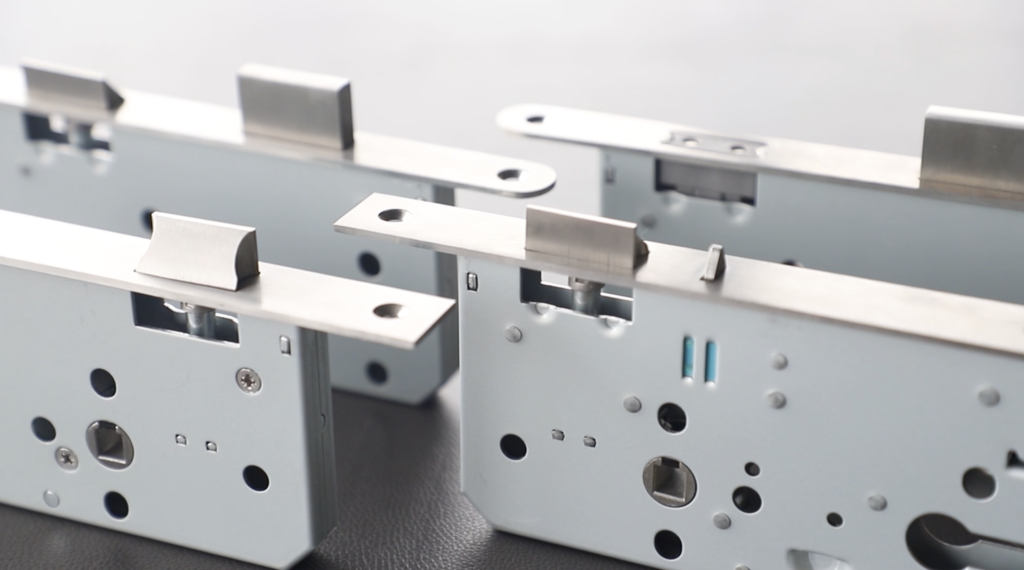
What is a full mortise lock?
A wrong lock choice can stop door production, delay shipment, and create complaints.1 I see this risk often when buyers only compare price.
A full mortise lock is a recessed lock body system installed inside a prepared door pocket.2 I define it by its lock case, forend, latch bolt, dead bolt, follower, cylinder channel, dimensions, and door compatibility, not by one universal global size.
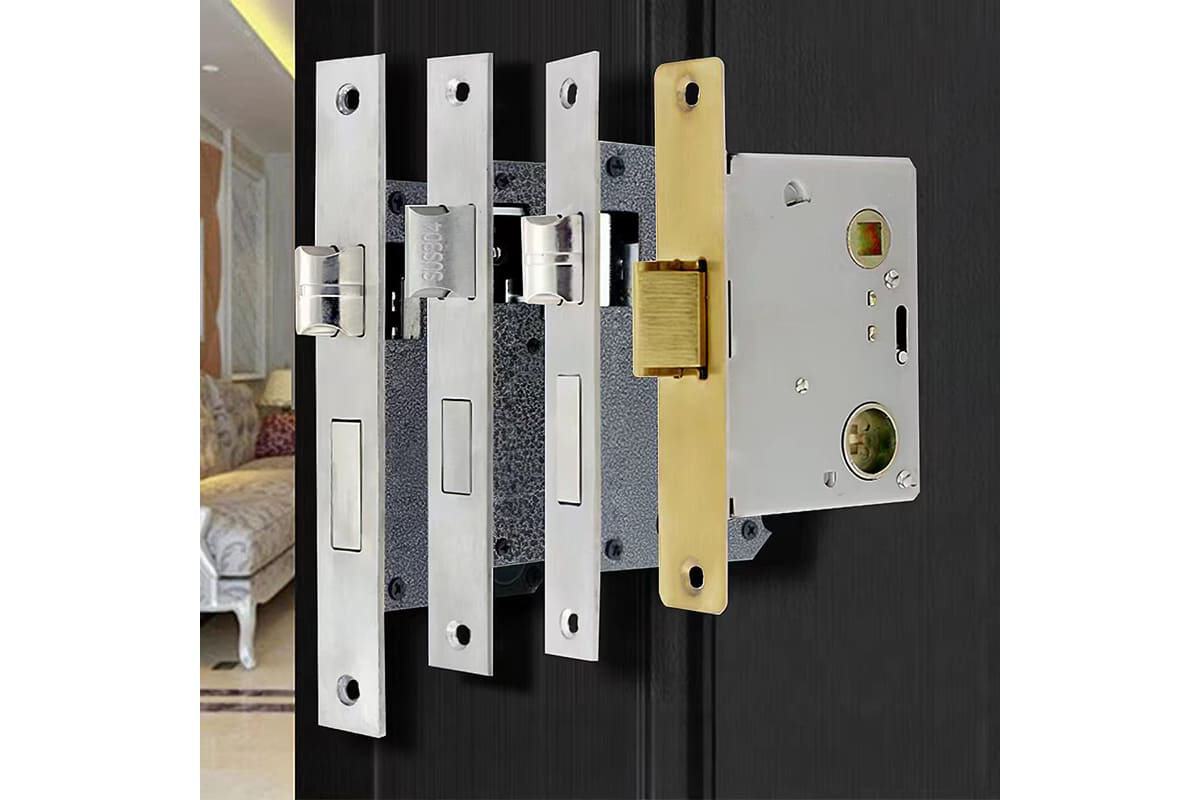
I often explain this product to overseas buyers before we discuss price, because the name alone is not enough. A full mortise lock must match the door structure, handle set, cylinder, strike plate, market habit, and project rule.3 If one of these points is wrong, the lock may look correct on paper but fail during assembly. I will break it down from the way I see it in manufacturing and buyer communication, so you can specify it with less risk and more control.
How do I define a full mortise lock by structure and installation?
A buyer may think the name explains everything. I have seen that mistake create wrong backsets, wrong cylinders, and unusable stock.
A full mortise lock has a lock case fully embedded into a pocket cut in the door edge. I identify it by the hidden lock body and the visible forend, latch bolt, dead bolt, follower hole, and cylinder fixing position.
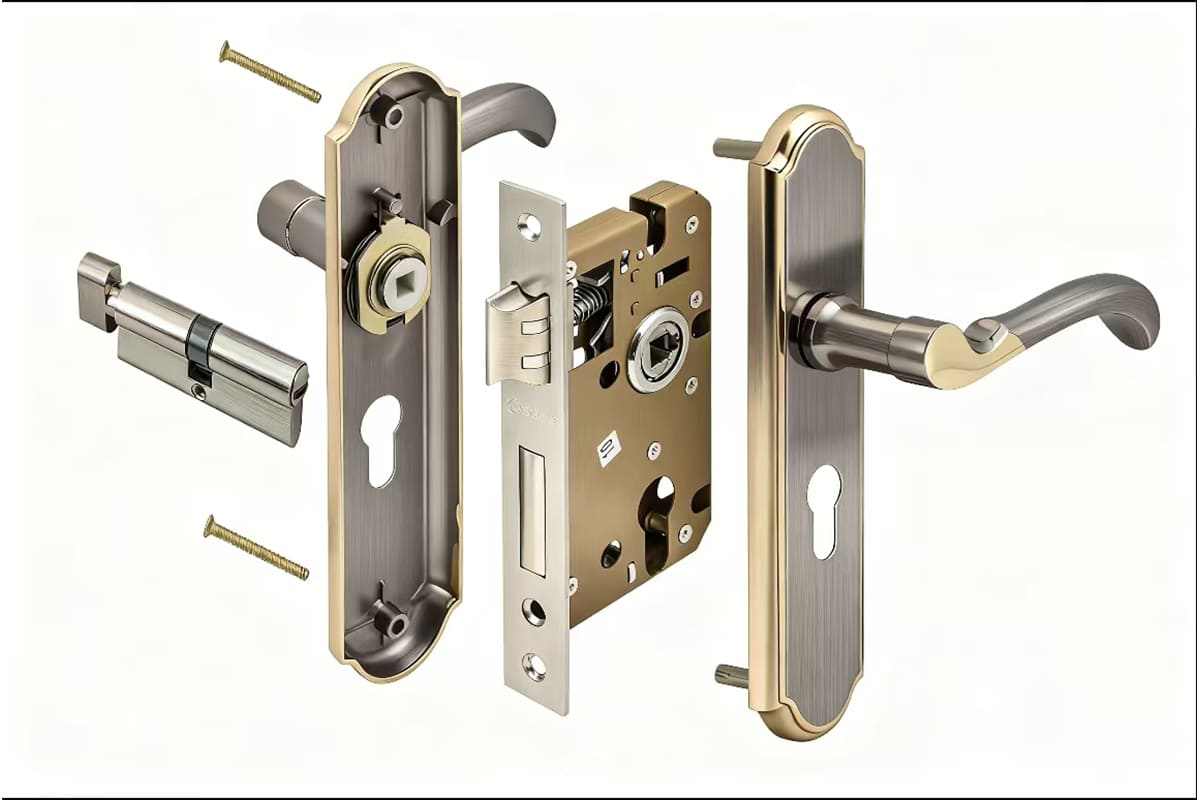
I define a full mortise lock first by where it sits. The lock body is placed inside a routed pocket in the door. The door edge shows the forend plate. The latch bolt and dead bolt move out through the forend. The handle spindle passes through the follower. The cylinder passes through the lock case and is fixed by a screw from the forend side.
This structure is different from a surface-mounted lock, because the working lock case is not installed on the door face. It is also different from a simple tubular latch, because the lock case normally includes a larger internal mechanism, more alignment points, and more dimensional requirements.4
I usually explain it with this simple view:
| Part I check | What I look for | Why it matters |
|---|---|---|
| Lock case | Height, width, thickness, forming accuracy | It must fit the door pocket and keep the mechanism aligned |
| Forend | Length, width, radius or square corner, finish | It must match the door edge and visual standard |
| Latch bolt | Direction, reversibility, shape, material | It keeps the door closed before locking |
| Dead bolt | Throw length, structure, material | It provides the main locking function |
| Follower | Spindle size and position | It must match the lever handle |
| Cylinder channel | Profile type and screw position | It must match the cylinder and market standard |
I do not treat these parts as decoration. I treat them as selection evidence. When a door factory tells me the door thickness, edge machining, handle type, and cylinder type, I can judge if a model can be used. When a buyer only sends a photo, I usually ask for drawings or key dimensions before I confirm anything.
Why is a full mortise lock not one universal size?
The word sounds simple, but I have seen many markets use different sizes. I always tell buyers that the model number matters more than the general name.
A full mortise lock is not one fixed global model. Backset, center distance, case size, forend size, cylinder type, spindle size, and strike plate details must be checked for each door and market.5
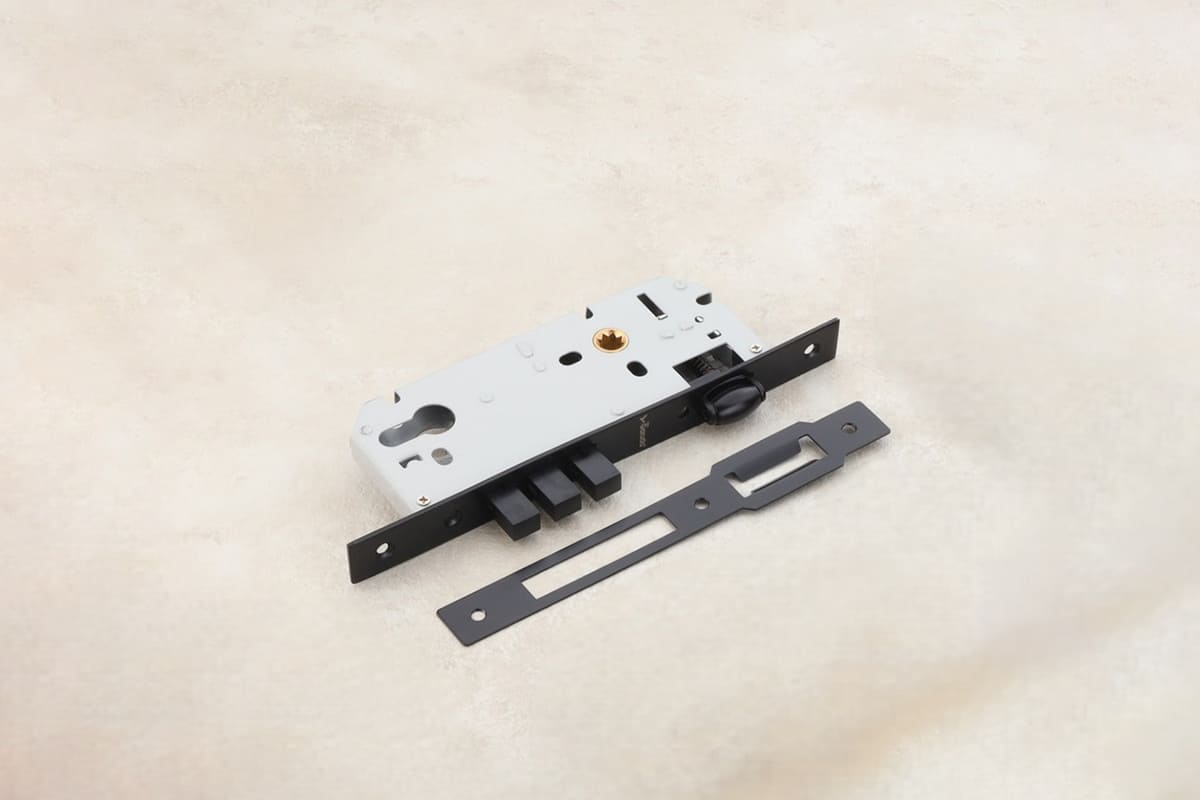
I see one common problem in procurement. A buyer asks for “standard full mortise lock,” but the word standard changes by region. In one market, a 50 mm backset may be common. In another market, a 55 mm or 60 mm backset may be expected. Some project doors need a larger case. Some lightweight doors need a narrow case. Some markets prefer Euro profile cylinders. Some use other cylinder formats.
Common backsets can include 40, 45, 50, 55, 60, 65, 70, 80, and 100 mm.6 But I never say these sizes are all available in every model. I always check the actual drawing and production item. A lock with the same backset may still have a different center distance, case height, forend length, or follower size.
Here is the dimension logic I use:
| Dimension | What it means | Buyer risk if wrong |
|---|---|---|
| Backset | Distance from forend face to spindle or cylinder center line, based on drawing rule | Handle and cylinder will not align with door holes |
| Center distance | Distance between handle spindle center and cylinder center | Handle plate or escutcheon will not fit |
| Case width | Depth of lock body inside door | Door pocket may be too shallow |
| Case height | Total height of lock body | Existing machining may not accept it |
| Forend size | Visible front plate size | Door edge cutout may show gaps |
| Door thickness | Thickness of the door leaf | Cylinder length and spindle length may be wrong |
| Spindle size | Usually market linked, such as 8 mm or other sizes | Handle cannot drive the follower correctly |
This is why I ask for drawings, samples, or door machining data when I support bulk orders. If the buyer wants to replace an existing lock, I also ask for the old lock sample when possible. A full mortise lock is a system part. It must work with the door and other hardware, not just sit in a carton.
Which components matter most when I select a full mortise lock?
A parts list can look boring. I prefer to connect each part to a real use problem, because that is how I avoid complaints.
The main components of a full mortise lock matter because they control closing, locking, handle action, alignment, and service life.7 I check the forend, latch bolt, dead bolt, follower, lock case, springs, arms, and support points.
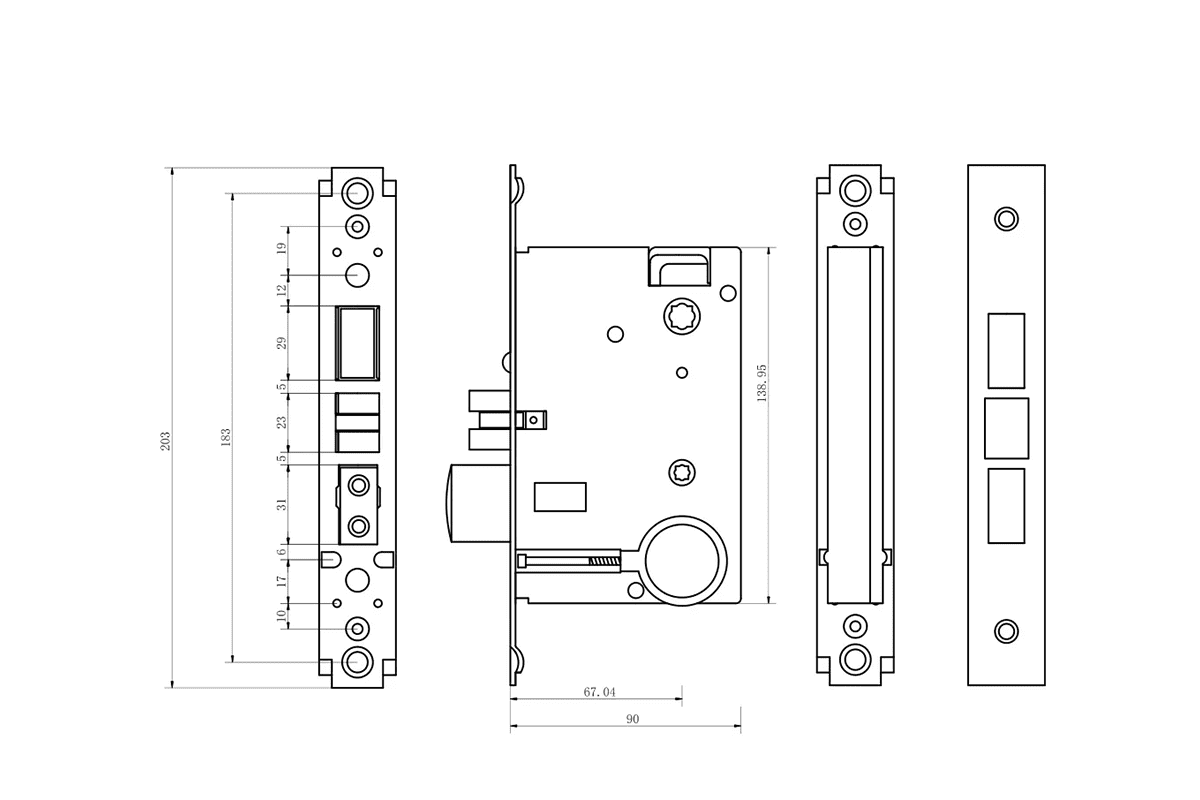
When I look at a lock sample, I do not only ask if the parts exist. I ask how they work together. The forend protects the door edge and gives the lock a clean visible finish. If the forend finish is inconsistent in one batch, a door factory may face appearance complaints after installation. The latch bolt keeps the door closed when the handle is not turned. If the latch is not smooth, the user feels it every day.
The dead bolt is the main locking part. Its material, structure, throw, and movement must match the use level of the model. I do not claim all dead bolts have the same security level. If a model says anti-saw, anti-drill, or other security features, I believe the buyer should verify the exact model data and test report.8
The follower connects with the handle spindle. If the follower size is wrong, the handle cannot drive the lock. If the follower has too much play, the handle feels loose. If the spring force is poor, the handle may not return well.
I also pay close attention to hidden parts:
| Internal point | My practical concern |
|---|---|
| Springs | Return force and fatigue resistance affect long-term handle feeling |
| Action arms | Smooth transmission affects daily use |
| Riveting points | Weak support may cause loose movement |
| Lubrication | Dry or dirty action may cause rough operation |
| Case forming | Poor accuracy may create friction and noise |
I see these points in production, not just in drawings. A lock can look similar from outside, but the internal action can feel very different. That is why I prefer to check working samples before bulk procurement.
How should I judge the quality of a full mortise lock?
Many buyers pick up a lock and judge it by weight. I understand that habit, but I do not think weight alone proves reliable performance.
I judge full mortise lock quality by material choice, case precision, bolt structure, spring life, smooth transmission, support points, lubrication, finish consistency, and stable batch production, not only by product weight.9
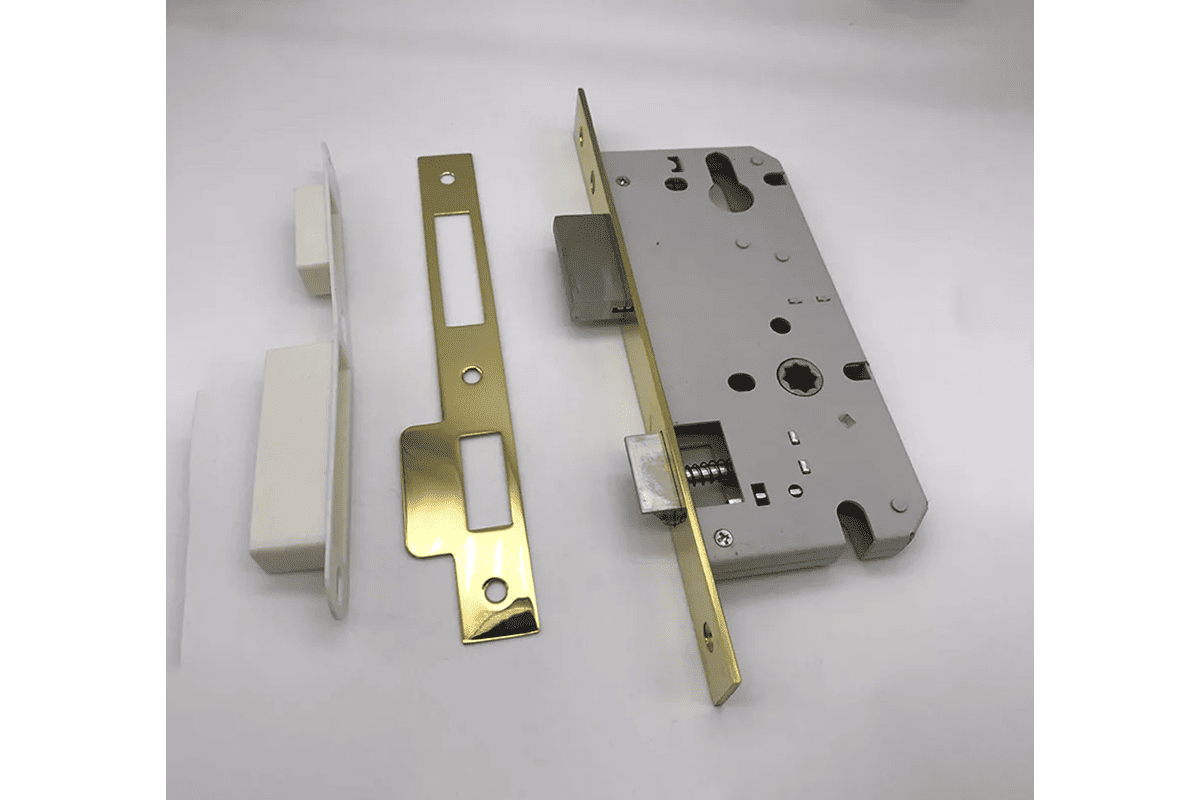
A heavier lock can feel strong, but weight can mislead a buyer. A lock may be heavy because of thicker parts, but the mechanism may still be rough. Another lock may not feel extremely heavy, but it may have better forming accuracy, better spring action, and more stable batch consistency. I prefer to test how the lock works, not only how it feels in my hand.
In production, I pay attention to repeatability. One good sample is not enough for a door factory or distributor. The buyer needs the same smooth action, the same finish color, the same screw position, and the same packaging quality across the whole order.10 This is important for brands and wholesalers, because mixed quality creates after-sales cost.
My basic quality check looks like this:
| Quality point | How I think about it |
|---|---|
| Raw material | The material must suit the model and market need |
| Case forming | The lock case must hold parts in correct alignment |
| Latch action | The latch should move smoothly and return properly |
| Dead bolt movement | The bolt should extend and retract without rough friction |
| Follower action | The handle drive should feel stable |
| Spring performance | Return force should stay reliable under normal use |
| Finish consistency | Visible parts should match buyer samples or approved standard |
| Batch control | The second carton should match the first carton |
For certification, I stay careful. CE, fire-rated, lifecycle, or security claims must be tied to specific models and valid documents.11 I do not suggest that a general product name automatically means it is certified. If a project needs fire-rated locks, the buyer should confirm the exact tested model, door system requirement, certificate scope, and local acceptance rule.
What dimensions should I confirm before I buy a full mortise lock?
A lock can be well made and still be wrong. I have seen that happen when the buyer misses only one dimension.
Before buying a full mortise lock, I confirm backset, center distance, lock case size, forend size, door thickness, spindle size, cylinder type, handle type, strike plate, and project certification needs.
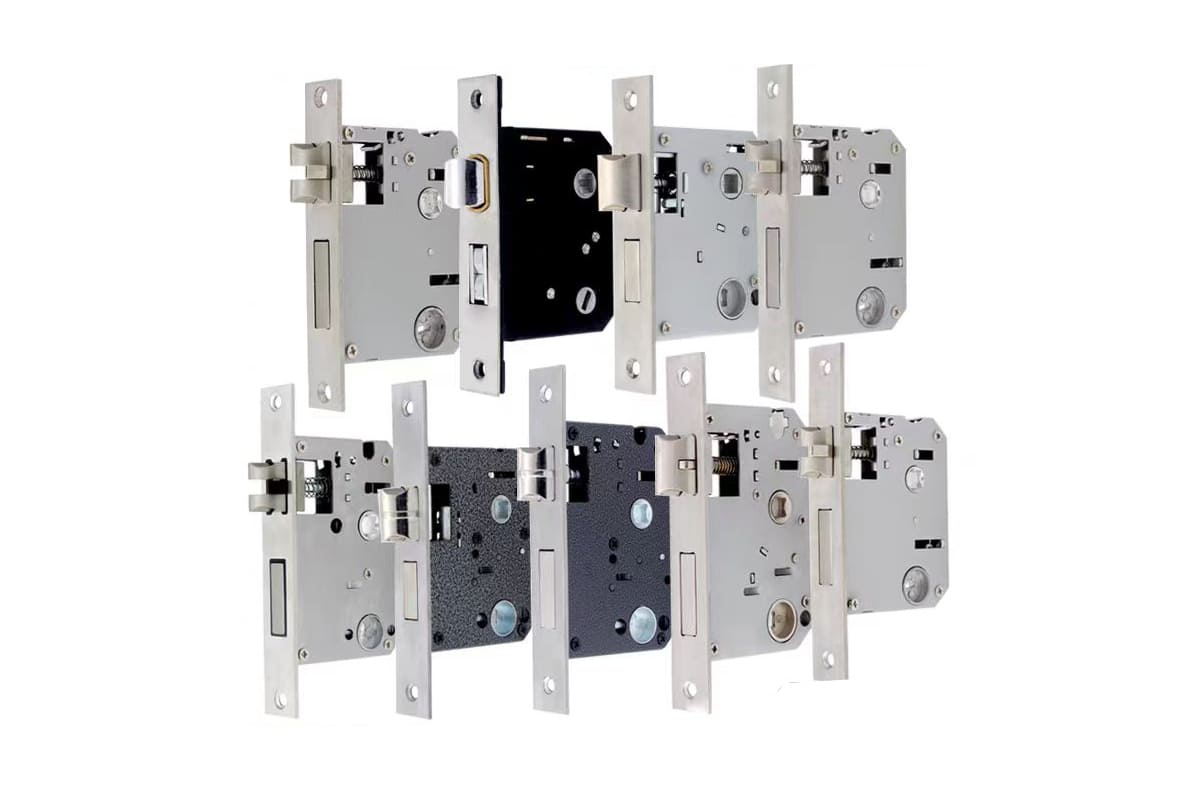
I put dimensions at the center of selection because dimensions decide whether the lock can be installed. For door factories, this is even more important. Door machining is often prepared before final assembly. If the lock drawing changes after the door is cut, the factory may need rework. Rework costs more than a better early confirmation process.
I ask buyers to confirm these points before price negotiation becomes final:
| Item to confirm | My question to the buyer |
|---|---|
| Backset | What backset does your door design need? |
| Center distance | What is the distance between handle center and cylinder center? |
| Case size | What pocket depth and height can your door accept? |
| Forend size | Do you need square corner or radius corner? |
| Door thickness | What cylinder length and spindle length do you need? |
| Spindle size | What handle spindle size is used in your market? |
| Cylinder type | Do you use Euro profile cylinder or another type? |
| Handle setting | Is it lever on rose, lever on plate, or other set? |
| Strike plate and box | What frame preparation is used? |
| Latch direction | Do you need reversible latch or fixed hand? |
| Finish | What finish standard should match handles and hinges? |
| Certification | Is this a standard use, fire-rated use, or project use? |
I also ask if the buyer is selling to the Middle East, Europe, Southeast Asia, or another region, because market habit affects product choice. A distributor may need a popular size for fast resale. A door factory may need a stable model for batch assembly. A project supplier may need documents and model consistency.
When I receive a clear checklist, I can suggest the right model faster. When the data is missing, I prefer to slow down and confirm. A slower early stage can save a much larger problem later.
How do I specify a full mortise lock for bulk procurement?
Bulk buying looks like a price decision, but I know it is also a risk control process. One unclear detail can affect every door.
For bulk procurement, I specify a full mortise lock with drawings, samples, confirmed dimensions, approved finish, cylinder and handle compatibility, packaging details, inspection rules, and model-specific certification documents when needed.
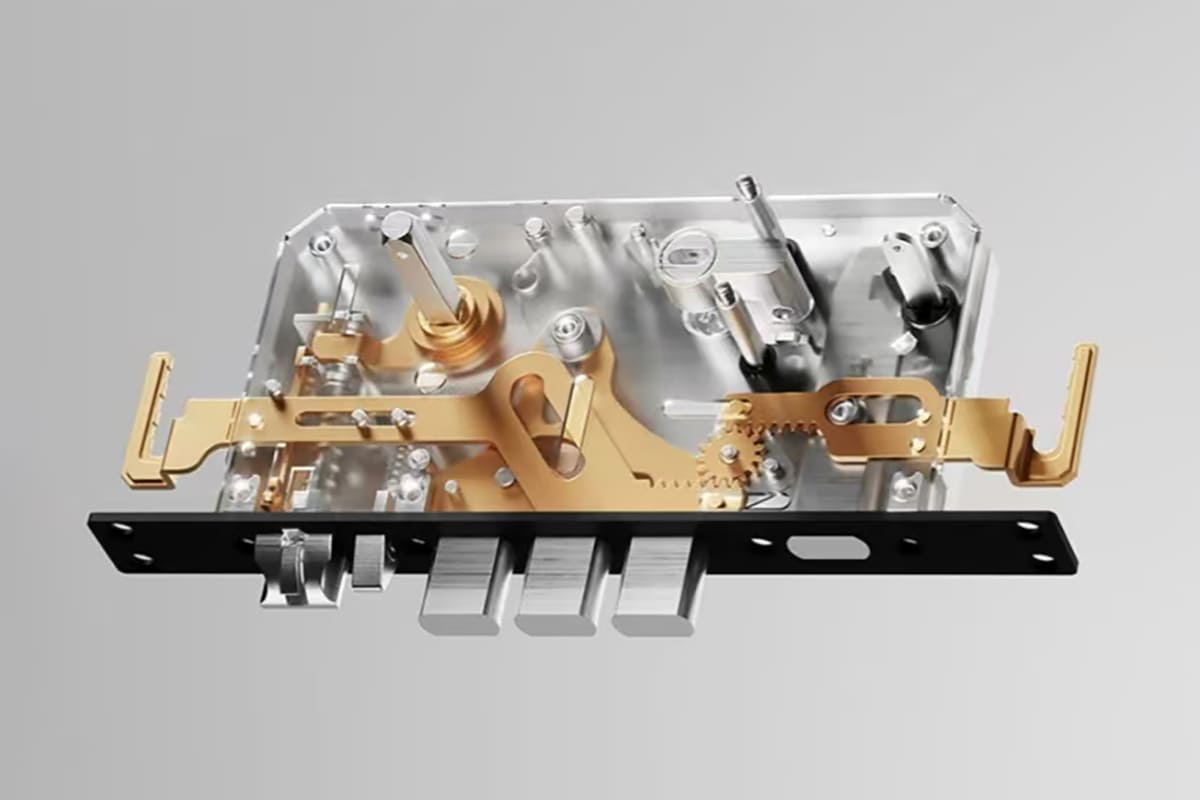
When I support a bulk inquiry, I usually do not start with the cheapest option. I start with application. I ask if the lock is for residential doors, hotel doors, commercial doors, fire-rated doors, or resale stock. Each use may need a different structure, finish, packaging, and certificate requirement.
For a door factory, I focus on assembly stability. The lock must match door machining, handle drilling, cylinder length, and frame strike position. For a hardware brand, I focus on appearance, packaging, model continuity, and market positioning. For a wholesaler, I focus on common sizes, cost control, carton strength, and stable repeat orders.
My inquiry checklist is simple:
| Procurement point | What I prefer to receive |
|---|---|
| Application | Door type, market, and end use |
| Drawing | Backset, center distance, case, and forend dimensions |
| Sample | Existing lock sample if replacement is needed |
| Hardware match | Handle, spindle, cylinder, strike plate, and screws |
| Finish | Approved color sample or finish code |
| Quantity | Trial order quantity and planned repeat quantity |
| Certification | CE, fire-rated, or other documents only if the exact model needs them |
| Packaging | Brand box, neutral box, bulk pack, label, and carton rule |
| Inspection | Key function points and appearance standard |
| Delivery | Target schedule and shipment plan |
I also remind buyers that customization needs early confirmation. A change in forend size, finish, latch direction, cylinder hole, or accessory pack can affect production time.12 A small change may be easy. A structural change may require tooling, sample testing, or more review. I prefer to make this clear before the order, because it protects both sides.
A full mortise lock is not hard to understand, but it must be specified with discipline. Once the model, dimensions, hardware match, and documents are confirmed, procurement becomes much safer.
Conclusion
A full mortise lock is a recessed door lock system. I choose it by structure, dimensions, compatibility, quality control, and verified project needs.
"Supply Chain Risk Management (SCRM) - NCUA", https://ncua.gov/regulation-supervision/regulatory-compliance-resources/cybersecurity-resources/supply-chain-risk-management-scrm. This claim is supported by studies on supply chain management and manufacturing efficiency, which highlight how misaligned component specifications can lead to production halts, increased lead times, and customer dissatisfaction. Evidence role: general_support; source type: research. Supports: the potential negative impacts of incorrect component selection on manufacturing processes and supply chain efficiency in industries like door production.. ↩
"Mortise lock - Wikipedia", https://en.wikipedia.org/wiki/Mortise_lock. The definition of a full mortise lock as a recessed lock body system installed within a door pocket is consistent with standard industry terminology and encyclopedic descriptions of door hardware. Evidence role: definition; source type: encyclopedia. Supports: the standard definition and structural characteristics of a full mortise lock within the door hardware industry.. ↩
"Are Mortise Locks Universal? A Complete Compatibility Guide", https://www.keymanlock.com/are-mortise-locks-universal.html. Industry guidelines and technical specifications for door hardware emphasize that successful installation and operation of a full mortise lock depend on its precise compatibility with the door structure, handle set, cylinder, strike plate, and adherence to regional market habits and project rules. Evidence role: expert_consensus; source type: education. Supports: the critical importance of matching a full mortise lock with various door components, hardware, and specific project or market standards for proper function and installation.. ↩
"Mortise lock - Wikipedia", https://en.wikipedia.org/wiki/Mortise_lock. Technical classifications of door hardware differentiate full mortise locks from surface-mounted locks by their recessed installation and from tubular latches by their more complex internal mechanisms and greater dimensional specificity. Evidence role: definition; source type: encyclopedia. Supports: the distinctions between full mortise locks, surface-mounted locks, and tubular latches based on their installation, internal mechanisms, and dimensional characteristics.. ↩
"Understanding Mortise Lock Body Dimensions - Keyman Lock", https://www.keymanlock.com/mortise-lock-body-dimensions.html. International hardware associations and standards bodies acknowledge significant regional variations in mortise lock dimensions, such as backset and center distance, indicating that no single global model is universally applicable. Evidence role: expert_consensus; source type: institution. Supports: the absence of a single, universally adopted global standard for full mortise lock dimensions and specifications, necessitating regional and project-specific verification.. ↩
"How to measure and choose the right mortise lock size - BlueID", https://www.blue-id.com/en/blog/mortise-lock-mass. Technical guides and product specifications from leading door hardware manufacturers frequently list a variety of backset dimensions, including those within the 40-100 mm range, as standard offerings for full mortise locks. Evidence role: general_support; source type: education. Supports: the range of common backset dimensions found in full mortise locks across different markets.. ↩
"Lock and key - Wikipedia", https://en.wikipedia.org/wiki/Lock_and_key. Engineering principles applied to mechanical devices, such as door locks, confirm that the design and quality of individual components directly determine the lock's ability to perform its intended functions, including closing, locking, handle action, alignment, and contributing to its overall service life. Evidence role: mechanism; source type: education. Supports: the functional importance of each main component within a full mortise lock system for its overall operation, security, and durability.. ↩
"[PDF] PHYSICAL SECURITY OF DOOR ASSEMBLIES AND COMPONENTS", https://www.ojp.gov/pdffiles1/nij/32269.pdf. Security standards organizations and regulatory bodies, such as Underwriters Laboratories (UL) or European Standards (EN), mandate that claims of enhanced security features for door locks must be substantiated by specific model testing and documented certification to ensure performance against stated threats. Evidence role: expert_consensus; source type: government. Supports: the necessity of verifying security claims for door locks, such as anti-saw or anti-drill features, through official model data and independent test reports.. ↩
"[PDF] 08711FL - DOOR HARDWARE (BY DESC PROD) - CSUSM", https://www.csusm.edu/pdc/standards-and-regulations/buildingstandards/specsections/08000-doors-and-windows/08711_-doorhardware_summary-csusm_2013-2014.pdf. Quality management principles in manufacturing emphasize that product quality, particularly for precision mechanical devices, is determined by a comprehensive evaluation of material properties, dimensional accuracy, component design, internal mechanisms, and consistent batch production, rather than solely by physical weight. Evidence role: expert_consensus; source type: education. Supports: the multi-faceted criteria for assessing the quality of mechanical products like full mortise locks, extending beyond simple weight to include material science, manufacturing precision, and consistency.. ↩
"How Precision Mixing Enhances Batch Consistency ... - Lee Industries", https://www.leeind.com/blog/mixing-challenges/how-precision-mixing-enhances-batch-consistency-in-pharmaceutical-manufacturing. Supply chain management and quality assurance best practices highlight that batch-to-batch consistency in product attributes, including functionality, aesthetics, and packaging, is essential for avoiding production disruptions, reducing rework, and ensuring brand reputation for bulk purchasers like door factories and distributors. Evidence role: expert_consensus; source type: education. Supports: the critical importance of consistent product quality across entire orders for manufacturers and distributors to maintain production efficiency and customer satisfaction.. ↩
"ANSI Grade 1 vs. Grade 2 Door Hardware: Specs, Applications, and ...", https://www.pdqlocks.com/blog/a-guide-to-ansi-grade-1-vs.-grade-2-door-hardware. Regulatory bodies and certification organizations universally stipulate that product certifications, including CE, fire-rated, and security compliance, are model-specific and require corresponding valid documentation to demonstrate adherence to relevant standards and regulations. Evidence role: expert_consensus; source type: government. Supports: the regulatory and industry requirement that product certifications, such as CE marking, fire ratings, or security claims, must be specific to the exact model and supported by verifiable documentation.. ↩
"Why Focusing on Lead Time—Not Just Efficiency—Drives Success", https://interpro.wisc.edu/lead-time-drives-manufacturing-success/. Studies in manufacturing and supply chain management consistently demonstrate that variations in product specifications, even seemingly minor ones like changes in finish or component dimensions, can necessitate adjustments in tooling, processes, and quality control, thereby extending production lead times. Evidence role: general_support; source type: research. Supports: the principle that product customization or changes to specifications can significantly influence manufacturing production times and lead to delays.. ↩