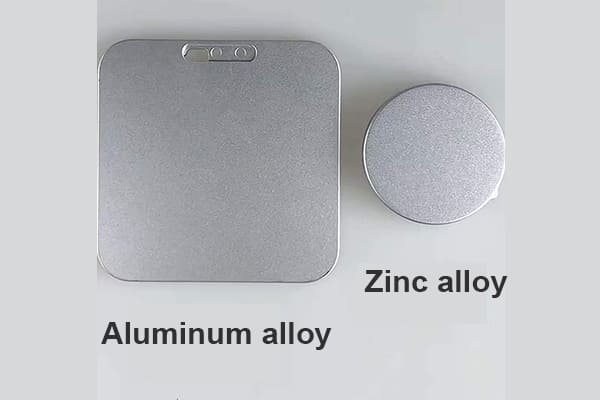
Why we choose 5# zinc alloy for our conceal hinge production?
A weak concealed hinge can create door sagging, rough movement, and after-sales pressure.1 I have seen buyers pay twice when material choice is ignored.
We choose 5# zinc alloy2 for our concealed hinge production because it better matches our needs for strength, deformation resistance, wear resistance, and stable batch quality. 3# zinc alloy is common3, but our hinge application needs stronger support when structure design and machining control are also in place.
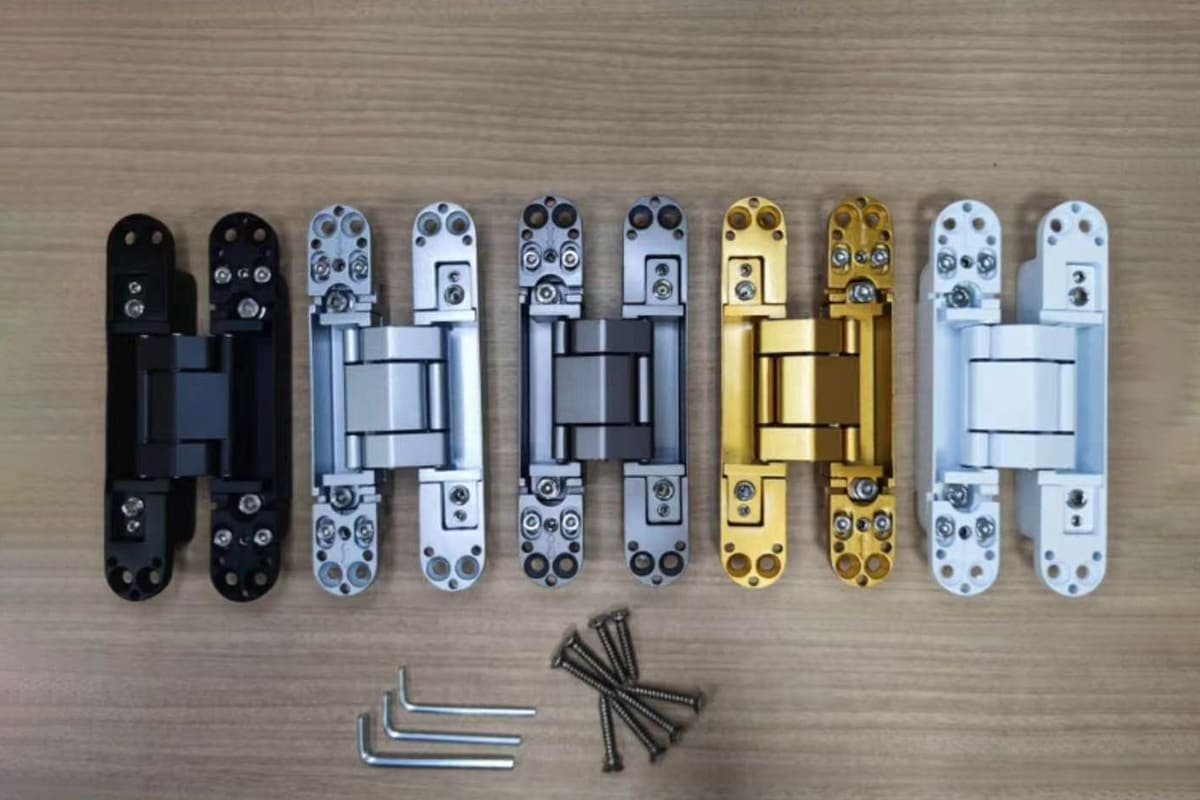
When I talk with door factory buyers, I often find that the first question is price. I understand this question. Price decides profit. But I also know one hidden hinge failure can damage a whole door system. A concealed hinge sits inside the door and frame. It carries weight. It moves every day. It also needs to keep the door leaf and frame aligned. So I do not treat the material as a small detail. I treat it as one of the first risk points in production.
Why does concealed hinge material matter more than many buyers think?
A concealed hinge is hidden, so many buyers check only the surface and price. This can create later problems with load, movement, and alignment.
A concealed hinge material matters because the hinge is a load-bearing and moving part.4 The material must support door weight, resist shape change, and reduce wear around rotating parts. Good material does not work alone, but it gives the hinge a stronger base for long-term use.
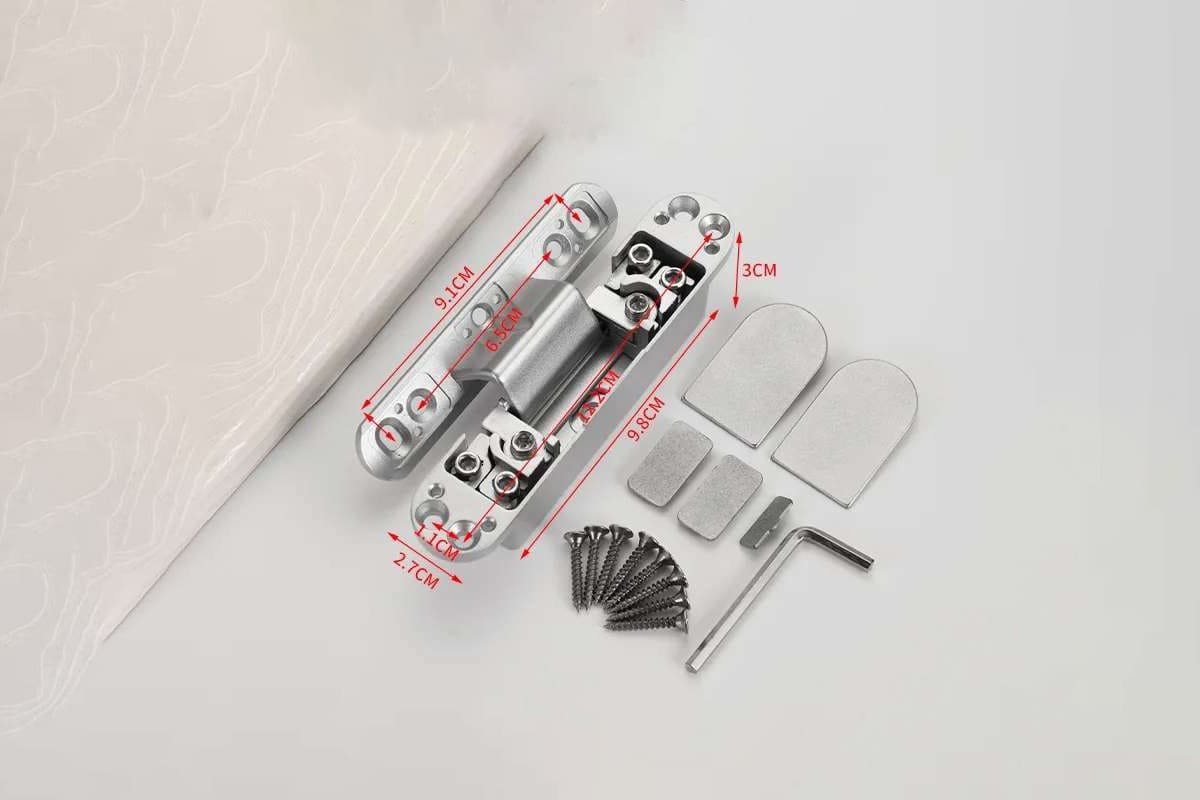
The hinge works inside a tight space
In our factory, I always remind my team that a concealed hinge has less room for error than a simple visible hinge. The hinge body is installed inside the door edge and frame. If the hinge body changes shape, the door gap can change.5 If the rotating parts wear too fast, the door can feel loose. If the machining size is not stable, the installer may spend more time on adjustment.
I do not say that material alone decides quality. That would be too simple. A concealed hinge also depends on the hinge structure, shaft system, machining precision, screw position, and installation method.6 But I do believe that material selection is the base. If the base is weak, the best design still has less room to perform well.
| Buyer concern | What can happen | Why material matters |
|---|---|---|
| Door sagging | Door leaf drops over time | Stronger material helps resist deformation |
| Rough movement | Door opening feels unstable | Better wear resistance helps moving parts |
| Poor door gap | Door and frame do not align well | Stable material supports dimensional control |
| More complaints | End users need repair or replacement | Better material reduces one common risk source |
When I choose 5# zinc alloy, I am not chasing a slogan. I am choosing a material that fits the working condition of concealed hinges better in our production practice.
How is 5# zinc alloy different from 3# zinc alloy for our hinge use?
3# zinc alloy is common in many die-casting products. We choose 5# zinc alloy because our concealed hinge needs stronger support and better wear behavior.
For our concealed hinge production, 5# zinc alloy gives us a better balance for strength, hardness, and wear resistance than 3# zinc alloy.7 3# zinc alloy can be suitable for many parts, but concealed hinges need more stability because they carry load and move repeatedly.
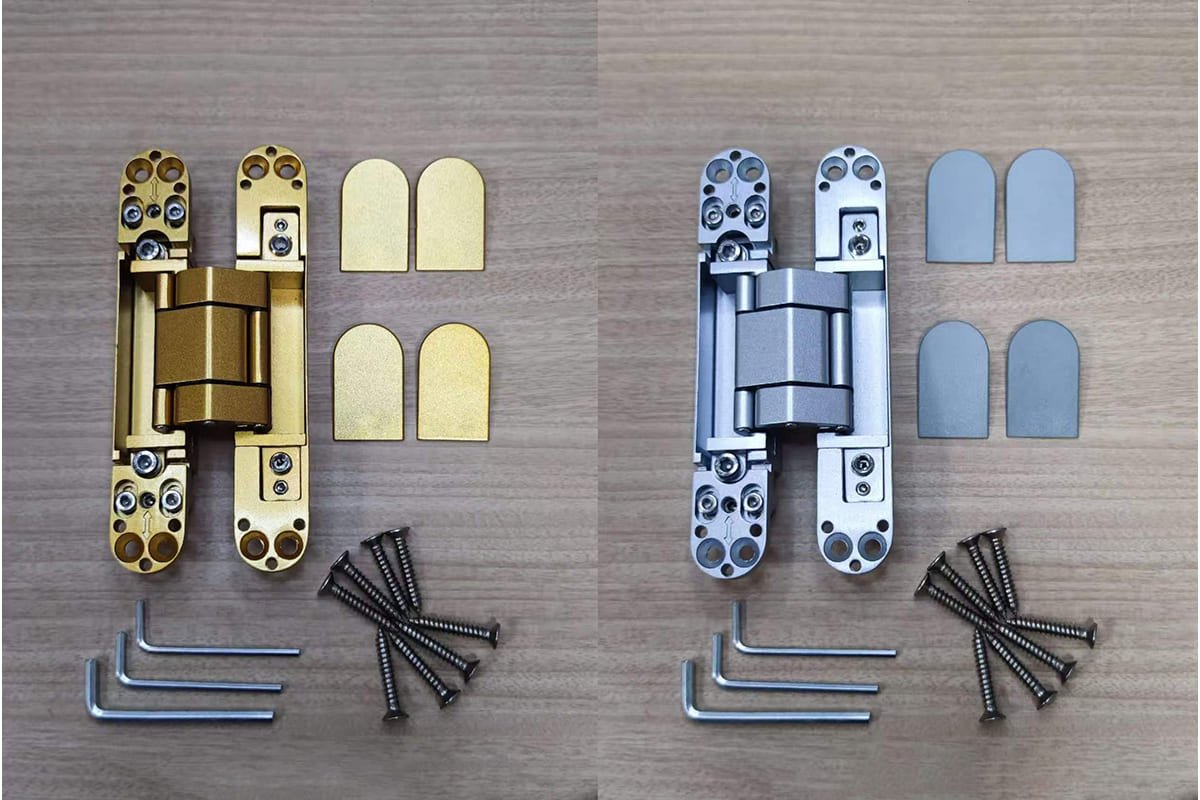
The difference is not only in the name
Many buyers ask me, “Is 5# zinc alloy always better than 3# zinc alloy?” My answer is no. A material is not better in every product. It is better only when it matches the product use. 3# zinc alloy is widely used because it has good casting performance and stable use in many hardware parts. It can be a reasonable choice for many general products.
But our concealed hinge is not a simple decorative part. It is a working part. It carries the door. It turns with every opening and closing. It also needs to keep its shape after installation. For this use, we prefer the higher strength and higher hardness direction of 5# zinc alloy.
| Item | 3# zinc alloy | 5# zinc alloy | Our production view |
|---|---|---|---|
| Common use | General die-casting parts | Parts needing more strength | Concealed hinge needs more support |
| Strength direction | Good for many normal parts | Usually stronger | Helps resist deformation |
| Hardness direction | Suitable for many applications | Usually higher | Helps reduce wear risk |
| Cost | Often lower | Often higher | We accept this for better hinge stability |
| Best choice depends on | Product design | Product design | Application must decide |
I do not use 5# zinc alloy just to make the product sound premium. I use it because the hinge has real mechanical work to do.
How does higher strength help reduce door sagging risk?
A concealed hinge with weak material may deform under load. This can affect door gap, door closing, and the buyer’s after-sales cost.
Higher strength helps the hinge resist load and shape change better.8 In concealed hinge use, this can support better alignment between the door leaf and frame. The final result still depends on hinge structure, door weight, machining accuracy, and correct installation.
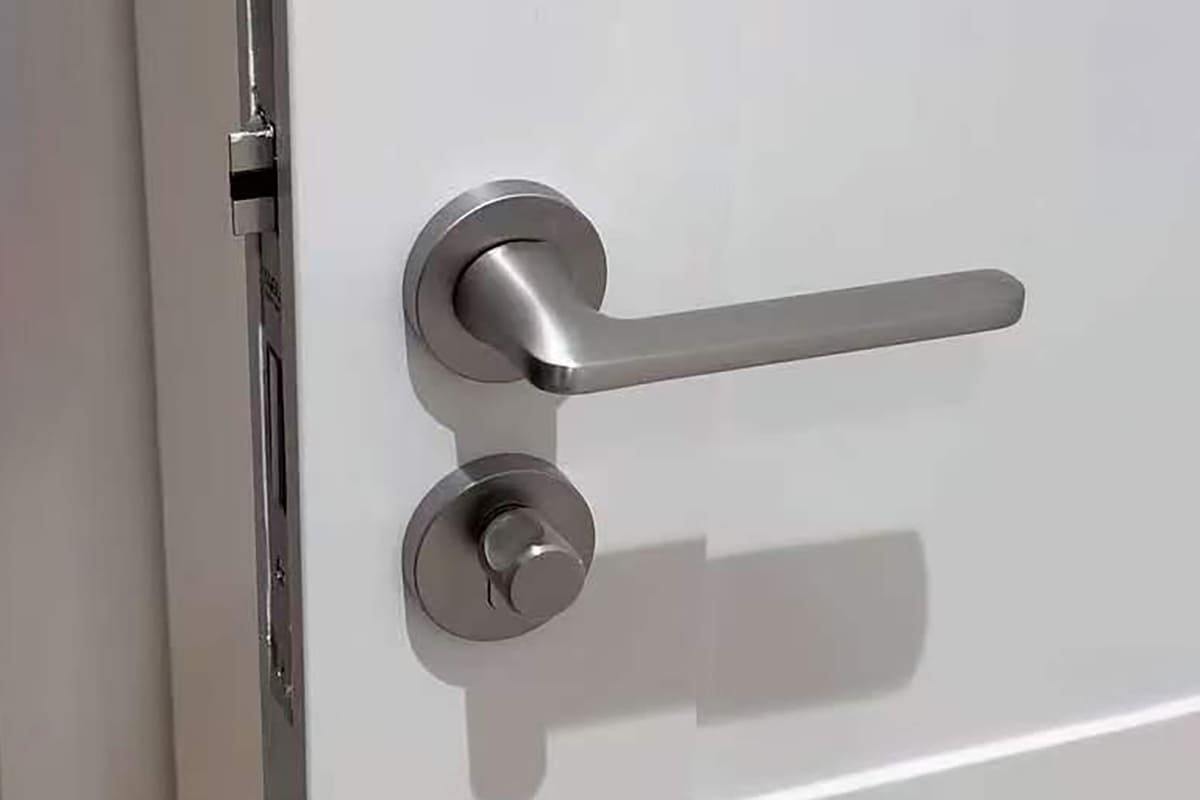
Strength supports the door system
When a door is installed, the hinge does not only hold a fixed weight. The hinge also faces force when the door opens, stops, closes, or receives side pressure.9 A heavy wooden door or fire-rated door can put more stress on the hinge area. If the hinge body has poor strength, the product may deform more easily. Then the door gap may become uneven. The lock may not enter the strike plate smoothly. The installer may blame the door, the frame, or the hardware supplier.
In my work, I see strength as a protection point. 5# zinc alloy gives us a better strength base for our concealed hinge body. This does not mean every hinge can carry every door. The correct model still needs to match the door weight, door thickness, door height, and quantity of hinges used.
| Application factor | Why it matters | What I ask buyers to confirm |
|---|---|---|
| Door weight | Higher weight increases hinge stress | Rated hinge model and quantity |
| Door height | Taller doors create more leverage | Hinge size and installation points |
| Usage frequency | More movement increases fatigue risk | Project type and traffic level |
| Door material | Solid wood, metal, and fire doors differ | Door specification and test needs |
| Installation quality | Wrong installation can damage performance | Slot accuracy and screw fixing |
So I treat higher material strength as one part of a full hinge solution. I never separate it from design and installation.
Why do hardness and wear resistance affect opening smoothness?
A hinge may look fine at first, but wear around rotating parts can make the door feel loose, noisy, or rough later.
Hardness and wear resistance matter because the hinge has moving contact areas. Better wear behavior can help the rotating parts keep smoother movement for longer.10 It can also reduce the risk of early looseness, but actual results depend on structure, shaft design, and use conditions.
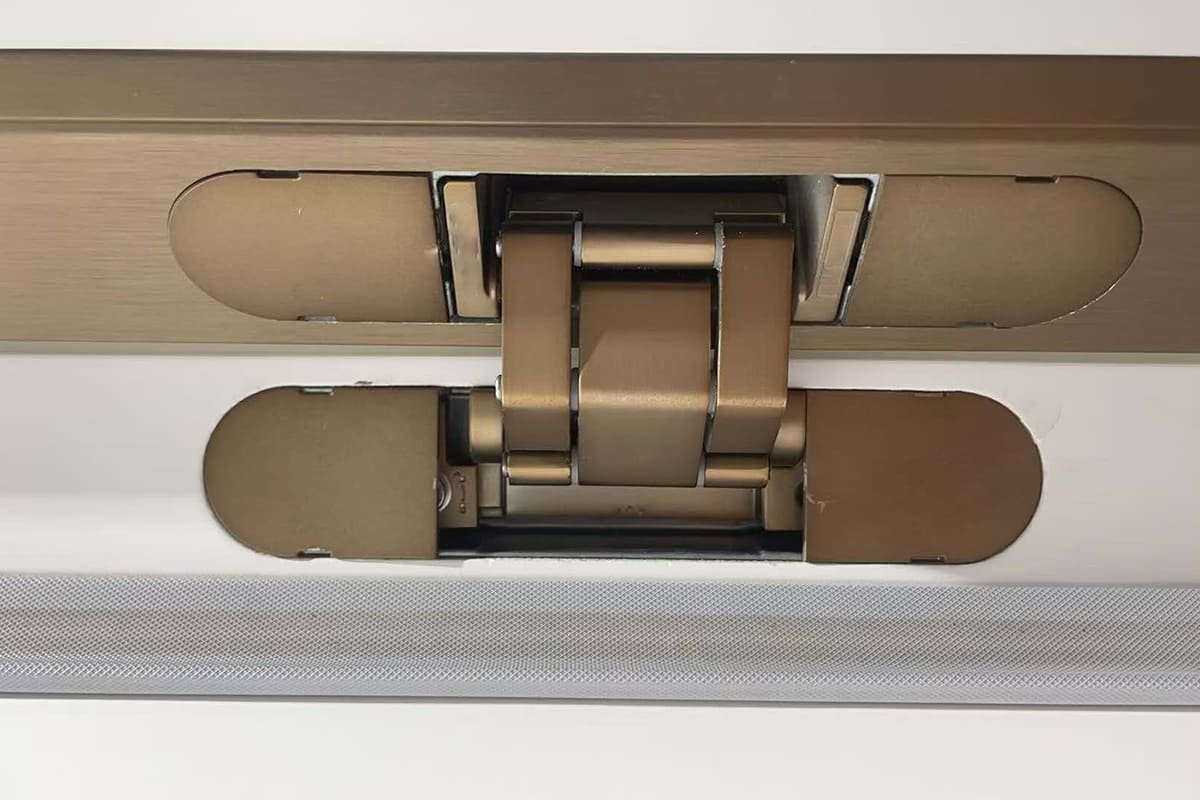
Smooth movement is a daily user experience
A buyer may inspect a hinge by looking at the finish, weight, and packing. But the end user judges the hinge by daily movement. The user opens the door. The user closes the door. If the movement feels smooth, the user may not think about the hinge. If the movement feels rough, the user notices the problem at once.
The shaft area and rotating parts are important. If these parts wear too quickly, the hinge may develop clearance.11 The door may shake slightly. The opening angle may feel less stable. The installer may need to adjust the door again. In some projects, this creates extra service cost.
| Performance point | User feeling | Production control point |
|---|---|---|
| Shaft wear | Door feels loose | Material hardness and shaft fit |
| Rotating stability | Door opens evenly | Structure design and machining precision |
| Noise control | Door feels more refined | Contact surface and assembly control |
| Long-term movement | Less need for adjustment | Material, design, and installation together |
I choose 5# zinc alloy because it supports better hardness and wear resistance for our hinge application. But I still check the structure, shaft fit, and machining tolerance. A harder material with poor design will not give a good concealed hinge. A good hinge needs each part to work together.
How does 5# zinc alloy support batch consistency for buyers?
A buyer does not only need one good sample. A buyer needs stable quality across full orders, repeated orders, and different project batches.
5# zinc alloy supports our concealed hinge production by giving us a stable material base for strength and shape control. For buyers, this matters because bulk orders need consistent dimensions, surface finish, assembly fit, and performance. Factory control is still needed at every step.
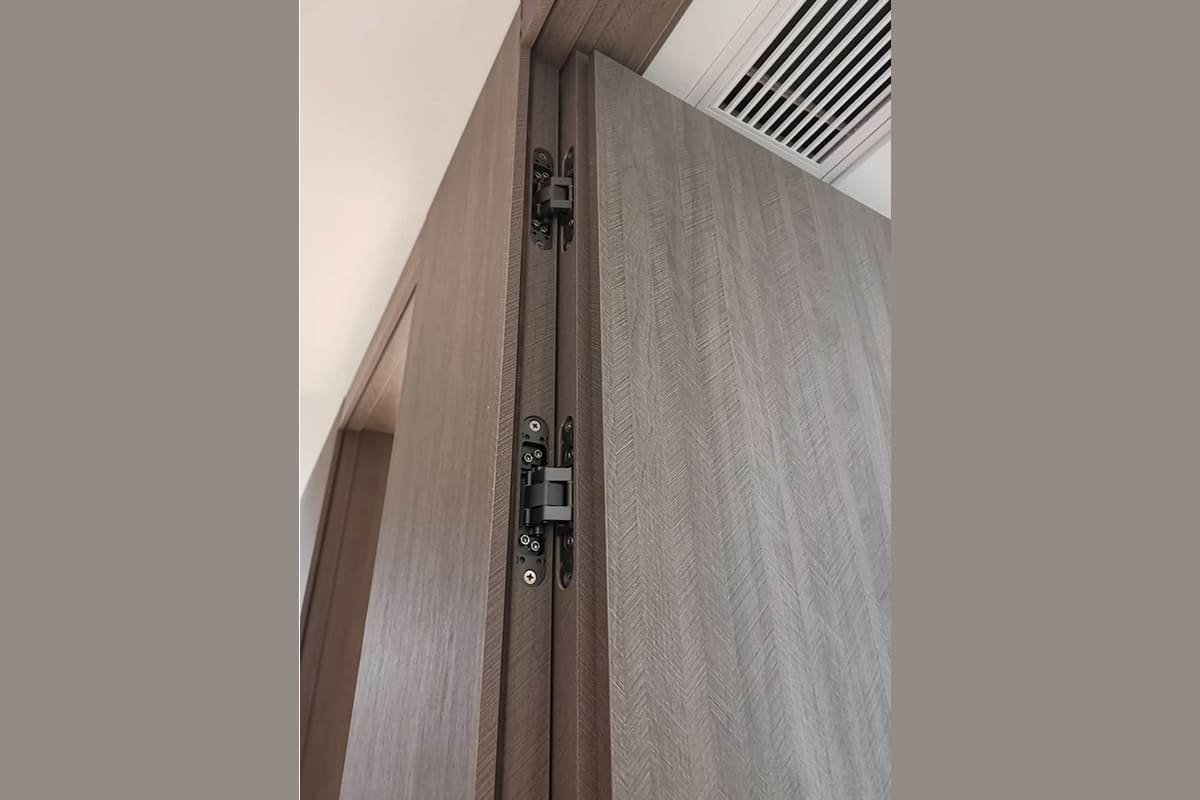
One sample is not enough
I often tell new buyers that a good sample is only the first step. The real test is bulk production. A door factory may need thousands of hinges for one order. A hardware brand may reorder the same model many times. A wholesaler may sell to different installers in different markets. If each batch feels different, the buyer faces risk.
Material stability helps us control production. It supports more stable casting, machining, and assembly results when the process is managed well. We still need raw material checks. We still need mold control. We still need surface treatment control. We still need finished product inspection. But the alloy grade is a key starting point.
| Bulk order risk | What the buyer may face | Our control direction |
|---|---|---|
| Size variation | Harder installation | Machining and inspection |
| Finish difference | Poor shelf appearance | Surface treatment standard |
| Weak hinge body | Door alignment complaints | Material and structure control |
| Uneven movement | User dissatisfaction | Assembly and shaft checking |
| Delivery issue | Project delay | Factory production planning |
As a factory, I do not want buyers to receive one quality in the sample and another quality in the container. This is why I connect material selection with full-process control.
What should buyers check before choosing a concealed hinge supplier?
Many buyers compare unit price first. This is easy, but it may hide bigger costs from complaints, repair, replacement, and project delay.
Before choosing a concealed hinge supplier, buyers should check alloy grade, hinge structure, door weight range, usage condition, machining precision, finish consistency, certification needs, and factory production control. The lowest unit price is not always the lowest total cost.12
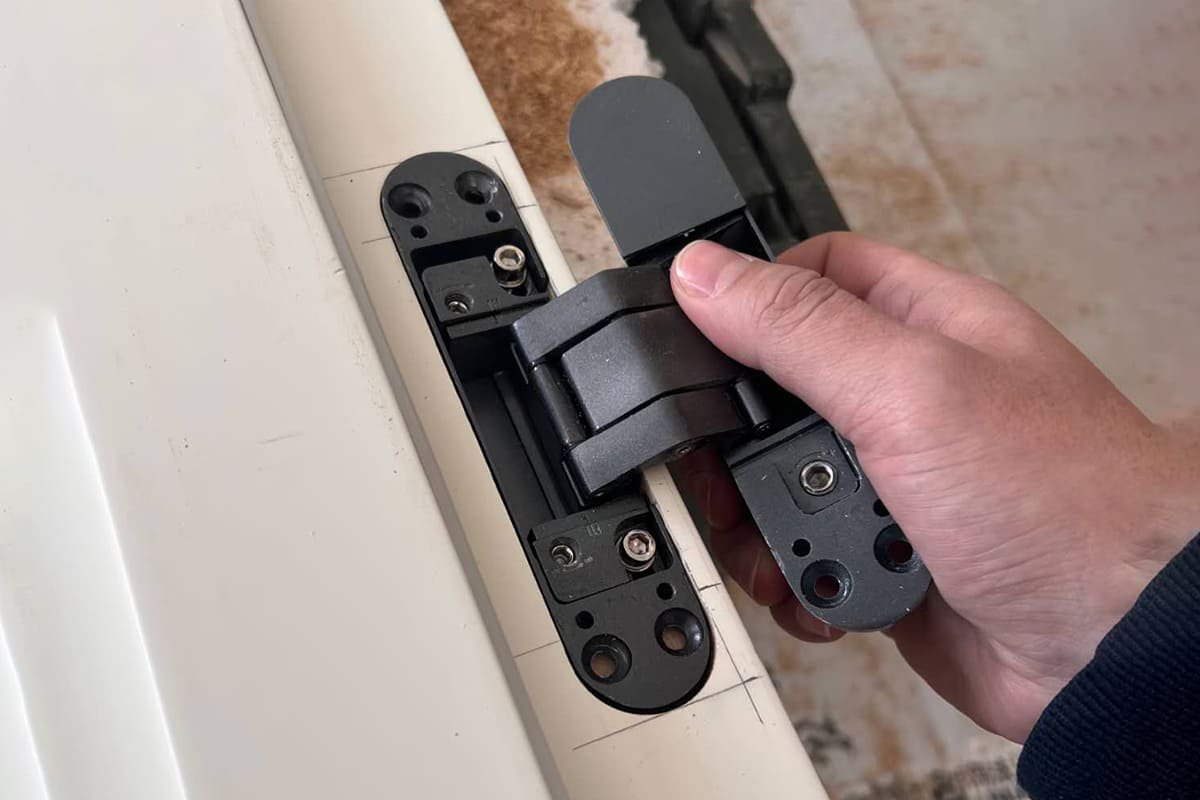
A practical buyer checklist
When I meet product managers and supply chain buyers, I like to make the decision simple. I ask them to treat a concealed hinge as part of the door system, not as a loose accessory. The hinge must match the door and the market. A hinge for a light interior door is not the same as a hinge for a heavier wooden door. A hinge for a low-use room is not the same as a hinge for a project with frequent opening.
I suggest buyers ask direct questions. What alloy grade is used? What is the structure design? What door weight and door thickness does the model match? What finish can be kept stable in bulk orders? What inspection steps does the factory use? Can the supplier support CE or fire-rated certificate needs when the project requires them?
| Check item | Why I think it matters | Question to ask supplier |
|---|---|---|
| Alloy grade | It affects strength and wear base | Is it 5# zinc alloy or another grade? |
| Hinge structure | It affects load and movement | How is the hinge body and shaft designed? |
| Door matching | It affects safety and fit | What door weight and thickness does it match? |
| Machining precision | It affects installation and gap | What tolerance control is used? |
| Finish consistency | It affects brand image | How is color difference controlled? |
| Certification | It affects market access | Are CE or fire-rated documents available if needed? |
| Production capacity | It affects delivery | Can the factory support repeat orders? |
This checklist helps buyers avoid a simple price trap. It also helps both sides confirm the right product before bulk production.
Why do we still say design and machining matter as much as material?
A strong alloy cannot save a poorly designed hinge. A good concealed hinge needs material, structure, machining, assembly, and installation to work together.
We choose 5# zinc alloy as a practical upgrade, but we do not rely on material alone. Concealed hinge quality also depends on structure design, shaft system, machining precision, surface treatment, screw fixing, and correct installation on the door and frame.

The hinge is a complete system
I want to be clear about one point. I do not want buyers to believe that 5# zinc alloy automatically means a perfect concealed hinge. That is not how factory production works. Material is important, but a concealed hinge is a system. The hinge body must have a proper structure. The shaft system must turn smoothly. The machining must keep the right size. The surface must fit the buyer’s finish standard. The screw holes must support stable fixing. The installer must cut and install the hinge correctly.
In our production, we choose 5# zinc alloy because it gives us a stronger base. Then we add design control and process control. This is the only way the material advantage can become product value.
| Part of hinge quality | What it controls | What can go wrong if ignored |
|---|---|---|
| Material | Strength and wear base | Deformation or early wear risk |
| Structure | Load path and movement | Weak support or rough action |
| Machining | Size and assembly fit | Hard installation or poor gap |
| Surface finish | Appearance and corrosion resistance | Color difference or poor market look |
| Assembly | Movement and stability | Noise, looseness, or uneven feeling |
| Installation | Real door performance | Misalignment or screw failure |
This is also why I prefer to discuss the full application with buyers before order confirmation. A better material should be matched with the right model, right door, and right quality control.
Conclusion
We choose 5# zinc alloy because our concealed hinges need stronger support, better wear resistance, and stable production when design and machining are also controlled.
"r/woodworking - Concealed hinge huge problem, need serious help ...", https://www.reddit.com/r/woodworking/comments/nntz1i/concealed_hinge_huge_problem_need_serious_help/. This source provides general support for the common failure modes and performance issues, such as sagging and rough movement, that can arise from weak or inadequate door hinges. Evidence role: general_support; source type: research. Supports: the common failure modes and performance issues, such as sagging and rough movement, that can arise from weak or inadequate door hinges.. Scope note: The specific 'after-sales pressure' is a business consequence, but the physical failures are well-documented. ↩
"Zinc alloy enhances strength and creep resistance - OSTI", https://www.osti.gov/biblio/415462. This source details the inherent mechanical properties of 5# zinc alloy, such as its strength, deformation resistance, and wear resistance. Evidence role: definition; source type: paper. Supports: the inherent mechanical properties of 5# zinc alloy, such as its strength, deformation resistance, and wear resistance.. Scope note: The 'better matches our needs' and 'stable batch quality' are company-specific applications, but the material properties are general. ↩
"Zinc Alloys - Belmont Metals", https://www.belmontmetals.com/product-category/zinc-alloys/?srsltid=AfmBOoonYOBv4NQWzT1LYWUAB-YN2rs3YrzFofUSPy18IT_atMLm8_NJ. This source confirms the widespread use of 3# zinc alloy in various die-casting applications, particularly in general hardware manufacturing. Evidence role: general_support; source type: encyclopedia. Supports: the widespread use of 3# zinc alloy in various die-casting applications, particularly in general hardware manufacturing.. ↩
"Types of Bearings | Uses & Working Mechanisms Explained - Fractory", https://fractory.com/types-of-bearings/. This source explains the fundamental engineering requirements for materials used in load-bearing and moving mechanical components, such as door hinges, including the need to support weight, resist deformation, and minimize wear. Evidence role: expert_consensus; source type: education. Supports: the fundamental engineering requirements for materials used in load-bearing and moving mechanical components, such as door hinges, including the need to support weight, resist deformation, and minimize wear.. ↩
"Gap at top of door. What should I do? : r/Home - Reddit", https://www.reddit.com/r/Home/comments/15bzc8f/gap_at_top_of_door_what_should_i_do/. This source details the mechanical relationship between hinge body deformation and subsequent changes in door alignment or gap, illustrating how material integrity affects functional performance. Evidence role: mechanism; source type: research. Supports: the mechanical relationship between hinge body deformation and subsequent changes in door alignment or gap, illustrating how material integrity affects functional performance.. ↩
"Ultimate Guide to Choosing the Best Door Hinge for Your Needs", http://swdsi.org/blog/guide-to-choosing-the-best-door-hinge/. This source highlights the multi-faceted nature of hinge quality, emphasizing that performance is determined by a combination of material, structure, machining, and installation factors, not just one component. Evidence role: expert_consensus; source type: education. Supports: the multi-faceted nature of hinge quality, emphasizing that performance is determined by a combination of material, structure, machining, and installation factors, not just one component.. ↩
"Zamak - Wikipedia", https://en.wikipedia.org/wiki/Zamak. This source provides data on the comparative mechanical properties, specifically strength, hardness, and wear resistance, between 5# and 3# zinc alloys. Evidence role: general_support; source type: paper. Supports: the comparative mechanical properties, specifically strength, hardness, and wear resistance, between 5# and 3# zinc alloys.. Scope note: The 'better balance' is an interpretation for a specific application, but the underlying property differences are factual. ↩
"Ultimate tensile strength - Wikipedia", https://en.wikipedia.org/wiki/Ultimate_tensile_strength. This source defines the fundamental principle that materials with higher mechanical strength are inherently more resistant to deformation and failure when subjected to applied loads. Evidence role: definition; source type: education. Supports: the fundamental principle that materials with higher mechanical strength are inherently more resistant to deformation and failure when subjected to applied loads.. ↩
"Door Hinges (static equilibrium)", https://phy.duke.edu/~rgb/Class/review_53/review_53/node59.html. This source explains the dynamic and varied forces, beyond static weight, that door hinges experience during normal operation, including forces from opening, closing, stopping, and side pressure. Evidence role: mechanism; source type: research. Supports: the dynamic and varied forces, beyond static weight, that door hinges experience during normal operation, including forces from opening, closing, stopping, and side pressure.. ↩
"Material Hardness - University of Maryland", https://web.calce.umd.edu/TSFA/Hardness_ad_.htm. This source elucidates the direct correlation between material hardness and wear resistance and the longevity and smooth function of moving contact surfaces in mechanical components like hinges. Evidence role: mechanism; source type: education. Supports: the direct correlation between material hardness and wear resistance and the longevity and smooth function of moving contact surfaces in mechanical components like hinges.. ↩
"Door Hinge Wear Problems - ASP Windows and Doors", https://www.aspwindows.com/blog/door-hinge-wear-problems. This source details the mechanical consequence of wear in moving parts, specifically how it leads to increased clearance and potential instability or shaking in a hinge mechanism. Evidence role: mechanism; source type: research. Supports: the mechanical consequence of wear in moving parts, specifically how it leads to increased clearance and potential instability or shaking in a hinge mechanism.. ↩
"Total Cost of Ownership (TCO) in Procurement - CADDi", https://us.caddi.com/resources/insights/total-cost-ownership. This source explains the business principle of Total Cost of Ownership (TCO), which posits that initial purchase price does not encompass all costs associated with a product over its lifecycle, including maintenance, repair, and replacement. Evidence role: expert_consensus; source type: education. Supports: the business principle of Total Cost of Ownership (TCO), which posits that initial purchase price does not encompass all costs associated with a product over its lifecycle, including maintenance, repair, and replacement.. ↩