Why is my lock suddenly not opening?
A door lock that suddenly won't open can be very frustrating and even a security risk. It stops your day, makes you worry, and often leaves you wondering what went wrong. Understanding the real reason can save time, money, and help you find the right solution.1
A lock that suddenly stops opening often has a clear symptom. The issue might be with the cylinder, the lock body, the latch, or even the door frame itself. Instead of thinking the "lock is broken," first identify if the key won't go in, the key turns but the door stays shut, or if the door only sticks when closed. This helps pinpoint the root cause for effective troubleshooting.

When customers reach out to us with a lock that "suddenly won't open," we know how urgent and confusing it can be. We often hear a general complaint. But from our experience in manufacturing and quality control, we know that this single complaint can hide many different problems. To help you understand and deal with these issues better, let's look at the different ways a lock can fail to open.
Why won't my key go into the lock cylinder?
Imagine needing to unlock your door, but your key just won't slide into the cylinder. This frustrating moment can make you feel helpless and stuck outside. It stops you from entering your home or office. But often, the problem is simpler than you think.
If your key won't enter the cylinder, it usually means something is blocking the keyway. Common reasons include dust, dirt, or foreign objects stuck inside.2 Rust build-up can also narrow the keyway, or sometimes a broken key piece is still inside. Identifying this blockage is the first step to fixing the problem.
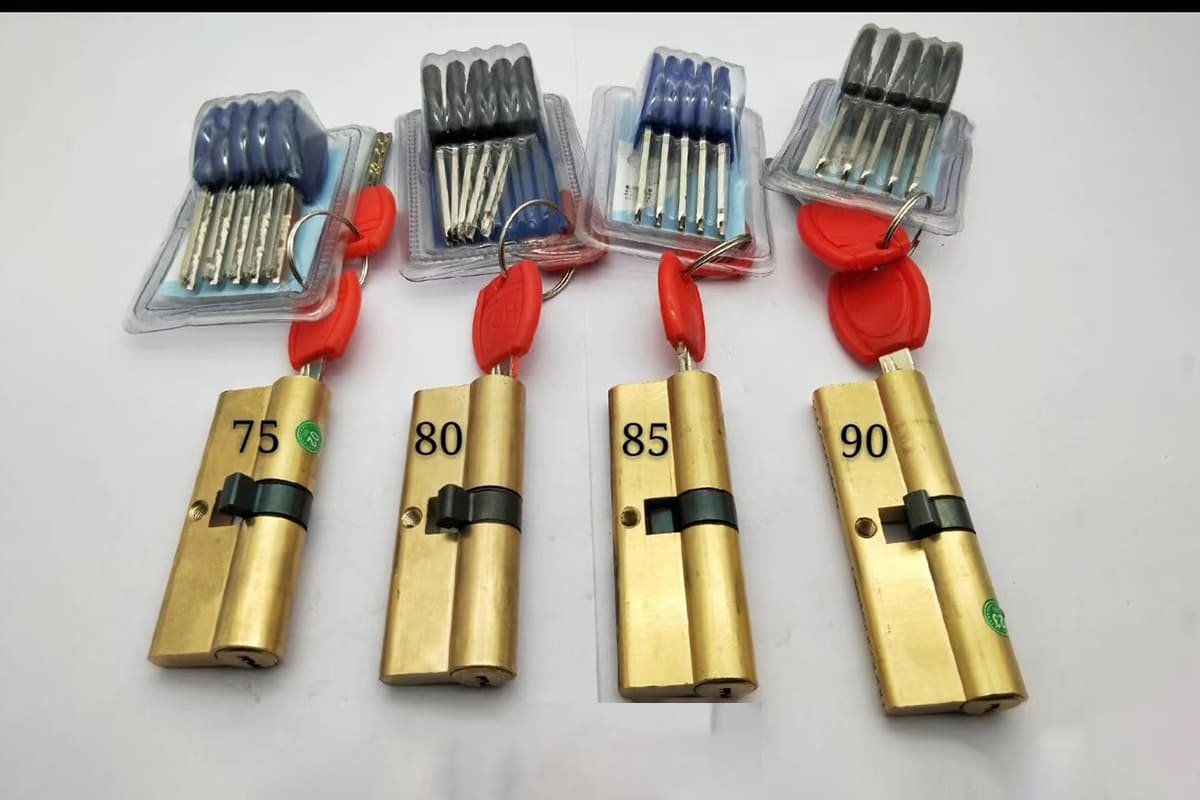
From our perspective as hardware manufacturers, when a key refuses to enter the cylinder, we first consider what might physically obstruct its path. The keyway, though small, can collect various materials over time. Dust and grime, especially in high-traffic areas or dusty environments, can compact inside the cylinder. Small foreign objects, such as tiny splinters of wood, metal shavings from previous key uses, or even insects, can get lodged in there. In humid conditions, rust can form on internal metal components, especially if the lock is not made from appropriate corrosion-resistant materials or if its protective coating has worn off. This rust can build up and narrow the keyway, preventing the key from fully inserting. Another less common but serious issue is when a key breaks inside the cylinder, leaving a piece stuck in the keyway. In such cases, the new key naturally cannot enter. In our customer discussions, we commonly check these factors. We recommend gently trying to shake out any loose debris. Using a specialized lock cylinder lubricant, which is designed to clean and lubricate without attracting more dirt, can sometimes help dislodge fine particles. Avoid using oil-based lubricants or aggressive tools like wire or toothpicks, as these can push debris deeper or damage the delicate internal pins.
Why does my key turn, but the door won't open?
It's incredibly frustrating when you hear your key turn in the lock, but the door stays stubbornly shut. This gives a false sense of security that the lock is working. You try again, only to find yourself still unable to enter. This problem means the lock mechanism isn't fully engaging.
If your key turns but the door doesn't open, the issue likely lies within the lock's internal mechanism, not just the keyway. This could be due to a worn-out cylinder that no longer properly engages the lock body, a damaged part inside the lock body itself, or a disengaged latch that isn't retracting. The cylinder might also be "free-spinning" without activating the bolt.

When we receive feedback that a key turns but the door remains locked, our experience points us to several internal issues. First, the cylinder's cam, which is the part that turns the lock body mechanism, might be worn or damaged. Over time, especially with lower quality cylinders or heavy use, the cam can become rounded or break, leading to it spinning freely without engaging the bolt. Sometimes, the cylinder itself might have come loose from the lock body, causing it to turn independently. Second, the lock body's internal components, such as springs, levers, or gears, might be broken or jammed. These parts are responsible for retracting the latch or deadbolt. If a spring breaks, the latch might not retract fully. If a small metal piece breaks off, it can jam the entire mechanism. Third, the connection between the cylinder and the lock body's internal mechanism might have failed. This is less common in well-designed hardware but can happen if components are mismatched or poorly installed. In our B2B communication, we emphasize checking the integrity of the cylinder cam and the internal functions of the lock body. For customers, we usually advise gentle attempts with a dedicated lubricant and avoiding force, as aggressive turning can further damage these fragile internal components. Tapping the lock body lightly and cautiously can sometimes dislodge minor jams, but this should not be seen as a professional repair method.
Why does my door only stick when it's closed?
You close your door, and suddenly it feels stuck, refusing to open easily, even with the key turning correctly. This specific problem means the lock isn't the only thing causing trouble. It points to a tension or misalignment issue.
If your door only sticks when closed, it suggests a problem with how the door, its frame, or the latch interact under pressure. This can happen because of slight door deformation, hinge sagging causing the door to drop, or misalignment between the latch and the strike plate. The door might also be swelling due to moisture, creating a tight fit.

When we consult with door factories and project teams, the symptom of a door sticking only when closed often guides us away from a simple "lock broken" diagnosis. Instead, we look at the larger system of the door assembly. Door deformation, which can be subtle, is a common culprit. Changes in temperature or humidity can cause a door slab to warp or swell slightly.3 This slight change can be enough to create significant pressure on the latch bolt or the deadbolt when the door is closed, preventing it from retracting smoothly. Another key factor is hinge sagging. Over time, or with heavy doors, hinges can sag, causing the door to drop slightly.4 This changes the alignment of the lock and latch relative to the strike plate on the frame. The latch bolt might then bind against the strike plate or the frame itself, making it difficult to retract. Sometimes, the strike plate itself might be slightly misaligned or bent, creating too much friction for the latch to overcome. We also consider installation tolerances. If the door frame was not perfectly plumb or square, or if the strike plate was not installed with enough clearance, these issues can become more apparent under the slight pressure of a closed door.5 In these situations, the lock might be functioning perfectly internally, but external forces prevent its proper operation. For our B2B clients, we always suggest examining the door's integrity, hinge condition, and strike plate alignment as primary diagnostic steps before assuming a lock defect.6 If problems appear repeatedly across a batch, buyers should review lock quality, cylinder precision, door deformation, hinge support, strike plate alignment, installation consistency, and supplier after-sales support.
Conclusion
A lock that suddenly won't open isn't always "broken" in the way you might think. By carefully noting the symptoms—key won't enter, key turns but door stays shut, or door sticks when closed—you can better identify the real problem, from internal blockages to door alignment issues, and find the right solution.7
"What Are the Key Benefits of Regular Door Lock Maintenance?", https://harveyslocks.com/what-are-the-key-benefits-of-regular-door-lock-maintenance/. Studies on mechanical troubleshooting suggest that identifying the root cause of equipment failure can reduce repair costs and downtime, though specific data on locks may vary. Evidence role: general_support; source type: education. Supports: The source should support the idea that diagnosing lock issues can lead to cost-effective and time-efficient solutions.. Scope note: The support may be generalized to mechanical systems rather than locks specifically. ↩
"ID EVERY Type of Lock - YouTube",
. Research on lock mechanisms indicates that environmental debris and foreign objects are frequent contributors to keyway obstructions. Evidence role: mechanism; source type: research. Supports: The source should confirm that dust, dirt, and foreign objects are common causes of keyway blockages.. Scope note: The frequency of these issues may depend on environmental conditions and lock usage. ↩"Are you experiencing door troubles due to humidity or natural wood ...", https://www.facebook.com/DavidWeekleyHomes/videos/are-you-experiencing-door-troubles-due-to-humidity-or-natural-wood-characteristi/4049843871951642/. Studies on building materials show that wood and composite doors can warp or swell due to fluctuations in temperature and humidity. Evidence role: mechanism; source type: research. Supports: The source should explain how temperature and humidity changes can lead to door warping or swelling.. Scope note: The extent of warping may depend on material type and environmental conditions. ↩
"Easy Fix For Sagging Doors - YouTube",
. Engineering studies on door hardware suggest that hinge sagging is a common issue with heavy doors or extended use, leading to misalignment. Evidence role: mechanism; source type: research. Supports: The source should confirm that hinge sagging can occur due to heavy doors or prolonged use.. Scope note: The findings may vary based on hinge design and installation quality. ↩"Door Alignment Problems Explained - ASP Windows and Doors", https://www.aspwindows.com/blog/door-alignment-problems-explained. Construction guidelines highlight that non-square door frames and misaligned strike plates can increase lock failure rates under pressure. Evidence role: mechanism; source type: education. Supports: The source should confirm that improper door frame or strike plate installation can lead to lock issues.. Scope note: The findings may depend on specific installation practices and materials. ↩
"[PDF] NSPIRE Standard - Door - Fire - HUD", https://www.hud.gov/sites/dfiles/PIH/documents/NSPIRE-Standard-Door-Fire-Labeled_20230811.pdf. Maintenance manuals recommend checking door integrity, hinge condition, and strike plate alignment as initial steps in lock troubleshooting. Evidence role: general_support; source type: education. Supports: The source should confirm that inspecting door components can help diagnose lock issues.. Scope note: The effectiveness of these steps may depend on the specific lock and door setup. ↩
"Understanding diagnostic conversations in clinical practice - PMC", https://pmc.ncbi.nlm.nih.gov/articles/PMC11002943/. Troubleshooting guides emphasize that symptom identification is a critical step in diagnosing mechanical failures, including locks. Evidence role: general_support; source type: education. Supports: The source should support the idea that identifying lock symptoms can lead to effective troubleshooting.. Scope note: The support may be generalized to mechanical systems rather than locks specifically. ↩