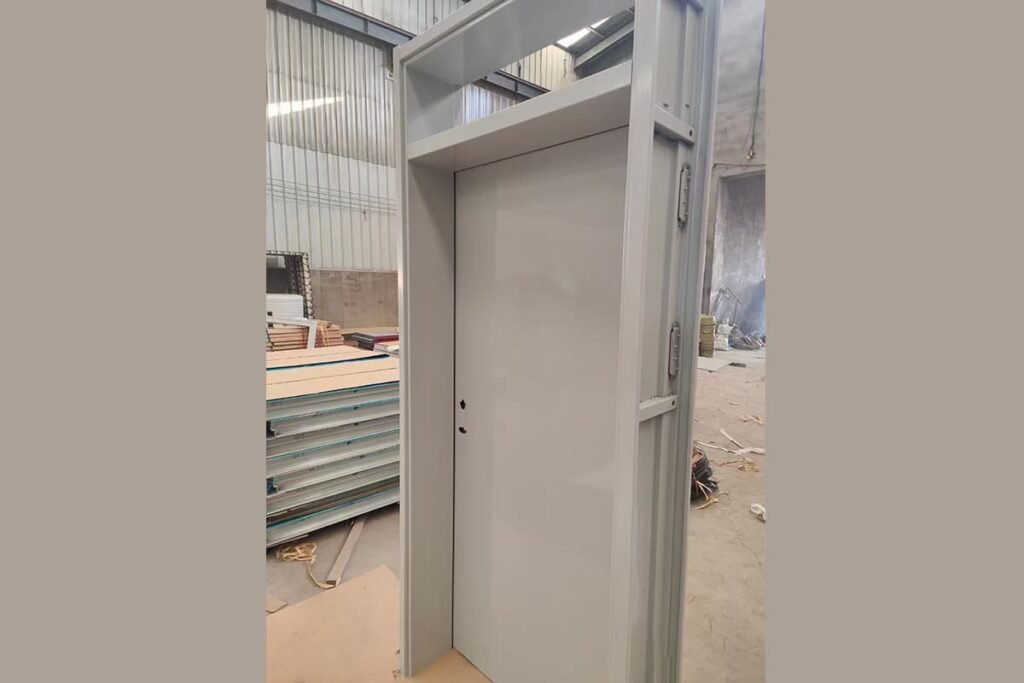
How to Choose Fire Rated Hinges for Commercial Fire Doors?
I see buyers lose money when fire doors pass the drawing stage but fail on hinge matching. One wrong hinge can create risk, delay, and rework.
I choose fire rated hinges by checking the tested fire door application, door weight, door thickness, hinge certification, load grade, installation method, and long-term alignment needs. I do not choose by stainless steel material or hinge size alone.
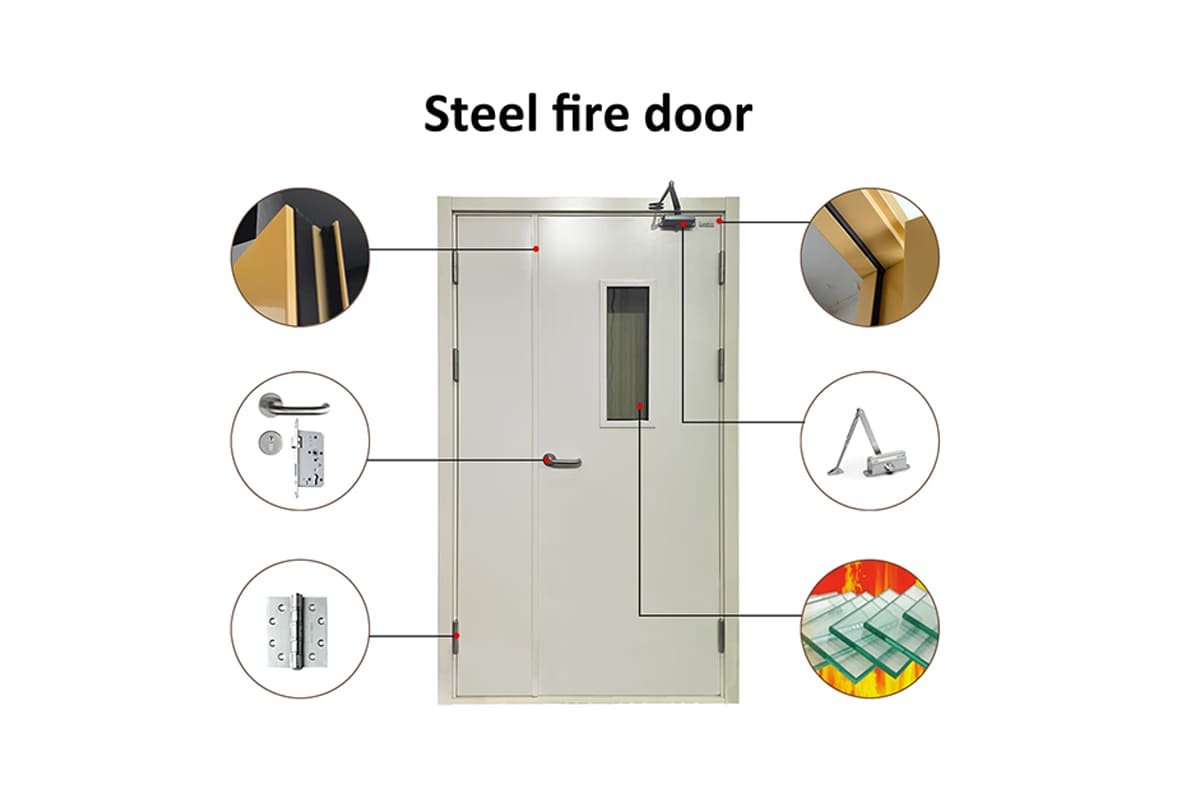
When I help a door factory or hardware buyer select hinges for a commercial steel fire door, I first ask about the whole door system. I ask about door leaf material, frame type, door thickness, door height, door width, usage frequency, closer type, and required fire approval. I do this because a fire door hinge is not a loose accessory. It is one part of a tested door set.1 A hinge may look strong on the table, but it may not work in the real door opening. A heavy door in a hospital, school, hotel, or commercial exit needs stable support every day. It also needs documents that can stand up to project checks. This is why I treat hinge selection as a system decision, not a price list decision.
Why Should I Start With Certified Butt Hinges for Commercial Fire Doors?
I see many steel fire doors used in exits and main passages. If the hinge is not proven, the whole door becomes a weak point.
I usually start with certified fire rated butt hinges for commercial steel fire doors because they are the standard and safe option for many tested door systems. I still check the report, size, load grade, screw position, and door structure before approval.
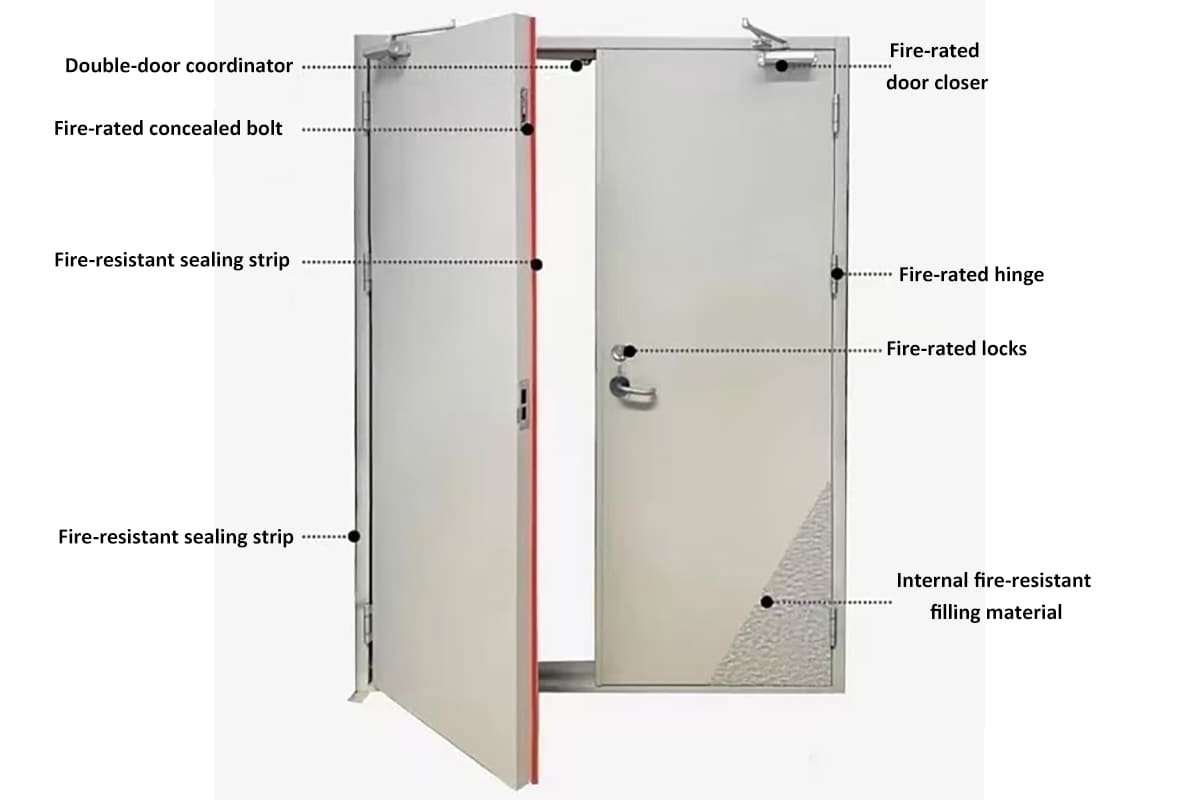
When I review a fire door project, I do not ask only whether the hinge is stainless steel. I ask whether the hinge has been tested or approved for the target fire door application. A stainless steel hinge can resist rust and heat better than many low-grade materials, but stainless steel alone does not make a hinge fire rated2. The tested configuration matters. The door leaf, frame, hinge quantity, screws, intumescent material, gap control, and installation position can all affect the result.3
What I check first?
| Check point | Why I check it | My practical note |
|---|---|---|
| Fire test or approval document | It shows the tested scope | I match the report to the door type |
| Door material | Steel, timber, or composite doors behave differently | I do not transfer one result blindly |
| Hinge quantity | Load and fire stability both need support | I often check 3 hinges or more for tall doors |
| Screw and fixing method | Weak fixing causes sagging and failure | I check screw size and frame reinforcement |
| Door usage | Exit doors open many times per day | I select higher durability when traffic is high |
In my factory work, butt hinges are still the most common choice for commercial steel fire doors. They are easy for installers to understand. They fit many standard door frames. They are also easier to inspect during production. Common European sizes such as 4×3 inch and 4×4 inch, often with 3 mm leaf thickness, are typical options. I still do not treat these sizes as final answers. I match them with the door weight, hinge grade, door thickness, and certification scope.
How Do I Separate Fire Certification From Hinge Performance Grade?
I often see buyers mix fire test terms with load grade terms. This creates wrong orders and weak project files.
I separate EN1634 and EN1935 in my selection. EN1634 relates to fire resistance testing for door assemblies and hardware use.4 EN1935 relates to hinge performance, such as durability, mass, safety, and corrosion grade.5 I need both sides for a sound choice.

I treat fire resistance and mechanical performance as two different checks. A hinge can have a fire-related test reference, but I still need to know whether it can carry the door for daily use.6 A hinge can also have a strong mechanical grade, but I still need to know whether it fits a fire door test scope. This is a common point in export projects. A buyer may ask, “Is it CE?” I answer with more questions. I ask what market, what door type, what fire rating, what hinge model, and what performance grade are required.
How I read the two standards in simple terms?
| Standard reference | Main focus | What I use it for |
|---|---|---|
| EN1634 | Fire resistance test for doors and hardware in tested assemblies | I check whether the hinge is suitable for the fire door application |
| EN1935 | Single-axis hinge performance standard | I check durability, load capacity, safety, and corrosion grade |
| CE documents | Market compliance route for covered products | I check whether documents match the actual product model |
| Fire test report | Test evidence for a specific setup | I avoid using claims outside the report scope |
I do not write or promise a fire duration such as 60, 90, 120, or 260 minutes unless I have the exact report for that hinge model and tested door configuration.7 Some stainless steel butt hinges may have strong fire test results in certain systems. Still, I must verify the real report before I publish or offer that claim. This protects my customer and my factory. It also protects the project buyer during site inspection.
How Should Door Weight and Door Thickness Control the Hinge Choice?
I have seen heavy steel doors fitted with hinges that looked large but carried poorly. The door sagged, rubbed, and needed service.
I choose hinge size and thickness only after I check door weight, door thickness, usage frequency, hinge grade, and frame fixing strength. A 4×3 inch or 4×4 inch hinge with 3 mm thickness may be suitable in some cases, but the load rating must confirm it.

I start with the real door leaf weight. I do not guess by door height alone. A steel fire door may include insulation, reinforcement plates, glass, panic hardware, door closer, and seals. These parts add weight and force. A door closer also adds stress near the top hinge.8 If the door is installed in a school, hospital, shopping area, office tower, or public passage, the open-close cycle can be high. This means the hinge must deal with both static load and repeated movement.
My basic matching logic
| Door factor | Why it matters | My hinge decision |
|---|---|---|
| Door thickness | It affects hinge knuckle clearance and screw position | I confirm leaf width and frame rebate |
| Door weight | It defines load demand | I select a tested load grade, not just a bigger size |
| Door height | Tall doors increase leverage9 | I may add hinge quantity or choose stronger models |
| Door closer | It adds force during closing | I pay attention to top hinge stress |
| Traffic level | High use needs better durability10 | I prefer higher grade hinges and better bearings |
| Frame material | Weak frame fixing causes movement | I check reinforcement and screw depth |
In many European-style commercial doors, 4×3 inch and 4×4 inch butt hinges are common. A 3 mm stainless steel hinge leaf is also common for stronger applications. But I still remind buyers that dimension is only one part of the decision. A low-grade large hinge can fail faster than a properly graded smaller hinge in the right system. I also check surface finish needs, because project buyers often need one finish across locks, handles, cylinders, and hinges. Batch consistency matters when the door factory assembles hundreds or thousands of doors.
When Should I Consider Adjustable Oil-Free Hinges for Heavy Steel Fire Doors?
I see some heavy fire doors drop after installation. The installer then adjusts gaps many times, and the buyer pays for service.
I consider stainless steel adjustable oil-free hinges for heavy steel fire doors when long-term alignment, low maintenance, and field adjustment are important. I still confirm the fire certification, door weight range, frame box structure, and installation compatibility before use.
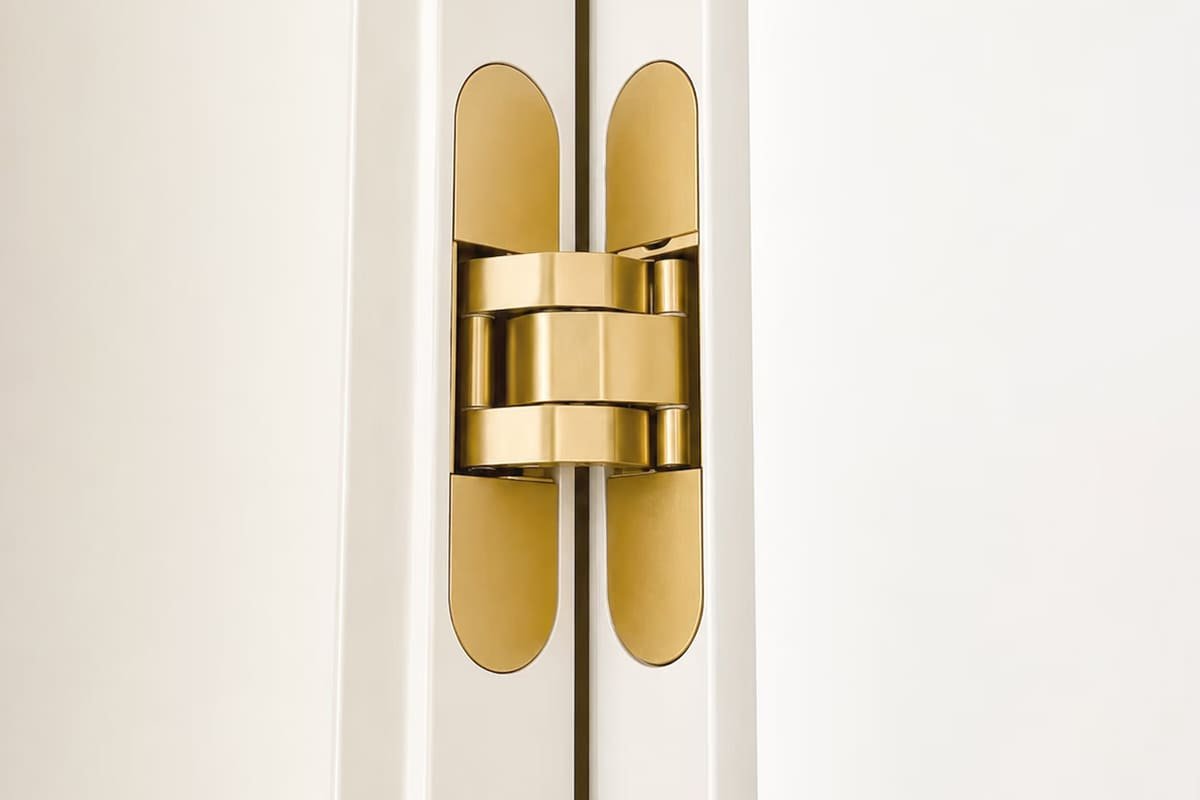
Adjustable oil-free hinges solve a real problem that ordinary butt hinges do not always solve well. A heavy steel fire door may sag after frequent use, frame movement, or site settlement. If the hinge uses an adjustment box in the frame, the installer can adjust the door position after installation. This helps control gaps and reduce rubbing. The oil-free structure also reduces the need for regular lubrication. This is useful for commercial doors where maintenance teams want cleaner and easier service.
When I see a good fit for adjustable oil-free hinges
| Project condition | Why I consider this hinge | What I still verify |
|---|---|---|
| Heavy steel door | The door needs strong support | I check load range and hinge quantity |
| High traffic passage | The hinge needs stable movement | I check durability grade and cycle test data |
| Door sagging risk | Adjustment can save service time | I check adjustment range and frame box design |
| Clean maintenance demand | Oil-free design reduces lubrication work | I check bearing or movement structure |
| Strong frame available | The box needs proper installation | I check frame reinforcement and machining |
I do not present adjustable oil-free hinges as a universal upgrade. They need the right frame preparation. They also need accurate installation. If the door factory does not prepare the frame pocket well, the advantage may be lost. I also ask whether the project approval accepts this hinge type in the tested fire door system. In my experience, this hinge can be very useful for heavy commercial steel doors, but it should be selected by model, load capacity, certification evidence, and installation drawing.
When Can Stainless Steel 3D Adjustable Concealed Hinges Be Used?
I meet buyers who want a cleaner door face, but I also remind them that appearance cannot replace fire door compliance.
I consider stainless steel 3D adjustable concealed hinges when the buyer needs a clean appearance and controlled adjustment. I evaluate the exact model, door size, door weight, frame structure, and fire test evidence before I recommend it for a commercial fire door.
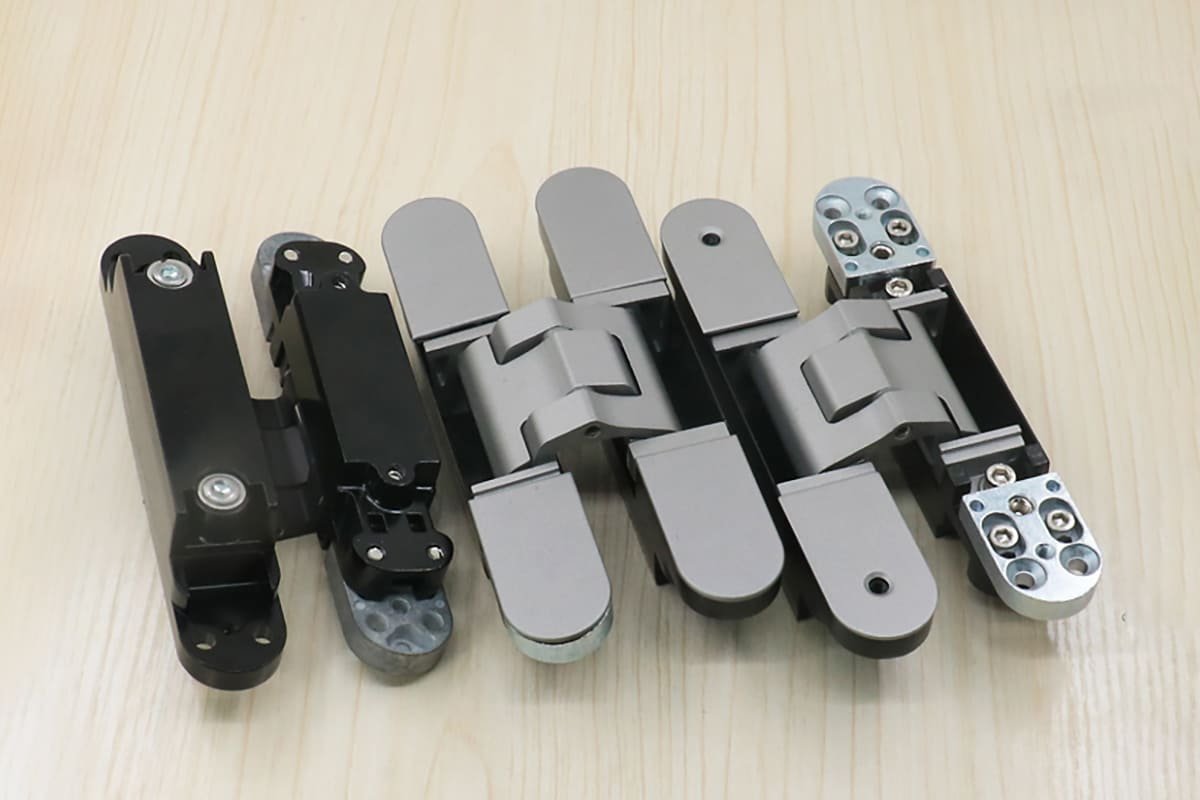
Concealed hinges are becoming more common in higher-end commercial doors. They hide the hinge body when the door is closed. This gives the door a clean look. A 3D adjustable design can also help installers adjust height, side gap, and compression. For architects and brand buyers, this can be attractive. For fire door buyers, I still slow the decision down. A concealed hinge cuts into the door leaf and frame in a different way from a butt hinge.11 This can affect the door structure and fire performance. So I must check the tested configuration before I treat it as a fire door option.
How I judge concealed hinges for fire doors
| Decision point | My concern | My action |
|---|---|---|
| Door appearance | The buyer wants hidden hardware | I confirm whether the project allows it |
| Door weight | Concealed hinges have model limits | I calculate total leaf weight |
| Door thickness | The hinge body needs enough depth | I check machining drawings |
| Frame structure | The frame must hold the hinge body | I check reinforcement plates |
| Fire evidence | The cut-out may affect performance | I ask for model-specific reports |
| Adjustment need | 3D adjustment helps alignment | I confirm adjustment range and installer access |
I do not say concealed hinges can replace butt hinges in every fire door. I also do not say they are always better. They are one option for the right project. If the buyer needs simple installation, broad acceptance, and standard fire door construction, certified butt hinges may still be the better choice. If the buyer needs a cleaner design and has the right door structure, a tested stainless steel concealed hinge may be worth evaluation.
How Do I Control Procurement Risk Before Placing a Bulk Order?
I have seen good samples turn into bad bulk orders when buyers skip document checks and factory process checks.
I reduce procurement risk by checking certificates, test reports, drawings, samples, finish standards, packaging, production capacity, and inspection rules before mass production. I also make sure the hinge model in the documents matches the hinge model in the order.
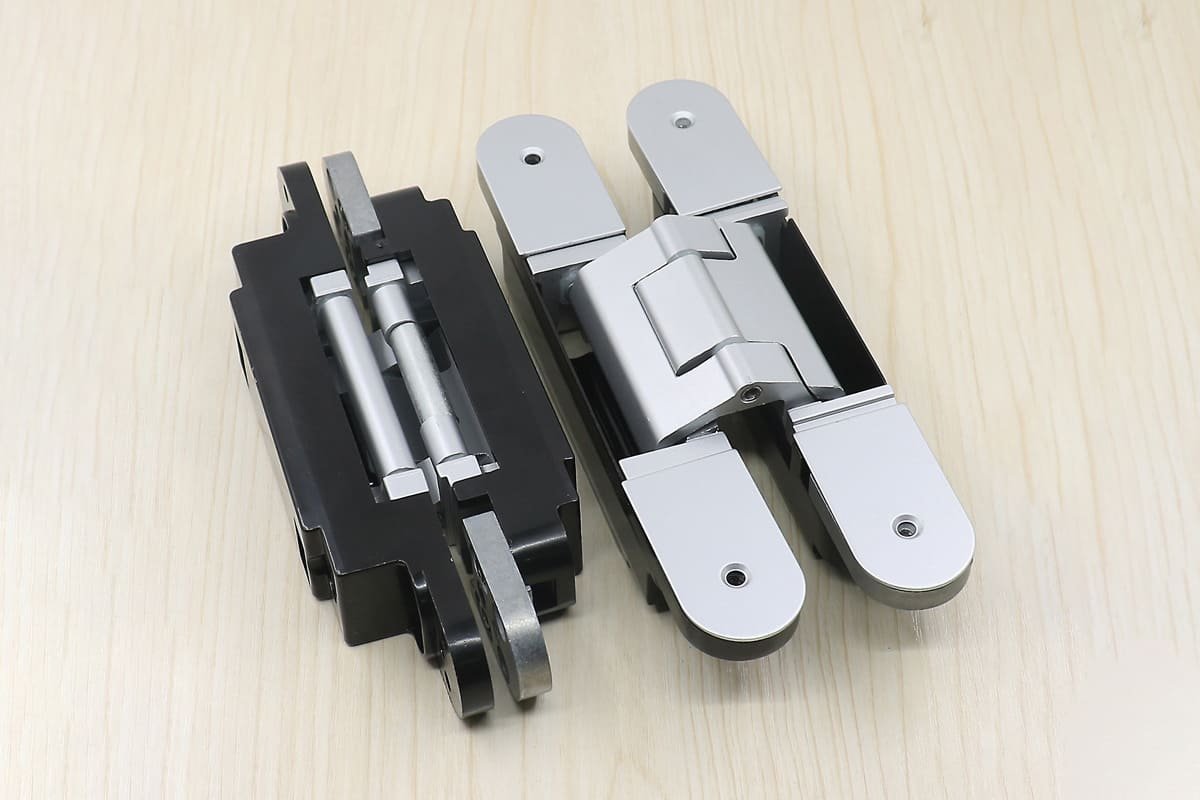
For bulk buyers, the hinge decision is not only a technical decision. It is also a supply chain decision. A door manufacturer needs hinges that fit the production line. A hardware brand needs stable finish and packaging. A wholesaler needs a clear product grade and repeatable supply. A project buyer needs compliance documents and on-time delivery. I handle these points early because late changes are expensive.
My pre-order checklist
| Item | What I check | Why it matters |
|---|---|---|
| Product model | I match the sample, drawing, and report | I avoid document mismatch |
| Material grade | I confirm stainless steel grade or other material | I control corrosion and strength expectations |
| Fire report | I check model and tested scope | I avoid unsupported fire claims |
| EN1935 grade | I check load and durability grade | I match door weight and traffic |
| Finish standard | I confirm satin, polish, PVD, or other finish | I keep batch appearance consistent |
| Screw pack | I confirm screw type and length | I support safe installation |
| Packaging | I confirm label, carton, and pallet details | I reduce shipping damage and warehouse confusion |
| Inspection plan | I define size, finish, movement, and quantity checks | I reduce after-sales risk |
In my own production work, I prefer to confirm hinge drawings before tooling or mass orders. I also like to confirm the door manufacturer’s frame drawing. Small changes in knuckle size, screw hole position, hinge radius, or leaf width can create assembly problems. For fire door orders, I do not change details casually after documents are approved. Even a small change can affect the tested scope.12 This is why I tell buyers to treat the approved hinge as a controlled part of the door set.
Conclusion
I choose fire rated hinges by matching certification, load, door structure, installation, and supply stability. I never choose by appearance or material alone.
"SIST EN 1634-1:2014+A1:2018 - Fire Resistance Test for Doors and", https://standards.iteh.ai/catalog/standards/sist/ee82f4f9-9568-41f8-a1f4-c805f6a4c814/sist-en-1634-1-2014a1-2018?srsltid=AfmBOop0ANsB5GZJlWrBGxLq9NDw8YIHfJguC-DxhrefIbxLK27WWFtk. A fire door hinge should be understood as a component of the tested fire door assembly, because fire-resistance standards and listing schemes evaluate doors, frames, and relevant hardware in specified configurations. Evidence role: definition; source type: institution. Supports: A standards or code source should support that fire doors are tested or certified as assemblies that include hardware such as hinges.. Scope note: This supports the assembly-based compliance principle; it does not prove that any specific hinge model is approved for the article's example doors. ↩
"[DOC] 081119", https://online2.ogs.ny.gov/dnc/masterspec24/docs/Division08Openings/081119.0Stainless-SteelDoorsandFrames.docx. Fire-door hardware suitability is determined by listing, testing, and installation within the approved assembly; corrosion-resistant material such as stainless steel is not, by itself, evidence of a fire rating. Evidence role: expert_consensus; source type: institution. Supports: A code or certification body should support that fire door hardware must be listed or tested for the intended fire door use, not selected solely by material.. Scope note: This is a general compliance principle and must be applied to the specific listing or test report for a given hinge. ↩
"Influence of mechanical strength on the characteristics of aluminium ...", https://pmc.ncbi.nlm.nih.gov/articles/PMC12615804/. Fire door performance depends on the interaction of the door leaf, frame, hardware, seals, fixings, and maintained clearances, so changes to these elements can affect whether the assembly performs as tested. Evidence role: mechanism; source type: institution. Supports: An institutional source should explain that fire door performance depends on the assembled door, frame, hardware, seals, clearances, and installation conditions.. Scope note: The source would support the mechanism generally; only a model-specific test report can confirm the exact effect of a particular change. ↩
"EN 1634-1:2014 - Fire resistance and smoke control tests for door and", https://standards.iteh.ai/catalog/standards/cen/968c3638-cfad-47fb-a190-8ac700fd9139/en-1634-1-2014?srsltid=AfmBOorAZfa6Lw3fxEiF9-nyMMxmVhSsN0ICv3Tr_UuZb4jqnCFejH7F. The EN 1634 series defines fire-resistance test methods for door, shutter, and openable-window assemblies and includes provisions relevant to the characterization of building hardware used with such assemblies. Evidence role: definition; source type: institution. Supports: A standards source should verify that EN 1634 covers fire resistance testing for door and shutter assemblies and related building hardware characterization.. Scope note: This identifies the scope of the standard series; it does not substitute for the detailed requirements or a product-specific test report. ↩
"Understanding BS EN 1935:2002 single-axis hinge grades", https://uk.sfs.com/resources/article/understanding-bs-en-1935. EN 1935 specifies requirements and classification for single-axis hinges, including performance categories such as durability, test-door mass, safety in use, and corrosion resistance. Evidence role: definition; source type: institution. Supports: A standards source should confirm that EN 1935 specifies requirements and classification for single-axis hinges, including durability, test door mass, safety, and corrosion resistance.. Scope note: This supports the meaning of the standard categories; it does not establish the grade of any hinge unless the product has been tested and classified. ↩
"How to Choose Fire Rated Hinges for Commercial Fire Doors?", https://www.camax.cn/fire-door-hinges-for-commercial-buildings_2221.html. Fire-resistance evidence and hinge performance classification address different questions: fire testing concerns behavior in a specified fire-door assembly, whereas hinge performance standards classify durability and load-related characteristics for service use. Evidence role: expert_consensus; source type: institution. Supports: Standards sources should support that fire resistance testing and mechanical hinge performance testing address different requirements.. Scope note: This supports the distinction between test purposes; it does not determine whether a particular hinge satisfies either requirement. ↩
"Fire Doors and NFPA 80 FAQs", https://www.nfpa.org/news-blogs-and-articles/blogs/2025/04/11/fire-doors-faqs. A stated fire-resistance duration is valid only in relation to the tested or listed construction and hardware configuration from which that rating was obtained. Evidence role: expert_consensus; source type: institution. Supports: A certification or standards body should support that fire-resistance ratings apply to tested or listed assemblies and their specified components.. Scope note: The source would support the rule for rating claims generally; the exact duration for any hinge and door combination requires its own test report or listing. ↩
"[PDF] Hardware is often used to describe the operation of doors and ...", https://www.huduser.gov/publications/pdf/doors9.pdf. Door closers introduce closing forces and moments into the door leaf, which can increase operational loading at the hinge side and make the top hinge area a critical point for hardware selection. Evidence role: mechanism; source type: education. Supports: An engineering or building-hardware education source should explain that door closers apply moments and forces through the door leaf that can affect hinge loading, particularly near the top hinge.. Scope note: This explains the mechanical rationale; actual hinge stress depends on door weight, closer type, mounting geometry, and installation quality. ↩
"[PDF] design, fabrication, and testing of mechanical hinges with snap-fit", https://digitalcommons.calpoly.edu/cgi/viewcontent.cgi?params=/context/theses/article/4047/&path_info=Design__Fabrication__and_Testing_of_Mechanical_Hinges_with_Snap_Fit_Locking_Mechanisms_in_Rigid_Origami_Structures.pdf. In mechanics, increasing the moment arm increases the moment applied to a support; by analogy, taller door leaves can create greater leverage demands on hinges and fixings under service loads. Evidence role: mechanism; source type: education. Supports: A mechanics or engineering source should support that larger moment arms increase torque or bending moments, which is the principle behind taller doors creating greater leverage demands.. Scope note: This is contextual engineering support, not a direct test of a specific door-and-hinge combination. ↩
"Understanding BS EN 1935:2002 single-axis hinge grades", https://uk.sfs.com/resources/article/understanding-bs-en-1935. Hinge durability is a standardized performance characteristic, commonly assessed through repeated operating-cycle tests, so high-traffic applications require hinge grades appropriate to the expected frequency of use. Evidence role: general_support; source type: institution. Supports: A hinge performance standard should support that hinges are classified by durability testing, often expressed through repeated operating cycles.. Scope note: The source supports the relationship between use frequency and durability classification; it does not prescribe a grade without project-specific traffic assumptions. ↩
"Concealed Hinges 101 - YouTube",
. Concealed hinges are typically fitted into recessed pockets in the door leaf and frame, making their structural interaction with the door set different from that of conventional butt hinges. Evidence role: mechanism; source type: education. Supports: A technical guide or educational source should support that concealed hinges are installed in pockets or mortises within the door and frame, unlike surface or butt hinge arrangements.. Scope note: This supports the installation distinction; the fire-performance effect depends on the tested door construction and the specific concealed hinge design. ↩"Fire Doors and NFPA 80 FAQs", https://www.nfpa.org/news-blogs-and-articles/blogs/2025/04/11/fire-doors-faqs. Fire door listings and test evidence are tied to defined constructions and hardware arrangements; modifications to components or installation details may place the assembly outside the tested or approved scope. Evidence role: expert_consensus; source type: institution. Supports: A code, standard, or certification body should support that changes to hardware, construction, or installation may affect a fire door assembly's listing or tested scope.. Scope note: This supports the compliance risk of changes generally; whether a particular change is permitted must be determined from the listing, test report, or authority having jurisdiction. ↩