How to Find a Replacement Mortise Lock?
A wrong mortise lock wastes time, blocks installation, and creates after-sales trouble. I see this risk often when buyers choose only by photo.
To find a replacement mortise lock, I first confirm the lock standard, then measure the old lock body, faceplate, backset, center distance, cylinder type, handle hole positions, latch direction, and door cut-out. I also check certificates, finish, and future batch supply before confirming the model.
I have handled many mortise lock inquiries from door factories, hardware brands, and wholesalers. The first message is often simple. A buyer sends one photo and asks for the same lock. I understand this request. It looks easy from the outside. But a mortise lock sits inside a door. Many important details are hidden. If I only match the front view, I may miss the body depth, center distance, screw position, faceplate size, and cylinder match. So I always slow the process down. I ask for drawings, samples, photos, and measured dimensions. This small extra step can prevent a full batch from becoming unusable.
Why Should I Identify the Mortise Lock Standard First?
A similar-looking lock can still be the wrong lock. I have seen buyers lose time because the visible shape looked right, but the standard was different.
The mortise lock standard tells me the basic design system behind the lock. I check whether the lock follows a DIN type, a market-specific requirement, a Chinese standard, or another project requirement before I match dimensions.
I start with the standard because it gives me the first direction. In many European and Middle Eastern door projects, I often see mortise locks related to DIN 18251 style dimensions1. In other markets, the buyer may need UL-related requirements2 or local market rules. For some projects, the lock may follow Chinese mortise lock standards or a custom factory drawing. I do not treat these standards as the same thing. I also do not say one certificate or one standard works for every market. I ask the buyer to confirm the target market and project requirement first.
What I Usually Check First
| Check Point | Why I Check It | Common Risk If Ignored |
|---|---|---|
| Target market | It affects lock standard and certification needs | The product may not meet project rules |
| Door type | Wood, steel, fire door, aluminum, or composite doors need different choices | The lock may not fit or perform well |
| Existing lock marking | Some lock bodies show standard, brand, or size code | The buyer may choose by appearance only |
| Project requirement | Some projects need CE or fire-rated documents3 | The certificate may not apply to the exact product |
| Door preparation | The existing cut-out controls the replacement choice | The door may need rework |
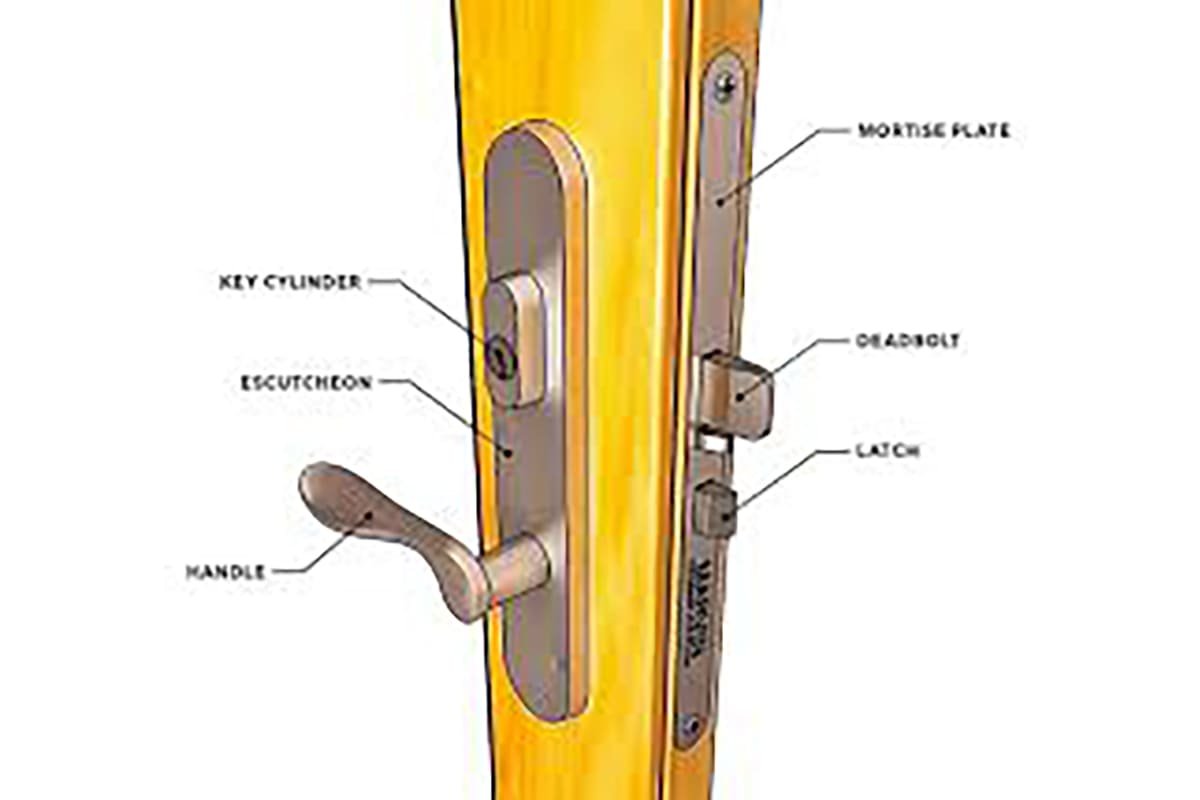
I usually ask for a clear photo of the lock body, faceplate, latch, deadbolt, cylinder area, and any stamped marking. If the buyer has an old drawing, I ask for it. If the buyer has a physical sample, I prefer to compare it with our production drawing. This step is simple, but it is important. A replacement mortise lock is not only a product selection. It is also a compatibility check.
Which Mortise Lock Dimensions Must I Measure?
A buyer may feel the old lock is “standard size,” but I still ask for measurements. Small differences can stop the lock from fitting into the door.
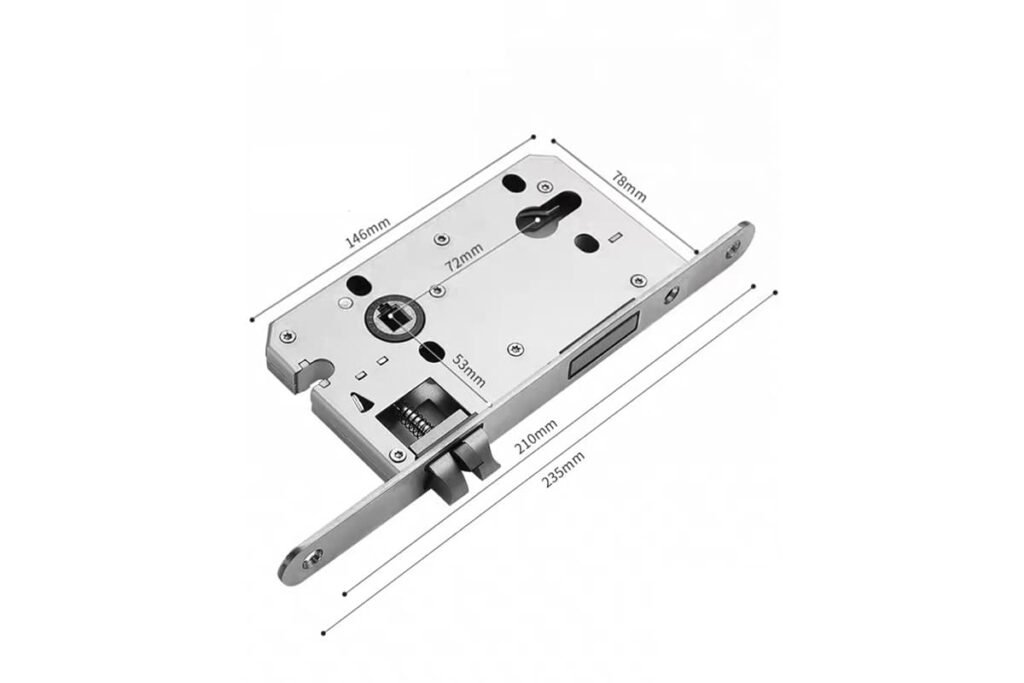
I measure the lock body length, width, thickness, depth, backset, center distance, spindle hole size, cylinder hole position, and handle screw hole distance before I confirm a replacement mortise lock.
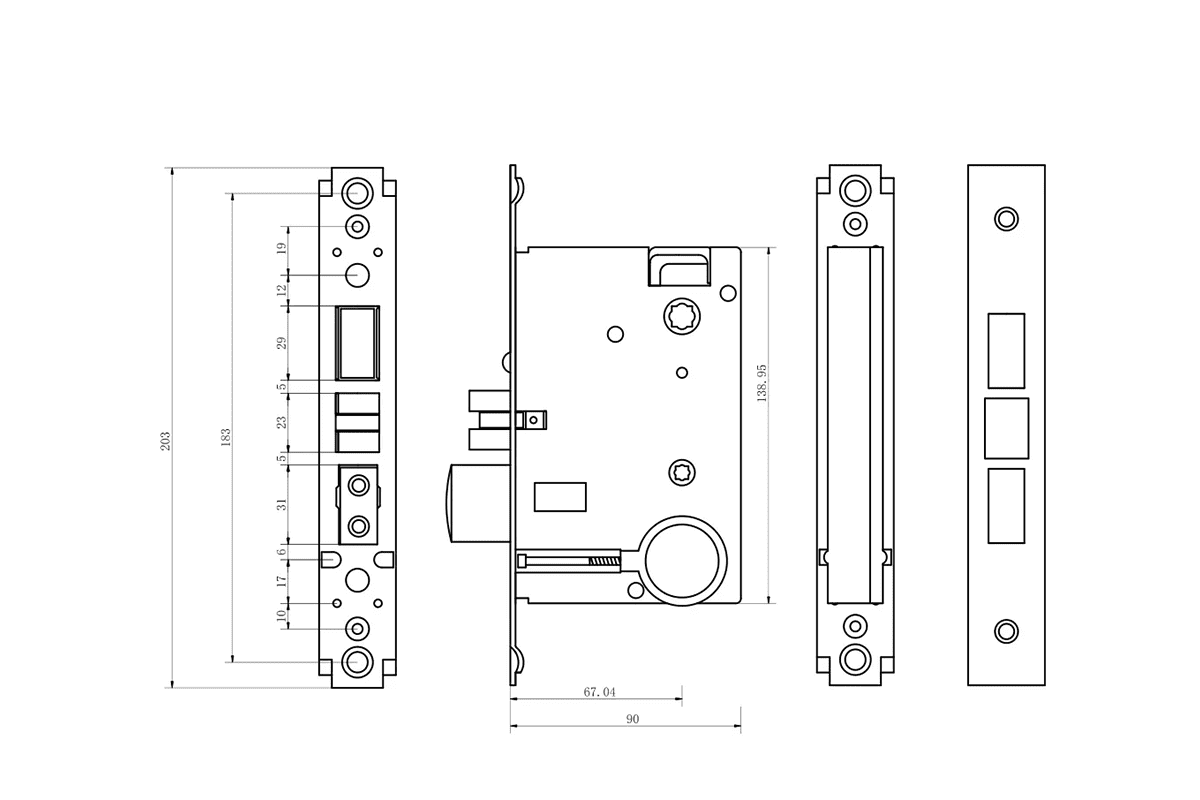
When I receive an old lock sample, I measure it like a factory product, not like a retail item. I first check the lock case size. Then I check the backset. The backset is the distance from the faceplate edge to the center of the handle spindle or cylinder hole4, depending on the lock type. I also check the center distance. This is often the distance between the handle spindle center and the cylinder center5. In many European style locks, common center distances may be 72 mm, 85 mm, or other values6, but I never guess. I measure.
Key Dimensions I Ask Buyers to Send
| Dimension | What It Means | Why It Matters |
|---|---|---|
| Lock body length | Total height of the lock case | It must fit the door pocket |
| Lock body width or depth | Distance from faceplate side to back of case | It must match door cut-out depth |
| Lock body thickness | Thickness of the lock case | It must fit inside the door thickness |
| Backset | Faceplate edge to spindle or cylinder center | It affects handle and cylinder position |
| Center distance | Handle center to cylinder center | It affects handle plate and cylinder match |
| Spindle hole size | Hole for handle spindle | It must match the lever handle spindle |
| Cylinder hole type | Euro profile or other cylinder type | It must match the lock cylinder |
| Handle screw hole distance | Distance between fixing holes | It affects handle installation |
I often ask buyers to place a ruler beside the lock and take photos from the front, side, and top. This helps me check if the numbers match the product shape. I also ask them to avoid only using rough values. A difference of 2 mm can matter.7 The replacement lock may enter the pocket, but the handle may not align. Or the cylinder may pass through the door, but the key may not turn smoothly. Good measurement reduces these risks before mass purchase.
Why Is the Faceplate So Important?
The lock body may look compatible, but the faceplate can still cause failure. I see this issue often with replacement orders.
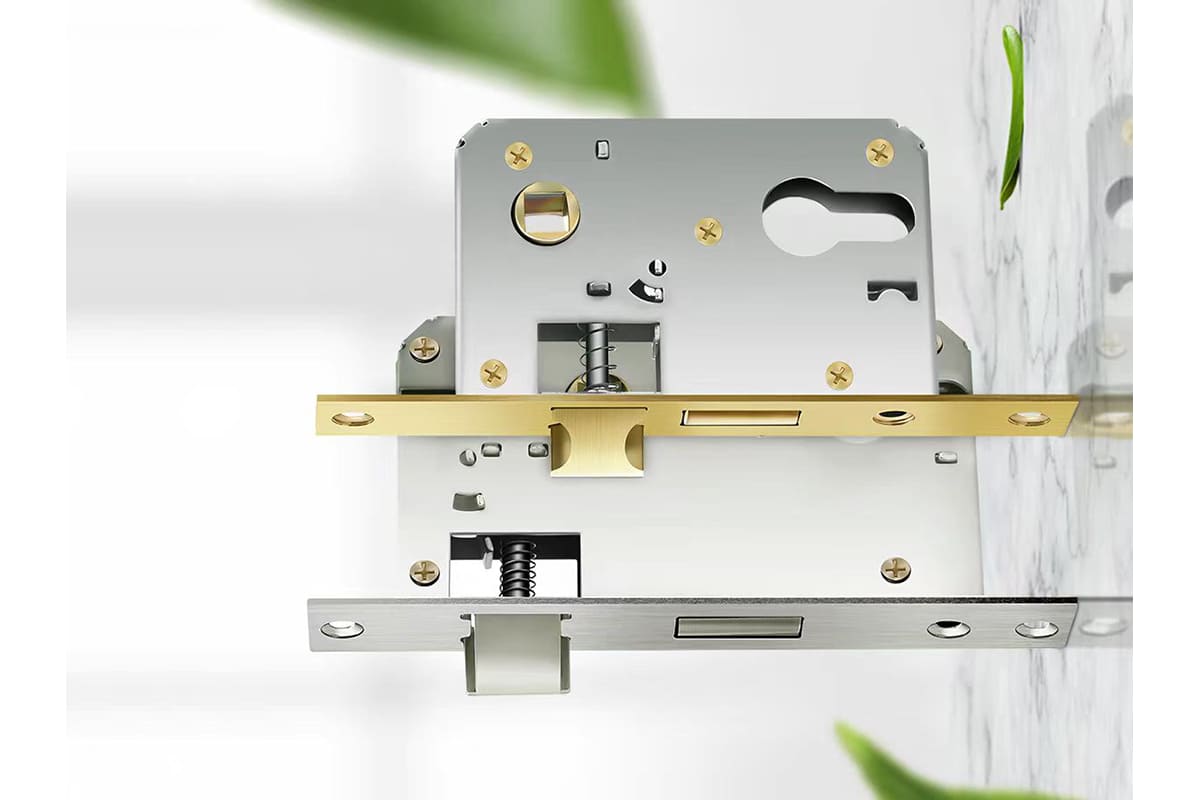
I check the faceplate width, thickness, length, corner shape, screw hole position, latch opening, deadbolt opening, and door edge slot before I approve a replacement mortise lock.
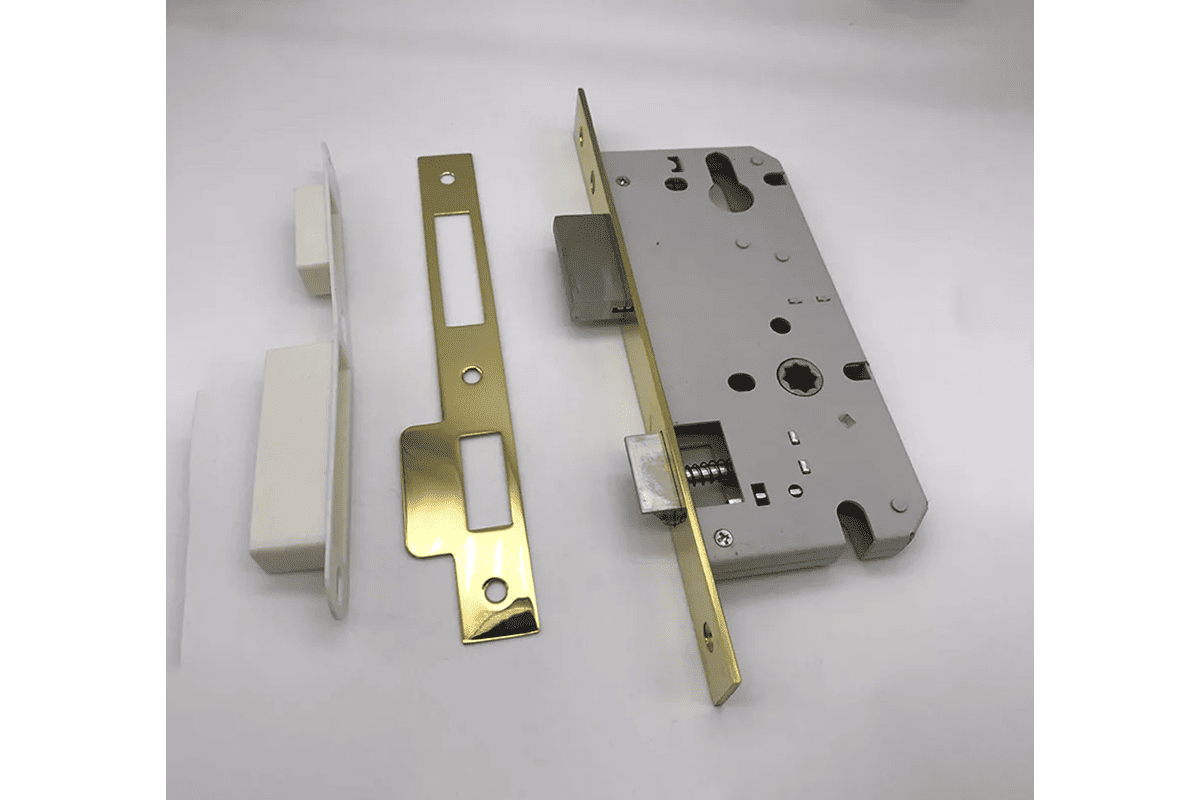
The faceplate is the visible metal plate on the door edge. Many buyers pay attention to the lock body and forget this part. I do not ignore it because the faceplate must sit inside the existing door edge slot8. If the faceplate is wider, the installer must cut the door again. If it is narrower, the old slot may show gaps. If the screw holes move, the installer may need to drill new holes. This can weaken the door edge or create an ugly finish. In bulk projects, this small mismatch can turn into many complaints.
Faceplate Details I Compare
| Faceplate Item | What I Check | Possible Problem |
|---|---|---|
| Width | Common values may vary by market and lock type | The plate may not fit the edge slot |
| Length | It must cover the old mortise area | Gaps may appear on the door edge |
| Thickness | It must sit flush with the door edge | The door may rub the frame |
| Corner shape | Square or round corner | The old slot may not match |
| Screw hole position | Distance from top and bottom | Existing holes may not align |
| Latch and deadbolt openings | Position and size | Latch or bolt may not move freely |
| Finish | Satin stainless steel, PVD, painted, or other finish | The new plate may not match other hardware |
I also check whether the faceplate is removable or fixed by the lock design. Some buyers ask to use the old faceplate with a new lock body. This may work in some cases, but I do not assume it. The latch, bolt, and fixing points must still align. For door factories, the better way is to confirm a full drawing and sample before batch ordering. For wholesalers, the better way is to keep stable replacement models with clear faceplate sizes. This makes repeat supply easier and reduces random stock problems.
How Do I Match the Lock Body With Handles and Cylinders?
A mortise lock is not alone in the door. If I only replace the lock body, I may create a new problem with the handle or cylinder.
I match the mortise lock with the existing lever handle, spindle, screw holes, lock cylinder profile, cylinder length, escutcheon, strike plate, and door thickness before I confirm the final replacement.
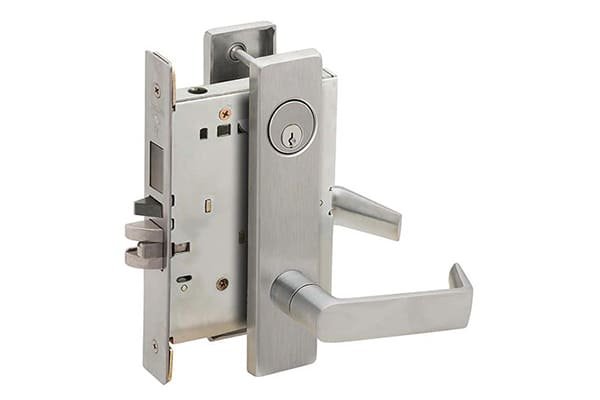
I treat the mortise lock as part of a complete door hardware set. The lock body, cylinder, lever handle, strike plate, and hinges all affect installation and use. If the buyer already has handles, I check the spindle size and fixing hole distance. If the handle plate has fixed screw posts, the lock body must match those holes. If the buyer uses a Euro profile cylinder9, I check the cylinder hole type and center position. I also ask for door thickness because cylinder length depends on door thickness and handle or escutcheon thickness10.
Hardware Matching Checklist
| Hardware Part | What I Confirm | Why It Matters |
|---|---|---|
| Lever handle | Spindle size, rose or plate style, screw hole distance | The handle must turn the latch smoothly |
| Lock cylinder | Profile type, length, cam style, key system | The cylinder must operate the lock correctly |
| Escutcheon or plate | Thickness and fixing method | It affects cylinder length and appearance |
| Strike plate | Latch and bolt position | The door must close and lock well |
| Door thickness | Total door thickness and hardware thickness | It affects cylinder and screw length |
| Opening direction11 | Left hand or right hand, inward or outward | Latch direction must be correct |
| Door material | Wood, steel, fire-rated, aluminum, or other material | It affects installation method and lock choice |
I often see risk when a buyer purchases the lock body from one supplier, the cylinder from another, and the handle from a third supplier without checking the full set. The price may look better at first, but the installation risk becomes higher. The handle may cover the cylinder badly. The spindle may be too short. The cylinder may protrude too much. The strike plate may not match the latch position. For B2B buyers, this is not only an installation issue. It can become a project delay, an after-sales claim, or a stock return. I prefer to confirm the full set at the start.
What Photos, Drawings, or Samples Should I Send to a Supplier?
Many buyers want a fast quotation. I also want to quote fast. But I need the right information first.
I ask buyers to send clear front, side, top, faceplate, latch, cylinder hole, handle hole, and marking photos, plus measured dimensions, drawings, door thickness, and application details.
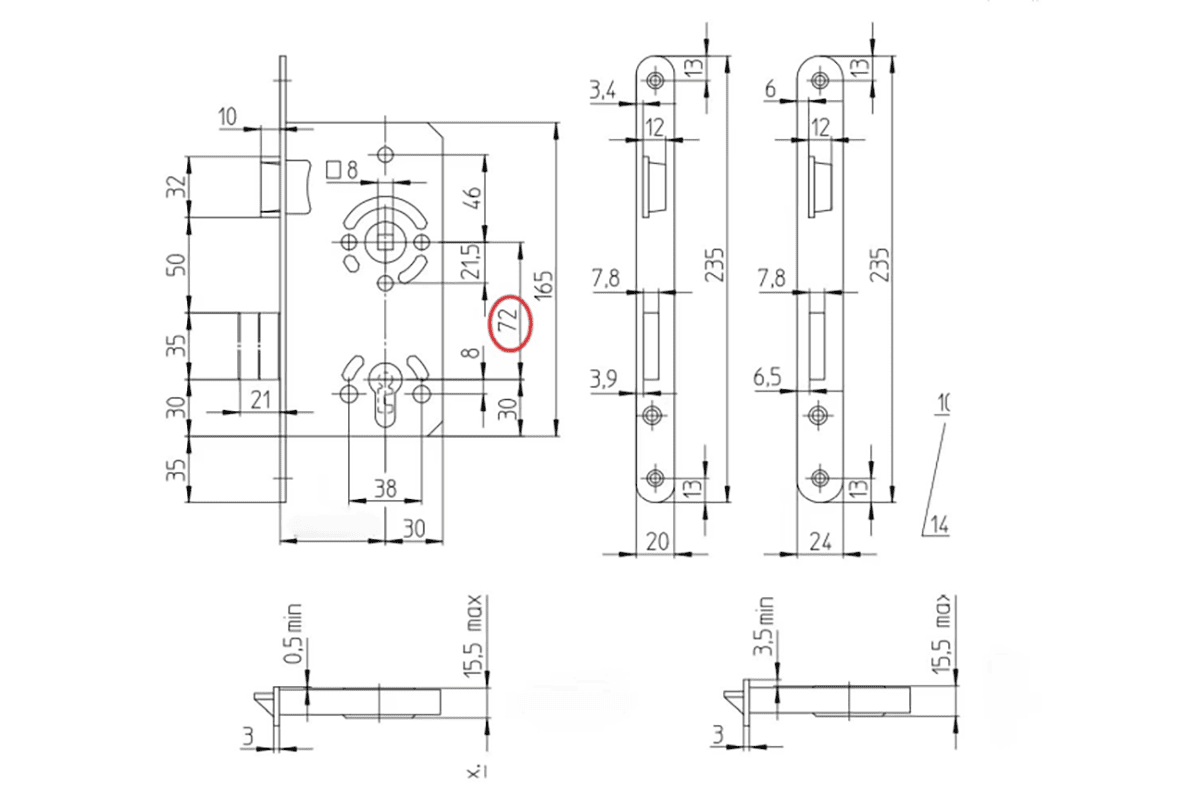
A good inquiry saves time for both sides. When I receive only one photo, I can give a rough direction, but I cannot safely confirm replacement compatibility. When I receive photos with dimensions, I can compare them with our existing models. When I receive an old sample, I can check more details. When I receive a drawing, I can help confirm whether our standard product fits or whether ODM customization is needed. This is how I usually support door factories, hardware brands, and bulk wholesalers.
Information I Like to Receive
| Information | Best Format | How It Helps Me |
|---|---|---|
| Old lock photos | Clear photos from multiple angles | I can identify structure and visible details |
| Dimension list | Measured values in mm | I can compare with factory drawings |
| Existing drawing | PDF, CAD, or marked image | I can check tolerance and hole positions |
| Physical sample | One old lock body if possible | I can compare actual parts |
| Door thickness | Measured in mm | I can suggest cylinder and screw length |
| Door type | Wood, steel, fire door, or other | I can check product suitability |
| Target market | Country or region | I can consider standard and certificate needs |
| Estimated quantity | Trial order and bulk order plan | I can check production and cost plan |
I also ask about the application scenario. A hotel room door, apartment entrance door, school door, office door, and fire-rated door may not need the same hardware configuration.12 I do not claim one lock is perfect for all uses. I also do not treat CE or fire-rated certification as a universal pass. The document must apply to the exact product and the project requirement. For replacement work, I need to know whether the buyer wants a one-time repair item, a long-term stock item, or a stable model for door production. This changes how I recommend the solution.
How Can I Avoid Future Supply Problems After Finding the Right Lock?
Finding one compatible lock is only the first step. I also need to think about repeat orders, finish consistency, and stable batch quality.
I avoid future supply problems by fixing drawings, confirming samples, recording dimensions, locking surface finish standards, checking certificates, and choosing a factory that can repeat the same mortise lock in bulk.

In B2B purchasing, a replacement mortise lock is rarely only one piece. A door factory may need the same lock for a production line. A hardware brand may need stable stock for its local market. A wholesaler may need repeat supply for installers and dealers. So I always think beyond the first order. If the first sample is correct, I suggest confirming a signed drawing or approved sample. This gives both sides a clear reference. It also helps avoid confusion when the next batch is produced.
Long-Term Replacement Supply Control
| Control Point | What I Recommend | Why It Helps |
|---|---|---|
| Approved sample | Keep one confirmed lock sample | It becomes the physical reference |
| Technical drawing | Confirm all key dimensions | It reduces misunderstanding |
| Finish standard | Define color, texture, and plating method | It keeps batch appearance consistent |
| Material requirement | Confirm stainless steel, zinc alloy, brass, or other material | It affects strength, cost, and finish |
| Certificate file | Check CE or fire-rated certificate scope | It helps project compliance review |
| Packaging rule | Confirm label, carton, and accessories | It supports warehouse and resale work |
| Order forecast | Share expected quantity and delivery schedule | It helps production planning |
From my factory side, stable supply depends on clear product control. If a buyer changes the faceplate finish, screw pack, strike plate, or cylinder length without updating the record, the next batch may not match the previous batch. If the buyer sources the same-looking lock from different factories, the internal size may change. This can cause unstable installation feedback. I prefer to build a replacement lock file for each buyer. This file includes the model, drawing, finish, accessory list, certificate need, packing method, and target market. It is a simple habit, but it protects long-term business.
Conclusion
I find the right replacement mortise lock by checking standards, dimensions, faceplate, matching hardware, documents, and stable supply before ordering.
"DIN standards", https://www.sullus.com/glossary/din-standards/. A standards reference to DIN 18251 supports the use of the term as a mortise-lock specification covering relevant dimensional and functional characteristics. Evidence role: definition; source type: institution. Supports: A neutral standards or institutional source should confirm that DIN 18251 concerns mortise locks and specifies dimensional or functional requirements relevant to matching lock bodies.. Scope note: The source would support the role of DIN 18251 as a standard, but it may not prove how often it is used in any particular export market. ↩
"Door Hardware Testing and Certification", https://www.ul.com/services/door-hardware-testing-and-certification. UL documentation on listed door hardware supports the point that some projects require hardware to be evaluated under specified safety or performance categories. Evidence role: general_support; source type: institution. Supports: A UL or code-related institutional source should support that door hardware may be evaluated or listed for specific fire, security, or life-safety applications.. Scope note: This supports the general need to check UL-related requirements; it does not establish that every mortise lock project requires UL listing. ↩
"CE Marking for Construction Products - Intertek", https://www.intertek.com/building/ce-marking/. European Commission guidance on CE marking and construction products supports the need to verify whether required documentation applies to the specific product and intended application. Evidence role: general_support; source type: government. Supports: A government or EU source should support that regulated construction products may need CE marking or documented performance declarations, and that compliance depends on the product and intended use.. Scope note: The source provides regulatory context rather than a direct rule for every replacement mortise lock. ↩
"Door Knobs & Backset Explained: Sizes & Measuring", https://www.suffolklatchcompany.com/blogs/news/door-knobs-and-backset-explained?srsltid=AfmBOooWTwaIqMYGx-GdkCOzv_fOP7DuQUL0SEU7Z_ZTYyv6l3uK9lRF. A door-hardware glossary defining backset supports the article’s measurement description as the distance from the door edge or faceplate to the lock’s relevant centerline. Evidence role: definition; source type: education. Supports: A door-hardware glossary or educational building-construction source should define backset as a distance from the edge/faceplate to the center of a lock opening or spindle.. Scope note: Definitions may vary slightly by lock type, so the source should be used to support the general measurement concept. ↩
"Door Knobs & Backset Explained: Sizes & Measuring", https://www.suffolklatchcompany.com/blogs/news/door-knobs-and-backset-explained?srsltid=AfmBOopJxvv0x9mVnyh6DURxRXb_mWUlMFq_L6ExWXud6CdRnCIWnSDq. A technical reference on mortise-lock dimensions supports the definition of center distance as the spacing between the handle follower center and the cylinder or keyhole center. Evidence role: definition; source type: institution. Supports: A standards, technical, or institutional source should confirm that the center distance is measured between the follower/spindle center and the cylinder or keyhole center.. Scope note: The terminology and exact reference points can differ between regional lock systems. ↩
"How to measure and choose the right mortise lock size - BlueID", https://www.blue-id.com/en/blog/mortise-lock-mass. Technical references on European mortise-lock formats support that 72 mm and 85 mm center distances are recognized examples among multiple available configurations. Evidence role: general_support; source type: institution. Supports: A neutral technical or standards-related source should show that 72 mm and 85 mm center distances are recognized configurations for relevant mortise lock systems.. Scope note: The source would support these as recognized values, not as universal or exclusive dimensions. ↩
"Hardware Preparation in Steel Doors & Frames", https://steeldoor.org/ansi-250-14/. Technical guidance on door-hardware installation supports the article’s point that small dimensional deviations can interfere with alignment and operation of a mortise lock assembly. Evidence role: mechanism; source type: research. Supports: A technical installation or building-hardware source should explain that lock function depends on precise alignment of the lock body, spindle, cylinder, latch, and strike.. Scope note: The cited source may support the need for precise alignment generally rather than proving that exactly 2 mm is always critical. ↩
"How to Mortise a Door Latch - The Home Depot", https://www.homedepot.com/c/ah/how-to-mortise-a-door-latch/9ba683603be9fa5395fab907ac8ff3d. Door-hardware installation guidance supports that a mortise lock faceplate is fitted into a door-edge recess and should sit flush for proper installation. Evidence role: mechanism; source type: education. Supports: An educational or technical installation source should support that the faceplate is recessed into the door edge and should sit flush with the door surface.. Scope note: This supports the installation principle; it does not quantify the cost or frequency of rework. ↩
"Pin tumbler lock - Wikipedia", https://en.wikipedia.org/wiki/Pin_tumbler_lock. A reference source on cylinder locks supports the identification of the Euro profile cylinder as a distinct lock-cylinder format requiring compatible lock-case geometry. Evidence role: definition; source type: encyclopedia. Supports: A neutral encyclopedia or standards-oriented source should define a Euro profile cylinder and describe it as a common cylinder format for compatible lock cases.. Scope note: An encyclopedia source is useful for definition and context, not for project-specific compatibility approval. ↩
"How do I choose what size and type of Euro cylinder I need?", https://atlantichandles.com/how-do-i-choose-what-euro-cylinder-i-need/. Cylinder-measurement guidance supports that cylinder length is selected by accounting for door thickness and the thickness of surrounding trim or escutcheons. Evidence role: mechanism; source type: education. Supports: A door-hardware measurement guide from an educational or standards-adjacent source should support that cylinder length is selected according to total door and trim thickness.. Scope note: The source supports the measurement method generally; exact length rules can vary by cylinder type and security requirement. ↩
"How to Reverse a Mortise Lockset Handing | Step-by-Step Guide",
. Door-handing guidance supports the need to verify swing direction because latch orientation and lock handing depend on whether the door is left- or right-handed and how it opens. Evidence role: mechanism; source type: education. Supports: A door-hardware or building-construction reference should explain that handing and swing direction determine latch orientation or lock handing.. Scope note: Some modern latches are reversible, so the source supports why the check is necessary rather than proving every lock is handed. ↩"Chapter 4: Entrances, Doors, and Gates - Access-Board.gov", https://www.access-board.gov/ada/guides/chapter-4-entrances-doors-and-gates/. Building-code and life-safety guidance supports that door hardware selection depends on door function, occupancy, egress, accessibility, and fire-rating requirements. Evidence role: expert_consensus; source type: institution. Supports: A code or institutional source should support that door hardware requirements vary by occupancy, fire rating, accessibility, egress, and door function.. Scope note: The source provides a regulatory framework rather than a complete specification for the listed door categories. ↩