What Is the Difference Between Interior Door and Exterior Door Hardware?
The difference between interior door and exterior door hardware can look simple at first, but choosing the wrong set can create security problems, corrosion, sagging, noise complaints, and after-sales costs. I have seen buyers compare only price and finish, then face performance issues later. The better solution is to select hardware by door function, environment, and risk.
The difference between interior door and exterior door hardware is that exterior hardware is selected mainly for security, strength, corrosion resistance, and weather durability1, while interior hardware is selected for privacy, quiet operation, comfort, and design consistency. Hinges, locks, cylinders, handles, and accessories should all match the door’s location and usage.
In my factory work, I rarely ask only, “What style do you want?” I first ask where the door will be used. A hotel room door, an apartment entrance door, a villa front door, and a bedroom door all need different hardware logic.
Why Does the Difference Between Interior Door and Exterior Door Hardware Matter for Buyers?
Many procurement problems start when buyers treat all door hardware as decorative accessories. This creates risk because a lock, hinge, handle, or cylinder is not just a visible part. It affects safety, door alignment, closing comfort, and long-term maintenance.
The difference between interior door and exterior door hardware matters because each door faces different risks. Exterior doors need stronger protection against forced entry, weather, dust, moisture, and frequent use.2 Interior doors need smooth movement, privacy, quiet closing, and consistent design for living or working spaces.
Exterior Hardware Controls Risk
For an exterior or entrance door, the hardware works as part of a risk-control system. The door may face:
- Forced opening attempts
- Rain, humidity, sunlight, or salt air
- Dust and sand in exposed regions
- Heavy door weight
- High daily traffic
- Temperature changes
- Customer expectations for security
This is why I usually recommend that buyers evaluate exterior hardware in this order:
- Security performance
- Structural strength
- Corrosion resistance
- Long-term stability
- Finish appearance
- Price
Of course, price matters. Every buyer has a target cost. However, if the hardware fails early, the real cost becomes higher. A sagging entrance door can damage the frame.3 A weak cylinder can increase security risk. A poor finish can create customer complaints after a few months of outdoor exposure.
Interior Hardware Supports Comfort
Interior door hardware has a different purpose. It supports daily comfort. It should feel smooth, quiet, and easy to use. It should match the room design and provide the right level of privacy.
For interior doors, buyers often focus on:
- Quiet latch operation
- Comfortable lever handle grip
- Smooth closing
- Privacy locking for bedrooms or bathrooms
- Consistent finish across rooms
- Easy installation
- Reasonable cost for large-volume projects
Interior hardware is not “low quality.” It is simply designed for a different task. For example, a magnetic silent lock may be excellent for a bedroom door, but it is not the same as a heavy-duty entrance lockset. A zinc alloy lever handle may be suitable for interior use, while an exposed coastal entrance door may need stainless steel or brass hardware.
Quick Comparison Table
| Category | Exterior Door Hardware | Interior Door Hardware |
|---|---|---|
| Main purpose | Security, strength, weather resistance | Privacy, comfort, quiet operation |
| Typical door position | Entrance, outdoor-facing, balcony, service door | Bedroom, bathroom, office, hotel room |
| Hinge priority | Load capacity, anti-sagging, durability | Smooth swing, quiet movement, design |
| Lock priority | Anti-theft performance, cylinder strength | Privacy, convenience, silent closing |
| Handle priority | Strong structure, durable finish | Comfort, style matching |
| Material priority | Stainless steel, brass, copper-based parts | Zinc alloy, stainless steel, aluminum, mixed materials |
| Risk if wrong | Security issue, corrosion, sagging | Noise, poor feel, design mismatch |
In my experience, the best buyers do not ask, “Which hardware is best?” They ask, “Which hardware is best for this door position, market, and project requirement?”
How Does the Difference Between Interior Door and Exterior Door Hardware Affect Hinges?
Hinge selection is one of the most common causes of door problems. A beautiful door can still fail if the hinge cannot support the weight, movement frequency, or security requirement. I have seen heavy entrance doors sag because the hinge was chosen like a simple interior component.
The difference between interior door and exterior door hardware affects hinges because exterior door hinges must handle load, alignment, security, and weather exposure4, while interior door hinges usually focus on smooth movement, quiet operation, and visual consistency. The correct hinge depends on door weight, size, opening frequency, and environment.
Exterior Door Hinges Are Structural Components
For exterior doors, I treat hinges as load-bearing hardware, not only connection parts. Entrance doors are often heavier because they may use:
- Solid wood cores
- Steel skins
- Aluminum profiles
- Fire-rated cores, where applicable
- Thicker panels
- Larger door sizes
- Security reinforcement
A weak hinge can cause several problems:
- Door sagging
- Uneven gaps
- Lock misalignment
- Difficult closing
- Frame stress
- Customer complaints
- Increased after-sales service
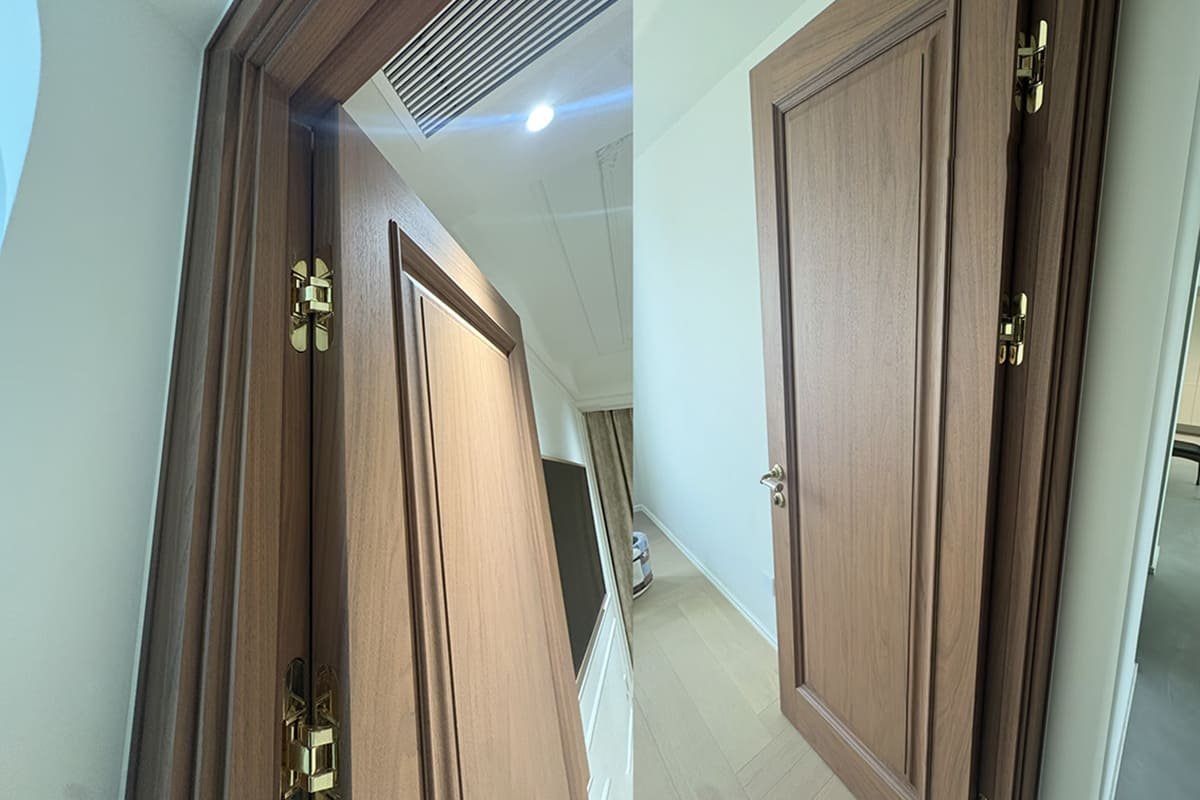
This is why exterior doors often use heavy-duty butt hinges, reinforced stainless steel hinges, or heavy-duty concealed hinges, depending on the door design. Concealed hinges can improve appearance and reduce visible tampering points5, but the specific performance depends on the hinge structure, installation accuracy, and door system.
Interior Door Hinges Focus on Smoothness and Noise
Interior doors usually have different hinge priorities. A bedroom, bathroom, or office door may not need the same heavy load capacity as a front entrance door. Instead, users care about feel.
Common interior hinge priorities include:
- Smooth swing
- Quiet movement
- Clean appearance
- Easy adjustment
- Finish matching with handles and locks
- Soft closing, when needed
For premium interior projects, buyers may choose hydraulic soft-closing hinges or concealed hinges. These can improve comfort and reduce slamming. For standard room doors, stainless steel butt hinges are still common because they are simple, stable, and cost-effective.
Hinge Selection Factors I Check First
When a buyer sends me a hinge inquiry, I usually ask for specific data. This avoids guessing.
| Selection factor | Why it matters |
|---|---|
| Door weight | Determines hinge load capacity |
| Door height and width | Larger doors create more leverage |
| Door thickness | Affects hinge size and installation |
| Opening frequency | High-traffic doors need stronger fatigue resistance |
| Indoor or outdoor use | Affects material and finish choice |
| Door material | Wood, steel, aluminum, and composite doors behave differently |
| Market standard | Some projects require specific test reports or certifications |
Practical Example
A 45 kg interior bedroom door and a 95 kg apartment entrance door should not use the same hinge plan. The bedroom door may work well with standard stainless steel butt hinges. The entrance door may need heavier hinges, better screws, deeper fixing points, or a concealed hinge system tested for the door weight.
For buyers in the Middle East or Southeast Asia, I also pay attention to dust, humidity, and heat. These conditions can affect hinge movement and surface finish.6 In coastal or humid areas, stainless steel can be a better choice than ordinary plated steel.7 However, the exact grade and finish should match the project budget and exposure level.
How Does the Difference Between Interior Door and Exterior Door Hardware Affect Locks and Cylinders?
Locks and cylinders are where the wrong choice can become serious. A lock is not just a closing device. It controls access, privacy, and security. If the lock body, cylinder, or strike plate does not match the door function, the whole door set becomes weaker.
The difference between interior door and exterior door hardware affects locks and cylinders because exterior doors need stronger anti-theft performance, durable lock bodies, and reliable cylinders, while interior doors usually need privacy, convenience, quiet latching, and easy daily use. Certification or grade depends on the specific product and market standard.
Exterior Locks Need Stronger Security Logic
For entrance doors, I look at the lock as a complete system. The lock body, cylinder, handle plate, strike plate, screws, and door structure must work together.8
Exterior lock selection often includes:
- Stronger mortise lock body
- Better deadbolt structure
- Higher-security cylinder
- Durable key system
- Reinforced strike plate
- Long-plate entrance handle set
- Corrosion-resistant internal components
- Suitable finish for outdoor conditions
In dusty or exposed markets, I often see better long-term results with brass, copper, or stainless steel components in critical parts. These materials can offer better durability than lightweight decorative materials in harsh environments. Still, material choice should be confirmed with the target price, project specification, and product testing.
Interior Locks Need Comfort and Privacy
Interior locks do not usually need the same anti-theft function as entrance locks. They are used for personal space and convenience.
Common interior lock types include:
- Privacy bathroom locks
- Bedroom locks
- Passage locks
- Magnetic silent locks
- Tubular locks
- Light-duty mortise locks
- Hotel room locks, when part of a system
A magnetic silent lock is a good example. It reduces latch noise and gives a clean closing feeling. It can be excellent for residential and hotel interior doors. However, it is not automatically suitable for exterior security use unless the product is designed and tested for that purpose.
Mortise Lock and Cylinder Comparison
| Hardware part | Exterior door priority | Interior door priority |
|---|---|---|
| Lock body | Strength, deadbolt security, durability | Smooth latch, privacy, low noise |
| Cylinder | Anti-pick, anti-drill, key control, durability | Basic privacy or simple key operation |
| Strike plate | Reinforced fixing, alignment stability | Smooth closing, simple installation |
| Faceplate | Corrosion resistance, strong finish | Finish matching, clean appearance |
| Accessories | Dust protection, stronger screws | Easy maintenance, quiet use |
A Manufacturer’s Note on Standards
Some exterior doors may require specific standards, such as CE-related requirements, fire-rated compatibility, or local anti-theft grades. I always tell buyers not to rely on general claims. A product should have valid test reports or certificates for the actual model, door type, and market requirement.
For example, a mortise lock may be suitable for a standard entrance door, but that does not mean it is automatically suitable for a fire-rated door. Fire-rated performance depends on the complete tested door assembly, including the door leaf, frame, hinges, lock, seals, and installation method.9
This point protects both the buyer and the supplier. Clear specifications reduce disputes and improve long-term cooperation.
How Does the Difference Between Interior Door and Exterior Door Hardware Affect Handles, Materials, and Finishes?
Handles are the most visible part of the door, so buyers often start there. I understand this because handle design affects first impressions. However, the handle also carries force every day. If the material or finish does not fit the environment, the appearance and function can decline quickly.
The difference between interior door and exterior door hardware affects handles, materials, and finishes because exterior hardware needs stronger metals and more durable finishes for sunlight, moisture, dust, and frequent use, while interior hardware can focus more on touch comfort, design style, color consistency, and cost control.
Exterior Handles Need Durability First
For exterior doors, the handle may face rain, sweat, dust, cleaning chemicals, UV exposure, and rough use.10 A decorative finish that works well indoors may not last outdoors.
Common exterior handle considerations include:
- Base material strength
- Surface treatment durability
- Corrosion resistance
- Screw and spindle strength
- Plate thickness
- Lever return spring quality
- Compatibility with lock body
- Market preference for entrance appearance
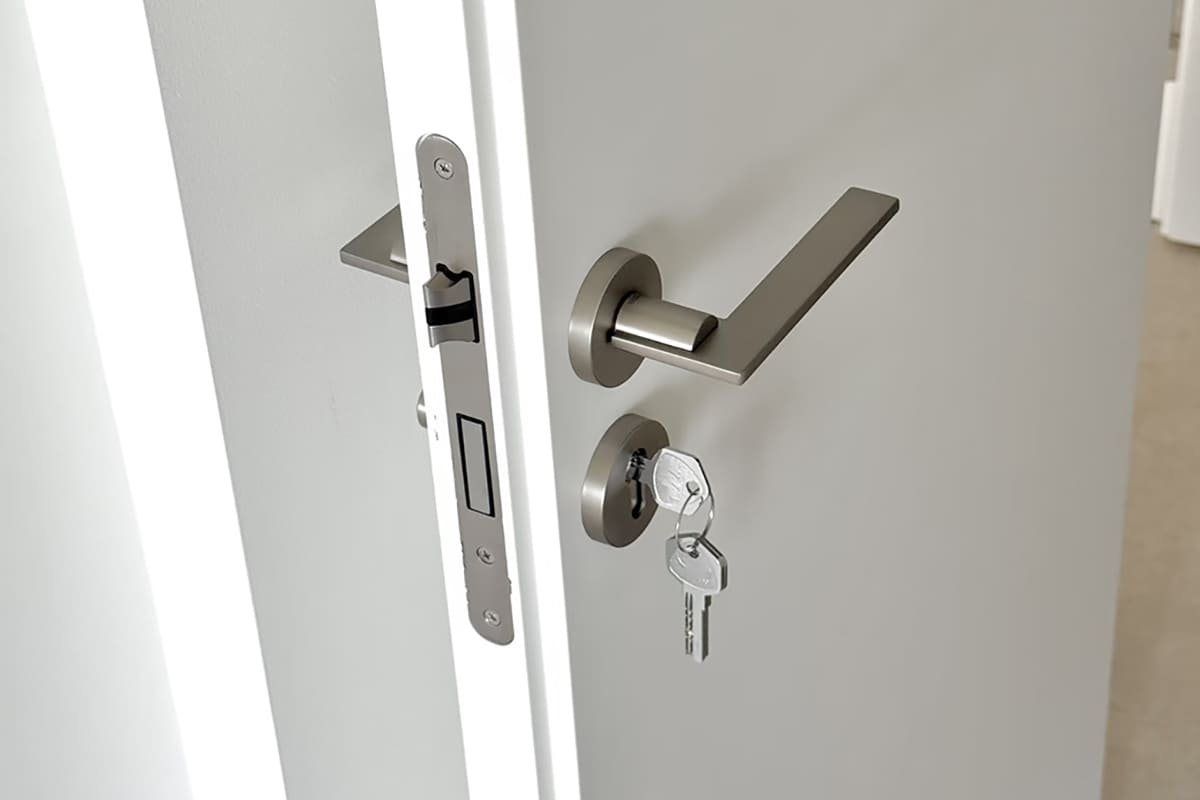
Long-plate heavy-duty entrance locksets are common for exterior doors because they create a stronger visual impression and can cover more of the lock area. They can also suit metal doors, security doors, and main entrance doors. However, the plate design should match the lock body spacing and cylinder position.
Interior Handles Need Design Consistency
Interior handles have a different role. They appear many times across a home, apartment, hotel, or office project. Buyers often need a consistent finish across many doors.
Popular interior handle finishes include:
- Matte black
- Brushed nickel
- Satin stainless steel
- Antique bronze
- Champagne gold
- Polished chrome
- PVD-style decorative finishes, depending on specification
Interior handles may use zinc alloy, stainless steel, aluminum, or other materials. Zinc alloy can be a practical choice for many interior projects because it supports flexible design and cost control.11 It should not be dismissed as poor quality. It is simply best used in the right application.
Material Comparison Table
| Material | Common use | Strengths | Notes |
|---|---|---|---|
| Stainless steel | Exterior and interior handles, hinges | Good strength and corrosion resistance | Grade and finish matter |
| Brass | Cylinders, premium handles, lock parts | Durable, stable, good machining | Higher cost than zinc alloy |
| Zinc alloy | Interior handles and decorative parts | Flexible design, cost-effective | Better for protected indoor use |
| Aluminum | Interior handles, profile systems | Lightweight, modern appearance | Surface treatment quality matters |
| Copper-based parts | Cylinders, lock components | Good durability and precision | Common in higher-grade lock parts |
Finish Should Match the Environment
I have seen matte black finishes perform very well indoors but fail faster outdoors when the process is not suitable for exposure. I have also seen stainless steel handles become stained in coastal areas when the grade or maintenance plan was wrong.
So I usually ask buyers these questions:
- Will the door face direct rain or sun?
- Is the project near the sea?
- Is the market dusty or sandy?
- Will users clean the handle with strong chemicals?
- Is the finish mainly decorative or performance-based?
- Does the customer require salt spray testing?
- Does the project need CE, fire-rated, or other compliance documents?
These questions make the quotation more accurate. They also prevent over-specification. Not every exterior door needs the most expensive material. Not every interior door should use the cheapest handle. The right choice balances performance, cost, design, and market expectations.
What Interior Door Hardware Should You Choose for Comfort, Privacy, and Quiet Use?
Interior doors affect daily living more than many buyers expect. A noisy latch, rough handle, or slamming door can create complaints even when the door itself looks good. I have learned that comfort details often decide whether end users feel the product is high quality.
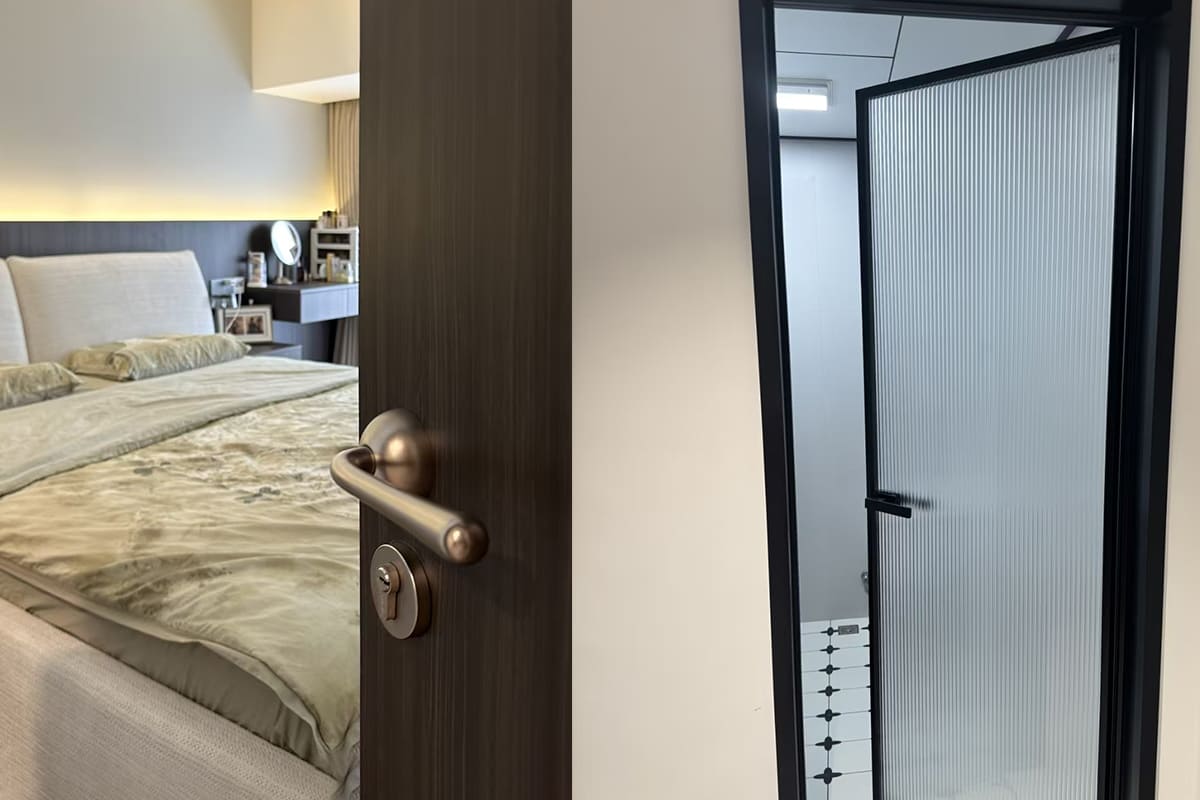
The difference between interior door and exterior door hardware becomes clear when selecting room-door components. Interior door hardware should prioritize privacy, quiet closing, smooth handle operation, safe daily use, and finish consistency. Common choices include magnetic silent locks, lever handles, knob handles, hydraulic hinges, door stops, and floor stops.
Interior Door Hardware Is a System
A good interior door hardware set usually includes more than a lock and handle. It can include:
- Hinges
- Mortise lock or tubular lock
- Lever handle or knob handle
- Cylinder or privacy turn
- Door stopper
- Floor stop
- Magnetic catch, when needed
- Seals, depending on door design
- Screws and installation accessories
Each part affects the user experience. For example, a quiet magnetic lock may still feel poor if the handle spring is weak. A soft-closing hinge may not work well if the door is too heavy or incorrectly installed. A beautiful handle may disappoint buyers if the finish varies between batches.
Common Interior Door Hardware Choices
| Door type | Recommended focus | Typical hardware |
|---|---|---|
| Bedroom door | Privacy and quiet closing | Privacy lock, lever handle, silent lock |
| Bathroom door | Privacy and moisture resistance | Privacy lock, stainless accessories |
| Office door | Smooth operation and design | Lever handle, mortise lock, door stop |
| Hotel room door | Quiet use and durability | Silent lock, card lock system, strong handle |
| Apartment interior door | Cost and consistency | Standard hinge, lever handle, privacy lock |
Why Quiet Operation Matters
Noise control is now a bigger buying point in many markets. A loud latch can make a door feel cheap. In hotels, noise complaints can affect guest satisfaction.12 In apartments, quiet closing improves the living experience.
Interior hardware can reduce noise through:
- Magnetic latch design
- Better latch spring structure
- Accurate strike plate alignment
- Soft-closing hinges
- Rubber door stops
- Smooth handle rotation
- Proper installation gaps
I once worked with a buyer who was sourcing for a multi-room residential project. The first sample door used a standard latch that made a sharp clicking sound. The buyer did not complain about strength or finish. He complained about the sound. We changed to a quieter lock solution, adjusted the strike plate, and improved the handle return feel. The final set felt much more suitable for interior use.
Privacy Does Not Mean High Security
This is an important point. Interior privacy locks protect personal space. They are not the same as anti-theft entrance locks. A bathroom privacy lock should allow emergency opening from outside. A bedroom lock should be convenient and safe. An office interior lock may need key control, but still not necessarily the same security level as an exterior entrance lock.
This is why I separate privacy function from security function during product selection. The buyer gets a better result when the door purpose is clear.
How Should Door Factories and Wholesalers Select Complete Hardware Sets?
Door factories, wholesalers, and brand operators often buy hardware in bulk. A wrong choice can affect many doors at once. That is why I suggest building hardware sets by application instead of buying single components without a full plan.
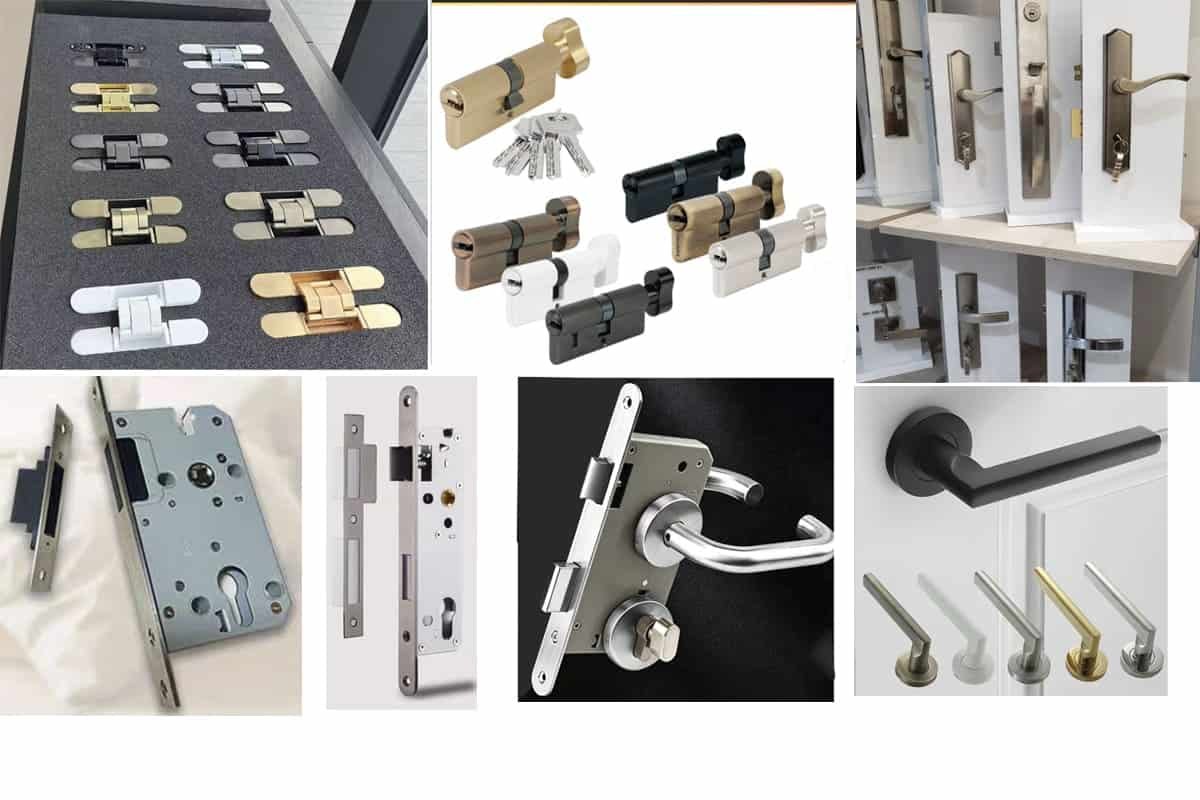
The difference between interior door and exterior door hardware should guide complete set selection. Buyers should define the door type, environment, target market, compliance needs, finish standard, and price level before choosing hinges, locks, cylinders, handles, and accessories.
Start With Door Application
The first question should be simple: Where will this door be installed?
A strong specification sheet should include:
- Product name
- Material
- Finish
- Size
- Door thickness range
- Lock center distance
- Backset
- Cylinder length
- Hinge size and thickness
- Screw type
- Packaging requirement
- Logo requirement
- Test or certificate requirement
- Sample approval standard
- Color tolerance
- Inspection method
Exterior Set vs Interior Set Example
| Component | Exterior door set | Interior door set |
|---|---|---|
| Hinge | Heavy-duty stainless steel or concealed hinge | Standard butt hinge or soft-closing hinge |
| Lock body | Strong mortise lock with deadbolt | Privacy lock, passage lock, or silent lock |
| Cylinder | Brass profile cylinder or higher-security cylinder | Simple cylinder or privacy turn |
| Handle | Heavy-duty lever or long-plate entrance handle | Lever handle or knob handle |
| Accessories | Reinforced strike plate, dust protection | Door stop, floor stop, quiet accessories |
| Finish | Corrosion-resistant finish | Decorative matching finish |
Control Batch Consistency
In our production work, I pay attention to:
- Raw material inspection
- Surface treatment control
- Sample confirmation
- Batch color comparison
- Finished product inspection
- Packaging protection
- Functional testing
This matters for both interior and exterior hardware. Exterior hardware may face harsher conditions, but interior hardware still needs consistent appearance and stable performance.
For bulk buyers, this balance is the real value of working with an experienced door hardware manufacturer.
Frequently Asked Questions
Is exterior door hardware always better than interior door hardware?
No. Exterior door hardware is not automatically “better.” It is designed for security, strength, and environmental resistance. Interior door hardware is designed for privacy, comfort, quiet operation, and design matching. Each type is better only when used in the correct application.
Can I use interior door hardware on an exterior door?
I do not recommend it unless the product is specifically designed and tested for exterior use. Interior hardware may lack the corrosion resistance, lock strength, cylinder security, or finish durability needed for entrance or outdoor-facing doors.
What material is best for exterior door hardware?
Stainless steel and brass are common choices for exterior door hardware because they offer good durability and corrosion resistance. However, the best material depends on the door type, exposure level, market standard, budget, and required testing.
Are concealed hinges suitable for exterior doors?
Yes, concealed hinges can be suitable for some exterior doors, especially when appearance and security are important. However, the hinge must match the door weight, thickness, opening angle, installation method, and performance requirement. Buyers should confirm load capacity and test data.
Do interior doors need locks with cylinders?
Some interior doors need cylinders, but many do not. Bedrooms, bathrooms, offices, and hotel rooms have different privacy and access needs. A privacy turn, simple cylinder, passage lock, or magnetic silent lock may be suitable depending on the application.
Conclusion
The difference between interior door and exterior door hardware is not only about weight, price, or appearance. Exterior door hardware should control risk through security, strength, corrosion resistance, and long-term stability. Interior door hardware should improve comfort through privacy, quiet operation, smooth movement, and design consistency. If you are sourcing hinges, mortise locks, cylinders, handles, or complete hardware sets for bulk projects, I recommend defining the door application first. Contact SDH Hardware to build the right hardware solution for your market, door type, and project standard.
"ANSI/BHMA Standards", https://buildershardware.com/ANSI-BHMA-Standards. ANSI/BHMA builders-hardware standards define performance testing categories for locks, hinges, and related hardware, including operational durability, strength, security-related functions, and finish or corrosion performance; this supports using security, structural capacity, and environmental resistance as key selection criteria for exterior door hardware. Evidence role: general_support; source type: institution. Supports: A neutral standards source should support that door hardware performance is commonly evaluated through strength, durability, security, and finish or corrosion criteria.. Scope note: Such standards provide performance categories and test methods rather than a universal rule that every exterior door requires the same hardware specification. ↩
"Physical Security | Cybersecurity and Infrastructure ...", https://www.cisa.gov/topics/physical-security. Government physical-security guidance commonly treats exterior doors as access-control points requiring attention to locks, frames, hinges, and resistance to unauthorized entry, while building-envelope guidance recognizes exterior openings as exposed to weather and moisture; together, these sources support the article’s distinction between exterior and interior door risks. Evidence role: general_support; source type: government. Supports: A government physical-security or building-performance source should support that exterior doors are both access-control points and exposed building elements subject to environmental conditions.. Scope note: The support is contextual because separate security and building-envelope sources may address different parts of the claim. ↩
"Installation Troubleshooting Guide for Standard Steel Doors & Frames", https://steeldoor.org/sdi-122/. Technical guidance on door installation and maintenance describes sagging as a hinge-support or alignment problem that can create uneven clearances, binding, lock misalignment, and stress at the frame, supporting the claim that an underspecified entrance-door hardware set can damage or deform adjacent components. Evidence role: mechanism; source type: institution. Supports: A technical door-industry source should explain how inadequate hinge support or misalignment can cause door sagging, uneven gaps, binding, and stress on the frame.. Scope note: The source may describe the mechanism generally rather than document every specific entrance-door failure scenario. ↩
"A156.1 - 2025 Butts and Hinges", https://buildershardware.com/ANSI-BHMA-Standards/Hardware-Highlights/A1561-2021-Butts-and-Hinges. ANSI/BHMA hinge standards and related technical guidance classify hinges by type, size, durability, and performance requirements, including load-bearing and finish-related criteria; this supports treating exterior-door hinges as structural components that must be matched to door weight, use frequency, and exposure. Evidence role: general_support; source type: institution. Supports: A hinge standard or technical guide should support that hinges are evaluated by load, cycle durability, material, corrosion resistance, and security-related design factors.. Scope note: The standard supports performance criteria but does not determine the correct hinge for a particular door without door-specific data. ↩
"The Importance of Door Hinges for Home Security", https://www.hingeoutlet.com/blogs/news/the-importance-of-door-hinges-for-home-security?srsltid=AfmBOoo1tl-xFFjETjG-PhqHtq7xM2aVdiGuvH_Bheo3aiJBSkzIOzoS. Physical-security guidance identifies exposed or removable hinge pins as potential weak points on outward-opening doors and recommends hinge designs that limit access to tamperable parts; this context supports the statement that concealed hinges can reduce visible tampering points. Evidence role: mechanism; source type: government. Supports: A physical-security source should explain that exposed hinges or removable hinge pins can be a vulnerability and that concealed or security hinges can reduce accessible tampering points.. Scope note: This does not prove that every concealed hinge is more secure; installation quality, hinge rating, door construction, and frame reinforcement remain decisive. ↩
"Coupled Effects of Temperature and Humidity on Fracture ... - PMC", https://pmc.ncbi.nlm.nih.gov/articles/PMC10254885/. Materials and tribology studies show that humidity, elevated temperature, and particulate contamination can influence corrosion rates, surface degradation, friction, and wear in metallic assemblies, providing a mechanistic basis for the claim that dusty, humid, or hot environments may affect hinge movement and finish condition. Evidence role: mechanism; source type: paper. Supports: A materials or tribology paper should support that humidity, heat, and particulate contamination can accelerate corrosion, surface degradation, friction, or wear in metal components.. Scope note: The evidence is contextual unless the study tests door hinges specifically under the same regional conditions. ↩
"Marine grade stainless", https://en.wikipedia.org/wiki/Marine_grade_stainless. Corrosion guidance from stainless-steel and corrosion-engineering institutions explains that stainless steels form a passive chromium oxide layer that generally improves resistance to atmospheric corrosion compared with ordinary carbon or plated steels, supporting their use in humid or coastal hardware applications. Evidence role: general_support; source type: institution. Supports: A corrosion or materials institution should support that stainless steels generally provide improved corrosion resistance over plain or plated carbon steels, particularly in humid environments, while noting chloride limitations.. Scope note: The claim remains grade- and exposure-dependent because chloride-rich coastal air can stain or corrode unsuitable stainless grades without proper selection and maintenance. ↩
"Physical Access Control Systems - NIST Risk Management Framework", https://csrc.nist.gov/projects/risk-management/sp800-53-controls/overlay-repository/government-wide-overlay-submissions/physical-access-control-systems. Government physical-security guidance treats door protection as a system involving the door leaf, frame, locking hardware, strike reinforcement, hinges, fasteners, and installation quality, supporting the article’s claim that individual lock components must work together rather than function as isolated decorative parts. Evidence role: expert_consensus; source type: government. Supports: A government physical-security source should support that secure doors require coordinated performance of the door leaf, frame, lock, strike, hinges, fasteners, and installation.. ↩
"Fire Doors and NFPA 80 FAQs", https://www.nfpa.org/news-blogs-and-articles/blogs/2025/04/11/fire-doors-faqs. Fire-door standards such as NFPA 80 and testing programs for listed fire-door assemblies evaluate the door, frame, hinges, latching hardware, seals, glazing where present, and installation as coordinated components; this supports the statement that a lock suitable for a standard entrance door is not automatically suitable for a fire-rated door assembly. Evidence role: expert_consensus; source type: institution. Supports: A fire-door standard or testing organization should support that fire doors are evaluated as assemblies including door, frame, hardware, seals, and installation.. ↩
"Metrology for Accelerated Laboratory Weathering | NIST", https://www.nist.gov/programs-projects/metrology-accelerated-laboratory-weathering. Research on metallic coatings and corrosion shows that moisture, chloride contamination from sweat or marine aerosols, abrasive particles, ultraviolet exposure, and chemical cleaners can contribute to coating degradation, staining, corrosion, or wear, supporting the article’s caution that exterior handle finishes require environment-appropriate selection. Evidence role: mechanism; source type: paper. Supports: A materials or coatings paper should support that moisture, chloride-containing sweat, dust abrasion, UV exposure, and cleaning agents can affect metal finishes and coating durability.. Scope note: The evidence is contextual unless the cited study tests the same handle material, coating system, and outdoor service conditions. ↩
"Advantages of Zinc Die Casting | Zinc Part Design - Deco Products", https://decoprod.com/zinc-advantages-in-die-casting/. Manufacturing guidance on zinc-alloy die casting notes that zinc alloys can produce complex shapes with good dimensional accuracy and surface finish at economical production volumes, supporting their use for interior decorative hardware where design flexibility and cost control are important. Evidence role: general_support; source type: institution. Supports: A materials or manufacturing institution should support that zinc alloys are commonly used in die casting because they allow complex shapes, good surface finish, dimensional precision, and economical production.. Scope note: This supports manufacturability and cost logic, not the suitability of every zinc-alloy handle for every interior application. ↩
"Examining key hotel attributes for guest sleep and overall satisfaction", https://pmc.ncbi.nlm.nih.gov/articles/PMC10130565/. Hospitality and environmental-acoustics research identifies noise and acoustic comfort as factors associated with hotel guest sleep quality, complaints, and satisfaction evaluations, supporting the article’s claim that quieter interior door hardware can matter in hotel settings. Evidence role: general_support; source type: paper. Supports: A hospitality or environmental-acoustics paper should support that noise is a significant factor in hotel guest comfort, sleep quality, complaints, or satisfaction ratings.. Scope note: The evidence may link hotel noise generally to satisfaction rather than isolate latch or door-hardware noise as the sole cause. ↩