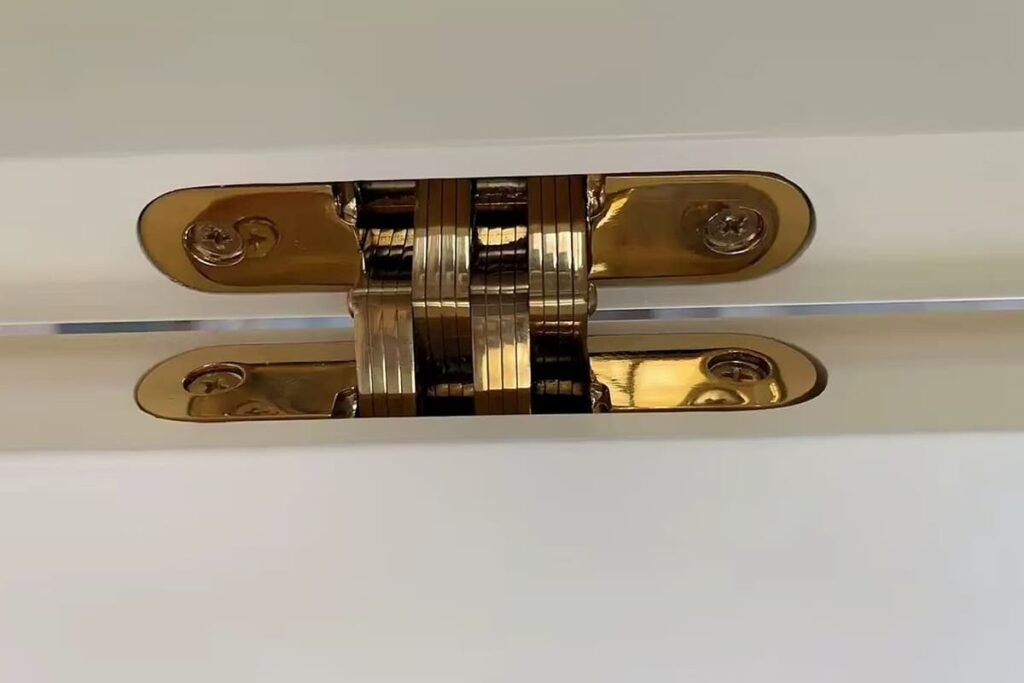
A Guide to Selecting Gate Hinges?
Gate hinges look simple, but the wrong choice can create sagging, noisy closing, corrosion, and expensive after-sales problems. I have seen buyers focus only on price or one load number, then face installation complaints later. The better solution is to match hinge type, size, material, function, and finish to the real gate or door application.
Selecting gate hinges means matching the hinge to the door’s weight, height, width, usage frequency, installation condition, material requirements, functional needs, and budget. For heavier doors, buyers often consider higher-load concealed hinges, 3D adjustable hinges, or hydraulic hinges, but every choice should be verified with product specifications, samples, and trial installation.
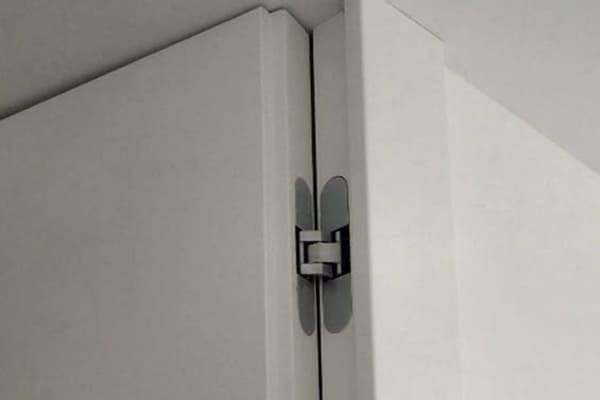
Many purchasing teams ask for “a strong hinge” first. I understand why. Strength matters. However, from a manufacturer’s perspective, the better question is: Which hinge matches this door, this market, and this installation risk? That question leads to fewer failures and more stable bulk supply.
How Should I Start Selecting Gate Hinges for a Specific Application?
Selecting gate hinges starts with the application scenario, but many buyers skip this step. That creates risk because a light interior door, a heavy entrance door, and a frequently used project gate do not stress hinges in the same way. If the hinge does not match the scenario, the problem appears after installation.
The best way to start selecting gate hinges is to define the door type, weight range, height, width, usage frequency, installation environment, and required function. Then choose a hinge structure, material, and adjustment method that supports those conditions. Load capacity matters, but it should never be the only decision factor.
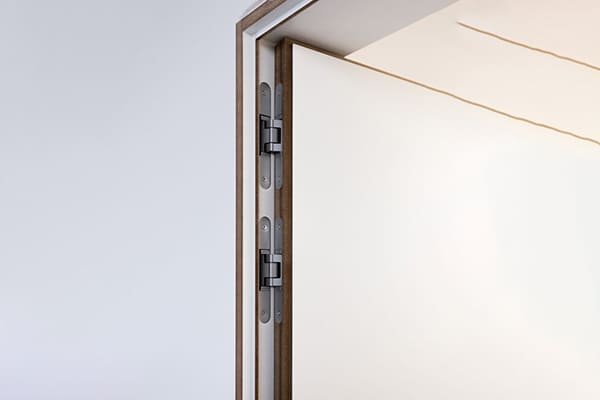
Match the Hinge to the Real Door Condition
When I discuss hinge projects with buyers, I usually ask for the same basic information before recommending anything:
- Door or gate weight
- Door height
- Door width
- Door material
- Frame material
- Indoor or outdoor use
- Opening frequency
- Required appearance
- Need for adjustment
- Need for soft closing or self-closing
These details matter because gate hinges carry more than static weight1. They also handle movement, leverage, vibration, installation tolerance, and long-term wear.
For example, a wider door creates more leverage on the hinge side than a narrow door with the same weight. A taller door may need better load distribution. A frequently used project door may require smoother movement and more consistent hinge quality than a rarely used storage gate.
Common Hinge Options by Application
| Application Scenario | Common Hinge Consideration | Why It Matters |
|---|---|---|
| Standard residential door | Butt hinge or concealed hinge | Balanced cost and daily performance |
| Heavy entrance door | Higher-load concealed hinge or heavy-duty hinge | Better support and appearance |
| Premium decorative door | Concealed hinge | Clean look when the door is closed |
| Door with installation tolerance risk | 3D adjustable concealed hinge | Helps correct vertical, horizontal, and depth deviation |
| Door requiring self-closing | Hydraulic hinge, depending on design | Supports controlled closing when suitable |
| Outdoor or humid environment | Stainless steel or corrosion-resistant structure | Reduces rust and finish failure risk |
Do Not Choose Only by Load Rating
A load range such as 80kg–200kg can be useful as a general reference for heavier hinge categories, but it is not enough by itself. Buyers should always check the specific product specification sheet. The same load number can behave differently depending on:
- Hinge structure
- Number of hinges used
- Screw quality
- Frame strength
- Door width
- Installation accuracy
- Testing method
- Material thickness
- Opening cycle expectations
I always tell buyers that a hinge is part of a system. The hinge, door leaf, frame, screws, and installation quality work together.
The Practical Starting Framework
Before you request a quotation, I suggest using this simple framework:
- Define the door: weight, size, material, and market standard.
- Define the environment: indoor, outdoor, coastal, humid, dry, or high-traffic.
- Define the function: normal swing, concealed appearance, 3D adjustment, soft close, or self-closing.
- Define the quality target: project level, retail level, wholesale level, or brand level.
- Define the budget: target price should match expected performance and finish.
This approach prevents two common mistakes. The first mistake is buying a hinge that looks strong but does not fit the door design. The second mistake is buying the cheapest hinge and expecting premium performance. Good selection sits between technical fit and commercial reality.
Why Do Door Size and Weight Matter When Choosing Gate Hinges?
Door size and weight matter because hinges carry load and control movement. A heavier, taller, or wider door creates more stress on the hinge side. If buyers ignore these factors, the door may sag, scrape, deform, or fail to close smoothly after a short period of use.
When choosing gate hinges, buyers should evaluate door weight together with height and width. A heavy or wide door may need a larger hinge, a stronger structure, or an extra hinge to improve load distribution. In many cases, adding a third hinge helps reduce sagging and deformation risk.
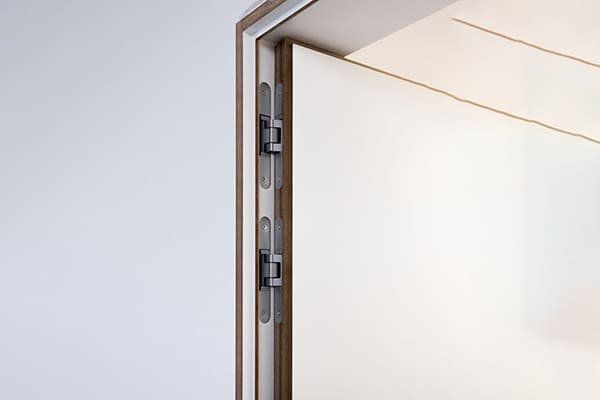
Weight Is Important, But Width Changes the Stress
Many buyers ask, “Can this hinge hold 100kg?” That question is understandable, but it is incomplete. A 100kg narrow door and a 100kg wide door do not create the same stress on the hinge side.
A wider door increases leverage.2 This leverage can pull harder on screws, hinge arms, and the frame connection. Over time, that can create:
- Door sagging
- Uneven gaps
- Closing noise
- Latch misalignment
- Frame stress
- Screw loosening
- Customer complaints
This is why I prefer to check weight, height, and width together before discussing hinge quantity or hinge model.
Hinge Quantity Affects Load Distribution
Many standard doors use two hinges. However, heavier or taller doors may perform better with three hinges.3 The third hinge can help distribute the load and reduce the pressure on the top hinge.4
A simple comparison helps:
| Door Condition | Possible Hinge Quantity | Selection Logic |
|---|---|---|
| Light to medium standard door | 2 hinges | Usually enough if specifications match |
| Taller door | 3 hinges | Helps stabilize the leaf and reduce movement |
| Heavier door | 3 hinges or higher-load hinge system | Improves load distribution |
| Wide heavy door | Confirm by specification and sample test | Width increases leverage, so extra caution is needed |
| Project door with high usage | Confirm with supplier and test installation | Long-term movement matters |
This does not mean “more hinges are always better.” It means hinge quantity should match the door structure and application. Extra hinges can also affect installation time, alignment, cost, and appearance.
Hinge Size Should Match the Door, Not Ego
I have seen buyers assume the largest hinge is always the safest choice. In reality, the correct hinge must match the door design, frame space, installation method, and visual requirement.
A hinge that is too large may create problems:
- It may not fit the frame profile.
- It may require deeper machining.
- It may look too heavy for the design.
- It may increase cost without solving the real issue.
- It may conflict with the door manufacturer’s production process.
A hinge that is too small creates the opposite risk:
- It may deform under repeated use.
- It may cause sagging.
- It may loosen faster.
- It may reduce customer confidence.
- It may increase after-sales claims.
What Buyers Should Confirm Before Bulk Orders
Before placing a large order for gate hinges, I recommend confirming:
- Product drawing with dimensions and installation details
- Load range according to the specific model datasheet
- Recommended door weight and size if provided by the supplier
- Material structure and surface finish
- Screw and accessory configuration
- Sample trial installation result
- Opening and closing smoothness
- Consistency across several sample pieces
For door manufacturers and hardware brands, this step is not extra work. It is risk control. A small sample mistake can become a large batch problem if nobody checks it early.
Which Materials Are Best for Gate Hinges?
Material selection for gate hinges matters because it affects strength, corrosion resistance, surface finish, and long-term stability. If buyers focus only on appearance or price, they may receive hinges that look acceptable at first but fail in humid, outdoor, or high-use environments.
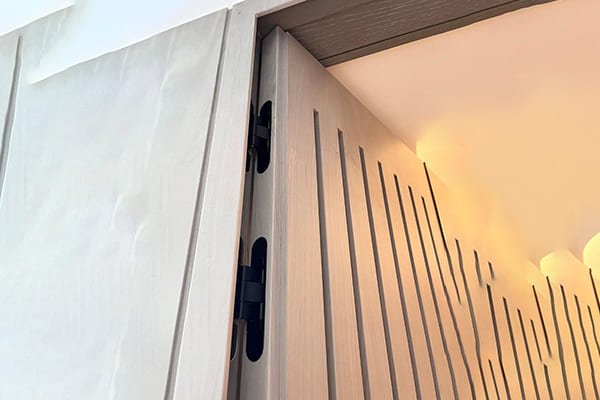
The best materials for gate hinges depend on the application. Stainless steel is often preferred for corrosion resistance and durability.5 Composite structures, such as zinc alloy bodies with aluminum alloy or stainless steel arms, can also be suitable when they meet strength, finish, and installation requirements.
Stainless Steel for Corrosion Resistance
Stainless steel is a common choice when buyers need stronger corrosion resistance. It is especially useful for humid regions, outdoor doors, coastal markets6, or projects where long service life is important.
For architectural hardware buyers, stainless steel also offers a familiar market advantage. Many distributors and door manufacturers can explain stainless steel benefits easily to their customers.
Main advantages include:
- Better corrosion resistance than ordinary steel
- Stronger market acceptance in many regions
- Good surface finish options
- Stable appearance when properly processed
- Suitable for higher-quality door hardware lines
However, stainless steel still needs proper production control. Poor polishing, weak surface treatment, or inconsistent batch finishing can reduce the final product quality.7
Zinc Alloy, Aluminum Alloy, and Composite Structures
Some concealed hinges and adjustable hinges use composite structures. For example, a hinge may use a zinc alloy body with aluminum alloy or stainless steel arms, depending on the model design. This type of structure can balance strength, machining, function, and cost.
These designs are not automatically better or worse than stainless steel. They should be evaluated by:
- Product structure
- Arm thickness
- Pin design
- Adjustment mechanism
- Surface treatment
- Testing documents
- Real sample performance
From a manufacturing viewpoint, this is where design experience matters. The same material name can produce different results if the structure is weak or the production process is unstable.
Material Comparison for Buyers
| Material / Structure | Strengths | Buyer Considerations |
|---|---|---|
| Stainless steel | Corrosion resistance, durable appearance, strong market acceptance | Check grade, finish, polishing, and consistency |
| Zinc alloy body | Good shaping ability, suitable for concealed designs8 | Check structure, wall thickness, and load specification |
| Aluminum alloy parts | Lightweight and workable in some hinge structures | Check wear points and strength requirements |
| Stainless steel arms | Stronger support in composite hinge designs | Check connection points and movement smoothness |
| Ordinary steel | Cost advantage in some applications | Requires strong coating control and corrosion review9 |
Finish Consistency Is a Real Procurement Issue
For wholesalers and brand operators, finish consistency can be as important as material. A hinge may perform well, but if the surface color changes between batches, customers notice it quickly.
Common finish issues include:
- Different shades between orders
- Uneven polishing
- Scratches from packaging
- Weak coating adhesion
- Color mismatch with handles or locks
- Visible defects after installation
At SDH Hardware, we pay close attention to bulk finish consistency because door hardware is often purchased as a full set. A concealed hinge, lever handle, lock body, and cylinder may all need to match the same project style.
How I Suggest Checking Material Quality
Before buying gate hinges in bulk, I suggest checking samples with a practical eye:
- Hold the hinge in hand. The weight should feel consistent across samples.
- Check edges and corners. Sharp burrs suggest weak finishing control.
- Open and close repeatedly. Movement should feel smooth, not loose or rough.
- Inspect the surface under light. Color and polishing should look uniform.
- Compare several pieces. One good sample is not enough.
- Ask for specifications. Material claims should match product documents.
This process does not require a laboratory at the first stage. It simply helps buyers catch obvious risk before committing to large orders.
When Should I Choose 3D Adjustable or Concealed Gate Hinges?
3D adjustable and concealed gate hinges are useful, but they are not universal solutions. Buyers sometimes choose them only because they look premium. That can be a mistake if the door structure, machining process, or installer skill does not support the hinge design.
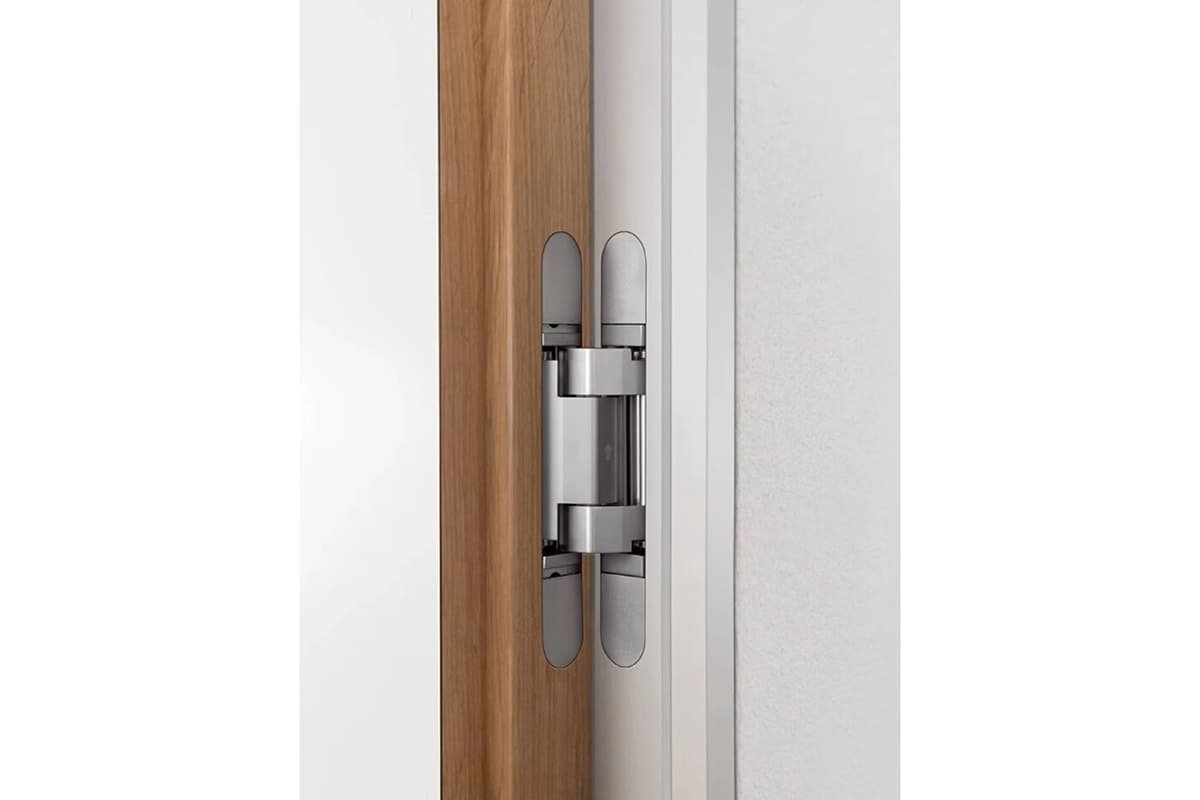
You should choose 3D adjustable or concealed gate hinges when the door needs a clean appearance, installation correction, and stable alignment. 3D adjustment helps compensate for vertical, horizontal, and depth deviation.10 Concealed designs also improve the decorative effect because the hinge is hidden when the door is closed.
What 3D Adjustment Actually Helps With
A 3D adjustable hinge usually allows adjustment in three directions:
- Vertical adjustment: moves the door leaf up or down
- Horizontal adjustment: moves the door leaf left or right
- Depth adjustment: moves the door leaf in or out from the frame
This function is valuable because real installation is not always perfect. Door frames may have small deviations. Door leaves may shift slightly. Wall conditions may not be ideal. A 3D adjustable hinge gives installers more room to correct the final fit.
For door manufacturers, this can reduce production and installation pressure. For wholesalers, it can make the product more attractive in markets where installers expect adjustability.
Why Concealed Hinges Are Popular
Concealed hinges are often chosen for modern doors because they create a cleaner appearance. When the door is closed, the hinge is hidden inside the door and frame.11 This gives the door a more seamless and decorative look.
Concealed gate hinges can be suitable for:
- Modern entrance doors
- Premium interior doors
- Hotel and apartment projects
- High-end residential doors
- Door brands that emphasize design
- Projects where visible hardware should be reduced
However, concealed hinges require accurate machining. The door and frame must be prepared correctly. If the milling position is wrong, even a good hinge may perform poorly.
3D Adjustable vs. Standard Hinges
| Feature | 3D Adjustable Concealed Hinge | Standard Butt Hinge |
|---|---|---|
| Appearance | Hidden when closed | Visible when closed |
| Adjustment | Vertical, horizontal, depth adjustment | Limited adjustment |
| Installation requirement | More precise machining | Simpler installation |
| Cost | Usually higher | Usually lower |
| Best use | Premium doors, correction needs, clean design | Standard doors, cost-sensitive projects |
| Risk | Wrong cutting affects performance | Visible alignment and finish issues |
When Hydraulic Hinges Make Sense
Hydraulic hinges can be useful when controlled closing, quiet movement, or self-closing function is required.12 However, they should not be treated as the default answer for every gate.
Hydraulic hinges may make sense for:
- Doors that need quieter closing
- Public or commercial doors with frequent use
- Projects requiring self-closing behavior
- Applications where door slamming should be reduced
- Certain heavier doors, depending on specifications
Buyers should check the product documents carefully. Hydraulic function, load range, door size range, installation direction, and closing speed adjustment should all be confirmed before bulk purchase.
Installation Risk Should Guide Function Choice
The more functional the hinge, the more carefully buyers should review installation requirements. A simple butt hinge is forgiving. A concealed 3D adjustable hinge is more technical. A hydraulic hinge adds another functional layer.
Before selecting advanced gate hinges, I suggest asking:
- Can the door factory machine the hinge pocket accurately?
- Can installers adjust the hinge correctly?
- Does the frame have enough strength and depth?
- Does the project need hidden appearance?
- Does the door need self-closing or quiet closing?
- Is the target market willing to pay for this function?
This keeps the decision practical. A premium hinge is only valuable when the full door system can support it.
How Can Buyers Verify Gate Hinges Before Bulk Purchase?
Buyers can reduce risk by verifying gate hinges through samples, documents, and trial installation before bulk purchase. Many quality problems are visible before mass production if the buyer checks dimensions, finish, movement, weight, and installation performance carefully.
Before bulk purchasing gate hinges, buyers should request samples, product drawings, material details, load capacity information, and any available testing documents. They should check hinge weight, size consistency, finish quality, smooth opening, screw configuration, and trial installation performance before confirming large production.
Sample Checking Is Not Optional
I always prefer buyers to test samples before ordering a container or long-term batch supply. A quotation can look attractive, but the sample tells the real story.
A proper sample check helps confirm:
- Whether the hinge matches the drawing
- Whether the surface finish meets the buyer’s standard
- Whether opening and closing feel smooth
- Whether the hinge has visible looseness
- Whether screws and accessories are suitable
- Whether the claimed load range is supported by documents
- Whether the hinge can be installed in the buyer’s door system
This is especially important for door manufacturers because a hinge problem can interrupt assembly lines. It is also important for hardware brands because one inconsistent batch can damage market reputation.
Practical Sample Inspection Checklist
| Inspection Item | What to Check | Why It Matters |
|---|---|---|
| Weight | Compare several pieces | Confirms material and production consistency |
| Size | Measure key dimensions | Prevents installation mismatch |
| Surface finish | Check color, scratches, polishing | Protects brand appearance |
| Movement | Open and close by hand | Detects roughness or looseness |
| Adjustment | Test 3D adjustment if available | Confirms function works smoothly |
| Screws | Check size and material | Affects installation strength |
| Packaging | Check protection method | Reduces shipping damage |
| Documents | Review specifications and tests | Supports technical claims |
Trial Installation Is the Best Reality Check
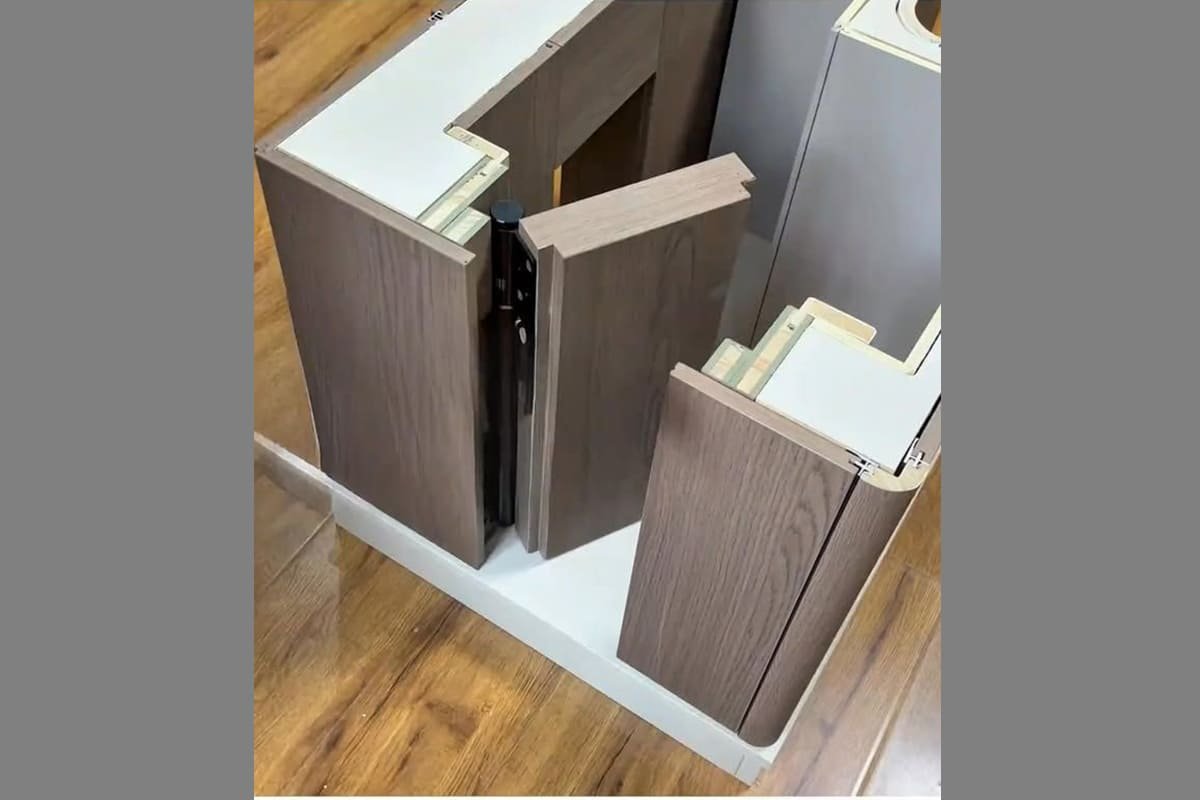
A hinge can look good on a desk and still fail during installation. That is why trial installation is important. I suggest installing the sample on a real door and frame or on a test mock-up that closely matches the final product.
During trial installation, check:
Machining fit
The hinge should fit the prepared pocket without forcing.Door gap
The gap should be even after adjustment.Opening angle
The hinge should open as required for the application.Closing feel
Movement should be smooth and controlled.Screw holding
Screws should tighten properly without stripping.Adjustment range
3D adjustment should correct small deviations.Noise
The hinge should not create abnormal friction sounds.Visual result
The final appearance should match the project standard.
Ask the Supplier the Right Questions
Good supplier communication helps buyers avoid misunderstandings. Before confirming gate hinges, I suggest asking:
- What door weight range does this exact model support?
- What door height and width range do you recommend?
- How many hinges are recommended per door?
- What materials are used in the body, arm, pin, and screws?
- What surface finishes are available?
- Can you provide product drawings?
- Can you provide CE or fire-rated certificates if required for the product category?
- What is the MOQ for customized finish or packaging?
- How do you control bulk finish consistency?
- What inspection process do you use before shipment?
The answer quality tells you a lot about the supplier. A professional factory should be able to discuss specifications clearly and honestly. If a supplier only says “no problem” without documents, I become cautious.
Bulk Quality Depends on Process Control
At SDH Hardware, our experience in mortise locks, stainless steel handles, butt hinges, concealed door hinges, and related architectural hardware has taught me one thing: stable quality comes from repeatable process control, not from a perfect sample alone.
That is why serious buyers should evaluate both the product and the factory behind the product.
Frequently Asked Questions
What are the most important factors when selecting gate hinges?
The most important factors are door weight, height, width, usage frequency, installation environment, hinge material, adjustment function, surface finish, and budget. Load rating is important, but buyers should confirm it with the specific product sheet and sample testing before bulk purchase.
Are concealed gate hinges suitable for heavy doors?
Concealed gate hinges can be suitable for heavier doors when the specific model supports the required load range and the door frame can be machined correctly. Buyers should confirm the product specification, recommended hinge quantity, material structure, and trial installation result before ordering.
When should I use three hinges instead of two?
You should consider three hinges when the door is heavy, tall, wide, or used frequently. A third hinge can help distribute load and reduce sagging risk. However, the final decision should match the door design, hinge specification, and supplier recommendation.
Are stainless steel gate hinges always better?
Stainless steel gate hinges are often better for corrosion resistance and long-term appearance, especially in humid or outdoor environments. However, they are not always the only option. A well-designed composite hinge can also perform well if its structure, finish, and specifications match the application.
Should I test samples before buying gate hinges in bulk?
Yes. Buyers should test samples before bulk orders. Sample checking helps verify size, finish, weight, movement, adjustment, screw configuration, and installation fit. It also helps confirm whether the supplier’s load and material claims match the product documents.
Conclusion
Selecting gate hinges is a matching decision, not a simple search for the biggest hinge or the lowest price. I recommend starting with the door’s real weight, height, width, environment, and usage. Then review material, finish, adjustment, closing function, installation risk, and supplier process control. If you are sourcing hinges for door manufacturing, wholesale, or brand supply, request samples and verify specifications before bulk purchase. For project-based or customized hinge needs, you can contact SDH Hardware to discuss suitable options and sample evaluation.
"Effects of a frictionless hinge on internal forces, deflections, and ...", http://maeresearch.ucsd.edu/~vlubarda/research/pdfpapers/IJMEE-2015.pdf. An engineering mechanics source explains that hinge supports carry reaction forces and moments generated by the weight and movement of a swinging member; this supports the general load mechanism but does not establish the rating of any specific gate hinge. Evidence role: mechanism; source type: education. Supports: A neutral engineering source should explain that hinges experience forces and moments from the door leaf and its motion, not only the gravitational load of the door.. Scope note: This supports the mechanical principle, not a product-specific load capacity. ↩
"Torque (Moment) - Glenn Research Center - NASA", https://www.grc.nasa.gov/www/k-12/airplane/torque.html. A mechanics reference defines torque as the product of force and moment arm, supporting the claim that increasing a door's width can increase the moment imposed at the hinge side; the source supports the physical principle rather than a particular hinge design. Evidence role: mechanism; source type: education. Supports: A physics or engineering source should support that torque increases with the perpendicular distance between the force and the pivot point.. Scope note: Contextual support only; actual hinge stress also depends on hinge placement, door mass distribution, fasteners, and frame stiffness. ↩
"SDI 129-24", https://steeldoor.org/wp-content/uploads/2020/02/SDI_129.pdf. An architectural door hardware guide describes using additional hinges for doors of greater height or weight, providing contextual support for the statement that heavier or taller doors may perform better with three hinges; the guide does not replace model-specific hinge testing. Evidence role: general_support; source type: institution. Supports: An institutional door or architectural hardware guide should indicate that hinge quantity is commonly increased for taller or heavier doors.. Scope note: Guidance is contextual and may vary by door material, hinge type, and applicable building standard. ↩
"Is it true that one hinge bears most of the load on a typical 3 ...", https://diy.stackexchange.com/questions/185490/is-it-true-that-one-hinge-bears-most-of-the-load-on-a-typical-3-hinge-door. A door hardware technical source notes that additional hinges are used to support larger or heavier doors and improve load sharing, supporting the claim that a third hinge can reduce reliance on the top hinge; the source gives general practice rather than a quantified reduction for every installation. Evidence role: mechanism; source type: institution. Supports: A door hardware or building-industry source should support that additional hinges can share door loads and help maintain alignment.. Scope note: The degree of load reduction depends on hinge spacing, fasteners, frame rigidity, and installation accuracy. ↩
"Stainless steel", https://en.wikipedia.org/wiki/Stainless_steel. A materials reference explains that stainless steels resist corrosion through formation of a chromium-rich passive surface film, supporting the article's statement that stainless steel is selected for corrosion resistance; the reference does not prove superiority for every hinge environment or alloy grade. Evidence role: mechanism; source type: encyclopedia. Supports: A neutral reference should explain that stainless steel's chromium content forms a passive oxide layer that improves corrosion resistance.. Scope note: Performance varies by stainless steel grade, surface condition, contaminants, and exposure environment. ↩
"Marine Atmospheric Corrosion of Carbon Steel: A Review - PMC", https://pmc.ncbi.nlm.nih.gov/articles/PMC5506973/. Corrosion research and atmospheric-corrosion classifications identify moisture and chloride deposition as major factors in metal corrosion, supporting the need for corrosion-resistant hinge materials in humid, outdoor, and coastal settings; this evidence is environmental rather than hinge-model specific. Evidence role: mechanism; source type: paper. Supports: A corrosion science source should support that humidity and chloride-rich coastal atmospheres accelerate corrosion risks for metals.. Scope note: The source supports exposure risk, not the lifetime of a particular hinge finish. ↩
"Surface Quality as a Factor Affecting the Functionality of ... - PMC", https://pmc.ncbi.nlm.nih.gov/articles/PMC11547365/. Coatings research shows that surface preparation and finishing conditions influence coating adhesion, corrosion resistance, and surface appearance, supporting the claim that poor polishing or weak surface treatment can reduce product quality; the evidence is general to coated metal products rather than specific to gate hinges. Evidence role: mechanism; source type: paper. Supports: A materials or coatings paper should support that surface preparation and finishing quality influence coating adhesion, corrosion behavior, and appearance.. Scope note: Contextual support; hinge performance also depends on alloy, coating system, exposure, and use conditions. ↩
"High Pressure Zinc Die Casting - Cast Products", https://www.castproducts.com/capabilities/zinc-die-casting/. A materials-industry technical source describes zinc alloys as suitable for die casting complex components with dimensional precision, supporting the article's statement that zinc alloy bodies can suit shaped concealed hinge designs; this does not by itself establish load capacity or wear resistance. Evidence role: mechanism; source type: institution. Supports: A materials institution or engineering source should support that zinc alloys are widely used in die casting and can produce complex, precise shapes.. Scope note: Material formability does not prove that a particular zinc alloy hinge is strong enough for a given door. ↩
"Corrosion protection performance of silicon-based coatings on carbon ...", https://pmc.ncbi.nlm.nih.gov/articles/PMC9131146/. A corrosion-protection standard for steel structures explains that protective coating systems are used to control corrosion of steel in service environments, supporting the article's statement that ordinary steel hinges require coating control and corrosion review; the standard is broader than hinge hardware. Evidence role: mechanism; source type: institution. Supports: A corrosion or coatings standard source should support that steel requires protective coating systems in corrosive environments.. Scope note: The evidence applies generally to steel corrosion protection and not to a specific hinge coating specification. ↩
"US5713105A - Adjustable hinge", https://patents.google.com/patent/US5713105A/en. A patent or technical disclosure for an adjustable hinge describes mechanisms for adjusting a door leaf in multiple directions, supporting the definition of 3D adjustment as vertical, horizontal, and depth correction; the disclosure illustrates the function but does not validate every commercial hinge using the term. Evidence role: definition; source type: government. Supports: A patent or technical document should show that some adjustable hinge mechanisms provide movement in multiple axes, including vertical, lateral, and depth adjustment.. Scope note: Patent evidence supports the existence and mechanism of multi-axis adjustment, not the performance of a specific product. ↩
"Concealed hinge jig", https://en.wikipedia.org/wiki/Concealed_hinge_jig. A general reference on hinge types defines concealed hinges as hinges hidden from view when the door is closed, supporting the article's description of their visual function. Evidence role: definition; source type: encyclopedia. Supports: A neutral reference should define concealed hinges as hinges that are hidden from view when the door is closed.. ↩
"Door closer", https://en.wikipedia.org/wiki/Door_closer. A building-hardware or fire-safety source explains that hydraulic door-closing devices control closing motion and can provide self-closing operation, supporting the article's description of hydraulic hinges for controlled or self-closing doors; suitability still depends on the specific hinge rating and installation. Evidence role: mechanism; source type: institution. Supports: An institutional fire-safety, building-hardware, or technical source should explain that hydraulic door closers regulate closing speed and can return doors to the closed position.. Scope note: The source supports the mechanism generally, not quietness or performance for every hydraulic hinge. ↩