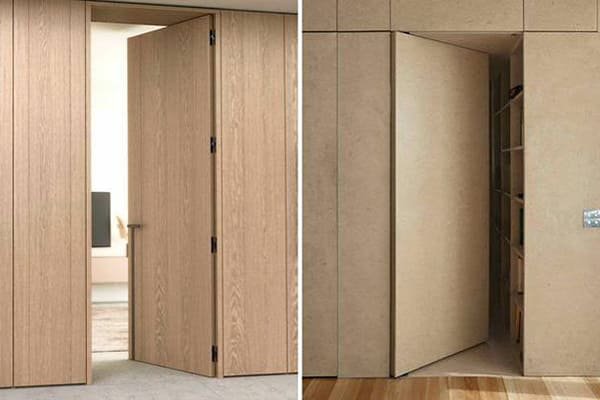
What is soft-close door hardware?
Soft-close door hardware solves a common door problem: doors can close too fast, hit the frame, create noise, and increase safety complaints. I see buyers often describe this as a “quiet hinge” requirement, but that phrase can hide the real issue. The better solution is controlled closing matched to the actual door system.
Soft-close door hardware is a hardware system that controls door closing speed, reduces impact against the frame, lowers closing noise1, and creates a safer, smoother user experience. In many door systems, a hydraulic hinge is the core component because it combines load-bearing, rotation, automatic return force, and damping control2.
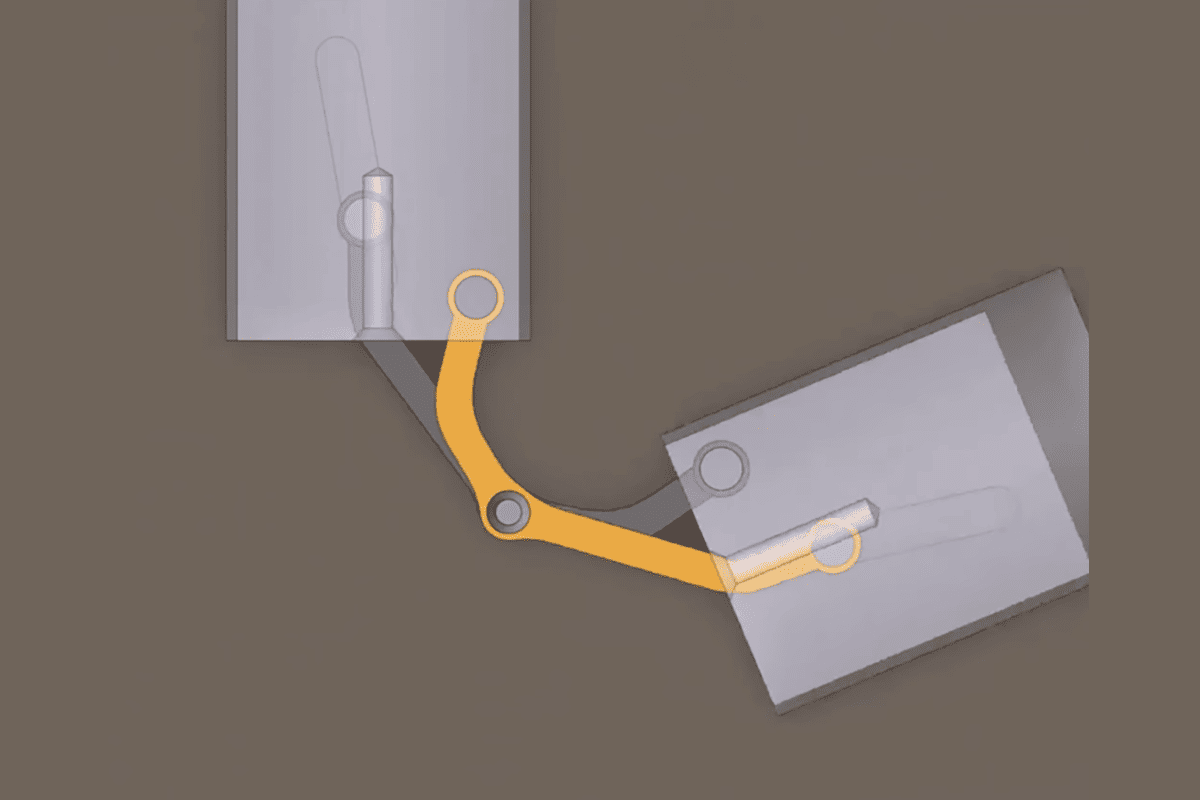
I usually suggest that buyers look beyond the words “soft-close.” The real question is whether the hinge, closer, or damping structure matches the door weight, door width, door thickness, opening frequency, and final latching requirement. That is where many good or bad purchasing decisions begin.
How does soft-close door hardware work in a door system?
Soft-close door hardware can look simple from the outside, but the function is more complex inside the door system. A door that closes too fast may seem like a small issue at first. However, repeated impact can lead to noise complaints, frame damage, unstable latching, and poor user experience3.
Soft-close door hardware works by slowing and controlling the door during the closing movement. Depending on the design, it may use a hydraulic hinge, damping device, closer body, spring mechanism, or combined structure to reduce closing impact and guide the door toward the frame at a controlled speed.

The function is more important than the name
When I discuss soft-close requirements with door manufacturers, I try to define the function first. A buyer may ask, “Do you have a soft-close hinge?” But what they often need is not only a hinge. They need a controlled closing behavior that fits the finished door.
In practical procurement, soft-close door hardware may include:
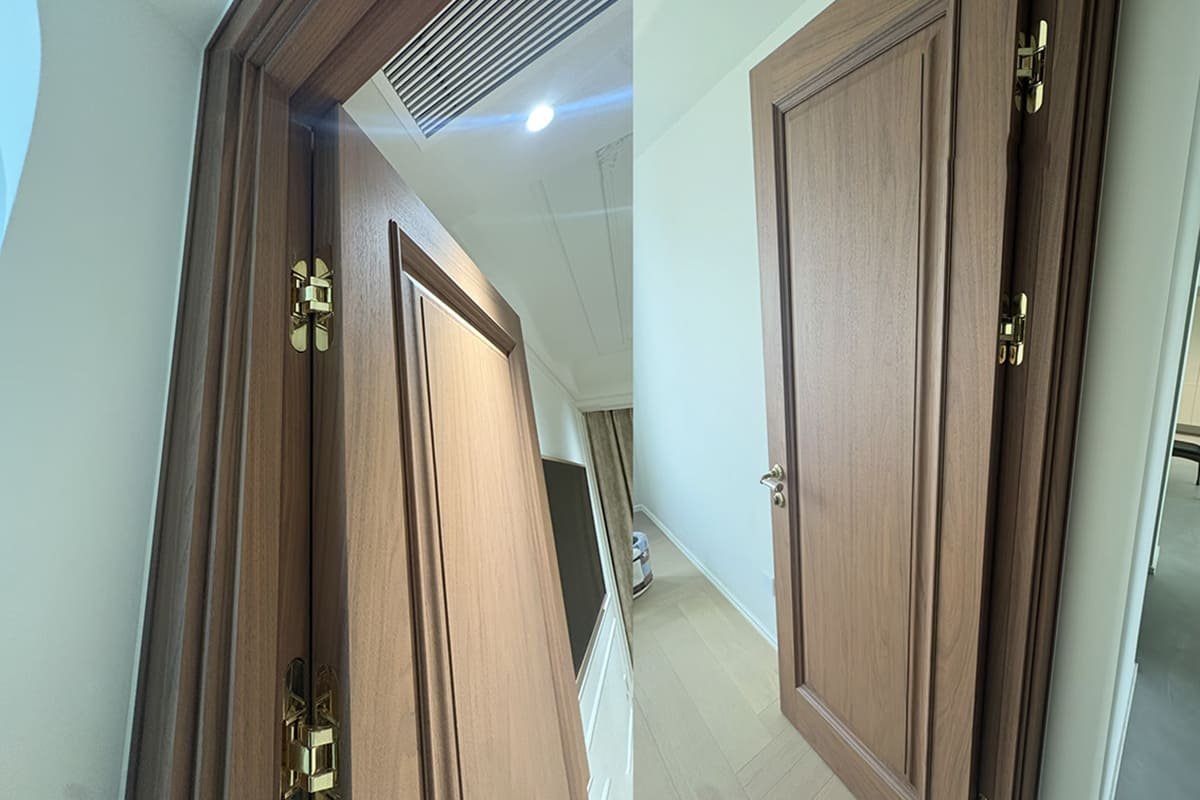
- Hydraulic hinges with return and damping functions
- Concealed hinge systems with integrated damping in some designs
- Door closers for heavier or high-traffic doors
- Sliding door soft-close mechanisms for track systems
- Cabinet-style dampers, which should not be confused with architectural door hardware
- Special latch or lock matching, when final closing force is important
The key point is that “soft-close” should describe the result, not only the part name.
Typical closing behavior in hydraulic hinge systems
In many hydraulic hinge designs, the closing movement is divided into different zones4. These zones vary by model, internal structure, adjustment design, and door condition. Still, the general logic is useful for buyers.
| Closing stage | Typical angle range | Main purpose | Buyer concern |
|---|---|---|---|
| Fast closing zone | Around 90° to 20°–30° | Move the door back efficiently | Door should not feel weak or slow |
| Soft-close zone | Around 20°–30° to near 0° | Reduce speed and impact | Door should not slam |
| Final latching zone | Near fully closed position | Help the latch engage | Door should close fully without bounce |
These angle ranges are typical design logic, not universal specifications. I would always confirm the actual data sheet, sample performance, and installation result for a specific model.
Why “quiet” is not enough
Quiet closing is only one visible result. True soft-close door hardware should also support:
- Stable door movement
- Suitable return force
- Controlled damping
- Reliable final closing
- Compatibility with lock and frame
- Consistent batch performance
A door may sound quiet during a simple showroom test, but it may fail after installation if the hinge does not match the door weight5 or if the latch needs more closing force than the hinge can provide.
I have seen buyers focus only on whether the sample closes softly. I prefer to ask whether the sample closes softly, latches reliably, and repeats that behavior under the expected door conditions.
For bulk wholesalers and hardware brands, this matters because the end customer will not separate hinge performance from door performance. If the door does not close well, the complaint often returns to the hardware supplier.
Why are hydraulic hinges important in soft-close door hardware?
Soft-close door hardware often depends on hydraulic hinges when the buyer wants a compact solution that supports the door and controls closing at the same time. The problem is that many buyers treat all hydraulic hinges as interchangeable. That can create mismatch, unstable speed, weak latching, or early customer complaints.
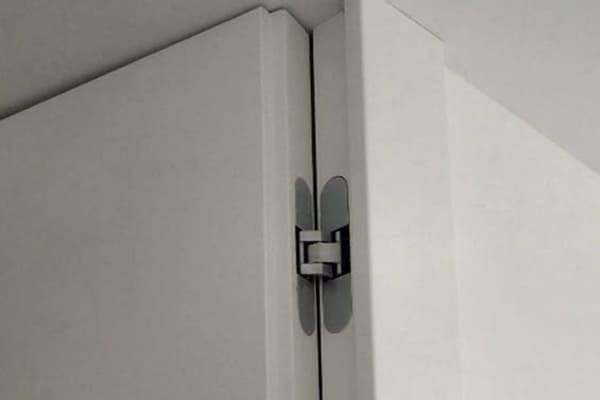
Hydraulic hinges are important because they can combine several functions in one component: door support, rotation, spring return, and hydraulic damping. In many soft-close door hardware systems, the hinge carries the door while an internal spring and hydraulic cylinder regulate the return movement and closing speed.
What a hydraulic hinge usually does
A hydraulic hinge is not only a rotating connector. In many designs, it performs several jobs at the same time:
- It supports the door weight.
- It allows the door to open and rotate.
- It uses an internal spring or return mechanism to bring the door back.
- It uses hydraulic damping to slow the closing speed.
- It helps guide the door into the final closing position.
This is why the hinge becomes a core part of many soft-close door hardware systems. However, it also means the hinge has more performance requirements than a standard butt hinge.
Basic internal working logic
The internal design depends on the product model, but the general principle is easy to understand.
The door opens.
The hinge rotates, and the internal spring stores energy.The user releases the door.
The spring starts returning the door toward the closed position.Hydraulic oil controls the speed.6
The oil passes through controlled channels or valves. This resistance reduces sudden movement.The hinge manages the closing zone.
The door slows down near the frame, depending on the adjustment and hinge design.Final force helps closing.
The system needs enough closing force to overcome latch resistance, seal pressure, or door misalignment.
This is the reason I avoid describing a hydraulic hinge as simply “quiet.” It is a mechanical control product. Its performance depends on force, damping, weight, geometry, and installation accuracy.
Hydraulic hinge vs. door closer
Buyers sometimes ask whether they should choose hydraulic hinges or door closers. The better answer depends on the door type and project requirement.
| Item | Hydraulic hinge | Door closer |
|---|---|---|
| Appearance | Usually cleaner and less visible | More visible, often surface-mounted |
| Load-bearing role | Often carries the door | Usually does not replace hinges |
| Closing control | Integrated into hinge movement | Controlled by closer arm/body |
| Common use | Residential, hotel, office, selected commercial doors | Commercial, fire doors, heavy traffic doors |
| Adjustment range | Depends strongly on model | Often broader on professional closers |
| Buyer risk | Door mismatch and weak latching | Incorrect closer power size or installation |
Neither option is always better. I would evaluate the complete door system first. For example, a heavy fire-rated door in a high-traffic corridor may require a certified closer and verified fire-door assembly. A hotel room door or interior project door may benefit from a cleaner hydraulic hinge solution if the specification is suitable.
What buyers should verify inside the product discussion
When I handle soft-close inquiries, I normally want to confirm these details before recommending a hydraulic hinge:
- Door weight, including glass, veneer, or metal facing
- Door width and height
- Door thickness
- Door material, such as wood, steel, aluminum, or composite
- Frame material and hinge mounting structure
- Opening angle requirement
- Lock and latch type
- Seal resistance
- Usage frequency
- Required surface finish
- Project certification requirements
These details help prevent overpromising. They also protect buyers from selecting a hinge only because it looks similar to another product.
How should buyers specify soft-close door hardware for different doors?
Soft-close door hardware can fail in the market when the specification is too vague. A buyer may only write “soft-close hinge” in the inquiry. Then the supplier has to guess the door weight, installation structure, closing angle, surface finish, and usage condition. That guess can become expensive in bulk orders.
Buyers should specify soft-close door hardware by matching it to door weight, door thickness, door width, door material, opening frequency, latch resistance, installation structure, and target closing behavior. A clear specification reduces sampling delays, prevents mismatch, and improves batch consistency during production and resale.
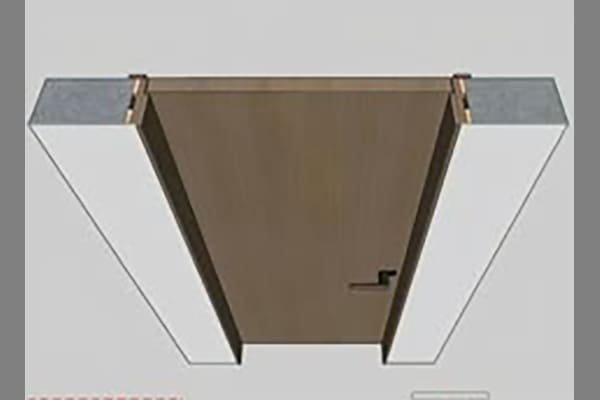
Start with the finished door, not the hinge
I often tell buyers to describe the door first. The hinge is only one part of the system. A good supplier can recommend more accurately when the finished door condition is clear.
A practical soft-close door hardware inquiry should include:
Door weight
This is one of the first matching points. A hinge that works on a light internal wooden door may not suit a heavier solid-core door.Door width and height
Wider doors create more leverage on the hinge.7 Height can also affect the number and position of hinges.Door thickness
Thickness affects hinge installation, screw holding, and compatibility with mortise depth.Door material
Wood, steel, aluminum, and composite doors each behave differently.Frame structure
A weak frame can reduce performance even when the hinge itself is suitable.Lock and latch type
A strong latch spring or heavy seal may require more final closing force.Opening frequency
Hotel, apartment, villa, office, and public doors may have very different usage cycles.Finish requirement
Bulk orders often require consistent color, texture, and corrosion resistance.
Example specification table for procurement
The table below shows how I would organize a basic inquiry before sample confirmation.
| Specification item | Example information to provide | Why it matters |
|---|---|---|
| Door weight | 45 kg per leaf | Helps choose hinge load capacity |
| Door size | 900 mm × 2100 mm | Affects leverage and hinge quantity |
| Door thickness | 45 mm | Affects installation compatibility |
| Door material | Solid wood / steel / composite | Affects screw holding and movement |
| Frame material | Wood frame / metal frame | Affects mounting strength |
| Usage | Hotel room / apartment / office | Affects closing frequency |
| Lock type | Mortise lock with latch | Affects final latching force |
| Finish | Satin stainless steel / black / PVD | Affects production and QC |
| Certification need | CE or fire-rated document required | Must be verified by buyer for the project |
This type of table makes communication faster. It also reduces the risk of receiving a sample that works on the supplier’s test door but fails on the buyer’s actual door.
Do not assume one replacement solves everything
One common mistake is assuming that every door can achieve a soft-close function by replacing one hinge. That is not always true.
Soft-close door hardware performance may be affected by:
- Incorrect hinge quantity
- Door warping
- Frame misalignment
- Poor screw fixing
- Excessive seal resistance
- Heavy lock body or latch pressure
- Door closer already installed
- Incorrect hinge position
- Temperature conditions affecting hydraulic damping8
- Inconsistent installation across project sites
For application-specific decisions, I recommend qualified technical evaluation and sample testing on the actual door structure. This is especially important for project doors, high-traffic doors, and doors with fire safety requirements.
Sample testing before bulk order
For door manufacturers and brands, I consider sample testing a normal procurement step. A small sample order can verify several things before mass production:
- Does the door close at the expected speed?
- Does the final latch engage reliably?
- Does the hinge carry the door without sagging?
- Does the finish match the brand standard?
- Does the adjustment method suit the installer?
- Does the closing feel remain stable after repeated use?
- Does the hardware match the door and lock package?
I would also check packaging, labeling, and accessory consistency during sample review. For wholesalers, these details matter because installers often judge product quality by the completeness of the hardware set before they even test the door.
What supplier checks reduce soft-close door hardware procurement risk?
Soft-close door hardware creates procurement risk when the supplier cannot control production consistency. A sample may perform well, but the bulk order may show finish variation, unstable damping, incorrect accessories, or mixed specifications. These issues can affect door assembly lines, brand reputation, and project delivery.
Buyers can reduce soft-close door hardware procurement risk by checking the supplier’s manufacturing capability, product matching process, quality control system, certification documents, finish consistency, customization capacity, packaging control, and after-sales response. Buyers should verify all certificates and test reports against the specific product and project requirement.
Look for manufacturing control, not only a catalog
A catalog can show many models, but it does not prove stable production. For bulk buyers, I would look at whether the supplier can control the complete process.
Important supplier evaluation points include:
- Raw material inspection
- Machining accuracy
- Assembly control
- Hydraulic damping consistency
- Spring force matching
- Surface finish control
- Salt spray or corrosion test documents, where applicable9
- Finished product inspection
- Packaging and accessory verification
- Batch traceability
At SDH Hardware, we view these checks from a manufacturer’s perspective because door hardware is not only a visual product. A hinge may look correct but still fail in closing behavior if the internal components are inconsistent.
Certification documents should be verified
Many buyers require CE certification or fire-rated documents for architectural hardware. These documents are important, but they should be reviewed carefully.
A buyer should check:
- Is the certificate related to the exact product model?
- Is the testing standard relevant to the target market?
- Is the certificate still valid?
- Does the project require a certified complete door assembly, not only hardware?10
- Does the supplier provide traceable documentation?
I avoid making universal certification claims because project requirements differ by market and application. Buyers should verify documents with the issuing body, testing laboratory, or a qualified compliance professional when the project requires formal approval.
Batch consistency matters for brands and wholesalers
For a door hardware brand, inconsistent soft-close performance can become a serious problem. If one hinge closes in 3 seconds and another closes in 8 seconds under similar conditions, the end customer may see the product as unstable.
Bulk orders require attention to:
| Control item | Risk if ignored | Practical check |
|---|---|---|
| Finish color | Mixed appearance in one project | Approve color sample and batch standard |
| Damping feel | Uneven closing speed | Test random samples before shipment |
| Screw/accessory set | Installer complaints | Use packing checklist |
| Hinge size | Installation mismatch | Confirm drawings before production |
| Load capacity | Door sagging or poor closing | Match door weight and width |
| Labeling | Warehouse confusion | Use item codes and carton marks |
I have found that many after-sales issues are not caused by one single “bad product.” They often come from unclear specifications, mixed accessories, or missing pre-shipment checks.
Questions I would ask a supplier
Before placing a larger order, I would ask direct questions such as:
- What door weight and width is this model designed for?
- How many hinges do you recommend per door?
- Is the closing speed adjustable?
- What is the typical closing angle range for this model?
- What lock and latch conditions were used during testing?
- Can you provide technical drawings?
- Can you keep the same finish across repeated orders?
- What certifications or test documents are available for this model?
- What is the lead time for standard and customized finishes?
- What inspection is done before shipment?
These questions shift the conversation from “price per piece” to actual product suitability. That is important for professional buyers who must protect margins and reduce complaints at the same time.
Frequently Asked Questions
Is soft-close door hardware the same as a quiet hinge?
No. A quiet hinge may reduce noise, but soft-close door hardware should control the door’s closing movement. In many hydraulic hinge systems, the internal spring and damping structure regulate speed and reduce impact. Buyers should confirm actual closing behavior, not only the noise level.
Can I add soft-close function by replacing one hinge?
Not always. Some doors may work with a suitable hydraulic hinge, but performance depends on door weight, width, thickness, frame strength, latch resistance, and installation accuracy. I recommend testing the hardware on the actual door system before bulk purchasing.
Are hydraulic hinges suitable for fire-rated doors?
Hydraulic hinges may be used in some fire-rated door applications only when the specific product, door assembly, and project requirements allow it. Buyers should verify valid fire-rated documents and consult qualified compliance professionals because fire performance is usually assessed at the assembly level11.
What information should I send before asking for a soft-close hinge quotation?
I would send door weight, size, thickness, material, frame type, lock type, opening frequency, finish requirement, target market, and certification needs. These details help the supplier recommend soft-close door hardware that matches the door instead of guessing from a general catalog.
Why does a soft-close door fail to latch fully?
A soft-close door may fail to latch because the final closing force is too weak, the latch resistance is high, the frame is misaligned, the seal is too tight, or the hinge model is mismatched. Buyers should check the complete door system, not only the hinge.
Conclusion
Soft-close door hardware is best understood as a controlled closing solution, not just a quiet accessory. In many door systems, a hydraulic hinge plays the central role by supporting the door, allowing rotation, creating return force, and regulating closing speed. However, buyers should match the hardware to door weight, size, structure, usage frequency, lock condition, and project compliance needs. If you are evaluating hydraulic hinges or complete door hardware for bulk supply, I recommend sharing your door specifications so SDH Hardware can help review suitable options for sampling and procurement.
"Door closer", https://en.wikipedia.org/wiki/Door_closer. A general reference on door closers describes controlled-closing hardware as equipment that closes a door automatically while regulating motion to prevent uncontrolled slamming; this supports the functional description, although it does not verify the performance of any specific soft-close hinge model. Evidence role: definition; source type: encyclopedia. Supports: A neutral overview should support that door-control hardware is designed to close doors in a controlled way and prevent slamming.. Scope note: Contextual support only; it supports the general function of controlled-closing hardware, not the measured noise or impact reduction of the article’s products. ↩
"Door closer", https://en.wikipedia.org/wiki/Door_closer. Engineering literature on hydraulic damping and spring-return hinge mechanisms explains that rotational motion can be combined with stored spring force and fluid resistance to control return speed; this supports the mechanism described here, although individual hinge load ratings depend on the tested product design. Evidence role: mechanism; source type: paper. Supports: A technical source should explain that spring-return hinges or hydraulic hinge mechanisms can combine hinge rotation with stored spring energy and fluid damping.. Scope note: Contextual support only; it explains the mechanical principle rather than certifying any particular hydraulic hinge. ↩
"Noise Complaints · NYC311 - NYC.gov", https://portal.311.nyc.gov/article/?kanumber=KA-02125. Building-maintenance guidance commonly identifies uncontrolled door slamming as a source of noise, wear, and damage to door and frame components; this supports the risk discussion, although it does not quantify the frequency of these failures in soft-close hinge applications. Evidence role: general_support; source type: institution. Supports: An institutional building-maintenance or safety source should support that uncontrolled door slamming can cause damage, noise, and safety or usability problems.. Scope note: Contextual support only; it supports plausible consequences of door slamming but not specific failure rates. ↩
"A156.4 - 2024 Door Closers and Pivots", https://buildershardware.com/ANSI-BHMA-Standards/Hardware-Highlights/A1564-2024-Door-Closers-and-Pivots. Door-control standards and technical guidance distinguish closing-speed functions such as sweep and latch control, supporting the article’s staged explanation of closing behavior; the cited standards may not use the exact same angle ranges given for every hydraulic hinge. Evidence role: general_support; source type: institution. Supports: A standards or industry-institution source should support that door-closing devices are commonly evaluated or adjusted by phases such as sweep and latch speed.. Scope note: Contextual support only; standards support the concept of closing phases, while the article’s angle ranges remain model-dependent. ↩
"A156.1 - 2025 Butts and Hinges", https://buildershardware.com/ANSI-BHMA-Standards/Hardware-Highlights/A1561-2025-Butts-and-Hinges. Architectural hardware standards and hinge-selection guidance treat door weight, size, and service conditions as relevant factors in hinge specification; this supports the warning that showroom performance alone is insufficient, although it does not predict failure for a specific installation. Evidence role: expert_consensus; source type: institution. Supports: A standards or architectural-hardware source should support that hinge selection depends on door weight, size, and use conditions.. Scope note: Contextual support only; it supports specification criteria, not a direct test of showroom versus installed performance. ↩
"Theoretical Investigation of the Viscous Damping Coefficient ...", https://ui.adsabs.harvard.edu/abs/2017ChJME..30..829H/abstract. Engineering references on hydraulic damping explain that forcing oil through restricted passages creates resistance that dissipates energy and reduces motion speed; this supports the operating principle described for hydraulic hinges, without establishing the performance of any one hinge design. Evidence role: mechanism; source type: education. Supports: An engineering education source should explain that hydraulic or viscous damping uses fluid resistance to dissipate energy and slow motion.. Scope note: Contextual support only; it explains the physical mechanism rather than a specific product construction. ↩
"Torque is the rotational equivalent of force.", http://physics.bu.edu/~redner/211-sp06/class13/torque.html. Introductory mechanics texts define torque as the product of force and lever-arm distance, explaining why a wider door can impose greater rotational moment on its hinges; this supports the mechanical rationale, although actual hinge loading also depends on mass distribution and installation geometry. Evidence role: mechanism; source type: education. Supports: A physics or engineering education source should support that torque increases with the perpendicular distance from the pivot to the applied force.. Scope note: Contextual support only; it supports the physics principle, not a specific hinge sizing rule. ↩
"Effects of temperature on the properties of HL32 oil in the ... - PMC", https://pmc.ncbi.nlm.nih.gov/articles/PMC9732129/. Research on hydraulic fluids and dampers shows that oil viscosity is temperature-dependent and can change damping characteristics; this supports temperature as a relevant installation condition, although the magnitude of the effect depends on the fluid, valve design, and operating range. Evidence role: mechanism; source type: paper. Supports: A technical paper should support that oil viscosity changes with temperature and that this can alter hydraulic damping behavior.. Scope note: Contextual support only; it does not quantify the effect for the article’s hinge models. ↩
"Salt spray test", https://en.wikipedia.org/wiki/Salt_spray_test. Recognized standards such as ASTM B117 and ISO 9227 describe salt-spray methods for exposing materials and coatings to corrosive environments; this supports the relevance of corrosion-test documentation, although salt-spray results do not alone predict exact service life in a building. Evidence role: general_support; source type: institution. Supports: A standards body source should support that salt spray testing is a recognized method for evaluating corrosion behavior of materials or coatings.. Scope note: Contextual support only; salt-spray tests are standardized exposure methods, not direct lifetime guarantees. ↩
"Doors, Windows and Related Hardware Application Guide", https://www.ul.com/thecodeauthority/knowledge/ul-fire-rated-doors-guide. Fire-door certification guidance treats the door, frame, hardware, and related components as an assembly whose rated performance depends on compatible listed parts; this supports the need to verify assembly-level requirements, although non-fire-rated projects may use different documentation rules. Evidence role: expert_consensus; source type: institution. Supports: A fire-testing or standards institution should support that rated fire doors are evaluated as assemblies with compatible listed components.. Scope note: Contextual support only; requirements vary by code, market, and project specification. ↩
"All You Need to Know for Fire Rated Door Assemblies", https://safti.com/articles/fire-rated-doors-standards-testing-and-glazing-requirements/. Fire-door standards define regulated fire doors as assemblies that include the door leaf, frame, hardware, glazing, and other components, supporting the statement that fire performance is assessed at the assembly level; the exact approval pathway remains jurisdiction- and listing-dependent. Evidence role: definition; source type: institution. Supports: A fire-safety standard or institutional source should define fire doors as assemblies and explain that performance depends on the complete assembly.. Scope note: Direct support for the assembly concept, but not for the suitability of any particular hydraulic hinge in a fire-rated door. ↩