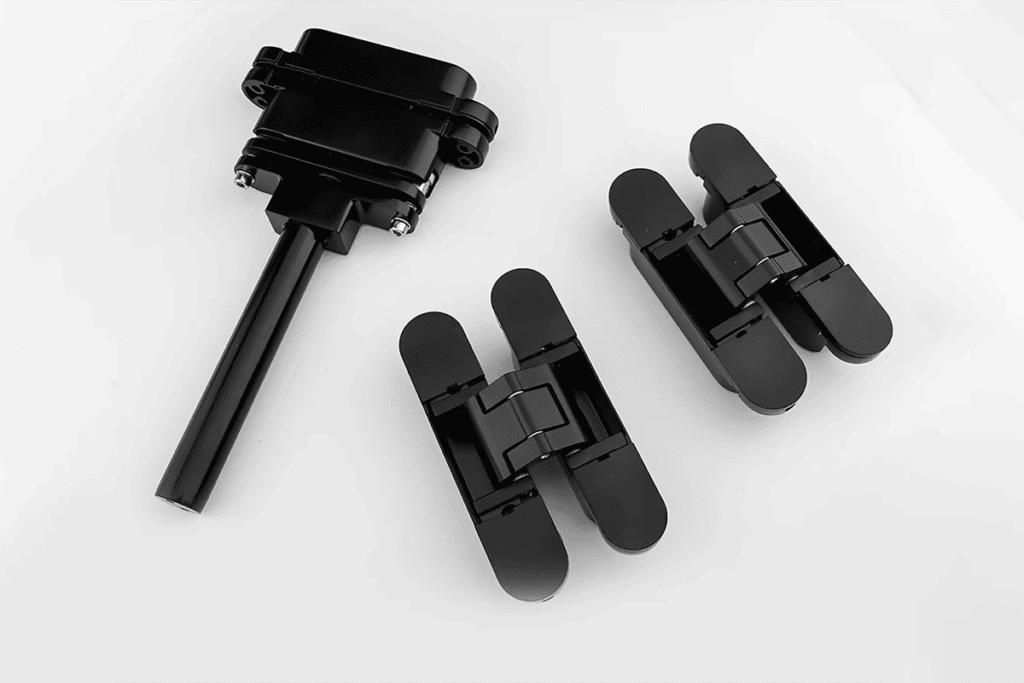
How Much Weight Can a Hinge Bear?
How much weight can a hinge bear is one of the first questions I hear from door factory buyers, but a single number can mislead the whole selection process. If the hinge is underspecified, the door may sag, rub, deform, or create after-sales complaints. The better solution is to evaluate hinge type, door size, usage scenario, and installation quality together.
A hinge does not have one fixed load capacity.1 As a general reference, mother-child hinges may suit about 10–50 kg interior doors, butt hinges about 40–120 kg solid interior doors, concealed hinges about 40–200 kg doors, and heavy-duty hinges about 150–350 kg entrance or security doors.2 Buyers should verify final capacity by product specification, test data, and installation conditions.
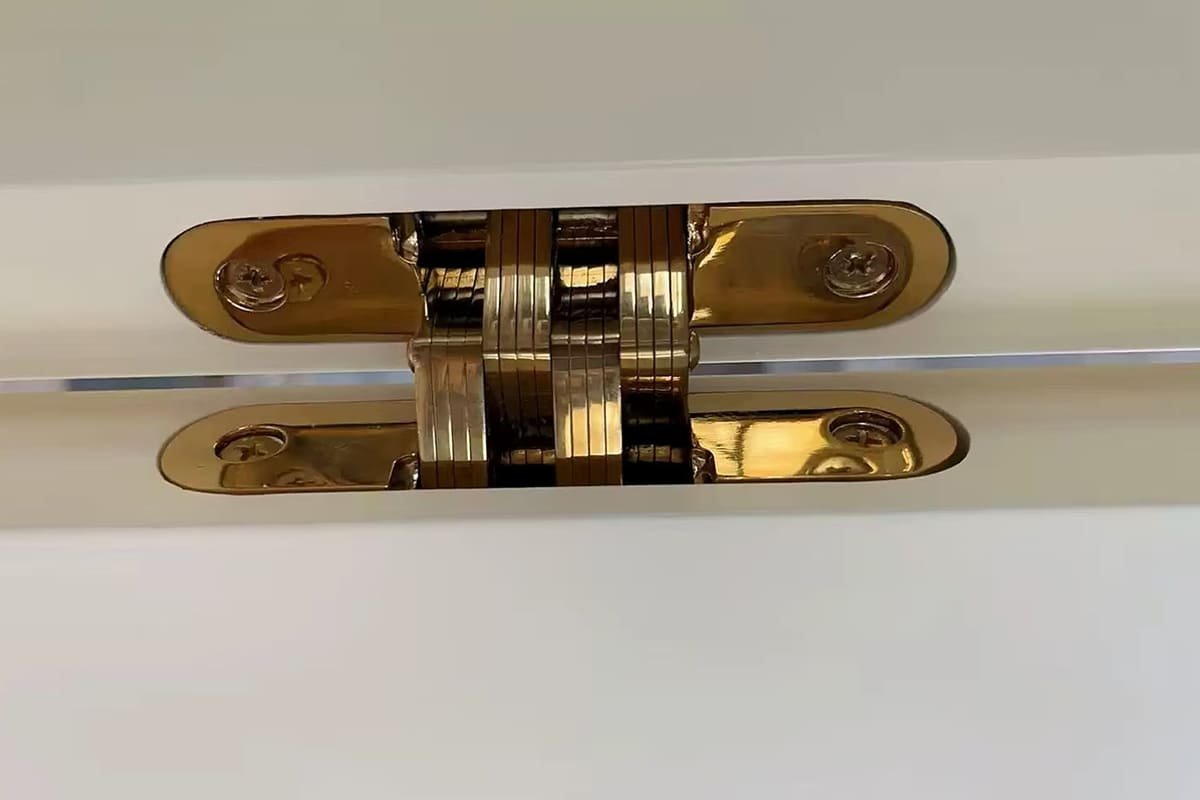
In my factory quotation work, I rarely recommend a hinge only by asking for door weight. I also ask for door height, width, thickness, material, opening frequency, frame condition, and required finish. These details decide whether a hinge system will stay stable after months or years of use.
How Much Weight Can a Hinge Bear by Hinge Type?
A buyer may ask for “strong hinges,” but that phrase is too general. The risk starts when different hinge categories are treated as equal. A light interior hinge and a heavy-duty entrance hinge may look similar in photos, yet their structure, material thickness, knuckle design, and fixing strength can be very different.
A hinge’s bearing capacity depends strongly on its type. As cautious selection references, mother-child hinges often cover about 10–50 kg, flat or butt hinges about 40–120 kg, concealed hinges about 40–200 kg, and heavy-duty hinges about 150–350 kg. These ranges are not universal guarantees and should be checked against supplier data.
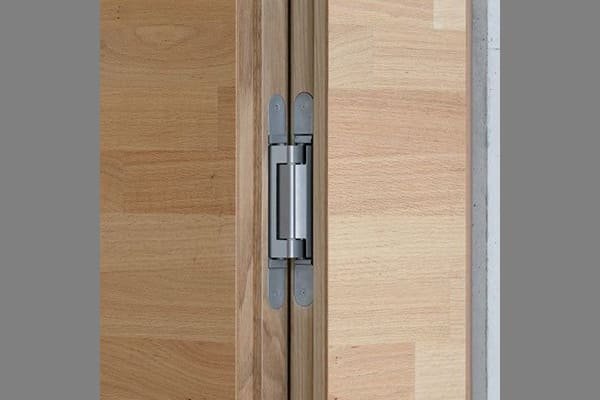
General Reference Ranges for Common Hinges
| Hinge Type | General Reference Load Range | Common Application | Buyer Notes |
|---|---|---|---|
| Mother-child hinge | 10–50 kg | Ordinary interior doors | Easy installation, but weaker support than standard butt hinges |
| Flat / butt hinge | 40–120 kg | Standard solid interior doors | Common choice for wood doors and general projects |
| Concealed hinge | 40–200 kg | Interior and exterior doors requiring hidden hardware | Good for aesthetics, but installation precision matters |
| Heavy-duty hinge | 150–350 kg | Entrance doors, security doors, larger exterior doors | Requires stronger fixing, frame support, and verified specs |
These numbers are useful for early sourcing, but I treat them as screening ranges, not final engineering values. In real procurement, the same hinge category can have different load performance because of:
- Material: stainless steel, carbon steel, zinc alloy, brass, or mixed structures.
- Thickness: thicker leaves and knuckles usually improve strength, but design still matters.
- Size: taller and wider hinge leaves often distribute force better.
- Pin structure: pin diameter, bearing design, and lubrication affect long-term movement.
- Screw fixing: screw length, screw material, and frame holding strength matter greatly.
- Production consistency: batch tolerance and surface treatment can affect assembly fit.
From my experience with door manufacturers and hardware wholesalers, the first mistake is comparing hinges only by price per piece. A lower-cost hinge can look attractive during quotation, but it may create higher total cost if it causes sagging, noise, warranty claims, or site rework.
Why Hinge Category Matters
A mother-child hinge is convenient because installers do not need to cut deep mortises in some applications. However, it is usually not my first choice for heavier solid doors. A standard butt hinge has a stronger and more direct structure for many interior doors. A concealed hinge can support higher loads and improve appearance, but it requires accurate machining of the door and frame. A heavy-duty hinge is designed for demanding door sets, but it still needs a suitable frame and correct installation.
For B2B buyers, I suggest using hinge type as the first filter:
- Light interior door: mother-child hinge or standard butt hinge may be considered.
- Solid wood interior door: butt hinge is often a practical baseline.
- Premium hidden-hardware door: concealed hinge may be suitable.
- Exterior entrance or security door: heavy-duty hinge should be reviewed.
- Oversized or frequent-use door: select with extra safety margin and consider a third hinge.
The practical answer to how much weight can a hinge bear is therefore not only a load number. It is a match between hinge structure and the complete door system.
How Much Weight Can a Hinge Bear When Door Size Changes?
Door weight is important, but it is not enough. A short, compact 80 kg door and a tall, wide 80 kg door do not create the same stress on hinges. If a buyer ignores door dimensions, the selected hinge may pass a simple weight check but still fail in real use.
A hinge bears more stress when the door is taller, wider, thicker, or used more frequently. Wider doors create greater leverage on the hinge side.3 Taller doors are more sensitive to alignment and frame stability.4 For this reason, buyers should evaluate door weight together with door height, width, thickness, and application conditions.
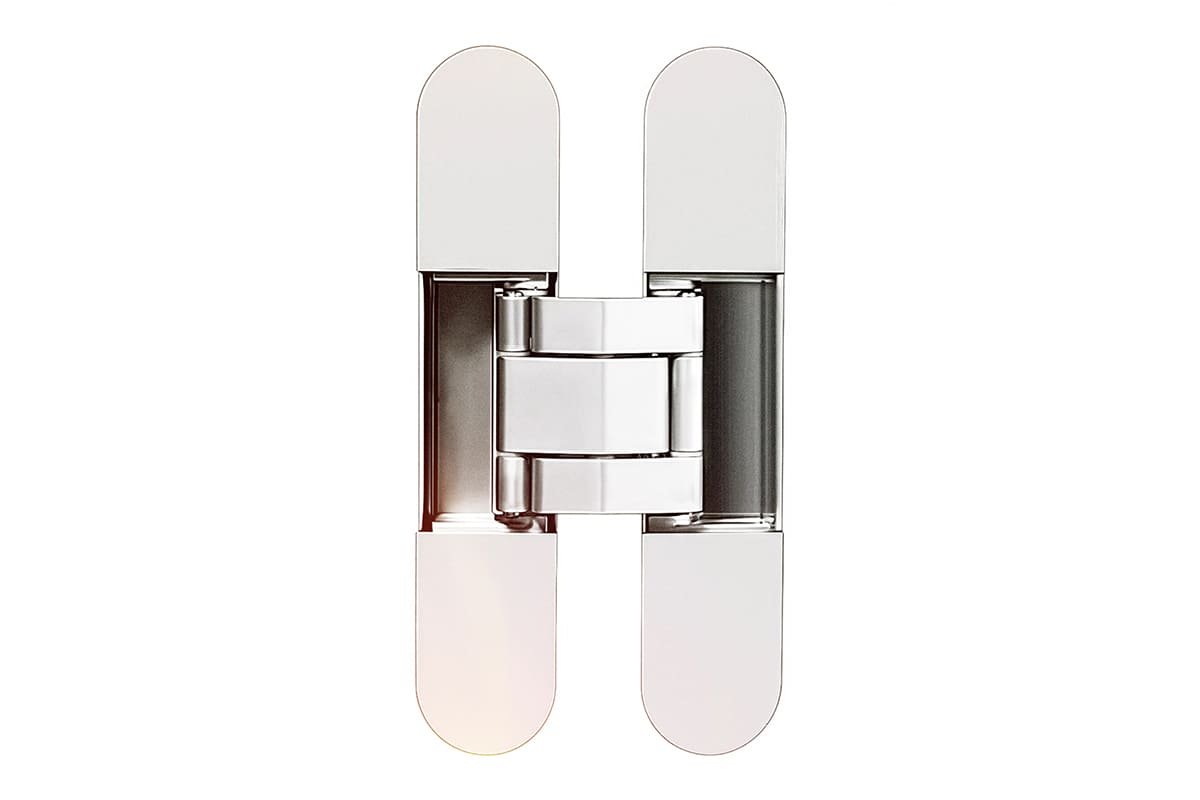
Why Width Creates Extra Stress
A door works like a lever. The hinge side supports the door, while the far edge creates rotational force. When the door becomes wider, the distance from the hinge line to the latch side increases. This extra distance increases the bending and pulling effect on the hinge screws, hinge leaves, and frame.
For example, two doors may both weigh 70 kg:
| Door Example | Weight | Width | Hinge Stress Risk |
|---|---|---|---|
| Standard interior door | 70 kg | 800 mm | Moderate |
| Wide custom door | 70 kg | 1,050 mm | Higher leverage and sagging risk |
The weight is the same, but the wider door usually needs a stronger hinge system. It may also need more precise frame reinforcement.
Why Height Also Matters
A taller door has a larger vertical span. If the top and bottom hinge positions are not stable, small alignment errors become visible. A tall door may start with a smooth swing, but it can gradually drop at the latch side if hinge strength, screw holding power, or frame rigidity is insufficient.
This issue is common in projects where the design calls for high doors, minimalist frames, or heavy decorative panels. Buyers should pay attention to:
- Door height above standard size
- Door core material
- Panel or cladding weight
- Frame material and wall fixing
- Door closer force
- Opening angle and stop position
Opening Frequency Changes the Selection
A residential bedroom door and a hotel corridor door may have similar dimensions, but the hotel door cycles many more times per day. A hinge that works for low-frequency use may become noisy or loose in a commercial project.
In procurement evaluation, I usually separate usage into three levels:
- Low-frequency use: residential bedrooms, storage rooms, private rooms.
- Medium-frequency use: offices, apartments, general public interiors.
- High-frequency use: hotels, schools, hospitals, commercial buildings, public entrances.
High-frequency doors need more than simple static load capacity.5 They need stable rotation, good pin quality, strong screw retention, and consistent production tolerance. If fire-rated or CE compliance is required, the buyer should request valid documentation and confirm that the hinge model, door type, and installation configuration match the certificate scope.6
A hinge that can hold a door once is not always the same as a hinge that can support thousands of opening cycles without sagging.
So, how much weight can a hinge bear when door size changes? The honest answer is: less than the simple catalog number if the door is oversized, frequently used, or poorly installed. That is why I prefer a safety margin instead of selecting a hinge that barely matches the door weight.
How Much Weight Can a Hinge Bear With Two Hinges or Three Hinges?
Many buyers ask whether two hinges are enough. The problem is that whole-door capacity is not just one hinge capacity multiplied by the number of hinges.7 Load distribution is uneven, and the top hinge often carries more pulling force than buyers expect.
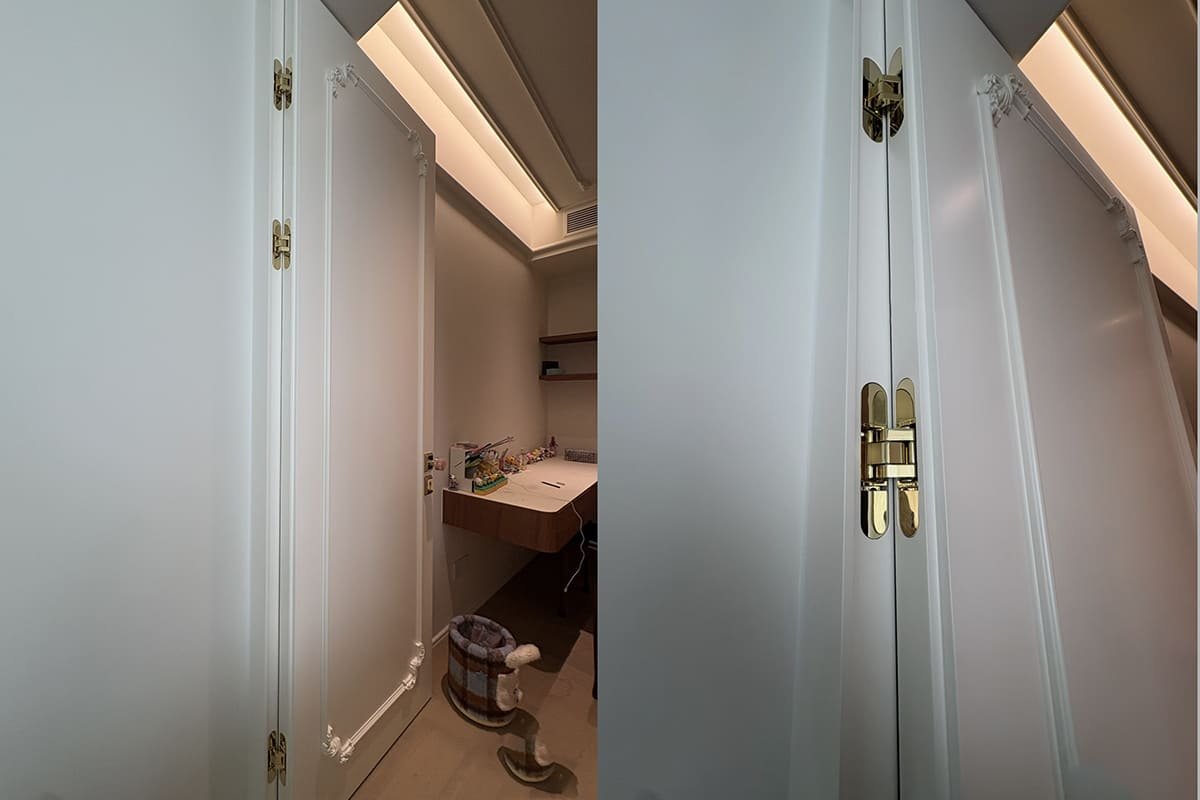
A door with two hinges may work for many standard interior applications, but heavier, taller, wider, or high-frequency doors often benefit from a third hinge. The third hinge helps distribute load, improves alignment stability, and reduces long-term sagging risk. Buyers should not treat single-hinge capacity as equal to complete door-set capacity.
Why the Top Hinge Often Works Harder
When a door hangs from the frame, gravity pulls it downward. At the same time, the door’s outer edge tries to rotate away from the frame. This creates tension near the top hinge and compression near the lower hinge.8 Because of this force pattern, the top hinge often faces the most critical load.
This is why a door may start to sag from the top corner. The symptoms are familiar:
- The latch side drops.
- The door rubs the floor or frame.
- The gap becomes uneven.
- The hinge screws become loose.
- The door makes abnormal noise.
- The installer needs repeated adjustment.
For batch production, this problem becomes expensive. One wrong hinge decision can affect many door sets. Rework may include replacing hinges, deepening mortises, adjusting frames, or handling customer complaints.
When I Usually Consider a Third Hinge
I normally recommend reviewing a third hinge when one or more of these conditions appear:
- The door is heavier than a normal interior door.
- The door is taller than standard project size.
- The door is wider than standard size.
- The door has heavy decorative panels or cladding.
- The door is used in a commercial or public area.
- The door uses a closer that adds operating force.
- The frame material has limited screw-holding strength.
- The buyer wants lower after-sales risk for bulk orders.
For very high, wide, or heavy doors and windows, adding the third hinge can help distribute bearing pressure. It can also make installation adjustment easier because the door has more support points.
Two Hinges vs Three Hinges
| Selection Factor | Two Hinges | Three Hinges |
|---|---|---|
| Standard light interior door | Often acceptable | Usually optional |
| Solid interior door | May be acceptable if size is normal | Safer for higher weight or frequent use |
| Tall door | Higher sagging risk | Better load distribution |
| Wide door | Higher leverage stress | Better stability |
| High-frequency commercial door | Needs careful review | Often preferred |
| After-sales risk control | Moderate | Lower when correctly installed |
Installation Still Decides the Real Result
A third hinge is not a magic solution if installation quality is poor. The installer must align all hinge positions accurately. If the middle hinge is not seated correctly, it may create binding instead of support. The screw holes must also be clean, firm, and matched with suitable screws.9
In factory supply, I like to confirm these details before recommending hinge quantity:
- Door leaf weight in kilograms
- Door height, width, and thickness
- Door and frame material
- Hinge size and material
- Opening frequency
- Indoor or outdoor use
- Fire-rated or CE document requirements
- Required finish and corrosion resistance
- Screw type and installation method
So, how much weight can a hinge bear with two or three hinges? The answer depends on the complete hinge system. For heavier or oversized doors, the third hinge is often a practical and cost-effective way to reduce sagging risk.
How Much Weight Can a Hinge Bear After Installation Conditions Are Considered?
A strong hinge can still fail if the frame is weak, the screws are short, or the mortise is inaccurate. This is one of the most important points for buyers. Catalog data may look safe, but real bearing performance depends on how the hinge is fixed into the door and frame.
A hinge can only bear its intended load when it is matched with suitable screws, accurate machining, strong frame material, correct alignment, and the right application environment. Poor installation can reduce practical capacity and cause sagging, noise, loosening, or deformation even when the hinge specification appears strong enough.
Frame Material and Screw Holding Strength
The hinge does not carry the door alone. The screws and frame must hold the force. A steel frame, hardwood frame, MDF frame, aluminum profile, or composite frame will not provide the same fixing strength.10
For example:
| Frame / Door Material | Fixing Consideration | Procurement Concern |
|---|---|---|
| Solid wood | Usually good screw holding | Check wood density and screw length |
| MDF or composite | May have weaker holding | Reinforcement may be needed |
| Steel frame | Strong if threaded or reinforced | Confirm screw type and hole design |
| Aluminum frame | Depends on profile thickness | Check reinforcement and fastener method |
| Fire-rated door core | Must match certified configuration | Verify documents and test scope |
If the screw pulls out, the hinge capacity becomes irrelevant. Buyers should review fixing design, especially for heavy doors, fire-rated doors, and public projects.
Mortise Accuracy and Hinge Alignment
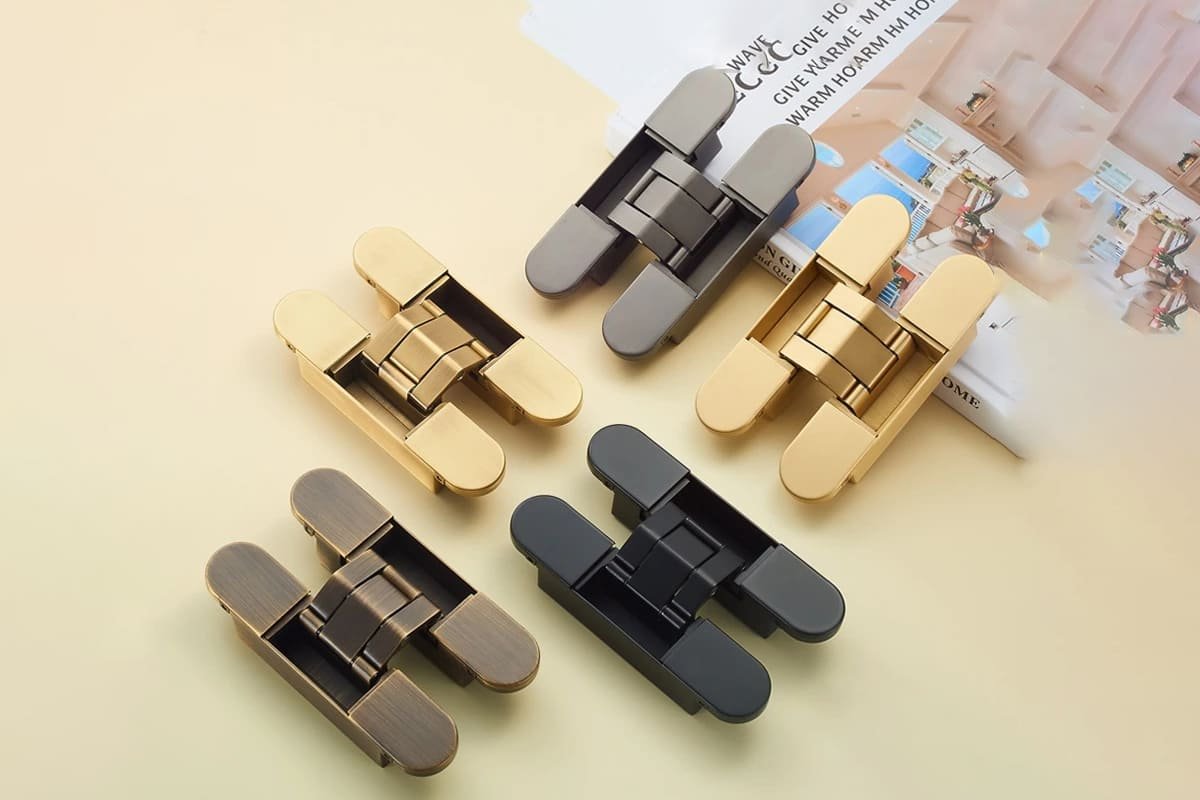
A butt hinge usually needs proper mortising. A concealed hinge needs even more accurate machining. If the hinge pocket is too deep, too shallow, or misaligned, the door may twist during closing. Over time, the hinge may wear faster.
For concealed hinges, precision is especially important because the hinge body is hidden inside the door and frame. The aesthetics are excellent, but the tolerance is stricter. I always remind buyers that concealed hinge selection should include machining capability review, not just hinge price comparison.
Surface Finish and Environment
Outdoor doors and coastal markets need stronger corrosion consideration.11 Stainless steel, suitable plating, powder coating, or other finishes may be required depending on the environment. A hinge may have enough mechanical strength, but poor corrosion resistance can lead to rough movement, discoloration, or reduced service life.
Common finish concerns include:
- Salt spray resistance expectations
- Indoor versus outdoor use
- Humidity level
- Cleaning chemical exposure
- Color consistency across bulk orders
- Scratch resistance during transport and installation
For architectural hardware brands and wholesalers, finish consistency is also a sales issue. If the hinge, lever handle, mortise lock faceplate, and cylinder trim do not match visually, the customer may reject the set even when the mechanical function is acceptable.
Certification and Test Data Should Be Verified
If a buyer needs CE certification, fire-rated certification, or other compliance documents, the documents should be reviewed carefully. I recommend checking:
- The exact product model covered by the certificate
- The tested door type and material
- The installation configuration
- The test standard and issuing body
- The validity and traceability of the report
- Whether the project application matches the tested scope
As a manufacturer, I can explain our production process and provide documents for applicable products, but final project decisions should be based on verified specifications, test reports, and qualified professional evaluation when needed.
The key point is simple. How much weight can a hinge bear after installation depends on more than the hinge body. The door leaf, frame, screws, machining, environment, and compliance requirements all work together.
How Should Buyers Choose the Right Hinge Load Capacity?
A wrong hinge selection can damage more than one door. It can affect batch delivery, project acceptance, brand reputation, and after-sales cost. Buyers need a repeatable selection method instead of relying on a rough number from a catalog page.
Buyers should choose hinge load capacity by calculating door weight, reviewing door dimensions, identifying usage frequency, selecting the correct hinge type, adding a safety margin, and confirming installation conditions. For bulk orders, they should also request product specifications, samples, inspection standards, and relevant certification documents before final approval.
Step-by-Step Selection Checklist
When I receive an inquiry from a door factory or hardware brand, I usually ask for the following information before recommending a hinge:
Door weight
- Actual weight is better than estimated weight.
- Include glass, panels, cladding, and accessories.
Door size
- Height
- Width
- Thickness
- Special oversized design
Door material
- Solid wood
- Steel
- Aluminum
- Composite
- Fire-rated core
Frame material
- Wood frame
- Steel frame
- Aluminum frame
- Reinforced or non-reinforced structure
Usage scenario
- Residential
- Hotel
- Office
- School
- Hospital
- Exterior entrance
Opening frequency
- Low
- Medium
- High
Hinge preference
- Butt hinge
- Concealed hinge
- Heavy-duty hinge
- Mother-child hinge
Certification requirements
- CE documents
- Fire-rated documents
- Project-specific test reports
Finish requirements
- Satin stainless steel
- Polished finish
- PVD color
- Powder coating
- Custom finish
Order requirements
- Quantity
- Delivery schedule
- Packaging
- OEM or ODM customization
Why Safety Margin Matters
The hinge should not be selected at the exact limit of the door weight.12 If a door weighs 80 kg, I do not like selecting a hinge system that is only suitable for 80 kg under ideal conditions. Real projects include installation variation, frame differences, operating force, and long-term wear.
A safety margin helps reduce:
- Door sagging
- Leaf deformation
- Screw loosening
- Abnormal noise
- Hard closing
- Customer complaints
- Warranty claims
- Replacement cost
For B2B buyers, this margin is not overengineering. It is risk control. A slightly stronger hinge may increase unit cost, but it can reduce total cost when the order involves hundreds or thousands of door sets.
Sample Approval and Inspection
Before bulk production, buyers should test samples under realistic conditions. A sample review can include:
| Inspection Item | What to Check |
|---|---|
| Dimensions | Length, width, thickness, hole position |
| Movement | Smooth opening and closing |
| Finish | Color, texture, scratches, plating quality |
| Assembly | Pin fit, bearing structure, gap consistency |
| Packaging | Protection against scratches and moisture |
| Documents | Specification sheet, certificates, test reports |
| Installation | Screw fit, mortise fit, alignment |
I also recommend keeping approved samples for comparison during mass production. This helps both the buyer and supplier avoid disputes about finish, tolerance, or accessory configuration.
Supplier Evaluation Questions
A qualified hinge supplier should be able to discuss more than price. Buyers can ask:
- What hinge type do you recommend for this door weight and size?
- What material and thickness does this model use?
- How many hinges do you recommend per door?
- What screw type should be used?
- Can you provide drawings and specifications?
- Can you provide applicable CE or fire-rated documents?
- What finishes are stable for bulk orders?
- What is the production lead time?
- Can you support ODM customization?
- How do you inspect finished products?
At SDH Hardware, my team usually reviews hinge selection together with the full door hardware package, including mortise locks, lever handles, lock cylinders, butt hinges, and concealed hinges. This helps buyers keep specifications, finishes, and packaging consistent across one project or product line.
Frequently Asked Questions
Can I calculate hinge capacity by multiplying one hinge capacity by the number of hinges?
No. A door’s total capacity is not simply one hinge capacity multiplied by two or three. Load distribution is uneven, and the top hinge often carries more pulling force. Buyers should evaluate the full door set, hinge spacing, frame strength, screw fixing, and installation quality.
Is a concealed hinge stronger than a butt hinge?
A concealed hinge can offer strong support and a clean appearance, but it is not automatically stronger in every case. Its real performance depends on model design, material, size, installation accuracy, and door conditions. Buyers should compare specifications and verify supplier test data.
When should I use three hinges on a door?
I suggest reviewing three hinges for heavier, taller, wider, or high-frequency doors. A third hinge helps distribute load and reduce sagging risk. It is also useful when the door uses a closer, heavy panels, or a frame material that needs extra support.
What information should I give a hinge supplier for accurate recommendation?
You should provide door weight, height, width, thickness, door material, frame material, usage scenario, opening frequency, required hinge type, finish, certification needs, and order quantity. With these details, the supplier can recommend a more suitable hinge system instead of guessing.
Do CE or fire-rated certificates prove hinge load capacity?
Not always. CE or fire-rated documents may relate to specific standards, models, test doors, and installation configurations. Buyers should verify the exact certificate scope and confirm whether it matches the intended project. Application-specific decisions may require qualified professional evaluation.
Conclusion
How much weight can a hinge bear depends on hinge type, material, size, door weight, door dimensions, usage frequency, hinge quantity, and installation conditions. General ranges help with early selection, but they should not replace product specifications and verified test data. I recommend choosing a hinge system with a safety margin, especially for heavy, tall, wide, or frequently used doors. If you need a practical recommendation for bulk sourcing, send SDH Hardware your door weight, size, application scenario, finish, and certification requirements for a suitable hinge selection review.
"Understanding BS EN 1935:2002 single-axis hinge grades", https://uk.sfs.com/resources/article/understanding-bs-en-1935. A recognized hinge performance standard classifies hinges by attributes such as use category, durability, test door mass, and safety grade, supporting the view that hinge load capacity is a rated property tied to a defined application and test configuration rather than a single universal value. Evidence role: expert_consensus; source type: institution. Supports: A hinge standard should show that hinge performance is classified by grade, door mass, durability, and test conditions rather than by one universal capacity.. Scope note: This would support the general principle, not the specific load ranges stated later in the article. ↩
"Understanding BS EN 1935:2002 single-axis hinge grades - SFS", https://uk.sfs.com/resources/article/understanding-bs-en-1935. Hinge classification standards provide graded test-door-mass categories and performance requirements, which supports the general practice of matching hinge type and rating to door mass; however, such standards may not verify the article’s exact category-by-category ranges or the 350 kg upper figure. Evidence role: general_support; source type: institution. Supports: A standards or institutional source should support that hinges are rated by door mass classes and that rated capacities vary by hinge design and application.. Scope note: Contextual support only; exact ranges would still require product-specific test data. ↩
"28.18 -- Open door to demonstration preparation area", https://web.physics.ucsb.edu/~lecturedemonstrations/Composer/Pages/28.18.html. Introductory statics treatments define torque as the product of force and moment arm, supporting the claim that a wider door increases the rotational moment imposed on its hinges when weight remains constant. Evidence role: mechanism; source type: education. Supports: An educational mechanics source should explain that torque equals force times perpendicular distance, so increasing the distance from hinge line to door center of mass increases rotational loading.. ↩
"[DOC] SECTION 08 1400 - LANL Engineering Standards", https://engstandards.lanl.gov/specs/08_1400R2.doc. Door installation standards commonly require frames and leaves to be plumb, level, square, and within specified tolerances, providing contextual support for the claim that taller doors are more affected by alignment and frame stability. Evidence role: general_support; source type: institution. Supports: A door installation or architectural woodwork standard should support the importance of plumb, level, square frames and alignment tolerances for proper door operation.. Scope note: The source may establish the importance of installation tolerances generally rather than quantify a height-specific sensitivity threshold. ↩
"Understanding BS EN 1935:2002 single-axis hinge grades", https://uk.sfs.com/resources/article/understanding-bs-en-1935. Hinge performance standards include durability or cycle-test requirements alongside load-related classifications, supporting the claim that high-frequency doors require assessment beyond static weight capacity. Evidence role: expert_consensus; source type: institution. Supports: A hinge performance standard should show that hinge evaluation includes durability or cycle testing in addition to mass or load rating.. ↩
"Fire Doors and NFPA 80 FAQs", https://www.nfpa.org/news-blogs-and-articles/blogs/2025/04/11/fire-doors-faqs. Fire-door and construction-product compliance frameworks treat certification or declared performance as applying to defined products, assemblies, intended uses, and installation conditions, supporting the need to verify that the hinge model and door configuration fall within the documented scope. Evidence role: general_support; source type: institution. Supports: A fire-door or construction-products compliance source should support that certified hardware is evaluated for defined products, intended uses, and installation conditions.. Scope note: The source may address fire-door or CE compliance generally rather than the specific hinge model being purchased. ↩
"Door Hinges (static equilibrium)", https://phy.duke.edu/~rgb/Class/review_53/review_53/node59.html. Statics analysis of a door supported by hinges shows that hinge reactions depend on geometry and support constraints, supporting the claim that total door-set capacity is not obtained by simply multiplying one hinge rating by the number of hinges. Evidence role: mechanism; source type: education. Supports: An engineering or statics source should explain that support reactions in a hinged door depend on geometry, stiffness, and constraints, so loads are not necessarily evenly distributed.. Scope note: A simplified statics source may not account for real hinge stiffness, fastener deformation, or manufacturing tolerances. ↩
"[PDF] Chapter 6 (you need to draw free-body diagrams for every piece ...", https://info.montgomerycollege.edu/_documents/faculty/chou/enes102/hw4.pdf. A free-body analysis of a hinged door indicates that the door’s weight produces a moment about the hinge line that is resisted by opposing hinge reactions, providing mechanical support for describing tension near the upper hinge and compression near the lower hinge. Evidence role: mechanism; source type: education. Supports: A statics explanation should support the reaction-force pattern in which a door's weight creates a moment resisted by opposing forces at upper and lower hinges.. Scope note: This is an idealized mechanical explanation and may not predict exact loads in a specific installed door. ↩
"Wood handbook: Wood as an engineering material", https://research.fs.usda.gov/treesearch/62200. Wood-engineering guidance from government research sources explains that screw withdrawal resistance is affected by screw dimensions, penetration, pilot-hole preparation, and substrate properties, supporting the claim that hinge screw holes and screw selection influence installed capacity. Evidence role: mechanism; source type: government. Supports: A government wood-engineering source should support that screw withdrawal resistance depends on screw size, penetration, pilot holes, and the receiving material.. ↩
"[PDF] Screw-holding, internal bond, and related properties of composite ...", https://www.fpl.fs.usda.gov/documnts/pdf1989/mcnat89c.pdf. Experimental studies of screw withdrawal in wood and wood-based panels report that holding strength varies with substrate type, density, and internal structure, supporting the claim that steel, hardwood, MDF, aluminum, and composite frames cannot be assumed to provide equal fixing strength. Evidence role: mechanism; source type: paper. Supports: A materials or wood-products paper should show that screw withdrawal strength varies by substrate type, density, and board structure.. Scope note: A paper on wood and wood-based panels may not directly compare all listed materials, especially steel and aluminum profiles. ↩
"Corrosion Risk Assessment in Coastal Environments Using ...", https://pmc.ncbi.nlm.nih.gov/articles/PMC12252465/. Atmospheric corrosion research identifies moisture and chloride deposition in marine or coastal environments as major contributors to accelerated corrosion of metals, supporting the need for stronger corrosion consideration for outdoor door hinges. Evidence role: mechanism; source type: research. Supports: A corrosion research source should support that outdoor and marine or coastal environments accelerate corrosion through moisture and chloride exposure.. Scope note: The source would support the environmental corrosion mechanism generally, not the performance of a specific hinge finish. ↩
"Factor of safety - Wikipedia", https://en.wikipedia.org/wiki/Factor_of_safety. Engineering references define a factor of safety as the ratio between a system’s capacity and the expected working load, supporting the practice of selecting hinges with margin above the calculated door weight to account for uncertainty and service variation. Evidence role: expert_consensus; source type: encyclopedia. Supports: An engineering reference should define factor of safety as designing capacity above expected load to account for uncertainty and variation.. ↩