What Is the Difference Between a 30/30 and 35/35 Euro Cylinder, and Which Size Do I Need?
A 30/30 and 35/35 Euro cylinder can look almost identical in a product photo, but choosing the wrong size can stop a lockset from fitting cleanly. That mistake becomes expensive in bulk orders. The solution is simple: understand the cylinder length split, then confirm it against the finished door structure.
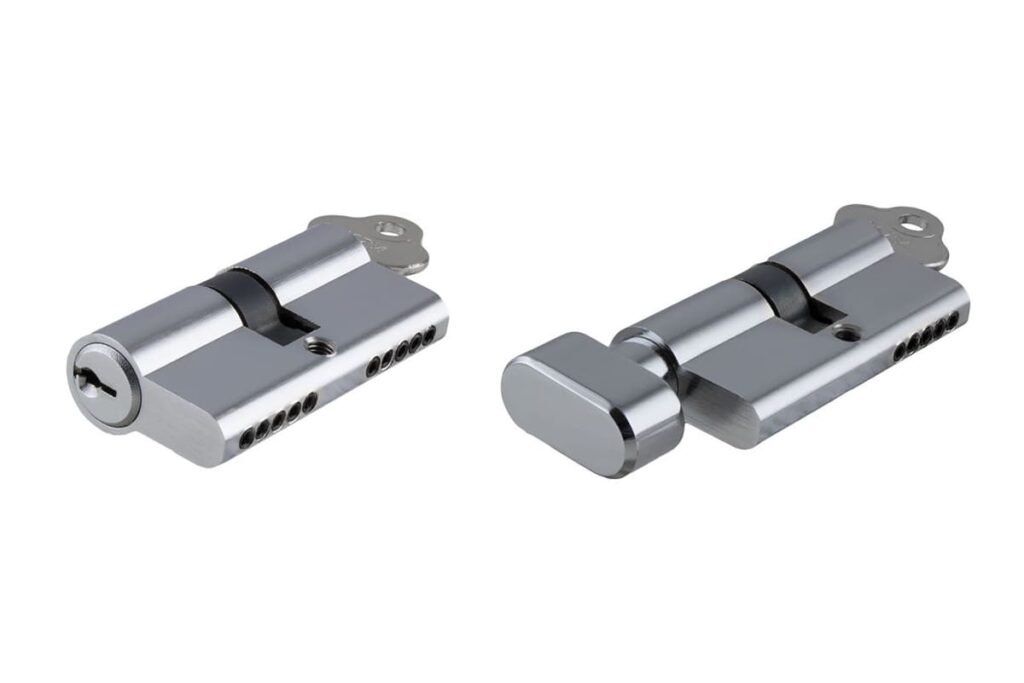
A 30/30 Euro cylinder is 60 mm total length, with 30 mm on each side of the center cam. A 35/35 Euro cylinder is 70 mm total length, with 35 mm on each side.1 The right size depends on finished door thickness, decorative covers, mortise lock position, rebates, and cam alignment—not security grade.
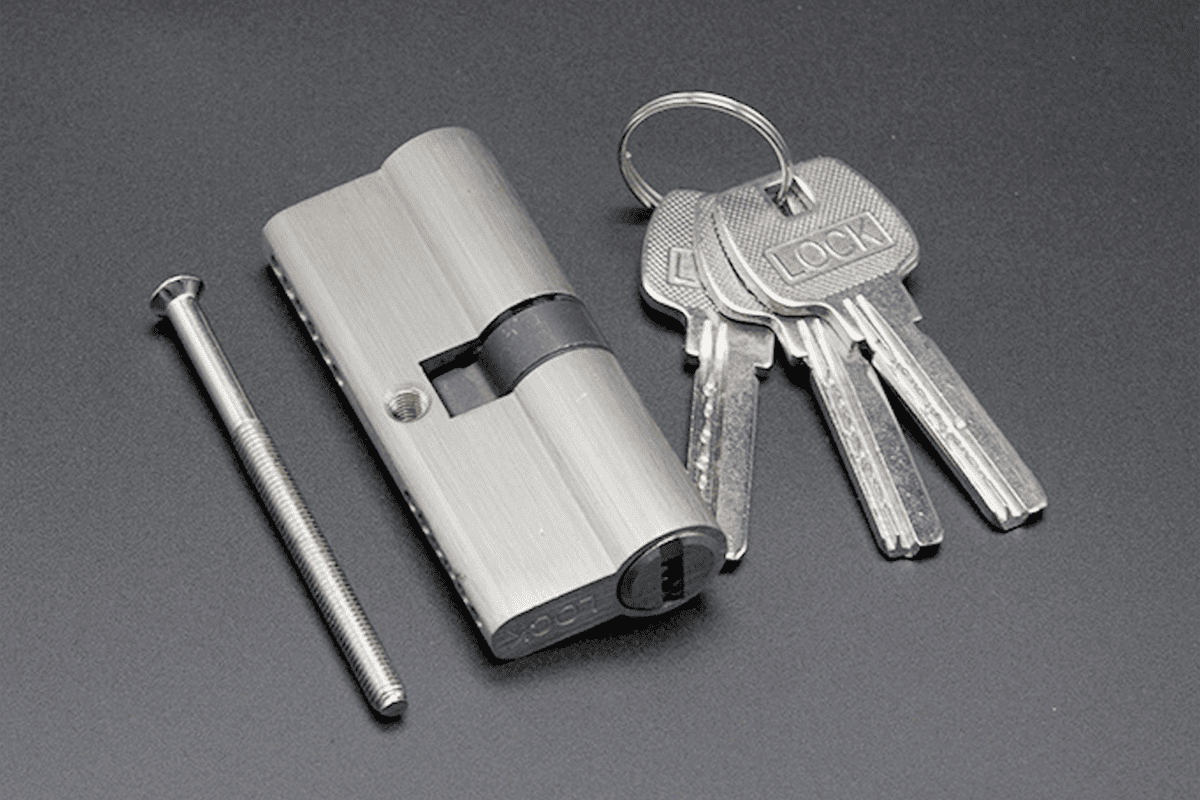
I often help door factory buyers and hardware wholesalers confirm Euro cylinder sizes before production. In my experience, most problems do not come from poor cylinder quality. They come from wrong assumptions about length, especially when covers, escutcheons, thick doors, or rebated structures are not included in the calculation.
What does a 30/30 and 35/35 Euro cylinder mean?
A 30/30 and 35/35 Euro cylinder label can confuse buyers because it looks like a model number or performance grade. That misunderstanding creates risk. If the buyer treats the marking as a quality level, the real sizing question gets missed.
A 30/30 Euro cylinder means 30 mm from the fixing center to one side and 30 mm to the other side, for 60 mm total. A 35/35 Euro cylinder means 35 mm + 35 mm, for 70 mm total. The cam sits near the center and must align with the mortise lock case.
Dive deeper: how Euro cylinder length notation works
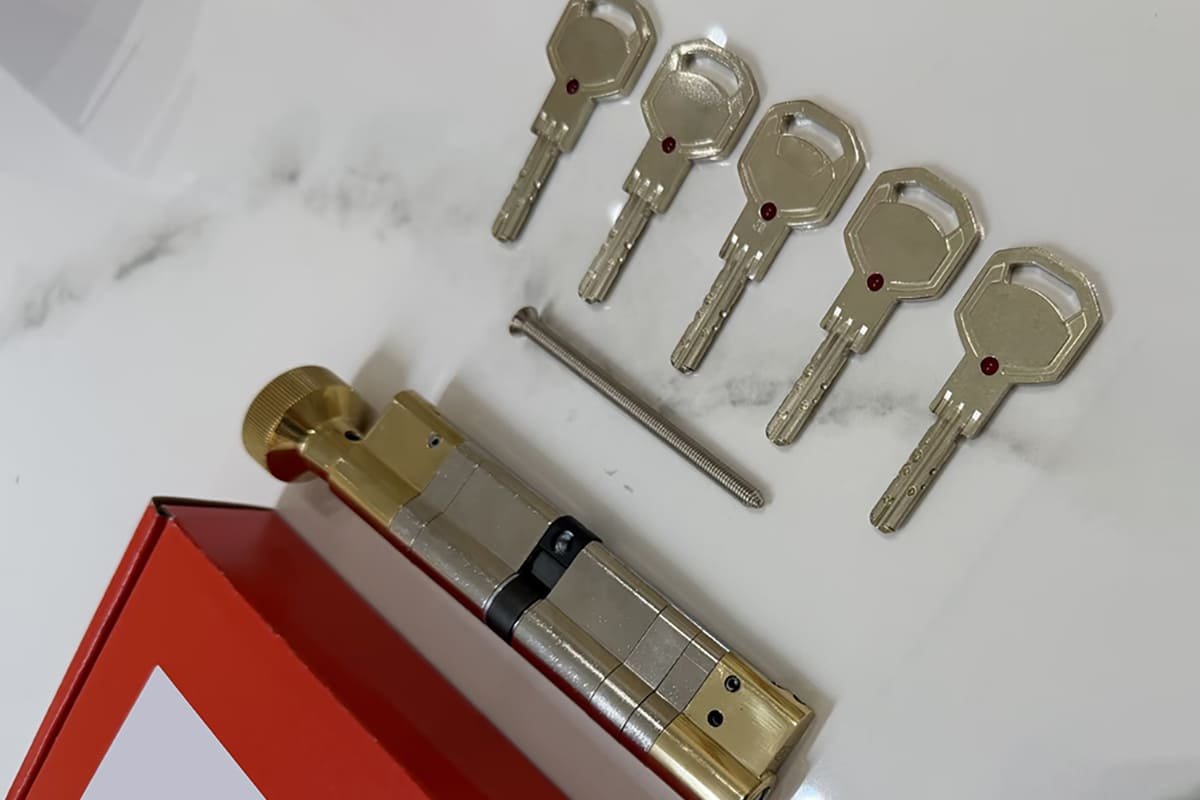
A Euro profile cylinder is usually described by two numbers. These numbers show the distance from the cylinder cam or fixing screw center to each end of the cylinder body.
For example:
| Cylinder Size | Inside Length | Outside Length | Total Length | Split Type |
|---|---|---|---|---|
| 30/30 | 30 mm | 30 mm | 60 mm | Equal |
| 35/35 | 35 mm | 35 mm | 70 mm | Equal |
| 40/40 | 40 mm | 40 mm | 80 mm | Equal |
| 30/40 | 30 mm | 40 mm | 70 mm | Unequal |
| 30/60 | 30 mm | 60 mm | 90 mm | Unequal |
The first number normally refers to one side of the cylinder, and the second number refers to the other side. In procurement communication, I always recommend confirming which side is outside and which side is inside, especially for thumbturn cylinders, anti-drill options, or one-side key functions.
The key point is this:
A 35/35 cylinder is not automatically better than a 30/30 cylinder. It is simply longer. If the door structure only needs 60 mm, a 70 mm cylinder may protrude too much. If the door structure needs 70 mm, a 60 mm cylinder may sit too deep behind the cover or fail to operate smoothly.
Why the cam matters
The cylinder cam is the rotating part that drives the mortise lock mechanism.3 The cam must sit in the correct position inside the lock case. If the cylinder is too short, too long, or split incorrectly, the cam may not engage properly.
This is why I do not ask buyers for door thickness alone. I usually ask for:
- Finished door thickness
- Decorative cover or escutcheon thickness
- Mortise lock body position
- Door rebate details
- Required inside and outside cylinder projection
- Key/key or key/thumbturn function
- Drawing or sample photos, if available
For standard door sets, 30/30, 35/35, and 40/40 are common. For thicker or rebated doors, asymmetric sizes such as 30/40, 35/45, or 30/60 may be needed.
Is a 30/30 and 35/35 Euro cylinder about security or fit?
A 30/30 and 35/35 Euro cylinder is mainly about fit, not security. Many buyers worry that 35/35 means stronger or more premium. That assumption can lead to wrong stock planning and mismatched door hardware sets.
A 30/30 or 35/35 Euro cylinder describes the cylinder’s length configuration. Security depends on other specifications, such as material, pins, anti-drill design, key profile, certification, and test reports.4 The size must first match the door, cover, and mortise lock alignment.
Dive deeper: separating size selection from security evaluation
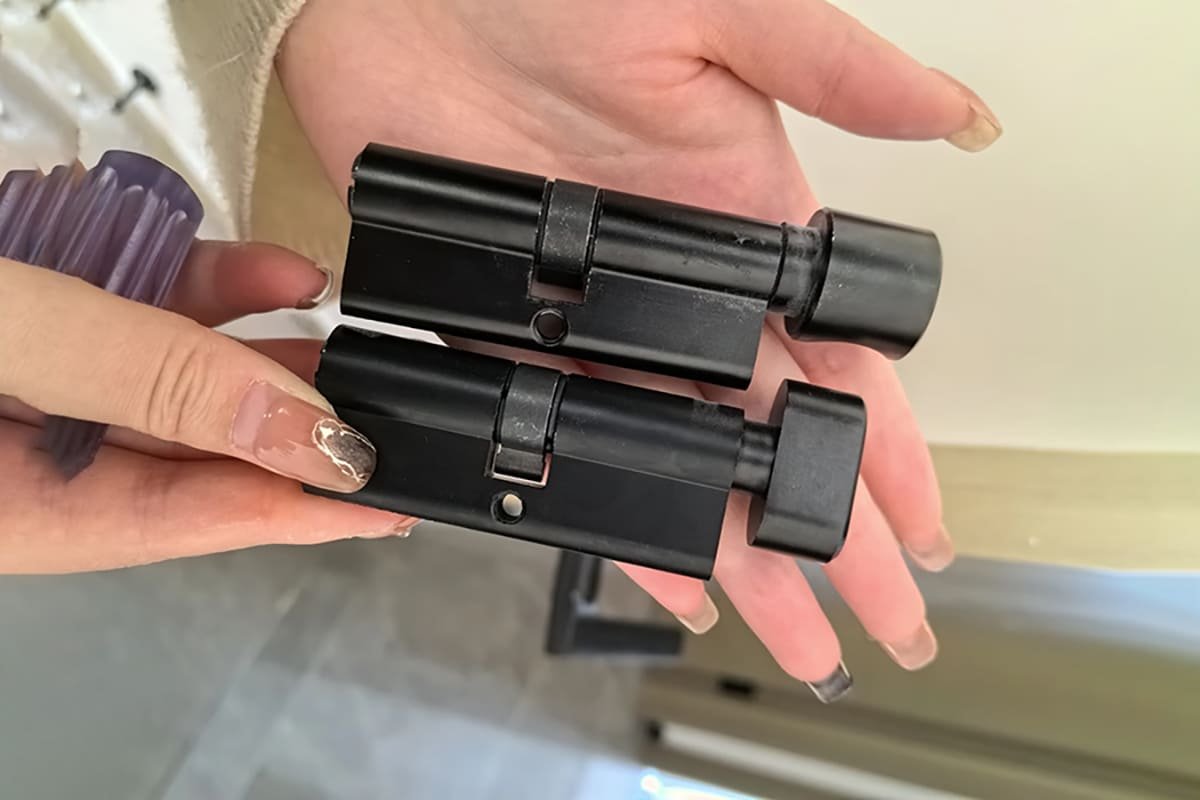
In B2B procurement, it is important to separate dimensional selection from performance evaluation. They are related, but they are not the same.
A cylinder can be the correct grade but the wrong length. It can also be the correct length but unsuitable for a market that requires a specific certificate or keying system. I have seen buyers spend time comparing finishes and packaging, then discover that the cylinder does not sit correctly after the handle set is installed. That problem is avoidable.
What the size tells you
The 30/30 or 35/35 marking tells you:
- The cylinder length on each side of the cam
- The total cylinder body length
- Whether the cylinder is equal or asymmetric
- Whether the cylinder may suit a certain finished door thickness
What the size does not tell you
The size does not confirm:
- Fire-rated performance
- CE compliance
- Anti-drill performance
- Key combination capacity
- Corrosion resistance
- Material composition
- Long-term durability
- Suitability for a specific project specification
For technical procurement, buyers should verify certificates and test reports as documents, not assumptions. If a project requires CE documentation or fire-rated hardware compatibility, the buyer should request current certificate copies, product scope, applicable standards, and item matching details.5
Fit comes first in cylinder sizing
The cylinder must work as part of a complete door hardware system. That system may include:
| Component | Why it affects cylinder selection |
|---|---|
| Door leaf | Provides base thickness, but not the full sizing answer |
| Mortise lock | Determines cam position and cylinder fixing point |
| Lever handle plate | Adds thickness around the cylinder hole |
| Escutcheon or rosette | Changes how far the cylinder must extend |
| Door rebate | May shift inside/outside requirements |
| Decorative cover | Can hide or expose cylinder ends |
| Fire door structure | May require specific tested hardware combinations |
A good Euro cylinder selection process should avoid both extremes. The cylinder should not sit too deep, because the key may not insert comfortably and the cover may interfere. It also should not protrude excessively, because it can look poor and may increase exposure to force.6
As a practical supplier habit, I prefer to confirm finished assembly drawings before advising a cylinder size for bulk orders. When drawings are not available, I ask buyers to measure actual samples.
How do I measure for a 30/30 and 35/35 Euro cylinder?
Measuring for a 30/30 and 35/35 Euro cylinder becomes easier when buyers measure from the lock center, not only across the door slab. The risk starts when the buyer says, “The door is 45 mm, so send 30/30.”
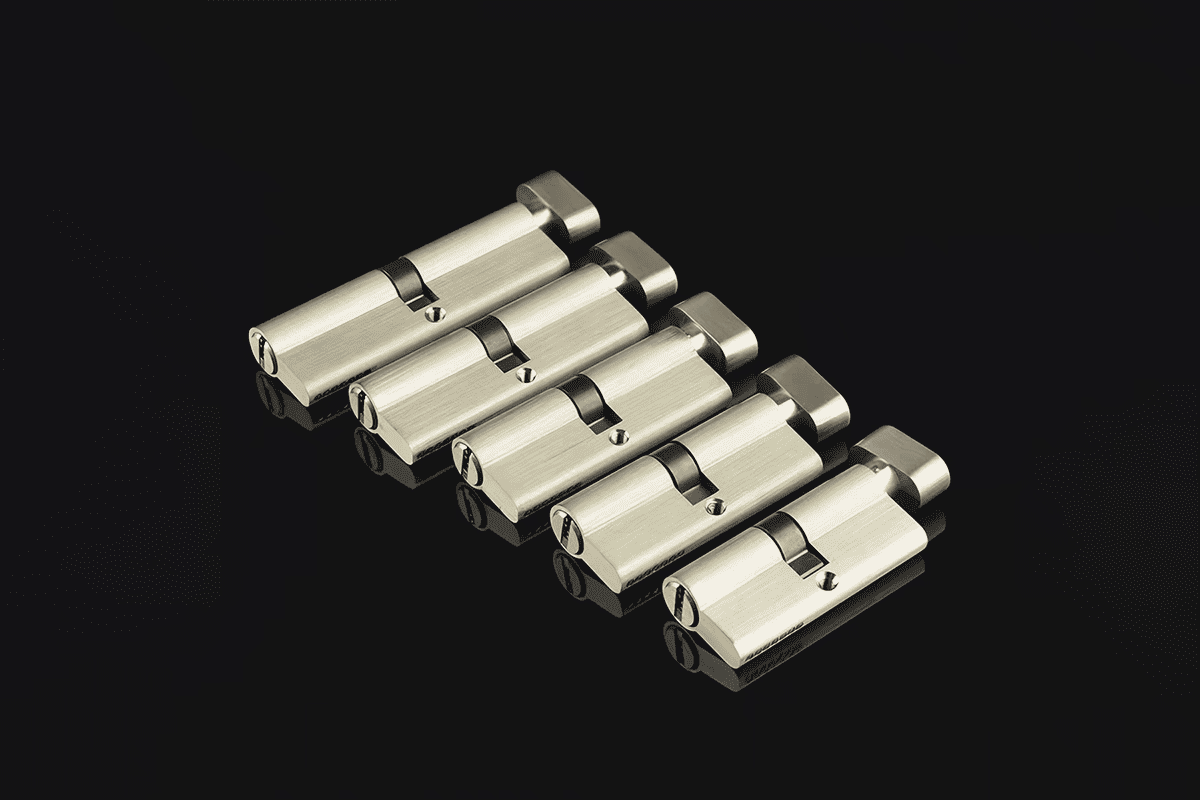
To measure correctly, find the cylinder fixing center or cam center, then measure to both finished door faces after covers, plates, or escutcheons are included. Add a small, controlled allowance so the cylinder sits slightly proud of the cover, not buried and not overexposed.
Dive deeper: a practical measurement process for buyers
A Euro cylinder should be selected based on the finished installed condition. That means the measurement should include all visible hardware that affects the cylinder’s final position.
Here is the basic process I recommend to buyers before confirming an order.
Step 1: Confirm the mortise lock position
The mortise lock determines where the cylinder cam must sit. The cylinder passes through the door and operates the lock through the cam. If the lock case is not centered in the door edge, the cylinder split may need to be unequal.
Buyers should check:
- Lock case thickness
- Cylinder hole position
- Backset and center distance
- Fixing screw position
- Whether the lock is centered or offset in the door leaf
Step 2: Measure from the center to each finished side
Measure from the cylinder fixing center to the outside finished surface. Then measure from the same center to the inside finished surface.7
The finished surface may include:
- Door face material
- Stainless steel plate
- Lever handle backplate
- Cylinder escutcheon
- Decorative cover
- Fire-rated trim components, where applicable
Step 3: Add cover allowance
In one common configuration I often discuss with buyers, the decorative covers are about 8 mm per side. In that case, a practical total-length check is:
Cylinder total length should be greater than door thickness + 16 mm + about 2 mm.8
This means:
- 16 mm = 8 mm cover on each side
- About 2 mm = small proud allowance, often around 1 mm per side
This rule is configuration-dependent, not universal. If the covers are 6 mm, 10 mm, or if a long backplate is used, the allowance must be adjusted.
Example sizing table
| Finished Door Thickness | Cover Thickness | Approx. Total Needed | Common Cylinder to Check |
|---|---|---|---|
| 40 mm | 8 mm + 8 mm | More than 58 mm | 30/30 = 60 mm |
| 45 mm | 8 mm + 8 mm | More than 63 mm | 35/35 = 70 mm |
| 50 mm | 8 mm + 8 mm | More than 68 mm | 35/35 = 70 mm |
| 60 mm | 8 mm + 8 mm | More than 78 mm | 40/40 = 80 mm |
This table is not a final engineering rule. It is a procurement screening guide. The actual answer still depends on the cylinder hole, cover design, and mortise lock alignment.
Step 4: Control protrusion
A cylinder should usually sit slightly proud of the cover so the key can operate comfortably. However, excessive protrusion is not desirable. For batch production, buyers should define an acceptable projection range and inspect samples before mass shipment.
A simple checklist helps prevent mistakes:
- Does the key insert fully without hitting the cover?
- Does the cam rotate smoothly?
- Does the fixing screw align cleanly?
- Does the cylinder sit evenly on both sides?
- Does the exposed length match the approved sample?
- Does the finish match the lever handle and cover?
I always prefer to confirm these details before packing because a 5 mm difference across hundreds or thousands of sets can become a serious after-sales problem.
When do I need an asymmetric Euro cylinder instead?
A 30/30 and 35/35 Euro cylinder has an equal split, so both sides are the same length. That works well when the lock case is centered and the two finished sides are similar. But not every door is built that way.
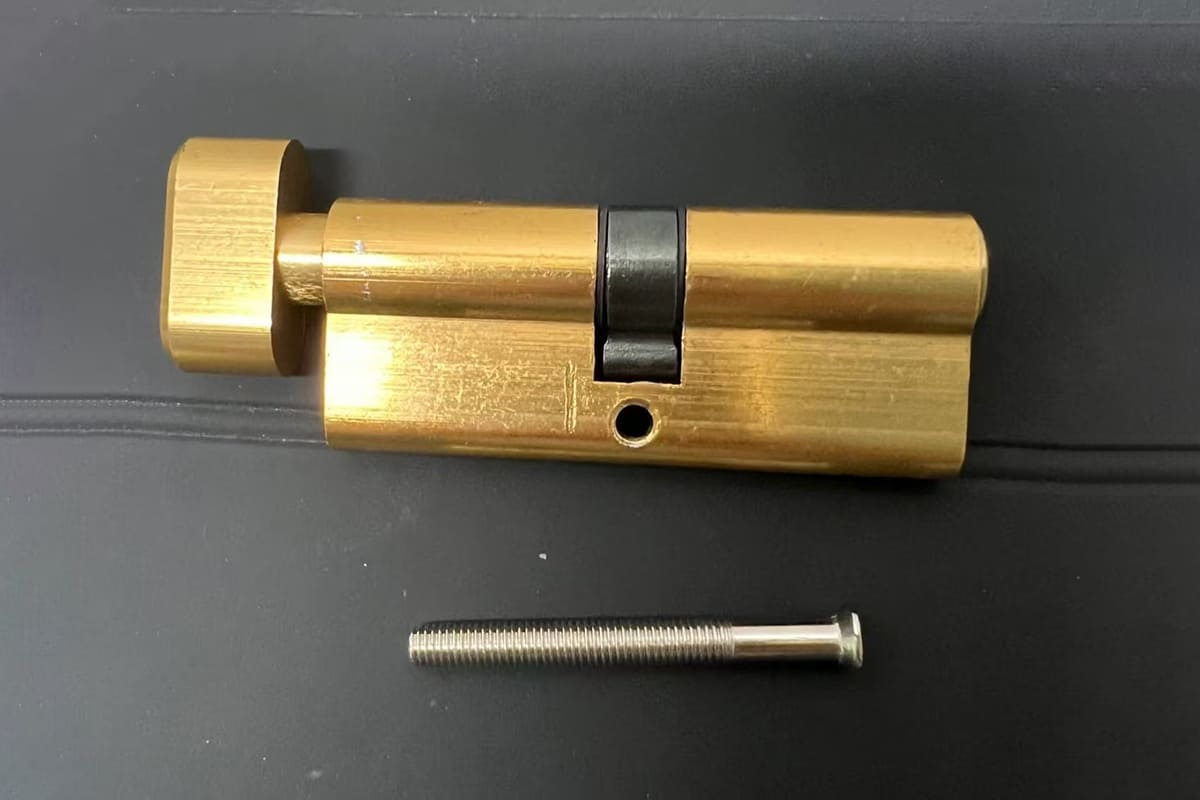
An asymmetric Euro cylinder is needed when the distance from the cam center to one finished side is different from the other. Rebated heavy doors, offset mortise locks, thick exterior panels, or unequal decorative fittings can require sizes such as 30/40, 35/45, or 30/60.
Dive deeper: why unequal cylinder lengths exist
Asymmetric cylinders are common in project hardware and export door sets. They are not unusual, and they are not wrong. They simply solve a real installation condition.
A standard equal cylinder assumes that the lock’s cylinder center is roughly balanced between the two finished faces. But several door structures break that assumption.
Common reasons for asymmetric cylinder sizing
Rebated doors
A rebated door has a stepped edge.9 This structure can shift the effective inside and outside surfaces. A cylinder that looks correct by door thickness may be short on one side.Heavy entrance doors
Some heavy doors use thicker panels, added facing materials, or reinforced structures. The lock body may not sit in the exact middle.Different inside and outside trims
The outside may use a thicker security escutcheon, while the inside uses a thinner cover. That difference changes the required split.Offset lock installation
The mortise lock may be positioned closer to one face because of door construction or design limitations.10Thumbturn cylinders
If one side has a thumbturn knob, buyers must confirm which side receives the longer length and whether the thumbturn clears the cover.
Equal vs asymmetric selection
| Door Condition | Likely Cylinder Type | Buyer Action |
|---|---|---|
| Same trim both sides, lock centered | Equal, such as 30/30 or 35/35 | Confirm total thickness and sample fit |
| Thicker outside cover | Unequal, longer outside side | Confirm outside projection |
| Rebated heavy door | Often unequal | Send door section drawing |
| Lock case offset | Unequal | Measure from cam center to both faces |
| Different market trims | May vary by region | Confirm each SKU separately |
Why 30/60 needs special attention
A 30/60 Euro cylinder means one side is 30 mm and the other side is 60 mm.11 This is not a “longer version” of 30/30 in a general sense. It is a specific asymmetric configuration. The door preparation, mortise lock position, and inside/outside orientation must be checked carefully.
For example, if a buyer orders 30/60 but installs it backward, the long side may appear on the wrong face. That can cause:
- Excessive protrusion outside
- Poor appearance inside
- Key access problems
- Interference with the cover
- Failure to match approved door samples
For B2B orders, I recommend marking the inside and outside side clearly in drawings, cartons, and product lists. This is especially important when the same project uses several door thicknesses.
How should buyers confirm Euro cylinder size before bulk ordering?
Choosing a 30/30 and 35/35 Euro cylinder for one sample is simple. Confirming the same size for hundreds of door sets requires more discipline. Small measurement gaps can become batch mismatches after finishing, packing, or overseas delivery.
Before bulk ordering, buyers should confirm door thickness, cover thickness, mortise lock model, cylinder split, inside/outside orientation, finish, function, and certificates where required. A physical pre-production sample is the safest way to verify fit before mass production.12
Dive deeper: procurement checklist for door factories and wholesalers
When I support door manufacturers or hardware wholesalers, I try to make cylinder confirmation visual and repeatable. A written size like 35/35 is useful, but it is not enough by itself.
Information buyers should provide
For accurate supplier confirmation, buyers should prepare:
- Door thickness after finish
- Door material and structure
- Rebate drawing, if the door is rebated
- Mortise lock model or drawing
- Cylinder hole center position
- Cover or escutcheon thickness
- Handle plate thickness, if relevant
- Inside/outside designation
- Key/key, key/thumbturn, or half-cylinder function
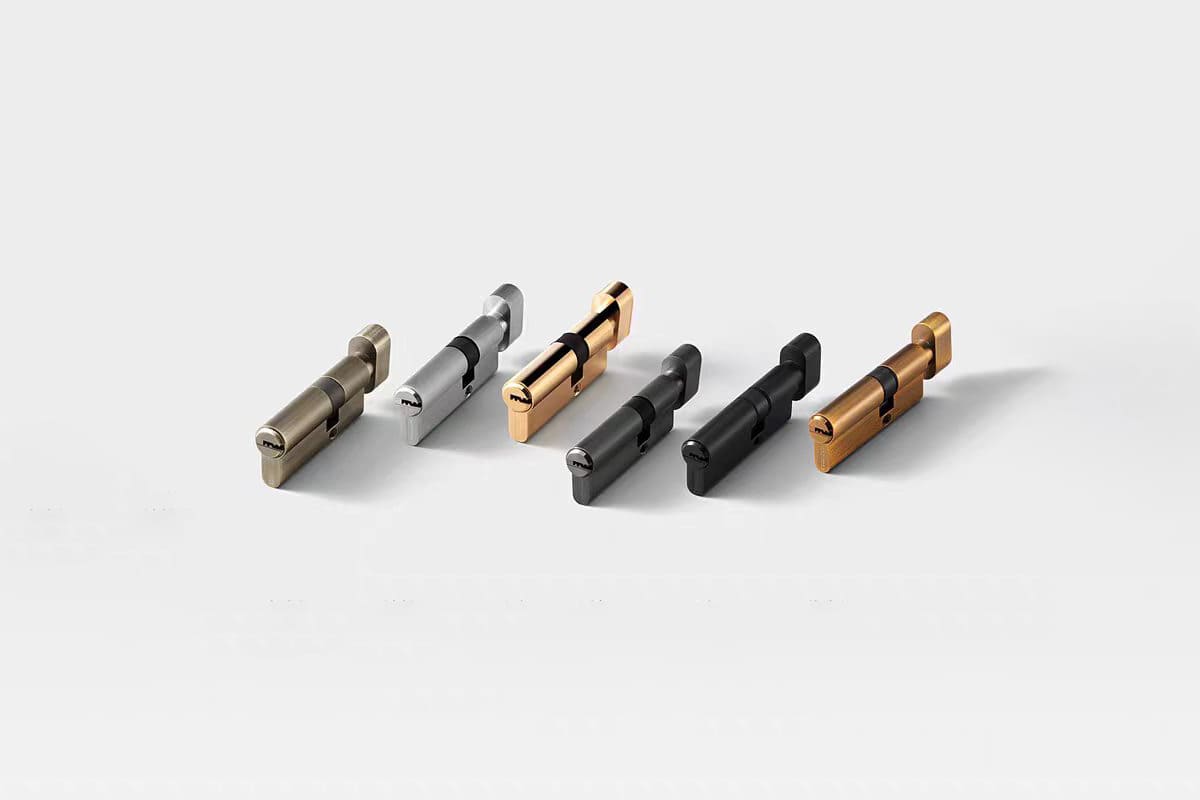
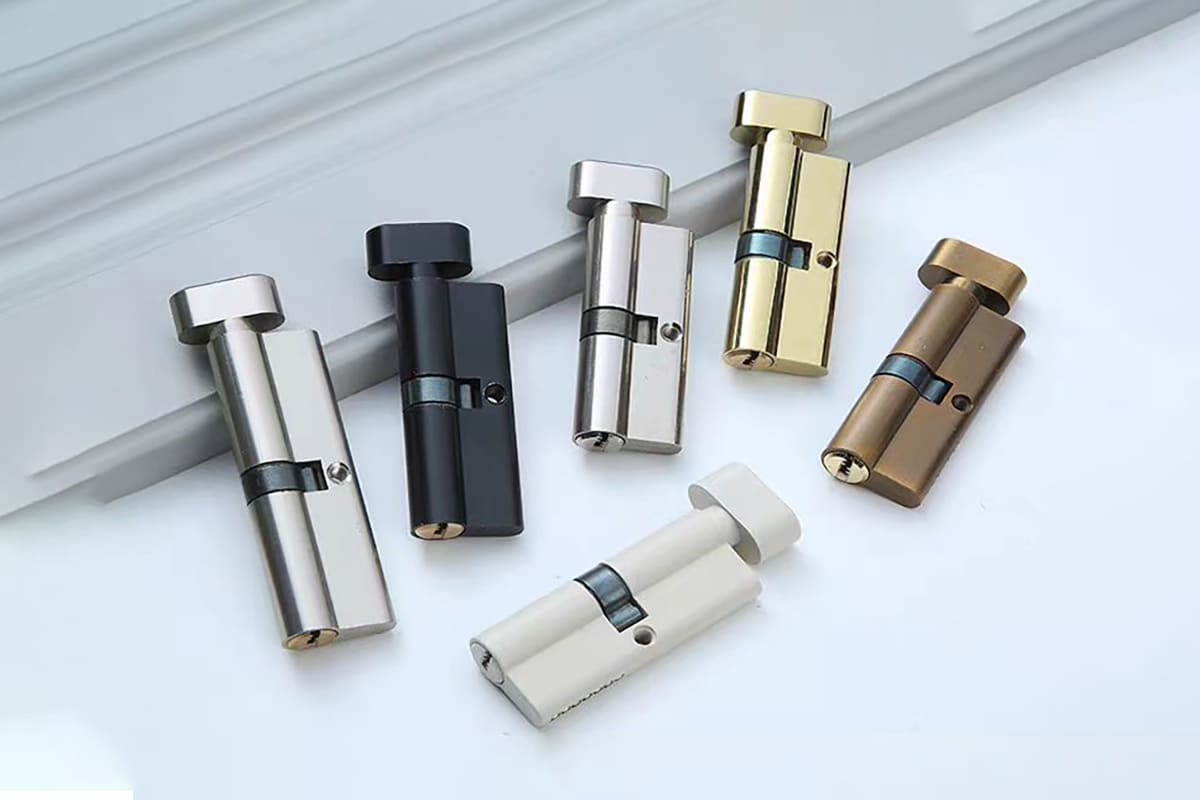
- Required finish, such as satin nickel, brass, black, or stainless look
- Certificate requirements, such as CE or fire-rated documentation where applicable
- Order quantity and packing method
This information helps the supplier recommend a size. It also helps the buyer compare quotations correctly. A cheaper cylinder quotation may not be useful if it excludes the correct function, finish, or documentation.
Sample approval matters
A pre-production sample should be checked with the actual lock and trim. The sample inspection should include:
- Cylinder insertion into the mortise lock
- Fixing screw alignment
- Cam operation
- Key rotation feel
- Inside and outside projection
- Cover clearance
- Finish consistency
- Marking and packaging
- Certificate document review, if needed
I do not recommend approving bulk production only from catalog dimensions when a project door has special thickness, rebate, or trim design.
Quality control points for B2B orders
For bulk orders, buyers should also control consistency. Cylinder length is only one dimension. The full lock cylinder order should be checked for stable manufacturing quality.
| QC Point | Why it matters |
|---|---|
| Body length tolerance | Prevents inconsistent projection across doors |
| Cam position | Ensures smooth mortise lock operation |
| Key operation | Reduces after-sales complaints |
| Surface finish | Keeps hardware sets visually consistent |
| Screw hole accuracy | Avoids installation delays |
| Function type | Prevents wrong key/key or thumbturn shipment |
| Packing labels | Helps warehouse and jobsite sorting |
| Certificate scope | Confirms documents match ordered items |
Supplier selection considerations
A good cylinder supplier should help buyers confirm fit before selling quantity. In my view, the supplier should be able to discuss the complete door hardware set, not only the cylinder. This includes mortise locks, lever handles, butt hinges, concealed hinges, and accessory covers.
For technical or fire-rated applications, buyers should also involve qualified project professionals and verify that the selected hardware combination meets the required project standard. A supplier can provide product data and documents, but final application-specific decisions should be reviewed by the responsible professional.
What mistakes should I avoid when choosing a 30/30 and 35/35 Euro cylinder?
A 30/30 and 35/35 Euro cylinder is easy to order incorrectly because the numbers look simple. That simplicity is the danger. Buyers often choose based only on door thickness, old stock habits, or a competitor’s sample.
The biggest mistakes are treating 30/30 and 35/35 as security grades, ignoring covers, forgetting rebate structure, assuming equal split always works, and failing to test with the actual mortise lock. The correct size must be confirmed in the finished door assembly.
Dive deeper: common sizing problems I see in procurement
Wrong cylinder size usually creates visible problems. The cylinder may sit too deep, stick out too far, or fail to operate the lock smoothly. In bulk orders, the problem becomes more serious because every door set repeats the same mistake.
Mistake 1: using door thickness alone
Door thickness is only the starting point. A 45 mm door can require different cylinder sizes depending on the trim.
For example:
- 45 mm door + thin rosettes may fit differently from 45 mm door + 8 mm covers.
- 45 mm plain door may differ from a 45 mm rebated door.
- 45 mm door with centered lock may differ from a door with offset lock placement.
Mistake 2: ignoring decorative covers
Decorative covers add real thickness. If each cover is 8 mm, the total added thickness is 16 mm. The cylinder must extend enough to pass through the assembly and remain usable.
However, the cover thickness rule must match the actual cover. A 10 mm outside escutcheon and 5 mm inside cover require a different split from two equal 8 mm covers.
Mistake 3: assuming equal cylinders always work
Equal sizes such as 30/30 and 35/35 are common, but they are not universal. If the lock center is not centered between finished faces, an equal cylinder may look wrong on one side.
Mistake 4: failing to define inside and outside
This problem appears often with asymmetric cylinders and thumbturn functions. Buyers should specify orientation clearly:
- Outside key side
- Inside key side
- Inside thumbturn side
- Longer side direction
- Required marking on packaging
Mistake 5: not checking documents
If the order is for a project or regulated market, buyers should verify certificates and test reports. The document should match the product type and applicable standard. Buyers should not assume that one certificate covers every cylinder size, finish, or hardware combination.
A careful confirmation process is not slow. It is cheaper than rework, replacement, or delayed shipment.
Frequently Asked Questions
Is a 35/35 Euro cylinder stronger than a 30/30 Euro cylinder?
No. A 35/35 Euro cylinder is longer than a 30/30 Euro cylinder, but the size itself does not prove higher security. Security depends on design, material, key system, anti-drill features, and verified certification or test documentation.
Can I use a 35/35 cylinder instead of a 30/30 cylinder?
You can only use 35/35 instead of 30/30 if the finished door assembly needs the extra length. If the door and covers are designed for 30/30, a 35/35 cylinder may protrude too far and look incorrect.
How much should a Euro cylinder protrude from the cover?
The cylinder usually should sit slightly proud of the cover so the key operates easily. The exact projection depends on the cover design and project requirements. Buyers should approve a sample and define an acceptable projection range before bulk orders.
What size Euro cylinder do I need for a 45 mm door?
A 45 mm door often needs more than 45 mm total cylinder length because covers or escutcheons add thickness. With 8 mm covers on both sides and slight projection, 35/35 may be a common option, but the mortise lock position and trim must still be checked.
Why would I need a 30/60 Euro cylinder?
A 30/60 Euro cylinder is used when one side of the door requires much more cylinder length than the other. This can happen with rebated doors, thick panels, offset mortise locks, or unequal inside/outside trim. Orientation must be confirmed carefully.
Conclusion
A 30/30 and 35/35 Euro cylinder difference is a length difference, not a security grade. A 30/30 cylinder is 60 mm total, while a 35/35 cylinder is 70 mm total. The right choice depends on finished door thickness, cover thickness, mortise lock alignment, rebate structure, and inside/outside requirements. If you are preparing a bulk order, send us your door thickness, cover details, mortise lock drawing, and rebate section. I can help confirm the suitable Euro cylinder size before production.
"What Is the Difference Between a 30/30 and 35/35 Euro ...", https://akada-hardware.com/what-is-the-difference-between-a-30-30-and-35-35-euro-cylinder-and-which-size-do-i-need/. A standards or industry reference on Euro profile cylinders describes cylinder length as a two-sided measurement from the central cam or fixing point, which supports interpreting 30/30 as 60 mm overall and 35/35 as 70 mm overall. Evidence role: definition; source type: institution. Supports: The source should support that Euro profile cylinder size notation commonly gives the two half-lengths from the cam or fixing-screw center, making 30/30 equal to 60 mm and 35/35 equal to 70 mm overall.. ↩
"Understanding Cylinder Security Standards, Tests and Certifications", https://www.duffells.com/blog/products/understanding_cylinder_security_standards_tests_and_certifications/. Technical references for Euro profile cylinders distinguish dimensional size notation from performance classifications, supporting the statement that split numbers such as 30/30 or 35/35 are measurements rather than quality grades. Evidence role: definition; source type: institution. Supports: The source should show that cylinder size markings describe dimensional length, while security or durability ratings are handled through separate classifications or certifications.. ↩
"Unraveling the Dramatic Spinning Key Occurrence", https://www.adh.com.au/post/the-spinning-key-occurrence. General lock-mechanism references describe the cylinder cam as the rotating element that transfers key motion to the lock case, supporting the explanation of how a Euro cylinder operates a mortise lock. Evidence role: mechanism; source type: encyclopedia. Supports: The source should explain that the cam or tailpiece of a lock cylinder transmits rotation from the key to the lock case mechanism.. ↩
"BS EN 1303 – Cylinders - HOPPE International", https://www.hoppe.com/in-en/contacts-service/standards/bs-en-1303/. Cylinder-lock performance standards classify security and durability through specified design and test criteria, supporting the article’s distinction between length selection and security evaluation. Evidence role: expert_consensus; source type: institution. Supports: The source should support that cylinder security is assessed through criteria such as attack resistance, key security, durability, materials, and certification rather than cylinder length.. ↩
"Declaration of Performance and CE marking", https://single-market-economy.ec.europa.eu/sectors/construction/construction-products-regulation-cpr/declaration-performance-and-ce-marking_en. Official guidance on CE marking and fire-door compliance emphasizes that product documentation must identify the applicable standard, declared performance, and product scope, supporting the article’s advice to verify certificates against the ordered hardware. Evidence role: general_support; source type: government. Supports: The source should support that regulated construction products and fire-door assemblies require documentation tied to applicable standards, declared performance, and product scope.. Scope note: This supports the documentation principle generally; it may not address every Euro cylinder configuration directly. ↩
"Euro cylinder lock: a bit protruded or recessed? : r/Locksmith - Reddit", https://www.reddit.com/r/Locksmith/comments/1qpg8q2/euro_cylinder_lock_a_bit_protruded_or_recessed/. Security and installation guidance for Euro profile cylinders notes that exposed projection should be controlled because excessive protrusion can increase vulnerability to force, while inadequate projection can interfere with normal key use. Evidence role: mechanism; source type: institution. Supports: The source should support that Euro cylinders should be installed with controlled projection and that excessive external projection can make forced attack easier.. Scope note: Such sources usually support the security and installation principle rather than the exact acceptable projection range for every cover design. ↩
"How to Measure & Replace a Euro Cylinder Lock", https://www.lockshop-warehouse.co.uk/info/installing-your-locks/installing-euro-cylinders/. Installation references for Euro profile cylinders describe measuring from the central fixing screw position to each side of the door or hardware, supporting the article’s method of measuring inside and outside lengths separately. Evidence role: definition; source type: institution. Supports: The source should show that Euro cylinder length is measured from the central fixing screw or cam position to each end or finished side.. ↩
"Euro Cylinder Sizes Explained: 30/30, 35/45, 40/40 and More – WELOCK", https://www.welock.com/blogs/news/euro-cylinder-sizes-explained?srsltid=AfmBOoqIf1ZHXYmFJBQnprbCWaJHmxeUgYvbv8IAD-ZON2YA1xQQxkIf. Euro cylinder measuring guidance generally requires adding the thickness of door furniture or escutcheons to the door measurement and allowing sufficient projection for operation, which contextualizes the article’s example formula for two 8 mm covers. Evidence role: general_support; source type: institution. Supports: The source should support the underlying sizing principle that total cylinder length must account for door thickness, hardware or escutcheon thickness, and a small usable projection.. Scope note: The cited source may support the measurement principle rather than the exact 16 mm plus 2 mm allowance used in this specific example. ↩
"What are Rebated Doors?", https://www.novaexteriors.com/blog/what-are-rebated-doors/. Architectural and joinery references define a rebate as a recess or step cut along an edge, supporting the article’s description of a rebated door as having a stepped edge. Evidence role: definition; source type: encyclopedia. Supports: The source should define a rebate in joinery or doors as a stepped recess or shoulder formed along an edge.. ↩
"Euro Cylinder Sizes Explained: 30/30, 35/45, 40/40 and More – WELOCK", https://www.welock.com/blogs/news/euro-cylinder-sizes-explained?srsltid=AfmBOop7F_D4uUB5X0eAHn3OixHfmfUHw5W-V0QUXYDdY15mKuCOeL2p. Door-hardware installation guidance explains that cylinder sizing depends on the distance from the lock center to each finished face, supporting the claim that an offset mortise lock can require an asymmetric Euro cylinder. Evidence role: mechanism; source type: institution. Supports: The source should support that cylinder length is affected by the lock case position relative to the finished door faces and that unequal distances require unequal cylinder lengths.. ↩
"Euro Cylinder Sizes Explained: 30/30, 35/45, 40/40 and More", https://www.welock.com/blogs/news/euro-cylinder-sizes-explained?srsltid=AfmBOopLyyRxt9TQR13y516t-YY6jziWclnoOnCshG98-1C97mSt3TGI. Euro cylinder sizing references explain that split measurements identify the length on each side of the center, supporting the interpretation of 30/60 as an asymmetric cylinder with 30 mm on one side and 60 mm on the other. Evidence role: definition; source type: institution. Supports: The source should confirm that split-size Euro cylinder labels give the two side lengths and that unequal labels such as 30/60 indicate asymmetric lengths.. ↩
"What Happens Between Sample Approval and Production? Many ...", https://www.facebook.com/yourscustomshoes/posts/-what-happens-between-sample-approval-and-productionmany-brands-think-the-hard-p/1069528832262902/. Quality-assurance references describe pre-production sample approval or first-article inspection as a method for verifying conformity before mass production, supporting the article’s advice to test a physical sample before bulk ordering. Evidence role: general_support; source type: education. Supports: The source should support that pre-production samples or first-article inspections are used to verify design, fit, and conformity before full-scale production.. Scope note: This supports the manufacturing quality-control principle generally rather than Euro cylinder procurement specifically. ↩