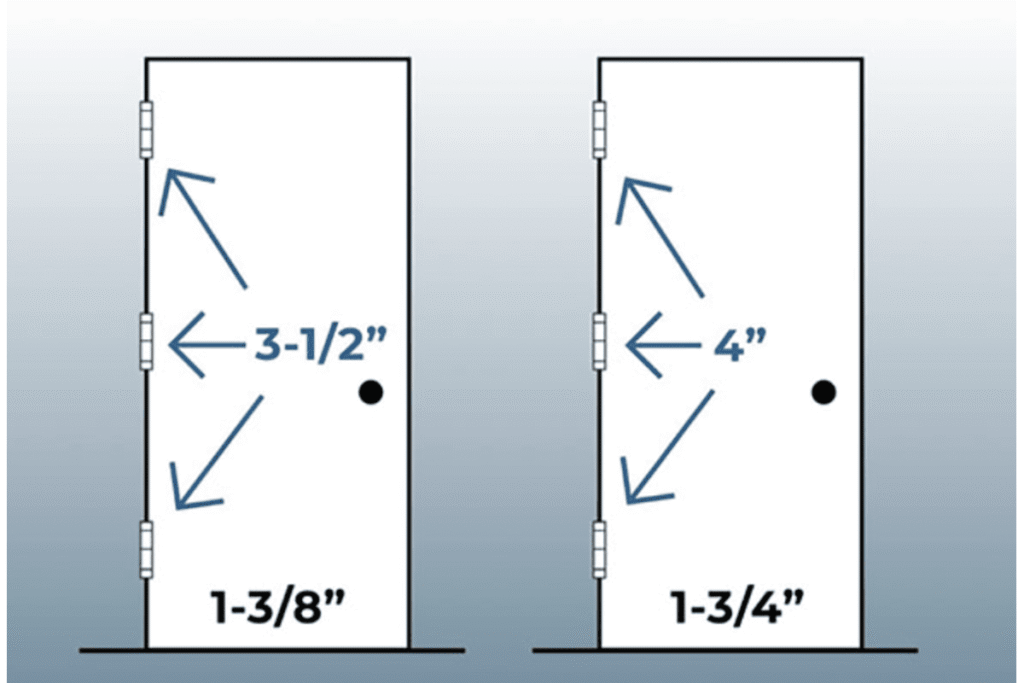
What Does 3 Hinge Position Mean on Doors?
3 hinge position can confuse buyers because it sounds like a hinge model, a special grade, or a product code. That confusion can lead to wrong quotations, incorrect door machining, and mismatched hardware. I usually explain it simply: it describes where three hinge locations are prepared on the door and frame.
“3 hinge position” means the door leaf and frame are designed or machined for three hinge locations. It does not mean a special hinge type. Buyers usually choose three hinge positions when door height, weight, material, usage frequency, or anti-sag requirements make two hinges less suitable for the application.
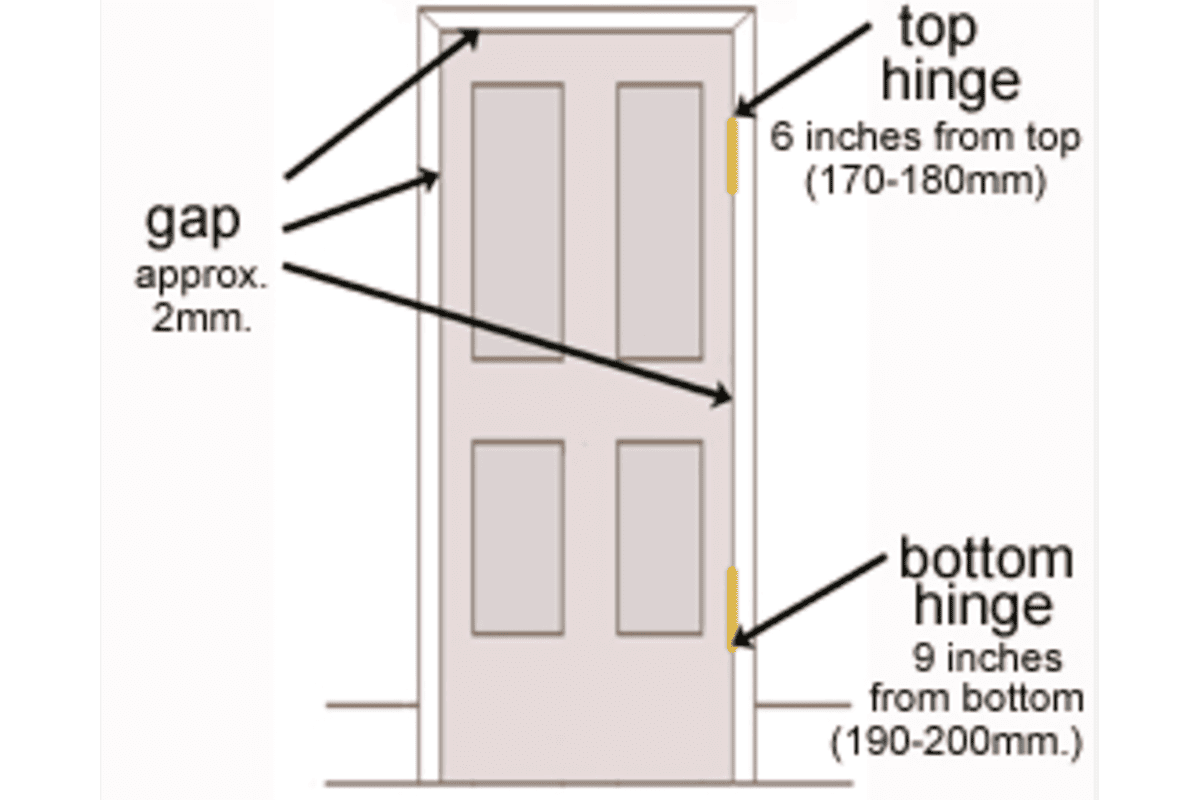
When I discuss hinge requirements with door factories and hardware buyers, I always separate three ideas: hinge quantity, hinge position, and hinge specification. Once these are clear, the discussion becomes easier, and the buyer can confirm drawings, machining, and hinge purchasing with fewer mistakes.
What Does 3 Hinge Position Mean on Doors in Practical Terms?
Many buyers see 3 hinge position on a drawing or quotation and worry that they need a special hinge. That small misunderstanding can affect the whole order. If the door factory machines the wrong openings, the hinge supplier may be blamed, even when the hinge itself is correct.
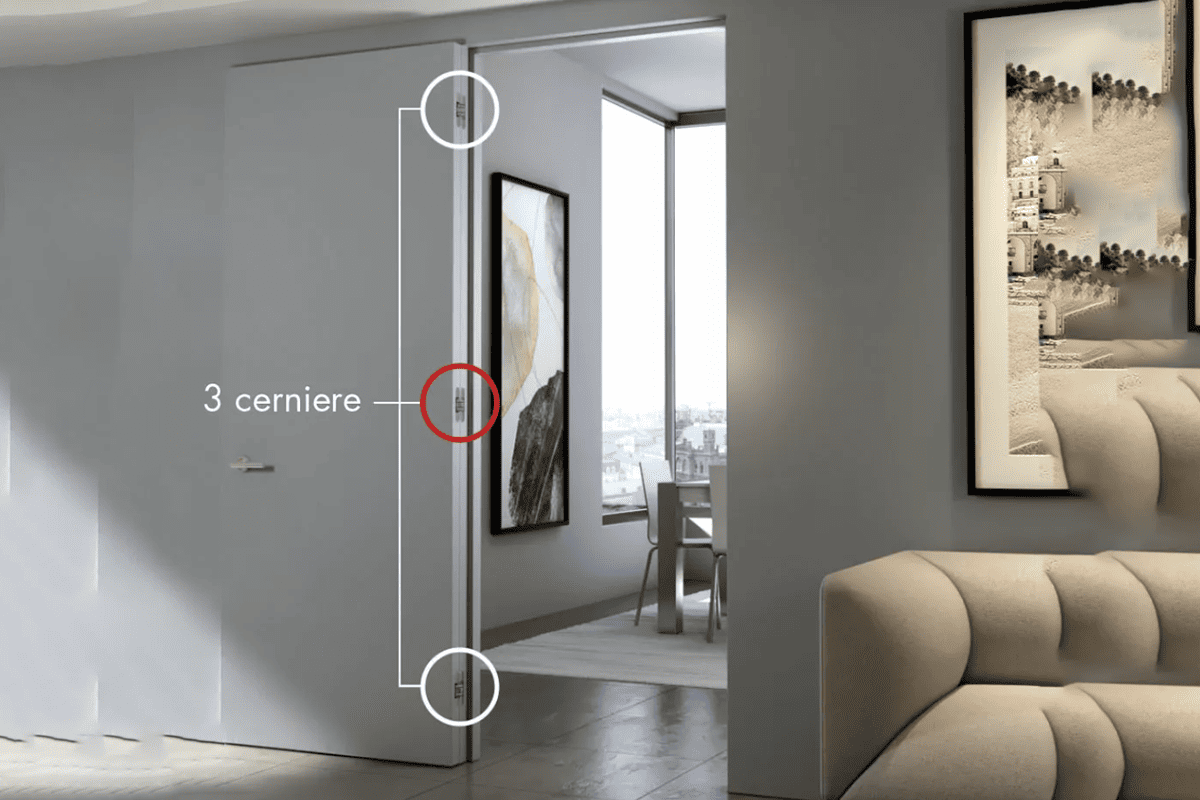
In practical terms, 3 hinge position means the door has three planned hinge locations on the door leaf and matching frame. It refers to hinge placement and quantity, not the hinge model.1 The actual hinge may be a butt hinge, concealed hinge, or another approved hinge type, depending on the door system.
Hinge quantity, hinge position, and hinge specification are different
I often see these three terms mixed together during pre-sales communication. They sound related, but they do not mean the same thing.
| Term | What it means | Example buyer question |
|---|---|---|
| Hinge quantity | How many hinges are used on one door leaf | “Do we need two hinges or three hinges?” |
| Hinge position | Where the hinges are located on the door and frame | “Where should the third hinge be placed?” |
| Hinge specification | The hinge size, material, load rating, finish, certification, and structure | “Should we use stainless steel butt hinges or concealed hinges?” |
A door may use three hinge positions with standard butt hinges. Another door may use three positions with concealed hinges. A third door may use only two concealed hinges if the hinge load capacity and door system allow it. The position count alone does not define the hinge product.
Why the term appears in quotations and drawings
The phrase usually appears in:
- Door leaf machining drawings
- Frame preparation drawings
- Hardware schedules
- Project door lists
- Factory production instructions
- Buyer quotation sheets
- ODM customization files
For a manufacturer, this detail matters because hinge openings must match between the door leaf and the frame2. If the hinge position is wrong by even a small amount, the door may not align during assembly. In bulk orders, that mistake can affect hundreds or thousands of sets.
From my experience, the biggest risk is not that buyers choose three hinges. The bigger risk is that buyers approve a drawing without confirming why three hinge positions are needed and where they should be located.
It is not automatically a higher-grade door
A door with 3 hinge position is not always better than a door with two hinge positions.3 It may simply be more suitable for a certain height, weight, or usage condition.
For example:
- A normal-height interior door may work well with two suitable hinges.
- A taller wooden door may need three hinge locations to reduce sagging risk.
- A heavy fire-rated or project door may need hinge quantity and position based on certified system drawings.
- A concealed door hinge system may require different load calculations from a traditional butt hinge system.
So I do not advise buyers to ask, “Is three better than two?” I suggest they ask, “Does this door condition require three hinge positions?”
When Is 3 Hinge Position Needed on Doors?
A buyer may think adding another hinge is a simple safety upgrade. That sounds reasonable, but it can create extra machining cost, longer assembly time, and possible mismatch with certified drawings. The decision should come from the door’s real working condition, not from habit.
3 hinge position is commonly considered when the door is taller, heavier, wider, used frequently, or made from material that has higher deformation risk. Many standard doors use two hinges, but doors above about 2100 mm or doors with higher load requirements often need extra support evaluation.
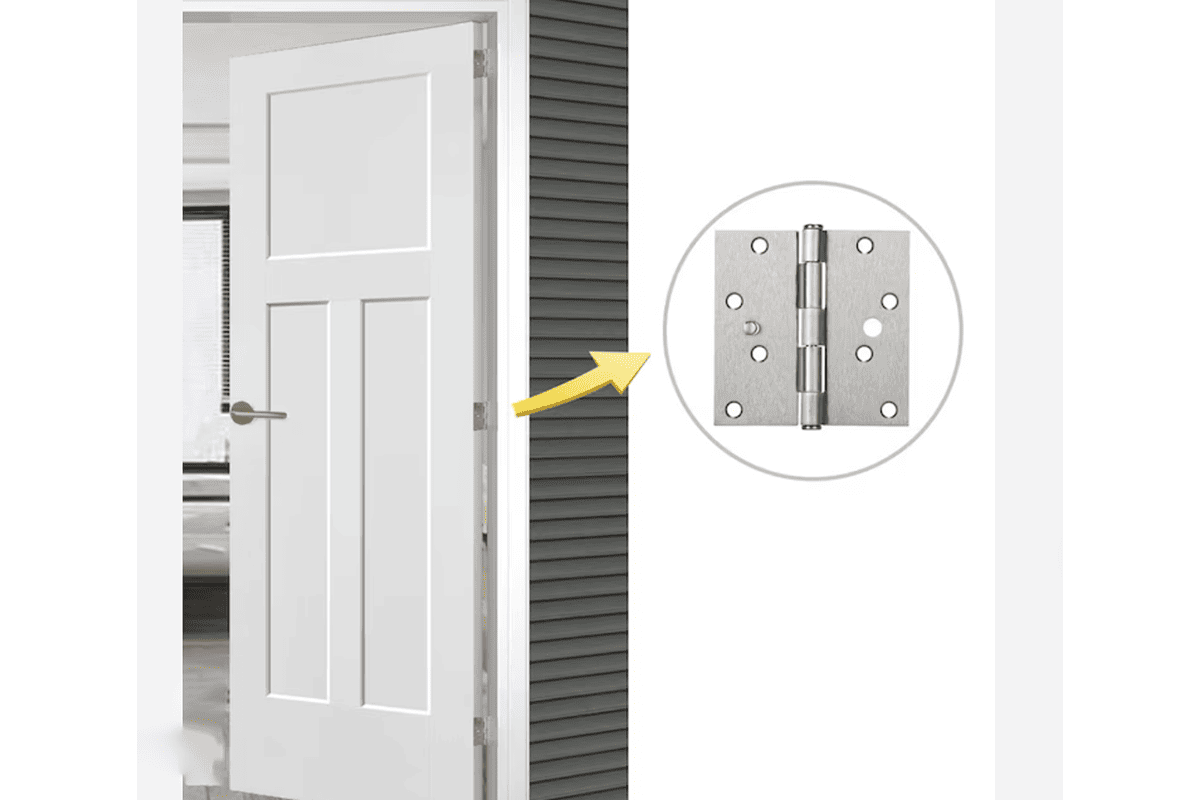
The normal baseline is often two hinges
Many standard interior doors use two hinges. This is especially common when the door leaf is within normal height and weight ranges, and when the hinge specification is properly matched.
For both butt hinges and concealed hinges, load capacity is often tested or declared under specific installation conditions. In many cases, hinge load data is based on a two-hinge installation4. However, buyers should not assume that simply adding a third hinge increases capacity in a perfectly linear way5.
A third hinge can help distribute support, but the actual performance depends on door structure, hinge type, screw holding strength, frame rigidity, machining accuracy, and installation quality.
This is why I always ask for door details before recommending hinge quantity.
Common reasons for using three hinge positions
A door factory or technical buyer may consider 3 hinge position in these situations:
Door height is above normal range
Doors above about 2100 mm often receive more attention because taller leaves can create more leverage on the hinge side.6Door weight is higher than standard
Solid wood doors, metal doors, acoustic doors, fire-rated doors, and oversized doors may place more load on the hinge system.Door material may deform more easily
Some wood composite structures or large panel doors may need extra support to reduce twisting or bowing risk.7Usage frequency is high
Doors in hotels, schools, offices, hospitals, and public projects may open and close many more times than residential doors.8Project drawings require it
Engineering projects often have fixed hardware schedules. Buyers should follow the approved drawings unless the project authority allows changes.Certified door systems require it
Fire-rated doors or certified systems must follow the tested configuration.9 Buyers should verify the relevant certificate, test report, and approved hardware schedule.
Three hinges are not always better
I know many buyers like simple procurement rules. “Use three hinges for better quality” sounds easy. But in manufacturing, easy rules are not always correct.
A third hinge may bring several practical issues:
| Possible benefit | Possible concern |
|---|---|
| Better support for taller or heavier doors | Higher hinge and machining cost |
| Reduced sagging risk under suitable conditions | More precise alignment required |
| Better load distribution | More matching work between door and frame |
| Improved stability for some door materials | May conflict with existing drawings or certification |
| More confidence for project buyers | Not useful if hinge specification is still too weak |
If a door uses the wrong hinge size, weak screws, poor frame material, or inaccurate machining, adding a third hinge may not solve the real problem. It may only hide the issue during quotation.
What I ask before giving a recommendation
Before I confirm whether a customer should use two or three hinge positions, I usually ask for:
- Door height
- Door width
- Door thickness
- Door weight
- Door material
- Door type and application
- Hinge type required
- Opening direction
- Frame material
- Existing drawings
- Required certification
- Project or market standard
- Expected order quantity
This information helps me avoid giving a universal answer. A buyer may want a fast quotation, but a few extra details can prevent expensive mistakes later.
Where Should the Third Hinge Position Be Placed?
The question sounds simple, but the wrong answer can create real production trouble. If the third hinge is placed without considering door weight and height, the door may still sag, the frame may not match, or the buyer may need to remake drawings.
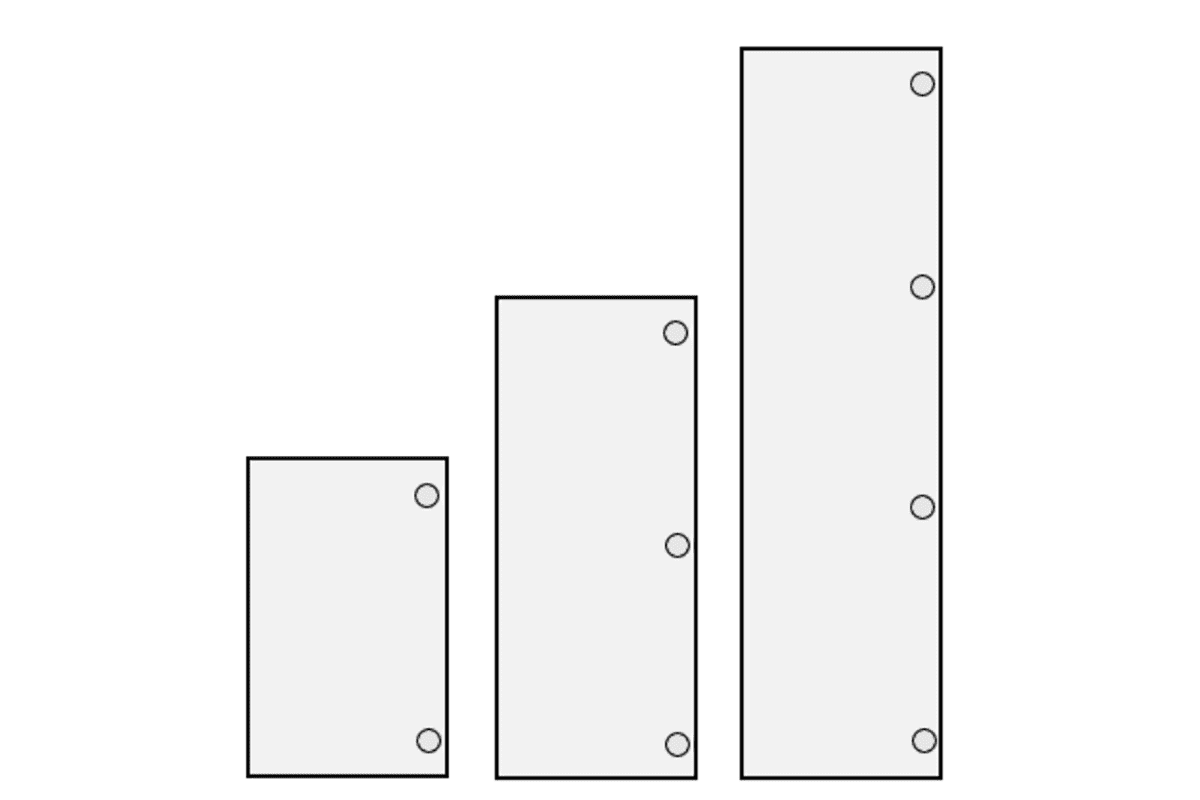
The third hinge position is usually placed based on door height, weight, material, and hinge type. For lighter doors, three hinges may be spaced more evenly. For heavier doors, the third hinge is often placed above the center, commonly around 60–70 cm from the top, to better support load.
General placement logic for lighter doors
For a lighter door leaf, three hinge positions may be distributed in a balanced way. A common practical idea is:
- Top hinge: roughly 200 mm from the top
- Bottom hinge: roughly 200 mm from the bottom
- Third hinge: near the middle area
This arrangement can help support the door leaf and reduce deformation risk, especially when the door panel is tall but not extremely heavy.
However, I do not treat these dimensions as a global rule. Different markets, factories, and project standards may use different measuring methods. Some measure to the top of the hinge. Some measure to the hinge centerline. Some follow local construction habits. Buyers should confirm the drawing method before production.
General placement logic for heavier doors
For a heavier door, the third hinge is often placed above the center, not exactly in the middle. The reason is simple: the upper part of the door usually carries more stress because gravity pulls the free side downward and creates leverage near the top hinge area10.
In many practical door hardware discussions, buyers may see the third hinge placed around 600–700 mm from the top11. This position can help support load and reduce sagging risk under suitable conditions.
Again, this is not a universal installation rule. It is a practical reference point that must be checked against:
- Door height
- Door weight
- Hinge load rating
- Hinge length and thickness
- Screw size and screw holding strength
- Frame material
- Door usage frequency
- Certification requirements
- Existing project drawings
Example comparison for buyer evaluation
| Door condition | Possible hinge quantity | Possible third hinge logic | Buyer caution |
|---|---|---|---|
| Standard interior door, normal height | 2 hinges may be enough | Not always needed | Confirm hinge rating and local habit |
| Tall interior door above about 2100 mm | 3 hinges may be considered | Middle or upper-middle area | Check door material and deformation risk |
| Heavy solid wood door | 3 hinges often considered | Above center, closer to top load area | Confirm hinge size and screw strength |
| Fire-rated project door | Follow certified system | Follow approved drawing | Do not change without verification |
| Concealed hinge door | Depends on hinge system | Follow supplier data and machining template | Check load rating and adjustment range |
Why matching matters more than memorizing dimensions
I have seen buyers focus too much on the single question: “What is the exact third hinge distance?” That question is incomplete.
A better question is:
“What hinge position matches this door size, weight, material, hinge type, frame preparation, and project requirement?”
This is the way a manufacturer thinks. The door is a system. The hinge is only one part of that system.
If the third hinge position does not match the frame, the door cannot be assembled correctly. If the hinge body does not match the machining depth, the door may bind or show uneven gaps. If the hinge load rating is too low, the number of hinge positions may not fix the performance issue.
Practical drawing notes before production
Before mass production, I recommend buyers confirm these drawing details:
Measurement reference
Confirm whether dimensions are measured from the top of the door to hinge top, hinge center, or hinge bottom.Door leaf and frame matching
Confirm both sides use the same hinge reference points.Opening direction
Left-hand and right-hand doors may require mirrored preparation.Hinge type and size
Butt hinges and concealed hinges use very different machining methods.12Tolerance control
Bulk door production needs consistent machining to avoid assembly variation.Finish protection
Hinges with stainless steel, PVD, electroplated, or painted finishes should be protected during installation and packing.
For bulk buyers, these details are not minor. They directly affect after-sales claims, assembly speed, and customer satisfaction.
How Should Buyers Specify 3 Hinge Position Before Quotation?
A vague request creates a vague quotation. If a buyer only says “quote 3 hinge position,” the supplier may not know the door size, hinge type, finish, certification, or machining requirements. That can lead to low initial prices and high correction costs later.
Buyers should specify 3 hinge position by sending door size, weight, material, hinge type, hinge quantity, opening direction, drawings, machining locations, finish requirements, and project standards. The supplier can then evaluate whether the hinge specification and hinge placement match the real door application.
A procurement checklist before quotation
When I receive inquiries from door factories, hardware brands, or wholesalers, I prefer a structured checklist. It saves time for both sides.
Here is the checklist I recommend:
| Information needed | Why it matters |
|---|---|
| Door height | Taller doors may need extra support |
| Door width | Wider doors create more leverage |
| Door thickness | Affects hinge size and machining depth |
| Door weight | Determines hinge load requirement |
| Door material | Wood, steel, aluminum, and composite doors behave differently |
| Door type | Interior, exterior, fire-rated, acoustic, hotel, project, etc. |
| Hinge type | Butt hinge, concealed hinge, special hinge system |
| Hinge quantity | Two, three, or more hinge locations |
| Hinge position drawing | Prevents machining mismatch |
| Opening direction | Affects door preparation and packing |
| Finish requirement | Must match handle, lock, cylinder, and other hardware |
| Certification requirement | CE, fire-rated documents, or market-specific standards |
| Order quantity | Affects production planning and cost |
| Packing requirement | Important for wholesalers and brand customers |
Questions buyers should ask suppliers
A good supplier should not only quote a price. The supplier should help verify whether the hinge is suitable for the door condition.
Buyers can ask:
- What is the hinge material and thickness?
- What door weight is the hinge designed to support?
- Is the load data based on two hinges or another test condition?
- Can the hinge be used for this door height?
- Does the hinge match the required machining?
- Can the finish remain consistent in bulk production?
- Are CE or fire-rated certificates available for verification?
- Can the supplier provide drawings or templates?
- Can the supplier support ODM customization if the door design changes?
At SDH Hardware, we manufacture door concealed hinges, butt hinges, mortise locks, lever handles, and lock cylinders for overseas markets. In pre-sales communication, I often explain that the hinge count is only one part of product matching. Buyers also need to check material, finish, performance, and compliance documents.
Certification and project requirements must be verified
If the door is part of a fire-rated system or engineering project, buyers should be more careful. The hinge quantity and hinge location may already be defined by the tested door system or approved project drawing.
I do not recommend changing hinge quantity or hinge position casually in these cases. Buyers should verify:
- Fire-rated certificate
- CE documentation if required
- Test report scope
- Approved hardware schedule
- Door manufacturer instructions
- Local project requirements
- Authority or consultant approval
Certifications should be treated as documents to verify, not as simple marketing claims. The final decision should follow the certified system, project drawings, and qualified professional evaluation.
Cost control without creating quality risk
Many buyers want cost-effective hardware. I understand this very well because wholesalers and brand operators must protect margin. However, cost control should not mean removing a hinge without evaluation or choosing a weaker hinge to meet a target price.
Better cost control comes from matching the full specification:
- Use the right hinge size instead of overspecifying.
- Confirm whether two hinges are enough before adding a third.
- Use three hinge positions when door condition requires it.
- Standardize finish across hinges, handles, locks, and cylinders.
- Confirm drawings before mass machining.
- Choose a supplier with stable production and inspection procedures.
This approach helps buyers reduce hidden costs. A low hinge price can become expensive if doors sag, finishes vary, or frame preparation does not match.
How Does 3 Hinge Position Affect Door Hardware Supplier Selection?
A supplier may quote a hinge quickly, but that does not mean the supplier understands the door system. If the buyer is purchasing in bulk, poor communication about 3 hinge position can cause production delay, rework, or customer complaints in the destination market.
3 hinge position affects supplier selection because the supplier must understand hinge placement, door machining, load matching, finish consistency, and project documentation. Buyers should choose a manufacturer that can review drawings, explain hinge options, support customization, and provide verifiable compliance documents when required.
What a capable hinge supplier should provide
For door factories and hardware brands, the supplier should support more than product photos and unit prices. The supplier should help reduce procurement risk.
A capable supplier should provide:
- Clear hinge dimensions
- Material and finish options
- Load-related product information
- Machining drawings or templates when available
- Stable bulk production quality
- Finish consistency across batches
- Packaging suitable for export
- Certification documents for buyer verification
- ODM support for special projects
- Practical communication before production
At SDH Hardware, our business is based on manufacturing and export support. We work with door manufacturers, hardware brands, and wholesalers across markets such as the Middle East, Europe, and Southeast Asia. From that experience, I have learned that buyers value clear answers because they need to confirm specifications internally before placing bulk orders.
Supplier evaluation table for buyers
| Evaluation point | Why it matters for 3 hinge position | What buyers should request |
|---|---|---|
| Manufacturing experience | Reduces mismatch between hinge and door application | Factory profile and product history |
| Drawing support | Prevents wrong machining | Hinge drawings, templates, or marked dimensions |
| Quality control | Keeps bulk orders consistent | Inspection process and sample approval |
| Finish consistency | Supports brand and project appearance | Finish samples and batch standards |
| Customization ability | Helps special door projects | ODM options for size, finish, accessories |
| Compliance documents | Supports market access and project review | CE or fire-rated certificates for verification |
| Production capacity | Supports delivery schedule | Lead time and order planning |
| Communication quality | Reduces specification errors | Clear written confirmation before production |
Why factory direct communication helps
When a buyer discusses hinge position through several trading layers, details can be lost. A factory-direct discussion can make technical confirmation faster.
For example, if a buyer sends a door drawing and asks for three hinge positions, a manufacturer can check:
- Whether the hinge size matches the cutout
- Whether the hinge finish is available for bulk production
- Whether the third hinge position conflicts with lock or reinforcement areas
- Whether the packing method protects the hinge surface
- Whether the required certificate relates to the actual product and application
This does not replace professional project evaluation. But it helps the buyer catch practical manufacturing issues before production begins.
The best supplier asks questions
A weak supplier may say “yes” to everything. A stronger supplier asks questions before confirming.
I see this as a positive sign. If a supplier asks about door weight, material, hinge type, and drawings, the supplier is trying to prevent errors. That is especially important for customized orders, project doors, and regional market standards.
For buyers, the goal is not only to buy hinges. The goal is to receive door hardware that supports stable assembly, consistent appearance, and long-term market competitiveness.
Frequently Asked Questions
Is 3 hinge position a special hinge model?
No. 3 hinge position is not a hinge model or product code. It means the door leaf and frame are prepared for three hinge locations. The actual hinge may be a butt hinge, concealed hinge, or another hinge type based on the door design.
Are three hinges always better than two hinges?
No. Three hinges are not always better. Many standard doors perform well with two suitable hinges. A third hinge is considered when the door height, weight, material, or usage condition requires extra support. Buyers should evaluate the full door system before deciding.
Where is the third hinge usually placed?
For lighter doors, the third hinge may be placed near the middle. For heavier doors, it is often placed above the center, commonly around 60–70 cm from the top. However, buyers should follow drawings, door conditions, hinge specifications, and project requirements.
Do fire-rated doors need three hinge positions?
Some fire-rated doors use three hinge positions, but buyers should not decide by general habit. Fire-rated doors must follow the tested and certified door system. Buyers should verify certificates, test reports, approved drawings, and local project requirements before changing hinge quantity or position.
What information should I send before ordering hinges?
You should send door height, width, thickness, weight, material, door type, hinge type, hinge quantity, opening direction, drawings, machining positions, finish requirement, certification needs, and order quantity. This helps the supplier recommend a suitable hinge and avoid production mismatch.
Conclusion
3 hinge position means the door is prepared for three hinge locations, not that it uses a special hinge model. Buyers should treat it as a matching decision based on door height, weight, material, hinge type, drawings, and project requirements. Three hinges can reduce sagging or deformation risk under suitable conditions, but they are not automatically better for every door. If you need help confirming hinge quantity, hinge position, or matching hardware specifications for bulk orders, I invite you to contact SDH Hardware for practical factory support.
"SECTION 087111 - DOOR HARDWARE (SCHEDULED BY ...", https://fpm.usc.edu/wp-content/uploads/2021/11/087102-USC-HSC-door-hardware-Guide-Specification_1.pdf. Architectural hardware and door-schedule guidance distinguishes hinge locations or preparations from the hinge item itself, supporting the interpretation that “3 hinge position” is a placement and quantity description rather than a special hinge model. Evidence role: definition; source type: institution. Supports: The source should define hinge locations or hardware schedule terminology as placement/preparation information separate from hinge product type.. Scope note: Such sources may not use the exact phrase “3 hinge position,” so the support is terminological and contextual. ↩
"How to Fit Perfect Door Hinges - YouTube",
. Door-installation guidance treats matching hinge mortises or preparations on the leaf and frame as necessary for correct hanging and reveal alignment, supporting the claim that mismatched hinge openings can prevent proper assembly. Evidence role: mechanism; source type: institution. Supports: The source should explain that hinge preparations on the door and frame must align for the door to hang correctly.. ↩"How Many Hinges Per Door?", https://woodweb.com/cgi-bin/forums/cabinetmaking.pl?read=784882. Industry hinge-selection guidance bases the number of hinges on door dimensions, weight, duty level, and the tested or rated hardware configuration, supporting the view that three hinge positions are not automatically superior to two. Evidence role: expert_consensus; source type: institution. Supports: The source should show that hinge quantity is determined by door dimensions, weight, duty, and applicable standards rather than by a simple quality hierarchy.. Scope note: The source may provide selection criteria rather than directly comparing perceived quality between two- and three-hinge doors. ↩
"Understanding BS EN 1935:2002 single-axis hinge grades - SFS", https://uk.sfs.com/resources/article/understanding-bs-en-1935. Hinge performance standards such as EN 1935 and ANSI/BHMA A156.1 rate hinges under specified test conditions, supporting the caution that published load data depends on the tested installation configuration rather than on hinge count alone. Evidence role: general_support; source type: institution. Supports: The source should describe standardized hinge testing or rating methods and the installation assumptions used for load capacity.. Scope note: The cited standard may not state that every manufacturer’s data uses a two-hinge setup; it supports the broader point that load ratings are condition-dependent. ↩
"Optimization of hinge configuration of furniture doors using finite element ...", https://bioresources.cnr.ncsu.edu/resources/optimization-of-hinge-configuration-of-furniture-doors-using-finite-element-analysis/. Mechanical analysis of multi-support systems shows that load sharing depends on relative stiffness, geometry, and alignment, supporting the caution that a third hinge does not necessarily increase door load capacity in a perfectly linear manner. Evidence role: mechanism; source type: paper. Supports: The source should explain that load sharing among multiple hinges depends on stiffness, alignment, geometry, and installation tolerances rather than equal division by hinge count.. Scope note: General structural or mechanical sources may support the load-sharing principle without testing this exact door-hinge configuration. ↩
"Concealed Hinges: Key Factors to Choose the Right One", https://www.kronakoblenz.com/en/product-school/guide-factors-to-consider-when-choosing-a-hinge. Architectural hardware guidance commonly treats increased door height as a factor in hinge quantity and placement, giving contextual support to the statement that doors above roughly 2100 mm warrant additional hinge-support evaluation. Evidence role: general_support; source type: institution. Supports: The source should support that taller doors often require additional hinge consideration or additional hinges, especially around common 2100 mm door-height thresholds.. Scope note: Exact threshold values vary by region, product standard, and measuring convention, so the source may support the principle more strongly than the precise 2100 mm figure. ↩
"Wood handbook: Wood as an engineering material", https://research.fs.usda.gov/treesearch/62200. Wood-science references such as the USDA Wood Handbook describe dimensional movement and distortion, including bowing and twisting, in wood-based products, supporting the claim that some composite or large panel doors may require additional support against deformation. Evidence role: mechanism; source type: government. Supports: The source should document that wood and wood-composite panels can deform through warping, bowing, or twisting due to size, construction, moisture, or stress.. Scope note: The source supports the material-deformation mechanism but may not prescribe hinge quantity for a specific door design. ↩
"EN 1935 Door Hinge Grades: Complete Engineering Breakdown", https://www.dndhardware.com/en-1935-door-hinge-grades-complete-engineering-breakdown.html. Door-hardware durability standards classify hinges and related hardware by cycle performance and duty level, providing contextual support for treating hotels, schools, offices, hospitals, and public projects as higher-use applications than typical residential doors. Evidence role: general_support; source type: institution. Supports: The source should show that door hardware standards distinguish duty levels or cycle requirements for higher-use public and commercial applications.. Scope note: Cycle standards classify hardware performance and application categories; they may not provide a direct measured comparison for every listed building type. ↩
"Fire Doors and NFPA 80 FAQs", https://www.nfpa.org/news-blogs-and-articles/blogs/2025/04/11/fire-doors-faqs. Fire-door standards such as NFPA 80 treat fire doors as listed assemblies whose hardware and field modifications must remain within the approved listing or receive proper approval, supporting the claim that hinge quantity and location should follow the tested configuration. Evidence role: expert_consensus; source type: institution. Supports: The source should state that fire-door assemblies and their hardware must conform to the tested, listed, or approved configuration.. ↩
"Door Hinges (static equilibrium)", https://phy.duke.edu/~rgb/Class/review_53/review_53/node59.html. Statics treatment of a hinged door shows that the door’s weight creates a moment about the hinge line and produces reaction forces at the hinges, supporting the explanation that hinge placement is influenced by leverage and stress near the upper hinge area. Evidence role: mechanism; source type: education. Supports: The source should explain the statics of a door as a body supported by hinges, including gravitational moment and hinge reaction forces.. Scope note: A basic mechanics source supports the force mechanism but may not prescribe an exact third-hinge location. ↩
"Everything You Need to Know About Hinge Types & Sizes ...", https://www.dkhardware.com/blog/hinge-size-guide-and-chart/?srsltid=AfmBOoo_LYo-0gCPBdYPGWt5-FTwOhVwQ5r5lveBOnh755DHG_SJk51M. Door-installation and fire-door guidance commonly places additional hinges above the door centerline or near the upper hinge zone, giving contextual support to the 600–700 mm-from-top placement range cited for some heavier doors. Evidence role: general_support; source type: institution. Supports: The source should document recognized hinge-position conventions or standards that place an additional hinge above the center or within a comparable distance from the top.. Scope note: Hinge-position dimensions vary by standard, door height, hinge size, and whether measurements are taken to hinge tops or centerlines; the source may support the concept rather than the exact range. ↩
"How to Install a Butt Hinge Mortise - YouTube",
Door-hardware installation guidance distinguishes conventional butt-hinge mortising from concealed-hinge pocket routing and templated preparation, supporting the claim that these hinge types require different machining methods. Evidence role: definition; source type: institution. Supports: The source should show that butt hinges are typically mortised differently from concealed hinges, which often require routed pockets or templates in the door and frame.. ↩