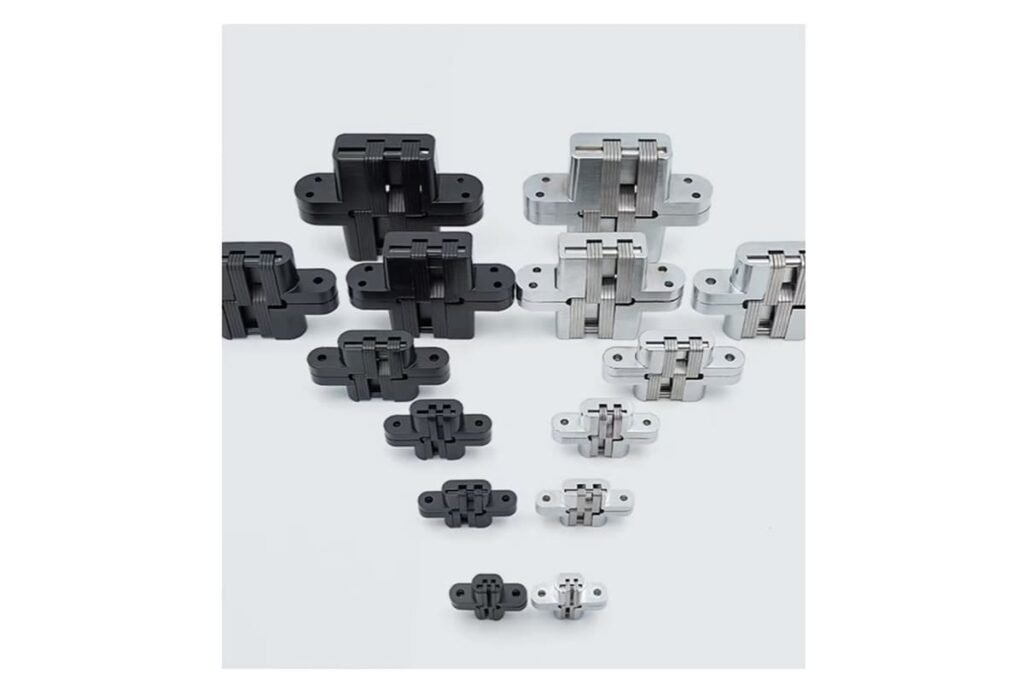
Different Materials of Invisible Hinge: Which One Should You Choose?
Invisible hinge material choices can look simple at first, but they become risky when door weight, installation accuracy, fire requirements, humidity, finish quality, and budget are ignored. If a buyer chooses only by price or “strongest material,” after-sales problems may appear later. I usually recommend matching the material to the project conditions first.
The best material for an invisible hinge depends on the door application. Zinc alloy is a strong cost-performance option for indoor and furniture doors.1 Aluminum alloy suits lightweight structural needs. Stainless steel works well for corrosion resistance and demanding environments.2 Iron or steel-based hinges can support economical fire-related or budget-sensitive projects when properly treated and verified.3
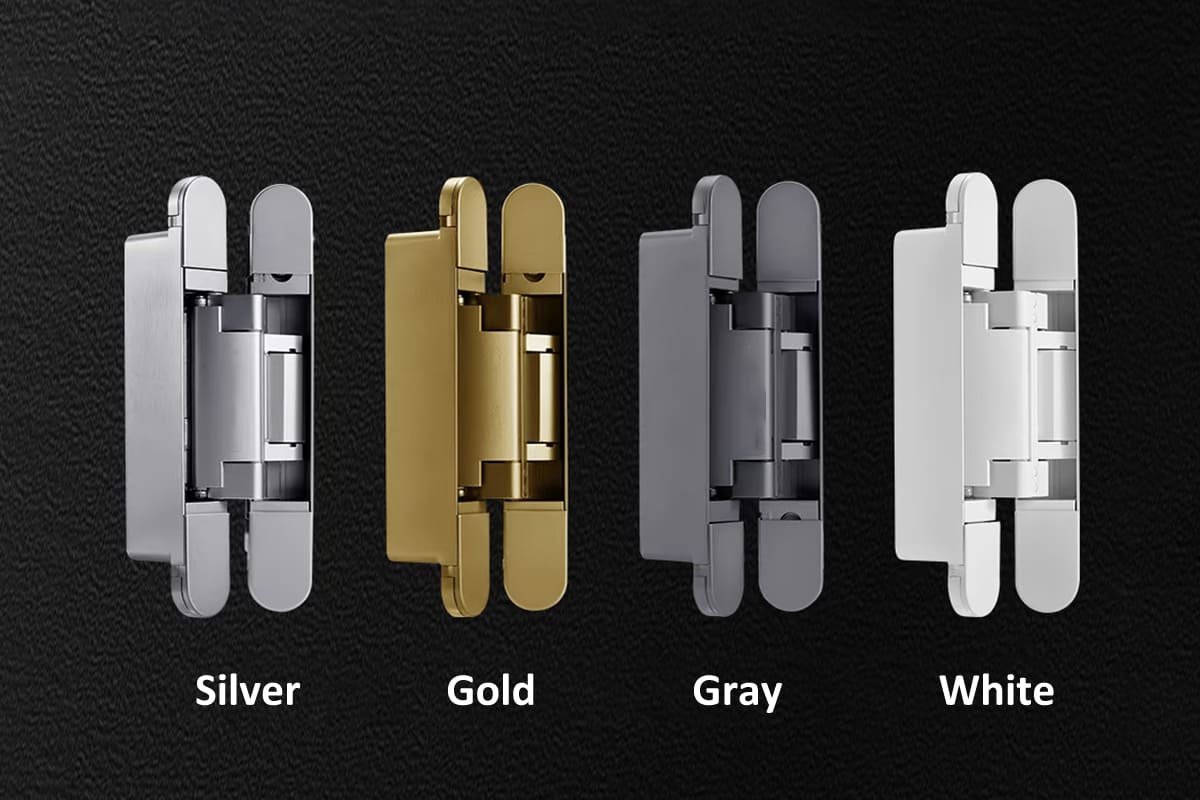
From my factory and quality-control perspective at SDH Hardware, material is only one part of the decision. The hinge structure, machining accuracy, pivot system, surface treatment, door weight, opening frequency, and installation all affect final performance. Let’s compare the main options in a practical B2B sourcing way.
How Should Buyers Compare Different Materials of Invisible Hinge?
Choosing an invisible hinge by material name alone can create false confidence. A stainless steel model may fail if the structure is weak, while a zinc alloy model may perform well in the right indoor door application. Buyers need a complete evaluation method, not a simple material ranking.
A buyer should compare different materials of invisible hinge by checking door weight, opening frequency, environment, fire requirements, corrosion exposure, finish expectations, hinge geometry, installation method, test reports, and total cost of ownership. The correct choice is the material that fits the application with the lowest acceptable quality risk.
Material is only the starting point
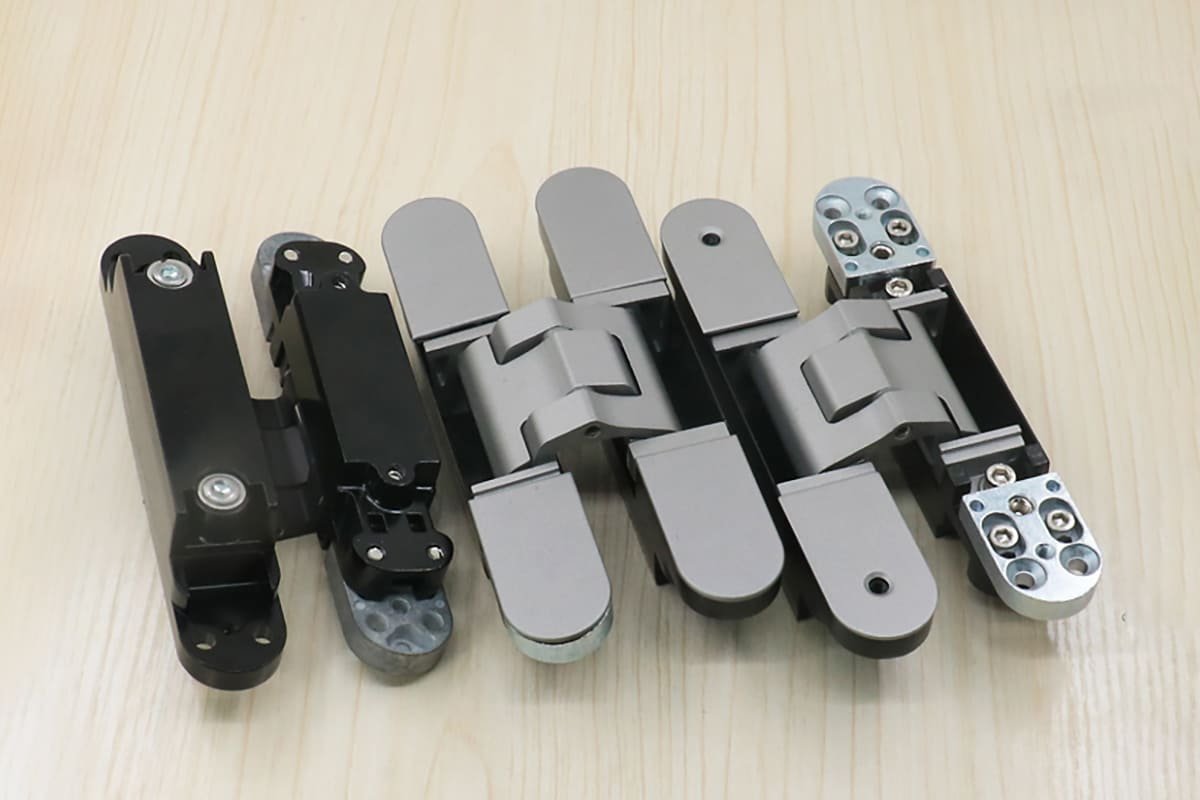
In my work with customer inquiries and sample confirmation, I often see one repeated question: “Which material is best?” I understand why buyers ask this. Material feels like a clear standard. However, an invisible hinge is a mechanical assembly, not just a metal block.
A concealed hinge must carry load while remaining hidden inside the door and frame. This means the design has limited visible space and strict dimensional requirements. If the casting, machining, pivot clearance, screw hole accuracy, or finish thickness is wrong, the final hinge can feel loose, noisy, stiff, or difficult to install.
For procurement teams, I suggest starting with these questions:
What is the door weight?
A light wooden door and a heavy entrance door do not need the same hinge structure.How often will the door open?
A hotel room door, public corridor door, and wardrobe door face different usage cycles.Where will the hinge be used?
Indoor dry areas, bathrooms, coastal regions4, and exterior entrances create different corrosion risks.Is fire performance required?
If yes, buyers should request relevant fire-rated documents5 and check whether the hinge model is covered.What appearance level is expected?
Premium apartments, brand hardware lines, and budget engineering projects require different surface treatments.Who will install the product?
Invisible hinges need accurate mortising. Poor installation can make a good hinge perform badly.
Quick comparison table
| Material | Main Advantage | Common Use Case | Buyer Risk to Check |
|---|---|---|---|
| Zinc alloy | Good die-casting flow and finish options | Indoor doors, furniture, cabinet doors | Load capacity, plating quality, installation accuracy |
| Aluminum alloy | Lightweight strength and clean machining | Aluminum doors, selected glass door systems, modern interiors | Hinge geometry, pivot design, actual load test |
| Stainless steel | Corrosion resistance and high durability | Public areas, humid areas, exterior doors, fire-related applications | Grade, machining quality, verified certificates |
| Iron / steel-based | Economical strength and fire-related suitability | Budget indoor doors, ordinary projects, temporary works | Rust prevention, finish durability, environment limits |
What I check before recommending a material
At SDH Hardware, I prefer to review the complete product context before giving a recommendation. For example, if a customer asks for a concealed door hinge for a Middle East hotel project, I want to know the door core, frame type, finish color, traffic level, certification needs, and packaging requirements. If a European hardware brand asks for an ODM model, I also ask about target price tier and expected test documentation.
A responsible invisible hinge supplier should not only say, “This material is strong.”
A responsible supplier should explain why the material fits the door, the environment, and the buyer’s market position.
Buyers should also verify documents. CE certificates, fire-rated test reports, salt spray test data6, cycle-test records, and load-test reports should match the actual model, not just the general product category. This is especially important for wholesalers and hardware brands that must protect their own after-sales reputation.
Is Zinc Alloy Invisible Hinge a Good Cost-Performance Choice?
Zinc alloy invisible hinge models are very common because many buyers need a clean appearance, stable shape, and reasonable price. The risk appears when buyers assume all zinc alloy hinges have the same strength. In reality, alloy grade, die-casting quality, structure, and plating control matter a lot.
A zinc alloy invisible hinge is a good cost-performance choice for many indoor doors, furniture doors, and cabinet doors where appearance, price, and dimensional flexibility matter. It is especially useful for complex hinge shapes because zinc alloy supports efficient die casting and refined surface finishes when production is well controlled.
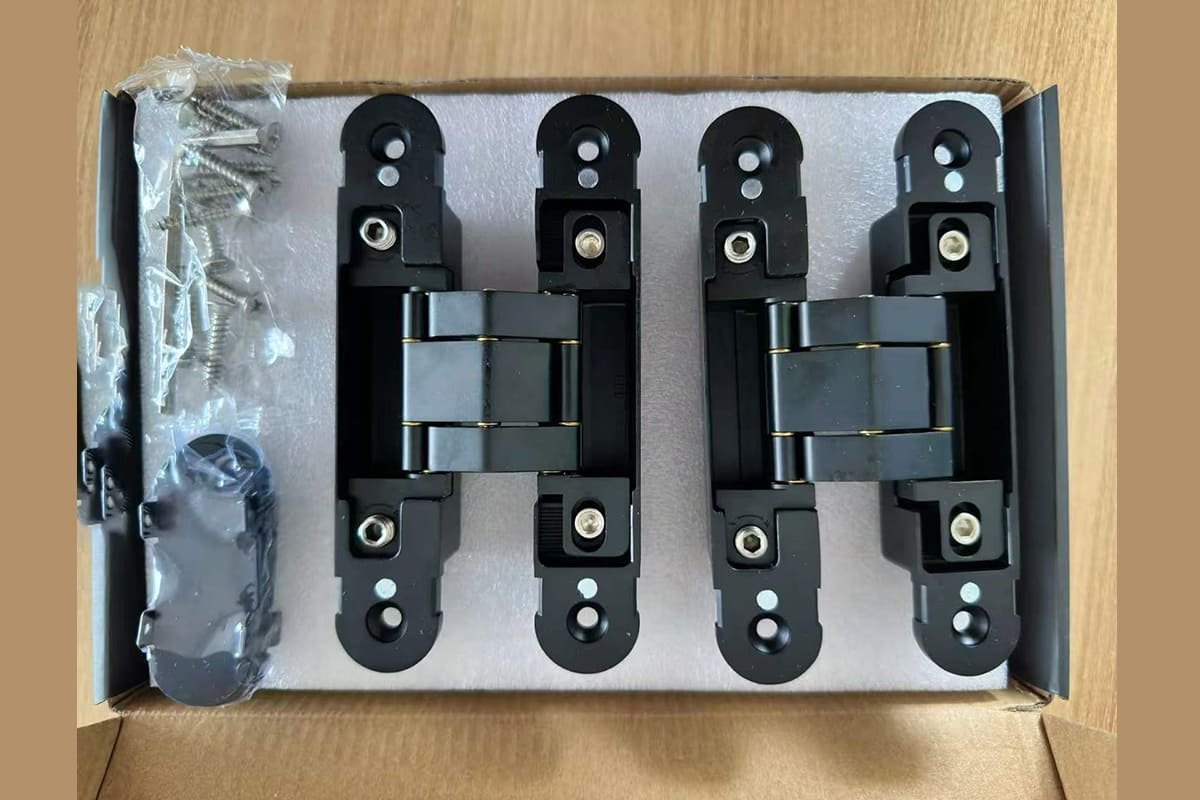
Why zinc alloy is popular in concealed hinge production
Zinc alloy is widely used because it flows well during die casting.7 Common grades such as 3# zinc alloy and 5# zinc alloy8 have relatively low melting points and good casting performance. This helps factories form complex curved shapes, irregular hinge bodies, and refined details more efficiently than some harder materials.
For invisible hinge production, this matters because the hinge body often needs:
- Compact structure
- Rounded edges
- Accurate screw seats
- Hidden pivot channels
- Decorative surface consistency
- Stable dimensional repeatability
Zinc alloy also supports many common surface finishes9, including:
- Chrome plating
- Nickel plating
- Brushed effects
- Matte finishes
- Black finishes
- Customized decorative colors
This makes it attractive for door hardware brands, furniture hardware lines, and wholesalers who need multiple finish options for different markets.
Where zinc alloy usually fits best
I usually see zinc alloy concealed hinges used in:
| Application | Why Zinc Alloy Can Fit |
|---|---|
| Interior wooden doors | Good appearance and cost control |
| Furniture doors | Complex shapes and decorative finishes |
| Cabinet doors | Price-performance and clean look |
| Residential projects | Balanced finish and budget |
| Standard hardware product lines | Easier to offer multiple surface colors |
However, zinc alloy should not be treated as a universal answer. If a door is very heavy, exposed to outdoor weather, or used in a high-traffic public area, buyers should ask for the exact hinge design, test results, and application limits.
Factory control points for zinc alloy invisible hinge quality
From a manufacturing perspective, zinc alloy quality depends on more than the alloy name. I usually pay attention to these points:
Raw material control
Stable alloy composition helps reduce brittleness and casting defects.Die-casting temperature control
Poor temperature control can cause porosity, shrinkage, or weak internal areas.Mold precision
Invisible hinge installation requires accurate dimensions. Small errors can affect door alignment.Surface treatment preparation
Polishing and cleaning before plating affect the final finish.Assembly clearance
The hinge should open smoothly without looseness or excessive friction.Finished product inspection
Appearance, dimension, function, and packaging should be checked before shipment.
Some suppliers may mention figures such as cycle-test results or load ratings for zinc alloy models. These figures can be useful, but buyers should verify them before publication or purchasing decisions. The report should show the tested model, testing method, door weight condition, number of hinges used, and whether the result applies to the production item being quoted.
Zinc alloy is not the “strongest” material in every sense. Still, it is often the most practical choice when the buyer wants a decorative concealed hinge for indoor use with good cost control.
When Should Buyers Choose Aluminum Alloy Invisible Hinge?
Aluminum alloy invisible hinge options can be misunderstood. Some buyers treat aluminum as simply a cheaper substitute for steel. That is not always correct. Aluminum can be a lightweight structural solution, but its actual performance depends heavily on design, machining precision, and installation.
An aluminum alloy invisible hinge is suitable when buyers need reduced self-weight, clean surface finishing, and balanced structural strength. It may work for aluminum doors, selected glass door systems, and modern interior projects, but buyers should verify hinge geometry, pivot design, load test data, and installation conditions before approval.
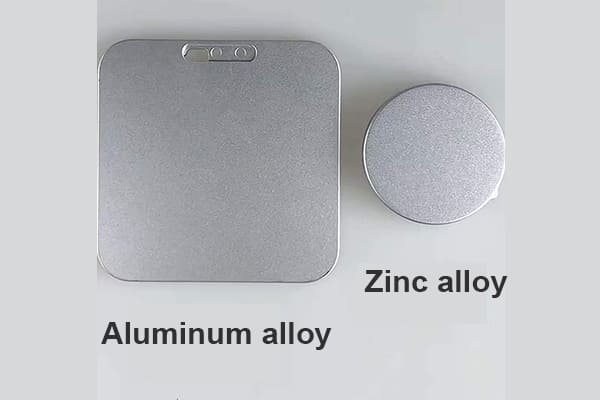
Aluminum alloy is about weight-to-strength balance
Aluminum alloy has a favorable weight-to-strength relationship.10 This is important in door systems where overall weight, corrosion appearance, and modern finishing are key concerns. It is often considered for aluminum frame doors, some glass door structures, and projects where a lighter hinge body is useful.
However, I try not to overstate aluminum alloy. A well-designed aluminum alloy hinge can perform well, while a poorly designed one can create after-sales problems. The same is true for most materials, but it is especially important with aluminum because the hinge needs good geometry and precise pivot support.
Key factors that affect aluminum hinge performance
For aluminum alloy invisible hinge selection, buyers should check:
- Hinge body thickness
- Pivot and bearing design
- Screw position and holding strength
- Machining tolerance
- Anodizing or coating quality
- Door and frame compatibility
- Number of hinges per door
- Installation accuracy
The pivot structure is particularly important. If the pivot system is weak, the hinge may sag even if the material specification looks acceptable. If the screw fixing area is not designed well, the hinge may loosen over time.
Aluminum alloy compared with other materials
| Factor | Aluminum Alloy | Zinc Alloy | Stainless Steel | Iron / Steel-Based |
|---|---|---|---|---|
| Weight | Light | Medium | Heavier | Heavier |
| Finish appearance | Clean and modern | Very flexible | Premium metallic | Depends on coating |
| Corrosion resistance | Good with treatment | Depends on plating | Very strong | Needs protection |
| Cost | Medium | Often cost-effective | Higher | Often economical |
| Design sensitivity | High | Medium | Medium | Medium |
Aluminum alloy can be a smart choice when the project values both appearance and lower self-weight. For example, a customer may want a concealed hinge for a modern aluminum door system with a clean finish and reliable operation. In that case, I would ask for drawings, door dimensions, frame details, and expected usage before confirming the model.
Some competitor examples in the market may list specific load ratings for aluminum concealed hinges. These examples can help buyers understand market positioning, but I would still verify the original technical data before using them in a procurement specification or marketing document. A rating from one hinge cannot be copied to another hinge just because both use aluminum alloy.
Practical procurement advice
If you are a door factory purchaser, I suggest requesting samples before bulk order confirmation. Install the sample on the actual door profile if possible. Then check:
- Does the door open smoothly through the required angle?
- Does the hinge remain hidden and aligned?
- Does the screw fixing feel secure?
- Does the finish match the door system?
- Does the supplier provide drawings and installation guidance?
- Does the test report match the exact model?
Aluminum alloy is not just a “budget material.” It is a project-specific choice. When the structure is right, it can support a clean, modern concealed door solution with good handling and attractive finish quality.
Why Is Stainless Steel Invisible Hinge Used for Demanding Projects?
Stainless steel invisible hinge products are often selected for demanding projects, but they should not be recommended blindly for every door. Stainless steel has clear advantages, yet it also raises cost and manufacturing difficulty. Buyers should choose it when the environment and performance requirements justify the investment.
A stainless steel invisible hinge is a premium choice for corrosion resistance, impact resistance, low maintenance, and demanding environments.11 It is commonly considered for public high-traffic areas, exterior doors, humid or coastal locations, corrosive environments, and fire-related applications when the model and certificates are properly verified.
What stainless steel does well
Stainless steel is valued because it has natural corrosion resistance and high durability. It also has a high melting point, commonly around 1400°C, depending on grade. This makes it more suitable than many lower-melting materials for projects where fire behavior, heat resistance, and long-term durability are important considerations.
Common advantages include:
- Strong corrosion resistance
- High surface hardness
- Good impact resistance
- Lower maintenance needs
- Premium appearance
- Better suitability for humid or corrosive areas
- Stronger positioning for fire-related door hardware, when tested
This is why stainless steel concealed hinges are often discussed for public buildings, hospitals, schools, hotels, coastal projects, and exterior door systems.
Stainless steel still needs detailed verification
I want to be careful here. Stainless steel is not automatically correct for every project. It can be harder to machine, more expensive to process, and less flexible for some decorative finishes than zinc alloy. Also, not every stainless steel hinge has the same structure or grade.
Buyers should check:
| Checkpoint | Why It Matters |
|---|---|
| Stainless steel grade | Different grades have different corrosion resistance |
| Hinge structure | Material cannot compensate for weak geometry |
| Bearing or pivot system | Smooth operation depends on mechanical design |
| Surface finish | Brushed, satin, polished, or PVD finishes need control |
| Fire documentation | Fire-rated claims must match the exact model |
| Load test report | Door weight support must be verified |
| Installation drawings | Concealed hinges need accurate mortising |
If a supplier claims a stainless steel invisible hinge can carry a specific door weight, buyers should ask for the test report. The report should show the tested door configuration, number of hinges used, screw type, test standard, and failure criteria. If the project requires fire resistance, the fire report should be checked carefully. The certificate should not be treated as a general statement for every hinge in the catalog.
Where stainless steel is worth the cost
In my factory conversations with buyers, stainless steel becomes easier to justify when after-sales risk is expensive. For example, a coastal hotel project may face humidity and salt exposure. A public building may face heavy traffic and strict maintenance requirements. A fire door project may require verified fire-rated hardware. In these cases, choosing a lower-cost material may create higher long-term risk.
Stainless steel may be suitable for:
- Exterior entrance doors
- Fire-rated doors, when the hinge is tested for the system
- High-traffic public doors
- Humid bathrooms or spa areas
- Coastal or marine-influenced projects
- Corrosive industrial or commercial environments
- Premium brand hardware lines
Stainless steel is not always necessary
For a standard dry indoor residential door, stainless steel may be more than the project needs. A well-designed zinc alloy or iron-based invisible hinge may meet the buyer’s quality and budget expectations better. This is why I do not rank materials from best to worst. I prefer to match the hinge to the door system, market level, and risk profile.
At SDH Hardware, we manufacture and supply architectural door hardware for different markets. When customers ask for stainless steel hinges, I usually ask whether the product is needed for corrosion resistance, fire-related use, brand positioning, or long service life. The answer helps decide whether stainless steel is technically necessary or simply an expensive preference.
When Does Iron or Steel-Based Invisible Hinge Make Sense?
Iron or steel-based invisible hinge products are sometimes overlooked because they do not sound as premium as stainless steel. That can be a mistake. Steel-based hinges can provide acceptable strength and fire-related practicality at a lower cost, but buyers must manage rust prevention and appearance expectations carefully.
An iron or steel-based invisible hinge makes sense for budget-sensitive indoor doors, ordinary engineering projects, and some fire-related applications where corrosion exposure is limited. It can offer economical strength and durability, but buyers should verify coating quality, fire documents, load data, and whether the environment may cause rust.
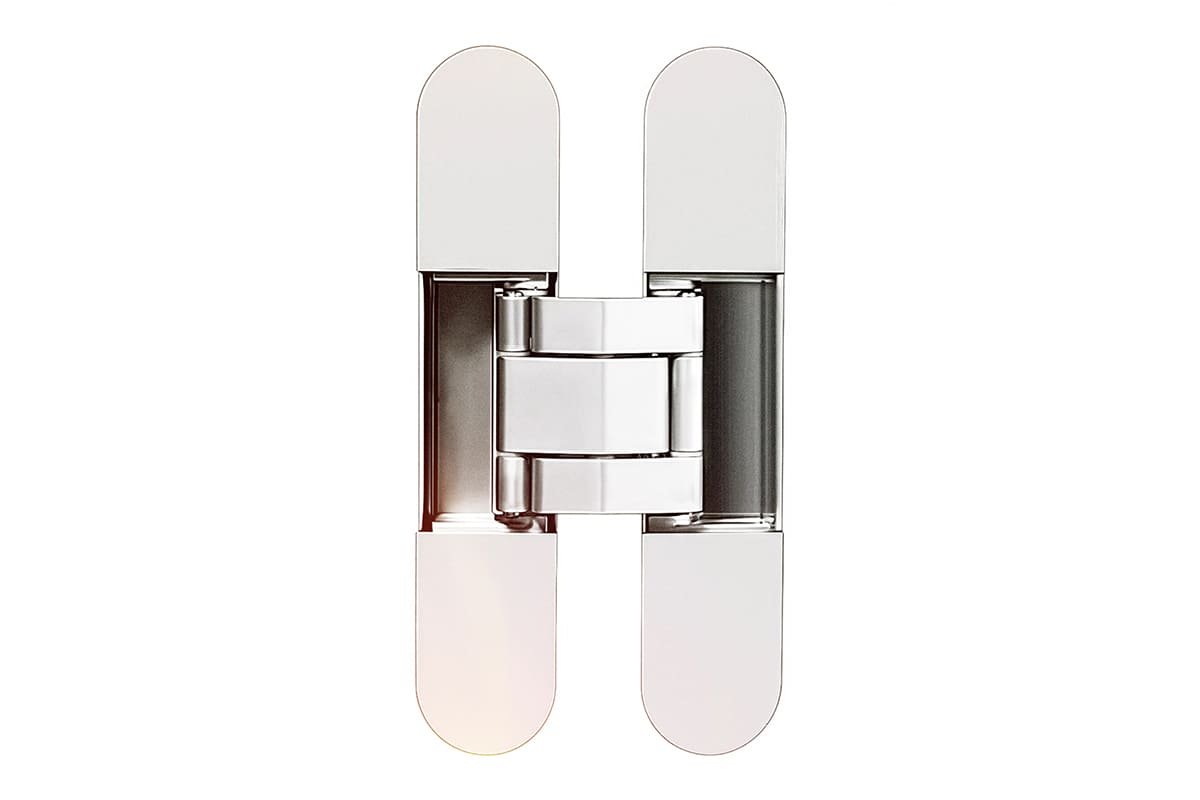
Why steel-based hinges remain relevant
Iron and steel-based concealed hinges are practical for many projects because they offer strength at a controlled cost. They can be suitable for ordinary indoor doors, commercial projects with moderate requirements, and temporary engineering applications. In fire-related doors, steel-based materials are often considered because of their heat resistance compared with lower-melting materials.
However, the main weakness is corrosion. If the surface treatment is poor, rust can appear and damage both appearance and function. For exterior exposure, humid areas, or coastal regions, buyers should be cautious unless the hinge has strong coating protection and verified corrosion test data.
Typical use cases for iron or steel-based invisible hinge
| Use Case | Suitability | Buyer Note |
|---|---|---|
| Budget indoor doors | Good | Check coating and installation accuracy |
| Ordinary residential projects | Good | Confirm door weight and hinge quantity |
| Temporary engineering works | Good | Cost control may be the priority |
| Fire-related door projects | Possible | Verify exact fire-rated documents |
| Coastal exterior doors | Usually risky | Stainless steel may be safer |
| Premium decorative doors | Limited | Appearance may not match expectations |
Steel-based hinges can be finished by painting, powder coating, galvanizing, electroplating, or other protective processes. The correct finish depends on the target market and environment. A black coated hinge for an indoor wooden door has different requirements from a hinge used in a humid commercial corridor.
What buyers should inspect
When I review steel-based hinge samples, I focus on several points:
Surface coating thickness and coverage
Hidden corners and screw holes are common weak areas.Rust resistance
Buyers can request salt spray or corrosion test data if the project needs it.Welding or forming quality
Any deformation can affect concealed installation.Pivot smoothness
A strong material still needs stable movement.Screw strength and fixing design
The hinge must transfer door load safely into the frame.Packaging protection
Poor packaging can scratch coating during transport.
Fire-related claims need careful handling
Iron and steel-based materials are often discussed for fire-resistant applications. Still, buyers should not accept a simple verbal claim. Fire performance depends on the complete door assembly, hinge model, screw fixing, door core, frame material, and test method.
If a supplier provides a fire-rated certificate, I recommend checking:
- The exact hinge model number
- The tested door type
- The fire duration and standard
- The laboratory or certification body
- Whether the certificate is still valid
- Whether the supplied product matches the tested product
Some known concealed hinge brands in the market may use steel-based designs. These examples can be useful for market research, but buyers should verify original product documents before referencing them in a specification.
Steel-based invisible hinge options are not “low quality” by default. They are economical and practical when used correctly. The buyer’s job is to avoid using them in environments where corrosion, premium appearance, or long-term maintenance risk makes another material more suitable.
Conclusion
Different materials of invisible hinge should be selected by application, not by a simple “best material” label. Zinc alloy offers strong cost-performance for many indoor and decorative uses. Aluminum alloy can support lightweight structural needs. Stainless steel is valuable for corrosion resistance and demanding environments. Iron or steel-based hinges can be economical for suitable indoor and fire-related projects. If you need OEM, ODM, or bulk sourcing support, I can help review your door type, target market, finish, and certification requirements before sample confirmation.
"Zamak", https://en.wikipedia.org/wiki/Zamak. General references on zinc die‑casting alloys note that Zamak 3 and Zamak 5 are widely used for hardware because they cast accurately, accept decorative plating, and are economical for complex shapes, supporting the statement that zinc alloy can provide good cost‑performance in indoor and furniture applications. Evidence role: general_support; source type: encyclopedia. Supports: That zinc die-casting alloys (e.g., Zamak 3 and 5) are widely used in hardware because they combine castability, dimensional accuracy, and finishing options at relatively low cost.. Scope note: Such sources explain material and manufacturing advantages but do not evaluate any specific hinge model or total lifecycle cost. ↩
"Stainless steel", https://en.wikipedia.org/wiki/Stainless_steel. Overviews of stainless steel describe its corrosion resistance due to a passive chromium‑oxide film and note its use in chemically and marine‑exposed contexts, which supports selecting stainless steel hardware for demanding environments. Evidence role: mechanism; source type: encyclopedia. Supports: That stainless steels resist corrosion via a passive chromium oxide film and are commonly used in harsh or corrosive environments.. Scope note: This supports the general material property; it is not a performance test of any particular hinge design. ↩
"Fire door", https://en.wikipedia.org/wiki/Fire_door. Fire door references explain that door assemblies must use listed/labeled hardware appropriate to the required rating, and hinges are among the components that must be certified, which aligns with the need to verify steel‑based hinges for fire‑related projects. Evidence role: general_support; source type: encyclopedia. Supports: That fire door assemblies require appropriately certified (listed/labeled) hardware and that ferrous hinges are commonly used in such assemblies.. Scope note: These sources describe certification requirements and typical practice but do not address relative cost or certify any specific hinge model. ↩
"Marine Atmospheric Corrosion of Carbon Steel: A Review - PMC - NIH", https://pmc.ncbi.nlm.nih.gov/articles/PMC5506973/. Corrosion references explain that marine atmospheres contain chlorides that promote corrosion, which supports highlighting coastal regions as a higher‑risk environment for hardware. Evidence role: mechanism; source type: encyclopedia. Supports: That marine/coastal atmospheres with airborne chlorides accelerate corrosion of many metals and alloys.. Scope note: Actual corrosion rates depend on alloy, finish, and microenvironment, which general references do not quantify for a given hinge. ↩
"Fire door", https://en.wikipedia.org/wiki/Fire_door. Fire protection standards and guidance state that fire door assemblies must use listed/labeled components and that documentation applies to the specific products tested, supporting the recommendation to verify that fire‑rated documents match the exact hinge model. Evidence role: expert_consensus; source type: institution. Supports: That fire door assemblies require listed and labeled components, and documentation should correspond to the specific product used.. Scope note: Standards describe general requirements; they do not validate any individual supplier’s certificate. ↩
"Salt spray test", https://en.wikipedia.org/wiki/Salt_spray_test. Overviews of salt spray testing describe it as a widely used accelerated method (e.g., ASTM B117/ISO 9227) to compare corrosion resistance of coatings and materials, supporting the reference to salt spray test data for hardware. Evidence role: definition; source type: encyclopedia. Supports: That neutral salt spray testing (e.g., ASTM B117/ISO 9227) is a widely used accelerated corrosion test for coated metals.. Scope note: Salt spray results do not directly predict service life in specific environments; they are comparative test metrics. ↩
"Die casting", https://en.wikipedia.org/wiki/Die_casting. Die casting overviews report that zinc alloys exhibit excellent castability, allowing thin‑walled, dimensionally accurate parts with smooth finishes, which supports the assertion about zinc’s popularity for complex hinge bodies. Evidence role: mechanism; source type: encyclopedia. Supports: That zinc alloys offer high castability/flow in die casting, enabling thin sections, good accuracy, and fine surface finish.. Scope note: Process summaries describe general capability but not the quality control of any specific factory. ↩
"Zamak", https://en.wikipedia.org/wiki/Zamak. Materials references identify Zamak 3 and Zamak 5 as common zinc die‑casting alloys, widely used for hardware owing to good castability and known melting ranges, clarifying the grade naming used here. Evidence role: definition; source type: encyclopedia. Supports: That Zamak 3 and Zamak 5 are standard zinc die-casting alloys widely used due to their casting properties and established melting ranges.. Scope note: This identifies alloy families and properties but does not imply suitability of any specific hinge geometry. ↩
"Zamak", https://en.wikipedia.org/wiki/Zamak. Reference material on zinc die castings notes that they accept electroplated finishes such as nickel and chrome and other coatings, supporting the statement about finishing options for zinc alloy hinges. Evidence role: general_support; source type: encyclopedia. Supports: That zinc die-cast parts are commonly finished by electroplating and other decorative/protective coatings.. Scope note: Finishing quality depends on specific process control and substrate preparation, which the general reference does not evaluate. ↩
"Aluminium alloy", https://en.wikipedia.org/wiki/Aluminium_alloy. Materials overviews describe aluminum alloys as having high strength‑to‑weight ratios relative to many structural metals, which supports using them where reduced self‑weight is important. Evidence role: mechanism; source type: encyclopedia. Supports: That aluminum alloys are valued for high strength relative to density, supporting lightweight structural applications.. Scope note: This explains a general property; it does not establish load capacity for any hinge design. ↩
"Stainless steel - Wikipedia", https://en.wikipedia.org/wiki/Stainless_steel. General materials references note that stainless steels are chosen for their corrosion resistance and durability in aggressive environments, which supports positioning stainless steel hardware as suitable for demanding conditions with lower maintenance needs. Evidence role: general_support; source type: encyclopedia. Supports: That stainless steels are selected for corrosion resistance and durability in harsh environments, which can reduce maintenance demands.. Scope note: This is a general materials rationale and not a lifecycle study of hinge maintenance costs. ↩