What is the Difference Between Commercial and Residential Door Hardware?
The difference between commercial and residential door hardware starts with where the door lives and how it works every day. Heavy traffic, higher loads, and code compliance drive commercial selections; comfort, style, and simpler maintenance drive residential choices. If you match specifications to usage, you protect budgets, safety, and long-term performance.
Commercial and residential door hardware serve distinct demands. Commercial settings prioritize higher cycle life, heavier door leaves, egress and fire compliance, and robust materials; residential settings favor daily convenience, design variety, and simpler installation. The best choice depends on traffic intensity, door weight, building codes, materials, finishes, and maintenance plans—verified against project-specific requirements.
Most buyers ask about price, material, and color first. I always pause and ask: Where is the door installed, how often is it used, how heavy is it, and what standards apply? Below I unpack these questions so you can specify with confidence and avoid costly rework.
How does usage intensity differ in commercial and residential door hardware?
High traffic and load sound simple, but they dictate everything—from hinge selection to lock internals.
Commercial and residential door hardware must be matched to cycles and door weight. Commercial components are engineered for frequent operation, heavier leaves, and more impact; residential parts target lighter doors and fewer daily openings.1 Before buying, confirm expected daily cycles, door mass, and any impact risks at the specific opening.
Why usage and load come first
If I could ask only two questions, I would ask: How many times will this door open each day, and how heavy is it? Those answers drive the grade, hinge type, lock body strength, and even the screw pattern.
- Traffic: Office lobbies, schools, hospitals, and malls see far more cycles than apartments or single-family homes.2 A hotel guestroom corridor sits between the two.
- Load: Solid-core, metal, or acoustic doors weigh more than hollow-core interior doors. Add closers, seals, or glass, and the load increases.
- Impact: Trolleys and carts change the hardware story even if the people count is moderate.
Hinges tell the story clearly:
- Commercial butt hinges often feature thicker leaves, larger knuckles, full-length pins, and ball bearings for smooth high-cycle movement. Concealed hinges for commercial doors are rated for heavier leaf weights and wider opening angles.
- Residential hinges support typical interior doors and moderate daily use. They favor easy fitment and aesthetic finishes.
Locks, too, are built differently:
- Mortise locks in commercial settings usually offer reinforced cases, hardened latches, and field-replaceable parts.3 Residential locks often emphasize convenience and design, with lighter-duty internals for typical home usage.
As a manufacturer, I avoid giving cycle numbers without the product sheet. Many buyers refer to ANSI/BHMA Grades4 as a shorthand. That is helpful, but the correct practice is to confirm the rated cycles and door mass on the product’s datasheet and align them to the opening’s expected usage. If the opening sits on a fire door or an escape route, lifecycle is only one part of the requirement.
Practical selection steps:
- Estimate daily cycles and expected peak loads (e.g., shift change in a factory).
- Confirm door leaf weight and dimensions.
- Choose hinge type and count to match weight and height.
- Select lock grade and backset compatible with the door prep and traffic.
- Consider stoppers and closers to cushion impact and protect hinges.
What safety and compliance factors separate commercial and residential door hardware?
Safety and code compliance drive major differences—but they also vary by country and project.
Commercial and residential door hardware may need different certifications and documents. Commercial projects frequently require fire-rated, egress-compliant, and accessibility-ready assemblies.5 Residential projects sometimes require fire-rated components, but thresholds and scope differ. Always verify requirements against local codes, the door assembly, and the specific product’s test reports.
Navigating standards without overpromising
I speak with buyers in Europe, the Middle East, and Southeast Asia every day. The recurring theme is verification. Buyers should not assume the same rules apply everywhere, or that a “commercial” label covers all codes.
Standards to consider (examples to verify per project):
- Fire: EN 1634 in Europe; UL-based and NFPA 80 references in many other regions.6
- Performance: ANSI/BHMA Grade 1/2/3 in North America; EN mechanical categories in Europe.
- Accessibility: ADA considerations (lever operation, opening forces)7 where applicable.
- CE marking: For products under applicable EU directives/regulations.8
- Project specs: Hospitals, schools, and transportation hubs often add their own layers.
What to verify in documentation:
- Fire-rated certification for the specific door assembly and duration (e.g., 30, 60, 90 minutes—verify).
- The hardware’s role in the assembly: hinges, locks, closers, and panic devices must be compatible.
- Panic and emergency devices: Confirm egress direction, bar length, and door width.
- Test reports: Check that the model, finish, and configuration match your order.
At SDH Hardware, we supply CE-compliant products and offer fire-rated options, and we always recommend buyers verify documents against the door assembly and local code. For example, a steel fire door with a vision panel may require a different hinge and closer set than a similar-size wooden door. The procurement goal is to line up product certificates with the exact door, frame, and intended use.
How do materials and finishes vary between commercial and residential door hardware?
Material choice is not only about looks; it affects corrosion resistance, scratch resistance, and lifecycle.
Commercial and residential door hardware use different material strategies. Commercial products often favor stainless steel, robust brass components, and durable coatings to withstand cleaning and traffic. Residential products allow greater variety—zinc alloy, brass, aluminum—and decorative finishes to match interiors, while still meeting the project’s durability needs.
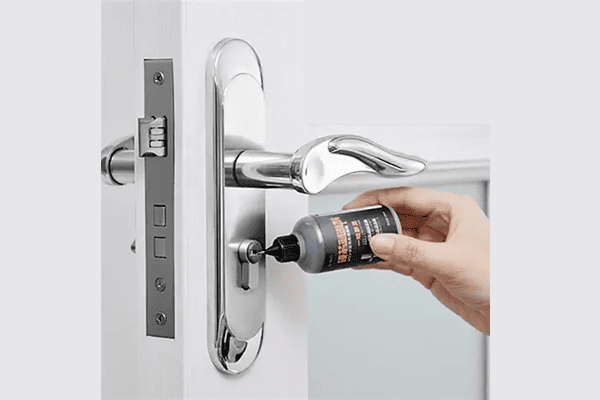
Material and finish frameworks we use with buyers
When I evaluate a schedule, I start with environment:
- Interior dry, interior humid, coastal exterior, chlorinated pool areas, kitchens, or healthcare spaces.
- Cleaning protocol: abrasive pads, disinfectants, or touch-free expectations.
- Visual intent: uniform satin stainless steel or mixed decorative palettes.
Common patterns:
- Commercial: Stainless steel (304/316)9, brushed/satin finishes, PVD for wear resistance10, heavy-duty plating for cylinders and locks.
- Residential: Brass and zinc alloy levers, polished or antique finishes, powder-coated colors, decorative rosettes and escutcheons.
Here is a simple comparison to guide the conversation:
| Component | Commercial focus | Residential focus |
|---|---|---|
| Lever handles | Stainless steel, through-bolted, anti-vandal, easy clean | Brass/zinc, style-forward, varied backplates/rosettes |
| Mortise locks | Reinforced cases, replaceable springs, compatible with access control | Comfort operation, quieter latch, style-matched trims |
| Cylinders | High-security options, key control programs | Standard security, finish-matched to trims |
| Hinges | Ball-bearing butt hinges, high load concealed hinges | Standard butt hinges for lighter doors, decorative tips |
| Closers | Adjustable EN sizes, delayed action, backcheck | Lighter EN sizes or spring hinges for interior doors |
| Panic hardware | Certified for egress routes | Typically not required; decorative bolts for private doors |
The key is matching durability where it is needed. A luxury home front door may merit stainless steel and PVD finishes due to coastal air and heavy use, even though it is a residential application. Meanwhile, offices may accept powder-coated finishes on interior doors if maintenance teams can support them.
As a manufacturer, we recommend:
- Identify corrosion category and cleaning chemicals in the environment.
- Choose base materials that fit the environment: 316 stainless for harsh/coastal; brass for premium decorative; zinc alloy for economical, style-driven interiors.
- Select surface treatments that balance look and wear: brushed satin, PVD, powder coat, antique plating.
- Confirm finish compatibility across all components for a consistent look.
How do design priorities show up in commercial and residential door hardware?
Form follows function in busy buildings; expression often leads in homes.
Design in commercial and residential door hardware reflects different priorities. Commercial selections emphasize ergonomics, accessibility, and fast serviceability. Residential sets prioritize coordinated aesthetics, touch feel, and interior style. Both should consider user comfort, but their constraints differ: codes and maintenance versus personal design intent.
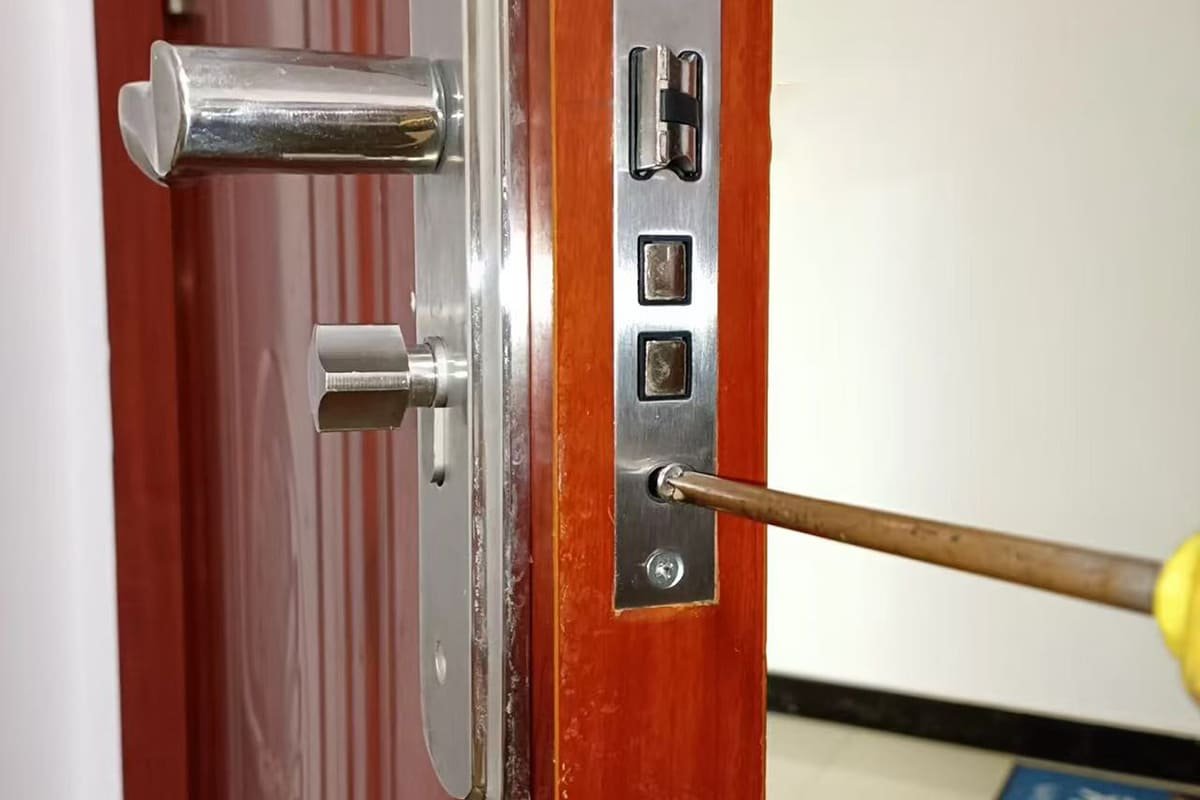
Balancing ergonomics and expression
On a school renovation last season, I helped a buyer swap a stylish, narrow lever for a broader, ADA-friendly profile to improve grip and reduce maintenance. The change reduced handle damage and call-backs.
Commercial design anchors:
- Ergonomics: Levers with sufficient return length and comfortable grip.
- Accessibility: Low operating force, clear egress devices, visual contrast in signage.
- Maintainability: Trim with replaceable parts, standardized screws, and robust sub-assemblies.
Residential design anchors:
- Aesthetic coordination: Finishes matching furniture, lighting, and hinges.
- Tactile feel: Smooth operation with quieter latches and softer spring return.
- Variety: Antique brass, matte black, satin nickel, or mixed finishes across rooms.
Procurement tips:
- Define the design intent by area. A corporate boardroom may merit a premium handle, while back-of-house doors require rugged, easily replaced trims.
- Consider “family sets.” Many brands, including us at SDH, offer coordinated trims (levers, plates, hinges, stoppers) across multiple grades so large projects can maintain a consistent look while tuning performance per door set.
- Use mockups. A single sample installed in the actual door helps confirm both appearance and operability before bulk ordering.
How do installation and maintenance differ for commercial and residential door hardware?
People often see hardware on the surface and forget what happens beneath the screws and inside the door.
Installation and maintenance for commercial and residential door hardware diverge in fasteners, door preparation, and serviceability. Commercial sets often use through-bolting, heavier screws, templates, and adjustable components. Residential sets tend to be more DIY-friendly. Maintenance plans and spare parts availability affect the total cost over the door’s life.
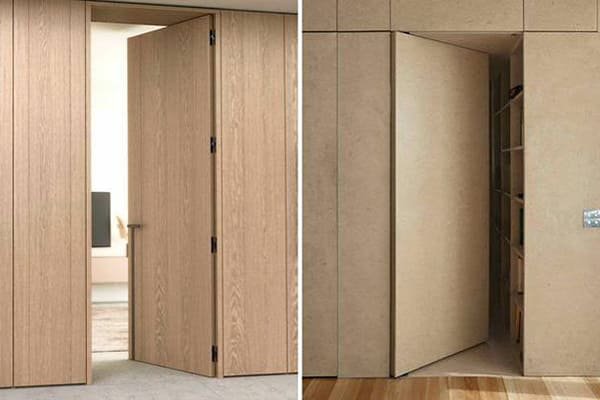
The practical side that changes total cost
I learned early that two identical-looking lever sets can install very differently. One requires precise mortise prep and through-bolts; the other uses wood screws only. The former costs more to install but resists loosening under heavy traffic.
Commercial installation traits:
- Through-bolted levers/locks for pull strength.
- Standardized templates for consistent door prep in factories.
- Adjustable closers (spring power, backcheck, delayed action) to tune field conditions.
- Reinforced strike plates and longer screws anchoring into framing.
Residential installation traits:
- Simpler drilling patterns and latches sized for typical backsets.
- Wood screws and straightforward instructions for quick fitment.
- More frequent full-set replacement rather than part-by-part service.
Maintenance strategy:
- Commercial: Stock spares (springs, spindles, cylinders, closer arms). Schedule inspections. Document replacements for warranty.
- Residential: Replace worn sets entirely, unless a high-value entrance uses serviceable components.
Selection checklist:
- Confirm door prep: thickness, backset, center distances, and hinge positions.
- Ask for technical drawings and templates before production. At SDH, we share full drawings after order confirmation to align with your machining.
- Plan after-sales: Where will you source cylinders keyed alike? How fast can you swap a lever or closer? Is the finish easy to clean without fading?
A small upfront investment in install planning avoids later costs. We provide product inspection services after order completion and can adapt specs and surface treatments to regional standards so your installation team gets predictable results.
What risks come from misapplying commercial and residential door hardware?
The wrong grade in the wrong door is expensive—sometimes dangerous.
Misapplying commercial and residential door hardware invites failures: loosening levers, sagging hinges, non-latching fire doors, and code issues. Financially, this means rework, delays, and reputational damage. Operationally, it increases maintenance calls. In safety-critical openings, it creates legal and compliance risks. Always align grade, certification, and installation to the opening.
Failure modes I see most often
Common problems when the spec does not match the door:
- Hinges undersized for weight: The door sags, rubs the floor, and stresses the frame.
- Locks not rated for cycles: Springs fatigue, handles droop, latches fail to retract.
- Wrong closer power: Doors slam or fail to close fully, which is unacceptable on fire doors.
- No verified fire rating: A compliant door leaf with non-rated hardware may invalidate the assembly.
- Improper fasteners: Screws strip in soft cores or pull out under repeated use.
- Incompatible cylinders: Keying systems become fragmented, and service becomes complex.
How to avoid:
- Start with a door-by-door schedule listing location, usage, door weight, fire/egress status, and environmental factors.
- Request and review certificates and test reports that match the exact model and finish you are buying.
- Mock up one opening to validate installation and performance.
- Train installers on templates, torque values, and closer adjustments.
Where SDH Hardware helps:
- We offer standardized and customized sets: Euro mortise locks, stainless steel lever handles, butt hinges, concealed hinges, Euro brass cylinders, and accessories.
- All core products comply with EU standards, with CE and fire-rated options available to suit project needs.
- ODM/OEM support ensures you can align backsets, center distances, and finishes across regions.
- Our factory testing and full-process quality control reduce the risk of out-of-box variation and simplify maintenance planning.
Frequently Asked Questions
Do I always need fire-rated hardware for commercial doors?
Not always. Requirements depend on the door’s location, the building type, and local codes. Some interior commercial doors are not on fire compartments, while stair cores and certain corridors usually are. Verify with the project’s fire strategy and use hardware certified for the specific door assembly.
Can residential handles be used in small offices?
Sometimes, if traffic is low and no special compliance applies. However, even small offices can see concentrated traffic at certain doors. Evaluate daily cycles, door weight, and any fire or egress rules before choosing. When in doubt, select a higher-performing set for the busiest openings.
Which materials last longest in harsh environments?
Stainless steel, especially 316 in coastal or chlorinated environments, generally resists corrosion best.11 PVD finishes can increase wear resistance. Brass and zinc can perform well indoors with proper finishes. Match base material and finish to the environment and cleaning chemicals used.
Are ANSI/BHMA Grades the same as European EN categories?
They serve similar purposes—defining performance levels—but they are not the same systems. ANSI/BHMA is common in North America, while EN standards and CE marking are used widely in Europe. Align your specification with the local standard and verify the product’s specific test reports.
How many hinges should I use on a heavy door?
The number depends on height, weight, and hinge capacity. A typical rule is three hinges for standard doors, adding more for greater height or weight.12 Always check the hinge’s load rating and the door manufacturer’s guidance, and verify against your specific door assembly.
Conclusion
The essential difference between commercial and residential door hardware is specification, not stereotypes. Align traffic, load, safety documents, materials, installation, and maintenance with the real door and environment. If you plan from the opening outward, you reduce risk and cost. If you need help selecting or customizing commercial and residential door hardware, contact SDH Hardware for a fast, standards-aware review, samples, and a factory-direct quotation.
"A Buyer's Guide to Choosing Commercial Door Hardware? - SDH ...", https://sdhhardware.com/2026/08/06/a-buyers-guide-to-choosing-commercial-door-hardware/. Standards such as the ANSI/BHMA A156 series and EN 1906 classify builders hardware by cycle testing and load capacity, with commercial grades typically requiring higher cycle counts and more demanding performance than residential categories. Evidence role: general_support; source type: institution. Supports: That standardized classifications (e.g., ANSI/BHMA, EN) require higher cycle counts and heavier-duty performance for commercial hardware than for residential categories.. Scope note: Specific cycle counts and loads vary by product type and standard, so grade labels are not directly interchangeable across categories. ↩
"CHAPTER 10 MEANS OF EGRESS - ICC Digital Codes", https://codes.iccsafe.org/content/IBC2018/chapter-10-means-of-egress. Model building and life safety codes assign higher occupant loads to many commercial occupancies (e.g., assembly, educational, business) than to dwelling units, which supports the expectation of greater door-use frequency in those spaces. Evidence role: general_support; source type: institution. Supports: That building codes assign higher occupant loads to many commercial occupancies compared with dwelling units, implying higher expected traffic through doors.. Scope note: Occupant load factors are proxies for potential traffic and do not directly measure door cycle counts at specific openings. ↩
"Mortise lock", https://en.wikipedia.org/wiki/Mortise_lock. Reference sources on door hardware describe mortise locks as commonly used in commercial buildings due to their rugged, serviceable cases and heavy-duty internal components. Evidence role: general_support; source type: encyclopedia. Supports: That mortise locks are widely used in commercial buildings for their robust, serviceable construction.. Scope note: Specific features such as latch hardening and field-replaceable parts vary by manufacturer and model. ↩
"What Type of Door Lock Is Most Secure? - SDH hardware- China ...", https://sdhhardware.com/2026/08/04/what-type-of-door-lock-is-most-secure/. The Builders Hardware Manufacturers Association (BHMA) publishes the ANSI/BHMA A156 standards that define Grade 1, Grade 2, and Grade 3 performance levels for specific hardware types, and these grades are commonly used in North America to summarize durability and security performance. Evidence role: definition; source type: institution. Supports: That ANSI/BHMA standards define Grade 1, 2, and 3 performance levels for various hardware types and are widely used in North America.. Scope note: Grades are defined per product standard and do not provide a single cross-product comparison. ↩
"Chapter 4: Entrances, Doors, and Gates", https://www.access-board.gov/ada/guides/chapter-4-entrances-doors-and-gates/. Life safety and accessibility codes such as NFPA 101 and NFPA 80, along with the ADA Standards, set requirements for egress-capable, fire-rated door assemblies and accessible operable hardware in many commercial building locations. Evidence role: general_support; source type: institution. Supports: That NFPA 101/NFPA 80 and ADA Standards establish requirements for egress, fire-rated door assemblies, and accessible hardware in many commercial settings.. Scope note: Applicability depends on occupancy, door location, building type, and jurisdictional adoption. ↩
"What Kind of Door Hardware for Fire Rated Doors Is Suitable ...", https://sdhhardware.com/2026/08/10/what-kind-of-door-hardware-for-fire-rated-doors-is-suitable/. European practice uses EN 1634 for fire resistance testing of doors and shutters, while North American practice typically references UL 10B/10C test methods with installation and maintenance governed by NFPA 80. Evidence role: definition; source type: encyclopedia. Supports: That EN 1634 specifies fire resistance tests for doorsets in Europe, and UL 10B/10C with NFPA 80 guide fire door assemblies in North America.. Scope note: Specific standards and equivalencies vary by country and project specification. ↩
"Chapter 4: Entrances, Doors, and Gates", https://www.access-board.gov/ada/guides/chapter-4-entrances-doors-and-gates/. The ADA Standards require door hardware operable with one hand without tight grasping, pinching, or twisting of the wrist and limit opening forces for many interior doors, as detailed by the U.S. Access Board. Evidence role: definition; source type: government. Supports: That ADA Standards specify operability of door hardware without tight grasping, pinching, or twisting, and set limits on door opening force for certain interior doors.. Scope note: Force limits and exceptions vary by door type and use context. ↩
"CE marking", https://en.wikipedia.org/wiki/CE_marking. According to the European Commission, CE marking indicates conformity with applicable EU harmonisation legislation and is required only for products covered by those rules to be placed on the EEA market. Evidence role: definition; source type: government. Supports: That CE marking signifies compliance with applicable EU harmonisation legislation and applies only to products covered by such rules.. Scope note: Whether a particular door hardware product requires CE marking depends on the presence of a relevant harmonised standard or directive. ↩
"Marine grade stainless - Wikipedia", https://en.wikipedia.org/wiki/Marine_grade_stainless. Technical references on stainless steels note that 316 (an austenitic grade containing molybdenum) provides improved resistance to chloride-induced corrosion compared with 304, which underpins its use in more aggressive environments. Evidence role: mechanism; source type: encyclopedia. Supports: That 316 stainless steel includes molybdenum for enhanced chloride corrosion resistance compared with 304, informing its use in harsher environments.. Scope note: Service performance also depends on finish, fabrication, and maintenance practices. ↩
"Metal nitride coatings by physical vapor deposition (PVD) for a wear ...", https://pubmed.ncbi.nlm.nih.gov/25970997/. Materials references describe physical vapor deposition (PVD) as a process that applies hard, wear-resistant coatings—such as titanium nitride—used to improve abrasion resistance and finish longevity on metal parts. Evidence role: mechanism; source type: encyclopedia. Supports: That PVD processes deposit hard, wear-resistant coatings used to improve the durability of finished components.. Scope note: Performance depends on specific coating systems, substrates, and service conditions. ↩
"Marine grade stainless", https://en.wikipedia.org/wiki/Marine_grade_stainless. Engineering materials guidance notes that 316 stainless steel is often selected over 304 in chloride-rich environments due to its improved pitting and crevice corrosion resistance. Evidence role: general_support; source type: education. Supports: That 316 stainless steel offers better resistance to chloride-induced corrosion than 304, making it a common choice in marine or chlorinated settings.. Scope note: Material selection should consider exposure severity, surface finish, and cleaning chemicals. ↩
"How to choose 3D adjustable concealed hinge? - SDH hardware", https://sdhhardware.com/2025/02/13/how-to-choose-3d-adjustable-concealed-hinge/. Carpentry and door hardware guides commonly recommend three hinges for standard-height doors and specify additional hinges for taller or heavier leaves to distribute load and reduce sag. Evidence role: general_support; source type: education. Supports: That trade guidance commonly recommends three hinges for standard doors, with more hinges specified as door height or weight increases.. Scope note: Exact hinge counts should follow manufacturer load ratings and specific door construction details. ↩