Evaluating Door Hinge Suppliers: An OEM Technical Guide?
Door hinge suppliers can look similar on a quotation sheet, but the real risk starts after the sample is approved. If certification scope, ODM support, delivery control, or batch consistency is weak, I have seen OEM projects lose time, money, and market access. A better evaluation process helps buyers control those risks before mass production.
OEM buyers should evaluate door hinge suppliers by checking certificate scope, hinge grade, load rating, fire-rating coverage, ODM engineering support, production capacity, delivery reliability, and batch quality control. The best supplier is not simply the cheapest one. It is the factory that can repeatedly deliver compliant, consistent hinges for the exact door system and market requirement.
I work from the factory side, so I tend to look beyond catalog photos and unit prices. A good hinge sample is only the first checkpoint. The stronger question is simple: can this supplier repeat the same result across drawings, certificates, shipments, and long-term orders?
How Should OEM Buyers Evaluate Door Hinge Suppliers Beyond Price?
Many buyers start with price because price is easy to compare. That is understandable. However, low unit cost can hide expensive problems when a hinge fails certification review, delays a door project, or varies between production batches.1 I prefer to treat supplier selection as risk control.
OEM buyers should evaluate door hinge suppliers through four main areas: certification validity, ODM engineering capability, delivery reliability, and batch consistency. Price still matters, but it should be compared only after the supplier proves technical fit, production stability, and document support for the intended door application.
Why price alone is a weak filter
A hinge is a small part of a door set, but it carries a large part of the door’s functional risk.2 It affects:
- Door weight support
- Opening and closing cycle performance
- Fire door compliance
- Alignment and adjustment
- Noise and smooth movement
- Long-term customer complaints
- Brand reputation for hardware companies
I once joined a project discussion where the buyer had received three hinge quotations with almost the same model number and finish description. On paper, the cheapest option looked attractive. But when we reviewed the details, the hinge dimensions, bearing structure, fire-rated documentation, and screw hole position were not the same. The “same hinge” was not really the same product.
That is why I suggest buyers build a technical scorecard before comparing prices.
A practical OEM hinge supplier scorecard
| Evaluation area | What I check | Why it matters |
|---|---|---|
| Certification scope | CE, fire-rated documents, tested grade, load rating, hinge type, door application | Certificates may not cover the exact hinge or door system3 |
| Engineering support | Drawings, sample revisions, structure adjustment, ODM capability | Standard catalog items do not solve every project |
| Manufacturing control | In-house production, tooling control, machining accuracy, surface treatment process | Batch consistency depends on process discipline |
| Delivery reliability | Lead time, repeat order planning, capacity, communication | One good sample does not prove stable supply |
| QC system | Raw material inspection, process inspection, finished product checks | Defects must be controlled before shipment |
| Packaging and branding | Logo marking, custom packaging, labeling, carton strength | OEM buyers need market-ready supply |
What “factory-direct” should mean
Some companies use “factory-direct” as a sales phrase. I think buyers should ask what it means in practice. A real manufacturer should be able to explain:
- Which processes are in-house
- Which processes are outsourced
- How production batches are controlled
- Who confirms technical drawings
- How inspection results are recorded
- How nonconforming goods are handled
At SDH Hardware, we operate as a China-based architectural door hardware manufacturer with independent factory operations. Our work includes standardized hinge production, ODM development, certification preparation support, sampling, delivery coordination, and batch QC. I mention this not as a shortcut for buyer due diligence, but because these are the practical areas I expect serious OEM buyers to inspect in any supplier.
A good hinge supplier should welcome technical questions. A weak supplier usually wants the conversation to stay at price, MOQ, and delivery date.
For OEM door manufacturers and hardware brands, a hinge supplier becomes part of the final product’s risk profile. So the evaluation should feel more like a technical audit than a shopping comparison.
What Certification Scope Should Door Hinge Suppliers Prove?
Certification can reduce buyer risk, but only when the certificate matches the real product and application. A certificate title is not enough. I always recommend checking the tested hinge type, grade, load rating, fire duration, standard reference, test report details, and whether the certificate applies to the exact door system.
Door hinge suppliers should prove certification scope with verifiable documents that match the hinge model, structure, material, grade, load rating, and intended door application. Buyers should not assume CE or fire-rated certification applies to all hinge versions, finishes, sizes, or door systems without document review and qualified project evaluation.4
Certificate existence is not the same as certificate suitability
I have seen buyers ask, “Do you have CE?” or “Do you have fire certification?” Those are important questions, but they are only the beginning.
A better question is:
“Does this certificate cover this exact hinge model, this tested grade, this door weight, this fire duration, and this intended door application?”
This distinction matters because hinge products can vary in small but important ways. A change in thickness, bearing construction, screw design, material grade, or hinge geometry may affect whether the previous test result remains relevant.5
What buyers should verify
When evaluating door hinge suppliers, I suggest asking for the following documents and details:
- Certificate copy
- Test report reference
- Applicable standard
- Product model or series covered
- Hinge dimensions
- Material and construction
- Tested grade
- Load rating
- Fire duration, if applicable
- Door type and application scope
- Certificate validity period
- Issuing body information
For European-standard butt hinges, buyers often see products around Grade 13 / 120 kg in common commercial applications.6 Some Grade 14 hinge products may support approximately 120–160 kg, depending on the tested design and documentation.7 Fire-rated hinges may also cover different durations depending on the test configuration.8
At SDH, for example, we may discuss document-backed capabilities such as Grade 13 / 120 kg hinge performance and certain 260-minute fire-rated hinge documentation where applicable. However, I would never tell a buyer to rely on those figures without reviewing the actual certificate scope for the exact hinge and project.
Certification review checklist
| Document item | Buyer question | Risk if ignored |
|---|---|---|
| Standard reference | Which standard was used for testing? | Wrong market or wrong compliance basis |
| Model coverage | Does the document name or include this hinge? | Certificate may belong to another product |
| Grade/load | What grade and door mass were tested? | Hinge may be under-specified |
| Fire duration | What fire test duration applies? | Fire door approval may fail |
| Installation details | What door type and fixing method were tested? | Real installation may differ from test |
| Validity | Is the certificate current and traceable? | Expired or unverifiable documents |
Why application-specific evaluation still matters
Even strong documentation does not automatically make a hinge suitable for every door. Door size, weight, frame material, screw fixing, frequency of use, closer force, environmental exposure, and local regulations all affect the final decision.9
For fire doors, I recommend that buyers involve qualified fire door professionals, testing bodies, or certification consultants when needed. A hinge supplier can provide documents, drawings, test references, and technical support, but the final system-level approval depends on the door assembly and market rules.
Red flags in certification discussions
I become cautious when a supplier:
- Sends only a blurred certificate image.
- Refuses to provide test report references.
- Claims one certificate covers all hinge models.
- Cannot explain tested grade or load rating.
- Avoids questions about fire duration.
- Treats CE marking as a universal guarantee.10
- Cannot match certificate details to the offered SKU.
OEM buyers should not feel embarrassed to ask detailed document questions. Good door hinge suppliers expect this. In fact, I see technical document review as a normal part of serious international cooperation.
Why Does ODM Engineering Capability Matter for OEM Door Hinges?
Standard hinge models work for many doors, but not for every door project. The problem appears when a buyer has a special frame structure, concealed installation requirement, regional specification, or brand design. Without ODM support, the supplier can only say yes or no.
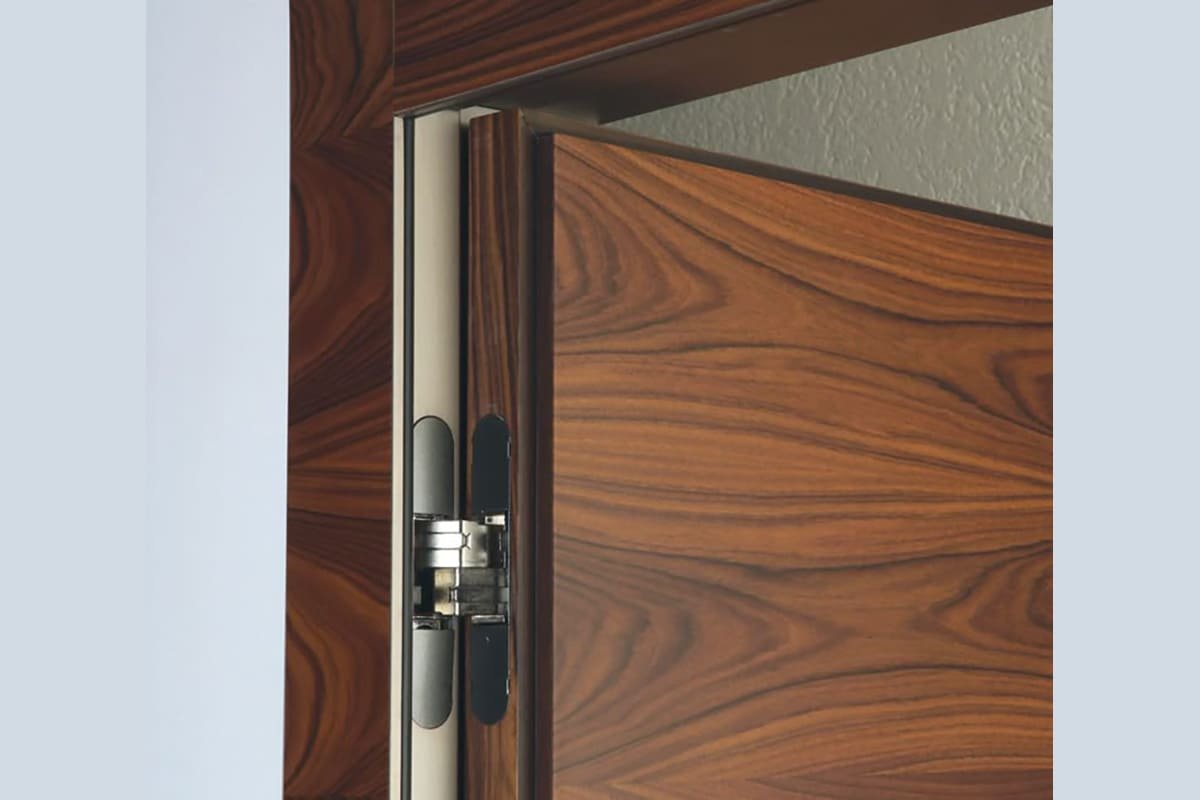
ODM capability matters because OEM door hinges often need drawing confirmation, structural adjustment, special dimensions, surface treatment changes, logo requirements, or application-specific development. A qualified supplier should support design discussion, prototype sampling, revision control, and manufacturing feasibility before mass production begins.
When catalog hinges are not enough
A catalog hinge is useful when the door system is standard. But many OEM buyers do not sell only one standard door. They may serve hotel projects, residential developments, fire door markets, commercial interiors, or regional hardware brands with their own design preferences.
ODM engineering becomes important when buyers need:
- Different hinge leaf dimensions
- Special knuckle design
- Three-way adjustment
- Concealed hinge structure
- Specific screw hole patterns
- Thicker or thinner door compatibility
- Special surface finishes
- Custom packaging or branding
- Compatibility with existing door machining
- Cost optimization without losing required performance
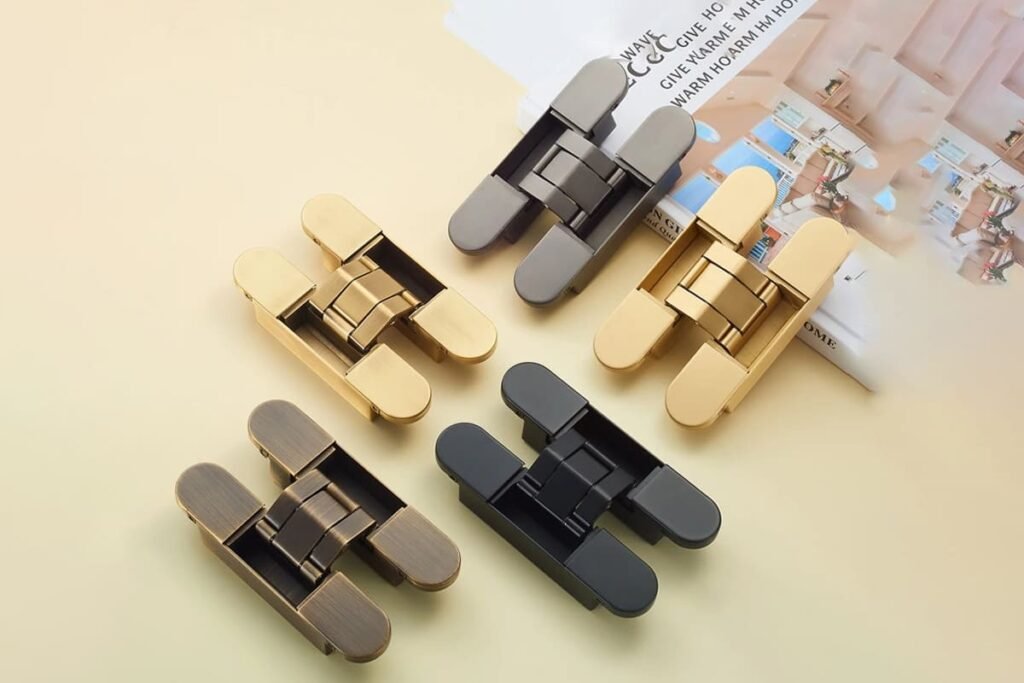
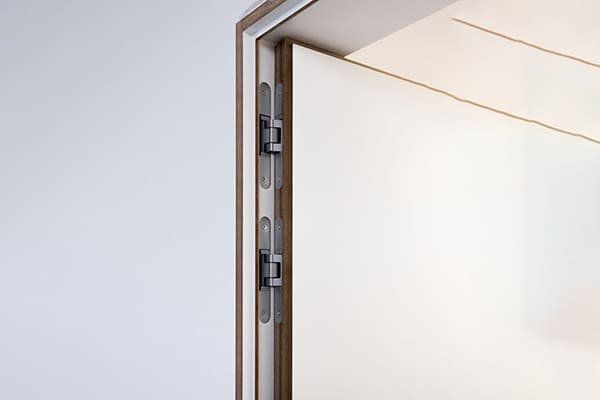
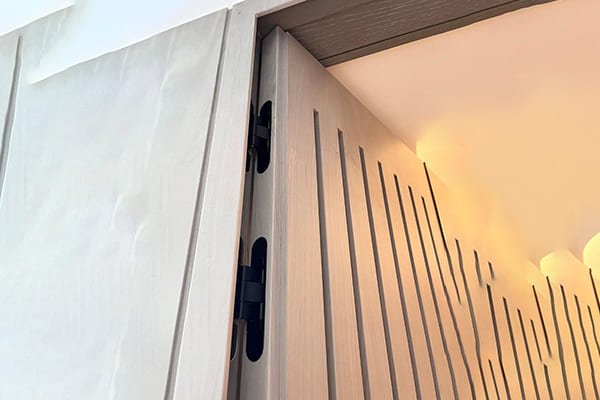
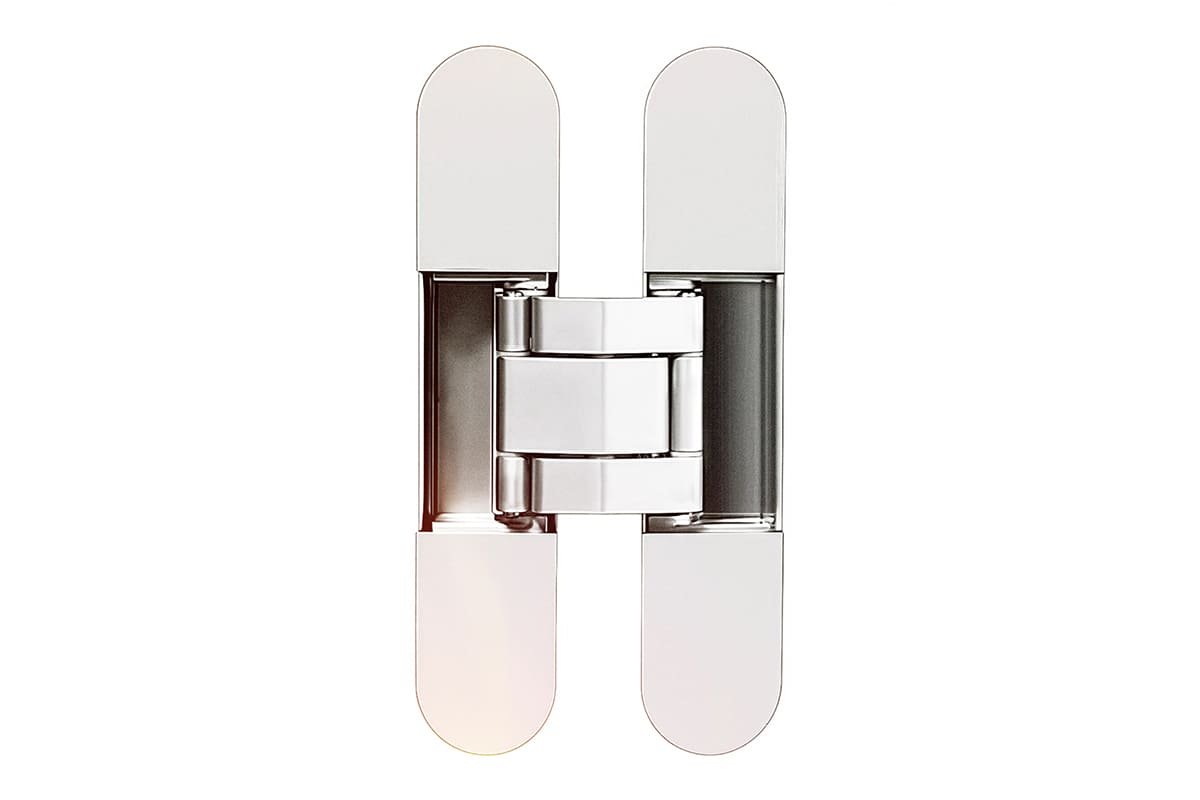
At SDH, one practical example is our work around three-way adjustable concealed hinge ODM development. These projects require more than a product photo. The hinge must fit the door and frame structure, allow adjustment, control movement, and remain manufacturable at scale.
What good ODM communication looks like
In my experience, strong ODM communication follows a clear sequence:
Requirement collection
I ask for door type, frame detail, door weight, opening direction, thickness, usage environment, market requirements, and target finish.Drawing review
The engineering team checks whether the requested hinge structure is realistic and whether it conflicts with tooling, machining, or strength requirements.Technical proposal
The supplier suggests dimensions, structure, material, finish, and possible alternatives.Sample production
The first sample confirms appearance, fit, basic function, and manufacturability.Revision and confirmation
The buyer and supplier adjust drawings, tolerances, hole positions, or movement details.Pre-production approval
The final sample and drawing become the reference for mass production.Batch control
QC checks production against the confirmed drawing and approved sample.
ODM evaluation table for OEM buyers
| ODM capability | What to request | What it proves |
|---|---|---|
| Drawing support | 2D/3D drawings, marked dimensions | Engineering communication ability |
| Sample development | Prototype schedule and sample feedback | Practical manufacturing ability |
| Structure adjustment | Suggestions for thickness, bearing, fixing, movement | Real product understanding |
| Finish customization | Color samples, plating/coating references | OEM market support |
| Branding support | Logo stamping, laser marking, packaging design | Brand-ready supply |
| Revision control | Updated drawings and confirmed sample records | Process discipline |
Engineering support must stay realistic
ODM does not mean every idea can or should be produced. A mature supplier should sometimes push back. I respect that. If a requested hinge is too thin for the target load, too complex for stable mass production, or difficult to certify, the supplier should explain the concern early.
A good technical answer may sound like this:
“We can develop this structure, but if the hinge must support this door weight, we suggest increasing thickness or changing the fixing method. We should also confirm whether the design needs new testing.”
That kind of answer protects both sides. It also shows the supplier is thinking about long-term performance, not just getting the purchase order.
Why ODM affects total project cost
Buyers sometimes compare an ODM hinge quotation with a standard hinge quotation and think the custom version is expensive. However, the real comparison should include:
- Tooling cost
- Sample revision time
- Door machining compatibility
- Certification needs
- Assembly labor
- Rework risk
- Future complaint cost
- Brand differentiation value
When an OEM hinge supplier can solve a design problem before production, the buyer may save much more than the price difference on the hinge itself.
How Do Door Hinge Suppliers Demonstrate Delivery Reliability?
Delivery problems rarely appear during the first conversation. Every supplier says the lead time is manageable. The real test comes when repeat orders, mixed finishes, urgent shipments, and production changes happen at the same time. I consider delivery reliability a technical supplier issue, not only a logistics issue.
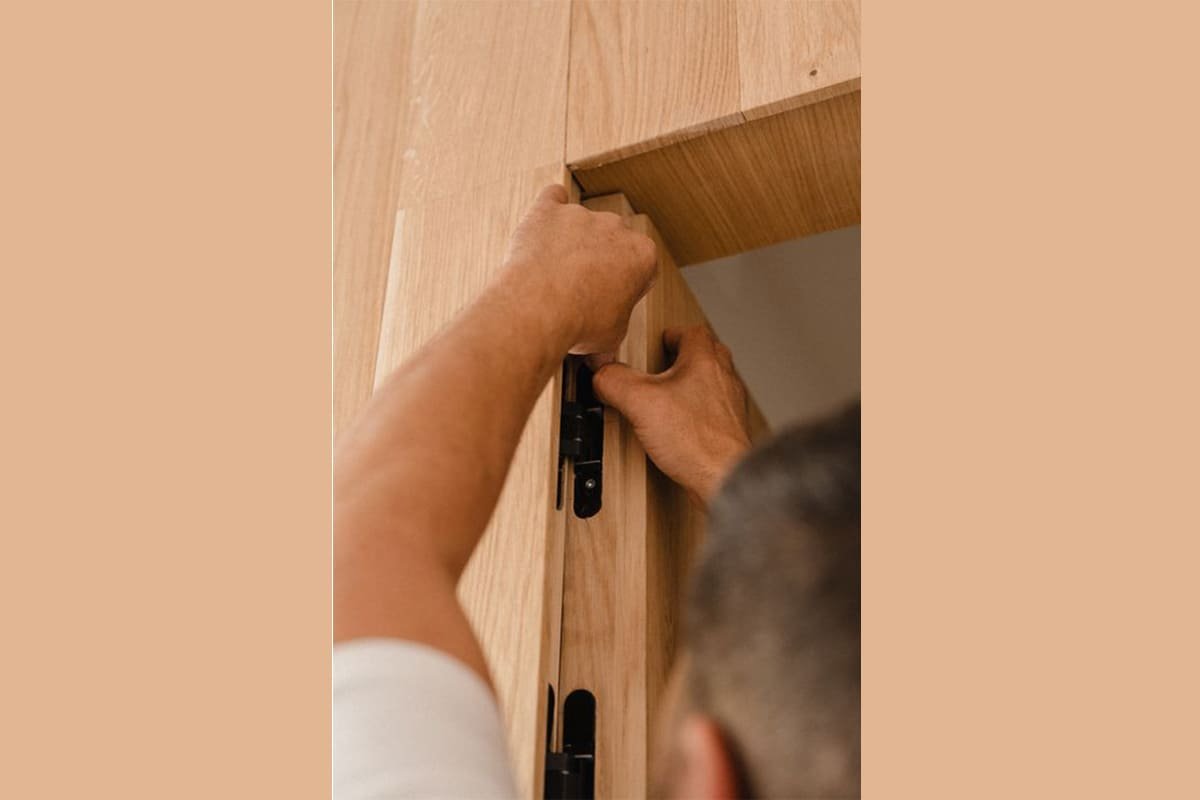
Door hinge suppliers demonstrate delivery reliability through stable production capacity, realistic lead-time commitments, material planning, repeat order coordination, clear communication, and shipment inspection. OEM buyers should evaluate whether the supplier can manage continuous production, not just produce one approved sample.
Why delivery is part of technical evaluation
A hinge delay can stop a door factory’s assembly line.11 It can also delay container loading, project installation, or retail brand launch schedules. For OEM buyers, late hinges are not just late parts. They can become a project penalty, customer complaint, or lost sales season.
I have learned that delivery reliability depends on several factory-side controls:
- Raw material availability
- Tooling condition
- Production line scheduling
- Surface treatment coordination
- Inspection capacity
- Packaging preparation
- Export documentation
- Communication between sales, production, and logistics teams
A supplier with poor internal coordination may still make acceptable hinges. But that supplier may struggle to deliver stable monthly orders.
Questions I recommend asking
OEM buyers can ask door hinge suppliers these practical questions:
- What is your normal production lead time for this hinge type?
- Does the lead time change by finish, quantity, or certification requirement?
- How do you manage repeat orders?
- Can you reserve capacity for forecasted demand?
- Which production processes are potential bottlenecks?
- How do you handle inspection before shipment?
- What happens if the batch fails internal QC?
- Can you support mixed models in one shipment?
The answers do not need to be perfect. They need to be realistic. I trust a supplier more when they clearly explain constraints than when they promise everything quickly.
Delivery reliability indicators
| Indicator | Strong supplier behavior | Weak supplier behavior |
|---|---|---|
| Lead time | Gives realistic range and conditions | Promises fastest date without checking |
| Production planning | Confirms capacity before order | Accepts order first, solves later |
| Repeat orders | Keeps records of model, finish, packaging | Treats every order like a new project |
| Communication | Updates buyer before problems become urgent | Waits until delay is unavoidable |
| QC timing | Builds inspection into schedule | Inspects only when shipment is due |
| Documentation | Prepares packing list, labels, and export files early | Rushes paperwork at the end |
Why repeat orders reveal the truth
A first order receives attention because both sides want the cooperation to start well. Repeat orders show whether the supplier has a system. For example, if the buyer orders the same stainless steel butt hinge every two months, the supplier should be able to keep:
- Consistent dimensions
- Consistent hole positions
- Consistent finish tone
- Consistent packaging
- Consistent labeling
- Consistent inspection standards
If every repeat order requires the buyer to re-explain the same details, the supplier’s internal record control may be weak.
At SDH, our OEM work often includes customer stamping or laser logos, custom color packaging, detailed drawings after order confirmation, and inspection service after order completion. These steps may seem administrative, but they directly support repeat order reliability. When product records are clear, the chance of shipping the wrong version decreases.
Delivery risk control for buyers
I suggest buyers use a staged approach for important hinge programs:
- Sample approval
- Small trial order
- First mass production order
- Repeat order comparison
- Annual supplier review
This process gives the buyer time to observe delivery behavior. A supplier that performs well across multiple orders is usually more valuable than a supplier that only wins the first quotation.
What Batch Quality Controls Separate Mature Door Hinge Suppliers?
A beautiful first sample can create confidence, but batch quality decides long-term cooperation. Problems such as color difference, coating defects, rough movement, dimensional variation, and hole-position mismatch often appear only after mass production. I always tell buyers to inspect the batch, not just the sample.
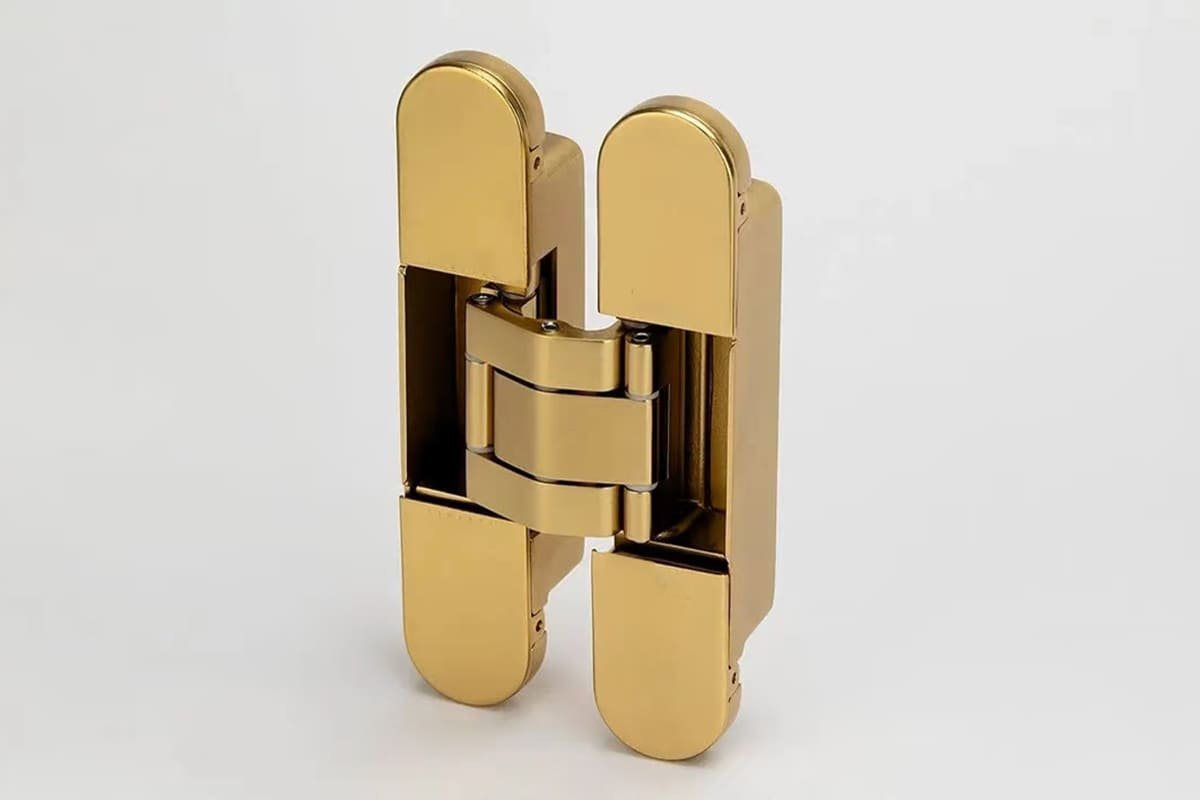
Mature door hinge suppliers control batch quality through raw material checks, dimensional inspection, surface finish control, function testing, hole-position verification, packaging inspection, and approved-sample comparison. For OEM buyers, batch consistency often matters more than the first sample because the final market receives the batch, not the prototype.
The first sample is only a promise
A sample shows what the supplier can make under focused conditions. Mass production shows what the supplier can repeat under real factory conditions.12
That difference matters. In hinge production, small variations can affect installation and performance. A screw hole that shifts by even a small amount may create trouble for automated door machining or pre-drilled frames. A finish that looks slightly different from the approved sample may cause complaints for hardware brands that sell matching door sets.
Key batch quality points for OEM hinges
I recommend buyers focus on these areas:
Material consistency
The supplier should control material grade, thickness, and incoming inspection.Dimensional tolerance
Hinge leaf size, thickness, knuckle diameter, and pin fit should match the approved drawing.Hole-position accuracy
Screw holes must align with door and frame preparation, especially for OEM door factories.Surface treatment quality
Brushed stainless steel, PVD, satin, polished, black, and other finishes need consistent appearance.Color difference control
Color variation between batches can affect brand consistency.Opening and closing smoothness
Hinges should move smoothly without abnormal noise or excessive looseness.Load and structure consistency
The batch should match the certified or approved construction, where applicable.Packaging protection
Poor packaging can damage hinges after they pass factory inspection.
Batch QC checklist
| QC stage | Inspection focus | Buyer benefit |
|---|---|---|
| Raw material inspection | Grade, thickness, surface condition | Reduces hidden structural variation |
| In-process inspection | Cutting, stamping, machining, hole position | Finds issues before finishing |
| Surface inspection | Color, coating, scratches, oxidation, plating defects | Protects brand appearance |
| Function inspection | Movement, pin fit, bearing condition, noise | Reduces installation complaints |
| Dimension inspection | Leaf size, thickness, knuckle, screw holes | Supports door factory assembly |
| Final inspection | Quantity, packaging, labels, cartons | Prevents shipment errors |
Surface finish deserves special attention
Surface finish is one of the most common complaint areas in architectural hardware. Buyers often specify a finish code, but visual expectations may still differ. I suggest confirming:
- Approved finish sample
- Acceptable color range
- Brushing direction
- Gloss level
- Scratch acceptance standard
- Packaging method to prevent rubbing
- Batch-to-batch comparison process
For example, a satin stainless steel hinge may look simple, but its appearance depends on material quality, brushing process, handling, and packaging. A black finish may require stronger control because scratches and coating unevenness are easier to see.
Hole-position consistency matters for door factories
OEM door manufacturers often use repeat machining processes. If hinge hole positions vary, the factory may need rework. That can slow assembly and increase labor cost.
Buyers should provide accurate drawings and confirm:
- Hole diameter
- Countersink angle
- Center-to-center distance
- Edge distance
- Screw specification
- Tolerance requirements
- Left/right or universal application
Conclusion
Evaluating door hinge suppliers is really a risk-control process for OEM buyers. I recommend looking beyond unit price and checking certificate scope, ODM engineering ability, delivery reliability, and batch quality consistency. A strong supplier should support documents, drawings, sampling, production planning, and inspection with clear records. If you need factory-direct OEM or ODM support for butt hinges, concealed hinges, or complete architectural door hardware sourcing, SDH Hardware can help you review the technical requirements and prepare a practical supply solution.
"Expected Costs and Benefits: An Analysis of Supplier Evaluation", https://scm.ncsu.edu/scm-articles/article/reacting-to-disruptions-the-real-test-for-belonging-to-the-world-class-supply-chain-club-2. Research on total cost of ownership in supplier selection supports considering quality failures, delivery disruption, and post-purchase costs alongside purchase price; the evidence is general to procurement rather than specific to door hinges. Evidence role: general_support; source type: paper. Supports: Supplier selection research supports evaluating total cost, quality risk, and delivery performance rather than purchase price alone.. Scope note: Contextual support; it does not quantify hinge-specific losses. ↩
"BS EN 1935:2002 – Single Axis Hinges", https://www.hoppe.com/in-en/contacts-service/standards/bs-en-1935/. EN 1935 classifies single-axis hinges by criteria including door mass, durability, corrosion resistance, safety, and fire or smoke door suitability, supporting the functional significance of hinges within door assemblies; the standard does not rank hinges against other door-set components. Evidence role: mechanism; source type: institution. Supports: Door-hinge standards evaluate hinges for load capacity, durability, corrosion resistance, safety, and fire or smoke door suitability.. Scope note: Contextual support; it shows hinge functions but not that hinges carry the largest share of door risk. ↩
"Product certification", https://en.wikipedia.org/wiki/Product_certification. ISO/IEC 17065 describes product certification as conformity assessment against specified requirements for products within a defined certification scheme and scope, supporting the need to verify whether a certificate covers the exact hinge or door system. Evidence role: definition; source type: institution. Supports: Product certification is tied to defined products and a stated scope, not automatically to all variants or applications.. ↩
"CE marking", https://en.wikipedia.org/wiki/CE_marking. European Commission CE-marking guidance states that CE marking indicates conformity with applicable EU legislation for the product placed on the market, while fire-resistance assessment rules generally limit results to tested or assessed configurations; together these sources support document review before applying certification to untested hinge variants. Evidence role: expert_consensus; source type: government. Supports: Regulatory and certification guidance supports checking whether a conformity mark or fire test report applies to the specific product and intended use.. Scope note: Contextual support; CE-marking guidance and fire-test applicability rules address different compliance systems. ↩
"General Use Products: Certification and Testing | CPSC.gov", https://www.cpsc.gov/Business--Manufacturing/Testing-Certification/General-Use-Products-Certification-and-Testing. Fire-resistance and product-certification assessment frameworks limit test-result applicability when relevant construction details, materials, dimensions, or fixing methods differ from the tested specimen, supporting the need to reassess hinge variants after design changes. Evidence role: mechanism; source type: institution. Supports: Testing and certification rules commonly restrict applicability when product construction, materials, dimensions, or fixing methods differ from the tested specimen.. Scope note: Contextual support; the exact effect depends on the specific standard, certificate, and tested hinge. ↩
"Fire Door Hinges - Ball Bearing - CE FD30/60", https://tradefit.uk/products/fire-door-hinges-4-stainless-steel-grade-13-102x76x3mm-pack-of-3?srsltid=AfmBOora5i5-Lrg9Ly_sRWJu2FRvWqFB8_IISjXTRPTHVt7tlkI8kufu. EN 1935 guidance identifies Grade 13 single-axis hinges with a 120 kg test door mass, supporting the technical meaning of the Grade 13 / 120 kg reference; it does not by itself establish how common this grade is in commercial projects. Evidence role: definition; source type: institution. Supports: EN 1935-related guidance links hinge grades with tested door mass, including Grade 13 and a 120 kg rating.. Scope note: Direct for the rating, contextual for the statement about common commercial use. ↩
"Understanding BS EN 1935:2002 single-axis hinge grades", https://uk.sfs.com/resources/article/understanding-bs-en-1935. EN 1935 classification guidance associates high-grade single-axis hinges, including Grade 14, with tested door-mass ratings up to 160 kg, supporting the article's statement that the applicable load depends on the tested design and documentation. Evidence role: definition; source type: institution. Supports: Hinge grading guidance under EN 1935 associates higher hinge grades with tested door masses, including ratings up to 160 kg.. ↩
"Important Tips for Specifying Fire Door Assemblies", https://steeldoor.org/tips-for-specifying-fire-door-assemblies/. Fire-door test standards and listing systems rate doorsets or hardware configurations for specified fire-resistance durations, supporting the statement that a fire-rated hinge's coverage depends on the tested configuration. Evidence role: definition; source type: institution. Supports: Fire-resistance ratings are assigned to tested assemblies or assessed configurations for specified durations.. Scope note: Contextual support; the precise duration and permitted variations must be read from the specific test report or listing. ↩
"A156.1 - 2025 Butts and Hinges", https://buildershardware.com/ANSI-BHMA-Standards/Hardware-Highlights/A1561-2025-Butts-and-Hinges. Architectural door-hardware standards and guidance identify factors such as door mass, dimensions, duty cycle, environment, fixing method, and code requirements as relevant to hinge selection, supporting the article's application-specific evaluation claim. Evidence role: expert_consensus; source type: institution. Supports: Architectural hardware guidance identifies door mass, dimensions, usage frequency, environment, fixing method, and regulatory requirements as hinge-selection factors.. ↩
"CE marking", https://en.wikipedia.org/wiki/CE_marking. European Commission guidance explains that CE marking indicates the manufacturer's declaration that a product conforms to applicable EU requirements and is not a quality mark, supporting the article's caution against treating it as a universal guarantee. Evidence role: definition; source type: government. Supports: Official EU guidance states that CE marking is a conformity declaration, not a general quality mark or universal approval.. ↩
"Understanding systemic disruption from the Covid-19-induced ...", https://pmc.ncbi.nlm.nih.gov/articles/PMC9363154/. Manufacturing and supply-chain research on component shortages and just-in-time systems shows that delayed parts can interrupt assembly operations, supporting the article's claim that late hinges may stop a door factory line; the evidence is general to assembly manufacturing rather than hinge-specific. Evidence role: mechanism; source type: paper. Supports: Operations research shows that missing or delayed components can interrupt assembly systems, especially when production depends on synchronized material supply.. Scope note: Contextual support; it does not document a specific door-factory stoppage. ↩
"(PDF) SPC (Statistical Process Control): A Quality ...", https://www.academia.edu/34678693/SPC_Statistical_Process_Control_A_Quality_Control_Technique_for_Confirmation_to_Ability_of_process. Research on statistical process control and process capability distinguishes an individual conforming sample from a stable production process capable of repeatedly meeting specifications, supporting the article's warning that mass production must be evaluated separately from samples. Evidence role: mechanism; source type: research. Supports: Quality-management research distinguishes prototype or sample conformance from repeatable process capability in production.. ↩