Pivot Hinges and Pivot Sets: Can They Hang Doors That Butt Hinges Can't Carry?
Pivot hinges and pivot sets often enter the discussion when a heavy or oversized door starts to challenge normal hinge planning. The problem is not only weight. The real risk is sagging, frame deformation, floor rubbing, failed closing, and costly after-sales complaints. The solution starts with understanding how the door load is transferred.
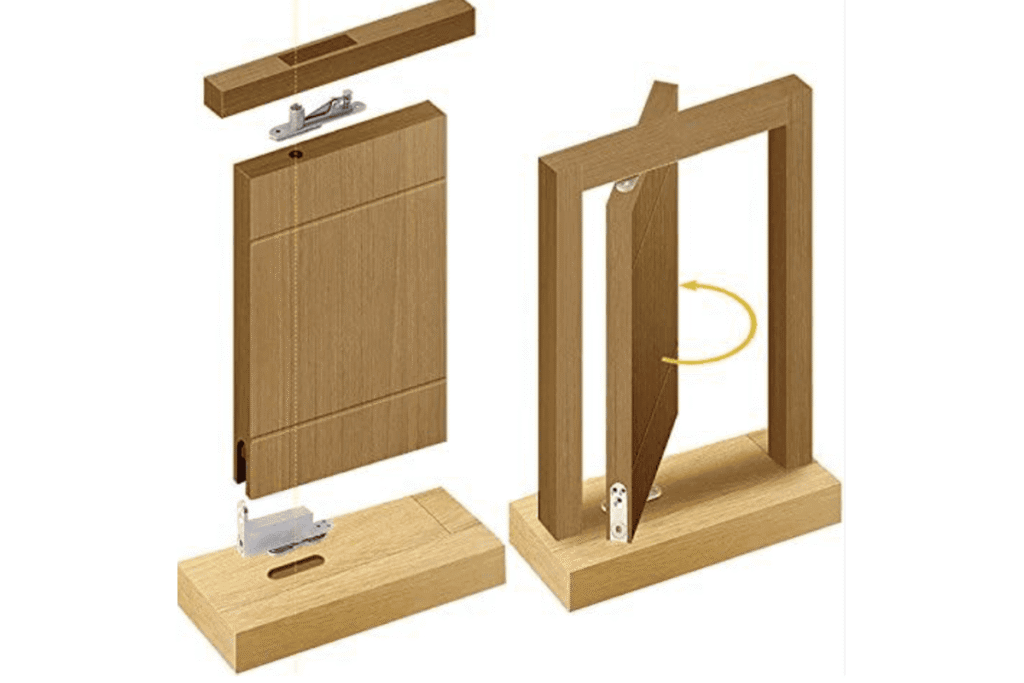
Pivot hinges and pivot sets can hang some doors that butt hinges cannot carry because they transfer door weight vertically through a pivot axis, often into the floor and top support, instead of loading the side frame1. They are not simply “stronger hinges.” They solve a different structural problem for heavy, wide, hidden, glass, or special doors.
In my hinge selection conversations with door manufacturers and hardware buyers, I often hear one question first: “How many kilograms can it carry?” That question matters, but it is not enough. A better question is: where does the weight go after the door is installed?
What Are Pivot Hinges and Pivot Sets, and How Are They Different From Butt Hinges?
Door hardware selection can become confusing because several hinge types look similar in catalogs. Buyers may compare prices before they compare functions. That creates a problem when a project door is heavy, wide, or frameless. The wrong hinge type can pass quotation review but fail during installation.
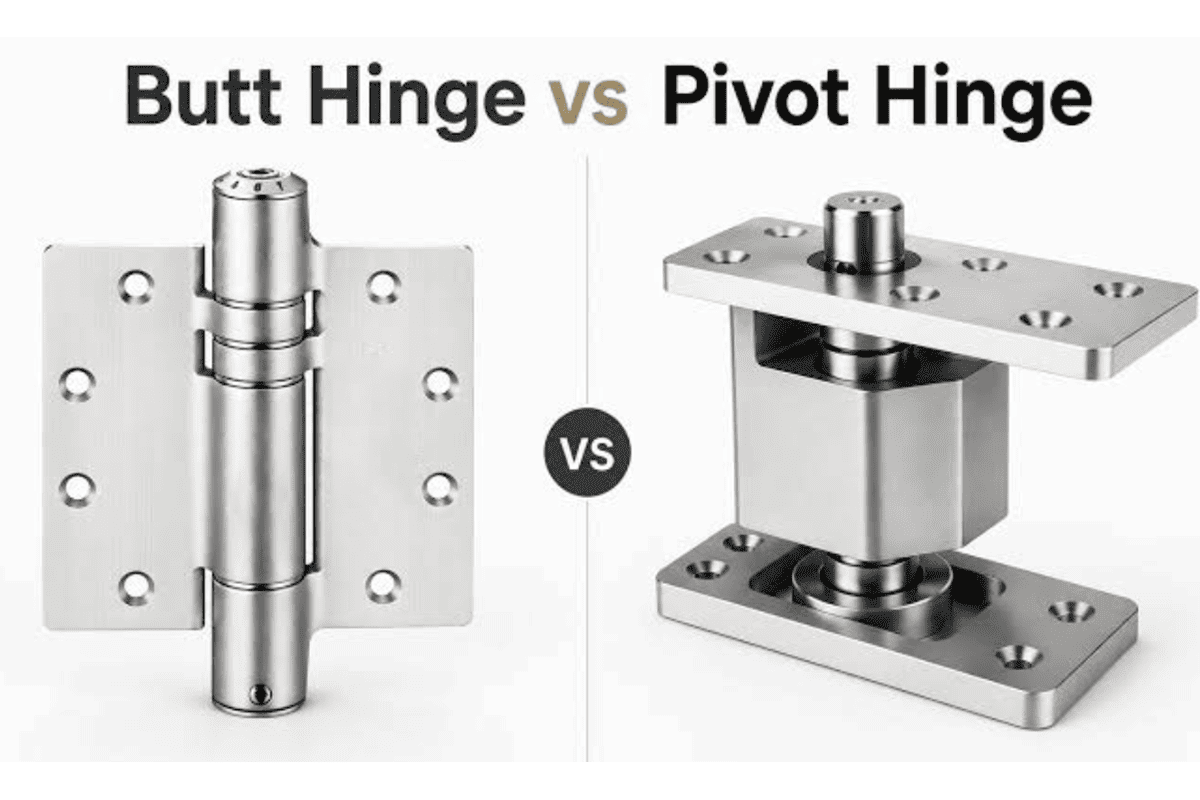
Pivot hinges and pivot sets support a door around a vertical pivot axis, usually near the top and bottom of the door. Butt hinges attach the door leaf to the side frame.2 A pivot set usually includes top and bottom pivot components, while a pivot hinge may refer to one pivoting hardware element within the system.
Basic Definitions Buyers Should Confirm
I like to define the terms before any capacity discussion. This avoids misunderstanding between factories, importers, project buyers, and installers.
| Hardware type | Basic function | Typical load path | Common use |
|---|---|---|---|
| Butt hinge | Two leaves joined by a pin, fixed to the side of the door and frame | Door weight transfers into the side frame | Interior doors, entrance doors, office doors, conventional framed systems |
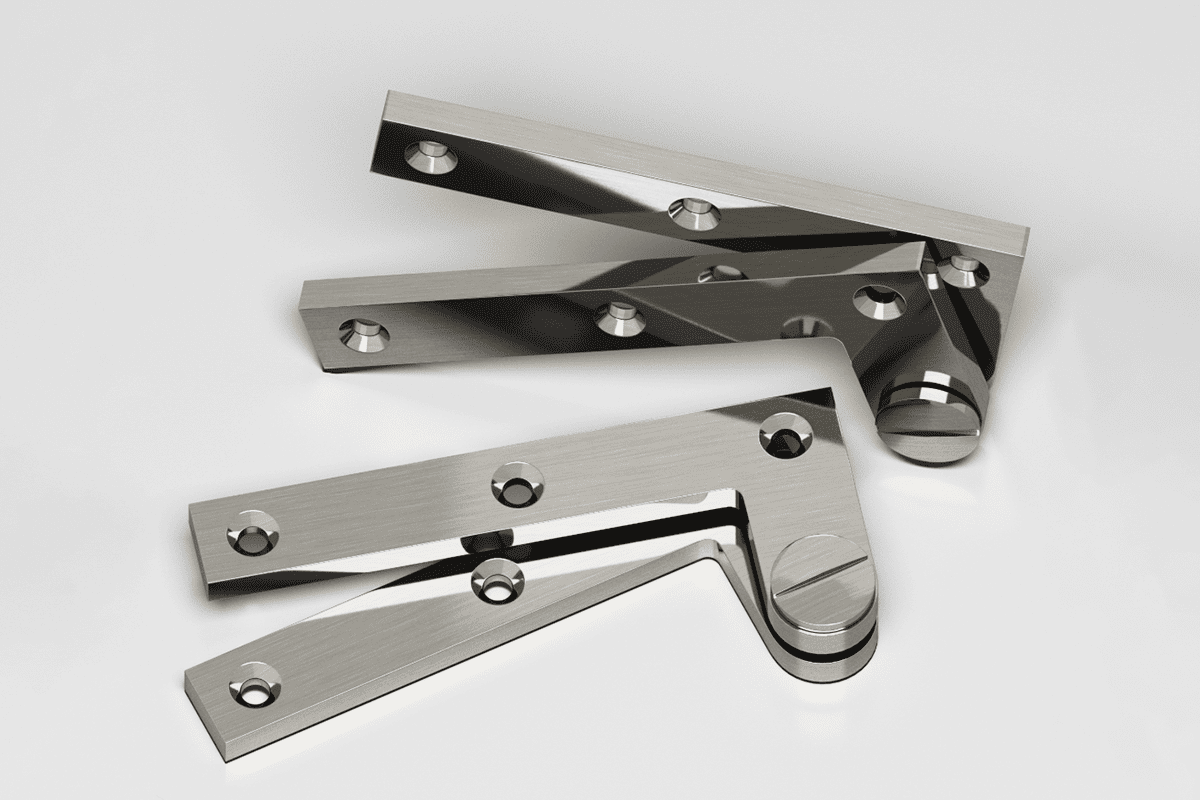
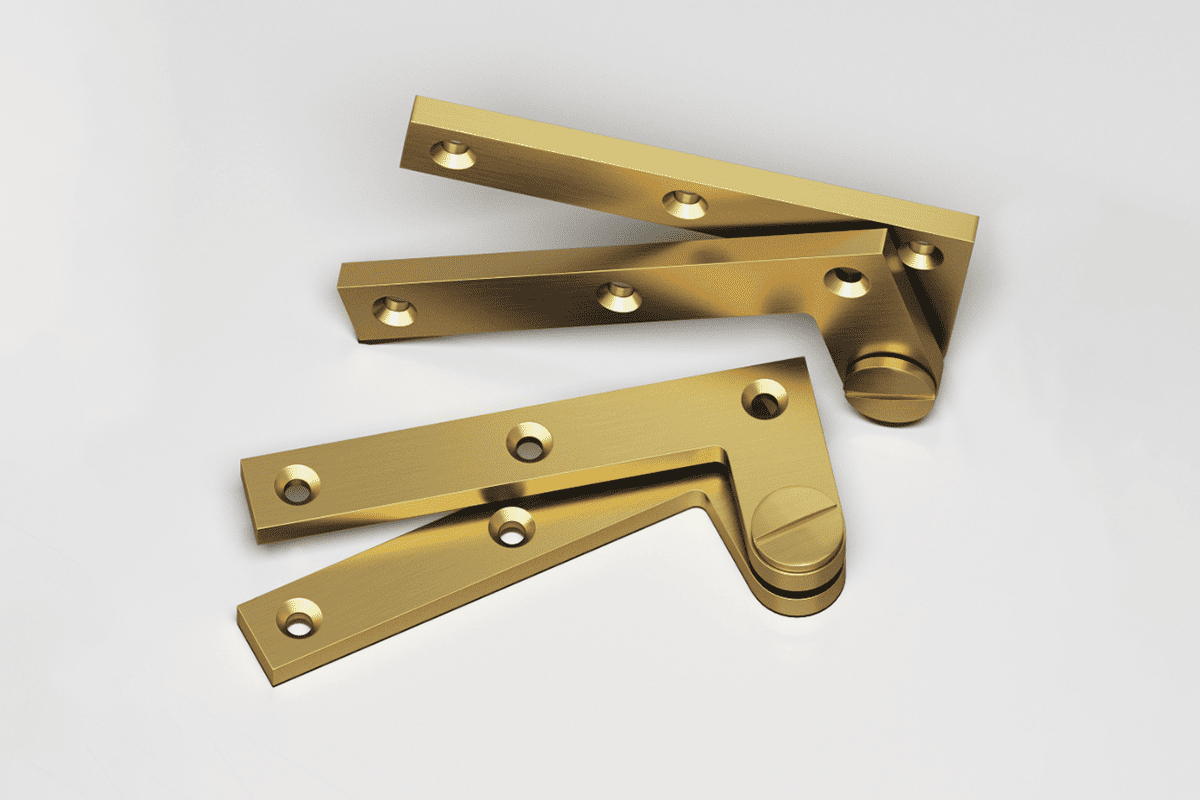
| Pivot hinge | A hinge component that allows rotation around a pivot point | Load transfers through a pivot axis | Specialty doors, partitions, some double-swing doors |
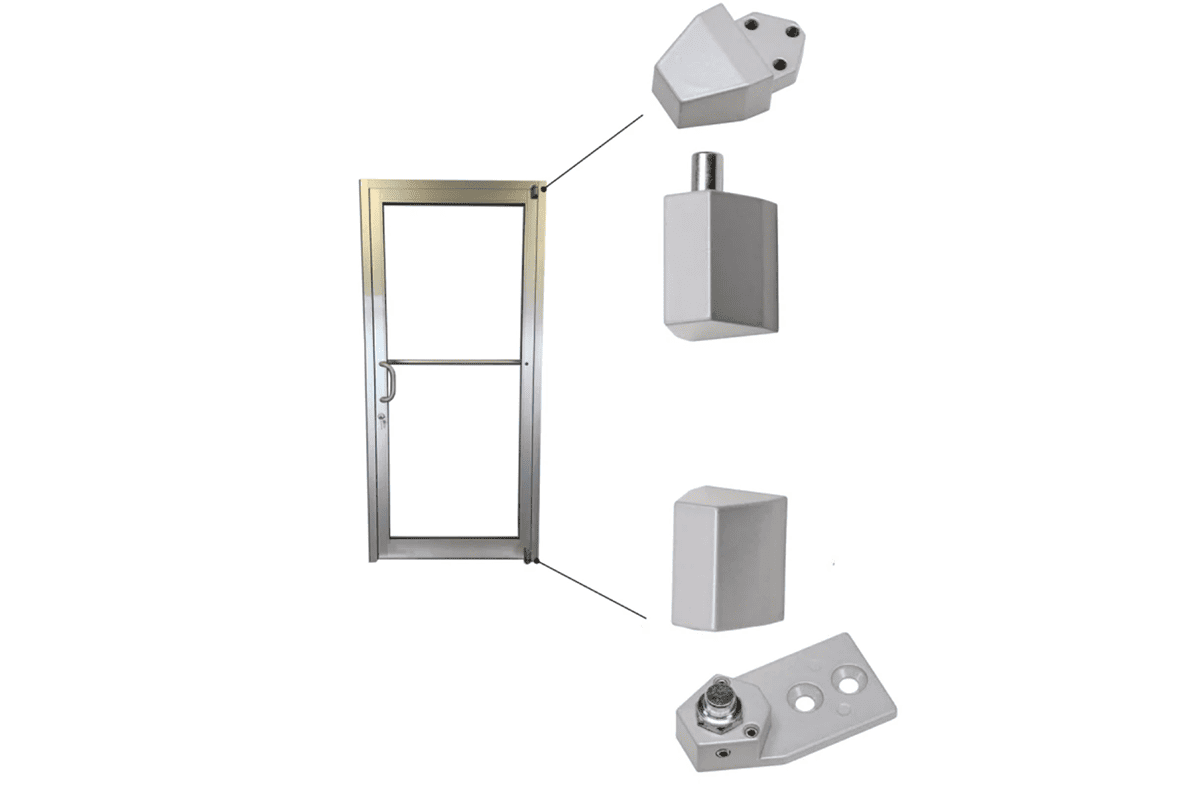
| Pivot set | A coordinated top and bottom pivot system | Load usually transfers vertically to floor and top support | Heavy doors, glass doors, oversized doors, hidden doors |
| Concealed hinge | A hidden hinge installed inside the door and frame | Usually still transfers load to the side frame unless designed as a pivot system | Flush doors, invisible doors, high-end interiors |
A common mistake is to use the word “concealed hinge” for every hidden door solution. This is not precise. A concealed butt-type hinge can be hidden, but it may still load the side frame. A concealed pivot system can also be hidden, but it uses a different load path.
Why the Load Path Matters More Than the Name
A butt hinge works like a bracket on the side of the frame. The door pulls downward because of gravity. It also pulls outward because the door width creates leverage. The screws, hinge leaves, frame material, and wall structure must resist that force.
A pivot system works differently. The door rotates around a vertical axis. The bottom pivot often carries much of the vertical load. The top pivot stabilizes the door and controls alignment.3 This can make pivot solutions suitable for doors that are too wide, too heavy, or too demanding for normal side-hung hardware.
In practical buyer communication, I usually look at these factors before recommending a direction:
- Door weight
- Door height and width
- Door thickness
- Frame material
- Wall and floor structure
- Opening direction
- Closer or hold-open requirement
- Fire-rating requirement
- Maintenance access
- Installer skill level
A heavy door is not always a pivot door. A normal framed fire door, for example, may still require certified butt hinges or other tested hardware as part of the fire-rated assembly4. Buyers should verify certificates, test reports, and project requirements before making a final decision.
Why Do Pivot Hinges and Pivot Sets Carry Load Differently?
A door may look simple, but the forces around it are not simple. Buyers often focus on the listed load capacity, then feel surprised when a door still sags. The issue may not be the nominal strength of the hinge. The issue may be the direction and location of the force.
Pivot hinges and pivot sets carry load differently because they move the support axis away from the side frame and into a vertical pivot line. The bottom support can transfer door weight downward into the floor structure, while the top support controls movement and alignment. Butt hinges transfer the load sideways into the door frame.
Side-Frame Load Versus Vertical Load
A butt hinge transfers force into the side jamb. That can work very well when the door, frame, screws, and wall are designed for it. Many doors do not need anything else.
However, as the door becomes wider, the leverage increases5. A 1,200 mm wide door does not behave like an 850 mm wide door, even if both doors have similar material quality. The wider door creates more torque on the hinge side. The top hinge is often stressed heavily because it resists the door pulling away from the frame.
A pivot system changes the calculation. The bottom pivot can sit below the door or within the floor zone. This allows the door mass to bear downward. The top pivot keeps the upper part of the door stable. The side frame may become less important as a load-bearing element, depending on the design.
In simple terms: a butt hinge asks the side frame to carry the door. A pivot set asks the floor and top structure to help carry and stabilize the door.
Why Adding More Butt Hinges Does Not Always Solve the Problem
I have seen buyers request “four hinges instead of three” when a door becomes heavier. Sometimes that is reasonable. Sometimes it only hides the real issue.
More butt hinges can help distribute load, but they do not remove the side-frame load path. If the frame is weak, the wall fixing is poor, or the door is very wide, adding more hinges may still not prevent sagging. It can also create installation sensitivity. If the hinges are not perfectly aligned, one hinge may carry more load than expected.6
For procurement teams, this means the decision should include more than a catalog number. A good evaluation should include:
Door geometry
Height and width affect leverage, not just mass.Frame design
Steel frames, aluminum frames, and timber frames behave differently.Fixing method
Screws, reinforcement plates, anchors, and welds change real performance.Usage frequency
A hotel corridor door, a villa entrance door, and a showroom pivot door have different duty cycles.Closing hardware
Door closers increase forces on hinges and pivots.Site tolerances
Uneven floors and imperfect openings reduce practical performance.
Practical Procurement View
From a factory-supply perspective, I prefer to ask for drawings, door weight estimates, and installation details before giving a final hardware suggestion. This is especially important for OEM or ODM projects where one model may be sold across different countries and building types.
For standard door manufacturers and wholesalers, butt hinges remain efficient and economical. For architectural projects involving oversized panels, heavy glass, hidden doors, or special openings, pivot hinges and pivot sets may offer a better load-transfer strategy.
Still, the building structure must support the system. A pivot cannot perform correctly if the floor cannot carry the load or if the top fixing cannot stabilize the door.
When Should Buyers Choose Pivot Hinges and Pivot Sets Instead of Butt Hinges?
Choosing hinge hardware only by capacity can lead to mistakes. Buyers may overpay for a pivot system where butt hinges are enough. They may also under-specify a door that needs a vertical support system. Both mistakes create rework, complaints, and project delays.
Buyers should consider pivot hinges and pivot sets when the door is heavy, wide, tall, frameless, hidden, double-swing, or architecturally special. Butt hinges remain suitable for many conventional framed doors. The best choice depends on load path, door geometry, structure, certification needs, and maintenance access.
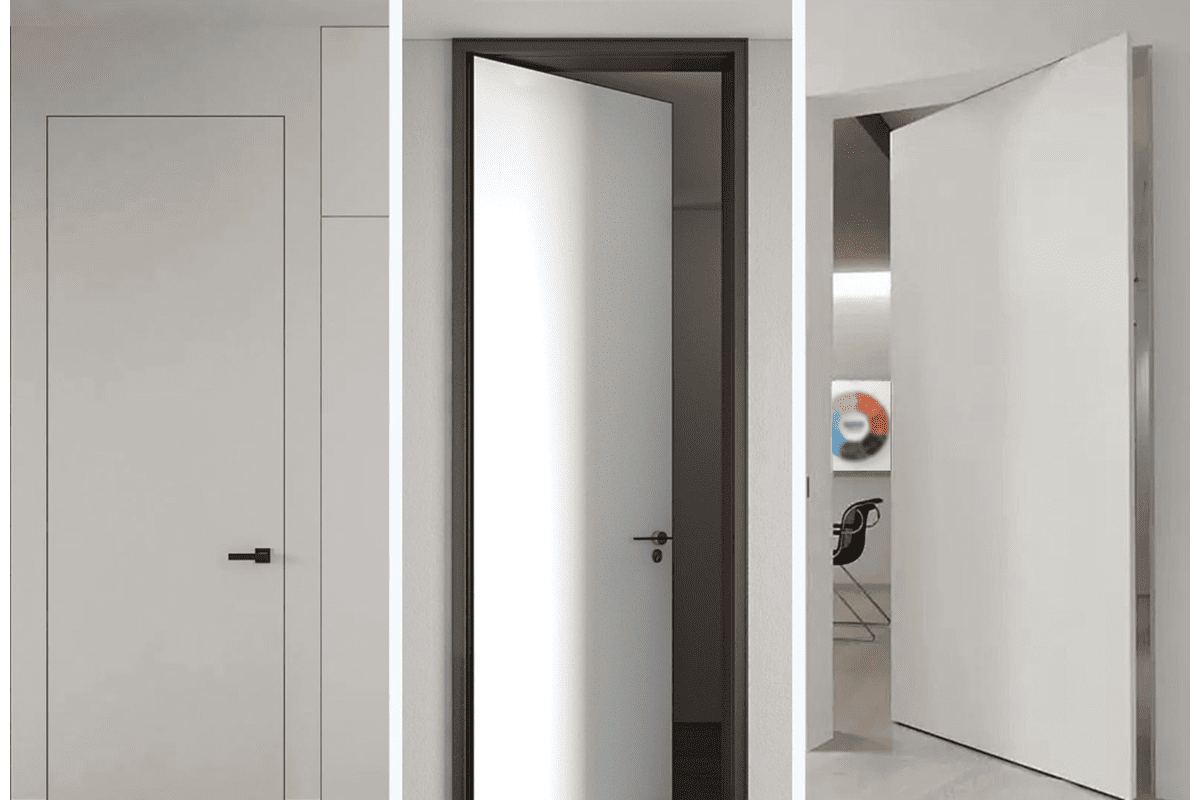
Common Applications for Pivot Systems
Pivot hardware is often considered for doors where side-hung hardware becomes visually or structurally difficult.7
Common examples include:
- Heavy glass doors
- Oversized timber doors
- Metal entrance doors
- Hidden or invisible doors
- Movable partition doors
- Double-swing doors
- Luxury residential feature doors
- Commercial lobby doors
- Showroom doors
- Wide architectural openings
The appeal is not only strength. Many architects also like the clean appearance. A pivot door can hide hardware better than a conventional side-hung door. The door can also rotate around an offset axis, which creates a different opening experience.
Where Butt Hinges Still Make More Sense
Butt hinges should not be dismissed. They remain one of the most practical solutions in architectural hardware.
Butt hinges are often better for:
| Door type | Why butt hinges may be suitable |
|---|---|
| Standard interior doors | Cost-effective and easy to install |
| Conventional entrance doors | Compatible with many frame systems |
| Fire-rated doors | Often tested as part of certified assemblies |
| Office doors | Familiar maintenance and replacement |
| Apartment doors | Stable supply and standard installation |
| Door factory mass production | Easier machining and quality control |
At SDH Hardware, our product range includes butt hinges, concealed door hinges, Euro mortise locks, stainless steel lever handles, Euro brass cylinders, and door accessories. In many projects, a well-specified butt hinge is the correct answer. I do not recommend pivot hardware just because it sounds premium.
Decision Matrix for Buyers
A simple decision table can help during early procurement review.
| Evaluation factor | Butt hinges may fit when... | Pivot hinges and pivot sets may fit when... |
|---|---|---|
| Door weight | Weight is within verified hinge-set capacity | Door exceeds practical side-hinge suitability |
| Door width | Width is standard | Door is wide and creates high leverage |
| Frame strength | Side frame is reinforced and reliable | Side frame should not carry major load |
| Aesthetic target | Visible knuckles are acceptable | Clean or hidden hardware is required |
| Installation skill | Standard installers are available | Skilled installers can align pivot axis |
| Floor structure | Floor support is not part of design | Floor can carry vertical load |
| Maintenance | Simple replacement is preferred | Planned access and adjustment are possible |
| Certification | Tested butt hinge assembly is required | Pivot system has verified project documentation |
My Practical Rule
When buyers ask me whether they need pivot hardware, I usually ask three questions:
- Can the side frame carry the door safely over time?
- Can the floor and top structure support a pivot system correctly?
- Can the installer align and maintain the hardware properly?
If the answer to the first question is yes, butt hinges may be enough. If the answer is no, pivot hinges and pivot sets deserve serious evaluation. If the answer to the second or third question is no, pivot hardware may also create problems.
This balanced view is important for B2B buyers. The strongest-looking product is not always the lowest-risk product. The correct system is the one that matches the door, structure, certification requirement, and service environment.
How Should EN 1935 and Load Capacity Be Used When Comparing Pivot Hinges and Pivot Sets?
Standards can help buyers compare products, but standards can also be misunderstood. A single grade number may look simple in a catalog. In real projects, the rating must be read together with door size, installation conditions, hardware configuration, and test documentation.
EN 1935 is commonly used for single-axis hinges, including butt hinges, in European hardware evaluation.8 Grade 14 is associated with a maximum adjusted door mass of 160 kg for a hinge set9, often using 2–3 hinges. This interpretation should be verified against the current EN 1935 text and product test reports.
What EN 1935 Can Tell Buyers
EN 1935 gives a structured way to evaluate certain hinge characteristics. It can cover areas such as:
- Category of use
- Durability
- Door mass
- Fire resistance suitability
- Safety
- Corrosion resistance
- Security
- Hinge grade
For butt hinges, this is useful because buyers can compare tested products with a common reference. A Grade 14 butt hinge is often discussed as a high-load option. However, buyers should not treat “160 kg” as a universal bare-door promise.
The wording matters. The value is commonly understood as a maximum adjusted door mass for the hinge set, not always the simple door slab weight in every condition. Door dimensions, door closer force, installation quality, frame structure, and special hardware may reduce practical suitability.10
This point should be verified against the current EN 1935 text and the actual product test report. I recommend buyers request the certificate and report, not only a catalog page.
Why Pivot System Capacity Is Usually Evaluated Differently
Pivot systems may be tested and declared under different product standards, internal test methods, or third-party documentation depending on design and market. Some concealed pivot systems in the market list much higher door weight ranges than common butt hinge sets.
For example, some FritsJurgens concealed pivot system references list ranges from around 20–500 kg, with certain System M+ Class F–G references targeting 350–500 kg heavy doors. I mention this as a market example, not as SDH Hardware’s own tested claim. Buyers should verify current official specifications, test reports, installation manuals, and project suitability directly with the brand or supplier.
The important point is not that every pivot system carries 500 kg. The point is that pivot technology can support a different load-transfer design. When the floor and top structure are prepared correctly, the system may support doors that are not practical for side-mounted hinges.
Capacity Comparison Should Include Conditions
A useful comparison should include more than kilograms.
| Question | Why it matters |
|---|---|
| Is the value tested or theoretical? | Tested data carries more procurement value |
| Is the weight adjusted door mass or bare door weight? | Standards may define mass in a specific way |
| How many hinges or pivot components are included? | A set rating is not the same as one part rating |
| What door size was tested? | Width and height affect leverage |
| Was a door closer included? | Closers add operating force |
| What frame or floor structure is required? | Hardware depends on surrounding structure |
| Is fire-rated use claimed? | Fire-rated applications require verified assemblies |
| What maintenance is required? | Adjustment access affects lifecycle performance |
How I Recommend Buyers Review Documents
For professional sourcing, I suggest a simple document checklist:
- Product drawing with dimensions
- Material specification
- Surface finish specification
- Load rating statement
- Test report or certificate
- Installation manual
- Maintenance instructions
- Fire-rated documentation, if required
- Packaging and labeling requirements
- Inspection standard for bulk orders
At SDH Hardware, we often support buyers with product drawings, custom surface treatments, logo options, packaging design, and inspection service after order completion. However, for application-specific decisions, especially heavy doors and fire-rated doors, buyers should involve qualified project engineers, door system suppliers, or certified testing bodies.
This approach protects both sides. It helps buyers avoid under-specified products, and it helps suppliers avoid claims that the project structure cannot support.
What Installation Conditions Do Pivot Hinges and Pivot Sets Require?
Pivot hardware can look clean and simple after installation, but the preparation behind it is not always simple. A small alignment error can cause rubbing, uneven gaps, poor closing, or premature wear. Buyers should consider installation conditions before confirming the order.
Pivot hinges and pivot sets require a suitable floor structure, reliable top support, accurate pivot-axis alignment, correct door preparation, and maintenance access.11 The hardware may carry high loads, but it cannot compensate for weak substrates, poor anchoring, uneven floors, or installers who are unfamiliar with pivot door adjustment.
Floor Strength Comes First
The bottom pivot is often the main vertical load point. This makes floor strength critical. A pivot system installed over weak flooring, hollow substrates, or poorly reinforced areas can lose alignment over time.
Buyers should clarify:
- Is the floor concrete, steel, timber, or raised flooring?
- Is there reinforcement under the pivot point?
- Can the floor accept drilling or recessed hardware?
- Is waterproofing affected in wet areas?
- Will finished flooring be installed before or after pivot hardware?
- Can installers access adjustment points after completion?
In commercial projects, these questions should be answered before hardware is purchased. A pivot system may be technically capable, but the building site may not be ready for it.
Top Support Controls Stability
The top pivot does not usually carry the same vertical load as the bottom pivot, but it is essential for stability. It keeps the door aligned with the pivot axis and prevents uncontrolled movement.
The top support may connect to:
- A steel header
- A reinforced timber frame
- A ceiling structure
- A transom
- A concealed frame system
- A fixed glass or partition structure, depending on design
If the top support moves, the whole door moves. This is why pivot doors require coordination between hardware supplier, door factory, frame supplier, and site installer.
Pivot Axis Alignment Is Not Optional
A pivot door rotates around a defined vertical axis. If the top and bottom pivot points are not aligned, the door will fight the hardware every time it opens.12
Common symptoms of poor alignment include:
- Door edge rubbing on the floor
- Uneven side gaps
- Door not returning to center
- Noise during operation
- Top pivot stress
- Fast wear of bearings or bushings
- Closer function problems
I have had buyer discussions where the hardware was blamed first, but photos later showed installation tolerance problems. This is common in architectural hardware. The product, door, frame, floor, and installer all influence the result.
Maintenance Planning Matters
Pivot systems should not be treated as “install and forget” hardware. Heavy doors need inspection. Adjustment points should remain accessible. Cleaning should avoid chemicals that damage finishes or internal components.
A practical maintenance plan may include:
| Maintenance item | Suggested purpose |
|---|---|
| Gap inspection | Detect early sagging or movement |
| Fastener check | Confirm anchors and screws remain secure |
| Floor clearance check | Prevent rubbing and surface damage |
| Pivot movement check | Identify friction or noise |
| Finish cleaning | Protect stainless steel, brass, or coated surfaces |
| Closer function check | Maintain safe and controlled closing |
For B2B buyers, this matters because after-sales complaints often happen months after installation. The project owner may not separate product quality from installation or maintenance. Clear instructions reduce that risk.
How Can Door Manufacturers and Importers Source Pivot Hinges and Pivot Sets Safely?
Procurement teams face pressure to control cost, confirm delivery, and satisfy project specifications. That pressure can lead to quick decisions based on appearance or capacity claims. However, pivot doors are sensitive systems. A weak sourcing process can create problems after shipment.
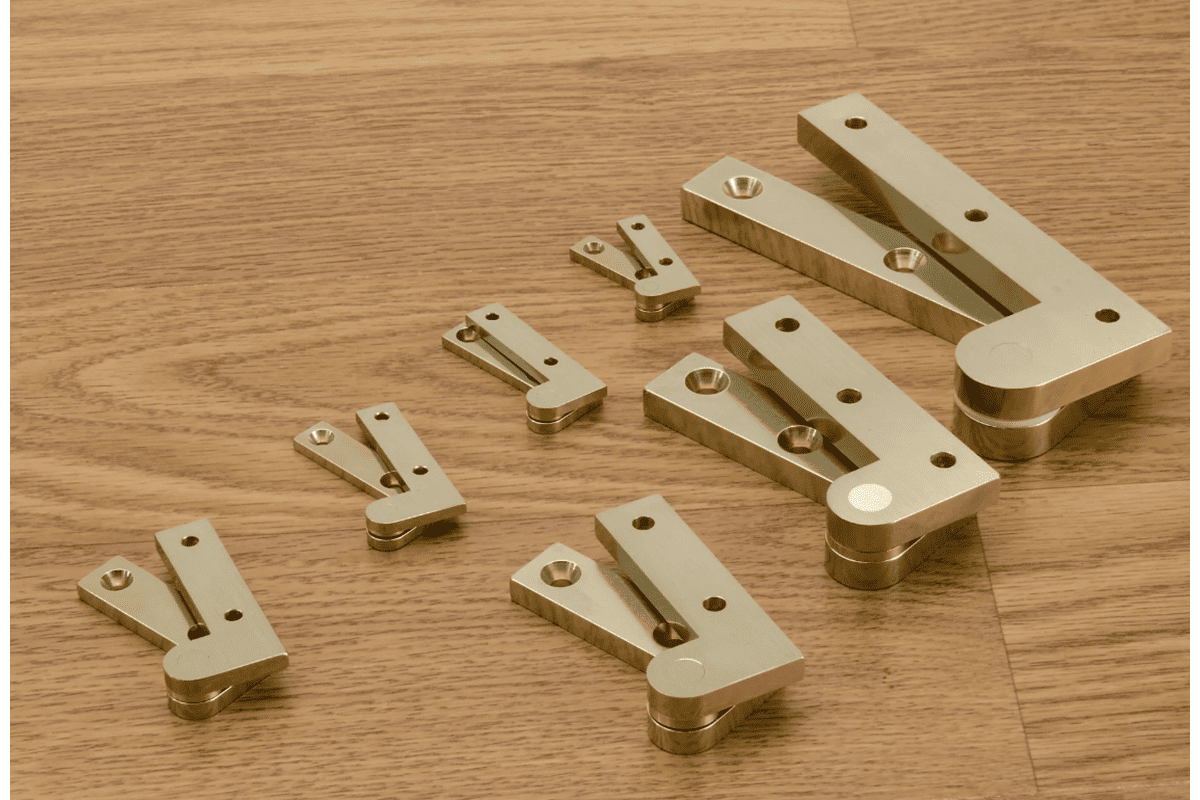
Door manufacturers and importers can source pivot hinges and pivot sets safely by verifying drawings, load data, materials, certificates, installation requirements, samples, production quality control, and supplier experience. They should also match the hardware to the door structure and project conditions before placing bulk orders.
Start With Door and Project Information
Before asking for price, buyers should prepare a basic technical profile. This saves time and reduces wrong recommendations.
Useful information includes:
- Door material: timber, steel, aluminum, glass, composite
- Door weight estimate
- Door height, width, and thickness
- Opening direction
- Single-action or double-action requirement
- Hidden or visible hardware preference
- Floor and header structure
- Fire-rated requirement
- Surface finish requirement
- Market standard requirement
- Order quantity and packaging needs
When buyers share only “we need a hinge for 200 kg,” the supplier has to guess too much. A better brief allows a better product selection.
Verify Product and Supplier Documents
For technical B2B products, documents are part of quality control. Buyers should request and verify them before bulk purchasing.
| Document | What buyers should check |
|---|---|
| Product drawing | Dimensions, machining details, adjustment range |
| Material specification | Stainless steel grade, brass grade, zinc alloy, bearings |
| Finish sample | Color, corrosion resistance, coating consistency |
| Load statement | Conditions behind the rating |
| Test report | Third-party or internal test basis |
| CE document | Scope and product match |
| Fire-rated certificate | Door assembly and application limits |
| Installation guide | Required tools, tolerances, floor/header needs |
| QC standard | Inspection items and acceptance criteria |
Conclusion
Pivot hinges and pivot sets can solve door problems that butt hinges cannot solve, but they are not automatically the better choice. The key is the load path. Butt hinges transfer weight to the side frame, while pivot systems can transfer weight vertically through the floor and top support. Buyers should evaluate door mass, size, structure, standards, installation, and maintenance before deciding. If you need factory-direct architectural door hardware support, contact SDH Hardware to discuss your door specifications, drawings, and sourcing requirements.
"Mastering Pivot Doors: A Comprehensive Technical Overview", https://www.doornmore.com/blog/mastering-pivot-doors-a-comprehensive-technical-overview/?srsltid=AU7gw4VoeyW5rlzJTEyrg99bzgCwt8FJSmBlp3ktWt7XW4qCBel3m_dd. The cited source describes pivot-door hardware as using aligned top and bottom pivot points, with the lower pivot commonly taking vertical load while the upper pivot provides alignment and restraint, supporting the article’s distinction between pivot and side-hung load paths. Evidence role: mechanism; source type: institution. Supports: A source should explain the mechanical distinction between side-hung hinges and pivot systems, especially the transfer of vertical load through bottom and top pivot points.. Scope note: Most available sources explain typical pivot-system behavior; actual load distribution depends on the specific product design and installation. ↩
"Hinge", https://en.wikipedia.org/wiki/Hinge. The cited definition identifies a butt hinge as a common door hinge consisting of two leaves joined by a pin and fixed to the door and frame, supporting the article’s use of the term. Evidence role: definition; source type: encyclopedia. Supports: A source should define a butt hinge as a hinge with leaves attached to the abutting surfaces of a door and frame.. ↩
"Mastering Pivot Doors: A Comprehensive Technical Overview", https://www.doornmore.com/blog/mastering-pivot-doors-a-comprehensive-technical-overview/. The cited hardware reference explains that pivot-door assemblies rely on coordinated bottom and top pivots, with the lower element commonly supporting door weight and the upper element restraining and aligning the door, providing mechanical context for the article’s statement. Evidence role: mechanism; source type: institution. Supports: A source should describe the respective roles of bottom and top pivots in pivot-door systems.. Scope note: The source would support the general mechanism; exact vertical-load percentages vary by product, door geometry, and installation. ↩
"Decoded: NFPA 80 Requirements for Hinges, Pivots, and ...", https://idighardware.com/2016/07/decoded-nfpa-80-requirements-for-hinges/. The cited fire-door authority states that fire-door assemblies depend on listed components and approved hardware installed within the limits of their certification, supporting the article’s caution that hinge choice for fire-rated doors cannot be made independently of the tested assembly. Evidence role: expert_consensus; source type: institution. Supports: A source should explain that fire-door assemblies include listed or approved components such as hinges and latching hardware and must be installed according to their listings.. ↩
"What is a Moment?", https://web.mit.edu/4.441/1_lectures/1_lecture5/1_lecture5.html. The cited mechanics source defines torque as the product of force and lever-arm distance, supporting the article’s explanation that a wider door creates greater turning moment at its supports. Evidence role: mechanism; source type: education. Supports: A source should explain that torque or moment equals force multiplied by the perpendicular distance from the axis of rotation.. Scope note: The source supports the physics principle rather than testing a specific door size or hinge model. ↩
"Bending Hinges to Adjust Doors",
. The cited installation guidance notes that door hinges require accurate alignment for proper operation and load sharing, supporting the article’s warning that added hinges do not necessarily distribute load evenly when installation tolerances are poor. Evidence role: mechanism; source type: institution. Supports: A source should state that hinges must be accurately aligned and that misalignment can impair operation or concentrate loads.. Scope note: The source would provide practical installation support; it may not quantify load transferred to each hinge. ↩"Exterior Pivot Doors - Custom - Glass", https://www.pivotdoorcompany.com/product/glass/?srsltid=AU7gw4XudcCmuDJVH5eih4BmW0LTIZ2QxOhkYd1yztmicxQDMQUgS8Sp. The cited architectural-hardware source identifies pivot systems as commonly used for large or visually minimal door applications, providing contextual support for the article’s application examples. Evidence role: general_support; source type: institution. Supports: A source should describe pivot doors as a design option for large, heavy, glass, concealed, or visually minimal doors.. Scope note: The source would support common use patterns rather than prove that pivot hardware is necessary in every listed application. ↩
"EN 1935: Building hardware - Single-axis hinges", https://www.intertek.com/building/standards/en-1935/. The cited standards reference describes EN 1935 as applying to single-axis hinges for doors and windows and setting classification requirements, supporting the article’s identification of the standard’s scope. Evidence role: definition; source type: institution. Supports: A source should identify EN 1935 as the European standard for single-axis hinges and describe its scope.. ↩
"Understanding BS EN 1935:2002 single-axis hinge grades", https://uk.sfs.com/resources/article/understanding-bs-en-1935. The cited EN 1935 classification summary lists Grade 14 as corresponding to a 160 kg maximum adjusted door mass, supporting the article’s numerical statement about high-load hinge classification. Evidence role: statistic; source type: institution. Supports: A source should show the EN 1935 hinge-grade table linking Grade 14 with 160 kg maximum adjusted door mass.. Scope note: Public summaries may reproduce the standard’s table, but the definitive wording and conditions should be checked against the current official standard. ↩
"Door Closer Size Chart: How to Choose the Right Size", https://doorsforpros.com/blog/post/door-closer-size-chart?srsltid=AU7gw4WtOWxNPmSqEIxMhKz9XIjX05BetX4beC3gsvDOP26drUJdEvhZ. The cited hinge-selection guidance states that hinge performance depends on door mass as well as door size, closer use, frame construction, fixing method, and installation conditions, supporting the article’s caution against treating a catalog load value as universal. Evidence role: general_support; source type: institution. Supports: A source should explain that hinge ratings are conditional and that door width, closers, fixing, frame, and installation can affect performance.. Scope note: The source would support the general selection principle; project-specific suitability still requires the relevant product test report and installation details. ↩
"Mastering Pivot Doors: A Comprehensive Technical Overview", https://www.doornmore.com/blog/mastering-pivot-doors-a-comprehensive-technical-overview/?srsltid=AU7gw4UAhTQaIm-6XLAO6Z6UrOWkn4alOpZUlM5pSI3aIBoiu98pSevx. The cited pivot-door installation guidance specifies that bottom and top pivot components must be installed into suitable substrates and aligned accurately, with provisions for adjustment and access, supporting the article’s summary of required installation conditions. Evidence role: general_support; source type: institution. Supports: A source should describe structural substrate requirements, top/bottom pivot alignment, door preparation, and adjustment or maintenance access for pivot-door installations.. Scope note: The source would support typical installation requirements; exact tolerances and substrate details differ among pivot systems. ↩
"How to Maintain Your Door's Pivot Hinge for Long-Term ...", https://www.vivadoors.com.au/post/how-to-maintain-your-door-s-pivot-hinge-for-long-term-performance. The cited technical installation source explains that top and bottom pivot points must be aligned on the intended rotation axis to avoid binding, uneven gaps, or abnormal wear, supporting the article’s warning about misalignment. Evidence role: mechanism; source type: institution. Supports: A source should state that pivot points must be vertically aligned and that misalignment can impair door operation or increase wear.. Scope note: The source would substantiate the mechanism but may not use the article’s exact symptom list. ↩