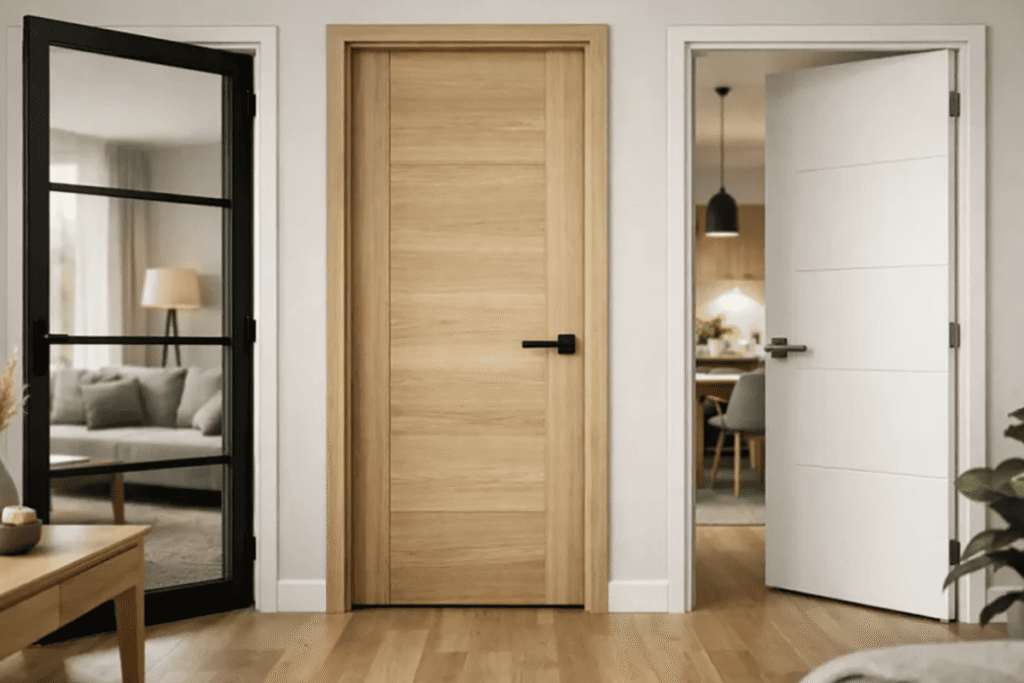
Choosing Door Handles for Every Room and Door?
Door handles often look simple, but I have seen one wrong specification create delayed installation, loose levers, failed inspection, and costly rework. If buyers choose by appearance first, the hidden system details get missed. I recommend choosing by compatibility first: lock case, spindle, door thickness, usage grade, and compliance.
Choosing door handles for every room and door means matching each handle set to the door function, lock case standard, spindle size, center distance, door thickness, usage frequency, environment, and certification requirement. The safest approach is a door-by-door matrix, not a style-only selection, especially for B2B projects and batch procurement.

I work with door factories, hardware brands, and wholesalers that package hardware in batches. In that context, a handle is never just a handle. It is part of a working door system, and the best selection process starts with the parts that must fit together.
How Should I Choose Door Handles by System Compatibility?
A beautiful lever can still fail if it does not match the lock case, spindle, fixing path, or door thickness. I have reviewed after-sales cases where the finish was acceptable, but the handle could not seat correctly. The real problem was not design. It was system mismatch.
The best way to choose door handles is to confirm the full door system first: lock case standard, backset, center distance, spindle size, follower pairing, return spring, door thickness range, handing, and through-bolt positions. This checklist prevents most installation misfits before production, packing, or shipment.
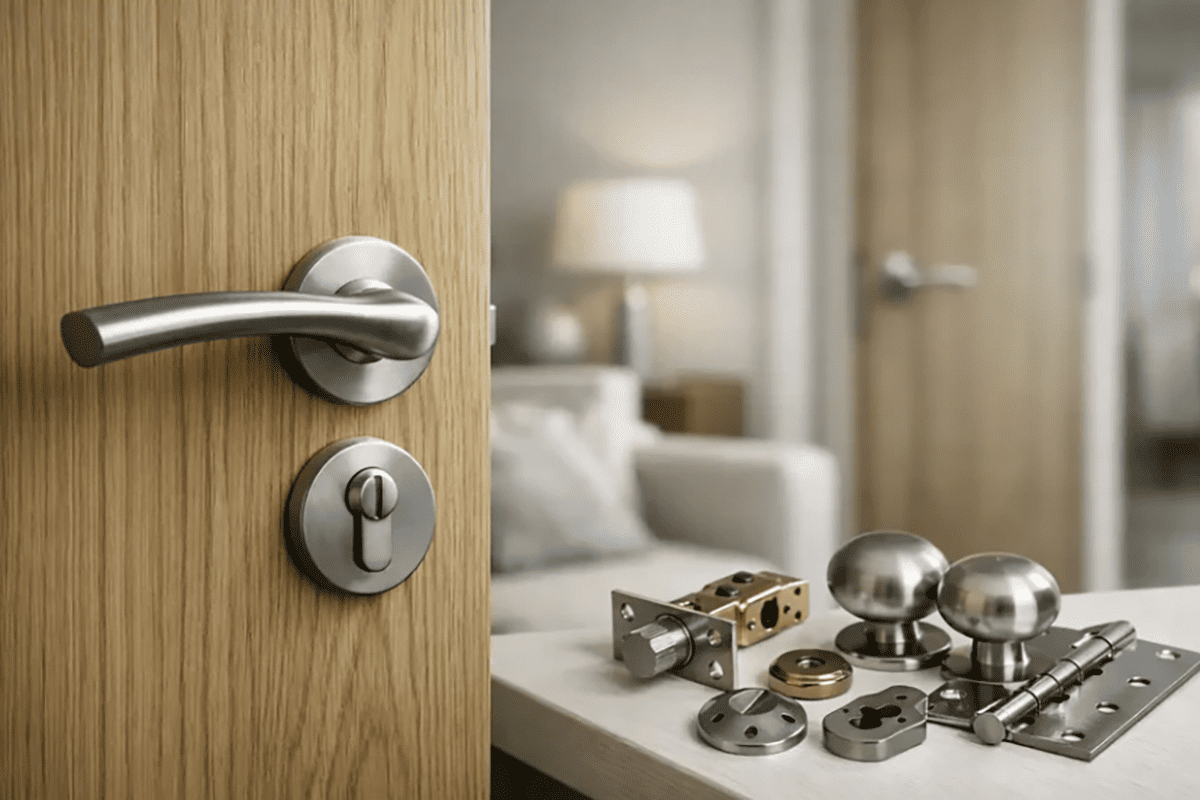
Start With the Lock Case, Not the Handle Shape
I usually start every project review with the lock case drawing. This may feel less exciting than choosing a lever profile, but it saves time. For many European-style projects, buyers specify Euro mortise locks, but the details still vary by market, lock body, and project standard.
A practical compatibility checklist should include:
- Lock case type: Euro mortise lock, tubular latch, privacy lock, bathroom lock, or project-specific lock body
- Backset: the distance from door edge to spindle center
- Center distance: the distance between spindle and cylinder, thumb turn, or keyhole center
- Spindle size: many lever systems use an 8 mm square spindle1, but buyers must confirm this against the actual lock case
- Follower design: the lock follower must work with the spindle and return spring behavior
- Door thickness: common interior and entrance doors may need different screw packs or spindle lengths
- Handing: left-hand, right-hand, reversible, or project-specific handing
- Fixing method: through-bolts, wood screws, concealed fixings, or rose/plate systems
- Escutcheon or plate layout: cylinder, keyhole, privacy turn, or blank plate
I do not treat any handle as “universal.” I treat every handle as compatible only within a confirmed specification range.
Why Center Distance Needs Buyer Confirmation
Some handle and lock series use common center distances, such as a series-specific 38 mm center distance, but I never recommend assuming that number across all regions or standards. A buyer should verify it against the lock case drawing and local specification.
A small dimensional mismatch can create large site problems:
| Compatibility Point | What Can Go Wrong | Buyer Confirmation Needed |
|---|---|---|
| Spindle size | Lever does not engage lock follower | Confirm spindle square size, such as 8 mm where applicable |
| Center distance | Rose or plate holes do not align | Match lock case drawing and handle plate drawing |
| Door thickness | Screws or spindle are too short | Confirm door thickness and kit range |
| Through-bolt path | Bolts hit lock body or reinforcement | Check lock case and door construction |
| Return spring | Lever droops after use | Match lever weight, follower, and spring strength |
| Handing | Lever angle or operation is wrong | Confirm left/right or reversible design |
A Real After-Sales Pattern I Have Seen
In one anonymized project review, a batch of laminated doors was close to 50 mm thick. The handle set looked correct in the catalogue, but the standard through-bolt and spindle kit could not seat properly through the thicker door build. The installer tried to compensate on site, and the result was uneven tightening and early loosening.
The fix was not complicated, but it should have happened before shipment:
- Confirm the actual finished door thickness, not only the nominal core thickness.
- Match the handle set with the correct spindle length.
- Provide the right screw pack or through-bolt length.
- Check whether door facing material changes fixing stability.
- Record the configuration in the project SKU matrix.
At SDH Hardware, I prefer to confirm drawings and inspection points before bulk production. We can support ODM/OEM configurations, but the buyer still needs to verify regional lock standards, project requirements, and site measurements. That shared discipline helps prevent rework.
Which Door Handles Work Best for Bedrooms, Bathrooms, and Studies?
Interior doors create many small specification problems because buyers often group them together. I have seen bathroom, bedroom, and study doors supplied with the same handle package, even when their lock functions and moisture exposure were different. That decision can cause corrosion, privacy issues, or poor operation.
For bedrooms and studies, choose privacy or locking door handles that match the specified lock case, spindle, centers, and door thickness kit. For bathrooms and wet zones, choose corrosion-resistant materials, sealed fixings, and simple privacy functions. For children’s rooms, consider latchless or easy-release configurations where appropriate.
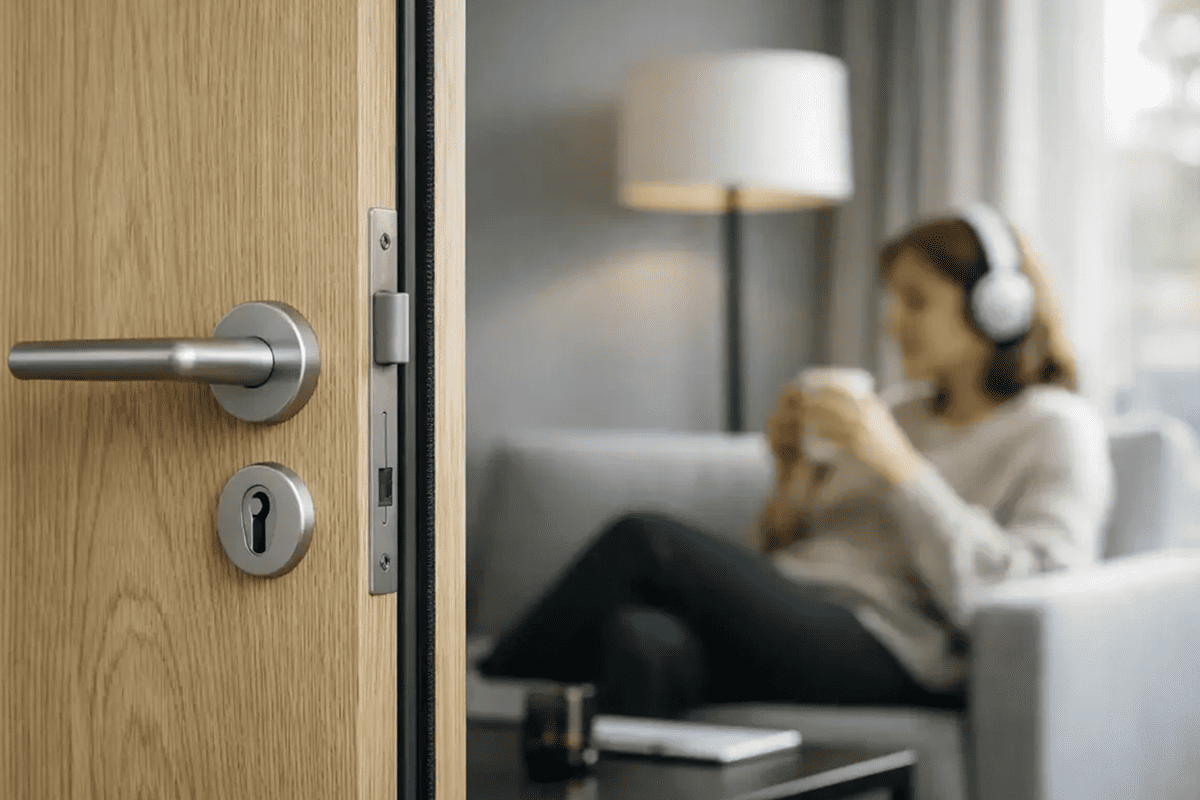
Room Function Should Drive the Handle Function
I do not recommend selecting one interior handle set and forcing it across all room types. A better method is to group rooms by function.
| Room or Door Type | Recommended Function | Key Risk | Specification Focus |
|---|---|---|---|
| Bathroom | Privacy handle or bathroom lock set | Corrosion, trapped user, misaligned turn | Stainless steel, sealed fixings, emergency release |
| Children’s room | Simple latch, easy operation, or latchless design where suitable | Lock-in risk, hard operation | Low operating force, safe release |
| Master bedroom | Privacy or locking handle | Wrong spindle/center pairing | Lock case compatibility and door thickness kit |
| Study | Privacy or light locking function | Poor acoustic or privacy performance | Mortise lock match and smooth latch action |
| Storage room | Passage or simple latch | Over-specification cost | Basic function, durable fixing |
Bathrooms and kitchens need extra care because moisture and cleaning chemicals can attack finishes. Stainless steel lever handles or corrosion-treated zinc alloy can work well when the surface treatment suits the environment. However, I always ask buyers to confirm the expected cleaning agents. Strong acidic or alkaline cleaners can shorten finish life.2
Bedrooms and Studies Need Privacy, But Not Guesswork
For a master bedroom or study, the handle must work with the selected privacy or locking lock case. Buyers should confirm:
- Spindle size and length
- Privacy turn position
- Emergency release function
- Door thickness range
- Rose or plate dimensions
- Latch throw and closing feel
- Keyhole, cylinder, or thumb-turn requirement
A privacy handle may look simple, but it is still a system. If the thumb turn does not align with the lock case, the installer may enlarge holes on site. That can damage the door face and weaken fixing stability.
Wet Zones Need Material Discipline
In humid rooms, I recommend buyers compare handle materials by exposure level:
| Material | Typical Advantage | Procurement Caution |
|---|---|---|
| Stainless steel | Strong corrosion resistance, stable appearance | Confirm grade and finish treatment |
| Brass | Solid feel, durable for many applications | Confirm finish protection and cost target |
| Zinc alloy | Flexible design and cost efficiency | Confirm plating quality and corrosion testing |
| Aluminum alloy | Lightweight and corrosion-resistant in some finishes | Confirm strength and project usage level |
For bathrooms, I prefer stainless steel door handles or properly treated zinc alloy when the project requires cost control. I also prefer concealed or sealed fixing designs where moisture can enter screw points. If the project is in a coastal or high-humidity region, I ask for stricter finish review and sample testing.
Accessibility and Age-Friendly Operation
Lever handles usually work better than knobs for children, older users, and accessible spaces because users can operate them with less grip strength.3 In some markets, the ADA or local accessibility code may define operating force, lever shape, height, projection, or clearance.4 Buyers should verify those rules region by region.
A practical age-friendly checklist includes:
- Lever shape that is easy to grip
- Smooth return without sharp edges
- Low operating force where required
- No small twisting motion for primary operation
- Emergency release for privacy rooms
- Clear marking for bathroom or care-space functions
I keep this point in B2B specifications because door hardware affects daily use. A handle that passes a catalogue review may still disappoint users if the lever is hard to operate or the privacy function is confusing.
Which Door Handles Should I Specify for Entry, Office, and High-Frequency Doors?
High-frequency doors reveal weak hardware faster than low-use rooms. I have seen entry levers droop early when the spring system was underspecified. I have also seen office handles loosen because the fixing method relied only on light screws instead of through-bolts.
For entry, office, and other high-frequency doors, specify door handles with durable lever construction, robust return springs, through-bolt fixing, verified cycle performance, and compatibility with the selected lock case and cylinder. Entry doors should also pair with a suitable Euro cylinder and finish system for exposure conditions.
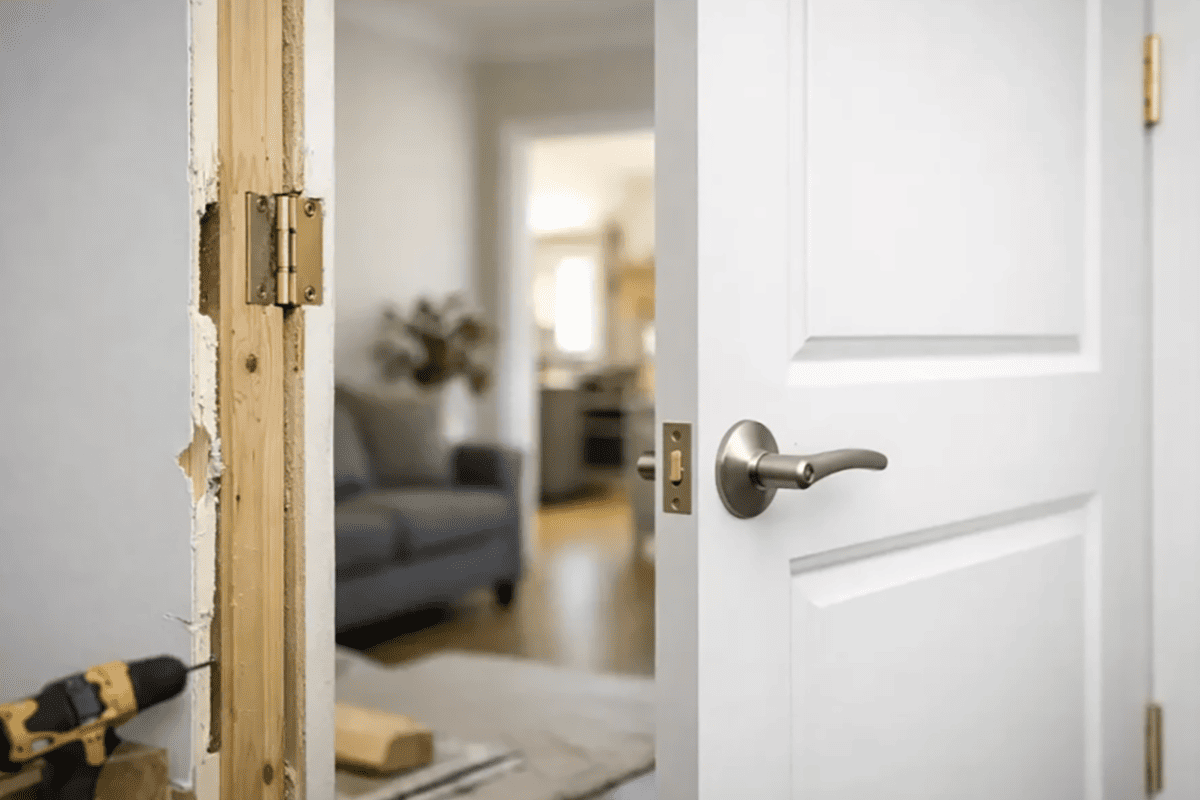
High Use Requires Stronger Mechanical Decisions
For an entry door or office door, the handle receives repeated loading every day. The issue is not only whether the lever opens the lock on day one. The issue is whether it keeps returning smoothly after thousands of operations.
In European-style specifications, buyers may review standards such as EN 1906 for lever handle performance, including durability grading5. Depending on the market and product category, durability classifications can include cycle testing levels such as 100,000 or 200,000 cycles6. Buyers should verify the exact grade, test report, and intended application before approval.
For high-frequency doors, I usually check:
- Lever body material: brass, stainless steel, or reinforced construction
- Return spring: assisted return spring for heavier levers
- Fixing method: through-bolts where possible
- Lock case compatibility: especially follower strength and spindle fit
- Door thickness kit: correct screws and spindle for the actual door
- Finish durability: suitable for handling, cleaning, and outdoor exposure
- Cycle documentation: third-party or internal test data, clearly labeled
At SDH Hardware, we use in-house production and quality control processes, but I still tell buyers to verify certificates and reports for their target market. Internal testing is useful for factory control. Third-party documentation is often required for tender, brand approval, or inspection.
Entry Doors Need Security Pairing
An entry handle set should not be evaluated alone. It should be paired with:
- A suitable Euro mortise lock
- A high-security Euro cylinder
- Cylinder escutcheon or protection where needed
- Correct latch and deadbolt function
- Outdoor-rated finish if exposed
- Door closer and hinge behavior where relevant
- Project submittal documents
For cylinders, buyers may review standards such as EN 13037, depending on the market. Security grading, key control, anti-drill features, anti-pick performance, and corrosion resistance may matter. The handle selection should not weaken the security package.
Finish Durability Depends on Environment
Outdoor or semi-outdoor doors create different finish risks than interior corridors. I ask buyers to define the environment before choosing the surface treatment.
| Environment | Common Risk | Handle Selection Focus |
|---|---|---|
| Indoor apartment entry | Frequent hand contact | Wear resistance and strong spring |
| Exterior villa entry | UV, rain, dust | Outdoor-rated coating or stainless steel |
| Coastal building | Salt spray corrosion | Higher corrosion resistance and verified testing |
| Office corridor | High cycles | Through-bolts and durable return spring |
| School or public building | Rough operation | Strong lever body and project-grade lock case |
I once reviewed an after-sales issue where the lever itself was not defective, but the finish was specified for a mild indoor environment and installed near a humid exterior corridor. The project needed a different material and surface treatment. That case reminded me that “entry door” is not enough information. I need to know the exposure level.
Avoid Early Loosening With Fixing Discipline
Loose handles are one of the most common after-sales complaints in batch projects. The causes are usually predictable:
- Door thickness was outside the kit range
- Screws were too short
- Through-bolts were not aligned
- Lock body blocked the bolt path
- Door core had poor screw-holding strength
- Lever spring was weak for the lever weight
- Installers overtightened or undertightened fixings
For high-frequency doors, I prefer through-bolt fixing when the lock case and door build allow it. Through-bolts spread load better than small wood screws. However, buyers must check the through-bolt path against the lock case drawing. If the bolt collides with the lock body, the installer may abandon the fixing method on site.
How Should Door Handles Be Selected for Fire-Rated and Egress Doors?
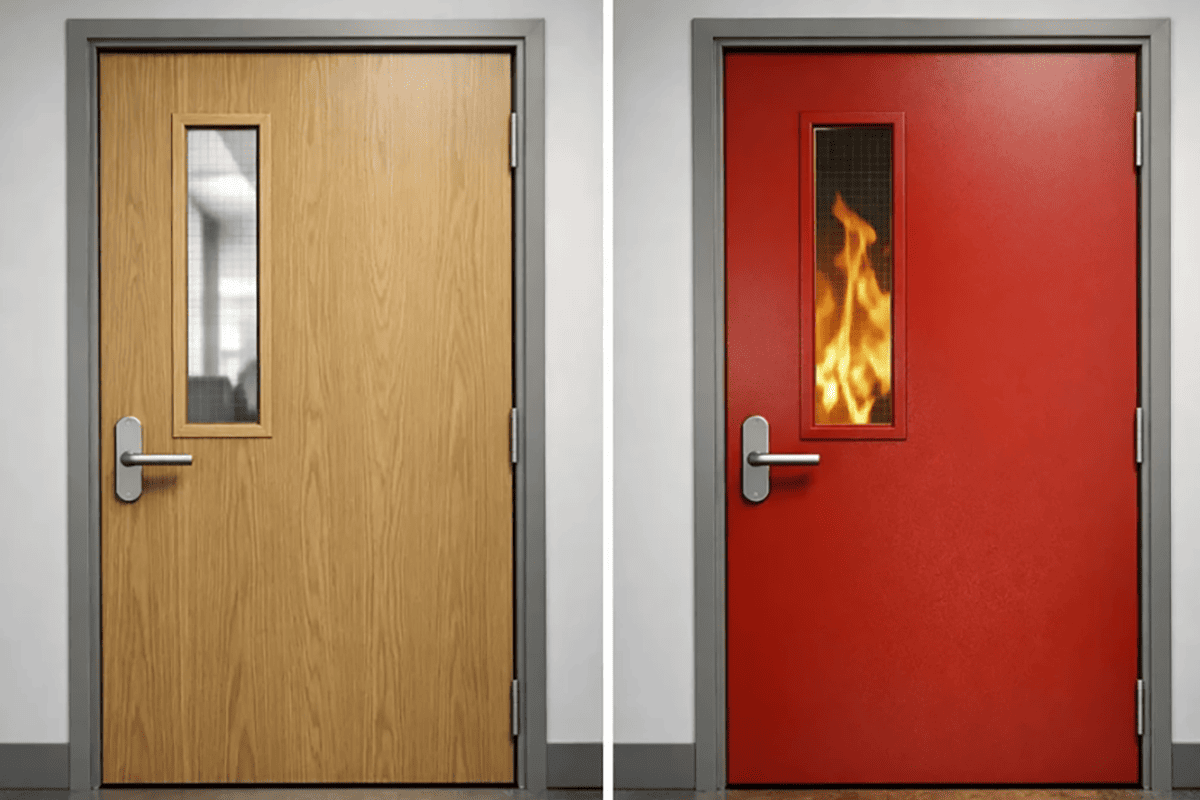
Fire-rated doors are the place where shortcuts become dangerous and expensive. I have seen project teams assume that a certified handle, a certified lock, and a certified hinge can be mixed freely. That assumption can lead to failed inspection because the door set was not documented as tested or approved together.
For fire-rated and egress doors, door handles should be specified only as part of a certified door hardware set with the exact lock, hinge, closer, latch, and door construction required by the test or approval. Buyers should attach certificates and submittal documents before inspection, not after installation.
Fire Doors Require Set-Based Thinking
A fire-rated door is a tested assembly.8 The handle is only one component. The lock case, hinges, closer, intumescent materials, door leaf, frame, seals, and installation method all affect performance. I therefore avoid saying a handle is “fire-rated” without context. I prefer to say that a handle set has documentation for use within a specific tested or approved assembly.
Depending on the region, buyers may need documents related to standards such as EN 1634-1 for fire resistance testing9, and egress hardware may involve standards such as EN 179 or EN 112510. These references must be verified for the project location, door type, and authority having jurisdiction.
A fire-door procurement file should include:
- Handle model and finish
- Lock case model
- Hinge model
- Door closer model
- Cylinder or thumb-turn details
- Door thickness and material
- Fire rating duration where applicable
- Test report or certificate number
- Installation instructions
- Approved hardware schedule
- Inspection checklist
Do Not Mix Untested Components
This is one of the most important rules I give to buyers: do not mix brands, models, or standards unless documented cross-compatibility exists.
A common procurement mistake looks like this:
- The architect approves one fire-rated door set.
- The buyer substitutes a handle for cost or lead time reasons.
- The lock body remains the same, but the fixing path changes.
- The installer completes the door.
- The inspector asks for the certified set documents.
- The project cannot prove the combination.
The result may be rework, delay, or rejection. In one anonymized case I reviewed, the hardware pieces were individually reputable, but the submitted package did not match the listed set. The issue was not whether the handle looked strong. The issue was documentation.
Egress Doors Need Operation Review
Egress doors must allow safe exit. The handle or lever operation should match local code, occupancy type, and door direction. Buyers should verify whether the project needs lever trim, panic hardware, emergency escape function, or controlled access integration.
For egress-related openings, I ask these questions:
- Does the door need single-action escape?
- Does the lock function allow exit without a key?
- Does local code require panic hardware?
- Does the lever shape meet accessibility rules?
- Does the door closer affect opening force?
- Does the cylinder function create a trapped-user risk?
- Are the certificates included in the submittal package?
At SDH Hardware, our core products can be supplied with authoritative CE and fire-rated certification where applicable. Still, I advise buyers to treat every certificate as a document to verify, not as a marketing phrase. The certificate must match the exact product, standard, rating, and intended door assembly.
What QA Matrix Helps Buyers Avoid Door Handle Misfits Before Shipping?
Batch hardware procurement becomes risky when every door type is handled by memory or email threads. I have seen factories receive mixed site measurements, unclear lock drawings, and last-minute packaging changes. Without a matrix, even experienced teams can ship the wrong spindle, screw kit, or escutcheon.
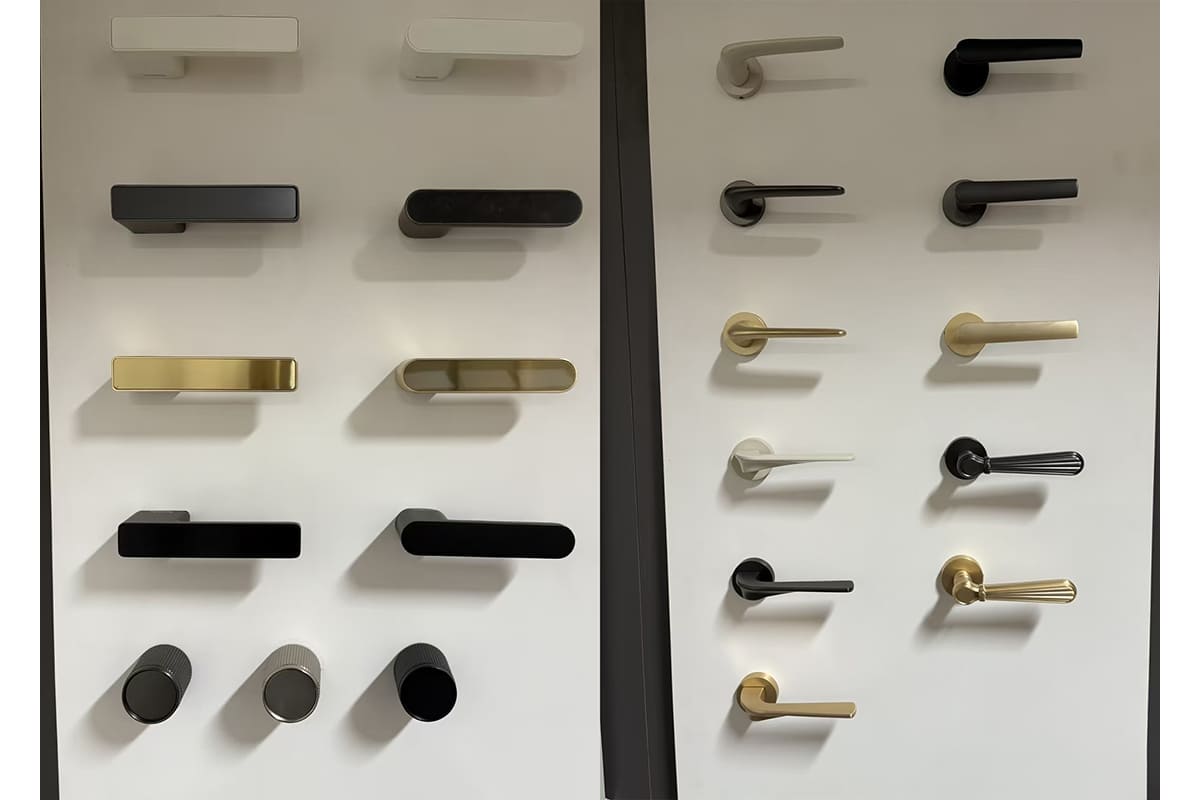
A one-page QA matrix helps buyers avoid door handle misfits by mapping each door type to its lock case, spindle, center distance, door thickness kit, usage grade, finish, handing, and certification requirement. This matrix should be confirmed before production, inspection, labeling, and final shipment.
Build the Matrix Before Ordering
I recommend a matrix because it turns door hardware selection into a controlled process. This matters for door factories, contractors, brand category managers, and wholesalers that repeat similar projects.
A simple project matrix can look like this:
| Door Type | Lock Case | Spindle / Centers | Door Thickness | Handle Function | Usage Grade | Finish | Certification |
|---|---|---|---|---|---|---|---|
| Bathroom | Bathroom mortise lock | Confirm spindle and turn centers | 35–45 mm, verify | Privacy with emergency release | Medium | Stainless steel | As required |
| Master bedroom | Privacy mortise lock | Confirm against lock drawing | 40–45 mm, verify | Privacy lock | Medium | PVD / satin / custom | As required |
| Entry door | Euro mortise lock | Confirm cylinder centers | 45–55 mm, verify | Lever with cylinder | High | Outdoor-rated | CE / cylinder docs where applicable |
| Office door | Project mortise lock | Confirm spindle size | 40–50 mm, verify | Passage or lockable | High | Durable finish | EN 1906 report if required |
| Fire door | Certified lock set | As listed in certificate | As listed | Certified lever set | Project-specific | Approved finish | Fire certificate required |
The ranges above are examples only. Buyers should replace them with confirmed project data. I always prefer confirmed drawings over assumptions.
Confirm Site Measurements Before Shipping
A door schedule may say “40 mm door,” but the actual door may include laminate, veneer, metal skin, acoustic layer, or fire-rated core construction. That can change the finished thickness. It can also affect screw-holding strength and through-bolt alignment.
Before shipping, I suggest confirming:
- Finished door thickness
- Lock case model and drawing
- Backset and center distance
- Spindle square size
- Required spindle length
- Through-bolt hole position
- Door handing
- Finish code
- Room function
- Packaging label format
- Certificate and document requirements
This step feels basic, but it prevents many installation problems. I have seen after-sales tickets where the product was manufactured correctly, but the buyer’s site data was incomplete. The factory shipped the standard kit, while the site needed a special kit.
Standardize Handle Series Where Possible
For wholesalers and brand enterprises, I recommend limiting the number of handle series across recurring lock cases. Standardization improves interchangeability and shortens lead times.
The advantages are practical:
- Fewer SKUs to manage
- Easier spare part stocking
- Faster production planning
- More consistent packaging
- Lower risk of mixed accessories
- Easier installer training
- Better after-sales diagnosis
However, standardization should not mean forcing one handle onto every door. It should mean building a controlled family of compatible products.
For example, a buyer may choose one lever design family with several function kits:
- Passage set for corridors
- Privacy set for bathrooms and bedrooms
- Cylinder set for entry doors
- Certified set for approved fire doors
- Heavy-duty configuration for office doors
This approach keeps the project visually consistent while respecting mechanical and compliance differences.
Use Inspection Points, Not Only Final Appearance Checks
For architectural hardware, final visual inspection is not enough11. I prefer inspection points that include function and fit.
A practical pre-shipment inspection plan can include:
- Surface finish check under consistent lighting
- Dimension check against approved drawing
- Spindle fit test
- Lever return test
- Rose or plate alignment check
- Screw and accessory count
- Packaging label verification
- Certificate document check
- Random assembly test with matching lock case
- Carton protection review for export shipping
At SDH Hardware, we use full-process quality control from raw material screening to production supervision and finished product inspection. We also use specialized testing machines for function and product checks. For project-specific decisions, I still recommend qualified professional evaluation, especially where fire, egress, accessibility, or local code compliance applies.
Conclusion
Choosing door handles for every room and door is not a style exercise. It is a compatibility decision. I start with the lock case, spindle, centers, door thickness, function, usage grade, environment, and certification requirement. Then I match the handle series to each door type. If you need B2B factory-direct support for Euro mortise locks, stainless steel lever handles, hinges, cylinders, and certified project hardware packages, SDH Hardware can help you build a clear specification matrix for your next order.
"[PDF] DOOR HARDWARE (SCHEDULED BY DESCRIBING PRODUCTS)", https://fpm.usc.edu/wp-content/uploads/2021/11/087102-USC-HSC-door-hardware-Guide-Specification_1.pdf. A standards-oriented architectural hardware reference identifies 8 mm square spindles as a common lever-handle spindle size, supporting the need to verify spindle dimensions against the lock case. Evidence role: general_support; source type: institution. Supports: A standards or architectural hardware reference should show that 8 mm square spindles are a common specification for lever handle sets in relevant markets.. Scope note: The source would establish common usage, not that 8 mm applies universally across all regions, lock types, or manufacturers. ↩
"Selection and Use of Home Cleaning Products", https://pubs.nmsu.edu/_g/G304/. Materials-corrosion literature explains that aggressive acidic or alkaline environments can degrade protective films and coatings on metals, providing a mechanism for reduced finish life under unsuitable cleaning regimes. Evidence role: mechanism; source type: research. Supports: A corrosion or materials source should explain that highly acidic or alkaline substances can attack protective coatings or accelerate corrosion of metals and plated finishes.. Scope note: This evidence is contextual unless the cited study tests the exact door-handle alloy, coating, and cleaning products used in the project. ↩
"Chapter 4: Entrances, Doors, and Gates", https://www.access-board.gov/ada/guides/chapter-4-entrances-doors-and-gates/. The ADA Standards require operable parts, including door hardware, to be usable without tight grasping, pinching, or twisting of the wrist, supporting the accessibility preference for lever-type handles over round knobs. Evidence role: expert_consensus; source type: government. Supports: Government accessibility guidance should state that operable door hardware must be usable without tight grasping, pinching, or twisting of the wrist, which supports lever-type operation over knob-type operation in accessible spaces.. Scope note: The ADA does not universally mandate lever handles in every setting; it specifies functional accessibility requirements that lever handles often satisfy. ↩
"Chapter 4: Entrances, Doors, and Gates", https://www.access-board.gov/ada/guides/chapter-4-entrances-doors-and-gates/. Official accessibility standards specify functional requirements for door hardware and door operation, including usable operable parts and dimensional constraints for accessible routes and doors. Evidence role: general_support; source type: government. Supports: An official accessibility standard should document requirements for door hardware operation and related door-opening dimensions.. Scope note: Exact requirements vary by jurisdiction and edition of the applicable accessibility code. ↩
"BS EN 1906 – Lever Handle and Knob Furniture", https://www.hoppe.com/gb-en/contacts-service/standards/bs-en-1906/. A standards-body description of EN 1906 identifies it as the classification standard for lever handles and knob furniture, including performance categories such as durability. Evidence role: definition; source type: institution. Supports: A standards body or institutional source should identify EN 1906 as the European standard covering lever handles and knob furniture, including classification for durability and performance.. Scope note: A public summary may describe the standard’s scope but may not reproduce the full test procedures or classification tables. ↩
"BS EN 1906 – Lever Handle and Knob Furniture", https://www.hoppe.com/gb-en/contacts-service/standards/bs-en-1906/. Technical summaries of EN 1906 list durability classifications based on repeated-operation cycle testing, including levels such as 100,000 and 200,000 cycles for lever-handle furniture. Evidence role: statistic; source type: institution. Supports: A standards or institutional technical source should show that EN 1906 durability classifications include test-cycle levels such as 100,000 and 200,000 cycles.. Scope note: The citation would support the existence of these classification levels, while the correct grade for a specific product still requires its own test report. ↩
"BS EN 1303 – Cylinders", https://www.hoppe.com/in-en/contacts-service/standards/bs-en-1303/. A standards-body summary of EN 1303 describes it as the classification standard for lock cylinders, including performance criteria relevant to durability, security, and corrosion resistance. Evidence role: definition; source type: institution. Supports: A standards body or institutional source should confirm that EN 1303 applies to cylinders for locks and includes classification criteria relevant to security and durability.. Scope note: The standard’s public summaries may not include full test methods, and compliance for a specific cylinder must be shown by product-specific certification or test documentation. ↩
"NFPA 80 Fire Door Requirements: Code Guide | CDF Distributors", https://www.cdfdistributors.com/blog/post/nfpa-80-fire-door-requirements. Fire-safety guidance describes fire doors as rated assemblies whose performance depends on the listed door, frame, hardware, seals, and installation conditions, supporting set-based specification rather than unverified component substitution. Evidence role: expert_consensus; source type: institution. Supports: A fire-safety institution or testing body should state that fire doors are listed or tested as assemblies including the door, frame, hardware, seals, and installation conditions.. Scope note: The cited guidance may describe general fire-door principles; the permitted hardware for a particular project depends on the applicable listing, approval, and local authority. ↩
"BS EN 1634-1:2014+A1:2018 Fire resistance and smoke control ...", https://www.en-standard.eu/bs-en-1634-1-2014-a1-2018-fire-resistance-and-smoke-control-tests-for-door-and-shutter-assemblies-openable-windows-and-elements-of-building-hardware-fire-resistance-test-for-door-and-shutter-assemblies-and-openable-windows/. A standards-body description of EN 1634-1 identifies it as a fire-resistance test standard for door and shutter assemblies, supporting its relevance to fire-rated door hardware specification. Evidence role: definition; source type: institution. Supports: A standards body or institutional source should confirm that EN 1634-1 covers fire resistance testing for door, shutter, and openable window assemblies and related building hardware contexts.. Scope note: The standard establishes test methods; it does not by itself approve a specific handle unless that handle is included in the tested or assessed assembly. ↩
"EN 179: Building hardware - Emergency exit devices ...", https://www.intertek.com/building/standards/en-179/. Standards-body summaries identify EN 179 as applying to emergency exit devices and EN 1125 as applying to panic exit devices, supporting their relevance when specifying hardware for egress doors. Evidence role: definition; source type: institution. Supports: A standards body or institutional source should distinguish EN 179 for emergency exit devices and EN 1125 for panic exit devices on escape route doors.. Scope note: Which standard applies depends on occupancy, escape-route conditions, door use, and local regulatory adoption. ↩
"08711FL - DOOR HARDWARE (BY DESC PROD)", https://www.csusm.edu/pdc/standards-and-regulations/buildingstandards/specsections/08000-doors-and-windows/08711_-doorhardware_summary-csusm_2013-2014.pdf. Quality-inspection guidance for manufactured products distinguishes visual, dimensional, and functional verification, supporting the argument that appearance checks alone are insufficient for door-hardware acceptance. Evidence role: general_support; source type: institution. Supports: A quality-management or inspection guidance source should support using dimensional and functional checks in addition to visual checks for manufactured hardware or mechanical products.. Scope note: The evidence is general quality-control support unless the source specifically addresses door handles or architectural hardware. ↩