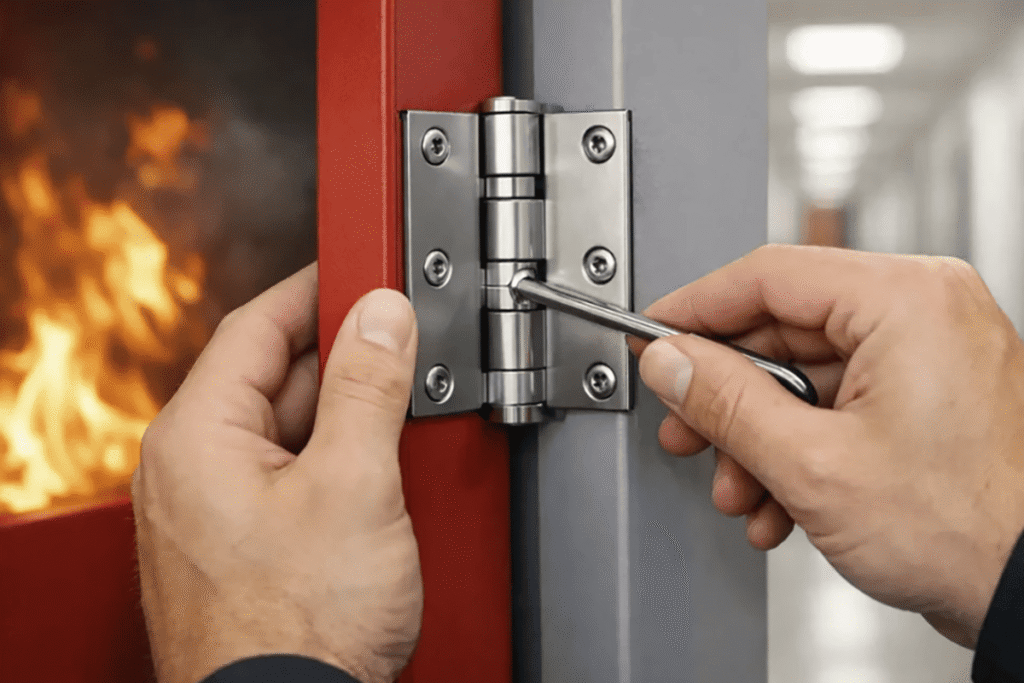
Adjusting Fire Hinges Without Compromising Safety?
Adjusting fire hinges can look like a small correction for sagging, rubbing, or uneven door gaps. The problem is that a fire door is not just a normal door. A careless change can affect closing, latching, and the certified assembly.1 I treat every adjustment as a compliance-sensitive decision first, and a hardware correction second.
Adjusting fire hinges should only be done when the final door assembly remains consistent with the tested fire rating, manufacturer instructions, and local regulations.2 Buyers should verify hinge type, screw specification, hinge quantity, load capacity, clearances, and self-closing performance before approving changes or substitutions on a fire door.
I often receive customer questions that start with a simple issue: “The door is rubbing. Can we adjust the hinge?” My answer is usually careful. The correct solution depends on the fire door certificate, the approved hardware set, and the real cause of the problem.
Why Is Adjusting Fire Hinges a Compliance-Sensitive Decision?
Adjusting fire hinges becomes risky when the focus stays only on smooth movement. A fire-rated door must also perform under test conditions. If the hinge, screws, shims, or fixing method no longer match the approved assembly, the door may look corrected but become difficult to justify during inspection.
Adjusting fire hinges is compliance-sensitive because the hinge is part of the tested fire door assembly3. Any change to hinge type, fixing screws, shim material, hinge quantity, or door clearance should be checked against the fire door manufacturer’s instructions, certification documents, project specifications, and local fire safety rules.
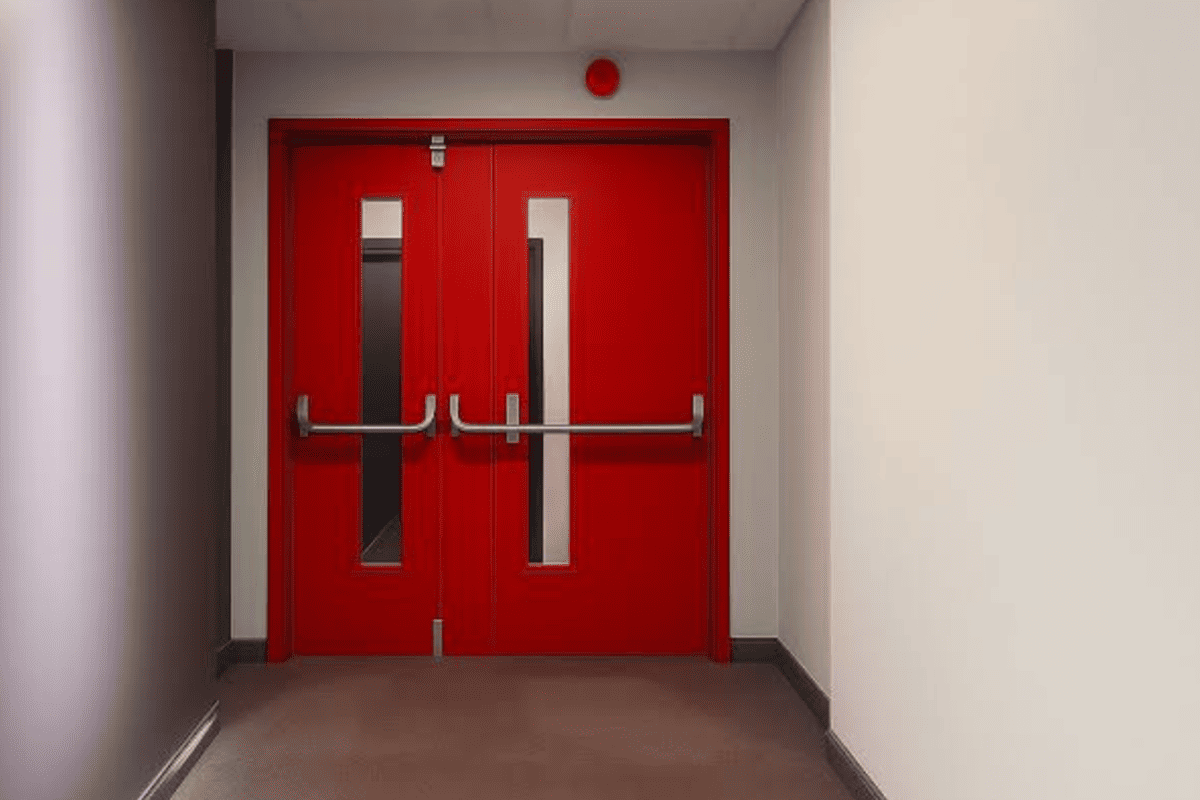
Fire-rated hinges are not isolated components
I always remind buyers that a fire-rated hinge is not evaluated in isolation. It is normally used as part of a complete door assembly4, which can include:
- Door leaf material and construction
- Door frame type and fixing method
- Hinge model, size, and material
- Screw type, screw length, and fixing pattern
- Door closer or self-closing hinge function
- Lock, latch, seals, intumescent strips, and accessories
- Approved door gaps and clearances
- Installation method and field tolerance
A hinge may have fire-rated test evidence, but the buyer still needs to confirm whether it is suitable for the intended door set. In procurement, I see this misunderstanding often. A customer may ask for a “CE fire hinge” and assume that it can replace any similar-looking hinge. That assumption is unsafe.
A fire-rated hinge is a selected component inside a tested system. It should not be treated as a decorative hardware item.
Small changes can create big documentation problems
A common issue is screw replacement. On site, installers may lose original screws or use ordinary alternatives because they appear to fit. That decision can create a compliance gap. If the tested hinge assembly used a specific screw configuration, then the replacement should match the manufacturer-approved specification.5
The same logic applies to shims and packing materials. If adjustment requires spacing or correction, the material and method should remain consistent with the tested or approved fire door assembly. Ordinary materials may not behave the same under heat, load, or repeated opening.6
| Adjustment-related item | Why it matters | Buyer’s verification point |
|---|---|---|
| Screws | Fixing strength and tested assembly consistency | Confirm approved screw type and configuration |
| Shims or packers | Door alignment and fire performance under heat | Confirm material is approved for fire door use |
| Hinge quantity | Load distribution and door stability | Match certificate or manufacturer requirement |
| Hinge size | Load capacity and leaf support | Confirm against door height, width, and weight |
| Door gaps | Smoke, flame, and latch performance | Verify with project standard and tested tolerance |
| Latching | Fire door must close and latch reliably | Test after any adjustment |
I do not treat adjustment as automatic approval
From my manufacturer-side experience, the best decision is often not “adjust it until it looks right.” The better decision is to ask, “Can this adjusted condition still be defended by the documents?”
For B2B buyers, this matters because inspection responsibility usually appears later. A wholesaler may supply the hinge. A door factory may install it. A project contractor may adjust it. A fire safety inspector may question it. If the documentation chain is weak, every party faces risk.
At SDH Hardware, I support buyers by providing product specifications, drawings upon order confirmation, and certification documents for applicable products. Still, I always recommend that buyers verify the certificate scope, project requirements, and local code before making application-specific decisions.
What Should I Check Before Adjusting Fire Hinges on a Fire Door Assembly?
Adjusting fire hinges without diagnosis can hide the real issue. The door may sag because of frame movement, incorrect hinge spacing, unsuitable load selection, or door leaf deformation. If I only look at the hinge, I may miss the system problem and approve the wrong correction.
Before adjusting fire hinges, buyers should check the certified hardware schedule, hinge model, screw specification, door weight, frame alignment, door leaf condition, hinge spacing, clearances, closing performance, and latching reliability. The final decision should follow the fire door manufacturer’s instructions and applicable approval documents.
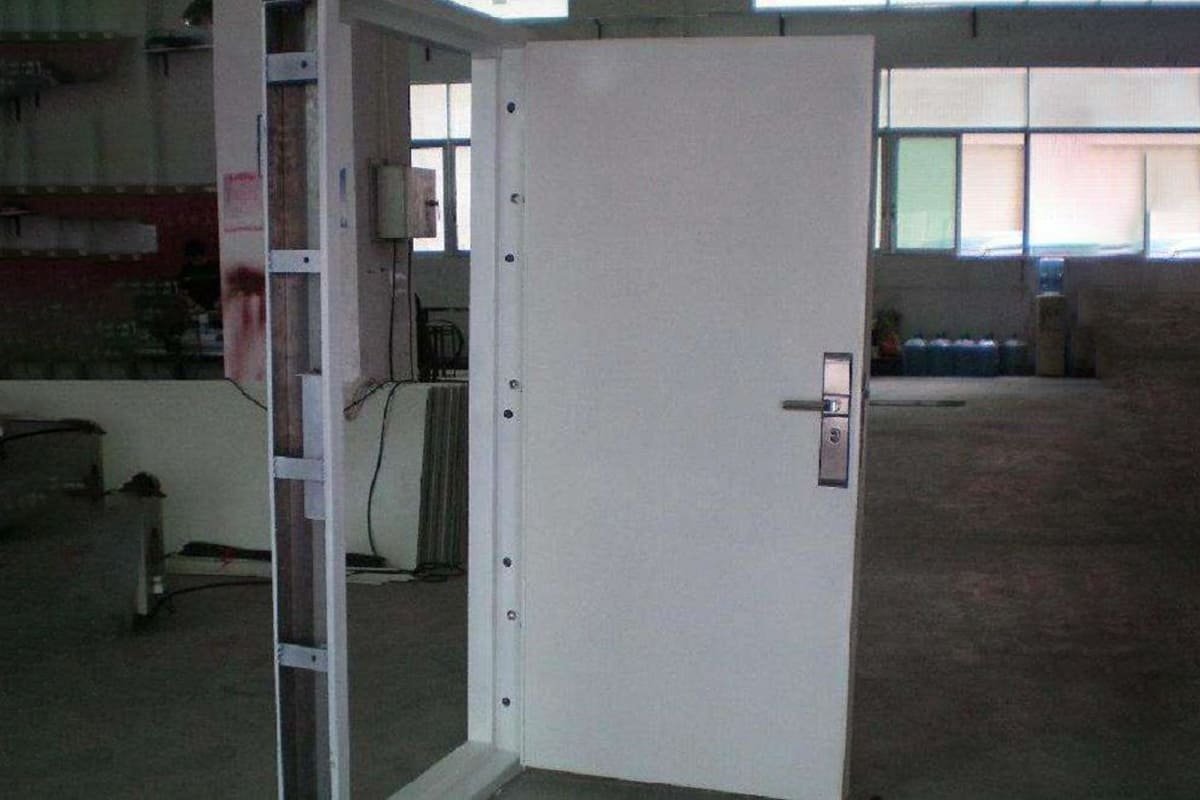
Start with documents, not tools
I prefer a document-first approach. In many customer discussions, the technical team wants to know if a hinge can be “moved slightly” or “packed out.” My first question is usually: What does the approved door set allow?
A practical buyer-side checklist should include:
Fire door certificate or test report scope
I check whether the hinge model, hinge quantity, and accessory set are included.Door manufacturer’s installation instructions
I confirm whether adjustment methods are described or limited.Hardware schedule
I compare the installed hinge with the specified hinge.Project specification
I review whether the project demands a certain fire rating, standard, or closing performance.Local regulatory requirement
I avoid assuming that one market’s rule applies everywhere.Supplier technical sheet
I confirm material, dimensions, load capacity, finish, and screw details.
Check the door as a system
Many buyers send photos of a rubbing fire door and ask if the hinge is defective. Sometimes the hinge is the issue. Often, the problem comes from several variables working together.
| Diagnostic area | Possible issue | Why it affects adjustment |
|---|---|---|
| Door weight | Door is heavier than expected | Hinge may be overloaded |
| Door leaf | Leaf has warped or deformed | Adjustment may not solve alignment |
| Frame | Frame is not vertical or square | Hinge correction may create uneven gaps |
| Screws | Fixings are loose or incorrect | Door may sag again after correction |
| Hinge spacing | Hinges are positioned poorly | Load is not distributed well |
| Opening frequency | Door is used heavily | Hardware fatigue may appear earlier |
| Closer force | Door does not latch reliably | Adjustment may affect closing path |
| Clearance | Gaps are outside tolerance | Fire and smoke performance may be affected |
Door gaps need verified tolerances
Door clearance is one of the most sensitive topics. I often see values such as 3–4 mm mentioned in discussions. Those numbers may be relevant in some contexts, but they are not universal. Gap requirements depend on the tested fire door assembly, local standard, manufacturer instruction, seal system, and project approval.7
For this reason, I avoid publishing one fixed number as a global rule. Instead, I advise buyers to verify:
- The approved head, jamb, and meeting-stile gaps
- The undercut or threshold clearance
- The seal and intumescent strip requirements
- The latch engagement after adjustment
- The final clearance after repeated opening cycles
The self-closing function must still work
If the hinge or door system includes a self-closing function, then adjustment is not only about free movement. The door must still close fully and latch reliably8. Some projects may reference a timing target, such as closing within a defined number of seconds. However, that target must be checked against the applicable standard, local requirement, project specification, and certification document.
In supplier communication, I suggest that buyers record the performance after adjustment. They should not rely only on a visual inspection. A door that looks aligned but fails to latch is not acceptable for a fire-rated application.
How Do Hinge Quantity, Size, and Load Capacity Affect Fire Door Safety?
A fire door can fail in practice when the hinge selection is too light for the door. The problem may appear slowly as sagging, rubbing, or poor latching. If the buyer then reduces hinge quantity or uses a smaller replacement, the adjustment may create a worse safety problem.
Hinge quantity, size, material, load capacity, and screw configuration affect fire door safety9 because they support the door leaf under normal use and during fire conditions. Buyers should not downsize hinges, reduce hinge numbers, or use non-certified replacements unless the approved fire door documentation clearly allows that change.
Hinge selection starts before installation
In my experience, many adjustment problems begin during product selection. A hinge may be well made, but it may not be suitable for a heavy door leaf, high-traffic opening, or specific fire-rated door construction. That is why I ask buyers for door details before confirming a hinge specification.
Important selection factors include:
- Door height
- Door width
- Door thickness
- Door weight
- Door core material
- Frame material
- Opening frequency
- Required fire rating
- Required corrosion resistance
- Closer or self-closing requirement
- Market standard and certification requirement
For example, a large commercial door in a school, hospital, hotel, or public building may need more robust hardware than a smaller interior fire door with lower traffic. The hinge should match both the load requirement and the certified assembly.
Hinge quantity is not a cosmetic choice
I sometimes hear this question from buyers: “Can we use two bigger hinges instead of three smaller ones?” The answer cannot be based only on visual strength. The approved door assembly may specify hinge quantity and placement. Changing this configuration can affect load distribution, closing behavior, and certification consistency.10
| Decision | Risk if handled casually | Better buyer approach |
|---|---|---|
| Reducing hinge quantity | Higher stress on remaining hinges | Confirm with certified assembly documents |
| Downsizing hinge size | Increased sagging or premature wear | Match door weight and approved hardware set |
| Using visual equivalents | Unknown fire performance | Use documented, approved fire-rated hinges |
| Changing screw layout | Reduced fixing reliability | Follow manufacturer-approved configuration |
| Ignoring door weight | Misapplied hardware | Request load guidance before order |
Material and finish also matter
Fire-rated hinges are commonly produced from stainless steel, steel, or other approved materials depending on the market and application. Material selection may affect strength, corrosion resistance, durability, and compatibility with the door set.11
As a China-based architectural door hardware manufacturer, I often discuss finish requirements with buyers in the Middle East, Europe, and Southeast Asia. A coastal project may require stronger corrosion resistance. A hotel project may need a specific surface finish. A fire-rated door project may need both appearance and compliance documentation.
However, finish should never be the only selection basis. A polished hinge that looks premium may still be unsuitable if it lacks the required fire-rated evidence or load capacity.
Certification documents should be verified
SDH Hardware supplies architectural door hardware including butt hinges, concealed door hinges, Euro mortise locks, stainless steel lever handles, Euro brass cylinders, and door accessories. Many core products are available with CE certification and fire-rated certification. Still, I encourage buyers to verify documents carefully.
For fire hinges, buyers should check:
- Whether the certificate covers the exact hinge model
- Whether the fire rating matches the intended door assembly
- Whether the hinge material and size match the document
- Whether the screw configuration is specified
- Whether use with timber, steel, or other door types is covered
- Whether the certificate is current and issued by an acceptable authority
- Whether the local project accepts that certificate
This verification step is not just paperwork. It protects the buyer, the door factory, the hardware brand, and the final project.
Why Do Fire Doors Sag or Rub After Installation?
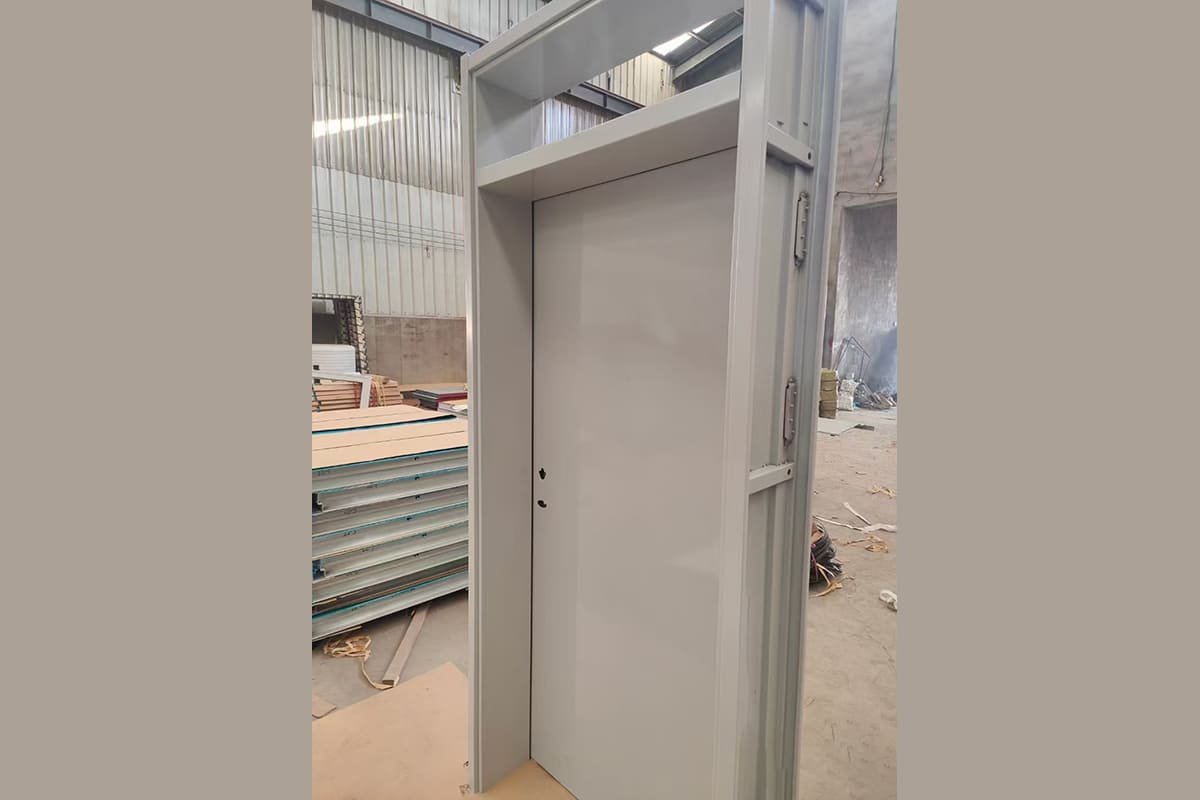
A sagging fire door is frustrating because the visible problem appears at the hinge side, latch side, or floor clearance. The easy assumption is that the hinge is poor quality. In reality, sagging and rubbing can come from door weight, frame condition, installation accuracy, fixing strength, or incorrect hardware selection.
Fire doors sag or rub because of system variables such as excessive door weight, unsuitable hinge capacity, loose or incorrect fixings, frame misalignment, door leaf deformation, poor hinge spacing, high opening frequency, or closer force problems.12 Buyers should diagnose the full assembly before blaming or replacing the hinge.
Hinge quality matters, but it is not the only factor
As a manufacturer, I care deeply about hinge quality. Material thickness, bearing structure, machining accuracy, pin strength, surface treatment, and testing all matter. However, I also know that a good hinge can perform poorly when the door set is wrong.
I once handled a customer inquiry where the buyer believed the fire hinge was causing a recurring latch problem. After reviewing photos and installation details, the issue appeared to involve frame alignment and door closer force, not only the hinge. The hinge was part of the discussion, but it was not the only cause.
This type of situation is common in B2B supply. A project buyer may receive complaints from the site. A wholesaler may forward photos. A door factory may ask for a replacement. The best response is a structured diagnosis.
Common causes of sagging and rubbing
Here is a practical way I classify the causes:
| Cause category | Typical sign | Procurement lesson |
|---|---|---|
| Door weight mismatch | Door drops after short use | Confirm hinge load before purchase |
| Frame not plumb | Uneven gaps from top to bottom | Check installation accuracy |
| Loose fixing | Movement around hinge leaves | Confirm screw and substrate suitability |
| Door leaf deformation | Rubbing changes by season or climate | Review door construction and storage |
| Wrong hinge spacing | Stress concentrated at one area | Follow approved door set design |
| High traffic | Wear appears faster than expected | Select durable commercial-grade hardware |
| Closer issue | Door slams or fails to latch | Balance closing control with latch reliability |
| Seal compression | Door resists final closing | Confirm compatible seals and hardware |
Adjustment should not hide selection errors
If the hinge was underspecified from the beginning, adjustment may only delay the problem. This is why I prefer to discuss hinge selection before mass production or bulk purchase. A small difference in door weight, height, or usage level can change the correct hinge recommendation.
For door factories and hardware brands, I suggest keeping a simple technical file for each project:
- Door drawings
- Door weight calculation
- Fire rating requirement
- Hinge specification sheet
- Certificate or test evidence
- Hardware schedule
- Installation instruction
- Inspection record after installation
This file helps avoid disputes later. It also gives the supplier enough information to support the buyer properly.
After adjustment, check performance, not only appearance
When a fire door is corrected, the final evaluation should include practical performance checks. I focus on four areas:
Closing
The door should close from the required open positions according to the applicable standard and project requirement.Latching
The latch should engage reliably without manual assistance, unless the approved design states otherwise.Alignment
The door should sit correctly in the frame without twisting, binding, or dragging.Clearances
Gaps should remain within the relevant certified tolerance, manufacturer instructions, and local standard.
These checks are simple in concept, but they are not casual DIY steps. Qualified installers, door manufacturers, or project professionals should perform and document the final evaluation where required.
What Should Buyers Ask a Fire Hinge Supplier Before Approval?
A poor supplier conversation can leave buyers with incomplete documents, unclear load data, and uncertain fire-rating claims. That creates problems during installation and inspection. I believe a good supplier should help buyers verify the hinge against the door assembly, not only quote a low unit price.
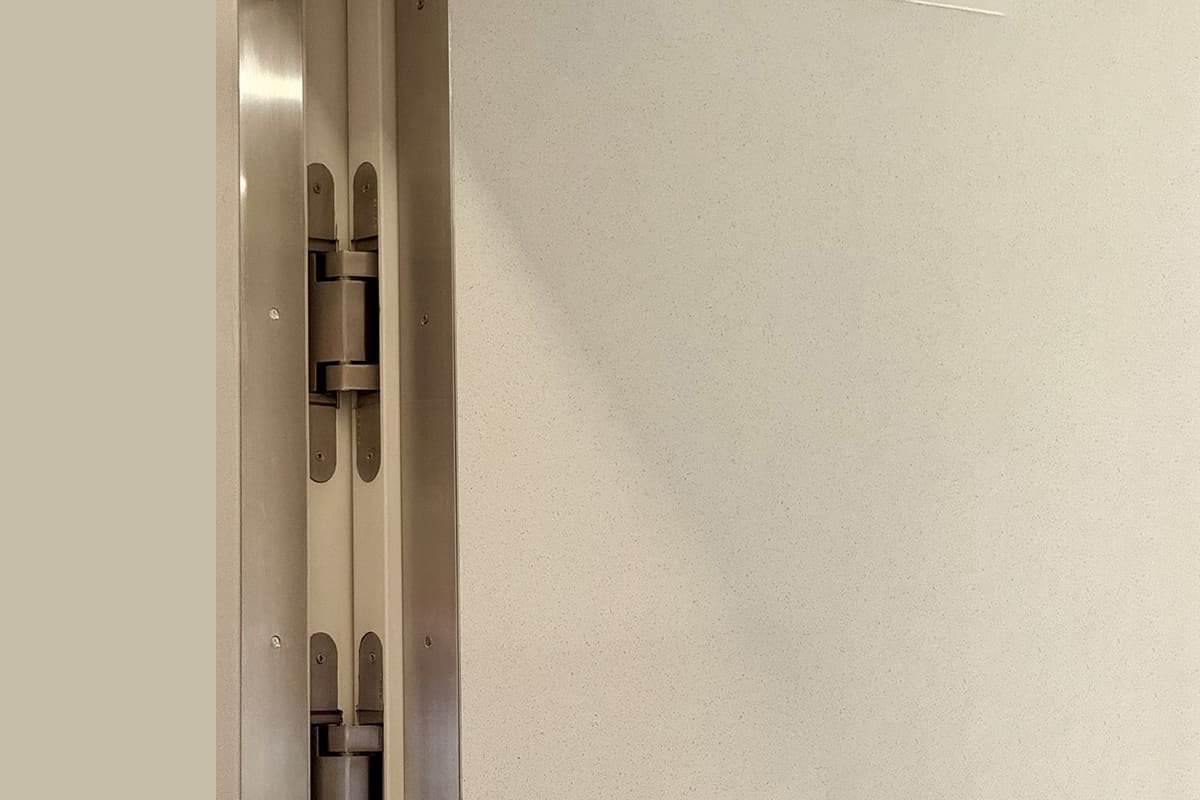
Before approving a fire hinge supplier, buyers should ask for product drawings, material details, load guidance, fire-rated certificates, CE documents where applicable, screw specifications, compatible door types, customization limits, inspection process, and confirmation that any adjustment-related parts follow the approved fire door system.
Supplier evaluation should be technical and commercial
For B2B procurement, price matters. I understand that. However, fire-rated hardware creates risk when the buyer compares only by price, finish, or sample appearance. A reliable supplier should be able to discuss technical fit, documentation, and production consistency.
I suggest buyers ask these questions:
- What door type is this fire hinge intended for?
- What fire-rated evidence is available for this model?
- Does the certificate cover the hinge size and material I need?
- What screw specification is supplied or required?
- What door weight and usage conditions are suitable?
- Can you provide detailed drawings after order confirmation?
- Can the logo, finish, or packaging be customized without affecting compliance?
- What inspection process is used after production?
- Can you support OEM or ODM development if the project needs a special item?
- What parts should not be substituted on site?
Factory capability supports consistency
SDH Hardware operates as a professional architectural door hardware manufacturer in China, with more than 10 years of specialized production experience. Our product portfolio covers more than 3,000 architectural hardware articles. I mention this because B2B buyers often need more than one hinge model. They need a complete hardware series that can support door projects consistently.
Our main product categories include:
- Euro mortise locks
- Stainless steel lever handles
- Butt hinges
- Concealed door hinges
- Euro brass cylinders
- Door accessories
For project buyers, a one-stop sourcing model can reduce coordination problems. However, every fire-rated product still needs document verification against the intended application.
Quality control should be visible
When I discuss fire hinges with door factories or hardware brands, I focus on production control as much as certification. A certificate is important, but stable manufacturing is also important. Buyers should ask how the supplier controls raw materials, machining, assembly, surface treatment, and final inspection.
A practical supplier review can include:
| Supplier capability | Why buyers should care |
|---|---|
| In-house production lines | Better control over consistency and lead time |
| Raw material screening | Reduces strength and corrosion risks |
| Standardized production supervision | Helps keep batch quality stable |
| Function testing | Confirms movement and durability expectations |
| Frame or fit detection | Helps identify dimensional issues |
| Finished product inspection | Reduces shipment defects |
| Custom drawing support | Helps door factories integrate hardware |
| OEM/ODM service | Supports brand and market differentiation |
Conclusion
Adjusting fire hinges is never just a small correction to make a door swing better. It is a decision that must protect the certified fire door assembly, closing performance, latching reliability, alignment, and approved clearances. I advise buyers to diagnose the full system, verify documents, and avoid non-certified substitutions. If you need fire-rated hinges or architectural door hardware for OEM, ODM, wholesale, or door factory supply, contact SDH Hardware for specification support and factory-direct sourcing.
"Fire Doors and NFPA 80 FAQs", https://www.nfpa.org/news-blogs-and-articles/blogs/2025/04/11/fire-doors-faqs. NFPA 80 and comparable fire-door guidance treat fire doors as assemblies whose hardware, self-closing function, and latching condition must be maintained, supporting the claim that hinge changes can affect more than door swing. Evidence role: general_support; source type: institution. Supports: A fire-door authority should support that fire doors are rated as assemblies and that closing, latching, and hardware condition are essential to their performance.. Scope note: This would provide general code context rather than proof that any particular hinge adjustment invalidates a specific certificate. ↩
"Locksmith Ledger: Altering Fire Door Assemblies – Job ...", https://idighardware.com/2022/10/locksmith-ledger-altering-fire-door-assemblies-job-site-preparations-vs-field-modifications/. Fire-door standards commonly require rated door assemblies to be installed and maintained in accordance with their listing, labeling, and manufacturer instructions, which supports treating hinge adjustment as a compliance-controlled action. Evidence role: expert_consensus; source type: institution. Supports: A recognized code or standards source should state that fire-door assemblies must be installed and maintained according to their listing, labeling, and manufacturer instructions.. Scope note: The source would establish the governing principle but would not determine whether a specific local adjustment is permitted. ↩
"Fire door", https://en.wikipedia.org/wiki/Fire_door. General fire-door references describe a fire door as a complete assembly that includes the door leaf, frame, and hardware, supporting the statement that hinges are part of the tested system. Evidence role: definition; source type: encyclopedia. Supports: A neutral reference should define a fire door as an assembly including the door, frame, and hardware components.. Scope note: An encyclopedia source is suitable for definition and context, but a project-specific listing or test report is needed for compliance decisions. ↩
"[PDF] NSPIRE Standard - Door - Fire - HUD", https://www.hud.gov/sites/dfiles/PIH/documents/NSPIRE-Standard-Door-Fire-Labeled_20230811.pdf. Institutional fire-door guidance defines rated fire-door openings as assemblies of door, frame, hardware, and related components, supporting the article's assembly-level framing. Evidence role: definition; source type: institution. Supports: A fire-safety institution should describe fire-door assemblies as composed of interacting components rather than isolated products.. Scope note: This supports the general concept and component list, not the acceptability of any specific hinge model. ↩
"Decoded: NFPA 80 Requirements for Hinges, Pivots, and ...", https://idighardware.com/2016/07/decoded-nfpa-80-requirements-for-hinges/. Fire-door installation standards and product listings generally require hardware to be installed with specified fasteners and in accordance with manufacturer instructions, supporting the need to match approved hinge screw configurations. Evidence role: mechanism; source type: institution. Supports: A standards or testing body source should support that hinge fasteners and installation details are part of the approved installation of fire-door hardware.. Scope note: The source would not identify the correct screw for a particular door; that remains dependent on the product listing and manufacturer documentation. ↩
"Benefits of Choosing Fire-rated Shims", https://groveshims.com/resources/articles/choose-fire-rated-shims/. Fire-door installation guidance generally restricts field-added materials to those allowed by the listing or manufacturer instructions, because untested materials may alter mechanical fit or fire exposure behavior. Evidence role: mechanism; source type: institution. Supports: A fire-door installation or testing source should support that materials used in the door assembly must be compatible with the rated assembly and approved installation method.. Scope note: This supports the risk principle; direct proof would require test data for the specific shim or packing material. ↩
"Mind the Gap | NFPA Journal", https://www.nfpa.org/news-blogs-and-articles/nfpa-journal/2019/01/02/mind-the-gap. Fire-door standards specify permitted clearances and often defer to the listed assembly and manufacturer instructions, supporting the statement that gap requirements depend on the applicable assembly and regulatory context. Evidence role: general_support; source type: institution. Supports: A standards source should show that fire-door clearances are controlled by standards and installation documentation rather than a universal informal value.. Scope note: The cited standard may apply only to a particular jurisdiction or door type. ↩
"Self-Closing Doors - HPD", https://www.nyc.gov/site/hpd/services-and-information/self-closing-doors.page. Fire-door inspection standards identify self-closing and positive latching as required performance features for many rated fire-door assemblies, supporting the need to verify closing and latching after hinge adjustment. Evidence role: expert_consensus; source type: institution. Supports: A fire-door standard should support that rated fire doors must be self-closing or automatic-closing where required and must latch securely.. Scope note: Specific timing or test-position requirements vary by standard, occupancy, and project specification. ↩
"Understanding BS EN 1935:2002 single-axis hinge grades", https://uk.sfs.com/resources/article/understanding-bs-en-1935. Architectural hinge standards such as EN 1935 and ANSI/BHMA A156.1 classify hinges by attributes including load, durability, material, and fire-door suitability, supporting the claim that these characteristics affect fire-door performance. Evidence role: general_support; source type: institution. Supports: A building-hardware standard should support that hinge dimensions, grade, load capacity, and installation details are relevant to door performance.. Scope note: Such standards classify and test hinge performance, but they do not replace the listing requirements for a specific fire-door assembly. ↩
"Everything you need to know about Commercial Door Hinges", https://www.mckinneyhinge.com/en/resource-library/knowledge-center/blog/blog-post.aehdynamic-everything-you-need-to-know-about-commercial-door-hinges-top-10-commercial-contractors-hinge-installation-questions-633f18001fa7df003d7c229b_mckinney.html. Technical guidance on door hardware explains that hinge number and placement influence load transfer, alignment, and operating forces, providing a mechanical basis for treating changes to hinge configuration as consequential. Evidence role: mechanism; source type: education. Supports: An engineering or architectural-hardware educational source should explain that hinge placement and number affect how a door's weight and operational forces are transferred to the frame.. Scope note: This would support the mechanics of load distribution; certification consistency must still be verified against the fire-door listing or test report. ↩
"Measurements of thermophysical properties of solid and liquid ...", https://tsapps.nist.gov/publication/get_pdf.cfm?pub_id=928362. Materials guidance from standards and government technical sources documents that steel alloys and protective finishes differ in corrosion resistance and mechanical properties, supporting the relevance of hinge material selection. Evidence role: mechanism; source type: government. Supports: A materials or standards source should support that different metals and finishes have different corrosion and durability characteristics relevant to hardware selection.. Scope note: This is contextual materials support and does not establish that a particular hinge is suitable for a specific fire-rated door. ↩
"What are steps to fix sagging fire-rated doors in a medical ...", https://www.facebook.com/groups/479931677208901/posts/1441113551090704/. Fire-door inspection guidance commonly evaluates frame condition, clearances, hardware attachment, door alignment, closing, and latching, supporting the view that rubbing or sagging can arise from several interacting assembly variables. Evidence role: general_support; source type: institution. Supports: A fire-door inspection or maintenance source should support that door alignment, hardware condition, frame condition, and latching problems are common inspection concerns.. Scope note: The source would support a diagnostic framework rather than identify the cause in any individual installation. ↩