How to Avoid Common Fire Door Hardware Specification Mistakes?
Fire door hardware specification mistakes often begin when buyers select locks, hinges, handles, or closers by appearance, size, or price before checking fire performance. That creates risk because one wrong component can weaken the intended door assembly1. The safer approach is to start with certification, confirm the door requirement, and match every item to the actual application.
To avoid common fire door hardware specification mistakes, define the fire door first, then select hardware with verified CE and fire-rated documentation tested to the relevant EN 1634 fire performance requirement2. The hardware rating should be equal to or higher than the door leaf or door set requirement3, and the function must match the door location and usage.
I have seen many fire door hardware inquiries look simple at first. A buyer asks for “fire-rated hinges” or “CE lock body.” Then the discussion becomes more detailed. The real question is not only whether the product is fire-rated. The real question is whether the hardware matches the tested door type, rating, function, and project requirement.
Why Should Fire Door Hardware Specification Start With Certification?
Many buyers start with finish, size, or unit price because these details are easy to compare. That feels efficient, but it can cause problems later. If the documentation does not match the product model or application, the specification may fail before installation even begins.
The correct fire door hardware specification process starts with documents. Buyers should request CE documents, fire-rated certificates, and test reports, then verify that the exact product model, intended door type, and EN 1634-related fire performance are covered. Appearance and price should be reviewed only after compliance suitability is checked.
Certification Is Not Just a Logo
In my daily work with door factories, hardware brands, and importers, I often notice one repeated misunderstanding: buyers sometimes treat “CE,” “fire-rated,” and “tested to EN 1634” as the same thing. They are related, but they are not identical.
A CE marking may show that a product complies with certain European requirements under a relevant product standard. A fire-rated certificate or test report may show fire performance under specific test conditions. An EN 1634-related test usually refers to fire resistance testing for door assemblies and hardware performance in that context.
That distinction matters because a document is only useful when it covers the right scope4.
Buyers should check:
- Product model: Does the certificate cover the exact lock, hinge, handle, closer, or cylinder?
- Door material: Was the hardware tested with timber, steel, or another door type?
- Door configuration: Was the test for single-leaf or double-leaf doors?
- Fire performance time: Does the document support the required rating, such as 30, 60, 90, or 120 minutes?
- Installation details: Does the test condition match the intended fixing method or door thickness?
- Validity and issuing body: Is the document current, traceable, and issued by a qualified body?
| Document Type | What Buyers Often Think | What Buyers Should Verify |
|---|---|---|
| CE document | “The product is approved for all fire doors.” | The product standard, model scope, and declared performance. |
| Fire test report | “The hardware is fireproof.” | The tested assembly, product model, door type, and time rating. |
| Fire-rated certificate | “This guarantees project approval.” | The certificate scope, validity, and whether local authorities accept it. |
| Product datasheet | “This is enough for specification.” | Whether it matches official certification and test evidence. |
A Practical Manufacturer-Side Example
I once received an inquiry for stainless steel lever handles for a fire door project. The buyer first focused on the rose size and satin finish. Those details were important for the brand’s product line, but they did not answer the project’s main question. We had to ask:
“What is the fire rating of the door, and which certificate must the handle support?”
Only after that did we review handle construction, spindle size, spring structure, surface finish, and packaging. This order saved time because it avoided quoting a beautiful product that did not match the required fire-rated door application.
What I Recommend Before Price Comparison
Before comparing suppliers, I recommend creating a simple document checklist:
- Project-required standard
- Door fire rating
- Door material and thickness
- Hardware category
- Exact model number
- Certificate or test report reference
- Applicable EN 1634-related evidence
- Local market or project approval requirements
SDH Hardware can help buyers review whether our available CE and fire-rated documents match a requested product type. However, final acceptance should always be confirmed with the project consultant, certification authority, testing laboratory, or local building-code professional.
How Do Fire Door Hardware Specification Mistakes Happen When Ratings Do Not Match?
A common mistake happens when buyers choose hardware that is fire-rated, but not rated high enough for the door. This mistake is easy to miss because the product still looks compliant on paper. However, a lower-rated component may not support the required door assembly performance.
Fire door hardware specification mistakes occur when the lock, hinge, closer, handle, cylinder, or accessory has fire evidence below the required door leaf or door set rating. The safer rule is simple: every specified hardware item should meet or exceed the fire performance required for the door assembly and project location.
“Fire-Rated” Is Not Always Enough
The phrase “fire-rated hardware” sounds clear, but it is incomplete. A product may be fire-rated for one condition and unsuitable for another. For example, a hinge tested on a specific timber door for a specific time period does not automatically apply to every steel door, double door, or higher fire rating5.
This is why I always encourage buyers to ask a more complete question:
“Is this hardware suitable for this door type, this rating, this standard, and this installation?”
That question is better than simply asking, “Is it fire-rated?”
Hardware Rating Should Not Be Below the Door Requirement
A fire door assembly is only as reliable as its specified and installed components allow it to be.6 The door leaf, frame, seals, glazing, hinges, locks, closers, and accessories all interact. A strong door leaf does not automatically compensate for a weak hardware selection.
Here is a simplified procurement view:
| Door Requirement | Risky Hardware Choice | Better Specification Logic |
|---|---|---|
| 30-minute fire door | Hardware with no fire evidence | Use hardware with relevant 30-minute or higher fire documentation. |
| 60-minute fire door | Hardware tested only for 30 minutes | Select hardware with evidence supporting 60 minutes or higher. |
| Steel fire door | Hardware tested only on timber doors | Verify whether documentation covers steel door applications. |
| Double-leaf fire door | Hardware tested only on single-leaf doors | Confirm tested configuration or get professional approval. |
| Escape route fire door | Standard lock without panic/escape function | Check both fire performance and escape function requirements. |
Different Locations May Need Different Ratings
In many projects, not every fire door has the same requirement. A storage room door may have a different rating from a corridor fire door. A stairwell door may have stricter requirements because it protects an escape path. A plant room or electrical room may also need special attention because of risk level.
Common project variables include:
- Building type: residential, hotel, hospital, school, commercial, industrial
- Door location: corridor, stairwell, storage room, service room, apartment entrance
- Occupancy level: low traffic, public traffic, high traffic
- Escape requirement: normal access, emergency exit, panic exit
- Local regulation: country-specific or project-specific approval rules
Do Not Let Price Create a Hidden Downgrade
In B2B sourcing, price pressure is real. I understand that importers and wholesalers need competitive product lines. Door factories also need stable cost control. However, fire door hardware specification should not be downgraded quietly to hit a target price.
A lower-cost option may still be suitable if the documentation and performance match the requirement. But if the lower price comes from removing fire-rated components, changing material thickness, reducing hinge grade, or using an uncertified lock body, the buyer should know that clearly.
At SDH Hardware, I prefer to separate quotations into clear options when possible:
- Standard non-fire-rated option
- CE-documented option
- Fire-rated option for a defined requirement
- Customized option with project-specific review
This method helps the buyer compare cost without losing sight of compliance scope.
Why Does Door Function Change Fire Door Hardware Specification?
Another common problem appears when all fire doors in a project receive the same hardware set. That seems convenient for ordering, but it ignores how people actually use different doors. A storage room, escape route, and high-frequency corridor door do not perform the same job.
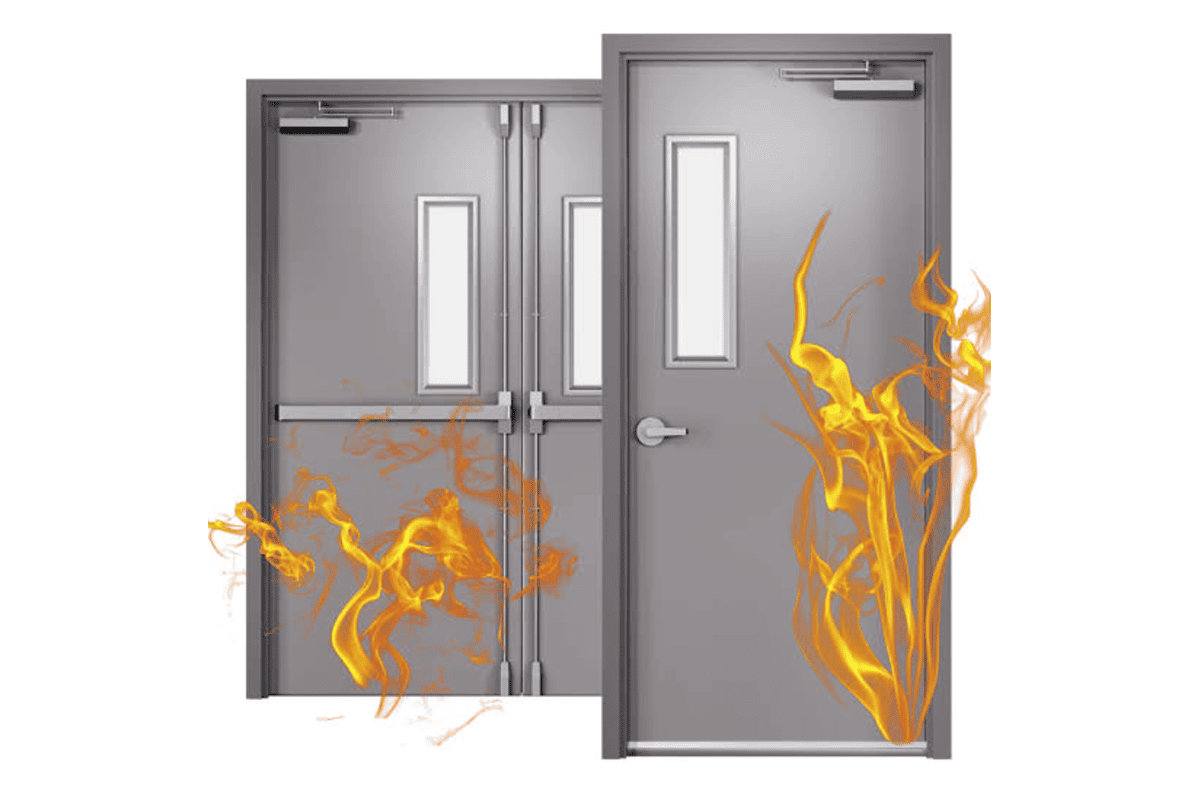
Door function changes fire door hardware specification because each location creates different demands for access, locking, durability, safety, and user behavior. Buyers should match locks, hinges, handles, closers, cylinders, and accessories to the door’s actual use case, not only to the fire rating.
Function Comes Before the Hardware Schedule
I often ask buyers to describe the door before I recommend the hardware. This can feel slow at first. However, it prevents many wrong selections.
A good fire door hardware schedule should answer questions like:
- Is the door normally locked or normally unlocked?
- Does the door need free passage from one side?
- Is the door on an escape route?
- Does the door need panic exit hardware?
- Is the door used by the public or by trained staff only?
- How many times per day will people use it?
- Does the door need access control?
- Does the door need key control through a Euro cylinder system?
- Is the environment dry, humid, coastal, or industrial?
Common Door Functions and Hardware Considerations
| Door Location / Function | Typical Hardware Concern | Specification Notes |
|---|---|---|
| Storage room fire door | Security and occasional access | Lock function and cylinder control matter. Usage frequency may be moderate. |
| Corridor passage fire door | Smooth daily operation | Hinges, lever handles, latches, and closers need durability. |
| Stairwell fire door | Escape safety and self-closing | Door closer performance and escape function may be critical. |
| Service room fire door | Restricted access | Lock body, cylinder, and keying plan should match operation needs. |
| High-traffic public door | Durability and user safety | Higher cycle performance, robust handles, and reliable closing are important. |
| Hotel or apartment entrance | Security, fire rating, appearance | Locking system, handle finish, and certification all matter. |
Different Components Carry Different Responsibilities
A fire door is not specified by one item. Each hardware component has a job.
Mortise locks control latching, locking, and sometimes escape behavior. A Euro mortise lock for a fire door should be selected by function, backset, center distance, forend size, latch and deadbolt design, door thickness, and certified scope.
Lever handles affect daily use. For public buildings, handle return strength, spindle compatibility, spring support, surface durability, and fire-rated evidence should all be checked.
Butt hinges or concealed hinges carry the door weight. Buyers should review load capacity, size, material, bearing design, fire evidence, door type, and required number of hinges per leaf.
Euro brass cylinders affect security and key management. A cylinder may need different keying systems, thumbturn options, emergency function, or anti-drill features depending on the building.
Door closers and accessories influence whether the fire door returns to the closed position. If a door must self-close, the closer must be specified carefully according to door width, weight, opening angle, usage frequency, and fire door suitability.
Do Not Use One Standard Set for Every Door
For large projects, one hardware set can simplify purchasing. But over-standardization can create hidden errors. For example:
- A storage room may need a secure lock, but not panic hardware.
- A corridor door may need smooth passage and high durability.
- An escape route door may need emergency or panic exit function.
- A service room may need restricted access and strong key control.
- A public entrance may need both fire performance and heavy-duty use.
The better approach is to group doors by function. Then buyers can create several hardware sets that balance compliance, cost, and usability.
Many quotation delays happen because the buyer sends only a product photo or a size request. That gives the supplier too little information. As a result, the first quotation may be incomplete, or the supplier may need several rounds of questions.
Before fire door hardware specification, buyers should provide the door fire rating, applicable standard, door material, thickness, weight, opening direction, usage frequency, door function, lock function, and complete hardware schedule. This information helps suppliers match certified hardware correctly and reduces the risk of wrong product selection.

Define the Door First
The safest process is simple:
- Define the door requirement
- Define the door function
- Define the hardware set
- Verify certification documents
- Confirm dimensions and finish
- Review samples or technical drawings
- Approve production and inspection plan
Many buyers reverse this process. They choose a handle or lock first, then try to fit it to the door requirement later. That method can work for ordinary doors, but it is risky for fire doors.
Essential Information for Accurate Quotation
Here is the information I like to receive before preparing a serious fire door hardware quotation:
| Information Needed | Why It Matters |
|---|---|
| Fire rating requirement | Hardware performance should match or exceed the door requirement. |
| Applicable standard | EN 1634-related needs and local rules may affect selection. |
| Door material | Timber, steel, and composite doors may require different evidence. |
| Door thickness | Lock body, cylinder length, spindle, and fixing screws depend on it. |
| Door weight and size | Hinges and closers must support the door safely. |
| Opening direction | Lock handing, closer arm, and hardware layout may be affected. |
| Door function | Passage, storage, service, escape, or access control changes the set. |
| Usage frequency | High-traffic doors need stronger durability considerations. |
| Finish requirement | Stainless steel, PVD, powder coating, or other finishes affect cost and lead time. |
| Quantity and packing | B2B pricing, MOQ, branding, and logistics depend on order structure. |
A Sample Buyer Brief
A useful buyer brief could look like this:
“We need hardware for a 60-minute steel fire door, single leaf, 45 mm thickness, 80 kg door weight, corridor application, high usage, EN 1634-related evidence required. The door needs a mortise lock, stainless steel lever handle, three butt hinges, Euro cylinder, door closer, and accessories. Please quote with CE and fire-rated documents for the matching models.”
This type of request is much easier to evaluate than:
“Please send price for fire-rated lock and hinge.”
The second request may start a conversation, but it is not enough for reliable specification.
Include the Complete Hardware Schedule
A complete hardware schedule helps prevent missing items. It also helps the supplier check compatibility between products.
A typical schedule may include:
- Mortise lock or latch
- Lever handle or pull handle
- Euro profile cylinder
- Butt hinges or concealed hinges
- Door closer
- Panic or emergency exit device, if required
- Flush bolts for double doors
- Door coordinator, if required
- Intumescent kits or seals, where applicable
- Door stopper, signage, and accessories
I recommend that buyers treat the schedule as a technical document, not just a shopping list. Each item should connect to the door’s rating, function, and installation details.
How Can Buyers Evaluate a Fire Door Hardware Supplier?
Choosing the wrong supplier can create specification mistakes even when the buyer has clear requirements. A supplier may offer attractive pricing but lack document support, testing knowledge, or manufacturing control. That creates risk for door factories, brands, and importers.
Buyers should evaluate a fire door hardware supplier by checking document transparency, product range, manufacturing control, customization ability, inspection process, and experience with CE and fire-rated hardware. A qualified supplier should help match products to applications without claiming to replace project approval authorities.

Look for Document Transparency
A reliable supplier should be willing to discuss certificates clearly. They should not only say, “Yes, we have certification.” They should help you understand the scope.
Important questions include:
- Which product models are covered?
- Which standards are referenced?
- What door type was tested?
- What fire rating is supported?
- Is the document valid and traceable?
- Can the supplier provide datasheets and drawings?
- Can the supplier identify limits of the document?
I respect suppliers who say, “This model is not suitable for that requirement.” That answer protects the buyer more than a quick “yes.”
Evaluate Manufacturing and Quality Control
For architectural hardware, stable quality depends on process control. A good sample does not guarantee that mass production will match it. Buyers should review how the supplier controls materials, machining, assembly, surface treatment, and final inspection.
At SDH Hardware, our work focuses on factory-direct supply for products such as:
- Euro mortise locks
- Stainless steel lever handles
- Butt hinges
- Concealed door hinges
- Euro brass cylinders
- Door accessories
From my manufacturer-side experience, buyers usually benefit from asking about:
- Raw material inspection
- Dimensional control
- Function testing
- Surface finish inspection
- Cycle or durability checks
- Packaging verification
- Final product inspection reports
These steps matter because fire door hardware is not only about passing a document review. It also needs consistent function in production.
Confirm Customization Without Losing Compliance
B2B buyers often need OEM or ODM customization. They may request a different finish, logo stamping, packaging, screw pack, spindle length, cylinder configuration, or lock forend size. Customization is normal, but it must be controlled carefully.
Some changes may be commercial only, such as color box design. Other changes may affect performance, such as material thickness, latch structure, hinge bearing type, or lock case design.
Buyers should separate customization into two groups:
| Customization Type | Typical Risk Level | Buyer Action |
|---|---|---|
| Logo laser marking | Low | Confirm position and finish effect. |
| Custom packaging | Low | Confirm barcode, language, and carton strength. |
| Finish change | Medium | Check corrosion, wear, and fire document implications. |
| Dimension change | Medium to high | Verify compatibility and certification scope. |
| Internal structure change | High | Request technical review and possible new testing. |
| New product development | High | Plan engineering review and certification strategy. |
A Supplier Should Guide, Not Overpromise
No hardware manufacturer should claim that one lock, hinge, or handle makes a whole fire door compliant. The complete door assembly must be evaluated according to the project requirements and relevant regulations.
A responsible supplier can:
- Explain available hardware options
- Provide certificates and test reports for review
- Match product models to known requirements
- Support drawings and technical details
- Offer production inspection
- Suggest alternatives when a product does not fit
A responsible supplier should not:
- Guarantee final building approval
- Replace a certification body
- Ignore local regulations
- Apply one certificate to unrelated products
- Treat all fire doors as the same
This balanced approach is better for long-term cooperation. It protects both the buyer and the supplier.
Frequently Asked Questions
Can fire-rated hardware make any door a fire door?
No. Fire-rated hardware alone cannot make an ordinary door a compliant fire door.7 The door leaf, frame, seals, glazing, hardware, and installation must work as a tested or approved assembly. Buyers should verify the complete door requirement with qualified project professionals or local authorities.
Is CE marking the same as fire-rated certification?
No. CE marking and fire-rated certification are related but not identical. CE marking refers to conformity under applicable European product requirements. Fire-rated evidence usually relates to fire performance under specific test conditions. Buyers should check both document scope and project acceptance requirements.
Should hardware fire performance match the door leaf rating?
Yes. The hardware should generally meet or exceed the fire performance required for the door assembly. A lower-rated lock, hinge, closer, or accessory may create specification risk. Buyers should verify the required rating and ensure the documents cover the intended door type and application.
What information should I send before requesting a quotation?
You should send the door fire rating, standard requirement, door material, thickness, size, weight, opening direction, usage frequency, door function, and complete hardware schedule. You should also mention finish, quantity, branding needs, packaging requirements, and certificate expectations.
Do escape route doors need different hardware?
Yes. Escape route doors may require emergency exit or panic exit functions in addition to fire performance.8 The correct solution depends on building type, occupancy, local code, and project design. Buyers should confirm requirements with a qualified consultant before final specification.
Conclusion
Avoiding fire door hardware specification mistakes requires more than choosing products labeled “fire-rated.” Buyers should define the door first, verify CE and fire-rated documents, confirm EN 1634-related evidence, match hardware performance to the required door rating, and select functions according to the door location. I always recommend treating certificates as documents to verify, not shortcuts to approval. If you need factory-direct support for locks, hinges, handles, cylinders, or door accessories, SDH Hardware can help review your hardware schedule and match suitable product options for your project.
"NSPIRE Standard - Door - Fire", https://www.hud.gov/sites/dfiles/PIH/documents/NSPIRE-Standard-Door-Fire-Labeled_20230811.pdf. Institutional fire-door guidance describes a fire door as an assembly whose performance depends on the door leaf, frame, seals, hardware, and installation rather than on any single component alone. Evidence role: general_support; source type: institution. Supports: Fire door performance depends on the complete assembly, including hardware, frame, seals, and installation.. Scope note: This supports the assembly principle generally; it does not prove that every individual hardware error will reduce performance in every tested configuration. ↩
"EN 16034", https://en.wikipedia.org/wiki/EN_16034. European standards and conformity guidance identify EN 1634 as a fire-resistance test framework for door assemblies and related hardware contexts, while CE marking indicates conformity with applicable European product legislation. Evidence role: general_support; source type: institution. Supports: EN 1634 is the European fire-resistance test series for doors and related building hardware contexts, while CE marking relates to conformity with applicable European product rules.. Scope note: The source would provide the regulatory and standards context; project-specific acceptance still depends on the applicable product standard, national rules, and the tested product scope. ↩
"Important Tips for Specifying Fire Door Assemblies", https://steeldoor.org/tips-for-specifying-fire-door-assemblies/. Fire-door inspection and standards guidance generally requires hardware used on fire door assemblies to be listed, approved, or otherwise suitable for the rating and conditions of the assembly. Evidence role: expert_consensus; source type: institution. Supports: Fire-door hardware should be suitable for the rating and listing or approval conditions of the fire door assembly.. Scope note: This supports the specification principle; exact equivalence or permitted substitutions may vary by jurisdiction, product standard, and assessment route. ↩
"Doors, Windows and Related Hardware Application Guide", https://www.ul.com/thecodeauthority/knowledge/ul-fire-rated-doors-guide. Fire-door certification and testing guidance emphasizes that certificates and classification reports should be read with attention to product identity, tested configuration, rating, and field of application. Evidence role: general_support; source type: institution. Supports: Fire-door certification documents should be checked for scope, product identity, configuration, and field of application.. Scope note: This supports the need to verify document scope; it does not determine whether a particular supplier’s certificate will be accepted on a specific project. ↩
"SECTION 087111 - DOOR HARDWARE (SCHEDULED BY ...", https://fpm.usc.edu/wp-content/uploads/2021/11/087102-USC-HSC-door-hardware-Guide-Specification_1.pdf. Fire-resistance testing frameworks distinguish between the tested specimen and any permitted field of application, so changes in construction, door configuration, or rating require evidence or assessment rather than automatic transfer. Evidence role: mechanism; source type: institution. Supports: Fire-resistance evidence is constrained by the tested construction, configuration, and rating unless an approved field of application permits variation.. Scope note: This supports the general restriction on transferring test evidence; some variations may be allowed through direct or extended application rules. ↩
"Fire Doors and NFPA 80 FAQs", https://www.nfpa.org/news-blogs-and-articles/blogs/2025/04/11/fire-doors-faqs. Fire-door inspection guidance treats the door leaf, frame, glazing, seals, hardware, and installation as interdependent parts of a fire door assembly that must remain compatible and functional. Evidence role: expert_consensus; source type: institution. Supports: Fire door assemblies require compatible components and proper installation to maintain intended fire performance.. Scope note: This supports the general assembly-dependence claim; actual performance can only be confirmed through the applicable tested or approved assembly evidence. ↩
"Fire Doors and NFPA 80 FAQs", https://www.nfpa.org/news-blogs-and-articles/blogs/2025/04/11/fire-doors-faqs. Fire-door safety guidance states that a fire door’s performance depends on the complete certified or assessed assembly, including the door leaf, frame, seals, hardware, and installation. Evidence role: expert_consensus; source type: institution. Supports: A compliant fire door depends on an approved or tested assembly, not merely on the use of fire-rated hardware.. Scope note: This supports the general compliance principle; the exact route to acceptance may differ among national regulations, certification schemes, and project authorities. ↩
"Emergency Exit Routes FactSheet", https://www.osha.gov/sites/default/files/publications/EMERGENCY-EXIT-ROUTES-FACTSHEET.pdf. Exit hardware standards such as EN 179 and EN 1125 distinguish emergency-exit and panic-exit devices for escape-route doors, indicating that life-safety function is a separate consideration from fire resistance. Evidence role: general_support; source type: institution. Supports: Exit-route doors may be subject to emergency-exit or panic-exit hardware requirements depending on occupancy and use.. Scope note: This supports the standards context; whether a given door requires such hardware depends on local code, occupancy, and project design. ↩