
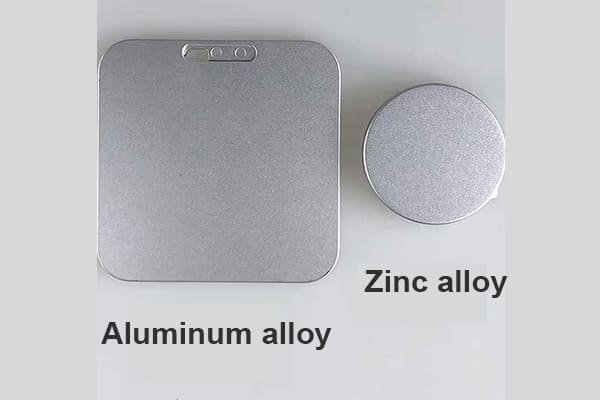
Why we choose 3#zinc alloy for our conceal hinge production?
3# zinc alloy is one of the materials I choose carefully for concealed hinge production because a hinge can fail in small details long before it looks defective. Buyers worry about strength, surface finish, and long-term movement. If the material does not match the hinge structure, production becomes unstable. The right alloy helps solve that.
We choose 3# zinc alloy for our concealed hinge production because it gives us a practical balance of die-casting flow, dimensional precision, toughness, surface-treatment flexibility, durability, and moderate cost. In our factory experience, it is not simply a cheaper option. It is an application-fit material for mass-produced concealed hinges under controlled design and quality testing.
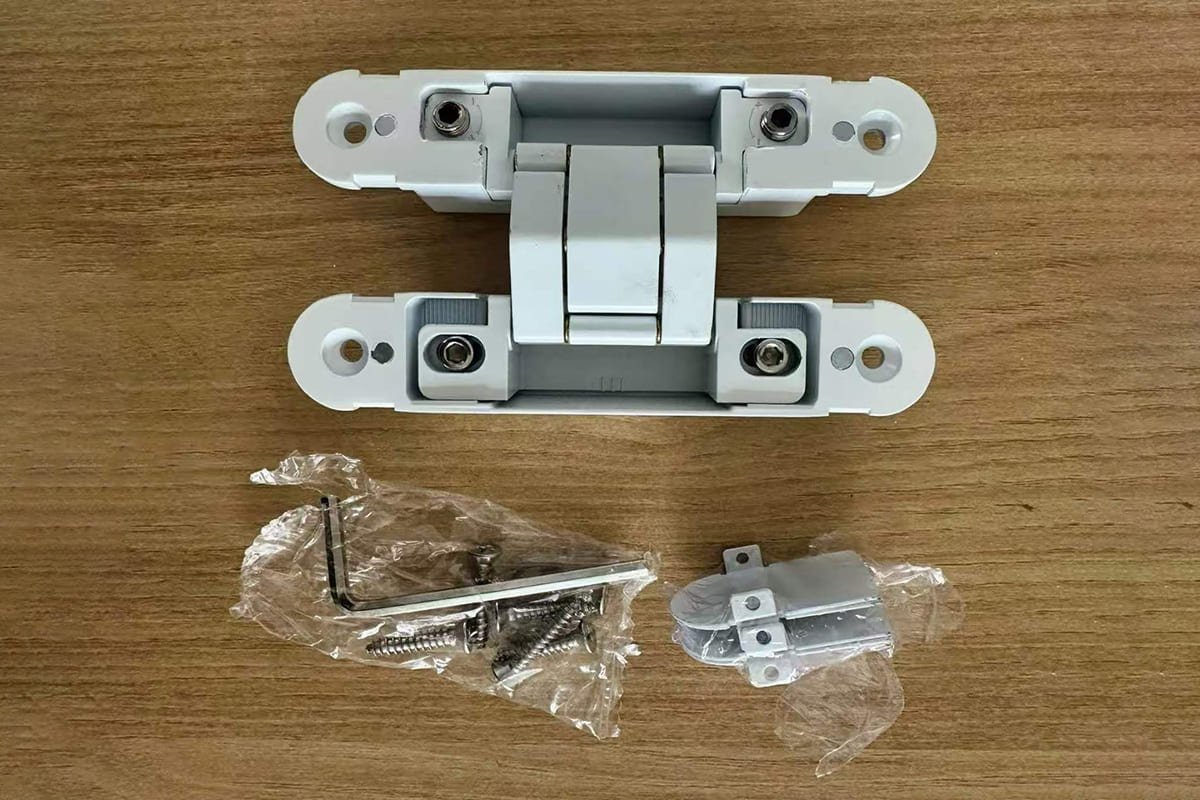
Many purchasers ask me whether a concealed hinge should use zinc alloy, stainless steel, brass, or another material. My answer is always the same: material selection must follow the product structure, production method, target market, and test requirement. Below, I explain how we evaluate 3# zinc alloy from a factory-side view.
Why does 3# zinc alloy fit concealed hinge production?
Concealed hinges look simple after installation, but their internal structure is not simple. Buyers may only see the surface, while factories must control casting shape, assembly clearance, screw position, and movement. If the material flows poorly or shrinks unpredictably, the hinge becomes difficult to produce consistently.
3# zinc alloy fits concealed hinge production because it performs well in die casting, supports complex shapes, and helps maintain stable dimensions in batch manufacturing.1 For our concealed hinge designs, this material allows us to produce precise hinge bodies, controlled assembly positions, and consistent product quality under standard factory inspection.
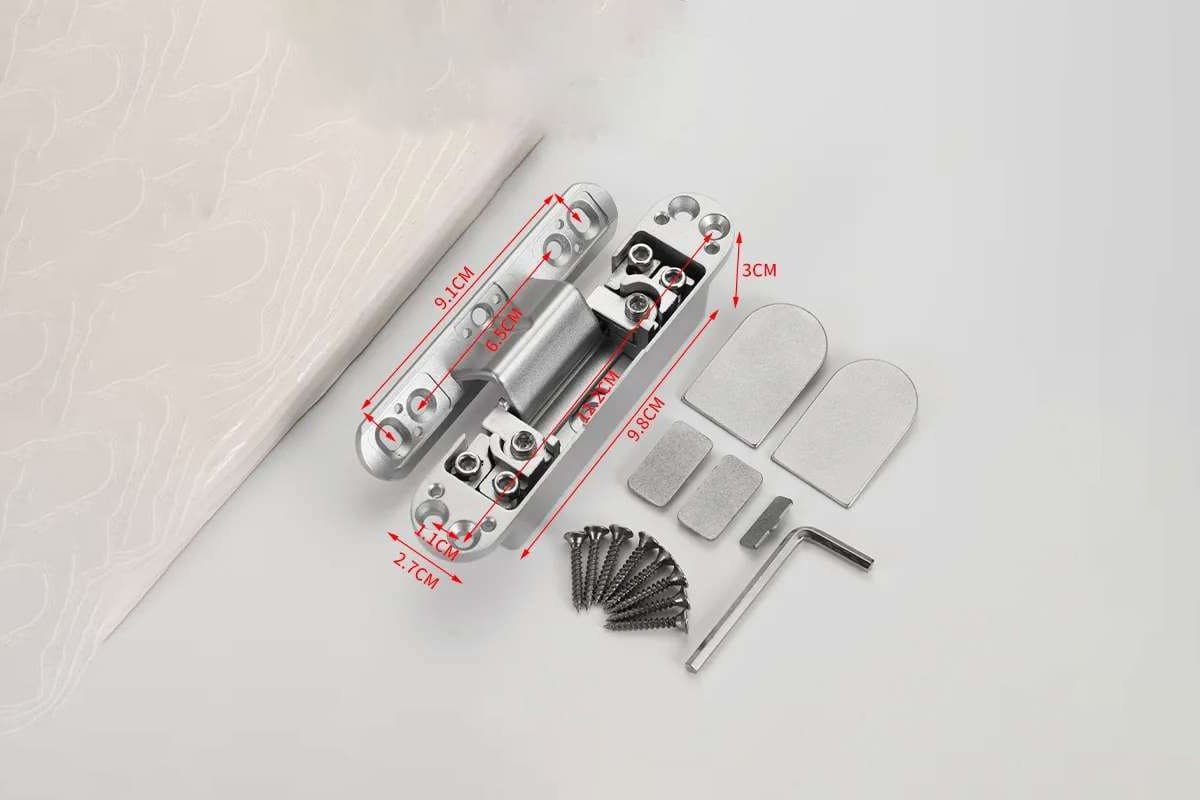
Die-casting performance matters more than many buyers expect
In our factory, I do not look at material only from a catalog description. I look at how it behaves during production. Concealed hinges often include:
- Recessed structures
- Compact hinge arms
- Screw fixing areas
- Adjustment slots
- Decorative visible surfaces
- Hidden load-bearing geometry
These parts need good mold filling and repeatable dimensions. 3# zinc alloy has good die-casting fluidity for this type of product.2 That means the molten material can fill relatively detailed mold cavities more effectively than materials that are harder to cast into small, complex forms.
For door hardware buyers, this point affects more than factory efficiency. It affects whether the hinge can be installed smoothly on the door and frame.
Dimensional stability supports batch consistency3
A concealed hinge is not only a metal part. It is also an assembly product. If one hole shifts slightly, the installer may struggle. If one hinge arm is not consistent, the door gap may be affected. If the decorative cover does not fit properly, the product may look low quality even if the basic metal is strong.
I have seen this issue during batch inspection. A hinge sample can look good, but mass production can expose weaknesses. That is why I value materials that support repeatable manufacturing.
For B2B buyers, this is important because one unstable batch can create many problems:
| Buyer concern | Why it matters in concealed hinges |
|---|---|
| Door factory installation speed | Stable dimensions reduce rework |
| Brand reputation | Consistent appearance protects product image |
| Importer claims risk | Fewer dimensional issues reduce after-sales disputes |
| Project supply | Repeatable production supports large orders |
| Warehouse control | Stable batches simplify replacement and matching |
The material must match the manufacturing method
Some buyers ask whether a “stronger” material is always better. I understand the question, but I do not evaluate hinges that way. A material that is strong in one application may be unsuitable for another process or design.4
For our concealed hinge production, 3# zinc alloy works because it matches:
- Die-casting production
- Complex hinge geometry
- Post-casting machining needs
- Surface treatment requirements
- Batch inspection standards
- Commercial price expectations
This is why I describe the material as application-fit. It is not the best material for every door hardware item. It is not a replacement for all stainless steel or brass hardware. But for many concealed hinge models, 3# zinc alloy gives us the right production foundation.
Is 3# zinc alloy tougher than 5# zinc alloy for concealed hinges?
Many buyers compare alloy numbers and assume a higher number means a better product. That can be misleading. A concealed hinge needs strength, but it also needs toughness, formability, and stable casting behavior. If the material is too brittle for the structure, the hinge may not perform well in real use.
In our concealed hinge production, we choose 3# zinc alloy over 5# zinc alloy for many models because it offers a more suitable balance of ductility, toughness, and casting stability.5 I do not say it is universally better. I say it better fits our hinge structure, production process, and quality-control requirements.
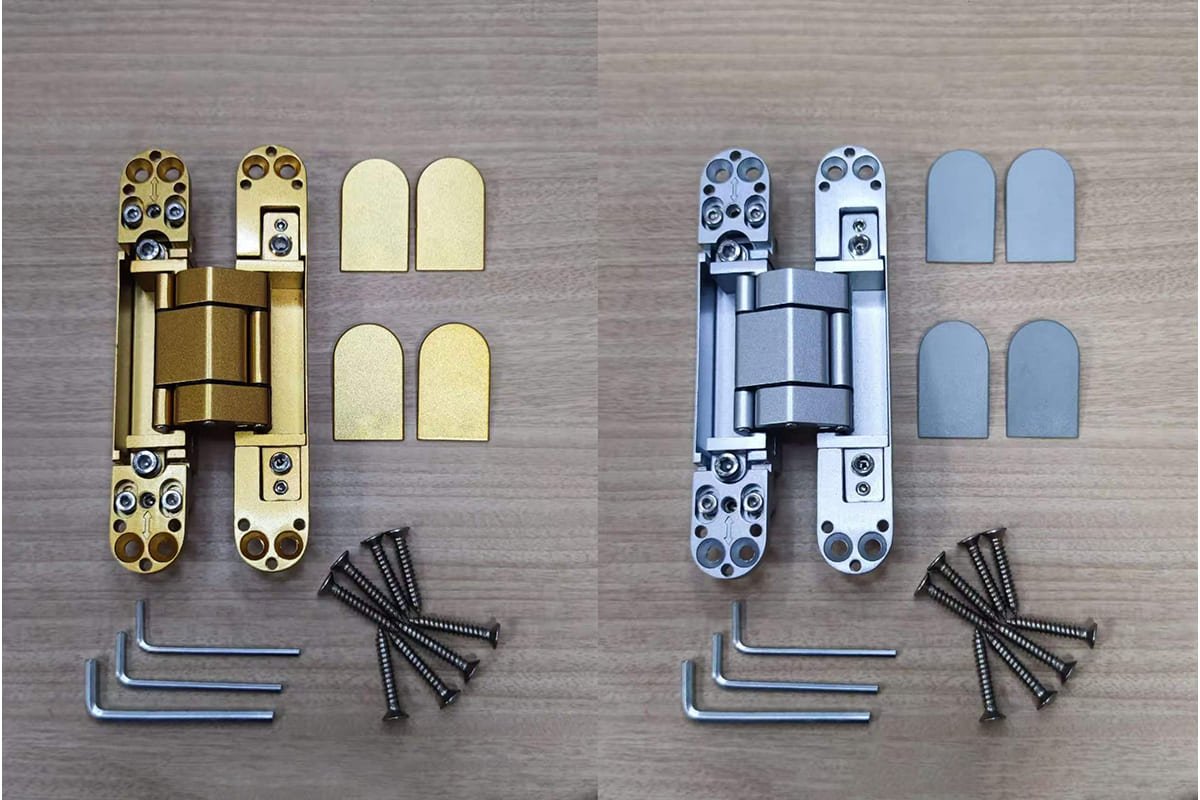
Alloy number is not the same as application quality
When I speak with purchasers, I often hear this question: “Is 5# zinc alloy better than 3# zinc alloy?” My answer is: not automatically.
A material should be judged by how it performs in the final product. For concealed hinges, the evaluation should include:
- Casting success rate
- Dimensional control
- Toughness around screw holes
- Resistance to cracking during assembly
- Stability under repeated opening and closing
- Surface treatment performance
- Long-term appearance in the intended market
5# zinc alloy may be useful in some applications. However, based on our manufacturing experience, 3# zinc alloy gives us a more comfortable balance for concealed hinge bodies that require detailed die-casting and reliable assembly.
Why ductility and toughness matter in hinge structures
A concealed hinge is exposed to repeated mechanical movement.6 It may also face installation stress when screws are tightened. If a casting area is thin, sharp, or close to a fixing point, the material must handle localized stress.
In this situation, ductility and toughness matter.7 A hinge part should not only be hard. It should also tolerate normal assembly and service conditions.
Here is how I usually explain the difference to buyers:
| Evaluation point | Why it matters | Our view for concealed hinges |
|---|---|---|
| Hardness | Helps resist surface deformation | Useful, but not enough alone |
| Ductility | Helps reduce brittle failure risk | Important near fixing zones |
| Toughness | Helps handle repeated stress | Critical for hinge service life |
| Casting flow | Helps form complex details | Very important for concealed hinge bodies |
| Stability | Supports batch consistency | Essential for B2B supply |
We choose based on hinge design, not material ranking
At SDH Hardware, we produce many architectural door hardware products, including Euro mortise locks, stainless steel lever handles, butt hinges, concealed door hinges, Euro brass cylinders, and door accessories. Each product category has its own material logic.
I would not choose a material only because it sounds premium. I also would not choose a material only because it is cheaper. I choose based on:
- Function
- Production process
- Required finish
- Target price level
- Buyer market
- Testing requirement
- Expected installation environment
For concealed hinges, 3# zinc alloy gives us a good middle position. It supports precise die casting, practical durability, and flexible finishes. It also keeps the product commercially realistic for door factories, hardware brands, and bulk wholesalers.
That balance is important. A product that is technically excessive may become too expensive for its market. A product that is only cost-driven may create claims later. A good B2B product must stand between performance and commercial fit.
How does 3# zinc alloy affect concealed hinge durability?
Durability is often misunderstood in door hardware purchasing. Some buyers look only at the material name and make quick conclusions. I prefer to look at the full hinge system. Material matters, but design, casting quality, surface treatment, assembly, and inspection also decide real performance.
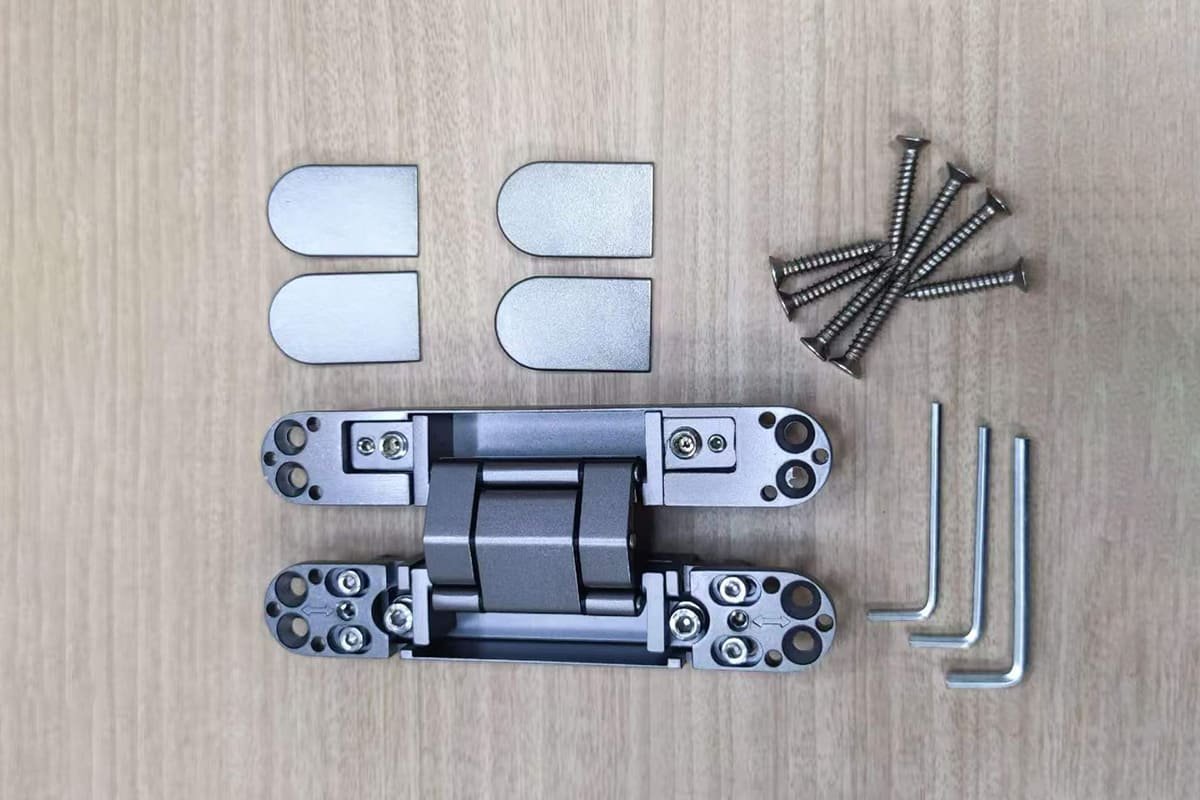
3# zinc alloy can support durable concealed hinges when it is used with suitable product design, controlled die casting, proper surface treatment, and strict quality inspection.8 In our concealed hinge design and testing conditions, our products can pass 200,000-cycle life testing9, but buyers should verify samples and certificates for their own applications.
Durability is a system result
I do not like simple claims such as “this material is durable” without context. In manufacturing, durability comes from a system.
For concealed hinges, that system includes:
- Correct alloy selection
- Reasonable hinge structure
- Accurate die-casting mold
- Stable casting parameters
- Clean post-processing
- Proper surface finishing
- Controlled assembly
- Functional testing
- Finished product inspection
If one part of the system is weak, the final hinge may fail even if the material itself is acceptable. This is why our quality process starts from raw material screening and continues through standardized production supervision and finished product inspection.
What 200,000-cycle life testing means in context
For our concealed hinge production, we use product testing to check whether the hinge can handle repeated opening and closing under our design and quality-control conditions. We can make concealed hinges that pass 200,000-cycle life testing.
However, I want to present this clearly. This is not a universal promise for every zinc alloy hinge in the market. It is also not a claim that 3# zinc alloy alone guarantees 200,000 cycles. The result depends on the specific hinge design, load, installation, testing method, and production control.
For procurement teams, I suggest asking suppliers for:
- Test reports for the exact model
- Product drawings or key dimensions
- Load and door-size recommendations
- Surface treatment specifications
- Inspection standards
- Batch consistency records where available
A good material can only perform well when the hinge design and manufacturing control are also good.
Corrosion resistance depends on surface treatment and use environment
3# zinc alloy has practical corrosion resistance when it is paired with suitable surface treatment. Still, I avoid saying it is “corrosion-proof.” That would be too broad. Door hardware faces different environments, including dry interiors, humid coastal areas, hotel projects, commercial buildings, and residential doors.
Surface treatment plays a major role. For example, electroplating can improve both appearance and practical resistance to environmental exposure.10 But the correct finish should be selected based on market and project needs.
Here is a simple procurement view:
| Application environment | Buyer evaluation focus |
|---|---|
| Dry indoor residential doors | Appearance, smooth movement, basic durability |
| Hotels and apartments | Finish consistency, cycle performance, batch stability |
| Humid regions | Surface treatment quality and corrosion resistance |
| Brand retail products | Visual appeal, packaging, logo options, stable finishing |
| Project supply | Certification documents, testing reports, installation fit |
As a factory, we can support product inspection after order completion. We also recommend that buyers verify documents such as CE certification and fire-rated certification when these are required for a project or regional market. Certifications should be checked against the exact product model, not only the supplier profile.
Why does 3# zinc alloy help with surface finish flexibility?
A concealed hinge may be hidden during use, but buyers still care about its finish. Door factories want matching hardware sets. Hardware brands want attractive product lines. Importers need finishes that match local market preferences. Poor surface quality can make a good hinge difficult to sell.
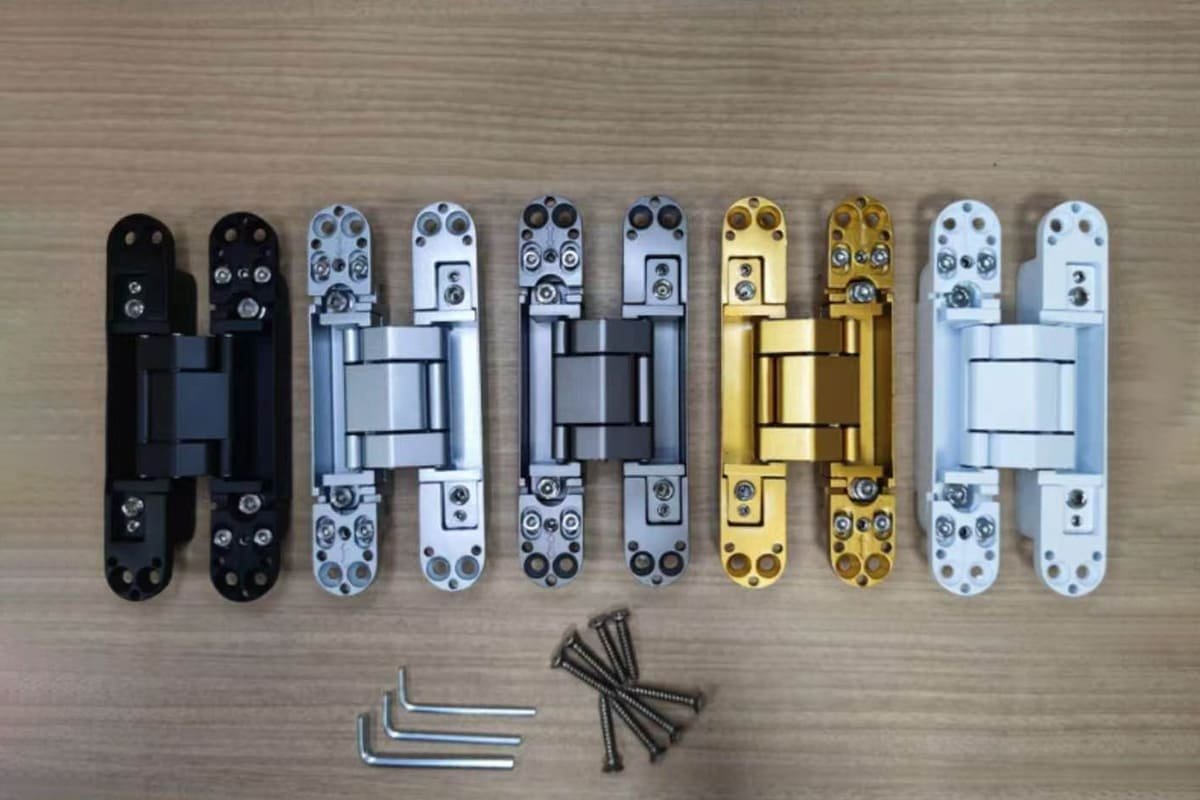
3# zinc alloy supports various electroplating surface treatments11, which makes it useful for B2B concealed hinge programs. It allows us to offer different colors, textures, and finish directions while maintaining practical production efficiency. This helps buyers align concealed hinges with door handles, locks, cylinders, and other architectural hardware.
Finish matching is part of product development
In many projects, concealed hinges are purchased together with other hardware. A buyer may need hinges to match:
- Stainless steel lever handles
- Mortise lock faceplates
- Door accessories
- Cylinders
- Pull handles
- Decorative covers
Even when the hinge is partly hidden, the visible part should not conflict with the door style. This is especially important for hardware brand enterprises and wholesalers who sell complete series.
3# zinc alloy gives us flexibility in surface treatment. Depending on buyer requirements and technical feasibility, surface finishes may include different electroplating colors or decorative treatments. The exact finish should always be confirmed through samples because color can vary between materials, coating processes, and production batches.
Surface quality affects buyer confidence
I have seen buyers make quick judgments from the first few seconds of handling a sample. They check the weight, surface smoothness, edge condition, movement, and finish tone. Even if they later review drawings and certificates, the first impression matters.
For concealed hinges, common visual concerns include:
- Color inconsistency
- Rough casting texture
- Visible pits
- Poor edge finishing
- Scratches after assembly
- Weak packaging protection
Because 3# zinc alloy casts well, it gives us a good base for post-processing and finishing. That does not mean surface quality happens automatically. It still requires mold control, polishing or preparation, electroplating process control, and final inspection.
Customization supports B2B sales
Our customers often need different solutions for different markets. A Middle East buyer may prefer one finish direction. A European customer may focus more on technical documents and standard dimensions. A Southeast Asian wholesaler may prioritize a balanced range of finishes and packaging.
At SDH Hardware, our B2B model supports:
- ODM and OEM orders
- Customized specifications
- Surface treatment adjustment
- Accessory configuration
- Customer stamping or laser logo
- Custom color packaging
- Product drawings after order confirmation
- Inspection service after order completion
This matters because material choice is connected to the whole product program. 3# zinc alloy helps us build concealed hinge lines that are not only functional but also commercially adaptable.
For importers and brand owners, this flexibility can reduce sourcing complexity. Instead of buying separate products from many factories, buyers can develop a coordinated architectural hardware series with one supplier.
Is 3# zinc alloy only chosen because of cost?
Cost always matters in B2B procurement, but it should not be the only reason to choose a concealed hinge material. If the lowest-cost option creates unstable quality, delayed shipments, or after-sales claims, the real cost becomes higher. Buyers need value, not just a low unit price.
3# zinc alloy has a moderate cost, but we choose it mainly because it balances reliable production, stable quality, acceptable durability, flexible surface treatment, and scalable mass manufacturing. In our concealed hinge production, the material helps us meet both technical and commercial expectations for B2B buyers.
Price is only one part of total procurement cost
When I discuss hinge sourcing with buyers, I like to separate unit price from total cost. A lower unit price may look attractive, but it can become expensive if the product creates problems.12
Total procurement cost may include:
- Sample approval time
- Mold adjustment cost
- Rejected batch cost
- Installation rework
- Customer complaints
- Replacement shipments
- Brand reputation loss
- Project delay risk
A stable concealed hinge material helps control these hidden costs. 3# zinc alloy is useful because it supports efficient die casting and repeatable mass production. That helps us keep quality more predictable across batches.
Commercial value comes from balance
For many door factories and wholesalers, the best product is not always the most expensive one. It is the product that performs correctly, installs smoothly, looks acceptable, and can be supplied steadily.
Here is how I see the value balance:
| Factor | Why buyers care | How 3# zinc alloy helps in our production |
|---|---|---|
| Manufacturing stability | Reduces batch variation | Supports die-casting precision |
| Product appearance | Supports market acceptance | Allows flexible surface treatments |
| Mechanical function | Affects daily use | Works with suitable hinge design |
| Cost control | Protects resale margin | Offers moderate material cost |
| Scalability | Supports large orders | Fits mass production methods |
| Customization | Helps brand differentiation | Works with finish and logo options |
This is why I do not describe 3# zinc alloy as a “cheap material choice.” That would be incomplete. I describe it as a balanced material choice.
Supplier capability is as important as material choice
A good material can still produce poor hinges if the supplier lacks experience. Buyers should evaluate the factory, not only the alloy. In our case, SDH Hardware has more than 10 years of specialized production experience in architectural door hardware. We operate independent factory production and have around 150 professional employees.
Our product portfolio includes more than 3,000 architectural hardware articles. This scale matters because concealed hinges are often purchased as part of a wider door hardware program. A buyer may need hinges, locks, handles, cylinders, and accessories to work together.
When selecting a supplier, I recommend checking:
- Factory production capability
- Mold and die-casting control
- Material control process
- Inspection equipment
- Cycle testing ability
- Surface treatment options
- Export experience
- Certification documents
- Long-term customer references
- Sample consistency versus bulk order consistency
We have established long-term cooperation with well-known brands such as HAFELE, DORMAKABA, BKS, ECO, GEZE, and ASSA ABLOY. I mention this carefully because buyers should still evaluate each product and order independently. Brand cooperation can show factory experience, but procurement decisions should be based on samples, drawings, test reports, and order-specific inspection.
Frequently Asked Questions
Is 3# zinc alloy suitable for all concealed hinges?
3# zinc alloy is suitable for many die-cast concealed hinge designs, but it is not automatically suitable for every hinge. The correct choice depends on door weight, hinge structure, installation environment, testing requirement, and target market. I always recommend sample testing and professional evaluation for application-specific decisions.
Can 3# zinc alloy concealed hinges pass life-cycle testing?
In our concealed hinge design and quality-control conditions, our products can pass 200,000-cycle life testing. This result depends on the exact hinge model, structure, load, installation, and test method. Buyers should request test reports and verify whether the tested model matches their purchasing requirement.
Is 3# zinc alloy better than 5# zinc alloy?
3# zinc alloy is not universally better than 5# zinc alloy. For our concealed hinge production, we prefer it because it gives a better balance of ductility, toughness, casting performance, and dimensional stability. The better material is the one that fits the product design and production process.
Does 3# zinc alloy have good corrosion resistance?
3# zinc alloy can provide good practical corrosion resistance when combined with suitable surface treatment. However, it should not be described as corrosion-proof. Buyers should consider humidity, installation location, finish type, and project requirements before confirming the final specification.
What should buyers check before ordering 3# zinc alloy concealed hinges?
Buyers should check samples, drawings, surface finish, cycle test reports, installation dimensions, packaging, and certification documents if required. I also suggest confirming batch inspection standards before mass production, especially for door factories, hardware brands, importers, and wholesalers handling repeat orders.
Conclusion
We choose 3# zinc alloy for concealed hinge production because it gives us the right balance of casting precision, toughness, surface finish flexibility, durability, and moderate cost. I do not treat it as a universal material answer. I treat it as a practical choice under our hinge design, production process, and quality-control system. If you are evaluating concealed hinges for a door factory, hardware brand, or wholesale program, contact SDH Hardware to discuss samples, specifications, surface finishes, and order-specific inspection needs.
"Zamak", https://en.wikipedia.org/wiki/Zamak. Industry technical references on zinc die casting describe zinc alloy 3/Zamak 3 as a common pressure-die-casting alloy valued for castability and dimensional accuracy in detailed components; this supports the material rationale generally, although it does not prove performance for this specific hinge design. Evidence role: general_support; source type: institution. Supports: A neutral die-casting or zinc-industry source should support that zinc alloy 3/Zamak 3 is widely used in pressure die casting and is associated with good castability, dimensional accuracy, and suitability for detailed parts.. Scope note: Contextual support only; the source would not validate the author's specific factory process or hinge model. ↩
"Zamak", https://en.wikipedia.org/wiki/Zamak. Technical literature on zinc die-casting alloys reports favorable castability and mold-filling behavior for zinc alloy 3/Zamak 3, supporting its use in intricate die-cast parts; the evidence is general to the alloy and does not assess the exact cavity geometry of the hinge described here. Evidence role: mechanism; source type: research. Supports: A materials or die-casting reference should explain that zinc casting alloys, including alloy 3, have favorable castability or fluidity for filling intricate die cavities.. Scope note: General alloy behavior may vary with die design, temperature, pressure, and process control. ↩
"Zamak", https://en.wikipedia.org/wiki/Zamak. Die-casting technical standards and zinc-alloy references indicate that zinc pressure die casting can achieve close tolerances and repeatable dimensions, supporting the connection between dimensional stability and batch consistency; this does not independently verify the tolerances achieved by the manufacturer. Evidence role: general_support; source type: institution. Supports: A die-casting standards or technical source should support that zinc die casting can achieve close tolerances and repeatable dimensions when properly controlled.. Scope note: The support is process-level, not a measurement of the author's production batches. ↩
"Material Selection Process", https://depts.washington.edu/matseed/mse_resources/Webpage/Bicycle/Material%20Selection%20Process.htm. Materials-selection teaching resources commonly state that material choice must account for function, processing route, service environment, geometry, and cost rather than strength alone, supporting the article's application-specific framing. Evidence role: expert_consensus; source type: education. Supports: A university materials-selection source should support that material choice depends on multiple requirements, including mechanical properties, manufacturing process, environment, cost, and design constraints.. ↩
"Zamak", https://en.wikipedia.org/wiki/Zamak. Comparative property tables for zinc alloy 3 and zinc alloy 5 show that the alloys differ in strength, hardness, and elongation, supporting the need to select between them by application rather than by alloy number alone; the source would not establish that alloy 3 is superior for every concealed hinge. Evidence role: general_support; source type: research. Supports: A comparative materials source should show relevant mechanical-property differences between zinc alloy 3 and zinc alloy 5, such as strength, elongation, hardness, and casting behavior.. Scope note: The support is comparative and contextual; actual hinge performance depends on design and testing. ↩
"SIIGMATIC - Hardware Durability Testing", https://www.ciilock.com/siigmatic-services/icp-002. Door-hardware durability standards evaluate hinges through repeated operating cycles, which supports treating concealed hinges as components exposed to cyclic mechanical movement in service. Evidence role: definition; source type: institution. Supports: A door-hardware standard should support that hinges are evaluated through repeated opening-and-closing or cyclic durability tests.. Scope note: The standard establishes the testing concept, not the performance of the specific hinge model. ↩
"1 CHAPTER 11 FRACTURE OF MATERIALS 11.1 Brittle vs ...", https://www.usna.edu/NAOE/_files/documents/Courses/EN380/Course_Notes/Ch11_Fracture.pdf. Materials-science references explain that ductility and toughness allow a material to deform plastically and absorb energy before fracture, supporting their relevance in hinge regions subject to localized assembly or service stresses. Evidence role: mechanism; source type: education. Supports: A materials-science source should explain that ductility and toughness help materials absorb energy and resist crack growth or brittle failure under localized stress.. ↩
"Manufacturing and Quality | www.waru.edu", https://www.waru.edu/tools/dau-systems-engineering-brainbook/design-considerations/manufacturing-quality. Manufacturing-reliability literature treats product durability as the result of material selection, component design, process control, surface condition, and quality assurance, supporting the article's system-based durability claim. Evidence role: mechanism; source type: research. Supports: A manufacturing or materials reliability source should support that final component durability is affected by material properties, design geometry, process control, surface condition, and quality inspection.. Scope note: The evidence supports the general mechanism and does not verify this manufacturer's inspection system. ↩
"Understanding BS EN 1935:2002 single-axis hinge grades", https://uk.sfs.com/resources/article/understanding-bs-en-1935. Door-hardware standards such as hinge durability classifications use specified operating-cycle counts to evaluate service endurance, providing context for a 200,000-cycle life-test claim; this does not confirm that the article's specific product has passed such a test. Evidence role: definition; source type: institution. Supports: A recognized door-hardware testing standard should show how cycle counts are used to classify hinge durability and whether 200,000 cycles appears as a standard test level.. Scope note: A separate model-specific test report would be required to verify the manufacturer's claimed result. ↩
"Electroplating 101: How Metal Plating Works", https://formlabs.com/blog/electroplating-metal-plating/. Surface-engineering literature describes electroplated coatings as both decorative and protective layers that can improve corrosion resistance when the coating system is appropriate, supporting the article's claim about appearance and environmental exposure. Evidence role: mechanism; source type: paper. Supports: A coatings or corrosion paper should support that electroplated layers can provide decorative appearance and improved corrosion resistance depending on coating system and environment.. Scope note: Protection depends on coating material, thickness, pretreatment, defects, and service environment. ↩
"Eng_Prop_F_Polishing and Plating - Zinc Die Casting", https://diecasting.zinc.org/properties/en/finishing/eng_prop_f_polishing-and-plating/. Technical finishing guides for zinc die castings note that zinc alloy components are commonly plated or otherwise surface-finished for decorative and protective purposes, supporting the claim that alloy 3 can be used in varied finish programs. Evidence role: general_support; source type: institution. Supports: A zinc die-casting or surface-finishing guide should support that zinc die castings are commonly finished by plating or other decorative/protective treatments.. Scope note: The source would support general finishing compatibility, not color matching or finish quality for a particular production batch. ↩
"Total Cost of Ownership in Global Sourcing Decisions", https://www.zetwerk.com/blog/supply-chain/total-cost-of-ownership-global-sourcing/. Procurement and quality-management literature distinguishes purchase price from total cost of ownership, including costs from defects, rework, returns, and delays, supporting the article's warning against evaluating hinges by unit price alone. Evidence role: general_support; source type: research. Supports: A procurement or quality-management source should support that purchase price is only one component of total cost and that defects, rework, returns, and delays can increase overall procurement cost.. ↩
