
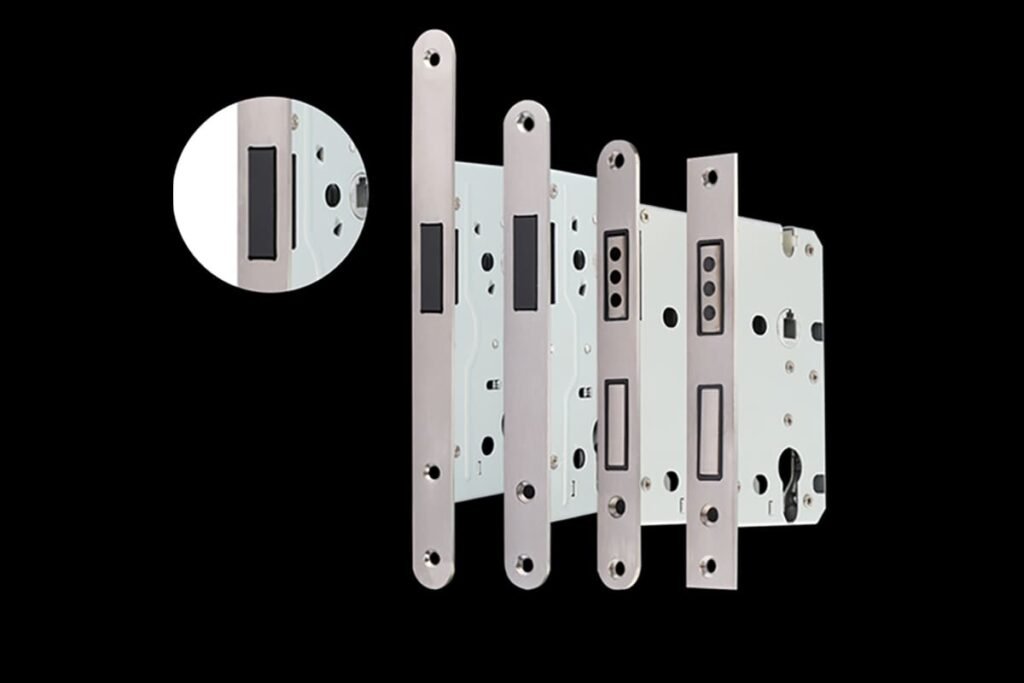
"Choosing the Right Security: European Standard Mortise Lock Body vs. Silent Magnetic Mortise Lock Case for High-End Projects
A European Standard Mortise Lock Body can look similar to a silent magnetic mortise lock case from the outside, but I often see buyers choose the wrong one because they focus only on appearance. That mistake can create noise complaints, installation issues, or worse, compliance risk. I believe the safer path is to match the lock body to the door’s real function.
For high-end projects, I choose a European standard mortise lock body for fire doors, public building doors, and higher-security applications where tested mechanical performance and compliance matter1. I choose a silent magnetic mortise lock case for interior wooden doors where quiet closing, hidden latch design, and clean appearance are more important than certified security performance.
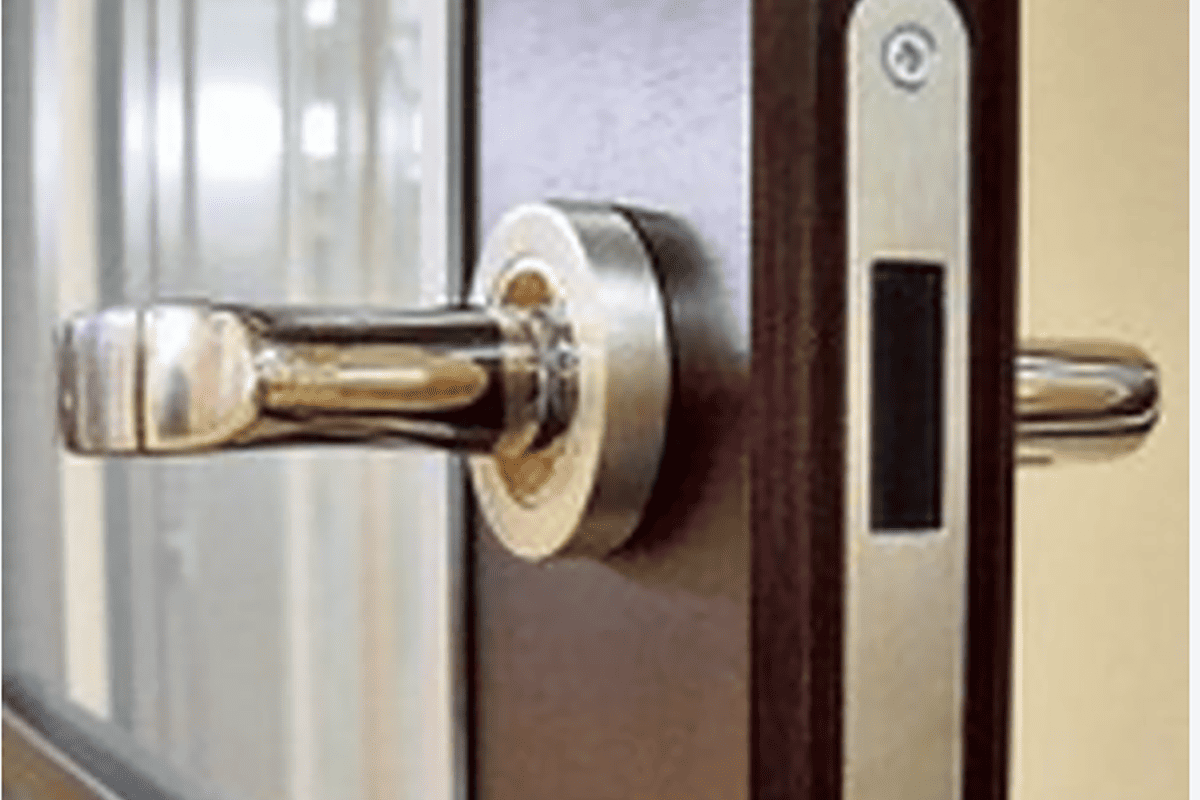
This comparison should not be framed as “old mechanical lock versus modern magnetic lock.” I prefer to frame it as security-driven project doors versus comfort-driven interior doors. Once I define the door’s role, the correct mortise lock body becomes much easier to specify, purchase, and inspect.
When should I choose a European Standard Mortise Lock Body for high-end projects?
A high-end door project can fail when the hardware looks elegant but cannot meet the door’s duty level. I have seen buyers underestimate traffic, fire-door requirements, and public-access risks. In these cases, I usually start with the European Standard Mortise Lock Body because it gives me a clearer path for mechanical performance and compliance evaluation.
A European Standard Mortise Lock Body is usually the better choice for fire doors, public building doors, hotel corridor doors, apartment entrance doors, and high-traffic project doors2. I recommend it when the buyer needs tested durability, stronger mechanical engagement, clear certification documents, and better compatibility with conventional project specifications.
Why I treat the door function as the starting point
I do not start by asking which lock body looks newer. I start by asking what the door must do every day. A lock body for a luxury villa bedroom has a different job from a lock body for a fire-rated stairwell door in a public building.
In procurement discussions, I usually separate doors into three broad groups:
| Door type | Main requirement | Preferred lock body direction |
|---|---|---|
| Fire doors | Fire performance, latch reliability, document verification3 | European standard mortise lock body |
| Public building doors | Durability, traffic resistance, security level | European standard mortise lock body |
| Interior wooden doors | Quiet closing, clean appearance, user comfort | Silent magnetic mortise lock case |
This logic is simple, but it prevents costly mistakes. A door in a school, hospital, office building, hotel corridor, or apartment entrance faces repeated use and possible abuse. The lock body must tolerate impact, alignment changes, and heavy operating cycles. A standard mechanical structure gives buyers a more familiar basis for testing and inspection.
What I check before recommending it
When I inspect or discuss a European Standard Mortise Lock Body, I usually pay attention to these points:
- Latch and deadbolt engagement depth
- Follower strength and handle return feel
- Spring durability
- Case thickness and rivet quality
- Faceplate flatness
- Strike plate matching
- Cylinder compatibility
- Fire-rated or CE documentation, if required
- Security grade documentation, if required
For higher-security doors, EN Grade 3 or Grade 4 testing may be relevant or preferred4. However, I always treat this as a document that must be checked carefully. The buyer should verify the exact standard, grade, test report wording, certificate validity, product model, and whether the tested lock body matches the supplied product.
I never recommend relying on a catalog sentence alone for fire-rated or security-critical projects. I prefer to match the actual certificate to the exact product code.
Why this matters for project risk
A wrong lock body choice can affect more than opening and closing. It can affect handover approval, fire-door inspection, warranty claims, and the reputation of the door manufacturer. For bulk orders, one small mismatch can become thousands of repeated issues.
I have learned that project buyers usually need three things:
- A stable structure that workers can install consistently
- A documented performance level that specifiers can review
- A supplier that can explain the product boundary honestly
At SDH Hardware, our role as a factory is not only to produce mortise lock bodies. We also help buyers understand which structure suits which door type. I still recommend professional project evaluation when the application involves fire safety, public safety, insurance requirements, or local building codes.
When is a silent magnetic mortise lock case the better choice?
A silent door can change the feeling of a room, but I have seen magnetic lock cases used in the wrong place because people associate quiet operation with premium quality. That is risky. A silent magnetic mortise lock case solves a specific comfort and aesthetic problem, and I use it best in the right interior-door environment.
A silent magnetic mortise lock case is usually better for interior wooden doors where the buyer values quiet closing, a concealed latch when the door is open, and a clean modern appearance. I do not treat it as a direct replacement for tested high-security or fire-door lock bodies unless verified certification supports that exact use.
What problem the magnetic latch actually solves
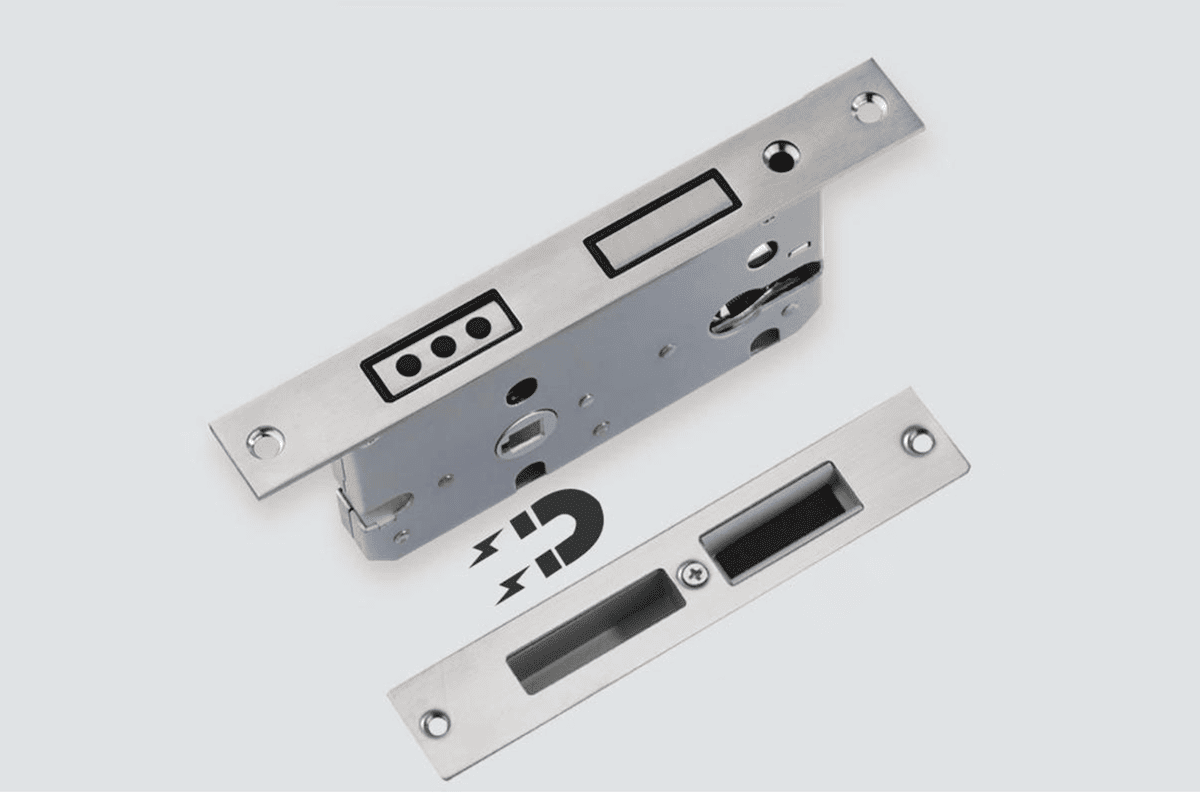
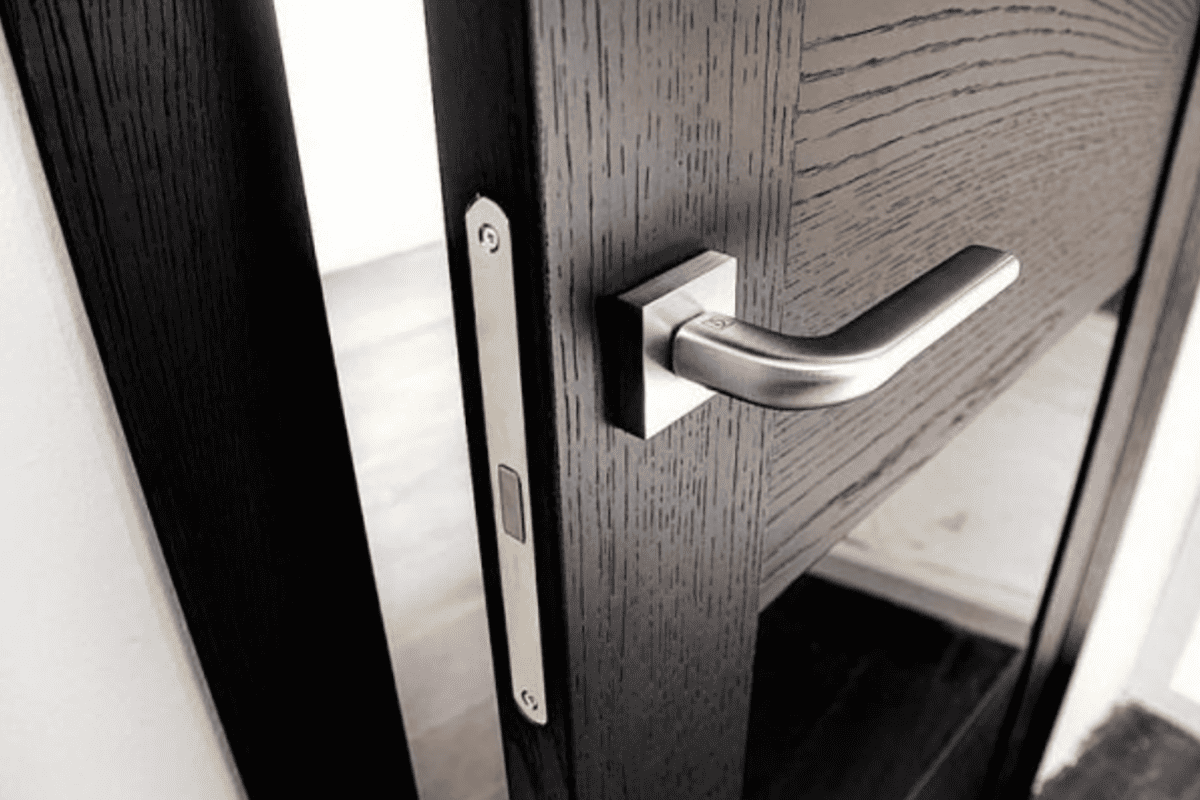
A conventional latch normally protrudes from the lock body when the door is open. A magnetic latch can stay retracted inside the lock body until it approaches the strike plate. Then magnetic force helps pull the latch outward to engage.5
This design can improve the user experience in several ways:
- The door closes with less latch impact noise6
- The door edge looks cleaner when open
- The protruding latch is less likely to contact hands, clothing, or nearby surfaces
- The lock body feels more refined in bedrooms, offices, and hospitality interiors
- The overall door design looks more minimal
I frame these as comfort and appearance advantages. I do not frame them as certified security advantages by default.
Where I normally recommend it
I usually consider a silent magnetic mortise lock case for:
- Luxury apartment interior doors
- Villa bedrooms and bathrooms
- Hotel guestroom interior connecting doors
- Office private rooms
- High-end wooden doors in showrooms
- Residential study rooms
- Interior doors where noise control matters
These are spaces where the user notices sound and touch. A loud latch can feel cheap, even when the door panel is expensive. In those cases, a magnetic latch can help the door feel smoother.
Where I become careful
I become cautious when the same product is proposed for:
- Fire doors
- Exterior entrance doors
- High-security apartment entrance doors
- Public building access doors
- Emergency escape routes
- Heavy-traffic corridor doors
The concern is not that magnetic lock cases are “bad.” The concern is that the project requirement is different. A European Standard Mortise Lock Body may offer a more suitable and verifiable route for mechanical reliability, locking strength, and compliance documentation in those applications.
Key buyer questions for magnetic lock cases
Before I recommend a magnetic lock body, I ask these questions:
| Question | Why I ask it |
|---|---|
| Is the door wooden, metal, or composite? | Magnetic case performance depends on installation conditions. |
| Is the door interior or public access? | Interior comfort needs differ from public security needs. |
| Is fire-rated certification required? | Claims must match verified documents. |
| Is the strike plate installed accurately? | Magnetic latch alignment is very important. |
| Does the project require quiet closing? | This is the strongest use case for magnetic designs. |
In production and quality inspection, I have noticed that magnetic lock cases require very careful dimensional control. If the door gap, strike plate position, or frame alignment is poor, the latch may not engage as smoothly as expected.7 That is why I treat installation quality as part of the product decision, not an afterthought.
How should I compare European Standard Mortise Lock Body security, fire safety, and certification?
A lock body can look strong in a photo, but photos do not prove performance. I often remind buyers that project risk lives in the details: test reports, product codes, material thickness, latch structure, and installation environment. For a European Standard Mortise Lock Body, documentation and mechanical testing deserve serious attention.
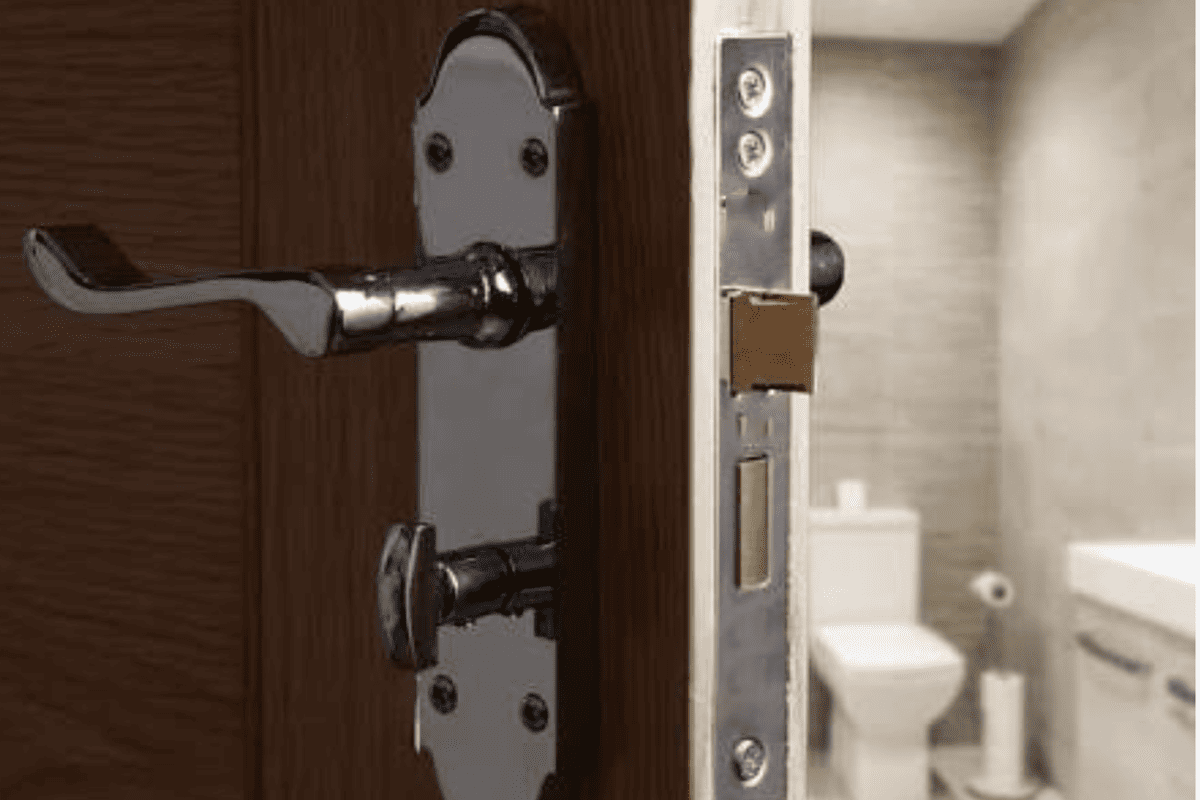
I compare a European Standard Mortise Lock Body by checking its intended door type, mechanical construction, test evidence, fire-rated documents, CE-related documents, security grade references, and supplier quality-control process. For high-security applications, EN Grade 3 or Grade 4 may be relevant, but buyers must verify the exact standard and certificate wording.
I separate “claim” from “verified document”
In hardware sourcing, I see many words used loosely. Terms like “fireproof,” “European standard,” “CE,” and “high security” can mean different things depending on the product and market. I prefer to slow down and ask for proof.
For project procurement, I suggest buyers request:
- Product drawings
- Material specifications
- Applicable test reports
- CE-related documents, if required
- Fire-rated certificates, if required
- Security grade documents, if required
- Installation instructions
- Sample inspection results
- Production batch inspection plan
This process helps the buyer avoid a common trap: approving a lock body based on a general certificate that does not match the exact ordered model.
EN Grade 3 and Grade 4: how I discuss them carefully
For high-security applications, EN Grade 3 or Grade 4 testing may be required or preferred in some project specifications. I mention this carefully because the exact applicable standard depends on the product type, test scope, country, project requirement, and certification wording.
I do not recommend writing “Grade 4” on a specification unless the buyer has verified:
- The exact tested product model
- The standard number and edition
- The test laboratory
- The validity of the certificate
- The scope of use
- The door type used in testing
- The hardware combination tested
- The fire-door relevance, if applicable
This is especially important when door hardware is supplied as a system. A lock body, cylinder, handle, hinge, door closer, and door leaf can all affect final project approval.
What I inspect in the lock body itself
When I review a European Standard Mortise Lock Body, I pay attention to the structure before I discuss marketing. A reliable product usually has consistent machining, stable spring force, smooth follower movement, and precise latch action.
Here is a practical inspection table I often use:
| Inspection point | What I look for | Why it matters |
|---|---|---|
| Case body | No deformation, clean riveting, stable thickness | It supports internal parts under repeated use. |
| Latch bolt | Smooth movement and proper projection | It affects closing reliability. |
| Deadbolt | Firm throw and stable engagement | It affects security performance. |
| Follower | Accurate square hole and strong return | It affects handle operation. |
| Faceplate | Flat surface and clean finish | It affects installation and appearance. |
| Strike plate | Correct matching dimensions | It affects latch engagement and noise. |
| Springs | Stable elasticity | It affects durability and user feel. |
Why factory quality control matters
A certificate is important, but repeatable production is also important.8 A sample can pass inspection, while batch production can still create problems if the factory lacks process control.9
At SDH Hardware, our production process focuses on raw material screening, standardized production supervision, and finished product inspection. I mention this not as a substitute for third-party verification, but as a practical reason buyers should evaluate factory systems. A good supplier should explain how it controls dimensions, surface treatment, assembly, packaging, and final inspection.
For a bulk order, I recommend buyers request pre-shipment inspection.10 I also recommend sample approval before mass production. This is especially useful when the order includes custom faceplates, private logos, special finishes, or region-specific accessories.
What installation details affect a silent magnetic mortise lock case in interior wooden doors?
A silent magnetic mortise lock case can feel excellent when it is installed well, but it can feel disappointing when the door gap or strike plate is wrong. I have seen this happen even when the lock body itself was acceptable. The product depends on precise coordination between the lock body, door leaf, and frame.
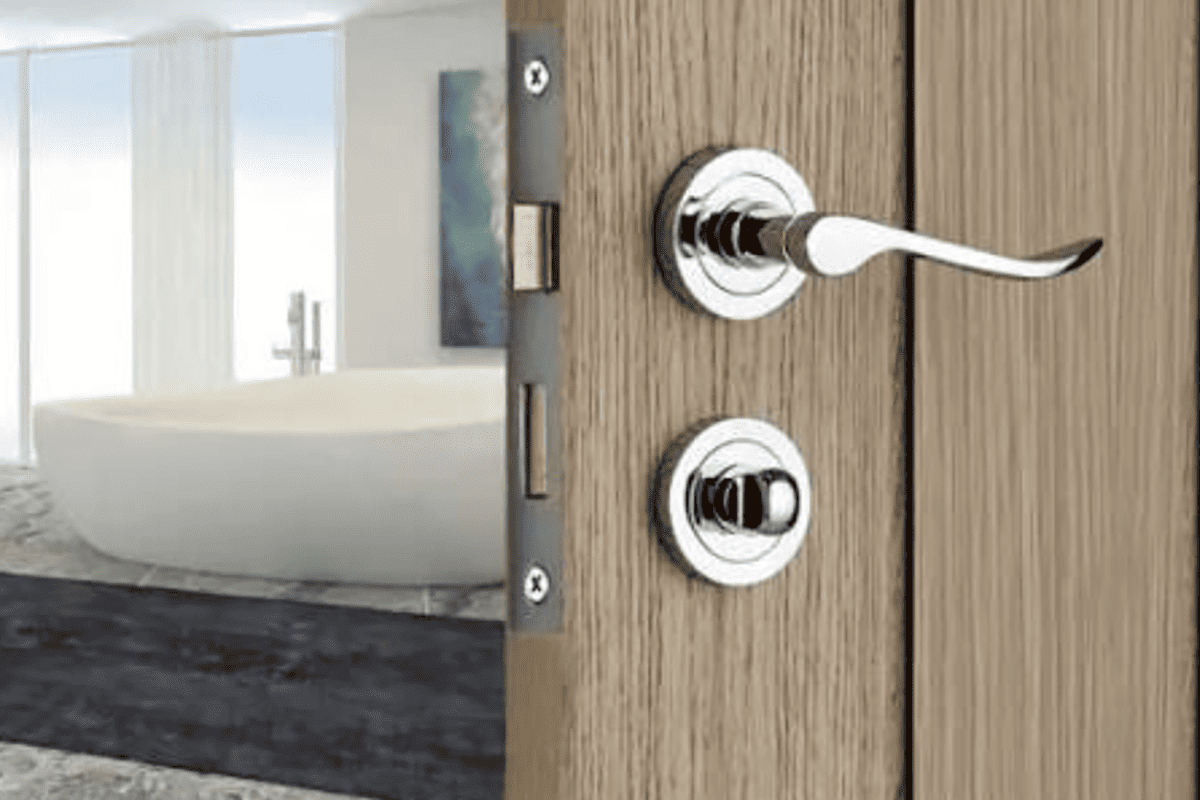
A silent magnetic mortise lock case depends heavily on accurate mortising, correct door gap, proper strike plate positioning, stable wooden door structure, and clean frame alignment. I recommend it when the installer can control these details and when the project goal is quiet, clean, interior-door operation.
Why installation tolerance matters more
A traditional latch can sometimes tolerate small alignment errors because it already protrudes from the lock body. A magnetic latch behaves differently. It often remains hidden until it meets the magnetic strike area. This makes alignment more sensitive.
In practical terms, installers should pay attention to:
- Door gap consistency
- Lock case mortise depth
- Faceplate flushness
- Strike plate height
- Frame stability
- Door leaf warping
- Screw tightness
- Magnet position
- Handle and spindle alignment
If the strike plate is too high, too low, too far, or too close, the magnetic latch may not engage cleanly. If the wooden door warps after installation, the original alignment can change.11 This is why I ask buyers about door material, humidity conditions, and installation skill before I recommend a magnetic lock case for a large project.
Best-use conditions
I usually see better results when these conditions are present:
| Condition | Preferred situation |
|---|---|
| Door material | Stable interior wooden door |
| Environment | Indoor, controlled humidity |
| Traffic level | Low to medium traffic |
| User priority | Quiet closing and clean appearance |
| Installer skill | Accurate mortising and frame alignment |
| Compliance demand | No unsupported fire or security claim |
This does not mean magnetic lock cases are fragile. It means their advantage depends on correct use. I believe buyers make better decisions when they respect that boundary.
Safety-detail advantage, not security substitute
The concealed latch design can reduce accidental scratching or contact because the latch is not sticking out when the door is open. I like this feature in homes, hotels, and offices where people frequently pass close to open doors.
However, I would describe this as a user-experience and safety-detail advantage. I would not describe it as a substitute for certified security performance. If a door requires higher forced-entry resistance, public-building durability, or fire-door compliance, I return to verified testing and project specifications.
What I ask from the door factory
When a door factory plans to use silent magnetic lock bodies in bulk, I suggest a simple pilot process:
- Install samples on real door panels
- Check opening and closing feel
- Measure actual door gap
- Confirm strike plate position
- Test after surface finishing
- Repeat after packaging and transport simulation if possible
- Collect feedback from installers
This small process can prevent large rework. It also helps the buyer decide whether the silent effect is stable enough for the project’s production conditions.
How do I build a procurement checklist for European Standard Mortise Lock Body vs. Silent Magnetic Mortise Lock Case?
Procurement teams often receive beautiful samples, but they must approve products for hundreds or thousands of doors. I have learned that a clear checklist helps buyers avoid emotional decisions. A European Standard Mortise Lock Body and a silent magnetic lock case should be compared by project logic, not only by catalog photos.
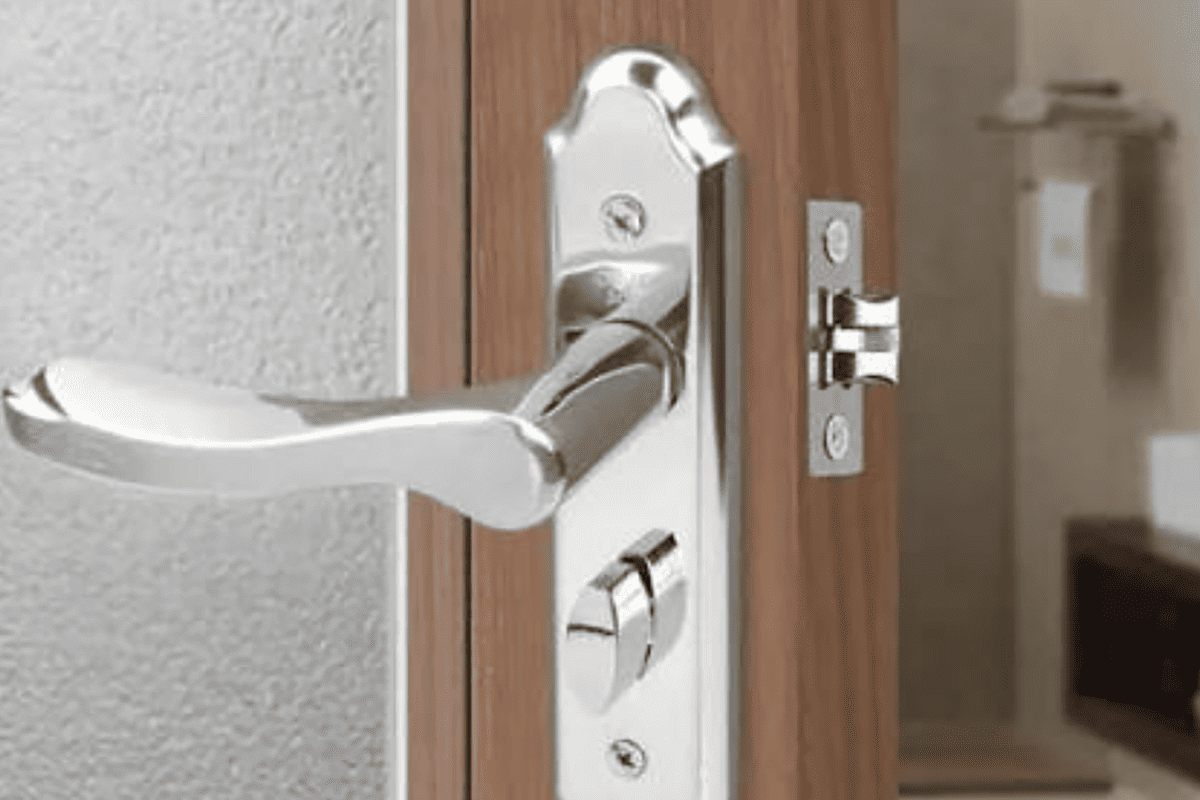
I build the checklist around door function, compliance demand, traffic level, security requirement, installation environment, user experience, document verification, and supplier quality control. I choose a European Standard Mortise Lock Body when safety and compliance dominate, and I choose a silent magnetic mortise lock case when interior comfort and aesthetics dominate.
Step 1: Define the door before the lock
I always start with the door schedule. The lock body follows the door’s job. It should not be chosen in isolation.
Buyers should classify each door by asking:
- Is the door fire-rated?
- Is the door used by the public?
- Is the door an entrance door or interior door?
- Is the traffic level low, medium, or high?
- Is quiet closing a major requirement?
- Does the project specification mention EN grades, CE documents, or fire-rated documents?
- Does local regulation require a specific tested hardware set?
- Will the lock be used with a cylinder, bathroom turn, or privacy function?
Once these answers are clear, the choice becomes easier.
Step 2: Match product type to project priority
Here is the selection logic I usually recommend:
| Project priority | Better starting point | Reason |
|---|---|---|
| Fire-door compliance | European standard mortise lock body | It usually provides a clearer route for tested fire-door hardware evaluation. |
| High-security access | European standard mortise lock body | It can be evaluated against stronger mechanical and security requirements. |
| Public building durability | European standard mortise lock body | It suits high-frequency operation and conventional project specifications. |
| Quiet bedroom door | Silent magnetic mortise lock case | It reduces closing noise and improves comfort. |
| Minimal interior appearance | Silent magnetic mortise lock case | The latch can stay hidden when the door is open. |
| Bulk wooden interior doors | Depends on installation control | Magnetic cases need accurate door and frame preparation. |
This table does not replace project engineering review. It gives buyers a practical starting point.
Step 3: Request the right supplier documents
For a European Standard Mortise Lock Body, I usually request:
- Technical drawing
- Material description
- Function options
- Faceplate and backset dimensions
- Latch and deadbolt details
- Certificate copies, where relevant
- Test reports, where relevant
- Surface treatment samples
- Packaging details
- Inspection report format
For a silent magnetic mortise lock case, I request:
- Installation drawing
- Strike plate specification
- Door gap recommendation
- Sample test video if available
- Noise comparison if available
- Door material recommendation
- Function options
- Finish and faceplate details
These requests help the buyer compare real project suitability. They also reveal whether the supplier understands the product deeply.
Step 4: Evaluate the supplier, not only the lock
A lock body is a small component, but it can affect the entire door set. I advise buyers to evaluate the factory’s manufacturing and quality-control system.
Important supplier questions include:
- Does the factory produce the lock body in-house or outsource it?
- Can the factory support OEM or ODM dimensions?
- Can the supplier provide consistent finishes across handles, hinges, cylinders, and accessories?
- Can the factory provide product drawings after order confirmation?
- Can the supplier support inspection after production?
- Can the supplier explain certification boundaries honestly?
SDH Hardware operates as a factory-direct architectural door hardware manufacturer in China. We produce and supply Euro mortise locks, stainless steel lever handles, butt hinges, concealed door hinges, Euro brass cylinders, and door accessories. I see value in one-stop sourcing because matching hardware families can reduce coordination problems for door factories and wholesalers.
However, I still encourage buyers to verify documents, inspect samples, and confirm local requirements. A responsible supplier should welcome those checks.
Frequently Asked Questions
Is a silent magnetic mortise lock case more secure than a European standard mortise lock body?
Not automatically. A silent magnetic mortise lock case is mainly valued for quiet closing and clean interior-door appearance. A European Standard Mortise Lock Body is usually a better starting point when the project requires tested mechanical security, public-building durability, or fire-door compliance.
Can I use a silent magnetic mortise lock case on a fire door?
I would not recommend it unless the exact product has verified fire-rated certification for that application. Fire-door hardware must be reviewed as part of the full door assembly and local compliance requirement.12 Buyers should check the certificate, test report, model number, and scope before approval.
When should I ask for EN Grade 3 or Grade 4 testing?
I would ask about EN Grade 3 or Grade 4 when the project involves higher-security doors, public access, or a specification that requires graded performance. The exact standard and certificate wording must be verified before procurement because grade claims are not universal.
Why do magnetic mortise lock cases need accurate installation?
Magnetic latch operation depends on the relationship between the lock body and strike plate. If the door gap, frame alignment, or mortise position is wrong, the latch may not engage smoothly. I recommend sample installation before bulk use on wooden interior door projects.
What should I request from a mortise lock supplier before placing a bulk order?
I would request product drawings, samples, material details, finish samples, inspection standards, packaging details, and relevant certificates or test reports. For project doors, I also recommend confirming door type, traffic level, lock function, and installation conditions before final approval.
Conclusion
I believe the best choice between a European Standard Mortise Lock Body and a silent magnetic mortise lock case depends on the door’s real job. I choose European standard mortise lock bodies for fire doors, public building doors, high-traffic doors, and higher-security applications where tested performance and documents matter. I choose silent magnetic lock cases for quiet, aesthetic interior wooden doors. If you are sourcing for a project, contact SDH Hardware with your door type, drawings, certification needs, and target market, and I will help you evaluate the right lock body direction.
"Classification Code for Mechanically Operated Lock", https://www.dirock.com/EN12209-Classification-Code-for-Mechanically-Operated-Lock-id43533806.html. EN 12209 provides a classification and test framework for mechanically operated locks and latches, supporting the use of documented mechanical-performance criteria when specifying mortise lock bodies for regulated or high-duty doors. Evidence role: general_support; source type: institution. Supports: A source should show that European mechanical lock standards classify locks by testable attributes such as durability, fire/smoke suitability, safety, corrosion resistance, and security.. Scope note: This would support the general standards basis for evaluation, not prove that any specific lock body in the article has been tested or certified. ↩
"Guide to Selecting Code Approved Door Latching ...", https://www.lhcaz.gov/DocumentCenter/View/182/Guide-to-Selecting-Code-Approved-Door-Latching-Hardware-for-Exit-Doors-PDF. Building-hardware and fire-door standards treat locks and latches as performance-critical components, particularly where doors are used for fire separation, public access, or repeated operation. Evidence role: expert_consensus; source type: institution. Supports: A source should support that public, fire-rated, and high-traffic doors are commonly governed by performance-based hardware requirements, including durability and latching reliability.. Scope note: This is contextual support for the application categories; the exact product choice still depends on the applicable local code and tested hardware set. ↩
"INSPECTION CHECKLIST FOR SWINGING DOOR WITH ...", https://statefire.llr.sc.gov/osfm/forms/enforcement/Fire%20Door%20Inspection%20Checklist%20and%20Form.pdf. Fire-door standards such as NFPA 80 address fire doors as assemblies and require appropriate latching hardware so that the door can remain closed when needed for fire protection. Evidence role: mechanism; source type: institution. Supports: A source should show that fire doors depend on latching hardware to remain closed during fire conditions and that fire-door assemblies require inspection or documentation.. Scope note: This supports the importance of latch reliability for fire doors but does not identify which mortise lock model is acceptable for a particular jurisdiction. ↩
"EN 12209 Classification Code Explained for Mortise Lock ...", https://toptekaccess.com/en-12209-classification-code-explained-for-mortise-lock-buyers/. The EN 12209 classification system includes graded performance categories for mechanically operated locks, so references to Grade 3 or Grade 4 should be tied to the exact standard, edition, and tested product. Evidence role: definition; source type: institution. Supports: A source should define the grading system used in the relevant European lock standard and explain what Grade 3 or Grade 4 indicates.. Scope note: This citation would clarify the grading framework, but it would not verify that a particular supplied lock body has a valid Grade 3 or Grade 4 certificate. ↩
"How do automatic door latch bolts work in Budapest and ...", https://www.facebook.com/groups/thedullclub/posts/3150177745187323/. Technical descriptions and patent literature for magnetic latch bolts describe designs in which the latch remains retracted until magnetic interaction with the strike or keeper draws it outward into engagement. Evidence role: mechanism; source type: other. Supports: A source should describe the operating principle of a magnetic latch bolt that is actuated by proximity to a magnetic keeper or strike plate.. Scope note: Patent or technical literature supports the mechanism generally, but individual commercial magnetic lock cases may use different internal designs. ↩
"Magnetic Composite Door Latch to Reduce Dryer Noise", https://eureka.patsnap.com/triz-case/magnetic-composite-door-latch-dryer-noise. Technical descriptions of magnetic latch mechanisms commonly identify reduced latch impact or quieter closing as an intended functional effect of keeping the latch retracted until it reaches the strike. Evidence role: mechanism; source type: other. Supports: A source should support that concealed or magnetic latch mechanisms are intended to reduce impact or rattling noise compared with protruding spring latches.. Scope note: This supports the design rationale, not a measured decibel reduction for the specific lock case discussed in the article. ↩
"How do I figure out my door latch and strike plate alignment", https://diy.stackexchange.com/questions/124846/how-do-i-figure-out-my-door-latch-and-strike-plate-alignment. Technical installation literature for latch hardware emphasizes that proper engagement depends on alignment between the latch and strike, a dependency that is especially relevant where magnetic attraction initiates latch movement. Evidence role: mechanism; source type: other. Supports: A source should explain that latch engagement depends on the relative position of the lock body, latch bolt, strike plate, and door gap.. Scope note: This is contextual installation support and may not specify tolerance values for every magnetic mortise lock design. ↩
"NIST Quality System", https://www.nist.gov/nist-quality-system. Quality-management standards such as ISO 9001 emphasize process control, monitoring, and corrective action as means of achieving consistent conformity in production. Evidence role: expert_consensus; source type: institution. Supports: A source should support the principle that quality management systems emphasize controlled processes and consistent conformity of products.. Scope note: This supports the general need for repeatable manufacturing control and does not assess the quality system of any named supplier. ↩
"Process or Product Monitoring and Control", https://www.nist.gov/publications/nistsematech-engineering-statistics-handbook-chapter-6-process-or-product-monitoring. Statistical quality-control guidance distinguishes lot or sample inspection from process control, noting that samples provide limited evidence and that stable processes are needed for consistent batch conformity. Evidence role: mechanism; source type: government. Supports: A source should explain the distinction between sample inspection and ongoing process control in manufacturing quality assurance.. Scope note: This supports the quality-control principle rather than providing evidence about any specific lock-body factory. ↩
"Pre-shipment inspection", https://en.wikipedia.org/wiki/Pre-shipment_inspection. International quality-inspection frameworks recognize pre-shipment or lot inspection as a method for checking conformity before goods are released for delivery. Evidence role: general_support; source type: institution. Supports: A source should support pre-shipment or lot inspection as a recognized quality-control practice for goods before delivery.. Scope note: This supports pre-shipment inspection as a general control practice, not as a substitute for product certification or full process auditing. ↩
"Drying and control of moisture content and dimensional changes", https://research.fs.usda.gov/treesearch/7143. Wood-science references such as the USDA Wood Handbook explain that changes in wood moisture content can cause shrinkage, swelling, and warping, which can alter the alignment of door hardware after installation. Evidence role: mechanism; source type: government. Supports: A source should explain that wood changes dimensions with moisture content and can warp, affecting fitted components.. Scope note: This supports the wood-movement mechanism generally; actual movement depends on species, construction, finish, humidity, and installation conditions. ↩
"Fire Doors and NFPA 80 FAQs", https://www.nfpa.org/news-blogs-and-articles/blogs/2025/04/11/fire-doors-faqs. Fire-door guidance and standards treat the door leaf, frame, and hardware as an assembly, meaning that lock bodies and latches must be compatible with the tested or approved fire-door configuration. Evidence role: expert_consensus; source type: institution. Supports: A source should support that fire doors are assessed as assemblies or doorsets, including compatible hardware.. Scope note: This supports the assembly-level compliance principle; local regulations and the specific fire test certificate determine final acceptability. ↩
