
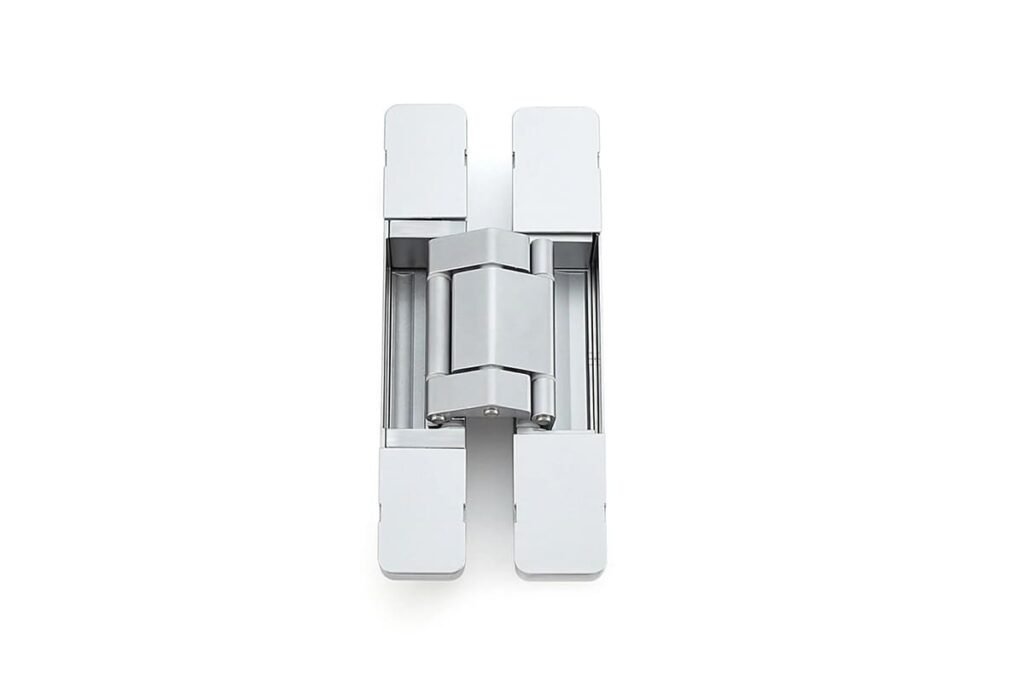
Determine door hinge & DIN direction
Door hinge & DIN direction mistakes can turn a correct-looking order into the wrong hardware delivery. The risk grows when buyers use local terms like “left opening” or “right opening” without drawings. I usually solve this by checking the DIN reference, the door swing, and the actual hinge structure before confirming SKUs.
To determine door hinge & DIN direction, first define the door according to the DIN 107 left/right framework, then confirm whether the door opens inward or outward from the chosen viewing side, and finally check whether the hinge type is universal or handed. The correct answer depends on both door movement and hinge construction.
Many buyers start by asking, “Is the hinge on the left or right?” That question helps, but it is not enough for B2B ordering. The better question is: Which door direction standard are we using, and which hinge structure are we buying?
How should buyers determine door hinge & DIN direction from the DIN rule?
Door hinge & DIN direction can become confusing when different markets use different naming habits. One buyer may say “left-hand door,” while another may say “DIN left,” and both may be thinking from different sides of the opening. This creates specification risk before production even starts.
The DIN method gives buyers a shared reference point. In practical procurement, I use DIN 107 as the framework for defining left and right, but I still ask customers to verify the exact project standard, drawing view, and local terminology before confirming hinge direction or related hardware.
Why DIN direction is a reference, not a guess
DIN 107 is commonly used in European-style door hardware discussions to define whether a door is DIN left or DIN right.1 I avoid quoting the exact standard wording unless the clause has been checked directly, but the practical purchasing point is simple:
The door must be judged from a defined viewing position, not from a casual site description.2
In factory communication, I often see three different phrases used for the same opening:
- “Left opening”
- “Left-hand door”
- “DIN left”
These phrases are not automatically equivalent.3 They may come from different viewing positions or trade habits. For example, a door factory may describe the direction from the pull side, while an installer may describe it from the push side. A hardware importer may translate a local term into English and assume it matches DIN. That assumption can lead to wrong hinge, lock, or handle preparation.
A practical DIN direction check
When I help buyers clarify door hinge direction, I normally ask for three things:
- A simple door elevation drawing
- The viewing side used in the drawing
- The swing direction: inward or outward
This table shows how I like to organize the conversation before confirming hardware:
| Check item | Why it matters | Procurement risk if ignored |
|---|---|---|
| Viewing position | Defines left/right consistently | Buyer and factory may judge from opposite sides |
| Swing direction | Confirms push/pull and opening arc | Lock latch, closer, or hinge selection may be wrong |
| Hinge position | Shows visible hinge side or concealed axis | Handed hinges may be ordered incorrectly |
| Hardware type | Determines whether handedness matters | Universal and handed products may be confused |
| Drawing revision | Prevents outdated confirmation | Bulk production may follow an old direction |
DIN direction should connect with the full hardware set
In B2B door hardware orders, DIN direction should not be treated as an isolated label. It often affects several components, including:4
- Mortise lock latch direction
- Lever handle operation
- Door closer arm arrangement
- Concealed hinge installation
- Rising hinge direction
- Panic exit device configuration
- Frame preparation and milling
At SDH Hardware, we often receive inquiries from door factories and hardware brands that include only a product code and a quantity. In those cases, I prefer to request a drawing before confirming. This extra step may feel slow, but it prevents expensive mistakes when the order moves into production.
The key point is this: DIN direction is a shared language for door orientation, but the final hardware selection still depends on the product structure.
What are the four door opening direction scenarios?
Door opening direction is not just “left” or “right.”5 A door can open inward or outward, and the hinge side can appear different depending on whether the viewer stands outside, inside, on the push side, or on the pull side. That is why four basic scenarios must be checked.
The four practical scenarios are: left-side hinge opening inward, right-side hinge opening inward, left-side hinge opening outward, and right-side hinge opening outward. Buyers should define the viewing side first, then record the hinge side, swing path, and push/pull relationship before confirming door hinge & DIN direction.
Why “left opening” can be dangerous
I have seen buyers write “left opening” in an email and assume the meaning is clear. It rarely is. The phrase may describe:
- The side where the hinge is visible
- The side where the door leaf moves
- The hand used to pull the door
- The direction seen from the corridor
- The direction shown on an architectural drawing
For a single sample order, the mistake may be manageable. For a 5,000-set project, it can become a costly production and installation issue.
The four scenarios in simple terms
For procurement evaluation, I suggest buyers build a small direction chart before placing a bulk order:
| Scenario | Viewing reference | Hinge location | Door swing | Typical question to confirm |
|---|---|---|---|---|
| 1 | Defined outside or project side | Left | Opens inward | Is the drawing judged from outside? |
| 2 | Defined outside or project side | Right | Opens inward | Is this DIN left/right under the project rule? |
| 3 | Defined outside or project side | Left | Opens outward | Does outward swing change the required hardware? |
| 4 | Defined outside or project side | Right | Opens outward | Is the hinge or lock handed? |
The table does not replace DIN 107. It helps the buyer and manufacturer discuss the same door before product selection.
Push side and pull side also matter
Some hardware is more sensitive to push/pull direction than basic butt hinges. For example:
- A door closer may require different arm installation.
- A panic exit device must match the escape direction.
- A mortise lock may need latch reversal or correct handing.
- A rising hinge may lift only in one swing direction.
- An offset pivot hinge may require left or right selection.
So, when I clarify door hinge direction with customers, I do not stop at the hinge side. I ask:
- Which side is the public side or corridor side?
- Does the door open into the room or out of the room?
- Is the hinge visible from the reference side?
- Is the door single-leaf or double-leaf?
- Does the hardware include lock, handle, closer, or panic device?
Double doors need extra attention
Double-leaf doors add another layer. The active leaf and inactive leaf must be defined before hardware direction is confirmed.6 A pair of doors may include:
- Active leaf lock case
- Inactive leaf flush bolt
- Astragal or rebated meeting stile
- Different hinge quantities per leaf
- Different closer or coordinator requirements
For B2B buyers, the safest practice is to confirm direction at the door set level, not just the individual hinge level. A complete door set includes the leaf, frame, hinge, lock, handle, cylinder, accessories, and installation conditions.
This is why I prefer drawings over text descriptions. A two-minute sketch often prevents a two-week correction process.
Which hinge types need left or right confirmation?
Not all hinges need left or right confirmation, but some absolutely do. This is where many purchasing mistakes happen. Buyers sometimes assume every hinge is universal. Others assume every hinge is handed. Both assumptions can be wrong.
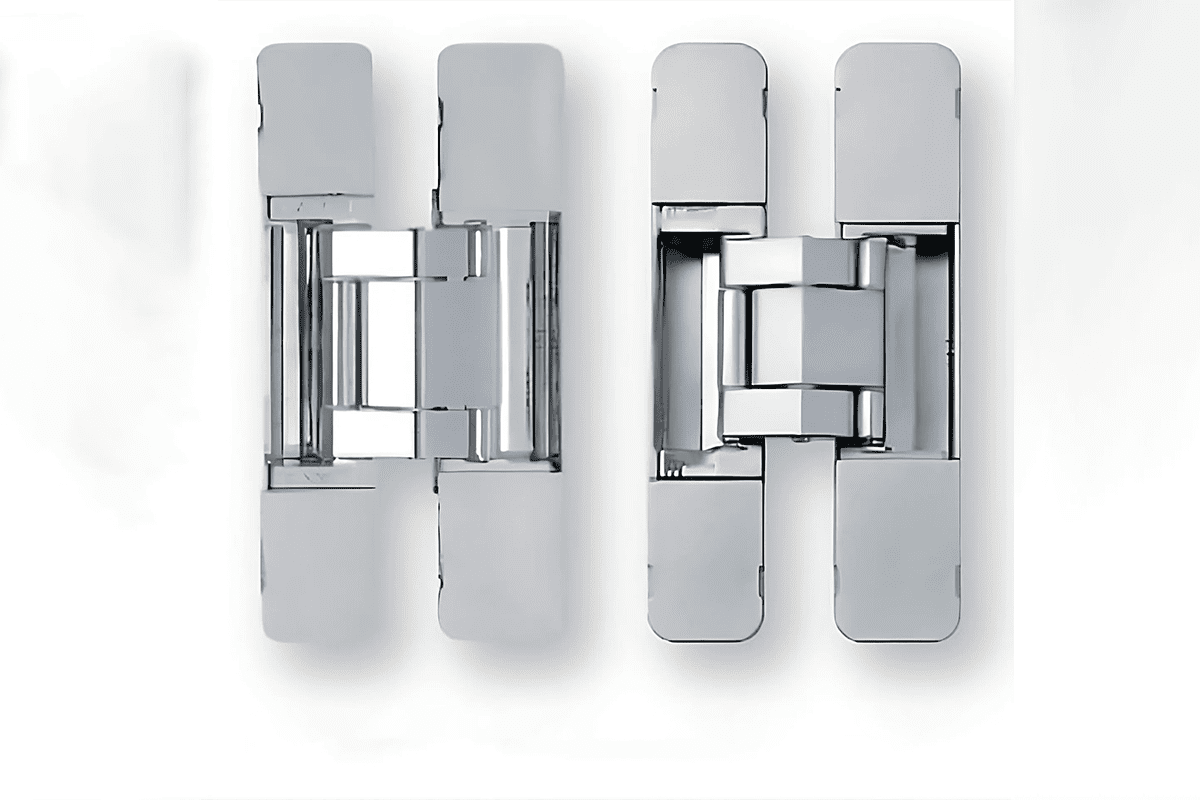
The correct hinge direction depends on hinge structure. Many butt hinges are universal, some concealed hinges are non-handed, rising hinges are usually directional, and offset pivot hinges often require left/right selection. Buyers should confirm the hinge type before deciding whether door hinge & DIN direction affects the order.
Butt hinges and plain hinges
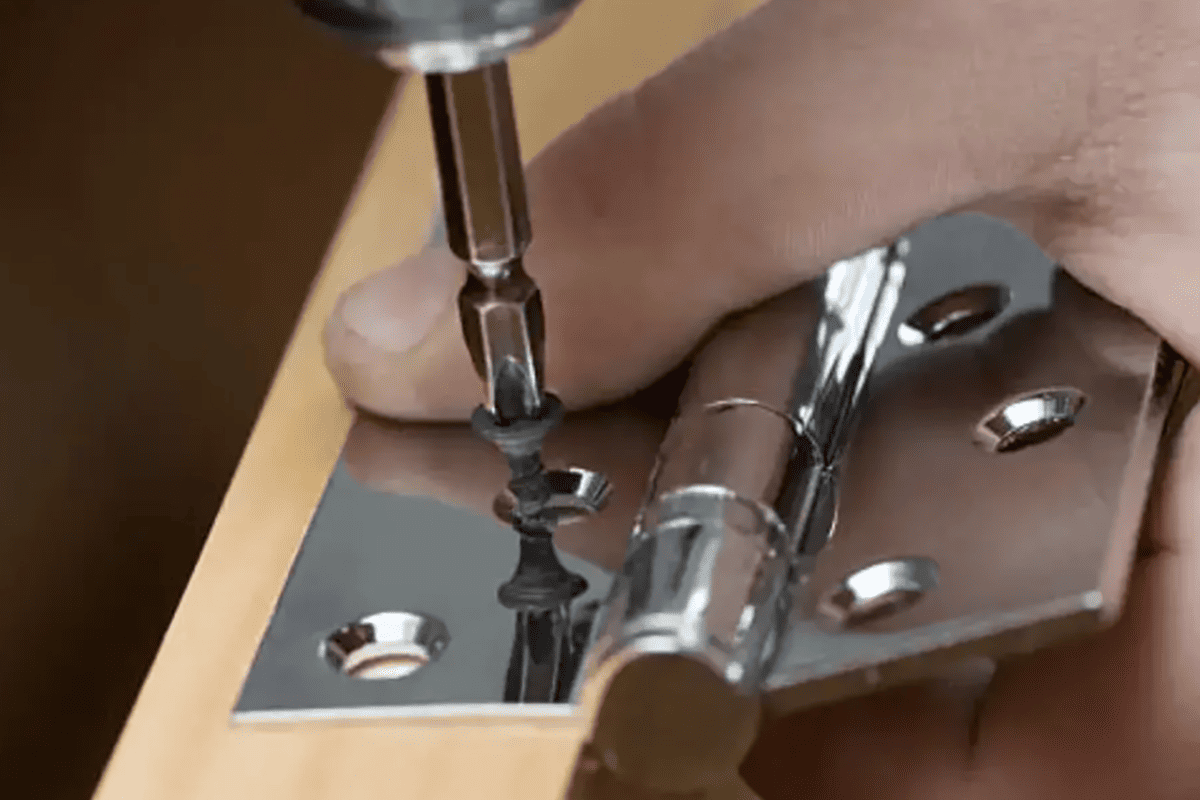
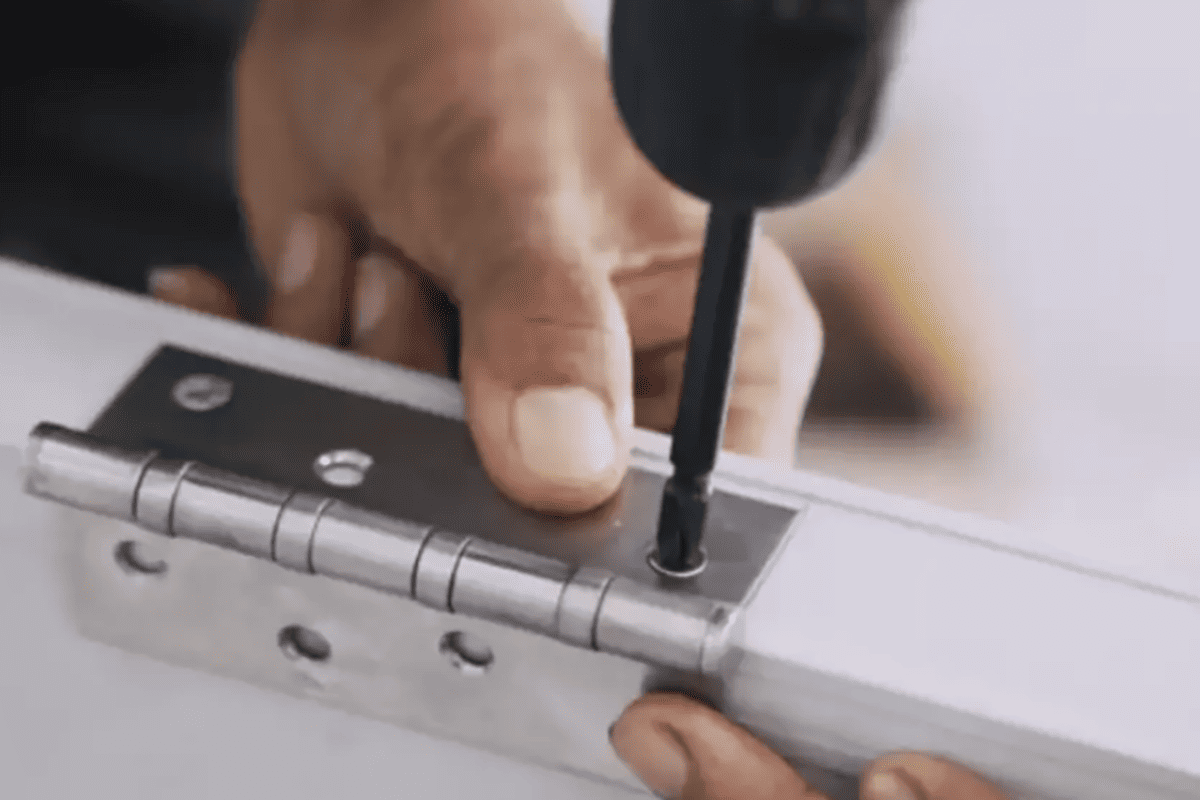
Most standard butt hinges are non-handed.7 They can be installed on left-opening or right-opening doors as long as the size, material, thickness, knuckle design, screw hole pattern, and load capacity match the door.
However, buyers should not assume this in every case. Some butt hinge designs may include:
- Fixed decorative finials
- Special bearing orientation
- Security studs
- Lift-off construction
- Asymmetric leaf sizes
- Application-specific drilling
These details can make left/right confirmation necessary. For example, a lift-off hinge is often directional because the male and female parts must align correctly and resist unintended removal.8
Concealed hinges
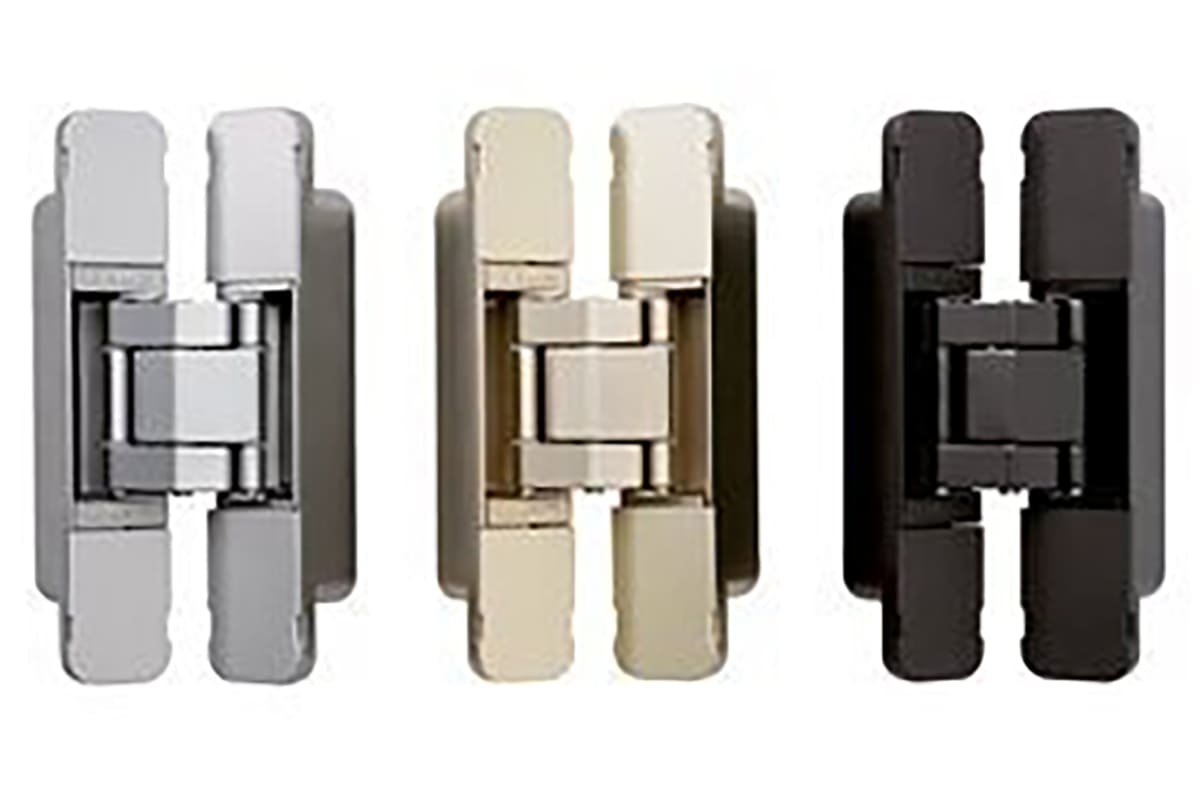
Concealed hinges require more careful checking. Some concealed hinge series are non-handed, especially certain TECTUS-style designs where the hinge body works for both left and right doors. Other concealed hinges may be handed because of:
- Frame part geometry
- Door part geometry
- Opening angle limitation
- Adjustment screw access
- Load-bearing structure
- Milling direction
For concealed door hinges, I usually ask the buyer to confirm:
| Check point | Why it matters |
|---|---|
| Door thickness | Concealed hinges need enough material depth |
| Frame type | Timber, steel, and aluminum frames require different fixing |
| Opening angle | 90°, 120°, 180°, or project-specific |
| Load per hinge | Heavy doors need tested capacity |
| Handedness | Some models are universal, others are left/right |
| Fire rating documents | Buyers should verify certificates for the project use |
At SDH Hardware, concealed hinges are often ordered for modern hotel, apartment, and commercial door systems. In those projects, direction errors may also affect CNC machining. Once the door and frame are milled, changing hinge direction is not simple.
Rising hinges
Rising hinges are a good example of why hinge structure matters. A rising hinge lifts the door slightly as it opens.9 This can help clearance over uneven flooring or assist self-closing movement in some applications.
But the lifting function depends on the slope and pin orientation.10 The fixed pin must face upward in the correct installation direction. Because of that, rising hinges are normally directional. If the wrong hand is supplied, the hinge may not lift correctly, or it may not install safely.
For rising hinges, buyers should confirm:
- Left or right hand
- Opening direction
- Door weight
- Lift height
- Material and finish
- Pin structure
- Installation drawings
Pivot hinges
Pivot hinges depend on the axis position. A centered pivot system may be non-handed because the door rotates around a central or symmetric axis. But an offset pivot hinge is usually handed because the pivot point sits away from the door edge or centerline.11
Common pivot categories include:
| Pivot hinge type | Usually handed? | Notes |
|---|---|---|
| Center pivot | Often non-handed | Depends on top and bottom component design |
| Floor spring pivot | Often non-handed or configurable | Must confirm spindle and cover plate details |
| Offset pivot | Often handed | Axis position usually requires left/right selection |
| Heavy-duty pivot | Depends on structure | Engineering review is recommended |
For heavy architectural doors, I recommend professional evaluation. Door weight, leaf size, frame strength, fire rating, traffic frequency, and local code requirements all affect hinge selection.
The practical rule is clear: Do not ask only whether the hinge is left or right. Ask what hinge mechanism is being purchased.
How does door hinge & DIN direction affect locks, handles, and full door hardware sets?
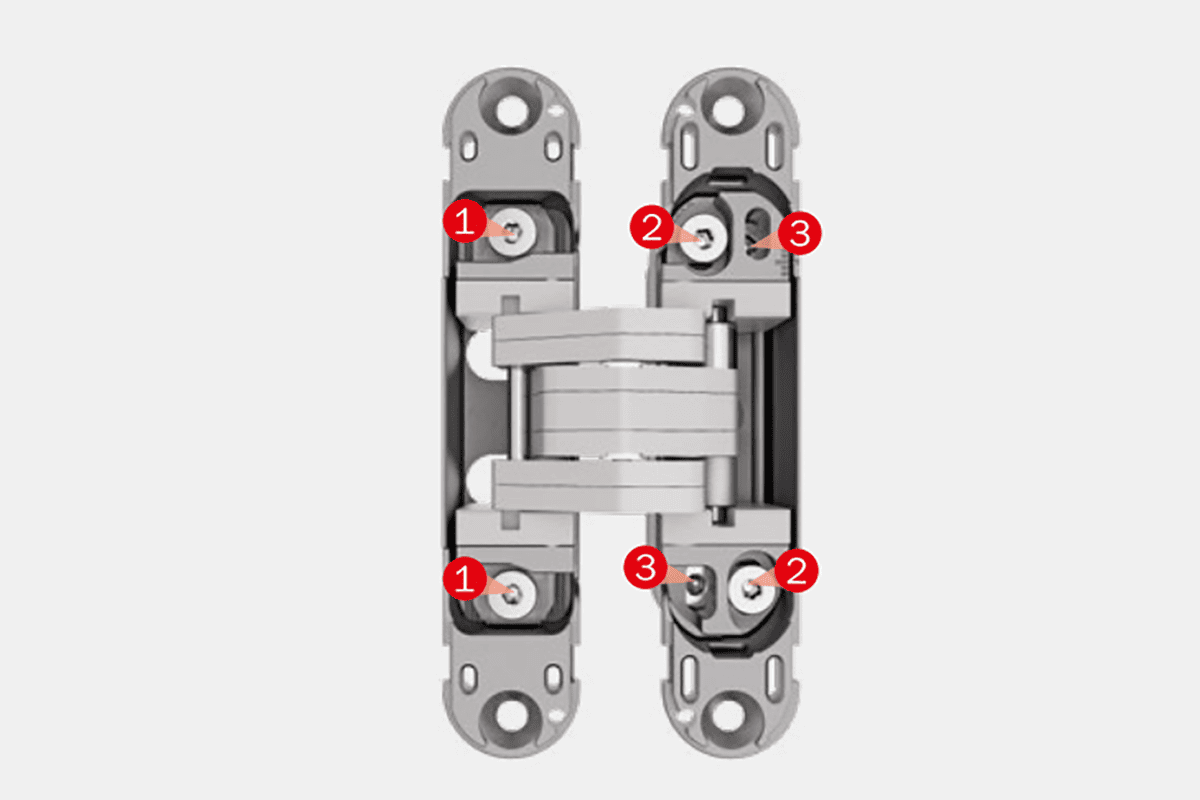
Door hinge & DIN direction affects more than the hinge itself. In a real B2B order, the hinge direction often connects with lock handing, latch direction, handle operation, cylinder position, door closer layout, and even packaging labels. If one part is wrong, the full set may fail.
Buyers should treat door hinge & DIN direction as part of a complete hardware schedule. The hinge, mortise lock, lever handle, cylinder, closer, and accessories should be checked together against the same drawing, DIN rule, and installation side before order confirmation.
Mortise locks and latch direction
Euro mortise locks often include a reversible latch, but this should still be confirmed. Some lock cases are easier to reverse than others. Some project locks may have anti-panic, bathroom, roller latch, or deadbolt functions that change the selection.
Before confirming mortise locks, I like to check:
- Backset
- Center distance
- Forend size
- Latch direction
- Deadbolt throw
- Cylinder profile
- Strike plate type
- Fire-rated document requirements
If the project requires CE or fire-rated documentation, buyers should request and verify the relevant certificates and test reports for the exact product type and intended application. A certificate should never be treated as a general promise for every door assembly.
Lever handles and rose orientation
Most stainless steel lever handles are universal, especially simple lever-on-rose or lever-on-plate models. But some designs may have a shape that looks correct only in one direction. Curved, angled, or asymmetric handles can create a visual or ergonomic issue if the door hand is not confirmed.
Brand buyers should also consider packaging and labeling. If the same handle is sold into multiple markets, the carton label may need to identify:
- DIN left or DIN right when applicable
- Lock body type
- Finish code
- Door thickness range
- Screw pack
- Spindle size
- Accessory configuration
Door closers and exit hardware
Door closers may be installed on the push side or pull side depending on the arm type and door condition. A standard closer, slide-track closer, concealed closer, or floor spring system can each require different direction information.
Exit hardware has even stricter direction concerns. Panic exit devices must match the escape route and opening direction.12 For these products, I always recommend qualified project review because safety compliance depends on the full door assembly and local regulations.
Why a hardware schedule is better than a product list
A product list may say:
- 1 pair hinges
- 1 lock
- 1 handle set
- 1 cylinder
- 1 closer
A hardware schedule says much more:
| Door No. | Door size | DIN direction | Hinge type | Lock type | Handle | Closer | Notes |
|---|---|---|---|---|---|---|---|
| D-101 | 900 × 2100 mm | DIN left | Concealed hinge | Euro mortise lock | SS lever | Slide track | Fire door |
| D-102 | 1000 × 2200 mm | DIN right | Butt hinge | Bathroom lock | SS lever | None | Hotel room |
| D-103 | 1200 × 2400 mm | Project check | Offset pivot | Roller lock | Pull handle | Floor spring | Heavy door |
This format gives the manufacturer enough information to evaluate compatibility. It also helps the buyer compare suppliers on more than price.
How I handle order confirmation
For overseas door factories, importers, and hardware brands, I usually suggest this confirmation process:
- Send door drawings or a hardware schedule.
- Mark the viewing side clearly.
- Confirm DIN direction or local direction terms.
- Identify which products are handed.
- Check whether universal products are truly universal.
- Confirm finish, packaging, logo, and inspection requirements.
- Approve final drawings or samples before bulk production.
At SDH Hardware, this process fits our normal ODM/OEM workflow. We can support standardized products, customized specifications, surface treatments, customer logos, color packaging, drawings after order confirmation, and inspection after production. But the direction question must be settled early, because direction affects manufacturing, assembly, and final packing.
What should buyers confirm before ordering handed hinges?
Handed hinges create avoidable risk when the order is based only on a short email or unclear SKU. The mistake may not appear until installation, when the hinge cannot be mounted in the expected direction. By then, replacement costs are much higher.
Before ordering handed hinges, buyers should confirm the DIN direction, opening direction, hinge type, frame condition, door thickness, door weight, and installation drawing. For bulk orders, the safest method is to approve samples or technical drawings before mass production begins.
A buyer’s checklist for hinge direction
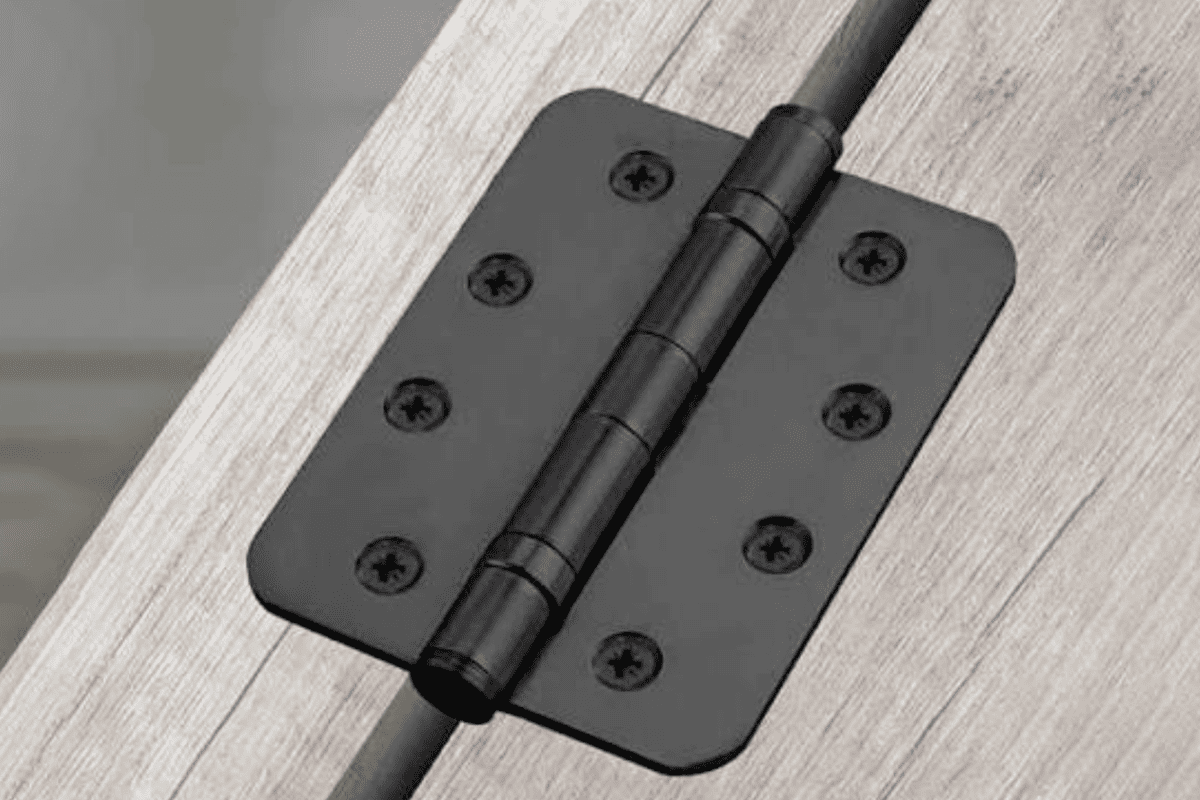
I recommend using a checklist like this before purchase:
| Confirmation item | Required for universal hinges | Required for handed hinges |
|---|---|---|
| Door size | Yes | Yes |
| Door weight | Yes | Yes |
| Door thickness | Yes | Yes |
| Frame material | Yes | Yes |
| DIN direction | Sometimes | Yes |
| Opening inward/outward | Sometimes | Yes |
| Hinge model drawing | Yes | Yes |
| Milling drawing | For concealed hinges | For concealed hinges |
| Sample approval | Recommended | Strongly recommended |
This checklist is simple, but it reduces misunderstanding between the buyer, the technical team, the purchasing department, and the factory.
Confirm the hinge structure first
A buyer should identify the hinge category before asking whether it is left or right:
Butt hinge
- Usually universal
- Check special bearing, lift-off, or security designs
Concealed hinge
- May be universal or handed
- Check product series and machining drawing
Rising hinge
- Usually directional
- Check lifting slope and pin orientation
Pivot hinge
- Depends on axis position
- Offset pivots often require handed selection
Special project hinge
- Always check drawings
- Engineering review may be needed
Material, finish, and testing also matter
Direction is important, but it is not the only procurement issue. Door factories and hardware brands should also evaluate:
- Material: stainless steel, steel, brass, zinc alloy, or other project material
- Finish: satin stainless steel, polished stainless steel, PVD, powder coating, electroplating
- Load capacity: based on door weight, size, and usage frequency
- Cycle testing: useful for durability comparison
- Corrosion resistance: important for coastal or humid markets
- Fire-rated use: certificates and test reports should be verified
- Installation tolerance: important for concealed and pivot systems
For technical applications, I recommend professional evaluation instead of choosing only from a catalog picture. Heavy doors, fire doors, high-traffic public buildings, and escape routes need more than a basic left/right answer.
Sample approval prevents repeat mistakes
For new hinge designs or new market requirements, sample approval is worth the time. A sample allows the buyer to check:
- Installation direction
- Screw hole position
- Hinge movement
- Finish quality
- Packaging label
- Compatibility with lock and frame
- CNC milling fit for concealed hinges
I have seen direction questions solved quickly when a buyer sends a short video showing the door swing. A 15-second video can be more useful than a long email, especially when different languages and local terms are involved.
For large orders, the best practice is to combine:
- A marked drawing
- A confirmed DIN direction
- A physical or approved sample
- A signed product specification
- A final pre-shipment inspection
This process may look formal, but it protects both sides. The buyer receives the correct hardware, and the manufacturer produces according to a verified specification.
Frequently Asked Questions
Is DIN left the same as left opening?
Not always. “Left opening” may be based on a local viewing habit, while DIN left should follow the project’s DIN reference method. Buyers should define the viewing side, swing direction, and hinge position before assuming that local terms match DIN direction.
Are butt hinges left and right handed?
Most standard butt hinges are universal and can be used on both left and right doors. However, some special butt hinges, lift-off hinges, security hinges, or decorative models may require left/right confirmation. Buyers should check the actual hinge drawing before ordering.
Are concealed hinges universal?
Some concealed hinges are universal, but not all. Certain TECTUS-style concealed hinge series are designed as non-handed, while other concealed hinges may be left/right specific because of body shape, adjustment access, or milling direction. Always confirm by model.
Why are rising hinges handed?
Rising hinges are handed because the lifting slope and fixed pin orientation must work in the correct direction. If the wrong hand is supplied, the door may not rise correctly or may not install as intended. Direction should be confirmed before production.
Should I confirm hinge direction separately from lock direction?
You should confirm them together. Hinge direction, DIN direction, lock latch direction, handle orientation, closer installation, and frame preparation often affect each other. A complete hardware schedule is safer than separate product descriptions.
Conclusion
To determine door hinge & DIN direction correctly, buyers should move beyond a simple “left or right” label. The safer method is to confirm the DIN reference, viewing side, inward or outward swing, and hinge structure before placing the order. Some hinges are universal, while rising hinges, offset pivots, and some concealed hinges may be handed. If you need support for project drawings, OEM hardware sets, or bulk hinge selection, I can help review the specification before production.
"Door", https://en.wikipedia.org/wiki/Door. A standards source on DIN 107 supports the use of DIN left and DIN right as standardized designations for door orientation; this supports the terminology, although access to the full standard may be required for exact clause wording. Evidence role: definition; source type: institution. Supports: The source should verify that DIN 107 defines left/right designation for doors or door openings.. Scope note: Contextual support if the source summarizes the standard rather than reproducing the exact standard text. ↩
"SECTION 087111 - DOOR HARDWARE (SCHEDULED BY ...", https://fpm.usc.edu/wp-content/uploads/2021/11/087102-USC-HSC-door-hardware-Guide-Specification_1.pdf. Architectural door-hardware guidance explains that door handing is determined relative to a specified side of the opening, supporting the need to define the viewing position before assigning left or right. Evidence role: mechanism; source type: education. Supports: The source should explain that door handing depends on the observer's position or reference side.. ↩
"Right Hand vs. Left Hand Door: How to Tell the Difference", https://www.rockymountainhardware.com/right-hand-vs-left-hand-door-guide/. Door-hardware reference materials describe left/right handing by convention and reference side, supporting the article’s caution that informal local phrases are not necessarily equivalent to DIN terminology. Evidence role: general_support; source type: institution. Supports: The source should show that door handing terminology uses defined conventions and that different systems or reference sides can lead to different labels.. Scope note: This supports the general risk of terminology mismatch rather than proving each listed phrase is used differently in every market. ↩
"SECTION 087111 - DOOR HARDWARE (SCHEDULED BY ...", https://fpm.usc.edu/wp-content/uploads/2021/11/087102-USC-HSC-door-hardware-Guide-Specification_1.pdf. Architectural hardware scheduling guidance treats door swing and handing as data that inform the selection of locks, closers, exit devices, and related preparation, supporting the article’s claim that direction affects the full hardware set. Evidence role: general_support; source type: education. Supports: The source should confirm that door handing and swing are recorded in hardware schedules because they affect multiple hardware items.. ↩
"Inswing Vs. Outswing and Left Hand/Right Hand - RealCraft", https://realcraft.com/blogs/articles/inswing-vs-outswing-and-left-hand-right-hand-door-terminology-101?srsltid=AYCX9vLLFysv_GsQ8_1t7QG33CyDcxsyebhPtDqt3jnQo96TlNX2w1bY. Door-design references distinguish left/right handing from inswing and outswing conditions, supporting the article’s statement that opening direction cannot be reduced to left or right alone. Evidence role: definition; source type: education. Supports: The source should define door handing together with swing direction such as inswing and outswing.. ↩
"SECTION 08 70 00 DOOR HARDWARE SCHEDULE ...", https://bidcondocs.delaware.gov/BSD/BSD_19001BidPac_B_specs_add1c.pdf. Architectural door-hardware references define active and inactive leaves in pairs of doors and associate those leaves with different locking and auxiliary hardware functions, supporting the need to identify them before confirming hardware direction. Evidence role: definition; source type: education. Supports: The source should define active and inactive leaves and explain their relevance to double-door hardware.. ↩
"A guide to butt hinges", https://www.essentracomponents.com/en-us/news/solutions/access-hardware/a-guide-to-butt-hinges?srsltid=AYCX9vJrtzD6TYTYUKLIt16BPaQduOIIXsXF3SnXQm2q_UhYKSbMmoWj. Door-hardware instructional sources generally describe standard butt hinges as non-handed, supporting the article’s statement that they can typically be used on either left- or right-hand doors. Evidence role: general_support; source type: education. Supports: The source should state that typical butt hinges are non-handed or reversible for left and right applications.. Scope note: This is a general rule and does not establish non-handedness for every specialized butt-hinge design. ↩
"Lift-Off Hinge, 2 Hole, Left Hand", https://www.austinhardware.com/lift-off-hinge-2-hole-ch-lh.html?srsltid=AYCX9vL2GxLipgT78ve3_-AYSGGR3wERoRo7r6ZaR7PY2O4o2IJWptj2. Technical descriptions of lift-off hinges identify separable male and female leaves and left/right variants, supporting the article’s explanation that component orientation can make the hinge directional. Evidence role: mechanism; source type: institution. Supports: The source should explain that lift-off hinges have male and female parts and may require left/right selection.. Scope note: The source may support common construction principles, while individual lift-off hinge designs still require model-specific verification. ↩
"How does a rising butt hinges work?", https://www.dndhardware.com/amp/How-does-a-rising-butt-hinges-work-id48665856.html. Door-hardware references describe rising hinges as hinges whose geometry raises the door leaf during opening, supporting the article’s description of their lifting function. Evidence role: mechanism; source type: education. Supports: The source should describe the lifting action of rising hinges during door opening.. ↩
"Falling butt hinges: Is there an easy way to work out which ' ...", https://www.reddit.com/r/DIY/comments/prsaew/falling_butt_hinges_is_there_an_easy_way_to_work/. Technical descriptions of rising-hinge mechanisms attribute the lift to inclined or cam-like hinge geometry, supporting the article’s statement that slope and pin orientation determine correct operation. Evidence role: mechanism; source type: paper. Supports: The source should explain that rising-hinge lifting depends on inclined geometry or cam action and correct orientation.. Scope note: A patent or engineering description may support the mechanical principle rather than the exact construction of every commercial rising hinge. ↩
"Heavy-Duty Offset Pivot Hinges", https://www.erbutler.com/products/hardware/hinges/butler/offset_pivot. Architectural hardware references distinguish center pivots from offset pivots and note that offset geometry can require handed components, supporting the article’s claim that offset pivot hinges often need left/right selection. Evidence role: mechanism; source type: institution. Supports: The source should explain that offset pivot hinges place the pivot axis away from the door center or edge and may require handing.. Scope note: Some pivot systems may be configurable, so the source supports the general selection principle rather than every product model. ↩
"Spark Notes: Door Swing Direction", https://www.sgh.com/insight/spark-notes-door-swing-direction/. Building-code provisions for means of egress and panic hardware link door operation to the direction of egress travel, supporting the article’s statement that exit devices must correspond to the escape route and opening direction. Evidence role: expert_consensus; source type: government. Supports: The source should support that egress doors and panic hardware are governed by escape-route and door-swing requirements.. Scope note: Exact requirements vary by jurisdiction and occupancy classification. ↩
