
How to Audit Chinese Door Hardware Suppliers Without Traveling
Remote auditing sounds risky until you know what to look for. Chinese door hardware suppliers can be vetted without traveling if you start with the right sourcing goal, then match evidence to that goal. Many buyers skip this first step, then chase documents that do not prove capability. I will show how to avoid that trap.
To audit Chinese door hardware suppliers without traveling, start by defining your sourcing goal (trading company for full-series/low-MOQ consolidation vs factory for single-category OEM/ODM and certification control). Then collect matching evidence: certificates tied to your exact models, process videos, material/finish confirmation, labeled samples, QC records, capacity indicators, and a pre-shipment inspection plan.
Most remote audits fail because evidence fragments do not line up. Below, I share what serious buyers request from me during remote audits, how they cross-check certificates to real products, and how to integrate video audits with samples, QC documents, and pre-shipment plans that actually protect your order.
What sourcing goal should guide your audit of Chinese door hardware suppliers?
You face two different problems. You need breadth across product categories, or you need depth in one. Many audits ignore this choice and evaluate every supplier the same way, which wastes time and misses risk. Decide which path you are on before you ask for documents or schedule calls.
A clear sourcing goal dictates your audit criteria. If you need a full series of hardware across categories and low MOQs, audit trading-company capabilities for consolidation and inspection coordination. If you need one product category with OEM/ODM, strict certification, and precise QC, audit factory production scope, R&D, testing, and capacity.
Map your audit to your program scope
I always begin here with buyers. A door factory in the Middle East once wanted hinges, cylinders, locks, and handles in a single container to test a new program. They did not need custom designs yet. A trading company made sense. Six months later, they selected one hinge model to own and customize. Then we switched to a factory audit.
Full-series, low-MOQ, mixed SKUs:
- Prioritize a trading company that can consolidate multiple categories: Euro mortise locks, stainless steel lever handles, butt hinges, concealed door hinges, Euro brass cylinders, and door accessories.
- Evaluate strength in coordinating multiple factories, synchronizing finishes, and building one inspection plan across items.
- Expect to pay slightly more per item for consolidation and service, but save on logistics and coordination overhead.
Single-category focus, OEM/ODM, certification:
- Prioritize a factory with production depth in your category. For example:
- EN 12209 lock production with cycle testing and salt spray results.1
- EN 1906 lever handles with torque tests and finish performance data.2
- EN 1935 hinges with load/bearing data and CE marking traceability.3
- EN 1303 cylinders with key system security grades and test reports.4
- Audit process capability, R&D, sample development, tolerances, and finish control.
Here is a quick decision guide you can share with your team:
| Program situation | Likely better target | Key audit focus | Typical MOQs |
|---|---|---|---|
| Trial portfolio across 5–8 SKUs | Trading company | Category coverage, price positioning by market, consolidation, multi-item QC | 50–200 sets/SKU |
| One hinge/handle to customize | Factory | OEM/ODM development, material control, cycle testing, EN compliance | 300–1000 sets/model |
| Brand-building with CE/fire-rated claims | Factory | Certification scope matching SKUs, labeling control, documentation | 500+ sets/model |
| Distribution test in new market | Trading company | Standard matching to local codes, assortment curation, fast sampling | 50–100 sets/SKU |
Once you fix your goal, everything else becomes easier because you only ask for evidence that matters for that supplier type.
Trading company or factory: which Chinese door hardware suppliers fit your program?
It is easy to default to “factory is best,” but that can limit you. Many buyers need a broad portfolio for channel testing first, then a factory for deep work later. If you audit the wrong way, you may reject a helpful trading partner or accept a factory that cannot deliver breadth.
Pick a trading company when you need breadth, lower trial MOQs, and coordination across categories. Pick a factory when you need single-category depth, OEM/ODM, tight QC, and certifiable production. Then audit each type by different criteria tied to your market standards and SKUs.
Signals that match supplier type
From my side of the screen, I see different strengths:
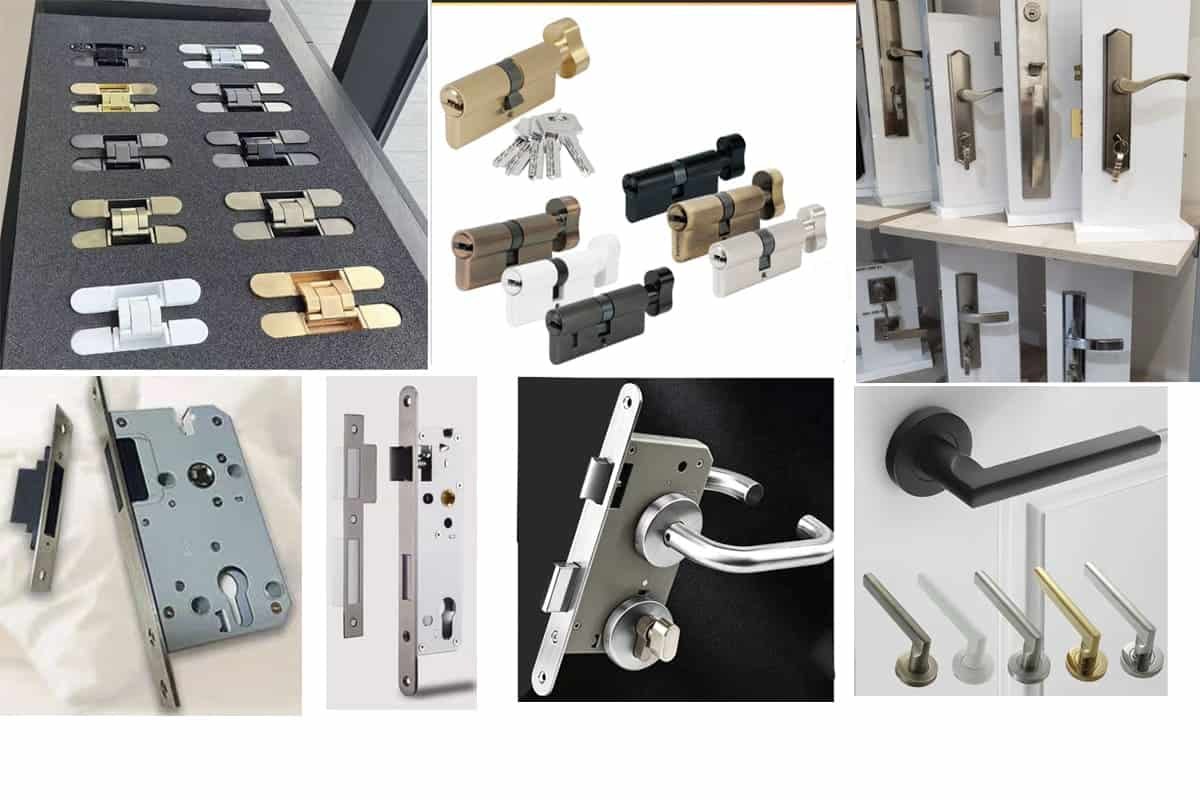
Trading companies that add value:
- Strong market understanding: which EN grades fit EU vs Middle East price bands.
- Design sense: range of styles and finishes that match local tastes.
- Supplier network: 3–5 vetted factories per category with known strengths.
- Consolidated QC: one inspection plan spanning hinges, locks, handles, and cylinders.
Factories that add value:
- Production focus: one or two categories with audited lines.
- R&D: CAD/DFM support, prototype samples, tooling timelines.
- In-house testing: cycle rigs, salt spray cabinets, dimension gauges.
- Certification: CE and fire-rated documents with model alignment, not generic papers.
Ask for concrete evidence for each scenario:
For trading:
- A product matrix covering required categories with EN/CE mapping.
- A consolidation plan, including packaging harmonization and labeling control.
- A multi-item inspection checklist and example inspection reports.
For factories:
- A machine list by process (e.g., stamping, CNC, casting, polishing).
- A process flow diagram for your category.
- Test machine photos with serial numbers and a short video demo during a call.
- Certificates tied to your model codes and finishes.
I once joined a call where a buyer quizzed me about positioning for a European DIY channel vs a project channel. That question alone told me they understood the difference. We pulled two entirely different assortments and QC plans. Trading partners shine in this early stage. Later, when that buyer chose an EN 1906 Grade 3 handle to own, they switched to a factory path and we tightened QC accordingly.
What evidence should you request from a trading-company supplier?
Trading companies can look impressive with thick catalogs, but catalogs do not prove alignment with your standards, price level, or finish consistency across categories. You must see how they coordinate multiple factories into one deliverable portfolio and QC plan that fits your market.
Ask for a cross-category product map with EN/CE matching, sample and finish synchronization plans, a consolidated QC checklist, and example inspection reports. Verify their supplier network depth and their ability to hit your price bands while meeting your market’s standards.
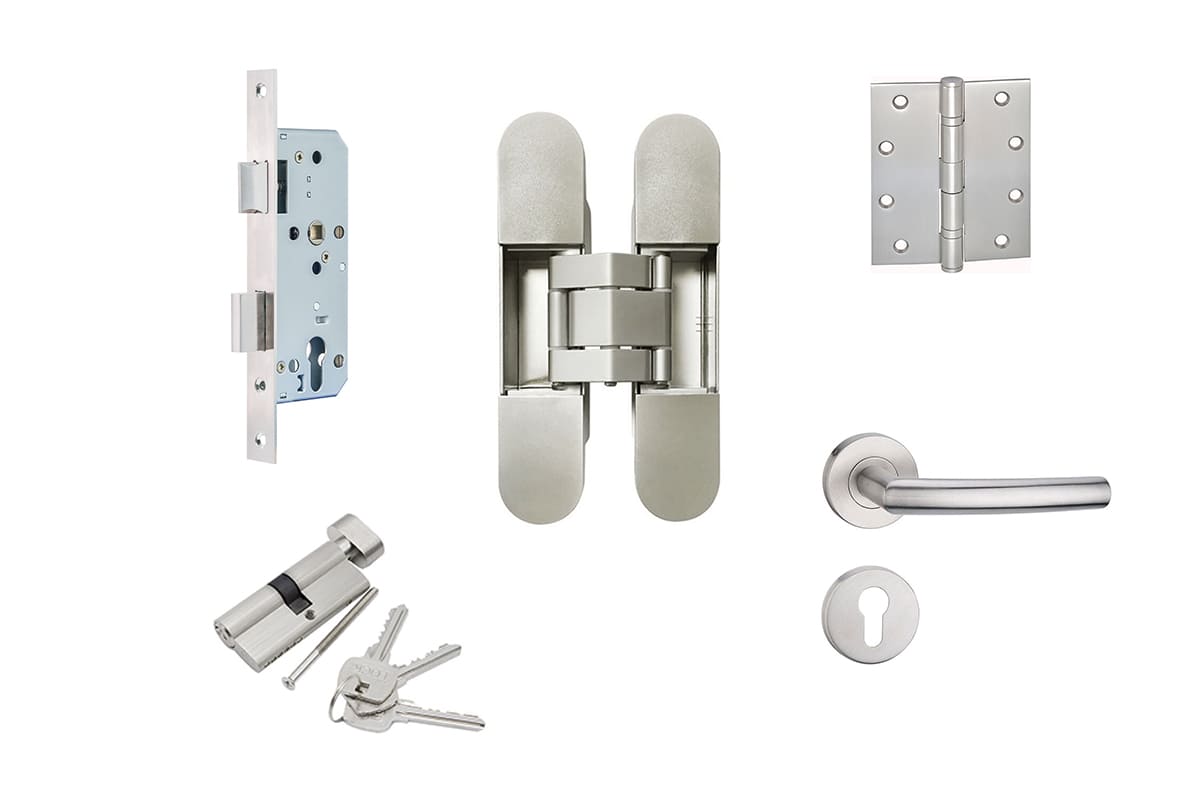
Build a trading-company evidence pack
Here is the pack I prepare when professional buyers audit me as a trading partner:
Product map and standards alignment
- A matrix of categories (locks, handles, hinges, cylinders, accessories).
- EN grade mapping per item (e.g., EN 12209 Grade 3, EN 1906 Grade 3).
- Notes on local code equivalents (e.g., Gulf norms, EU directives).
Finish synchronization plan
- Defined finishes across items: SS satin (SUS304/316), PVD gold, black powder coat.
- Cross-factory finish control with target Ra and color standards.
- Shared golden samples and color cards across all items.
Price band positioning
- Assortment split into good/better/best with data on cycle tests and finish life.
- Rationale for price differences tied to materials and tests, not just marketing.
Multi-item QC plan
- One consolidated inspection checklist covering:
- Dimensions, tolerances, and fits by category.
- Visual finish criteria (scratch, pit, color variance limits).
- Functional checks: latch/bolt operation, handle torque, hinge play.
- Example inspection reports from previous orders, with photos and AQL levels.
Supplier coordination proof
- Named sub-suppliers per category (where allowable).
- Lead-time plans to synchronize mixed SKUs into one shipment.
- Packaging harmonization: consistent branding, barcodes, and labeling.
Sample plan
- Bundled sample set for your channel test.
- Documentation linking sample codes to mass-production models.
If the trading company cannot produce a multi-item QC plan, I recommend you consider a third-party inspection group early. Also, ask how they handle defects found across mixed items. A good partner will show a corrective-action template and describe escalation paths with sub-suppliers.
How do you verify a factory remotely without traveling?
A video call alone will not verify a factory. You need process-level evidence that ties directly to your product category. Document requests should focus on the exact models you intend to buy, supported by footage of operations and testing on those models, not generic tours.
Request a process flow, machine list, test equipment demos, and certificates tied to your models. Pair that with labeled samples, finish specs, and QC checkpoints. Insist on a video audit that follows your product through fabrication, assembly, testing, and packaging.
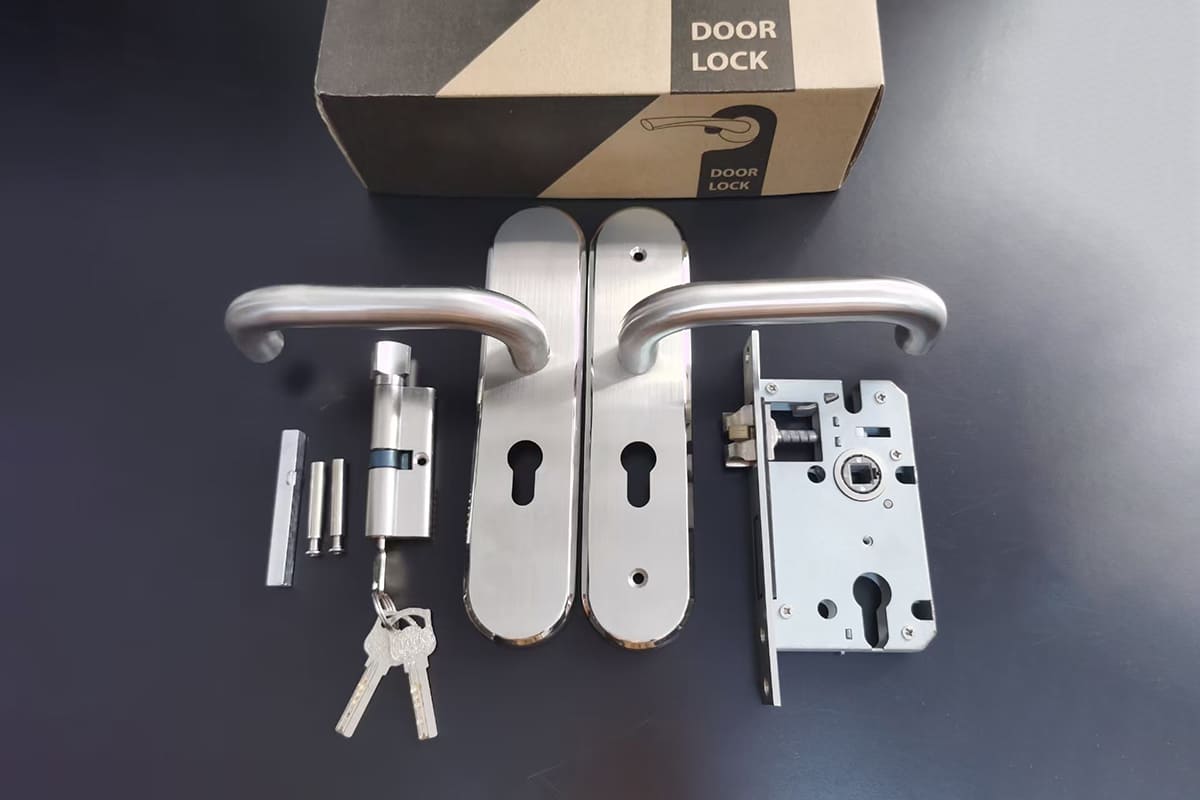
Build a factory remote-audit path
When buyers remotely audit my factory lines, we plan the call around their product:
Process documentation
- Process flow diagram specific to the category (e.g., EN 1935 hinge line: cutting → stamping → forming → pin/bearing assembly → polishing → finishing → assembly → test).
- Machine list with capacities: presses, CNC, polishing racks, plating/PVD lines.
- Calibration records for key gauges and test rigs.
Test equipment verification
- Live demo: cycle test rigs running the buyer’s or a similar model.
- Salt spray test cabinet details, with recent test reports for the same finish.
- Handle torque test, latch/bolt endurance, dimensional gauges shown in use.
Certificates and model alignment
- CE and fire-rated certificates with exact model codes and finishes.5
- If certificates cover families, show annexes/spec sheets to link models.
- Highlight valid dates and the issuing notified body. Buyers should verify documents directly with the issuing body.6
Sample and material confirmation
- Labeled samples with model IDs. Show weight and dimensions on scale and caliper.
- Material reports: SUS304 vs SUS201 confirmation, or brass specs for cylinders.
- Finish spec sheet: thickness, method (electroplate, PVD, powder coat), and test results.
Workforce and capacity
- Footage of lines with headcount ranges per shift.
- Capacity figures tied to your order size (e.g., 8,000 hinges/week, 3,000 locks/week).
- Overtime policy and peak-season planning.
QC checkpoints
- Incoming material inspection forms.
- In-process checks (e.g., hinge pin fit and handle torque sampling frequencies).
- Finished goods inspection records with AQL and corrective actions.
I once had a European buyer ask us to switch cameras from a general tour to a close-up of a handle torque test, then to the calibration sticker on that machine. That is the right level of specificity. If a supplier refuses reasonable, pre-planned camera checks, consider it a flag and ask for third-party verification.
Note: Remote audits do not replace on-site audits or third-party inspections.7 Use them to decide whether to proceed to sampling or small-batch production, then commit resources to pre-shipment inspection.
How do you cross-check certificates, samples, and specs so they align with Chinese door hardware suppliers?
The biggest risk is mismatch: a certificate that does not match the sample, a sample that does not match the quoted specification, or packaging that makes claims your documentation cannot support. These mismatches matter more than missing marketing materials.
Cross-check everything. Match model codes on certificates to spec sheets, samples, and packaging labels. Verify finishes and materials against test reports. Ensure the video audit shows the same model and finish you will buy. Document every link with photos and file names.

Build a cross-check routine
I keep a “single source of truth” folder per model to reduce mistakes. You can mirror this:
Model code alignment
- The exact model code appears on:
- Quotation and technical data sheet.
- Sample label and packing list.
- Certificate annex and test report.
- Outer carton and inner box labels (if branded).
- If a supplier uses internal codes, maintain a code cross-reference sheet.
Finish and material confirmation
- Record finish description and code (e.g., SS satin, PVD TiN gold).
- Keep salt spray or finish test results for that finish and material combination.
- Note material grades: SUS304/316 for stainless, brass grades for cylinders.
Certificate and standard mapping
- For locks: EN 12209. For lever handles: EN 1906. For hinges: EN 1935. For cylinders: EN 1303.
- Confirm certificate scope includes your grade target and product dimensions.
- Verify issuing body details and validity. Contact the body if the order is large.
Physical checks on samples
- Use calipers and scales in a live video to confirm dimensions and weights.
- Record latch/bolt throw, backset, spindle size, rose diameter, hinge thickness.
- Keep photos with rulers and scales, labeled with your model code.
Packaging and claims
- Compare packaging claims to documentation. Remove overclaims before production.
- Align barcodes and country-of-origin marking with your legal requirements.
Video audit alignment
- Confirm that the model shown in testing matches your code and finish.
- Screenshot frames where labels and machine gauges are visible.
Examples of common mismatches:
- Certificate lists EN 1906 Grade 3 handle, but sample shows a different rose design with thinner escutcheons than in the annex photos.
- EN 1303 cylinder certificate covers nickel finish; your order requires black PVD without a matching test.
- Packaging shows a fire-rating icon while the supplied lock model does not appear in the fire-rated annex.
Treat mismatches as fixable issues if the supplier responds with corrections and updated documents. If they resist alignment, reconsider proceeding.
How should you plan pre-shipment inspection and ongoing QC for Chinese door hardware suppliers?
Even a great remote audit cannot guarantee shipment quality. You need a pre-shipment inspection plan that reflects your product mix and standard targets, plus ongoing QC discipline, especially for repeat orders and finish consistency across categories.
Define AQL levels, critical dimensions and functions, and finish acceptance criteria per category. Use third-party inspections for first orders and multi-item shipments.8 Retain golden samples. Require corrective actions and tie them to future inspections.
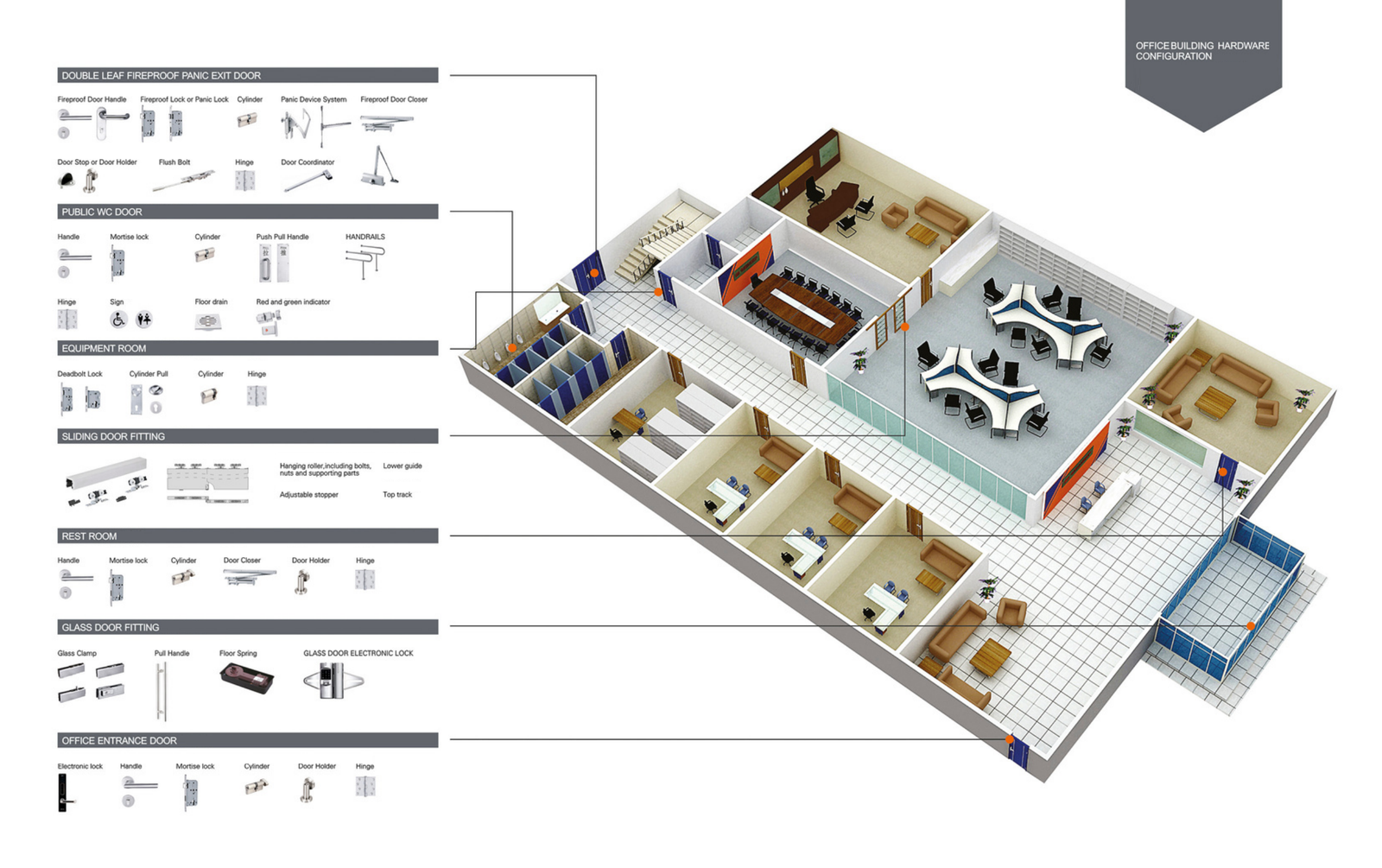
Build a QC plan that survives real production
For multi-item programs, I recommend one integrated PSI plan:
AQL and sampling
- Typical initial orders: AQL Critical 0, Major 1.0–1.5, Minor 2.5.9
- Define lot sizes by category. Inspect higher percentages on finishes prone to variance.
Category-specific checks
- Locks (EN 12209):
- Backset, latch/bolt throw, faceplate dimensions.
- Latch and bolt operation cycles and smoothness.
- Finish uniformity on faceplate and strike.
- Lever handles (EN 1906):
- Spindle fit, torque tests, return spring function.
- Handle pair alignment and rose fit.
- Surface finish (scratch count thresholds).
- Hinges (EN 1935):
- Leaf dimensions, knuckle alignment, pin fit.
- Load/closing feel. Bearing function if applicable.
- Cylinders (EN 1303):
- Key function, plug tolerance, anti-pick features per spec.
- Length and cam type confirmation. Keying plan accuracy.
Finish controls
- SSC (stainless) verification for grade by magnet test as a quick screen10, plus supplier material certs.
- Salt spray test reports for plated/PVD finishes tied to your finish codes.11
- Visual standards with photos for acceptance limits.
Packaging checks
- Label accuracy, barcode scans, and legal markings.
- Accessory completeness: screws, spindles, strikes, templates.
Golden samples and retention
- Keep two retained golden samples per model: one with you, one with the supplier.
- Update samples if you approve changes.
Corrective action loop
- Supplier submits 8D or similar corrective action reports for nonconformities.
- Tie actions to specific process changes and re-inspection points.
Ongoing QC
- Reduce inspection intensity after three conforming lots, but keep random checks.
- For repeat orders, re-verify finishes and critical dimensions at least quarterly.
I usually recommend buyers keep their first order under a controlled quantity and use a third-party inspector. Over time, if the supplier’s process shows stability and you have matched evidence across certificates, samples, and inspection records, you can right-size inspection frequency without losing control.
Frequently Asked Questions
Are video factory audits enough to approve an order?
No. Video audits show capacity and process, but they do not prove certification alignment or finish performance. Always pair video audits with model-specific certificates, labeled samples, finish test reports, and a pre-shipment inspection plan. For first orders and multi-item shipments, a third-party inspection is strongly recommended.
How can I verify CE and EN certificates remotely?
Request certificates with model codes and annexes that match your SKUs and finishes. Check validity dates and issuing bodies. Contact the notified body to confirm authenticity for large projects. Ensure EN standards match your category: EN 12209 (locks), EN 1906 (handles), EN 1935 (hinges), EN 1303 (cylinders).
What is a realistic MOQ for mixed door hardware trial orders?
For trading-company consolidation, 50–200 sets per SKU is common for trials. For factories focusing on one category, MOQs usually start at 300–1000 sets per model, depending on tooling, finish, and customization. MOQs may be higher for unique finishes or OEM/ODM developments.
Who should pay for third-party inspections?
Buyers typically pay third-party inspection fees to maintain independence. Some suppliers will share costs for first orders or corrective inspections after nonconformities. Clarify scope, AQL, and pass/fail criteria before booking to avoid disputes.
How do I protect my custom designs in an OEM project?
Use NDAs and clearly define ownership of drawings, tooling, and trademarks.12 Limit document distribution to necessary parties and watermark shared files. Verify the factory’s OEM/ODM experience and ensure samples, drawings, and labeling align before production. Consider phased development with milestone reviews and documented approvals.
Conclusion
Auditing Chinese door hardware suppliers without traveling is practical if you start by choosing the right supplier type for your program and then gather evidence that truly matches your SKUs. Align certificates, samples, videos, and QC to the same product story. If you want a structured remote-audit pack for your shortlist, contact me and I will share the documents and video agenda we use with professional buyers.
"BS EN 12209:2003 – Mechanical Operated Locks, Latches ...", https://www.hoppe.com/in-en/contacts-service/standards/bs-en-12209/. EN 12209 is a European building-hardware standard for mechanically operated locks and latches, providing requirements and classification criteria that make model-specific test evidence relevant to lock procurement. Evidence role: definition; source type: institution. Supports: A standards body or national standards publisher should confirm that EN 12209 concerns mechanically operated locks and latches and specifies requirements/classification used for performance assessment.. ↩
"EN 1906:2012 - Lever handles and knob furniture", https://standards.iteh.ai/catalog/standards/cen/98620aed-cd49-4257-aad1-4767b82e8c08/en-1906-2012?srsltid=AYCX9vIDmCAHMSWxrLspehfGCAbF2MUHWy9R9CEp8zXiso9q3Z1YqCXO. EN 1906 specifies requirements and classification for lever handles and knob furniture, including performance characteristics relevant to strength, durability, and corrosion-resistance claims. Evidence role: definition; source type: institution. Supports: A standards source should verify that EN 1906 applies to lever handles/knob furniture and classifies performance characteristics relevant to strength and corrosion resistance.. ↩
"EN 1935: Building hardware - Single-axis hinges", https://www.intertek.com/building/standards/en-1935/. European standards documentation identifies EN 1935 as the building-hardware standard for single-axis hinges and links its classifications to hinge performance characteristics; this supports using load and traceability evidence when evaluating hinge claims, although it does not by itself verify any supplier’s certificate. Evidence role: general_support; source type: government. Supports: A European Commission or standards source should show that EN 1935 is a harmonised/recognized framework for single-axis hinges and that it classifies hinge performance such as mass, durability, and safety characteristics.. Scope note: Contextual support only; the source would define the standard and CE framework, not prove that a particular Chinese supplier’s hinge is compliant. ↩
"BS EN 1303 – Cylinders", https://www.hoppe.com/in-en/contacts-service/standards/bs-en-1303/. EN 1303 specifies requirements and classification for cylinders used in locks, including security-related characteristics, supporting the need to match cylinder claims with model-specific test evidence. Evidence role: definition; source type: institution. Supports: A standards publisher should confirm that EN 1303 covers lock cylinders and includes classification of security and performance characteristics.. ↩
"ISO/IEC - Agricultural Marketing Service - USDA", https://www.ams.usda.gov/services/auditing/iso-guide65. EU construction-products conformity documentation requires declared performance to be tied to an identified product type and intended use, which supports matching CE or fire-performance documents to the relevant model and variant; however, it is contextual support rather than proof that finish changes always require a separate certificate. Evidence role: general_support; source type: government. Supports: EU conformity documentation guidance or product-certification requirements should support the principle that compliance documentation identifies the product type, intended use, and declared performance, making certificate scope alignment necessary.. Scope note: Contextual support only; applicability to each finish depends on the certification scheme, product family rules, and notified-body documentation. ↩
"Notified body", https://en.wikipedia.org/wiki/Notified_body. The European Commission’s NANDO system lists notified bodies designated for EU conformity-assessment tasks, supporting the practice of checking whether an issuing body is legitimate before relying on CE-related documentation. Evidence role: mechanism; source type: government. Supports: An official EU source should explain the NANDO database/notified-body system and how notified bodies are identified for conformity assessment tasks.. Scope note: This supports verifying the body’s status; it does not independently authenticate every certificate unless the issuing body confirms the specific document. ↩
"Managing Remote Work Quality: Evidence from Auditing ...", https://www.hbs.edu/faculty/Pages/item.aspx?num=64315. International audit guidance on the use of information and communication technology treats remote auditing as a risk-based method that must be assessed for feasibility and audit objectives, supporting the caution that video-based remote checks may not replace on-site verification or independent inspection in higher-risk purchases. Evidence role: expert_consensus; source type: institution. Supports: Audit guidance from an accreditation or standards body should explain that remote audit techniques using ICT must be planned according to feasibility, risk, and audit objectives.. Scope note: Contextual support only; the source would address audit methodology generally, not door-hardware sourcing specifically. ↩
"Inspection", https://thedocs.worldbank.org/en/doc/735641553266058843-0090022019/original/Section6Inspection.pdf. ISO/IEC 17020 sets requirements for inspection bodies, including impartiality and competence, which supports using independent inspectors when first-order risk or multi-item shipment complexity increases; it does not prove that inspection is mandatory for every order. Evidence role: general_support; source type: institution. Supports: Inspection-body accreditation standards should support that third-party inspection bodies are expected to operate with impartiality, independence, and defined inspection methods.. Scope note: Contextual support only; the standard supports inspection-body impartiality rather than prescribing when buyers must commission inspections. ↩
"ISO 2859-1", https://chemistry.unt.edu/~tgolden/courses/iso2859-1.pdf. Acceptance-sampling standards such as ISO 2859-1 and ANSI/ASQ Z1.4 define AQL-based lot inspection methods, supporting the use of severity-based sampling plans in pre-shipment inspection; the cited standards do not establish these particular numeric levels as universally required. Evidence role: definition; source type: institution. Supports: A standards or quality body should define AQL/acceptance sampling and explain its use for lot inspection decisions.. Scope note: The source supports the AQL method, while the exact values remain a buyer- or industry-specific inspection choice. ↩
"Is Stainless Steel Magnetic?", https://metaltechsc.com/is-stainless-steel-magnetic/. Metallurgical references explain that stainless-steel magnetic response depends on alloy family and processing, so a magnet test can serve only as a preliminary screen and must be supplemented by material certificates or compositional testing for grade confirmation. Evidence role: mechanism; source type: education. Supports: A university or metallurgy education source should explain that austenitic stainless steels are generally nonmagnetic but may become magnetic after cold working, while ferritic/martensitic grades are magnetic.. Scope note: This supports the caution around the test, not its reliability as a standalone grade-identification method. ↩
"Salt spray test", https://en.wikipedia.org/wiki/Salt_spray_test. ISO 9227 and ASTM B117 describe standardized salt-spray corrosion test methods, supporting the use of finish-specific salt-spray reports as evidence for plated or coated hardware; such tests are accelerated laboratory methods and do not directly predict service life in every environment. Evidence role: definition; source type: institution. Supports: A standards source should define neutral salt spray testing as a standardized corrosion test method for coatings and metals.. Scope note: The support is methodological; it validates the test type but not any supplier’s reported result or real-world durability. ↩
"China IPR Toolkit", https://www.uspto.gov/sites/default/files/documents/China_IPtoolkit_FINAL.pdf. Government IP guidance for manufacturing in China emphasizes written agreements, clear allocation of ownership, and protection of trademarks and design materials, supporting the recommendation to define rights in drawings, tooling, and marks before OEM production. Evidence role: general_support; source type: government. Supports: A government IP office or international IP institution should support using written agreements, trademark protection, and clear ownership terms when sharing designs with overseas manufacturers.. Scope note: This is general legal-risk support and should not be treated as jurisdiction-specific legal advice for a particular transaction. ↩
