
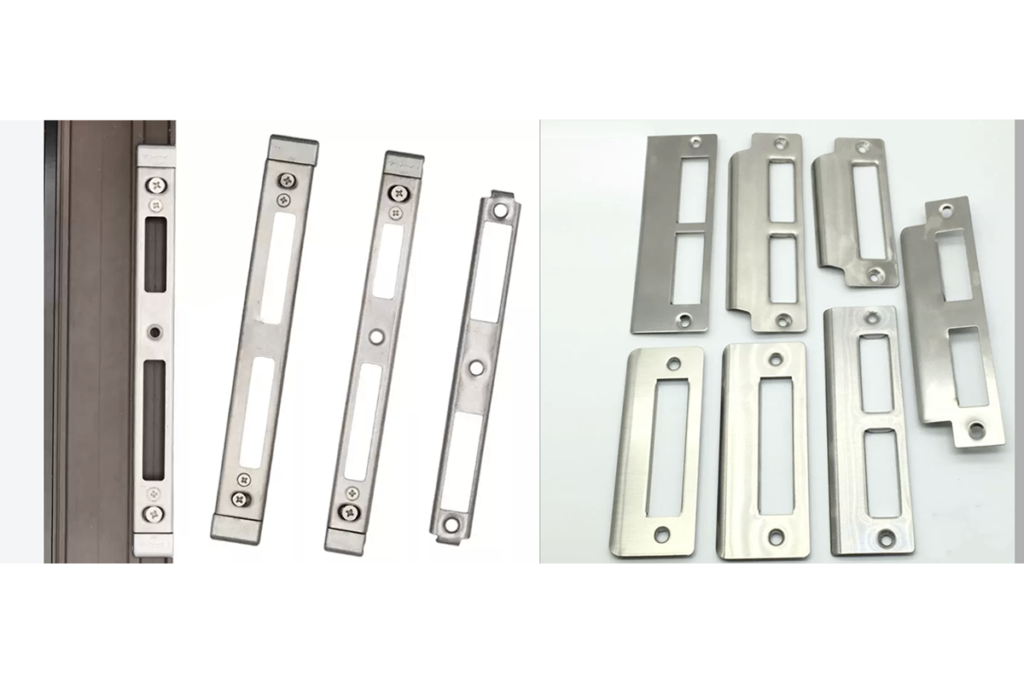
What is strike plate for mortise lock, types & compatibility
A strike plate for mortise lock can look like a small metal part, but it can create big installation problems when it is mismatched. If the latch or deadbolt misses the opening, the door may rebound, rub, or fail to lock. The solution is to confirm the strike plate, lock body, and door frame together before production.
A strike plate for mortise lock is the frame-side metal plate or strike box that receives the latch bolt and/or deadbolt from the mortise lock1. It protects the door frame, guides closing alignment, and supports stable locking. It is not universal2, so buyers should match it by lock body model, bolt position, frame cutout, and installation condition.
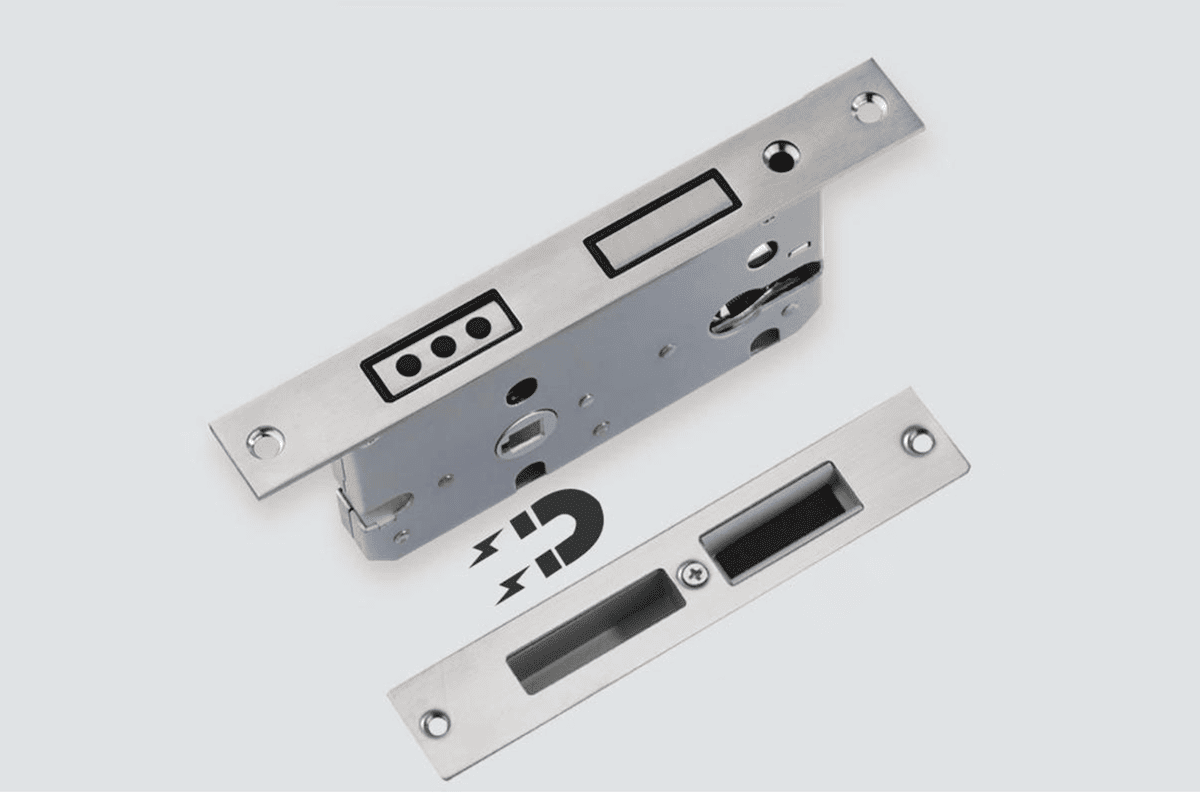
In my daily work with mortise lock orders, I usually see problems appear before the door is even installed. A drawing is unclear. A frame profile changes. A latch tongue position is assumed instead of confirmed. That is why I treat the strike plate as a matching component, not an afterthought.
What is a strike plate for mortise lock?
A strike plate for mortise lock is easy to underestimate because it is smaller than the lock body and handle set. However, a wrong strike plate can make a good mortise lock feel poor. The door may close loudly, require force, or fail inspection.
A strike plate for mortise lock is the metal plate or strike box fixed to the door frame or jamb. It receives the latch bolt and deadbolt when the door closes. Its main roles are alignment, frame protection, smooth closing, and reliable locking, not only catching the lock tongue.
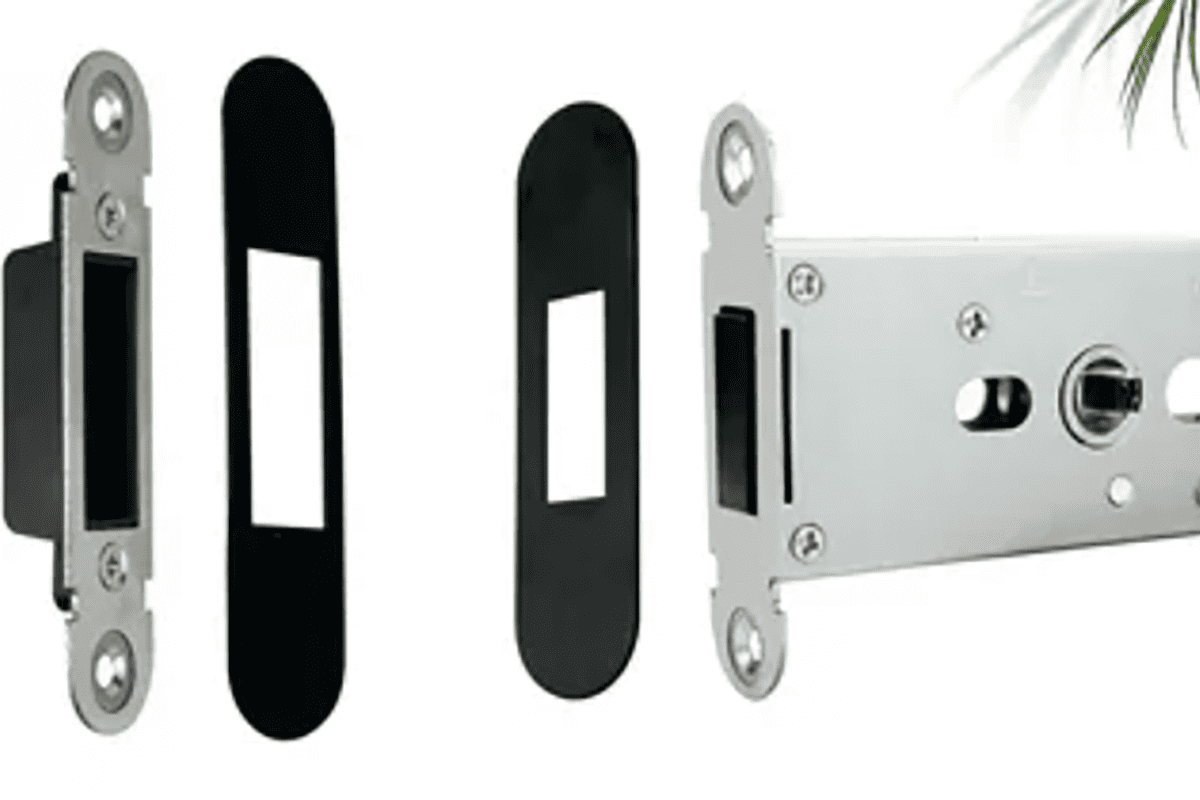
The strike plate is part of the locking system
In factory discussions, I often explain that a mortise lock has two sides of responsibility:
Door leaf side
This includes the mortise lock body, latch bolt, deadbolt, spindle hole, cylinder hole, handles, and escutcheons.Frame side
This includes the strike plate, strike box, frame cutout, screw fixing points, and sometimes reinforcement plates.
The strike plate is the point where both sides meet. If the lock body is accurate but the frame-side opening is wrong, the user still experiences a bad door.3 This is why I never confirm a mortise lock package only by faceplate size or backset. I also check the strike drawing.
What does the strike plate actually do?
A mortise lock strike plate performs several practical jobs:
- Receives the latch bolt when the door closes.
- Receives the deadbolt when the key or thumb turn locks the door.
- Protects the frame edge from repeated metal impact.
- Guides the latch into the correct position during closing.
- Supports locking stability after the door is closed.
- Helps control closing feel when the door and frame have slight tolerance variation.
For example, a latch bolt may enter the strike opening smoothly during sample testing. But in mass production, a small variation in door hanging, frame machining, or gasket compression can cause rubbing4. A proper mortise lock strike plate design reduces that risk.
Strike plate vs. strike box
Some buyers use “strike plate” and “strike box” as the same term. In many projects, the strike plate is the visible frame-side plate, while the strike box is a deeper receiving box behind it5. The box gives extra space for the latch or deadbolt and helps protect the frame material.
| Component | Position | Main Function | Common Use |
|---|---|---|---|
| Strike plate | Surface or recessed face of jamb | Guides and receives bolt | Standard wood or metal frames |
| Strike box | Behind the plate inside the frame | Provides deeper receiving cavity | Metal frames, fire-rated doors, heavier-duty projects |
| Reinforcement plate | Behind or around strike area | Adds fixing strength | Commercial doors and high-use doors |
In procurement, I suggest buyers confirm which item is included in the quotation. Some orders need only a flat plate. Some require a box, screws, and project-specific packaging. Clear confirmation prevents missing components during installation.
What types of strike plate for mortise lock are common?
A strike plate for mortise lock is usually selected by door frame design and closing requirement. If buyers only check the lock body and ignore the strike type, they may receive parts that are technically metal plates but unsuitable for the project.
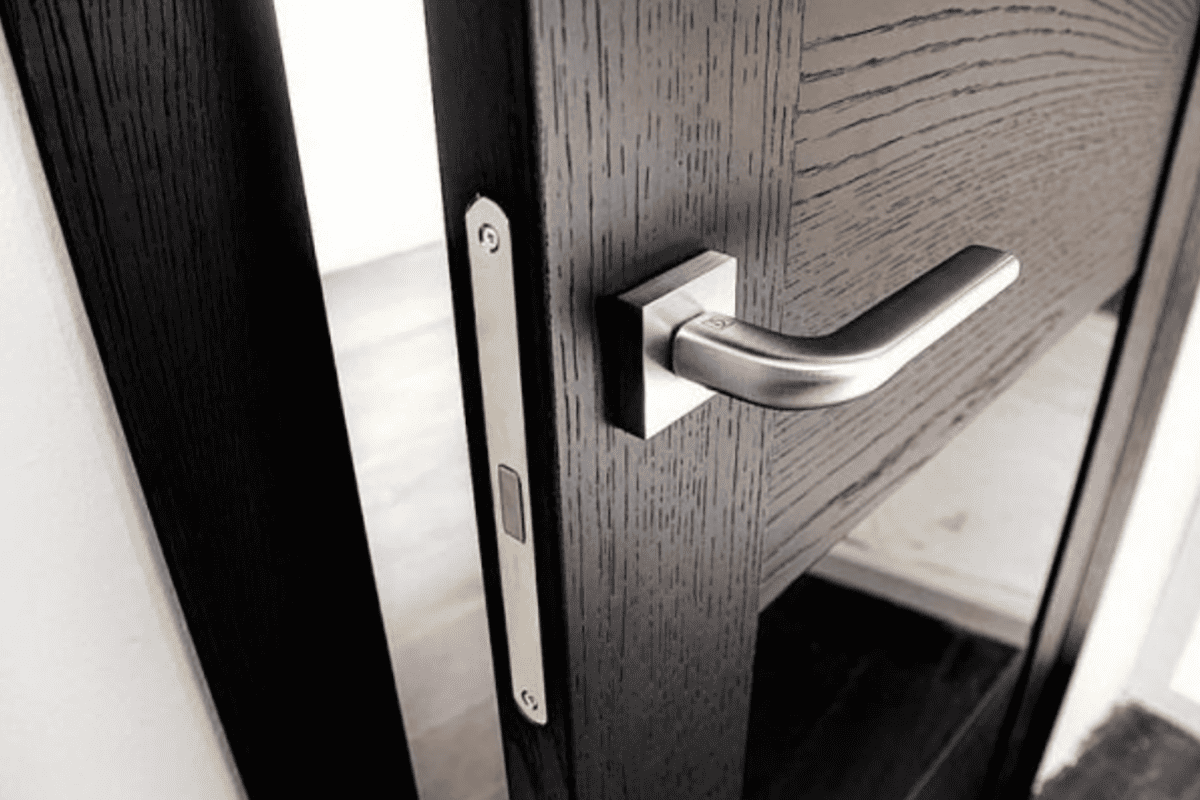
The two practical types I most often discuss are flat strike plates and bent-lip strike plates. A flat strike plate sits flush and gives a clean frame finish. A bent-lip strike plate has a raised guiding edge that helps the latch enter the opening more smoothly during door closing.
Flat strike plate
A flat strike plate is a basic plate recessed into the door frame surface. It usually has one or more openings for the latch bolt and deadbolt. The surface remains flush with the frame when installed correctly.
I see flat strike plates used often because they are simple, clean, and easy to understand from drawings. They are suitable for many common latch structures and standard timber or metal frame applications.
Typical advantages include:
- Clean appearance after installation.
- Straightforward machining requirement.
- Good fit for flush frame designs.
- Easier packing and inventory management.
- Suitable for many standard mortise lock bodies.
However, a flat strike plate still needs accurate alignment. If the frame cutout is too high, too low, too narrow, or too shallow, the latch may hit the plate edge. The result can be a hard closing feel or visible wear.
Bent-lip strike plate
A bent-lip strike plate has a raised, curved, or bent guiding lip near the latch opening. The lip helps guide the latch bolt into the strike opening as the door closes. This can reduce friction and improve the closing feel, especially when the frame edge or door gap needs extra guidance.
In real orders, I often consider a bent-lip design when the buyer wants smoother closing or when the frame condition makes a simple flat plate less forgiving. The bent lip can help compensate for minor approach-angle differences, but it is not a cure for poor machining.
Typical advantages include:
- Smoother latch entry.
- Less friction at the frame edge.
- Better guidance during closing.
- Reduced chance of latch scraping.
- More forgiving installation in some frame conditions.
Flat vs. bent-lip strike plate comparison
| Item | Flat Strike Plate | Bent-Lip Strike Plate |
|---|---|---|
| Appearance | Simple and flush | Visible guiding lip |
| Closing guidance | Basic | Better latch guidance |
| Installation demand | Accurate recess and opening | Accurate recess plus lip clearance |
| Common use | Standard doors and clean frame designs | Doors needing smoother latch entry |
| Risk if mismatched | Latch impact or rebound | Lip interference or poor fit |
| Buyer confirmation | Size, openings, screw holes | Size, openings, screw holes, lip direction, lip height |
How I choose between them in order confirmation
I usually ask the buyer for three items before recommending a strike type:
Lock body drawing
The drawing should show latch bolt position, deadbolt position, faceplate length, and center distances.Door frame section or profile
The frame profile helps confirm whether the plate should sit flat, recessed, boxed, or guided by a lip.Installation requirement
The buyer may need a clean flush look, smoother closing, fire-rated door compatibility, or easier site adjustment.
For OEM and project orders, the final selection should be confirmed by drawings and samples. I do not treat either type as universally better. I treat them as different solutions for different frame and lock conditions.
How do you confirm strike plate for mortise lock compatibility?
A strike plate for mortise lock becomes compatible only when the bolt positions, openings, plate dimensions, screw holes, frame cutout, and installation condition match. If one variable is wrong, the door may still close, but it may not close well.
To confirm compatibility, buyers should compare the mortise lock drawing, latch and deadbolt positions, strike opening shape, plate length, width, thickness, screw hole location, door frame profile, frame material, and flush or bent-lip requirement. Sample checking before batch production is strongly recommended.
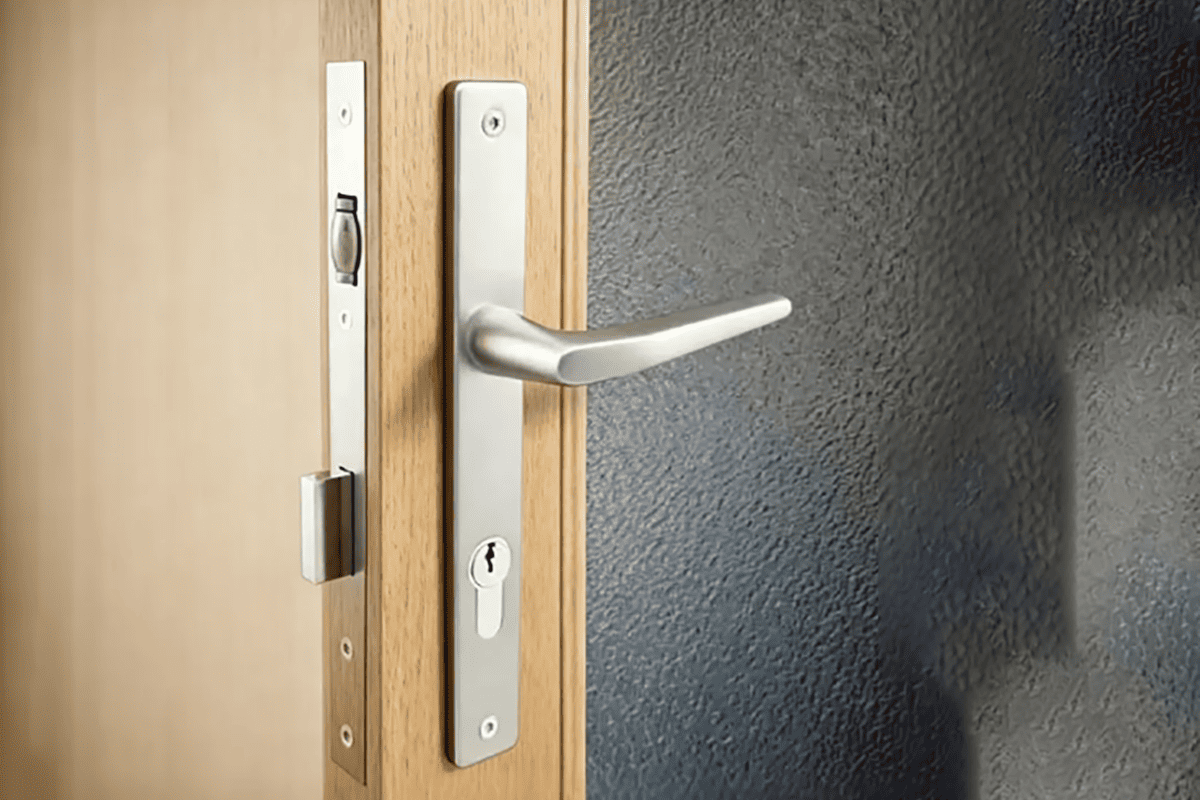
Compatibility starts with the lock body
The lock body decides the strike plate opening positions.6 In particular, buyers should check:
- Latch bolt center position
- Deadbolt center position
- Distance between latch and deadbolt
- Latch bolt shape
- Deadbolt throw length
- Faceplate reference line
- Lock body model number
Many problems happen when a buyer assumes that two lock bodies with similar outside sizes can use the same strike plate. In my experience, that assumption is risky. Even a small shift in latch position can cause the latch to touch the plate edge.
The door frame controls the installation
The frame is just as important as the lock body. A strike plate must work with the actual frame condition, not only with the lock drawing.
Key frame variables include:
- Frame material: wood, steel, stainless steel, aluminum, or composite.
- Frame profile: flat jamb, rebated frame, narrow frame, or special extrusion.
- Frame thickness: affects screw length and fixing strength.
- Cutout depth: affects whether the plate sits flush.
- Door gap: affects latch approach and closing feel.
- Gasket compression: affects final door position after closing.
For example, a strike plate may work well on a timber frame with simple routing. The same plate may not work on a steel frame if the receiving cavity, reinforcement, or screw fixing position is different.
Key matching checklist
I recommend using a checklist before purchase order confirmation.
| Matching Variable | What to Confirm | Why It Matters |
|---|---|---|
| Lock body model | Exact item code and drawing | Prevents wrong bolt position |
| Latch bolt position | Height and centerline | Ensures latch enters opening |
| Deadbolt position | Height and centerline | Ensures locking function |
| Opening shape | Single, double, square, radius, boxed | Matches bolt geometry |
| Plate length | Overall plate size | Matches frame machining |
| Plate width | Visible and recessed width | Prevents edge exposure |
| Plate thickness | Surface height | Controls flush installation |
| Screw hole position | Distance and countersink | Matches frame fixing |
| Frame material | Wood, steel, aluminum, etc. | Affects machining and screws |
| Frame profile | Flat, rebated, narrow, special | Affects lip and recess design |
| Lip requirement | Flat or bent-lip | Affects closing guidance |
| Finish | SS, brass tone, PVD, painted, etc. | Matches project appearance |
Why sample checking matters
For bulk orders, I prefer sample confirmation before mass production. A drawing is necessary, but a sample shows the real closing feel. During sample checking, the technical team should test:
- Whether the latch enters without scraping.
- Whether the deadbolt extends fully.
- Whether the door rebounds after closing.
- Whether the strike plate sits flush.
- Whether screws sit correctly in countersunk holes.
- Whether the frame cutout matches the supplied plate.
- Whether the finish and packaging meet project needs.
This step is especially important for door factories that machine hundreds or thousands of frames. If the first CNC program or punching die is based on a wrong strike drawing, every frame may need rework. That is expensive and avoidable.
OEM and project orders need stronger confirmation
For OEM hardware brands and door manufacturers, compatibility is not only a technical issue. It affects delivery schedules, after-sales service, and brand reputation. I have seen buyers focus heavily on handle design and cylinder finish while leaving the strike plate to the last step. That approach often creates delays.
For customized mortise lock sets, I suggest confirming:
- Final lock body drawing.
- Strike plate drawing.
- Door frame section.
- Screw specification.
- Surface finish.
- Sample approval.
- Inspection standard.
- Packing method.
At SDH Hardware, we usually support customer stamping, laser logo, custom packaging, drawings after order confirmation, and product inspection after completion. For strike plates, the most important support is still basic: we help buyers match the lock body and frame condition before production.
What buying risks happen when a strike plate for mortise lock is mismatched?
A strike plate for mortise lock mismatch can create problems that look like lock quality issues but are actually compatibility issues. If buyers order based only on appearance or rough size, the installation team may face avoidable site adjustments and delays.
The main risks are latch misalignment, door rebound, poor deadbolt engagement, frame rework, noisy closing, screw mismatch, inconsistent batch results, and failed project acceptance. The safest approach is to confirm drawings, samples, frame machining, and lock body model before bulk purchase.
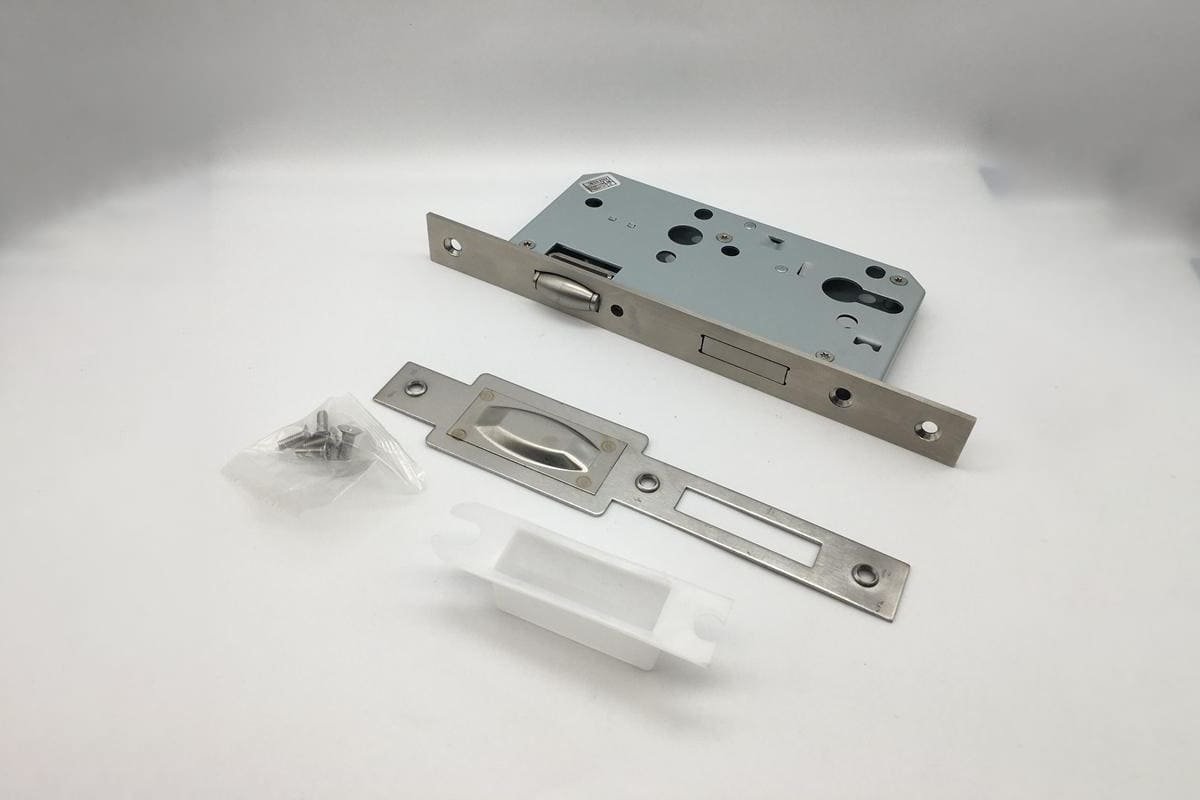
Risk 1: The latch misses the opening
This is the most common issue. The latch bolt may hit the upper edge, lower edge, or side edge of the strike opening. The door may need extra force to close. In some cases, the latch does not engage at all.
This problem usually comes from:
- Wrong latch centerline.
- Incorrect frame machining.
- Plate installed too high or too low.
- Door sag after installation.
- Strike opening too small.
- Wrong lock body matched with old strike stock.
Risk 2: The deadbolt cannot extend fully
A deadbolt needs enough space behind the strike plate. If the receiving cavity is shallow or misaligned, the deadbolt may stop before full throw.7 This creates a false sense of locking.
For commercial doors, this is a serious concern. A user may turn the key and feel resistance, but the deadbolt may not be fully seated. Buyers should check the deadbolt throw length and the strike box depth before approval.
Risk 3: The door rebounds or feels unstable
A door can rebound when the latch does not seat cleanly.8 It can also happen when gasket compression pushes the door leaf outward and the strike opening does not hold the latch position well.
A bent-lip strike plate may help guide latch entry, but it cannot solve every rebound issue. The installer may also need to adjust hinges, door gap, gasket pressure, or frame position.
Risk 4: Frame rework delays the project
Frame rework is costly because it happens late. The door leaf may already be painted or finished. The frame may already be installed. The site team may not have the correct tools to enlarge or move the opening cleanly.
For door factories, rework can affect the whole batch. A 2 mm error in strike position may sound small, but it can become a production problem across 500 doors.
Risk 5: Bulk orders become inconsistent
One sample can pass while the batch still fails if the strike plate is not controlled properly. Buyers should check production consistency, not only one hand sample.
Important inspection points include:
- Overall plate length and width.
- Opening size and burr control.
- Screw hole position.
- Countersink quality.
- Flatness of the plate.
- Lip angle for bent-lip plates.
- Surface finish consistency.
- Packing label accuracy.
Practical procurement controls
I recommend these controls for buyers who purchase mortise lock sets in volume:
Request technical drawings before order confirmation.
Drawings should include bolt positions and strike plate dimensions.Approve samples before frame machining.
Do not machine large quantities of frames from assumptions.Keep lock body and strike plate item codes linked.
This prevents warehouse mixing.Confirm whether screws and strike boxes are included.
Accessories should be listed clearly in the packing list.Inspect critical dimensions after production.
Finished product inspection should include strike plate matching, not only lock function.Use professional evaluation for special applications.
Fire-rated doors, security doors, acoustic doors, and high-traffic commercial doors may require project-specific testing and professional review.9
As a manufacturer, I can provide production experience, drawings, and product inspection support. However, final application suitability should always be checked against the project requirement, local regulation, and qualified professional evaluation where needed.
How should door factories and OEM buyers specify a strike plate for mortise lock?
A strike plate for mortise lock should be specified with enough detail for production, inspection, and installation teams to understand the same requirement. If the specification only says “standard strike plate,” the supplier may choose a part that does not match the buyer’s frame.
Door factories and OEM buyers should specify the lock body model, strike plate type, dimensions, opening shape, screw hole position, material, finish, frame profile, installation method, accessories, sample approval requirement, and inspection criteria. This creates a clear basis for quotation and batch production.
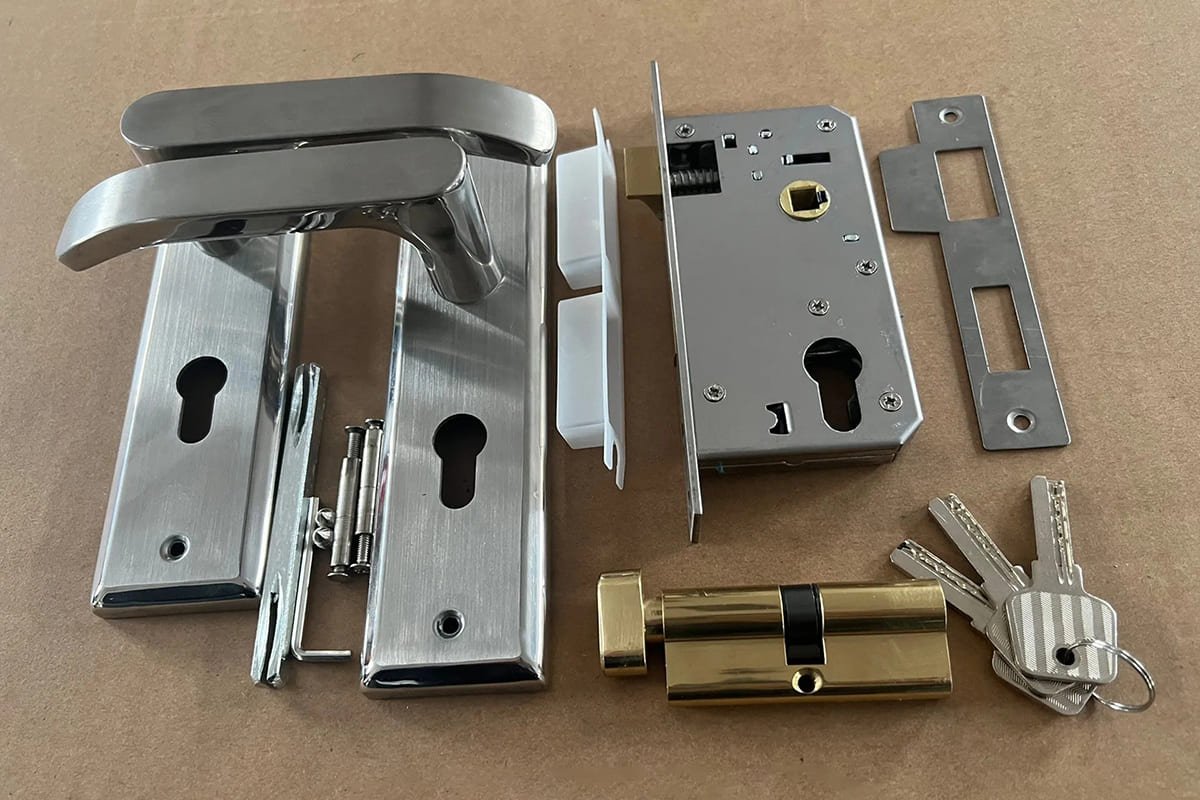
A good specification prevents unclear assumptions
In B2B hardware orders, many problems start with unclear words. “Standard” can mean different things in different markets. A European-style mortise lock, Middle East project door, and Southeast Asian wood door may all use different frame conditions.
When I review a new order, I prefer a specification that includes the following details:
- Product name: mortise lock strike plate or strike box.
- Compatible lock body: exact model number.
- Plate type: flat or bent-lip.
- Material: stainless steel, steel, brass, or other required material.
- Thickness: confirmed by drawing or sample.
- Overall size: length and width.
- Opening details: latch opening, deadbolt opening, radius, and spacing.
- Screw holes: quantity, distance, diameter, and countersink.
- Finish: satin stainless steel, polished, PVD, powder coating, or project finish.
- Accessories: screws, box, reinforcement plate, packing.
- Frame condition: wood, steel, aluminum, rebated, flush, or special profile.
- Inspection requirement: critical dimensions and visual standard.
Example specification table
| Specification Item | Example Confirmation | Buyer Note |
|---|---|---|
| Lock body model | SDH project model or buyer OEM code | Must match drawing |
| Strike type | Flat strike plate | Or bent-lip if guidance is needed |
| Plate size | Confirm by drawing | Do not assume universal size |
| Opening | Latch + deadbolt openings | Match bolt positions |
| Screw holes | 2 holes, countersunk | Confirm distance and screw type |
| Material | Stainless steel or steel | Depends on project and cost |
| Finish | Satin stainless steel | Match handles and faceplate |
| Frame material | Timber or steel | Affects cutout and fixing |
| Sample | Required before batch | Recommended for door factories |
| Inspection | Dimension + function check | Include in QC plan |
Why packaging and labeling matter
For large orders, compatibility can fail because of warehouse handling, not production. If several strike plates look similar, workers can mix them.10 I suggest using clear labels that link the strike plate to the lock body model.
Good labels may include:
- Customer item code.
- Lock body model.
- Strike plate type.
- Finish.
- Quantity.
- Batch number.
- Project name if needed.
This is especially useful for wholesalers and hardware brand buyers who keep multiple mortise lock models in stock.
Quality control points during manufacturing
A strike plate seems simple, but production quality still matters. During inspection, I pay attention to:
- Burrs around openings: Burrs can scratch latch bolts and affect closing.
- Flatness: Warped plates may not sit flush.
- Countersink accuracy: Poor countersinks make screw heads stand proud.
- Lip shape: Bent-lip plates need consistent angle and edge smoothness.
- Surface finish: Visible parts should match the lock faceplate and handles.
- Hole position: Small deviations can affect installation.
At SDH Hardware, our production process includes raw material screening, standardized production supervision, and finished product inspection. For door hardware buyers, I suggest asking any supplier how they inspect the strike plate together with the lock body, not only as a separate stamped part.
When customization is reasonable
Custom strike plates are useful when the buyer has:
- A special frame profile.
- A private lock body model.
- A project-specific finish.
- A required logo or packaging system.
- A unique latch or deadbolt structure.
- A door factory machining standard already in use.
Customization should be based on drawings and samples. It should not be based only on a photo. A photo helps communication, but it does not replace a dimensional drawing.
Frequently Asked Questions
Is a strike plate for mortise lock universal?
No. A strike plate for mortise lock is not universal. It must match the latch bolt position, deadbolt position, opening shape, plate size, screw holes, lock body model, and door frame condition. Similar-looking mortise locks may still require different strike plates.
What is the difference between a flat strike plate and a bent-lip strike plate?
A flat strike plate sits flush in the door frame and provides a clean, simple receiving point. A bent-lip strike plate has a raised guiding edge that helps the latch enter the opening more smoothly. The correct choice depends on the frame design and closing requirement.
Why does my mortise lock not close smoothly even with the correct lock body?
The strike plate may be misaligned, the frame cutout may be wrong, or the door gap may have changed after installation. Hinge position, gasket pressure, and door sag can also affect closing. Buyers should check the lock body, strike plate, and frame together.
Should I approve a sample before ordering strike plates in bulk?
Yes. Sample approval is strongly recommended before bulk ordering or frame machining. A sample helps confirm latch entry, deadbolt throw, screw position, plate flushness, finish, and closing feel. This reduces the risk of batch rework and installation delays.
What information should I send to a supplier for matching?
You should send the mortise lock drawing, lock body model, latch and deadbolt positions, door frame section, frame material, required strike type, finish, screw requirement, and quantity. For OEM orders, you should also confirm packaging, labels, and inspection standards.
Conclusion
A strike plate for mortise lock is a critical frame-side component, not a universal accessory. It receives the latch and deadbolt, protects the frame, guides alignment, and affects the final closing feel. Buyers should confirm the lock body, strike type, bolt positions, openings, frame profile, and samples before mass production. If you need factory support for mortise lock and strike plate matching, SDH Hardware can help review drawings, confirm samples, and supply matched OEM/ODM door hardware solutions.
"Lockset", https://en.wikipedia.org/wiki/Lockset. A general door-hardware reference defines a strike plate as the frame-mounted plate that receives a latch or bolt, supporting the article’s description of the strike as the receiving component for a mortise lock. Evidence role: definition; source type: encyclopedia. Supports: A neutral reference should define a strike plate as the frame-side fitting that receives the latch or bolt of a lock.. Scope note: The source may define strike plates generally rather than mortise-lock strike plates specifically. ↩
"SECTION 087111 - DOOR HARDWARE (SCHEDULED BY ...", https://fpm.usc.edu/wp-content/uploads/2021/11/087102-USC-HSC-door-hardware-Guide-Specification_1.pdf. Institutional door-hardware guidance treats strikes as matched components whose openings and preparations correspond to the lock’s latch and bolt geometry, supporting the statement that mortise-lock strikes are not universal. Evidence role: general_support; source type: institution. Supports: A hardware standard or institutional guide should show that mortise lock components vary by lock function, dimensions, bolt position, and strike preparation.. Scope note: This would support the compatibility principle, not every possible lock-and-strike combination. ↩
"How do I figure out my door latch and strike plate alignment", https://diy.stackexchange.com/questions/124846/how-do-i-figure-out-my-door-latch-and-strike-plate-alignment. Door-hardware installation guidance identifies latch-to-strike alignment as necessary for proper latching, supporting the article’s claim that an incorrect frame-side opening can make an otherwise correct lock perform poorly. Evidence role: mechanism; source type: institution. Supports: A technical guide should explain that the latch and strike must align for reliable closing and latching.. Scope note: The source may discuss doors and latches broadly rather than mortise locks alone. ↩
"SDI-122-21.pdf", https://steeldoor.org/wp-content/uploads/2022/01/SDI-122-21.pdf. Technical door-installation guidance links frame tolerances, door clearances, and seal compression to latch engagement, supporting the article’s statement that small variations can produce rubbing at the strike. Evidence role: mechanism; source type: institution. Supports: A technical installation source should connect door/frame tolerances and gasket compression with latch or strike alignment problems.. Scope note: The support is contextual because the exact tolerance at which rubbing occurs depends on the door set and hardware geometry. ↩
"Electric strike", https://en.wikipedia.org/wiki/Electric_strike. Architectural-hardware terminology distinguishes a strike plate from the strike box or pocket behind it, supporting the article’s explanation that the box provides a deeper receiving space for the latch or bolt. Evidence role: definition; source type: institution. Supports: A door-hardware glossary should define a strike box or strike pocket as the receiving cavity or boxed component behind the strike plate.. Scope note: Terminology may vary by market and by manufacturer. ↩
"Mortise Cut Made Easy",
. Mortise-lock installation templates and hardware standards specify strike preparations by reference to the lock body’s latch and deadbolt locations, supporting the article’s statement that the lock body determines strike opening positions. Evidence role: mechanism; source type: institution. Supports: A standard or installation template should show that strike openings correspond to the latch and deadbolt positions of the lock body.. Scope note: The source may present representative templates rather than all proprietary lock-body designs. ↩"Choosing the Right Strike Plate for Door Security", https://www.doorarmor.com/blog/security-expert-blog-6/choosing-the-right-strike-plate-for-door-security-317. Lock-performance standards and installation guidance require the deadbolt to project into an aligned receiving strike or box, supporting the article’s claim that inadequate cavity depth or misalignment can prevent full throw. Evidence role: mechanism; source type: institution. Supports: A lock standard or security guide should explain that deadbolts require adequate strike depth and alignment for full projection.. Scope note: The source may define performance or installation requirements rather than document this exact failure scenario. ↩
"How to Fix a Misaligned Door Latch (Latch doesn't Align with ...",
. Door-hardware troubleshooting literature identifies incomplete latch engagement at the strike as a cause of door bounce or failure to latch, supporting the article’s statement that rebound can occur when the latch does not seat cleanly. Evidence role: mechanism; source type: institution. Supports: A door-hardware troubleshooting source should connect poor latch engagement with rebound, bounce, or failure to latch.. Scope note: Door rebound can also result from hinges, closers, seals, or frame movement, so the citation would support one mechanism rather than an exclusive cause. ↩"Fire Doors and NFPA 80 FAQs", https://www.nfpa.org/news-blogs-and-articles/blogs/2025/04/11/fire-doors-faqs. Fire-door and architectural-hardware standards treat rated and high-performance doors as tested assemblies with controlled hardware and inspection requirements, supporting the article’s caution that such applications may need project-specific review. Evidence role: expert_consensus; source type: institution. Supports: Codes and standards should show that fire-rated and performance doors are evaluated as assemblies and may require listed components, inspection, or qualified review.. Scope note: The cited standards may directly address fire and hardware performance, while acoustic or security requirements may need separate standards. ↩
"ISO 9001 Clause 8.5.2 Identification & Traceability", https://www.qualityze.com/blogs/iso-9001-clause-8-5-2-identification-traceability. Quality-management standards require product identification and traceability where necessary to preserve conformity, supporting the article’s point that clear labeling helps prevent similar strike plates from being mixed during handling. Evidence role: general_support; source type: institution. Supports: A quality-management standard should support identification and traceability controls to prevent mixing similar parts.. Scope note: The source addresses general manufacturing controls rather than door-hardware warehouses specifically. ↩
