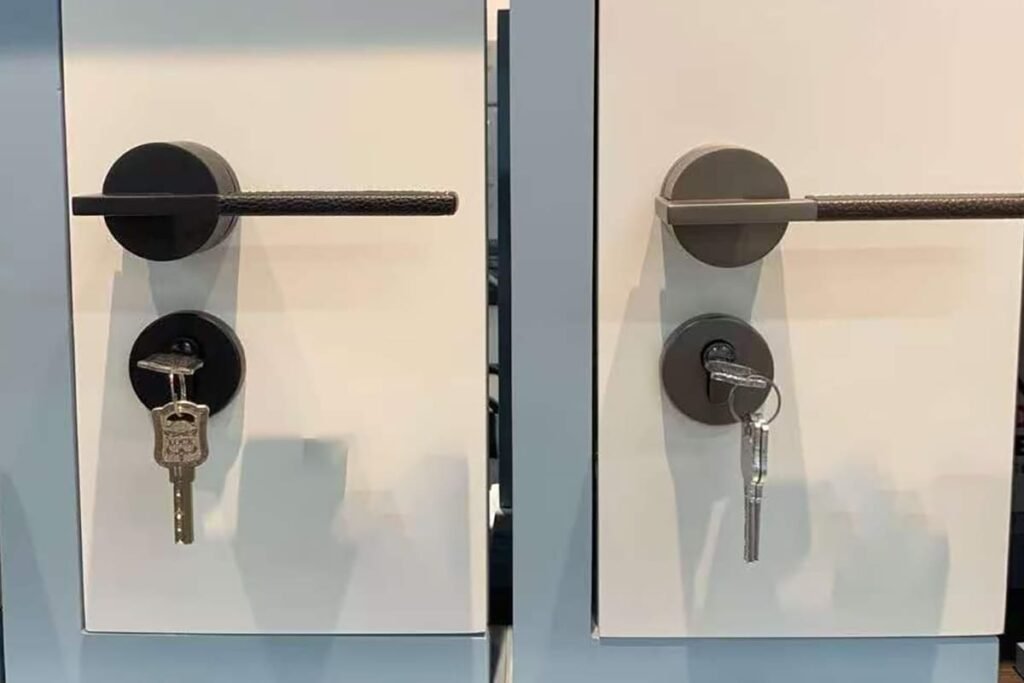
What Is the Difference Between Through-Bolt and Concealed-Fixing Door Handles?
Through-bolt and concealed-fixing door handles can look similar from the outside, but the wrong fixing structure can cause loose handles, installation delays, and after-sales complaints. I see this often in factory-side product configuration. The solution is to choose the fixing method based on door material, door thickness, lock body, and project use frequency.
The difference between through-bolt and concealed-fixing door handles is structural. Through-bolt fixing uses bolts passing through the door panel to clamp both handles together, giving stronger stability.1 Concealed-fixing usually hides screws for a cleaner look, but self-tapping concealed fixing is mainly suitable for wooden doors, not steel doors.2
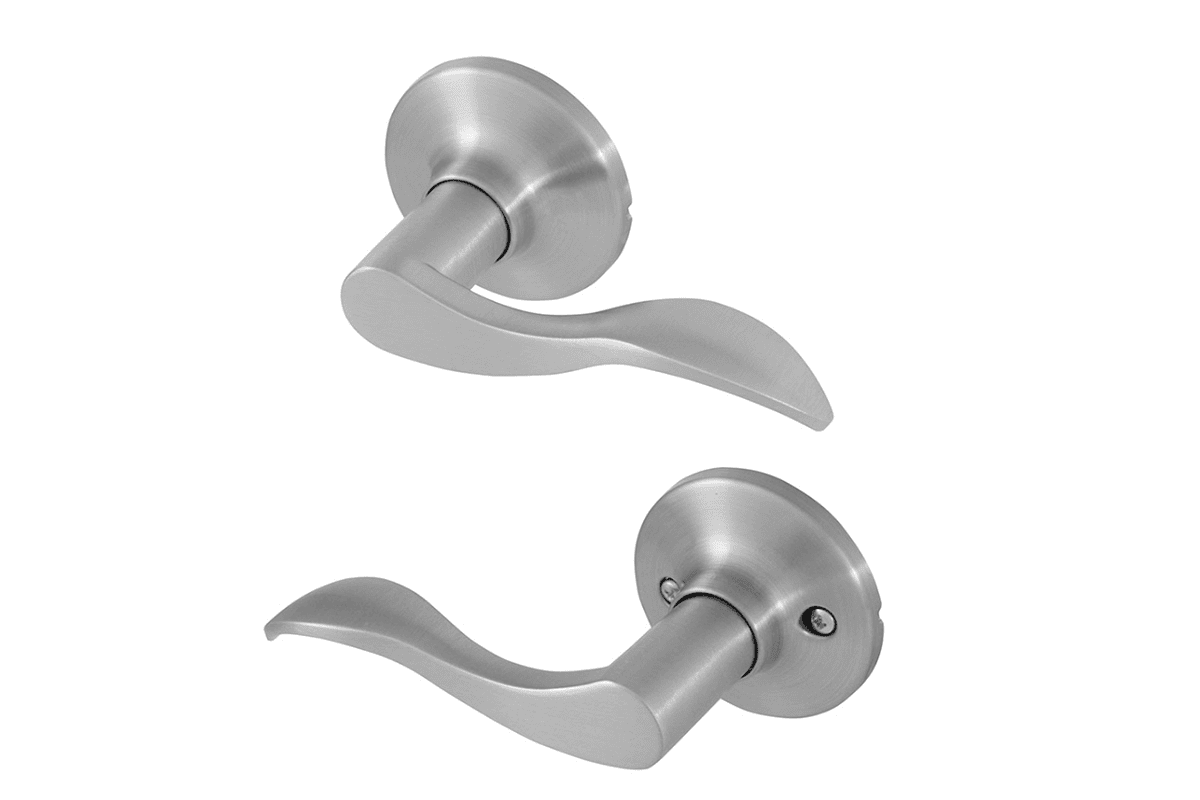
Many buyers first ask which handle looks better. I usually suggest asking a different question first: which fixing structure will hold reliably on the selected door? Once the door material, lock configuration, and installation holes are clear, the right handle fixing option becomes much easier to choose.
How Do Through-Bolt and Concealed-Fixing Door Handles Work?
A handle can look strong in a catalog, but poor fixing can still create problems after installation. This is where buyers sometimes get misled by appearance. I always look at the fixing structure first because it decides how the handle transfers force into the door panel.
Through-bolt door handles use bolts that pass through the door and connect the inside and outside handles together. Concealed-fixing door handles hide the visible screws, often using a rose cover or plate cover. In many practical configurations, concealed self-tapping screws depend on the door material for grip.3

Through-bolt fixing: clamping both sides of the door
In a through-bolt handle set, bolts usually pass from one side of the door to the other. They connect the inner and outer handle plates, roses, or fixing bases. This creates a clamping force across the full door thickness.4
In typical production and configuration practice, this structure gives several advantages:
- The load is shared across both handle sides.
- The fixing does not depend only on the screw grip in one face of the door.
- The handle is less likely to loosen when pulled repeatedly.5
- The structure can suit wooden doors and steel doors when holes are prepared correctly.
For door manufacturers and wholesalers, this matters because door handles are touched hundreds or thousands of times after installation.6 A small amount of movement at the beginning can become a bigger problem later.
Concealed fixing: cleaner appearance with hidden screws
Concealed-fixing handles are designed so that screws are not visible after installation. This is usually achieved with a removable cover, hidden fixing plate, or screw position covered by the handle base.
This gives a clean appearance, which is useful for residential interiors, hotel rooms, and design-focused door sets. However, buyers should not assume that hidden screws mean stronger fixing.
In many common concealed-fixing structures, especially self-tapping screw fixing, the screw bites into the door face. This can work well on wooden doors because the screw has material to grip. On steel doors, the result depends heavily on panel thickness, reinforcement, pre-drilled holes, and fixing design. A normal self-tapping configuration is not the same as a through-bolt clamping system.7
Simple comparison table
| Item | Through-Bolt Fixing | Concealed-Fixing / Self-Tapping Fixing |
|---|---|---|
| Main principle | Bolts pass through the door and clamp both sides | Screws are hidden under cover or plate |
| Appearance | May have visible or partly visible fixing points depending on design | Cleaner external appearance |
| Main strength source | Cross-door clamping force | Screw grip in door material or fixing base |
| Suitable door materials | Wooden doors and steel doors, if matched correctly | Mainly wooden doors for self-tapping versions |
| Anti-loosening performance | Usually stronger in frequent-use applications | Depends heavily on material and installation |
| Buyer risk | Wrong hole position or center distance | Poor holding power on unsuitable door material |
I sometimes compare this to holding two boards together. If you only screw into one face, the holding depends on that face. If you clamp through both sides, the connection is usually more stable. Door hardware is more complex than that, but the basic idea helps many buyers understand the difference quickly.
Why Are Through-Bolt and Concealed-Fixing Door Handles Not Just an Appearance Choice?
Many buyers start with the question, “Do we want visible screws or hidden screws?” That is natural, but it can create a wrong procurement decision. If the handle fixing method does not match the door structure, a cleaner appearance can turn into a quality complaint.
Through-bolt and concealed-fixing door handles are not just different in appearance because they transfer force differently. Through-bolt fixing clamps the door from both sides, while concealed self-tapping fixing relies more on local screw grip. This affects strength, compatibility, installation reliability, and long-term loosening risk.
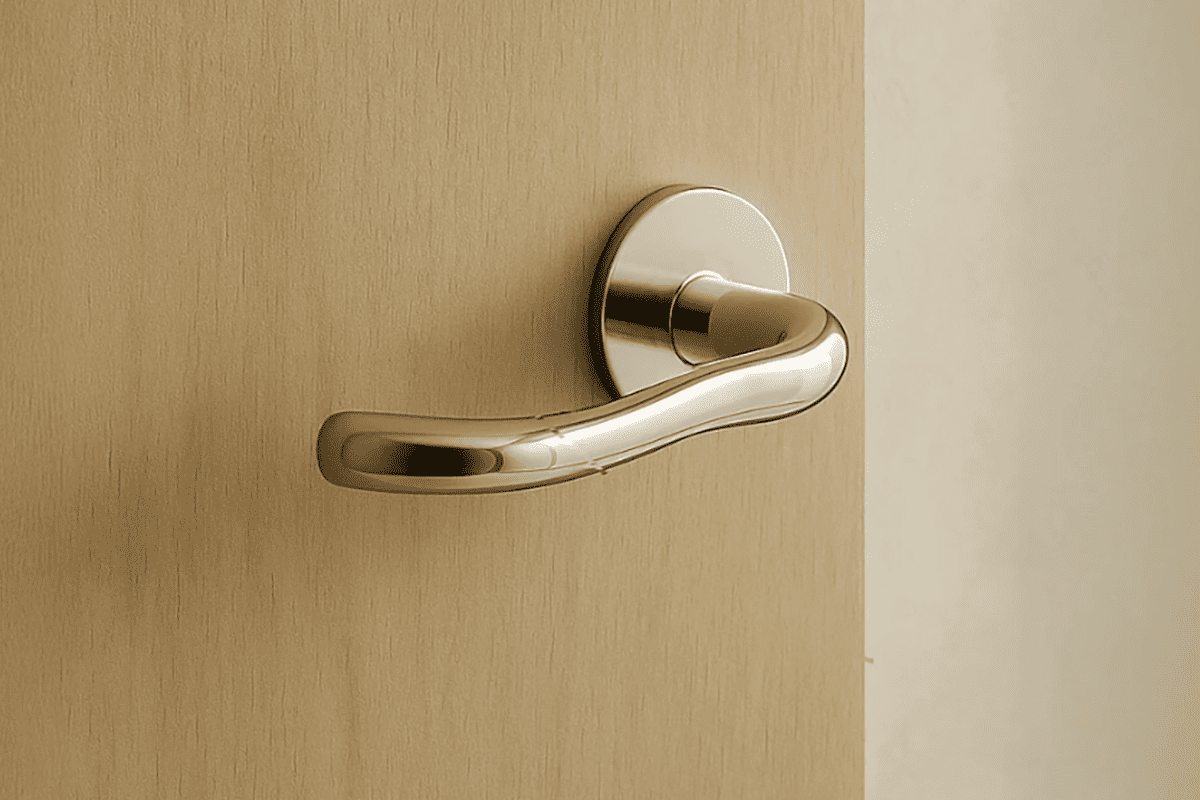
The hidden issue is load transfer
Every door handle faces repeated force. Users pull, push, twist, lean on, or sometimes misuse the handle.8 The fixing structure must transfer that force into the door.
With through-bolt fixing, the load is normally spread between the two handle sides through bolts. This gives a more secure mechanical connection. The door panel sits between the two sides, and the bolts help keep the assembly tight.
With concealed self-tapping fixing, the screw usually grips into the material on one side. This may be enough for interior wooden doors, especially when the door core and surface material are suitable. However, the same method may not be reliable for thin metal panels or hollow steel doors without proper reinforcement.
That is why I do not describe concealed fixing as automatically more premium. It can look better in some designs, but appearance is only one evaluation point.
What buyers should evaluate before choosing
For B2B buyers, the fixing choice should be part of the product configuration process. I usually suggest checking these points before confirming an order:
Door material
- Solid wood
- Engineered wood
- MDF / HDF door skin
- Hollow metal door
- Steel security door
- Fire-rated door leaf with special structure
Door thickness
- Common interior doors may be around 35–45 mm.9
- Project doors may use other thicknesses.
- Steel doors may have panels and internal reinforcement that affect fixing.
Lock body and spindle position
- Handle center distance must match the lock case.
- Screw hole positions must avoid conflict with the lock body.
- The spindle hole must align correctly.
Use frequency
- Apartment entrance doors
- Hotel room doors
- Office doors
- School, hospital, or public-area doors
Installation method
- Factory pre-drilling
- Site drilling
- Installer skill level
- Batch installation consistency
A practical procurement example
If a buyer orders handles for wooden interior doors, concealed-fixing handles may be a good option when the client wants a clean decorative look. The installer can mount the base, fix the screws into the door surface, and cover the screws with the rose or plate.
If the same buyer orders handles for steel doors, I would usually ask more questions before accepting the same fixing method:
- Is the steel panel reinforced where the handle will be installed?
- Are through holes allowed in the door construction?
- Does the lock body support the selected handle fixing points?
- What is the door thickness range?
- Will the project face high daily traffic?
In many steel door or high-frequency-use situations, through-bolt fixing is often the safer configuration because the fixing does not depend only on screw grip in a metal face panel.
I treat the fixing method as a structural decision first and a design decision second. This small shift helps avoid many batch installation problems.
When Should Buyers Choose Through-Bolt Door Handles?
Loose handles are one of the most frustrating after-sales problems because they are visible to the end user and difficult to explain later. If the project involves steel doors, heavy usage, or strict installation reliability, buyers should evaluate through-bolt door handles carefully.
Buyers should choose through-bolt door handles when they need stronger clamping force, better anti-loosening performance, and broader compatibility with wooden and steel doors. The final selection still depends on door thickness, lock body, hole position, handle center distance, and installation preparation.
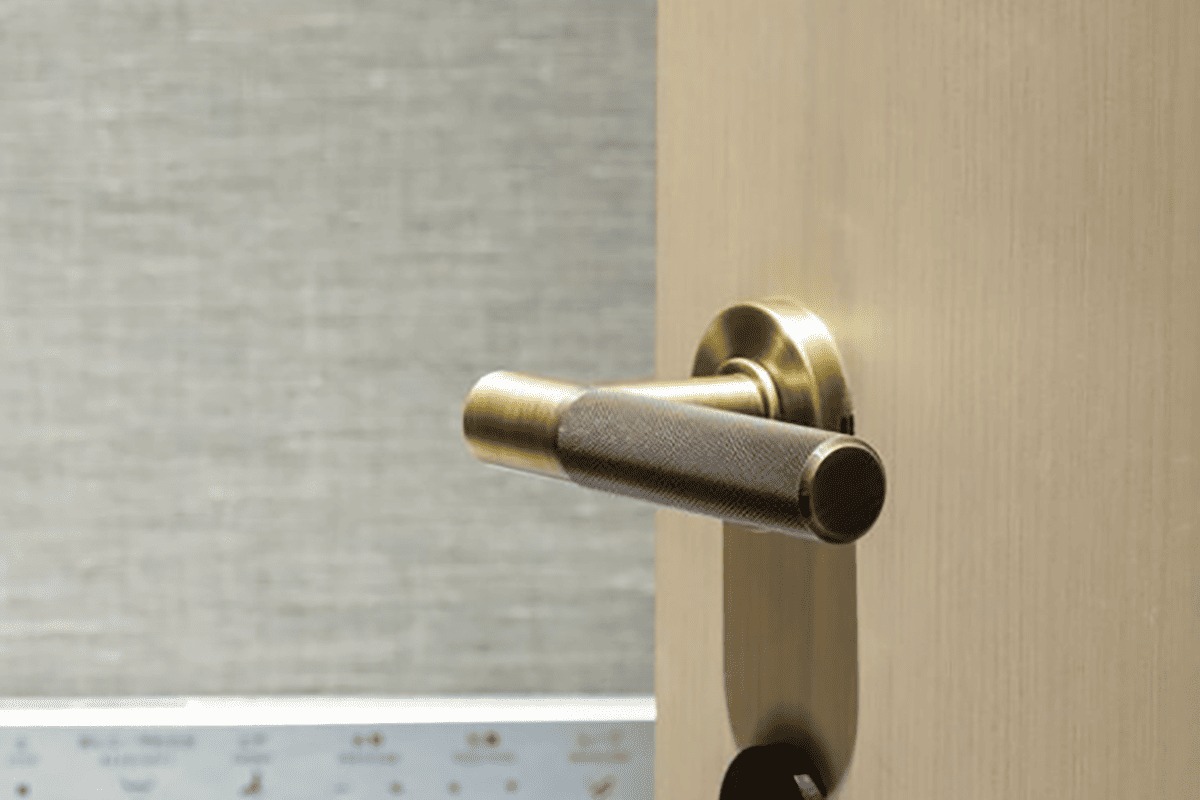
Best-fit applications for through-bolt fixing
Through-bolt fixing is often suitable for:
- Steel doors
- Wooden doors with frequent use
- Commercial doors
- Apartment entrance doors
- Hotel or office doors
- Project doors where long-term stability matters
- Door factories that can pre-drill accurate holes
- Bulk orders where installation consistency is important
This does not mean every door must use through-bolt fixing. It means the structure should be considered early, especially when product failure would create a large after-sales burden.
Why through-bolt fixing performs well in practice
The main advantage is the clamping action. The bolt passes through the door and connects the fixing points on both sides. This can reduce the risk of the handle base pulling away from one side of the door.
In factory-side configuration, I pay attention to several technical details:
| Configuration Point | Why It Matters |
|---|---|
| Door thickness | Bolt length must match the door thickness range |
| Hole diameter | Oversized holes can reduce stability |
| Center distance | Handle fixing holes must match lock body and door drilling |
| Spindle size | Spindle must match handle and lock follower |
| Plate or rose shape | Base design affects force distribution |
| Screw and bolt material | Material choice affects durability and corrosion resistance |
| Surface finish | Finish must suit the market and environment |
A good through-bolt handle set still needs correct installation. If the holes are misaligned, the installer may force the handle into position. That can create stress, poor handle return, or uneven tightening. So through-bolt fixing is not a substitute for correct drawing confirmation.
Wooden doors and through-bolt fixing
Through-bolt fixing can work very well on wooden doors. The door material may already offer good screw grip, but through-bolt fixing adds an extra level of mechanical security. This is useful when doors are used frequently or when the buyer wants to reduce after-sales risks.
For example, a hardware brand selling to multiple markets may choose through-bolt fixing as a standard configuration for certain handle ranges. This can reduce confusion because the same fixing method can serve many door types, provided the door preparation is correct.
Steel doors and through-bolt fixing
Steel doors deserve special attention. A self-tapping screw may not hold reliably in a thin metal panel unless the door has suitable reinforcement, threaded inserts, rivet nuts, or another engineered fixing method.10 Through-bolt fixing avoids some of this uncertainty because it clamps through the door assembly.
However, buyers must still confirm:
- Steel door thickness
- Internal reinforcement layout
- Lock case size
- Drilling drawing
- Bolt length
- Handle rose or plate size
- Fire-rated or project-specific requirements
For fire-rated door projects, buyers should verify the applicable certifications and installation requirements with qualified professionals. I do not recommend changing fixing structures on fire-rated assemblies without proper review because the door, lock, hinge, closer, and handle can all be part of a tested system.11
When Is Concealed-Fixing Suitable for Door Handles?
A clean handle surface can improve the perceived quality of a door set. However, if buyers choose concealed fixing only because the screws are hidden, they may overlook the most important issue: whether the screws can hold correctly in the door material.
Concealed-fixing door handles are suitable when the door material, screw grip, and installation method support the fixing structure. In typical production practice, self-tapping concealed fixing is mainly used for wooden doors. It is less suitable for standard steel doors unless the fixing design includes proper reinforcement or engineered inserts.
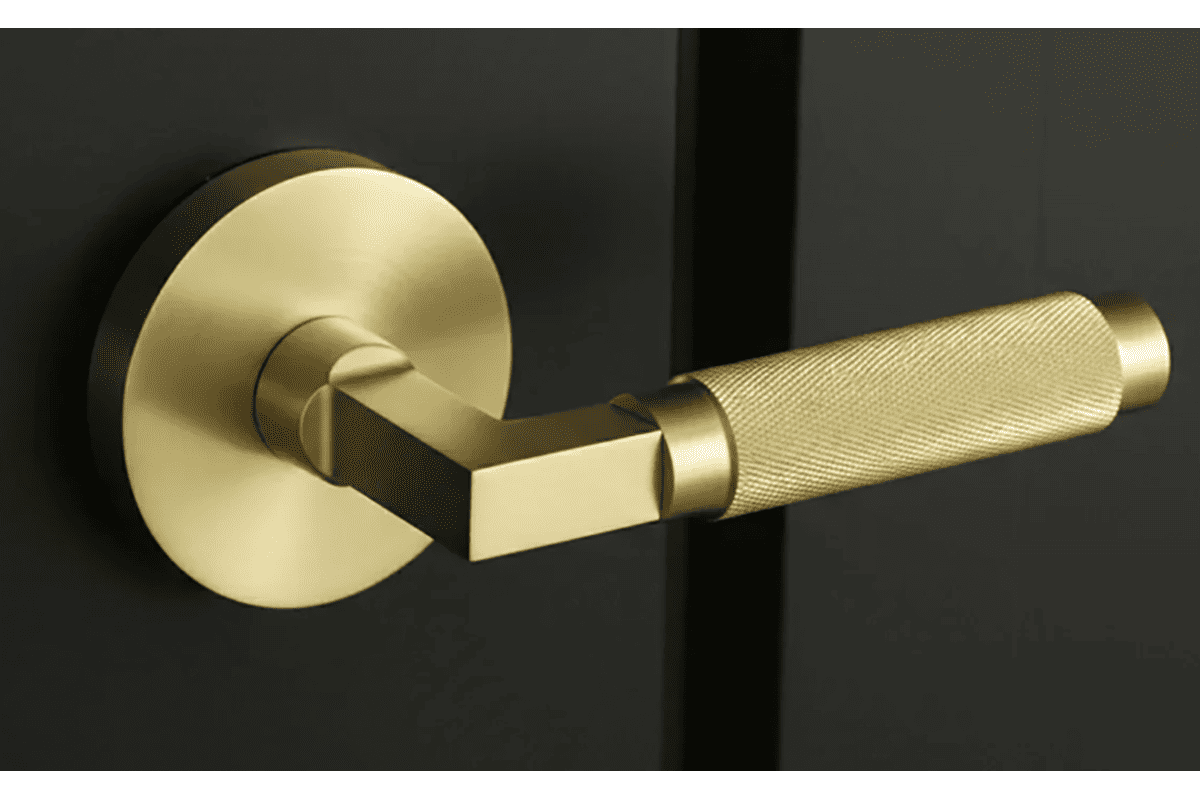
Where concealed fixing works well
Concealed fixing can be a good choice for:
- Interior wooden doors
- Residential room doors
- Hotel room doors with controlled specifications
- Projects where appearance is important
- Door sets with factory-controlled preparation
- Lower to medium traffic areas, depending on product design
The main advantage is visual cleanliness. The end user sees the handle, rose, or plate without exposed screw heads. This can be attractive in modern interiors.
Why self-tapping concealed fixing is mainly for wooden doors
A self-tapping screw needs material to bite into. Wood and engineered wood products can provide this grip when the structure is suitable. The screw creates its own holding path and stays in place through friction and material engagement.
Steel is different. A thin steel panel does not behave like wood. A screw may bite at first, but it may not provide the same long-term holding strength under repeated pulling and twisting. If the metal is too thin, the thread engagement is limited. If the hole is enlarged during installation, the screw can loosen quickly.
That is why I usually explain the limitation in simple terms:
Concealed self-tapping fixing is clean, but it is not a universal fixing solution for every door material.
Concealed fixing does not mean one structure only
The term “concealed fixing” can describe different designs. Buyers should ask suppliers to clarify the exact structure.
Common concealed fixing options may include:
Self-tapping screws hidden by a cover
- Common for wooden doors
- Simple installation
- Clean appearance
- Material grip is critical
Hidden fixing plate
- The handle or rose clips onto a base plate
- Screws are covered after installation
- Stability depends on base plate design and screw grip
Concealed through-bolt design
- Bolts may still pass through the door
- The fixing points may be covered by the rose or plate
- This can combine clean appearance with stronger clamping
This distinction is important. Some buyers hear “concealed fixing” and assume it always means self-tapping screws. That is not always true. A handle can be concealed in appearance but still use a through-bolt structure internally.
Questions to ask before ordering concealed-fixing handles
Before confirming concealed-fixing door handles, I suggest asking the supplier these questions:
- Is the fixing based on self-tapping screws, through bolts, or another system?
- Which door materials are suitable?
- What door thickness range does the set support?
- What hole preparation is required?
- Is the fixing compatible with the selected lock body?
- Can the supplier provide installation drawings?
- Are spare screws, bolts, and covers included?
- Can the product be tested on the buyer’s actual door sample before mass order?
For importers and bulk wholesalers, these questions protect the order. A small configuration mistake can affect hundreds or thousands of sets.
How Should Buyers Specify Through-Bolt and Concealed-Fixing Door Handles in a B2B Order?
A vague purchase order can create real production problems. If a buyer only writes “door handle with concealed fixing” or “handle with screws,” the factory may not know the exact door condition. This can lead to wrong bolts, wrong hole positions, and installation complaints.
Buyers should specify through-bolt and concealed-fixing door handles by confirming door material, door thickness, lock body model, handle center distance, screw hole position, spindle size, finish, packaging, and installation accessories. Clear drawings and sample confirmation reduce risk before mass production.
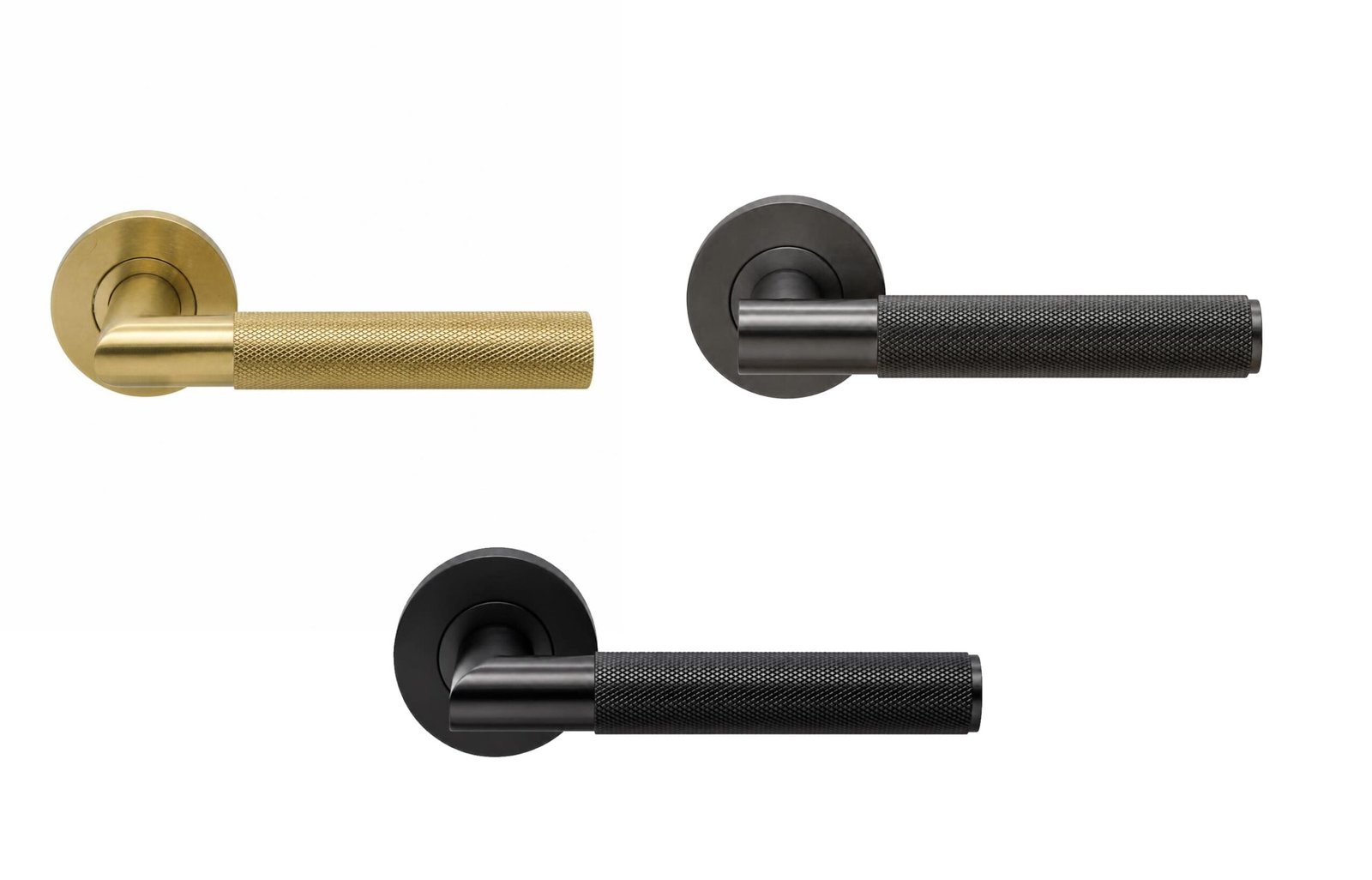
A practical specification checklist
When we configure handle orders at factory level, I prefer to collect the following information:
| Specification Item | What Buyers Should Confirm |
|---|---|
| Door material | Wooden, steel, aluminum, composite, or fire-rated door |
| Door thickness | Exact thickness or range, such as 35–45 mm |
| Lock body | Mortise lock model, backset, center distance |
| Handle type | Lever on rose, lever on plate, pull handle, or special design |
| Fixing method | Through-bolt, concealed self-tapping, concealed through-bolt |
| Hole positions | Drawing with center-to-center measurements |
| Spindle | Size, length, and material |
| Surface finish | SS, PVD, powder coating, electroplating, or custom color |
| Accessories | Screws, bolts, Allen key, spindle, covers, instruction sheet |
| Branding | Logo stamping, laser logo, custom packaging |
| Inspection needs | Pre-shipment inspection, function check, finish check |
This level of detail may feel slow at the beginning, but it saves time later. I would rather spend ten extra minutes on configuration than deal with ten cartons of unsuitable accessories.
Match the fixing method with the lock body
The handle cannot be evaluated alone. It must work with the lock body. For Euro mortise locks, the handle spindle must align with the follower.12 The fixing holes must not interfere with the lock case. The handle return spring, rose diameter, and plate length also matter.
For example, if the through-bolt holes pass through the same area as the lock body, the installer may not be able to insert the bolts. If the rose is too small, it may not cover existing holes. If the spindle is too short, the handle may not engage properly on thicker doors.
This is why technical drawings are important in B2B supply. A product photo is not enough.
Use samples before mass production
For new projects, I always recommend sample confirmation when possible. A sample allows the buyer to check:
- Handle feel
- Fixing stability
- Screw and bolt compatibility
- Surface finish
- Door fit
- Lock operation
- Packaging requirements
- Installation time
For door factories, sample testing on the actual door leaf is especially useful. The factory can drill the holes, install the lock, mount the handle, and see whether the complete door set works as intended.
Quality control points for bulk buyers
For bulk orders, buyers should define inspection points clearly. These may include:
Visual inspection
- Finish consistency
- Scratches
- Color difference
- Logo position
Dimensional inspection
- Rose or plate size
- Hole distance
- Spindle size
- Bolt length
Functional inspection
- Handle return
- Spring action
- Lock engagement
- Tightness after assembly
Accessory inspection
- Correct screws and bolts
- Correct covers
- Installation tools if required
- Packing list accuracy
Packaging inspection
- Inner box strength
- Label accuracy
- Carton mark
- Export packing requirements
At SDH Hardware, our business context is architectural door hardware manufacturing, including lever handles, mortise locks, hinges, cylinders, and door accessories. From this factory-side perspective, I see fixing method selection as part of product engineering and order control. Buyers should verify certifications, drawings, and suitability for their own application before final procurement, especially for fire-rated and regulated projects.
Frequently Asked Questions
Are through-bolt door handles better than concealed-fixing door handles?
Through-bolt door handles are usually better for strength and anti-loosening performance because the bolts clamp both sides of the door. Concealed-fixing handles can be better for appearance. The right choice depends on door material, use frequency, lock compatibility, and installation requirements.
Can concealed-fixing door handles be used on steel doors?
Concealed self-tapping door handles are mainly suitable for wooden doors. For steel doors, buyers should be careful because self-tapping screws may not hold reliably in thin metal panels. Steel doors often need through-bolt fixing, reinforcement, threaded inserts, or another engineered fixing solution.
Do through-bolt handles always show visible screws?
No. Some through-bolt handles may have visible fixing points, but others can hide the bolts under a cover, rose, or plate. Buyers should separate the internal fixing structure from the external appearance when comparing handle designs.
What information should I give a supplier before ordering door handles?
You should provide door material, door thickness, lock body details, handle center distance, hole drawing, spindle size, finish, quantity, packaging requirements, and fixing method preference. If possible, you should test samples on the actual door before confirming mass production.
Are concealed-fixing handles more premium?
Concealed-fixing handles can look cleaner, but they are not automatically stronger or more premium. A handle is only suitable when its fixing method matches the door material and installation conditions. For steel doors or high-use doors, through-bolt fixing may be the safer choice.
Conclusion
The real difference between through-bolt and concealed-fixing door handles is not only visible versus hidden screws. It is a structural choice that affects strength, door compatibility, installation reliability, and long-term loosening risk. Through-bolt fixing is often safer for steel doors and high-frequency use, while concealed self-tapping fixing is mainly suitable for wooden doors. If you need factory-side support for handle configuration, lock matching, drawings, ODM/OEM production, or bulk inspection, SDH Hardware can help you evaluate the right door hardware solution for your project.
"087100 – DOOR HARDWARE - Facilities and Campus Services", https://fcs.cornell.edu/087100-door-hardware. Engineering references on bolted joints describe through-fasteners as producing clamp force across joined members, supporting the article's explanation that through-bolt handle fixing stabilizes the assembly by clamping both sides of the door. Evidence role: mechanism; source type: education. Supports: The source should explain that through-bolts or bolted joints clamp joined members together and distribute load across the assembly.. ↩
"Prediction of withdrawal resistance of self-tapping screws in softwood ...", https://bioresources.cnr.ncsu.edu/resources/prediction-of-withdrawal-resistance-of-self-tapping-screws-in-softwood-structural-lumber/. Research on screw withdrawal and pull-out behavior shows that holding strength depends strongly on substrate material, density, and available thread engagement, providing contextual support for treating self-tapping concealed fixing as more suitable for wood than for thin steel panels. Evidence role: general_support; source type: paper. Supports: The source should compare screw holding or withdrawal behavior in wood-based materials and thin sheet metal, especially the dependence on thread engagement and substrate thickness.. Scope note: The source may support the fastening principle rather than test this exact door-handle product configuration. ↩
"Wood Handbook, Chapter 08: Fastenings", https://research.fs.usda.gov/download/treesearch/37424.pdf. Experimental studies of screw withdrawal and pull-out resistance identify substrate material properties and thread engagement as major determinants of holding strength, supporting the statement that concealed self-tapping screws depend on the door material for grip. Evidence role: mechanism; source type: paper. Supports: The source should show that screw grip, withdrawal resistance, or pull-out strength is controlled by the substrate material and engagement conditions.. ↩
"r'-:/ Preloaded Joint Analysis Methodology for Space Flight Systems", https://ntrs.nasa.gov/api/citations/19960012183/downloads/19960012183.pdf. Fastener design references define bolt preload as the tension that produces compressive clamp force between joined parts, supporting the article's description of a through-bolt handle as clamping across the door thickness. Evidence role: definition; source type: government. Supports: The source should define clamp force or preload in bolted joints and explain how a bolt compresses the joined members.. ↩
"Experimental Analysis of Thread Movement in Bolted Connections ...", https://ntrs.nasa.gov/api/citations/19950018571/downloads/19950018571.pdf. Research on bolted-joint behavior under cyclic loading links sustained clamp force and joint design to resistance against loosening, offering contextual support for the claim that through-bolt handle fixing is less likely to loosen when repeatedly pulled. Evidence role: general_support; source type: research. Supports: The source should support the general principle that fastener configuration and clamp force affect resistance to loosening under repeated or cyclic loads.. Scope note: This supports the mechanical principle and may not directly compare specific through-bolt and concealed-fixing door-handle models. ↩
"087100 – DOOR HARDWARE - Facilities and Campus Services", https://fcs.cornell.edu/087100-door-hardware. Door-hardware durability standards use repeated-operation cycle tests for handles and locksets, supporting the article's assumption that installed handles may experience hundreds or thousands of user interactions over time. Evidence role: statistic; source type: institution. Supports: The source should show that door hardware is commonly evaluated using repeated operation or cycle tests, indicating expected frequent use over a product life.. Scope note: Cycle-test requirements indicate expected durability demands rather than counting actual touches in a specific building. ↩
"Self-tapping screw", https://en.wikipedia.org/wiki/Self-tapping_screw. Mechanical-fastener references distinguish self-tapping screws, which form or cut mating threads in the substrate, from through-bolts, which clamp joined components together, supporting the article's distinction between the two fixing systems. Evidence role: definition; source type: education. Supports: The source should distinguish screws that form or cut threads in a substrate from bolts that clamp joined parts through a hole.. ↩
"DIN EN 1906 - HOPPE | United States & Canada", https://www.hoppe.com/us-us/door-handles/standards-and-solutions-door-handles/din-en-1906/. Door-hardware standards specify operational, torque, and durability tests for lever handles and locksets, supporting the article's statement that handles are exposed to repeated mechanical forces in use. Evidence role: general_support; source type: institution. Supports: The source should document that door handles or locksets are tested for forces, torque, or durability cycles reflecting repeated operation.. Scope note: Standards define test conditions and may not cover all forms of misuse described in the article. ↩
"Interior Door Thickness: Standard Sizes and When to Upgrade", https://opuomendw.com/interior-door-thickness-guide/. Architectural door references and door-set standards commonly list interior door leaf thicknesses in the approximate 35–45 mm range, supporting the article's use of this range for configuration discussion. Evidence role: statistic; source type: institution. Supports: The source should identify typical or standard interior door leaf thicknesses around 35 mm to 45 mm.. Scope note: The range is market- and product-dependent and should not be treated as universal for all jurisdictions or door types. ↩
"Bearing Design of Thin Sheet Steel Screwed Connections", https://scholarsmine.mst.edu/cgi/viewcontent.cgi?article=1545&context=isccss. Studies of threaded fasteners in thin sheet metal show that pull-out capacity is limited by sheet thickness and thread engagement, while inserts or reinforced fixing points can increase connection reliability. Evidence role: mechanism; source type: paper. Supports: The source should explain that thin sheet metal provides limited thread engagement and that inserts or reinforcement can improve load capacity.. ↩
"Fire Doors and NFPA 80 FAQs", https://www.nfpa.org/news-blogs-and-articles/blogs/2025/04/11/fire-doors-faqs. Fire-door standards such as NFPA 80 treat fire doors, frames, and hardware as components of a listed and maintained assembly, supporting the article's caution that locks, hinges, closers, and handles may form part of the tested system. Evidence role: expert_consensus; source type: institution. Supports: The source should state that fire-door assemblies and their hardware are subject to listing, labeling, installation, or maintenance requirements as an assembly.. Scope note: Specific component requirements depend on the applicable listing, jurisdiction, and door assembly. ↩
"How to Install a Mortice Lock - Tutorial Video by Tradco",
. Lock technical standards and mortise-lock references define the follower as the mechanism driven by the handle spindle, supporting the statement that spindle and follower alignment is required for proper lock operation. Evidence role: definition; source type: institution. Supports: The source should define the follower as the lock component operated by the handle spindle and establish the need for spindle-follower alignment.. ↩