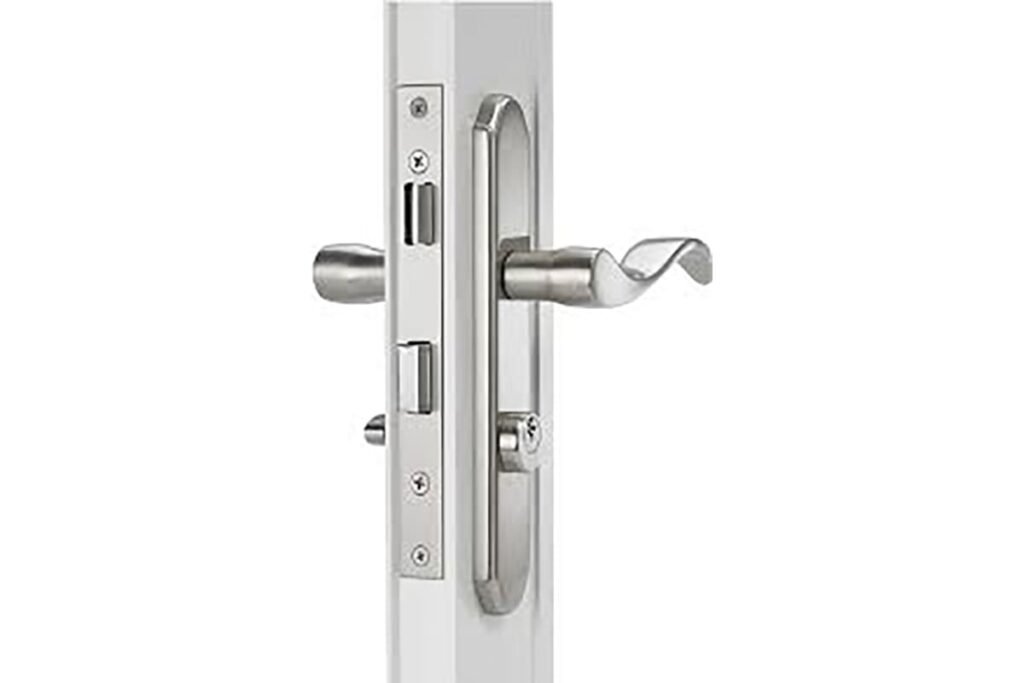
Can you reverse the handing of a standard mortise lock?
A standard mortise lock often looks simple from the outside, but handing can create real procurement risk when a project mixes left-hand and right-hand doors1. If a buyer assumes every lock is universal, installation delays and rework can follow. The practical solution is to identify the lock body structure before ordering.
Yes, you can reverse the handing of many standard mortise locks, but not all models reverse in the same way. In most cases, reversal means changing the latch bolt direction, not making the entire lock case fully universal2. Buyers should confirm the exact lock model, latch-fixing design, and supplier instructions before bulk purchase or installation.
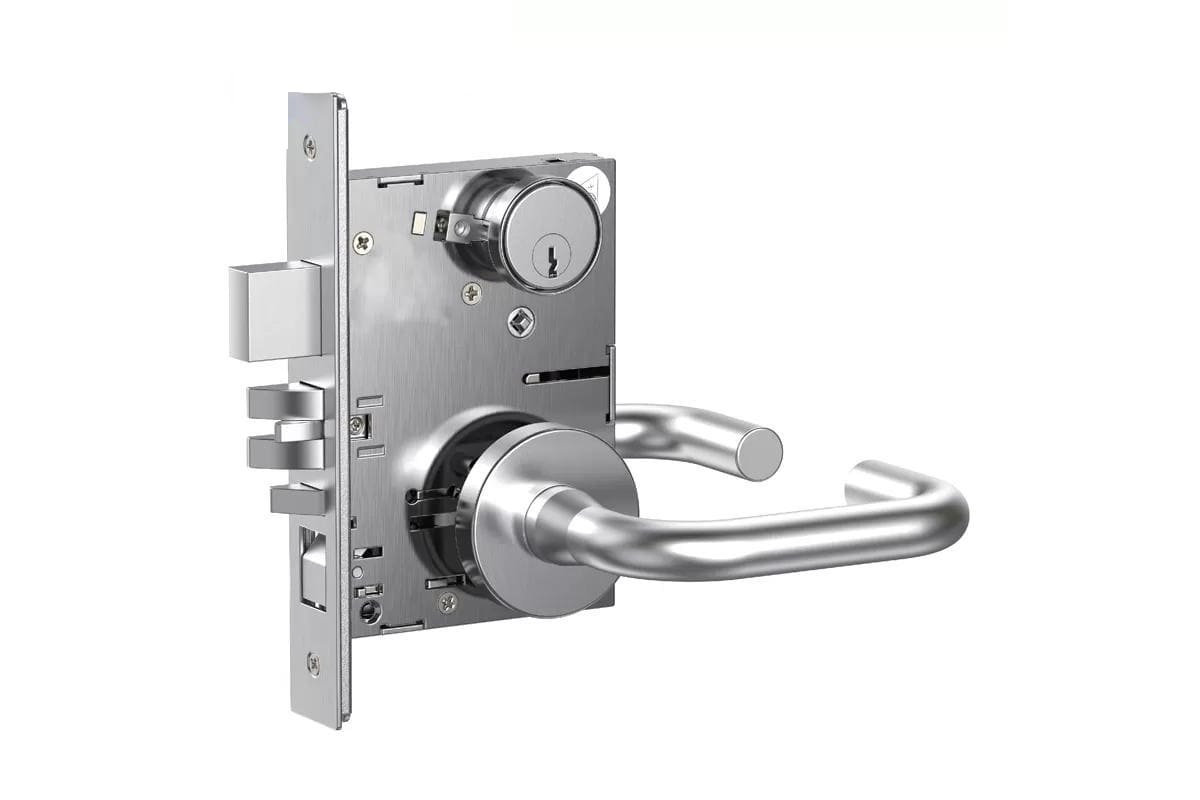
I see this question often from door factories, wholesalers, and project buyers. It sounds like an installation question, but I treat it as a product-identification question first. Once we know the lock case type, the reversal method becomes much clearer.
What does reversing the handing of a standard mortise lock actually mean?
A standard mortise lock can confuse buyers because the word “reversible” is sometimes used too loosely. The problem starts when one team means latch reversal, while another team thinks the whole lock body is direction-free. That gap can cause wrong purchasing decisions.
Reversing the handing of a standard mortise lock usually means turning the latch bolt so the beveled face suits the door swing direction3. It does not always change the deadbolt position, faceplate suitability, spindle layout, lock case orientation, or project compliance requirements. Buyers should check the complete lock drawing.
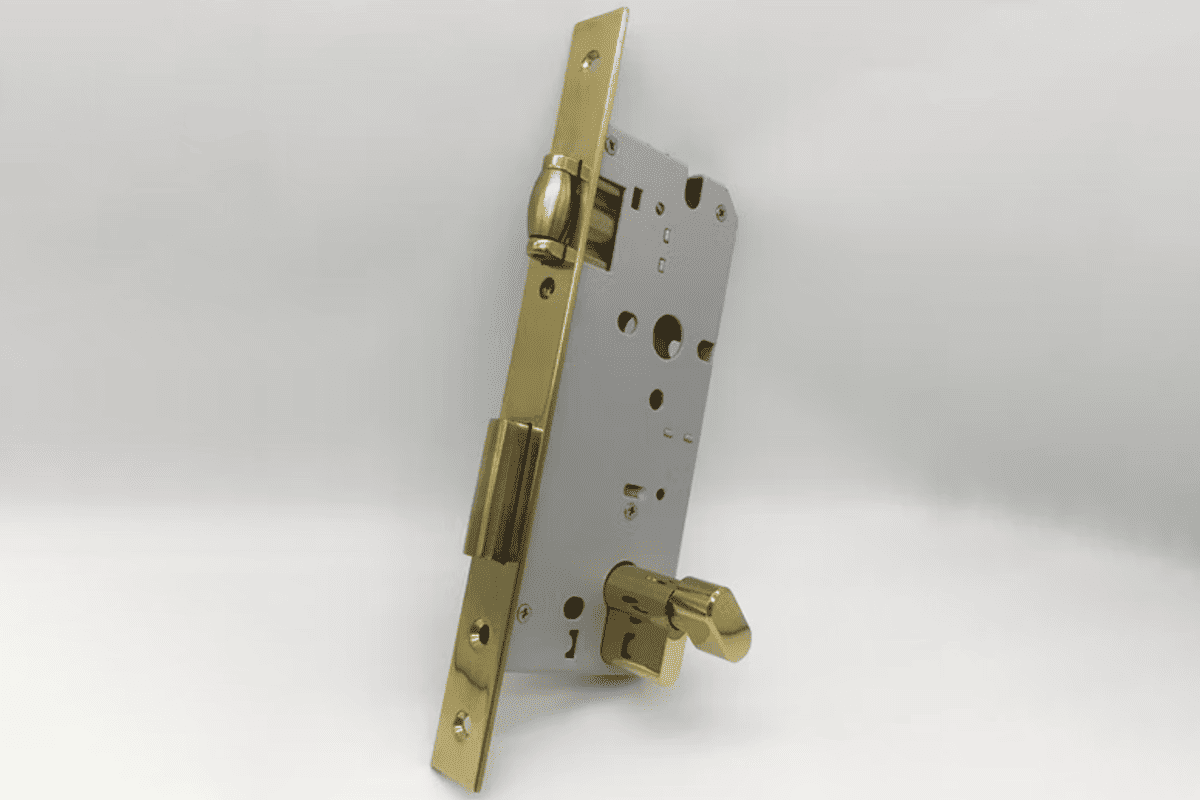
Latch reversal is only one part of handing
In factory communication, I separate latch direction from lock body compatibility. The latch bolt is the spring-loaded part that clicks into the strike plate when the door closes.4 It usually has a beveled face. That bevel must face the correct direction so the door can close smoothly.
However, the mortise lock case includes more than the latch:
- Latch bolt
- Deadbolt
- Follower or spindle hub
- Cylinder hole
- Faceplate
- Fixing screw positions
- Forend shape
- Internal linkage
- Project-specific dimensions
So, when a buyer asks, “Can I reverse it?” I normally ask, “Which part do you need to reverse?” This sounds basic, but it prevents expensive confusion.
For example, a lock may have a reversible latch but still be produced with a faceplate shape that fits only one door preparation. Another lock may allow the latch to be turned, but the project may require a specific function, such as bathroom privacy, classroom security, or fire-door compatibility. In those cases, the buyer still needs to verify the complete lock specification.
Handing affects procurement, not only installation
For B2B buyers, handing has a direct effect on stock planning. A reversible latch can reduce SKU complexity because one lock model may serve both left-hand and right-hand doors.5 This helps wholesalers and door factories manage inventory.
However, that benefit only applies when the supplier confirms the lock is designed for that use. I have seen buyers try to simplify purchasing by ordering one item for every door. The idea was good, but the product drawing did not support it for every opening type. The result was extra sorting at the installation site.
A better procurement approach is to define the lock in three layers:
| Evaluation point | What to check | Why it matters |
|---|---|---|
| Latch reversibility | Can the latch be removed, pushed out, switched, or rotated? | Determines left/right closing function |
| Lock case layout | Spindle, cylinder, deadbolt, and faceplate position | Confirms dimensional compatibility |
| Project standard | EN, CE documentation, fire-rated test scope, regional requirements | Confirms suitability for the door application |
A practical factory-side view
From my factory-side experience, “reversible” is not one mechanism. It is a design feature that can be achieved in several ways. Some lock bodies use a rear access hole. Some use a side switch. Some use a screw-fixed latch. Some require a specific sequence because the latch is connected to internal linkage.
That is why I advise buyers to request:
- Product drawing
- Latch reversal instruction
- Photos or video of the mechanism
- Sample confirmation before mass order
- Written confirmation from the supplier
This small step can prevent a large problem when hundreds or thousands of lock bodies arrive on site.
Which standard mortise lock latch-reversal structures should buyers check?
A standard mortise lock may be reversible, but the reversal structure can differ from one model to another. The risk appears when a buyer assumes the same method applies across all lock bodies. That assumption can damage the latch, case, or linkage.
Buyers should check whether the standard mortise lock uses a rear round hole, an inverted-body release method, a side switch, a screw-fixed latch, or a side round hole linkage system6. Each structure requires its own handling method, so the exact model should be identified first.
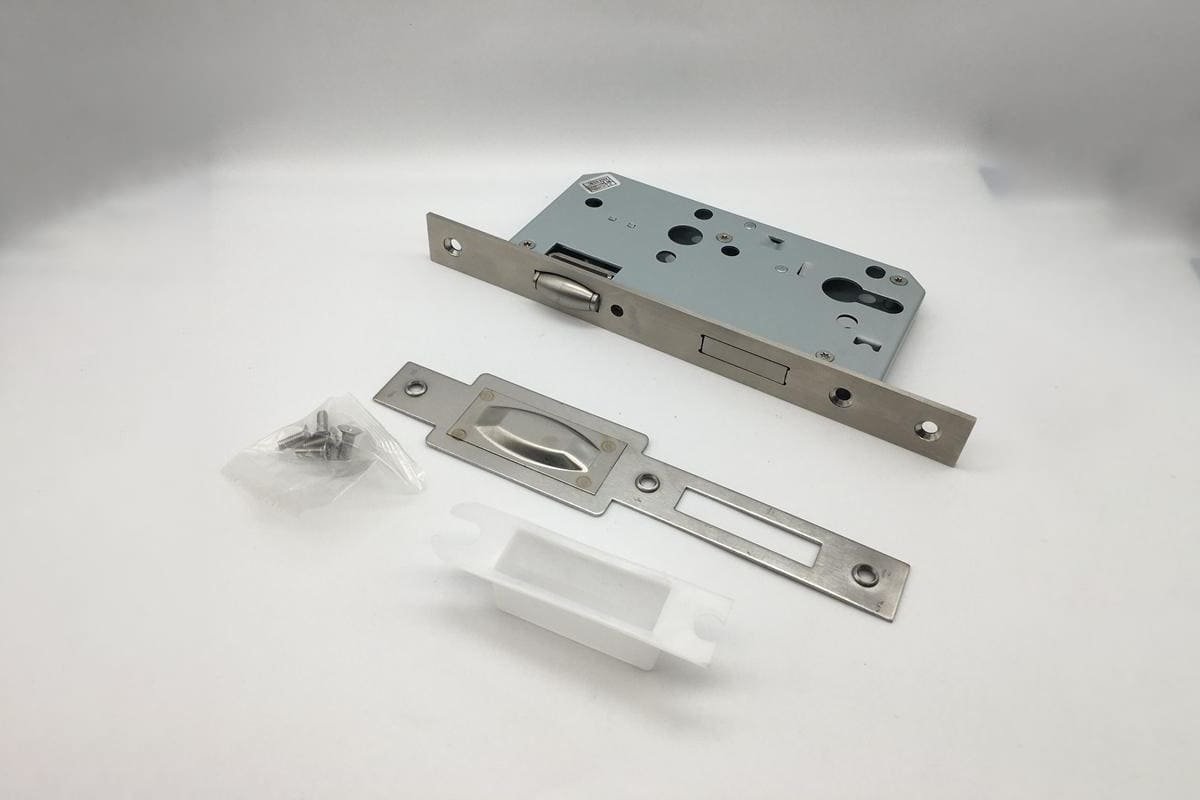
Common reversal structures I see in production
In manufacturing, we do not describe reversibility as one single feature. We describe the actual structure that allows the latch to move. This is more useful for buyers because it connects directly to inspection and installation.
Here are several common latch-reversal structures.
| Lock structure | Typical release method | Buyer caution |
|---|---|---|
| Rear-hole standard lock body | Tool enters a round hole at the back to push the latch out | Do not pry the latch from the front |
| Inverted-body lock design | Lock body is turned or positioned, then latch is pushed in and rotated | Confirm the correct sequence |
| 92 mm German narrow-body lock | Side reversing switch releases the latch | Check if the switch exists on the exact model |
| Multi-point narrow-body lock | Latch is fixed to the connecting rod by a screw | Remove the screw before reversal |
| Italian 5085 lock case | Side round hole opens linkage holding the latch | Use the correct release point |
Rear-hole standard mortise locks
On some standard mortise locks, the lock case has a round hole at the back. A screwdriver or suitable tool can be inserted through this hole to push the latch out. After the latch comes out far enough, it can be turned and reinstalled in the opposite direction.
This design is common because it is simple and serviceable. It also keeps the faceplate area clean. For procurement teams, the important point is to confirm that the hole is not just an assembly feature. It must be intended for latch release.
When I check samples for customers, I usually look at:
- The position of the rear hole
- The latch movement when pushed
- Whether the latch rotates smoothly
- Whether the spring returns properly after reversal
- Whether the latch sits flush after reinsertion
A latch that does not return cleanly after reversal may create closing problems. That is why sample testing matters before bulk ordering.
Inverted-body latch reversal designs
Some lock bodies use a different approach. The lock case can be inverted or positioned in a specific way. Then the latch can be pushed into the case and rotated for reversal.
This method can be convenient, but it should not be guessed. If the latch is forced at the wrong angle, the internal spring or retaining part may be damaged. I always recommend checking the supplier’s instruction sheet or asking for a short factory video.
A simple buyer-side inspection process can help:
- Confirm the exact item code.
- Check the technical drawing.
- Ask whether the latch is reversible.
- Ask which method applies.
- Test one sample before confirming packing quantities.
This approach is especially important when a door factory uses the same lock body across several door models. One small lock structure difference can affect an entire production batch.
Why the release method matters
The latch is not just a loose component. It is held by internal parts that may include a spring, retaining plate, linkage, or screw.7 If the release method is ignored, the operator may pull the latch with excessive force.
That can lead to:
- Bent latch parts
- Weak spring return
- Noisy operation
- Misalignment with strike plates
- Warranty disputes
- Installation delays
For this reason, I prefer to discuss reversibility in a technical way. A lock is not simply “reversible” or “not reversible.” The better question is: Which latch-reversal structure does this model use?
How do 92 mm German narrow-body locks and multi-point narrow-body locks reverse handing?
Narrow-body lock cases often serve aluminum doors, steel doors, and profile systems. The problem is that these locks look similar from the outside, while the internal latch connection may be very different. If buyers treat every narrow lock as identical, mistakes become likely.
Many 92 mm German-standard narrow-body locks use a side reversing switch that releases the latch when pushed upward. Some multi-point narrow-body locks fix the latch to the connecting rod with a screw, so the screw must be removed before the latch can be reversed and installed again.
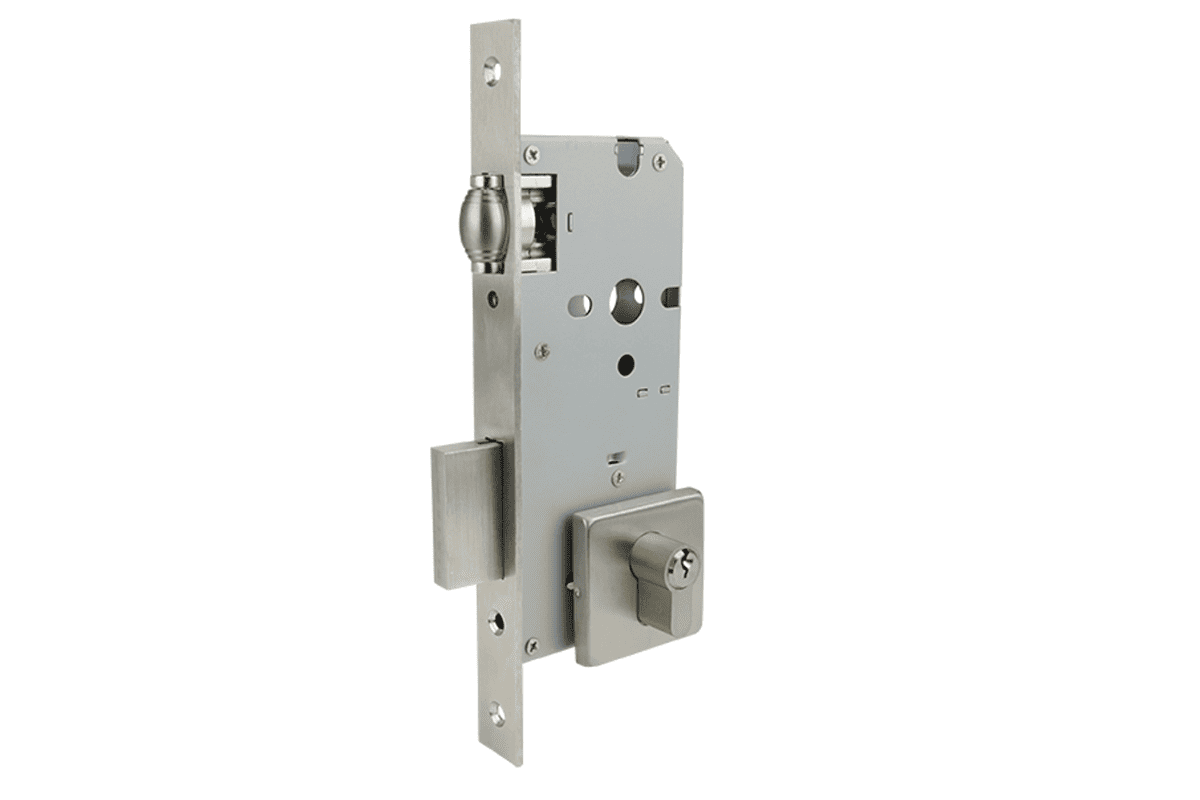
92 mm German-standard narrow-body locks
A 92 mm German-standard narrow-body lock normally refers to a lock case with a 92 mm center distance between the handle spindle and cylinder8. These locks are widely used in European-style profile door systems. Buyers often ask whether one lock can support both left-hand and right-hand doors.
On many models, a side reversing switch is built into the case. The operator pushes the switch upward to release the latch. Then the latch can be removed, turned, and reinserted.
This design is efficient because the release point is visible from the side of the lock case. It can reduce installation time and simplify warehouse stock. However, the buyer still needs to check the exact lock drawing because not every narrow-body lock uses the same structure.
Multi-point narrow-body locks
Multi-point locks are more complex. A multi-point system may connect the central lock case to rods, hooks, rollers, or additional locking points.9 In some models, the latch is connected to the internal rod system.
For some multi-point narrow-body locks, the latch is fixed to the connecting rod by a screw. In that case, the screw must be removed before the latch can be reversed. After reversal, the latch must be installed again and secured correctly.
This structure is very different from a simple rear-hole release. If someone tries to push the latch out without removing the screw, the mechanism may be damaged.
Procurement comparison
Buyers can use the table below when comparing narrow-body lock options.
| Product type | Common use | Reversal feature | Procurement note |
|---|---|---|---|
| 92 mm German narrow-body lock | Aluminum and profile doors | Side switch on many models | Confirm switch position and function |
| Multi-point narrow-body lock | Higher security doors and entrance systems | Screw-fixed latch on some models | Confirm screw removal and reassembly steps |
| Standard single-point narrow lock | General profile applications | Varies by case design | Request sample and instruction |
| Project-specific narrow lock | Custom door systems | May be handed or reversible | Confirm with drawing before order |
What buyers should inspect on samples
When I support lock sample evaluation, I prefer a simple inspection routine. It helps the buyer’s team confirm function before they commit to a large order.
Check these points:
- Center distance: Is it 92 mm or another standard?
- Backset: Does it match the profile system?
- Faceplate width: Does it fit the door preparation?
- Latch release method: Switch, screw, rear hole, or other?
- Latch return: Does the latch spring back smoothly?
- Rod movement: Does the multi-point mechanism still move freely?
- Fastener security: Are screws tightened after reversal?
- Door swing marking: Does packaging or labeling reduce site confusion?
Why narrow-body locks need extra attention
Narrow-body locks have less internal space than many standard case locks. This means the mechanism can be compact and sensitive to incorrect handling. A small retaining part can control the latch release. A small screw can secure a larger linkage system.
That is why I do not recommend forcing the latch or using a general method from another lock type. A professional installer or qualified technical team should evaluate application-specific cases, especially for fire doors, security doors, or doors under project certification requirements.
For project buyers, the safest path is to ask the supplier for model-specific reversal instructions. If the lock is claimed to meet CE or fire-rated requirements, buyers should also verify the related documents and confirm that the selected configuration matches the certified scope10.
How do Italian 5085 lock bodies affect mortise lock handing?
Italian 5085 lock bodies are common in several architectural hardware markets. The issue is that buyers may group them with ordinary lock cases and expect the same latch reversal process. This can create handling mistakes when the internal linkage is different.
Some Italian 5085 lock bodies have a side round hole. A screwdriver can be inserted into this hole to open the linkage holding the latch. Then the latch can be removed, reversed, and reinstalled. Buyers should confirm this structure on the exact model before operation.
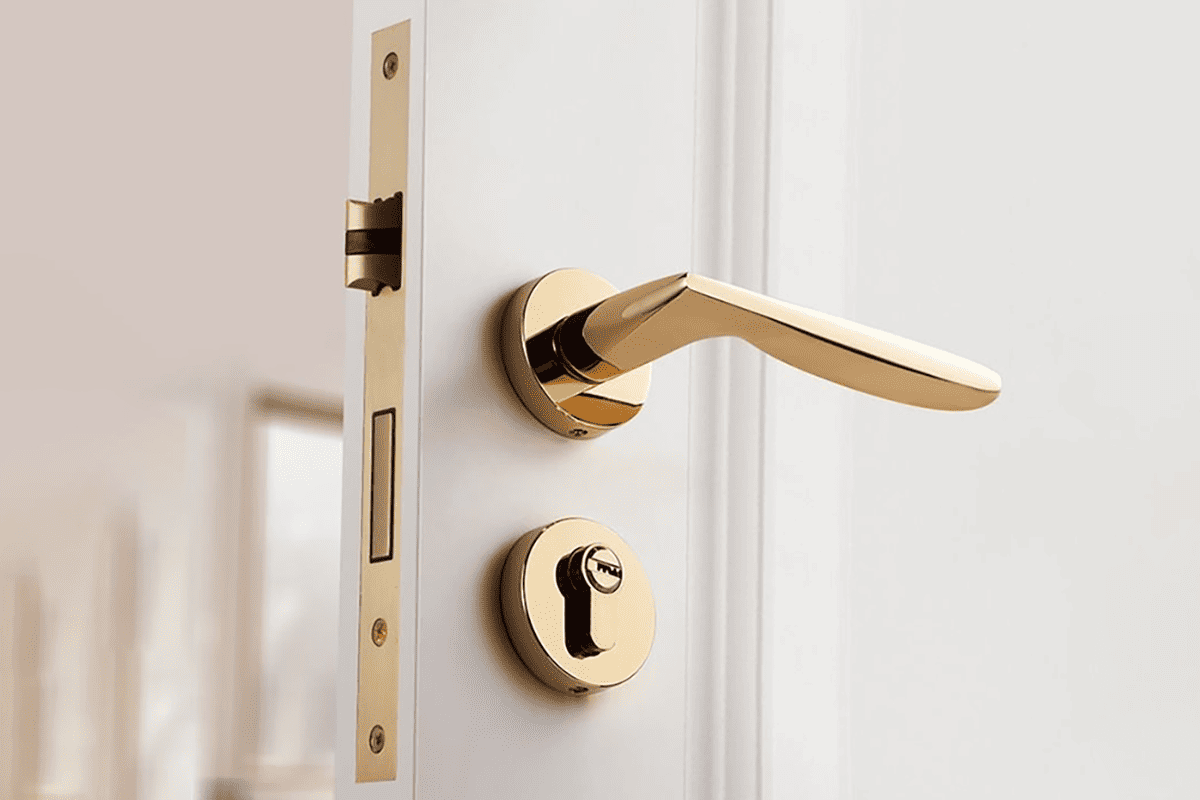
What makes the Italian 5085 lock case different?
The Italian 5085 lock body is often discussed by its case format and common dimensional pattern. In many markets, buyers recognize it as a familiar mortise lock case style for interior and project doors. However, the latch retention structure can still vary by manufacturer.
On some Italian 5085 lock bodies, the side of the case has a round hole. When a suitable screwdriver is inserted, it opens or releases the linkage that holds the latch. After release, the latch can be taken out, turned around, and installed again.
This is not the same as simply pulling the latch. The round hole is part of the release system. If the user misses that point, the latch may feel stuck. Applying force from the front may damage the retaining parts.
A practical example from factory communication
I once reviewed a sample request where the buyer asked for “universal Italian lock body.” That phrase sounded simple, but it did not tell us enough. We had to confirm the following:
- Was the buyer asking for a reversible latch?
- Did the door require a specific backset?
- Was the faceplate square or round-ended?
- Did the lock need cylinder function or privacy function?
- Was the lock intended for a fire-rated door assembly?
- Did the buyer want left/right packaging labels?
After we clarified these points, the sample process became much smoother. The buyer did not need a vague “universal” claim. They needed a specific lock body with a confirmed latch-reversal method.
Key buying checks for Italian 5085 lock bodies
When evaluating Italian 5085 lock cases, I suggest checking these items.
| Check item | What to ask | Why it matters |
|---|---|---|
| Reversal access | Is there a side round hole for latch release? | Confirms correct handling |
| Latch retention | Is the latch held by linkage, screw, or spring plate? | Prevents damage during reversal |
| Case dimensions | Backset, center distance, case depth | Ensures door compatibility |
| Faceplate | Width, length, corner type, finish | Matches door edge preparation |
| Function | Passage, privacy, cylinder, deadlock | Matches project use |
| Certification documents | CE or fire-rated certificates where required | Documents should be verified by buyers |
Why exact drawings matter
A technical drawing is not just a formality. It shows dimensions that affect production, installation, and after-sales service.11 For bulk orders, buyers should compare the drawing with the actual door preparation and accessory set.
A good drawing should show:
- Lock case height and depth
- Backset
- Center distance
- Faceplate dimensions
- Spindle size
- Cylinder hole position
- Latch and deadbolt projection
- Screw hole positions
- Handing or reversible notes
If a drawing says “reversible latch,” I still prefer to see the reversal method. A short note such as “side hole release” or “switch release” helps the buyer’s technical team avoid mistakes.
Application-specific caution
For ordinary interior doors, latch reversal may be a simple production or installation step. For fire-rated doors, acoustic doors, hotel projects, or security doors, the decision should be more controlled. The lock must match the door set, strike plate, certification scope, and local code expectations.12
As a manufacturer, I can explain lock body structures and provide product documentation. However, the final application decision should be reviewed by qualified project professionals when safety or compliance is involved.
How should buyers specify a reversible standard mortise lock before bulk orders?
A standard mortise lock can reduce inventory complexity when one model supports both door swing directions. The problem is that vague wording like “reversible” may not protect the buyer. A specification must define the mechanism, dimensions, finish, function, and documentation requirements.
Buyers should specify a reversible standard mortise lock by confirming the lock type, latch reversal method, backset, center distance, faceplate, function, finish, packaging, test requirements, and certification documents. A pre-production sample should be approved before mass production or shipment.
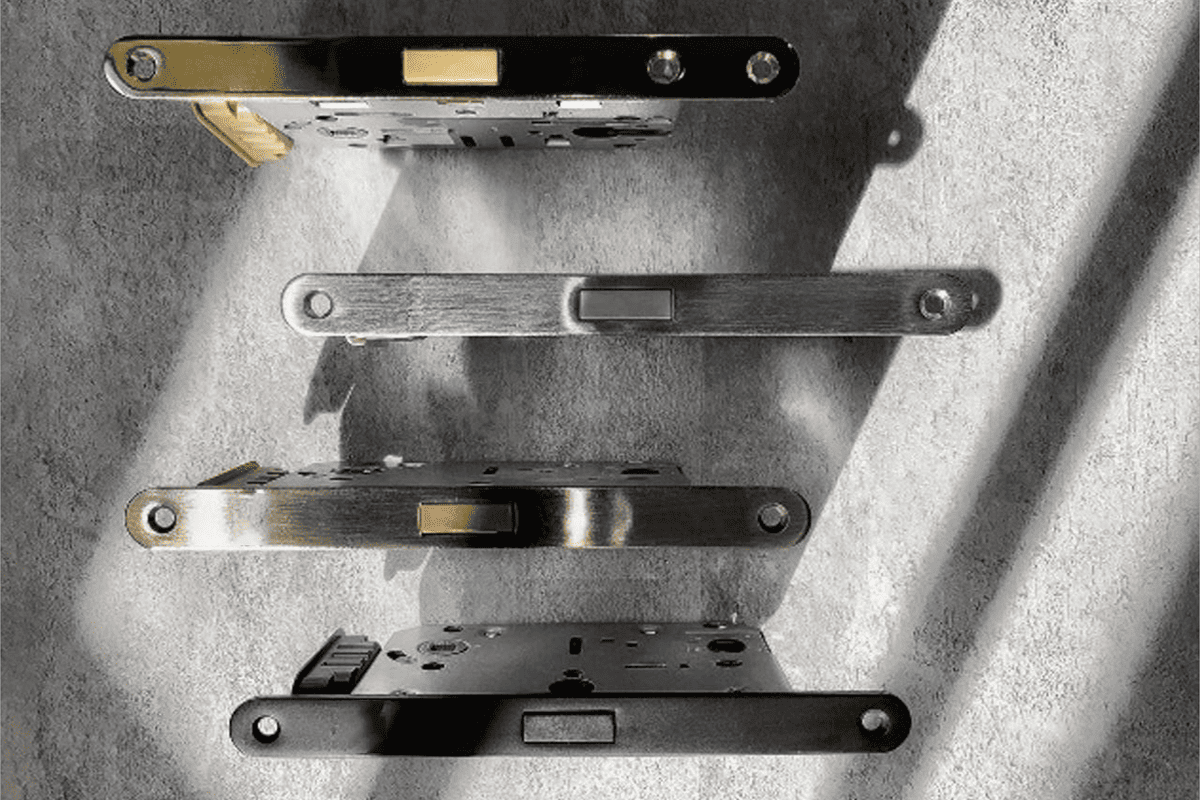
A clear specification reduces risk
In B2B hardware sourcing, most problems do not come from one big mistake. They come from several small assumptions. Handing is one of those assumptions.
A purchasing message that says, “Please quote reversible mortise lock” is not enough for a serious project. The supplier may quote a model with a reversible latch, but the buyer may expect a lock that fits every door condition. These are not always the same.
A better request should include:
- Product type
- Lock standard or regional style
- Backset
- Center distance
- Faceplate size
- Case depth
- Latch reversal method
- Door material
- Door thickness
- Function type
- Finish
- Strike plate type
- Required documents
- Packaging and labeling requirements
- Sample testing requirements
Suggested RFQ wording
Buyers can use wording like this:
“Please quote a standard mortise lock with reversible latch for left-hand and right-hand door use. Please confirm the latch reversal structure, provide the product drawing, show the reversal method, and confirm whether the lock body, faceplate, spindle position, and deadbolt function are suitable for our door preparation.”
This wording is practical because it separates latch reversal from total lock compatibility.
Bulk order checklist
Before placing a large order, I recommend this checklist.
| Step | Buyer action | Supplier confirmation |
|---|---|---|
| 1 | Identify door swing and door type | Confirm suitable lock model |
| 2 | Confirm lock dimensions | Provide technical drawing |
| 3 | Confirm latch reversal method | Provide instruction or video |
| 4 | Approve physical samples | Record sample version |
| 5 | Check finish and accessories | Confirm faceplate, strike, screws |
| 6 | Verify documents | CE/fire-rated documents where required |
| 7 | Confirm packaging | Mark item code and function clearly |
| 8 | Inspect after production | Perform functional and visual checks |
Quality control points for reversible locks
At SDH Hardware, our product discussions usually include both manufacturing and inspection. A reversible latch must work reliably after the direction is changed. That means quality control should cover more than the original factory position.
Useful checks include:
- Latch projection measurement
- Spring return test
- Handle operation test
- Deadbolt operation test
- Reversal repeatability check
- Faceplate fit inspection
- Strike plate alignment check
- Surface finish inspection
- Packaging label verification
For large projects, buyers may also request inspection reports after production. This is especially useful for wholesalers and door manufacturers that distribute hardware across several job sites.
Do certifications prove reversibility?
Certifications can support product evaluation, but they should be read carefully. CE documentation, fire-rated certification, or other test documents usually apply to defined products, configurations, and test conditions. A buyer should verify whether the selected lock model, function, and door application fall within the relevant scope.
In other words, certification is not a shortcut for specification review. It is one part of supplier qualification.
Why supplier selection matters
A capable manufacturer should be able to explain the actual lock body structure. If a supplier only says “yes, reversible” without showing the method, the buyer should ask more questions.
A reliable supplier should provide:
- Clear drawings
- Product photos
- Reversal instructions
- Sample support
- Quality control process
- Customization options
- Consistent batch production
- Document support where applicable
For OEM and ODM buyers, this communication is even more important. A brand may want one lock platform for several markets. In that case, latch reversal, packaging language, faceplate options, and certification documents all need to be aligned before production.
When should a standard mortise lock be ordered as handed instead of reversible?
A standard mortise lock with a reversible latch is useful, but it is not always the best choice for every door schedule. The risk appears when a buyer prioritizes inventory convenience over exact project requirements. Some applications still need handed lock bodies or handed accessories.
A standard mortise lock should be ordered as handed when the lock case, faceplate, function, certification scope, accessory set, or door preparation requires a fixed orientation. Reversible latch design helps many projects, but it does not automatically override project-specific handing requirements.
Conclusion
Yes, the handing of many standard mortise locks can be reversed, but the correct method depends on the lock body structure and exact model. Reversal usually means changing the latch bolt direction, not making every part of the lock fully universal. Before bulk ordering, buyers should confirm drawings, latch release design, samples, and documentation. If you need factory-direct support for mortise locks, narrow-body locks, hinges, handles, cylinders, or customized door hardware, I can help you evaluate the right specification for your market or project.
"DOOR HARDWARE (SCHEDULED BY DESCRIBING PRODUCTS)", https://fpm.usc.edu/wp-content/uploads/2021/11/087102-USC-HSC-door-hardware-Guide-Specification_1.pdf. Institutional door-hardware guidance defines left-hand and right-hand door handing and treats handing as a specification variable for locksets and related hardware. Evidence role: general_support; source type: institution. Supports: Door hardware is commonly identified and specified by handing, and incorrect handing can affect whether hardware fits the intended opening.. Scope note: Such guidance supports the specification risk generally, but it may not quantify procurement delays for mortise-lock projects specifically. ↩
"A156.13 - 2022 Mortise Locks", https://buildershardware.com/ANSI-BHMA-Standards/Hardware-Highlights/A15613-2022-Mortise-Locks. Lock-hardware standards classify locks by multiple features, including latch, deadbolt, function, and application, indicating that latch reversibility alone does not establish universal lock-case compatibility. Evidence role: general_support; source type: institution. Supports: Lock standards distinguish between latch, deadbolt, case, function, and application requirements, supporting the idea that one reversible component does not make the whole lock universally applicable.. Scope note: Standards may not use the phrase “fully universal,” so the support is contextual rather than a direct statement. ↩
"E2294 Vintage Style Indoor Mortise Lock Assembly Kit - Cast Steel ...", https://fhc-usa.com/e2294?srsltid=AYCX9vImYV7cL7iBiOH9XSibcWAxUVGjzqP4lcmor9oqYcvYgNOiqwRL. Technical lock-hardware references describe reversible latch bolts as mechanisms in which the beveled latch face is reoriented to suit the direction of door closing. Evidence role: mechanism; source type: institution. Supports: The beveled face of a latch bolt must be oriented toward the closing direction and reversible latch designs allow the bolt to be rotated or reoriented.. Scope note: The source may describe latch reversal in general terms rather than every mortise-lock model. ↩
"Lockset", https://en.wikipedia.org/wiki/Lockset. A lock terminology reference defines the latch bolt as a spring-actuated bolt that engages the strike plate to retain a door in the closed position. Evidence role: definition; source type: encyclopedia. Supports: A latch or latch bolt is a spring-loaded component that engages with a strike or strike plate to hold a door closed.. ↩
"The impact of SKU and network complexity on inventory levels", https://dspace.mit.edu/entities/publication/ce32eddc-ed66-45a2-acc7-bed0ace31cf8. Operations-management research on product variety and commonality finds that reducing the number of distinct variants can lower inventory complexity and coordination costs. Evidence role: general_support; source type: paper. Supports: Reducing product variants or increasing component commonality can reduce inventory complexity and SKU proliferation.. Scope note: The research supports the inventory principle generally and may not study mortise locks specifically. ↩
"US7510222B2 - Reversible latch bolt", https://patents.google.com/patent/US7510222B2/en. Patent literature on reversible latch-bolt lock cases documents that latch reversal can be implemented through different release and retention mechanisms, including access apertures, retaining elements, and movable latch assemblies. Evidence role: case_reference; source type: other. Supports: Patent and technical descriptions document multiple latch-reversal mechanisms, such as release apertures, retaining screws, and movable latch assemblies.. Scope note: Patent examples support the existence of such mechanisms but do not prove that every listed commercial lock type uses the same design. ↩
"Mortise lock", https://en.wikipedia.org/wiki/Mortise_lock. Mechanical descriptions of mortise-lock latch assemblies show that the latch bolt is retained and actuated by internal components such as springs, retainers, screws, or linkage members. Evidence role: mechanism; source type: other. Supports: Lock-mechanism references show latch bolts being retained and biased by internal elements such as springs, plates, screws, or linkages.. Scope note: The exact internal parts vary by model, so the citation would support the mechanism category rather than a universal component list. ↩
"High Quality Locks 2026", https://www.ces.eu/Broschuere-High-Quality-Locks_INT_VA1_O.pdf. European lock-case dimensional references define the center distance as the measurement between the handle spindle or follower and the cylinder centerline, with 92 mm being a common profile-door format. Evidence role: definition; source type: institution. Supports: European profile lock terminology uses center distance or centres to describe the measurement between the handle follower and cylinder aperture, including common 92 mm formats.. Scope note: The citation may establish the dimensional meaning and common usage, while individual national standards and product families may differ. ↩
"Espagnolette", https://en.wikipedia.org/wiki/Espagnolette. Reference descriptions of multi-point locking systems explain that a central lock mechanism can operate additional locking points such as rods, hooks, rollers, or bolts along the door edge. Evidence role: definition; source type: encyclopedia. Supports: A multi-point lock secures a door at multiple positions and may use bolts, hooks, rollers, or rods connected to a central mechanism.. Scope note: The exact set of locking elements depends on the particular product design. ↩
"CE-MARKING OF CONSTRUCTION PRODUCTS - STEP BY STEP", https://webgate.ec.europa.eu/circabc-ewpp/rest/download/71dcd47a-2f9b-46a5-b840-5e416c0afa77. Official conformity and fire-door guidance treats certification as applying to identified products and defined uses or assemblies, so configuration changes must be checked against the documented scope. Evidence role: expert_consensus; source type: government. Supports: Product compliance documents and fire-door listings apply to defined products, intended uses, and tested or assessed configurations.. Scope note: The source may address construction products or fire-door assemblies broadly rather than mortise-lock reversal specifically. ↩
"Investigating the Role of Geometric Dimensioning and Tolerancing in ...", https://tsapps.nist.gov/publication/get_pdf.cfm?pub_id=918538. Engineering-drawing standards describe technical drawings as documents that communicate dimensions, geometry, and specification requirements for manufacture, inspection, and use. Evidence role: general_support; source type: institution. Supports: Engineering drawings communicate dimensional and geometric requirements used in manufacturing, inspection, installation, and maintenance.. Scope note: The source supports the role of technical drawings generally rather than mortise-lock drawings specifically. ↩
"NSPIRE Standard - Door - Fire", https://www.hud.gov/sites/dfiles/PIH/documents/NSPIRE-Standard-Door-Fire-Labeled_20230811.pdf. Fire-door code guidance states that door hardware, including locks and strikes, forms part of the rated assembly and must be compatible with the listing, certification, and applicable installation requirements. Evidence role: expert_consensus; source type: government. Supports: Fire-door and code guidance treats hardware as part of an evaluated door assembly and requires compatible listed or approved components.. Scope note: The citation directly supports fire-rated assemblies; acoustic, hotel, and security applications may require additional sources. ↩