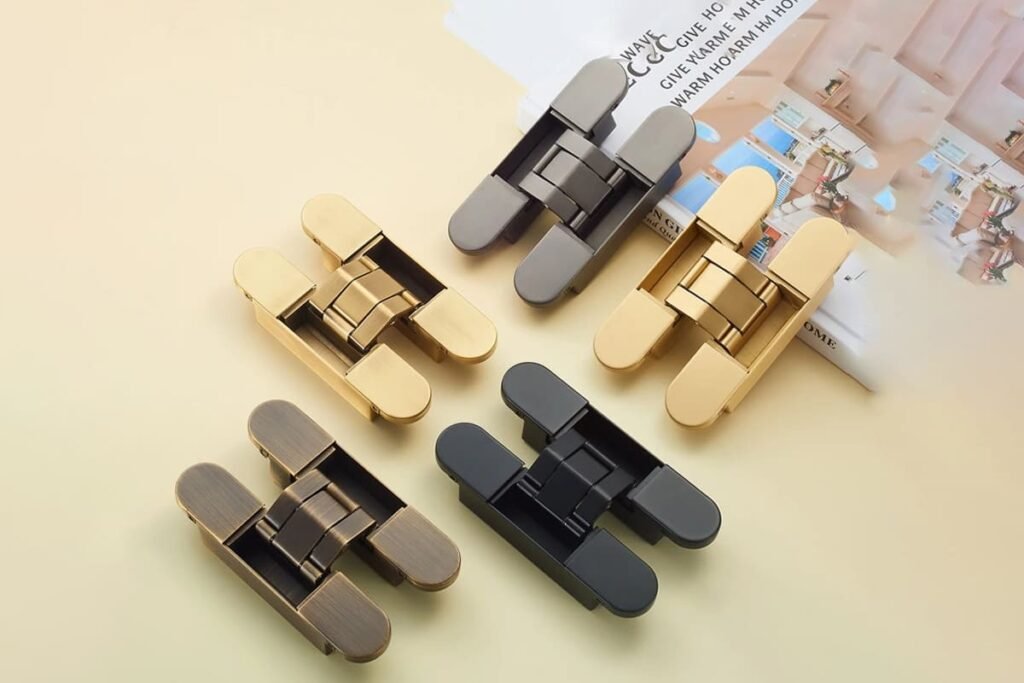
What Are the Advantages of Alloy Concealed Hinges in Modern Architecture?
I see many modern doors lose their clean look because visible hardware breaks the design. I know this small detail can create a big project problem.
Alloy concealed hinges help modern architecture by hiding hardware, supporting clean door lines, allowing adjustment, resisting corrosion, and improving batch consistency.1 I still check door weight, thickness, model design, finish, and certificate scope before I recommend them for a project.
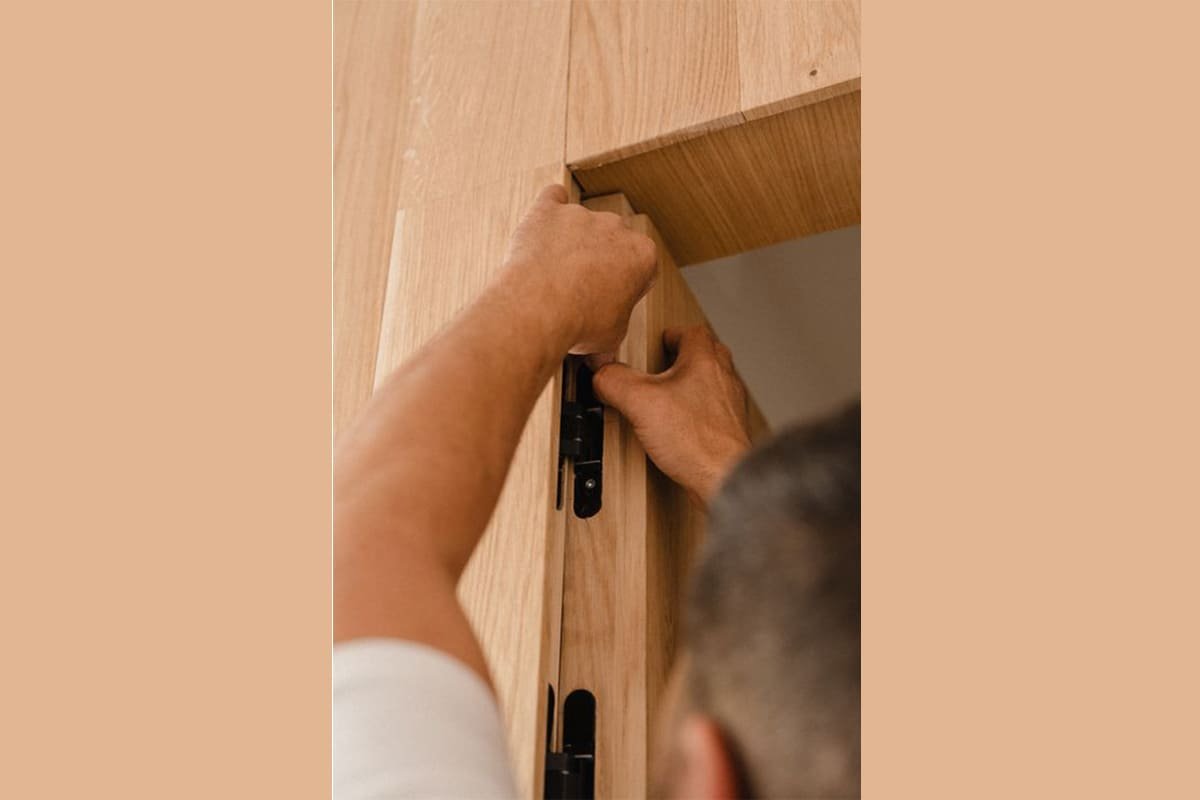
I often receive a simple question from buyers: “Is this concealed hinge beautiful and strong?” I understand the question, but I never stop there. I ask about the door size, door weight, door thickness, frame material, finish, project location, and installation method. I do this because a concealed hinge is not only a design part. It is also a load-bearing part, an adjustment part, and a batch supply part. If I ignore these points, the buyer may face door sagging, uneven gaps, finish mismatch, and after-sales claims. I have seen buyers choose by price first, then spend more money on rework later. So I prefer to explain the real advantages in a practical way. I want the hinge to look good, work well, and stay stable after many doors are installed.
Why Do Alloy Concealed Hinges Improve Visual Integration?
I see many high-end doors fail at the hinge line. The door looks expensive, but exposed hardware makes the whole wall look less clean.
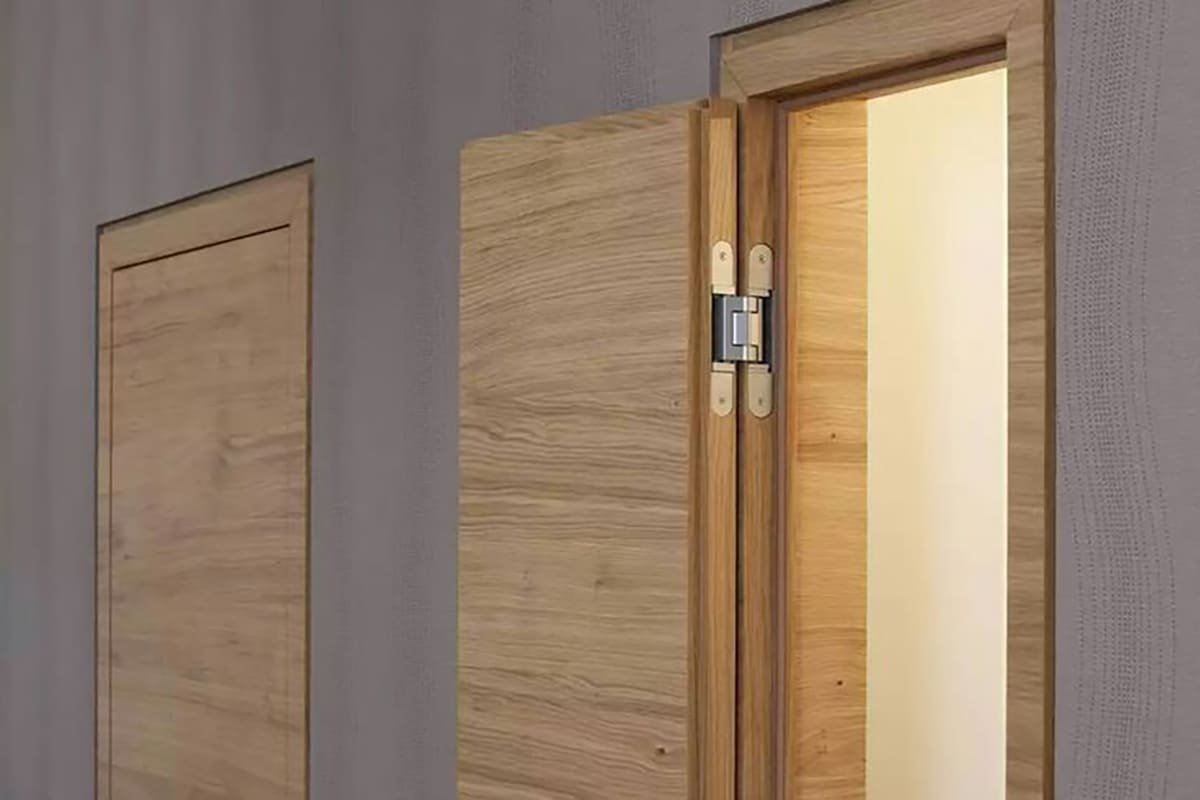
Alloy concealed hinges improve visual integration because I install them inside the door and frame. The hinge body stays hidden when the door is closed, so the door face, frame, and wall keep a cleaner and more modern look.
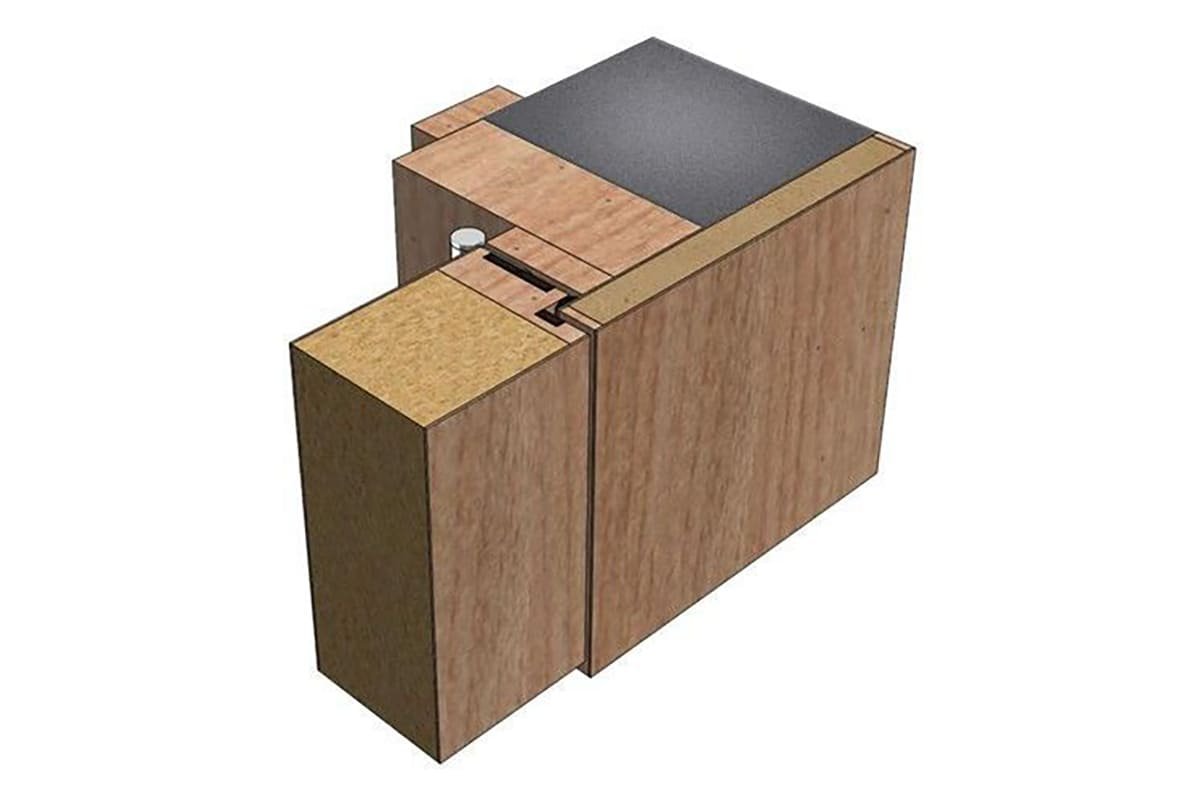
In modern architecture, I often see designers ask for flat door surfaces, hidden frames, simple wall lines, and matched finishes.2 A concealed hinge supports this goal because it removes the hinge barrel from the visible side. This is useful for residential doors, office doors, hotel rooms, showrooms, and other interiors that need a high-end visual effect.3 But I do not treat appearance as the only reason to choose it. I also check if the door structure can accept the hinge pocket. The door factory must machine the door and frame with enough accuracy. If the slot is wrong, the clean appearance will not happen. The door gap may look uneven, and the installer may need extra work.
| Visual need | How I judge it | Practical result |
|---|---|---|
| Clean door line | I check if the hinge can stay fully hidden | The door looks more modern |
| Minimalist interior | I match hinge type with hidden frame design | The wall and door look more unified |
| High-end finish | I check color and surface consistency | The final project looks more controlled |
| Batch door supply | I confirm machining size and tolerance | The same look repeats across many doors |
I also remind buyers that concealed hinges are not always the best choice for every door. A traditional butt hinge can be more simple, more familiar to installers, and easier for some cost-driven projects. I only recommend concealed hinges when the door design, machining condition, installation team, and budget can support them. This is how I protect the buyer from choosing a beautiful part that later becomes a site problem.
How Do Alloy Concealed Hinges Support Strength and Durability?
I see buyers ask for “strong hinges” first. I know this word is too general, and it can hide many real technical risks.
Alloy concealed hinges can support stable long-term use when the model, material, structure, door weight, door thickness, machining, and installation all match. I never judge strength by material name alone.
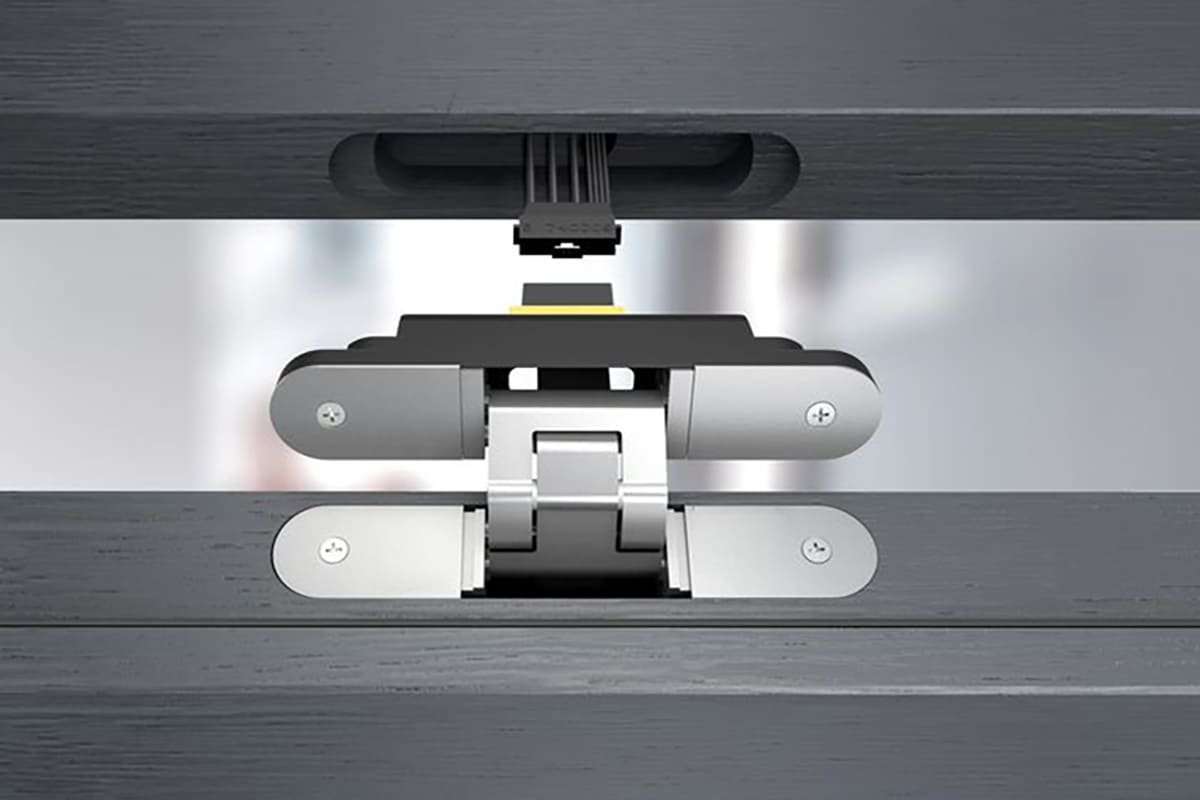
When I discuss alloy concealed hinges with door factories, I focus on the whole application. Alloy material can offer a good balance of weight, formability, corrosion resistance, and surface treatment options.4 But the real performance depends on the hinge structure. I check the hinge arms, pins, fixing points, screw position, body thickness, and adjustment system. I also ask the buyer how many hinges they plan to use per door. A heavy or tall door may need a different hinge model or a different number of hinges. A thin door may not have enough space for a large concealed hinge. A weak frame may also reduce the final stability.
| Selection point | Why I check it | Risk if ignored |
|---|---|---|
| Door weight | I need to match the hinge load range | The door may sag |
| Door thickness | I need enough pocket depth | The door may crack or weaken |
| Door height | I need stable support over the full panel | The door may twist or rub |
| Frame material | I need firm screw holding | The hinge may loosen |
| Installation accuracy | I need correct alignment | The door may not close smoothly |
I never invent load data when I speak with customers. I ask for the exact product model and test documents if the buyer needs a verified value. I also explain that durability is not only a factory promise. It is the result of correct selection, correct machining, correct screws, and correct installation. This point is very important for B2B buyers because one wrong selection can affect many doors in one shipment. I prefer to spend more time before sampling, because that time can reduce complaints after bulk delivery.
Why Is Three-Dimensional Adjustment So Important?
I often see perfect drawings become imperfect doors on site. Small errors in machining or installation can quickly create visible gaps and rubbing.
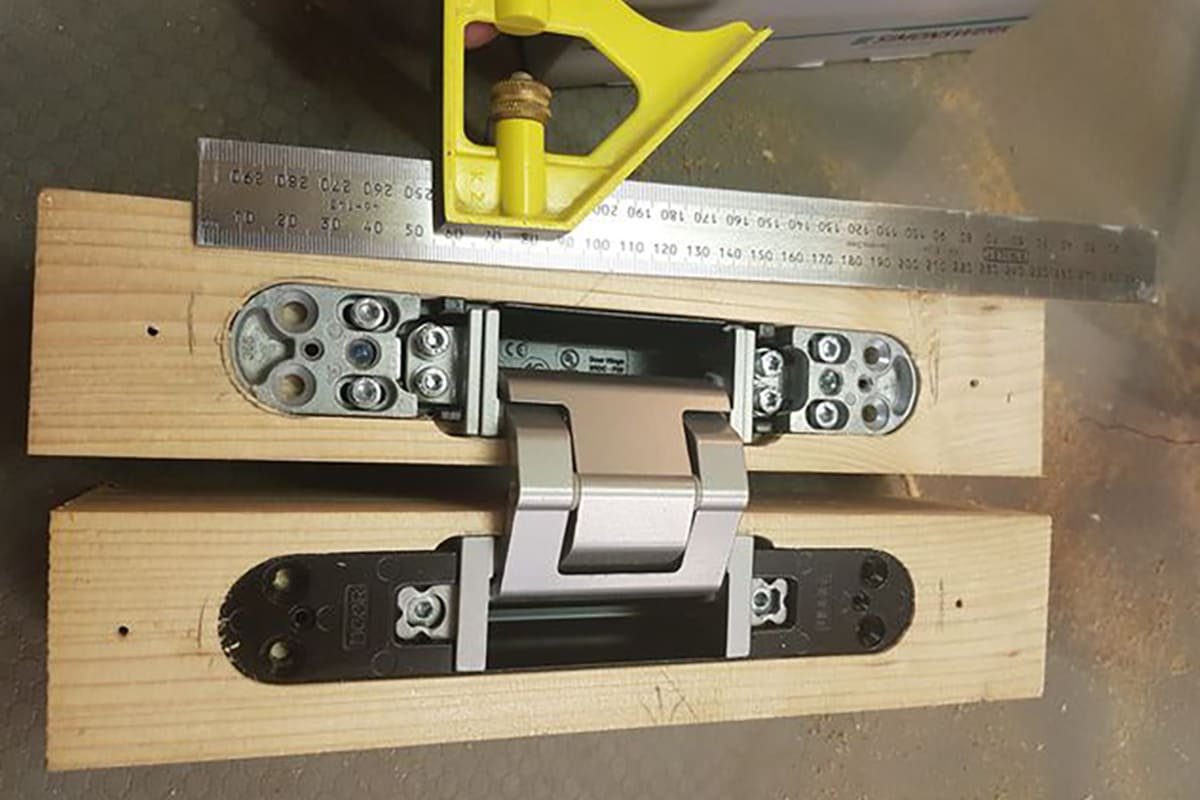
Three-dimensional adjustment is important because I can fine-tune the door position after installation. It helps control side gaps, height, depth, closing feel, and final appearance without replacing the hinge.5
For me, three-dimensional adjustment is one of the most practical advantages of a good concealed hinge. Many buyers focus on the hidden look, but installers focus on the final door gap. A door factory can machine accurately, but site conditions still change. The wall may not be perfectly straight. The frame may move slightly during installation. The door leaf may have small size differences. A hinge with adjustment can help solve these small problems. It can reduce rework and save time.6
| Adjustment direction | What I use it for | Benefit for the project |
|---|---|---|
| Horizontal adjustment | I correct the side gap | The reveal line looks even |
| Vertical adjustment | I raise or lower the door | The door stops rubbing the floor or frame |
| Depth adjustment | I align the door face with the frame | The closed door looks flush |
| Fine tuning after installation | I handle site variation | The installer works faster |
| Repeatable adjustment | I support batch installation | The door factory gets fewer complaints |
I also remind buyers that adjustment range is not magic. It cannot fix a badly cut door or a wrongly installed frame. It can only correct reasonable small errors. So I always ask the buyer to confirm the machining drawing before production. I also suggest that the door factory tests the hinge on a sample door before placing a large order. In my experience, this simple step helps both sides find the right screw length, slot size, opening angle, and final gap. It makes bulk production safer and installation more predictable.
How Do Corrosion Resistance and Finish Consistency Affect Bulk Orders?
I see many buyers accept a good sample, then worry when bulk goods show color differences. This problem can hurt trust very fast.
Corrosion resistance and finish consistency matter because bulk door projects need the same appearance and stable performance across many sets.7 I check material, surface treatment, packaging, and inspection standards before mass production.
In single-piece retail, a small finish difference may not be noticed. In a hotel, apartment, office, or villa project, the difference becomes clear because many doors stand close together. If one hinge looks slightly different from another, the customer may question the whole batch. If the surface treatment is weak, corrosion may appear in humid regions or coastal markets.8 That is why I ask about the project environment. I treat a dry indoor office differently from a humid coastal apartment. I also ask about the target finish, such as satin, black, gray, or custom color. The surface must match the door handle, lock body faceplate, striker plate, and other visible hardware.
| Bulk quality point | What I control | Buyer value |
|---|---|---|
| Surface treatment | I check color, texture, and coating uniformity | The project looks consistent |
| Corrosion resistance | I match finish needs with environment | The hardware lasts better |
| Dimensional consistency | I control key sizes in production | Installation becomes smoother |
| Packaging | I protect finish during transport | Scratches and claims decrease |
| Batch inspection | I check goods before shipment | Procurement risk becomes lower |
I do not state corrosion test hours unless the exact model and test report support them. I think this honesty is important. Different products and finishes can have different results. A buyer should ask for test data when a project requires it. From my factory view, the best way is to confirm the sample, lock the finish standard, define acceptable color range, and inspect bulk goods against the same sample. This process sounds basic, but it saves many after-sales costs. I have seen projects where finish mismatch caused more trouble than hinge strength. So I treat finish control as a core advantage, not a small detail.
Why Do Alloy Concealed Hinges Help Door Factories Improve Installation Efficiency?
I see door factories lose time when hardware needs too much correction. One hinge can slow down a whole production line.
Alloy concealed hinges help installation efficiency when they offer stable dimensions, clear machining drawings, proper adjustment, and repeatable quality.9 I see better results when sampling is done before bulk production.
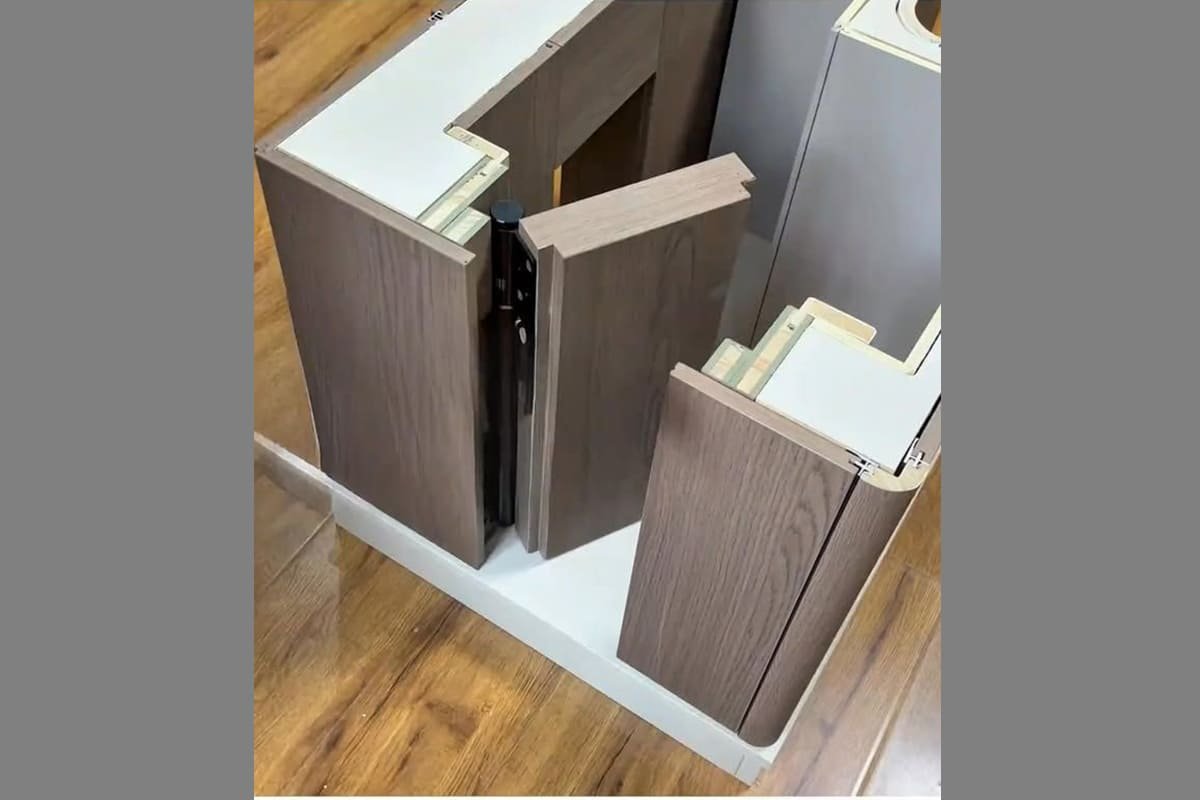
For a door factory, the hinge is part of a production process. The factory must route the hinge pocket, drill screw holes, assemble the door, check the gap, pack the door, and sometimes support installation on site. If the hinge dimension changes from batch to batch, the factory faces rework. If the machining drawing is unclear, the first trial takes too long. If the adjustment system is hard to use, the installer spends extra time on each door. A good concealed hinge should make this process more stable.
| Factory process | What I provide or check | Effect on efficiency |
|---|---|---|
| Sampling | I confirm size and fit with the buyer | The factory finds issues early |
| Machining | I provide drawings and key dimensions | The routing process becomes clearer |
| Assembly | I check screw position and hinge movement | The door fits more smoothly |
| Adjustment | I confirm easy fine-tuning | The installer saves time |
| Bulk supply | I control batch size and tolerance | The line runs with fewer stops |
I often advise buyers not to skip the sample stage. A catalog page cannot show every installation detail. A sample door test can show if the hinge body fits the frame, if the screws bite well, if the opening angle meets the need, and if the adjustment range is enough. This is especially important when the buyer develops a new door series. I also suggest that the buyer keeps one approved sample as the production standard. The approved sample helps both sides discuss finish, size, packing, and inspection. This creates a clear reference during bulk production. In B2B purchasing, this small habit can reduce argument and improve delivery stability.
How Should I Think About Security and Stability Without Overclaiming?
I see some sellers describe concealed hinges as anti-theft by default. I do not like that claim when no test data supports it.
Concealed installation can reduce exposed hardware and improve visual protection10, but I do not call it a security solution without verified test data. I check the door system, lock, frame, screws, and certificates.
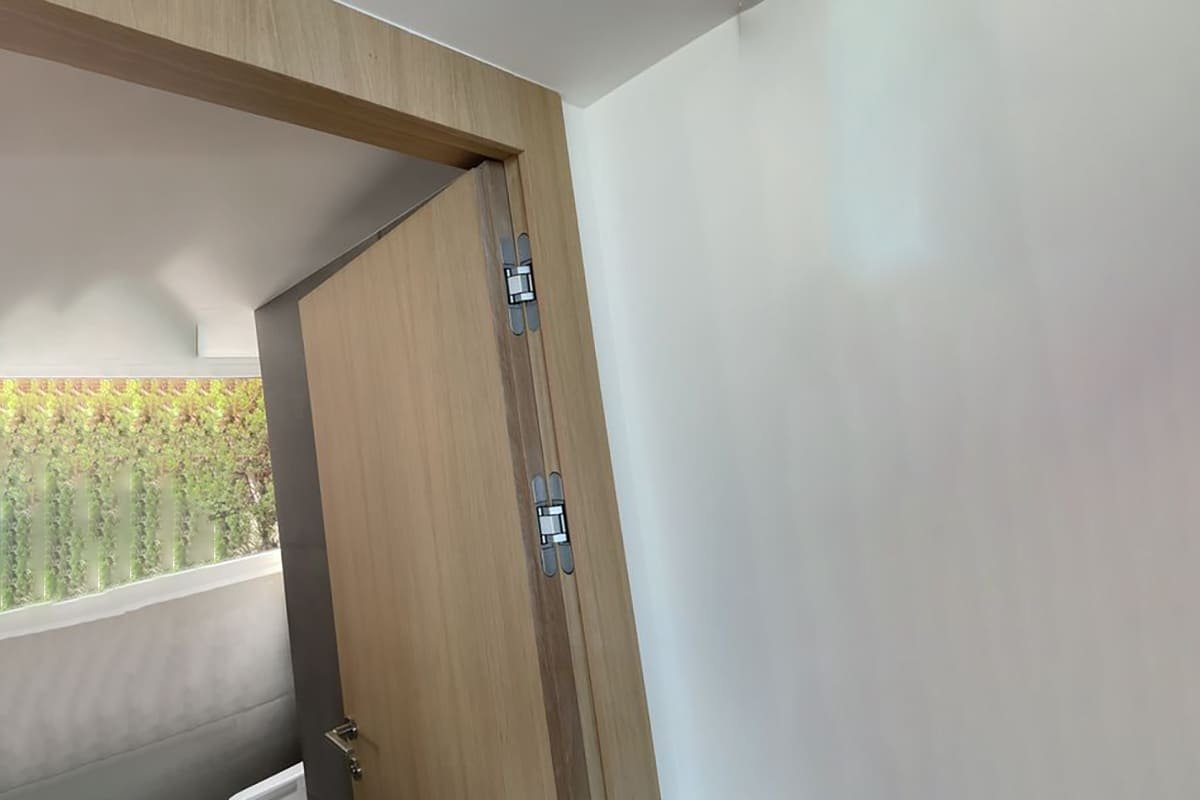
A concealed hinge has a natural visual protection advantage because the hinge body is not exposed when the door is closed. This can reduce direct access to the hinge from the visible side. It also supports a cleaner and more controlled door design. But security is not created by the hinge alone. The complete door system matters. The lock body, cylinder, strike plate, frame structure, screw anchoring, door core, and installation quality all affect the final result.11 If a project has fire-rated, security, or special compliance needs, I ask for the exact standard and certificate scope. I do not assume one certificate covers every model, size, door type, or use case.
| Security or stability point | What I verify | Why it matters |
|---|---|---|
| Hinge position | I confirm concealed installation | The hardware is less exposed |
| Screw holding | I check frame and door material | The hinge stays firm |
| Door system | I look at lock, frame, and leaf together | Real security depends on the full set |
| Certificate scope | I review model and application coverage | Claims must match documents |
| Installation method | I check alignment and fixing quality | Poor installation weakens stability |
I believe this careful language helps buyers make better decisions. A hardware brand buyer may need marketing points, but a project buyer needs facts. If the hinge has verified data, I can support the claim with documents. If it does not, I explain its practical limits. This builds trust. It also protects the buyer from selling an unsupported promise in their own market. In my work, I have learned that stability is a stronger and safer word when I can support it through model selection, material control, dimension control, and installation guidance. Security claims need proof. I prefer proof over big words.
Why Does Procurement Reliability Matter as Much as Product Design?
I see buyers spend weeks comparing hinge shapes, then face delays because the supplier cannot keep stable production. This is a real business risk.
Procurement reliability matters because B2B buyers need stable quality, matched finishes, clear documents, on-time delivery, and repeatable bulk production.12 A good hinge choice must also fit the supply chain.
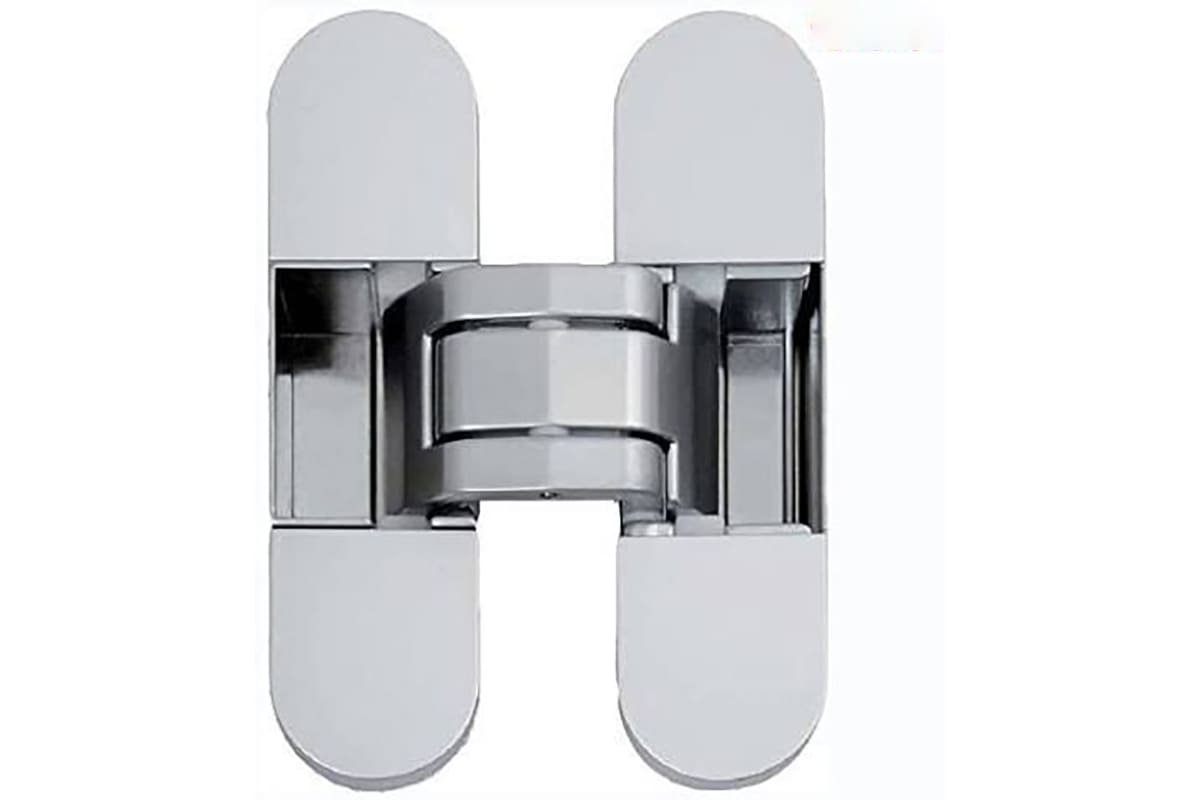
From my manufacturer’s view, a concealed hinge is not only a single item. It is part of a long buying process. The buyer requests samples, compares prices, confirms drawings, checks certificates, places a trial order, approves packaging, follows production, arranges shipment, and handles after-sales issues. If the supplier cannot control these steps, even a good product design can create trouble. This is why I talk about procurement reliability as an advantage. A stable factory can keep size, finish, packaging, and delivery more consistent across repeat orders.
| Procurement concern | What I focus on | Result for the buyer |
|---|---|---|
| Sample approval | I align sample, drawing, and finish | The buyer has a clear standard |
| Bulk consistency | I control production and inspection | The order matches the approved sample |
| Certification documents | I check model and scope | The buyer avoids wrong claims |
| Delivery planning | I arrange production based on order needs | The project schedule becomes safer |
| After-sales support | I help review problems and causes | The buyer reduces long-term cost |
I often work with door factories, hardware brands, and wholesalers. Each buyer has a different concern. A door factory cares about installation speed and machining accuracy. A hardware brand cares about finish, packaging, and market position. A wholesaler cares about price, stock stability, and repeat demand. I need to understand these concerns before I recommend a hinge. I do not push one model for every customer. I match the hinge to the door series, market level, price target, finish requirement, and delivery plan. This is the real value of a manufacturer’s advice. The product must work in the door, in the project, and in the supply chain.
Conclusion
I choose alloy concealed hinges when design, door specification, adjustment, finish control, and bulk supply can work together for a stable modern door project.
"Benefits of concealed hinges: • Clean aesthetic appearance with no ...", https://www.instagram.com/reel/DY-RbF0yjPk/. Research and industry publications often highlight that concealed hinges contribute to modern architectural aesthetics by enabling clean lines, offering adjustment capabilities, and providing corrosion resistance, which are key considerations in contemporary design. Evidence role: general_support; source type: research. Supports: the general advantages of alloy concealed hinges in modern architectural applications. Scope note: This support is for the general principles and benefits, not specific product performance data. ↩
"The Complete Guide to Modern Garage Doors | Distribudoors", https://www.distribudoors.com/the-complete-guide-to-modern-garage-doors/. Architectural design literature and contemporary project analyses frequently cite a preference for minimalist aesthetics in modern architecture, characterized by flush surfaces, concealed elements, and integrated finishes to achieve clean lines and visual simplicity. Evidence role: expert_consensus; source type: education. Supports: the prevalence of minimalist and integrated design elements, such as flat door surfaces and hidden frames, in modern architectural aesthetics. ↩
"Hidden Door Hinges Explained | Space-Saving Luxury Interior ...", https://www.instagram.com/reel/DU0nOCFEsgk/?hl=en. Industry design guides and project portfolios frequently showcase concealed hinges as a preferred hardware choice for achieving a high-end, minimalist aesthetic in luxury residential, hotel, office, and showroom environments. Evidence role: case_reference; source type: other. Supports: the common application of concealed hinges in high-end interior design projects, including residential, hospitality, and commercial spaces, to achieve a refined aesthetic. Scope note: This support is for typical applications and aesthetic goals, not a guarantee of suitability for all projects within these categories. ↩
"Quality, Microstructure, and Properties of Metal Alloys - PMC - NIH", https://pmc.ncbi.nlm.nih.gov/articles/PMC10144834/. Material science principles confirm that alloys are engineered to combine desirable properties from their constituent elements, often resulting in an optimal balance of characteristics like strength, weight, formability, and enhanced corrosion resistance compared to pure metals. Evidence role: definition; source type: education. Supports: the inherent material properties of alloys, suchs as their balance of strength-to-weight ratio, formability, and receptiveness to various surface treatments and corrosion resistance. Scope note: This support is for general alloy properties, not specific to the alloy used in the hinges or its performance in a particular application. ↩
"Why 3D Adjustable Concealed Hinges are the Game-Changer", https://www.assaabloy.com/ae/en/stories/access-stories/why-3d-adjustable-concealed-hinges-are-the-game-changer-your-doors-need. Engineering analyses of door hardware mechanisms explain that three-dimensional adjustment features in hinges provide critical post-installation flexibility, enabling installers to precisely align door panels in horizontal, vertical, and depth planes to achieve optimal fit and function. Evidence role: mechanism; source type: research. Supports: the functional advantages of three-dimensional adjustable hinges in allowing precise post-installation alignment of doors, thereby optimizing gaps, height, and depth for improved aesthetics and operation. ↩
"If you ever install concealed hinges- you'll want to try this method ...", https://www.instagram.com/reel/DOtDzUTEcDf/?hl=en. Industry best practices and installer feedback frequently indicate that adjustable door hinges significantly streamline the installation process, reducing the need for costly rework and saving time by allowing for fine-tuning after initial placement. Evidence role: general_support; source type: other. Supports: the practical benefit of adjustable hinges in reducing installation time and minimizing rework by accommodating minor site variations and installation inaccuracies. Scope note: The extent of time and cost savings can vary significantly based on project complexity and installer skill. ↩
"Corrosion of Buried Infrastructure - Coastal Subsurface Monitoring", https://coastal-subsurface.fiu.edu/the-project/motivation/the-problem/corrosion-of-buried-infrastructure/. Quality management standards and architectural specifications for large-scale construction projects emphasize that consistent finish and robust corrosion resistance in hardware are essential to meet aesthetic expectations and ensure durable performance across numerous installations. Evidence role: expert_consensus; source type: other. Supports: the critical importance of consistent finish and adequate corrosion resistance for hardware components in large-scale construction and bulk procurement projects to ensure aesthetic uniformity and long-term performance. ↩
"[PDF] Corrosion Protection for Metal Connectors and Fasteners in Coastal ...", https://www.fema.gov/sites/default/files/2020-07/tb8-corrosion_protection_metal_connectors_coastal_areas.pdf. Principles of materials science and corrosion engineering demonstrate that environmental factors like high humidity and saline air, prevalent in coastal regions, significantly increase the risk of corrosion on metal surfaces, especially when protective surface treatments are insufficient. Evidence role: mechanism; source type: education. Supports: the principle that inadequate surface treatments on metal hardware can accelerate corrosion, particularly in environments characterized by high humidity or salinity, such as coastal regions. ↩
"[PDF] DOOR HARDWARE (SCHEDULED BY DESCRIBING PRODUCTS)", https://fpm.usc.edu/wp-content/uploads/2021/11/087102-USC-HSC-door-hardware-Guide-Specification_1.pdf. Studies on manufacturing efficiency in the door industry indicate that hardware components with precise dimensions, clear installation guidelines, and consistent quality significantly reduce production bottlenecks and improve overall assembly efficiency for door factories. Evidence role: general_support; source type: research. Supports: the contribution of well-designed and consistently manufactured hardware, such as concealed hinges with stable dimensions and clear documentation, to improving installation efficiency in door manufacturing processes. Scope note: The actual efficiency gains are dependent on the factory's existing processes and the specific quality control of the hinge supplier. ↩
"Concealed Weapon Detection & Touchless Gun Screening System", https://www.avigilon.com/motorola-solutions-ecosystem/concealed-weapons-detection. Architectural hardware guides explain that concealed hinges are designed to be hidden within the door and frame, which inherently reduces the amount of exposed hardware and can contribute to a cleaner aesthetic and a less obvious point of access. Evidence role: definition; source type: other. Supports: the inherent characteristic of concealed hinge installation to minimize visible hardware, thereby offering a degree of visual protection by making the hinge mechanism less accessible or apparent. Scope note: This support is for visual protection and reduced exposure, not for certified security ratings or resistance to forced entry. ↩
"What Are Common Components of a Security System? | SafeWise", https://www.safewise.com/home-security-systems/learn/components/. Security standards and expert guidelines for building safety emphasize that the overall security performance of a door assembly is determined by the integrated strength of all its elements, such as the lock, frame, door material, and proper installation, rather than any single component. Evidence role: expert_consensus; source type: government. Supports: the principle that door security is a comprehensive system dependent on the combined strength and integrity of all its components, including the lock, frame, door leaf, and installation quality. ↩
"Managing Relationships with Suppliers and Vendors You Use", https://www.apu.apus.edu/area-of-study/business-and-management/resources/managing-relationships-with-suppliers-and-vendors-you-use/. Supply chain management principles and business procurement literature highlight that for B2B buyers, especially in industries requiring bulk materials, supplier reliability is paramount, ensuring consistent product quality, adherence to specifications, and on-time delivery to maintain project schedules and quality standards. Evidence role: expert_consensus; source type: education. Supports: the critical importance of procurement reliability in B2B transactions, particularly for bulk orders, encompassing consistent quality, accurate documentation, and dependable delivery schedules. ↩