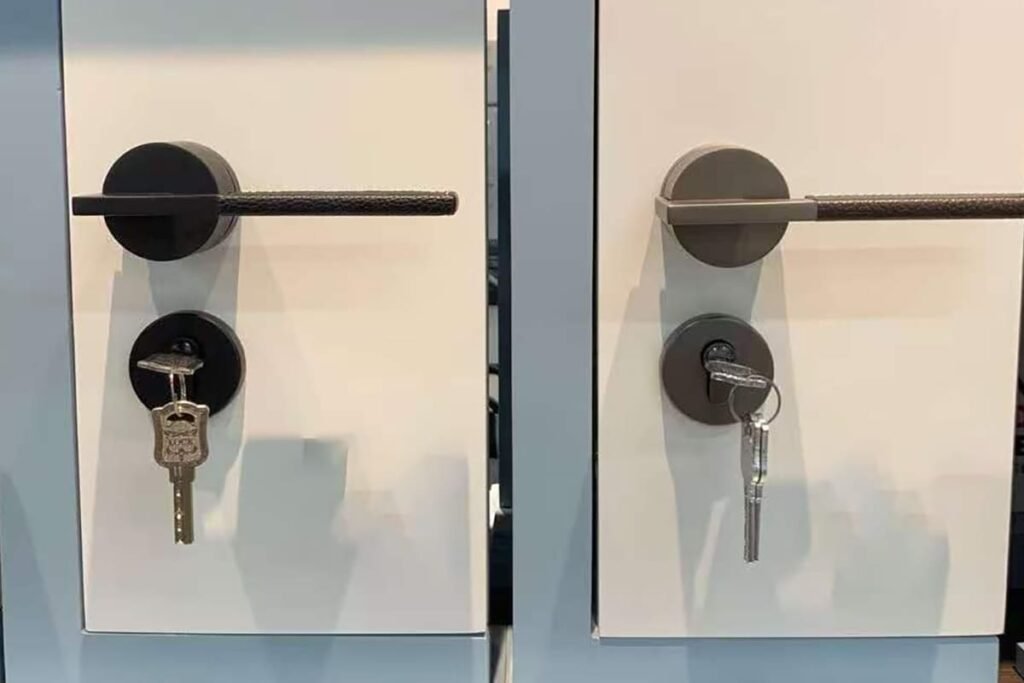
Door handle parts names?
I see buyers lose money when a door handle name looks simple, but the accessory list is unclear and the supplier quote is incomplete.
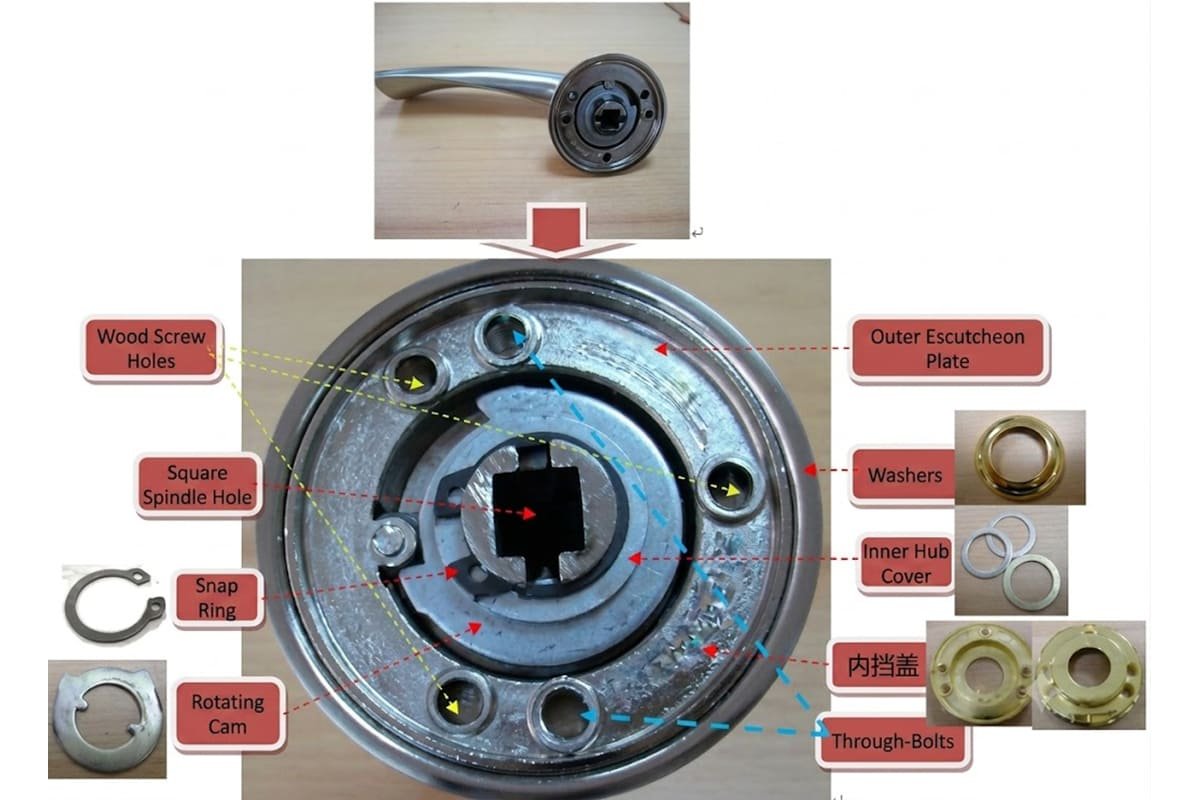
Door handle parts names include the visible handle pair and hidden parts such as spindle, through bolts, screw sleeves, self-tapping screws, Allen key, torsion spring, rotating plate, inner cover, outer cover, circlip, and washers. I use these names to confirm quotation, packing, assembly, and replacement needs.
I often speak with overseas buyers who already know the word “handle.” I also see that the real problem starts after that word. One supplier may quote only the handle body. Another supplier may include screws, spindle, and Allen key. The price looks different, but the product may not be the same. I write this guide from my factory-side work, so you can read further and check each part before you compare price.
What parts are in a complete split lever handle set?
I see many buyers compare handle prices too fast, and I know this can hide missing accessories inside the quotation.
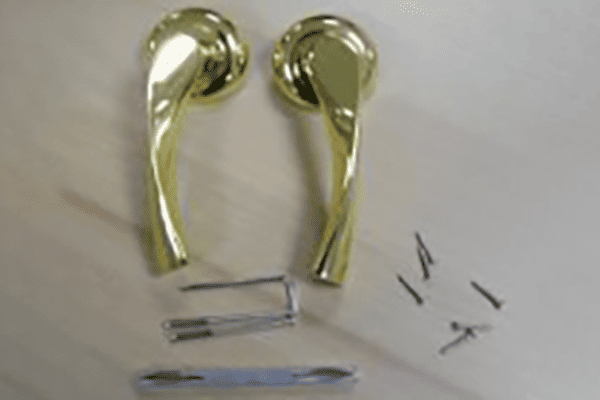
A standard split lever handle set usually includes one pair of handles, one spindle, two through bolts, two screw sleeves or tubes, six self-tapping screws, and one Allen key.1 I confirm these parts before I treat a quotation as complete.
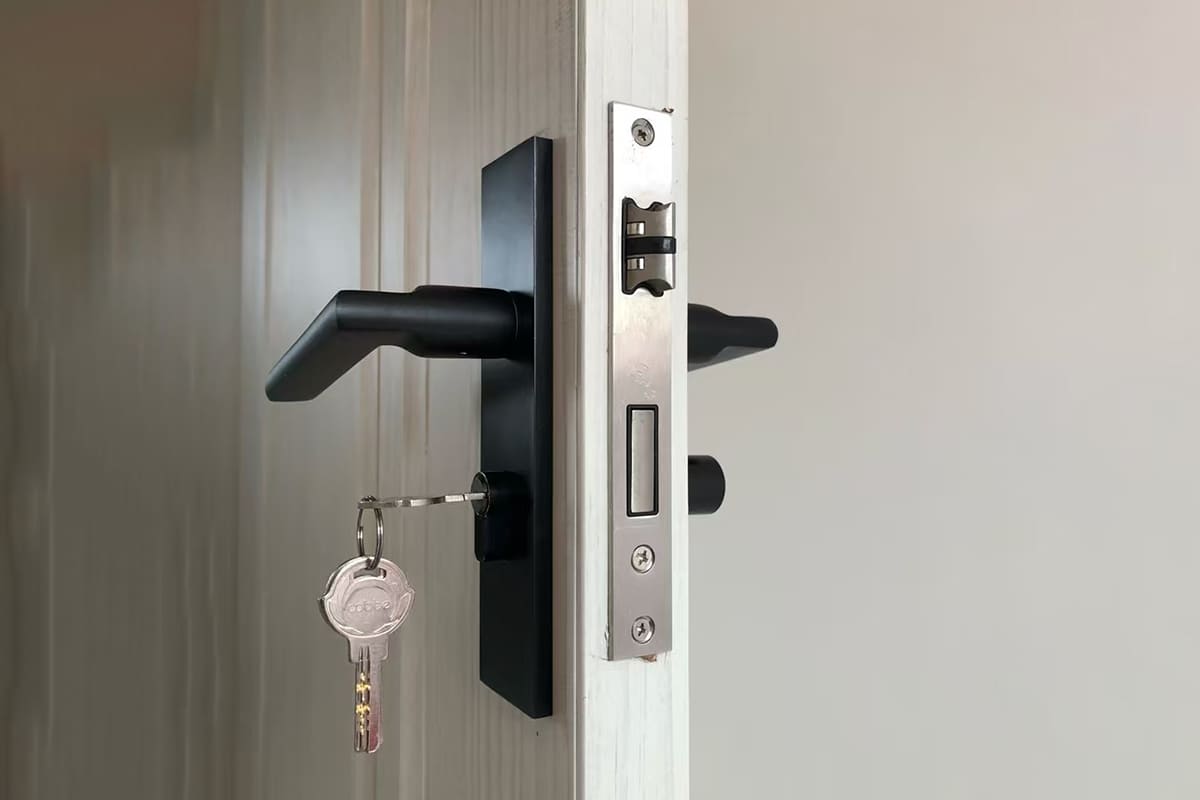
I use “split lever handle set” to describe a lever handle with a separate rose or cover on each side of the door.2 In our factory communication, I do not only ask for the handle model. I also ask for the full configuration. This matters because small accessories change cost, packing weight, and installation fit.
| English part name | Common meaning | Why I confirm it in B2B orders |
|---|---|---|
| Handle / Lever handle | The part the user holds | I check design, material, finish, and surface quality |
| Spindle | The square bar through the lock body | I check size, length, and door thickness fit |
| Through bolt | Long fixing screw through the door | I check strength and hole position |
| Screw sleeve / Screw tube | Tube that receives the through bolt | I check matching with bolt size |
| Self-tapping screw | Short screw for fixing the base | I check quantity and head type |
| Allen key | Small hex tool | I check if the end user can tighten grub screws |
I usually tell buyers that a handle set is not only the visible pair of levers. It is also a small system. If one small part is missing, the buyer may face complaints from a door factory or wholesaler. If the spindle is too short, the handle cannot work across the door thickness. If the through bolt size is wrong, the handle may feel loose. If the Allen key is missing, the buyer may need to prepare tools again. I have seen orders where the buyer asked for a lower price, and the supplier removed some accessories without clear notice. That price was not really cheaper. It only moved the problem to the buyer’s warehouse.
Do split lever handles need left-hand and right-hand versions?
I hear this question often, and I see buyers delay orders because they think every handle design needs a handed version.
Most split lever handles do not need separate left-hand and right-hand versions because the two handles are the same.3 For many asymmetrical designs, I can adapt the set by choosing which handle goes outside and which one goes inside.
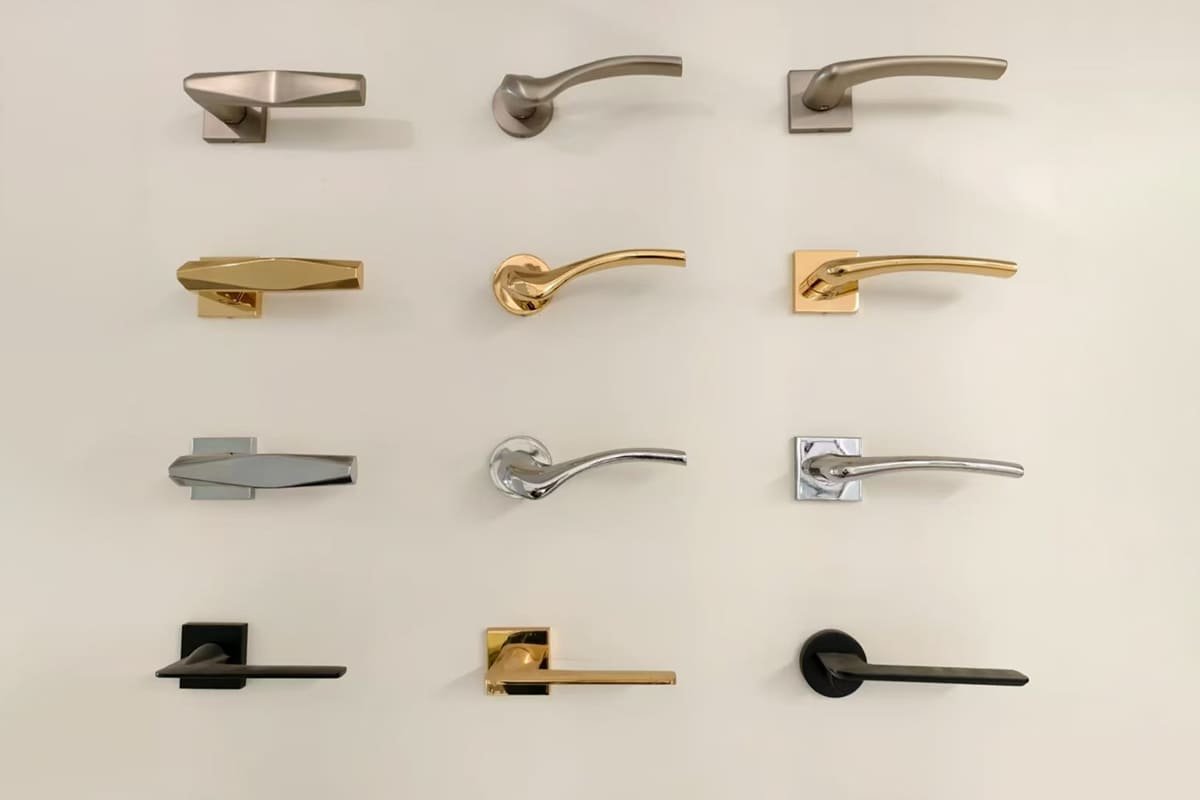
I treat handedness as a product structure question, not only a door opening question. For a normal split lever handle set, the two levers are made as the same piece. The spindle passes through the lock body. Each handle can be fixed on either side. This means the buyer can use the same set for different door openings in many cases.
| Situation | My factory-side view | Buyer action |
|---|---|---|
| Symmetrical lever design | I usually do not need LH/RH versions | I confirm finish and packing only |
| Slightly asymmetrical lever design | I may still use the same pair | I confirm which side faces outside |
| Strong one-direction design | I check structure before quote | I ask for drawing or photo |
| Project with strict door schedule | I confirm opening direction early | I match handle plan with door plan |
I have seen buyers use the words “left handle” and “right handle” when they only mean door opening direction. I always slow down the conversation at this point. A door opening direction belongs to the door and lock plan. A left or right handle version belongs to the handle design and inner structure. These are related, but they are not the same thing. If the two handles are identical, the buyer normally does not need to stock two versions. This helps wholesalers reduce inventory risk. It also helps door factories keep the production line simple.4 Still, I do not assume every special design is reversible. I check the drawing, the shape, the fixing position, and the logo direction if the brand mark is on the handle.
I see buyers focus on the outside shape, but I know the return feel and fixing stability come from hidden parts.
The hidden internal parts of a lever handle can include a torsion spring, rotating plate, inner cover, outer cover, circlip, and washers. I use these names to discuss handle return, turning angle, fixing method, decoration, and gap control.
I look at a lever handle as a visible product with hidden work inside it. The user touches the lever, but the inner parts decide how the lever moves and returns.5 I do not call these parts decoration only. They affect the product feel and the after-sales risk.
| Internal part name | Simple function | Procurement relevance |
|---|---|---|
| Torsion spring | Helps the handle return | I check spring force and return feeling |
| Rotating plate | Limits the turning angle | I check movement range and structure match |
| Inner cover | Holds fixing screws and base parts | I check fixing hole layout |
| Outer cover | Hides screw heads and improves look | I check finish and cover fit |
| Circlip | Keeps internal parts in place | I check assembly stability |
| Washer | Adds thickness or fills small gaps | I check tolerance and smooth movement |
I often explain the torsion spring first because buyers can feel its effect. If the spring is weak, the handle may not return well. If the spring is too strong, the handle may feel hard. The rotating plate is also important because it controls how far the lever turns. This part helps the handle work in a stable range. The inner cover is more practical. It receives through bolts or wood screws, so I check its hole position and strength. The outer cover gives the clean finished look. It hides screw heads and gives the handle a better face on the door. The circlip is small, but I do not ignore it. It keeps parts from moving out of place. Washers also look simple, but they help fill small gaps and control thickness. These small parts are easy to miss in English communication, so I name them clearly in order sheets.
I see catalog pages show beautiful handles, but I know many order problems come from the parts that are not shown.
Visible door handle parts include the lever, rose or cover, and surface finish. Hidden parts include spindle, through bolts, screw sleeves, self-tapping screws, torsion spring, circlip, washers, and inner cover. I separate them so buyers can check both appearance and function.
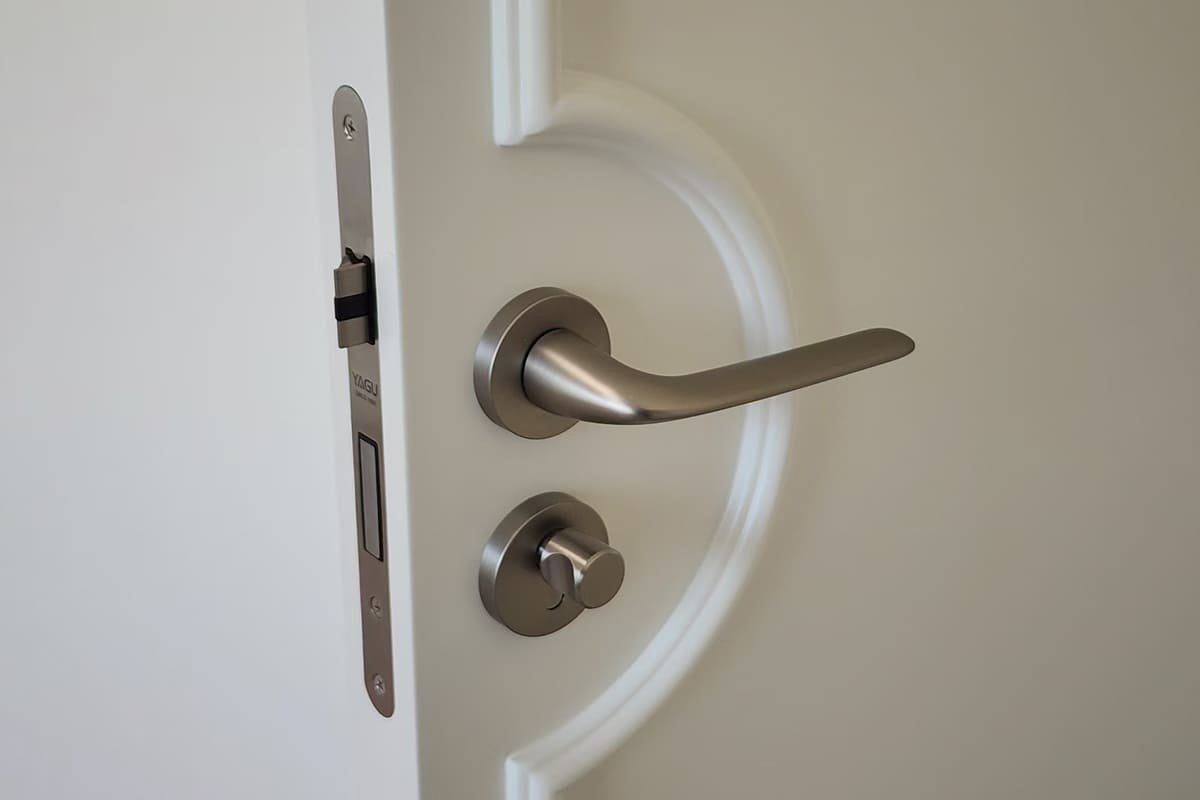
I like to divide handle parts into two groups. The first group is what the buyer can see in a catalog photo. The second group is what the buyer only sees after opening the packing or removing the cover. This split helps me discuss both sales value and technical value with buyers.
| Part group | Example parts | Main buyer concern |
|---|---|---|
| Visible parts | Lever handle, cover, rose, finish | Design, color, market taste, brand image |
| Semi-visible parts | Grub screw, cover edge, logo | Clean look, assembly quality |
| Hidden fixing parts | Spindle, through bolt, screw tube | Fit, strength, door thickness |
| Hidden moving parts | Spring, rotating plate, circlip, washer | Return feel, movement, service life |
I have met buyers who knew the finish code, handle length, and shape very well. They still did not know which spindle size was packed inside. This is a common risk in bulk buying.6 A wholesaler may sell the handle to many door factories. Each factory may use a slightly different lock body or door thickness. If the hidden parts are not confirmed, the same handle can create different feedback in different markets. I do not suggest that every buyer should become an engineer. I only suggest that buyers learn the names of the small parts that affect order accuracy. When I receive a clear inquiry with both visible and hidden part names, I can quote faster. I can also reduce back-and-forth messages. This saves time for both sides.7 It also reduces the chance that the buyer receives a nice-looking handle set that lacks the correct fixing parts.
What materials are used for door handle parts?
I see material questions in almost every inquiry, but I also know material is only one part of the handle configuration.
Common door handle materials include stainless steel, zinc alloy, aluminum alloy, ceramic, and wood.8 I confirm material together with finish, structure, accessory list, and target market because the same material name does not fully define the handle set.
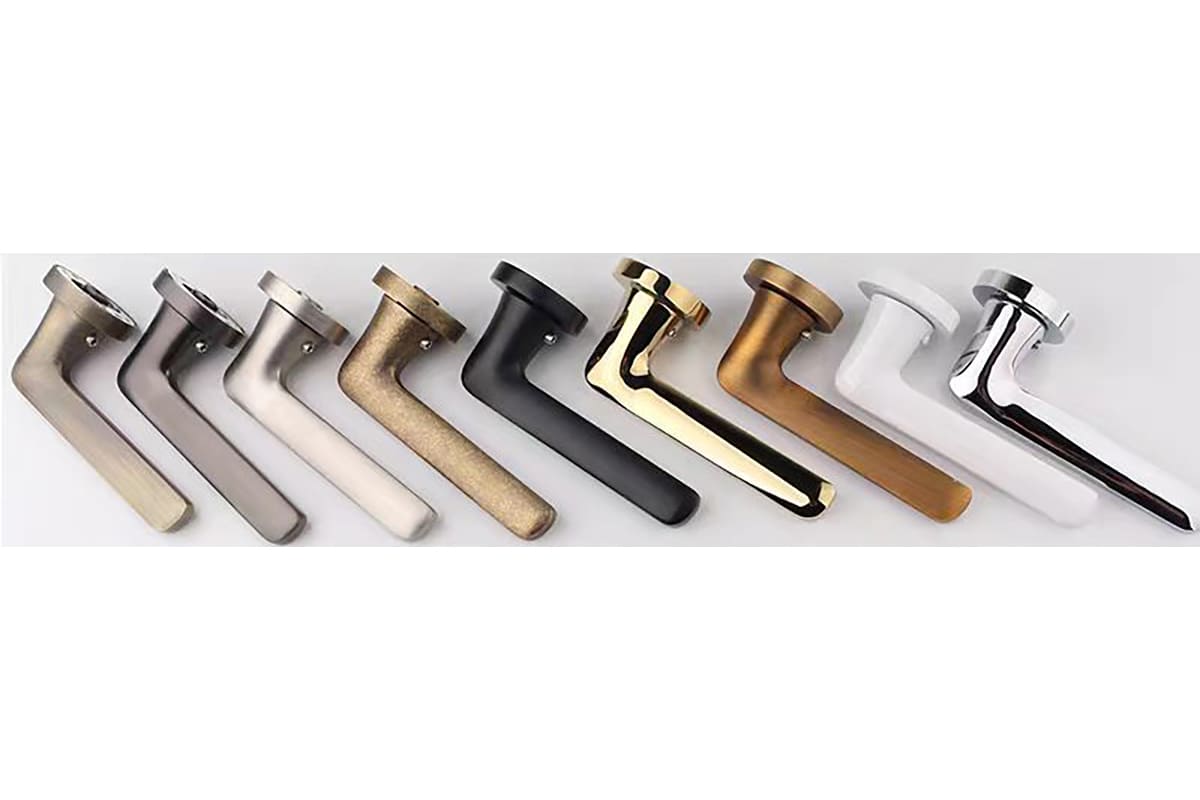
I treat material as an important support topic. I do not let it replace the full parts discussion. A stainless steel handle may still need the right spindle, screws, spring, and cover structure. A zinc alloy handle may look very good if the surface process is stable. An aluminum alloy handle may fit some market price levels. Ceramic and wood parts may support special design styles, but they need clear packing and protection.
| Material | Where I often see it | What I confirm with buyers |
|---|---|---|
| Stainless steel | Lever handle, cover, some fixing parts | Grade, thickness, finish, surface consistency |
| Zinc alloy | Lever body and decorative covers | Plating finish, weight, design detail |
| Aluminum alloy | Light handle designs | Surface treatment and strength needs |
| Ceramic | Decorative handle part | Color, pattern, packing safety |
| Wood | Grip area or design element | Moisture control, color match, surface feel |
I often tell buyers that material names can be too broad. “Stainless steel handle” does not say enough by itself. I still need to know the handle tube or solid structure, the cover type, the spindle size, the screw pack, and the finish requirement. “Zinc alloy handle” also needs more detail. I check the casting quality, plating target, and final surface standard. I also check if the buyer needs a matching mortise lock or cylinder finish, but I do not mix those products into the handle parts list. They are nearby door hardware items, not handle parts.9 This clear line helps avoid confusion in catalogs and quotations. When I prepare product files for buyers, I prefer one page for handle set configuration and another page for matching lock or cylinder. This keeps the order clean.
How should I use door handle parts names in supplier communication?
I see many slow quotations because buyers ask for “one handle set” but do not define what that set includes.
I use door handle parts names in supplier communication by listing visible parts, hidden internal parts, fixing accessories, material, finish, and door thickness range. This helps me receive accurate quotations and avoid missing accessories during bulk order confirmation.

I find that a simple checklist works better than a long unclear message. When I talk with a buyer or when I answer an inquiry, I prefer to confirm the set step by step. This does not make the order more complex. It makes the order safer.
| Checklist item | Example wording I use | Reason |
|---|---|---|
| Handle set type | Split lever handle set | I define the product type first |
| Main parts | One pair of handles | I confirm the visible product |
| Fixing accessories | Spindle, through bolts, screw tubes, screws, Allen key | I confirm the complete packing |
| Internal parts | Spring, rotating plate, circlip, washers | I confirm structure and function |
| Door condition | Door thickness and lock body type | I confirm fit |
| Appearance | Material, finish, logo, cover shape | I confirm market and brand needs |
| Packing | One set per box or bulk packing | I confirm warehouse and sales needs |
I often use bilingual terms when the buyer’s team includes both purchasing staff and local warehouse staff. For example, I may write “spindle / square bar,” “through bolt / connecting screw,” and “screw sleeve / screw tube.” This helps the buyer match my words with their internal names.10 I also ask buyers to confirm whether the Allen key is needed in each set. Some buyers want it included for retail packing. Some door factories do not need one Allen key per set because their workers already have tools. This small choice can affect cost and packing.11 I also ask whether six self-tapping screws are needed or whether the buyer wants a different screw pack. I do not guess. I confirm. In my experience, clear part names create better quotations, better samples, and better repeat orders.12
Conclusion
I use door handle parts names to protect quotation accuracy, product fit, packing completeness, and long-term buyer trust.
"Spindles | Shafts | Door Knobs and Parts - AllAboutDoors & Windows", https://www.allaboutdoors.com/Products/door-parts/hinged-residential-door-parts/Knobs-and-Spindles?srsltid=AfmBOoqsotgUZGQPc7raHiAJ8LYlphEaPTgjmVRzkCmdzW9QwoFqWQgV. This source supports the common components typically found in a standard split lever handle set, providing a baseline for comparison. Evidence role: general_support; source type: encyclopedia. Supports: the common components typically found in a standard split lever handle set. ↩
"[PDF] Glossary: Types of Doorknobs and Door Locks | OPWDD", https://opwdd.ny.gov/glossary-types-doorknobs-and-door-locks. This source supports the definition of a 'split lever handle set' as a lever handle configuration featuring a separate rose or cover on each side of the door, aligning with common industry terminology. Evidence role: definition; source type: encyclopedia. Supports: the definition of a 'split lever handle set' as a lever handle configuration featuring a separate rose or cover on each side of the door. ↩
"Split Spindle vs Single Spindle Door Handles | How uPVC Door ...", https://www.homesecureshop.co.uk/blogs/news/upvc-door-lock-operations-single-or-split-spindle. This source supports the assertion that most split lever handle designs are symmetrical and do not require distinct left-hand and right-hand versions, simplifying inventory and installation. Evidence role: general_support; source type: encyclopedia. Supports: the assertion that most split lever handle designs are symmetrical and do not require distinct left-hand and right-hand versions. ↩
"Spare Parts Inventory Management: Cut Downtime & Costs", https://www.getmaintainx.com/blog/spare-parts-inventory-management-strategies. This source supports the claim that using identical handle components can lead to reduced inventory risk for wholesalers and streamlined production processes for door factories, highlighting supply chain efficiencies. Evidence role: general_support; source type: research. Supports: the claim that using identical handle components can lead to reduced inventory risk for wholesalers and streamlined production processes for door factories. ↩
"The Science Behind Ergonomic Door Handle Design", https://www.decorhandles.co.za/blogs/news/the-science-behind-ergonomic-door-handle-design?srsltid=AfmBOoqHvZwZpMiPIBxROj3cWn09MsMaQEGFDALIqwNQRTy5I9WQMpA5. This source supports the principle that the internal components of a lever handle are critical in determining its operational mechanics, including movement and return action, rather than just the visible parts. Evidence role: mechanism; source type: education. Supports: the principle that the internal components of a lever handle are critical in determining its operational mechanics, including movement and return action. ↩
"[PDF] Procurement, Contracting, and Supply Chain Risk Management ...", https://inldigitallibrary.inl.gov/sites/STI/STI/Sort_133245.pdf. This source supports the assertion that overlooking specifications for hidden components, such as spindle size, represents a common risk in bulk purchasing of door handles, potentially leading to compatibility issues. Evidence role: general_support; source type: research. Supports: the assertion that overlooking specifications for hidden components, such as spindle size, represents a common risk in bulk purchasing of door handles. ↩
"(PDF) Systematic Review Business-to-Business (B2B) E-Commerce ...", https://www.researchgate.net/publication/396720600_Systematic_Review_Business-to-Business_B2B_E-Commerce_and_E-Procurement_A_Systematic_Review_of_Efficiency_and_Cost_Reduction. This source supports the claim that comprehensive inquiries, specifying both visible and hidden components, enhance efficiency in the quotation process and minimize communication delays between buyers and suppliers. Evidence role: general_support; source type: research. Supports: the claim that comprehensive inquiries, specifying both visible and hidden components, enhance efficiency in the quotation process and minimize communication delays between buyers and suppliers. ↩
"Best Materials for Door Handles for a Stylish & Durable Upgrade - Yale", https://www.yalehome.com/ae/en/stories/blogs/best-materials-for-door-handles-for-a-stylish-and-durable-upgrade. This source supports the identification of stainless steel, zinc alloy, aluminum alloy, ceramic, and wood as commonly used materials in the manufacturing of door handles. Evidence role: general_support; source type: encyclopedia. Supports: the identification of stainless steel, zinc alloy, aluminum alloy, ceramic, and wood as commonly used materials in the manufacturing of door handles. ↩
"[PDF] SECTION 087111 - DOOR HARDWARE (SCHEDULED ... - USC FPM", https://fpm.usc.edu/wp-content/uploads/2021/11/087102-USC-HSC-door-hardware-Guide-Specification_1.pdf. This source supports the distinction between door handle components and other related door hardware items like mortise locks and cylinders, clarifying product categorization within the industry. Evidence role: definition; source type: encyclopedia. Supports: the distinction between door handle components and other related door hardware items like mortise locks and cylinders. ↩
"The Benefits of Being Bilingual in the Workplace | St. Augustine", https://www.staugustine.edu/2024/05/02/benefits-of-being-bilingual-in-the-workplace/. This source supports the claim that employing bilingual or alternative terminology for product components in supplier communications facilitates better alignment with a buyer's internal naming conventions, enhancing clarity. Evidence role: general_support; source type: research. Supports: the claim that employing bilingual or alternative terminology for product components in supplier communications facilitates better alignment with a buyer's internal naming conventions. ↩
"Atomic packing factor", https://en.wikipedia.org/wiki/Atomic_packing_factor. This source supports the principle that seemingly minor decisions, such as including or excluding small accessories like an Allen key, can have a notable impact on product cost and packing logistics. Evidence role: general_support; source type: education. Supports: the principle that seemingly minor decisions, such as including or excluding small accessories like an Allen key, can have a notable impact on product cost and packing logistics. ↩
"Words do matter: a systematic review on how different terminology ...", https://pmc.ncbi.nlm.nih.gov/articles/PMC5541578/. This source supports the assertion that using clear and precise part names in supplier communication contributes to more accurate quotations, higher quality samples, and more efficient repeat orders. Evidence role: general_support; source type: research. Supports: the assertion that using clear and precise part names in supplier communication contributes to more accurate quotations, higher quality samples, and more efficient repeat orders. ↩