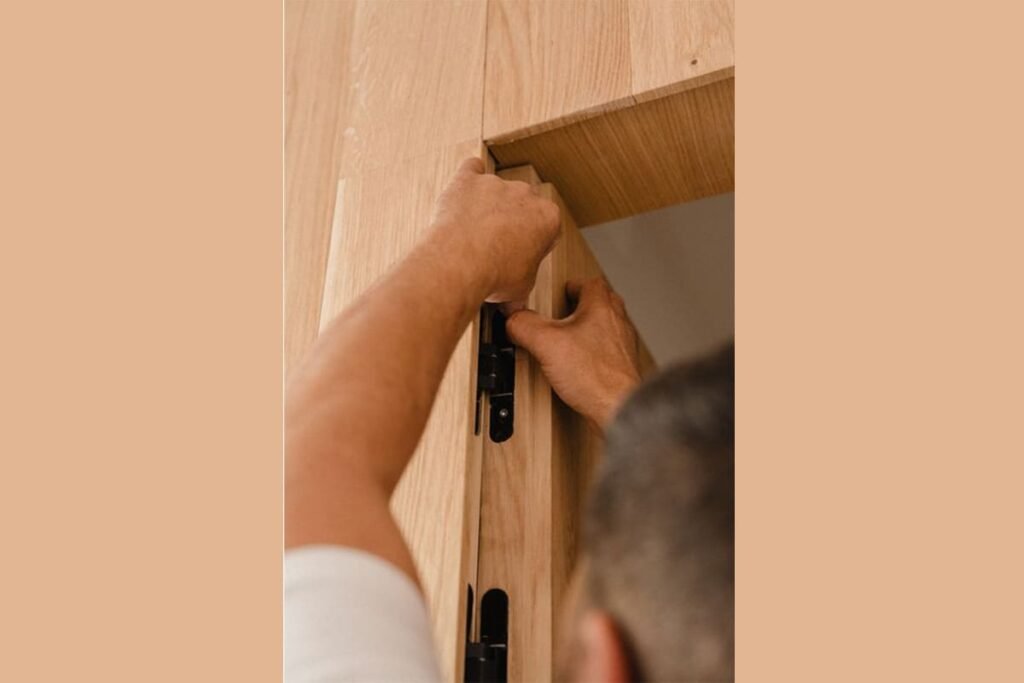
What are the three types of concealed hinges?
Concealed hinges can look simple from the outside, but buyers often discover the real difficulty after installation starts. A wrong hinge type can cause poor door gaps, noisy closing, weak adjustment, or higher after-sales cost. I usually explain the solution by separating the three main types by structure, function, and application.
The three types of concealed hinges are 3D concealed hinges, hydraulic self-closing hidden hinges, and Soss-style concealed hinges.1 3D models focus on invisible installation and three-way adjustment. Hydraulic models add self-closing or soft-closing behavior. Soss-style hinges use a hidden mechanical linkage and are often selected for heavier or more traditional concealed-door applications.
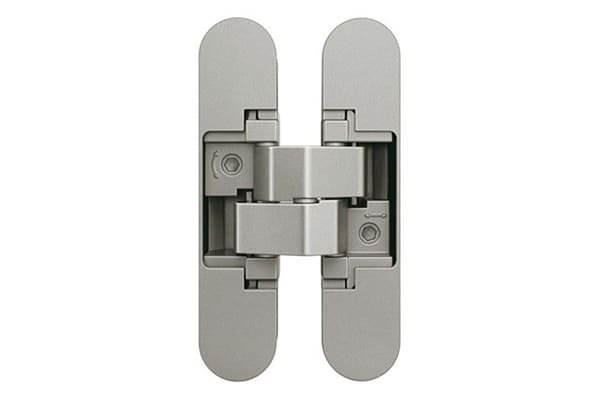
Many people ask this question as if it only needs a product name. In real procurement, I see it differently. The better question is: which concealed hinge fits the door, the installation method, the market standard, and the buyer’s risk tolerance?
What are 3D concealed hinges?
Door factories often want a clean flush-door appearance, but they also need room to correct installation errors. If a hinge is hidden but cannot adjust well, the installer may spend extra time correcting the frame, door leaf, or gap. That is where 3D concealed hinges become useful.
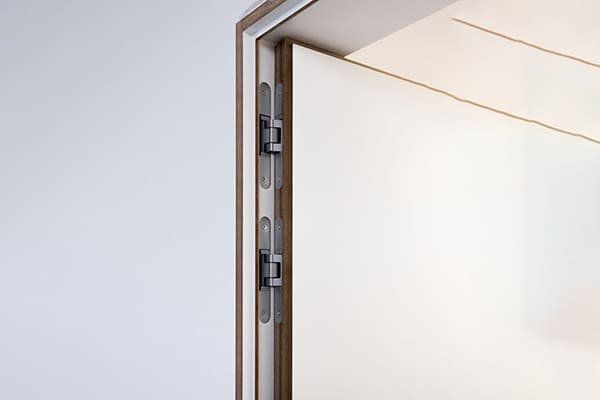
3D concealed hinges are hidden hinges with adjustment in three directions: up and down, left and right, and front and back2. This design helps installers fine-tune door alignment after mounting, improve closing gaps, and reduce problems caused by small machining or installation differences.3
Why 3D adjustment matters in real installation
In my factory experience, many hinge complaints are not caused by one dramatic failure. They come from small tolerance problems adding up. The door leaf may be slightly heavy. The frame may not be perfectly square. The mortise depth may vary by 0.5 mm to 1 mm. The wall opening may also affect the final position.
A 3D adjustable structure gives the installer a practical way to correct these issues.
Common adjustment directions include:
- Vertical adjustment: moves the door leaf up or down.
- Horizontal adjustment: changes the side gap between the door and frame.
- Depth adjustment: moves the door leaf in or out to align the surface.
For interior wooden doors, these adjustments can save real time. I have seen production batches where the door and frame looked accurate on the drawing, but site installation still needed correction. A 3D hinge gives the installer more control after the door is already mounted.
Where 3D concealed hinges fit best
3D concealed hinges are commonly used for:
- Interior wooden doors
- Flush doors
- Modern minimalist doors
- Hotel room doors
- Apartment doors
- Office doors with clean visual design
They are especially useful when the buyer cares about door gap consistency. For a door brand, consistent gaps are not just technical details. They affect how the final customer judges the whole door.
| Selection point | Why it matters for 3D concealed hinges |
|---|---|
| Door thickness | The hinge body must fit inside the door and frame |
| Door weight | The hinge structure must match the load requirement |
| Door height and width | Taller and wider doors create more leverage4 |
| Frame material | Wood, aluminum, and steel frames need different fixing methods |
| Adjustment range | More adjustment helps installation, but it must remain stable |
| Opening angle | The hinge structure must support the required swing angle |
The buyer risk I always check first
A hidden hinge is not automatically a 3D hinge. This is a common misunderstanding. Some concealed hinges are invisible after closing, but they only offer limited adjustment or no true three-way adjustment.
So, when I review a customer inquiry, I usually ask for:
- Door thickness
- Door height
- Door width
- Door weight
- Door and frame material
- Required opening angle
- Surface finish
- Quantity and packaging method
- Market or project standard
- Whether CE or fire-rated documents are needed
If the buyer only sends a picture, I can make a visual match, but I cannot confirm the best technical match. For bulk procurement, this creates risk. The hinge may look correct, but the adjustment structure, screw position, or mortise size may not suit the door system.
My practical view is simple: choose 3D concealed hinges when alignment control matters as much as hidden appearance.
What are hydraulic self-closing concealed hinges?
Some projects want an invisible hinge, but they also want the door to close quietly and return by itself. If buyers use a normal hidden hinge, they may still need a separate door closer. That can affect appearance, cost, and user comfort. Hydraulic self-closing concealed hinges solve this combined requirement.
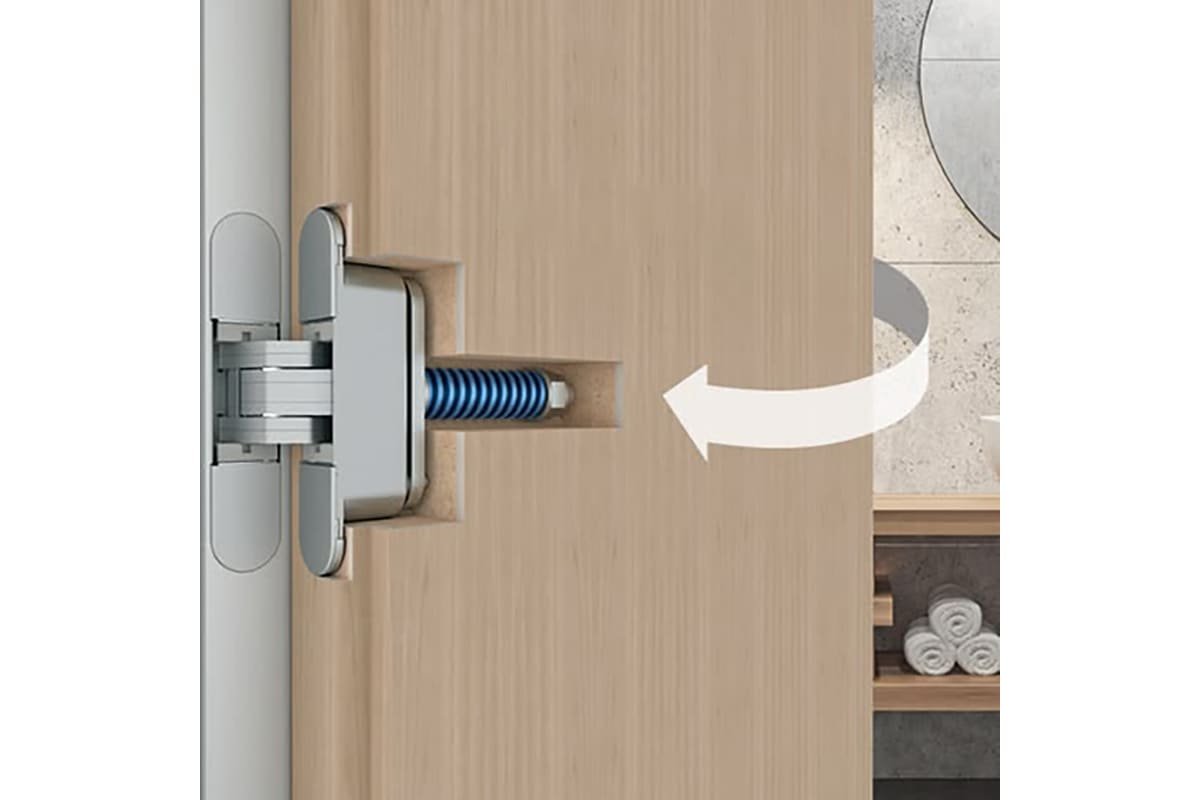
Hydraulic self-closing concealed hinges combine a hidden hinge body with closing control.5 Depending on the model, they may offer self-closing, soft-closing, or buffering action. Their value is not only visual. They can reduce closing noise and may reduce the need for a separate door closer in suitable interior applications.6
How hydraulic hidden hinges work in practical terms
A hydraulic self-closing hidden hinge usually contains a mechanism that controls the door’s closing movement. Some models use hydraulic damping. Some include spring force. Some designs combine closing force and buffering in one hinge body.
The goal is simple: the door should not slam shut.
This function can improve comfort in:
- Bedrooms
- Studies
- Hotel rooms
- Private offices
- Meeting rooms
- Quiet residential interiors
In many markets, customers now expect smoother closing. They may not know the technical name, but they notice the feeling. A loud door gives a cheap impression. A controlled door feels more refined.
Hydraulic hinge vs separate door closer
A hydraulic hinge does not always replace a door closer in every project.7 Buyers should confirm the door size, weight, closing speed expectation, and project requirements. Still, for many interior doors, a self-closing hidden hinge can help reduce extra exposed hardware.
| Option | Main advantage | Main limitation |
|---|---|---|
| Hydraulic self-closing concealed hinge | Hidden appearance with controlled closing | Must match door weight and use conditions |
| Surface-mounted door closer | Strong closing control and wide project use | Visible on the door surface |
| Floor spring or pivot closer | Useful for some commercial door systems | Different installation structure and cost |
| Standard concealed hinge | Clean appearance and simple structure | No self-closing unless paired with another device |
What buyers should verify before ordering
I do not recommend choosing hydraulic self-closing concealed hinges only by appearance. The internal mechanism matters. The production consistency also matters because the closing feel should remain stable across the full batch.
Buyers should confirm:
Door weight range
The hinge must match the actual door weight. Exact load capacity should be verified by product model.Door thickness requirement
The hydraulic body usually needs enough space inside the door and frame.Closing angle and speed behavior
Some hinges close from a certain angle. Some provide buffering near the end.Noise expectation
Quiet closing depends on hinge design, door seal, latch, lock, and installation accuracy.8Adjustment function
Some hydraulic concealed hinges may also include adjustment, but not all do. Hidden appearance and 3D adjustment are separate features.Certification scope
If CE or fire-rated requirements apply, buyers must verify the exact certificate, tested model, and project usage condition.
Manufacturing details that affect performance
From the manufacturing side, hydraulic hinges require closer control than many standard mechanical hinges. The hinge body, pin, internal damping part, spring element, and machining accuracy all affect performance.
Important production factors include:
- Stable machining of the hinge body
- Accurate assembly of the damping mechanism
- Consistent surface finish
- Reliable screw hole positioning
- Smooth opening movement
- Batch consistency of closing force
A small difference in internal resistance may not look serious on the table. But after installation, the user may feel that one door closes faster than another. For a hotel or apartment project, this inconsistency can become an after-sales problem.
That is why I always treat hydraulic self-closing hidden hinges as a functional product, not only a decorative product. The buyer should request samples, test them with the real door structure, and confirm the installation method before placing a large order.
What are Soss-style concealed hinges?
Some buyers ask for concealed hinges for thicker or heavier doors, but they do not necessarily need 3D adjustment or hydraulic closing. If they choose the wrong type, they may pay for functions they do not need or miss the mechanical structure they actually require. Soss-style concealed hinges are a separate category.
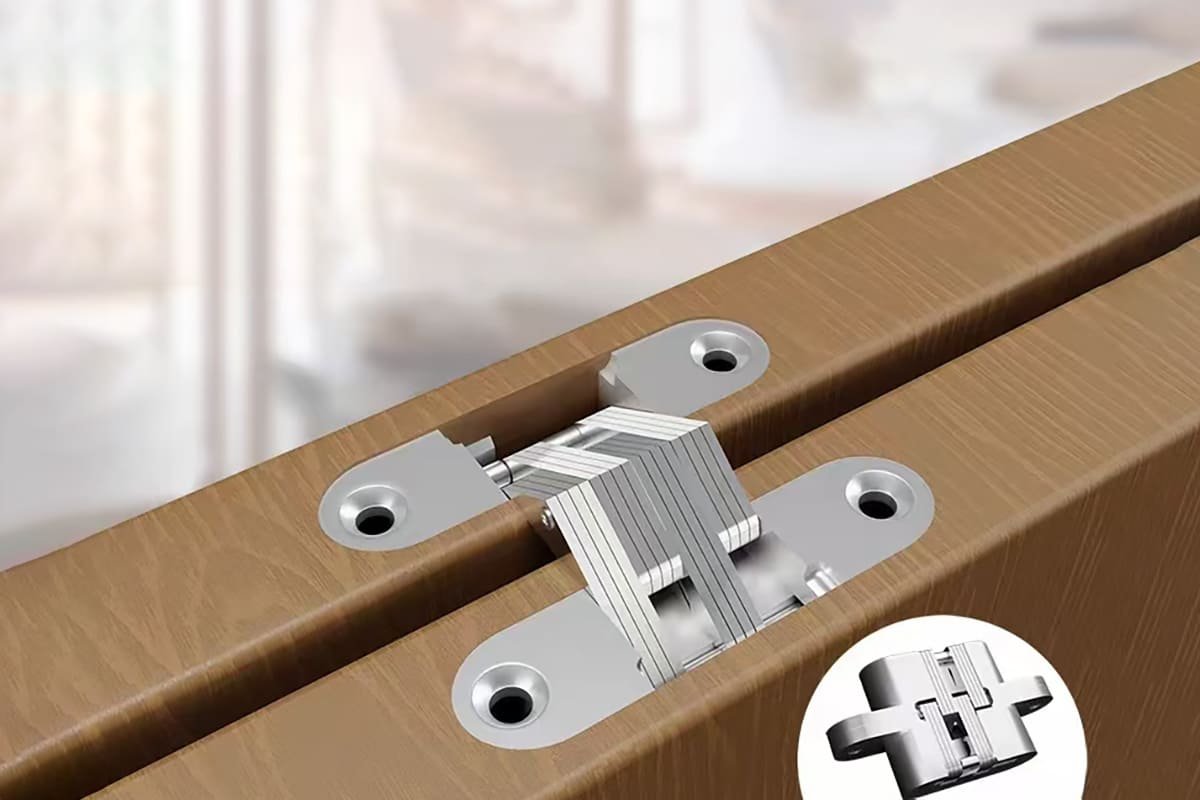
Soss-style concealed hinges use a hidden mechanical-linkage structure.9 When the door is closed, the hinge body is concealed inside the door and frame. When the door opens, the interlocking arms become visible. These hinges are often made with layered metal plates and are commonly used for heavier concealed-door applications.
What makes a Soss-style hinge different?
A Soss-style hinge is not the same as a 3D adjustable hinge. It is also not the same as a hydraulic self-closing hinge. The most important difference is the mechanical linkage structure.
The hinge normally uses interlocking arms or layered plates that fold into the hinge body when the door closes. This creates a clean hidden appearance from the outside. When the door opens, the arms are visible.
This design is often called a concealed mechanical hinge or invisible hinge in some markets. In Chinese product discussions, buyers may also refer to it as 十字暗合页 depending on the style and market habit.
Common materials and construction
Soss-style concealed hinges are commonly produced with:
- Stainless steel
- Zinc alloy
- Steel-based components
- Layered metal plates
- Precision pins or linkage parts
The exact material should be checked by product model. I avoid making a broad claim that one material is always better. Stainless steel can offer strong corrosion resistance in many conditions, while zinc alloy can support different shapes and finishes.10 The correct choice depends on the door, environment, price target, finish, and project requirements.
Where Soss-style concealed hinges are used
These hinges are often selected for:
- Heavier wooden doors
- Concealed panel doors
- Cabinet-style hidden doors
- Custom interior doors
- Doors where a traditional hidden linkage is preferred
- Projects where the hinge must disappear when closed
Because the hinge body is mortised into both the door and frame, installation accuracy is very important.11 A poor mortise can cause binding, uneven gaps, or difficult movement. For bulk door production, the door factory should confirm the routing template before mass assembly.
Buyer risks with Soss-style concealed hinges
The biggest procurement risk is classification confusion. Some buyers simply say “hidden hinge,” but they may expect different functions. If the supplier sends a Soss-style product when the buyer needs 3D adjustment, the installer may struggle. If the buyer needs quiet self-closing, a basic Soss-style mechanical hinge will not provide that function by itself.
Here is a simple comparison:
| Feature | 3D concealed hinge | Hydraulic self-closing hidden hinge | Soss-style concealed hinge |
|---|---|---|---|
| Hidden when door is closed | Yes | Yes | Yes |
| 3D adjustment | Usually yes | Model-dependent | Usually no or limited |
| Self-closing | No, unless special design | Yes, model-dependent | No, unless paired with other hardware |
| Mechanical linkage visible when open | Not usually the same style | Not usually the same style | Yes |
| Main value | Alignment control | Quiet/self-closing comfort | Concealed mechanical support |
| Best for | Interior wooden doors, flush doors | Quiet interior spaces | Heavier or custom hidden-door uses |
Why installation accuracy matters more here
Soss-style concealed hinges can be less forgiving if the mortise position is wrong. The hinge needs enough space to fold and open smoothly. The screw fixing must also hold well in the door and frame material.
Before ordering, I suggest confirming:
- Door thickness
- Minimum mortise depth
- Mortise width and height
- Screw type
- Frame material
- Opening angle
- Door weight
- Required finish
- Whether the hinge will be used on left-hand, right-hand, or universal doors
For a wholesaler, the main concern is stocking the right models. For a door factory, the main concern is repeatable installation. For a project purchaser, the main concern is long-term performance and replacement availability.
How should buyers choose between the three types of concealed hinges?
A buyer may like the clean look of concealed hinges, but appearance alone does not protect a project from installation problems. If the hinge type does not match the door structure, the result can be poor alignment, slow installation, noisy closing, or unexpected replacement cost.
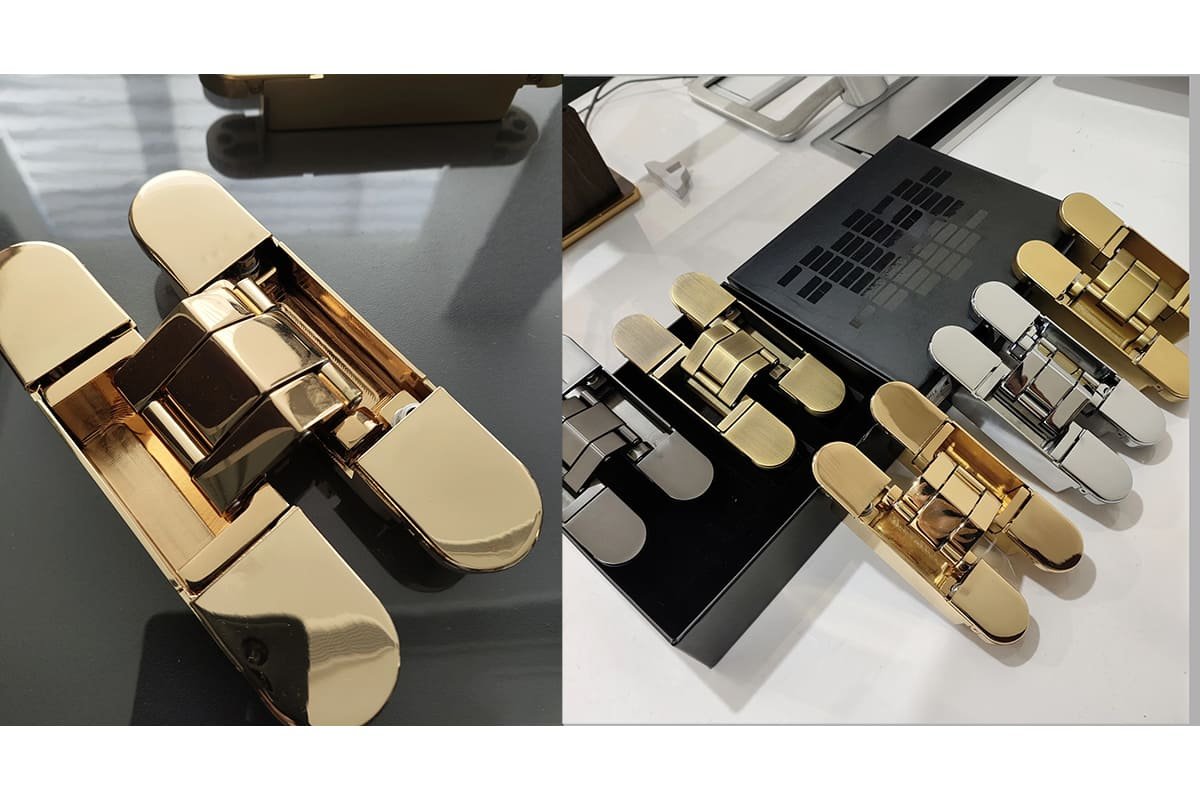
Buyers should choose between the three types of concealed hinges by matching the hinge function to the door requirement. Use 3D hinges for alignment adjustment, hydraulic hidden hinges for self-closing or quiet closing, and Soss-style hinges for concealed mechanical linkage, heavier doors, or specific traditional hidden-door designs.
Start with the door, not the hinge
When I work with buyers, I prefer to start with the door information before discussing price. This saves time. It also prevents the buyer from comparing two products that are not technically equal.
A useful inquiry should include:
- Door thickness
- Door height
- Door width
- Door weight
- Door material
- Frame material
- Opening angle
- Required finish
- Adjustment requirement
- Self-closing or soft-closing requirement
- Certification requirement
- Order quantity and delivery schedule
This information helps the supplier recommend a product that fits the real application. It also helps the buyer avoid under-specification.
Match function to application
Different buyers have different priorities. A product manager for a door factory may focus on installation efficiency. A hardware brand buyer may focus on product range and packaging. A project purchaser may focus on compliance and delivery stability.
| Buyer need | Best hinge direction | Reason |
|---|---|---|
| Clean flush door with adjustable gaps | 3D concealed hinge | It supports post-installation correction |
| Quiet room door with controlled closing | Hydraulic self-closing hidden hinge | It improves comfort and reduces slamming |
| Heavy hidden panel door | Soss-style concealed hinge | It provides a strong concealed linkage structure |
| Premium interior door line | 3D or hydraulic concealed hinge | It improves user experience and visual design |
| Bulk wholesale stock | Multiple models | Different customers need different installation types |
| Project with certification needs | Model-specific certified hinge | Certificate scope must match the product and usage12 |
Do not confuse concealed appearance with adjustability
This point deserves emphasis. A hinge can be hidden and still not be adjustable. Another hinge can be adjustable but not self-closing. A hydraulic hidden hinge can close softly but may not offer full three-direction adjustment. A Soss-style hinge can be strong and hidden but may not solve door gap adjustment.
So, I usually separate the decision into three questions:
- Do I need the hinge to be invisible when the door is closed?
- Do I need the installer to adjust the door in three directions?
- Do I need self-closing or soft-closing behavior?
If the answer to all three is yes, the buyer needs a very specific model, not a general hidden hinge. If the answer is only “hidden appearance,” then several options may work.
Check quality and batch consistency
For bulk procurement, one good sample is not enough. Buyers need stable batch performance. In architectural hardware, consistency often matters as much as the highest single-unit performance.
I recommend checking:
- Surface finish consistency
- Screw hole accuracy
- Opening and closing smoothness
- Adjustment screw stability
- Packing protection
- Labeling and model traceability
- Certificate availability when required
- Spare parts and accessory configuration
At SDH Hardware, we manufacture door hardware for customers who need repeatable quality across bulk orders. In my experience, a buyer can reduce many risks by confirming the door data, testing samples, and locking the technical specification before mass production.
For markets in Europe, the Middle East, and Southeast Asia, buyers may also need CE, fire-rated documentation, or specific finish standards. These requirements should always be checked against the exact hinge model and project condition.
Frequently Asked Questions
Are all concealed hinges 3D adjustable?
No. Some concealed hinges only hide the hinge body when the door is closed. 3D adjustment is a specific function that allows up/down, left/right, and front/back correction. Buyers should confirm the adjustment range and structure before ordering.
Can hydraulic concealed hinges replace a door closer?
Hydraulic concealed hinges may reduce the need for a separate door closer in suitable interior applications. However, they do not replace every door closer. Buyers should verify door weight, closing force, usage frequency, project standard, and the exact hinge model before deciding.
Are Soss-style concealed hinges good for heavy doors?
Soss-style concealed hinges are often used for heavier or custom concealed-door applications, but the exact capacity depends on the product model, material, size, screw fixing, and door structure. Buyers should provide door dimensions and weight before confirming a specification.
What information should I send before buying concealed hinges in bulk?
You should send door thickness, height, width, weight, door material, frame material, opening angle, finish, adjustment needs, self-closing needs, certification requirements, and order quantity. This information helps the factory recommend the right hinge and reduce procurement risk.
Which concealed hinge is best for interior wooden doors?
For many daily interior wooden doors, 3D concealed hinges are a strong choice because they combine hidden installation with practical alignment adjustment. If quiet closing is required, hydraulic self-closing hidden hinges may be better. The final choice depends on door size, weight, and function.
Conclusion
The three types of concealed hinges are not just three names. They represent three different buying decisions. 3D concealed hinges solve alignment and gap control. Hydraulic self-closing hidden hinges improve quiet closing and comfort. Soss-style concealed hinges offer a concealed mechanical-linkage structure for specific door applications. Before ordering, I suggest confirming the door data, installation method, adjustment needs, and certification requirements. If you need factory-direct support for bulk door hardware, SDH Hardware can help you match the right hinge model to your project or market.
"Concealed Cabinet Hinges", https://www.soss.com/concealed-cabinet-hinges/. A general technical reference on concealed or invisible hinges identifies hidden hinge mechanisms and distinguishes functional variants such as adjustable and self-closing designs, providing contextual support for the article’s classification. Evidence role: definition; source type: encyclopedia. Supports: A neutral reference should support that concealed or invisible hinges include mechanically hidden hinges and that adjustable and self-closing variants are distinct functional categories.. Scope note: The source may support the existence of these categories without proving that this exact three-part taxonomy is exhaustive. ↩
"If you ever install concealed hinges - Instagram", https://www.instagram.com/reel/DOtDzUTEcDf/?hl=en. Technical descriptions of three-dimensional adjustable concealed hinges define the adjustment axes as vertical, lateral, and depth movement, corresponding to up-down, side-to-side, and in-out correction. Evidence role: definition; source type: institution. Supports: A technical standard, laboratory guide, or institutional hardware reference should define three-dimensional hinge adjustment as vertical, lateral, and depth adjustment.. ↩
"SDI 122-21", https://steeldoor.org/sdi-122/. Research and technical guidance on building tolerances note that adjustable hardware can compensate for small deviations in door and frame alignment, supporting the use of three-way hinge adjustment for post-installation gap correction. Evidence role: mechanism; source type: research. Supports: A construction or architectural-hardware source should explain that adjustable hinge mechanisms can compensate for minor dimensional and alignment tolerances after installation.. Scope note: The source may address tolerance compensation generally rather than testing this specific hinge model. ↩
"Door hinges maximum load : r/StructuralEngineering", https://www.reddit.com/r/StructuralEngineering/comments/1dyxj6b/door_hinges_maximum_load/. Engineering mechanics defines moment as force multiplied by perpendicular distance from the pivot, which explains why larger door dimensions can increase the loads and moments resisted by hinges. Evidence role: mechanism; source type: education. Supports: An engineering mechanics source should support that torque increases with force and moment-arm distance, explaining why wider or taller doors can impose greater hinge moments.. ↩
"Door closer", https://en.wikipedia.org/wiki/Door_closer. Technical references on self-closing and hydraulic door hardware describe mechanisms that use spring force and hydraulic damping to control the closing motion of a door, supporting the description of hydraulic self-closing concealed hinges as hidden hinges with integrated closing control. Evidence role: definition; source type: institution. Supports: A technical source should describe hydraulic damping or closing-control mechanisms used in hinges or door-closing hardware.. Scope note: The source may describe the general mechanism rather than the exact concealed-hinge products discussed in the article. ↩
"Hydraulic Door Stoppers: The Ultimate Solution to Prevent ...", https://www.aleader-china.com/blog/hydraulic-door-stoppers-the-ultimate-solution-to-prevent-door-slamming/. Studies and technical discussions of damping in door-closing hardware show that controlled closing reduces impact velocity and can lower slamming noise, providing contextual support for the use of hydraulic hinges where a separate closer is not otherwise required. Evidence role: mechanism; source type: paper. Supports: A source should support that damping slows closing motion and can reduce impact or slamming noise, and that integrated closing devices may serve some functions of separate closers in limited applications.. Scope note: This supports the mechanism and suitable-use context, but it does not prove that every hydraulic concealed hinge can replace a separate door closer. ↩
"ADA Door Closer Requirements", https://www.doorclosersusa.com/ADA-Door-Closer-Requirements-s/34426.htm?srsltid=AfmBOoqXIuWfTPahGLlSXm4ec0JOU6CNqOfkbvL5XMwesIJi0GiDzyvN. Building and fire-safety codes require specified self-closing or automatic-closing performance for certain doors, indicating that an integrated hydraulic hinge is not automatically equivalent to a compliant door closer in all applications. Evidence role: expert_consensus; source type: government. Supports: A building-code or fire-safety source should show that some doors require specific self-closing or door-closing devices, meaning a hinge alone may not satisfy all project requirements.. Scope note: The exact requirement depends on jurisdiction, door type, occupancy, and tested assembly. ↩
"How to Soundproof ANY Door (Budget DIY to Pro - 2025 Edition)",
. Building-acoustics literature treats doors as assemblies whose sound and impact behavior depends on hardware, seals, latching, and installation, supporting the claim that quiet closing is not determined by the hinge alone. Evidence role: mechanism; source type: paper. Supports: A building-acoustics or door-system source should support that door noise depends on impact, sealing, latch engagement, and installation conditions.. Scope note: The source may address door acoustics generally rather than hydraulic concealed hinges specifically. ↩"SOSS Invisible Hinge Archives", https://www.soss.com/product-category/invisible-hinge/soss-invisible-hinge/. Reference descriptions of Soss-style invisible hinges characterize them as concealed hinges with interlinked leaves or arms that fold into the door and frame when closed, supporting the article’s mechanism description. Evidence role: definition; source type: encyclopedia. Supports: A neutral reference should identify Soss or Soss-style hinges as invisible/concealed hinges using linked leaves or arms that are hidden when closed.. ↩
"Stainless steel", https://en.wikipedia.org/wiki/Stainless_steel. Materials-science references describe stainless steels as corrosion-resistant alloys due to chromium-rich passive films and describe zinc alloys as castable materials suited to detailed shapes and surface finishing. Evidence role: mechanism; source type: education. Supports: A materials-science source should support stainless steel’s corrosion resistance and zinc alloys’ suitability for casting or forming detailed shapes and finishes.. Scope note: Material performance varies by alloy grade, coating, environment, and manufacturing process. ↩
"Concealed Hinge | Innovative Door Hardware | Sugatsune", https://www.sugatsune.com/hes-concealed-hinge-line/?srsltid=AfmBOop4bTDLvwqV6mgW4MAeoOHhh2kmdMReslscVmroili9o7hVZf8u. Woodworking and door-installation guidance explains that hinge mortises must be accurately positioned and cut to the correct depth to maintain clearance, alignment, and smooth door movement. Evidence role: mechanism; source type: education. Supports: A woodworking or construction source should explain that accurately cut hinge mortises are necessary for proper door alignment, clearance, and movement.. Scope note: The source may discuss mortised hinges broadly rather than Soss-style concealed hinges alone. ↩
"[PDF] DOOR HARDWARE (SCHEDULED BY DESCRIBING PRODUCTS)", https://fpm.usc.edu/wp-content/uploads/2021/11/087102-USC-HSC-door-hardware-Guide-Specification_1.pdf. Certification and conformity-assessment rules for construction products and fire-door hardware state that certificates and test evidence apply to defined products, configurations, and intended uses, supporting the need to match certificate scope to the specified hinge and project condition. Evidence role: expert_consensus; source type: institution. Supports: A certification or standards source should explain that test reports and certificates apply only to the tested product, configuration, and intended field of application.. Scope note: Applicable certification schemes differ by region, product category, and project specification. ↩