What Door Handles are in Style in 2026?
Door handles in 2026 are harder to choose because “stylish” no longer means only beautiful. A product can look modern in a sample room but fail in bulk production, finish consistency, or door-system matching. I recommend treating style as a procurement decision, not only a design choice.
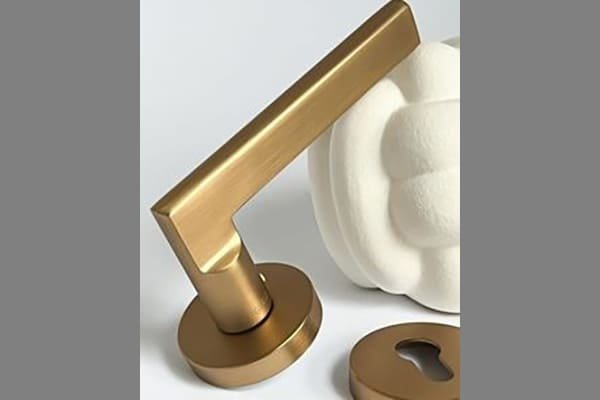
The most commercially safe door handles in 2026 are slim minimalist levers with narrow plates or small roses, concealed screws, durable finishes, and clean proportions. Warm low-saturation metals, satin stainless steel, tactile textures, and selective mixed materials can also work, but buyers should match every style to target market, door type, lock body, production stability, and after-sales risk.
Many overseas buyers ask me, “Which handle is popular now?” I usually answer with another question: “Popular for which market, which door, and which sales channel?” The right 2026 choice depends on how the handle will be stocked, installed, promoted, and supported after delivery.
Why are slim minimalist door handles the safest 2026 style for B2B buyers?
A buyer can lose time and margin when a fashionable handle is too narrow for the lock case, too heavy for the door, or too difficult to keep consistent in mass production. Slim designs solve many of these issues because they offer modern appeal without excessive manufacturing complexity.
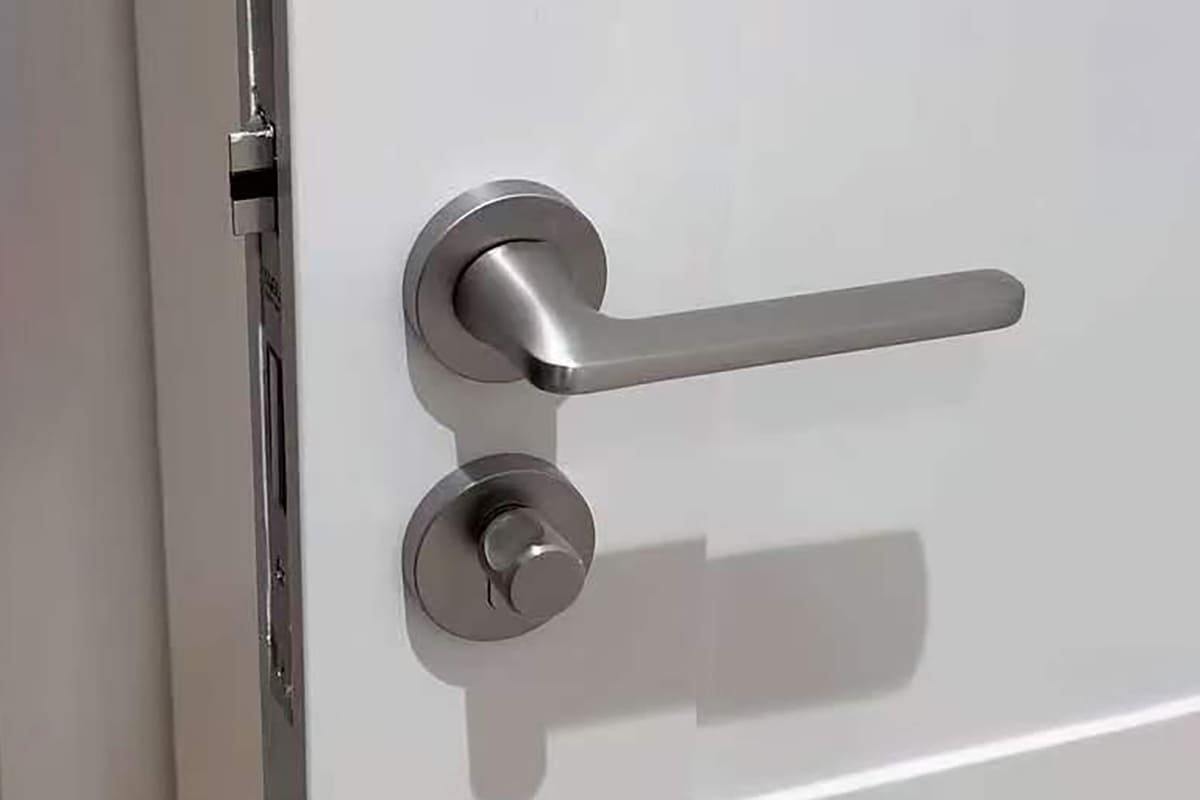
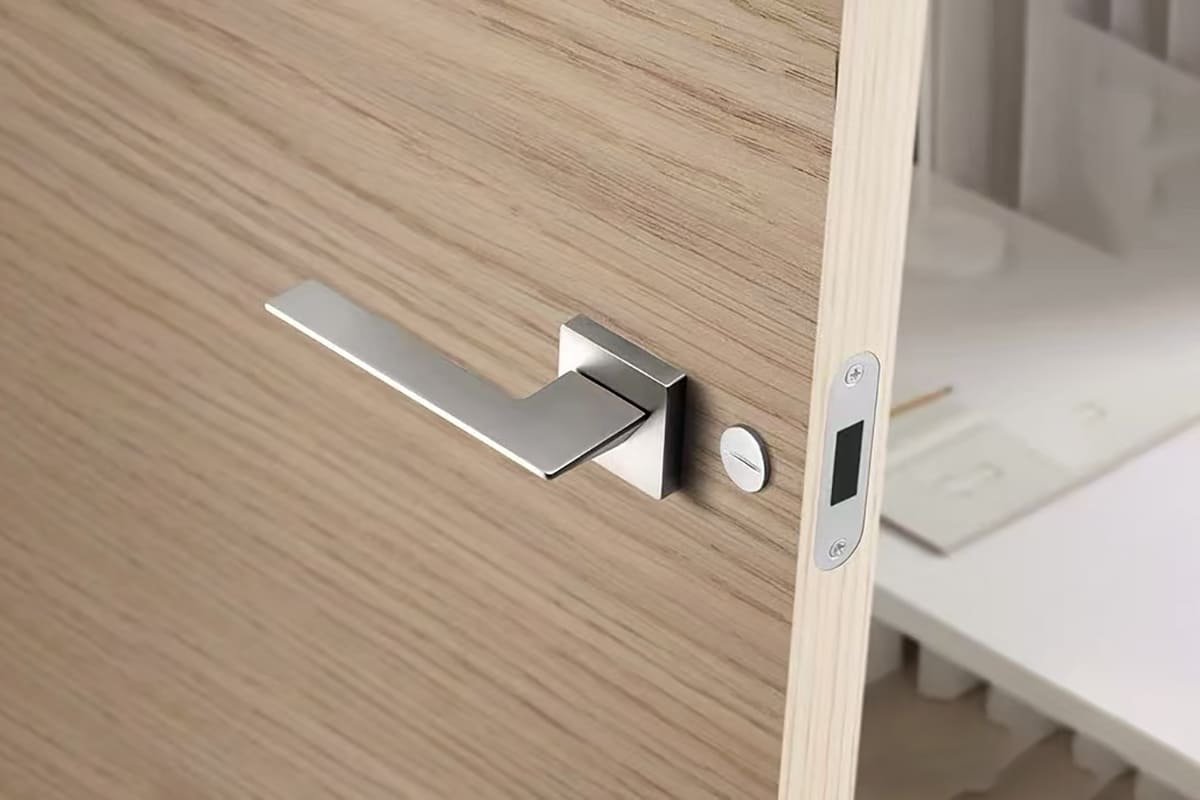
Slim minimalist door handles are the safest 2026 style for many B2B buyers because they match modern door designs, work across more market segments1, and reduce visual risk in inventory. Thin levers, narrow backplates, small roses, concealed screws, and lighter proportions are easier to integrate into long-term product lines.
Minimalism is easier to commercialize
From a manufacturing perspective, slim minimalist hardware is not only a design trend. It is also a practical buying strategy. Many door factories, wholesalers, and hardware brands need products that can serve several customer groups. A clean lever handle with a balanced profile can fit apartment doors, office doors, hotel doors, and mid-range residential doors more easily than a highly decorative model.
I often see buyers compare three things before they confirm a new series:
- Will the handle match current door styles?
- Can the finish be repeated across bulk orders?
- Can the same design be sold for more than one season?
Slim door handles perform well in this evaluation because they do not depend on one short-term visual idea. They can support different finishes, different rosettes, and different lock body standards.
What makes a minimalist handle look current?
In 2026, the modern look is usually not bulky. It is lighter, cleaner, and more precise. Buyers should look at details such as:
- Thin lever bodies with comfortable edge treatment
- Narrow long backplates for European-style door sets
- Small round or square roses for clean interior doors
- Concealed screws for a higher perceived product level
- Straight or softly rounded profiles for broad market acceptance
- Consistent gaps and alignment after installation
A minimalist handle can still fail if it feels weak. I recommend checking wall thickness, internal structure, spindle connection, spring strength, and surface finishing. A handle that looks slim should still feel stable in the hand.
Style must match the lock and door system
A stylish handle is only successful when it fits the door system. For example, a slim lever may look attractive in a catalog, but the rose size must cover the drilling holes. The spindle size must match the lock body. The backplate must align with the cylinder, keyhole, or bathroom turn.
| Evaluation Point | Why It Matters | Buyer Action |
|---|---|---|
| Door thickness2 | Affects spindle and screw length | Confirm common thickness range before sampling |
| Lock body standard3 | Affects handle hole spacing | Match euro standard mortise lock or regional standard |
| Rose or plate size | Covers drilling and improves appearance | Check drawing before bulk order |
| Lever projection | Affects hand clearance and packaging | Test installation on real door sample |
| Spring structure4 | Affects long-term return performance | Request cycle testing or supplier QC data |
For channel inventory, I usually suggest starting with safer proportions first. A clean lever handle can become the base of a complete product series. After that, buyers can add one or two more decorative models for premium or project-specific demand.
Which finishes will make door handles look current in 2026?
A beautiful color can create strong first interest, but finish problems create after-sales complaints. If a buyer chooses a trending surface only by photo, the final bulk order may show color deviation, weak adhesion, or poor wear resistance. Finish selection should balance market fit and durability.
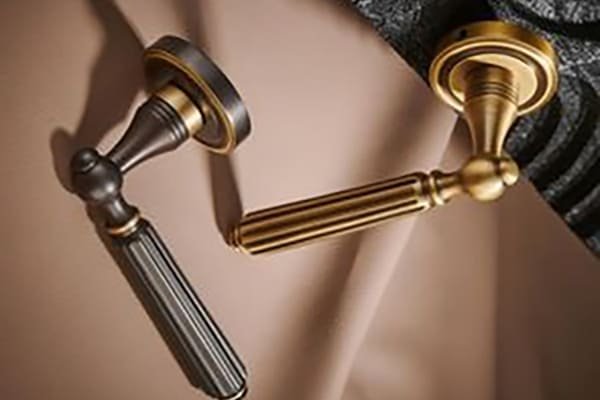
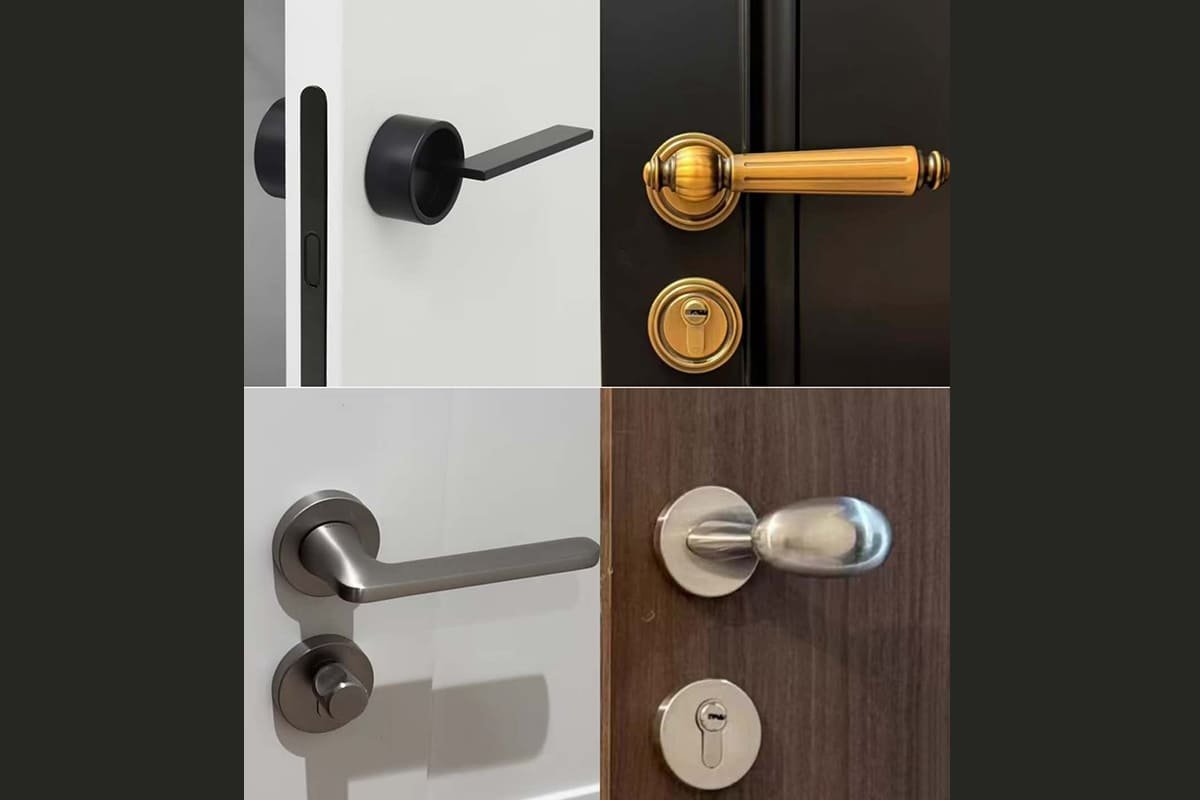
Current 2026 finishes for door handles include satin stainless steel, mirror polished stainless steel, matte black, brushed brass, champagne, bronze, and low-saturation vintage gold.5 Buyers should choose finishes according to regional demand, base material, coating method, public-use conditions, and the supplier’s ability to keep bulk finish consistency.
Finish trends are not only about color
For many overseas B2B buyers, finish choice is where style and risk meet. A warm brass tone can help a product look premium. A satin stainless steel finish can reduce color-fading concerns. Matte black can sell well in modern channels, but it needs careful coating control because scratches can be more visible.
I do not like to describe one finish as “the global winner.” Europe, the Middle East, and Southeast Asia can show different preferences. Even within one region, project orders and wholesale inventory may require different finishes.
For example, a hotel project may prefer a coordinated finish across handles, hinges, lock faceplates, and cylinders. A wholesale customer may prefer the safest color that sells steadily in retail channels. A door manufacturer may focus more on matching the door leaf, frame, and lock set.
Practical finish comparison for buyers
| Finish Direction | Style Impression | Practical Strength | Procurement Risk |
|---|---|---|---|
| Satin stainless steel | Clean, modern, professional | Good for public-use environments | Requires polishing consistency |
| Mirror stainless steel | Bright, premium, clean | No color coating fade issue | Shows fingerprints and scratches |
| Matte black | Modern, simple, strong contrast | Popular in many modern series | Surface scratches can stand out6 |
| Brushed brass | Warm, premium, decorative | Good for higher-value lines | Color consistency needs control |
| Champagne | Soft, low-saturation luxury | Easier than strong gold in some markets | Tone must be approved by sample |
| Bronze | Mature, architectural, stable | Good for decorative or classic doors | Market acceptance varies |
| Vintage gold | Warm, premium, less shiny | Works for selected brand series | Needs strict batch control |
Stainless steel is still a practical option
Some buyers focus heavily on plated colors, but uncoated stainless steel door handles remain very practical. Satin or mirror polishing can reduce the concern of color fading because the appearance comes from the metal surface and polishing process, not from a color coating alone.7
This matters for:
- Public buildings
- Offices
- Schools
- Hospitals
- Commercial doors
- High-frequency-use interiors
Of course, stainless steel still needs proper grade selection8, polishing control, and surface inspection. Buyers should not assume all stainless steel handles are equal. Material thickness, welding quality, polishing lines, and edge smoothness all affect the final product.
How I suggest approving finishes
When buyers ask me to develop a new finish, I prefer a controlled approval process:
- Confirm the base material: stainless steel, zinc alloy, aluminum, brass, or mixed structure.
- Approve a physical color sample: photos are not enough.
- Define gloss level: matte, satin, brushed, polished, or antique effect.
- Check matching parts: hinges, lock faceplates, cylinders, escutcheons, screws.
- Set tolerance expectations: slight batch difference may happen, so standards must be clear.
- Verify certificates and test reports where relevant: buyers should check documents directly with the supplier and, for project-specific fire doors, request professional evaluation.
A stylish finish should make the product easier to sell, not harder to control.
Are textured, artistic, and invisible-door handles worth developing?
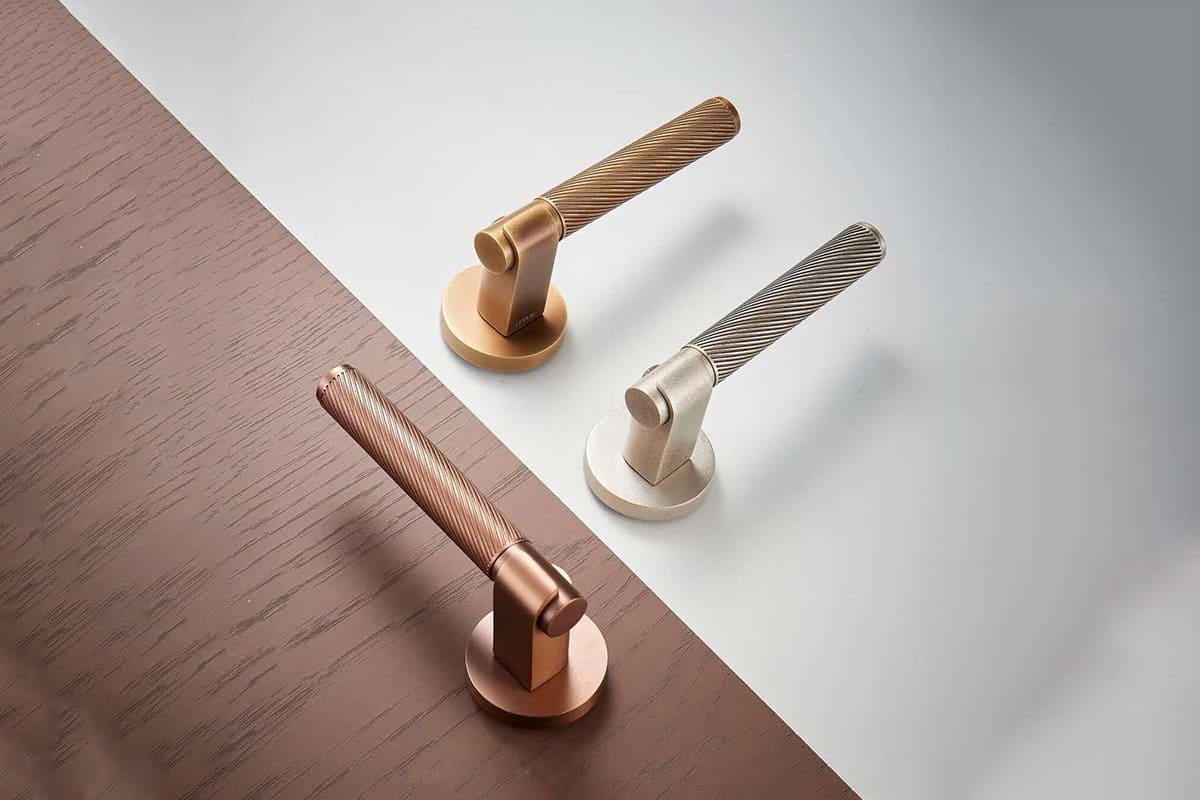
A buyer may feel pressure to add something fresh to the 2026 catalog. Textured grips, droplet shapes, twisted levers, and invisible-door solutions can look impressive in samples. However, these styles often bring higher manufacturing, installation, or stocking risk than standard lever handles.
Textured, artistic, and invisible-door handles are worth developing when they match a clear target market and installation condition. Textured grips can improve tactile value, artistic shapes can support decorative lines, and invisible-door handles can suit special door systems, but buyers should avoid treating them as universal bulk inventory without validation.
Texture adds value when it is controlled
Textured handles are becoming more interesting for 2026 because they add a tactile feature. Ribbed, engraved, knurled, or patterned grips can make a simple lever feel more premium. They also help a brand create a recognizable product identity.
However, texture is not free from risk. The pattern must be comfortable. The edges must not feel sharp. The finish must cover the grooves evenly. Cleaning must be considered, especially for public-use environments.9
I have seen buyers become excited about a textured sample, then slow down after reviewing the full production process. That is normal. A sample can look beautiful under exhibition lighting. Bulk production must still pass inspection.
Buyers should check:
- Pattern depth: too shallow may look weak; too deep may trap dirt.
- Grip comfort: the handle should not irritate the hand.
- Finish coverage: coating must reach grooves and corners.
- Polishing before texture: uneven preparation creates visible defects.
- Packaging protection: raised patterns can rub against packaging if not protected.
Artistic shapes need a clear sales purpose
Droplet handles, twisted handles, arc-shaped levers, and sculptural designs can add decoration value. They may work well for premium interior doors, boutique projects, or brand showroom series. But I would not recommend making them the main SKU for every market.
Artistic door handles can create issues such as:
- Higher mold or tooling cost
- Less universal hand comfort
- More difficult polishing
- Higher rejection rate if shape tolerance is tight
- More complex packaging
- Lower compatibility with standard door styles
A decorative handle should have a defined role. It can be a premium option, a project quotation item, or a brand image product. It should not automatically replace the stable core series.
Invisible-door handles require system thinking
Invisible-door handles are attractive because hidden doors and flush wall designs continue to appear in modern interiors10. However, this category is more technical than it looks. The handle must work with the door thickness, embedded frame, lock body, edge groove, and installation method.
Before developing invisible-door hardware, buyers should confirm:
| Requirement | Why It Matters |
|---|---|
| Door thickness | The handle body and fixing system need enough space |
| Frame clearance | Poor clearance can cause rubbing or installation failure |
| Edge-groove processing | The door factory must machine the groove accurately |
| Lock compatibility | The handle must match latch function and spindle position |
| Installation skill | Incorrect installation can create after-sales complaints |
For invisible-door projects, I suggest testing with a real door sample before bulk order. Buyers should also ask installers or door engineers to review the system. A beautiful hidden-handle solution can fail if one dimension is wrong.
How should buyers evaluate mixed-material door handles before bulk orders?
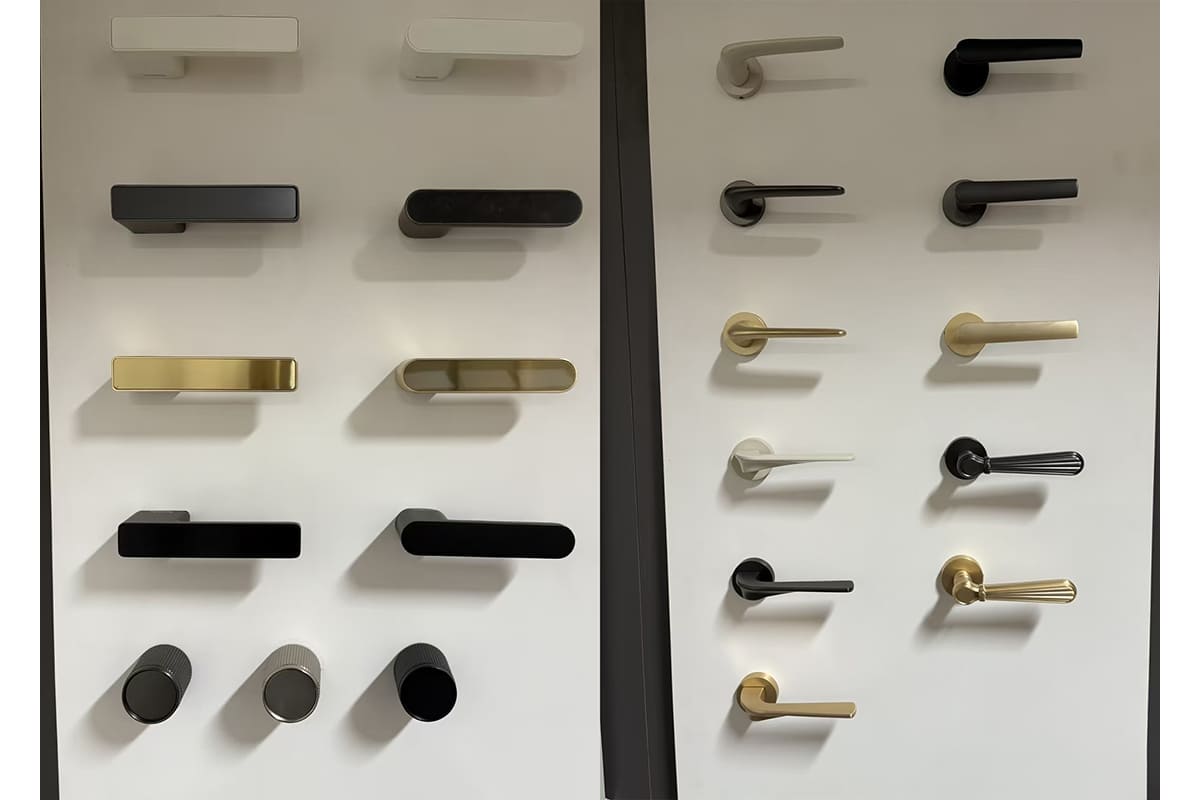
Mixed-material samples can create strong showroom appeal, but bulk orders require more than a good first impression. If the materials expand differently11, wear differently, or require different cleaning methods, the buyer may face complaints after installation. Mixed-material handles need practical evaluation before purchase.
Buyers should evaluate mixed-material door handles by checking weight, grip comfort, material bonding, cleaning method, finish durability, MOQ, packaging, and regional acceptance. Stainless steel plus iron can increase perceived solidity, while stainless steel plus leather can add texture, but both designs need testing before bulk procurement.
Mixed materials can help differentiation
In a competitive hardware channel, a small material detail can help a product stand out. Stainless steel combined with iron may create a heavier and more solid feel. Stainless steel with leather wrapping may create warmth and tactile softness. Zinc alloy with decorative inserts may support more creative designs.
These ideas can be useful for brand operators and wholesalers that want a new 2026 series. Still, buyers should separate sample attraction from commercial readiness.
A mixed-material design should answer practical questions:
- Can the supplier produce it repeatedly?
- Can the material joint stay stable after use?
- Can the handle be cleaned easily?
- Can the finish and insert age acceptably?
- Can the MOQ match the buyer’s sales forecast?
- Can replacement parts be supplied if needed?
Stainless steel plus iron
This combination can improve weight and perceived strength. It may be useful when buyers want a more solid feeling without making the entire handle from one expensive material. However, buyers should check rust prevention, internal treatment, and joint structure. If iron is hidden inside, coating and sealing still matter.
Important checks include:
- Weight balance: the handle should feel solid but not overloaded.
- Spring return: heavier levers need reliable spring performance.
- Corrosion protection: hidden iron parts still need surface treatment.
- Connection method: welding, pressing, or mechanical fixing must be stable.
- Salt-spray or corrosion testing: buyers should request relevant test data where applicable.
Stainless steel plus leather
Leather detail can improve perceived value. It also gives a warmer grip than metal. This can support premium indoor series, hospitality projects, or decorative brand collections.
But leather needs careful evaluation. It can absorb moisture, collect stains, or change appearance over time.12 Cleaning rules are different from metal handles. The supplier must also manage leather cutting, wrapping, adhesive control, and color consistency.
| Checkpoint | Buyer Question |
|---|---|
| Leather type | Is it genuine leather, PU, or another material? |
| Cleaning | Can end users clean it easily? |
| Adhesive or fixing | Will the wrap loosen under use? |
| Color consistency | Can bulk batches match approved samples? |
| Packaging | Will the leather surface be protected during shipping? |
| Market fit | Will the target region accept leather hardware? |
I do not treat mixed-material handles as a simple aesthetic upgrade. I treat them as a small product development project. If the buyer has a clear channel and realistic order volume, mixed materials can work. If the buyer only wants safe inventory, a simpler stainless steel or zinc alloy handle may be better.
How can procurement teams choose 2026 door handles with lower supply risk?
A procurement team can follow every trend and still choose the wrong product if it ignores market positioning, compatibility, and factory capability. The real risk is not only whether customers like the style. The risk is whether the supplier can deliver the same product consistently.
Procurement teams should choose 2026 door handles by defining the target market, confirming door and lock compatibility, approving physical finish samples, checking supplier QC procedures, verifying certification documents where relevant, and testing samples before bulk order. This process lowers style risk, production risk, and after-sales risk.
Start with the buying purpose
Before I recommend any handle, I ask the buyer what the product is for. The answer changes everything.
A buyer may need:
- Channel inventory for wholesalers and distributors
- Project supply for hotels, apartments, offices, or public buildings
- Brand series development for a new catalog
- Door factory matching for full door systems
- Customized OEM or ODM production for a regional market
A handle for channel inventory should be commercially safe. A handle for a project can be more specific because the door type and finish schedule are known. A handle for brand development may need stronger design identity, but the supplier must control tooling, finishing, and packaging.
Use a simple procurement scorecard
I suggest using a scorecard instead of choosing only by visual appeal. This helps product managers and purchasing teams discuss the same facts.
| Evaluation Area | Key Question | Suggested Weight |
|---|---|---|
| Market appeal | Does the style fit the target region and price level? | 20% |
| Door compatibility | Does it match door thickness, lock body, and drilling? | 20% |
| Finish stability | Can the supplier repeat the approved finish? | 20% |
| Production feasibility | Can the factory produce it with stable quality? | 15% |
| Cost control | Does the price support margin or project bidding? | 10% |
| Packaging and logistics | Can the product arrive without surface damage? | 5% |
| Compliance documents | Are CE, fire-rated, or other documents relevant and verifiable? | 10% |
The weight can change by buyer type. For example, a wholesaler may place more weight on market appeal and cost. A door factory may care more about compatibility and installation speed. A project supplier may focus on documentation and finish matching.
Supplier evaluation matters more in 2026
As styles become more detailed, supplier capability becomes more important. A factory that can make a simple handle may not be able to maintain a complex finish or textured pattern across large quantities. Buyers should check production experience, inspection process, customization ability, and communication speed.
In my own factory work, I have learned that many problems can be prevented before production starts. A clear drawing, approved sample, defined finish code, and packing standard can save both sides from disputes.
Buyers should ask suppliers for:
- Product drawings with key dimensions
- Material specification
- Finish sample and finish description
- Lock and spindle compatibility details
- Packaging method
- MOQ and lead time
- Inspection process
- Relevant certification documents, if required by the market or project
For fire-rated door applications, buyers should not rely on a general claim. They should verify the certification documents and ask qualified professionals to confirm whether the complete door hardware set meets the project requirement.
Frequently Asked Questions
What is the main door handle trend for 2026?
The main 2026 trend for B2B buyers is slim minimalist hardware. Thin levers, narrow plates, small roses, concealed screws, and clean proportions are easier to match with modern doors and long-term product lines. Buyers should still verify material, finish, and lock compatibility.
Are brass and gold door handles still in style in 2026?
Brass, champagne, vintage gold, and bronze finishes can still look current in 2026, especially for premium or decorative lines. I suggest choosing low-saturation warm metals and approving physical finish samples. Buyers should also check coating stability, batch consistency, and regional market acceptance.
Are matte black door handles a safe bulk inventory choice?
Matte black door handles can be commercially useful for modern channels, but they are not risk-free. Scratches and surface marks may be more visible than on satin stainless steel. Buyers should confirm coating quality, packaging protection, and the after-sales expectations of their market.
Should wholesalers stock artistic door handles in 2026?
Wholesalers can stock artistic handles selectively, but I would not make them the core inventory unless there is proven local demand. Droplet, twisted, or sculptural handles can support premium display lines, while minimalist models are usually safer for broader sales.
How can I reduce finish inconsistency in bulk door handle orders?
You can reduce finish inconsistency by approving physical samples, defining gloss and color tolerance, matching accessories in the same finish system, and requiring pre-shipment inspection. I also recommend keeping batch records and asking the supplier to confirm the finishing process before mass production.
Conclusion
Door handles in 2026 should be selected through both style judgment and procurement discipline. Slim minimalist designs are the safest direction for many B2B buyers, while warm finishes, tactile textures, invisible-door systems, artistic shapes, and mixed materials can add value when the market and technical conditions are clear. If you are developing a new handle series, I can help you review material, finish, compatibility, customization, and bulk production details before you commit to mass order.
"Interactive room design as a tool for understanding form and style ... - PMC", https://pmc.ncbi.nlm.nih.gov/articles/PMC12518833/. Research on minimalist interior design and contemporary architectural aesthetics supports the view that visually simple forms are widely applicable across residential and commercial settings; this provides contextual support for treating slim minimalist handles as broadly marketable rather than proving door-handle sales performance directly. Evidence role: general_support; source type: research. Supports: Minimalist design forms are commonly associated with broad contemporary interior applications and reduced visual complexity.. Scope note: Contextual support only; it does not directly measure 2026 door-handle purchasing behavior. ↩
"087100 – DOOR HARDWARE - Facilities and Campus Services", https://fcs.cornell.edu/087100-door-hardware. Institutional door-hardware installation guidance supports that lever sets are selected according to door-thickness ranges and corresponding spindle and fastener dimensions. Evidence role: mechanism; source type: institution. Supports: Lever-handle hardware is specified for defined door-thickness ranges and requires compatible spindle and fastener lengths.. ↩
"How to measure and choose the right mortise lock size", https://www.blue-id.com/en/blog/mortise-lock-mass. Door-lock standards and technical dimensional guides support that mortise lock bodies are defined by spindle, keyway, and center-distance measurements, which directly affect handle-hole spacing and plate alignment. Evidence role: definition; source type: institution. Supports: Mortise lock and door-hardware standards define dimensions such as spindle location, cylinder position, and center distances that determine handle compatibility.. ↩
"BS EN 1906 – Lever Handle and Knob Furniture", https://www.hoppe.com/gb-en/contacts-service/standards/bs-en-1906/. Lever-handle performance standards such as EN 1906 and ANSI/BHMA hardware standards support that handle durability and operational return are assessed through defined mechanical and cycle-testing criteria. Evidence role: mechanism; source type: institution. Supports: Lever-handle standards evaluate durability, operation, and return performance through repeated-cycle testing.. ↩
"We're still obsessed with cool-toned metals, with the design ...", https://www.instagram.com/reel/DTo5Q54k_kN/. Independent design-trend research supports that warm metallic finishes, black accents, and stainless or brushed metal surfaces remain visible in contemporary interiors; this contextual evidence supports the finish list as a trend-aligned selection rather than a verified global ranking. Evidence role: general_support; source type: research. Supports: Recent interior-design and architectural-finish trend sources identify warm metals, black finishes, and stainless or brushed metallic surfaces as continuing contemporary finish directions.. Scope note: Contextual support only; finish popularity can vary by region, channel, and project type. ↩
"(PDF) Influence of surface texturing on scratch/mar visibility for polymeric ...", https://www.academia.edu/103226113/Influence_of_surface_texturing_on_scratch_mar_visibility_for_polymeric_materials_a_review. Studies of coated surface wear and visual appearance support that scratches on dark or matte coatings can be more conspicuous when abrasion alters reflectance or exposes a contrasting underlying layer. Evidence role: mechanism; source type: paper. Supports: Dark coated surfaces can show wear or scratches conspicuously when abrasion exposes a contrasting substrate or changes surface reflectance.. ↩
"Stainless Steel Finishes: Ra Values, Applications, and ...", https://tzrmetal.com/stainless-steel-finishes/. Technical guidance on stainless-steel surface finishes supports that satin, brushed, and mirror appearances are produced through mechanical surface-finishing processes, which makes their appearance less dependent on an applied color coating. Evidence role: mechanism; source type: institution. Supports: Stainless steel surface appearance can be created by mechanical finishing such as brushing or polishing rather than by applied color coatings.. ↩
"DESIGN GUIDELINES FOR THE SELECTION AND USE ...", https://ptacts.uspto.gov/ptacts/public-informations/petitions/1468254/download-documents?artifactId=jyUv-H5Ml_YoHhLaZHh3xeTjJejrAVkMIOeYl4NYk29daTCEOampTHY. Institutional materials guidance supports that stainless-steel grades vary in composition and corrosion resistance, so selecting an appropriate grade is necessary for expected service conditions. Evidence role: expert_consensus; source type: institution. Supports: Stainless-steel grades differ in alloy composition and corrosion resistance, making grade selection important for the intended environment.. ↩
"Surface Sampling and the Detection of Contamination - PMC", https://pmc.ncbi.nlm.nih.gov/articles/PMC7152397/. Research on surface roughness and cleanability supports that textured or irregular surfaces can retain contaminants more readily and may require more careful cleaning protocols, especially for high-touch public environments. Evidence role: mechanism; source type: paper. Supports: Surface texture and roughness can influence contaminant retention and ease of cleaning on frequently touched surfaces.. ↩
"Frameless Doors: Concealed Door Frames | Frameless Interior Doors ...", https://flushwalldoors.com/. Architectural education and design sources support that flush and concealed doors are used in contemporary interiors to maintain continuous wall planes and minimalist spatial effects; this contextual evidence supports the relevance of invisible-door hardware without quantifying market demand. Evidence role: historical_context; source type: education. Supports: Contemporary interior and architectural design sources discuss flush, concealed, or integrated doors as part of minimalist wall and spatial design strategies.. Scope note: Contextual support only; it does not prove the commercial size of the invisible-door hardware market. ↩
"Theoretical Basis for Design of Thermal- Stress-Free ...", https://ntrs.nasa.gov/api/citations/19840005546/downloads/19840005546.pdf. Engineering materials references support that dissimilar materials may expand and contract at different rates, creating joint stress or dimensional mismatch in composite assemblies. Evidence role: mechanism; source type: education. Supports: Dissimilar materials have different coefficients of thermal expansion, which can create stresses or movement at joints in an assembly.. ↩
"Study on the Moisture Absorption and Thermal Properties of ...", https://pmc.ncbi.nlm.nih.gov/articles/PMC7023626/. Leather-material research and conservation guidance support that leather is hygroscopic and can undergo visible changes from moisture uptake, soiling, staining, and aging. Evidence role: mechanism; source type: research. Supports: Leather is a hygroscopic organic material whose appearance can change with moisture, soiling, and aging.. ↩