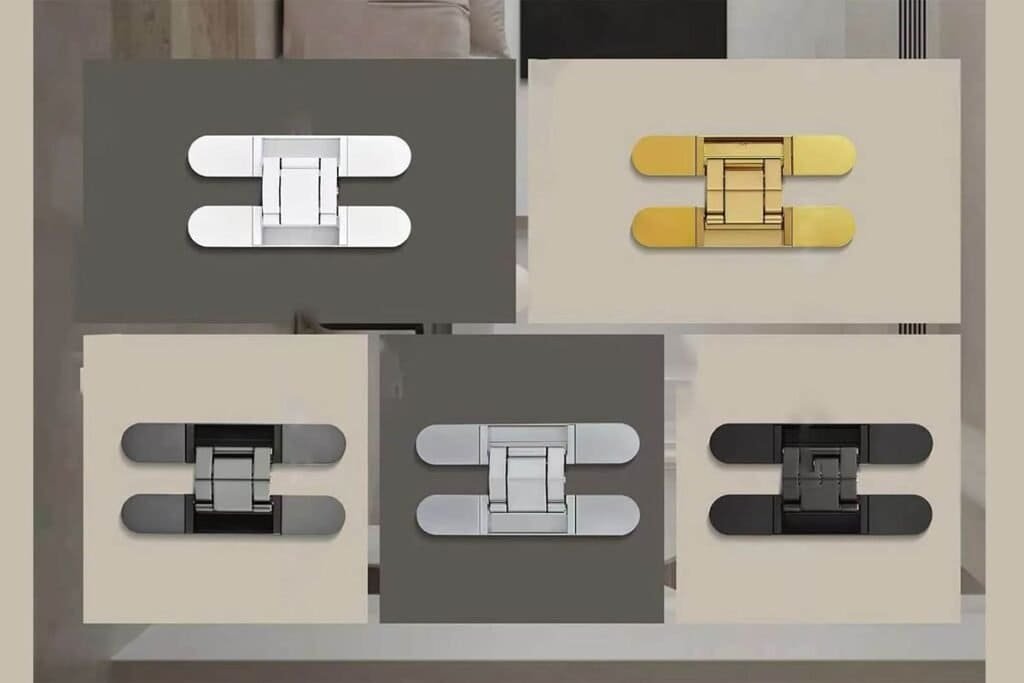
What is the price difference between concealed door hinges of different materials?
Concealed door hinges can look similar in a catalog, but their material choices can create very different quotation results. Buyers often feel pressure to cut cost, yet the wrong hinge material can cause sagging, finish complaints, or project rejection. I compare materials by performance, structure, and procurement risk.
The price difference between concealed door hinges made from zinc alloy, aluminum alloy, and stainless steel depends on more than raw material cost. Zinc alloy often offers strong cost performance for standard doors1, aluminum alloy can reduce weight and cost in selected components2, and stainless steel usually costs more for corrosion resistance, hardness, and heavy-duty applications3.
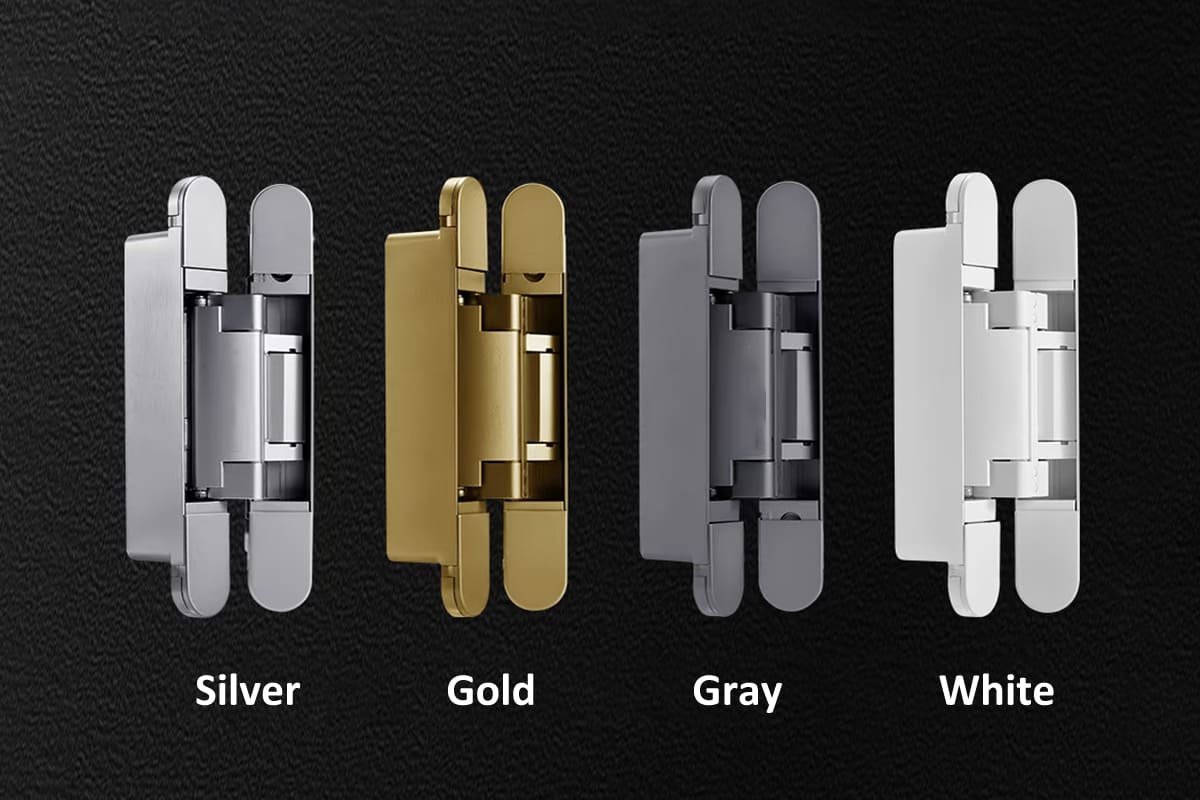
In my quotation experience, the better question is not “Which material is cheapest?” The better question is “Which material matches the door weight, usage frequency, finish requirement, certification need, and target selling price?” That is where real purchasing value appears.
Why do concealed door hinges have different prices by material?
A buyer may compare three hinge samples and see only the outside shape. The problem is that the internal structure, casting method, component thickness, and finish process may be completely different. If I judge only by material name, I may either under-specify the hinge or pay for performance I do not need.
Concealed door hinges have different prices by material because zinc alloy, aluminum alloy, and stainless steel have different raw costs, forming processes, hardness, corrosion resistance, surface finish options, and load-bearing behavior4. The final quotation also depends on hinge size, component design, accessories, packaging, order quantity, and required certificates.
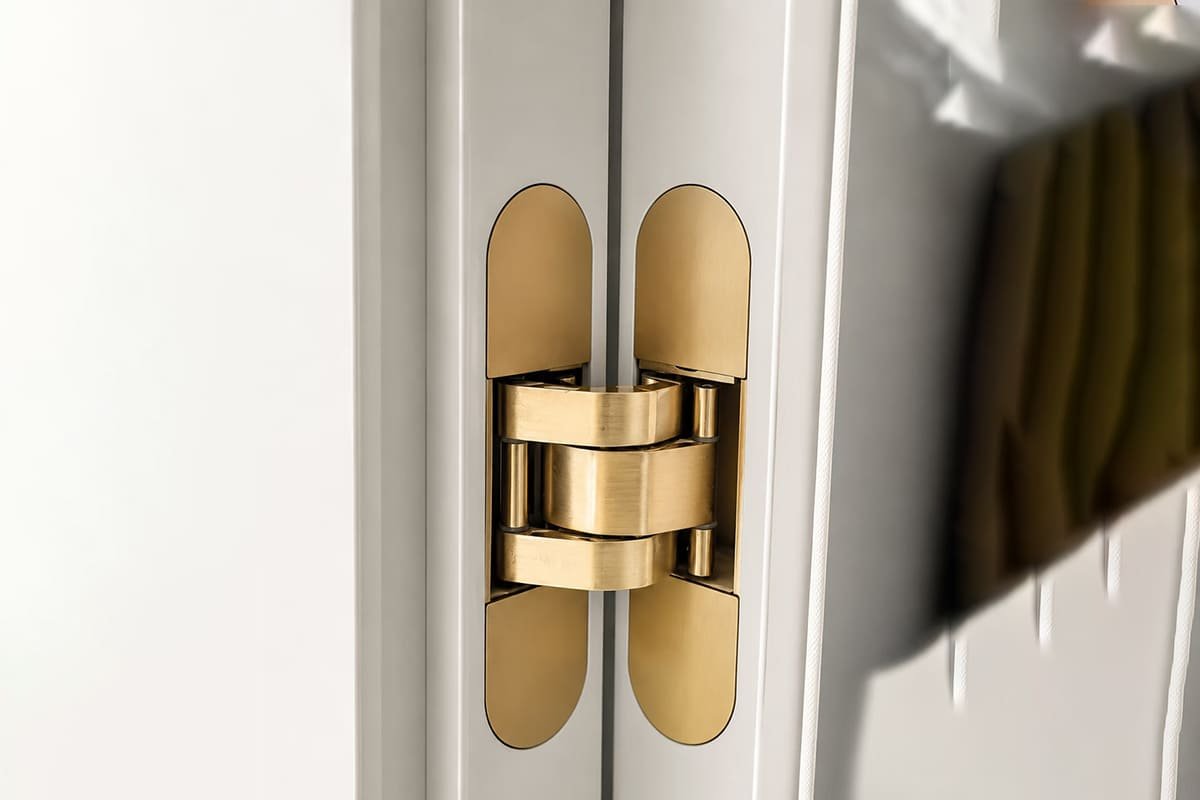
Material is only the first cost layer
When I prepare or review a concealed hinge quotation, I do not start and stop with the material line. I treat material as one layer in a larger cost structure.
A typical quotation may be affected by:
- Main body material
- Arm or link material
- Pin and screw material
- Casting or machining method
- Load-bearing grade
- Opening angle
- Adjustability
- Surface finish
- Cycle test requirement
- Fire-rated or CE documentation needs
- Order quantity
- Inner box and master carton design
- Branding, laser marking, or customized packaging
This matters because not every concealed hinge is made entirely from one material. Some products may use a zinc alloy body, aluminum alloy arms, steel pins, and stainless steel accessories. Other models may use stainless steel parts in selected stress areas. A buyer who asks for “stainless steel concealed hinge” should confirm whether the whole hinge or only certain components are stainless steel.
General material positioning for buyers
The table below shows how I normally explain the three common material directions to buyers during early selection. This is not a fixed price ranking for every model. It is a procurement evaluation framework.
| Material direction | Common role in concealed hinges | Cost tendency | Main value | Buyer should verify |
|---|---|---|---|---|
| Zinc alloy | Body, housing, or structural casting parts | Usually cost-effective | Good die-casting flow, flexible finish, stable standard use | Load rating, wall thickness, finish adhesion |
| Aluminum alloy | Arms, links, or lightweight parts | Often cost-efficient in selected parts | Lower weight, good processing performance, useful strength-to-weight balance | Structural design, wear points, surface treatment |
| Stainless steel | Heavy-duty or corrosion-resistant parts/models | Usually higher | Corrosion resistance, hardness, stronger premium positioning | Grade, casting/machining quality, load and corrosion data |
Why “cheaper” can become more expensive
A low unit price does not always reduce total procurement cost. If the hinge is under-specified, the buyer may face:
- Door sagging after installation
- Customer complaints from noise or looseness
- Finish color variation in bulk orders
- Higher replacement cost
- Project delay caused by rework
- Rejected delivery due to missing compliance documents
In one inquiry I handled, the buyer initially focused only on the cheapest material option. After checking the door weight and target market, the more important issue became the hinge configuration. The final selection used a better-matched structure rather than the lowest material quote. That is usually the more stable path for wholesalers and door factory buyers.
A practical way to compare quotations
When I compare concealed hinge quotations, I suggest that buyers request the same information from each supplier:
- Product drawing with dimensions
- Material description for each main component
- Door weight capacity per pair or per set
- Recommended door thickness
- Opening angle
- Adjustment range
- Surface finish process
- Salt spray test reference, if corrosion resistance matters
- Cycle test report for the specific model, if available
- CE or fire-rated certificates, where required
- Packing method and carton quantity
- MOQ and lead time
A lower quote is only meaningful when the hinge specification, testing basis, finish standard, and packaging requirement are the same.
This is especially important for B2B procurement. A hardware brand may need consistent quality across repeat orders. A door factory may care more about installation tolerance and assembly speed. A wholesaler may need a price range that supports several market levels. The correct material choice depends on that business goal.
Are zinc alloy concealed door hinges the most cost-effective option?
Zinc alloy often becomes the first material buyers ask about because it gives a favorable starting price. The risk is that some buyers confuse “cost-effective” with “suitable for every door.” If the hinge structure is too weak for the application, the original saving disappears through after-sales problems.
Zinc alloy concealed door hinges are often cost-effective for standard interior doors when the hinge design, wall thickness, load rating, and finish process match the project requirement. 3# and 5# zinc alloy are commonly used5 because they offer good die-casting flow, moderate hardness, flexible surface finishing, and strong production efficiency.
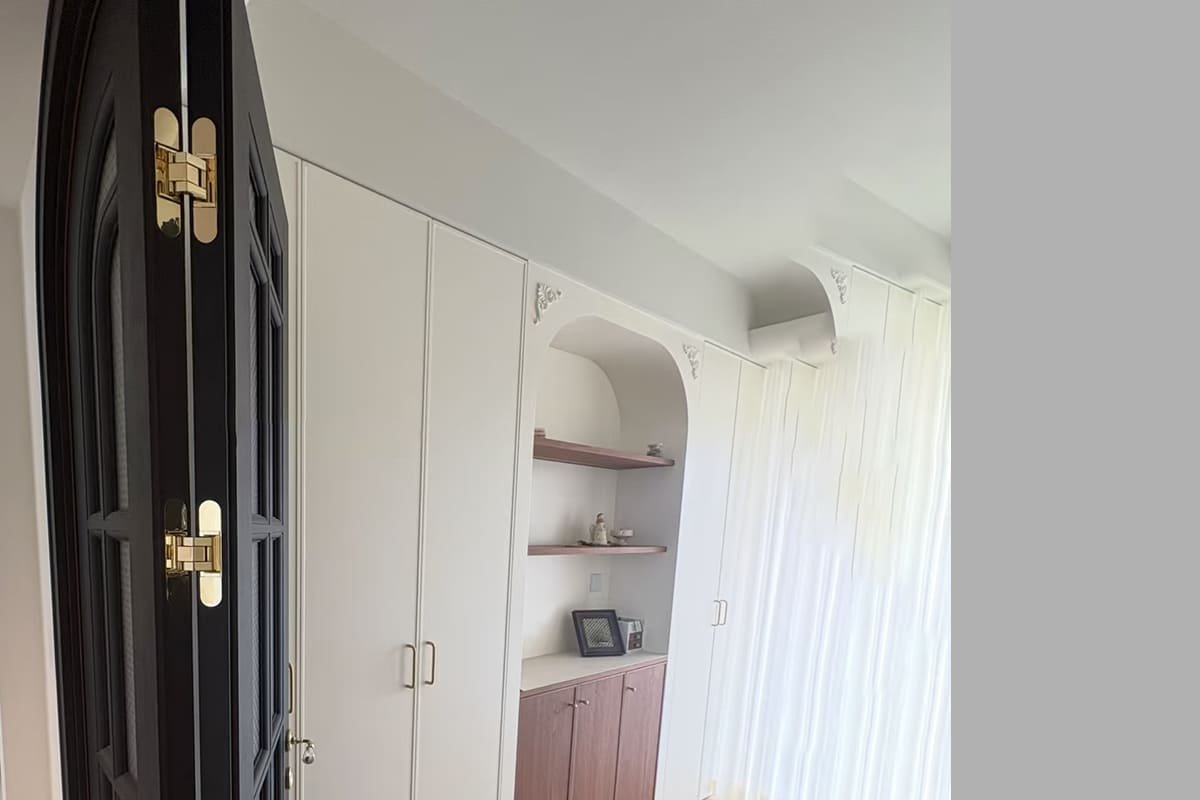
Why zinc alloy is widely used
From a manufacturer-side view, zinc alloy is popular because it works well with die casting. Good die-casting flow helps the mold fill more completely6. This is useful for concealed hinges because the shape often includes cavities, curved details, and complex mounting structures.
Common zinc alloy advantages include:
- Good forming efficiency
- Stable dimensional control when tooling is mature
- Smooth surface after finishing
- Flexible finish options
- Good balance between hardness and processability
- Competitive cost for bulk orders
In many standard door hardware programs, zinc alloy can meet the buyer’s target cost while still supporting acceptable performance. However, the hinge must be designed properly. Material alone does not create load capacity.
Zinc alloy is not one single quality level
I often remind buyers that “zinc alloy” is a category, not a guarantee. Different alloy grades, casting conditions, mold quality, and post-processing steps can create different results.
Important quality checkpoints include:
Alloy grade
Buyers should confirm whether the supplier uses suitable zinc alloy grades, such as 3# or 5# zinc alloy, depending on the product design.Casting density
Poor die casting may create pores, weak zones, or unstable dimensions7.Wall thickness
A thin hinge body may reduce cost, but it can also reduce strength.Screw hole strength
Mounting areas must resist installation torque and long-term door movement.Surface treatment
Electroplating, powder coating, painting, or other finishes should be consistent across batches.Assembly fit
Concealed hinge movement depends on precise matching between parts.
Where zinc alloy works well
Zinc alloy is often suitable for:
- Standard interior wooden doors
- Residential or light commercial applications
- Brand programs with multiple finish options
- Projects where visual appearance and cost balance matter
- Door factories needing stable mass assembly
- Wholesalers building mid-range product lines
It may not be the best direction for every high-load, high-humidity, coastal, or special fire-rated application. In those cases, buyers should verify product-specific data and consult a qualified professional for project-specific decisions.
Zinc alloy quotation factors
A zinc alloy concealed hinge quotation can change based on more than material weight. Buyers should compare these items:
| Quotation factor | Why it changes price |
|---|---|
| Hinge size | Larger bodies use more material and larger molds |
| Load rating | Stronger models need more material or better structure |
| Finish type | Plating, painting, and premium colors have different costs |
| Adjustment function | 3D adjustable models often require more precise parts |
| Accessories | Screws, cover plates, and templates affect total cost |
| Packaging | Retail packaging costs more than bulk factory packing |
| Testing requirement | Specific reports or inspections add time and cost |
In my experience, zinc alloy is often the best starting point when buyers need a balanced quotation. Still, I always ask for door weight, door thickness, opening frequency, and target market before recommending it. That small step prevents many wrong comparisons.
When do aluminum alloy concealed door hinges reduce cost?
Aluminum alloy can be misunderstood in hinge discussions. Some buyers expect it to replace all other materials, while others ignore it because it feels lightweight. The real issue is component function. Aluminum alloy can reduce cost and weight when it is used in the right hinge parts and supported by proper structure.
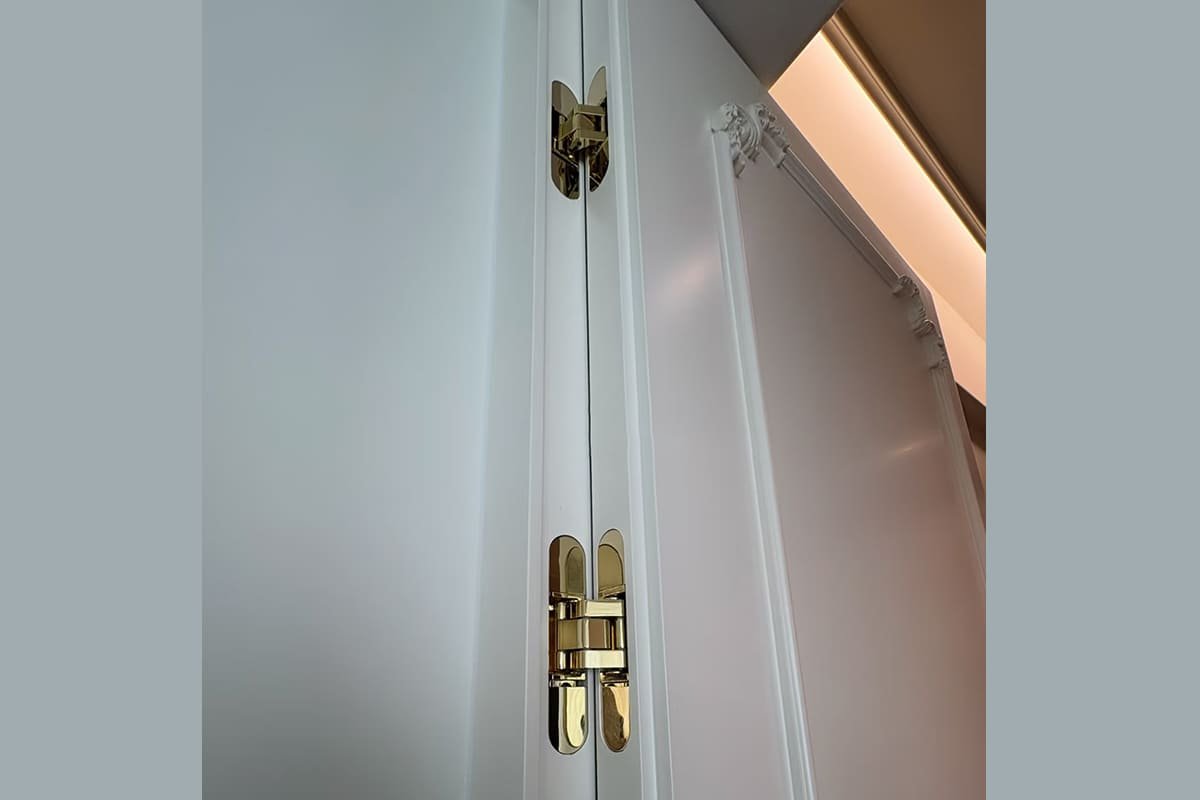
Aluminum alloy concealed door hinges may reduce cost when used for hinge arms, links, or selected components where lightweight strength is useful. Its price advantage can come from lower raw material cost, easier handling, and reduced product weight, but the final performance still depends on design, thickness, wear resistance, and assembly precision.
Why aluminum alloy appears in concealed hinge design
Aluminum alloy is widely used in industrial products because it offers a useful strength-to-weight ratio8. In concealed hinge production, it may be selected for certain components rather than the whole hinge. This is especially common when the manufacturer wants to reduce weight while maintaining smooth movement.
Potential advantages include:
- Lightweight structure
- Relatively good load-bearing performance when designed correctly
- Good machinability
- Lower product weight for shipping and handling
- Suitable for certain arm or link components
- Stable appearance with appropriate surface treatment
The cost benefit can come from both material availability and reduced part weight. However, the buyer should avoid assuming that lighter automatically means weaker or stronger. The geometry and stress distribution are more important.
Component role matters more than material label
A concealed hinge works like a small mechanical system. Several parts share load and movement. If aluminum alloy is used in a moving arm, the supplier must consider wear, pin connection, surface friction, and repeated opening cycles.
Key questions I ask include:
Which part is aluminum alloy?
The hinge body, arm, cover, or link may have different requirements.What door weight is the hinge rated for?
The supplier should specify whether the rating applies to two hinges, three hinges, or another installation method.What is the expected opening frequency?
A residential bedroom door and a hotel corridor door have different duty conditions.How is the surface treated?
Finishing affects corrosion resistance, appearance, and wear behavior.Are pins and contact points reinforced?
Movement points often determine long-term stability.
Aluminum alloy and bulk purchasing
For bulk buyers, aluminum alloy can also affect logistics and product positioning. A lower product weight may reduce shipping impact across large quantities9, although this depends on carton size, packing density, and shipping method.
A door hardware brand may use aluminum alloy components to develop a lighter middle-range hinge line. A wholesaler may select it for markets where installation convenience and price balance are more important than premium corrosion resistance. A door factory may prefer it if the hinge fits the door preparation and reduces assembly strain.
Comparison with zinc alloy and stainless steel
| Evaluation point | Zinc alloy | Aluminum alloy | Stainless steel |
|---|---|---|---|
| Weight | Medium to heavy | Lighter | Usually heavier |
| Typical cost position | Cost-effective | Cost-efficient in selected parts | Higher |
| Forming method | Die casting common | Casting, extrusion, machining, or mixed process | Precision casting or machining common |
| Finish flexibility | Strong | Good, depending on process | More limited but premium |
| Corrosion resistance | Depends on finish | Depends on alloy and finish | Generally stronger |
| Best use case | Standard balanced applications | Lightweight components and selected designs | Heavy-duty or corrosive environments |
This table is a starting point, not a universal rule. A poorly designed stainless steel hinge may perform worse than a well-designed zinc alloy hinge in a specific application. A well-designed aluminum alloy arm may perform very well when it is part of a complete engineered structure.
What buyers should request
If a supplier quotes aluminum alloy concealed hinges or mixed-material hinges, I suggest requesting:
- Material breakdown by component
- Exploded drawing or structure diagram
- Door weight recommendation
- Installation quantity recommendation
- Surface treatment details
- Sample testing before bulk order
- Finish consistency standard
- Packaging and accessory list
In procurement, aluminum alloy is valuable when it solves a defined problem. That problem may be weight, cost, processing efficiency, or a target product tier. It should not be selected only because it sounds cheaper.
Why are stainless steel concealed door hinges usually higher in price?
Stainless steel often attracts buyers who want a premium or durable solution. The problem is that some buyers treat stainless steel as automatically best for every project. That can create unnecessary cost. At the same time, choosing a lower material for a corrosive or heavy-load environment can create major performance risk.
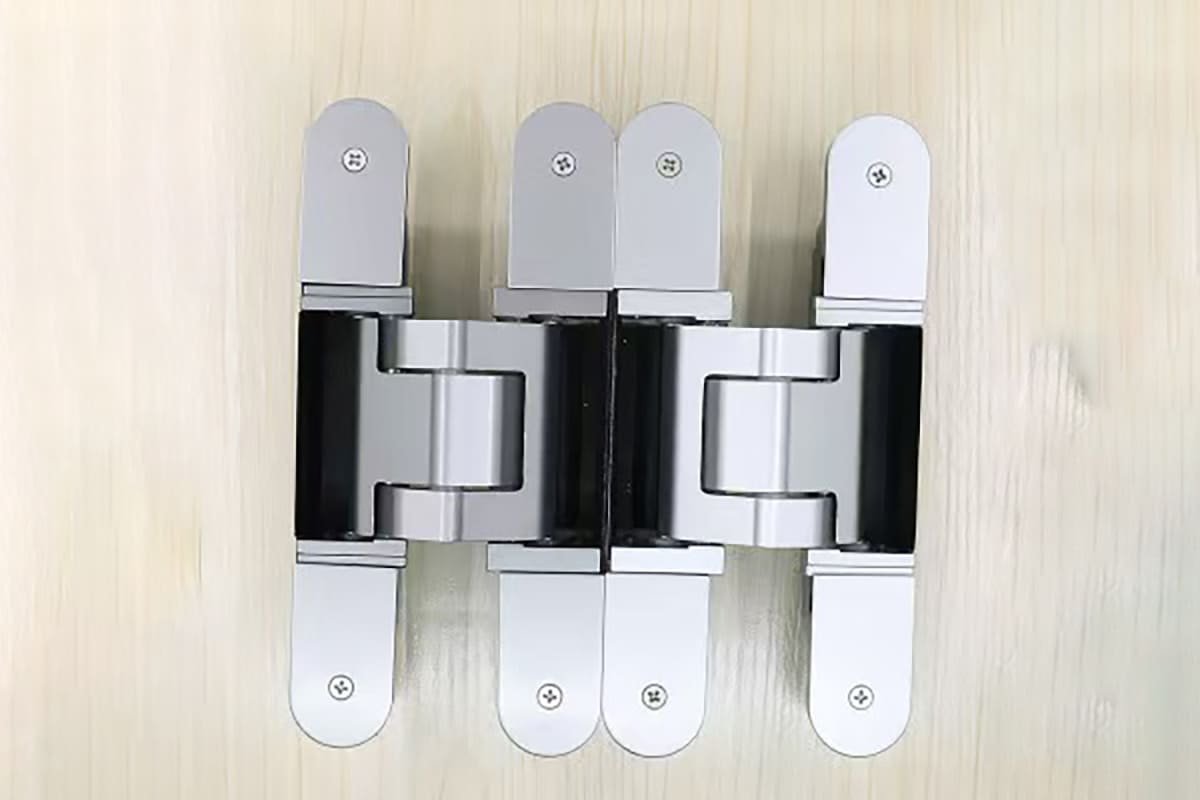
Stainless steel concealed door hinges are usually higher in price because stainless steel contains chromium and often nickel, offers stronger corrosion resistance and hardness, and is commonly used for high-load or corrosion-resistant applications. Precision casting, machining difficulty, heavier material use, and stricter finishing requirements can all increase the unit cost.
Why stainless steel costs more
Stainless steel cost usually comes from several sources. The raw material itself can be higher because stainless steel includes alloying elements such as chromium and, in many grades, nickel10. These elements support corrosion resistance and mechanical properties, but they also affect market price.
Production can also be more demanding. Stainless steel parts may require:
- Precision casting
- CNC machining
- More tool wear control
- More polishing work
- Tighter dimensional checks
- Longer production time
- Stronger quality inspection
Heavy-duty concealed hinges often use more material. If the hinge is designed for a taller, wider, or heavier door, the body and arms may be thicker. That increases both material cost and processing cost.
Where stainless steel makes sense
Stainless steel is usually worth evaluating for:
Coastal or humid environments11
Corrosion resistance becomes more important when salt, humidity, or cleaning chemicals are present.High-end architectural projects
Some buyers need a premium material story for brand positioning.Heavy doors
Stainless steel may be suitable for specific heavy-duty hinge designs, but buyers must verify the load rating.Commercial spaces
Higher opening frequency may justify a more durable structure.Special compliance needs
Some project specifications may require certain materials, certificates, or fire-rated documentation.
I avoid saying stainless steel is always the best. It is better to say stainless steel is often the better candidate when the application demands corrosion resistance, higher strength, or premium durability.
Stainless steel grade and documentation
Buyers should confirm the actual stainless steel grade. Common discussions may include 201, 304, or 316 stainless steel12, depending on market and application needs. These grades do not have the same corrosion resistance or cost.
| Stainless steel grade | General positioning | Buyer note |
|---|---|---|
| 201 | More economical stainless option | Lower corrosion resistance than 304 in many environments |
| 304 | Common architectural hardware option | Good general corrosion resistance |
| 316 | Higher corrosion resistance | Often considered for marine or harsh environments |
The grade should be supported by supplier documents, and buyers should verify certificates where project compliance matters. CE certificates and fire-rated certificates should be checked for model scope, issuing body, validity, and test standard. A certificate that applies to one hinge model may not automatically apply to another model.
Stainless steel does not remove the need for design review
A stainless steel hinge still needs correct engineering. Buyers should evaluate:
- Door weight and size
- Number of hinges per door
- Screw type and frame material
- Door preparation accuracy
- Opening angle
- Adjustment method
- Cycle test basis
- Corrosion test basis
- Fire-rated requirement, if applicable
Some heavy-duty models may refer to cycle testing, such as 200,000-cycle testing, but buyers should only rely on such claims when they are tied to a specific tested model and valid test report. A general catalog statement is not enough for project evaluation.
How to avoid overpaying
Stainless steel can be the right choice, but it should solve a real requirement. I suggest buyers separate “must-have” requirements from “nice-to-have” requirements.
Must-have examples:
- Project specification requires stainless steel
- Environment has corrosion risk
- Door is heavy or frequently used
- Brand positioning requires premium hardware
- Required certificate applies to that model
Nice-to-have examples:
- Buyer wants a premium story but sells into a price-sensitive market
- Door is standard interior use
- Environment is dry and low traffic
- Zinc alloy or mixed-material hinge already meets the tested requirement
This simple separation helps buyers avoid paying for stainless steel where zinc alloy or aluminum alloy would be sufficient.
How should buyers compare concealed door hinges for bulk procurement?
Bulk procurement creates a different problem from sample buying. A sample may look good on the desk, but thousands of hinges must keep the same finish, size, function, and packaging. If the evaluation process is loose, small differences can become expensive after shipment.
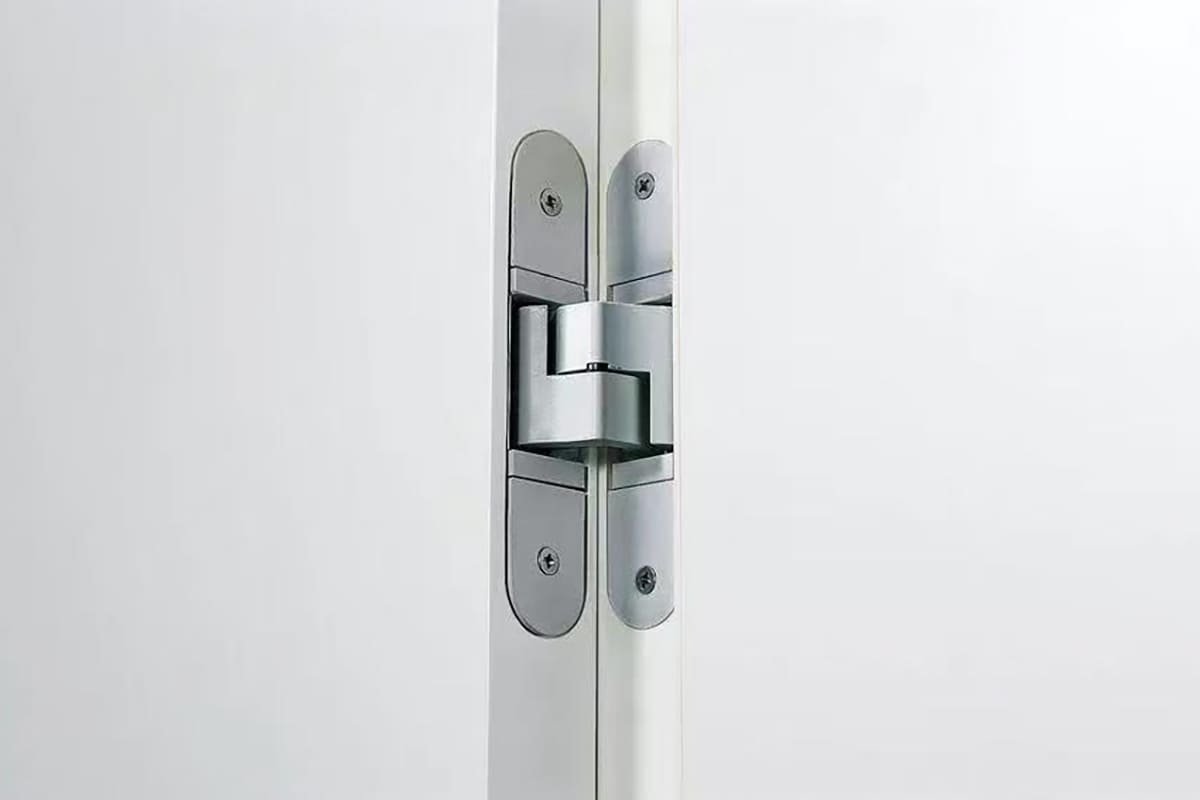
Buyers should compare concealed door hinges by matching material, structure, load rating, finish, testing documents, certification scope, order quantity, accessories, and supplier production stability. A fair comparison requires identical specifications. The best choice is the hinge that meets door performance requirements at the lowest total procurement risk.
Start with the door, not the hinge
I always prefer to start with the door details. The hinge is not an isolated item. It must work with the door leaf, door frame, installation method, and local market expectation.
Buyers should prepare:
- Door material
- Door height and width
- Door thickness
- Door weight
- Frame material
- Opening angle requirement
- Frequency of use
- Indoor or outdoor environment
- Fire-rated or non-fire-rated application
- Target market and price level
- Required finish color
- Required packaging method
This information helps the supplier recommend a suitable hinge structure. Without it, the quotation may be fast but unreliable.
Use a specification comparison table
A simple comparison table can prevent confusion between quotations. I recommend buyers use one file to compare suppliers side by side.
| Item | Supplier A | Supplier B | Supplier C |
|---|---|---|---|
| Main body material | |||
| Arm/link material | |||
| Pin material | |||
| Hinge size | |||
| Door weight rating | |||
| Door thickness | |||
| Opening angle | |||
| Adjustment range | |||
| Finish | |||
| Test report | |||
| CE/fire certificate | |||
| MOQ | |||
| Lead time | |||
| Packaging | |||
| Unit price |
This table helps reveal hidden differences. Sometimes one quote is lower because it excludes screws, cover plates, retail boxes, or a required finish. Sometimes it uses thinner material or a lower load rating. Once these gaps are visible, the buyer can negotiate fairly.
Conclusion
The price difference between concealed door hinges of different materials comes from material cost, component function, forming process, load rating, surface finish, testing, accessories, and order configuration. Zinc alloy often gives strong cost performance for standard doors. Aluminum alloy can reduce weight and cost in selected components. Stainless steel usually costs more when corrosion resistance, hardness, or heavy-duty performance is required. If you are comparing hinge materials for bulk purchasing, I recommend sharing your door specifications, target market, and compliance needs with SDH Hardware so we can help you evaluate a suitable factory-direct solution.
"Zinc Alloy Die Casting Parts - USA Manufacturing - Deco Products", https://decoprod.com/zinc-die-casting-parts/. Engineering and industry references describe zinc die-casting alloys as suitable for high-volume components because of their castability, dimensional accuracy, surface finish, and production efficiency, offering contextual support for their cost-effective use in standard door hardware. Evidence role: general_support; source type: institution. Supports: A zinc industry or engineering source should support that zinc alloys are widely used in die-cast hardware because they offer efficient production, good dimensional control, and suitable finishing.. Scope note: This supports the general manufacturing rationale for zinc alloy, not a universal conclusion that every zinc concealed hinge is cost-effective. ↩
"Strength to weight ratios of common aluminum and steel ...", https://www.researchgate.net/figure/Strength-to-weight-ratios-of-common-aluminum-and-steel-alloys-1_tbl1_327805143. Materials references identify aluminum alloys as low-density engineering materials with favorable strength-to-weight characteristics and good machinability, which supports their use in selected hinge components where reduced weight is a design objective. Evidence role: mechanism; source type: education. Supports: A university or engineering materials source should support that aluminum alloys have low density, useful strength-to-weight ratio, and good machinability for structural components.. Scope note: The source would not prove that aluminum alloy lowers cost in every hinge design; cost depends on alloy grade, geometry, process, and market conditions. ↩
"Stainless steel", https://en.wikipedia.org/wiki/Stainless_steel. Materials sources attribute stainless steel corrosion resistance primarily to chromium-rich passive films and note that alloy composition and processing requirements affect mechanical behavior and manufacturability, supporting the contextual link between stainless steel selection and higher-cost durable applications. Evidence role: general_support; source type: research. Supports: A materials research or institutional source should support that stainless steel obtains corrosion resistance from alloying elements and can be harder or more demanding to process than softer nonferrous alloys.. Scope note: The source would explain property and processing factors, but actual hinge prices require product-specific market data. ↩
"Influence of surface quality on corrosion resistance of ... - PMC", https://pmc.ncbi.nlm.nih.gov/articles/PMC12307888/. Materials-engineering references distinguish zinc alloys, aluminum alloys, and stainless steels by density, mechanical properties, corrosion behavior, and processing routes, which provides contextual support for treating material selection as a major factor in hinge cost and performance. Evidence role: general_support; source type: education. Supports: A neutral engineering source should support that zinc alloys, aluminum alloys, and stainless steels differ in mechanical properties, corrosion behavior, finishing compatibility, and manufacturability.. Scope note: The source would support the material-property comparison generally, not the pricing of any specific concealed hinge model. ↩
"Zamak - Wikipedia", https://en.wikipedia.org/wiki/Zamak. Zinc-alloy reference materials identify Alloy 3 and Alloy 5 as widely used zinc die-casting alloys, with properties suited to cast components requiring dimensional accuracy and finishability. Evidence role: definition; source type: institution. Supports: An industry standards or materials source should identify zinc alloy No. 3 and No. 5, often associated with Zamak 3 and Zamak 5, as common zinc die-casting alloys and summarize their properties.. Scope note: The source would confirm alloy usage and properties generally, not that a particular supplier's hinge uses those grades. ↩
"Prediction of the Stability of the Casting Process by the HPDC ...", https://pmc.ncbi.nlm.nih.gov/articles/PMC11644006/. Die-casting literature explains that molten-metal fluidity and filling conditions govern how completely a die cavity is filled and influence defects in complex cast geometries, supporting the manufacturing rationale for using castable zinc alloys in concealed hinge bodies. Evidence role: mechanism; source type: paper. Supports: A die-casting paper or textbook should support that alloy fluidity and process parameters influence mold filling and defect formation in complex die-cast parts.. Scope note: The source would support the general die-casting mechanism, not the performance of a specific hinge design. ↩
"Characterization and Analysis of Porosities in High Pressure Die ...", https://pmc.ncbi.nlm.nih.gov/articles/PMC7412358/. Research on die-casting defects shows that porosity, incomplete filling, and process variation can impair mechanical properties and dimensional consistency, supporting the need to evaluate casting density in zinc-alloy hinge parts. Evidence role: mechanism; source type: paper. Supports: A peer-reviewed casting paper should support that porosity and related die-casting defects can reduce mechanical integrity and dimensional reliability.. Scope note: The source would support the defect mechanism generally and would not quantify failure risk for concealed hinges without model-specific testing. ↩
"Printable aluminum alloy designed to balance strength and cost", https://www.mse.engineering.cmu.edu/news/2025/04/30-aluminum-alloys.html. General materials references describe aluminum alloys as low-density engineering materials valued for favorable strength-to-weight performance, supporting their use in industrial components where weight reduction is important. Evidence role: general_support; source type: encyclopedia. Supports: A neutral encyclopedia or educational source should support that aluminum alloys are valued in engineering for low density and favorable strength-to-weight performance.. Scope note: This supports the material rationale broadly, not the suitability of aluminum for every concealed hinge component. ↩
"Freight Transportation | MIT Climate Portal", https://climate.mit.edu/explainers/freight-transportation. Freight and transport references commonly treat shipment weight as a determinant of chargeable freight, handling burden, and transport energy use, providing contextual support for considering hinge weight in large-volume procurement. Evidence role: general_support; source type: institution. Supports: A logistics or transport institution source should support that shipment weight affects freight calculations, handling, or transport emissions.. Scope note: The source would support the logistics principle, while actual savings depend on carton dimensions, shipping mode, route, and carrier pricing. ↩
"Prediction of Solidification Phases in Cr-Ni Stainless Steel ...", https://www.nist.gov/publications/prediction-solidification-phases-cr-ni-stainless-steel-alloys-manufactured-laser-based. Authoritative metallurgical references define stainless steels as iron-based alloys containing sufficient chromium to form a protective passive film, with nickel added in many austenitic grades to modify structure and properties. Evidence role: definition; source type: government. Supports: A government or standards source should support the definition of stainless steel as an iron alloy containing chromium, with nickel present in many grades.. ↩
"Marine Atmospheric Corrosion of Carbon Steel: A Review - PMC - NIH", https://pmc.ncbi.nlm.nih.gov/articles/PMC5506973/. Corrosion research shows that chloride deposition and moisture in marine or humid atmospheres accelerate metallic corrosion, supporting the need to evaluate corrosion-resistant hinge materials for coastal or damp environments. Evidence role: mechanism; source type: research. Supports: A corrosion science source should support that salt, chlorides, and humidity accelerate corrosion of metals and increase the importance of corrosion-resistant materials.. Scope note: The source would support environmental corrosion risk generally, while actual hinge durability depends on alloy grade, finish, installation, and maintenance. ↩
"201 vs 304 vs 316 Stainless Steel: What's the Difference? - EXT Cabinets", https://extcabinets.com/stainless-steel-grades-explained-304-vs-316-vs-201/. Materials references distinguish stainless steel grades 201, 304, and 316 by alloy composition and corrosion behavior; in particular, 316 stainless steel is commonly noted for improved chloride resistance because of molybdenum additions. Evidence role: general_support; source type: education. Supports: A materials source should support that 201, 304, and 316 stainless steels have different alloy compositions and corrosion resistance, with 316 generally performing better in chloride-rich environments.. Scope note: The source would support grade differences generally, not the price of any particular hinge made from those grades. ↩