
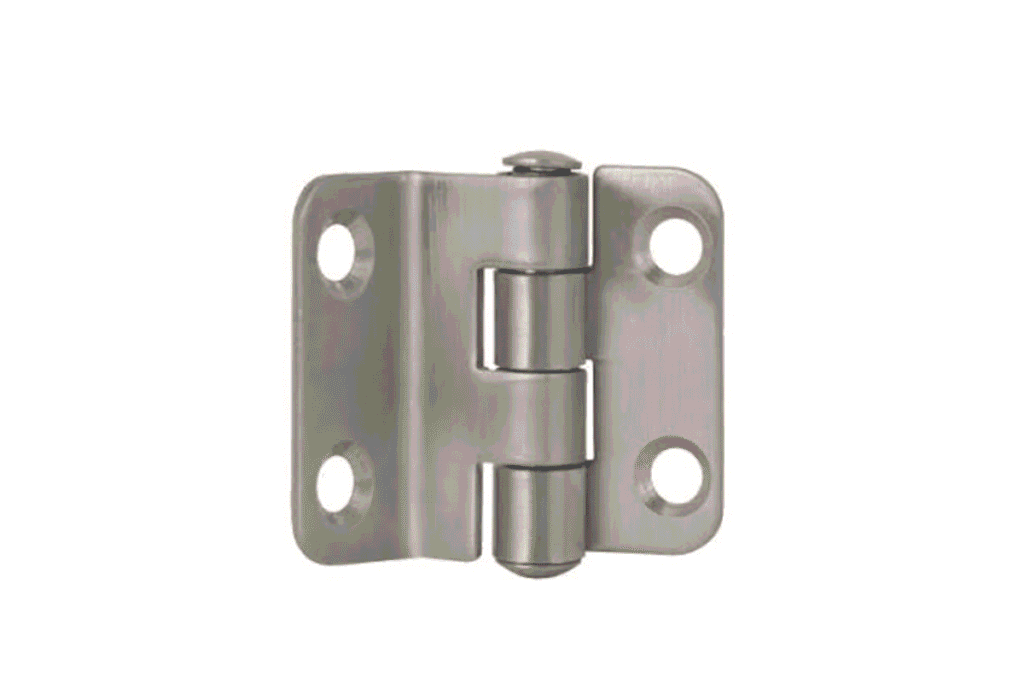
What Is a Stepped Convex Hinge?
A stepped convex hinge can be confusing when you first see it on a drawing or sample, because it looks similar to a modified butt hinge. The problem is that a standard flat hinge may rub against a rebated door or frame1. If the geometry is wrong, the door may bind, misalign, or require extra cutting. The solution is to evaluate the hinge by door structure, not by appearance alone.
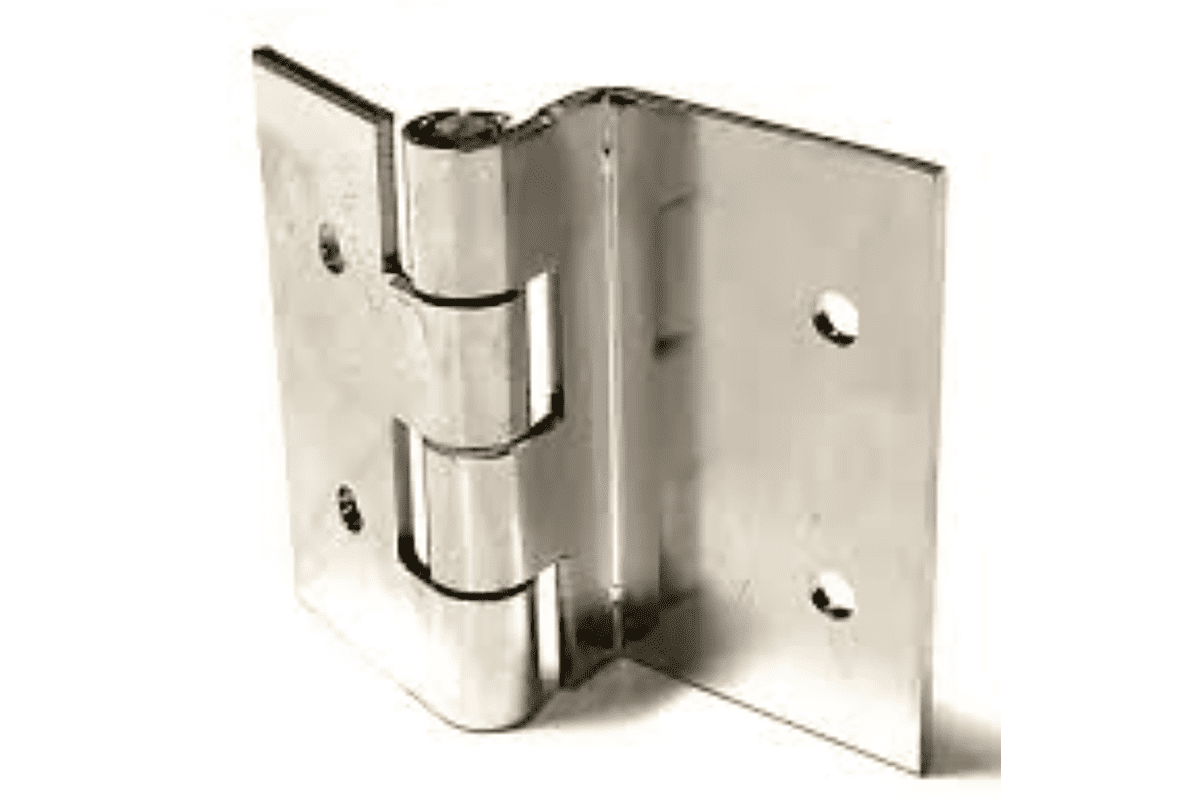
A stepped convex hinge is a specially shaped hinge used for stepped or rebated doors where a flat butt hinge may interfere with the door rebate or frame profile. Its stepped and convex form creates clearance, supports the required offset, and helps the door open, close, and align smoothly without unnecessary door or frame modification.
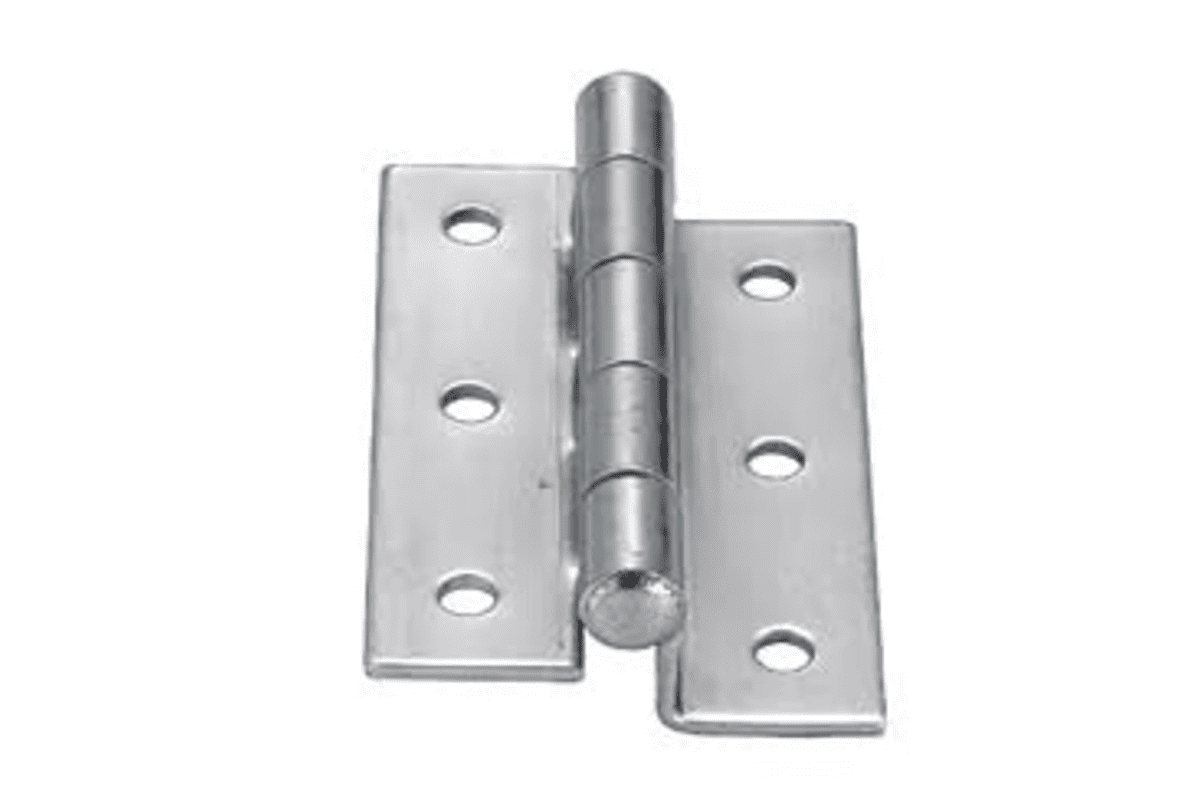
In my factory communication with door manufacturers and hardware buyers, I often see one issue: buyers search by hinge name or photo, but the real question is geometry. The hinge must match the door rebate, frame profile, screw hole position, opening direction, and finish requirement before sample approval or bulk production.
Why Is a Stepped Convex Hinge Used on Rebated Doors?
A stepped convex hinge is used when a door has a rebate, step, or offset profile that may block a normal flat hinge.2 The problem appears during opening and closing. If the hinge leaf does not clear the stepped area, the door can rub against the frame. This creates poor operation and may damage the surface finish.
A stepped convex hinge provides clearance for rebated or stepped door structures. Its offset profile helps the hinge leaf avoid interference with the door edge and frame. When selected correctly, it supports smoother movement, better closing gaps, and cleaner installation without forcing the installer to modify the door structure.
The application matters more than the name
I usually define this hinge by its application first. A stepped convex hinge is not just a decorative hinge with a curved shape. It is a functional hardware part for doors that have a raised, recessed, rebated, or stepped edge condition.
A typical flat butt hinge has two flat leaves that sit between the door leaf and the frame.3 That works well for many standard flush doors. However, a rebated door has a shaped edge. The door may overlap the frame4, or the frame may have a corresponding stepped section. This profile can create a conflict point when the door rotates.
The stepped or convex hinge shape helps solve this by creating the needed offset.
Common situations where buyers ask for this hinge
In B2B sourcing, I often see requests from:
- Door factories producing rebated wooden, steel, or composite doors
- Hardware brands building a complete product range for regional markets
- Importers and wholesalers matching replacement hinges to existing door systems
- Project suppliers who need consistent hardware for a specific door profile
The common question is usually not “Is this hinge good?” The better question is:
“Does this hinge geometry match my rebated door and frame structure?”
Why a normal butt hinge may not work
A standard butt hinge may fail in several practical ways:
| Issue | What Happens | Why It Matters |
|---|---|---|
| Rebate interference | Door edge rubs the frame or hinge leaf | The door may not open smoothly |
| Wrong offset | Closing gap becomes too tight or uneven | The door may not align correctly |
| Incorrect knuckle position | Rotation point sits in the wrong place | The door may bind during swing |
| Hole mismatch | Screws do not match prepared holes | Installation becomes slow or impossible |
| Poor profile fit | Hinge sits unevenly on the door edge | Long-term stability may be affected |
A practical example from sourcing discussions
I once reviewed a customer inquiry where the buyer sent only a product photo. The hinge looked simple, but the sample did not match the actual door rebate. The screw holes aligned, but the offset was slightly wrong. The door closed with pressure on one edge. That small geometry issue mattered more than the material or finish at that stage.
That is why I always recommend checking the hinge against:
- Door edge section drawing
- Frame section drawing
- Hinge open and closed position
- Required clearance during rotation
- Screw hole position and countersink type
- Opening direction and installation side
A stepped convex hinge should make installation easier, not create extra site work. If installers need to grind, cut, shim, or force the door into position, the specification should be reviewed before bulk purchasing.
How Does a Stepped Convex Hinge Prevent Rebate Interference?
A stepped convex hinge prevents rebate interference by moving part of the hinge leaf or pivot geometry away from the contact area between the door and frame. The problem is that a rebated profile creates less free space during swing. If the hinge shape is too flat, the rebate may collide with the frame edge.
The hinge’s stepped and convex form creates a controlled offset. This offset helps the door clear the frame profile during movement. It also helps maintain a consistent reveal or closing gap when the hinge is correctly matched to the door and frame drawings.
Clearance is the main function
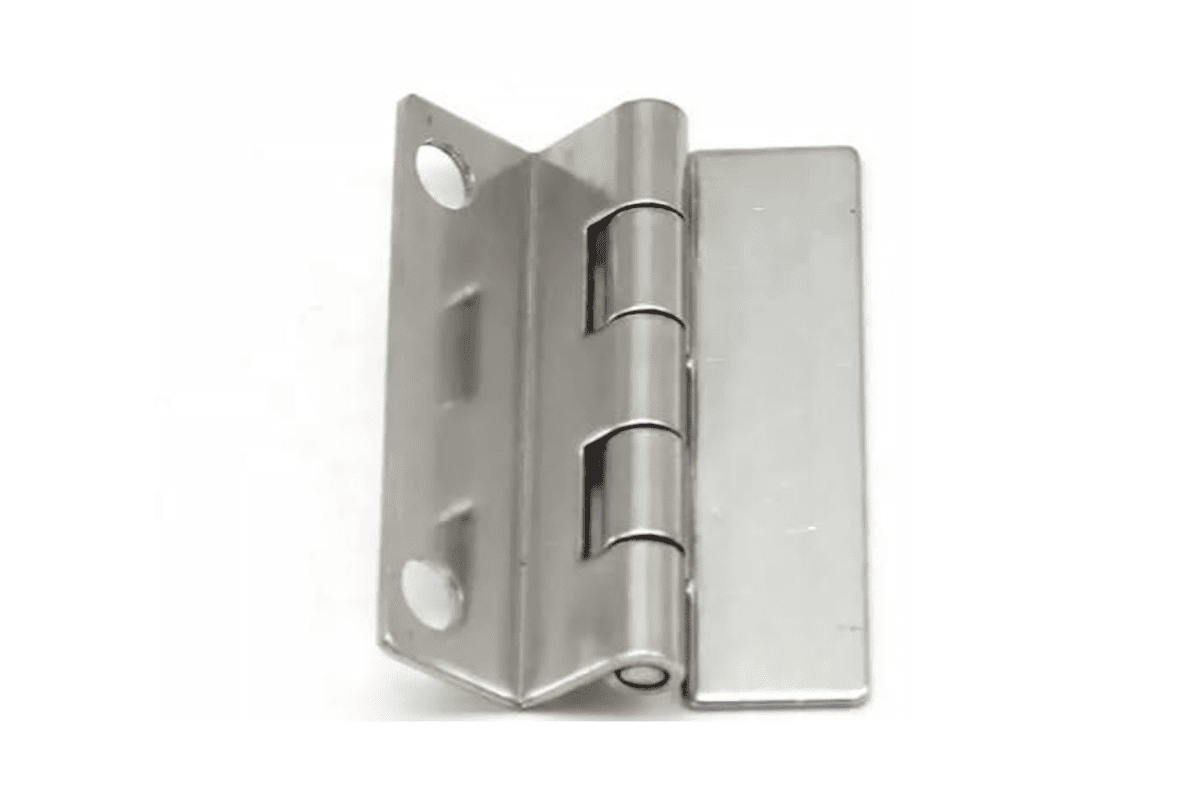
A stepped convex hinge is mainly about clearance. The curved or raised section is not only for appearance. It changes how the hinge sits on the door and how the door rotates relative to the frame.5
In simple terms, the hinge must allow three things:
- The door must open without rubbing.
- The door must close without compression at the wrong point.
- The visible gap must remain acceptable for the door system.
When I support B2B hinge selection, I prefer to look at the door and frame section before discussing mass production. A small drawing can prevent a large purchasing mistake.
Key geometry points to confirm
The following points are especially important:
| Geometry Point | What to Check | Buyer’s Practical Question |
|---|---|---|
| Rebate depth | Depth of the stepped door edge | Will the hinge clear the rebate? |
| Rebate width | Width of the overlap or step | Will the hinge leaf sit properly? |
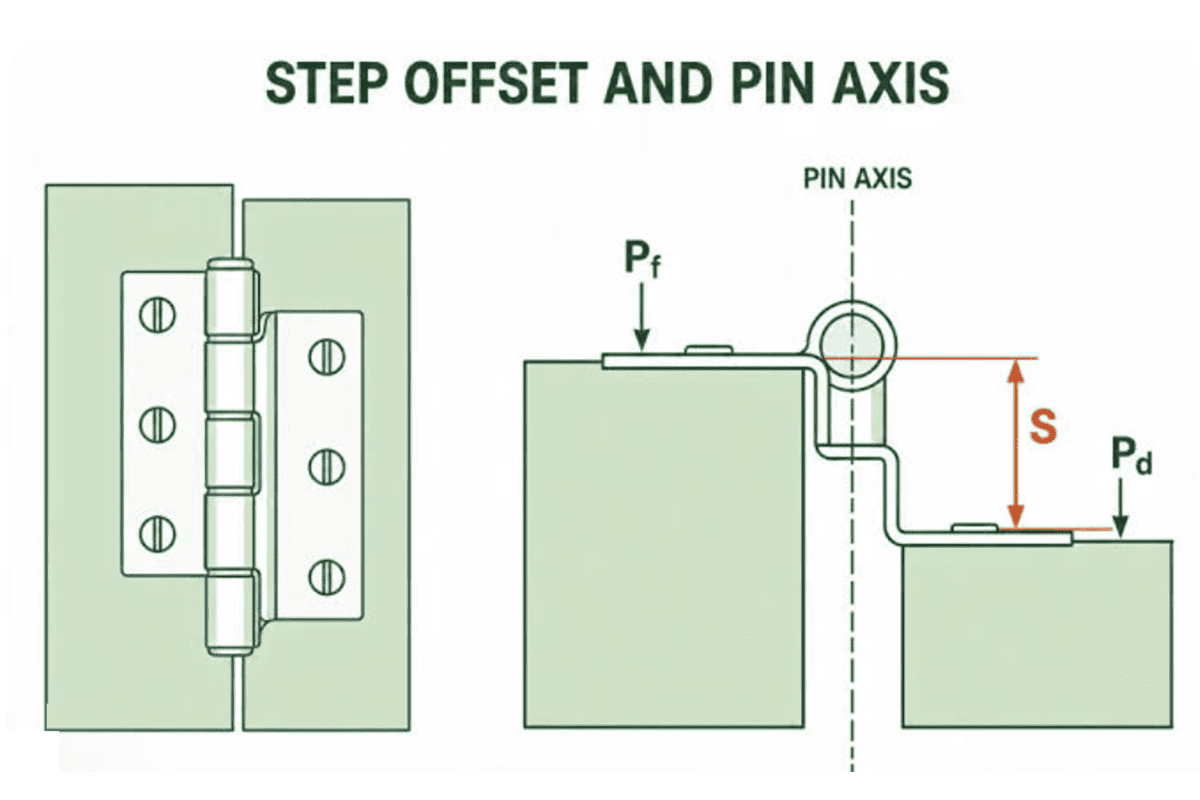
| Offset | Distance created by the stepped hinge shape | Does the door align after closing? |
| Knuckle position6 | Location of hinge barrel or pivot line | Does the door swing without collision? |
| Leaf thickness | Thickness of hinge plates | Does it affect the final gap? |
| Screw hole position | Center distance and pattern | Does it match machining or drilling? |
Why drawings matter before samples
Many buyers send a hinge image and ask whether we can produce it. In many cases, we can discuss production possibilities, but the photo alone is not enough. A hinge may look correct from the front but fail from the side.
I recommend sharing:
- 2D drawing of the hinge
- Door edge section
- Frame section
- Installation photo if available
- Required finish and material
- Target packaging and branding needs
- Sample approval process
This process is especially important for OEM and ODM orders. At SDH Hardware, I often treat the first discussion as a geometry confirmation stage. I do not want a customer to approve a nice-looking sample and later discover that the door does not close correctly.
Common interference symptoms
If the hinge is not suitable, the installer may see these problems:
- The door rubs before reaching the closed position.
- The reveal line is uneven from top to bottom.
- The hinge leaf presses against the rebate.
- The screw side pulls or twists during installation.
- The door needs extra cutting to operate.
- The surface finish scratches near the hinge area.
These are not always manufacturing defects. Sometimes they are selection defects. The hinge may be well made, but it may be wrong for the door profile.
What I check first as a supplier
When a buyer asks about a stepped convex hinge, I usually check the following sequence:
- Does the door actually require an offset hinge?
- Is the rebate shape clear in the drawing?
- Is the hinge size appropriate for the door type?
- Does the hole position match current production equipment?
- Does the finish match the customer’s market requirement?
- Is a sample test needed before bulk order?
This approach keeps the conversation practical. It also helps both sides avoid assumptions. For project or brand supply, I would rather spend more time on pre-order confirmation than solve problems after production.
What Should Buyers Check Before Ordering a Stepped Convex Hinge?
Before ordering a stepped convex hinge, buyers should confirm the door rebate shape, frame profile, hinge size, offset, hole position, opening direction, material, surface finish, packaging, and sample approval standard. The problem is that one incorrect detail can make a hinge unsuitable even if the product looks right.
A buyer should not order a stepped convex hinge by name alone. The correct process is to compare the hinge drawing with the door and frame section, then approve a physical sample where possible. This reduces installation risk and helps confirm alignment, clearance, finish, and screw compatibility before bulk production.
A practical pre-order checklist
When I communicate with door factories and hardware brands, I use a simple principle: confirm the structure first, then confirm the commercial details. If the structure is wrong, price and finish become secondary.
Here is a useful checklist for procurement teams:
| Item to Confirm | Why It Matters | Recommended Action |
|---|---|---|
| Door rebate shape | Determines hinge clearance | Share door section drawing |
| Frame profile | Affects swing and closing gap | Share frame section drawing |
| Hinge size | Must suit door design and installation space | Confirm length, width, and thickness |
| Offset dimension | Controls alignment and clearance | Compare with door/frame geometry |
| Hole position | Must match drilling or existing holes | Confirm center distance and pattern |
| Opening direction | Avoids wrong-hand installation | Mark left/right or universal use clearly |
| Material | Affects strength, corrosion resistance, and market positioning | Confirm steel, stainless steel, brass, or other material |
| Finish | Affects appearance and corrosion expectations | Confirm satin, polished, PVD, painted, plated, or custom finish |
| Screws/accessories | Must match installation substrate7 | Confirm screw type and packing |
| Certification documents | Needed for regulated projects | Verify actual documents and test scope |
Do not assume universal compatibility
A stepped convex hinge should not be treated as a universal hinge for all doors. It is suitable only when its shape matches the door system. Even two rebated doors can require different hinge geometry.
For example, one market may use a deeper rebate with a wider overlap. Another market may use a slimmer profile with a different frame edge. A hinge that works in one system may not work in another.
This is why I avoid making fixed claims such as “one size fits all” or “this hinge works for every rebated door.” That would not be responsible B2B guidance.
Sample approval is not optional for new profiles
For repeat orders, buyers may already have tested the hinge. For new projects, I strongly recommend sample approval. A sample helps confirm:
- Door swing clearance
- Closing gap
- Hinge seating
- Screw fit
- Surface appearance
- Packaging method
- Logo placement if required
- Compatibility with installation tools
At SDH Hardware, we support factory-direct B2B supply, including OEM and ODM communication. In my experience, the best orders usually start with clear drawings and sample testing. The buyer knows what they want. The supplier understands the required geometry. Both sides reduce risk.
Material and finish should match the market
Material selection depends on price level, corrosion expectations, door type, and target market. Stainless steel may be preferred in some applications because of corrosion resistance.8 Steel may be chosen for cost-sensitive projects with suitable surface treatment. Brass or other materials may appear in specific design requirements.
The surface finish also matters. Buyers often request finishes such as:
- Satin stainless steel appearance
- Polished finish
- Nickel or chrome plating
- Black finish
- Bronze tone
- Custom color coating
However, finish approval should be based on a real sample or agreed color standard. Photos can be misleading because lighting changes the appearance.9 I usually suggest that buyers keep an approved master sample for reference.
Certification and compliance documents
Some projects require CE-related documents or fire-rated documentation for complete door hardware systems.10 Buyers should verify the actual certificate, test report, product scope, and validity. A document may apply to a specific product, material, size, or test condition.11
I prefer a careful wording here: certifications are not just marketing labels. They are documents that procurement teams should review. For fire-rated doors or regulated projects, buyers should also consult qualified professionals, local code experts, or project engineers before final selection.
How Is a Stepped Convex Hinge Different from a Standard Butt Hinge?
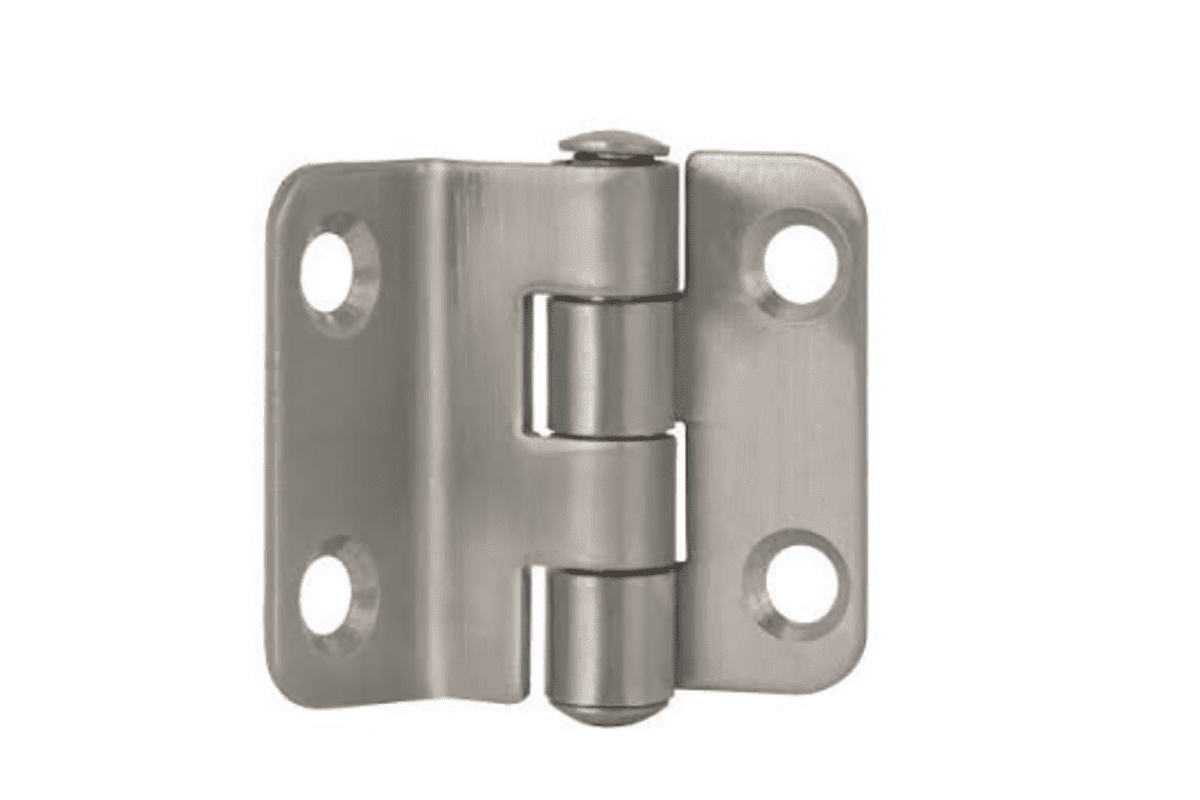
A stepped convex hinge differs from a standard butt hinge because it has a shaped offset profile designed for rebated or stepped door structures. A standard butt hinge usually has flatter leaves for flush installation. The problem is that buyers may compare only the front view and miss the side geometry.
The main difference is functional geometry. A standard butt hinge is usually selected for simpler flush door conditions, while a stepped convex hinge is selected when the door and frame profile need extra clearance. The stepped form helps prevent rubbing and supports smoother door movement in rebated applications.
Functional comparison
The difference becomes clear when we compare use cases:
| Feature | Stepped Convex Hinge | Standard Butt Hinge |
|---|---|---|
| Main application | Rebated or stepped doors | Flush or standard doors |
| Shape | Offset, stepped, or convex profile | Usually flat leaves |
| Purpose | Clearance and alignment for rebate | General door rotation |
| Risk if misused | Wrong offset, rubbing, poor closing gap | May interfere with rebate |
| Selection basis | Door/frame geometry and sample test | Door size, weight, and installation type |
| Buyer focus | Rebate clearance, offset, hole position | Size, thickness, material, bearing type |
A standard butt hinge is not inferior. It simply serves a different structural condition. A stepped convex hinge is not automatically better. It is better only when the door profile requires it.
Why the side view is critical
The front view may show hinge length, hole number, and finish. The side view shows the real function. In many sourcing cases, the side profile decides whether the hinge will work.
I recommend checking:
- Side elevation of the hinge
- Open angle profile
- Closed position profile
- Door and frame cross-section
- Screw hole depth and countersink
- Whether the hinge leaf sits flat after installation
If the hinge does not seat properly, tightening screws may deform the fit or pull the door out of alignment. This can cause small but irritating problems, especially in mass door production.
When a standard butt hinge may be enough
A standard butt hinge may be suitable when:
- The door is flush with the frame.
- There is no rebate interference.
- The required swing path is simple.
- The frame does not block hinge rotation.
- The door manufacturer already has stable machining for butt hinges.
In that case, using a stepped convex hinge may add unnecessary complexity. The correct hardware is always the hardware that fits the application.
When a stepped convex hinge becomes necessary
A stepped convex hinge may be necessary when:
- The door has an overlapping rebated edge.
- The frame has a stepped receiving profile.
- The door binds with a flat hinge.
- The required gap cannot be achieved with a standard hinge.
- The customer wants to avoid extra cutting or frame modification.
- Existing door systems already use this hinge geometry.
I often tell buyers that hinge selection is a small detail with a large effect. The hinge may be a low-cost component compared with the whole door, but it controls movement, alignment, and user experience every day.
How Can a Supplier Help Confirm the Right Stepped Convex Hinge?
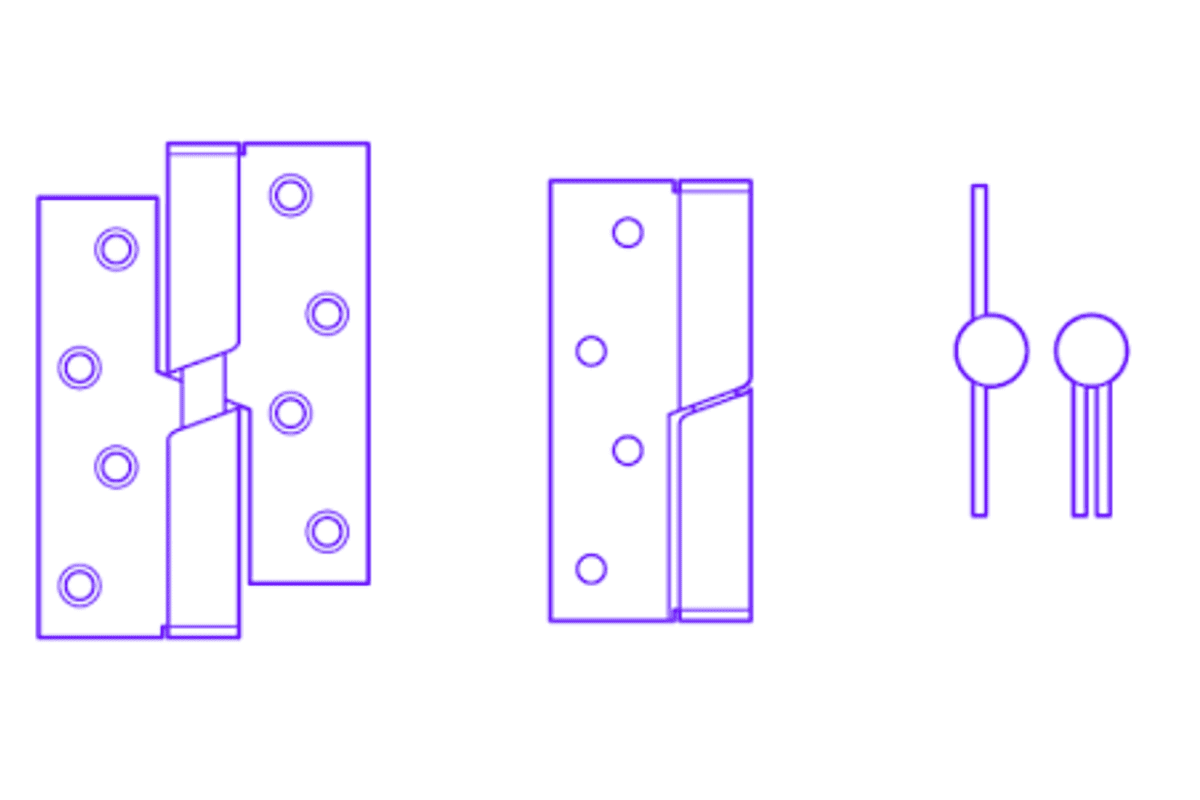
A supplier can help confirm the right stepped convex hinge by reviewing drawings, checking samples, confirming production feasibility, and matching the hinge geometry to the door and frame profile. The problem is that buyers may not always know which dimensions are critical until an installation issue appears.
A capable supplier should guide the buyer through drawing confirmation, material selection, surface finish approval, hole pattern checking, and sample testing. For B2B orders, this process helps reduce mismatch risk and supports more stable bulk purchasing for door factories, hardware brands, and wholesalers.
What I expect from a serious supplier discussion
A good supplier should not only ask for quantity and target price. Those details matter, but they come after product suitability. For a stepped convex hinge, I believe the supplier should ask technical and commercial questions together.
Important supplier questions include:
- What type of door uses this hinge?
- Is the door rebated, stepped, or flush?
- Can the buyer provide door and frame drawings?
- Does the buyer have an existing sample?
- What material and finish are required?
- Are there current screw hole positions to match?
- Is branding or logo marking required?
- Does the buyer need CE or fire-rated documentation for a specific project?
- What inspection standard will be used before shipment?
These questions may seem basic, but they prevent misunderstandings.
How SDH Hardware approaches this product category
As a China-based architectural door hardware manufacturer, SDH Hardware has direct experience producing and supplying door hardware for B2B customers. Our product range covers mortise locks, stainless steel lever handles, butt hinges, concealed hinges, Euro brass cylinders, door accessories, and related hardware. In hinge projects, I usually focus on whether the product fits the door structure and customer market before discussing large-volume production.
For stepped convex hinge inquiries, I would normally recommend this process:
| Step | Purpose | Output |
|---|---|---|
| Inquiry review | Understand application and market | Initial feasibility check |
| Drawing exchange | Confirm hinge and door geometry | Technical comparison |
| Sample development or matching | Verify physical fit | Sample approval |
| Finish confirmation | Match customer requirement | Approved surface sample |
| Order confirmation | Lock dimensions, packing, and logo details | Production order |
| Inspection | Check appearance, dimensions, and function | Shipment approval |
Why factory-direct communication helps
Factory-direct communication can reduce information loss. When a buyer works through too many layers, small technical details may be simplified or misunderstood. In hinge selection, small details matter.
For example, a buyer may say “same as photo,” but the factory needs to know:
- Is the hinge leaf flat or offset?
- What is the exact step height?
- Are the holes countersunk?
- Is the knuckle diameter fixed?
- Is the finish brushed or polished?
- Does the packaging require customer branding?
- Should inspection include functional fitting?
At SDH Hardware, we support ODM and OEM discussions, custom specifications, surface treatment options, accessory configuration, logo stamping or laser marking, custom color packaging, drawings after order confirmation, and inspection service after order completion. These services are useful only when the initial hinge specification is clear.
Quality control points for bulk orders
For bulk B2B orders, inspection should not focus only on surface appearance. It should also include functional and dimensional checks.
A practical inspection plan may include:
- Overall hinge length and width
- Leaf thickness
- Offset or step dimension
- Hole position and hole diameter
- Countersink quality
- Pin and knuckle alignment
- Opening and closing smoothness
- Surface finish consistency
- Burrs, scratches, and deformation
- Packing quantity and label accuracy
I do not recommend relying on a single visual check. A hinge may look acceptable but still fail if the offset dimension is wrong. For door factories, this can disrupt production because pre-drilled doors may not accept the hinge.
Professional evaluation for project-specific use
For fire-rated doors, public buildings, high-traffic applications, or regulated projects, buyers should not rely only on general supplier advice. They should confirm requirements with qualified professionals and review actual test documents. Door systems are often tested as assemblies, not as isolated components.12
A stepped convex hinge can be a correct part of a door system, but final suitability depends on the specific door construction, installation method, and applicable regulations.
Frequently Asked Questions
Is a stepped convex hinge the same as a butt hinge?
No. A stepped convex hinge may look related to a butt hinge, but its profile is designed for rebated or stepped doors. A standard butt hinge usually has flatter leaves. The stepped convex form creates offset and clearance where a flat hinge may rub or misalign.
Can I use a stepped convex hinge on any door?
No. A stepped convex hinge should not be treated as universal hardware. It is mainly used where the door and frame profile require clearance or offset. Buyers should confirm the door rebate, frame section, hinge size, and hole position before ordering.
What information should I send to a supplier before buying?
You should send the hinge drawing, door edge section, frame profile, required size, offset, hole position, opening direction, material, finish, quantity, packaging needs, and any certification requirements. If possible, you should also send an existing sample or installation photo.
Does a stepped convex hinge need sample testing?
Yes, sample testing is strongly recommended for new door profiles or new suppliers. A sample helps confirm clearance, alignment, closing gap, screw fit, finish, and packaging before bulk production. This step is especially important for OEM, ODM, and project-based orders.
Are stepped convex hinges available with certification?
Certification depends on the specific product, material, size, and test scope. Buyers should verify CE, fire-rated, or other documents directly with the supplier and check whether the documents apply to the intended door system. For regulated projects, buyers should seek qualified professional evaluation.
Conclusion
A stepped convex hinge is a functional hinge for rebated or stepped door systems, not just a visual variation of a butt hinge. The key value is clearance, offset, alignment, and smoother operation without unnecessary door or frame modification. Before bulk ordering, I recommend confirming the door rebate, frame profile, hinge geometry, hole position, material, finish, and sample performance. If you need factory-direct support for hinge drawings, samples, OEM customization, or B2B supply, contact SDH Hardware to discuss your door hardware specification.
"Butt Hinges Done Right: No More Crooked Doors",
. Technical guidance on rebated doors and hinge geometry indicates that a rebate changes the clearance envelope at the jamb, so a flat hinge may interfere with the door or frame profile; the support is contextual because it explains the mechanism rather than testing this specific hinge. Evidence role: mechanism; source type: institution. Supports: A technical source should explain that rebated door or frame profiles can alter hinge clearance and may require offset or special hinge geometry.. Scope note: Contextual support only; the source may not mention the exact term “stepped convex hinge.” ↩"Understanding the Basics of Offset Door Hinges", https://www.hingeoutlet.com/blogs/news/understanding-the-basics-of-offset-door-hinges?srsltid=AU7gw4VH2PPi1jHyVhK_CZtGyxol1ZgNT0L-zZDBAozmxn-WNyoaFUFS. Architectural hardware references describe offset or special-profile hinges as solutions for doors whose edge or frame profiles require additional clearance, supporting the article’s use-case claim; the support is contextual if the source uses broader terminology rather than the exact product name. Evidence role: general_support; source type: institution. Supports: A neutral hardware or architectural source should support the use of offset or special-profile hinges where rebated doors require clearance.. Scope note: Contextual support only if the source discusses offset or rebated-door hinges generally. ↩
"Hinge", https://en.wikipedia.org/wiki/Hinge. Reference definitions of a butt hinge describe two leaves joined around a pin or knuckle and commonly fitted between a door and its frame, supporting the article’s basic description of standard butt-hinge construction. Evidence role: definition; source type: encyclopedia. Supports: A reference source should define a butt hinge as two plates or leaves connected around a pin and commonly used on doors.. ↩
"Overview: Architecture Terms - Library Guides", https://libguides.library.nd.edu/c.php?g=657442&p=10469725. Architectural terminology sources define a rebate as a stepped recess or shoulder in a door or frame, supporting the article’s explanation that a rebated door has a shaped edge that may overlap the frame. Evidence role: definition; source type: education. Supports: A building-construction or architectural glossary should define a rebated door or rebate as a stepped recess or overlap at the door edge or frame.. ↩
"How an Offset Hinge Solves Door Clearance Problems in ...", https://www.doorhinge.com.cn/door-hinges/907.html. Mechanical and architectural-hardware discussions of offset hinges show that changes in hinge profile and pivot location alter the installed seating and swing path of a door, supporting the article’s functional interpretation of the raised section; the support is contextual if it addresses offset hinges generally. Evidence role: mechanism; source type: research. Supports: A technical source should support the principle that hinge geometry and offset affect the installed position and swing path of a door.. Scope note: Contextual support; the source may discuss offset hinge mechanics without naming stepped convex hinges. ↩
"Hinge axis location on the articulator", https://pubmed.ncbi.nlm.nih.gov/287795/. Door-hardware and building-construction materials explain that the hinge axis determines the door’s swing arc and clearance relative to the frame, supporting the article’s emphasis on knuckle position; the support is contextual rather than a measurement of this particular hinge. Evidence role: mechanism; source type: education. Supports: A technical or educational source should explain how the hinge axis or pivot position determines the swing arc and clearance of a door.. Scope note: Contextual support for hinge mechanics, not direct proof for a specific stepped convex hinge model. ↩
"Wood Handbook: Wood as an Engineering Material", https://research.fs.usda.gov/fpl/wood-handbook. Government technical guidance on fasteners explains that screw performance and installation requirements depend on the substrate material and fastener design, supporting the article’s statement that screws and accessories must match the installation substrate. Evidence role: mechanism; source type: government. Supports: A fastening or construction source should support that screw type, holding power, and installation method depend on the material being fastened.. ↩
"Revealing the Corrosion Resistance of 316 L Stainless Steel ...", https://pmc.ncbi.nlm.nih.gov/articles/PMC9920300/. Materials-science sources explain that stainless steels resist corrosion through formation of a chromium-rich passive oxide film, supporting the article’s statement that stainless steel may be preferred where corrosion resistance is important. Evidence role: mechanism; source type: government. Supports: A materials-science source should explain that stainless steel resists corrosion through a chromium-rich passive surface film.. ↩
"The Eye of the Beholder: How Lighting Affects Our Color ...", https://www.nist.gov/blogs/taking-measure/eye-beholder-how-lighting-affects-our-color-perception. Color-appearance research shows that perceived color and surface finish vary with illumination and viewing conditions, supporting the article’s warning that photographs may misrepresent a hardware finish. Evidence role: mechanism; source type: paper. Supports: A color-science source should support that perceived color and surface appearance depend on illumination and viewing conditions.. ↩
"CE marking of fire doors: what to know across Europe", https://www.heinen-doors.com/en/ce-marking-fire-doors/. European construction-product rules and fire-door conformity frameworks require documented performance evidence for covered products and assemblies, supporting the article’s statement that some projects require CE-related or fire-rated documentation; the support is jurisdiction-dependent. Evidence role: general_support; source type: government. Supports: A regulatory source should support that construction products covered by harmonised standards may require CE marking and that fire-door projects often rely on documented test or classification evidence.. Scope note: Regulatory requirements vary by jurisdiction, project type, product standard, and intended use. ↩
"General Use Products: Certification and Testing", https://www.cpsc.gov/Business--Manufacturing/Testing-Certification/General-Use-Products-Certification-and-Testing. Certification and fire-testing guidance states that test reports and listings apply only within their stated scope, including product configuration, materials, dimensions, and test conditions, supporting the article’s caution about document applicability. Evidence role: general_support; source type: institution. Supports: A certification or testing institution should explain that certificates and test reports define an approved scope and cannot automatically be applied outside that scope.. ↩
"NFPA 80 Standard Development", https://www.nfpa.org/codes-and-standards/nfpa-80-standard-development/80. Fire-door standards and certification guidance treat the door leaf, frame, hardware, and installation configuration as a tested assembly, supporting the article’s statement that door systems are often evaluated as assemblies rather than isolated components. Evidence role: general_support; source type: institution. Supports: A fire-safety or standards source should support that fire doors are evaluated as door assemblies, including door leaf, frame, hardware, and installation conditions.. ↩
