
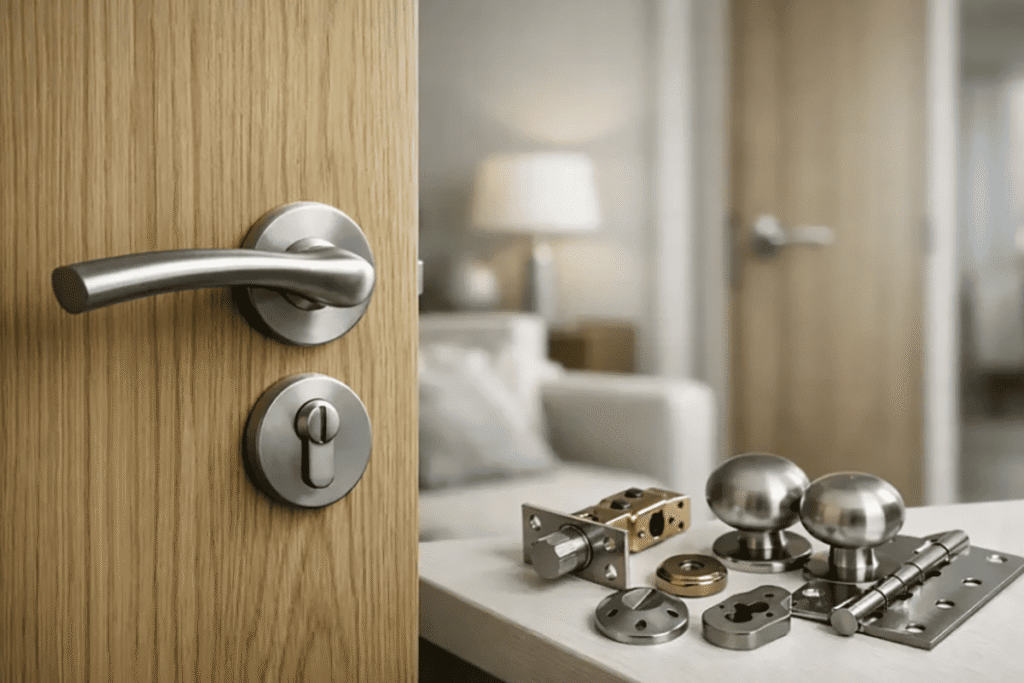
Are Door Handles and Door Knobs Interchangeable?
Door handles and door knobs look similar at a distance, but the wrong assumption can create a costly procurement problem. If the holes, screws, latch case, spindle, or lock body do not match, installation slows down and finished doors may need rework. I usually solve this by checking the lock type, drilling pattern, and hardware standard before confirming any replacement.
Door handles and door knobs are not always interchangeable. Some lever handles and knobs can replace each other only when the door preparation, backset, latch type, spindle size, fixing screw positions, and lock standard match. In many cases, especially between split lever handle locks and ball-type knob locks, the screw holes and lock holes do not align, so they cannot be swapped directly.
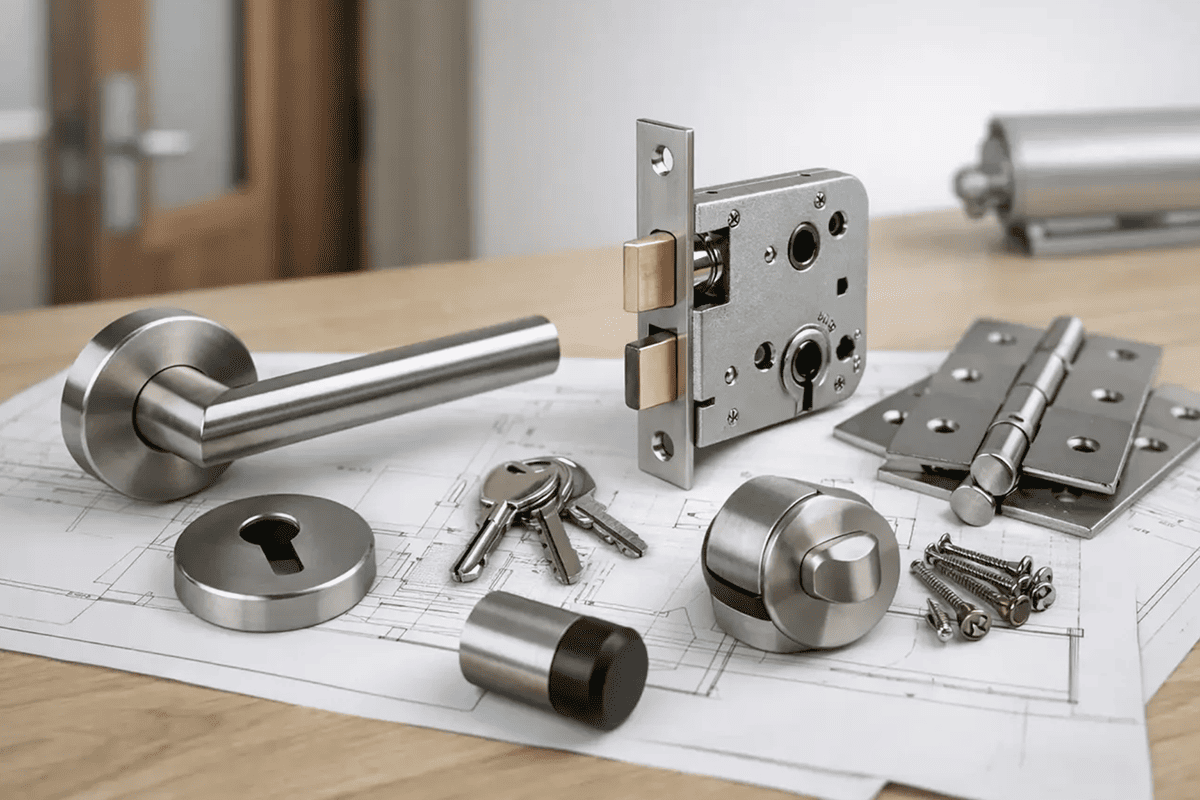
I have seen buyers focus on the visible shape first. That is natural, because handles and knobs are the parts users touch. However, the real compatibility test sits inside the door. The sections below explain what I check before I treat any handle or knob as interchangeable.
Are Door Handles and Door Knobs Interchangeable in Standard Door Preparations?
A door may look ready for any hardware, but the drilled holes decide what can actually fit. If I ignore the preparation, the replacement hardware may cover the wrong area, miss the latch centerline, or leave exposed holes. This creates extra labor and a poor finished appearance.
Door handles and door knobs are interchangeable only when the door preparation matches the new hardware set.1 I check the bore diameter, backset, latch faceplate, through-bolt position, spindle size, and lock body type. If these points do not match, I treat the handle and knob as non-interchangeable.
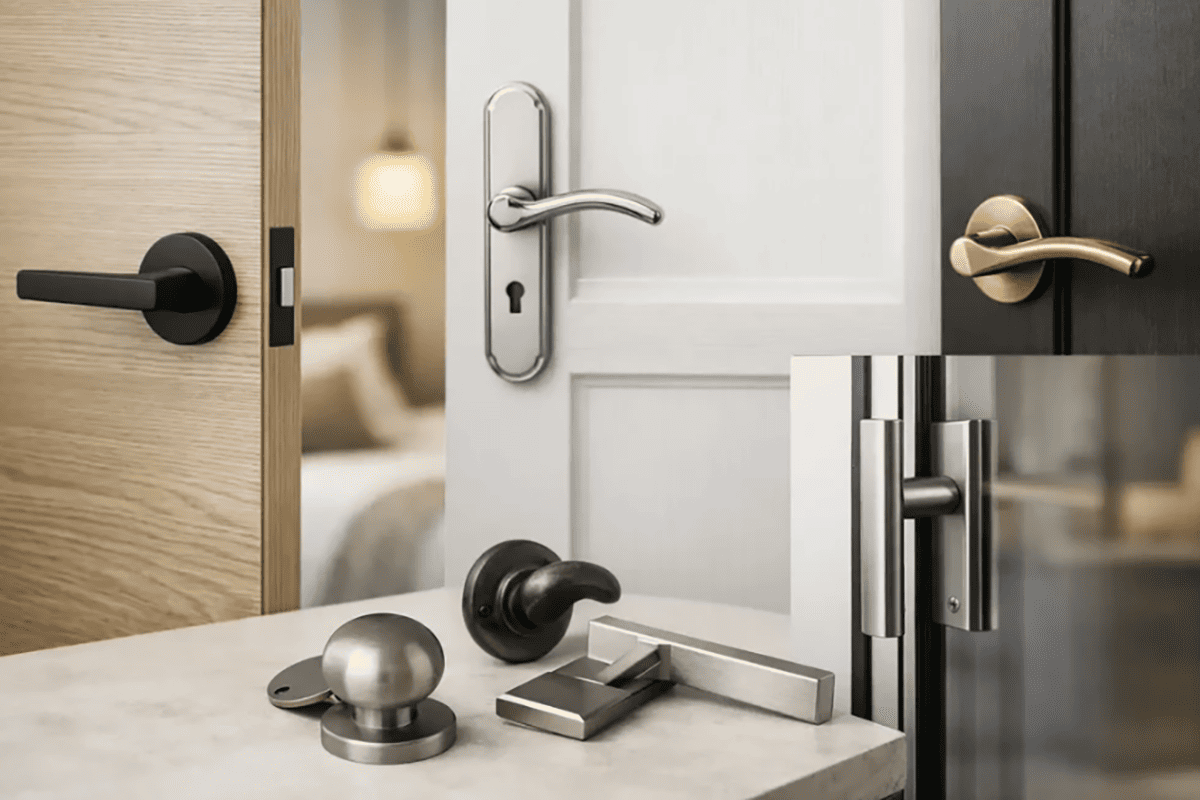
The door preparation is the first compatibility filter
When I evaluate a replacement, I start with the door, not the product photo. A door can be prepared for a tubular latch, a cylindrical lock, a mortise lock, or a European mortise lock case. These systems use different cutouts and fixing methods.
A common residential knob set often uses a round bore through the door.2 A lever handle for a Euro mortise lock usually uses a spindle hole, key cylinder cutout, and screw holes arranged around a lock case.3 These two systems are very different.
I often use this simple checklist:
Measure the backset
The backset is the distance from the door edge to the center of the spindle or knob.4 Common values include 60 mm, 70 mm, and European project-specific dimensions.5Check the bore or cutout shape
Knob locks often use a large round bore. Mortise lever sets need a rectangular mortise pocket inside the door edge.Confirm the latch or lock case type
A tubular latch, cylindrical lock, and Euro mortise lock are not the same product family.Compare fixing screw positions
The screws must align with the lock body, mounting posts, or rose plate.Check the spindle size and shape
Lever handles commonly use square spindles, such as 8 mm in many European applications.6 Other regions may differ.
Why the visible style can mislead buyers
A lever on a rose and a knob on a rose may appear easy to exchange. However, the internal mounting layout may be completely different. I tell customers that the rose diameter only answers one question: “Can this cover the old marks?” It does not prove mechanical compatibility.
Here is a practical comparison:
| Compatibility Point | Lever Handle Set | Ball-Type Knob Lock | Why It Matters |
|---|---|---|---|
| Main door hole | Often spindle and cylinder holes | Often larger round bore | Wrong hole shape prevents installation |
| Screw position | Depends on rose, escutcheon, or lock case | Often set by knob chassis | Holes may not align |
| Lock body | Often mortise lock case | Often cylindrical or tubular lock | Internal mechanism differs |
| Spindle | Usually square spindle | May use integrated spindle/chassis | Operation may fail |
| Replacement ease | Good within same standard | Good within same standard | Poor across different standards |
For B2B buyers, this matters because one wrong assumption can affect hundreds or thousands of doors. In factory-direct sourcing, I prefer to confirm samples, drawings, and door preparation details before mass production. At SDH Hardware, our team can provide product drawings after order confirmation, and buyers should still verify those drawings against their door design and local standard requirements.
My practical rule is simple: if the internal lock type changes, I do not call the product interchangeable until I confirm every hole and fixing point.
Why Are Door Handles and Door Knobs Not Always Interchangeable?
A small mismatch can stop the whole installation. The hardware may arrive on time, the finish may be correct, and the packaging may look good. Still, if the screw holes or lock holes are wrong, the installer cannot make the product fit without drilling, filling, or replacing the door.
Door handles and door knobs are not always interchangeable because they often use different lock mechanisms, hole patterns, fixing screws, and spindle systems. Ordinary split lever handle locks and ball-type knob locks usually do not share the same hole and screw positions, so they cannot be matched or exchanged directly.
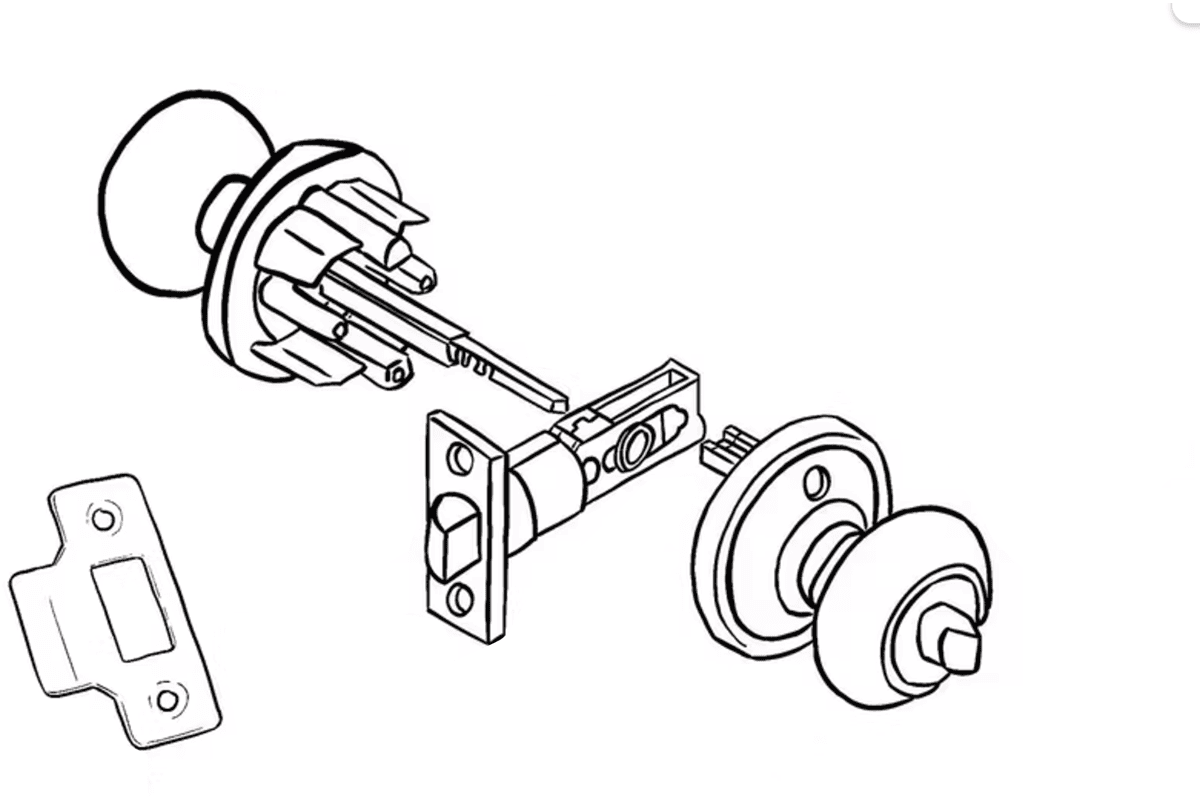
Split lever handle locks and ball-type knob locks are often different systems
The additional requirement you gave is important: 一般普通分体执手锁和球形锁孔螺丝孔位置和球形锁对不上,不匹配不能互换. In plain English, I would explain it this way:
Ordinary split lever handle locks and ball-type knob locks usually have different lock holes and screw hole positions. The holes do not line up with the knob lock structure, so they are not matching products and cannot be interchanged directly.
This is one of the most common mistakes in replacement discussions. A buyer may say, “I only want to change from a knob to a handle.” That sounds simple. But the installer may find several problems:
- The main lock hole does not match the new trim.
- The through screws land in the wrong place.
- The rose plate does not cover the existing bore.
- The latch centerline is not aligned with the handle spindle.
- The door edge preparation does not fit the new lock case.
- The key cylinder position differs from the old hardware.
The lock mechanism controls the hardware layout
A ball-type knob lock commonly integrates the operating mechanism into the knob chassis.7 A lever handle for a mortise lock relies on a separate lock body installed into the door edge.8 This means the handle is not just a different grip shape. It belongs to a different mechanical architecture.
I usually divide hardware replacement into three levels:
| Replacement Level | Example | Risk Level | My Evaluation Method |
|---|---|---|---|
| Same model replacement | Old lever set to new lever set from same standard | Low | Confirm finish, handing, and function |
| Same system replacement | One lever set to another lever set using same lock case | Medium | Compare drawings and screw centers |
| Cross-system replacement | Knob lock to split lever mortise lock | High | Check door machining and likely modification |
Cross-system replacement is where most problems appear. If the door was originally drilled for a ball-type knob lock, I do not assume a split lever set will fit. I ask for photos, measurements, and door edge details. For bulk orders, I prefer a physical sample test before the buyer confirms mass quantity.
Aesthetic coverage is not mechanical compatibility
Some buyers ask if a larger rose or backplate can cover the old holes. Sometimes it can. However, coverage does not solve all issues. The lock still needs correct alignment. The latch must retract smoothly. The spindle must engage the follower. The screws must fasten into stable material.
If the new plate only hides damage but the mechanism is forced into place, the door may pass a quick visual inspection but fail during use. In a hotel, apartment, school, office, or commercial building, that kind of failure creates maintenance complaints.
For procurement teams, I recommend this documentation package before approving a change:
- Product drawing with screw center distances
- Door preparation drawing
- Lock case or latch specification
- Backset and center distance
- Door thickness range
- Spindle size
- Finish sample or approved color reference
- Function requirement, such as passage, privacy, entrance, classroom, or fire-rated door use
At SDH Hardware, I view these details as part of professional supplier communication. Our role as a manufacturer is to support the buyer with technical details, but the buyer should verify final compatibility with the door factory, project engineer, or qualified installer.
How Can I Check Whether Door Handles and Door Knobs Will Fit?
Guesswork creates rework. If I only compare catalog photos, I may miss the one dimension that controls the whole installation. A better process is simple and repeatable. I measure the old door preparation, compare it with the new hardware drawing, and confirm a sample before bulk production.
I can check whether door handles and door knobs will fit by measuring the backset, bore size, door thickness, screw centers, latch faceplate, spindle size, and lock case type. I also compare technical drawings and test one complete set on a prepared door before approving a large order.
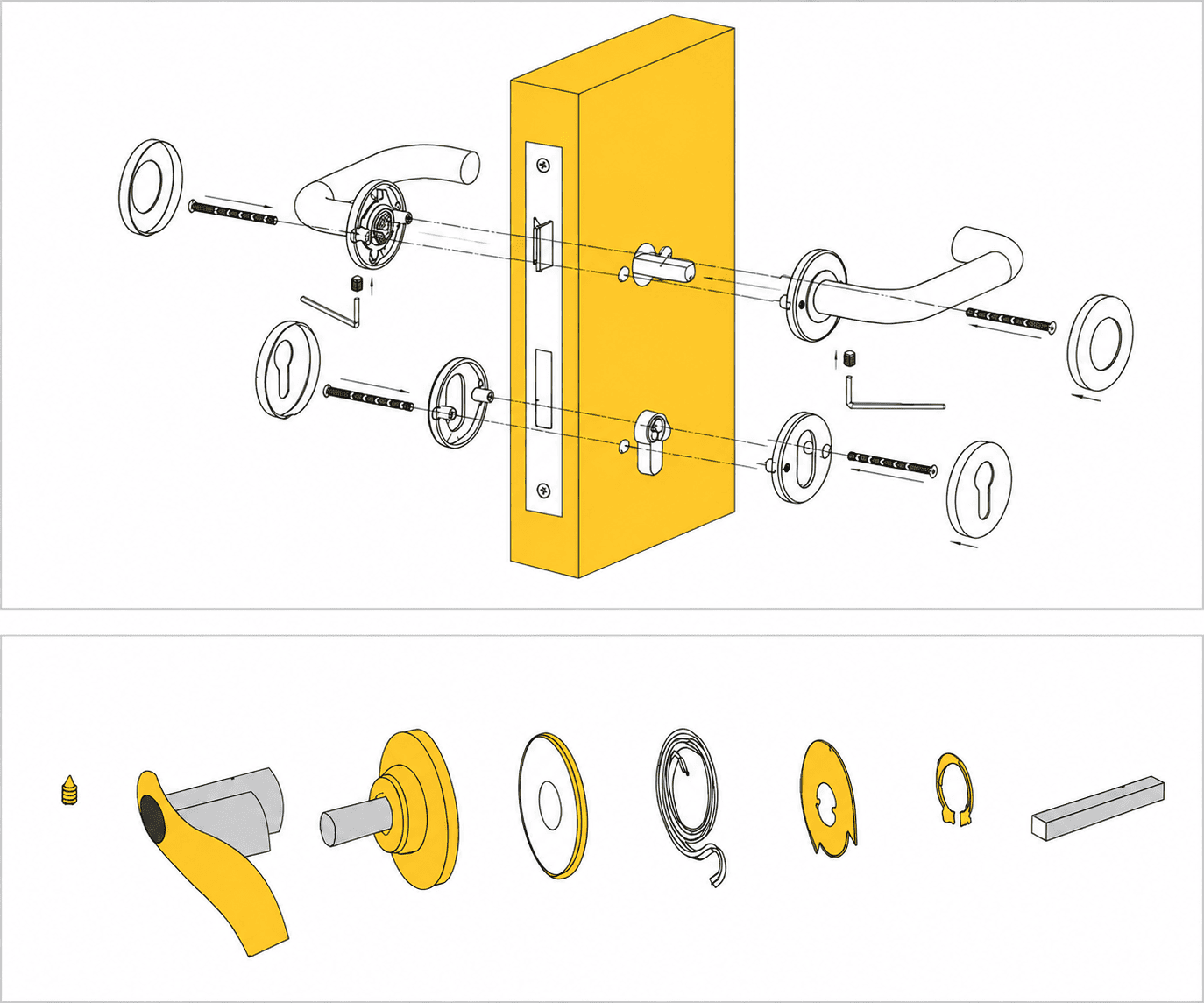
My field checklist for compatibility
When I receive a compatibility question, I usually ask for a few photos and measurements first. A front photo is not enough. I need the door face, door edge, old lock removed if possible, and close-ups of the screw holes.
Here is the checklist I use:
| Item to Measure | What I Look For | Common Risk |
|---|---|---|
| Door thickness | Usually measured in mm | Hardware may not clamp correctly |
| Backset | Door edge to spindle center | Latch may not align |
| Bore diameter | Large round hole or small spindle hole | Rose may not cover or fit |
| Screw center distance | Center-to-center spacing | Fixing screws may miss |
| Latch faceplate size | Length, width, corner radius | Door edge recess may not match |
| Spindle size | Square spindle dimension | Handle may feel loose or fail |
| Lock case type | Mortise, tubular, cylindrical | Product family may be wrong |
| Cylinder hole | Euro profile, oval, round, or none | Key function may not match |
I always separate “can install” from “should specify”
A product may be physically installable after door modification. That does not mean it is the right specification. In B2B procurement, I separate two questions:
Can the installer make it fit?
The installer may drill new holes, use cover plates, or change the latch.Should the buyer specify it for a project?
The project may need clean installation, repeatability, warranty support, fire-rated documents, or compliance with local standards.
For example, if a door factory is producing 5,000 doors for a regional distributor, I do not recommend solving mismatch problems one door at a time. I recommend matching the door machining to the selected hardware system from the beginning.
Sample approval reduces mass-order risk
For OEM and ODM orders, I prefer a controlled approval process. It may feel slower at the start, but it protects the buyer later.
A practical process looks like this:
Confirm the market standard
I ask whether the buyer needs European-style mortise locks, Middle East market specifications, Southeast Asia common sizes, or a custom standard.Confirm the function
I check whether the door needs passage, privacy, entrance, bathroom, classroom, storeroom, or fire-rated hardware.Review drawings
I compare dimensions before tooling, production, or packaging approval.Produce or send samples
I recommend testing samples on actual or simulated doors.Inspect finished products
I support inspection after order completion, especially for screw positions, finish, function, and packaging.Keep records
I keep approved drawings, finish codes, and product references for repeat orders.
At SDH Hardware, our product range includes Euro mortise locks, stainless steel lever handles, butt hinges, concealed hinges, Euro brass cylinders, and door accessories. This matters because a buyer often needs a complete door hardware package, not just one visible part. However, I still recommend professional evaluation for application-specific decisions, especially for fire-rated doors, public buildings, or regulated projects. Certificates such as CE or fire-rated documentation should always be requested and verified against the exact product and intended use.9
When Should I Choose Door Handles Instead of Door Knobs?
A knob may look compact, but it may not be the best choice for every project. If users need easier operation, stronger design consistency, or compatibility with European mortise locks, lever handles may be more practical. Still, I avoid one-size-fits-all advice because every project has its own door, market, and standard.
I choose door handles instead of door knobs when the project needs easier grip operation, modern styling, mortise lock compatibility, accessibility-friendly use, or coordinated architectural hardware. I choose knobs when the market expects them and the door preparation is already designed for cylindrical or tubular knob locks.
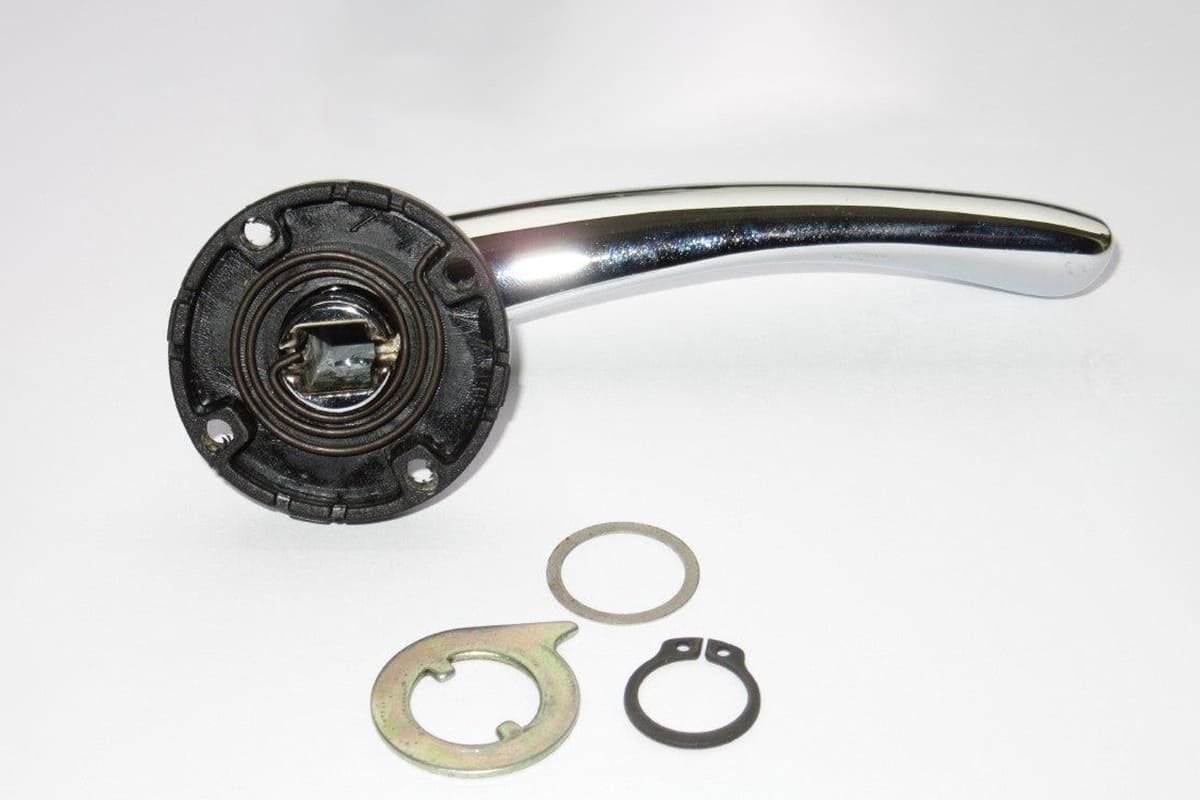
Door handles often support easier operation
Lever handles are easier for many users to operate because the hand pushes down rather than twists.10 This can matter in apartments, offices, hotels, hospitals, and public facilities. I avoid making legal accessibility claims without checking local regulations, but I can say that many project buyers prefer lever handles when ease of operation is a priority.
Lever handles also fit well with Euro mortise lock systems. These systems can support multiple functions, including:
- Passage doors
- Privacy doors
- Entrance doors
- Fire-rated door assemblies
- Cylinder-operated doors
- Project-specific locking functions
Door knobs still have a place
Door knobs are not “bad” hardware. They are common in many markets and can be economical, familiar, and suitable for residential or light commercial applications. In some regions, wholesalers sell large quantities of knob locks because local doors are prepared for them.
The problem begins when a buyer wants to replace knobs with lever handles without checking the door. If the old door uses a ball-type knob lock, then a split lever handle lock will probably not line up. The mismatch can affect the installation time and final look.
Selection factors for B2B buyers
When I help buyers think through a specification, I usually compare the following points:
| Decision Factor | Door Handles | Door Knobs |
|---|---|---|
| User operation | Usually easier to push down | Requires twisting |
| Common lock system | Mortise or tubular lever systems | Cylindrical or tubular knob systems |
| Design impression | Modern, architectural, project-oriented | Traditional, compact |
| Replacement flexibility | Good within same lever/mortise standard | Good within same knob standard |
| Cross-compatibility | Not guaranteed | Not guaranteed |
| Bulk project use | Strong for coordinated hardware packages | Strong where knob locks are standard |
I match the hardware to the channel
A door factory may prioritize repeatable machining and assembly speed. A hardware brand may prioritize surface finish, packaging, logo, and stable supply. A wholesaler may prioritize common sizes, fast-moving models, and market familiarity.
That is why I do not recommend choosing door handles or knobs only by appearance. I recommend choosing by channel need:
- Door manufacturers should align hardware with door production drawings.
- Hardware brands should confirm standards, finishes, and packaging before launch.
- Bulk wholesalers should match local installer habits and replacement demand.
- Project suppliers should verify compliance documents and application requirements.
SDH Hardware supports OEM and ODM orders, custom surface treatments, logo stamping or laser marking, custom color packaging, and product inspection after order completion. These services are useful only when the base specification is correct. A beautiful handle in the wrong drilling pattern is still the wrong product.
What Should Buyers Ask Suppliers Before Replacing Door Handles and Door Knobs?
A supplier may offer a similar-looking product, but similarity is not enough. If I do not ask technical questions early, I may discover the mismatch after shipping. That is the worst time to learn that the screw centers, lock case, or door thickness range are wrong.
Before replacing door handles and door knobs, buyers should ask suppliers for technical drawings, screw hole positions, backset options, lock case details, spindle size, door thickness range, finish specifications, certification documents, and sample availability. I also recommend installation testing before placing bulk orders.
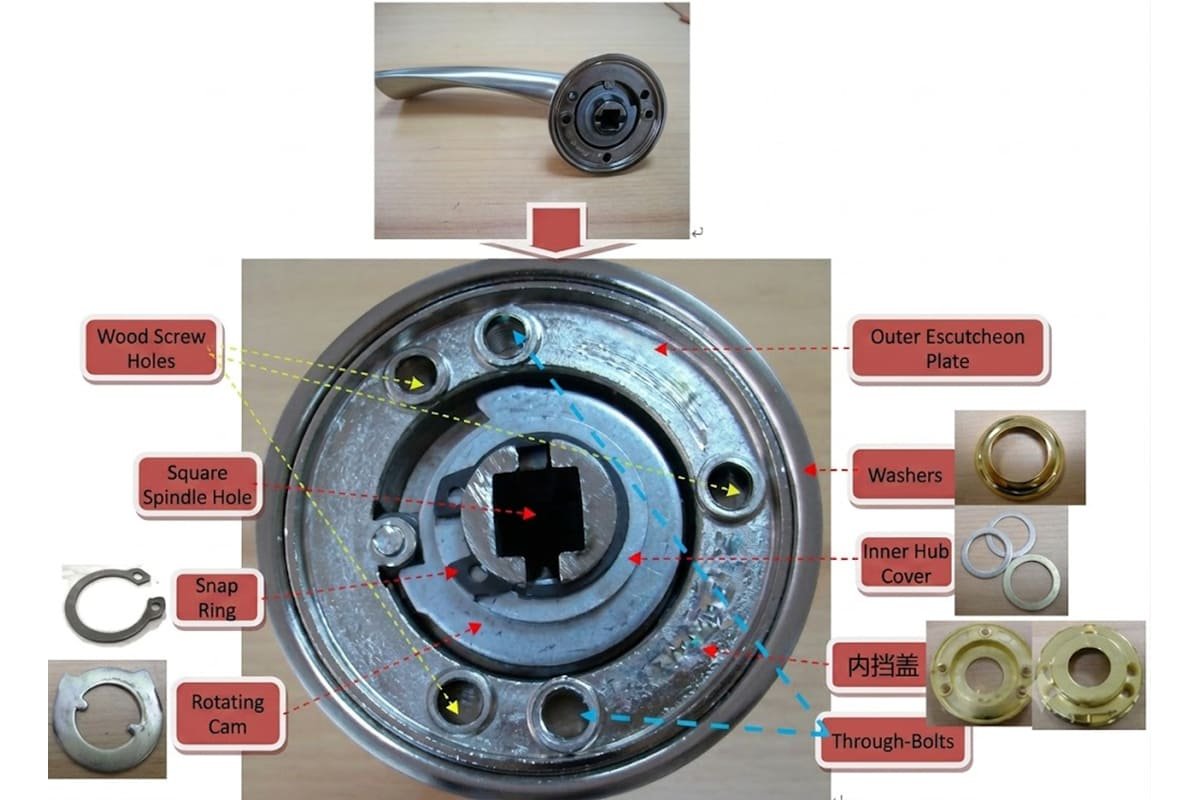
Supplier evaluation should be technical, not only commercial
Price matters, but door hardware is not only a price item. Poor compatibility can erase any saving. I have learned to ask technical questions first and commercial questions second.
Here are supplier questions I recommend:
Can you provide a dimensioned drawing?
I need screw centers, spindle location, rose or plate size, and lock case dimensions.Which door preparation does this product require?
I need to know whether it fits tubular, cylindrical, mortise, or Euro mortise preparation.What is the door thickness range?
A product that fits 35–45 mm doors may not fit thicker commercial doors.What backset options are available?
Backset mismatch causes latch alignment problems.Can the product replace a ball-type knob lock directly?
I expect the supplier to answer carefully. In many cases, the answer is no.Can you provide samples before mass production?
A sample is valuable for testing fit, function, finish, and packaging.What certificates are available for this exact item?
I ask for CE, fire-rated, or other documents only when they apply to the specific product and use case.
Manufacturing quality control matters
For a buyer, consistent dimensions are as important as the first approved sample. If screw holes drift during production, the product may pass a visual inspection but fail on the assembly line.
A good supplier should control:
- Raw material inspection
- Stamping, machining, or casting dimensions
- Surface treatment consistency
- Spindle and spring function
- Lock body operation
- Screw and accessory packing
- Final inspection before shipment
At SDH Hardware, our factory operates complete production lines and uses testing equipment across function research, frame detection, and final product testing. I present this as our business context, and I still encourage buyers to verify factory capability, product samples, inspection reports, and certification documents before confirming a project.
A clear specification protects both sides
A good purchase order should not only say “door handle” or “door knob.” It should define the system. For example:
| Specification Field | Example Entry |
|---|---|
| Product type | Stainless steel lever handle on rose |
| Lock type | Euro mortise lock |
| Backset | 55 mm or project-specific |
| Center distance | 72 mm, 85 mm, or required standard |
| Door thickness | 40–45 mm |
| Finish | Satin stainless steel or custom finish |
| Function | Privacy, passage, entrance, etc. |
| Certification | CE or fire-rated document to be verified |
| Branding | Laser logo or custom packaging |
| Inspection | Finished product inspection before shipment |
This level of detail helps prevent misunderstandings. It also supports repeat orders because the buyer and supplier can refer to approved drawings and samples. In my experience, this is the difference between a one-time transaction and a stable B2B supply relationship.
Frequently Asked Questions
Can I replace a door knob with a lever handle?
You can replace a door knob with a lever handle only if the door preparation and lock mechanism match. Many knob locks use different holes and screw positions from split lever handle locks. I recommend measuring the door and comparing technical drawings before buying.
Are lever handles easier to install than door knobs?
Lever handles are not always easier to install. Installation depends on the lock type and door preparation. A lever handle designed for a matching tubular latch may install easily, but a lever handle for a Euro mortise lock needs the correct mortise cutout and screw positions.
Do door handles and door knobs use the same latch?
Some tubular lever sets and knob sets may use similar latches, but many systems do not. Cylindrical knob locks, tubular latches, and mortise lock cases can differ greatly. I always check the latch type, backset, faceplate, and spindle operation before assuming compatibility.
Will a larger rose plate cover old knob holes?
A larger rose plate may cover old marks or holes, but it does not guarantee mechanical fit. The spindle, latch, screw centers, and lock body still need to align. I treat cover plates as a cosmetic solution, not a complete compatibility solution.
Should I modify the door to make new hardware fit?
Door modification may work for small projects, but it can be risky for bulk orders or certified door assemblies. For fire-rated or regulated doors, I recommend qualified professional evaluation.11 The safest option is to match hardware to the approved door preparation whenever possible.
Conclusion
Door handles and door knobs are not automatically interchangeable. I always check the lock system, door preparation, backset, bore size, screw holes, spindle, and latch before I recommend any replacement. This is especially important because ordinary split lever handle locks and ball-type knob locks often do not align and cannot be exchanged directly. If you are sourcing architectural door hardware for a project, brand, or wholesale channel, contact SDH Hardware with your drawings, target market, and required specifications. I can help you review the right factory-direct solution before production.
"ANSI/BHMA Standards", https://buildershardware.com/ANSI-BHMA-Standards. ANSI/BHMA door-hardware standards describe lockset preparation in terms of dimensions such as bore, backset, latch, and mounting locations, supporting the view that interchangeability depends on matching the door preparation. Evidence role: general_support; source type: institution. Supports: The source should show that locksets are designed around defined door-preparation dimensions such as bore, backset, latch, and mounting locations.. Scope note: The standards provide dimensional context and do not prove compatibility for every proprietary handle or knob model. ↩
"What is Standard Door Preparation", https://www.directdoorhardware.com/standard-door-preparation.htm?srsltid=AYCX9vJ4vzI2g9e0ZUJZRBdKCA5Py9kFXYtLUMoQREzWozEnhVGWbBTe. Door-preparation standards for bored or cylindrical locksets specify a round face bore through the door, supporting the article’s statement that common knob sets often use this type of preparation. Evidence role: general_support; source type: institution. Supports: The source should show that common cylindrical or bored locksets use a round through-bore in the door face.. Scope note: The support is strongest for bored and cylindrical knob locksets and does not apply to all knob designs worldwide. ↩
"Euro Mortise Lock Bolt Through Fixings | TOPTEK", https://toptekaccess.com/euro-mortise-lock-bolt-through-fixings/. European mortise-lock references describe a lock case installed in the door edge with separate spindle and cylinder positions, supporting the article’s description of Euro mortise lever preparation. Evidence role: mechanism; source type: institution. Supports: The source should describe the components and door preparation associated with European mortise lock cases and lever furniture.. Scope note: The source would provide system-level support; exact screw locations remain product-specific. ↩
"Lockset", https://en.wikipedia.org/wiki/Lockset. Door-hardware glossaries define backset as the distance from the edge of the door to the centerline of the lockset or bore, which supports the article’s use of the term. Evidence role: definition; source type: encyclopedia. Supports: The source should define backset as the distance from the door edge to the centerline of the lock or bore.. ↩
"Adjustable Tubular Door Latch – Fits 60mm (2-3/8") or ...", https://www.amazon.com/Mortice-Adjustable-Passage-Tubular-Internal/dp/B0F2YKNQXC. Architectural hardware references and lock standards list metric backset options, including values around 60 mm and 70 mm, supporting the claim that these are common project dimensions. Evidence role: general_support; source type: institution. Supports: The source should document commonly used metric backset dimensions for door locks or mortise locks.. Scope note: Backset availability varies by region, product family, and manufacturer, so the source would support common usage rather than universal availability. ↩
"DIN EN 1906 - HOPPE | United States & Canada", https://www.hoppe.com/us-us/door-handles/standards-and-solutions-door-handles/din-en-1906/. European lever-handle standards and technical references identify square spindles, commonly including 8 mm dimensions, as part of lever furniture specifications. Evidence role: general_support; source type: institution. Supports: The source should identify square spindles, especially 8 mm square spindles, as a common specification for lever furniture in European-style door hardware.. Scope note: Regional markets and specialist products may use other spindle sizes, so the evidence supports common practice rather than a universal rule. ↩
"Parts of a Lock", https://laforceinc.com/blog/parts-of-a-lock/. Architectural-hardware training materials describe cylindrical knob locksets as using a chassis mechanism within the lockset assembly, supporting the article’s explanation of why knob locks differ mechanically from separate mortise lever systems. Evidence role: mechanism; source type: education. Supports: The source should explain that cylindrical or knob locksets use a chassis mechanism associated with the knob assembly.. Scope note: The support is contextual and may not describe every ball-type knob product design. ↩
"Door handle", https://en.wikipedia.org/wiki/Door_handle. References on mortise locks define them as lock bodies fitted into a pocket cut into the door edge, supporting the article’s distinction between mortise lever sets and knob lock chassis systems. Evidence role: definition; source type: encyclopedia. Supports: The source should define a mortise lock as a lock body fitted into a mortise cut into the door edge.. ↩
"CE marking", https://en.wikipedia.org/wiki/CE_marking. European Commission guidance on CE marking explains that conformity documentation is linked to the specific product and its intended use, supporting the article’s warning that certificates should be checked against the exact item and application. Evidence role: general_support; source type: government. Supports: The source should explain that CE marking or construction-product declarations relate to specific products and intended uses.. Scope note: This supports the general verification principle; fire-rated documentation may also depend on separate national, laboratory, or assembly-specific rules. ↩
"Chapter 4: Entrances, Doors, and Gates", https://www.access-board.gov/ada/guides/chapter-4-entrances-doors-and-gates/. The ADA Standards for Accessible Design require operable door hardware to be usable with one hand without tight grasping, pinching, or twisting of the wrist, providing accessibility context for the claim that lever handles are easier for many users. Evidence role: expert_consensus; source type: government. Supports: The source should show that accessible door hardware should be operable without tight grasping, pinching, or twisting of the wrist, which favors lever-type operation over knobs.. Scope note: The standard supports the accessibility rationale but does not measure user effort for every lever or knob design. ↩
"Fire Doors and NFPA 80 FAQs", https://www.nfpa.org/news-blogs-and-articles/blogs/2025/04/11/fire-doors-faqs. Fire-door standards such as NFPA 80 treat doors, frames, and hardware as part of a rated assembly and restrict unapproved field modifications, supporting the need for qualified evaluation when replacing hardware on fire-rated doors. Evidence role: expert_consensus; source type: institution. Supports: The source should state that fire-door assemblies and their hardware are regulated and that field modifications or hardware changes can require inspection, listing compliance, or approval.. Scope note: Requirements vary by jurisdiction and listing, so the source provides compliance context rather than a project-specific determination. ↩
