
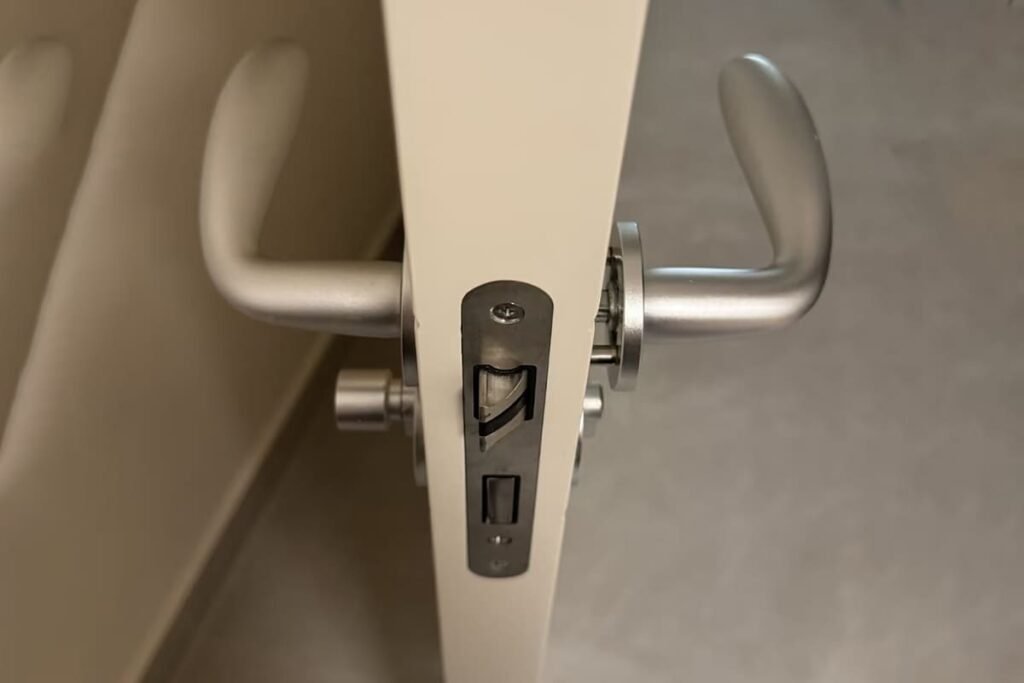
Will the Lever Hit the Wall? Door Handle Clearance and Door Stops
Door handle clearance becomes a real procurement problem when a selected lever looks correct on the drawing but strikes the wall after installation. That contact can damage the wall, mark the handle finish, and stress the hinge system. I usually solve this by checking the full hardware combination before production or bulk ordering.
Door handle clearance depends on handle projection, hinge position, door thickness, opening angle, wall distance, and the stopping method. The best solution is not simply choosing a shorter lever. Door factories should confirm whether the door needs a basic bumper, a positioning door holder, or a secondary protective sleeve before procurement.
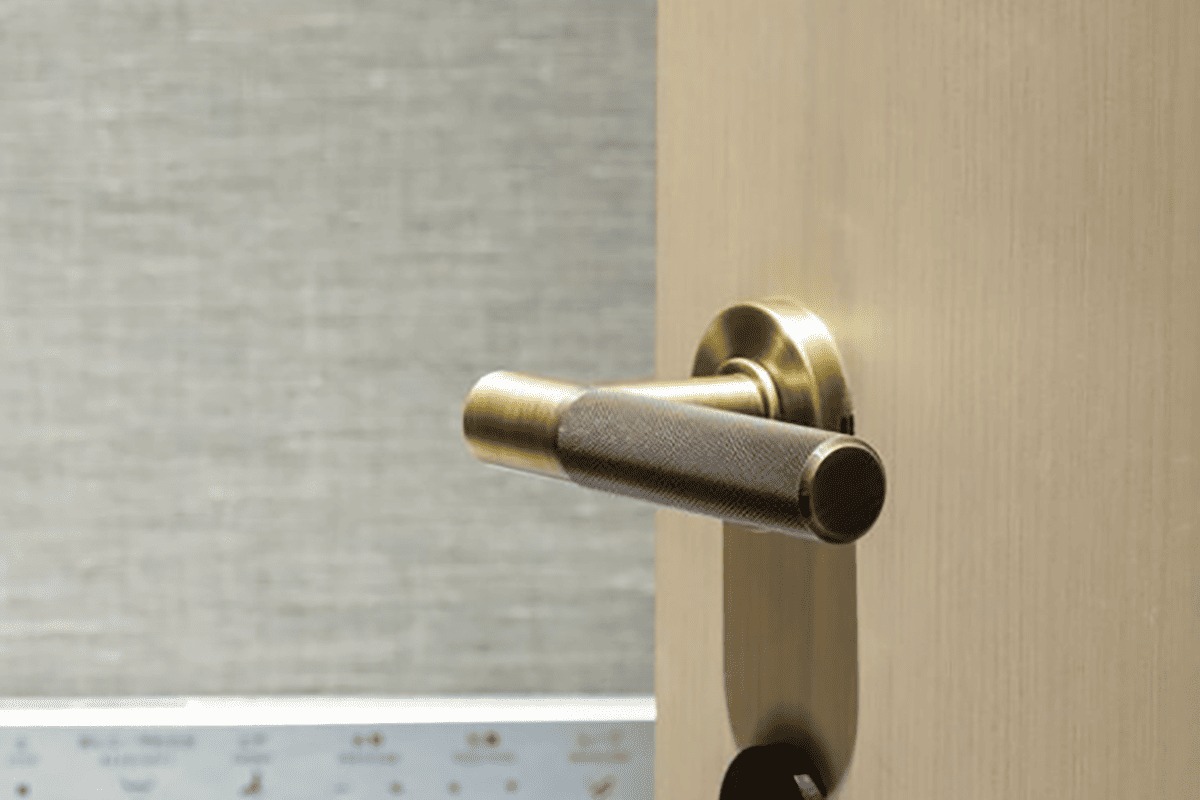
Many door factories ask me the same question during pre-sales discussion: “Will this lever hit the wall?” I always treat that question as the start of a matching process, not a yes-or-no answer. The sections below explain how I evaluate clearance, door stops, and protection accessories for project orders.
Why Is Door Handle Clearance Not Decided by Lever Length Alone?
Door handle clearance can look simple at first, but it becomes more complicated when the door opens in the real site condition. A buyer may compare two lever lengths and assume the shorter one is safer. That assumption can create problems if the door opens too far or has no controlled stopping point.
Door handle clearance is not decided by lever length alone because the lever’s projection, rose size, hinge position, door thickness, opening angle, wall distance, and door stop location1 all affect whether the handle becomes the first contact point. The complete door hardware layout matters more than one dimension.

The full geometry matters
When I discuss lever handle matching with door manufacturers, I first separate lever length from handle projection. Lever length usually refers to how far the handle extends sideways across the door face. Projection refers to how far the handle stands away from the door surface. Wall contact often depends more on projection and door swing geometry than on total lever length.2
A door can have a moderate lever length and still hit the wall if:
- The door opens close to 180 degrees.
- The wall return is close to the hinge side.
- The handle projection is high.
- The hinge position creates a wider swing path.
- There is no stopper to control the final opening point.
- The installer places the stop too late in the swing path.
In our SDH Hardware order discussions, I often see buyers send a lever drawing and ask whether the model is “safe.” I can review the product projection and suggest suitable accessories, but the final answer must include the door factory’s site dimensions or project drawings.
Key dimensions to check before ordering
I recommend that door factories confirm these items before they finalize a lever handle and accessory set:
| Item to Check | Why It Matters | Who Should Confirm It |
|---|---|---|
| Handle projection | A deeper lever reaches the wall sooner | Hardware supplier and door factory |
| Door thickness | It affects hinge selection and swing behavior | Door factory |
| Hinge type and position | It changes the pivot point and opening arc | Door factory and installer |
| Opening angle | A wider opening increases contact risk | Project team or installer |
| Wall distance from door leaf | It defines the available clearance | Site team |
| Door stop type | It controls the final contact point | Door factory and hardware supplier |
| Wall finish condition | Fragile finishes need better protection | Project team |
Why I avoid one universal clearance number
I do not give one universal clearance number for every door and lever. That would not be responsible. A hotel room door, apartment entrance door, hospital corridor door, and commercial office door can all use different lever projections, hinge systems, wall finishes, and opening expectations.
Instead, I prefer a simple selection logic:
- Confirm the handle projection.
- Confirm the expected door opening angle.
- Check where the wall or furniture is located.
- Choose the stopping method before installation.
- Use protective accessories only as support, not as the main control method.
This approach gives door factories better control during procurement. It also helps avoid late changes after the handles have already been branded, packed, or delivered to the project site.
How Does a Door Stop Improve Door Handle Clearance?
Door handle clearance becomes easier to manage when the door has a defined endpoint. Without a stop, the lever may become the first object to touch the wall. That creates repeated impact. Over time, the finish, wall surface, lock alignment, and hinge system may all suffer unnecessary stress.
A door stop improves door handle clearance by creating a controlled stopping point before the lever touches the wall.3 A properly selected and positioned door stop or door holder keeps the handle away from direct impact and helps reduce shock when the door is opened forcefully.4
A stop controls the endpoint
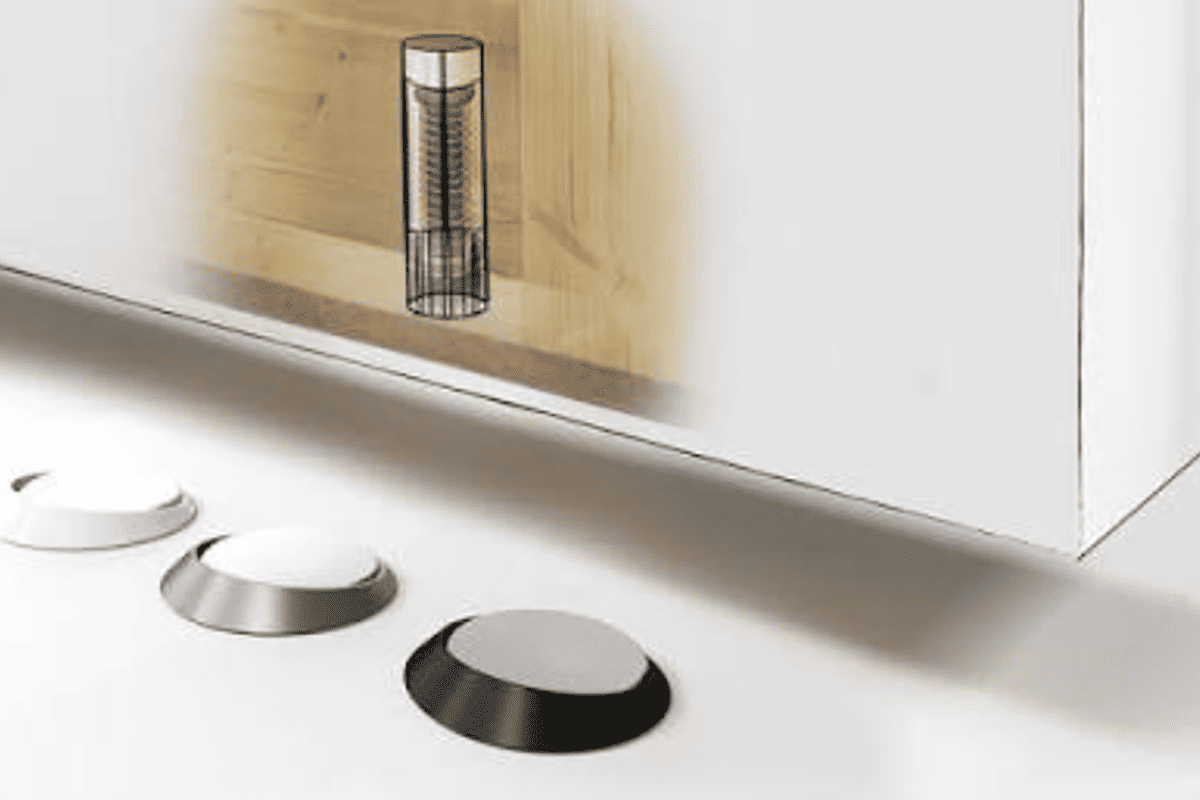
The main function of a stop is not decorative. Its job is to decide where the door stops moving. That endpoint is central to clearance planning.
In B2B hardware supply, I usually explain three protection levels:
| Protection Method | Main Function | Clearance Control | Best Use Case |
|---|---|---|---|
| Basic door bumper | Cushions impact at one point | Limited | Simple rooms with low traffic |
| Door holder / door stop with positioning | Stops and may hold the door | Stronger | Projects needing controlled opening |
| Rubber or plastic sleeve on handle | Protects contact surface | No real angle control | Secondary protection only |
A basic bumper can reduce damage if the door opens into a wall. However, it may not always control the door position well, especially if the door is opened with force. A door holder or positioning door stop usually gives stronger control because it keeps the lever from becoming the first contact point.
Why door holders are often the strongest option
A door holder or door stop with a positioning function can do two useful things:
- It positions the door at the selected opening angle.
- It prevents the handle from being the impact point.
This matters for door factories that supply complete door sets to projects. If the lever hits the wall during daily use, the customer may blame the handle, the hinge, or the door manufacturer. In many cases, the root issue is that the door opening endpoint was not controlled.
I have seen this during project communication. A customer may send a photo of a lever almost touching a wall and ask for a shorter handle. Sometimes a shorter handle helps. But often, the better solution is to add or reposition the door stop so the door stops earlier.
Impact control and hinge protection
A door stop is not a cure for all hinge or installation problems. I do not present it that way. However, when it is properly selected and installed, it can help reduce sudden impact on the door leaf and hinge system.
Forceful opening can create repeated shock.5 That shock may affect:
- Hinge screws and fixing points6
- Door frame stability
- Lock alignment
- Handle spindle and spring components
- Wall finishes and skirting details
For engineering door manufacturers, this is why the hardware set should be evaluated as a system. A stainless steel lever handle, mortise lock, butt hinge, concealed hinge, cylinder, and door stop all need to work together.
At SDH Hardware, we manufacture and supply architectural door hardware for door factories and hardware brands. In pre-order discussion, I can help review product drawings, handle projection, accessory options, surface treatments, and packaging needs. Still, the final stop position should be confirmed by the door factory, installer, or project team based on the actual wall and floor condition.
Which Door Stop Type Is Better for Door Handle Clearance?
Door handle clearance problems often appear after a project has already selected the lever handle. At that stage, the buyer may look for a quick accessory. The risk is choosing a stop only by price or appearance, without checking whether it actually prevents the lever from reaching the wall.
The best door stop type for door handle clearance depends on the door weight, opening angle, floor or wall condition, traffic level7, and whether the project needs simple cushioning or door positioning. For many commercial and engineering doors, a positioning door holder is more reliable than a basic bumper.
Common door stop options
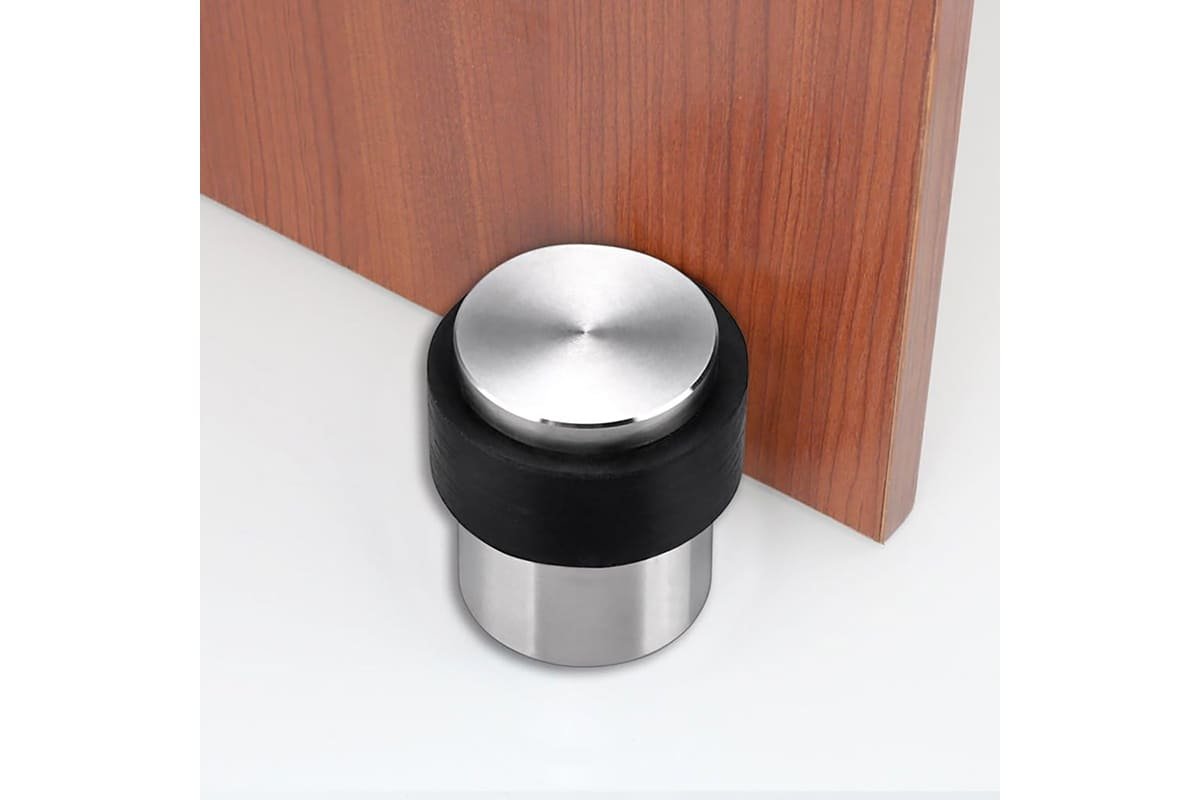
Door stops come in several practical forms. Each one has a different role in clearance planning.
| Door Stop Type | Main Advantage | Main Limitation | Typical Application |
|---|---|---|---|
| Floor-mounted stop | Strong stopping point, common in projects | Requires suitable floor fixing | Offices, apartments, public buildings |
| Wall-mounted bumper | Simple and economical | Wall must be strong and correctly located | Light-duty rooms |
| Magnetic door holder | Holds door open and controls position | Needs correct alignment and fixing | Hotel rooms, offices, residential units |
| Kick-down door holder | Flexible open/hold function | User-dependent, not always ideal for every project | Utility areas, back-of-house doors |
| Hinge pin stop | Easy for some retrofit use | Not suitable for all hinge and door loads | Light-duty interior doors |
| Handle bumper sleeve | Protects the handle surface | Does not stop or position the door | Secondary surface protection |
How I evaluate the better option
I usually ask five practical questions before I suggest a door stop:
How heavy is the door leaf?
A heavier door needs a more secure stopping method.8How often will the door be opened?
High-traffic doors need durable hardware and stronger fixing.What is behind the door?
A wall, glass panel, cabinet, skirting board, or fire equipment may change the stop position.Does the door need to stay open?
If yes, a holder may be better than a simple bumper.Can the floor or wall accept fixing?
Some floors, tiles, heating systems, and wall panels limit installation choices.9
Basic bumper vs. positioning door holder
A basic bumper is useful when the door only needs cushioning. It is usually economical and easy to understand. However, it may not provide the same level of control as a door holder, especially in commercial projects.
A positioning door holder gives more control because it can define the opening endpoint and, in some designs, hold the door open. That function helps keep the lever away from the wall and reduces repeated impact.
I usually tell door factories: “If the project concern is only surface marking, a bumper may be enough. If the concern is opening control, choose a stop or holder that positions the door.”
This distinction helps buyers avoid overbuying or under-protecting. A residential interior door may only need a simple stop. A hotel, school, apartment project, or office door may need a stronger hardware combination.
Do certifications matter for door stops?
For complete door hardware supply, buyers often ask about CE documents, fire-rated documents, and material specifications. At SDH Hardware, our core products are available with authoritative CE certification and fire-rated certification according to product category and project requirements. I recommend that buyers verify the actual certificates, test reports, product scope, and standard references before procurement.
For door stops and accessories, the buyer should also confirm:
- Material grade, such as stainless steel or zinc alloy
- Rubber quality and replaceability
- Fixing screw specification
- Surface finish matching with handles and hinges
- Packaging and branding requirements
- Drawing confirmation before mass production
This kind of pre-order check is especially important for OEM and ODM projects. Once a customer logo, custom color box, or special finish is confirmed, late dimensional changes become more expensive.
Can a Rubber Sleeve Solve Door Handle Clearance Problems?
Door handle clearance is sometimes treated as a surface protection issue. A buyer may ask whether a plastic or rubber sleeve on the lever can prevent damage if the handle touches the wall. This accessory can help in some situations, but it should not be misunderstood as a stopping solution.
A rubber or plastic sleeve can reduce direct surface damage when a lever contacts a wall, but it does not control the door’s opening angle.10 It should be used as a secondary protective measure, not as the main method for solving door handle clearance.
What a handle bumper sleeve can do
A protective sleeve or bumper on the lever can reduce scratches, dents, and finish marks. It creates a softer contact surface between the handle and the wall. This may be useful in retrofit situations or low-risk interior doors where the wall contact is occasional and light.
It can help protect:
- Painted wall surfaces
- Lever handle finishes
- Powder-coated surfaces
- Stainless steel satin finishes
- Nearby panels or furniture edges
However, the sleeve only works after contact happens. It does not prevent the door from opening too far. It also does not reduce all shock loads on the door leaf or hinges.11
What a sleeve cannot do
I avoid presenting the handle sleeve as equal to a door holder. It is not the same product category. A sleeve is a protective accessory. A door stop or holder is an opening control accessory.
A sleeve cannot reliably:
- Set the final door opening angle
- Hold the door in position
- Prevent the lever from reaching the wall
- Reduce all force transferred through the door
- Replace proper stop planning
- Correct poor hinge placement or wrong installation
This matters because buyers may choose the sleeve as a low-cost shortcut. That choice may reduce visible damage, but it does not solve the real clearance risk.
When a sleeve makes sense
A rubber or plastic handle sleeve can still be useful when it is selected for the right reason. I would consider it in these cases:
| Situation | Is Sleeve Useful? | Better Main Control |
|---|---|---|
| Minor occasional contact | Yes | Basic bumper or stop still preferred |
| Temporary protection during project handover | Yes | Final door stop planning |
| Low-traffic interior door | Sometimes | Simple stop |
| Heavy commercial door | Limited | Strong door holder or floor stop |
| Door must stay open | No, not enough | Positioning holder |
| Wall is fragile or expensive | Supportive only | Stop before contact |
In one pre-sales discussion, a door factory wanted a sleeve because the project had narrow wall returns. After checking the door swing expectation, we suggested using the sleeve only as backup and selecting a door holder as the primary control. That decision made more sense because the project needed repeatable opening control, not only surface cushioning.
Procurement note for factories
For door manufacturers, the main benefit of discussing this early is consistency. If the project needs sleeves, stops, holders, handles, hinges, and locks in matching finishes, the supplier can coordinate the full hardware set.
At SDH Hardware, we support standardized and customized door hardware orders, including stainless steel lever handles, mortise locks, hinges, cylinders, and door accessories. For OEM and ODM buyers, I prefer confirming all related accessories before final packaging design. This reduces mismatch risk and helps the buyer deliver a more complete door solution.
What Should Door Factories Confirm Before Ordering Door Hardware?
Door handle clearance should be checked before the purchase order, not after installation. Late discovery creates rework, site complaints, and accessory changes. Door factories can avoid many problems by confirming the opening endpoint and hardware combination during the order communication stage.
Door factories should confirm handle projection, door swing direction, door thickness, hinge type, opening angle, wall distance, wall or floor fixing condition, and required stopping method before ordering.12 This pre-order review helps match the lever handle, door stop, hinge, and protective accessories correctly.
A practical pre-order checklist
I recommend that door factories use a simple checklist before confirming a bulk hardware order.
| Confirmation Item | Why It Helps |
|---|---|
| Door leaf size and thickness | Supports lock, hinge, and handle matching |
| Door swing direction | Prevents wrong handing or accessory layout |
| Lever handle projection | Shows how far the handle extends from door face |
| Rose or backplate size | Affects appearance and lock compatibility |
| Hinge model and position | Changes swing geometry and load support |
| Opening angle requirement | Defines the needed stop position |
| Wall distance and wall finish | Shows contact risk and protection level |
| Floor condition | Determines whether floor stops are suitable |
| Door holder requirement | Confirms whether door must stay open |
| Certification documents | Helps buyers verify compliance scope |
| Finish and packaging | Supports brand and project consistency |
Why procurement teams should ask early
Door factories and engineering door manufacturers often work under tight project schedules. Once production begins, every change affects cost and delivery. A handle finish may already be polished, plated, packed, or laser-marked. A custom box may already be printed. A lock body may already be matched with a specific lever set.
Early confirmation helps avoid:
- Replacing handles after delivery
- Adding mismatched accessories at the last minute
- Installing stops in weak or unsuitable positions
- Creating wall damage during project handover
- Receiving complaints from contractors or end users
- Increasing after-sales communication
How I support buyers during selection
As a manufacturer, I can support product selection with drawings, specifications, product photos, finish options, and accessory suggestions. I can also help compare a basic bumper, door holder, and protective sleeve based on the buyer’s project description.
However, I also keep the boundary clear. I can advise on hardware configuration, but final site clearance and installation position should be confirmed by the door factory, installer, or project engineer. Real wall distance, floor condition, and site tolerance must be checked locally.
A simple decision path
For most door factories, the decision can follow this path:
- If the lever cannot reach the wall because the door stops naturally before contact, a basic accessory may be enough.
- If the lever may touch the wall during normal use, select a door stop that stops the door before contact.
- If the door must stay open at a controlled angle, consider a positioning door holder.
- If light contact may still happen, add a rubber or plastic sleeve as secondary protection.
- If the project has fire-rated or certified door requirements, verify whether the accessory selection affects the approved door hardware configuration.
This approach keeps the decision practical. It does not rely on one magic clearance number. It also recognizes that the lever handle, hinge, stop, and wall condition work together.
Frequently Asked Questions
Will a shorter lever handle always improve door handle clearance?
A shorter lever may help in some layouts, but it does not guarantee safe door handle clearance. Handle projection, hinge position, opening angle, wall distance, and the stopping method also matter. I recommend checking the full swing path before changing the lever model.
Is a door stop necessary for every lever handle?
A door stop is not always mandatory, but it is often useful when the door may open toward a wall, cabinet, glass panel, or fragile finish. For project doors, I usually recommend confirming a stopping method before ordering the handle and hinge set.
Is a rubber bumper sleeve enough to protect the wall?
A rubber bumper sleeve can reduce direct marks if the handle contacts the wall, but it does not control the door opening angle. I treat it as secondary protection. A door stop or door holder is usually better when the goal is controlled clearance.
Should the door stop be selected by the hardware supplier or installer?
The hardware supplier can recommend suitable stop types based on handle projection, door weight, finish, and project use. The installer or door factory should confirm the final position because site wall distance, floor strength, and opening angle must be checked locally.
Can a door holder protect hinges from damage?
A properly selected and installed door holder can help reduce sudden impact when the door is opened forcefully. This may reduce unnecessary shock on the hinge system. However, it cannot correct poor hinge selection, weak fixing, wrong installation, or structural problems.
Conclusion
Door handle clearance is not only a handle dimension issue. It is a hardware matching issue that includes the lever projection, hinge position, door thickness, opening angle, wall condition, and stopping method. For door factories, the best step is to confirm the clearance risk before procurement and select the right protection level: bumper, positioning door holder, and, if needed, a secondary sleeve. If you are preparing an OEM or project hardware order, I can help review the handle and accessory combination before production.
"Rear boot swing door closing effort: Calculations, objective ...", https://www.academia.edu/68251466/Rear_boot_swing_door_closing_effort_Calculations_objective_and_subjective_evaluations_in_an_LCV_model. Architectural door-design references describe door clearance as a function of the door leaf, hinge or pivot geometry, hardware projection, and adjacent construction, supporting the article’s treatment of clearance as a system-level geometry issue rather than a lever-length issue alone. Evidence role: mechanism; source type: education. Supports: A neutral architectural or engineering source should explain that door swing clearance is affected by hinge/pivot location, door thickness, hardware projection, and surrounding wall conditions.. Scope note: Such sources may not list every variable in the same wording used by the article, so the support is contextual rather than a direct procurement rule. ↩
"Chapter 4: Entrances, Doors, and Gates", https://www.access-board.gov/ada/guides/chapter-4-entrances-doors-and-gates/. Architectural-hardware references define handle projection as the distance hardware extends from the door face; this supports using projection, together with door swing geometry, as a key clearance variable when evaluating possible wall contact. Evidence role: definition; source type: institution. Supports: A hardware standards or architectural-hardware source should define lever projection as the distance a handle projects from the door face and relate projected hardware to clearance planning.. Scope note: The source would support the relevance of projection but may not empirically prove that projection is more important than lever length in every installation. ↩
"Doorstop", https://en.wikipedia.org/wiki/Doorstop. General reference sources define a door stop as a device that prevents a door from opening beyond a selected point or striking another surface, supporting the article’s claim that a stop can create a controlled endpoint before handle-wall contact. Evidence role: definition; source type: encyclopedia. Supports: A neutral reference should define a door stop as a device used to stop a door from opening too far or damaging adjacent surfaces.. Scope note: A general definition does not evaluate a specific product installation or guarantee adequate clearance in all door layouts. ↩
"Choosing the Right Door Stop for Your Home", https://www.stoneharborhardware.com/blogs/articles/choosing-the-right-door-stop-for-your-home?srsltid=AYCX9vJ9dboGncSQcUurvbcJ7-N00ivt-7SCqBVsPAuuh-tE0wkZWSGd. Door-hardware guidance describes stops and holders as devices used to limit door travel and protect adjacent surfaces or hardware from impact, supporting the article’s statement that correct placement can keep the lever from becoming the impact point. Evidence role: mechanism; source type: institution. Supports: A door hardware or building-maintenance source should explain that stops and holders are used to limit door travel and absorb or redirect impact before other hardware contacts a wall.. Scope note: The degree of shock reduction depends on door mass, opening force, fixing strength, and installation position, so the support is conditional. ↩
"Door Hinge Wood Screws - Multiple Finishes Available", https://www.hingeoutlet.com/products/door-hinge-wood-screws-multiple-finishes-available-12-x-2-5-extra-long?srsltid=AYCX9vLDqKjKlaL8dcQf2AgSL-wIaKZNS40qe4H78IMWoQUYedy84OKy. Engineering literature on impact and cyclic loading shows that repeated shock loads can increase stresses in fastened assemblies, providing mechanical support for treating forceful door opening as a potential source of repeated stress on hinges, frames, and connected hardware. Evidence role: mechanism; source type: paper. Supports: A research or engineering paper should support the general mechanism that repeated impacts or cyclic loads can stress mechanical fasteners and assemblies.. Scope note: The evidence would be a general mechanical principle unless the source specifically tests architectural door assemblies. ↩
"(PDF) Loosening Evaluation of Bolt-Nut Fastener Under ...", https://www.academia.edu/80416765/Loosening_Evaluation_of_Bolt_Nut_Fastener_Under_Transverse_Cyclic_Loading. Research on threaded fasteners and cyclic loading indicates that repeated dynamic loads can contribute to loosening or loss of clamping performance, supporting the article’s concern that repeated door impacts may affect hinge screws and fixing points. Evidence role: mechanism; source type: paper. Supports: A source should support that fasteners can loosen or degrade under vibration, impact, or cyclic loading, making hinge fixing points relevant in repeated door impacts.. Scope note: Fastener research is not door-specific unless paired with door-hardware testing, so it supports the mechanism rather than a quantified failure rate for hinges. ↩
"How to Choose the Right Door Stops for Your Project", https://akada-hardware.com/how-to-choose-the-right-door-stops-for-your-project-types-materials-protection-and-installation-methods/. Architectural-hardware specification guidance commonly selects door-control devices according to door size or weight, expected use, mounting substrate, and required stopping or holding function, supporting the article’s multi-factor approach to choosing a stop type. Evidence role: expert_consensus; source type: institution. Supports: A hardware standards or specification source should show that door control devices are selected according to usage, door size or weight, mounting conditions, and required function.. Scope note: Specification guidance may provide categories rather than a single formula for clearance performance. ↩
"Door Weight Calculator|Sugatsune Kogyo", https://www.sugatsune-intl.com/door-finder/. Door-hardware selection references rate or specify control devices by door size, weight, and duty level, supporting the article’s statement that heavier doors require more secure stopping or holding methods. Evidence role: mechanism; source type: institution. Supports: A door hardware source should explain that heavier doors impose greater loads on stopping or holding devices and therefore require hardware rated for the door size and weight.. Scope note: The exact product requirement depends on the specific device rating and installation conditions. ↩
"Glueing door stop to tile floor : r/diynz", https://www.reddit.com/r/diynz/comments/168gr7v/glueing_door_stop_to_tile_floor/. Building and installation guidance warns that drilling or fixing into floors and walls should account for substrate suitability and concealed services, including heating or utility systems, supporting the article’s point that site conditions can limit door-stop placement. Evidence role: general_support; source type: government. Supports: A building-safety or installation source should support that fixing hardware into floors or walls requires attention to substrate strength and hidden services such as underfloor heating.. Scope note: The source may address drilling and fixing generally rather than door stops specifically. ↩
"Clear Door Stoppers | 12-Pack, Self-Adhesive Bumpers ...", https://www.amazon.com/Door-Bumpers-Walls-Self-Adhesive-Protection/dp/B078HT5WT4. Hardware terminology distinguishes protective bumpers, which cushion contact surfaces, from stops and holders, which limit or hold door movement; this supports the article’s distinction between surface protection by a sleeve and angle control by a stop or holder. Evidence role: definition; source type: institution. Supports: A neutral hardware or engineering source should distinguish cushioning materials, which reduce contact damage, from stops or holders, which limit travel or hold position.. Scope note: The support is definitional and does not measure how much damage any specific sleeve can prevent. ↩
"Application of air-bubble cushioning to improve the shock ...", https://pmc.ncbi.nlm.nih.gov/articles/PMC8006905/. Studies of elastomeric impact absorbers show that rubber-like materials can reduce or redistribute peak impact forces while still transmitting load through the connected structure, supporting the article’s statement that a sleeve cannot remove all shock from the door leaf or hinges. Evidence role: mechanism; source type: paper. Supports: A mechanics or materials source should show that elastomeric bumpers can reduce peak contact forces but do not eliminate transmitted loads.. Scope note: The evidence would describe general impact behavior of elastomers, not necessarily a tested door-handle sleeve. ↩
"SECTION 087111 - DOOR HARDWARE (SCHEDULED BY ...", https://fpm.usc.edu/wp-content/uploads/2021/11/087102-USC-HSC-door-hardware-Guide-Specification_1.pdf. Construction specification guidance treats door hardware schedules and submittals as tools for verifying door dimensions, handing, hinges, locks, stops, and related installation requirements before procurement or installation, supporting the article’s pre-order confirmation checklist. Evidence role: expert_consensus; source type: education. Supports: A construction management or architectural specification source should support pre-installation review of door schedules, hardware sets, handing, dimensions, and site conditions.. Scope note: The source may address general construction submittal practice rather than the specific needs of door factories. ↩
