

Fire Rated Concealed Hinges: Single Hinge vs Multi-Hinge Assembly Performance
Fire Rated Concealed Hinges can look like a simple hardware choice, but I often see buyers underestimate how much the complete door assembly changes performance. A hinge that looks strong on paper may still create fire-test risk, smoke gaps, or deformation problems. The safer solution is to evaluate hinge type, material, quantity, and certified test scope together.
Fire Rated Concealed Hinges should not be judged only by single-hinge strength or by the number of hinges used. A single hinge concentrates force and may increase pull-out risk under heat, while multiple hinges distribute load better.1 However, too many concealed hinges create extra mortise cut-outs, which can weaken the door and frame during fire exposure.2
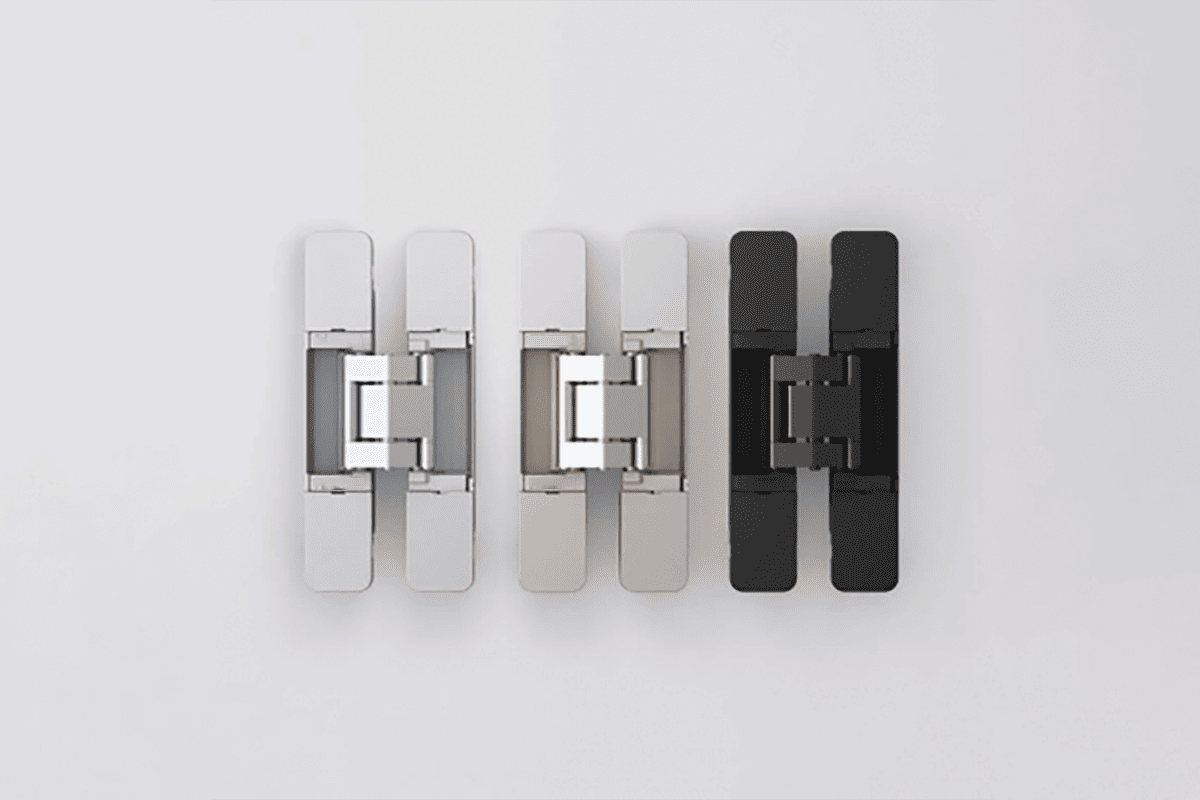
I have discussed this issue many times with door factories and hardware brands. The best answer is rarely “one hinge” or “more hinges.” The better question is whether the selected hinge material, cut-out design, load layout, and certification evidence match the exact door construction and project requirement.
Why Are Fire Rated Concealed Hinges a System-Level Choice?
Fire Rated Concealed Hinges create a design problem that is easy to miss. Buyers may focus on the hinge body, opening angle, or load rating. However, fire performance depends on the whole door set.3 If the hinge, door leaf, frame, and cut-out geometry do not work together, project acceptance can become difficult.
Fire Rated Concealed Hinges are a system-level choice because their performance depends on material, door type, mortise size, hinge quantity, load distribution, smoke leakage risk, and the certified test scope. I always recommend that buyers verify the complete fire-door assembly, not only the hinge catalogue data.
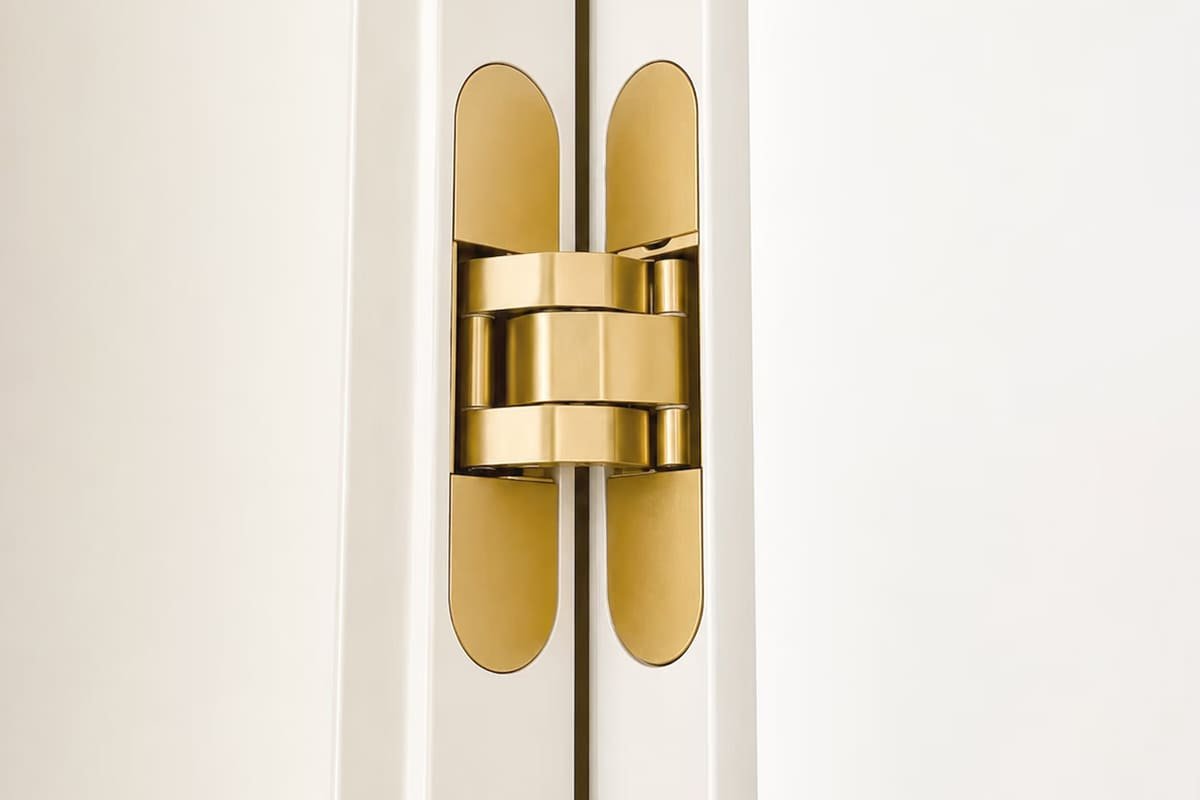
The hinge is only one part of the fire-door assembly
I treat a fire-rated hinge as an important component, but I do not treat it as a complete fire-door guarantee. In real procurement work, a door factory needs to confirm whether the hinge was tested with a comparable door leaf, frame, installation method, intumescent system, lockset, and seal arrangement.
A concealed hinge usually requires a deeper and larger mortise pocket than a standard surface-mounted butt hinge.4 This matters because fire doors depend on structural continuity. When the door leaf and frame are cut more deeply, the fire path, smoke path, and deformation behavior can change.5
In SDH Hardware’s manufacturing and supplier discussions, I have seen buyers compare hinges only by:
- Maximum door weight
- Cycle testing
- Opening angle
- Finish quality
- Material grade
- Unit price
These factors matter, but they do not fully explain fire-test behavior. A hinge can pass a cycle test and still be unsuitable for a certain fire-door construction. A hinge can also carry the door weight in daily use but create excessive stress concentration during high-temperature deformation.
Main evaluation factors for buyers
| Evaluation factor | Why it matters in fire performance | Buyer action |
|---|---|---|
| Hinge material | Stainless steel and zinc alloy behave differently under heat6 | Check material and test evidence |
| Door material | Timber, steel, and composite doors deform differently | Match hinge to door construction |
| Mortise cut-out size | Larger pockets may increase smoke leakage or weakening | Review drawings and routing depth |
| Hinge quantity | More hinges distribute force, but create more cut-outs | Balance load and structural interruption |
| Fire-test scope | A hinge certificate may not cover every door type | Verify the exact report and application range |
| Installation accuracy | Poor routing creates gaps and stress points | Use controlled machining and inspection |
Material changes the baseline
From SDH Hardware’s practical product experience, ordinary stainless steel butt hinges used on metal or fire-rated doors are often positioned for stronger fire-rated applications because they require limited structural interruption. Zinc alloy concealed hinges for interior wooden doors are more commonly positioned for lower fire-resistance requirements. Stainless steel concealed hinges are often selected when buyers need a higher-grade concealed solution.
However, I avoid making universal hour claims. A 60-minute, 90-minute, 120-minute, or longer fire-rating target must be checked against the specific test report and the complete assembly scope.7 The phrase “fire-rated” should always lead to a documentation review, not just a catalogue comparison.
How Does a Single Fire Rated Concealed Hinge Perform Under Fire-Test Logic?
A single hinge may appear attractive because it reduces the number of cut-outs. However, it also concentrates the door load at one connection point. Under fire exposure, this concentration can become more serious because the door leaf may bow, the frame may distort, and the hinge fixing area may weaken.
A single Fire Rated Concealed Hinge is usually weaker in fire-test logic because it concentrates tensile force, shear force, and deformation stress in one area. I would only consider a single-hinge concept when the door design, load, fixing structure, and test report clearly support that configuration.
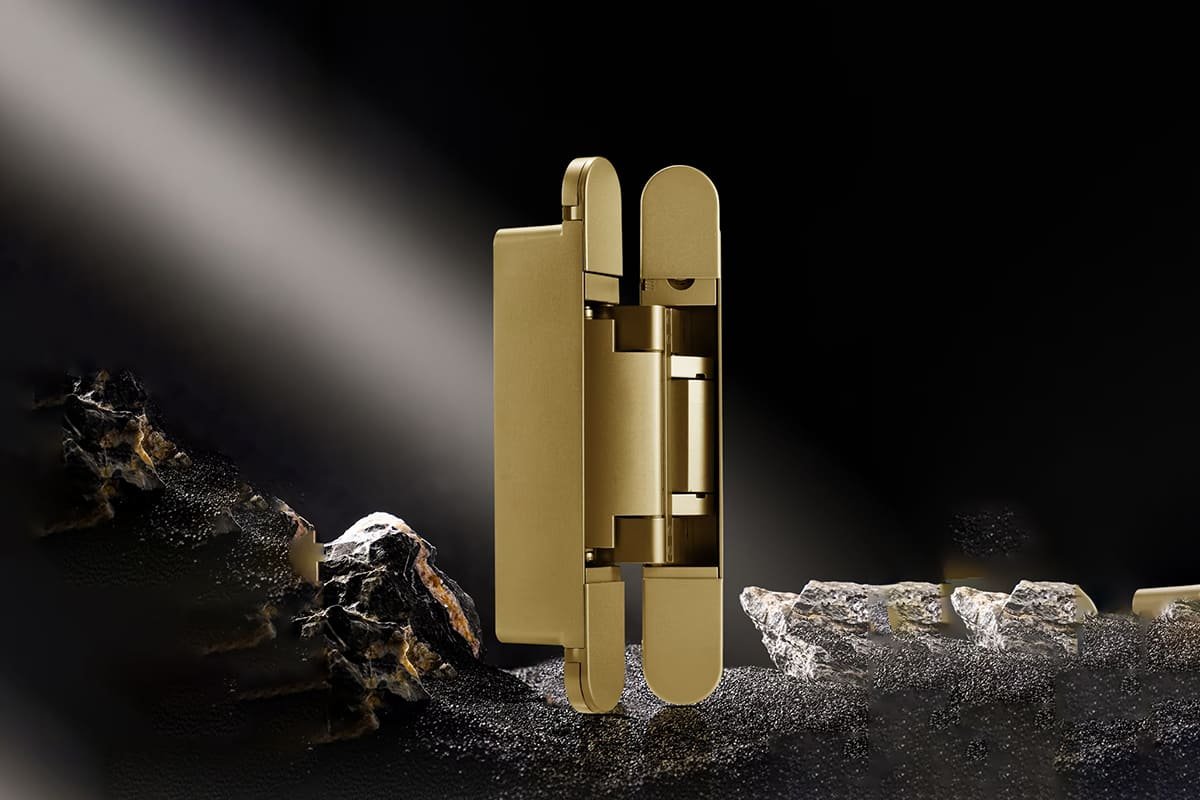
Why single-point loading is risky
In normal use, a hinge supports door weight and movement. During fire exposure, the hinge area faces additional challenges. The door can expand, bend, twist, or pull away from the frame.8 The heat can also affect the fixing points and surrounding door material.
A single concealed hinge creates a narrow support zone. If the door is tall or heavy, this support zone may not control the door leaf well enough. I have seen buyers focus on the rated load of one hinge, but I usually ask a different question:
“Can one fixing zone control the door leaf when heat, pressure, and deformation occur at the same time?”
That question is more relevant for fire-door evaluation.
Single hinge vs distributed hinge layout
| Layout | Main advantage | Main concern | Typical procurement view |
|---|---|---|---|
| Single concealed hinge | Fewer cut-outs | High force concentration | Requires strong test evidence |
| Two concealed hinges | Better load sharing | Still needs accurate alignment | Common for lighter interior doors |
| Three concealed hinges | Improved distribution | More routing work | Often considered for taller or heavier doors |
| Four concealed hinges | More support points | More accumulated cut-outs | Needs careful balance |
| More than four concealed hinges | High distribution in theory | Excessive structural interruption | I treat this with caution |
What happens under heat?
Fire exposure changes the logic of hinge selection. In daily operation, the main issue is smooth movement. In a fire test, the main concerns include:
Door leaf distortion
The door may bow toward or away from the fire side.Hinge pull-out risk
The fixing zone may experience higher tensile force.Smoke leakage
Gaps around the hinge side may open if the door loses alignment.9Frame integrity
The frame may deform, especially near deep hinge pockets.Seal compression loss
The door may no longer compress smoke or intumescent seals evenly.
A single hinge has less ability to resist these combined effects across the full height of the door. That does not mean a single hinge can never be tested or certified. It means buyers should not assume that a strong single concealed hinge automatically equals a safe fire-door solution.
My practical recommendation
When a customer asks whether one large concealed hinge is enough, I usually ask for:
- Door height and width
- Door leaf weight
- Door thickness
- Door material and core construction
- Frame material
- Fire-rating target
- Required certification market
- Installation drawing
- Existing test report or intended test plan
This information allows a more serious review. Without it, a single-hinge decision is mostly a guess.
When Does a Multi-Hinge Fire Rated Concealed Hinges Assembly Help?
A multi-hinge assembly can solve one problem while creating another. It can spread weight and reduce stress concentration, which is helpful for tall or heavy doors. However, each additional concealed hinge also requires another mortise pocket in the door and frame, and those openings can affect fire performance.
A multi-hinge Fire Rated Concealed Hinges assembly helps when it distributes load, reduces door sag, limits hinge-side distortion, and supports better alignment during heat exposure. I usually see two or three hinges as a practical range, but the correct quantity must match the tested door assembly.
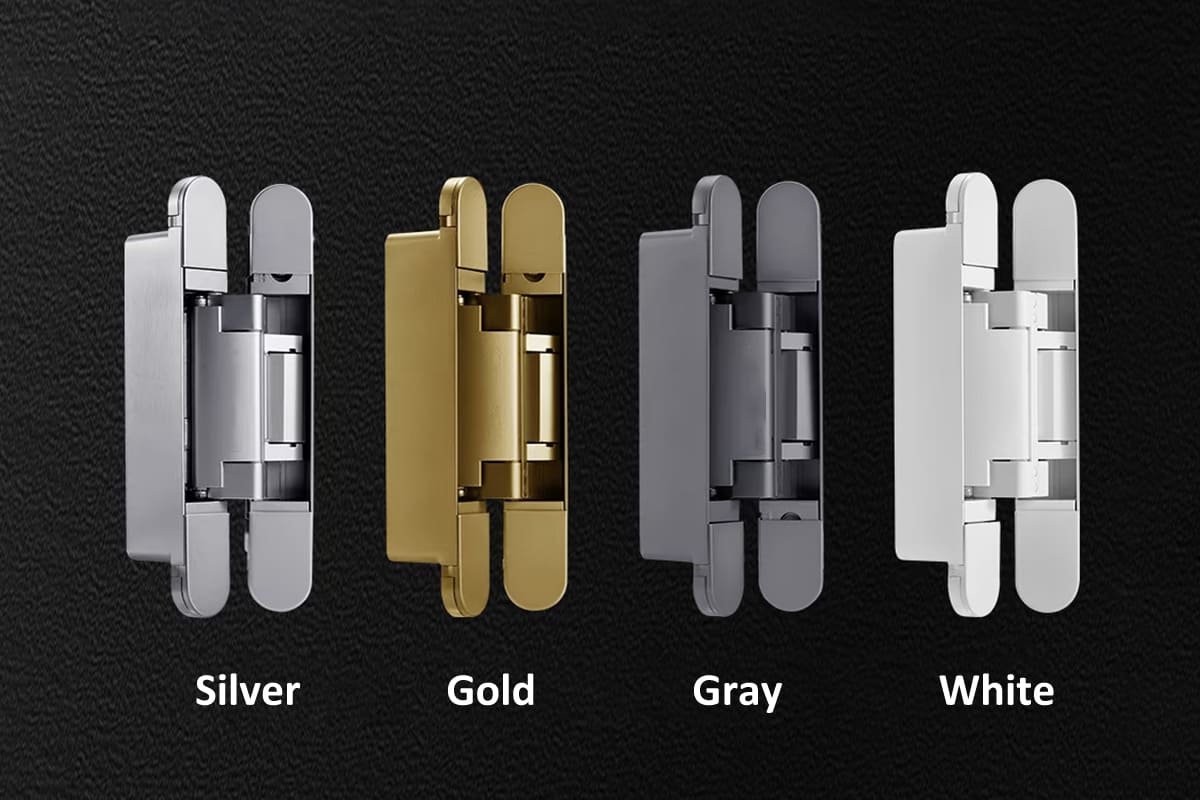
Why two or three hinges often make sense
In many door applications, two or three hinges provide a more balanced support layout than one hinge. The top hinge area usually carries significant force because gravity pulls the door downward and outward. A lower hinge stabilizes the leaf. A middle hinge can reduce bowing and improve load distribution on taller doors.
From SDH Hardware’s practical discussions with door manufacturers, I often see three questions come up:
- Should we use two hinges or three?
- Should the top hinge be reinforced?
- Should we change from zinc alloy to stainless steel?
These are good questions because they connect hardware choice to door behavior. A multi-hinge layout can reduce concentrated stress, but it should be planned before machining the door.
Load distribution in simple terms
Imagine a heavy door fixed by one concealed hinge. The hinge body, screws, and surrounding material must handle most of the door’s movement and deformation. If the same door uses three properly placed hinges, the stress is shared across multiple zones.
This can help with:
- Reducing hinge-side sag
- Controlling door leaf twist
- Lowering pull-out force at each hinge
- Maintaining more even gaps
- Improving long-term opening performance
However, the installation must be precise. If one hinge is misaligned, the load may not distribute evenly.10 In that case, the door can bind, the hinge can wear early, or the fixing points can become overstressed.
Practical hinge quantity considerations
| Door condition | Possible hinge quantity | Key caution |
|---|---|---|
| Light interior timber door | 2 concealed hinges | Confirm if fire rating is required |
| Taller timber door | 3 concealed hinges | Check middle hinge alignment |
| Heavy fire-rated door | 3 or 4 hinges | Verify tested assembly scope |
| Steel fire door | Butt hinges may be preferred | Minimize structural cut-outs |
| High fire-rating target | Depends on test evidence | Do not rely on load rating alone |
Material still matters
A three-hinge layout does not make a weak material behave like a stronger material under heat. Zinc alloy concealed hinges may be suitable for some interior applications, but I would not automatically position them for demanding fire-rated doors without clear test evidence. Stainless steel concealed hinges often offer a more robust baseline for fire-rated concealed applications, but even stainless steel must be checked against the test report.
Buyers should also review:
- Hinge body thickness
- Screw type and fixing depth
- Reinforcement plate design
- Opening size in the door and frame
- Compatibility with seals and lock hardware
- Surface treatment and corrosion resistance
Why the test report matters more than the sales claim
I always remind buyers that fire-rated hardware is not evaluated in isolation. If a concealed hinge was tested on a specific timber door construction, that does not automatically mean it covers every steel fire door or every composite fire door. The scope matters.
The safest commercial approach is to request:
- A copy of the fire test report or certification
- Application scope details
- Door type covered by the test
- Installation drawing used in the test
- Hinge quantity used in the test
- Orientation and fixing method
- Any limitations or exclusions
This protects both the buyer and the supplier. It also reduces the risk of project rejection during inspection.
Can Too Many Fire Rated Concealed Hinges Reduce Fire Performance?
More hinges can feel safer because the door has more support points. However, concealed hinges require deeper routing than ordinary butt hinges. After a certain point, extra hinge pockets can remove too much material from the door edge and frame, which may increase deformation or smoke-leakage risk.
Too many Fire Rated Concealed Hinges can reduce fire performance because each hinge adds another cut-out. I usually treat more than four concealed hinges with caution unless the complete door assembly has test evidence showing that the additional mortises do not weaken the fire-door system.
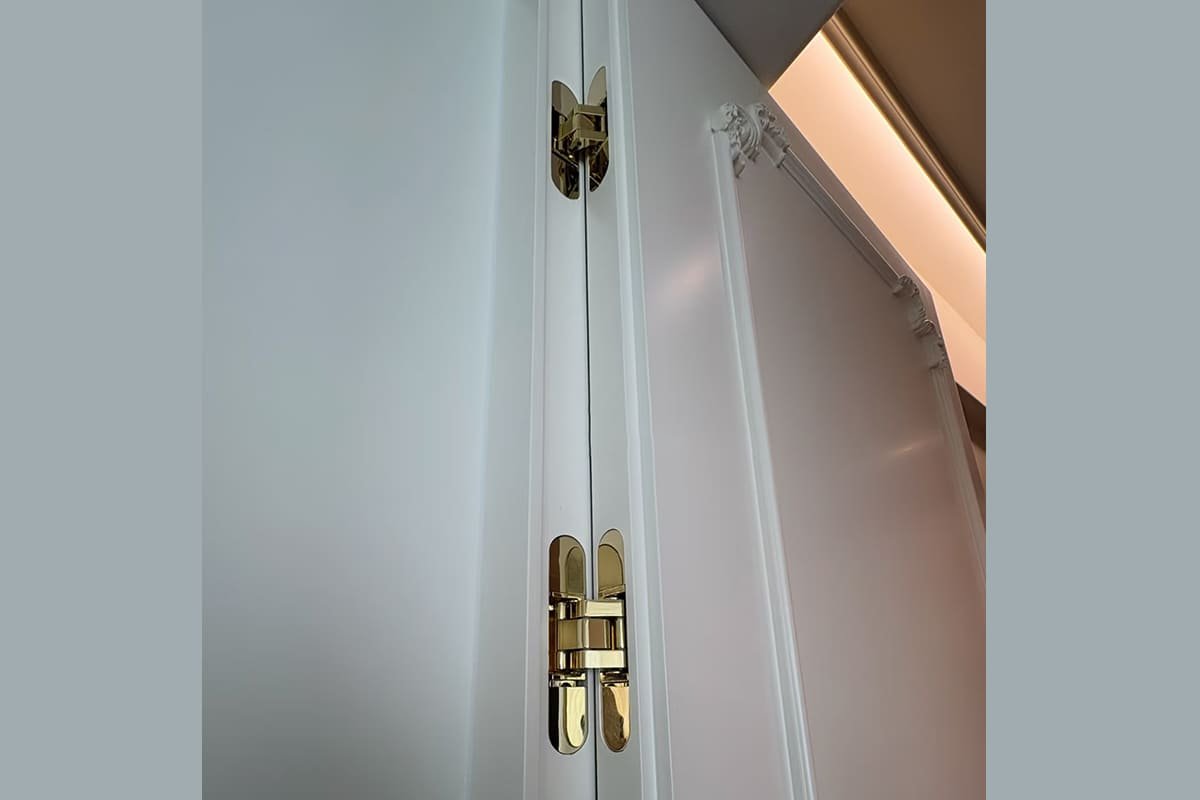
The hidden cost of extra mortise pockets
A concealed hinge needs space inside the door and frame. This is one of its main design differences from a butt hinge. The invisible appearance is attractive, but the structure must be removed to make room for the hinge body.
Every cut-out can influence:11
- Door edge strength
- Frame-side stability
- Smoke leakage path
- Heat transfer behavior
- Fixing screw holding power
- Seal continuity
- Machining tolerance
When buyers add more concealed hinges, they improve load sharing but also increase structural interruption. This trade-off is the heart of the decision.
Why “more” is not always “better”
I often see a simple assumption in procurement: if two hinges are good, three are better, and four or five must be stronger. This is true only for part of the problem. More hinges can reduce mechanical load per hinge, but fire performance is not only a mechanical load problem.
Fire performance also depends on whether the door leaf and frame remain stable enough to control flames and smoke. If the hinge side is heavily routed, the door may have less material to resist heat-driven deformation. This is especially important in timber doors, where the edge structure and core design are part of the fire-resistance strategy.
A balanced view of hinge quantity
| Number of concealed hinges | Potential benefit | Potential fire-performance concern |
|---|---|---|
| 1 | Minimal cut-outs | High stress concentration |
| 2 | Basic load distribution | May be insufficient for heavy doors |
| 3 | Better support for height and weight | Requires accurate alignment |
| 4 | Stronger mechanical support | More structural interruption |
| 5+ | More load points | High accumulated cut-out risk |
From SDH Hardware’s practical view, using more than four concealed hinges may reduce overall fire performance if the additional pockets weaken the assembly. This is not a universal rule, but it is a serious warning sign. If a project requires five or more concealed hinges, I would ask for engineering review and test evidence.
Installation quality becomes more important
The more hinges a door has, the harder it becomes to keep everything aligned. Small machining errors can create preload on the hinge bodies. When the door closes, one hinge may carry more force than expected. Over time, this can affect smooth operation. Under fire-test conditions, poor alignment can make deformation worse.
A good factory should control:
- CNC routing accuracy
- Pocket depth
- Screw hole position
- Frame reinforcement
- Door gap consistency
- Final functional inspection
At SDH Hardware, we treat product inspection and application discussion as part of the supply process. We can manufacture and supply the hinge, but I still encourage customers to verify the complete door assembly with qualified professionals or accredited test documentation when fire performance is required.
How Should Buyers Compare Fire Rated Concealed Hinges With Butt Hinges?
Buyers often compare concealed hinges and butt hinges by appearance first. Concealed hinges offer a cleaner door design, while butt hinges are visible. However, fire-rated door hardware should not be selected only by appearance. The cut-out size and tested application can matter more than the visual result.
Buyers should compare Fire Rated Concealed Hinges with butt hinges by reviewing cut-out depth, material, door type, load distribution, smoke leakage risk, and certification scope. Ordinary stainless steel butt hinges may perform better in some fire-door applications because they require shallower routing and less structural interruption.12
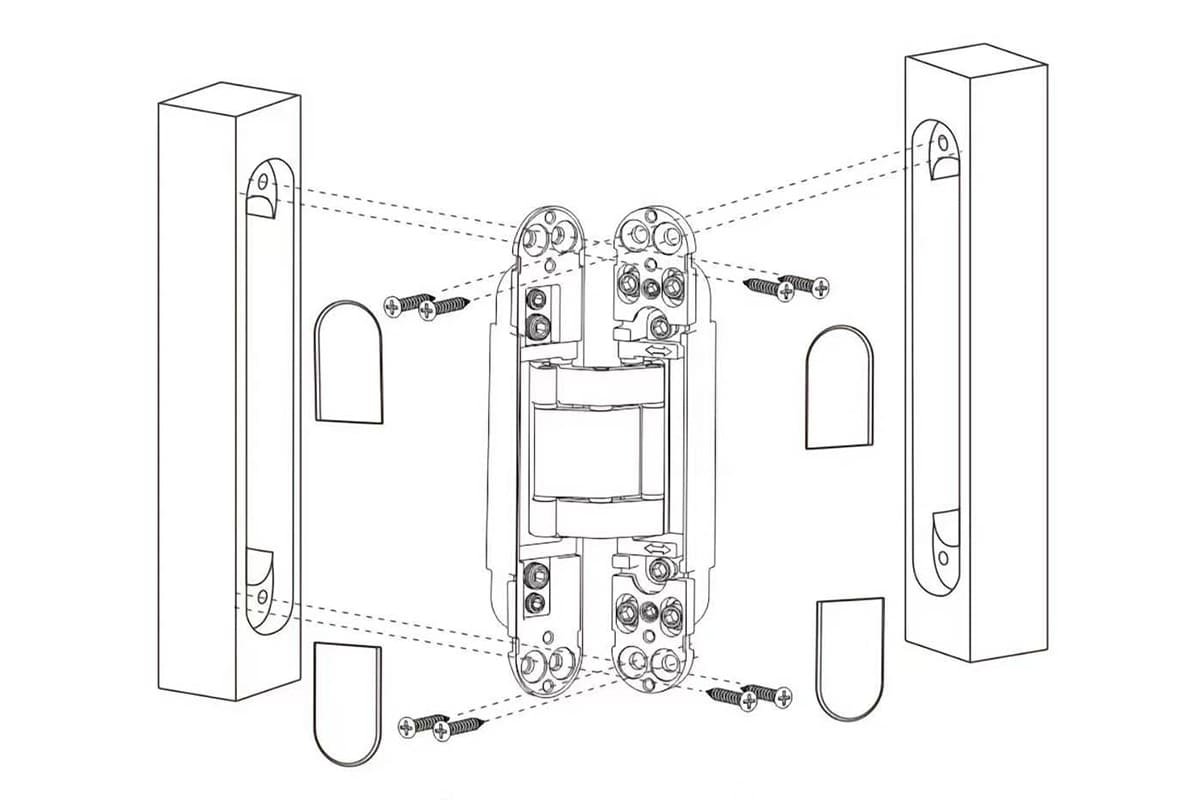
Butt hinges usually interrupt less structure
A stainless steel butt hinge is installed on the surface or with shallow routing. It does not require the same deep pocket that a concealed hinge needs. This can be an advantage in fire-rated doors because the door edge and frame remain more continuous.
In SDH Hardware’s product experience, ordinary stainless steel butt hinges used on metal or fire-rated doors can often support stronger fire-test positioning than zinc alloy concealed hinges for interior wooden doors. However, buyers must still verify exact performance through the relevant report.
Concealed hinges solve design needs
Concealed hinges remain useful. They support modern interior design, flush door systems, and premium architectural appearance. In some projects, the invisible hinge line is part of the specification. Stainless steel concealed hinges may also be used for higher fire-rated concealed applications when the product and test scope support it.
The key is not to assume that concealed means better or worse. The key is to check whether the concealed hinge is suitable for the specific door assembly.
Comparison table for procurement teams
| Factor | Fire-rated concealed hinge | Stainless steel butt hinge |
|---|---|---|
| Appearance | Hidden when door is closed | Visible barrel |
| Cut-out size | Larger mortise pocket | Shallow routing or surface mounting |
| Fire-door structural impact | Higher concern | Lower concern |
| Load distribution | Depends on quantity and placement | Proven simple layouts |
| Installation difficulty | Higher precision required | Easier and more forgiving |
| Common material options | Zinc alloy, stainless steel | Stainless steel, steel, brass |
| Best use case | Design-focused tested assemblies | Robust fire-door applications |
| Buyer verification need | Very high | Still required |
Questions I suggest buyers ask suppliers
Before placing an OEM or ODM order, I suggest buyers ask direct questions:
What material is the hinge body made from?
Stainless steel, zinc alloy, and other materials behave differently under heat.What door type was used in the fire test?
Timber, steel, and composite doors are not interchangeable.How many hinges were installed during the test?
A report based on three hinges may not support one hinge or five hinges.What mortise dimensions were used?
The cut-out size affects the door and frame.What certification documents are available?
Buyers should verify CE documents, fire-rated certification, and test reports.Can the supplier provide drawings?
Detailed drawings help the door factory machine accurately.
How SDH Hardware supports buyer evaluation
As a manufacturer, SDH Hardware supplies Euro mortise locks, stainless steel lever handles, butt hinges, concealed door hinges, Euro brass cylinders, and door accessories. We support B2B customers with factory-direct supply, OEM/ODM production, surface treatment options, logo service, packaging design, drawings after order confirmation, and inspection service after completion.
For fire-rated hardware, I prefer a careful conversation before quoting only by size and finish. I want to understand the door system first. This helps avoid the common mistake of selecting a hinge that looks correct but does not match the fire-rating target or project approval process.
Frequently Asked Questions
Are Fire Rated Concealed Hinges better than butt hinges?
Fire Rated Concealed Hinges are not automatically better than butt hinges. They offer a hidden appearance, but they require larger mortise cut-outs. Stainless steel butt hinges may be more suitable for some fire doors because they interrupt less door and frame structure. Buyers should compare tested assembly evidence.
How many Fire Rated Concealed Hinges should I use on one door?
The correct quantity depends on door height, weight, thickness, material, frame type, and fire-rating target. I often see two or three hinges used in practical layouts, but the final decision should follow the certified fire-test scope and professional door assembly evaluation.
Can I use zinc alloy concealed hinges for fire-rated doors?
Zinc alloy concealed hinges are commonly positioned for interior wooden doors and lower fire-resistance requirements in many product discussions. I would not use them for demanding fire-rated applications without specific test evidence. Stainless steel concealed hinges are often preferred for higher fire-rated concealed applications.
Why do concealed hinge cut-outs matter in fire doors?
Concealed hinge cut-outs matter because they remove material from the door leaf and frame. Larger openings can increase deformation risk, smoke leakage paths, and fixing weakness under heat. The mortise design should match the fire-tested installation method.
Does a CE certificate prove the complete fire door is compliant?
A CE certificate or fire-rated document is important, but it does not automatically prove every complete door assembly is compliant. Buyers should verify the exact product, door type, hinge quantity, installation method, and application scope covered by the certification or test report.
Conclusion
Fire Rated Concealed Hinges require a system-level decision, not a simple single-hinge versus multi-hinge answer. A single hinge may concentrate force, while multiple hinges can distribute load. However, too many concealed hinges add cut-outs that may weaken the door and frame. I recommend checking material, door type, routing size, hinge quantity, and certified test scope before procurement. If you need factory-direct concealed hinges, butt hinges, or complete architectural door hardware support, contact SDH Hardware for technical discussion, OEM/ODM options, and documentation review.
"NSPIRE Standard - Door - Fire", https://www.hud.gov/sites/dfiles/PIH/documents/NSPIRE-Standard-Door-Fire-Labeled_20230811.pdf. Engineering literature on hinged door assemblies explains that door weight and deformation loads are transferred through hinge fixings; distributing support across multiple hinges can reduce localized stress, although this is contextual evidence rather than proof for any specific concealed hinge design. Evidence role: mechanism; source type: research. Supports: A neutral engineering or fire-testing source should support that hinge forces are transferred through fixing points and that distributing support across multiple hinges can reduce local stress, while heat-driven deformation can increase stress at hinge locations.. Scope note: The source would support the general mechanical principle, not the fire-test performance of a particular hinge or door assembly. ↩
"Common Field Issues Affecting Fire Doors & Frames", https://steeldoor.org/common-field-issues-fire-doors-frames/. Fire-door installation and inspection guidance treats hardware preparations and modifications as controlled features of a rated assembly, supporting the view that additional mortises may affect performance; the evidence is contextual and does not establish a universal threshold for the number of concealed hinges. Evidence role: general_support; source type: institution. Supports: A fire-door standard or certification body should support that hardware preparations and field modifications to fire doors are controlled because alterations can affect the rated assembly.. Scope note: The source would not directly prove that every additional concealed hinge weakens every door-and-frame construction. ↩
"Fire Doors and NFPA 80 FAQs", https://www.nfpa.org/news-blogs-and-articles/blogs/2025/04/11/fire-doors-faqs. Recognized fire-door standards and listing practices define fire protection in terms of a complete door assembly, including the door, frame, hardware, and installation conditions, rather than an isolated hardware component. Evidence role: expert_consensus; source type: institution. Supports: A fire-door standard or listing organization should support that the fire rating applies to a complete door assembly including door leaf, frame, hardware, and installation details.. ↩
"How to Install a Butt Hinge Mortise",
Architectural hardware installation references distinguish concealed hinges, which are recessed into the door and frame, from butt hinges, which are surface-mounted or shallow-mortised; this supports the general comparison of required cut-out depth. Evidence role: definition; source type: education. Supports: A neutral architectural hardware or construction education source should describe the installation geometry of concealed hinges and butt hinges, including the deeper pocket typically required for concealed models.. Scope note: The exact mortise size varies by hinge model, door construction, and manufacturer. ↩"The influence of gaps of fire-resisting doors on the smoke ...", https://www.sciencedirect.com/science/article/abs/pii/S0379711206000695. Fire-door test literature links assembly integrity, gaps, and component discontinuities with flame or smoke leakage and heat-induced deformation, providing contextual support for concern about deeper hardware cut-outs. Evidence role: mechanism; source type: paper. Supports: A fire-safety paper or standard commentary should support that openings, gaps, and local discontinuities in a fire door assembly can affect smoke leakage, integrity, and deformation during fire exposure.. Scope note: The source would support the mechanism generally and may not evaluate concealed-hinge mortises specifically. ↩
"mechanical properties of metals and alloys", https://nvlpubs.nist.gov/nistpubs/Legacy/circ/nbscircular447.pdf. Materials-property references show that stainless steels and zinc alloys have different melting ranges and elevated-temperature mechanical behavior, supporting the need to distinguish these materials in fire-exposed hardware applications. Evidence role: mechanism; source type: research. Supports: A materials science source should support that stainless steels and zinc alloys differ significantly in melting point and retention of mechanical properties at elevated temperature.. Scope note: Material properties alone do not determine the rating of a complete fire-door assembly. ↩
"Fire Doors and NFPA 80 FAQs", https://www.nfpa.org/news-blogs-and-articles/blogs/2025/04/11/fire-doors-faqs. Fire-door listing systems assign hourly or minute ratings to assemblies tested under specified conditions, so a 60-, 90-, or 120-minute claim must be read with the relevant report, label, and application scope. Evidence role: expert_consensus; source type: institution. Supports: A recognized fire-door listing or standards source should support that minute ratings apply to tested assemblies and that components must be within the listing or approval scope.. ↩
"Influence of mechanical strength on the characteristics ... - PMC", https://pmc.ncbi.nlm.nih.gov/articles/PMC12615804/. Fire-resistance testing literature records thermal distortion, bowing, and integrity loss as relevant behaviors of door assemblies under furnace exposure, supporting the article’s description of possible movement during a fire test. Evidence role: mechanism; source type: paper. Supports: A fire-testing study or standard commentary should support that fire doors are assessed for integrity and can experience thermal distortion, bowing, or separation under fire exposure.. Scope note: The extent and mode of deformation depend on door material, construction, hardware, and test conditions. ↩
"A Smoke Seal Door Hinge Is an Essential Component in a ...", https://sdhhardware.com/2026/10/30/a-smoke-seal-door-hinge-is-an-essential-component-in-a-fire-protection-system/. Smoke-control and fire-door guidance identifies perimeter clearances and door alignment as factors in smoke leakage performance, supporting the concern that hinge-side gap opening may increase leakage. Evidence role: mechanism; source type: institution. Supports: A smoke-door or fire-door standard should support that gaps and clearances affect smoke leakage performance and that door alignment is relevant to maintaining those gaps.. Scope note: The source would support the relationship between gaps and leakage generally, not quantify leakage for the specific hinge layout. ↩
"087100 – DOOR HARDWARE - Facilities and Campus Services", https://fcs.cornell.edu/087100-door-hardware. Door-hardware installation references explain that hinges must be aligned along a common axis to avoid binding and uneven loading, supporting the claim that one misaligned hinge can disrupt load distribution. Evidence role: mechanism; source type: education. Supports: A construction or mechanical engineering source should support that hinge axes must be aligned for smooth rotation and that misalignment can introduce binding and uneven loading.. Scope note: This is general installation evidence and does not measure fire-test effects. ↩
"FDAI: Inspection Criteria 11", https://idighardware.com/2026/01/fdai-inspection-criteria-11/. Fire-door inspection and installation standards control hardware preparations, alterations, clearances, and seals because these features can affect assembly performance; this supports treating cut-outs as performance-relevant features. Evidence role: general_support; source type: institution. Supports: A fire-door standard or inspection guide should support that hardware preparations, alterations, clearances, and seal continuity are controlled because they can affect rated performance.. Scope note: The source would not verify every listed effect for every concealed hinge pocket. ↩
"Fire Door", https://www.select-hinges.com/firedoor. Architectural hardware and fire-door guidance indicates that butt hinges typically require shallow preparation compared with concealed hinges and that rated assemblies depend on controlled hardware preparations, supporting the possibility that butt hinges may be preferable in some fire-door designs. Evidence role: general_support; source type: institution. Supports: A recognized fire-door or architectural hardware source should support that butt hinges are installed with shallower mortises than concealed hinges and that minimizing uncontrolled modifications is relevant to rated door assemblies.. Scope note: This does not mean butt hinges are always superior; the applicable listing and tested assembly remain decisive. ↩
