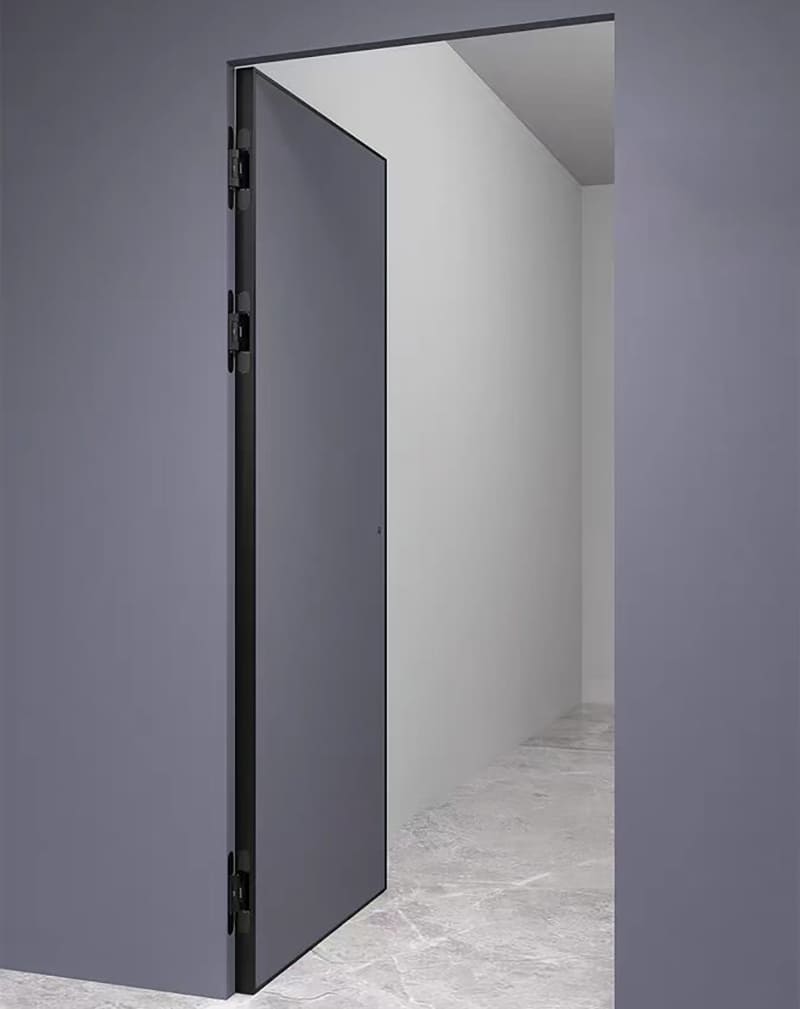
Door Hardware Accessories: How Do I Choose A Complete Door Hardware Set?
I see many buyers lose time when small accessories do not match. The door looks simple, but one weak part can create costly complaints.
I choose door hardware accessories as one complete system. I check hinge load, lock-body alignment, cylinder level, handle durability, material, finish, and accessory matching before I compare price. This way, I reduce installation trouble, after-sales risk, and batch quality problems.
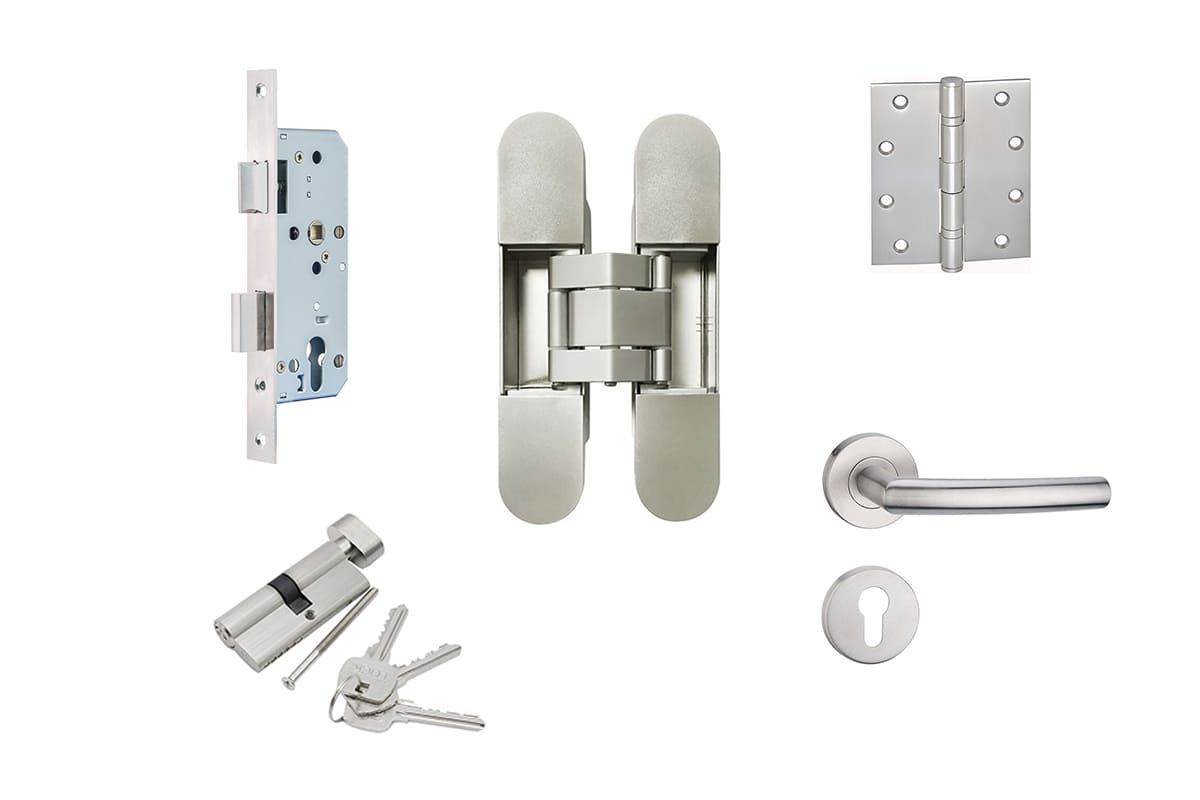
I often meet buyers who first ask me for the price of hinges, locks, cylinders, and handles one by one. I understand this habit because cost control matters. I also see another side in factory work. I see that a cheap hinge can cause a good lock body to work badly. I see that an unstable finish can make one batch of doors look uneven. I see that a wrong cylinder choice can create problems for a hotel, an apartment, or a public project. I do not treat door hardware accessories as loose parts. I treat them as a working set, and this view changes the whole buying decision.
Why Do I Treat Door Hardware Accessories As One Door System?
I see problems start when I only compare single parts by price. One low-cost part can weaken the full door set and create repeat complaints.
I treat hinges, lock bodies, cylinders, handles, and auxiliary parts as one system because each part affects door movement, security, appearance, and assembly speed.1
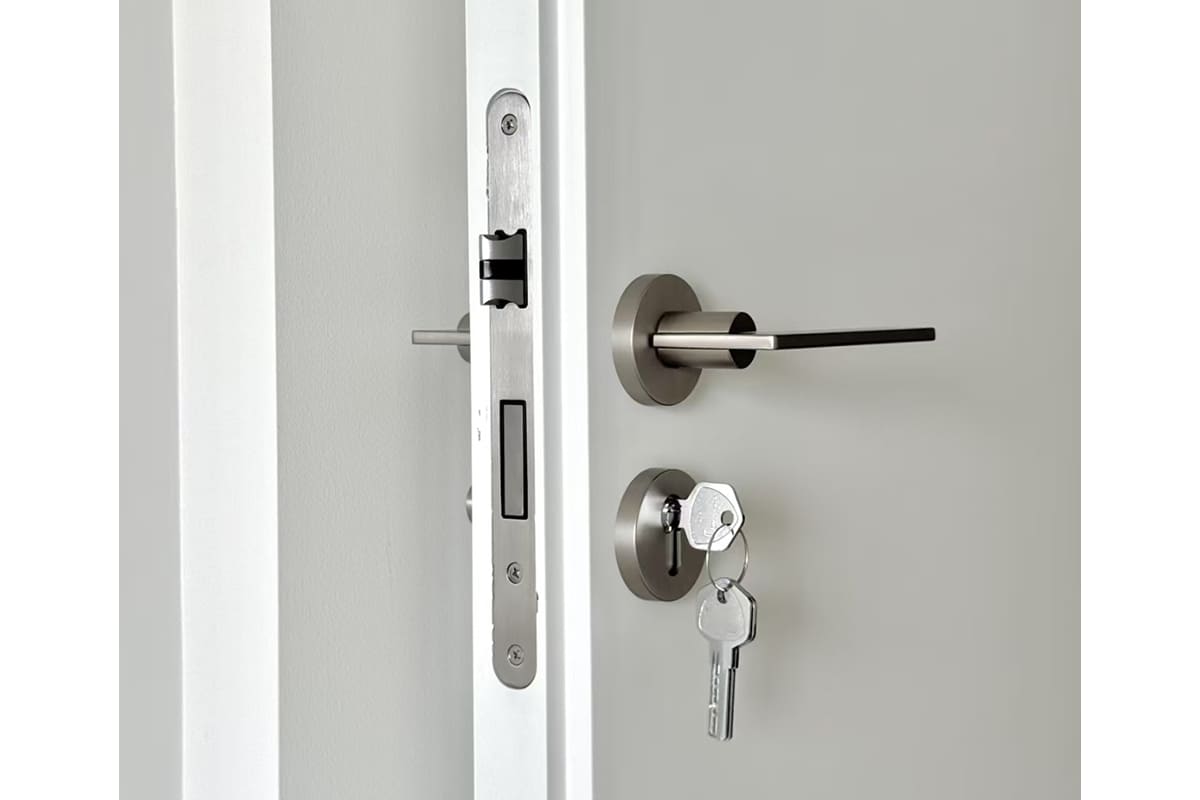
I usually begin with the door type and market use. I ask whether the door is for an apartment, villa, hotel, office, hospital, school, or project site. I then check the door weight, door thickness, frame structure, opening direction, and daily use level. I do this because a hardware set must support the real door, not only look good on a quotation sheet.
My Basic System View
| Hardware Area | I Check This First | I Watch For This Risk |
|---|---|---|
| Hinges | Load capacity and adjustment | Door sagging and noise |
| Lock body | Backset, center distance, latch movement | Hard closing and latch friction |
| Cylinder | Security level and key management | Wrong grade for the use case |
| Handle | Material, spring strength, finish | Loose feeling and poor hand touch |
| Auxiliary parts | Stopper, seal, strike plate, screws | Extra adjustment during assembly |
I often remind buyers that a door is opened, closed, pulled, pushed, locked, and cleaned many times. Each action moves more than one part. The hinge carries the door leaf. The lock body receives the latch force. The handle transfers hand force into the spindle and lock case. The cylinder controls access. The strike plate and screws keep the full set in position. If one part is not matched, the installer must adjust more on the production line. This increases labor time. It also creates more uncertain quality in batch assembly.
I do not say every project needs the highest grade accessory. I say every project needs the right matching logic. A light indoor door does not need the same hardware plan as a heavy fire-rated project door. A budget housing project does not need the same handle finish plan as a premium hotel door. I use the system view to match cost, function, and market position.
How Do Hinges Affect Lock Body Performance?
I see buyers blame the lock body when the real problem starts from the hinge. A sagging door can make a smooth lock feel defective.
I select hinges and lock bodies together because hinge support controls door position. If the door drops, the latch may miss the strike plate and cause hard closing.2
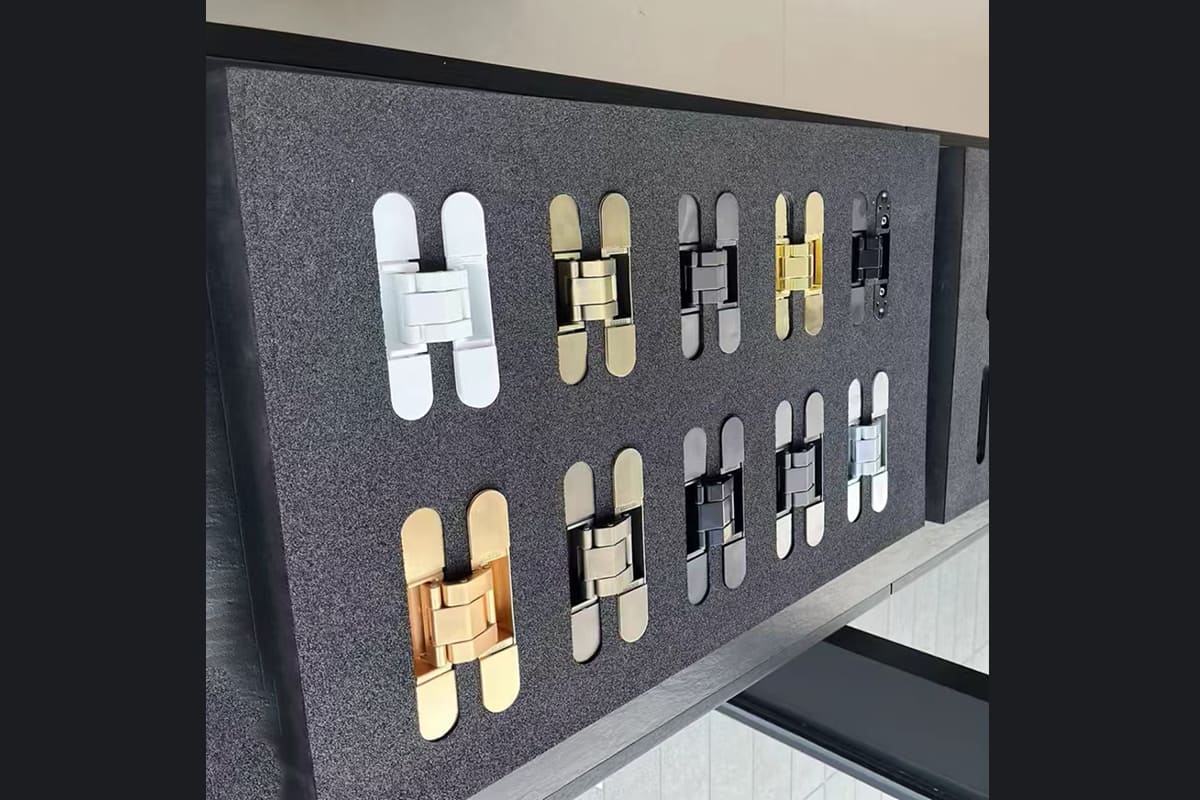
I pay close attention to hinges because hinges are the load-bearing frame of the door. I work with both concealed hinges and butt hinges, and I see that each type has its own role. Concealed hinges give a clean look and often allow adjustment in several directions. Butt hinges are direct, common, and suitable for many standard doors. I do not choose one type only by appearance. I check door weight, opening angle, frame design, adjustment need, and market habit.
My Hinge And Lock Matching Check
| Point I Check | Why I Check It | Problem I Avoid |
|---|---|---|
| Door weight | The hinge must carry the full door leaf | Door dropping after use |
| Hinge quantity | Heavy doors may need more support3 | Uneven load on one hinge |
| Adjustment range | The installer may need fine tuning | Latch missing the strike |
| Screw strength | Screws must hold under repeated movement | Loose hinge and noise |
| Lock latch position | The latch must enter the strike smoothly | Hard closing and friction |
I see a very common chain reaction. The hinge load is not enough. The door leaf slowly drops. The latch no longer enters the strike plate at the correct height. The user pushes harder to close the door. The lock body receives side pressure. The handle feels heavy. The customer reports that the lock is not smooth. In this case, the lock body may not be the main problem. The system problem began with hinge support.
I also check hinge adjustment before bulk supply. In a door factory, small differences in door leaf size, frame welding, or wooden frame processing can happen. A hinge with better adjustment can help the production team correct these small differences. This does not mean the hinge can fix bad door production. It means the hinge can give more stable assembly tolerance. I like to confirm sample doors first because a drawing cannot show every real assembly detail.
How Should I Select Lock Cylinders By Security And Management Need?
I see some buyers ask for the highest cylinder grade without checking the use case. This can waste cost or create wrong key management.
I select lock cylinders by security need, market rule, key system, door type, and user group.4 I do not believe one cylinder grade fits every project.
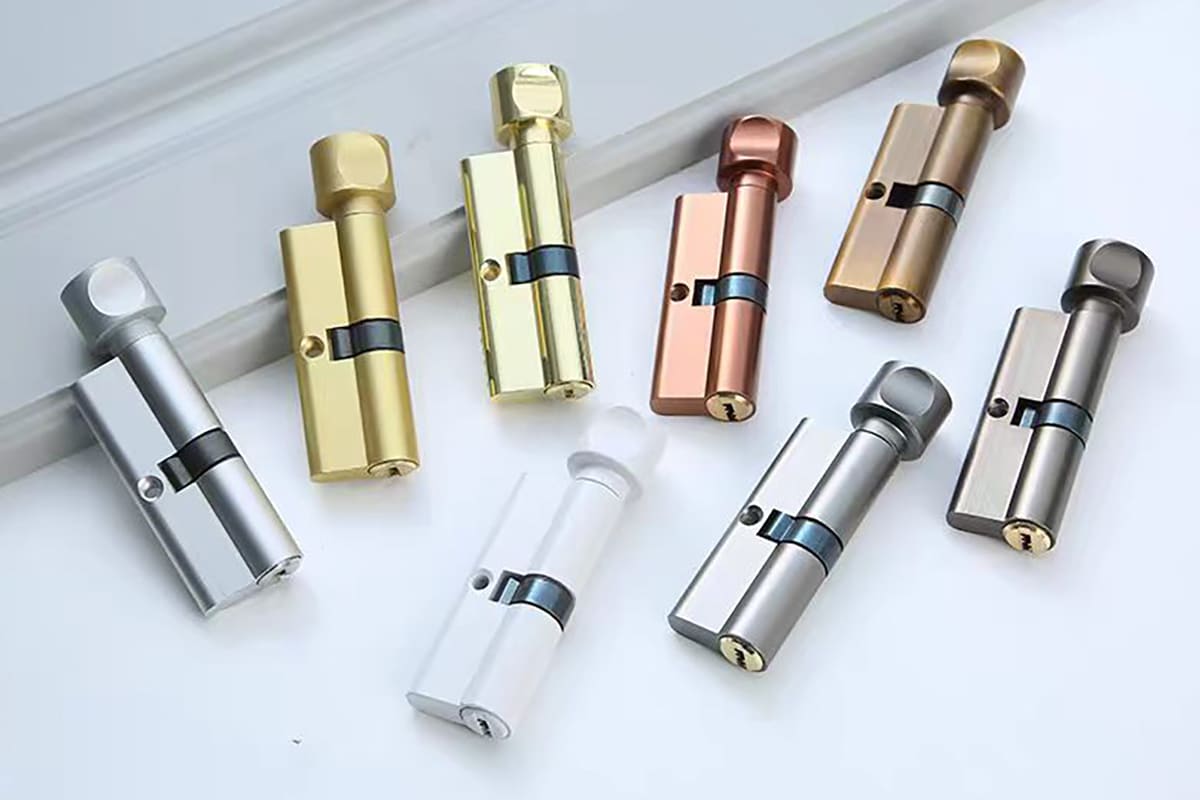
I treat the lock cylinder as the access control center of a mechanical lock set. I check the required security level, key shape, key duplication control, cylinder length, thumb-turn need, and market standard. I also check whether the buyer needs different key management. A normal apartment, a hotel room, an office door, and a warehouse door may need different cylinder choices.
My Cylinder Selection Logic
| Application | I Usually Check | I Avoid This Mistake |
|---|---|---|
| Residential door | Daily security and smooth use | Overbuying a costly grade without need |
| Office door | Key management and staff use | Simple keys with weak control |
| Hotel door | System matching and project rule | Wrong cylinder type for the lock set |
| Utility room | Function and budget balance | Paying for appearance more than function |
| Premium door | Security and brand image | Choosing a low-grade cylinder for a high-end door |
I do not tell buyers that a higher grade is always better. I ask what risk the door must face. I ask how many people will use the key. I ask whether the buyer sells through retail, project bidding, or door factory assembly. I ask whether the market expects brass profile cylinders, euro profile cylinders, or another standard. This question matters because the cylinder must fit the lock body and the door thickness.
I also check cylinder finish and visible shape. The cylinder may be small, but it sits near the handle. If the handle is matte black and the cylinder face is a different black tone, the full door looks mixed. If the cylinder length is wrong, the face may sit too deep or stick out too much. This affects both appearance and security.5 I prefer to confirm the cylinder together with the handle escutcheon, lock body, and door thickness. This small step saves many later questions.
I also remind buyers to verify certification and compliance by exact product and target market. I do not assume every cylinder or lock accessory carries the same approval. I ask for valid documents only when the project needs them, and I check whether the document scope matches the real product.
Why Do Door Handles And Finishes Decide Perceived Product Quality?
I see users touch the handle before they notice most other hardware. A weak handle can make a strong door feel cheap.
I treat the door handle as both a working part and a visible brand signal.6 Material, finish, coating thickness, color, and touch all matter.
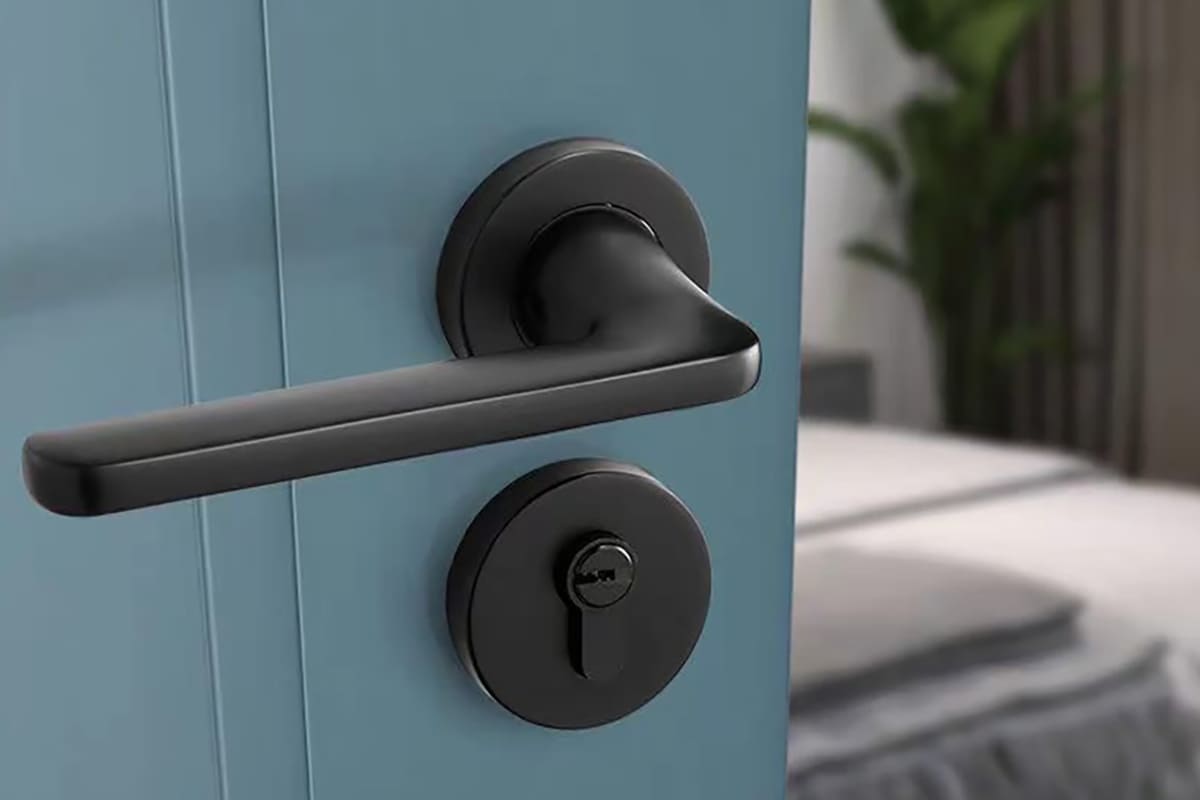
I spend much time on handles because the handle is the most touched hardware part on the door. A user may not see the hinge clearly. A user may not understand the lock body inside the door. But the user feels the handle every day. The handle tells the user whether the door feels solid, smooth, stable, and well made.
My Handle And Finish Check
| Item | I Check In Production | I Watch In Bulk Orders |
|---|---|---|
| Material | Zinc alloy, stainless steel, brass, or mixed structure | Correct grade and stable supply |
| Surface finish | Brushed nickel, matte black, gun black, gold tone, rose gold | Same color across batches |
| Coating | Thickness and adhesion | Peeling, fading, and uneven shine |
| Spring action | Return strength and smooth movement | Loose handle feeling |
| Touch quality | Edge, grip, and weight | Sharp edges or hollow feeling |
I do not say one material is best for all cases. Zinc alloy can support many shapes and finishes. Stainless steel gives a clean and strong image. Brass can be used where the market values weight, machinability, and a premium feel. The right choice depends on target price, market level, humidity, use level, and design style.
I often see finish problems create more trouble than expected. A buyer may accept a sample color. Later, the bulk order may show color difference between handles, cylinders, hinges, and strike plates. This is a real problem for door factories because the final door must look like one complete product. I therefore check finish matching across the full set, not only on one handle sample.
I also check surface treatment for durability. A thin or unstable coating may look fine when new. It may wear faster after daily touch, cleaning, and packing friction.7 I cannot judge long-term use only by photos. I prefer physical samples, salt spray reports when needed, and clear finish control standards8. I also ask the buyer to define the acceptable color range before the order. This simple rule helps both sides avoid unclear arguments after production.
What Auxiliary Accessories Should I Check Before Bulk Assembly?
I see small auxiliary parts become big delays on the assembly line. A missing screw or wrong strike plate can stop a door batch.
I check door stoppers, seals, strike plates, screws, dust boxes, and small fittings because they affect installation speed, noise control, and final door function.
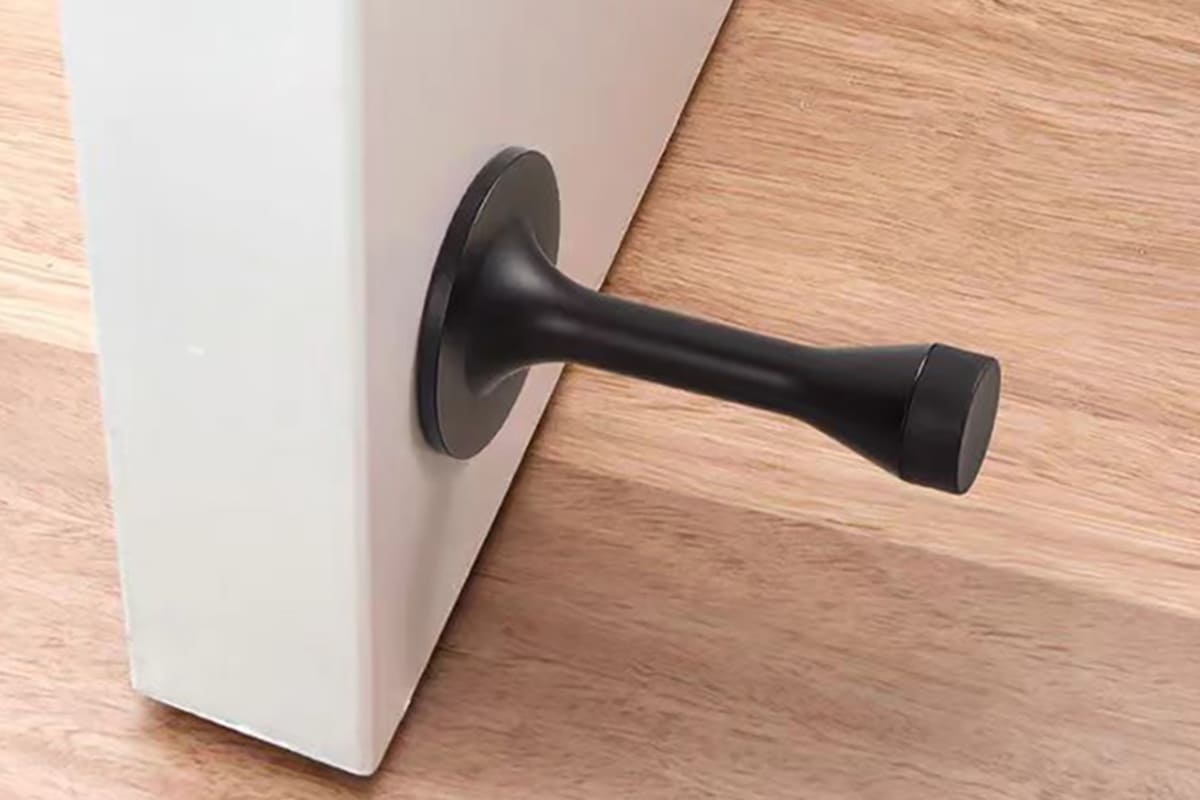
I do not ignore auxiliary accessories because I know how door factories work. A door factory needs repeatable assembly. The worker does not want to search for a different screw size. The production manager does not want extra drilling. The buyer does not want one accessory finish to look different from the main set. These small issues slow the line and create hidden cost.
My Auxiliary Accessory List
| Accessory | I Check This Point | Why It Matters |
|---|---|---|
| Strike plate | Size, hole position, finish | The latch must close cleanly |
| Screws | Length, head type, color | The hardware must sit firmly |
| Door stopper | Position and strength | The wall and handle need protection |
| Seals | Material and fit | The door needs better sound and air control9 |
| Dust box | Match with lock latch | The frame cut-out looks clean |
| Escutcheon | Hole matching and finish | The visible set must look unified |
I see buyers sometimes place orders for the main hardware but leave small accessories to local purchase. This can work for some standard items. It can also create problems when the hole position, finish, or screw type is different. If the buyer wants stable batch production, I suggest checking these parts during the sample stage.
I also check packaging. Small accessories must be packed in a clear and safe way. If screws, spindle, keys, and plates are mixed without control, the assembly team may lose time. If one pack misses a small part, the whole door set may be delayed. I like to define one complete hardware kit for one door. This makes warehouse control easier. It also makes the buyer’s receiving inspection easier.
I do not claim every auxiliary item needs a special certificate. I only say the buyer should confirm the compliance scope for the product and market. A fire-rated project may have different rules from a normal interior door.10 A CE-marked lock body does not automatically mean every small accessory in the carton has the same testing scope.11 I keep this point clear because it protects both the supplier and the buyer.
What Procurement Checkpoints Do I Use Before I Confirm A Supplier?
I see procurement risk grow when I only compare unit price. A low price can become expensive when quality and delivery are unstable.
I check supplier capability through samples, drawings, finish standards, test documents, production control, packing rules, delivery plan, and after-sales response before bulk orders.12
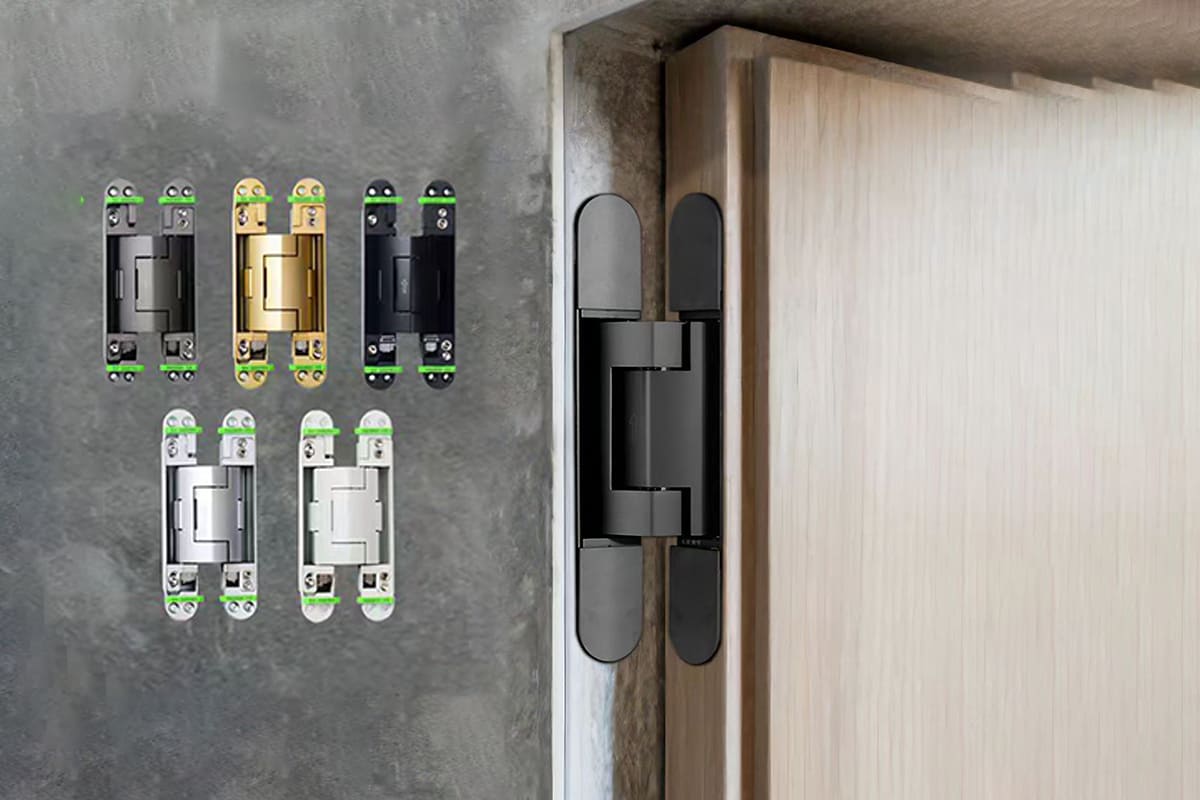
I use a practical checklist because I have seen many small mismatches become real business problems. I do not need complicated words to explain this. I need clear items that the buyer and supplier can both confirm. The supplier must understand the door set. The buyer must explain the application. Both sides must agree on the sample before mass production.
My Supplier Check Table
| Checkpoint | I Ask For This | I Want To Confirm |
|---|---|---|
| Product drawings | Size, hole position, backset, center distance | The parts fit the door design |
| Physical samples | Full hardware set sample | The parts work together |
| Finish standard | Color sample or approved board | The batch color is controlled |
| Material details | Main material and key parts | The cost and durability match |
| Certification scope | Valid documents for the exact item | The market requirement is covered |
| Packing plan | Complete kit or separate packing | The assembly line can use it easily |
| Delivery plan | Production time and shipment time | The buyer can control schedule |
| QC process | Incoming, process, and final checks | The batch stays consistent |
I also look at communication quality. A good supplier should not only say yes to every request. I prefer a supplier who asks useful questions. What is the door weight? What is the door thickness? What is the target market? What finish must match the handle? What certificate is required for this project? These questions show that the supplier understands hardware as a system.
I also suggest a trial order when the buyer has a new model. A trial order helps check assembly speed, color stability, packing accuracy, and user feedback. It also helps both sides find small issues before a large order. I have seen buyers save a lot of trouble by testing one full door set before moving to bigger quantities.
I keep cost in the discussion, but I do not let cost stand alone. I compare total cost. This includes product price, assembly labor, defect rate, after-sales service, replacement cost, and customer trust. A cheap accessory can be good if it fits the system and meets the market need. A costly accessory can still be wrong if it does not match the door. I choose the set that makes the door stable, smooth, secure, and consistent.
Conclusion
I choose door hardware accessories as one system because stable matching lowers assembly trouble, after-sales risk, and market complaints.
"[DOC] SECTION 08 7100 - LANL Engineering Standards", https://engstandards.lanl.gov/specs/08_7100R3.doc. Architectural hardware standards such as EN 1935 for hinges, EN 12209 for mechanically operated locks and latches, and EN 1303 for cylinders define component performance in terms of load, durability, security, and operation, supporting the view that door hardware functions as an interdependent assembly rather than as isolated parts. Evidence role: general_support; source type: institution. Supports: Architectural hardware standards separately classify hinges, locks, and cylinders by load, durability, security, and operating performance, supporting a system-level assessment of door hardware.. Scope note: This support is contextual: the standards explain component performance categories but do not prove that any specific accessory set will reduce complaints. ↩
"Door Won't Latch on Striker Plate - YouTube",
. Building maintenance guidance commonly identifies sagging hinges and door-frame misalignment as causes of latch and strike-plate mismatch, which can make a door difficult to close or latch properly. Evidence role: mechanism; source type: education. Supports: A building maintenance or carpentry source should confirm that sagging hinges or door misalignment can move the latch out of line with the strike plate, causing closing problems.. Scope note: This support explains the mechanism generally and would not identify the root cause in any particular installation without inspection. ↩"Understanding BS EN 1935:2002 single-axis hinge grades", https://uk.sfs.com/resources/article/understanding-bs-en-1935. Hinge standards such as EN 1935 and ANSI/BHMA A156.1 classify hinges according to load, durability, and use category, supporting the specification practice of matching hinge grade and quantity to the mass and duty level of the door. Evidence role: expert_consensus; source type: institution. Supports: Hinge standards and specification guidance classify hinges by load capacity and durability, supporting the need to match hinge support to door weight.. Scope note: The standards support the general selection principle but do not determine the correct hinge count for a specific door without its dimensions, weight, and installation conditions. ↩
"EN 1303:2026 - Cylinders and Master-Key-Systems for Locks ...", https://standards.iteh.ai/catalog/standards/cen/bff2e636-92e6-474b-a6e0-fa3f5c0ce3ec/en-1303-2026?srsltid=AfmBOopksiDhEgmQNalwnHnTwz9ux9bjdlZdocGkQd7SlE0qNlfsuLva. EN 1303 classifies lock cylinders by characteristics including durability, key-related security, and resistance to attack, supporting application-specific cylinder selection rather than a single universal grade. Evidence role: expert_consensus; source type: institution. Supports: Cylinder standards classify cylinders by durability, key-related security, attack resistance, and related attributes, supporting selection by application and risk.. Scope note: The standard supports the selection framework but does not address every market rule or project-specific key-management policy. ↩
"What is Lock Snapping with Prevention Tips (Expert Advice)", https://www.locksmiths.co.uk/faq/lock-snapping/. Police-backed security guidance on euro-profile cylinders notes that cylinders should be correctly sized and protected because excessive projection can increase vulnerability to physical attack methods such as snapping. Evidence role: mechanism; source type: government. Supports: Police or public security guidance should support that exposed or poorly fitted cylinders can be more vulnerable to attack methods such as snapping.. Scope note: This directly supports the security aspect of protrusion; the appearance aspect is a design judgment rather than a security-standard finding. ↩
"Hand-Feel Touch Cues and Their Influences on Consumer ... - PMC", https://pmc.ncbi.nlm.nih.gov/articles/PMC6678767/. Research on haptic perception and product design shows that tactile qualities such as weight, smoothness, and resistance can influence users’ judgments of product quality, providing contextual support for treating a door handle as both a functional and perceptual component. Evidence role: general_support; source type: paper. Supports: Research on haptics and product perception should support that tactile properties and visual design cues influence perceived quality.. Scope note: This evidence is contextual because product-perception studies may not be specific to door handles or to the same buyer markets discussed in the article. ↩
"[PDF] Impact Durability Assessment and Anti-Ice Adhesion Performance of ...", https://ntrs.nasa.gov/api/citations/20200003810/downloads/20200003810.pdf. Coating evaluation standards and materials literature treat film thickness, adhesion, abrasion resistance, and corrosion resistance as measurable factors in finish durability, supporting the claim that a visually acceptable new coating may fail earlier if these properties are inadequate. Evidence role: mechanism; source type: institution. Supports: Coating standards and materials literature should support that coating thickness, adhesion, and abrasion resistance are relevant to finish durability.. Scope note: The evidence supports the general mechanism but would not predict the service life of a specific finish without product-specific testing. ↩
"Accelerated Test Method for Corrosion Protective Coatings Project", https://techport.nasa.gov/projects/14798. ASTM B117 and ISO 9227 define standardized salt-spray exposure methods for evaluating the corrosion behavior of metallic and coated specimens, supporting the use of salt-spray reports as one finish-control document. Evidence role: definition; source type: institution. Supports: ASTM B117 or ISO 9227 should support that salt-spray testing is a standardized accelerated corrosion exposure method used to compare coated or metallic specimens.. Scope note: Salt-spray results are comparative laboratory data and do not by themselves predict exact outdoor or in-use service life. ↩
"Weatherstripping | Department of Energy", https://www.energy.gov/energysaver/weatherstripping. Building-energy guidance identifies door weatherstripping and sealing as methods for reducing air leakage, while acoustics guidance treats gaps around doors as paths for sound transmission, supporting the use of seals for air control and contextual sound control. Evidence role: mechanism; source type: government. Supports: Building-energy guidance should support the air-leakage role of weatherstripping, and acoustics guidance should support the role of perimeter gaps in sound transmission.. Scope note: The air-control support is direct; the sound-control support depends on seal type, door construction, and installation quality. ↩
"Fire Doors and NFPA 80 FAQs", https://www.nfpa.org/news-blogs-and-articles/blogs/2025/04/11/fire-doors-faqs. NFPA 80 and related building-code provisions treat fire doors as rated assemblies and require appropriate listed or labeled components and hardware, supporting the statement that fire-rated projects follow rules different from ordinary interior doors. Evidence role: expert_consensus; source type: institution. Supports: Fire-door standards should support that fire-rated door assemblies have specific requirements for hardware, labeling, and compatibility.. Scope note: The exact requirements vary by jurisdiction, fire rating, door type, and adopted code edition. ↩
"CE marking - Wikipedia", https://en.wikipedia.org/wiki/CE_marking. European Commission guidance on CE marking and the Construction Products Regulation explains that conformity documentation identifies the product, intended use, and declared performance, supporting the point that a CE-marked lock body does not automatically certify unrelated accessories packed with it. Evidence role: definition; source type: institution. Supports: European Commission guidance should support that CE marking and declarations of performance apply to the product covered by the relevant conformity assessment and declared scope.. Scope note: This addresses CE-marking scope generally; the compliance status of a particular accessory depends on the applicable harmonized standard, declaration, and project requirement. ↩
"[DOC] Procedure for Purchasing and Supplier Evaluation", https://www.nist.gov/document/procedure-supplier-evaluation-20180101doc. ISO 9001 requires organizations to control externally provided products and services and to determine criteria for supplier evaluation, selection, monitoring, and re-evaluation, supporting a documented pre-order review of samples, specifications, controls, delivery, and service capability. Evidence role: expert_consensus; source type: institution. Supports: Quality-management standards should support evaluating external providers and verifying externally supplied products or services before acceptance.. Scope note: ISO 9001 supports the quality-management principle but does not prescribe this article’s exact checklist for door hardware procurement. ↩