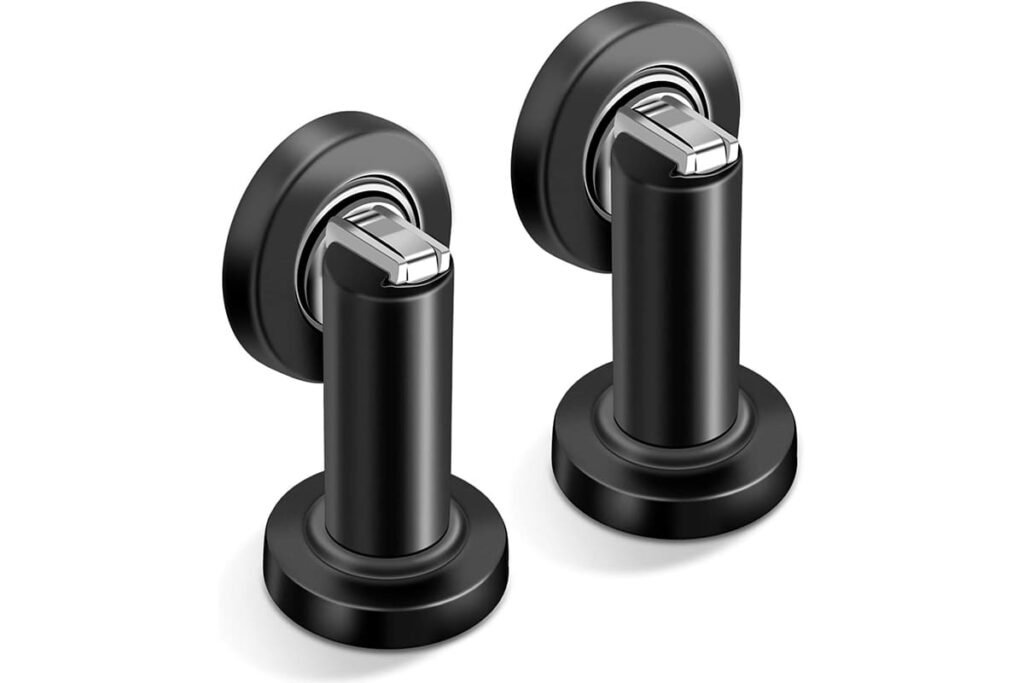
Magnetic Door Stopper VS. Mechanical Door Stopper: What Are the Key Differences?
A magnetic door stopper is often compared with a normal mechanical door stopper only by appearance or price, but that can lead buyers to choose the wrong product. The real problem appears after installation, when doors swing, close, or fail to stay open. The better solution is to compare function, not only hardware style.
A magnetic door stopper both stops the door and holds it in an open position through magnetic attraction.1 A common mechanical door stopper mainly limits door movement and protects walls, furniture, or skirting from impact.2 The right choice depends on whether the project needs simple impact protection or reliable open-door positioning for daily use.
From our factory and quality-control work at SDH Hardware, I see this comparison often in B2B projects. Door factories, hardware brands, and procurement teams usually do not ask, “Which one looks better?” They ask, “Will this door stay open when people actually use the space?”
How Does a Magnetic Door Stopper Work Compared With a Mechanical Door Stopper?
Choosing between two door stoppers can look simple at first, but the mistake is easy to make. A buyer may assume both products perform the same job. Then the installed door keeps moving in wind or traffic. The key is to understand stopping versus holding.
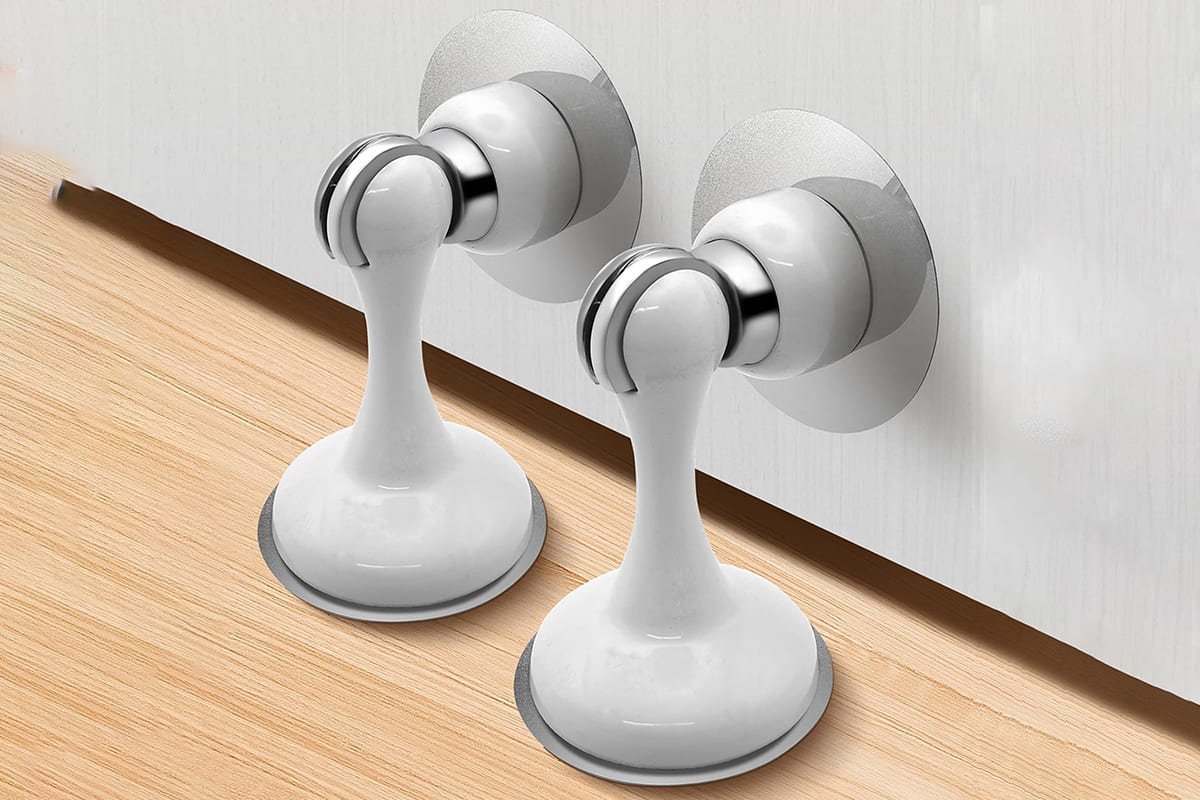
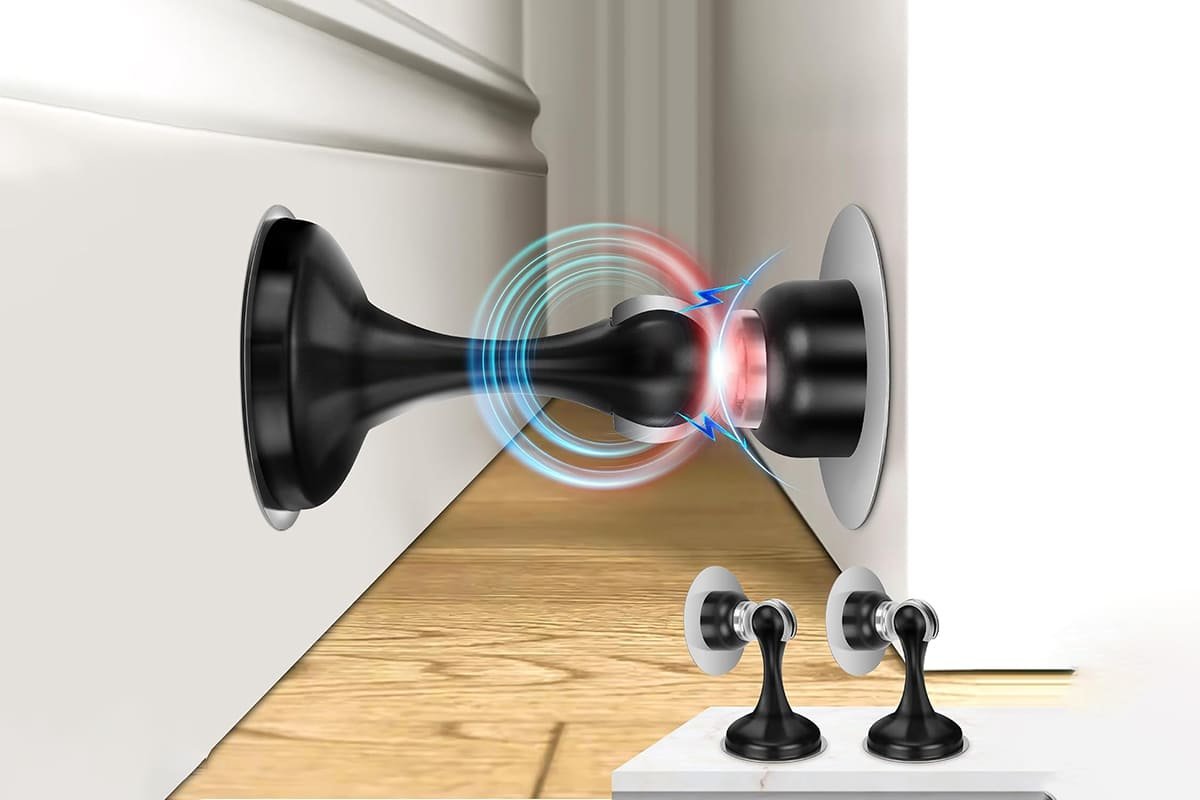
A magnetic door stopper uses a door-mounted plate or catch and a floor- or wall-mounted magnetic base to stop the door and hold it open. A mechanical door stopper normally uses rubber, metal, or spring contact to absorb impact and prevent wall damage, but it does not actively hold the door leaf in position unless it is a special holding design.
The main functional difference
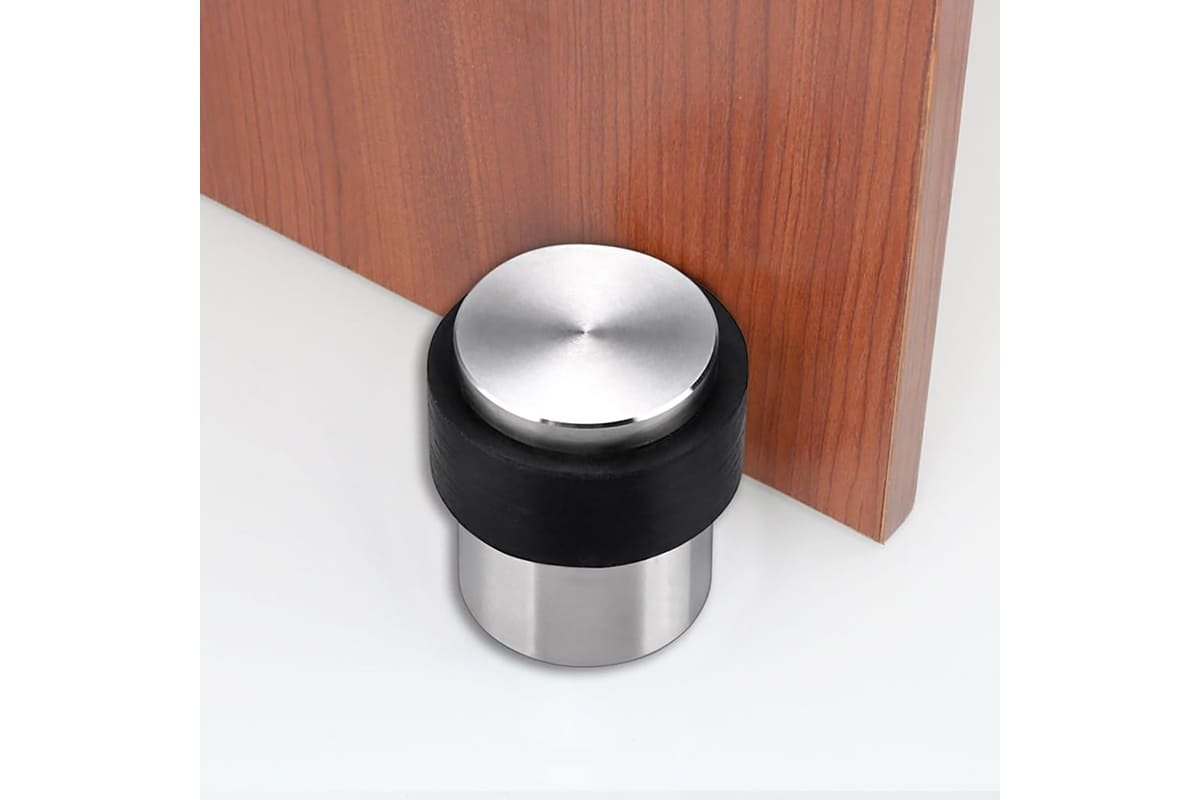
In simple terms, a normal mechanical door stopper is a limit device. It creates a physical contact point. When the door opens to a certain angle, the stopper receives the impact instead of the wall or furniture.
A magnetic model is both a limit device and a positioning device. It still limits the door swing, but it also attracts and holds the matching strike plate. That holding function is the practical difference that matters in many project environments.
I often explain it to buyers like this:
A mechanical stopper answers the question, “Where should the door stop?”
A magnetic stopper also answers, “Can the door stay there?”
Common structural comparison
| Feature | Magnetic Door Stopper | Mechanical Door Stopper |
|---|---|---|
| Main function | Stops and holds the door open | Stops the door at a contact point |
| Holding ability | Yes, through magnetic attraction | Usually no, unless it is a specific holding type |
| Typical contact | Magnet and metal strike plate | Rubber, metal, spring, or buffer contact |
| User experience | Door can remain open for access or ventilation | Door may swing after contact if pushed or affected by wind |
| Best use case | Positioning, frequent passage, ventilation, moving goods | Wall protection, simple impact control, low-complexity doors |
What we observe in manufacturing and QC
In factory production, the visible parts are only one part of the story. We also pay attention to details that influence real use:
- Magnet seating accuracy
- Strike plate alignment
- Surface flatness
- Screw hole consistency
- Rubber buffer firmness
- Plating or stainless steel finish quality
- Batch consistency for OEM or project supply
For a magnetic door stopper, alignment matters more than many buyers expect. If the magnet and strike plate do not meet cleanly, the holding effect becomes unstable.3 The door may still stop, but the holding experience may feel weak or inconsistent.
For a mechanical stopper, the key inspection points are slightly different. The rubber or buffer part should absorb contact without cracking too quickly. The base should be firm. The fixing holes should match the project installation requirements. The finish should be suitable for the target market.
Why this difference matters for procurement
For one apartment sample room, the difference may seem minor. For a batch order of thousands of door sets, it becomes a project issue. If the room needs the door to stay open, a simple stopper may create user complaints even if the product itself is not defective.
That is why I recommend that buyers define the function first:
- Does the door only need wall protection?
- Does the door need to remain open during use?
- Will wind, air pressure, or traffic affect the door?
- Is the door heavy, wide, or frequently used?
- Is the installation surface suitable for floor or wall fixing?
This functional definition helps door factories and project buyers avoid selecting the wrong door accessory only because two products look similar in a catalog.
When Does a Magnetic Door Stopper Add Real Project Value?
Some projects do not fail because the door hardware is weak. They fail because the selected function does not match the usage scenario. If people must keep pushing a door open with a foot, box, or chair, the stopper choice is already causing inconvenience.
A magnetic door stopper adds value when a door must stay open during real daily use. It is useful for ventilation, frequent passage, moving goods, cleaning work, and accessible routes where users benefit from a stable open position4. Its value is not just protection; it is open-door positioning.
Practical scenarios where holding matters
The holding function becomes important in spaces where doors are not simply opened and closed once. In these spaces, users often need the door to remain in a clear and stable position.
Common examples include:
- Hotel rooms and apartment interiors where ventilation is needed during cleaning
- Office rooms with frequent staff movement
- Service corridors where goods or carts move through
- Storage rooms where people carry boxes
- Residential balconies or utility rooms where air movement can push doors
- Accessible routes where keeping a door open may improve usability
In these cases, the difference between stopping and holding becomes very visible.
Why door positioning improves usability
A door that does not stay open can create small but repeated problems. These problems may not appear during product sampling, but they become obvious after installation.
For example, I have seen project discussions where the sample door looked fine in the showroom. The stopper protected the wall, and the finish matched the handle set. However, during daily use, workers had to move trolleys through the door. The door kept swinging back. The stopper did its wall-protection job, but it did not support the work process.
That is the kind of situation where a magnetic model can be considered.
What buyers should evaluate before choosing magnetic holding
A magnetic door stopper is not automatically the correct choice for every project. Buyers should evaluate the application conditions first.
| Evaluation Point | Why It Matters |
|---|---|
| Door weight | Heavier doors may need stronger holding design or other positioning solutions |
| Door width | Wider doors create more leverage when moving5 |
| Air pressure or wind | Strong airflow can affect door stability6 |
| Traffic frequency | More frequent use increases the importance of smooth holding and release |
| Installation surface | Weak flooring or wall material can reduce fixing reliability |
| User expectation | Some markets expect doors to stay open; others only require impact protection |
A note on magnetic holding expectations
It is important to stay realistic. Magnetic attraction provides a holding function, but it should not be described as unlimited strength.7 The actual performance depends on product design, installation accuracy, door conditions, and use environment.
For procurement teams, I suggest asking suppliers for clear product specifications and samples before batch orders. If the project has unusual door weights, strong wind pressure, public-building requirements, or safety concerns, buyers should arrange application-specific evaluation by qualified professionals.
How this affects B2B product planning
For door factories and hardware brands, the decision is not only about one project. It can affect product line planning.
A basic product range may include:
- Simple mechanical door stoppers for general wall protection
- Magnetic door stoppers for open-door positioning
- Heavy-duty or special stoppers for commercial applications
- Matching finishes for lever handles, hinges, cylinders, and accessories
At SDH Hardware, we usually treat door accessories as part of a complete architectural hardware package. The stopper should match not only the color and finish, but also the door function. A satin stainless lever handle, concealed hinge, Euro cylinder, and stopper may all look compatible, but the stopper still needs to solve the actual use problem.
That is why I believe the best product selection starts with a simple question: Does the door need to stay open, or only avoid hitting the wall?
Where Is a Mechanical Door Stopper Still the Better Choice?
It is easy to assume that a product with more functions is always better. That assumption can increase cost and complexity without improving the project. Some doors only need a controlled stopping point. In those cases, a mechanical stopper can be the more practical option.
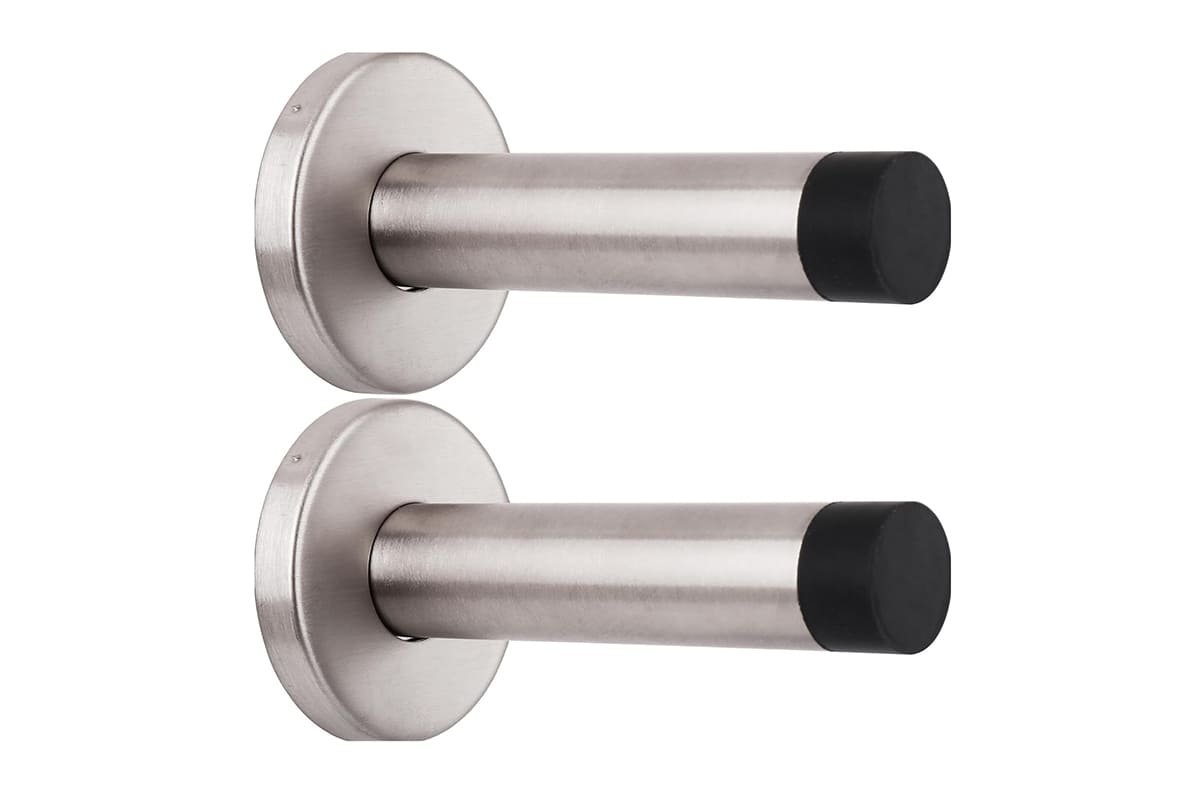
A mechanical door stopper is still a good choice when the main requirement is impact protection. It can prevent the door handle, lock body, or door leaf from hitting walls or furniture. It is suitable for simple rooms, low-traffic areas, and projects where open-door holding is not required.
When simple impact protection is enough
Mechanical stoppers are widely used because they solve a very common problem. They keep the door from damaging nearby surfaces.
They are especially suitable when:
- The door does not need to remain open
- The room has low airflow
- Users open and close the door normally
- The door is lightweight or moderate in size
- The project needs a simple and economical accessory
- The installation area is limited
In many residential rooms, storage areas, and simple interior spaces, this is enough.
Common mechanical stopper types
Mechanical stoppers come in different forms. Each type has its own installation and use characteristics.
| Type | Typical Installation | Main Benefit | Limitation |
|---|---|---|---|
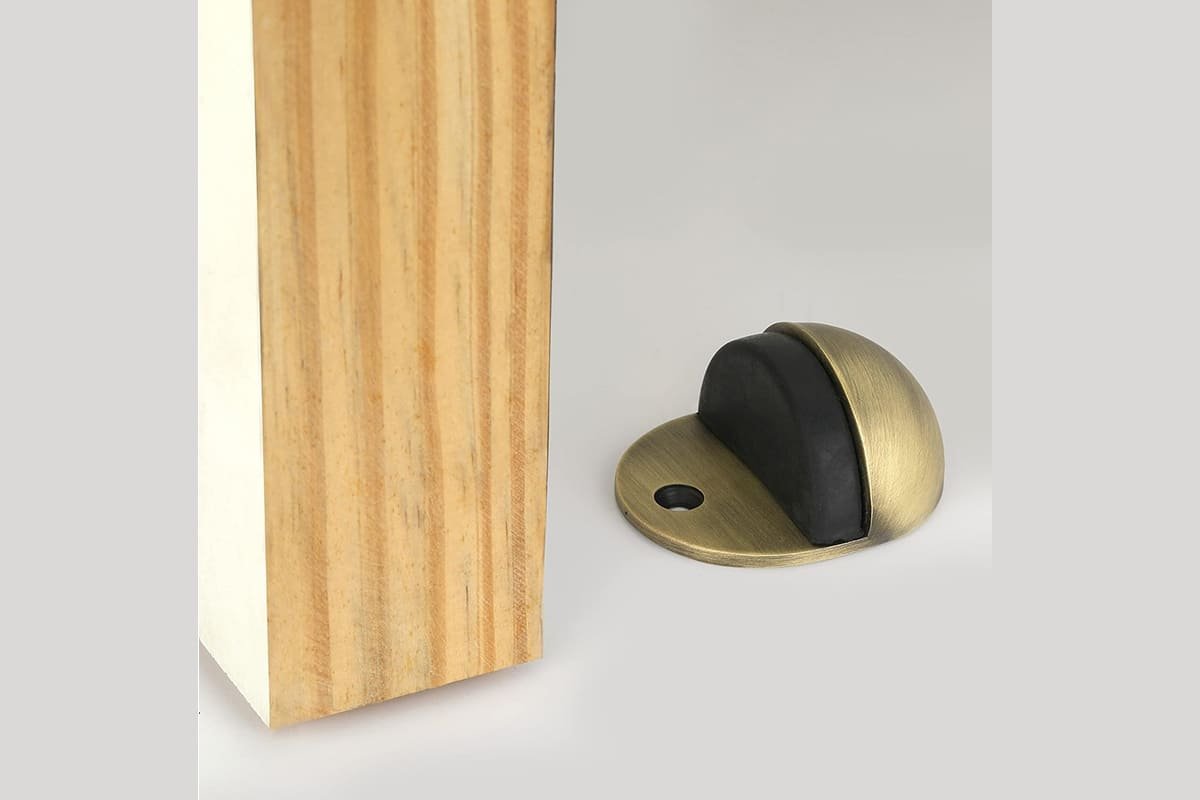
| Floor-mounted stopper | Fixed to floor | Strong physical stopping point | Needs suitable floor drilling |
| Wall-mounted stopper | Fixed to wall | Protects wall from handle impact | Depends on wall strength |
| Spring door stopper | Wall or skirting | Flexible and simple | May not suit premium projects |
| Rubber buffer stopper | Floor or wall | Soft impact absorption | No holding function |
| Hinge pin stopper | Installed at hinge area | Avoids floor/wall drilling | May not suit all hinge or door types |
The limitation buyers should not ignore
A normal mechanical stopper can stop the door at the open limit, but it does not actively keep the door leaf there. If wind, air pressure, or a person’s movement affects the door, the door may swing away from the stopper or close again.
This point is important for product descriptions and procurement documents. I do not recommend telling customers that a normal mechanical stopper “keeps the door open” unless the product has a specific holding mechanism. Clear wording prevents misunderstandings and after-sales disputes.
Why mechanical stoppers remain important
Mechanical stoppers still have several advantages in the right application:
- Simple structure
- Easy product inspection
- Wide finish options
- Lower functional complexity
- Flexible use in many interior projects
- Straightforward installation
For large B2B orders, simplicity can be valuable. A product that only needs to perform one function can be easier to specify, inspect, and install consistently.
From our production perspective, a mechanical stopper also gives buyers many cost and style options. Stainless steel, zinc alloy, rubber, and brass components can be selected according to market level and target price. Surface treatments can also be matched with handles, hinges, and other door accessories.
How to avoid wrong selection
The wrong choice usually happens when the project team focuses only on unit price or catalog appearance.
I suggest using this simple selection logic:
- Choose a mechanical stopper if the door only needs impact protection.
- Choose a magnetic stopper if the door must stay open for practical use.
- Consider special hardware if the project involves fire doors, public safety, access control, or regulated egress conditions.
For fire-rated openings, accessible routes, or public buildings, buyers should verify local code requirements and product documentation.8 A door accessory should not interfere with the intended safety function of the door assembly.9 If the application is technical or regulated, professional evaluation is the safer path.
How Should Buyers Evaluate Magnetic Door Stopper Quality for Batch Supply?
A sample can look attractive on a desk, but batch performance depends on production consistency. Buyers may face complaints if the magnet alignment changes, the finish varies, or the fixing parts do not match installation needs. Quality evaluation should look beyond the surface.
Buyers should evaluate a magnetic door stopper by checking holding stability, stopping contact, material quality, installation accuracy, surface finish, screw and anchor configuration, and batch consistency. For OEM or project supply, samples, drawings, inspection standards, and packaging requirements should be confirmed before mass production.
Key inspection points
In our QC process for architectural door hardware, I prefer to divide inspection into several practical areas.
1. Structure and alignment
The magnet and strike plate should meet correctly. If the contact angle is poor, the door may feel unstable.
Buyers should check:
- Whether the magnet sits firmly in the base
- Whether the strike plate surface is flat
- Whether the two parts align easily during installation
- Whether the door contacts the stopper without twisting or bouncing
2. Holding and release feel
The product should hold the door in a reasonable open position, but users should still be able to release the door comfortably.
For project use, the holding feel should be consistent across samples. If one piece feels strong and another feels weak under the same conditions, batch consistency may need closer review.
3. Stopping contact
A magnetic product still needs to manage impact. The stopping contact should not create metal-on-metal noise or visible damage during normal use. Some designs include rubber or buffer elements to improve the contact experience.
4. Material and surface finish
Door accessories are visible products. Finish defects can affect the perceived quality of the full door set.
Common inspection items include:
- Scratches
- Color difference
- Plating defects
- Sharp edges
- Burrs around screw holes
- Rust risk on unsuitable materials
- Inconsistent brushing or polishing direction
Batch supply checklist
For door factories, brand enterprises, and wholesalers, I recommend using a written checklist before confirming an order.
| Item | What to Confirm | Why It Matters |
|---|---|---|
| Product drawing | Dimensions, hole positions, installation angle | Reduces installation mismatch |
| Material | Stainless steel, zinc alloy, brass, magnet type | Supports market positioning |
| Finish | Satin, polished, PVD, painted, custom color | Matches other door hardware |
| Screws and anchors | Type, size, material, packaging | Affects installation success |
| Holding function | Sample test under intended door conditions | Confirms functional suitability |
| Packaging | Neutral, brand, barcode, project label | Supports distribution and site control |
| Inspection standard | AQL or agreed factory inspection method10 | Reduces batch disputes |
Why installation accuracy belongs in quality discussion
Some holding complaints are not caused by product defects. They come from installation errors. If the floor base is too far from the door plate, the magnetic attraction will not work as intended. If the wall-mounted part is misaligned, the door may touch but not hold.
That is why I like to provide drawings after order confirmation for customized or OEM items. Clear drawings help the buyer, installer, and inspection team use the same reference.
Supplier selection considerations
When choosing a supplier, buyers should not only ask for a low price. They should ask whether the supplier can support stable production.
Important questions include:
- Does the supplier have in-house production or reliable controlled production lines?
- Can the supplier provide consistent finish matching with other door hardware?
- Can the supplier customize packaging, logo, or specifications?
- Can the supplier inspect finished goods before shipment?
- Can the supplier provide certificates or documents when required by the project?
At SDH Hardware, our experience comes from manufacturing complete architectural hardware categories, including Euro mortise locks, stainless steel lever handles, butt hinges, concealed hinges, Euro brass cylinders, and door accessories. For certifications such as CE or fire-rated documents, buyers should always verify the specific product scope, validity, and relevance to the application. Documents support procurement review, but they do not replace correct product selection.
What Installation Conditions Decide Between Magnetic and Mechanical Door Stoppers?
A good stopper can still perform poorly if the site condition does not support it. Buyers sometimes approve a product based on catalog size, then discover that the wall is weak, the floor cannot be drilled, or the door swing angle is different from the drawing.
Installation conditions decide whether a mechanical or magnetic door stopper will work reliably. Buyers should check door swing angle, door weight, floor or wall strength, fixing method, clearance, skirting height, and user traffic. The best product is the one that matches both the door function and the installation surface.
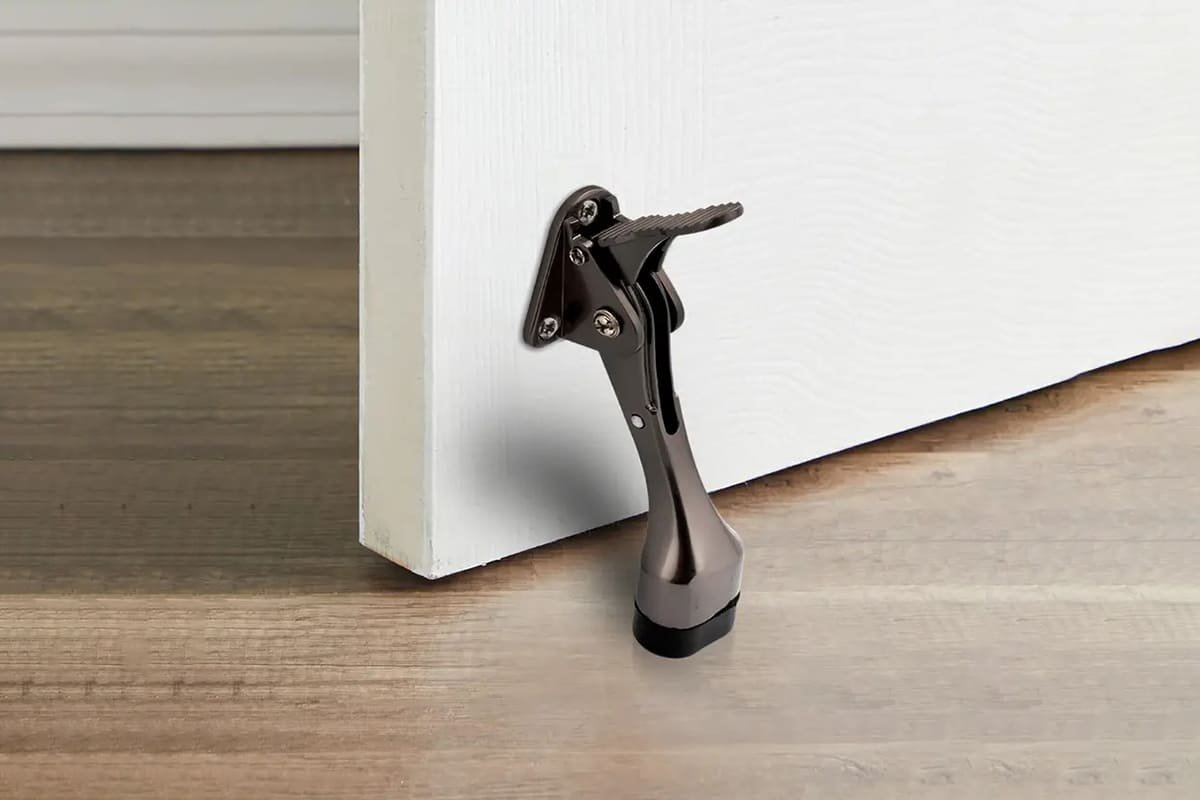
Floor-mounted versus wall-mounted decisions
Both magnetic and mechanical stoppers can be designed for floor or wall installation. The better choice depends on the project conditions.
| Installation Type | Advantages | Concerns |
|---|---|---|
| Floor-mounted | Stable location, common for strong stopping contact | Needs drilling; may affect waterproofing or floor finish |
| Wall-mounted | Avoids floor drilling; can protect wall or handle area | Needs strong wall material and correct height |
| Skirting-mounted | Convenient in some interiors | May be weaker depending on skirting material |
| Hinge-area stopper | Avoids separate floor/wall fixing | Compatibility depends on hinge and door structure |
Door swing angle and contact point
The stopper should meet the door at the correct point. If the contact point is too close to the hinge side, the door may create more force on the stopper.11 If it is too close to decorative or weak door areas, it may cause marks or deformation.
For a magnetic door stopper, the magnet and strike plate must meet cleanly. The door should not be forced into the magnet at an awkward angle. Poor alignment reduces holding stability and can make the product feel unreliable.
Surface strength and fixing method
The fixing surface is often more important than the stopper body.
Buyers should check:
- Concrete floor strength
- Tile risk during drilling
- Timber floor thickness
- Wall material and anchor type
- Skirting board strength
- Moisture exposure
- Clearance from cleaning equipment or foot traffic
A strong-looking stopper cannot compensate for weak anchors or unsuitable installation surfaces.12 For commercial or high-traffic spaces, installers should confirm that the fixing method matches the substrate.
Door weight and traffic frequency
Heavier doors and frequent traffic create more demanding conditions. A door that opens twenty times per day is different from a door that opens hundreds of times per day.
For high-use areas, buyers should consider:
- More robust stopper structure
- Better screw and anchor selection
- Clear installation instructions
- Replacement access
- Regular maintenance checks
A magnetic holding function may improve usability in busy spaces, but the product must be selected with realistic expectations. If the door is very heavy, exposed to strong wind, or part of a regulated public route, a project engineer or qualified hardware consultant should review the full door assembly.
Matching stopper selection with project purpose
I find it helpful to use a project-use matrix.
| Project Need | Recommended Direction |
|---|---|
| Only prevent wall damage | Mechanical stopper is usually enough |
| Keep room door open for ventilation | Magnetic stopper may be better |
| Move goods through opening | Magnetic holding can improve convenience |
| Low-cost simple interior door | Mechanical stopper may be more economical |
| High-frequency access route | Evaluate magnetic holding and fixing strength |
| Fire-rated or regulated door | Verify code requirements and professional guidance |
Why early confirmation saves cost
Door stoppers are small items, but late changes can create real cost. If the site has already drilled holes for one type, changing to another type may damage floor or wall finishes. If packaging or branding has already been produced, product changes may also affect shipment schedules.
For OEM and wholesale orders, I suggest confirming:
- Product type
- Finish
- Installation method
- Screw pack
- Logo requirement
- Packaging design
- Inspection criteria
- Sample approval record
This process may feel detailed for a small accessory, but it helps protect batch supply quality. In architectural hardware, small parts often create big user impressions.
Conclusion
The real difference in magnetic door stopper VS. mechanical door stopper selection is function. A mechanical stopper mainly protects walls and furniture from door impact. A magnetic model also holds the door open, which can improve usability for ventilation, moving goods, frequent access, and accessible routes. For B2B procurement, I recommend starting with the project use case, then checking installation conditions, sample performance, and supplier consistency. If you need factory-direct door accessories for OEM, wholesale, or project supply, SDH Hardware can support product selection, customization, and quality inspection.
"Electromagnetic door holder", https://en.wikipedia.org/wiki/Electromagnetic_door_holder. Patent literature on magnetic door holders describes a door-mounted strike or armature and a fixed magnetic body that together stop and retain a door in an open position; this supports the operating principle, while patent examples do not establish the performance of every commercial magnetic stopper. Evidence role: mechanism; source type: government. Supports: A neutral patent or technical description should show that magnetic door holders use a magnet and a strike or armature plate to retain a door in an open position.. Scope note: Patent examples are illustrative of the mechanism rather than independent performance tests of the specific product category. ↩
"Doorstop", https://en.wikipedia.org/wiki/Doorstop. Encyclopedic definitions describe a doorstop as a device used to hold a door open or prevent it from striking a wall, supporting the claim that ordinary mechanical stoppers commonly limit travel and protect adjacent surfaces; the definition is broad and may include holding designs as well as simple impact stops. Evidence role: definition; source type: encyclopedia. Supports: An encyclopedic or dictionary source should define a doorstop as a device used to stop a door's motion or prevent it from striking a wall or object.. Scope note: The source would support the general definition, not the relative prevalence of each mechanical stopper design. ↩
"A Simple Improvement for Permanent Magnet Systems ... - PMC", https://pmc.ncbi.nlm.nih.gov/articles/PMC8268960/. Studies of permanent-magnet holding forces show that attraction depends on gap distance, contact geometry, and alignment, supporting the claim that poor meeting between a magnet and strike plate can weaken or destabilize holding; the evidence concerns magnetic mechanics generally rather than door stoppers specifically. Evidence role: mechanism; source type: paper. Supports: A technical paper should show that magnetic attraction or holding force varies with air gap, alignment, contact geometry, or magnetic circuit conditions.. Scope note: The support is mechanistic and contextual unless the source tests magnetic door stoppers directly. ↩
"Chapter 4: Entrances, Doors, and Gates", https://www.access-board.gov/ada/guides/chapter-4-entrances-doors-and-gates/. Accessibility standards for doors on accessible routes require clear opening widths, maneuvering clearances, and usable door operation, contextualizing why a stable open position can improve usability; the standards do not generally require magnetic stoppers specifically. Evidence role: general_support; source type: government. Supports: Accessibility guidance should show that door usability on accessible routes depends on clear openings, maneuvering clearance, and operable door conditions.. Scope note: The source would support the accessibility context, not prove that a magnetic door stopper is necessary or compliant in every accessible route. ↩
"20.03 -- Lever arm", https://web.physics.ucsb.edu/~lecturedemonstrations/Composer/Pages/20.03.html. Introductory mechanics texts define torque as the product of applied force and lever arm distance, supporting the inference that a wider door can generate greater leverage about its hinges; this is a general mechanics principle rather than a door-stopper-specific test. Evidence role: mechanism; source type: education. Supports: A physics or engineering source should explain that torque increases with the perpendicular distance between the pivot and the applied force.. Scope note: The source would support the physics principle, not quantify performance for a particular door or stopper. ↩
"Vehicular Access Doors under Hurricane Force Wind Pressure", https://vtechworks.lib.vt.edu/items/68310128-b2e3-464d-ba36-8e3f1ebea30c. Government building-science guidance describes wind and pressure differences as forces acting on doors and building openings, supporting the claim that strong airflow can influence door stability; the evidence addresses building loads generally rather than magnetic stopper performance directly. Evidence role: mechanism; source type: government. Supports: A government building-science or hazard-mitigation source should document that wind pressure or pressure differences exert forces on doors and openings.. Scope note: The support is contextual unless the source specifically measures door-stopper holding under airflow. ↩
"Analysis on the Air-Gap Magnetic Field and Force of ... - PMC", https://pmc.ncbi.nlm.nih.gov/articles/PMC12735322/. Engineering references on permanent magnets describe holding or pull force as a finite quantity governed by magnet size, material, geometry, and air gap, supporting the article's caution that magnetic attraction should not be treated as unlimited strength. Evidence role: mechanism; source type: education. Supports: A university or educational engineering source should explain that magnet holding force is finite and depends on physical variables such as gap, geometry, and material.. ↩
"Chapter 4: Entrances, Doors, and Gates", https://www.access-board.gov/ada/guides/chapter-4-entrances-doors-and-gates/. Government building and accessibility guidance treats fire-rated openings, accessible routes, and public buildings as regulated conditions with specific technical requirements, supporting the need to verify applicable local codes and product documentation; exact obligations vary by jurisdiction and project type. Evidence role: expert_consensus; source type: government. Supports: Official code or accessibility guidance should show that fire-rated openings, accessible routes, and public buildings are subject to regulated requirements that must be verified for the project location.. Scope note: The source would establish the need for compliance review, not determine compliance for any particular stopper. ↩
"Fire Rated Door Hardware Requirements for Hospitals and Medical ...", https://sdhhardware.com/2026/08/27/fire-rated-door-hardware-requirements-for-hospitals-and-medical-buildings/. Fire-door standards and guidance require door assemblies and their hardware to maintain intended closing, latching, and protective functions, supporting the claim that an added accessory should not interfere with the safety function of the assembly. Evidence role: expert_consensus; source type: institution. Supports: A fire-safety institution or code source should state that hardware and field modifications must not impair the operation or rating of a fire door assembly.. ↩
"6.2.2. What kinds of Lot Acceptance Sampling Plans (LASPs) are there?", https://www.itl.nist.gov/div898/handbook/pmc/section2/pmc22.htm. ISO acceptance-sampling standards define the acceptance quality limit as a parameter used in inspection by attributes for lot-by-lot acceptance, supporting the article's reference to AQL as an established factory inspection method. Evidence role: definition; source type: institution. Supports: A standards body or neutral quality-control source should define AQL and describe its use in acceptance sampling inspection.. ↩
"12.2 Examples of Static Equilibrium", https://pressbooks.online.ucf.edu/osuniversityphysics/chapter/12-2-examples-of-static-equilibrium/. Statics principles state that moment equilibrium depends on the product of force and lever arm, so a shorter distance from the hinge to the stopper contact point can require a larger reaction force; this supports the installation guidance as a mechanical inference rather than a product-specific measurement. Evidence role: mechanism; source type: education. Supports: A university statics source should explain that, for a given moment, a shorter lever arm requires a larger reaction force.. Scope note: The source would support the force relationship but not specify acceptable stopper placement for every door assembly. ↩
"Load Capacity of Screw Anchor Installed in Concrete ... - PMC", https://pmc.ncbi.nlm.nih.gov/articles/PMC10934117/. Engineering guidance on anchors and fasteners explains that load capacity depends on substrate material, embedment, installation quality, and applied loads, supporting the claim that a robust stopper body cannot overcome weak anchors or unsuitable mounting surfaces. Evidence role: mechanism; source type: government. Supports: A government or engineering source should explain that fastener or anchor capacity depends on substrate material, embedment, installation quality, and load conditions.. ↩