Types of Face plates and Strikes: How Should Buyers Select the Right Combination?
Types of Face plates and Strikes look simple until a batch order reaches the door line or jobsite and the parts do not fit. One wrong plate width, corner radius, or strike form can create rework, returns, and inspection delays1. I treat selection as a risk-control process, not a catalog choice.
Types of Face plates and Strikes should be selected by mapping the lock standard first, then confirming plate dimensions, corner type, screw-hole spacing, strike form, frame material, and compliance requirements. EN mortise systems and ANSI/BS cylindrical systems should not be assumed interchangeable2, especially on prepped doors or fire-rated assemblies.
The right answer is rarely “use the standard one.” In my work with door factories and hardware brand teams, I have seen small specification gaps become expensive batch problems. The safer method is to build a clear selection map before production, purchasing, or stocking begins.
How Should Types of Face plates and Strikes Be Mapped Before Selection?
Face plates and strikes become risky when buyers start from appearance instead of system compatibility. A plate may look close enough in photos, but the door prep, lock case, frame, and certification may reject it. That gap creates slow production and difficult claims.
Types of Face plates and Strikes should be mapped in this order: standard → plate geometry → strike type → frame material → compliance3. I first identify whether the project uses EN mortise hardware or ANSI/BS cylindrical hardware, then I confirm drawings, dimensions, frame prep, and required approvals before locking the SKU.
Start With the Lock Standard, Not the Plate Shape
I usually begin with one basic question: Which hardware system is the door designed around? That answer controls almost everything else.
For architectural door hardware, buyers often deal with two broad tracks:
| Selection Track | Common Lock Type | Common Plate Area | Common Strike Area | Main Risk |
|---|---|---|---|---|
| EN track | Euro mortise lock | Mortise lock forend / face plate | Mechanical flat or box strike | Wrong width, length, corner, lip, or fire listing |
| ANSI/BS track | Cylindrical latch or bored lock | Latch faceplate or drive-in collar | T-strike or ASA strike | Wrong door prep or frame prep |
| Fire-rated assemblies | Listed hardware set | Approved forend / latch plate | Approved strike | Non-listed substitution may fail inspection |
All dimensions in this article are examples only and should be verified against the project drawing, supplier technical sheet, and certification documents. I do not treat any size as universal unless the project specification confirms it.
My Practical Five-Point Check
When I help a customer review a door hardware schedule, I use a simple checklist before confirming face plates and strikes:
Standard
- EN mortise?
- ANSI/BS cylindrical?
- Project-specific national standard?
Plate geometry
- Length
- Width
- Thickness
- Corner type: square, radius, round corner, or drive-in
- Screw-hole spacing
- Finish and material
Strike form
- Flat strike
- Box strike
- Strike with return flange
- T-strike
- ASA strike
- Lip length and opening shape
Frame material
- Wood frame
- Steel frame
- Hollow metal frame
- Aluminum profile frame
- Fire-rated frame system
Compliance
- Fire-rated certification
- CE-related documentation where applicable
- Project approval documents
- Door assembly listing
- Inspection requirements
I always remind buyers that the strike is not just a receiving plate. It is part of the working clearance between the latch, lock, door gap, and frame.4
Why Cross-Mixing Creates Dead Inventory
A common buying mistake is to search for a “universal” faceplate or strike to reduce SKUs. I understand the pressure. Product managers want fewer items. Wholesalers want easier stocking. Door factories want smoother assembly. However, universal thinking can create the opposite result.
For example, an EN mortise lock forend cannot be treated like an ANSI cylindrical latch faceplate. The mounting logic, lock body, cutout, and strike relationship are different. A T-strike for a wood frame is not a substitute for an ASA-prepped hollow metal frame. A round-corner latch faceplate is not the same as a square-corner prep, even when the visible size looks close.
In one batch case I handled, the buyer approved samples from photos only. The lock body was EN mortise, but the faceplate width in the batch did not match the routed pocket from the door factory. The result was not dramatic at first glance. It was only a few millimeters. But on the production line, the team had to re-route doors, refinish edges, and slow assembly. The fix was simple later: we created a standard-by-standard mapping sheet and required drawing confirmation before repeat orders.
That case shaped how I now advise buyers: do not approve face plates and strikes without a system map.
Which Types of Face plates and Strikes Fit EN Mortise Lock Systems?
EN mortise projects often fail at the small details. The lock case may be correct, but the forend width, corner radius, strike lip, or return flange may not match the door and frame. These mistakes cause rubbing, weak fixing, and ugly edge work.
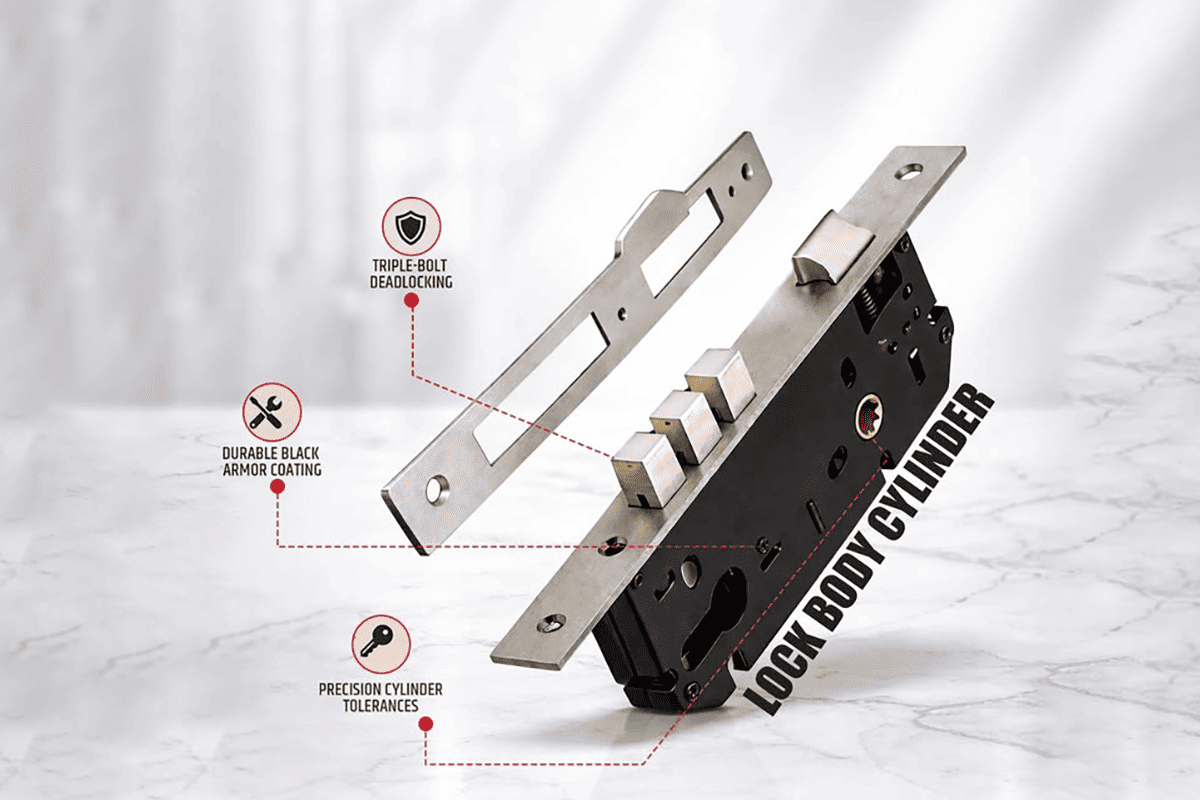
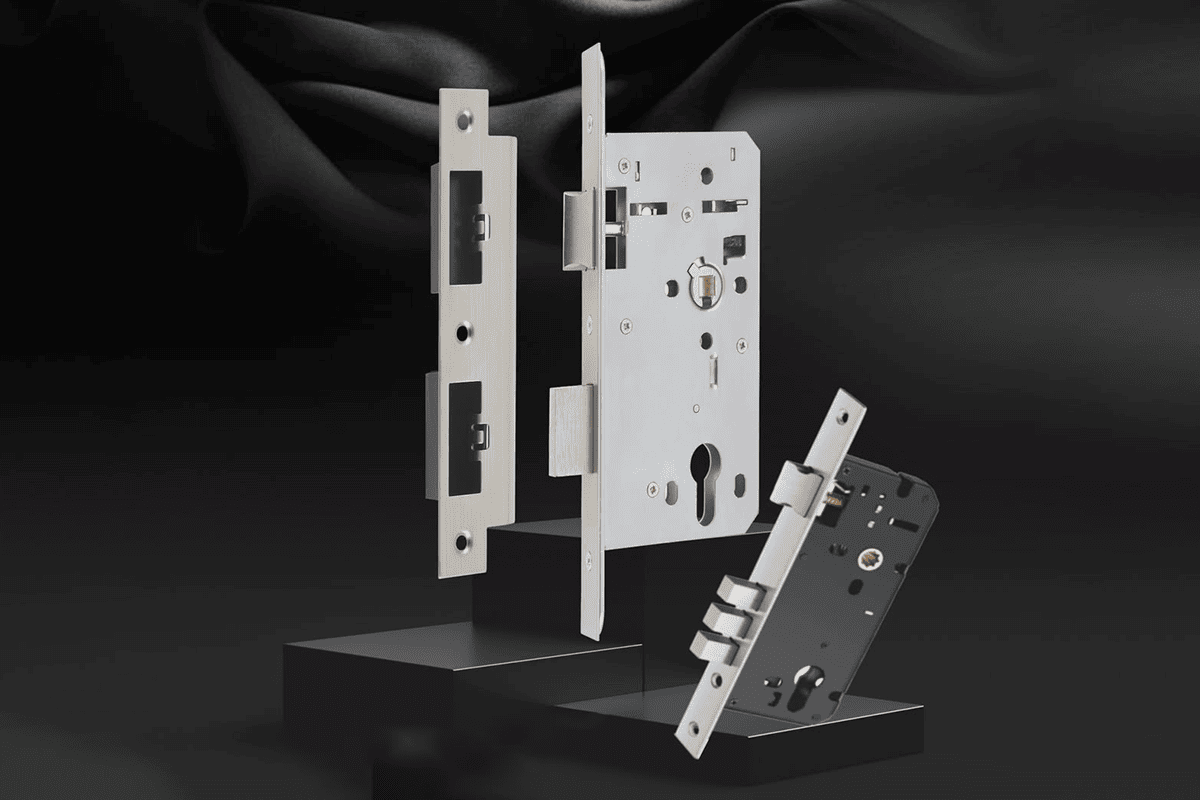
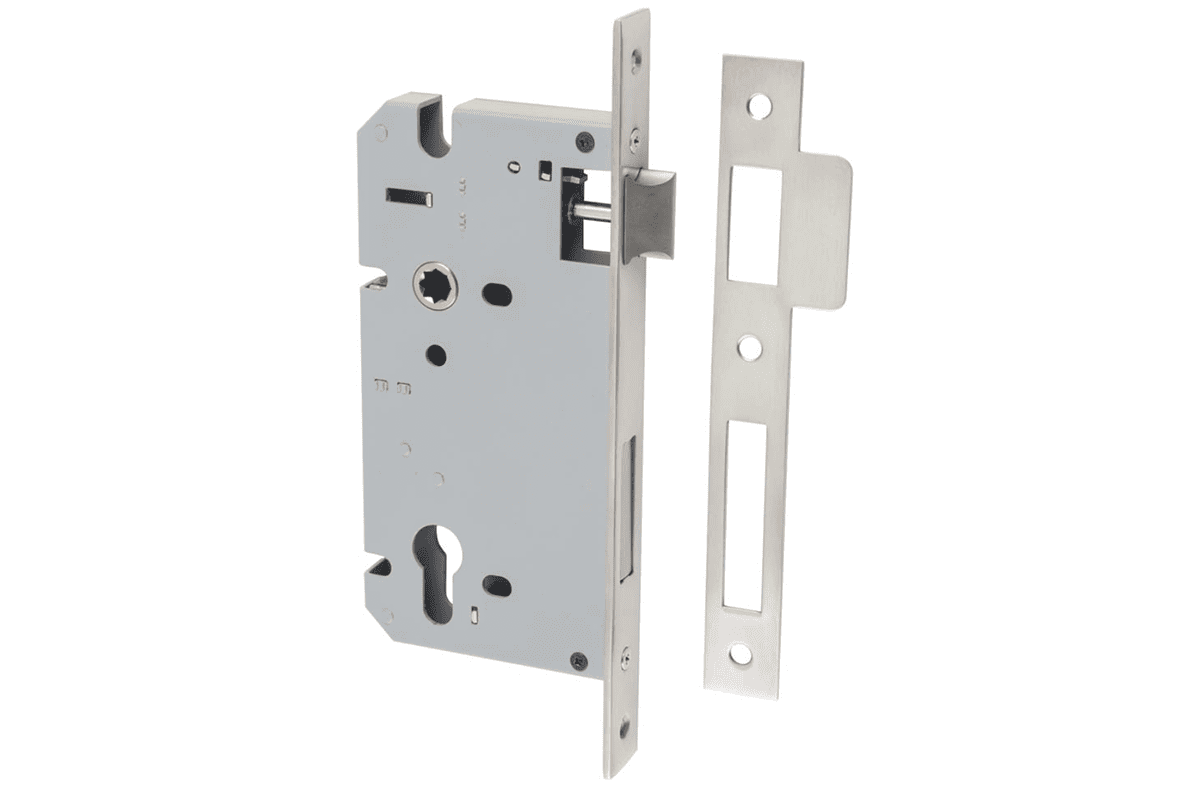
Types of Face plates and Strikes for EN mortise systems should be selected around the mortise lock forend and mechanical strike. I confirm the forend length, width, corner type, screw positions, strike box or flat form, lip length, frame material, and fire-rated approval before shipment.
EN Mortise Forends: The Face Plate on the Lock Edge
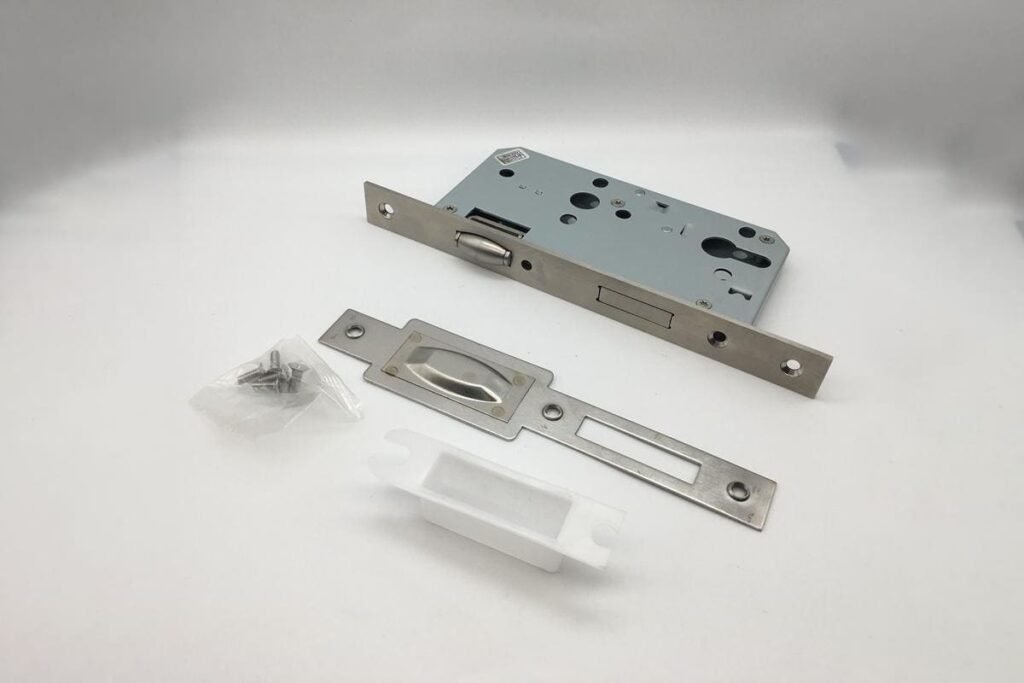
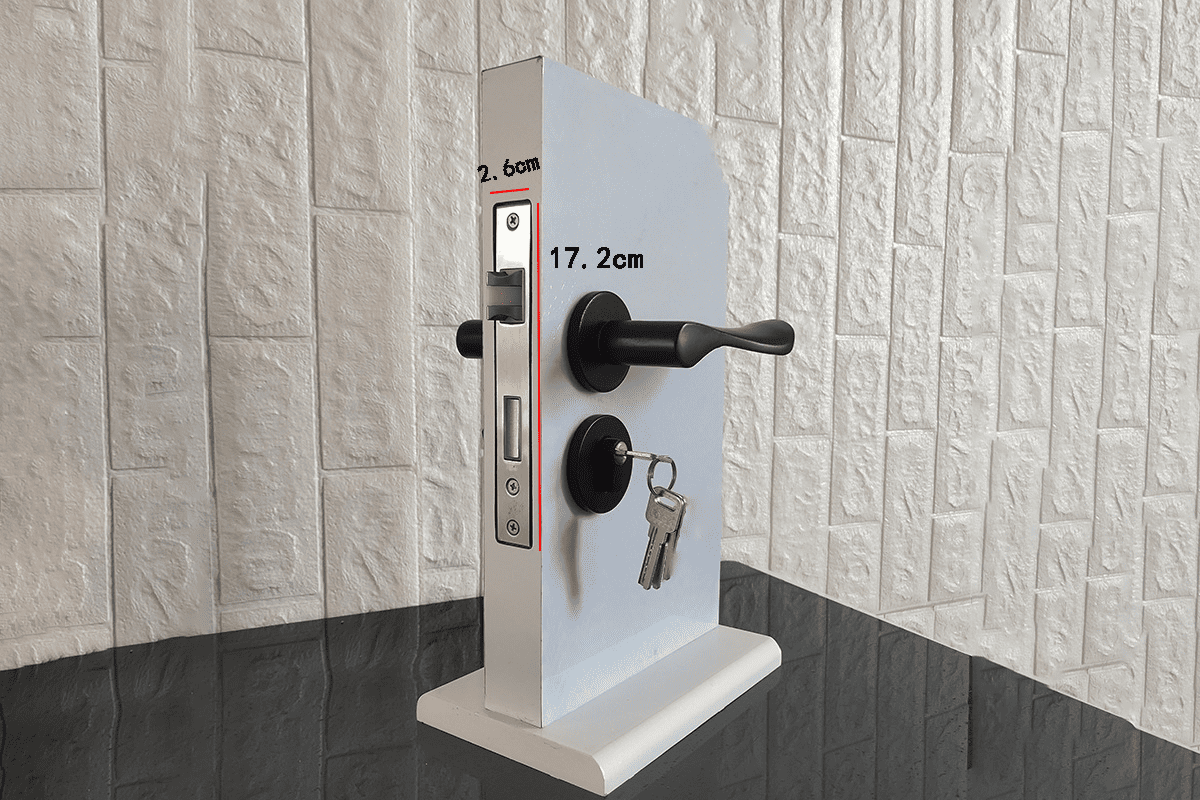
In EN mortise lock language, many buyers call the visible lock-edge plate a [forend or face plate](https://en.wikipedia.org/wiki/Mortise_lock)%%%FOOTNOTE_REF_5%%%. It is fixed to the lock case and sits flush with the door edge.6 It controls appearance, screw fixing, and compatibility with the routed door pocket.
Common EN forend variables include:
| Item to Check | What I Verify | Why It Matters |
|---|---|---|
| Forend length | Example families vary by lock design; verify with spec | Wrong length leaves gaps or requires re-routing |
| Forend width | Common widths depend on lock series; verify with spec | Wrong width weakens seating or exposes cutout |
| Corner type | Square or radius corners | Mismatch causes chipping or hand finishing |
| Screw-hole spacing | Must match lock forend and door prep | Wrong spacing delays assembly |
| Thickness | Must sit flush after routing | Proud plates rub or look poor |
| Finish | SS, plated, painted, or project finish | Must match handle, hinge, and cylinder finish |
I avoid saying one dimension is “standard” unless the buyer shows me the drawing. Even within EN-style mortise locks, factories may use different forend widths or corner radii by market, lock grade, or door construction.7
EN Mechanical Strikes: Flat, Box, Return, and Lip
The EN mortise strike must accept the latch and deadbolt smoothly. The visible plate is only one part of the decision. The frame condition matters just as much.
Common EN strike choices include:
Flat strike
- Often used where the frame prep supports the latch and bolt without a deep box.
- It requires correct mortise depth and alignment.
Box strike
- Includes a dust box or enclosed receiver.
- It can improve appearance and reduce debris inside the frame pocket.
Strike with return flange
- Used when the frame profile needs a wrapped edge or return.
- It must match frame geometry.
Different lip lengths
- The lip helps guide the latch into the strike.
- Wrong lip length can cause rubbing, scraping, noise, or poor closing.8
Case: EN Forend Width Mismatch
One anonymized case involved a door factory producing a hotel batch with EN mortise locks. The lock function was correct, and the finish was approved. However, the ordered forend width did not match the factory’s pre-routed door edge.
The chain was clear:
- Cause: The buyer checked lock backset and cylinder center but did not confirm forend width and corner radius.
- Consequence: The door edge needed re-routing. Some doors also needed touch-up work after chipping near the routed pocket.
- Fix: We matched the forend drawing to the door CNC file and marked that width as a hard boundary for repeat orders.
- Impact: The project lost several working days, and the customer added an incoming inspection step for all future lock batches.
That situation was not caused by poor manufacturing. It was caused by incomplete specification mapping.
Hard No-Mix Boundaries for EN Parts
I treat these EN issues as hard no-mix boundaries:
- Do not mix different forend widths on pre-routed doors.
- Do not change corner radius without checking the door machining.
- Do not change strike lip length without checking the frame gap and latch travel.
- Do not replace a box strike with a flat strike unless the frame prep and project approval allow it.
- Do not field-modify fire-rated doors or frames unless the listing and approving authority allow that exact work.9
Fire doors deserve special care. A strike or forend may look mechanically compatible, but the approved assembly may require a listed combination. At SDH Hardware, we can provide CE and fire-rated certification documents for applicable products, but I always tell buyers to verify the exact document against the project requirement, door type, and local inspection process.
Which Types of Face plates and Strikes Fit ANSI/BS Cylindrical Systems?
ANSI/BS cylindrical systems create a different risk. The latch faceplate and strike must match bored-door prep and frame prep. If a buyer sends a T-strike to an ASA-prepped metal frame, the installer cannot solve it cleanly with force.
Types of Face plates and Strikes for ANSI/BS cylindrical systems should follow the door and frame prep. I confirm whether the latch needs a square-corner plate, round-corner plate, or drive-in collar, then I match the frame to a T-strike or ASA strike as specified.
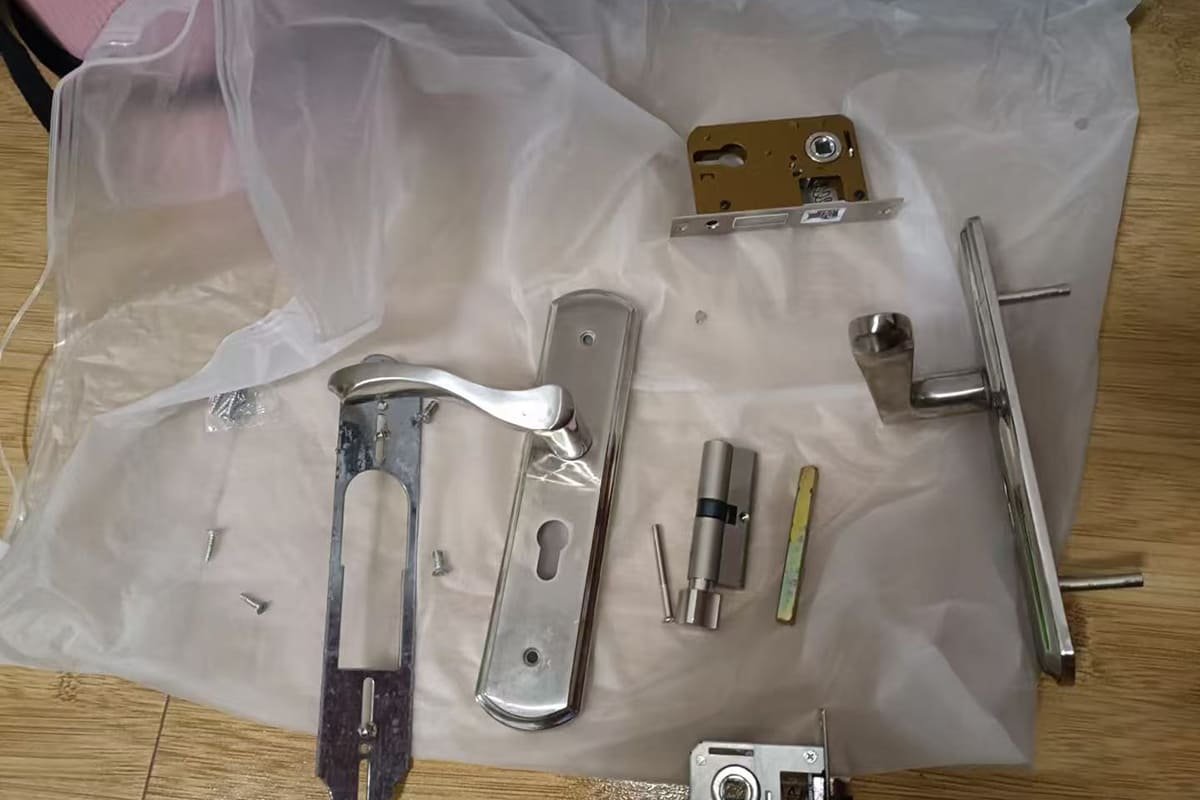
Cylindrical Latch Faceplates: Square, Round, and Drive-In
Cylindrical locks use a latch that fits into the door edge. The latch faceplate must match the edge preparation.10
Common types include:
| Latch Faceplate Type | Typical Use | Buyer Risk |
|---|---|---|
| Square-corner faceplate | Door edge routed with square corners | Round-corner plate leaves gaps; forced fit chips edge |
| Round-corner faceplate | Door edge routed with radius corners | Square plate needs extra cutting |
| Drive-in latch collar | Door edge prepared for drive-in installation | Plate-style latch will not fit the same prep |
All sizes and hole patterns must be verified with the project spec. Common North American-style latch faceplates are often described with familiar nominal dimensions, but I do not rely on memory for production orders. I ask for the lock template or door machining drawing.
T-Strike vs ASA Strike
The strike decision depends heavily on the frame.
T-strike
- Often used on wood frames in residential or light commercial applications.
- It has a shape that matches a specific routed pocket.
- It should not be forced into an ASA-prepped hollow metal frame.
ASA strike
- Often used on metal or commercial frames.
- It usually has an elongated opening and a different screw pattern.
- It must match the frame manufacturer’s preparation.
The phrase “standard strike” causes many problems. Standard for which market? Standard for which frame? Standard for which lock series? I prefer terms like T-strike for wood frame prep or ASA strike for hollow metal frame prep because they reduce ambiguity.
Case: T-Strike Shipped to an ASA-Prepped Frame
I once helped a wholesale customer review a return claim from a commercial project. The locks were acceptable, but the strikes were not. The project frames were prepped for ASA strikes, while the shipment included T-strikes.
The chain looked like this:
- Cause: The purchase order listed “standard strike” without naming ASA or T-strike.
- Consequence: Installers could not mount the strikes on the hollow metal frames. The jobsite requested urgent replacements.
- Fix: We updated the item code to include strike type, frame type, and screw-hole pattern. The replacement batch used the correct ASA strike according to the project template.
- Impact: The customer faced a delay and extra freight cost. The larger cost was the loss of confidence from the contractor.
This is why I ask buyers to add frame preparation to the hardware schedule. A lock schedule without frame data is incomplete.
Avoid Forcing a Mismatch
Installers sometimes try to solve mismatches with chisels, files, or extra screws. That may work on a mock-up door, but it is a poor batch strategy.
Common problems from forced installation include:
- Chipped veneer or painted door edges
- Loose latch seating
- Misaligned latch entry
- Noisy closing
- Visible gaps around the plate
- Weak screw holding
- Failed inspection on commercial or fire-rated openings
For non-rated doors, a qualified installer may have some approved field adjustment options. For fire-rated doors, I recommend far stricter control. The listed assembly, door label, frame label, and hardware documents should guide any change. I do not recommend non-listed substitutions or field modifications that could void approvals.
How Do Types of Face plates and Strikes Affect Compliance and Inspection?
Compliance problems often appear late, when the project has little time left. The doors are hung, the hardware is installed, and the inspector asks for proof that the combination is approved. At that point, a cheap substitution becomes expensive.
Types of Face plates and Strikes affect compliance because they form part of the installed door hardware assembly. On fire-rated openings, buyers should verify listed or approved combinations, certification documents, and project requirements before changing any forend, latch faceplate, or strike.
Fire-Rated Assemblies Need Approved Combinations
A fire-rated door is not just a door leaf. It is an assembly.11 The lock, latch, strike, hinges, closer, seals, frame, and installation method can all affect approval.
For face plates and strikes, I advise buyers to verify:
- Product certification document
- Fire-rated test reference or approval scope
- Door type and core material
- Frame material and preparation
- Lock model and latch/deadbolt configuration
- Strike model and mounting method
- Local inspection requirement
- Any restriction on field modification
At SDH Hardware, our core products can be supplied with CE certification and fire-rated certification where applicable. However, I still ask customers to confirm the documents against their project. A certificate is not useful if it does not apply to the exact opening, hardware combination, or local authority requirement.
Case: Fire Door Failed Because of a Non-Listed Strike
An anonymized project involved a fire-rated door package where the locks were approved, but the installed strike was substituted locally. The substitute strike looked similar and allowed the latch to close. Mechanically, it seemed fine. During inspection, the documentation did not support that strike in the listed assembly.
The chain was simple:
- Cause: A local replacement strike was used to solve a stock shortage.
- Consequence: The inspector asked for listed hardware evidence, and the project could not provide it.
- Fix: The team replaced the strikes with the documented approved model and updated the packing list for future shipments.
- Impact: The project had inspection delay and duplicated installation labor.
This case taught me to separate two questions:
- Does it fit?
- Is it approved for this opening?
Both answers must be yes.
Documentation Buyers Should Request
For B2B purchasing, I recommend keeping a project file for every confirmed hardware set. This file should include:
| Document | Why I Request It |
|---|---|
| Product drawing | Confirms length, width, thickness, holes, and corner type |
| Installation template | Confirms door and frame prep |
| Material and finish specification | Supports corrosion and appearance requirements |
| Certification documents | Supports compliance review |
| Packing list by SKU | Prevents mixed strikes or plates |
| Inspection report after production | Helps catch wrong variants before shipment |
| Approved sample record | Prevents later argument about what was confirmed |
This is also where supplier selection matters. A factory-direct supplier should be able to provide drawings, confirm variants, and inspect the finished goods before shipment. In our own work at SDH Hardware, I prefer to confirm detailed product drawings after order confirmation and inspect completed goods before release. Buyers should still conduct their own incoming quality checks, especially for project-critical items.
How Should Buyers Stock Types of Face plates and Strikes Without Creating Dead Inventory?
Inventory pressure is real. Hardware brands and wholesalers need enough variants to serve local markets, but too many SKUs create slow-moving stock. The wrong simplification, however, creates returns instead of savings.
Types of Face plates and Strikes should be stocked within each market standard, not across incompatible systems. I recommend keeping the most common EN variants for EN markets and the most common ANSI/BS variants for those markets, while treating fire-rated and frame-specific items as controlled SKUs.
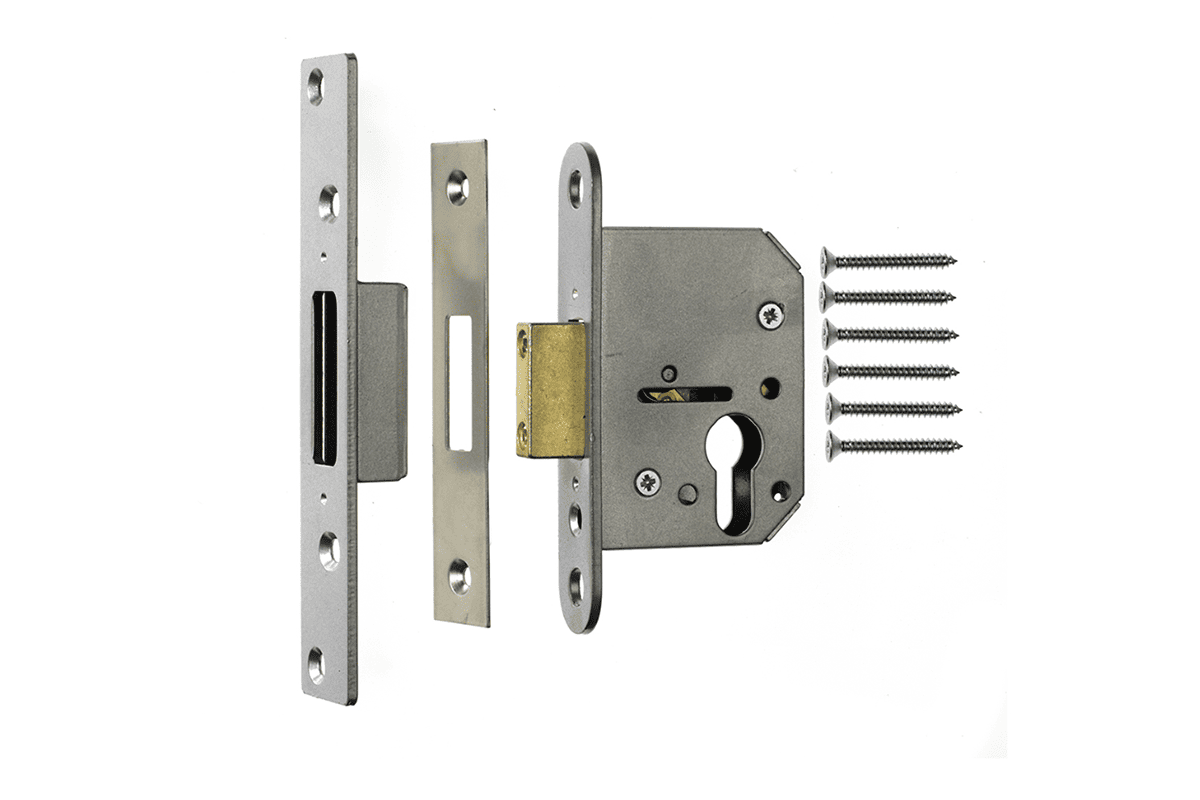
Build SKU Families by Market Track
I normally help buyers divide inventory into families rather than one mixed bucket. This makes purchasing cleaner and reduces picking errors.
A practical SKU structure may look like this:
| SKU Family | Example Label Logic | Control Point |
|---|---|---|
| EN mortise forend | EN + lock series + forend size + corner + finish | Door edge routing |
| EN strike | EN + strike form + lip + frame + finish | Frame gap and prep |
| Cylindrical latch faceplate | ANSI/BS + square/round/drive-in + finish | Door prep |
| Cylindrical strike | ANSI/BS + T/ASA + frame + finish | Frame prep |
| Fire-rated item | Standard + approved model + certificate reference | Compliance document |
The point is not to make codes long for no reason. The point is to make the code carry the risk information. If the code says only “strike plate,” the warehouse may ship the wrong item.
What I Consider Universal—and What I Do Not
Some elements can be standardized within a narrow range. For example, a hardware brand may decide to stock fewer finishes or focus on one screw type for a product family. A wholesaler may select a common faceplate style for a specific regional door prep.
However, I do not treat these as universal:
- EN forend vs ANSI latch faceplate
- T-strike vs ASA strike
- Square-corner vs round-corner latch faceplate
- Fire-rated approved strike vs non-listed lookalike
- Wood frame strike vs hollow metal frame strike
- Different lip lengths when door gaps vary
Quality Control Before Shipment
For batch orders, I suggest a simple but firm inspection plan. This is especially important for OEM/ODM buyers and brand owners who sell under their own packaging.
Key checks include:
Drawing-to-sample check
- I compare plate length, width, thickness, hole spacing, and corner type.
Function check
- I confirm latch and deadbolt entry into the strike with the matching lock.
Finish check
- I compare surface treatment against approved sample or color standard.
Packing check
- I verify that strikes and faceplates are not mixed across standards.
Document check
- I confirm that certification and fire-rated documents match the shipped product where required.
At SDH Hardware, we support OEM and ODM orders, custom surface treatments, customer logos, packaging design, and inspection after order completion. I see those services as useful only when the technical mapping is already correct. Custom packaging cannot rescue a mismatched strike.
A Lean Stocking Rule I Use
My simple rule is this:
Reduce SKUs inside a standard. Do not reduce SKUs by mixing standards.
For example, a brand selling into Europe and the Middle East may rationalize EN mortise forend and strike variants based on its main door factory partners. A wholesaler selling into Southeast Asia may keep selected ANSI/BS cylindrical latch and strike variants for its most common frame types. Both strategies can work.
The risky strategy is to buy one “almost fitting” strike and expect it to cover wood frames, metal frames, EN locks, ANSI locks, and fire-rated jobs. That is how slow-moving inventory becomes dead inventory.
Frequently Asked Questions
Are face plates and strikes interchangeable between EN and ANSI/BS systems?
No. EN mortise face plates and strikes should not be assumed interchangeable with ANSI/BS cylindrical latch faceplates and strikes. The lock body, door prep, frame prep, screw pattern, and compliance documents may all differ. Buyers should confirm drawings and project standards before ordering.
What is the difference between a T-strike and an ASA strike?
A T-strike is commonly used with specific wood frame preparations, while an ASA strike is commonly used with metal or commercial frame preparations.12 They have different shapes and mounting patterns. Buyers should match the strike to the frame template, not just the lock function.
Can I modify a fire-rated door or strike on site?
I do not recommend field modification unless the listed assembly, certification documents, and local authority allow it. Fire-rated doors require approved combinations. Changing a strike, forend, or latch faceplate without approval can create inspection failure and may void the rating.
What dimensions should I confirm before ordering face plates and strikes?
I confirm length, width, thickness, corner type, screw-hole spacing, lip length, opening shape, finish, frame material, and standard. For fire-rated projects, I also confirm the approved hardware combination and certification scope. All dimensions should be verified against project drawings.
How can wholesalers reduce face plate and strike inventory risk?
Wholesalers can reduce risk by building SKU families by standard and frame type. They should keep common variants for each market, but they should not cross-mix EN and ANSI/BS parts. Clear item codes, approved samples, and packing inspections help prevent returns.
Conclusion
Types of Face plates and Strikes should be selected through a controlled map, not visual guesswork. I start with the hardware standard, then I verify plate geometry, strike type, frame material, and compliance documents. This method helps buyers avoid rework, failed inspections, and dead inventory. If you need factory-direct support for EN mortise locks, lever handles, hinges, cylinders, and matched door hardware sets, SDH Hardware can help review your specifications and prepare suitable OEM/ODM solutions.
"Review study for rework causes in construction industry - Academia.edu", https://www.academia.edu/45589967/Review_study_for_rework_causes_in_construction_industry. Empirical studies of construction rework identify design errors, omissions, and specification changes as recurring contributors to rework, cost growth, and schedule disruption; this evidence contextualizes the door-hardware example rather than directly measuring face plate or strike errors. Evidence role: general_support; source type: paper. Supports: Specification and design errors are recognized causes of construction rework and schedule or cost impacts.. Scope note: Contextual support only; a construction rework study may not quantify returns or inspection delays for door hardware specifically. ↩
"European standard for mortise lock-BS EN12209 - SDH hardware", https://sdhhardware.com/2022/12/09/european-standard-for-mortise-lock-bs-en12209/. Lock standards and institutional technical references distinguish mortise lock systems from bored or cylindrical lock systems by lock construction, door preparation, and associated strike requirements, supporting the caution that EN mortise and ANSI/BHMA cylindrical components should not be presumed interchangeable. Evidence role: expert_consensus; source type: institution. Supports: EN mortise lock standards and ANSI/BHMA cylindrical lock standards describe different lock types, installation preparations, and associated hardware interfaces.. Scope note: Standards may define requirements and test categories rather than provide a direct interchangeability comparison. ↩
"SECTION 087111 - DOOR HARDWARE (SCHEDULED BY ...", https://fpm.usc.edu/wp-content/uploads/2021/11/087101-USC-UPC-door-hardware-Guide-Specification_1.pdf. Institutional door-hardware guidance treats lock standards, hardware templates, frame preparation, and code or listing requirements as linked specification controls, providing contextual support for a selection workflow that proceeds from standard identification to geometry, strike, frame, and compliance checks. Evidence role: general_support; source type: institution. Supports: Architectural door hardware specifications commonly rely on standards, dimensions, frame preparation, and code or listing requirements.. Scope note: Contextual support only; the exact five-step ordering is the article author's workflow rather than a universally codified sequence. ↩
"section 083463 - security detention doors and frames", https://www.kentoncountyky.gov/DocumentCenter/View/3027. Technical door-hardware references describe the strike as the frame-mounted component that receives the latch or bolt and requires correct alignment with the door, latch, and frame preparation, supporting the statement that it affects working clearance. Evidence role: mechanism; source type: institution. Supports: Strike plates must be positioned and prepared to receive the latch or bolt with proper alignment and clearance.. ↩
"Mortise lock - Wikipedia", https://en.wikipedia.org/wiki/Mortise_lock. Door-hardware glossaries and lock standards define a mortise lock forend as the visible plate on the door edge attached to the lock case, supporting the article’s use of 'forend' and 'face plate' for this component. Evidence role: definition; source type: institution. Supports: Door-hardware glossaries or standards define the forend as the lock-edge plate of a mortise lock, often corresponding to what users call a face plate.. ↩
"Mortise lock", https://en.wikipedia.org/wiki/Mortise_lock. Educational and technical installation references for mortise locks describe the lock case as recessed into the door edge with the forend or faceplate seated flush at the edge surface, supporting the installation description. Evidence role: mechanism; source type: education. Supports: Mortise lock installation requires the lock body to be recessed into the door and the forend or faceplate to sit flush with the door edge.. ↩
"Are all mortise locks interchangeable? - SDH hardware- China ...", https://sdhhardware.com/2026/07/01/are-all-mortise-locks-interchangeable/. Institutional standards and technical templates for mortise locks document lock-dependent forend dimensions and door-preparation details, providing support for the caution that EN-style mortise locks should not be treated as dimensionally uniform. Evidence role: general_support; source type: institution. Supports: Mortise lock standards and technical templates accommodate or document different lock and forend dimensions, making drawing verification necessary.. Scope note: Contextual support only; a standard may not attribute dimensional variation specifically to market, grade, and door construction in the same terms used by the article. ↩
"Door knob doesn't line up with strike plate on frame : r/DIY", https://www.reddit.com/r/DIY/comments/18pi4iq/door_knob_doesnt_line_up_with_strike_plate_on/. Door-hardware installation references explain that strike lip length must suit the frame and door clearance so that the latch can enter the strike without binding or damaging adjacent surfaces, supporting the stated closing problems. Evidence role: mechanism; source type: institution. Supports: Strike lip length and jamb clearance affect how the latch enters the strike and whether the door closes smoothly.. ↩
"How to Install a Fire Door Lock Step by Step? - SDH hardware ...", https://sdhhardware.com/2026/06/23/how-to-install-a-fire-door-lock-step-by-step/. NFPA 80 and related listing guidance restrict field modifications to labeled fire doors and frames unless the work is permitted by the listing, labeling service, and authority having jurisdiction, supporting the article’s warning against unauthorized modification. Evidence role: expert_consensus; source type: institution. Supports: Fire-door standards restrict field modifications and require compliance with listings, labels, and approval by the authority having jurisdiction.. ↩
"Standard Door Prep Instructions", https://www.directdoorhardware.com/standard-door-prep-how-to.htm?srsltid=AfmBOorvhtg-4mHKzRQqkqc_1B_u8LurB7b1s3k3AzmI1CmdcAUSTPmB. Cylindrical lock templates and institutional hardware references distinguish square-corner, round-corner, and drive-in latch preparations, supporting the requirement that the latch faceplate match the door-edge preparation. Evidence role: mechanism; source type: institution. Supports: Cylindrical latch installation templates distinguish square-corner, round-corner, and drive-in preparations.. ↩
"What Are the Fire Door Hinge Placement Requirements for ...", https://sdhhardware.com/2026/08/13/what-are-the-fire-door-hinge-placement-requirements-for-commercial-buildings/. Fire-door codes and listing standards define a fire door as part of a fire door assembly that includes the door, frame, hardware, and installation conditions, supporting the statement that the rated unit is more than the door leaf alone. Evidence role: definition; source type: institution. Supports: Fire-door requirements define and regulate fire door assemblies that include the door, frame, hardware, and installation conditions.. ↩
"How to choose hollow metal door hardware?", https://sdhhardware.com/2026/08/14/how-to-choose-hollow-metal-door-hardware/. Door-hardware template references distinguish T-strikes from ASA strikes by plate shape, opening, and screw pattern, and commonly associate ASA preparations with commercial hollow-metal frames, supporting the article’s frame-preparation distinction. Evidence role: definition; source type: institution. Supports: Door-hardware references distinguish T-strike and ASA strike forms and associate them with different frame preparations.. Scope note: The wood-frame association for T-strikes is common practice rather than an exclusive rule. ↩