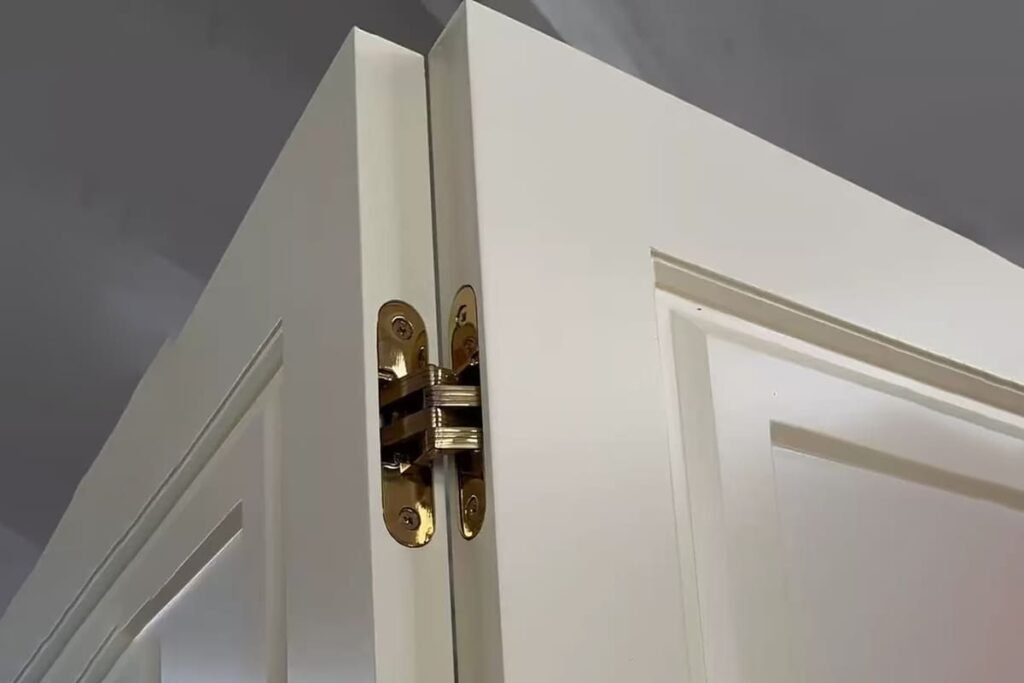
When Does a 90 Degree Stay-Open Pivot Hinge Make Sense for Hidden Doors?
A 90 degree stay-open pivot hinge can solve a real hidden-door problem, but it can also create callbacks when buyers treat it as a universal hinge. The risk grows when the door needs wider swing, self-closing, or stronger load control. I use a simple rule: match the hinge to the doorway’s real function first.
A 90 degree stay-open pivot hinge makes sense for hidden doors when the usable opening is truly acceptable at 90°1, the project needs a controlled hold-open position, and there is no mandatory self-closing requirement2. If the door needs wider clearance, fire-rated self-closing, heavy-duty traffic, or incompatible closer forces, buyers should choose another pivot or door-control solution.
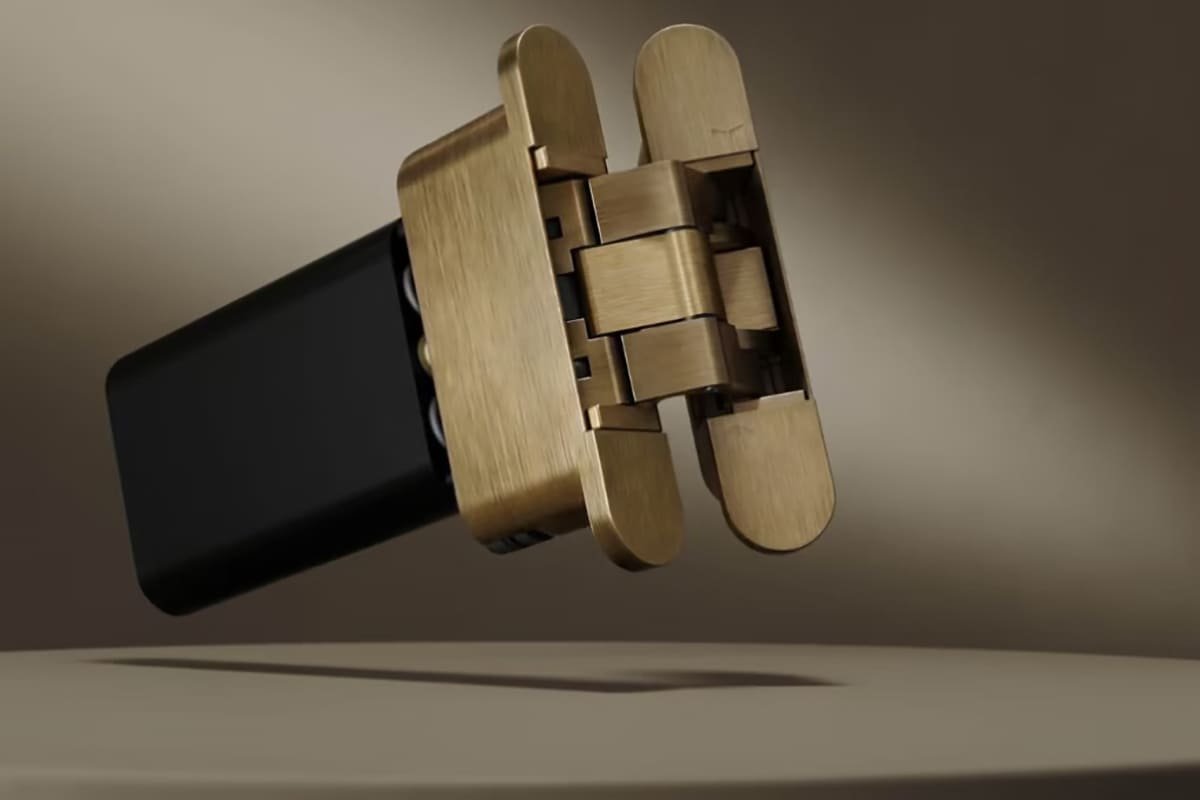
Hidden doors look simple from the outside. In factory-side project support, I have learned that the hidden mechanism is where most mistakes start. The right decision is less about liking the 90° feature and more about checking traffic, clearance, load, pivot offset, and compliance.
A 90 degree stay-open pivot hinge helps when a hidden door must pause neatly at a right angle. The problem starts when buyers choose it only because “stay-open” sounds convenient. If the doorway is narrow or lightly used, it may work well. If traffic is heavier, the same feature may become a limitation.
A 90 degree stay-open pivot hinge adds value when the hidden door is used for short-duty access, cleaning, ventilation, display, or equipment checks, and the opening works safely at 90°. It improves pass-through convenience without a separate door holder, as long as the door leaf stays within the manufacturer’s rated limits.
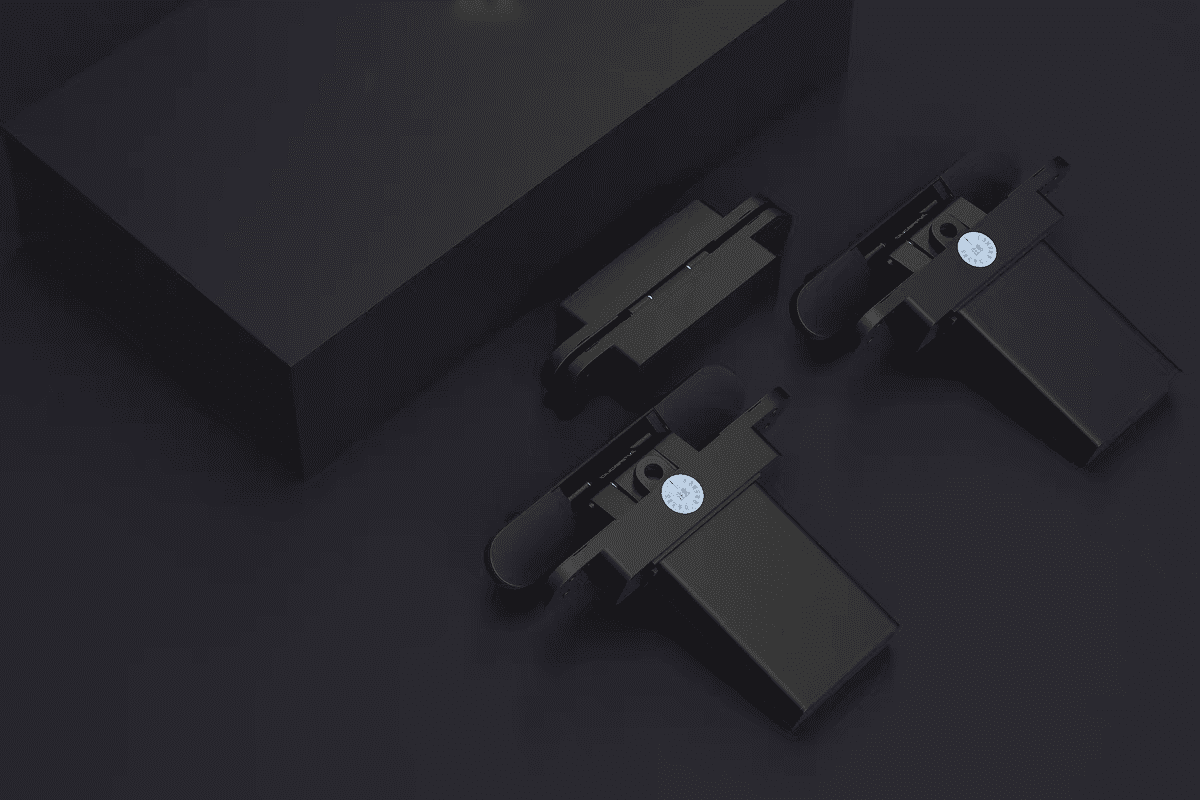
Where the 90° hold-open position helps
In many hidden-door projects, the buyer does not need a full 180° swing. The door may lead to a storage room, service cabinet, utility space, showroom corner, hotel back-of-house area, or private office wall panel. In these cases, a controlled stop at 90° can feel practical because the door stays out of the immediate path without needing a floor wedge or wall-mounted holder.
From my project experience, the strongest use cases usually share these conditions:
- The door is opened for short periods, not constant peak traffic.
- The clear opening at 90° is enough for people or small tools.
- The project wants a clean hidden-door look, so exposed door holders are undesirable.
- The door does not need self-closing for fire, smoke, security, or egress rules.
- The door weight, width, and core construction match the hinge rating with a sensible safety margin.
I often describe the 90° stay-open feature as a convenience function, not a traffic-control solution. It can make daily use smoother, but it should not be used to compensate for poor planning.
Practical hidden-door examples
| Hidden-door use case | Does 90° stay-open make sense? | Why |
|---|---|---|
| Residential-style storage room | Often yes | Short access time and limited traffic |
| Hotel maintenance closet | Often yes | Useful for cleaning and equipment checks |
| Showroom display panel | Often yes | Door can stay open for viewing or inspection |
| Back-of-house staff passage | Sometimes | Depends on traffic peaks and cart movement |
| Fire-rated corridor door | Usually no | Self-closing may be mandatory |
| Furniture moving route | Usually no | Wider swing may be required |
Why buyers should define “real opening” early
A hidden door may look wide on a drawing, but the actual clear width changes after the pivot offset, door thickness, frame detail, handle position, wall finish, and opening angle are considered. A door that looks acceptable at 90° in a catalog may feel tight on site.
I recommend that door manufacturers and hardware importers ask one direct question before approving the SKU:
“At 90°, can the user safely perform the task this doorway exists for?”
If the answer is yes, the 90 degree stay-open pivot hinge may be a good choice. If the answer is “maybe,” I slow the approval down and request a plan review, sample mock-up, or application test.
When should buyers avoid a 90 degree stay-open pivot hinge?
A 90 degree stay-open pivot hinge should be avoided when the hidden door needs self-closing, wider swing, high people flow, cart movement, or uncertain clearance. The hold-open feature can become a bottleneck. It can also increase pinch risk if users try to push the door beyond the intended stop.
Buyers should avoid a 90 degree stay-open pivot hinge when the application requires more than 90° net opening, mandatory self-closing, heavy or wide door leaves beyond rating, or compatibility with closers, magnets, or return devices that conflict with the hinge’s holding force.
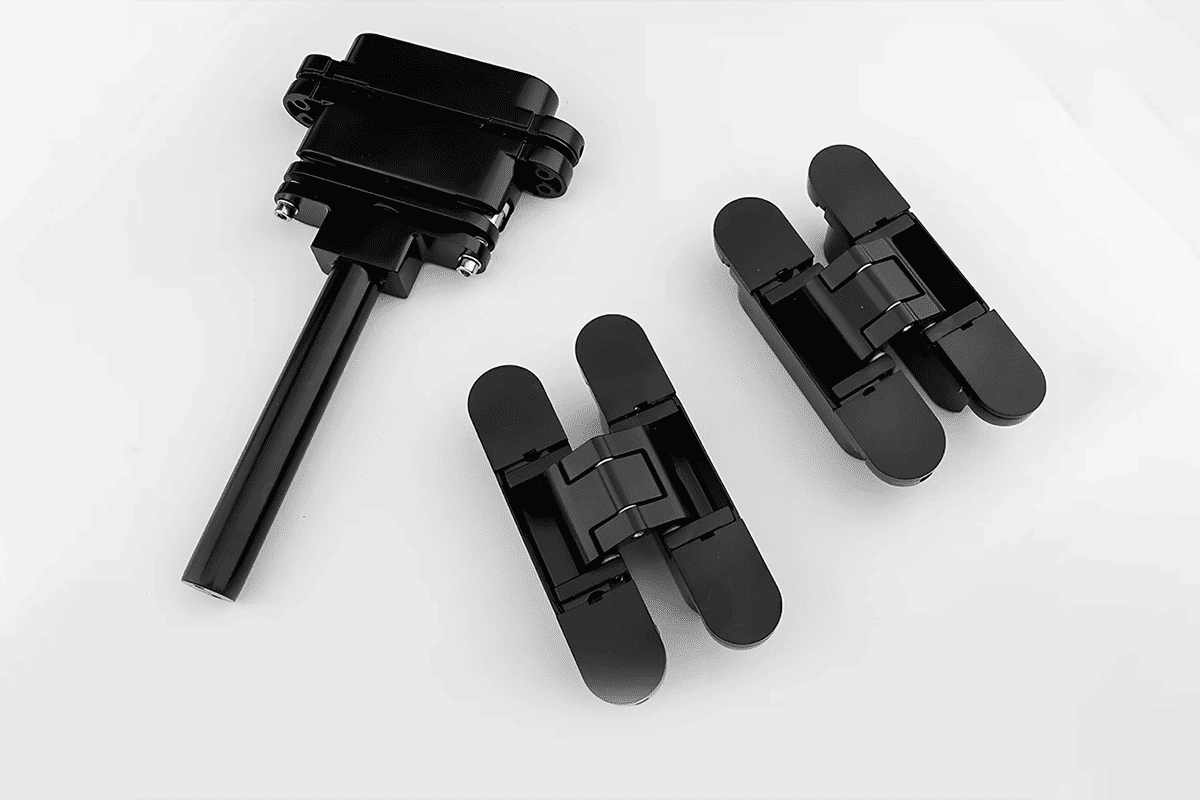
The biggest disqualifier: self-closing requirements
The first red flag is compliance. If the door has a required self-closing function because of fire, smoke, egress, security, or local code requirements3, I do not recommend a stay-open hinge unless a qualified professional confirms that the complete system is compliant.
This is especially important for commercial projects. A hidden door may still be part of a regulated opening. The fact that the door is visually concealed does not remove life-safety obligations4. Buyers should verify:
- Fire-rated door assembly requirements
- Local egress rules
- Self-closing or self-latching requirements
- Smoke control requirements
- Project specifications from architects or consultants
- Certificates and test reports supplied for the exact hardware and door system
SDH Hardware supplies products with CE and fire-rated certification options, but buyers should verify documents against the specific article, configuration, and project requirement. A certificate is not a substitute for project-level approval.
When 90° becomes a traffic problem
A 90° stop can help light-duty access, but it can restrict movement when users need more swing. This issue appears often in after-sales feedback. The hinge may not be defective. The application may simply require a wider opening.
Common problem situations include:
Furniture or equipment movement
- Desks, chairs, cabinets, and trolleys may need more than a right-angle swing.
- The door edge may reduce the effective opening.5
High-flow user movement
- Staff may push quickly during peak periods.
- A fixed 90° position can create congestion.
Narrow corridors
- The door may project into the walking path.
- Users may bump the edge or push against the stop.
Thick hidden panels
- Decorative wall panels add thickness and change clearance.
- The visual opening may not equal the usable opening.
Better alternatives in these cases
| Requirement | Better direction |
|---|---|
| Wider opening needed | Specify a pivot system that allows more than 90° |
| Self-closing required | Use a compliant closer or self-closing pivot system |
| Door must sometimes stay open | Use a compatible door holder approved for the assembly |
| Heavy traffic | Choose a higher-control door system and confirm duty cycle |
| Heavy or wide hidden leaf | Verify rated pivot, offset, and frame reinforcement |
The mistake I see most often is simple: the buyer likes the clean 90° hold-open feature, then later discovers that the actual use requires a wider swing. At that point, the cost is no longer just the hinge. It may include site adjustment, replacement, repair visits, and customer trust.
How should I evaluate load, width, and pivot geometry before approving a 90 degree stay-open pivot hinge?
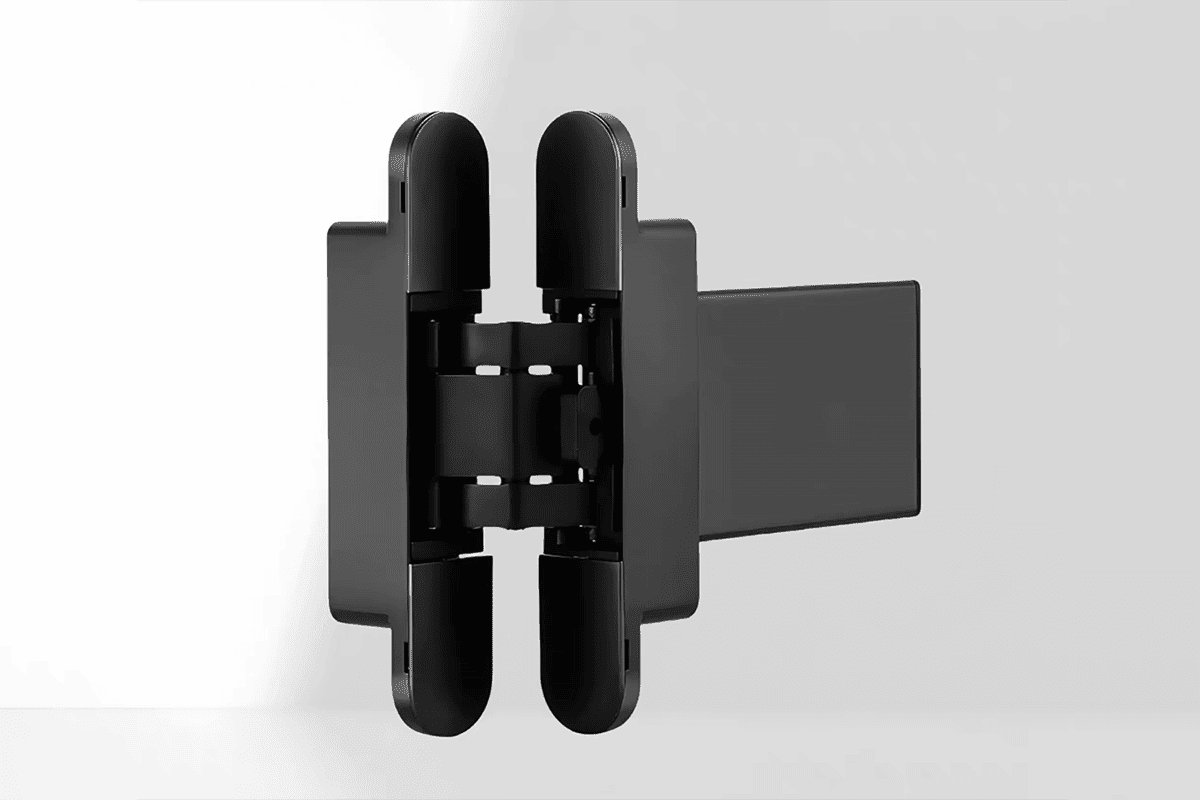
A 90 degree stay-open pivot hinge must be evaluated as part of a door system, not as an isolated metal component. The problem is that many buyers check only door weight. That is not enough. Width, offset, core structure, mounting quality, and force interaction can decide whether the hidden door works smoothly.
To approve a 90 degree stay-open pivot hinge, buyers should confirm door weight, door width, core construction, pivot offset, top and bottom fixing positions, frame strength, and compatibility with any closer, magnet, or latch. All values should be checked against the supplier’s product manual and rated limits.
Use a gate checklist before procurement approval
I prefer a gate checklist because it reduces emotional specification decisions. It also helps wholesalers and hardware brands decide which hidden-door SKUs they should stock.
| Decision variable | What to check | Why it matters |
|---|---|---|
| Compliance | Self-closing, fire, egress, smoke requirements | Stay-open may be disqualified |
| Net opening | Clear width at 90° | Prevents traffic and moving problems |
| Door weight | Rated capacity from manual | Avoids overload and sag |
| Door width | Maximum width from manual | Controls leverage on pivot |
| Door core | Solid, hollow, composite, framed panel | Affects screw holding and stability |
| Pivot offset | Manufacturer’s recommended offset | Affects swing path, gaps, and force |
| Frame fixing | Top and bottom fixing strength | Prevents loosening and movement |
| Accessories | Closers, magnets, latches, seals | Avoids force conflict |
| Adjustment range | Vertical and lateral adjustment | Helps installation tolerance |
| Testing plan | Sample door or mock-up | Confirms real use before batch order |
Why door width matters as much as weight
Many buyers ask, “What weight can this hinge carry?” That question is necessary, but it is incomplete. A wider door creates a longer lever arm.6 That means the same weight can place more stress on the pivot and fixing points7 when the leaf is opened, stopped, or pushed.
This is why I avoid publishing general load figures without product context. The correct values must come from the hinge rating, installation manual, and supplier test data for the exact model.8 A light but wide wall-panel door can still cause issues if the offset and fixings are not correct.
Pivot offset changes the behavior
Pivot geometry is critical for hidden doors because the door must clear the wall finish while still looking flush when closed. The pivot offset affects:9
- Door swing path
- Gap consistency
- Edge clearance
- Rebound at the hold-open position
- Load transfer into the top and bottom supports
- Risk of rubbing against the frame or wall panel
If the installer moves the pivot position casually, the whole system changes. I have seen projects where the hinge was blamed, but the real issue was that the pivot location did not follow the manual. For procurement teams, this means the supplier should provide clear drawings, installation guidance, and tolerances before mass production.
Compatibility with magnets, latches, and closers
Hidden doors often use magnetic catches, concealed latches, soft-close devices, or separate closers. These accessories create forces. If those forces fight the stay-open position, the door may not hold correctly or may feel unstable.
Before approval, I ask buyers to confirm:
- Will the door use a magnetic catch?
- Will the door use a concealed closer?
- Will the door use seals that create closing resistance?
- Will the latch require extra push or pull force?
- Will the user expect self-return?
- Will the door panel be heavier after decorative finishing?
A 90 degree stay-open pivot hinge works best when the whole system is tuned around its hold-open behavior. It should not be forced into a system designed for another door-control logic.
How does a 90 degree stay-open pivot hinge differ from concealed hinges and floor springs?
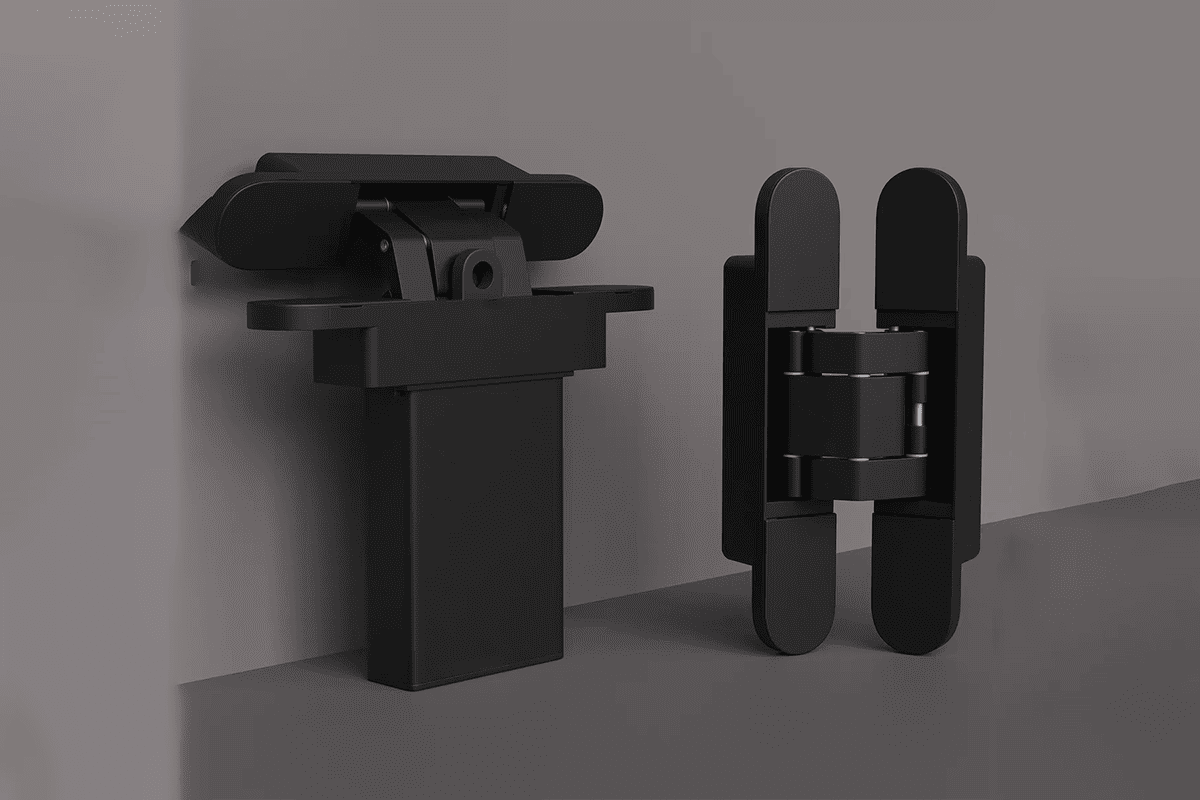
A 90 degree stay-open pivot hinge is not the same thing as a concealed hinge or a floor spring. The problem is that buyers often use these terms loosely. That causes wrong specifications because each product has a different structure, force path, installation method, and door-control function.
A 90 degree stay-open pivot hinge supports pivoting movement and holds the door at 90°. A concealed hinge mainly connects the door and frame while remaining hidden. A floor spring controls closing force from the floor.10 These systems are not interchangeable without checking load, function, and installation requirements.11
The selection logic is different
The word “hidden” creates confusion. A hidden door may use different hardware types depending on the design goal. Some projects want no visible hinge barrel. Some want a pivoting wall panel. Some need hydraulic closing control. These goals are related, but they are not identical.
| Hardware type | Main function | Typical force path | Key buyer concern |
|---|---|---|---|
| 90 degree stay-open pivot hinge | Pivot support with 90° hold-open | Top and bottom pivot points | Opening limit, load, offset, hold-open need |
| Concealed hinge | Hidden connection between door and frame | Side-mounted hinge line | Door thickness, adjustability, frame routing |
| Floor spring | Controlled closing from floor | Floor-mounted hydraulic mechanism | Self-closing, floor preparation, door weight |
| Pivot with closer | Pivot support plus closing control | Pivot and closer mechanism | Closing speed, compliance, compatibility |
| Door holder | Holds door open separately | Wall, floor, or door-mounted device | Position, force, and safety |
Why this distinction matters in procurement
If a buyer asks for a “concealed hinge” but actually wants a pivoting hidden wall panel, the supplier may quote the wrong structure. If the project needs self-closing but the buyer chooses a stay-open pivot, the result may fail site acceptance. If the design needs a clean floor with no floor box, a floor spring may not suit the installation.
I use three questions to clarify the product family:
Where does the door rotate?
- Along a side hinge line?
- Around a top-bottom pivot axis?
- Around a floor-controlled pivot system?
What should the door do after opening?
- Stay at 90°?
- Close by itself?
- Swing freely?
- Open beyond 90°?
What construction can the site accept?
- Floor cutting?
- Top frame reinforcement?
- Door core routing?
- Wall panel clearance?
Why “feels the same” is a dangerous assumption
Some buyers assume that 90° stay-open feels like a 180° pivot or a non-hold-open hinge. It does not. The user experience changes because the door has a defined hold point and opening limit. That can be excellent for controlled access, but it can feel restrictive when users expect wider travel.
The pinch risk also changes. If users try to force the door beyond the intended hold-open point, stress increases at the pivot and fixing locations. In a commercial hidden-door program, that can lead to noise, loosening, sagging, or customer complaints.
For this reason, I encourage brands and wholesalers to create simple internal labels for their catalog:
- Stay-open at 90°
- Free swing
- Self-closing
- Wide-opening pivot
- Fire-rated system component
- Decorative concealed hinge
Clear category language helps sales teams avoid overselling the wrong feature.
Supplier checks reduce hidden-door callbacks because the correct 90 degree stay-open pivot hinge decision depends on ratings, drawings, installation control, and accessory matching. The problem is that many failures are not discovered until after site installation. By then, replacement is more expensive and more emotional.
Buyers can reduce callbacks by choosing suppliers that provide clear product ratings, installation drawings, sample support, inspection records, customization control, and honest application boundaries. For hidden-door programs, the supplier should help verify whether a 90° stay-open pivot is suitable before bulk ordering.
What I look for on the factory side
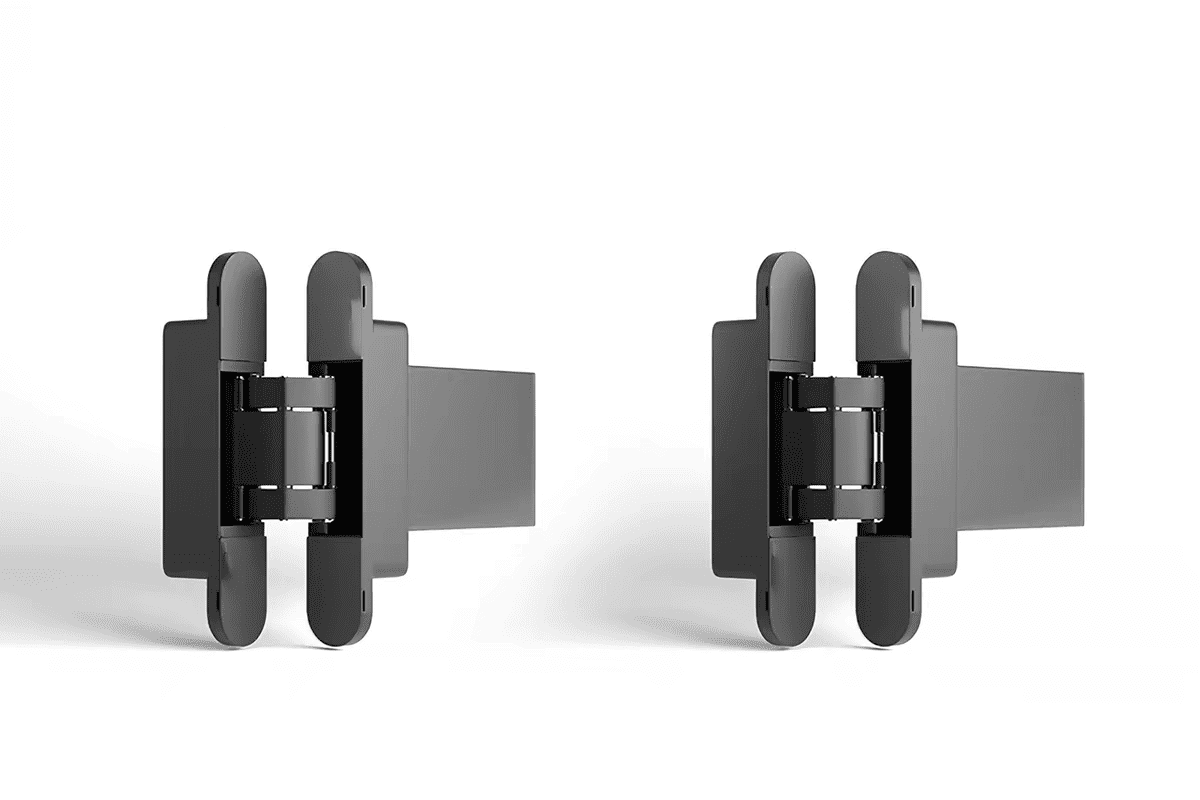
At SDH Hardware, I support B2B buyers who need repeatable hardware, not one-time luck. For a hidden-door pivot program, I pay close attention to whether the factory can control the full path from drawing to inspection.
A reliable supplier should support:
- Product drawings after order confirmation
- Clear installation instructions
- Material and finish options
- Batch inspection before shipment
- Functional testing based on product type
- Packaging suitable for export and resale
- Logo, stamping, or laser branding if required
- Accessory matching across the door hardware set
- ODM or OEM development when standard models do not fit
SDH Hardware operates as a factory-direct architectural door hardware manufacturer in China, with more than 10 years of specialized production experience. Our product range includes Euro mortise locks, stainless steel lever handles, butt hinges, concealed door hinges, Euro brass cylinders, and door accessories. For buyers, the value is not only the hinge itself. The value is the ability to coordinate the hinge with the rest of the door hardware package.
Ask for application boundaries, not only advantages
A supplier who says “this works for all hidden doors” is creating risk. Hidden-door applications vary too much. A stronger supplier should be comfortable saying:
- This model is suitable only within its rated door size and weight.
- This model is not suitable where self-closing is mandatory.
- This model should not be used when the required opening exceeds 90°.
- This model needs correct pivot offset and fixing reinforcement.
- This model must be checked with magnets, closers, seals, and latches.
I trust suppliers more when they explain limits clearly. Limits are not weakness. Limits are part of good engineering communication.
Suggested procurement approval flow
For hardware brands, door factories, and wholesalers, I recommend a simple approval process before stocking or project supply.
Collect the door data
- Door weight
- Door width
- Door thickness
- Door core material
- Finish thickness
- Frame construction
Confirm the use scenario
- Storage access
- Service passage
- Showroom display
- Residential hidden room
- Commercial back-of-house access
Check compliance
- Fire-rated requirements
- Self-closing requirements
- Egress requirements
- Local market standards
Verify hinge documents
- Product manual
- Rating information
- Installation drawing
- Available certificates, where relevant
- Inspection process
Test the full system
- Hinge
- Door panel
- Frame
- Latch or magnet
- Closer or holder, if any
- Final finish weight
Approve the SKU or reject it
- Stock if the use case is repeatable.
- Reject or redesign if the project needs wider swing or self-closing.
Why stocking strategy matters
Wholesalers often want one pivot hinge that covers every hidden-door request. I understand the commercial reason. Fewer SKUs simplify inventory. However, hidden doors are sensitive to small differences in geometry and use.
A better stocking strategy is to divide products by scenario:
| Stock category | Best for | Avoid when |
|---|---|---|
| 90° stay-open pivot | Light-duty hidden access with hold-open need | Self-closing or wider swing is required |
| Non-hold-open pivot | Free-swing hidden doors | Door must stay open without holder |
| Wide-opening pivot | Moving items or wider clearance | Space cannot support wider swing |
| Self-closing pivot/closer system | Regulated or controlled doors | Hold-open is prohibited or not approved |
| Concealed hinge set | Side-hinged hidden appearance | Pivot movement is required |
This approach reduces returns because the sales team can qualify the project before offering the hardware. It also helps importers build clearer catalogs for regional markets.
Frequently Asked Questions
Can any hidden door use a 90 degree stay-open pivot hinge?
No. A hidden door can use a 90 degree stay-open pivot hinge only if the door size, weight, core, pivot offset, clear opening, and use scenario match the hinge rating and manual. Self-closing or fire-rated requirements may disqualify stay-open hardware.
Is a 90° stay-open pivot hinge suitable for fire-rated doors?
Usually not unless the complete door assembly is approved for that function. Many fire or egress doors require self-closing. Buyers should verify project codes, test reports, CE or fire-rated certificates, and professional guidance before specifying any stay-open hardware.
What causes callbacks with hidden-door pivot hinges?
Common callback causes include oversized or overweight doors, incorrect pivot offset, weak frame fixing, users needing more than 90° opening, and conflicts with magnets or closers. In many cases, the hinge is not defective. The application was not qualified correctly.
Should I choose a 90° stay-open pivot or a door holder?
Choose a 90 degree stay-open pivot hinge when 90° opening is enough and the hold-open function can be built into the pivot safely. Choose a separate compatible door holder when the door needs a different opening angle or when the pivot should remain non-hold-open.
Does only door weight decide pivot hinge selection?
No. Door weight matters, but door width, pivot offset, core construction, frame strength, accessory forces, clear opening, and compliance requirements are also decisive.12 A lighter but wider hidden door can still create high leverage and installation risk.
Conclusion
A 90 degree stay-open pivot hinge makes sense for hidden doors when the opening truly works at 90°, the project needs a controlled hold-open position, and no self-closing requirement applies. It is not a universal hidden-door solution. Buyers should qualify compliance, clear width, load geometry, pivot offset, and accessory compatibility before approval. If you are developing or sourcing hidden-door hardware programs, I can help you review the application and match the pivot hinge to your project requirements.
"Chapter 4: Entrances, Doors, and Gates - Access-Board.gov", https://www.access-board.gov/ada/guides/chapter-4-entrances-doors-and-gates/. Accessibility guidance such as the ADA Standards measures door clear width with the door open 90 degrees, providing contextual support for evaluating whether a 90-degree stay-open position leaves adequate usable passage. Evidence role: definition; source type: government. Supports: Accessibility standards define or measure door clear opening width with the door open 90 degrees, making the 90-degree usable opening a recognized design checkpoint.. Scope note: Accessibility standards do not prove that every hidden door must meet the same clearance; they support the relevance of 90-degree clear-opening evaluation. ↩
"Self-Closing Doors - HPD - NYC.gov", https://www.nyc.gov/site/hpd/services-and-information/self-closing-doors.page. Building and fire-safety codes commonly require designated fire door assemblies to be self-closing or automatic-closing, supporting the article’s caution that stay-open hardware should not be specified where a mandatory self-closing function applies. Evidence role: expert_consensus; source type: government. Supports: Some regulated door assemblies, especially fire-rated or smoke-control openings, are required by code or standard to be self-closing or automatic-closing.. Scope note: The source would support the compliance principle generally; the exact requirement still depends on jurisdiction, occupancy, and door assembly classification. ↩
"CHAPTER 10 MEANS OF EGRESS", https://codes.iccsafe.org/content/IBC2021P2/chapter-10-means-of-egress. Life-safety and building-code provisions regulate certain door openings for fire protection, smoke control, and egress performance, supporting the article’s statement that a stay-open hinge must be checked against these requirements before use. Evidence role: expert_consensus; source type: institution. Supports: Life-safety codes regulate some doors based on fire protection, smoke control, and egress functions, including requirements for closing and latching hardware.. Scope note: The source would not determine compliance for a specific project; local adoption, amendments, and listed assembly details remain decisive. ↩
"Top 10 Fire Rated Door Hardware Manufacturers for 2026", https://sdhhardware.com/2026/08/11/top-10-fire-rated-door-hardware-manufacturers-for-2026/. Standards for fire door assemblies regulate the required performance, installation, and operation of protective openings, giving contextual support to the statement that concealing a door visually does not eliminate life-safety obligations. Evidence role: general_support; source type: institution. Supports: Fire-door and opening-protective standards apply to door assemblies based on their required protective function, not on whether the door is visually concealed.. Scope note: This support is contextual because the cited standards may not discuss hidden doors specifically. ↩
"Chapter 4: Entrances, Doors, and Gates", https://www.access-board.gov/ada/guides/chapter-4-entrances-doors-and-gates/. Accessibility standards define clear door opening width with the door open 90 degrees, measured in relation to the door face and stop, supporting the article’s point that the door edge can reduce the effective opening. Evidence role: definition; source type: government. Supports: Door clear opening is measured between the door face and the stop when the door is open 90 degrees, so the door leaf position can reduce usable passage.. Scope note: The source supports how clear width is measured; it does not evaluate the specific hidden-door geometry described in the article. ↩
"moment arm - Modeling Applied to Problem Solving - MIT Wiki Service", https://wikis.mit.edu/confluence/display/RELATE/moment+arm. Engineering statics defines moment or torque as the product of force and lever arm distance, supporting the article’s explanation that a wider door can impose greater moment on pivot and fixing points. Evidence role: mechanism; source type: education. Supports: Torque or moment increases with the perpendicular distance between the force and the pivot point, explaining why door width matters in hinge loading.. Scope note: This is a general mechanics principle; actual hinge stress also depends on door mass distribution, pivot offset, hardware design, and installation conditions. ↩
"28.18 -- Open door to demonstration preparation area - UCSB Physics", https://web.physics.ucsb.edu/~lecturedemonstrations/Composer/Pages/28.18.html. Mechanical-engineering treatments of support reactions and bending moments show that increasing the distance from a support to a load increases the applied moment, supporting the article’s claim that door width can affect pivot and fixing stress even at the same door weight. Evidence role: mechanism; source type: education. Supports: The moment applied to a support increases as the distance from the support to the load or applied force increases.. Scope note: The source would support the mechanical mechanism rather than provide test data for a specific pivot hinge model. ↩
"SECTION 087111 - DOOR HARDWARE (SCHEDULED BY ...", https://fpm.usc.edu/wp-content/uploads/2021/11/087102-USC-HSC-door-hardware-Guide-Specification_1.pdf. Product safety and conformity-assessment practice relies on rated limits and manufacturer installation instructions for the specific product, supporting the article’s advice to use model-specific ratings, manuals, and test data rather than generic load figures. Evidence role: general_support; source type: institution. Supports: Product performance and safe use depend on manufacturer-rated limits and installation instructions for the specific model or assembly.. Scope note: The source would support the documentation principle; it would not verify the ratings of any particular hinge. ↩
"What Size Hinges for Exterior Door? - SDH hardware", https://sdhhardware.com/2026/08/27/what-size-hinges-for-exterior-door/. Geometric analyses of rotating bodies and pivoted doors show that the location of the pivot axis determines the swept path and edge clearances, providing contextual support for the article’s statement that pivot offset affects swing behavior and fit. Evidence role: mechanism; source type: research. Supports: Changing the pivot axis location changes the path swept by a rotating door leaf and the resulting clearances around the frame and wall.. Scope note: The source may address pivot geometry generally rather than hidden-door products or this exact hinge type. ↩
"Door closer", https://en.wikipedia.org/wiki/Door_closer. Architectural hardware references define a floor spring as a floor-mounted door-closing mechanism, supporting the article’s distinction between a floor spring and a stay-open pivot hinge. Evidence role: definition; source type: encyclopedia. Supports: Floor springs are floor-mounted door-closing devices that control the closing action of a door.. Scope note: The definition does not address performance compatibility with any specific hidden-door installation. ↩
"SECTION 087111 - DOOR HARDWARE (SCHEDULED BY ...", https://fpm.usc.edu/wp-content/uploads/2021/11/087102-USC-HSC-door-hardware-Guide-Specification_1.pdf. Architectural-hardware guidance treats hinges, pivots, and closers as distinct hardware categories with different functions and installation constraints, supporting the article’s caution that these systems should not be treated as interchangeable. Evidence role: expert_consensus; source type: institution. Supports: Architectural door hardware categories have distinct functions and installation requirements, so substitution requires technical verification.. Scope note: The source would support the specification principle broadly; specific interchangeability depends on the tested hardware and door assembly. ↩
"SECTION 087111 - DOOR HARDWARE (SCHEDULED BY ...", https://fpm.usc.edu/wp-content/uploads/2021/11/087102-USC-HSC-door-hardware-Guide-Specification_1.pdf. Architectural-hardware selection guidance commonly considers door size, weight, use frequency, frame conditions, and required function, supporting the article’s statement that hinge selection cannot be based on door weight alone. Evidence role: expert_consensus; source type: institution. Supports: Door hardware selection commonly accounts for door size, weight, frequency of use, frame conditions, and required function rather than weight alone.. Scope note: The support is general hardware-selection guidance and may not list every factor named in the article. ↩