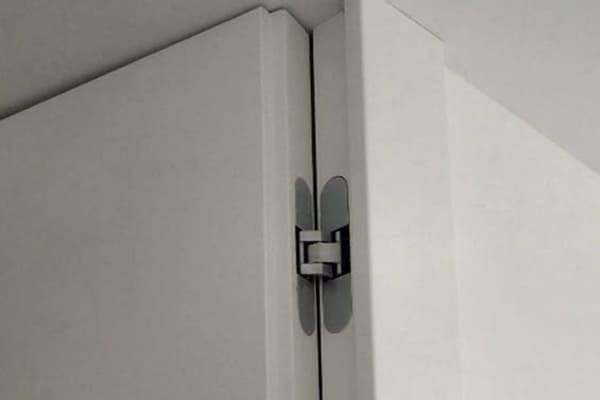
How Do Heavy Duty Pivot Hinges Improve Door Reliability in Commercial Settings?
Heavy duty pivot hinges improve door reliability only when buyers match them to the real door system. A commercial door may look strong at first, but wrong hinge selection can lead to sagging, noise, uneven gaps, or uncontrolled movement1. I have seen better results when the hinge, frame, floor, closer, and door weight are evaluated together.
Heavy duty pivot hinges improve commercial door reliability by transferring load through a pivot structure that suits heavier doors, wider panels, and frequent operation. They can also support smoother movement, double-action opening, positioning, and better user convenience when specified correctly for door weight, width, traffic frequency, installation structure, and surrounding hardware.
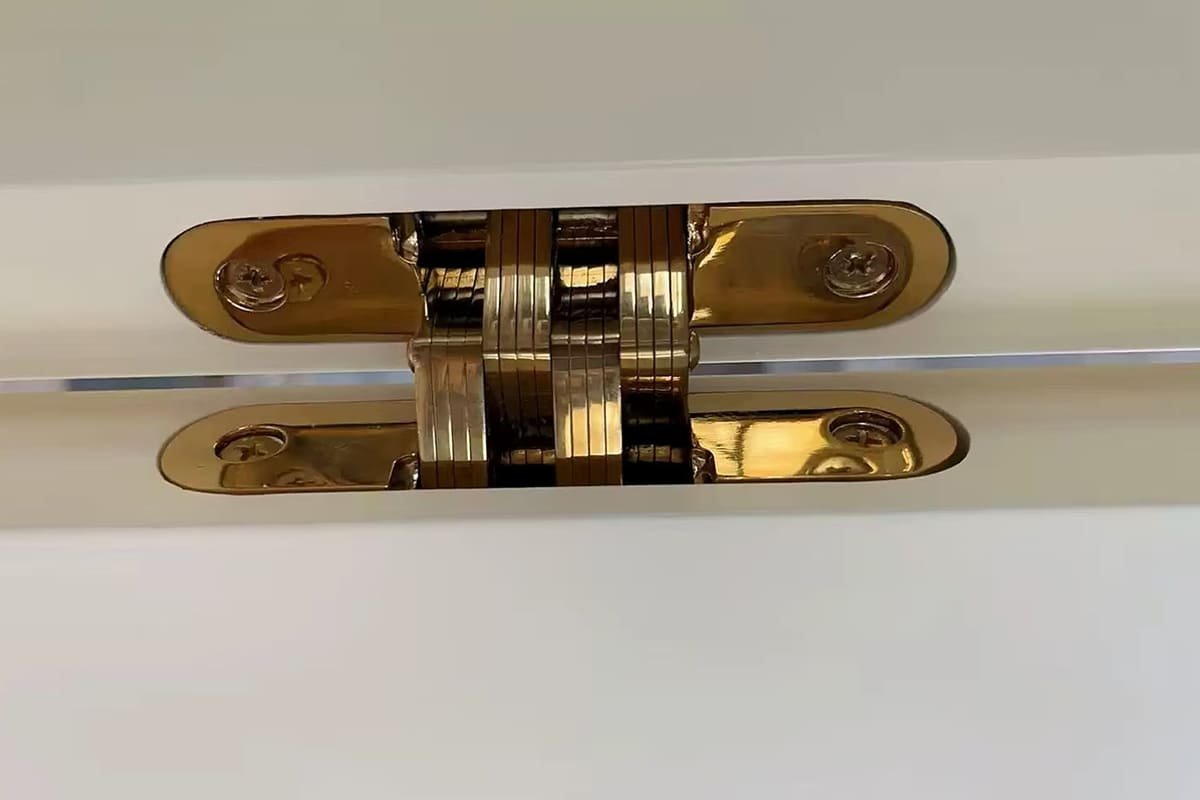
A reliable commercial door is not created by one strong component alone. It is created by a complete hardware system that works under daily stress. So, before choosing a hinge, I always start with one practical question: what will this door experience after installation?
Why Should Door Reliability Be Treated as a System Issue?
Commercial door problems often start when buyers focus on one number, such as hinge load capacity. That number matters, but it does not tell the full story. A heavy door can still perform poorly if the frame, floor, closer, pivot position, or opening direction is wrong.
A reliable commercial door depends on the full system: door weight, door width, opening frequency, hinge structure, frame strength, floor condition, closing control, and installation accuracy2. Heavy duty pivot hinges are useful because they can manage heavier loads, but their performance still depends on correct specification and compatible surrounding hardware.
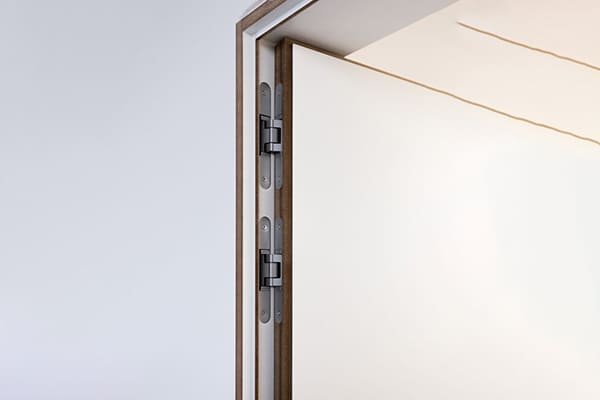
Door reliability is more than load rating
In my manufacturing and specification discussions with door factories, I often hear one early question: “How many kilograms can this hinge carry?” It is a fair question. However, it is only the starting point.
A door is a moving structure. It does not only sit on the hinge. It opens, stops, closes, absorbs impact, and reacts to users who may push it incorrectly. In commercial buildings, one door may be used hundreds or even thousands of times per day3. That repeated movement creates stress on the pivot point, screws, frame, door leaf, and floor connection.4
For this reason, I prefer to define reliability as stable performance over time under real usage conditions. That includes:
- Stable door gaps
- Smooth opening and closing
- Reduced sagging risk
- Controlled movement
- Lower noise
- Secure fixing points
- Compatibility with locks, closers, seals, and access control
- Reasonable maintenance access
Key conditions buyers should confirm first
Before selecting heavy duty pivot hinges, I recommend that door manufacturers collect clear technical information. A simple checklist can prevent expensive mismatch later.
| Selection factor | Why it matters | Practical question |
|---|---|---|
| Door weight | Determines load requirement | What is the finished door weight, including glass, core, cladding, and hardware? |
| Door width | Affects leverage on the hinge | Is the panel wider than a standard commercial door? |
| Traffic frequency | Affects wear and user impact | Is the door used occasionally, daily, or continuously? |
| Opening direction | Affects hinge type | Does the door need single-action or double-action movement? |
| Frame structure | Supports fixing strength | Is the frame steel, aluminum, timber, or frameless? |
| Floor structure | Supports bottom pivot or floor device | Is the floor strong, level, and suitable for fixing? |
| Closing control | Affects safety and comfort | Is a closer, soft-close function, or hold position required? |
| Fire or certification needs | Affects compliance | Does the project require CE or fire-rated documentation? |
Why system thinking reduces commercial risk
When hardware is selected as a system, door manufacturers can avoid common field complaints. These complaints are rarely caused by one visible part only. They often come from a mismatch.
Common risks include:
Door sagging
A door may drop if the hinge is underspecified, the fixing points are weak, or the door width creates high leverage.5Rough operation
Poor machining accuracy, incorrect alignment, or floor irregularity can make the door feel heavy or unstable.Gap changes
A small shift in the pivot position can create uneven clearance at the head, latch side, or floor.Loose hardware
Heavy use can loosen screws or fixing plates if the structure does not support the load path.Uncontrolled closing
A strong hinge does not automatically provide safe closing control. A closer or integrated damping function may still be needed.
From SDH Hardware’s manufacturer perspective, I see reliability as a combination of design selection, material strength, machining precision, installation structure, and quality inspection. Heavy duty pivot hinges can improve the result, but only when these details are treated as connected decisions.
How Do Heavy Duty Pivot Hinges Support High-Traffic Commercial Doors?
High-traffic doors face repeated pushing, pulling, impact, and directional changes. If the hinge structure is weak or poorly matched, the door may become noisy, unstable, or difficult to use. In busy buildings, even small operation problems quickly become visible to users and maintenance teams.
Heavy duty pivot hinges support high-traffic commercial doors by carrying load through pivot points that are better suited to heavy or wide panels. Many systems also allow smoother swing movement and, depending on design, double-action opening, hold positions, or soft-closing features that improve passage convenience.
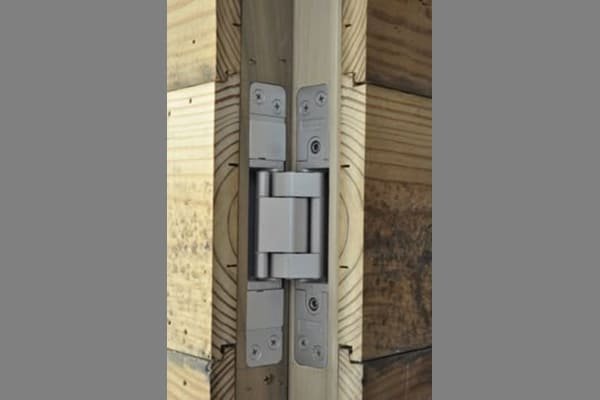
Load path matters in busy buildings
A typical butt hinge supports the door from the side edge. This works well for many standard doors. However, when the door becomes heavier or wider, the side-mounted hinge line can experience higher stress6.
Heavy duty pivot hinges usually transfer the door load through a pivot axis near the top and bottom of the door. This can create a more stable movement pattern for certain large or heavy door designs. The exact performance depends on the hinge type, pivot offset, fixing method, and door construction.
In commercial settings, that load path can help in several ways:
- The door can feel smoother during operation
- The hinge structure can better suit larger door leaves
- The weight can be supported closer to the pivot axis
- The system may allow concealed or cleaner design
- The door can be designed for single-action or double-action movement
Double-action opening can improve passage convenience
Many commercial spaces need people to move in both directions. Examples include:
- Shopping mall entrances
- Hotel public areas
- Office corridors
- Restaurant service zones
- Retail fitting areas
- Hospital or clinic circulation routes
In these cases, double-action movement can be useful. A double-action pivot hinge allows the door to swing in both directions7, depending on system design. This can reduce user hesitation and improve flow when people approach from either side.
However, I always treat this as an application-specific decision. Double-action opening may not suit every door. It depends on:
- Safety requirements
- Fire compartment design
- Access control needs
- Door stop requirements
- Seal performance
- Traffic behavior
- Closing control
A door in a hotel lobby may need elegant movement and user comfort. A door in a fire-rated corridor may need stricter closing and latching behavior. A retail entrance may need glass compatibility and visual appearance. Each case requires separate evaluation.
High traffic does not only mean heavy weight
Some buyers assume that a “heavy duty” hinge is only for a heavy door. In practice, I think high frequency can be just as important as high weight.
A medium-weight door used constantly may experience more stress than a heavier door used only a few times per day. For this reason, I recommend that door factories define usage level clearly during specification.
| Commercial setting | Typical door challenge | Hinge selection focus |
|---|---|---|
| Mall entrance | Frequent two-way movement | Smooth swing, double-action option, closing control |
| Hotel public area | Comfort and appearance | Quiet operation, finish quality, stable gaps |
| Office building | Daily repeated use | Durability, alignment, closer compatibility |
| Retail shop | Glass or decorative doors | Floor compatibility, clean design, user safety |
| Service corridor | Impact and rough use | Strong fixing, maintenance access, controlled closing |
Manufacturing precision supports smoother movement
From a production point of view, the strength of a hinge is not only about material thickness. Precision also matters. Pivot components must align correctly. Bearing or rotation parts must move smoothly. Fixing plates must be machined consistently. Surface treatment should protect the product without interfering with mechanical movement.
At SDH Hardware, our quality control thinking covers several stages:
- Raw material screening
- Machining accuracy checks
- Surface treatment inspection
- Assembly consistency
- Functional testing
- Finished product inspection
For buyers, I suggest asking suppliers how they control tolerance and movement quality. A hinge that looks strong in a catalog may still create operational issues if rotation is rough or installation alignment is difficult.
Heavy duty pivot hinges can improve high-traffic performance, but only when the product is manufactured consistently and selected according to real usage conditions.
How Are Heavy Duty Pivot Hinges Different from Floor Springs and Butt Hinges?
Commercial buyers often compare pivot hinges, floor springs, and butt hinges as if they are interchangeable. This can create confusion. Each product type has its own structure, installation method, maintenance expectation, and suitable application.
Heavy duty pivot hinges are hinge systems designed to support and rotate doors around a pivot axis. Floor springs, or floor machines, usually combine pivot support with concealed closing control in the floor.8 Butt hinges mount on the door edge and frame. The right choice depends on door material, weight, traffic, closing needs, and installation conditions.
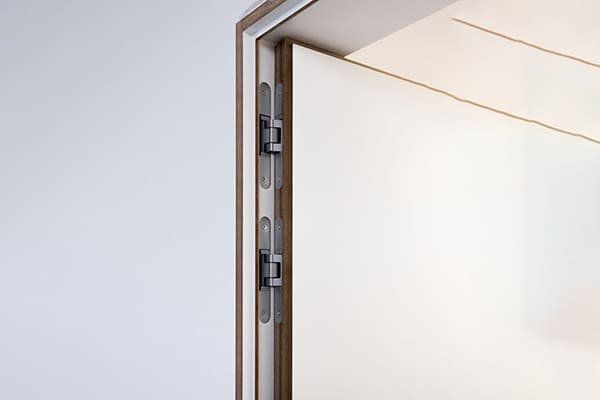
Three hardware types with different roles
I like to explain the difference in a simple way: a hinge supports movement, while a closer controls closing. Some systems combine these functions, but buyers should not assume every hinge controls the door.
Here is a practical comparison:
| Hardware type | Main function | Common use | Key consideration |
|---|---|---|---|
| Butt hinge | Side-hung door rotation | Standard timber, metal, and fire doors | Good for many normal doors, but may not suit very wide or special pivot designs |
| Heavy duty pivot hinge | Pivot-based door rotation and load support | Heavy, wide, architectural, or double-action commercial doors | Requires correct pivot position, fixing structure, and compatible closing control |
| Floor spring / floor machine | Door pivot plus concealed closing control | Shopfront glass doors, mall entrances, retail doors | Requires floor cutting, correct capacity, maintenance access, and door compatibility |
Floor machines are not automatically the best answer
Floor machines are common in malls and retail entrances, especially for glass doors. They are useful when the design needs concealed closing control and a clean appearance. However, they are not automatically the right solution for every heavy commercial door.
A floor spring may not suit a project if:
- The floor cannot be cut or prepared properly
- Maintenance access is difficult
- The door material requires another fixing method
- The expected traffic level exceeds the product’s intended use
- The door needs a different pivot location
- Water, dust, or floor cleaning chemicals may affect the mechanism
- The buyer wants easier replacement access
This does not mean floor machines are poor products. It means they need correct application. I have seen specification discussions where the better question is not “pivot hinge or floor spring?” but “what function must the door system provide?”
Butt hinges remain suitable for many doors
Ordinary butt hinges are still widely used because they are simple, familiar, and effective for many standard door types.9 In architectural hardware, butt hinges are common for timber doors, steel doors, interior commercial doors, and many fire-rated assemblies.
However, butt hinges may not be ideal when:
- The door is very heavy
- The door is unusually wide
- The design requires a central or offset pivot
- The opening must be double-action
- The aesthetic design requires concealed hardware
- The load path needs different support
In these cases, heavy duty pivot hinges may provide a better structural approach. Still, the decision should be made with door drawings, project requirements, and installation details in hand.
Advanced pivot systems need verified data
Some premium pivot systems on the market, including FritsJurgens-style pivot hinge systems, may offer advanced functions such as high load capacity, soft closing, hold positions, and concealed installation. These features can be valuable for premium commercial doors.
However, I always recommend careful verification before using any published value. If a system claims a very high capacity, such as hundreds of kilograms, buyers should verify:
- Official manufacturer technical data
- Test reports
- Installation instructions
- Door width limits
- Pivot offset limits
- Floor and ceiling fixing requirements
- Maintenance instructions
- Certification documents, if required
This is especially important for door factories exporting to Europe, the Middle East, or Southeast Asia. Project buyers may request CE certificates, fire-rated documents, or other compliance files. These documents should be checked against the exact product model and application.
In short, heavy duty pivot hinges, floor springs, and butt hinges are not the same solution. Each one can be reliable when used correctly. Each one can also create problems when used in the wrong door system.
What Specifications Matter Most When Selecting Heavy Duty Pivot Hinges?
A commercial door can fail to perform well even when the hinge looks strong. Buyers need to evaluate dimensions, door behavior, installation structure, and quality documents before confirming a product. If these details are skipped, the door factory may face rework, complaints, or project delays.
The most important specifications for heavy duty pivot hinges include rated load, door width, door thickness, pivot position, opening angle, single-action or double-action function, material grade, finish, fixing method, closer compatibility, soft-closing or positioning needs, and certification requirements. Buyers should confirm these details before production.
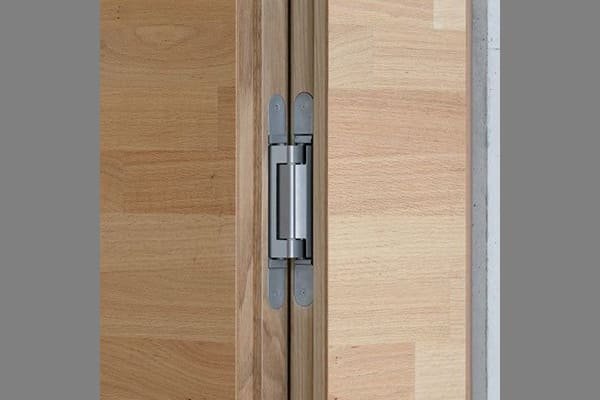
Start with finished door weight
The finished door weight must include every component, not only the panel core.10 I recommend calculating:
- Door leaf material
- Glass panel weight
- Metal cladding
- Decorative panels
- Locks and cylinders
- Pull handles
- Seals
- Bottom plates
- Access control hardware
- Reinforcement plates
A common mistake is to estimate weight based only on the door slab. This can understate the real load. For example, stainless steel pull handles, glass, and internal reinforcement can add meaningful weight.
Door width changes the load behavior
Door width creates leverage.11 A 100 kg narrow door and a 100 kg wide door do not place the same stress on hardware. The wider door can create higher torque and more demanding movement conditions.
Buyers should always confirm whether the hinge rating includes door width limitations. If a supplier only says “suitable for 150 kg” but does not mention width, pivot offset, or installation method, I would ask for more data.
Opening direction and control functions
Heavy duty pivot hinges may be selected for different movement needs. Some doors only need single-action opening. Others need double-action opening. Some need hold-open positioning. Others need soft closing or controlled return.
Important questions include:
- Does the door open one way or both ways?
- Does the door need to stop at 90 degrees?
- Does the door need self-closing behavior?
- Does the door need soft closing near the final position?
- Will the door work with an overhead closer or concealed closer?
- Does the door need to latch securely?
- Is the door part of a fire-rated assembly?
A pivot hinge alone may not provide all functions. Closing control may require a separate closer or an integrated pivot system designed for that purpose.
Material, machining, and finish
For commercial door hardware, product reliability also depends on manufacturing quality. Buyers often look at external finish first, but internal precision is just as important.
Key production factors include:
| Specification | Why buyers should check it |
|---|---|
| Base material | Affects strength, wear resistance, and corrosion behavior |
| Bearing or rotation structure | Affects smoothness and service feel |
| Machining tolerance | Affects alignment and gap stability |
| Plate thickness | Affects fixing strength |
| Screw quality | Affects installation security |
| Surface finish | Affects appearance and corrosion resistance |
| Testing process | Affects batch consistency |
At SDH Hardware, I speak from factory experience when I say that consistent production is essential for B2B buyers. Door manufacturers need products that match drawings, repeat across batches, and install without unpredictable variation.
Certification and documentation
Commercial projects may require documented compliance. For example, European or international buyers may ask for CE documents, fire-rated test reports, or related quality files. These should be treated as documents to verify, not just marketing claims.
Before confirming a supplier, I suggest asking for:
- Product drawings
- Installation instructions
- Material information
- Test reports, where applicable
- CE certification documents, where applicable
- Fire-rated certification documents, where applicable
- Packing details
- Inspection standards
- Sample approval process
For fire-rated or safety-critical doors, buyers should consult qualified professionals and verify whether the selected hinge is approved for the exact door assembly. A hardware component cannot be judged in isolation if the complete door set requires certification.12
Practical selection checklist
Before placing an ODM, OEM, or bulk order, I recommend this checklist:
- Confirm door weight and door width
- Confirm door material and internal reinforcement
- Confirm opening direction
- Confirm traffic frequency
- Confirm floor and frame structure
- Confirm closing control method
- Confirm finish and corrosion environment
- Confirm installation drawings
- Confirm testing documents
- Confirm sample performance before mass production
- Confirm packaging and labeling needs
- Confirm after-production inspection process
Heavy duty pivot hinges are most reliable when selection is based on complete technical information, not only on price or catalog images.
How Should Door Manufacturers Evaluate a Heavy Duty Pivot Hinges Supplier?
A good hinge design can still cause problems if the supplier cannot control production quality, documentation, customization, or delivery consistency. For door manufacturers, the supplier decision is part of the reliability decision. The wrong supplier can create hidden cost in rework, replacement, and customer complaints.
Door manufacturers should evaluate a heavy duty pivot hinges supplier by checking factory capability, material control, machining precision, testing equipment, product drawings, certification documents, customization support, sample approval, packaging, and finished product inspection. A reliable supplier should help buyers match the hinge system to real door applications.
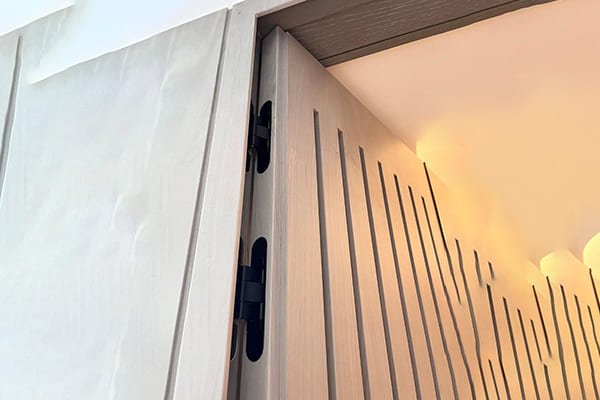
Factory capability affects repeat quality
In B2B architectural hardware, buyers are not only purchasing a product. They are purchasing repeatability. A sample may look good, but bulk production must stay consistent.
As a China-based architectural door hardware manufacturer, SDH Hardware operates independent production lines and supports factory-direct supply for door manufacturers, hardware brands, and bulk wholesalers. In my experience, this matters because buyers often need stable specifications across repeated orders.
When evaluating a supplier, I recommend reviewing:
- Production experience
- Product range
- In-house manufacturing capability
- Mold or tooling support
- Customization process
- Quality inspection workflow
- Testing equipment
- Export market experience
- Communication speed
- Document accuracy
Quality control should cover the full process
A supplier should not rely only on final inspection. Final inspection is important, but it may be too late to correct systemic problems. I prefer a full-process quality control model.
A strong QC flow usually includes:
Raw material inspection
The supplier checks material quality before production begins.Machining control
The supplier controls dimensions, hole positions, rotation parts, and tolerance.Surface treatment inspection
The supplier checks color, coating consistency, corrosion resistance expectations, and visible defects.Assembly checking
The supplier confirms smooth rotation, correct fit, and complete accessories.Functional testing
The supplier tests movement, fixing stability, and product behavior according to internal or project standards.Finished product inspection
The supplier checks appearance, quantity, labeling, packing, and documentation before shipment.
Conclusion
Heavy duty pivot hinges improve commercial door reliability when they are selected as part of a complete door system. Buyers should look beyond load capacity and evaluate door weight, width, traffic frequency, opening direction, closing control, installation structure, and hardware compatibility. From my manufacturer perspective, the best results come from clear specifications, precise production, verified documents, and careful supplier communication. If you need factory-direct support for commercial door hardware selection, SDH Hardware can help review your project requirements and prepare suitable OEM or ODM hardware solutions.
"How to Fix Binding Door Hinges? - SDH hardware- China ...", https://sdhhardware.com/2026/08/11/how-to-fix-binding-door-hinges/. A door-hardware maintenance or standards source notes that hinge condition and specification affect door alignment, clearances, operating force, and closing behavior, supporting the article’s link between improper hinge selection and common service problems. Evidence role: general_support; source type: institution. Supports: A neutral door-hardware or building-maintenance source should support that hinge misselection or hinge deterioration can cause door sagging, misalignment, noise, or poor control.. Scope note: Such sources usually describe failure modes generally and may not isolate heavy duty pivot hinges as the sole cause. ↩
"087100 – DOOR HARDWARE - Facilities and Campus Services", https://fcs.cornell.edu/087100-door-hardware. Door-hardware standards and specification guidance treat hinge selection as dependent on door dimensions, weight, frequency of use, frame conditions, and related hardware, providing consensus support for a system-level reliability approach. Evidence role: expert_consensus; source type: institution. Supports: A standards or professional guidance source should support evaluating hinges and door hardware as part of the full door assembly and usage environment.. Scope note: The source may provide selection criteria rather than proving that every listed variable has equal influence in all installations. ↩
"Back-to-Back Pull Handles for Modern Glass, Wood ... - SDH hardware", https://sdhhardware.com/2026/08/27/back-to-back-pull-handles-for-modern-glass-wood-and-commercial-doors-how-should-buyers-choose/. Industry door-hardware guidance classifies high-use commercial openings by repeated daily cycles and durability testing, supporting the statement that busy doors may operate hundreds or thousands of times in a day. Evidence role: statistic; source type: institution. Supports: A source should document typical or classified high-traffic door operating cycles in commercial buildings.. Scope note: Published cycle categories vary by standard and building type, so the source would contextualize rather than precisely quantify every project. ↩
"Do hidden hinges malfunction or become completely unusable ...", https://sdhhardware.com/2026/06/25/do-hidden-hinges-malfunction-or-become-completely-unusable/. Research on cyclic loading and mechanical wear explains that repeated operation subjects joints, fasteners, and bearing interfaces to accumulated stress and wear, supporting the article’s mechanism for stress in door hardware assemblies. Evidence role: mechanism; source type: paper. Supports: A mechanical-engineering or building-component durability source should explain how repeated cyclic loading contributes to stress, wear, loosening, or fatigue in hardware assemblies.. Scope note: A general mechanical source may not test commercial pivot hinges specifically, but it supports the underlying load-and-wear mechanism. ↩
"Top 10 Hidden Hinge Installation Mistakes Door Manufacturers ...", https://sdhhardware.com/2026/06/11/top-10-hidden-hinge-installation-mistakes-door-manufacturers-should-avoid/. Engineering guidance on moments and door-installation guidance on hinge reinforcement show that hinge capacity, fixing strength, and door width influence the bending moment at the support line, supporting the article’s explanation of sagging risk. Evidence role: mechanism; source type: education. Supports: A source should support that hinge load, fastener strength, and moment arm from door width affect sagging risk.. Scope note: The support is partly contextual because individual sagging failures also depend on material condition, installation quality, and usage. ↩
"How Much Weight Can the Hinges Hold? - SDH hardware", https://sdhhardware.com/2026/08/25/how-much-weight-can-the-hinges-hold/. Basic statics sources show that the moment on a support increases with applied load and lever arm, supporting the statement that heavier or wider side-hung doors place greater stress on the hinge line. Evidence role: mechanism; source type: education. Supports: A mechanics or structural-design source should support that load and moment on hinges increase with door weight and distance from the hinge axis.. Scope note: This supports the mechanical principle; exact hinge stress depends on hinge spacing, frame stiffness, fasteners, and door construction. ↩
"How to Install Double Action Hinges: What Common Issues May ...", https://sdhhardware.com/2026/08/24/how-to-install-double-action-hinges-what-common-issues-may-occur/. A hardware glossary defines a double-action hinge as a hinge arrangement that permits a door to swing in either direction, supporting the article’s functional description. Evidence role: definition; source type: encyclopedia. Supports: A neutral glossary or encyclopedia source should define double-action hinges or double-acting doors as allowing swing in both directions.. ↩
"How Should I Choose the Appropriate Hydraulic Door Closer for the ...", https://sdhhardware.com/2026/08/26/how-should-i-choose-the-appropriate-hydraulic-door-closer-for-the-door/. Architectural-hardware references describe floor springs as floor-mounted concealed door-closing devices that work with pivoted doors, supporting the article’s distinction between floor springs and ordinary hinges. Evidence role: definition; source type: institution. Supports: A building-hardware reference should define a floor spring as a floor-mounted concealed closer or pivot/closer device.. Scope note: Designs vary, and some floor-mounted components provide only part of the pivoting or closing function. ↩
"6 Most Common Types of Hinges? - SDH hardware- China ...", https://sdhhardware.com/2026/07/01/6-most-common-types-of-hinges/. General hardware references identify the butt hinge as a common door hinge type used for conventional side-hung doors, supporting the article’s statement about its continuing suitability for many standard applications. Evidence role: general_support; source type: encyclopedia. Supports: A neutral reference should describe butt hinges as a common hinge type used on doors.. Scope note: The source may not quantify market prevalence or compare all commercial door categories. ↩
"SECTION 087111 - DOOR HARDWARE (SCHEDULED BY ...", https://fpm.usc.edu/wp-content/uploads/2021/11/087102-USC-HSC-door-hardware-Guide-Specification_1.pdf. Door-hardware specification guidance bases hinge and closer selection on the weight and dimensions of the completed door assembly, supporting the article’s instruction to include attached materials and hardware in the finished weight. Evidence role: expert_consensus; source type: institution. Supports: A door-hardware specification guide should support using total installed door weight, not just the slab or core, when selecting hinges.. Scope note: Specific component lists may differ by guide and project, but the principle of using the assembled door weight is directly relevant. ↩
"28.18 -- Open door to demonstration preparation area", https://web.physics.ucsb.edu/~lecturedemonstrations/Composer/Pages/28.18.html. Statics texts define moment as force multiplied by perpendicular distance from the axis of rotation, supporting the article’s statement that door width creates leverage on hinge hardware. Evidence role: mechanism; source type: education. Supports: A mechanics source should support that torque or moment increases as the perpendicular distance from the support axis increases.. ↩
"What Kind of Door Hardware for Fire Rated Doors Is Suitable ...", https://sdhhardware.com/2026/08/10/what-kind-of-door-hardware-for-fire-rated-doors-is-suitable/. Fire-door codes and official guidance treat the door leaf, frame, glazing, seals, hinges, latches, and closers as parts of a tested or approved assembly, supporting the article’s warning that a single component cannot establish compliance by itself. Evidence role: expert_consensus; source type: government. Supports: A fire-safety code or official guidance source should support that fire-door hardware must be compatible with and listed or approved for the complete fire-door assembly.. Scope note: Requirements vary by jurisdiction and certification scheme, so the source should be applied to the relevant project location. ↩