Which Is Better: Cylindrical or Mortise Lockset?
Choosing a cylindrical or mortise lockset can feel simple at first, but the wrong decision can create installation delays, warranty disputes, and inconsistent door performance. I have seen buyers focus only on unit price, then face higher costs later. The better solution is to compare application, durability, certification, and supplier capability before ordering.
A mortise lockset is usually better for heavy-duty commercial, hospitality, apartment, and project doors1 because it offers stronger construction, longer service life, and more configuration flexibility2. A cylindrical lockset is better for faster installation, lower-cost projects, and light to medium-duty doors3 where advanced security and fire-rated requirements are less demanding.
The real answer depends on the door type, usage frequency, local standards, and the buyer’s supply chain needs. Below, I break down the comparison from a procurement and manufacturing point of view, not only from a retail product perspective.
Which Cylindrical or Mortise Lockset Is Better for Commercial Projects?
Commercial projects create pressure for buyers. A lock that works in a showroom may fail when used thousands of times per month.4 If the wrong cylindrical or mortise lockset is selected, door factories and wholesalers may face returns, complaints, and costly replacements.
A mortise lockset is generally better for commercial projects that require high durability, security, fire-rated options, and flexible handle or cylinder configurations. A cylindrical lockset can still be suitable for offices, utility rooms, and lower-traffic areas where cost control and simple installation are the main priorities.
Why commercial doors often favor mortise locksets
A commercial door is different from a light residential door. It may be used by hotel guests, office workers, tenants, cleaners, maintenance staff, and emergency teams every day. This repeated use places stress on the latch, spring, spindle, lever handle, cylinder, strike plate, and fixing screws.5
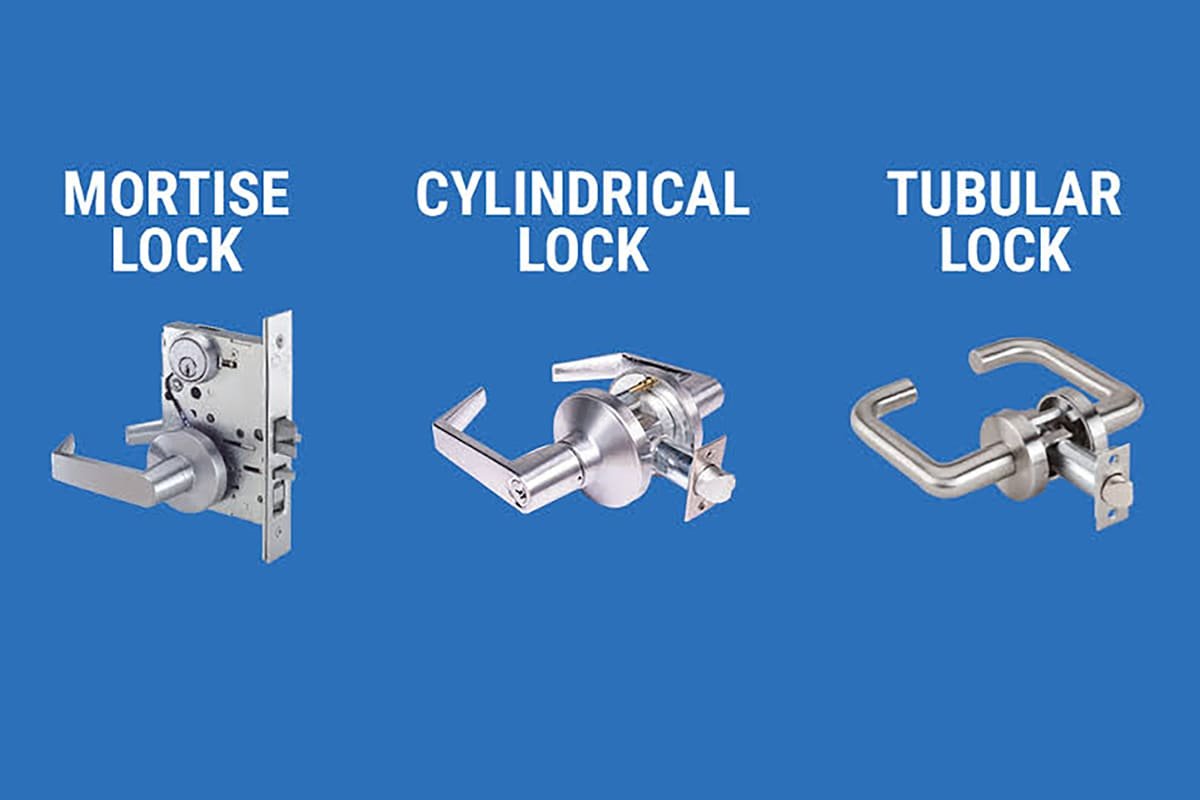
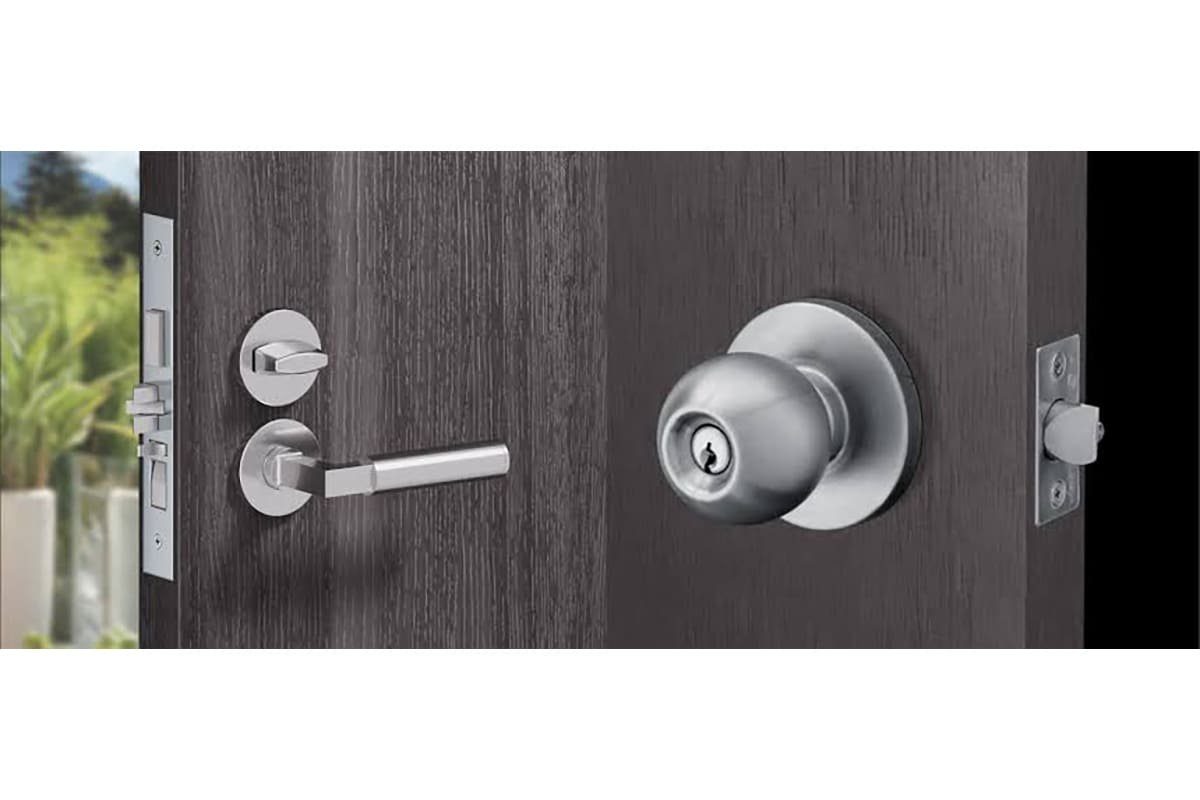
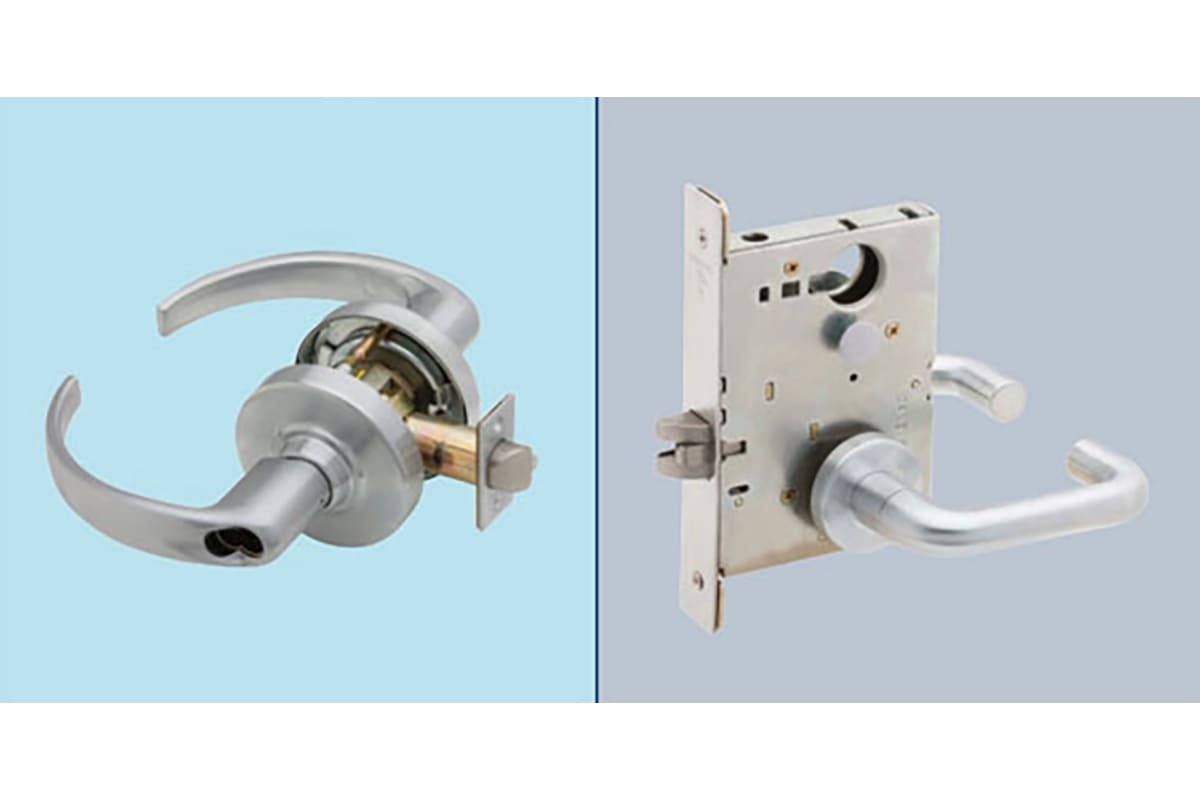
A mortise lockset places the lock body inside a rectangular pocket cut into the door edge. This design gives the lock more internal space for stronger components. It also supports multiple functions, such as latchbolt, deadbolt, privacy function, passage function, classroom function, and bathroom indicator options.6
From my experience working with architectural hardware buyers, the mortise format is often preferred when the project requires:
- Higher door traffic
- Fire-rated door compatibility
- Euro profile cylinders
- Stainless steel lever handles
- More durable internal mechanisms
- Better alignment with European door hardware standards
- Project-specific faceplate, strike, and accessory options
Cylindrical locksets still have a place
A cylindrical lockset is installed through round cross-bore holes in the door.7 It is usually faster to install than a mortise lock. This makes it attractive for cost-sensitive projects or markets where installers are familiar with cylindrical preparation.
A cylindrical option can work well for:
- Small offices
- Interior staff rooms
- Storage rooms
- Residential apartment interiors
- Temporary or budget-focused buildings
- Markets using ANSI-style door preparation
However, the buyer should not compare only the lock price. The full cost includes installation time, maintenance frequency, replacement risk, packaging damage, spare parts, and after-sales service.
Commercial comparison table
| Factor | Cylindrical Lockset | Mortise Lockset |
|---|---|---|
| Installation | Faster, simpler round boring | More precise door pocket required |
| Cost | Usually lower | Usually higher |
| Durability | Good for light to medium use | Better for heavy-duty use |
| Security | Moderate, depends on grade | Stronger body and more functions |
| Design flexibility | More limited | Higher flexibility |
| Fire-rated project use | Must verify by model | Common in certified project hardware |
| Typical markets | North America, budget projects | Europe, Middle East, hotels, apartments |
| Best use | Simple interior doors | Commercial and architectural doors |
Procurement point I always check
When I review a cylindrical or mortise lockset for a project, I do not stop at the catalogue photo. I ask for the specification sheet, door preparation drawing, material details, cycle test reference, finish information, and certification documents where required.
For B2B buyers, this matters because project doors are usually produced in batches. One wrong lock body size or backset can affect hundreds or thousands of doors. A professional supplier should be able to confirm:
- Lock case size
- Backset
- Center distance
- Forend dimensions
- Strike plate size
- Cylinder profile
- Handle compatibility
- Door thickness range
- Finish options
- Packing method
- Test and inspection process
At SDH Hardware, we focus on architectural door hardware manufacturing, including Euro mortise locks, lever handles, hinges, Euro brass cylinders, and door accessories. I always recommend that buyers verify CE documents, fire-rated reports, and local compliance needs before project approval. Certification should be treated as a document to check, not just a marketing phrase.
How Do Cylindrical and Mortise Locksets Differ?
Many buyers compare price first, then discover that cylindrical and mortise locks require different door preparations. This creates a real problem. If the door factory has already cut the door, changing the lock type may mean scrapping panels, delaying delivery, or redesigning the hardware schedule.
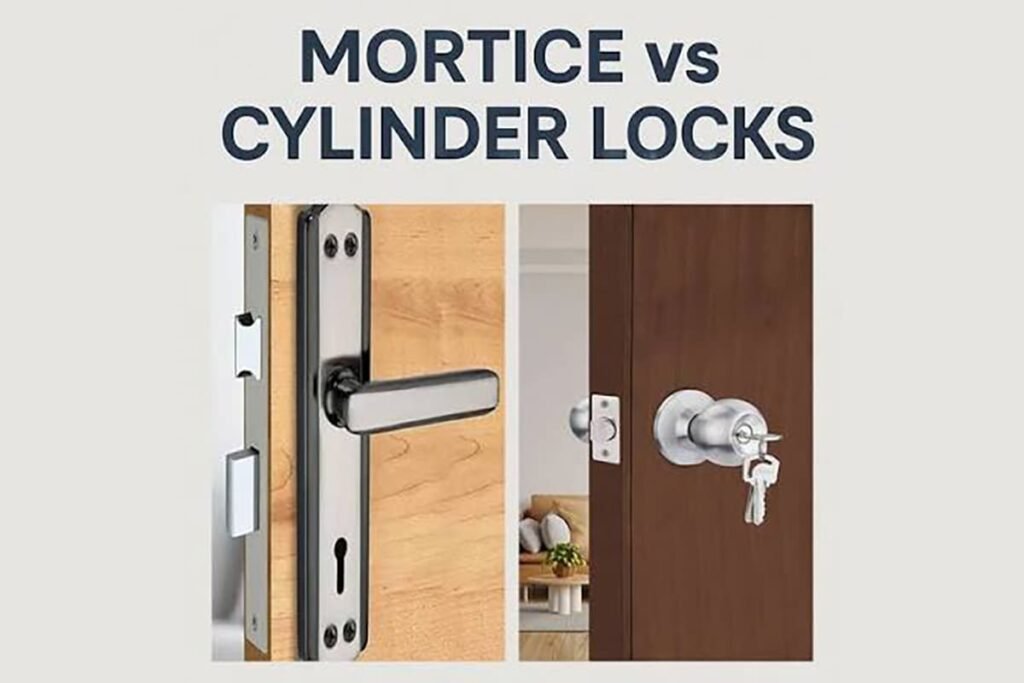
A cylindrical lockset uses round holes drilled through the door and is usually simpler to install. A mortise lockset uses a rectangular pocket cut into the door edge and normally provides stronger construction, more functions, and better long-term performance for demanding architectural doors.
Basic structural difference
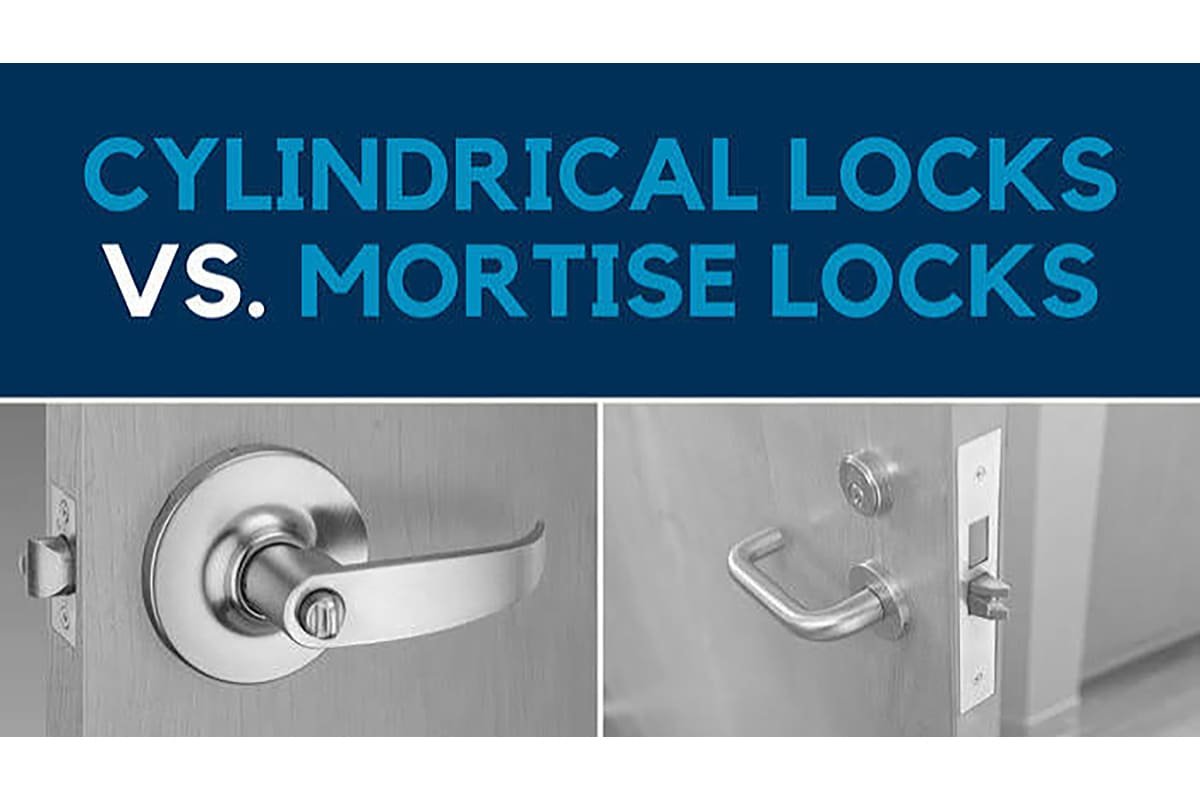
The biggest difference is not the handle shape. The biggest difference is the lock body structure.
A cylindrical lockset has a compact mechanism that fits inside a bored hole. The latch extends from the edge of the door. The lever or knob connects through the main bore. This design is practical and efficient.
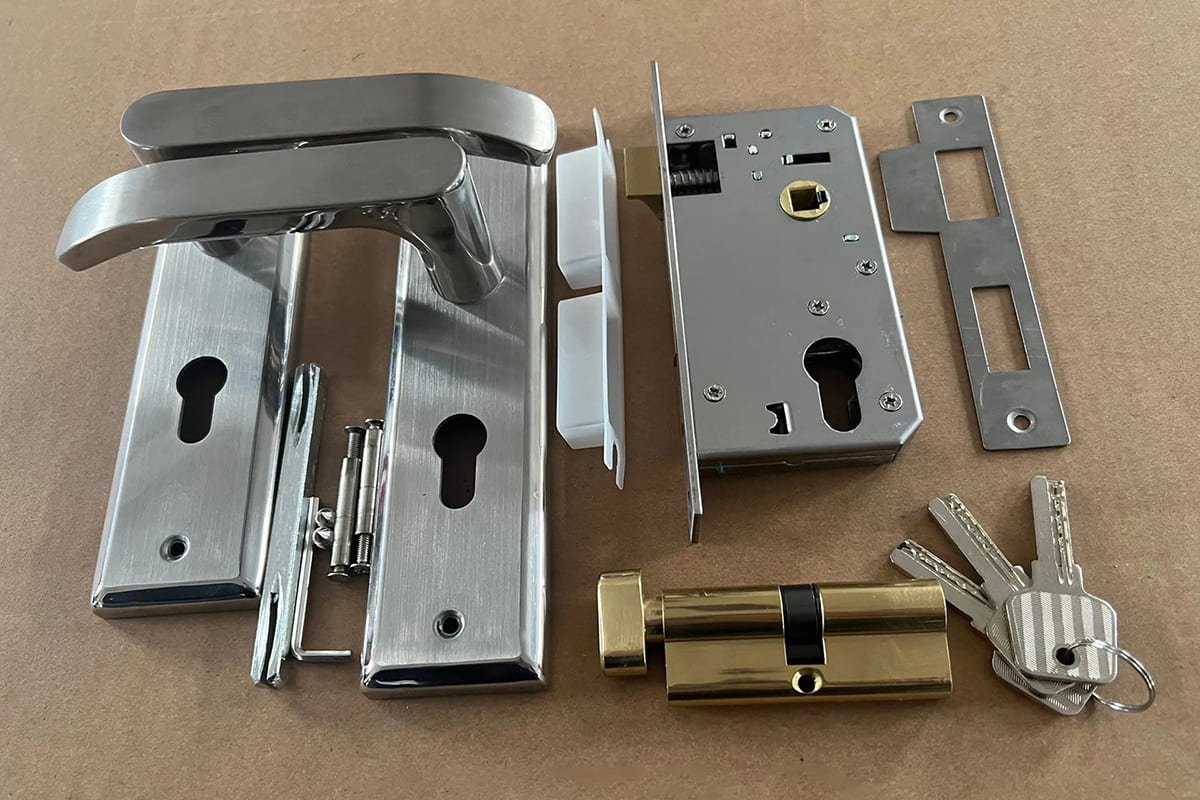
A mortise lockset has a larger lock case inserted into the door edge. It often includes a latchbolt, deadbolt, follower, hub, spring mechanism, and cylinder cam operation in one body. This gives the manufacturer more space to build a stronger and more functional product.
Key technical comparison
| Technical Point | Cylindrical Lockset | Mortise Lockset |
|---|---|---|
| Door preparation | Round bore holes | Rectangular mortise pocket |
| Main mechanism size | Compact | Larger lock case |
| Common cylinder type | Key-in-lever or rim cylinder, depending on market | Euro profile cylinder or other project cylinder |
| Lever support | Integrated with lock chassis | Often paired with separate lever handle set |
| Deadbolt option | May be separate | Often integrated |
| Replacement ease | Simple if bore standard matches | Simple only if lock case size matches |
| Project flexibility | Moderate | High |
| Appearance | Practical | More architectural and premium |
What this means for door manufacturers
Door factories must plan hardware early. I have seen projects where the door leaf was manufactured before the final lock schedule was confirmed. That creates avoidable risk. A cylindrical lockset and a mortise lockset are not usually interchangeable without door modification.8
Before production, a buyer should confirm:
- Door thickness, such as 35 mm, 40 mm, 45 mm, or project-specific thickness
- Backset, such as 45 mm, 50 mm, 55 mm, 60 mm, or 70 mm depending on the lock design
- Center distance, such as 72 mm, 78 mm, 85 mm, or 92 mm for many Euro-style mortise locks
- Handle spindle size, often 8 mm in many European configurations
- Cylinder type, such as Euro profile cylinder
- Door handing, if relevant
- Fire door compatibility, if the door is fire-rated
Why mortise locksets support more configurations
A mortise body gives more room for function design. That is why many commercial hardware schedules use mortise locks for hotels, apartments, offices, schools, and public buildings.
Common mortise lock functions include:
- Passage function for non-locking interior doors
- Privacy function for bathrooms and bedrooms
- Entrance function with cylinder operation
- Classroom function for education projects
- Storeroom function for controlled access
- Bathroom indicator function for public washrooms
- Deadbolt function for higher security requirements
This flexibility is one reason why many B2B buyers choose a mortise system when developing a full product range. It allows them to match lever handles, cylinders, hinges, strikes, escutcheons, and accessories under one door hardware series.
Where cylindrical locksets are more efficient
A cylindrical lockset is still useful when the project needs fast replacement and simple stock management. If a market already uses standard cylindrical preparation, installers can work quickly. Wholesalers may also prefer cylindrical locks for general-purpose inventory because they are easy to explain and sell.
So the question is not whether one type is always good and the other is bad. The better question is: Which lock structure matches the door, usage level, and market standard?
For high-use project doors, I usually guide buyers toward mortise. For simple, cost-sensitive doors, cylindrical may be more practical.
When Should Buyers Choose a Cylindrical or Mortise Lockset Supplier?
Supplier choice can be more important than lock type. A good design can fail if the supplier cannot control materials, machining, surface finish, packaging, or final inspection. When buyers choose a cylindrical or mortise lockset supplier only by the lowest quotation, hidden quality risks often appear later.
Buyers should choose a cylindrical or mortise lockset supplier that can provide clear specifications, stable production quality, verified certification documents, customization support, inspection records, and reliable export experience. For project orders, factory capability and technical communication are as important as product price.
Why supplier evaluation matters
In B2B hardware procurement, the product is only one part of the decision. The supplier must also support stable repeat orders, consistent finishes, correct packaging, and on-time delivery. This is especially important for door factories, hardware brands, and bulk wholesalers.
A lockset may look acceptable in a sample, but mass production can reveal problems such as:
- Color variation between batches
- Weak latch spring force
- Loose lever handle movement
- Poor cylinder operation
- Inaccurate faceplate dimensions
- Rough forend edges
- Misaligned screw holes
- Packaging damage during shipping
- Missing accessories
- Unclear installation instructions
I like to say that a sample tells you what a supplier can make. A production inspection tells you what the supplier usually makes.
Supplier evaluation checklist
When I evaluate a lockset manufacturer, I look at several practical points.
| Evaluation Area | What Buyers Should Check | Why It Matters |
|---|---|---|
| Factory capability | In-house production lines, machining, assembly | Better control over quality and lead time |
| Product range | Locks, handles, hinges, cylinders, accessories | Easier one-stop sourcing |
| Technical documents | Drawings, dimensions, specifications | Prevents door preparation errors |
| Testing equipment | Function, cycle, frame, and finish testing | Supports stable performance |
| Certification documents | CE, fire-rated reports, related standards | Required for many project approvals |
| Customization | Logo, finish, packaging, accessories | Supports brand and market needs |
| Inspection process | Raw material, production, finished goods inspection | Reduces batch defects |
| Export experience | Target market knowledge | Reduces communication and compliance risk |
Questions buyers should ask before ordering
Before placing a large order, buyers should ask direct questions. The answers reveal whether the supplier is professional or only trading products.
- Can you provide detailed product drawings before order confirmation?
- What door thickness range does the lock support?
- Which cylinder profile is compatible with the lock body?
- Can the lock be supplied with matching lever handles and hinges?
- What surface finishes are available, and how are they tested?
- Can you provide CE or fire-rated documents for the relevant model?
- Can you support OEM or ODM customization?
- What is your finished product inspection process?
- Can you provide spare parts or replacement components?
- How do you control packaging for export shipments?
What I value in factory-direct supply
As a manufacturer, SDH Hardware operates with independent factory production and a team focused on R&D, precision manufacturing, and global sales. Our product portfolio covers more than 3,000 architectural hardware articles, including Euro mortise locks, stainless steel lever handles, butt hinges, concealed door hinges, Euro brass cylinders, and door accessories.
For buyers comparing a cylindrical or mortise lockset, this wider product range can reduce sourcing complexity. A door factory may need locks, handles, hinges, cylinders, strikes, screws, packaging, and documentation from one coordinated source. That can reduce mismatch risk.
However, I still advise buyers to verify every application-specific requirement. Fire doors, escape doors, hotel doors, school doors, and public building doors may require local professional evaluation.9 A factory can provide documents and product data, but the project consultant, architect, or authority having jurisdiction should confirm final suitability.
Red flags in lockset sourcing
Buyers should be cautious if a supplier:
- Cannot provide drawings
- Cannot explain backset or center distance
- Uses vague material descriptions
- Claims certification but cannot provide documents
- Offers very low prices without quality details
- Has no clear inspection process
- Cannot support spare parts
- Changes specifications without notice
- Provides inconsistent samples and production goods
A qualified supplier should make procurement easier, not more confusing.
Is a Mortise Lockset Worth the Higher Cost?
Price pressure is real. Buyers must protect margin, especially in wholesale and project bidding. However, choosing the cheapest lock can increase total cost if failures, callbacks, or project complaints appear after installation. This is why the value of a mortise lockset should be judged by lifecycle cost, not only purchase price.
A mortise lockset is worth the higher cost when the door needs durability, stronger security, better function options, fire-rated compatibility, or a premium architectural appearance. For low-traffic and budget-sensitive doors, a cylindrical lockset may deliver better value because installation is faster and the hardware cost is lower.
Purchase price vs. lifecycle cost
The first price is easy to see. The long-term cost is harder to measure. For a door hardware buyer, the true cost may include:
- Product unit price
- Installation labor
- Door preparation cost
- Replacement rate
- Warranty claims
- Customer complaints
- Spare parts inventory
- Brand reputation risk
- Project delay penalties
- Maintenance visits
A mortise lockset may cost more at the beginning, but it can reduce risk in high-use applications.10 This is especially true when the lock is paired with quality lever handles, cylinders, hinges, and correct installation.
Example procurement scenario
Let us imagine a hotel project with 500 guest room doors. The buyer can select a lower-cost cylindrical option or a more robust mortise option. If the cylindrical option saves a few dollars per door but creates repeated maintenance issues, the savings may disappear quickly.
For example:
| Cost Factor | Lower-Cost Cylindrical Option | Higher-Quality Mortise Option |
|---|---|---|
| Initial hardware cost | Lower | Higher |
| Installation complexity | Lower | Higher |
| Expected heavy-use durability | Moderate | Higher |
| Function flexibility | Lower | Higher |
| Maintenance risk in hotel use | Higher | Lower |
| Brand perception | Standard | More premium |
| Long-term value | Depends on use | Strong for heavy use |
This does not mean every hotel must use the same lock type. The point is that usage frequency changes the value calculation.
Where mortise locksets justify the premium
A mortise lockset is usually easier to justify for:
- Hotel guest room doors
- Apartment entrance doors
- Office entrance doors
- School classroom doors
- Healthcare and public building doors
- Fire-rated doors, subject to verified certification
- Premium residential projects
- Doors needing Euro cylinder compatibility
In these cases, the lock is part of a complete architectural hardware system. The buyer may also need matching hinges, handles, cylinders, door viewers, door stops, flush bolts, and accessories.
Where cylindrical locksets may be the better value
A cylindrical lockset may be better for:
- Light-duty interior office doors
- Simple storage rooms
- Budget residential interiors
- Fast renovation projects
- Markets with existing cylindrical door preparation
- Projects where advanced functions are not required
If the door has low traffic and simple security needs, paying more for a mortise system may not be necessary.
Quality control affects value
The value of a mortise lock depends on manufacturing quality. A poorly made mortise lock is not better just because it is mortise. Buyers should check materials, machining accuracy, spring performance, latch movement, cylinder operation, and finish consistency.
At SDH Hardware, our quality control process includes raw material screening, production supervision, and finished product inspection. We also use specialized testing machines for function research, frame detection, and final product testing. These processes help support consistent quality, but buyers should still match each model to project requirements.
My simple rule
I use a practical rule when advising buyers:
If the door is high-traffic, security-sensitive, fire-rated, or part of a premium project, I normally recommend a mortise lockset. If the door is low-traffic, cost-sensitive, and simple, I consider a cylindrical lockset.
This rule is not a substitute for professional project evaluation. It is a starting point for better procurement decisions.
Frequently Asked Questions
Is a mortise lockset more secure than a cylindrical lockset?
A mortise lockset is often considered more secure because it has a larger lock body, stronger internal structure, and more function options. However, real security depends on the exact model, cylinder quality, strike installation, door construction, and certification. Buyers should evaluate the complete door hardware system.
Is a cylindrical lockset easier to install?
Yes. A cylindrical lockset is usually easier and faster to install because it uses round bored holes in the door. This makes it practical for many light-duty or budget-sensitive projects. A mortise lockset needs a precise pocket cut into the door edge.
Can I replace a cylindrical lockset with a mortise lockset?
Usually, replacement is not simple. A cylindrical lockset and mortise lockset require different door preparations. Changing from cylindrical to mortise may require major door modification or replacement. Buyers should confirm door drawings, backset, thickness, and lock body dimensions before making changes.
Which lockset is better for fire-rated doors?
A mortise lockset is commonly used on fire-rated architectural doors, but buyers must verify the specific fire-rated certification for the exact lock model and door assembly. Fire-rated performance depends on tested hardware combinations, local codes, and approval by qualified professionals.11
Which lockset is better for wholesalers?
Wholesalers may stock both types. Cylindrical locksets can be easier to sell for general replacement and budget markets. Mortise locksets are better for project supply, door factories, and premium architectural hardware ranges. The best choice depends on the target customers and regional standards.
Conclusion
The best cylindrical or mortise lockset choice depends on door usage, installation method, security needs, certification requirements, and total lifecycle cost. A cylindrical lockset is practical for simple and cost-sensitive doors. A mortise lockset is usually better for commercial, high-traffic, fire-rated, and premium architectural projects. If you are sourcing door hardware for a project or wholesale range, contact SDH Hardware to discuss specifications, customization, certification documents, and factory-direct supply options.
"Mortise lock - Wikipedia", https://en.wikipedia.org/wiki/Mortise_lock. ANSI/BHMA material on mortise locks supports the general use of mortise locksets in commercial-grade door hardware by defining performance and security grades for mortise lock assemblies; this supports the application context but does not prove that every mortise lock is superior to every cylindrical lock. Evidence role: general_support; source type: institution. Supports: The source should show that mortise locks are recognized in commercial hardware standards or guidance as a common lock type for higher-duty door applications.. Scope note: Contextual support only; model-specific performance still depends on grade, construction, installation, and certification. ↩
"Mortise Locks: Everything You Need to Know - SDH hardware ...", https://sdhhardware.com/2026/06/15/mortise-locks-everything-you-need-to-know/. ANSI/BHMA lock standards document durability grading and functional classifications for mortise and bored locksets, supporting the article’s general distinction between heavy-duty mortise configurations and simpler bored lock assemblies; the standards do not establish a universal performance hierarchy across all products. Evidence role: general_support; source type: institution. Supports: The source should compare or separately document mortise and bored/cylindrical lock standards, including durability testing and available functions.. Scope note: The support is standards-contextual rather than direct proof for every product on the market. ↩
"Bored cylindrical lock - Wikipedia", https://en.wikipedia.org/wiki/Bored_cylindrical_lock. A neutral technical description of bored cylindrical locks explains that the lock chassis is fitted through bored circular openings in the door, supporting the article’s statement that cylindrical locksets are generally simpler to install; it does not independently verify comparative project costs. Evidence role: definition; source type: encyclopedia. Supports: The source should explain that cylindrical or bored locks are installed through round bored openings, which is the basis for simpler installation compared with mortise preparation.. Scope note: Supports the installation mechanism directly, but cost and duty-level suitability require additional model- or market-specific evidence. ↩
"A Buyer's Guide to Choosing Commercial Door Hardware? - SDH ...", https://sdhhardware.com/2026/08/06/a-buyers-guide-to-choosing-commercial-door-hardware/. ANSI/BHMA durability-grade testing for locksets uses repeated operating cycles to evaluate performance under use, supporting the article’s point that showroom performance may not predict high-traffic reliability; the standard does not identify a specific failure rate for any individual product. Evidence role: mechanism; source type: institution. Supports: The source should document that commercial locksets are evaluated through cycle testing and durability grades because repeated operation affects hardware performance.. Scope note: Supports the durability-testing rationale, not a quantified probability of failure. ↩
"08711FL - DOOR HARDWARE (BY DESC PROD)", https://www.csusm.edu/pdc/standards-and-regulations/buildingstandards/specsections/08000-doors-and-windows/08711_-doorhardware_summary-csusm_2013-2014.pdf. Research on mechanical component wear and fatigue under repeated cycling supports the article’s general mechanism that frequent door operation can stress latches, springs, spindles, fasteners, and related hardware; such evidence is contextual unless it tests the specific lockset components named. Evidence role: mechanism; source type: paper. Supports: The source should explain that repeated mechanical operation contributes to wear, fatigue, or loss of performance in mechanical door hardware components.. Scope note: Contextual engineering support rather than direct testing of the article’s specific lock models. ↩
"Are all mortise locks interchangeable? - SDH hardware- China ...", https://sdhhardware.com/2026/07/01/are-all-mortise-locks-interchangeable/. ANSI/BHMA function classifications for mortise locks document recognized commercial lock functions such as passage, privacy, classroom, and related locking operations, supporting the article’s list of common mortise lock configurations; individual products may support only selected functions. Evidence role: definition; source type: institution. Supports: The source should document recognized lock function classifications for mortise locks, such as passage, privacy, classroom, and deadbolt-related functions.. Scope note: Supports the existence of these function categories, not their availability in every mortise lockset. ↩
"Bored cylindrical lock", https://en.wikipedia.org/wiki/Bored_cylindrical_lock. A neutral description of bored cylindrical locks defines them as locksets installed through bored circular openings in the door, supporting the article’s description of cylindrical lock preparation. Evidence role: definition; source type: encyclopedia. Supports: The source should define a bored or cylindrical lock as a lock installed in round bored holes through the door.. ↩
"Are all mortise locks interchangeable? - SDH hardware- China ...", https://sdhhardware.com/2026/07/01/are-all-mortise-locks-interchangeable/. Educational door-hardware installation guidance distinguishes bored cylindrical lock preparation from mortise lock preparation, supporting the article’s statement that the two lock types are generally not directly interchangeable without door modification; exceptions may exist when special retrofit hardware is used. Evidence role: mechanism; source type: education. Supports: The source should explain the different physical preparations required for bored/cylindrical locks and mortise locks.. Scope note: General installation support; actual retrofit feasibility depends on the door, previous cutouts, and selected hardware. ↩
"GAC - Subject 120-3-3 RULES AND REGULATIONS FOR ...", https://rules.sos.ga.gov/gac/120-3-3. Building and fire-code guidance treats fire doors and means-of-egress doors as regulated assemblies subject to applicable code requirements and authority review, supporting the article’s caution that these applications may require local professional evaluation. Evidence role: general_support; source type: government. Supports: The source should show that fire, egress, and public-building door hardware requirements are governed by codes and reviewed by local authorities or qualified professionals.. Scope note: Code requirements vary by jurisdiction and building type. ↩
"A systematic review of the life cycle cost estimation of ... - PMC", https://pmc.ncbi.nlm.nih.gov/articles/PMC12425850/. Life-cycle costing literature for building components supports evaluating purchase decisions by total costs over service life, including maintenance and replacement, rather than initial price alone; this supports the article’s economic reasoning but does not prove that a specific mortise lockset will reduce costs. Evidence role: general_support; source type: paper. Supports: The source should support the general lifecycle-cost principle that higher upfront costs can be justified when they reduce maintenance, replacement, or failure risk over time.. Scope note: General lifecycle-cost support; actual savings require project-specific cost, use, and failure data. ↩
"What Should I Know About Fire Door Hinge Standards? UL, CE, and ...", https://sdhhardware.com/2026/08/13/what-should-i-know-about-fire-door-hinge-standards-ul-ce-and-en-requirements-explained/. NFPA 80 and related fire-door guidance treat fire-rated doors as assemblies whose hardware must be listed or approved for the intended application, supporting the article’s statement that fire-rated performance depends on tested combinations and applicable code approval. Evidence role: expert_consensus; source type: institution. Supports: The source should document that fire-rated doors are evaluated as assemblies and that hardware must be listed, tested, or approved for the relevant fire-door application.. Scope note: The cited standards establish the compliance framework but do not certify any particular product unless its listing is separately verified. ↩