Bathroom Door Locks For Commercial Applications Guide: What Should Buyers Specify?
Bathroom door locks can create avoidable problems when buyers choose a residential-style lock for a public restroom. The result can be unclear occupancy status, wrong emergency access, installation mismatch, and after-sales complaints. I usually solve this by treating the lock as a commercial door hardware configuration, not as a single isolated item.
For commercial bathroom projects, buyers should usually specify a bathroom lock with an occupied/vacant indicator and emergency release.1 This setup helps users see availability quickly and supports public restroom operation. Residential bathrooms often use a different setup: a sash lock plus bathroom cylinder with an outside emergency slot, not a normal keyed cylinder.
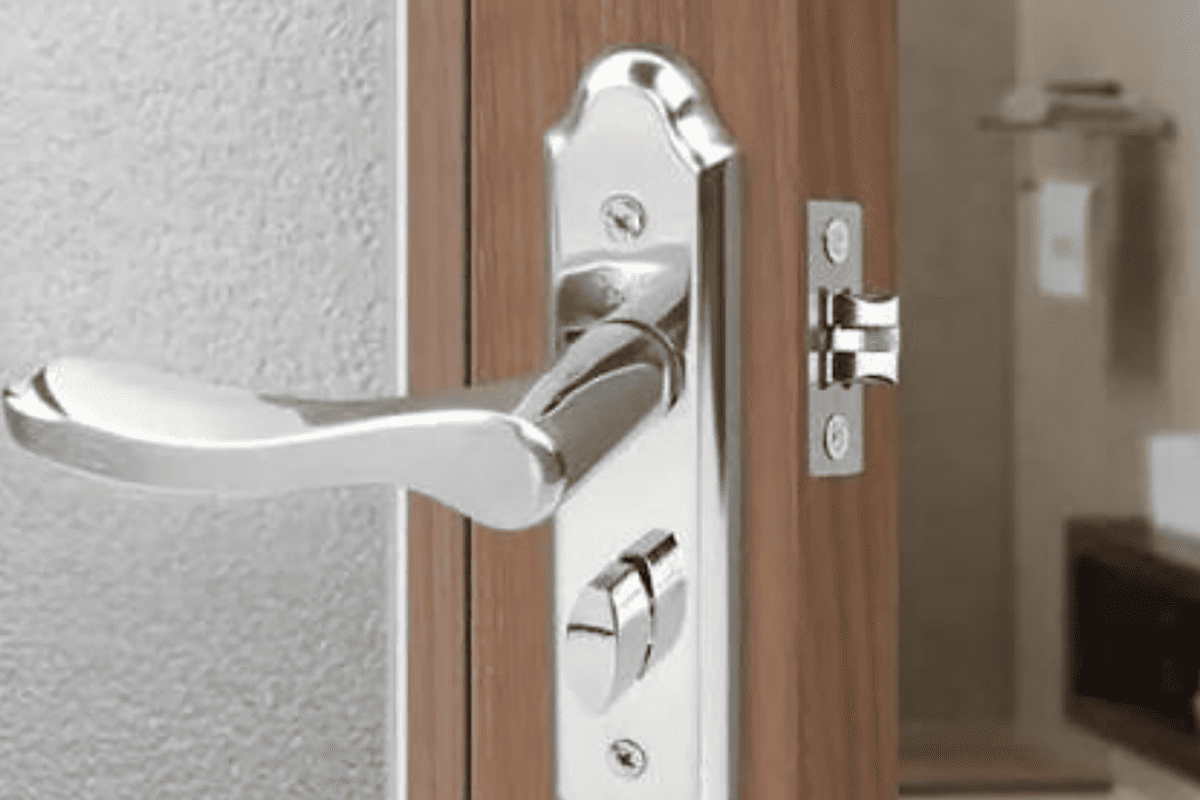
I have seen this confusion many times in customer communication. A buyer may ask for a “bathroom lock,” but the project may need a public toilet cubicle solution, a private office washroom lock, or a residential-style privacy lock. Each case needs a different specification.
Why Do Commercial Bathroom Door Locks Need An Indicator?
Commercial bathroom door locks become more practical when users can immediately see whether a restroom, cubicle, or toilet room is occupied.2 Without a visible indicator, people pull handles, knock on doors, or assume a lock is faulty. This creates friction in offices, hotels, malls, schools, and public buildings.
Commercial bathroom door locks usually need an occupied/vacant indicator because public users cannot rely on keys or private communication. The indicator gives a clear visual signal, while the internal turn function gives privacy. An outside emergency release should also be considered, depending on the project and local safety requirements.3
Dive deeper
In my manufacturing and order-configuration work, I often see buyers focus first on lock body size, handle style, or finish. These points matter, but the first commercial question should be function. A public bathroom lock must tell users what is happening on the other side of the door.
For public-use restroom doors, an indicator helps solve several common problems:
- User confusion: People can see “occupied” or “vacant” without trying the handle.
- High-traffic efficiency: Users move faster through restrooms in malls, airports, offices, and schools.
- Reduced hardware stress: Fewer people pull, shake, or force the lever when the room is occupied.
- Fewer complaints: Facility managers receive fewer reports that “the lock does not work.”
- Cleaner operation logic: The lock supports public privacy without requiring a normal key.
I usually explain the commercial logic like this:
| Application | Common Locking Logic | User Need | Typical Hardware Configuration |
|---|---|---|---|
| Public toilet cubicle | Privacy with visibility | See vacant/occupied status | Bathroom lock + indicator + emergency release |
| Single public washroom | Privacy with emergency access | Confirm availability from outside | Bathroom lock + indicator + outside release |
| Hotel guest bathroom | Private in-room use | Simple privacy | Privacy lock or project-specific lockset |
| Residential bathroom | Family/private use | Lock from inside, emergency open from outside | Sash lock + bathroom cylinder with slot |
The indicator is not just a decorative accessory. It is part of the product function. In public areas, users do not know each other. They need immediate information. A simple color display, text display, or mechanical indicator can reduce awkward interaction.
I also recommend checking how the indicator works with the lever handle and lock body. Some indicators are designed for specific spindle sizes, roses, or lock case functions.4 A door factory should not approve the lock body separately and then select the indicator later without checking compatibility.
For bulk commercial bathroom door locks, I ask customers to confirm:
- Door type: timber door, metal door, aluminum door, or cubicle partition.
- Door thickness: common ranges include 35–45 mm, 40–50 mm, or project-specific thicknesses.
- Backset and center distance: these affect handle and lock installation.
- Indicator style: round, square, integrated, surface-mounted, or rose-compatible.
- Emergency release method: coin slot, screwdriver slot, square spindle, or special tool.
- Finish: satin stainless steel, polished stainless steel, PVD, black, or custom finish.
- Handing: left, right, reversible, or project-specific.
I do not present one configuration as a universal legal rule. Regional requirements can differ. For example, fire-rated doors, accessibility requirements, and public building codes should be verified by the project consultant, local authority, or qualified professional. However, from a supplier-selection view, the indicator is usually the central difference between a commercial/public restroom lock and a basic home bathroom privacy setup.
How Are Commercial Bathroom Door Locks Different From Residential Setups?
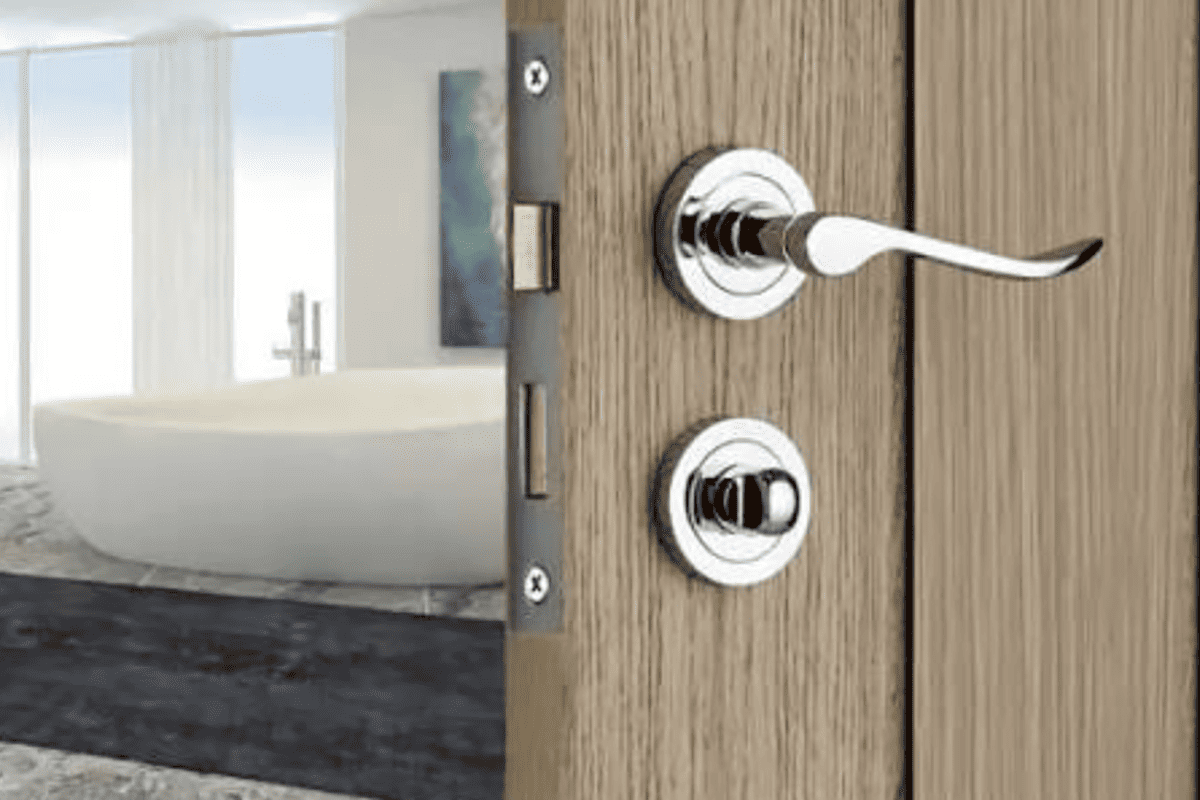
Bathroom door locks for commercial projects are different because they must support public visibility, heavy use, emergency access, and batch installation. Residential bathrooms more commonly use a sash lock plus bathroom cylinder.5 That cylinder usually has an inside turn and an outside emergency slot, not a standard keyway.6
Commercial buyers should not treat home bathroom locks and public restroom locks as the same product. A residential sash lock with bathroom cylinder may work well inside a house, but a public restroom usually needs a clearer occupied/vacant indicator and a configuration designed for repeated public use.
Dive deeper
I often receive inquiries that say, “Please quote bathroom lock.” That short phrase can mean two very different things. The first meaning is a commercial bathroom lock with indicator. The second meaning is a residential bathroom sash lock configuration. If I quote the wrong one, the buyer may receive a product that is technically well made but functionally wrong.
Commercial/public restroom logic
For commercial bathrooms, the door is used by many unknown users. The lock must communicate status from the outside. The user should not need to test the lever to understand whether the room is occupied.
A typical commercial bathroom configuration may include:
- Mortise bathroom lock body
- Lever handles
- Turn snib or thumbturn on the inside
- Occupied/vacant indicator on the outside
- Emergency release on the outside
- Matching strike plate
- Matching screws and accessories
- Suitable hinges and door accessories for the project
This configuration is common in public washrooms, office toilets, hospitality projects, and institutional buildings. The exact product should still match the door material, thickness, and regional project requirements.
Residential bathroom logic
Residential bathroom locking is usually more private and less public. A common setup is:
- Sash lock body
- Lever handles
- Bathroom cylinder
- Inside turn function
- Outside emergency slot
The outside is not normally a keyed cylinder. It often has a slot that can be opened with a coin, screwdriver, or similar tool in an emergency. This matters because some buyers mistakenly believe all bathroom cylinders need keys. I try to correct that early in the specification stage.
Main differences buyers should understand
| Factor | Commercial/Public Bathroom | Residential Bathroom |
|---|---|---|
| Main purpose | Public privacy with visible status | Private household use |
| Outside visibility | Occupied/vacant indicator preferred | Usually no indicator |
| Outside access | Emergency release | Emergency slot on bathroom cylinder |
| Traffic level | Medium to high | Low to medium |
| User behavior | Unknown public users | Family or private users |
| Batch installation | Often large quantity | Usually small quantity |
| Risk of mismatch | High if function is unclear | Lower if door is standard |
For door factories and hardware brands, the biggest risk is not only the unit price. The bigger risk is wrong product logic. If a public restroom door has no indicator, users may think the door is stuck or unavailable. If a residential privacy cylinder is used in a high-traffic public restroom, the facility manager may complain about usability.
I also recommend checking the product drawings before confirming production. At SDH Hardware, we can provide detailed product drawings upon order confirmation, and I always prefer to clarify the lock body, handle, indicator, cylinder or turn function, and accessory package before mass production. This reduces misunderstanding between the buyer, installer, and end user.
What Specifications Should Buyers Check Before Ordering Bathroom Door Locks?
Bathroom door locks should be specified by function, door thickness, backset, center distance, handle compatibility, indicator type, emergency release, finish, certification documents, packaging, and batch installation requirements. Buyers should confirm these details before mass production because small mismatches can create large installation problems on commercial projects.
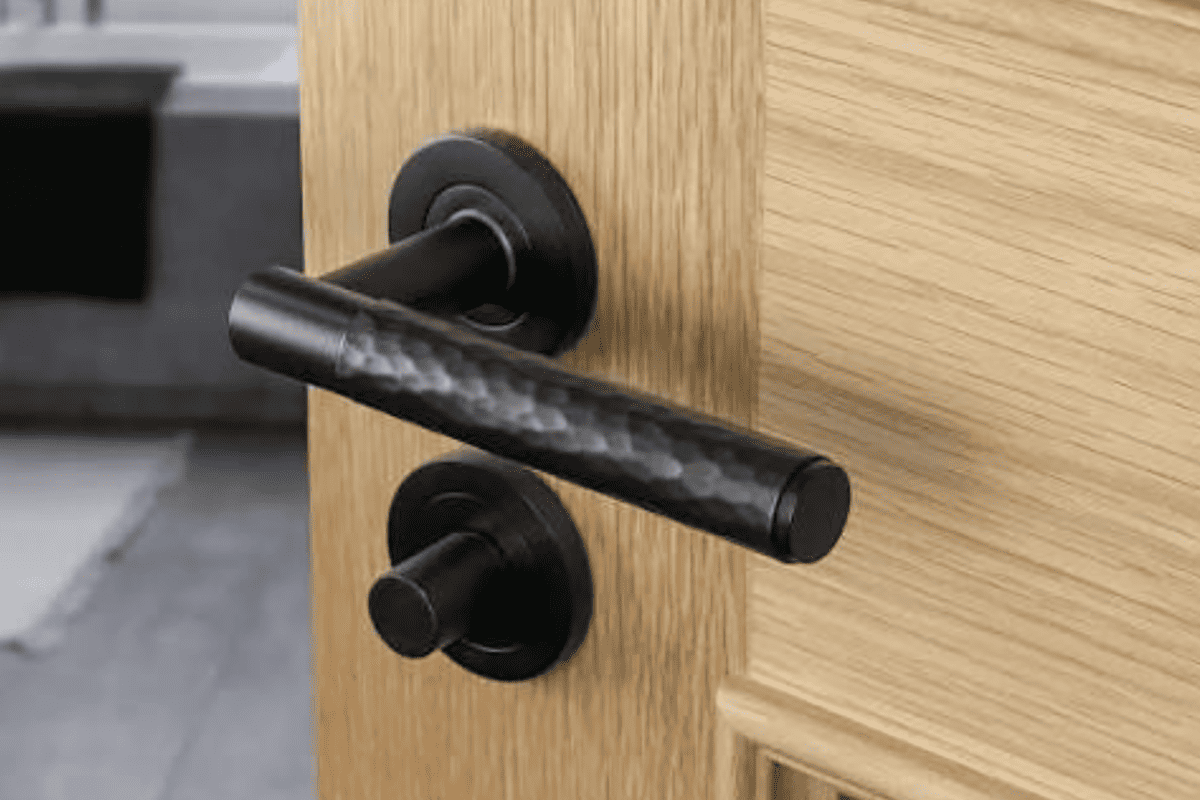
A good specification sheet for commercial bathroom door locks should define the complete operating set, not only the lock body. I recommend confirming the door material, door thickness, mortise dimensions, spindle size, indicator mechanism, outside emergency release, lever handle design, finish, and required documents before placing a bulk order.
Dive deeper
In my experience, many purchasing problems start with incomplete specifications. A buyer may approve a sample based on appearance, but the batch order may later face installation problems because the door thickness, backset, or accessory combination was not checked.7 Commercial bathroom door locks need a more complete review.
Key specification points
Here is the checklist I like to use with door factories and hardware brands:
| Specification Item | Why It Matters | Buyer Checkpoint |
|---|---|---|
| Door thickness | Affects spindle, screws, and indicator fit | Confirm exact thickness range |
| Backset | Affects lock position and handle feel | Match door preparation drawings |
| Center distance | Affects handle and cylinder/turn layout | Confirm with lock body drawing |
| Forend size | Affects mortise preparation | Match router or CNC cutting data |
| Strike plate | Affects closing and latch engagement | Check frame material and gap |
| Spindle size | Affects lever and turn operation | Confirm square spindle dimension |
| Indicator type | Affects public usability | Choose vacant/occupied display |
| Emergency release | Affects safety and maintenance | Confirm release tool and method |
| Finish | Affects design and corrosion resistance | Match project schedule |
| Packaging | Affects bulk logistics | Confirm labels, cartons, and sets |
Function should come before finish
I understand why buyers ask about finish first. Finishes affect showroom display, brand positioning, and project design. However, for public restroom locks, function should come first. A beautiful black or satin stainless steel finish will not solve an incorrect locking function.
A commercial project should answer these questions before discussing surface treatment:
- Does the outside need an occupied/vacant indicator?
- Does the outside need emergency release?
- Will the inside use a thumbturn, turn snib, or other privacy function?
- Will the lock body work with the selected lever handle?
- Can the installer prepare the door according to the drawing?
- Does the project require CE, fire-rated, or other documents for verification?8
At SDH Hardware, our core products are available with CE certification and fire-rated certification for relevant product lines. I always advise buyers to verify documents for the exact item, intended application, and target market. A certificate is a document to review, not a substitute for project-specific professional evaluation.
Batch consistency matters
Commercial bathroom door locks are often ordered in dozens, hundreds, or more. Batch consistency becomes important. A small change in spindle length or screw pack may delay installation across an entire project.9
For OEM and ODM customers, I suggest confirming:
- Logo method: stamping, laser marking, or no logo
- Packaging: neutral box, brand color box, barcode label, or project label
- Accessory bag: screws, spindle, strike plate, indicator parts, and instructions
- Inspection level: function test, finish check, dimension check, and packing check
- Spare parts: extra screws, indicators, or emergency tools for maintenance
I have learned that a strong supplier does not only quote a lock price. A strong supplier helps the buyer reduce after-sales risk. This is why I prefer to discuss the whole set before production, especially when the order is for a hotel, office tower, school, or public facility.
How Should Bathroom Door Locks Fit Into A Complete Door Hardware Set?
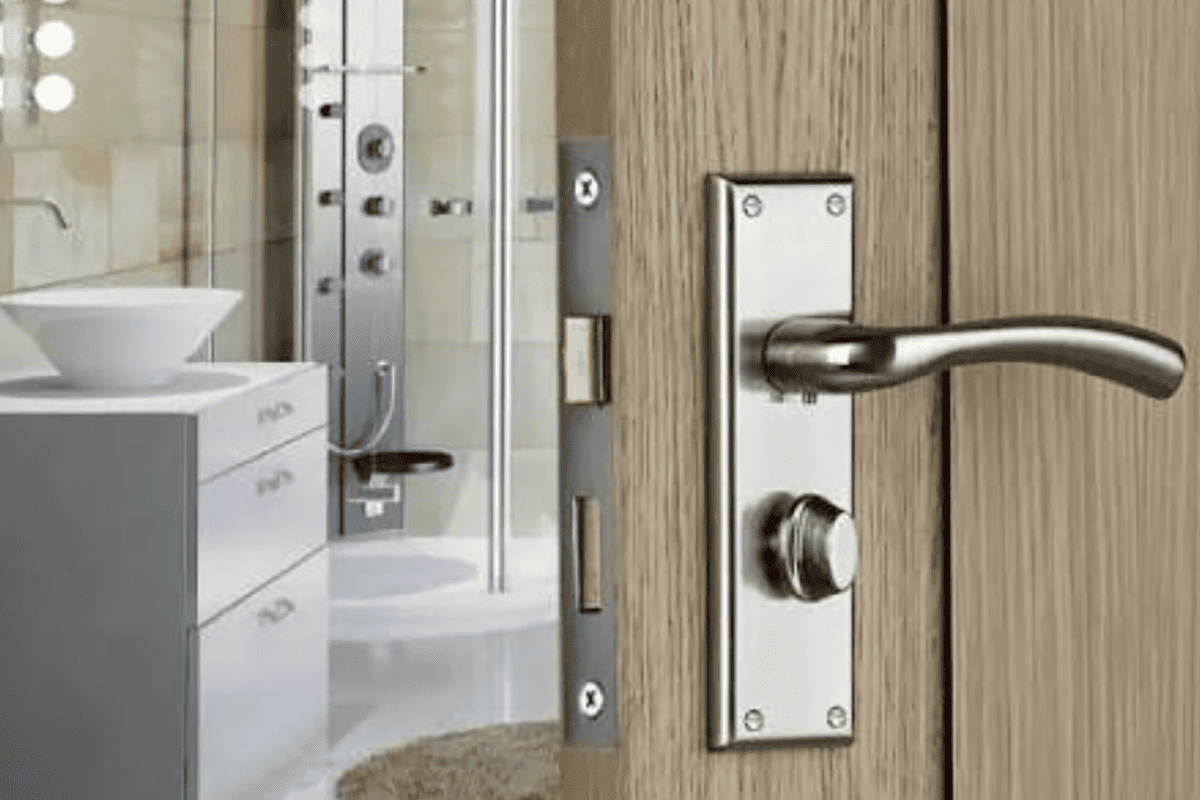
Bathroom door locks should be selected as part of a full commercial door hardware set.10 The lock body, lever handle, indicator, emergency release, hinges, strike plate, door thickness, finish, packaging, and branding should work together. This approach reduces installation mismatch and improves consistency across a bulk project.
I recommend treating bathroom door locks as one part of a coordinated hardware schedule. A complete set should match the door design, user function, installation method, and procurement requirements. This is especially important for door factories, hardware brands, and wholesalers buying for repeated commercial installation.
Dive deeper
A commercial restroom door is not only a lock. It is a system. If one part does not match, the door may still install, but the user experience can suffer. I often tell buyers that the best lock body cannot perform correctly if the lever handle, indicator, spindle, strike, and hinges are poorly matched.
A complete commercial bathroom door set may include
- Mortise bathroom lock body
- Stainless steel lever handles
- Occupied/vacant indicator
- Inside thumbturn or privacy turn
- Outside emergency release
- Strike plate
- Butt hinges or concealed door hinges
- Door stop or accessory hardware
- Screws, spindles, and installation fittings
- Product drawings and installation guidance
- Project packaging or OEM packaging
At SDH Hardware, our product portfolio includes Euro mortise locks, stainless steel lever handles, butt hinges, concealed hinges, Euro brass cylinders, and door accessories. This gives me a practical view of how the full set fits together. A buyer may source these parts separately, but separate sourcing increases the need for careful technical coordination.
Matching lock and handle
The lever handle must match the lock body.11 Buyers should check spindle size, rose or backplate design, screw position, and spring support. Some commercial levers are heavier than residential handles. A weak or mismatched spring structure can create sagging handles over time.
Important checks include:
| Component | Compatibility Question |
|---|---|
| Lever handle | Does the spindle size match the lock follower? |
| Rose/backplate | Does it cover the door preparation cleanly? |
| Indicator | Does it align with the lock function and door thickness? |
| Thumbturn | Does it operate smoothly with the lock case? |
| Strike plate | Does it match the frame and latch position? |
| Hinges | Can they support door weight and usage frequency? |
Matching finish and market expectations
Commercial projects often need consistent finishes across doors. Satin stainless steel is common because it is neutral and durable in many applications. PVD, matte black, polished finishes, and custom colors may also be required for brand or design reasons.
However, surface choice should consider environment. For humid bathroom areas, buyers should discuss corrosion resistance, base material, cleaning chemicals, and maintenance.12 Stainless steel lever handles and suitable surface treatments can help, but the exact product should be reviewed according to project conditions.
OEM and ODM considerations
For hardware brands and importers, the commercial bathroom lock set may also need branding and market positioning. I often help customers discuss:
- Customer logo on lock, handle, or packaging
- Custom color box design
- Market-specific product naming
- Drawing confirmation before order
- Inspection after production
- Consistent carton labeling for warehouse control
This is where factory-direct supply can help. Because SDH Hardware has independent production lines and over 10 years of specialized architectural hardware manufacturing experience, we can discuss practical adjustments in specifications, surface treatments, and accessory configurations. Still, I always recommend that buyers confirm final application suitability with their project team, installer, or local professional before procurement.
For bulk commercial bathroom door locks, the best result usually comes from early coordination. The buyer, door factory, hardware supplier, and installer should agree on drawings and hardware schedules before mass production. That process saves more money than negotiating a small price difference after the wrong product has already arrived.
Frequently Asked Questions
Do commercial bathroom door locks always need keys?
No. Commercial bathroom door locks often use an inside turn for privacy and an outside emergency release. They do not always use a normal key. Public restroom applications usually need clear occupied/vacant visibility and emergency opening, while the exact configuration should match the project requirement.
What is the main difference between a bathroom lock and a bathroom cylinder?
A bathroom lock usually refers to the lock body or complete bathroom locking function. A bathroom cylinder is often used in residential sash lock setups. It commonly has an inside turn and an outside emergency slot, not a standard keyed cylinder. Buyers should confirm the intended application.
Can I use residential bathroom locks for commercial restrooms?
I do not recommend assuming that residential bathroom locks will suit commercial restrooms. Public-use bathrooms usually need an occupied/vacant indicator, stronger usability logic, and batch installation consistency. A residential sash lock plus bathroom cylinder may work in homes but can cause confusion in public areas.
What documents should buyers verify before ordering?
Buyers should verify product drawings, material specifications, finish details, test reports, CE documents, fire-rated documents if applicable, and packing details. Certification requirements depend on the exact project and market. I recommend checking documents with a qualified project consultant or local compliance professional.
What information should I send to a supplier for a quotation?
I suggest sending door thickness, door material, backset, center distance, lock function, indicator style, handle design, finish, quantity, packaging needs, logo requirements, and target market. Photos, drawings, and a hardware schedule help the supplier quote a more accurate commercial bathroom lock set.
Conclusion
Bathroom door locks for commercial applications should be selected by function first. In public restrooms, I usually recommend a bathroom lock with an occupied/vacant indicator and emergency release. Residential bathrooms often use a different sash lock plus bathroom cylinder setup. Buyers should verify compatibility, door thickness, handle matching, finish, documents, and batch packaging before ordering. If you are sourcing commercial bathroom door hardware, contact SDH Hardware for factory-direct OEM/ODM support, product drawings, and configuration guidance.
"Crystmetal Privacy Indicator Lever Lock, Occupied Door Handle ...", https://face.meei.harvard.edu/z-electronic-component-indicator/crystmetal-privacy-indicator-lever-lock-occupied-door-handle-inuse-or-vacant-for-restrooms. Institutional restroom-hardware guidance commonly specifies privacy latching with external occupancy indication and emergency access for public toilet compartments, supporting this configuration as established commercial practice. Evidence role: expert_consensus; source type: institution. Supports: Public restroom hardware specifications commonly include privacy locking, visible occupancy indication, and emergency access from outside.. Scope note: This would support common specification practice, not prove that every commercial bathroom is legally required to use this exact lock configuration. ↩
"The Development of a Public Bathroom Perception Scale - PMC", https://pmc.ncbi.nlm.nih.gov/articles/PMC7662958/. Research on visual status cues and human-factors design shows that immediately visible information can reduce user uncertainty in shared-use environments, providing contextual support for occupancy indicators on public restroom doors. Evidence role: mechanism; source type: research. Supports: Clear visual status cues reduce uncertainty and support faster user decisions in shared facilities.. Scope note: The evidence may address visual cues or occupancy displays generally rather than testing this exact bathroom lock product. ↩
"Chapter 6: Toilet Rooms", https://www.access-board.gov/ada/guides/chapter-6-toilet-rooms/. Government accessibility and building guidance for sanitary compartments recognizes the need for emergency opening from outside in certain restroom-door applications, supporting the article’s caution to verify outside emergency-release requirements. Evidence role: general_support; source type: government. Supports: Some accessibility or building-code guidance requires or recommends that certain restroom or sanitary-compartment privacy locks be openable from outside in an emergency.. Scope note: Applicability depends on jurisdiction, building type, and restroom layout. ↩
"087100 – DOOR HARDWARE - Facilities and Campus Services", https://fcs.cornell.edu/087100-door-hardware. Door-hardware standards and installation guidance identify spindle dimensions, trim geometry, and lock-function compatibility as necessary factors in proper operation of lever and indicator assemblies. Evidence role: mechanism; source type: institution. Supports: Door hardware components such as spindles, trim, indicators, and lock cases must be dimensionally and functionally compatible.. Scope note: The source would establish the compatibility principle, not validate any particular manufacturer’s indicator. ↩
"How Many Types of European Mortise Locks Are ... - SDH hardware", https://sdhhardware.com/2026/08/07/how-many-types-of-european-mortise-locks-are-there/. Architectural ironmongery references describe bathroom sash locks and bathroom cylinders as standard components used to provide privacy locking on domestic bathroom doors. Evidence role: definition; source type: institution. Supports: Architectural ironmongery references describe bathroom sash locks and bathroom cylinders as a recognized configuration for private bathroom doors.. Scope note: Terminology and common configurations vary by country and hardware market. ↩
"What are some good home door lock systems? - SDH hardware ...", https://sdhhardware.com/2026/07/02/what-are-some-good-home-door-lock-systems/. Architectural hardware guidance defines bathroom privacy cylinders as devices typically operated by an internal turn and released externally by a coin, screwdriver, or similar emergency slot rather than by a normal key. Evidence role: definition; source type: institution. Supports: Bathroom cylinders are commonly defined as privacy cylinders with an internal turn and external emergency-release slot.. Scope note: This supports the common definition of a bathroom privacy cylinder, while individual products may differ. ↩
"How to Install Door Locks? - SDH hardware- China professional ...", https://sdhhardware.com/2026/08/07/how-to-install-door-locks/. Technical door-hardware installation guidance treats door thickness and backset as controlling dimensions for lock preparation and trim fit, supporting the claim that unverified dimensions can cause installation mismatch. Evidence role: mechanism; source type: institution. Supports: Door thickness and backset are core installation dimensions that affect whether lock bodies, spindles, handles, and accessories fit correctly.. Scope note: This supports the mechanical basis for the risk, not the frequency of problems in the author’s customer orders. ↩
"What Should I Know About EN Standard Fire Door Hardware ...", https://sdhhardware.com/2026/08/14/what-should-i-know-about-en-standard-fire-door-hardware-regulations/. Official construction-product and fire-door guidance links CE marking, declared performance, and fire-resistance documentation to regulated building-product applications, supporting the need to verify such documents where applicable. Evidence role: general_support; source type: government. Supports: Certain construction products and fire-door hardware in regulated markets require conformity documentation or performance evidence.. Scope note: The relevance of CE or fire-rated documentation depends on the product category, destination market, and whether the door assembly is part of a regulated fire or life-safety system. ↩
"(PDF) Effects of Design Quality on Delay in Residential ...", https://www.academia.edu/72295402/Effects_of_Design_Quality_on_Delay_in_Residential_Construction_Projects. Construction-management studies identify specification errors, omissions, and component incompatibilities as causes of rework and schedule delay, giving contextual support to the risk that small hardware-pack changes can affect batch installation. Evidence role: general_support; source type: paper. Supports: Specification errors, design omissions, and component mismatches are recognized causes of construction rework and schedule delay.. Scope note: The evidence would likely address construction rework generally rather than bathroom-lock spindle or screw packs specifically. ↩
"SECTION 087111 - DOOR HARDWARE (SCHEDULED BY ...", https://fpm.usc.edu/wp-content/uploads/2021/11/087102-USC-HSC-door-hardware-Guide-Specification_1.pdf. Architectural hardware-scheduling guidance treats locks, hinges, strikes, trim, and accessories as coordinated door sets, supporting the recommendation to specify bathroom locks within a complete commercial hardware package. Evidence role: expert_consensus; source type: institution. Supports: Commercial door hardware is commonly specified through coordinated hardware sets or schedules that include locks, hinges, strikes, trim, and accessories.. Scope note: This supports accepted specification practice, not the superiority of any specific supplier’s bundled offering. ↩
"Can You Mix Brands of Door Hardware?", https://sdhhardware.com/2026/08/31/can-you-mix-brands-of-door-hardware/. Door-hardware technical guidance explains that lever trim must match the lock case through compatible spindle, follower, fixing, and return-spring arrangements for reliable latch operation. Evidence role: mechanism; source type: institution. Supports: Lever operation depends on matching spindle size, follower geometry, mounting position, and return-spring requirements with the lock body.. Scope note: The source would explain the mechanical requirement generally and may not address every lock-body design. ↩
"Corrosion of Borated Stainless Steel in Water and Humid Air.", https://www.nrc.gov/docs/ML1129/ML112920913.pdf. Corrosion-science references show that humidity, chloride exposure, and aggressive cleaning chemicals can affect stainless steel and other metal finishes, supporting the need to review material, surface treatment, and maintenance for bathroom hardware. Evidence role: mechanism; source type: research. Supports: Moisture, chlorides, and cleaning chemicals can influence corrosion behavior of stainless steel and coated metal hardware.. Scope note: This supports the environmental mechanism; actual corrosion resistance depends on alloy grade, coating system, exposure level, and maintenance practice. ↩